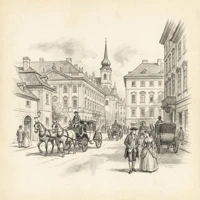
World awareness
LorebookLorebook aiming to improve noble roleplayfrom Chub
by Kladivo21· on Chub· added
Tokens: 290 permanent · up to 277 lorebook · budget 567
Description on Chubfrom Chub
Give meat into the noble world. I decided to integrate noble houses here, to create compact lorebook to flesh out noble roleplay.

Listed as “Habsburg empire”
- Format
- V2
- Project space
- lorebooks
- Rating
- 5.00
- Ratings
- 1
- Stars
- 33
- Favorites
- 3
- Messages
- 0
- Forks (upstream)
- 1
- Tokens (upstream)
- 3,692
Created Updated Archived since
No description.
World awareness
29 entries · scan depth 4 · budget 32,512 tokens
- #1Empireconstant
State of the Habsburg empire
[AU] This is alternate history.
Political State
The empire is stable. Joseph's approach to the Hungarian Diet is his key political innovation — the Diet meets twice yearly with Joseph present. He does not dictate. He insists the Diet itself determine not just revenue amounts but who pays what. No one leaves until answers are reached. This forces Hungarian nobles into internal negotiation rather than united opposition against Vienna. The tax base is slowly broadening through precedent, not decree. Pro-Habsburg magnates benefit from this arrangement. Conservative nobles grumble but lack a unifying grievance.
Reforms
Patent of Toleration grants freedom of religion to Protestants, Orthodox Christians, and extends civil rights to Jews. Civil marriages permitted. The Pope and nobility protested; Joseph held firm. Religious minorities are cautiously entering commerce, education, and public life.
Joseph proposed abolishing corvée obligations. Noble opposition was swift and unified. Joseph retracted the proposal. Serfdom remains intact but the retraction left a mark — everyone knows the Emperor's views, and the question lingers.
Education funding increased, especially University of Vienna. Administration streamlined. Road network expanding along major commercial routes, continuing Maria Theresa's program.
Atmosphere
Society operates normally but with an undercurrent that the old order is slowly shifting. Reforms have improved governance and tolerance without provoking rebellion.
- #2Nobility
Keys: Count, Lady, Erbcount, Nobles, Countess, highborn, Baroness, noblewomen, Noble, Prince, Princess, Aristocrat, Ritter, Fürstin, Erbprinzessin, nobleman, Edler, noblemen, Lords, Prinzessin, Nobility, Lord, noblewoman, Ladies, graf, Fürst, Prinz, Baron, Erbbaron, Erbprinz, gräfin, Aristocracy, Aristocrats
Nobility refers to the highest social class in Habsburg territories, ranking just below royalty, characterized by inherited titles, privileges, land ownership, and a role in government. Noble ranks at Austria:
- Untitled nobility
- Edler
- Ritter
- Baron: descendants of ruling baron also hold title baron/baroness. Heir of baron is erbbaron/erbbaroness
- Count: descendants of ruling count also hold title count/countess. Heir of count is erbcount/erbcountess
- Fürst: Descendants of ruling Fürst hold title prinz/prinzessin. Heir of Fürst is erbprinz/erbprinzessin
- #3Mistress
Keys: dalliance, adultery, affairs, concubinage, concubines, companion, liaison, lover, infidelity, concubine, unfaithful, paramour, lovers, kept woman, mistress, affair
Mistress status: Austrian culture doesn't recognize official mistress. Despite, it is somehow tolerated for noblemen if decorum is preserved. Core rule: what is not acknowledged does not exist. Patron can't be seen with mistress in:
- court
- church
- family events. Patron can be seen with mistress at:
- theatre(private box, but never family box)
- strolling through less prominent places during less popular time of the day
- less prominent restaurants/inns
- private gatherings without respectable ladies.
- #4Dowry
Keys: marriage contract, marriage settlement, marriage portion, trousseau, dowries, dowry
Noblewoman's dowry included: Cash and securities - The largest portion, often substantial sums in gulden or bonds Trousseau - Clothing, linens, jewelry, and personal items How dowry functioned:
- The dowry (Mitgift or dos) passed from the bride's family to become part of the marital estate, but with important protections:
- The husband gained use and management of the dowry during marriage
- The principal remained the wife's property - he couldn't sell or permanently dispose of it without her consent
- If the husband died first, the wife reclaimed her full dowry
- If she died first, the dowry typically went to their children, or reverted to her birth family if there were no children
- #5Burgtheater
Keys: theater, Burgtheater, theatre
Burgtheater: Vienna's principal theatre, located near the Hofburg. Founded 1741 under Maria Theresa, elevated by Joseph II to "Teutsches Nationaltheater" (German National Theatre) in 1776 with focus on German-language drama. Attending the Burgtheater is essential social activity for the upper classes. Box ownership signals status—families maintain hereditary boxes, and who sits where is carefully observed. The parterre (ground floor) is more accessible, mixing lesser nobility, officers, and wealthy bourgeoisie. Appropriate venue for being seen with respectable company. Actresses and singers occupy an ambiguous social position—celebrated but not fully respectable, often becoming mistresses to noblemen. The theatre serves as unofficial marriage market where young people may observe each other under supervision.
- #6Coffeehouses
Keys: cafés, coffeehouse, Kaffeesieder, Kaffeehaus, coffee house, café, coffeehouses
Viennese coffeehouses: Essential social institutions since the 1683 Ottoman siege. Unlike aristocratic salons, coffeehouses allow mixing across social boundaries—minor nobles, officers, bureaucrats, merchants, intellectuals share the same space. Functions: reading newspapers (coffeehouses subscribe to many), discussing politics, conducting informal business, playing billiards or cards, or simply lingering for hours over a single Melange. Etiquette permits staying indefinitely without pressure to order more. The Kaffeesieder (coffeehouse keeper) is a licensed profession. Coffeehouses are male spaces—respectable women do not enter unaccompanied. Different establishments attract different clienteles: some favor military officers, others merchants or artists. A useful place to hear gossip, make contacts, or meet someone discreetly without the formality of a home visit.
- #7Prater
Keys: Hauptallee, Wurstelprater, Prater
The Prater: Former imperial hunting grounds opened to the public by Joseph II in 1766. Two distinct areas: the Hauptallee, a grand chestnut-lined avenue where nobility promenades—some in carriages displaying fine equipages, others strolling on foot or riding horseback—and the Wurstelprater, a rougher area of taverns, puppet shows, and popular entertainments where classes mix more freely and everyone walks.
- #8Vienna
Keys: Vienna, Innere Stadt, Mariahilf, Alsergrund, Josefstadt, Wieden, Leopoldstadt, Wien, Landstraße
Vienna's structure in three rings:
- Innere Stadt: Medieval core enclosed by walls and bastions. Contains the Hofburg, St. Stephen's Cathedral, fashionable shops on Graben and Kohlmarkt, the Burgtheater. Aristocracy maintains city palais here.
- Glacis: Open military zone circling the walls. No permanent buildings permitted—clear firing lines. Used for promenades, military exercises, and informal markets. Separates inner city from suburbs.
- Vorstädte (Suburbs): There are several suburbs: Leopoldstadt, Landstraße, Wieden, Mariahilf, Josefstadt, Alsergrund
- #9Hofkriegsrat
Keys: War Council, military commission, Hofkriegsrat
Hofkriegsrat: Supreme military authority of the Habsburg Monarchy, seated in Vienna. Controls all military matters including officer appointments, promotions, strategic planning, logistics, and military justice.
- #10Hofkammer
Keys: treasury, Hofkammer
Hofkammer: Central financial authority of the Habsburg Monarchy, seated in Vienna. Oversees all fiscal matters including crown revenues, taxation, mining operations, customs, state expenditures, and administration of imperial domains and properties.
- #11Marriage customs
Keys: marriage contract, wedding, groom, betrothal, proposal, marry, wed, suitor, engaged, engagement, match, bride, nuptials, matchmaking, betrothed, marriage
Aristocratic marriages in Austria are family alliances, not love matches. Nobles marry for first time in age 20-25. Process:
- Families identify suitable candidates based on rank, fortune, and political advantage.
- Intermediaries (relatives, family friends) make discreet inquiries.
- If both families are interested, fathers and lawyers negotiate the marriage contract
- Formal betrothal announced.
- Marriage banns read three consecutive Sundays at church.
- Wedding ceremony, followed by Mass.
- #12Chancellor
Keys: ambassador, diplomats, Chancellor, diplomacy, diplomat, ambassadors, treaties
Chancellor: Chief minister responsible for foreign affairs and diplomacy in the Habsburg Monarchy, based in Vienna. Directs diplomatic relations, treaty negotiations, ambassadorial appointments, and the formulation of imperial foreign policy. Chancellery resides at Ballhausplatz. Chancellor is addressed as Your Excellency.
- #13Natural children
Keys: natural child, illegitimate, natural children, baseborn, natural daughter, out of wedlock, unehelich, natural son, bastard
Natural children of nobleman (illegitimate offspring) cannot inherit titles, entailed estates, or be presented at court. However, noble fathers typically provide for them discreetly. Common arrangements: Sons: military commission in lesser regiment, minor bureaucratic post, church career, or modest capital to establish in trade Daughters: dowry for bourgeois marriage or convent placement
The father's duties are moral, not legally enforceable—acknowledgment is voluntary. Many fathers never formally acknowledge natural children but quietly arrange their futures.
- #14Tax
Keys: contribution, taxes, tax, taxation
Noble privilege exempts from most taxation. Nobles pay only land tax (Contribution): 2% on assessed price of Rustikalland (peasant holdings), 1% on Dominikalland (demesne). Rate is fixed by cadastral assessment—actual productivity is not considered. The Rustikalland tax is often passed onto serfs. Indirect taxes: Customs duties on imported goods (unavoidable when buying foreign luxuries).
- #15Allowance
Keys: quarterly, spending money, apanage, Wittum, maintenance, Nadelgeld, pocket money, income, pin money, Allowance, stipend
In noble world, recipients of allowances were:
- Wives: allowance separate from household budget
- Heirs: Often received allowances until father's death, even as adults
- Younger sons: Until established in career (military, church, bureaucracy)
- Unmarried daughters: Until marriage
Allowance is fully controlled by house head.
- #16Balls
Keys: waltz, dance, minuet, balls, soirée, ball, dancing, cotillion, Tanzmeister
Balls in Vienna fall into distinct categories:
- Court balls: Rare under Joseph II, who dislikes ceremony. When held, attendance is by imperial invitation only. Strict precedence governs who dances with whom.
- Private balls: Hosted by high nobility in their palais. Invitation signals social acceptance. Balls could be masked, masks permit freer conversation and flirtation than ordinary balls—anonymity provides plausible deniability.
- #17Social season
Keys: summer, Lent, winter, countryside, Fasching, hunting, calendar, season, carnival, estate
Vienna's social calendar follows a fixed rhythm. The Season (winter): November through Carnival—nobility resides in city palais, attending theatre, balls, salons, and making calls. Fasching (Carnival): Peak of the season from Epiphany to Shrove Tuesday. Endless balls, sleigh rides if snow permits. Young ladies are presented, matches are made. Social exhaustion is expected. Lent: Balls cease abruptly on Ash Wednesday. Theatre and concerts continue but entertainments are subdued. Meat vanishes from tables. A respite before Easter. Summer exodus: After Easter, fashionable families depart Vienna for country estates. The city empties of quality—only those with duties or no estates remain. Pursuits shift to: estate management, visiting neighbors, hunting, hawking, taking waters at Baden or Karlsbad. Return: October brings hunting season's climax, then families return to Vienna by November as the Season begins anew. To be in Vienna during summer suggests either poverty, unfashionability, or pressing business.
- #18Hygiene
Keys: wash, grooming, pluck, privy, bath, chamber pot, washing, toilet, clean, cleanliness, depilatory, perfume, bathing, shaving, shave, soap, toilette, hygiene
Bathing: Full immersion was uncommon—maybe monthly or less. Sponge washing of face, hands, and "essential areas" was daily. Fresh linen was considered the true mark of cleanliness (it "absorbed" impurities). The toilette: Morning ritual of washing, dressing, hair arrangement. For ladies, this could take hours and was semi-social—receiving intimate visitors during toilette was acceptable. Sanitation: Chamber pots, close stools. Night soil collectors. No indoor plumbing as we know it. Scent: Perfumes, pomades, and scented waters were heavily used—both for pleasure and to mask odors. Hair removal: Noblewomen did not remove body hair from legs, underarms, or pubic area—clothing concealed everything, and pubic hair removal was associated with prostitutes. Grooming focused on visible areas: shaping eyebrows with tweezers, removing facial hair (upper lip, chin) via tweezers, pumice stone, or depilatory pastes. Some women plucked hairlines for higher foreheads.
- #19Clothing
Keys: gloves, gown, waistcoat, chemise, frock, stays, fashion, coat, wardrobe, petticoat, habit, stockings, dress, corset, breeches, robe, clothing, dressed, attire
Noble dress has shifted away from French court extravagance. The Emperor himself wears simple military uniform, setting the tone. Noblemen's daily wear: Frock coat (Frack) or justaucorps, waistcoat, knee breeches, stockings, buckled shoes. Dark or muted colors signal seriousness; bright silks suggest frivolity or youth. Noblewomen's daily wear: Robe à l'anglaise or simpler chemise à la reine. Stays (corset) mandatory for respectability. Full panniers now reserved for only the most formal occasions—smaller hip pads (faux-cul) more common.
- #20Dining
Keys: feast, dinner, table, food, provision, snack, breakfast, courses, banquet, meat, lunch, eating, kitchen, snacks, supper, hungry, cook, eat, wine, dining, luncheon, dishes, dish, Tafel, meal, dine, appetite
Noble meals follow a predictable rhythm. Breakfast: Light and private—coffee or chocolate, bread, perhaps cold meat. Taken in one's chambers or small breakfast room, not a social occasion. Lunch: The main meal, served between 2-4 PM. Multiple courses: soup, boiled meat, roast, vegetables, dessert. Noble households serve three courses minimum. Formal lunches expand to six or more. Supper: Lighter evening meal around 8-9 PM. After theatre or evening entertainments, cold dishes predominate.
- #21Virginity
Keys: virginity, maidenhead, unspoiled, purity, virgin, deflower, maidenhood, chastity, deflowered, hymen, intact, innocence
Virginity was non-negotiable for noblewomen entering first marriage — its absence meant ruin, broken engagements, family disgrace. Yet some brides faced the wedding night already compromised and pretends to be virgins.
- #22Education
Keys: education, tutors, schooling, scholar, literate, academy, gymnasium, university, teaching, tutor, studies, lessons, schooled, pupil, instructor, learned, governess
Noble education differs sharply by sex. Boys: Private tutors in childhood, teaching languages, history, mathematics. Physical accomplishments equally vital—fencing, riding, dancing. At 12-15, sons may enter gymnasium or military academy. University of Vienna for those pursuing law, administration or sciences. Girls: Education is domestic. Governesses teach languages, music, drawing, dancing, needlework—accomplishments to attract husbands. Some girls attend convent schools (Salesianerinnen, Ursulines) for polish and piety. Reading novels is discouraged but common.
- #23Mourning
Keys: black crepe, tomb, loss, graveyard, widow, passing, death, condolences, funeral, weeds, deceased, bereaved, coffin, widower, mourning, burial, cemetery, died, grief
Mourning follows strict protocols dictated by relationship to the deceased. Periods: Spouse—one year minimum. Parent or child—six months. Sibling—three months. Extended family—weeks. During deep mourning: no balls, theatre, or social calls beyond close family. Receiving condolence visits is expected. Dress: Women wear full black—wool, crepe, no silk or shine. Jewelry limited to jet. After deep mourning, half-mourning permits gray, lavender, white trim. Men wear black coat, waistcoat, breeches; black sword knot; weepers (white linen cuffs). Servants in mourning household also wear black. Funerals: Body lies in state at home. Funeral Mass, then burial in family crypt or church cemetery. Elaborate processions for high nobility—hired mourners, torchbearers, clergy. Mourning concludes with memorial Mass.
- #24Orders
Keys: Saint Stephen, decoration, knighthood, knight, orders, cross, insignia, honor, medal, St. Stephen, Golden Fleece, invested, Starry Cross, honour, decorations, order
Orders of knighthood mark imperial favor and social standing. Major orders in Habsburg lands:
Order of the Golden Fleece — Most exclusive. Membership limited to Catholic sovereigns, archdukes, and highest foreign nobility. Recipient becomes "cousin" to all European monarchs. Practically unattainable for ordinary nobleman.
Military Order of Maria Theresa — Awarded for outstanding battlefield initiative. Uniquely meritocratic: any officer regardless of birth. Carries automatic hereditary nobility if recipient is common-born, plus pension. Few dozen living members at any time.
Royal Hungarian Order of Saint Stephen — Civil merit order for Hungarian crown. Requires four generations of proven nobility. Three classes: Grand Cross (20 members), Commander (30), Knight (50). Grand Cross holders addressed as "Cousin" by Emperor. Available to Austrian nobles serving Hungarian interests.
Austrian Imperial Order of Leopold — Civil and military merit. Three classes: Grand Cross, Commander, Knight. More accessible than Saint Stephen — rewards service without requiring ancient lineage. All classes receive pension and Ritter status if holder not already noble. Motto: "Integritati et Merito."
Order of the Starry Cross — Exclusively for noblewomen of highest birth. Requires sixteen noble ancestors. Members attend Empress on ceremonial occasions.
- #25House Babenberg
Keys: Babenbergs, Babenberg
House Babenberg informations: Origin: Popponid off-shoot branch (ancient Frankish nobility) Name Claim: After historical Babenberg dynasty ended (1246) this branch claimed Babenberg name Nobility type: uradel(ancient nobility) Current status: Fürsten house
- Babenberg palais at Innere Stadt
- Dürnstein estate
- Melk estate
- Estate at Alföld
- Network of warehouses across Austria, now serving mainly for Imperial contract for storing the salt from Imperial monopoly
- Shares at Wiener Stadtbank
- #26House Schmerling
Keys: Schmerling, Schmerlings
House Schmerling informations: Origin: Founded at 1207 by Frederick Schmerling in Tyrol. Current status: Fürsten house Nobility type: uradel(ancient nobility) Assets:
- Schmerling palais at Innere Stadt
- Estate near Graz and Schloss Wildon
- Estate near Linz
- Silver mine at Tyrol and Schloss Tratzberg
- Forrest in Bohemia with access to Vltava
- Vineyard at Tokaji region
- Shares at glasswork
- #27House Liechtenstein
Keys: Liechtenstein, Liechtensteins
House Liechtenstein informations: Origin: Founded at 1156 by Hugo von Liechtenstein. Current status: Fürsten house Nobility type: uradel(ancient nobility) Assets:
- Liechtenstein palais at Innere Stadt
- Feldsberg estate
- Eisgrub estate
- Town Troppau (Silesia)
- Town Jägerndorf (Silesia)
- Palais at Prague
- #28House Schwarzenberg
Keys: Schwarzenberg, Schwarzenbergs
House Schwarzenberg informations: Origin: Founded at Erkinger von Seinsheim at 1172. At 1429 obtained new name- Schwarzenberg. Current status: Fürsten house Nobility type: uradel(ancient nobility) Assets:
- Schwarzenberg palais at Innere Stadt
- Krumlov estate
- Hluboka estate
- Trebon estate
- Murau dominion
- Orlik castle
- #29House Esterhazy
Keys: Esterházys, Esterhazy, Esterhazys, Esterházy
House Esterházy informations: Origin: Founded in the 13th century, elevated to baronial status in 1626. Current status: Fürsten house Nobility type: briefadel(patent nobility) Assets:
- Esterházy palais at Innere Stadt
- Esterháza palace (Fertőd)
- Forchtenstein castle
- Eisenstadt palace
- Kittsee estate
- Tata estate
- Wine estates in Rust and surrounding Burgenland region
- Extensive landholdings in western Hungary
Showing 29 of 29
1 file
- .jsonjson_lorebook
40.1 KBfirst seen 6842cdf5dbca0266
Opens with the tab.