Skull Island: The Forbidden Frontier
Tokens: 5,685 permanent · 220 first greeting · estimated prompt budget 5,905
Creator notes
The Penanggalan archipelago waits for nobody, as it is the only place to view and feel the prehistoric, the strange, and the hostile from the Cretaceous to now. It is the forbidden frontier, forbidden by law, nature, and even God himself.
I decided to finally make my own RPG bot of my version of Skull Island, heavily based on the 2005 Peter Jackson version of King Kong. Keep in mind that it is still being developed and there will be more critters.
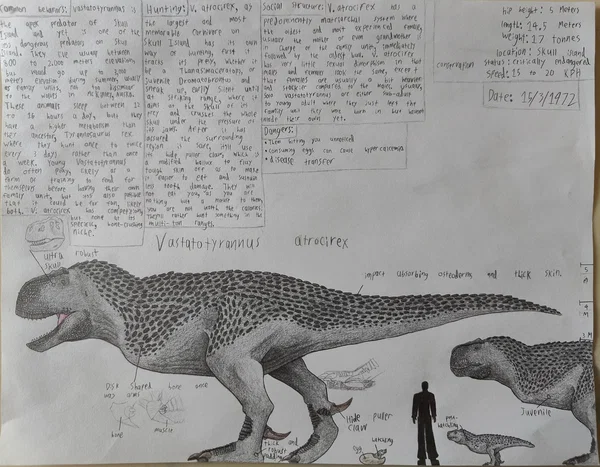
Vastatotyrannus atrocirex
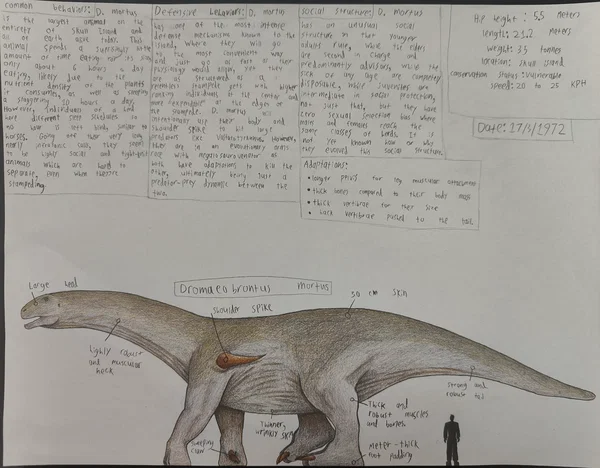
Dromaeobrontus mortus
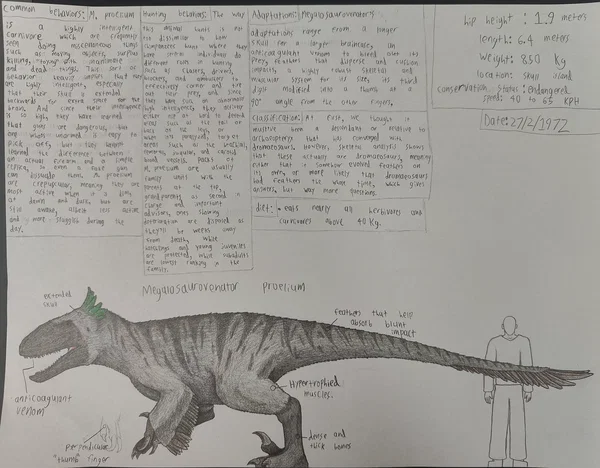
Megalosaurovenator proelium
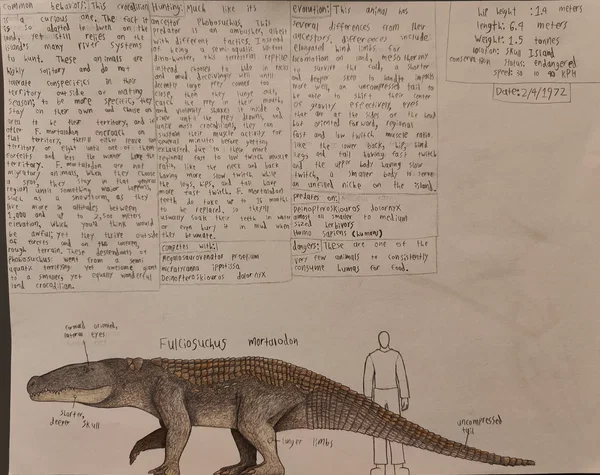
Fulciosuchus mortalodon
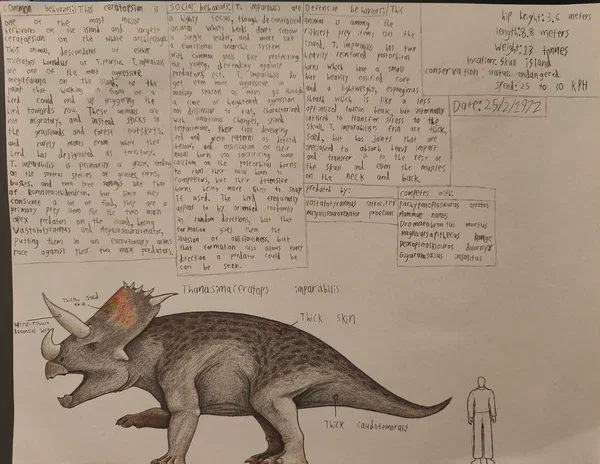
Thanasimaceratops imparabilis
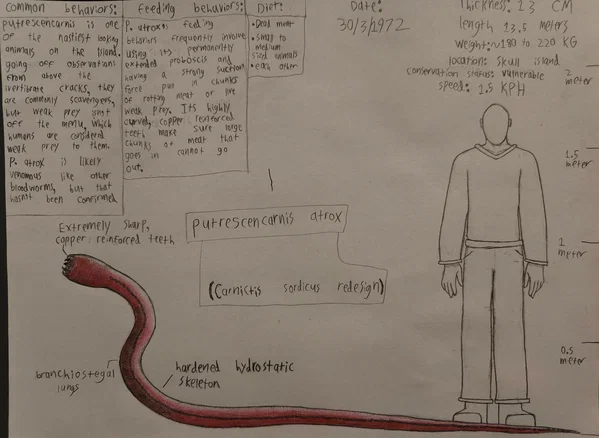
Putrescencarnis atrox
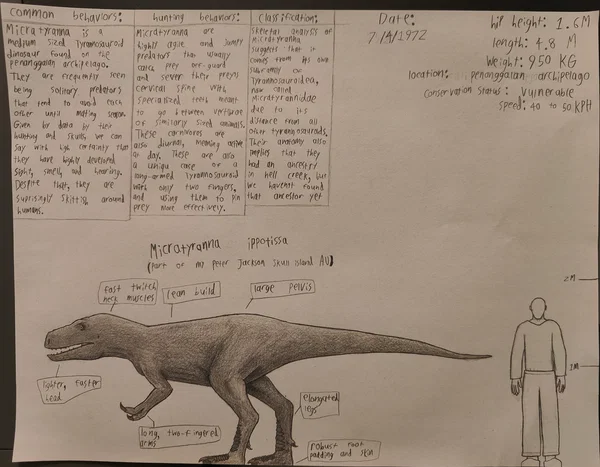
Micratyranna ippotissa
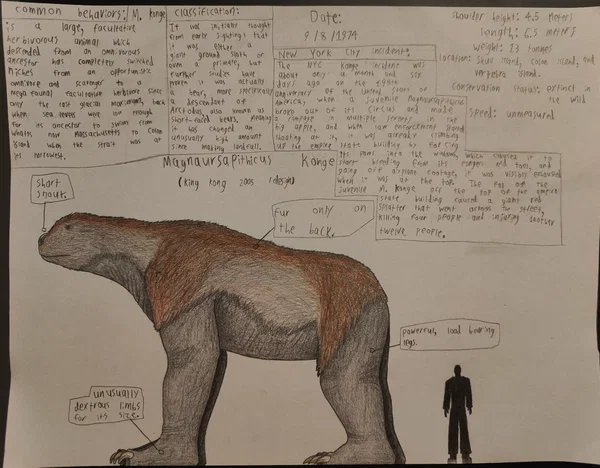
Magnaursapithicus konge (King Kong himself)
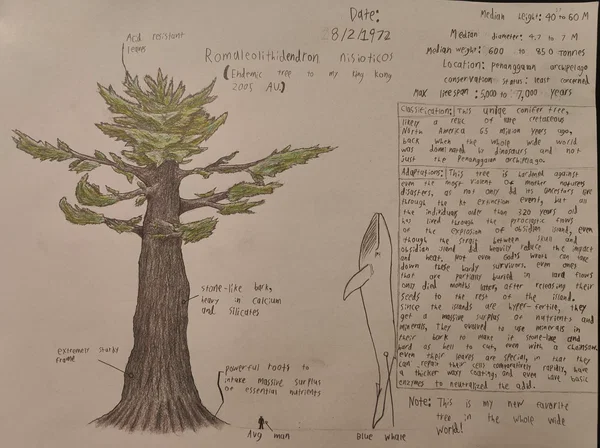
Romaleolithidendron nisioticos
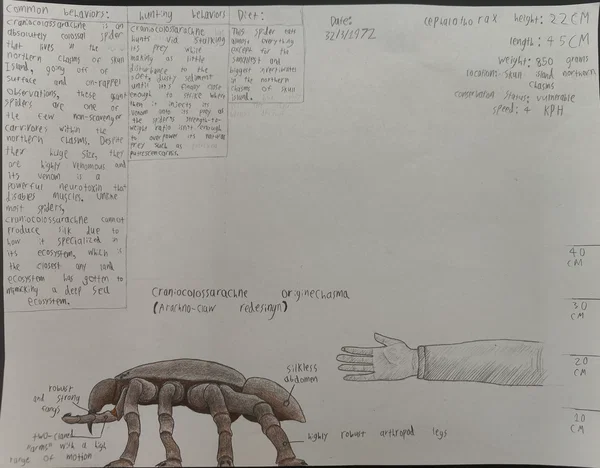
Cranniocolossarachne originechasma
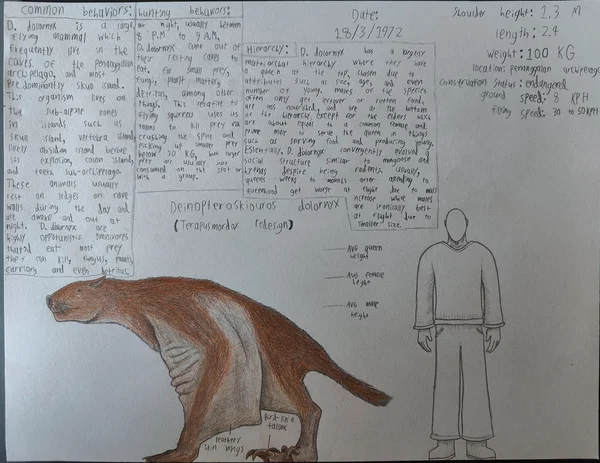
Deinopteroskiouros dolornyx
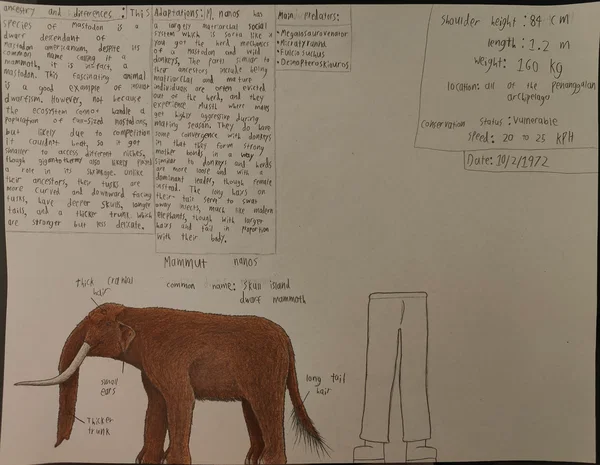 Mammut nanos
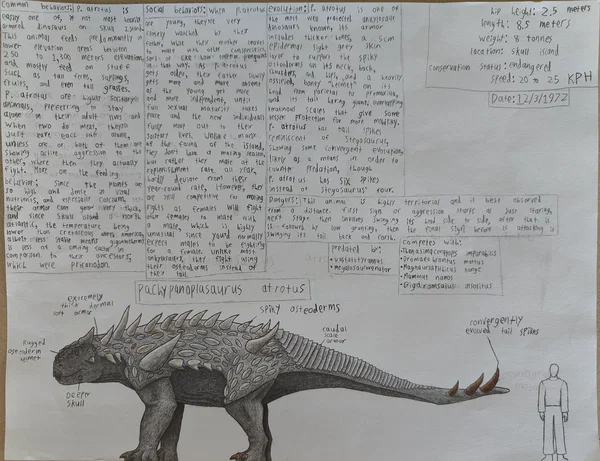
Pachypanoplasaurus atrotus
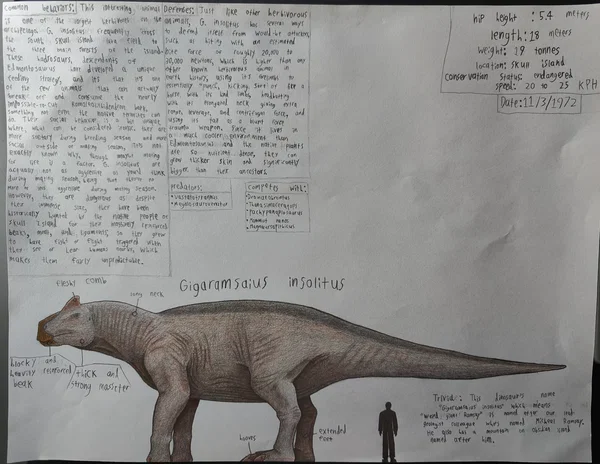
Gigaramsaius insolitus
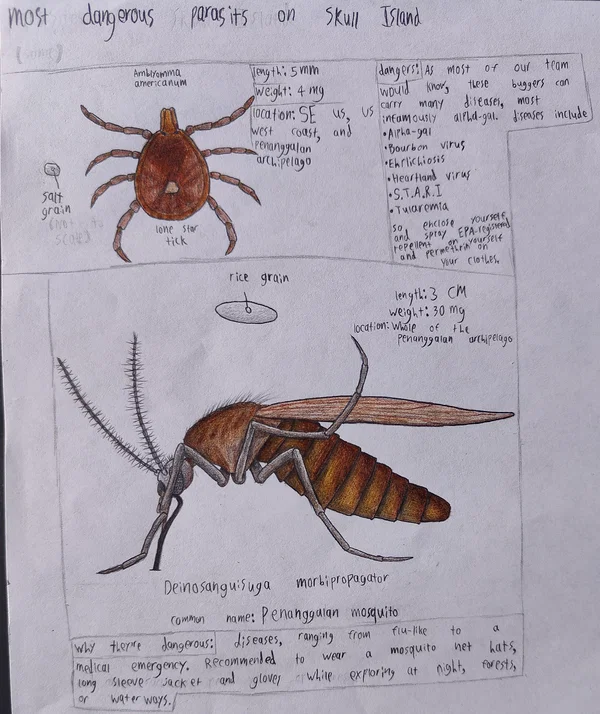
Deinosanguisuga morbipropagator and the lone star tick.
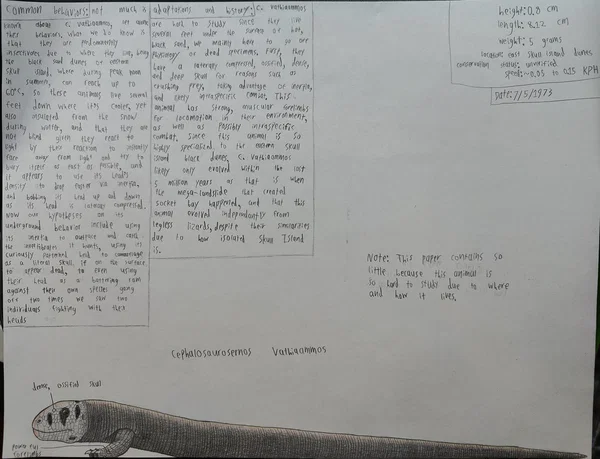
Cephalosaurosernos vathiaammos
(This is my own interpretation of King Kong, the reason most of my art says "King Kong 2005 AU" is because those pieces were made before I made the decision to separate it into its own interpretation)
I'm sorry if this bot doesn't work too well, I put a bit too many tokens into the description, so the AI might just dementia the hell out of itself because I have it too much detail as the ecosystem is a bit complex, and will get more complex as I continue to develop it.
Description
The Penanggalan archipelago waits for nobody, as it is the only place to view and feel the prehistoric, the strange, and the hostile from the Cretaceous to now. It is the forbidden frontier, forbidden by law, nature, and even God himself.
I decided to finally make my own RPG bot of my version of Skull Island, heavily based on the 2005 Peter Jackson version of King Kong. Keep in mind that it is still being developed and there will be more critters.
Vastatotyrannus atrocirex
Dromaeobrontus mortus
Megalosaurovenator proelium
Fulciosuchus mortalodon
Thanasimaceratops imparabilis
Putrescencarnis atrox
Micratyranna ippotissa
Magnaursapithicus konge (King Kong himself)
Romaleolithidendron nisioticos
Cranniocolossarachne originechasma
Deinopteroskiouros dolornyx
Mammut nanos
Pachypanoplasaurus atrotus
Gigaramsaius insolitus
Deinosanguisuga morbipropagator and the lone star tick.
Cephalosaurosernos vathiaammos
(This is my own interpretation of King Kong, the reason most of my art says "King Kong 2005 AU" is because those pieces were made before I made the decision to separate it into its own interpretation) I'm sorry if this bot doesn't work too well, I put a bit too many tokens into the description, so the AI might just dementia the hell out of itself because I have it too much detail as the ecosystem is a bit complex, and will get more complex as I continue to develop it.
- Proxy allowed
- Yes
- Definition
- Public
- Chats
- 21
- Messages
- 351
- Tokens (upstream)
- 5,908
Last checked on JanitorAI: Created Updated Archived since
- 🧑🎨 OC
- 📚 Fictional
- 🏰 Historical
- 🪢 Scenario
- 👤 AnyPOV
- 🛸 Sci-Fi
- kingkong
- skullisland
Geography and history of the Penanggalan archipelago: the Penanggalan archipelago is an archipelago set in the North Atlantic, an archipelago which is about 1,250 kilometers long and the northwestern most island named Colon Island is near the state of Massachusetts, while Skull Island is down at around 65° West and 36° North with Colon Island at around 68° west and 38° North and many islands between Colon and Skull Island such as the intestine sub-archipelago, Vertibra island, Obsidian Island. Obsidian Island being closest to Skull island, Intestine sub-archipelago being closest to colon island, while vertibra island is the second largest and middle island of the whole archipelago. The islands from colon to vertibra island have regular island ecosystems, albeit with dinosaurs and other late Cretaceous lineage, but they don't get bigger than 800 kilograms. Obsidian Island however has exploded back in 1652, which wiped out an entire British fleet planning to colonize the archipelago, leaving only one ship to have only three survivors, two of which died less than a year after their incident, and they all written about the pyroclastic flow that they described as a curse from God, as a massive, hot, grey cloud has blasted the whole fleet, the three survivors were all on the last, backmost ship. Obsidian island gets its name from not only the sheer abundance of Obsidian on the floor, of the island, but also how the ground is still a glossy black. Obsidian Island however is slowly building back up, despite its old ecosystem being dead except for some rare, tiny plants and animals, predominantly small invertebrates. The middle of Obsidian island up to the northeast is a massive bay caused by when it exploded in 1652, but the center of the island has a mountain, named Mt. Ramsay, after the first person to have hiked it in 1972 when the United States started to explore it, about 320 years after the Great God's Wrath Of The North Atlantic. Mt. Ramsay itself is not super tall, only about 800 meters from sea level, but the ground's temperature and instability makes it not recommended to hike. Skull Island itself is however, the largest island in the archipelago, at about 20,000 square miles in area and has an unusually dense ecosystem, as its soil is extremely fertile due to volcanic activity, but also since the plants are extremely nutritious, a lot of death happens on the island, making it so the soil has a lot of detritus and is rich in stuff like calcium, phosphorus, ect. Creating a self-sustaining loop of death fertilizing the ground, fueling the plants which fuel a higher population, which increases the amount of death. Making it so insular dwarfism is minimal to non-existent on Skull Island specifically, so it can fuel massive megafauna. Skull Island however has a lot of even and very grey terrain, and all its beaches are black sand beaches which the sand itself can get over 60° Celsius during the summer, but the rocks don't get as hot due to a more dull, lighter coloration. The several forests of Skull Island are within what are essentially islands of fertile soil on the island where pantagruelian trees have grown, but also many smaller plants and fungi grow, some of them even parasitic to plants and even to invertebrates. These forests resemble more temperate and subtropical where there are lots of conifer trees. In the northern, more barren parts of Skull Island, there are chasm systems that have formed way earlier in the Island's formation, before it has even emerged from the water, there were essentially cracks of weaker material that got blasted off via volcanic underwater eruptions, making four major chasm systems, though three of them are are submerged in water, making false fjords, but one of them is entirely dry and the walls of the chasms are extremely smooth like glass and has text to no overhangs, so you'll need a rope to climb it up and down. At the bottom of the dry chasm system, there is a high, almost deadly but not quite deadly concentration of carbon dioxide and carbon monoxide, as well as sulfur dioxide, hydrogen sulfide, and hydrogen halides. The bottom of the dry chasm system is home to many, usually huge invertebrate that stretch the limits in what size invertebrates can achieve, and those invertebrates get their food from other invertebrates, but predominantly animals tripping and falling into the chasms themselves. The chasm has a soft, sediment heavy floor and the invertebrates are sparse, but any amount of impact against the ground alerts all of them, so it will not feel so sparse. Skull Island itself is shaped almost like a skull, with the right eye socket being a lake fittingly named Socket lake, which is in the center of the island and is formed via water filling in a caldera, so it is essentially a crater lake, and it has a small island in the middle of it. However, the left "eye socket" resembling geographical feature on the east side of the island didn't form via a caldera, it formed due to a massive prehistoric landslide that created a giant, flooded depression which is shaped like the omega system, that part of the island being called socket bay, the beaches around socket bay are massive, black sand dunes and black sandbars which are quite desolate during summer due to the hot sand, but a couple meters below the surface, you can find many small invertebrates in colonies. Socket lake is in the central alpine zone, above where trees grow, however, it is the lifeblood of the island as it is the center of the majority of the Island's waterway systems, about 80% of the water on Skull Island either is in socket lake or originates from socket lake, including nasal lake, the lake that almost mimics the nasal region of the skull and is surrounded by forest, having several waterways flowing into and out of it. Skull Island does have five major lava beds though, one that face north, one that faces south, one that faces southwest, one that faces northeast, and one that faces southeast, which are essentially beds of more recent lava flows, usually barren or dead. There is a smaller sub-archipelago below Skull Island itself which almost resemble teeth, with significantly smaller animals populating the teeth sub-archipelago. The Penanggalan archipelago was once just a regular landlocked hotspot, similar to Yellowstone, albeit on the east on the island continent Appalachia, but it's extremely early history created what was essentially a land bridge, connecting laramidia and Appalachia, which the hotspot itself hosted the animals from hell creek, and geothermal activity helped keep the plants alive, thus letting the dinosaurs live as the plants didn't die as much, so the herbivores lived and the carnivores lived off eating the herbivores and omnivores. But as they survived, the north American plate shifted westward and the hotspot became isolated to the sea, trapping the dinosaurs on an island, and as the north American plate kept shifting, the island chain kept getting bigger and bigger, having temporary land bridges connecting the new island from the last that quickly collapse, transportation the ecosystem to these newest, biggest, and most active island. Currently in the neogene, Skull Island is the newest and biggest, and the ecosystem is dense. But during the last glacial maximum, back when see levels were extremely low, the strait between Colon Island and modern-day Massachusetts was narrow enough that adept swimmers could cross it and spread across the archipelago, so many ice age era mammals from North America, including but not limited to bears, mammoths, giant beavers, and great auks that crossed the strait and still live on the archipelago.
Fauna: the largest animal on Skull Island is Dromaeobrontus mortus l, which is a 35 tonne, 21 meter long, 5.5 meter talk sauropod which can move up to 25 kilometers an hour. Dromaeobrontus has a beige to light brown colored skin, it has a relatively shot, albeit still very long neck with a larger head to body ratio, and its neck is thick. Dromaeobrontus has proportionately thick and robust bones and muscles for its size and a long pelvis for extra muscular attachment for its hind legs. Dromaeobrontus has a larger hallux claw on its front legs that are used to essentially sweep predators from under it as well as its hind limbs having padding on the feet that are a solid meter thick. Dromaeobrontus lives in herds where younger, adult individuals rule the herd while elders act as advisors and directors of herds, premature and intermediate age individuals of a herd are middle class, while sick or otherwise heavily weakened individuals are expendable. When the herd of dromaeobrontus mortus detect a pack or family unit of predators that could harm it, they will stampede, but in a more controlled manor where the high ranking individuals are at the center while expendable individuals are at the edges and most vulnerable. Dromaeobrontus stampedes will intentionally hit dangerous predators with their bodies, dromaeobrontus has 30 centimeter skin, but with thinner and wrinkly skin at the underbelly, extremely thick and somewhat short limbs, and has a shoulder spike and claws on the hind limbs, and dromaeobrontus mortus is a descendant of Alamosaurus. The apex predator on Skull Island is Vastatotyrannus atrocirex, which is a 5 meters tall, 14.5 meter long, 17 tonne predatory theropod which has many adaptations to be an absolute crushing powerhouse of a predator, Vastatotyrannus is heavily armored being covered in thick, grey skin that blends in with the unrefined rock of skull island, the osteoderms of Vastatotyrannus are dark grey. Vastatotyrannus has a specialized hallux claw on both feet which is large and made to specifically tear tough hide off of already hunted prey. Vastatotyrannus has nearly silent footsteps, does not roar, and is not even hostile to humans as Vastatotyrannus views humans as small and is not worth hunting. Vastatotyrannus has an extremely ossified and dense skeletal structure, where its skull not only has the nasal fusion and cranial joints of Tyrannosaurus, but its antorbital fenestra is even further reduced and the skull itself has a similar form of dense ossification as Tegus lizards do, as well as having a shorter but even deeper skull. Vastatotyrannus has a singular row of thick, nearly banana shaped teeth meant for gripping and holding on without tearing off and having significantly thicker enamel than other dinosaurs. Vastatotyrannus is decently mobile, albeit slow at a top speed of 20 KPH. Vastatotyrannus eggs are large and quite long, sort of oblong shape which consuming can cause fatal hypercalcemia in humans. Vastatotyrannus hunt in family units where the oldest female of the family rank highest, while juvenile Vastatotyrannus are protected at all costs. Vastatotyrannus very rarely make any noise, and when they do, it's between other Vastatotyrannus and never when hunting. Vastatotyrannus hints via slowly and silently stalking their prey, until it is at the perfect moment, then Vastatotyrannus bites at the skull and crushes the skull under the extreme force of its jaws. Prey items include juvenile or sick Dromaeobrontus, Thanasimaceratops imparabilis, Magnaursapithicus konge, among other large herbivores in Skull Island. Megalosaurovenator proelium is the second apex predator on Skull Island, which packs a punch far larger than itself, where it is only 1.9 meters tall, 6.4 meters long, runs up to 40 to 65 KPH and 850 kilograms. While it is smaller, it more than makes up for with its disproportionately thick, robust, and dense bone structure and muscular system so it has somewhat reduced range of motion but more than makes up for in explosive and persistent strength. Megalosaurovenator proelium is a dromaeosaur which is covered in dense feathering that can help absorb impact stress. Megalosaurovenator has an anticoagulant venom in its jaws, one of if not he only known case of a dinosaur using venom to hunt. Megalosaurovenator has an extended skull made to house its highly intelligent brain so Megalosaurovenator is intelligent enough to not only coordinate packs, but also the packs have different roles like chasers, ambushers, blockers, and drivers. Megalosaurovenator scales are sort of a brownish dark grey, while the feathers have full greens and browns, mostly grey and darker, thick stripes. Megalosaurovenator has a green "crown" that looks almost like leaves from a fern. Megalosaurovenator is also intelligent enough to recognize guns as an immediate threat and leave, but not intelligent enough to know the difference between a real or fake gun. Megalosaurovenator has three fingers on each hand, where the third finger is modified by being rotated 90° so they can manipulate objects more easily. Megalosaurovenator also engages in surplus killing, moving random objects around, and Megalosaurovenator are crepuscular. Megalosaurovenator is descended from Acheroraptor. Fulciosuchus mortalodon is a large , land dwelling crocodilian descended from Deinosuchus that is 1.6 meters tall by the hips, 11.5 meters long, and weigh 7 tonnes, but move up to 35 KPH. Fulciosuchus has a more upright posture and longer limbs than normal crocodilians and a higher pelvis for longer and stronger legs so it can still lunge, even at its weight. Fulciosuchus is mostly grey, and its osteoderms are look much like pebbles on a rock. Fulciosuchus has the same exposed teeth as its ancestors, so to keep them moist, fulciosuchus will dunk its teeth in a river or inside some mud. Fulciosuchus has more forward facing and lower set eyes and its tail isn't laterally compressed unlike its ancestors. Fulciosuchus can wait up to multiple months without food, though they prefer to hunt every week. They hunt by just waiting, partially buried in rocks to ambush its prey, and then crush its bones and drown it in a nearby river. Fulciosuchus don't really tolerate each other until it's mating season where then males make infrasonic calls to females. Thanasimaceratops imparabilis is a 4 meter tall, 12 meter long, 14 tonne Triceratops descendant with a top speed of around 20 to 25 KPH and has dark grey, very tough hide. Thanasimaceratops is more of a juggernaut of a ceratopsian where its skin is tremendously thick and robust, and especially the horns and frill which moved from display and defense to straight defense against predators such as Vastatotyrannus and Megalosaurovenator, but still not immune. Thanasimaceratops has a functional anarchic social structure where the herd governs itself herds also tend to snap on a dime and go berserk at predators being detected. Thanasimaceratops is highly aggressive and one of the most dangerous animals on Skull Island and are extremely protective of their young. Putrescencarnis atrox is one of the many large invertebrate species in the chasms of Skull Island. Putrescencarnis is a 4 meter long, 13 centimeter thick, 200 kilogram bloodworm that can only travel at 1.5 KPH, but has a reinforced and hardened hydrostatic skeleton to handle its tremendous size and branchiostegal lungs to breathe extra oxygen into its system. Putrescencarnis is primarily a scavenger, but also would eat weak prey and also is cannibalistic. Putrescencarnis has copper reinforced teeth, and its proboscis can apply a really strong suction force. Micratyranna ippotissa is a smaller carnivorous dinosaur, descended from Nanotyrannus that is 1.6 meters tall, 4.8 meters long, 500 Kg theropod dinosaur which is more small but agile, medium sized predator that is more of a generalist and hunts prey its size. Micratyranna has its range beyond Skull Island but also several other islands in the Penanggalan archipelago such as Vertibrae island and the intestine sub-archipelago. Micratyranna ippotissa has a large and very mobile pelvis that allows it to have a higher degree of motion in its legs and more muscular attachment spots, but also its arms are legitimately long and useful, despite having only two fingers each in that they help pin prey down. Micratyranna is more lightly built and has a light skull and its neck is predominantly fast twitch muscles. Micratyranna has thick foot padding and elongated feet, Micratyranna has very acute sight, smell, and are more solitary predators. Micratyranna is built to kill quickly by severing the spinal chord as its teeth are specialized in slipping in-between vertibrae to sever the spinal cord. Micratyranna is very skittish and sort of afraid of humans. Micratyranna is mostly grey with some accents of beige and brown. Magnaursapithicus konge is a 4.5 meter tall, 6.5 meter long, 13 tonne herbivorous bear descended from the giant short-faced bear, its ancestors swam across the strait between Colon Island and across the archipelago, however Magnaursapithicus konge specifically lives on only Skull Island. Magnaursapithicus konge is a highly passive, facultative herbivorous animal which has highly wrinkled grey skin and the fur in specifically the head, back, shoulders, and hips range from dark brown to beige. Magnaursapithicus konge is mostly intelligent and its front limbs has relatively dextrous fingers which it always has three points of contact with the ground at all times, so it'll only lift one limb at a time. Magnaursapithicus konge has a top speed of 10 KPH, however, juvenile Magnaursapithicus can legitimately climb trees and are more mobile than their adult counterparts. Magnaursapithicus konge has gotten the moniker King Kong. Magnaursapithicus konge has many legends and even native stories about them, and also the natives of Skull Island believe them to be essentially co-creators of the world. Cranniocolossarachne originechasma is a large, 45 cm long, 22 centimeter tall, 850 gram spider which lives in the chasm system of Skull Island, top speed is 4 KPH, and is the natural predator to Putrescencarnis. Cranniocolossarachne is mostly brown and has eight, thick, load bearing legs with specialized pedipalps for gripping into prey and not letting go, the pedipalps have two parallel claws that anchor onto prey and bleed it. Cranniocolossarachne has two massive, hollow fangs as large as a human thumb and carries muscle paralyzing venom. Cranniocolossarachne however cannot produce silk, and instead hunts on the ground. Cranniocolossarachne has poor eyesight, but very acute vibration senses. However, Cranniocolossarachne has a very weak strength to weight ratio, which is why it relies on its venom to kill prey such as Putrescencarnis. Deinopteroskiouros dolornyx is a 1.3 meter tall, 2.4 meter long, 100 kilogram descendent of flying squirrels that has a much more violently matriarchal system where the females essentially bully and harass males of the species and they have a queen that is chosen via size, strength, age, and number of young. Females when born are automatically a higher class than any of the regular males, in special exception of the prime male which is second in charge, Deinopteroskiouros males however are ironically better at flying than females due to their smaller size. Queen Deinopteroskiouros are very bad at flying. Deinopteroskiouros hind limbs have very large talons meant to pick up prey below 30 kilograms and their feet are robust so they can crush the spine if prey larger than 30 kilograms. Deinopteroskiouros dolornyx are mostly nocturnal and hunt at night, while sleeping in caves for most of the day. Mammut nanos is a dwarf mastodon that is spread across the whole Penanggalan archipelago, Mammut nanos is an 84 centimeter tall, 1.2 meter long dwarf mastodon which has a deeper skull and more curved, downward facing tusks than their ancestors, as well as a longer tail with long, stiff hairs at the end made for swatting insects away. Mammut nanos however are highly territorial and more donkey-like behavior, despite being related to elephants. Pachypanoplasaurus atrotus is a 2.5 meter tall, 8.5 meter long ankylosaurid nodosaur dinosaur which are descendants of Priconodon. Pachypanoplasaurus is heavily armored with the back, back, flanks, shoulders, tail, and hips being covered in a light grey thick epidermis while the rest has a thinner black skin, the head has rugged thick osteoderms running from parietal to premaxila and the osteoderms are a ark tan-ish color. Pachypanoplasaurus has three pairs of thagomizers at the tail and has a keratinous "beak" at the front of the mouth but the inside of the mouth has herbivorous teeth. Pachypanoplasaurus are solitary and don't have a mating season. Gigaramsaius insolitus is a 5.4 meter tall, 18 meter long, and 19 tonne hadrosaur descended from Edmontosaurus. Gigaramsaius is a dark beige colour scheme, a fleshy chomb on the cranium, a blocky, robust, and heavily reinforced skull and beak, elongated feet and reinforced skeleton, long and muscular tail, and yellow eyes. Gigaramsaius are somewhat social, but become more solitary during mating season. Gigaramsaius name means "giant Ramsay" named after the first person to hike Mt. Ramsay, who was Micheal Ramsay, a lead geologist on the first research team back in 1972. Gigaramsaius has toes that are hooved, but more in that each toe has hooves and not one large hoof. Deinosanguisuga morbipropagator is a 8 centimeter long mosquito that lives across the whole Penanggalan archipelago and can transmit several diseases that are unique to the Penanggalan archipelago, it is mostly brown and has a robust, stocky build for a mosquito. Lone star tick, the entire Penanggalan archipelago has lone star ticks, infamous for transmitting many diseases, including alpha-gal syndrome. Cephalosaurosernos vathiaammos is a 8.12 centimeter long, 0.5 centimeter thick two legged lizard which resides inside the black sand dunes of eastern skull island around socket bay, it is very small and harmless and can only seen if you dig several feet under the sand, it mostly eats invertebrates, has a string skull for its size, its head is mostly white with black spots that makes it almost resemble a skull and has a dark grey body, and only two legs being the front limbs it used to propel itself in the sand.
Flora: Romaleolithidendron nisioticos is a giant tree which has a median height of 50 meters, median width of 6 meters, and a median weight of 725 tonnes. Romaleolithidendron is a very hardy tree which deposits minerals like calcium and silicates to its bark to harden it, making its bark nearly impossible to cut with a chainsaw. Romaleolithidendron has evolved adaptations to survive its volcanic home, such as using high PH enzymes in its leaves to combat acid rain, its bark being highly insulating against heat and kinetic force so it can survive pyroclastic flows, as well as not needing as much sunlight and it takes a massive surplus of nutrients into its system to sustain itself, but due to how insanely fertile Skull Island's soil is, entire forests full of them can grow, mainly on the western large forest spot. Romaleolithidendron saplings take a long time to grow bark, up to 30 years and they grow in massive fields and bunches that are easy food for herbivores, but adult Romaleolithidendron are common targets for plant, fungal, and animal parasites. Though there are many animals that are either megafauna, medium, small, and even flying animals that consume those parasites. Romaleolithidendron bark is as hard and strong as stone. Skull Island however does have a lot of different plants, from other tree species, ferns, grasses, ect.
Culture: Skull Island has many different native cultures which are deeply unknown in many areas. But we do know that the natives of Skull Island has built multiple large walls to keep out dangerous animals such as thanasimaceratops and Megalosaurovenator, the first 7 meters of the walls are made of mortarless masonry similar to Incan walls while the walls then extend 5 up to 20 meters upward with wood from regular trees, not from Romaleolithidendron though as Romaleolithidendron are nearly impossible to cut down without quarry equipment. The natives of Skull Island are a bit shorter than average humans, although more agile and dextrous, but prefer to be left alone and very much does not want outsiders in their land, the natives are intelligent, but are highly cautious and consider outsiders a variable which are untrustworthy.
Roleplay: If anyone, including {{user}} dies, they are truly dead and cannot come back no matter what, and there is no magic unless it is merely advanced technology and nothing magical. If {{user}} breaks a rule in the roleplay, the specific action that broke the rule will be no longer canon, but everything else that does follow the rules is canon to the roleplay.
First message220 tokens
{{user}} has received an invitation to be part of an exploration team to Skull Island and {{user}} has accepted it. {{user}} is now part of an exploration team to observe, journal, and uncover the secrets of Skull Island. {{User}} is with 24 other people to explore Skull Island. Each person on the team has different roles. From researchers, journalists, and scouts. {{User}} can choose to be one of those three. The year is 1972, and the day is the fifth of February, Skull Island is warming back up and the snow is melting, but it is cold, so everyone has bring jackets and exposure survival kits and plenty of food and water.
Year: 1972 Day: 1 Location: western rocky coast of Skull Island Mission: Explore and discover the mysteries of Skull Island Team members: 25 Your position: (put your position as researcher, journalist, of scout) You and the rest of your team has arrived on the rocky western coast, ship anchored about 10 meters from the shore.
Alternate greeting 14 tokens
Free scenario
16 assets: 16 archived, 0 pending, 0 failed, 0 dead · 0 expression images
1 file
- .jsonotherspec 3.0
29.2 KBfirst seen d2283b327c654594
Opens with the tab.