KEORNUN SOLAR SYSTEM (NEW) (WIP) (ALPHA)
- Permanent
- 9,172
- First greeting
- 196
- Examples
- 45
- BudgetPrompt budget
- ≈ 9,413
Creator notes
My own Speculative Evolution project, the Keornun Project, theres like 6 planets idk man i still haven't designed the last one, but theres Lemonius, Burnubus, Poslkom, Herlikous, and Buleonnunus
Lemonius
Yellow-gray rocky planet with caves, edible mild-acid rain, and natural brass
Poslkom
Habitable planet with one continent, islands, and 23 species
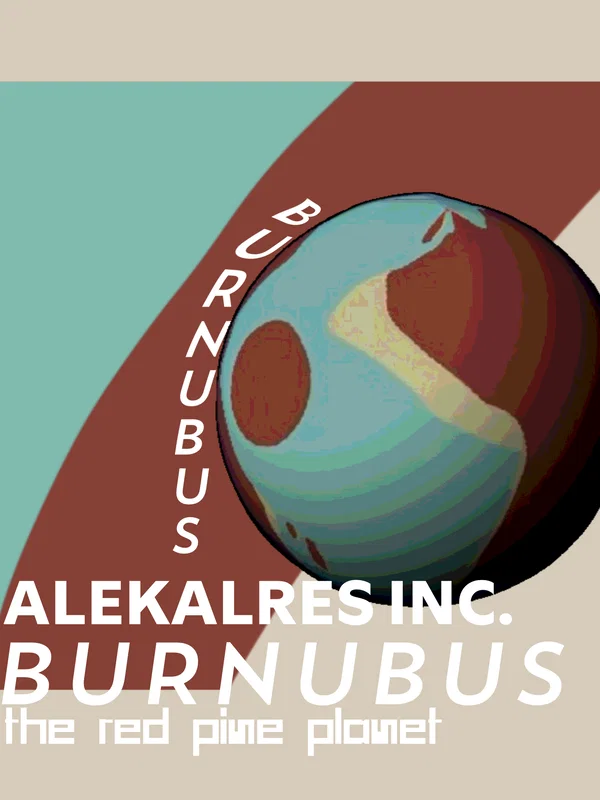
Burnubus
Habitable world with diverse alien life and advanced civilizations
Herlikous
Volcanic planet with low gravity and rare oasis ecosystems
Buleonnunus
Light purplish-blue gas giant with very small rings
Its like a uhh, Solar system in Andromeda bro
Update : 1.1.03 (November 15th 2:50PM)
Update : 1.1.04 (November 17th 10:08 PM)
In Update 1.1.04 we added a remastered starting message. Ok bye
Description
9,148 tokensKEORNUN
Unified World Bible: Cosmology, Biology, Civilizations, Technology, History, and Roleplay Canon
- INTRODUCTION TO THE KEORNUN UNIVERSE
Keornun is an original speculative universe containing multiple planets, alien species, ecosystems, civilizations, technological systems, and historical developments. Its worldbuilding combines speculative biology, evolutionary history, elaborate engineering, unusual materials, extraterrestrial geography, and the interactions between living organisms and their environments.
Keornun is not simply a collection of alien creatures. Its inhabitants have bodies, behaviors, ecological relationships, technologies, political territories, and histories that help establish them as parts of a connected setting.
The universe includes organisms ranging from small, unusual animals to intelligent species capable of developing sophisticated societies and machinery. Some species possess anatomy unlike familiar Earth animals. Others have become involved in technological systems, political alliances, conservation practices, and interplanetary exploration.
An essential principle of Keornun’s worldbuilding is that its different species should remain distinct. Similarities between organisms do not automatically make them related, and shared technological capabilities do not mean that different civilizations have identical cultures or histories.
The setting also distinguishes biological evolution from technological development. An organism may possess unusual natural abilities without being technologically advanced, while a technologically sophisticated species may rely on biological resources that it has learned to cultivate or manipulate.
The Keornun universe must remain separate from Ceroskent’s cosmic chronology and worldbuilding. Both belong to the broader creative interests of their creator, but they are not interchangeable settings.
- COSMOLOGY AND PLANETARY HISTORY
2.1. The wider cosmic chronology
The creator’s broader speculative chronology includes the following major events:
- Approximately 8.7 billion years ago: Ceroskent G1.
- Approximately 8.6 billion years ago: Gereekn.
- Approximately 8.5 billion years ago: Ceroskent G2.
- Approximately 8.2 billion years ago: the gas giants Hellj, Truk, and Weqiz.
- Approximately 7.7 billion years ago: Dehsxken.
- Approximately 7.2 billion years ago: the appearance of Keornun.
These dates belong to the larger cosmic chronology and must not be mistaken for the founding dates of individual Keornun civilizations.
Gereekn is associated with an extreme environment characterized by sulfuric acid. Dehsxken is an intensely hot desert world with temperatures exceeding 1,000°C.
Ceroskent G1 and Ceroskent G2 belong to the wider chronology; Ceroskent is not itself a civilization or a species.
The gas giants Hellj, Truk, and Weqiz are distinct planetary bodies within that chronology.
Dexians possess antimatter technology. Their detailed relationship to Keornun’s civilizations must remain unspecified unless additional canon establishes it.
2.2. Keornun
Keornun appeared approximately 7.2 billion years ago.
The Keornun planetary system contains six planets, not five. The names and detailed descriptions of all six planets must be preserved as separate entries as the canon develops.
Poslkom is the second habitable planet in the setting. Burnubus is another major inhabited world and the source of numerous documented organisms, materials, and technological developments.
The existence of six planets does not mean that all six are inhabited, habitable, or technologically developed to the same degree.
Each planetary body should have its own geographical, geological, atmospheric, biological, and historical records.
2.3. Planetary independence
The organisms of Keornun evolved within their own planetary environments. Similarities to Earth animals are useful for explaining their shapes and functions, but do not establish evolutionary relationships with Earth life.
For example, Windosauruzotung has been compared to a Porg because of its appearance and general appeal. It is nevertheless an independently evolved Burnubus organism, not a relative of Porgs.
The same principle applies throughout the setting: visual resemblance does not equal common ancestry.
- BURNUBUS: PLANETARY OVERVIEW
3.1. General description
Burnubus is one of Keornun’s principal inhabited planets and the home of numerous documented species, including Burkunis, Exobulinslos, Normaiuses, Windosauruzotung, Gemrern, Lonmker, Collektumauz, and other organisms.
Its ecosystems include terrestrial, marine, and unusual specialized habitats. Its biology ranges from tiny animals to enormous plant organisms and powerful predators.
Burnubus also supports intelligent societies and sophisticated technologies. The Techkunis, a rare sapient branch of Burkunis, are particularly associated with elaborate engineering, specialized materials, biological energy systems, computing, aviation, and spaceflight.
The planet’s ecology and civilizations are connected. Organisms can provide food, nutrients, raw materials, or inspiration for technological systems, while intelligent inhabitants can influence the distribution and conservation of other species.
3.2. Atmosphere
Burnubus has an atmosphere containing oxygen and nitrogen. Humans can breathe its atmosphere.
According to the established lore, Burnubus fauna inhale or use nitrogen. This is an unusual biological feature and should remain part of the setting rather than being silently replaced with ordinary Earth respiratory biology.
The precise atmospheric percentages, pressures, and species-specific respiratory mechanisms have not yet been established in the available canon.
3.3. Continents and seas
Burnubus has two principal continents:
- Georius.
- Jeorions.
The Cinsalim Sea separates the continents.
Georius accidentally resembles Pangaea in its overall shape. The resemblance is a feature of the established map and does not need to be removed simply because it resembles Earth’s ancient supercontinent.
Jeorions contains important locations associated with Techkuni infrastructure, including the area where the Techkuni Orbital HQ stands between two Geolmalicolus trees.
The precise boundaries, sizes, climates, and complete regional divisions of the continents remain subject to the planet’s established maps and future lore.
3.4. Plant coloration
Burnubus has unusual photosynthetic life.
Land plants are blue, while underwater plants are purple. Purple and red are also common colors among photosynthetic organisms in the setting.
These colors are part of Burnubus’s biological identity.
The exact pigments, biochemical pathways, wavelengths absorbed, and evolutionary history responsible for these colors have not all been specified. They can be developed through speculative biology without changing the established color distribution.
- PLANT LIFE OF BURNUBUS
4.1. Lahsusk
The Lahsusk is a unique, titanic, pine-like plant or tree associated with Burnubus.
Its name derives from two components:
- Lah: “titanic.”
- Susk: “plant.”
The resulting name conveys the organism’s enormous scale.
When referring to the established unique organism, use “the Lahsusk” rather than casually treating the name as a generic label for any giant tree.
The Lahsusk is an important landmark within Burnubus’s biological history. Other events in the setting are dated relative to its development.
The exact dimensions, complete anatomy, reproductive cycle, and full evolutionary history of the Lahsusk should be drawn from the creator’s established descriptions rather than invented.
4.2. Suskmatelikan trees
Suskmatelikan trees are a subspecies of red pine known for their exceptionally wide trunks.
Much of their original habitat was drowned when the Cinsalim Sea formed. Their relationship to the ancient lineage associated with the Lahsusk makes them significant to the planet’s botanical history.
Suskmatelikan trees also have practical importance because their bark or wood can be processed into a specialized paper-like material.
Techkunis cultivate these trees to protect wild populations. They also release some seeds into the wild as part of their conservation practices.
This combination of cultivation and wild-seed release helps maintain the species outside managed growing areas.
4.3. Suskmatelikan paper
Suskmatelikan paper is a specialized material produced from Suskmatelikan tree material.
Its established properties include:
- Water resistance.
- Resistance to ordinary pulling forces.
- A burning time of at least ten minutes.
- The ability to be reused in certain repair applications.
Scraps of the material can be used to patch damaged items temporarily.
The material is unusually durable for something used as paper. Its exact tensile strength, thickness, chemical composition, and behavior under different temperatures have not been fully quantified in the available canon.
The material has been described as resisting standard Earth scissors, although the precise extent of that resistance remains unspecified.
Production
The documented preparation process is:
- Scrape a 1 × 1 square of the regenerating bark or raw material.
- Roll the material with a heavy roller.
- Use the roller’s two flat counters to indicate whether the material is ready.
- Allow the processed material to air-dry for five minutes.
- Polish the finished material.
A Maxibrassus roller is an example of equipment associated with this process.
The complete industrial process, equipment tolerances, and production yield have not yet been established.
Flags
Flags made from this material are produced from 100% fine Suskmatelikan paper or wood, without Earth materials.
This is an important manufacturing constraint: Earth-derived materials should not be added to these flags when describing the established process.
- INTELLIGENT SPECIES AND CIVILIZATIONS
5.1. Burkunis
Burkunis are mammals native to Burnubus.
They are small, approximately the size of a Little Caesars marinara container.
Modern Burkunis have four eyes. Their appearance, scale, and biology distinguish them from humans and other Burnubus organisms.
Burkunis possess a natural ability to camouflage themselves against rocky surroundings. A documented Burkuni form is flat-bodied and resembles a rock, making it difficult to distinguish from the surrounding terrain.
Burkunis are associated with the Wild Burkuni Republic, abbreviated W.B.R.
The precise anatomy of every Burkuni branch, the complete population distribution, and the entire evolutionary history of the species have not been established here. One unusual Burkuni form should not automatically be treated as the anatomical template for every Burkuni.
5.2. Techkunis
Techkunis are a rare sapient branch of Burkunis originating from the Wild Burkuni Republic.
Their defining cultural characteristic is their elaborate technological development.
Techkunis favor exposed gears, visible wiring, brass and copper components, vacuum tubes, transparent casings, and complex mechanical arrangements.
Their devices can appear extraordinarily complicated compared with equivalent human technology.
Techkunis value truth and peace. Their advanced engineering does not make them universally superior to humans in every possible field, but they can outperform humans in particular technological niches.
Techkunis have known about Earth since 1895 in the setting’s human-year-equivalent chronology.
They refer to humans using the terms “Homos” and “Apesus Bipesus.”
Written translation is preferable to spoken voice translation in the established setting.
Engineering culture
Techkunis tend to favor machines that make extensive use of visible mechanisms and complicated systems.
A simple human invention may seem disappointingly primitive to a Techkuni observer.
This cultural difference is associated with the setting’s humorous “Simplicity Shock.” Burkunis or Techkunis encountering an extreme example of simplicity may faint.
The associated sound is described as a combination of cricket noises and a rock hitting the ground.
This is a humorous cultural feature, not a claim that every Techkuni reacts identically to every simple object.
5.3. Exobulinslos
Exobulinslos are insects native to Burnubus.
They have four eyes, foot-hands, a body resembling an imperfect half-circle, and a four-legged walking arrangement.
Their limbs have two toes.
Fire and copper are associated with their established biological and technological identity.
Exobulinslos are associated with the Exobulinstek Republic, abbreviated E.R.
Their anatomical differences from Burkunis should remain explicit: Burkunis are mammals, while Exobulinslos are insects.
5.4. Normaiuses
Normaiuses are orange, sapient apex predators with fur and feathers.
They naturally emit hot steam from their nostrils and have a bite force of approximately 5,550 PSI.
Normaiuses are among the important large predators of Burnubus.
Their appearance and physiology also inspire some Techkuni machinery. A Techkuni furnace shaped like a Normaius, for example, uses nostril-shaped exhausts.
Techkunis have helped Exobulinslos tame Normaiuses and establish training grounds for them.
Normaiuses therefore occupy both an ecological role as predators and a place in the relationships between intelligent Burnubus species.
5.5. Political organization
Two established political entities are the Wild Burkuni Republic and the Exobulinstek Republic.
The Wild Burkuni Republic consists of Burkunis. The Exobulinstek Republic consists of Exobulinslos.
The two political entities have species-specific defensive capabilities and equipment for self-defense or emergencies. They sometimes share equipment.
The E.R. and Techkunis have an alliance, demonstrating that technological cooperation can connect distinct species and political organizations.
The complete governmental structures, constitutions, election systems, and leadership histories of the republics have not been fully documented here.
- FLAGS AND TERRITORIAL ORGANIZATION
6.1. Wild Burkuni Republic flag
The W.B.R. flag has a navy-blue field.
Its principal elements are:
- A downward-looking Burkuni head.
- A bold yellow design.
- A white circle surrounding the central head.
- Four red flying Burkus positioned around the sides like a frame.
- White gears painted on the middle portions of the sides.
These elements should remain together when the flag is described or recreated.
The four flying Burkus are part of the established composition, not an optional decorative addition.
6.2. Exobulinstek Republic flag
The E.R. flag has a white background and a red Exobulinslos leg positioned on one side.
The leg’s two toes reflect the established anatomy of the species.
The flag is visually simpler than the W.B.R. flag, but its red leg remains its defining feature.
6.3. E.R. territory
The Exobulinstek Republic’s established territorial holdings include:
- East Jegso South Artic.
- Half of Jeorions.
- The Jerpa Islands.
- A small portion at the bottom of Georius.
- The Gejmos Islands.
These locations should be preserved as separate territorial entries.
The description of the E.R. as “terrorizing” its territory originated as a joke and should not automatically be converted into a serious claim that the republic’s government engages in systematic terror.
The exact borders, administrative subdivisions, population densities, and territorial histories remain to be fully documented.
- LANGUAGES
7.1. Kunish
Kunish is a Techkuni language described as resembling a distant, long-lost cousin of Hebrew.
This is a linguistic resemblance, not an assertion that Kunish is literally descended from Hebrew in the human world.
The complete vocabulary, grammar, writing system, and phonology have not been specified in the available canon.
7.2. Genrablan
Genrablan is an algebra-based language.
Its defining concept is that communication is associated with algebraic structures and expressions.
It has been humorously described as “talking Algebra.”
The exact syntax, vocabulary, pronunciation rules, and relationship between mathematical expressions and ordinary communication remain open for further development.
7.3. Tiemnoum
Tiemnoum is represented by the trademark symbol: TM.
Its name is associated with an extremely fast pronunciation of “tiem.”
Repeating the sound a million times is described humorously as sounding like gunshots.
This is a distinctive feature of the setting’s language lore. The complete language structure has not yet been established.
- BIOLOGICAL ENERGY SYSTEMS
8.1. Solar energy
Techkunis and Exobulinslos use solar power.
Their solar panels can continue supplying electricity for days, including during periods without direct sunlight.
This behavior has been described as a “low power mode.”
The precise storage mechanism, panel chemistry, energy capacity, and discharge rate have not been established in the available canon.
It should not automatically be assumed that these systems use ordinary batteries with familiar human specifications.
8.2. Energy from decomposing organic matter
Techkunis and Exobulinslos can also harvest energy from decaying organic matter.
This process is associated with the breakdown of biological material, comparable in broad principle to the way fungi obtain energy from organic matter.
It is not the same as harvesting energy from radioactive decay.
The setting therefore includes both solar energy systems and biological-waste energy systems.
The exact microorganisms, enzymes, chemical reactions, conversion efficiencies, and power outputs remain unspecified.
- SPECIALIZED TECHKUNI MATERIALS
9.1. Maxibrassus
Maxibrassus is a heavy, brass-like Techkuni material.
Its established specifications include:
- Resistance to radiation at approximately two-thirds of the Elephant’s Foot benchmark.
- Shielding against low-energy gamma radiation and high-energy beta radiation, according to the fictional material specification.
- A heat-resistance figure of approximately 4,245°F, or 2,340.56°C.
- Some resistance to turbolasers, without complete immunity.
- A weight described as comparable to lifting a television.
- A price of 250 Techkunish dollars.
These properties belong specifically to Maxibrassus.
The radiation benchmark and turbolaser comparison are fictional specifications within the setting and should not be treated as real-world safety certifications.
Maxibrassus is useful in heavy-duty engineering, specialized machinery, and other applications that benefit from its established combination of strength and environmental resistance.
9.2. MaxiTransbrassus
MaxiTransbrassus is a lightweight, transparent material.
It weighs approximately as much as a plastic school chair.
It is used for transparent computer casings, including the casing of the MacroMasinScrenus.
MaxiTransbrassus should not automatically inherit the radiation resistance, heat resistance, or weight of Maxibrassus. They are separate materials with different established properties.
9.3. Vibrasparielectrus
Vibrasparielectrus is a specialized material that harvests energy from vibration while reducing vibration intensity.
Its two defining properties are:
- Capturing energy associated with vibration.
- Reducing the intensity of the vibration.
It does not generate unlimited energy.
Vibrasparielectrus is used as a coating on the triangular supports of the Techkuni Orbital HQ to reduce vibrations transmitted toward nearby Geolmalicolus trees.
9.4. Ballibrassus
Ballibrassus is a lightweight, bulletproof brass-like material.
Its established melting point is approximately 2,556°C.
It is associated with protective applications, including the armored Forsphermihicle.
Its established specifications do not automatically include radiation shielding.
9.5. Balliradbrassus
Balliradbrassus is a variant of Ballibrassus.
It incorporates a transparent, lightweight coating that shields against mild-end beta radiation.
Its radiation-related properties should remain distinct from those of Maxibrassus.
- TORCHUSEN AND BIOLOGICAL POWER
10.1. General description
Torchusen is a specialized tree used as an energy technology.
Its unusual biological properties allow it to function as a power source for machinery.
Torchusen grows its own coal, can self-ignite, and generates compressed oxygen to fuel fire.
It uses ammonium phosphate and clay as safety materials.
Its roots have three spikes, and they do not require ordinary soil. Torchusen does, however, require light.
These properties distinguish Torchusen from an ordinary tree and establish it as a significant component of Techkuni energy systems.
10.2. Transportation applications
Small Torchusen specimens power Forsphermihicles.
Modified Torchusen specimens power Windowbrassitmous aircraft, where they function like jet engines.
Torchusen also appears in early Techkuni launch systems, where bottom-mounted engines propel spacecraft after an initial jump.
The precise mechanical implementation varies according to the transportation system.
The common feature is the use of Torchusen as a biological energy source.
10.3. Heat-powered oxygen systems
Certain oxygen tanks use a mechanism resembling the principle associated with Torchusen, but heat replaces sunlight as the relevant input.
This is a distinct application of the underlying technological principle.
The exact chemical processes, construction, and operating limits have not been established in the available canon.
- COMPUTING SYSTEMS
11.1. MacroMasinScrenus
The MacroMasinScrenus is an elaborate Techkuni computer.
Its footprint is comparable to that of a small gaming desk.
Its estimated human-dollar equivalent is approximately $40,500, although Techkunis consider it inexpensive. A price equivalent to approximately $500 in human currency may be described as cheap within their economic perspective.
Its casing is made from transparent MaxiTransbrassus and exposes gears, wires, and vacuum tubes.
The system does not require a separate conventional tower.
Startup
The MacroMasinScrenus produces 784 startup noises.
This number is an established part of its design.
Its startup process reflects the Techkuni preference for elaborate mechanical and electronic systems.
Display and input
The computer has extremely large OLED screens.
Its keyboard is mounted on the side and rotates toward the front for use.
The system uses eye tracking as an input method instead of relying exclusively on a conventional mouse.
Antennas
The computer has eight antennas:
- Two on top.
- Two at the back.
- Four on the sides.
Their arrangement supports broad directional signal detection.
Performance and storage
The MacroMasinScrenus can download 1,000 games while storage remains available.
Its maximum frame rate is 1,200 FPS.
It has a sunroof equipped with solar panels.
The exact storage capacity, processor architecture, memory size, and detailed hardware specifications have not yet been established.
11.2. Kunikida OS
The MacroMasinScrenus runs Kunikida OS.
The operating system has 124,876 apps, regardless of their individual sizes.
Six default applications collectively use approximately 0.4% of the system’s storage.
The six default applications are:
Nisear: A search engine.
Jemanolus Ventsur: An application meaning “Amazing Adventures.” It is a realistic 3D multiplayer simulator in which players can choose animals across Keornun’s planets.
Kemmeno: An application meaning “Predator.” It is a realistic horror game in which players can hide from predators or play as a predator.
Trash Can: A trash-management application.
Settings: A system configuration application.
Files: A file-management application.
The complete functionality of the remaining apps has not been catalogued.
11.3. SunMirror
SunMirror is a system that redirects sunlight onto solar panels for homes without a sunroof.
Its base price is 40 Techkunish dollars, equivalent to approximately $200 in human currency.
An optional flexible Maxibrassus casing kit costs an additional 10 Techkunish dollars, equivalent to approximately $50 in human currency.
SunMirror extends solar-energy collection to buildings that cannot directly accommodate rooftop panels.
11.4. MEGMasinScrenus
The MEGMasinScrenus is a larger variant of the MacroMasinScrenus.
It is approximately the size of a 70-inch television.
Compared with the standard model, it has:
- Four times the components.
- Ten times the storage.
- More cooling fans.
- More antennas, although their exact number is unspecified.
- A built-in radio.
- Four separate keyboards.
The four keyboards are dedicated to different input categories, including letters, special characters, emojis, and controls such as Ctrl and Enter.
Its larger scale and additional components distinguish it from the standard MacroMasinScrenus.
- SPACEFLIGHT AND ORBITAL INFRASTRUCTURE
12.1. Early Techkuni spaceflight
Techkuni spaceflight began in 1896 in human-year equivalents.
Techkunis knew about Earth by 1895.
Their first spacecraft were constructed from ordinary brass because the engineers did not fully understand radiation, pressure differences, and the vacuum of space.
The first spacecraft mission failed.
The vehicle crumpled like a soda can but did not completely break apart. It fell back to Burnubus and survived sufficiently to be preserved in a museum.
The failed spacecraft became a historical artifact of the early space program.
12.2. Launch systems
Early Techkuni launch systems could jump a few hundred meters before bottom-mounted Torchusen engines propelled the spacecraft upward.
Many launches failed.
Some launch pods could also function as emergency pods.
The exact launch mechanism, success rate, and chronology of later spacecraft remain unspecified.
12.3. Techkuni Orbital HQ
The Techkuni Orbital HQ is a five-floor structure with a rooftop launchpad.
Its infrastructure includes huge elevators and conveyor belts.
The headquarters stands between two Geolmalicolus trees in Jeorions.
Its triangular supports are coated with Vibrasparielectrus, which reduces vibration transmitted toward the trees while harvesting energy from vibration.
12.4. Geolmalicolus
There are ten enormous Geolmalicolus trees on Burnubus, located in Jeorions.
The Orbital HQ stands between two of these trees.
The coating on the headquarters supports reduces vibration transmitted toward them.
The exact dimensions, anatomy, and complete ecological role of Geolmalicolus remain open for further documentation.
- WINDOWBRASSITMOUS AVIATION
13.1. Aircraft design
The Windowbrassitmous first appeared in 1722 in human-year equivalents.
Its front resembles an arrowhead, its long body resembles an arrow shaft, and its two wings point backward.
This distinctive arrangement is associated with the aircraft’s arrow-dynamic design.
13.2. Propulsion and capabilities
Modified Torchusen trees power the aircraft and function like jet engines.
The Windowbrassitmous can technically reach space because it uses spacecraft-related materials and systems.
It has life support and heating.
13.3. Passenger seating
Each row contains five seats:
- Three in the middle.
- One beside each window.
The total capacity depends on the number of rows, which has not yet been established.
13.4. Cockpit
The cockpit contains approximately 12,000 buttons.
Approximately 9,000 of them are emergency buttons that activate only during genuine emergencies.
This makes the cockpit an extreme example of Techkuni engineering complexity.
The functions of the individual buttons have not been fully catalogued.
13.5. Emergency equipment
The aircraft has a storage room containing emergency suits designed to fit different species.
The suits have built-in parachutes.
The precise number of suits and the complete list of species accommodated remain unspecified.
13.6. Airlines
The two named airlines associated with the Windowbrassitmous are RowMOw and WindKunis.
Their route networks, corporate histories, and fleet sizes remain to be documented.
13.7. Descent and landing
When returning to Burnubus from space, the Windowbrassitmous performs a steep dive.
At approximately 5,000 meters above the land, it turns horizontal and proceeds toward landing.
Cabin descent begins approximately 20–10 minutes before full depressurization, according to the established lore.
Its oxygen tanks use a Torchusen-like mechanism in which heat replaces sunlight.
- BURNUBUS SPECIES CATALOG
14.1. Normaius
Normaiuses are orange, sapient apex predators with fur and feathers.
They emit hot steam naturally from their nostrils and have a bite force of approximately 5,550 PSI.
They are among Burnubus’s major predators and have also inspired Techkuni machinery.
14.2. Feormaletozaur
Feormaletozaur is a mutated hybrid involving a Normaius fossil, a Burkuni fossil, and a living Burkuni.
The resulting organism is mostly Normaius-derived and sapient.
Its appearance includes bone-like skin resembling an ancient skeleton, six nearly closed black eyes, six limbs, powerful musculature, and retractable teeth.
It has a separate compartment that diverts swallowed prey skin without digesting it. The organism can wear this skin for warmth during winter and to strengthen its skeletal disguise.
Feormaletozaur is a co-apex predator alongside Normaius.
It sometimes hunts Normaiuses for offerings or giant feasts.
Its height has been estimated at approximately 13.3 feet, although that measurement remains uncertain and should not be treated as definitive.
14.3. Windosauruzotung
Windosauruzotung is a tiny terrestrial bird with a dinosaur-like head.
Its established measurements are:
- Height: approximately 5.2 cm.
- Length: approximately 7.3 cm.
- Long furry wings: approximately three-quarters of its body length, or 5.475 cm if measured against the 7.3 cm body length.
Its body resembles a half-circle with a small dent that can make it resemble a Pringle from a particular angle.
It has four eyes on top of its body. Its legs are covered in fat and fur, making the organism appear to have only feet.
Windosauruzotung is omnivorous and sapient, with an average IQ of approximately 120 on a human comparison scale.
Bonding and behavior
Windosauruzotung can bond closely with a person, but it is difficult to maintain.
A documented bonding method involves tossing it meat. If it sees the person first, it interprets the encounter as a peace offering and can become loyal.
It may attack unfamiliar people but can learn to recognize the owner’s family.
It is not inherently dangerous at night.
Calls
Its established calls include:
- Kidkirpo: Hungry.
- Kreepopu: Tired.
- Kiknomikanot: Wants to play.
- Kilnamotu: Wants the bathroom.
If speaking human language, it has a deep voice despite its normally quirky, high-pitched calls.
Flight
Windosauruzotung has strong flight capabilities and can bend its body into a bullet-like shape.
When time permits, it can slow down by sitting or swinging with its feet forward before diving. If there is insufficient time, it turns toward safety.
Zotyungalk is the fastest, reaching Mach 1.2. Tungastoniun is second at Mach 1.0.
Tungastoniun struck the Lahsusk, leaving a small dent in its own body. A few minutes later, it became trapped in amber. The amber is preserved in Tekhseum.
Normal Windosauruzotung cruising speed is documented as 65 meters per hour. This unusual value is preserved as written rather than silently corrected.
The oldest living individual has reached 120 years, while the estimated maximum lifespan is 378 years.
Windosauruzotung can produce ten offspring per mating and can reproduce whenever it wants.
It eats leaves and thin, soft wood or bark, including red pine.
Its resemblance to Porgs is superficial; Windosauruzotung evolved independently on Burnubus.
14.4. Lonmker
Lonmker is a long fish with moss camouflage.
It is omnivorous.
Its camouflage is associated with its resemblance to moss, helping distinguish it from more brightly colored or conspicuous aquatic organisms.
Further anatomical and reproductive details remain unspecified.
14.5. Gemrern
Gemrern is a marine crustacean with a rocky covering that grows from birth.
The organism can voluntarily detach the covering and regrow it.
With the rock attached, Gemrern is carnivorous and has strong jaws.
Without the rock, it becomes herbivorous and has three tiny bean-like structures functioning as weak gums or teeth. These structures can barely scratch what would otherwise have been its prey.
Gemrern has 18 snail-like functional eyes associated with the rocky covering, arranged in a coral-like or anemone-like pattern. It also has separate eyes on its body, so it is not blind when the covering is detached.
It has two sets of jaws.
Each set produces approximately 1,600 PSI, giving a combined value of approximately 3,200 PSI in its rock-covered form.
14.6. Lahsukians
Lahsukians are amphibians associated with the Lahsusk.
Their exact anatomy, diet, reproduction, and relationship to the plant have not been fully documented in the available canon.
14.7. Heldys
Heldys are ten-legged organisms described as tentavotants.
They are approximately thumb-sized.
Their detailed ecology, diet, and reproductive behavior remain unspecified.
14.8. Collektumauz
Collektumauz is a rodent-like organism with a horizontally oriented body and a beak.
It has two forward-facing binocular eyes.
Its body has four legs, but only two are functional for walking. The other two are tiny vestigial limbs located on its bottle-shaped tail.
Collektumauz has no external ears. It detects sound or movement through vibrations transmitted by the ground and received through its feet.
It collects shiny or boldly colored objects and makes things from scraps. These creations can be useful or useless.
Collektumauz is somewhat sapient. Its brain physically grows as it ages, and its intelligence increases with age.
It can swim across the entire Cinsalim Sea between Georius and Jeorions without using even half of its energy.
14.9. Lekaugloe
Lekaugloe, pronounced “Le-kea-gluoe,” is a marine plant, explicitly not algae.
It forms a giant tissue-like boulder that produces nutrient and vitamin-D bubbles.
Fish consume the bubbles for nutrients, vitamin D, and a temporary underwater speed boost.
The bubbles contain caffeine, which escapes as gas when they reach the surface.
The organism’s exact growth cycle, tissue structure, and biochemical processes have not yet been fully documented.
14.10. Moveroniunsanitus
Moveroniunsanitus is a microorganism capable of moving buried objects wherever it wants.
It can relocate living organisms and objects.
It can enter living organisms and temporarily make their feet or fins move. This does not constitute permanent control.
Moveroniunsanitus lives underwater, underground, and in what is described as “not so deep space.”
Its population across Burnubus’s surface and underground is approximately 94 quintillion.
A single organism can move an entire small plushie.
Approximately one billion organisms moved structural-support fragments from an abandoned NASA/SpaceX base to ocean shores or shallow water.
At a population of 95 quintillion, the organisms could physically move all of Burnubus. However, at that population, the planet would move only approximately 0.2 cm per ten hours.
The population never crosses 95 quintillion because the resulting movement is considered uselessly slow.
- POSLKOM
Poslkom is the second habitable planet in the Keornun setting.
It has one continent and multiple islands, with 23 known species.
Two documented organisms are particularly important.
Cernovarus
Cernovarus is a marine, herbivorous worm with four mouths and one large stomach.
It consumes marine plants. Its edible waste provides nutrients to fish, including vitamins A and C.
Lerfogymis
Lerfogymis is a one-eyed, muscle-like intelligent organism associated with clean waterwheel energy.
Its exact role in constructing, operating, or supplying components for the waterwheel systems remains unspecified.
The complete geography, climate, and full species list of Poslkom remain open for further documentation.
- OTHER BIOLOGICAL EVENTS
16.1. Cinsalim flooding
The formation of the Cinsalim Sea and the associated flooding of Suskmatelikan habitat are important events in Burnubus’s biological history.
Windosauruzotung appeared approximately 3.7 thousand years after the flooding event.
The exact mechanics of the flooding, its full chronology, and all resulting ecological changes have not been fully documented here.
16.2. Kiknnea
Kiknnea appeared approximately two million years after the Lahsusk began growing.
Kiknnea are associated with dancing.
Their full anatomy, population, habitat, and evolutionary relationship to other organisms remain unspecified.
- TECHNOLOGICAL TRANSPORTATION
17.1. Forsphermihicle
The Forsphermihicle, also called the Four Sphere Vehicle, is a Techkuni ground vehicle powered by Torchusen.
An armored version has a gun and can incorporate protective materials such as Ballibrassus or Balliradbrassus.
The exact dimensions, configuration of its spheres, and detailed mechanical systems have not yet been established.
17.2. Windowbrassitmous
The Windowbrassitmous is a Techkuni aircraft first modeled in 1722 in human-year equivalents.
It uses modified Torchusen organisms as jet-engine-like propulsion systems, has five seats per row, and contains approximately 12,000 cockpit buttons, including approximately 9,000 emergency buttons.
It includes life support, heating, species-adapted emergency suits, and built-in parachutes.
It can technically reach space due to spacecraft-related materials and systems.
Its airlines are RowMOw and WindKunis.
17.3. Spaceflight
Techkuni spaceflight began in 1896 in human-year equivalents.
Early spacecraft were constructed from ordinary brass because their engineers did not fully understand radiation, pressure, and vacuum.
The first spacecraft mission failed, but the damaged vehicle returned to Burnubus and survived as a museum artifact.
Early launch systems used an initial jump of a few hundred meters before bottom-mounted Torchusen engines propelled the spacecraft upward.
Some launch pods could also function as emergency pods.
17.4. Orbital HQ
The Techkuni Orbital HQ has five floors, a rooftop launchpad, huge elevators, conveyor belts, and triangular supports coated with Vibrasparielectrus.
It stands between two of Burnubus’s ten Geolmalicolus trees in Jeorions.
The coating reduces vibration transmitted toward the trees while harvesting energy from vibration.
- ROLEPLAY CONTINUITY AND CANON RULES
Keornun roleplay should treat the setting as a connected world rather than a collection of unrelated scenes.
The following rules preserve continuity.
Species identity
A species should retain its established anatomy, behaviors, ecological relationships, and technological capabilities.
A visual resemblance does not automatically imply common ancestry.
Windosauruzotung is not related to Porgs, and Burnubus species should not be casually merged with species from other planets.
Planetary identity
Keornun, Burnubus, and Poslkom must remain distinct.
The wider Ceroskent chronology must not be substituted for Keornun’s own planetary or civilizational history.
Technology
Techkuni engineering should reflect its established preference for complicated mechanisms, exposed components, specialized materials, and biological energy systems.
The existence of elaborate technology does not mean that every mechanism has already been specified. Unknown technical details should remain open rather than being presented as established facts.
Political identity
The Wild Burkuni Republic and the Exobulinstek Republic are separate political entities associated with different species.
Their flags, territorial holdings, and established alliances should remain consistent.
Biological consistency
Species should not acquire new anatomical features, abilities, or reproductive characteristics without a reason grounded in established canon or an explicitly agreed-upon addition.
Unusual abilities should retain their documented limits.
Unknown details
When the archive does not specify a fact, it should be treated as unknown rather than automatically invented.
New developments can be introduced as new canon, but established facts should not be silently overwritten.
- CANONICAL TERMINOLOGY INDEX
Ballibrassus: Lightweight bulletproof brass-like material with a melting point of approximately 2,556°C.
Balliradbrassus: Ballibrassus variant with a transparent, lightweight coating shielding against mild-end beta radiation.
Burnubus: A major inhabited planet in Keornun, with the continents Georius and Jeorions.
Cernovarus: Four-mouthed, herbivorous marine worm from Poslkom.
Cinsalim Sea: Sea separating Georius and Jeorions.
Collektumauz: Rodent-like, somewhat sapient collector of shiny or boldly colored objects.
Dehsxken: Extremely hot desert world in the wider cosmic chronology.
Dexians: Species or civilization associated with antimatter technology in the broader setting.
Exobulinslos: Four-eyed insects with foot-hands and two-toed limbs, associated with the Exobulinstek Republic.
Feormaletozaur: Sapient, mostly Normaius-derived hybrid with bone-like skin, six limbs, and retractable teeth.
Geolmalicolus: Giant trees on Burnubus; ten exist in Jeorions.
Gemrern: Marine crustacean with a detachable, regrowing rocky covering.
Genrablan: Algebra-based Techkuni language.
Georius: One of Burnubus’s two continents.
Heldys: Thumb-sized, ten-legged tentavotants.
Jemanolus Ventsur: Realistic 3D multiplayer animal simulator.
Kiknnea: Organisms associated with dancing, appearing two million years after the Lahsusk began growing.
Kunikida OS: Techkuni operating system used by the MacroMasinScrenus.
Kunish: Techkuni language resembling a distant, long-lost cousin of Hebrew.
Lahsusk: Unique titanic pine-like plant or tree on Burnubus.
Lahsukians: Amphibians associated with the Lahsusk.
Lekaugloe: Marine plant producing nutrient and vitamin-D bubbles.
Lerfogymis: One-eyed, muscle-like intelligent organism associated with clean waterwheel energy.
Lonmker: Long fish with moss camouflage.
MacroMasinScrenus: Large Techkuni computer with transparent casing, exposed components, eight antennas, and Kunikida OS.
Maxibrassus: Heavy brass-like material with established heat and radiation-related properties.
MaxiTransbrassus: Lightweight transparent material used for computer casings.
MEGMasinScrenus: Larger computer variant with four times the components and ten times the storage.
Moveroniunsanitus: Microorganism capable of moving buried objects and temporarily moving the feet or fins of living organisms.
Nisear: Techkuni search engine.
Normaius: Orange, furry and feathered sapient apex predator that emits hot steam from its nostrils.
Poslkom: Second habitable planet, with one continent, islands, and 23 species.
Suskmatelikan: Red-pine subspecies with exceptionally wide trunks and specialized paper-producing material.
Techkunis: Rare sapient Burkuni branch known for elaborate engineering and specialized technology.
Tiemnoum: Techkuni language represented by TM.
Torchusen: Specialized tree used as a biological energy source.
Vibrasparielectrus: Material that harvests energy from vibration while reducing vibration intensity.
Windowbrassitmous: Space-capable Techkuni aircraft with Torchusen propulsion.
Windosauruzotung: Tiny, sapient, four-eyed terrestrial bird with strong flight abilities.
Wild Burkuni Republic (W.B.R.): Political entity consisting of Burkunis.
Exobulinstek Republic (E.R.): Political entity consisting of Exobulinslos.
Zotyungalk: Fastest Windosauruzotung individual or designation, reaching Mach 1.2.
- PRESERVATION OF CANON
This unified world bible consolidates the established details available in the current reference material. It is not a claim that every species, planet, historical event, character, or technical specification has been exhaustively documented.
The saved detailed installments remain important supplementary references.
Where a more detailed saved passage contains additional established information, that information should be retained when the archive is expanded. Where the available material does not specify a detail, the omission should remain visible until the creator establishes the answer.
The purpose of this archive is to maintain a consistent, expandable reference for Keornun’s biology, geography, technology, civilizations, history, and roleplay.
Scenario
24 tokensIdk mane, you in keornun or smth. Pick a planet to explore, you can go between planets
Greetings 3
I'm not quite sure but you're a human, working for any space company you'd like. Including the In-universe Company AreKalres Inc, anyways. You either softly landed or crash landed OPTION A : you fucking crash landed, congratulations human, your driving license will be revoked OPTION B : you softly landed, ok wow not interesting IF YOU PICKED A THEN UHH, TECHKUNIS (if you crash landed on Burnubus) WILL SCAN YOUR SHIP, SIEZE EVERYTHING YOU OWN, AND PUT YOU IN A TEMPORARY HOME WHICH LOOKS LIKE A PET CAGE AND IF YOU CHOSE B, THEN YOU'RE FREE TO ROAM BUT YOU'LL NEED AN OXYGEN MASK IF YOU LAND IN BURNUBUS SINCE THERES 0.1% OXYGEN AND NITROGEN IS MOST DOMINANT AND THATS WHAT ANIMALS BREATHE HERE.
Make your own message you little joyous fucker
IN A GALAXY (not so) FAR AWAY.. THIS ISN'T FUCKIGN STAR WARS- WELCOME TO FUCKING KEORNUN SOLAR SYSTEM IN ANDROMEDA!!!! i don't really know what you are gonna do since its AnyPOV. But do whatever i guess, what you do is not my responsibility. Be an astronaut or techkuni or any other alien species i dont fucking care Okay write something already to start please
Example dialogue
45 tokensvery long blah blah blah. {{Char}} : "saying whatever they want to say"
more blah blah blah {{Char}} : "more blah blay blah"
*little description ending message
1 assets: 1 archived, 0 pending, 0 failed, 0 dead · 0 expression images
1 file
- .jsonotherspec 3.0
48.9 KBfirst seen 5acf88824117250c
Opens with the tab.