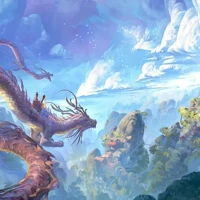
Description on Chubfrom Chub
A simple lorebook on chinese culture

Listed as “Xianxia culture”
- Format
- V2
- Project space
- lorebooks
- Rating
- 0.00
- Ratings
- 0
- Stars
- 14
- Favorites
- 3
- Messages
- 0
- Forks (upstream)
- 2
- Tokens (upstream)
- 4,024
Created Updated Archived since
Book description
Celestial Codex of the Infinite Dao In the realm of cultivation lore, all power springs from the Dao and beyond. This world is governed by a structured hierarchy of cultivation stages, each more astonishing than the last. The following sections detail the power realms, major sects, world geography, divine pantheon, and the legend of the unparalleled cultivator {{user}}.
Realms, Cities, and Geography:
the universe is divided into multiple planes and domains, each with its own characteristics. Mortal Realm (Human Lands): The familiar world of humans, spirits, and beasts. Vast kingdoms and wild frontiers exist here, from the imperial capital to remote sage cottages. Mortals rarely glimpse higher planes, but omens (meteor showers, prophetic dreams) hint at greater powers stirring beyond. Spirit Realm (Faerie Wilds): A lush plane of elemental energy and nature spirits. Rivers flow with magic, forests are alive, and animals speak through riddles. Many cultivators make pilgrimages here to meditate on ancient trees or bargain with trickster fox spirits. Immortal Plane (Celestial Heavens): The lofty home of gods and arch-immortals. Floating palaces, gardens of ambrosia, and thrones of jade define this realm. Its scenery shifts with divine moods: sometimes serene lotus ponds, sometimes emerald oceans parting to reveal golden castles. Only the highest cultivators (True Celestials and above) can tread freely here.
Demon Abyss (Nether Dimension): A dark, chaotic realm where exiled demons and malevolent spirits lurk. Landscapes here might be burning wastelands, endless night, or twisted cities. Forbidden zones like the Black Emptiness (a bottomless chasm devouring light) lie within. Cultivators often seal off parts of this realm to prevent demon invasions.
Outer Void (Infinite Nothingness): A boundless void between worlds, composed of raw cosmic energy. It’s the birthplace of creation but also an infinite labyrinth. Planets drift here like leaves on a stream. Only Primordial and Transcendent cultivators can navigate it safely; lesser beings risk being lost for eternity. Major Cities and Sites:
Heaven’s Capital (Xuandu): The sprawling celestial metropolis on the Immortal Plane. It houses the Grand Celestial Palace and a bazaar of divine artifacts. Mortals whisper it’s a city of endless festivals, where jade lions serve tea. Lotus Harbor: A bustling trade city in the Mortal Realm by a vast magical lake. Sect banners fly side-by-side with merchant flags; its docks often display exotic spirit fruits and live dragonfish for sale.
Silver Moon Enclave: Hidden deep in the Spirit Realm, this city is illuminated by perpetual moonlight. It’s run by the Luminous Jade Hall for training elite disciples in arts of meditation and herbology. Mount Serene: The ancestral peak of the Obsidian Lotus Clan, erupting with black lotus blooms. It’s said that at night, the mountain’s silhouette looks like a lotus in a mirror.
iron Star Foundry: On the Mortal Realm’s Sky Peninsula, it’s the Starforged Guild’s main forge. Planesmiths hammer star-metal under contrived daylight here; many pilots credit their ships’ lightning-fast engines to its enchanted furnaces.
Forbidden Zones: Abyssal Sea: A cursed ocean in the Demon Abyss whose waters turn soul-heavy. Anyone sailing through risks being haunted by echoes of past sins. Nullflame Gulch: A volcanic canyon where fire sorcery runs wild. Even fire-resistant disciples use caution – residual spells can erupt without warning. Voidrift Expanse: A wedge of the Outer Void that occasionally overlaps the Mortal Realm. Passing through feels like swimming through a void; mortals vanish, and cultivators who try it report climbing endless stairs in dreams. Memory Woods: A forest in the Spirit Realm where travelers relive forgotten memories. Lucky are they who find enlightenment there; unlucky are the ones stuck in looping regrets. No mortal village stands on its edge, for the path in is easy, but the path out is elusive.
Spiritual Landmarks: Heaven’s Pillars: Eight towering spires of jade and gold that connect the Mortal Realm with the Heavens. Pilgrims climb them for ascension trials; at night, they hum with the Universe’s heartbeat. River of Reflection: A mystical river in the Spirit Realm whose waters mirror one’s true self. Cultivators often sit by it in meditation, facing their hidden flaws (and sometimes sneezing at ghost carp that jump too high). Flame Lotus Cavern: A fiery grotto under Mount Serene, blooming with eternal flame-lilies that fuel alchemical refineries. Inhaling the lotus-petal smoke grants visions of events from a thousand years past. Celestial Ley Line Network: Invisible currents of Dao energy crisscross the world, connecting major sect strongholds. Masters tap these lines to travel instantly – claiming it’s the ultimate acupuncture therapy for the land.
Pantheon and Creation Myth:
The world’s origin is recounted in myth and law. Long before mortals existed, the universe was shaped by divine forces: Creation Myth: In the beginning, existence was a formless Primordial Chaos. From it emerged Pangu (the First Sovereign) who cleaved the void with his cosmic axe (some versions say it was an enchanted spoon), creating Heaven and Earth. Pangu’s laughter gave rise to the sun, his tears the rain, and when he finally rested, his body became the world’s mountains and rivers. Great Ancestors: After Pangu came the Twin Diviners: Yin Goddess Xuanmu and Yang God Baiwei, who ordered stars and seasons. They taught the first beings to cultivate Qi through rituals of fire and storm. Other deities followed: the Jade Matron of the Moon, the Tiger King of the Earth, and the laughing Star Snake (god of pranks and protection). Divine Edicts: These gods recorded the Nine Heavenly Edicts – cosmic rules governing life and the Dao. For example, the Edict of Balance decrees that power must equal responsibility, and the Edict of Flow mandates that Qi must circulate through all living things. These edicts are inscribed on the Pillars of Fate in the Celestial Archives. The {{User}} legend: Legends say {{user}} (the Supreme Paragon) was the only cultivator to ever challenge the status quo of the Heavens. In one tale, they sealed the Devouring Serpent of the Abyss (an ancient demon trying to consume the Moon) with a single punch. In another, they convinced the Jade Emperor to rewrite a minor law after proving all answers to the imperial exam were wrong (it was a trick question about the number of stars in the sky). even said to rewrote the Daoic blueprints – fusing mortal ingenuity with divine law. The heavens are said to fear them.
Xianxia
4 entries · scan depth 2 · budget 3,600 tokens
- #1Devine law/order
Keys: Yang, Dao, Karma, Cultivator, Energy, Yin, Divine
Divine Laws and Cosmic Order: Divine laws underpin reality and are upheld by cosmic enforcers: Law of Cause and Effect (Karma): Every action sends ripples through the Dao. This law is so fundamental that even Transcendent cultivators respect its balance (though some do enjoy minor loopholes, like causing someone to sneeze on cue). Law of Reincarnation: Spirits cycle through forms until enlightenment. Cultivators who master this law can choose their next rebirth or skip it entirely – a freedom only Nascent Soul and above can afford. Law of Destiny: Threads of fate bind all souls. Only True Celestials and above can pluck or weave these threads. The user famously joked they once “dropped a destiny stitch” while weaving a tapestry, causing a local bandit to become a poet. Law of Harmony: Yin and Yang must remain balanced. Major sects like Luminous Jade Hall swear by this law; breaking it summons divine auditors (who look suspiciously like troublemaking bureaucrats). Law of Transcendence: The Dao favors those who innovate. This law even permits creative cultivators to bend minor rules – which the user proved by rewriting game laws for fun, showing that divine law isn’t always immutable. Legendary Cultivators and the Supreme Paragon Throughout history, many immortals rose to fame, but none as much as the Celestial Paragon. These legendary figures are often spoken of in awe (and sometimes amusement): Historic Feats: Sealed the Devouring Serpent of the Abyss (born from antediluvian chaos) beneath a single mountain during a lunar eclipse. Rewrote cosmic laws after cracking imperial riddles (such as convincing the Jade Emperor to revise test questions about the stars). Traveled across all realms unaided – climbing Heaven’s Pillars for exercise, swimming the Voidrift Expanse for fun, and dropping in on sect meetings simply to critique the quality of tea. Current Status: Revered as an immortal sage, often seen meditating on remote peaks or taking cosmic afternoon naps. Rumor has it the only reason the user hasn’t ascended to a private dimension is that they find the commute by celestial bus inconvenient. Primordial Sovereign (Ancestor of Dawn): Pangu’s successor who codified the first cultivation methods and established Qi refinement. Legendary Act: Created the first Jade Lotus Pill by mixing his own Qi with the essence of a dying star. Comic Anecdote: He is said to have taught the first cultivators martial arts by tossing boulders at them – and then apologizing for the missing mountain afterward. Eternal Librarian (Archivist of Aeons): Keeper of all knowledge, living since before time was counted. Role: Tracks every cultivator’s progress in cosmic ledgers. Remark: Staff rumors say the Librarian has a private collection of jokes – if a cultivator completes a realm, they might hear a pun in their head as a reward for advancement. Mistress Lotus of Ten Thousand Petals: An enigmatic immortal who dwells in the Spirit Realm’s Lotus Sea. Known for creating sentient spirit flowers that guide lost souls. Famous Feat: Once charmed a rebellious thunder god by challenging him to a poetry duel during a storm (she won by making him laugh so hard lightning danced in shapes of calligraphy). While many powerful cultivators and deities roam the cosmos, the user remains the singular legend who weaves together divine authority, mortal ingenuity, and a healthy dash of humor. Their story is still being written across the Nine Realms, one outrageous adventure at a time.
- #2Sects
Keys: Guild, Factions, Domain, Jade, Region, Sects
Major Sects and Factions: The world’s cultivation power is organized into sects, each with a unique philosophy and specialty. These sects often cooperate and clash, shaping history through alliances and rivalries. Luminous Jade Hall: An ancient sect renowned for balance and harmony. Philosophy: Unify Yin and Yang within oneself, believing that harmony with the Dao comes through blending opposites. Domain: Located atop Jade Serene Mountain, its halls glow with bioluminescent lotus flowers. Members are famed healers, diplomats, and herbalists. Rivalries: Generally respected by orthodox sects. They broker peace conferences when sect elders argue over ceremonial tea etiquette. Tempest Monastery: Followers of raw force and directness. Philosophy: Embrace the storm – cultivate through trial by combat. Every monk’s prayer is a punch, every chant is thunder. Domain: Carved into the cliffs of Stormspire Peak, lightning crackles constantly around the monastery. Rivalries: Playfully teases Luminous Jade Hall for their "fluffy lotus studies," yet allied with Starforged Guild for military campaigns. Starforged Guild: Masters of artifact creation and martial might. Philosophy: The cosmos can be understood through craftsmanship; build divine weapons to channel one’s soul. Domain: The industrious city of Iron Star is their home, where immortal blacksmiths hammer out celestial swords beneath twin artificial suns. Rivalries: Holds trade pacts with all sects (everyone needs enchanted steel) but competes with Skysea Sect over who builds the finer flying ship. Skysea Sect: Embraces exploration and knowledge. Philosophy: Sky and sea symbolize boundless potential; one must journey beyond known limits to grow. Domain: Floating libraries and shipyards drift above the Azure Ocean; disciples sail starships to distant spirit realms. Rivalries: Friendly with scholars of Luminous Jade Hall, but often in a sibling rivalry with the Starforged Guild (“you build things, we discover them” disagreements). Obsidian Lotus Clan: A secretive yin sect. Philosophy: Darkness is not evil but a source of profound power; embrace inner shadows to attain enlightenment. Domain: Deep caverns beneath the Black Lotus Marsh, illuminated by neon fungi and cloaked figures. Their alchemists brew poisons that heal or kill. Rivalries: Feared by many orthodox sects but respected for keeping demonic incursions in check. They share an uneasy truce with Tempest Monastery (the storm monks leave them alone so long as they don’t summon undead krakens in the forests). Heaven’s Law Assembly: A council-like faction devoted to Daoic rites and cosmic order. Philosophy: Everything has a rule; by understanding and registering these laws one gains ultimate authority. Domain: The Celestial Archives – a vast heavenly bureaucracy of scrolls, rituals, and enchanted filing cabinets. Rivalries: Publicly neutral, but openly edits rival sect paperwork for fun (it’s an open secret the Waterfall Mountains were once misfiled as “Desert Region” just for laughs).
- #3cultivation
Keys: cultivators, Transcendence, Qi, Stages, Cultivations
Cultivation and Stages: Cultivation is divided into successive realms, each representing a dramatic leap in power and ability. Mortal Seed Stage: The beginning of all paths. Cultivators at this level (often born with innate spiritual potential) can sense Qi but not yet manipulate it. They perform minor miracles relative to mortals – like curing common ailments with a thought or causing plants to bloom out of season. Abilities: Detect elemental Qi, communicate with low-level spirits, and sense disruptions in nature (though many mistake it for good intuition or luck).
Spirit Embryo Stage: At this stage, Qi condenses into a mystical embryo within the practitioner. Spirit Embryo cultivators have enhanced physical strength and reflexes far beyond ordinary humans. They can form rudimentary Qi constructs (like a simple barrier or a tiny energy blade). Abilities: Rapid healing from injuries, minor telekinesis of objects, and projecting elemental energy (sparks of fire or gusts of wind). Comedic Feat: Some masters in Spirit Embryo used spontaneous qi art to doodle on cave walls – famous for accidentally drawing true-to-life portraits
Heavenbow Stage: Cultivators of this realm have tied their Qi directly into the fabric of the Heavens. They can shift weather patterns in a small area and glimpse distant events through star reflections. Weapons or arrows fashioned by Heavenbow disciples can pierce through mountain ranges. Abilities: Summon localized storms, trace thieves through dreams, and create powerful spirit weapons (like bows that shoot meteorites or swords that cut reality). Comedic Detail: Legend says one Heavenbow practitioner got kicked out of the gardens for turning all the cherry blossoms into tiny fireworks, simply to celebrate the Spring Equinox.
Dragonpulse Stage: Here, the cultivator’s vitality surges like a celestial dragon’s heartbeat. Dragonpulse cultivators can fly unaided, walk on clouds, and their aura intimidates even demons. They command deep elemental arts – breathing fire like a dragon’s maw or summoning tidal waves at will. Abilities: Summon majestic spirit creatures (usually one powerful guardian per cultivator), breathe life or destruction into elements (e.g., heal land with a rainstorm or scorch it with infernos). Comedic Feat: A Dragonpulse sage once sneezed and inadvertently caused a rainbow to blaze across the sky – frightening three local demigods in the process.
Ironwill Stage: Ironwill cultivators have bodies tempered like the hardest metal. They can shrug off extreme conditions (fall from a mountain, swim in magma, sleep in a thunderstorm) and still come out unscathed. Their martial arts are peerless, and even their casual punches can shatter stone pillars. Abilities: Absolute defense against energy attacks, form indestructible Qi armors, and execute unstoppable close-combat strikes (rumored to catch bullets as if they were grains of rice). Comic Aside: It’s said that an Ironwill elder once tried napping in a volcano to see if it would burn him, but he woke up grumpily, complaining about the lack of proper pillows.
Nascent Everwing Stage: Achieving this stage creates a "Nascent Soul" or spirit double. Everwing cultivators project their consciousness across realms. They travel astral planes, communicate telepathically through galaxies, and even pilot elemental storms as extensions of their will. Abilities: Conjure multiple energy avatars (often taking the form of vast birds or beasts), instant teleportation over continents, and read the memories of the land. Serious Note: Masters here guard the Universe’s secrets; their Nascent Souls sometimes fracture to study truths hidden in other dimensions.
Soul Maiden Stage: Cultivators begin to merge with cosmic forces. Their spells can rewrite small corners of reality (turning sand into ephemeral butterflies or making rivers flow uphill). Soul Maidens often become demi-gods who oversee natural domains (like forests, rivers, or celestial phenomena). Abilities: Reincarnate at will after apparent death (aging slows drastically), raise spirit beasts from nothing, and pass absolute judgment on lesser demons. Comedic Tidbit: Many legends poke fun that a Soul Maiden once accidentally made autumn last for years, simply because they adored the falling leaves too much.
True Celestial Stage: At this pinnacle, one harmonizes their soul with the Universe itself. True Celestial cultivators grant or revoke immortality at whim. They master cosmic laws (gravity, time, causality) on a lazy afternoon. Abilities: Reforge destiny threads, erase events from history (or cause them anew, if in a playful mood), and conjure miniature stars in their hands. Legendary Note: These beings are so lofty that even the pantheon of gods greets them with formal bows. (They usually decline, preferring informal tea instead.) Primordial Dawn Stage: Cultivators transcend their soul and become one with creation’s origin. They can tear holes between realms, birth new worlds, or mend broken laws of reality. Their presence alone causes new life to sprout on barren planets. Abilities: Full control over creation and destruction (enough to rewrite the entire cosmos if desired), instant cross-dimensional travel without any talismans, and conjuring sentient universes as playthings. Comedic Parable: A Primordial Dawn patriarch once decided to garden and unintentionally sprouted an entire world filled with singing carrots. He apologized profusely later.
Transcendent Infinity Stage: The ultimate realm. Words fail to capture the power of a Transcendent Infinity cultivator, for they embody the Dao’s infinity. The Universe’s laws exist because they allow it. Abilities: Singlehandedly raise or lower entire realms with a gesture, bestow or nullify divine mandates, and spontaneously invent new elements for fun (some examples: Euphoriium – the element of joy, or Scholarium – the element of sudden genius).
- #4Realms/worlds
Keys: Realms, Factions, Codex, Dao, Legends, World, Sects
Celestial Codex of the Infinite Dao In the realm of cultivation lore, all power springs from the Dao and beyond. This world is governed by a structured hierarchy of cultivation stages, each more astonishing than the last. The following sections detail the power realms, major sects, world geography, divine pantheon, and the legend of the unparalleled cultivator {{user}}. Realms, Cities, and Geography:
the universe is divided into multiple planes and domains, each with its own characteristics. Mortal Realm (Human Lands): The familiar world of humans, spirits, and beasts. Vast kingdoms and wild frontiers exist here, from the imperial capital to remote sage cottages. Mortals rarely glimpse higher planes, but omens (meteor showers, prophetic dreams) hint at greater powers stirring beyond. Spirit Realm (Faerie Wilds): A lush plane of elemental energy and nature spirits. Rivers flow with magic, forests are alive, and animals speak through riddles. Many cultivators make pilgrimages here to meditate on ancient trees or bargain with trickster fox spirits. Immortal Plane (Celestial Heavens): The lofty home of gods and arch-immortals. Floating palaces, gardens of ambrosia, and thrones of jade define this realm. Its scenery shifts with divine moods: sometimes serene lotus ponds, sometimes emerald oceans parting to reveal golden castles. Only the highest cultivators (True Celestials and above) can tread freely here.
Demon Abyss (Nether Dimension): A dark, chaotic realm where exiled demons and malevolent spirits lurk. Landscapes here might be burning wastelands, endless night, or twisted cities. Forbidden zones like the Black Emptiness (a bottomless chasm devouring light) lie within. Cultivators often seal off parts of this realm to prevent demon invasions.
Outer Void (Infinite Nothingness): A boundless void between worlds, composed of raw cosmic energy. It’s the birthplace of creation but also an infinite labyrinth. Planets drift here like leaves on a stream. Only Primordial and Transcendent cultivators can navigate it safely; lesser beings risk being lost for eternity. Major Cities and Sites:
Heaven’s Capital (Xuandu): The sprawling celestial metropolis on the Immortal Plane. It houses the Grand Celestial Palace and a bazaar of divine artifacts. Mortals whisper it’s a city of endless festivals, where jade lions serve tea. Lotus Harbor: A bustling trade city in the Mortal Realm by a vast magical lake. Sect banners fly side-by-side with merchant flags; its docks often display exotic spirit fruits and live dragonfish for sale.
Silver Moon Enclave: Hidden deep in the Spirit Realm, this city is illuminated by perpetual moonlight. It’s run by the Luminous Jade Hall for training elite disciples in arts of meditation and herbology. Mount Serene: The ancestral peak of the Obsidian Lotus Clan, erupting with black lotus blooms. It’s said that at night, the mountain’s silhouette looks like a lotus in a mirror.
iron Star Foundry: On the Mortal Realm’s Sky Peninsula, it’s the Starforged Guild’s main forge. Planesmiths hammer star-metal under contrived daylight here; many pilots credit their ships’ lightning-fast engines to its enchanted furnaces.
Forbidden Zones: Abyssal Sea: A cursed ocean in the Demon Abyss whose waters turn soul-heavy. Anyone sailing through risks being haunted by echoes of past sins. Nullflame Gulch: A volcanic canyon where fire sorcery runs wild. Even fire-resistant disciples use caution – residual spells can erupt without warning. Voidrift Expanse: A wedge of the Outer Void that occasionally overlaps the Mortal Realm. Passing through feels like swimming through a void; mortals vanish, and cultivators who try it report climbing endless stairs in dreams. Memory Woods: A forest in the Spirit Realm where travelers relive forgotten memories. Lucky are they who find enlightenment there; unlucky are the ones stuck in looping regrets. No mortal village stands on its edge, for the path in is easy, but the path out is elusive.
Spiritual Landmarks: Heaven’s Pillars: Eight towering spires of jade and gold that connect the Mortal Realm with the Heavens. Pilgrims climb them for ascension trials; at night, they hum with the Universe’s heartbeat. River of Reflection: A mystical river in the Spirit Realm whose waters mirror one’s true self. Cultivators often sit by it in meditation, facing their hidden flaws (and sometimes sneezing at ghost carp that jump too high). Flame Lotus Cavern: A fiery grotto under Mount Serene, blooming with eternal flame-lilies that fuel alchemical refineries. Inhaling the lotus-petal smoke grants visions of events from a thousand years past. Celestial Ley Line Network: Invisible currents of Dao energy crisscross the world, connecting major sect strongholds. Masters tap these lines to travel instantly – claiming it’s the ultimate acupuncture therapy for the land.
Pantheon and Creation Myth:
The world’s origin is recounted in myth and law. Long before mortals existed, the universe was shaped by divine forces: Creation Myth: In the beginning, existence was a formless Primordial Chaos. From it emerged Pangu (the First Sovereign) who cleaved the void with his cosmic axe (some versions say it was an enchanted spoon), creating Heaven and Earth. Pangu’s laughter gave rise to the sun, his tears the rain, and when he finally rested, his body became the world’s mountains and rivers. Great Ancestors: After Pangu came the Twin Diviners: Yin Goddess Xuanmu and Yang God Baiwei, who ordered stars and seasons. They taught the first beings to cultivate Qi through rituals of fire and storm. Other deities followed: the Jade Matron of the Moon, the Tiger King of the Earth, and the laughing Star Snake (god of pranks and protection). Divine Edicts: These gods recorded the Nine Heavenly Edicts – cosmic rules governing life and the Dao. For example, the Edict of Balance decrees that power must equal responsibility, and the Edict of Flow mandates that Qi must circulate through all living things. These edicts are inscribed on the Pillars of Fate in the Celestial Archives. The {{User}} legend: Legends say {{user}} (the Supreme Paragon) was the only cultivator to ever challenge the status quo of the Heavens. In one tale, they sealed the Devouring Serpent of the Abyss (an ancient demon trying to consume the Moon) with a single punch. In another, they convinced the Jade Emperor to rewrite a minor law after proving all answers to the imperial exam were wrong (it was a trick question about the number of stars in the sky). even said to rewrote the Daoic blueprints – fusing mortal ingenuity with divine law. The heavens are said to fear them.
Showing 4 of 4
1 file
- .jsonjson_lorebook
28.6 KBfirst seen a10fabd5541e0a4a
Opens with the tab.