
Weapons and equipment
Lorebookby Starmarine61321· on Chub· added
Tokens: 9,037 permanent · up to 6,601 lorebook · budget 15,638

Listed as “IMI Lore (Omniversal)”
- Format
- V2
- Project space
- lorebooks
- Rating
- 0.00
- Ratings
- 0
- Stars
- 5
- Favorites
- 0
- Chats
- 0
- Messages
- 0
- Forks (upstream)
- 2
- Tokens (upstream)
- 62,885
Created Updated Archived since
Forked from lorebooks/lorebooks/Starmarine61321/imi-lore-tellus-6e3922dffa2d
Book description
Weapons and equipment of mid 20th century IMI
Weapons and equipment
87 entries · scan depth 2 · budget 512 tokens
- #1----- Small Arms ------
- #2Tellus Weapons
Keys: Tellus equipment, Tellus firearms, Weapons of Tellus, Tellus guns, Tellus weapons, Weapons from Tellus
Handguns - SP-1 (late 1930s after gaining independence), SP-2 (replacement for SP-1, early 1940s), SLBR-12 (1940s, NEW program (post-CULF)), HC-37 (late 1930s), LBP-44 (civilian weapon from mid 1930s, based on .44 Auto Mag Pistol. Assume the other weapons in the family also exist.), LBR-500 (civilian weapon from early 1930s, based on Smith & Wesson Model 500. Assume the other revolvers in the family also exist.)
Semi-Automatic - SR-8 (1930s, based on Kbsp wz. 38M)
Automatic Rifles - SAR-12 (early 1940s, NEW program (post-CULF))
Bolt-action Rifles - R70 (early 1910s), R78 (late 1930s based on MAS-36 rifle)
Precision Rifles - SPR-32 (early 1940s, NEW program (post-CULF)), SPR-8 (early 1930s, based on De Lisle carbine)
Anti-Material Rifles - SARM-12 (early 1940s, NEW program (post-CULF))
Anti-tank Rifles- ATR-26 (early 1920s, ATR-23 is a typo), ATR-8 (late 1910s, based on wz. 35 anti-tank rifle)
Shotguns- SPS-26 (early 1940s, NEW program (post-CULF)),S-14 (mid-1920s, based on Winchester Model 1912), S-7 (early 1920s, based on M30 Luftwaffe Drilling)
Machine Pistols & Submachine Guns - SMP-32 (early 1940s, NEW program (post-CULF)), MP-34 (mid-1930s, based on Erma EMP), MP-36 (late 1930s, based on Sten Mk VI), MP-38 (late 1930s, based on Sterling submachine gun), MP-37 (late 1930s, based on FNAB-43)
Machine Guns - MGS-12 (1940s, NEW program (post-CULF)), MGI-12 (1940s, NEW program (post-CULF)), MGI-3 (1930s based on Rkm wz. 28)
‣ Detailed Armory Inventory:
⬝ SP-1 Wraith: The Special Pistol 1 "Wraith," manufactured by Icarus Arms, was the first standard-issue suppressed sidearm for the Minutemen. A gas-retarded, integrally suppressed pistol chambered in the subsonic 32-20 cartridge, it was designed for urban policing where discretion was paramount—to be "heard by the target, not the neighborhood." Its overbuilt, heavy construction prioritized durability and reliability in Tellian hands over capacity, featuring an 8-round magazine and conservative cycling.
⬝ SP-2 Rumor: The Special Pistol 2 "Rumor," successor to the SP-1, retains the 32-20 subsonic cartridge but employs a long-recoil, delayed operating system where the barrel and bolt recoil together inside a fixed suppressor tube. This results in an even smoother, mechanically dampened firing cycle. Its most notable improvement is a 16-round double-stack magazine, increasing on-hand capacity while maintaining the Wraith's philosophy of quiet, deliberate engagement.
⬝ SLBR-12 Spur: The Special Large Bore Revolver "Spur" is a post-CULF NEW-program sidearm designed as a deliberate escalation tool. Chambered for the powerful 12.7x55mm cartridge, it fires from the bottom chamber of its cylinder to manage recoil. Designed from the outset to be used with a detachable, flush-fitting suppressor, it provides significant stopping power and extended reach in a compact, legally unambiguous package for Minutemen operators.
⬝ HC-37 "Pocket Mortar": An unconventional hand cannon firing a shortened 37x130mm cartridge. Resembling a break-action flare gun with a full stock, it is intended for use by power-armored soldiers or from the shoulder. It fires a 1.5 lb shell capable of carrying a wide variety of payloads (HE, AP, canister, less-lethal), making it a versatile, single-shot problem-solver derived from decommissioned anti-aircraft cannon barrels.
⬝ SAR-12 Wasp: The Special Automatic Rifle 12 "Wasp" is a post-CULF bullpup automatic rifle chambered in 12.7x55mm. Designed for close/urban combat where high stopping power must be combined with limited over-penetration, it fires specialized lightweight, subsonic ammunition. It features a stamped steel receiver, polymer housing, and can be configured with an integral suppressor, under-barrel grenade launcher, or various optics.
⬝ SARM-12 Hawk: The Special Anti-Material Rifle "Hawk" is a bullpup, straight-pull bolt-action (or semi-automatic) sniper rifle chambered in 12.7x55mm. Designed for silent, high-penetration engagements against targets behind cover or in heavy body armor, it uses an integral suppressor and specialized heavy subsonic loads. It represents the pinnacle of NEW-program precision firepower.
⬝ SPR-32 Falcon: The Special Precision Rifle "Falcon" is a gas-operated, select-fire rifle chambered in 32-20. It uses an integral dual-chamber suppressor and fires a heavy 300-grain bullet with a hardened steel or tungsten tip designed to defeat body armor at subsonic speeds. Though normally used as a semi-automatic sniper rifle, it can fire fully automatic in emergencies, blurring the line between precision weapon and assault rifle.
⬝ ATR-26 Spear: The Anti-Tank Rifle "Spear," while classified as a rifle, is functionally a lightweight, man-portable 26x91mm autocannon. Its gas-operated, long-recoil system and massive muzzle brake make its potent fire controllable by Tellian soldiers. It feeds from a top-mounted 9-round box magazine and can defeat period light and medium armor. The ATR-26A3 variant features a longer barrel and belt feed for vehicle mounting.
⬝ SPS-26 Boar: The Special Purpose Shotgun "Boar" is a massive, pump-action weapon chambered in 4-gauge (25x130mm). It uses a rifled barrel and is designed as a multi-purpose payload launcher, firing everything from enormous buckshot and solid slugs to less-lethal beanbags, tear gas grenades, and pyrotechnic rounds. Its three-round underbarrel tube magazine gives it formidable utility in breaching and specialized engagements.
⬝ SMP-32 Vulture: The Special Machine Pistol "Vulture" is a gas-operated, bullpup submachine gun chambered in 32-20. It features ambidextrous controls, a non-reciprocating charging handle, and a forward/side eject system that can be swapped without tools. Designed for compactness and controllability, it provides high-capacity (30-round magazine) automatic fire in a package barely larger than a pistol.
⬝ MGI-12 Plume: The Machine Gun (Infantry) 12 "Plume" is a light machine gun heavily inspired by the Browning Automatic Rifle (BAR) but chambered in the more potent 12.7x55mm cartridge. It features a wooden stock with a fish-tail buttplate, a folding bipod, and an adjustable gas regulator. It is the squad-level automatic weapon of the post-CULF Minutemen, offering mobile sustained firepower.
⬝ MGS-12: Not merely a weapon but a system, the MGS-12 consists of a 12.7x110mm rotary-breech machine gun mounted on a gyrostabilized articulation arm and harness. Slaved to an infrared target tracker in the operator's Head-Mounted Sight (HMS), it automatically aims at designated targets, allowing the wearer to fire with pinpoint accuracy while moving. It represents a fusion of heavy firepower and advanced fire control.
⬝ LBP-Series (.44 Auto Mag Family): A prestigious line of large-frame, semi-automatic pistols produced by Icarus Arms during its early commercial expansion. Chambered in powerful cartridges like .44 AMP, they were renowned for their long barrels, intricate machining, and formidable stopping power, marketed to sportsmen, collectors, and security professionals seeking the pinnacle of handgun engineering.
⬝ LBP-Series (.44 Auto Mag Family): A prestigious line of large-frame, semi-automatic pistols produced by Icarus Arms during its early commercial expansion. Chambered in powerful cartridges like .44 AMP, they were renowned for their long barrels, intricate machining, and formidable stopping power, marketed to sportsmen, collectors, and security professionals seeking the pinnacle of handgun engineering.
⬝ LBR-Series (.500 S&W Family): Icarus Arms' answer to the demand for extreme-power revolvers, this series encompassed massive, double-action frames chambered for the .500 S&W Magnum and its variants. Designed for handgun hunting of large game and as a demonstration of metallurgical prowess, these revolvers became icons of pre-CULF firearms culture, symbolizing raw mechanical force in a hand-held package.
⬝ SR-8: Developed in the early 1930s under Icarus Arms' semi-automatic infantry weapons program, the SR-8 was an attempt to modernize the standard infantry rifle. Chambered in the powerful 7.92×57mm Mauser cartridge, it featured a gas-operated rotating bolt and a fixed internal magazine loaded via 5-round stripper clips. Though reliable, its weight, recoil, and limited capacity compared to newer designs limited its adoption, and it was soon overshadowed by intermediate cartridge developments.
⬝ R78: The standard-issue service rifle following Icarus Arms' establishment as an independent corporation in the 1930s. A robust, simple bolt-action rifle with a fixed internal magazine loaded by stripper clips, chambered for the 7.5×54mm French cartridge, the R78 emphasized reliability and ease of manufacture above all else. It served as the backbone of early Minutemen and Tellian military forces for years.
⬝ MP-34, MP-36, MP-38, MP-37: A family of submachine guns developed by Icarus Arms throughout the 1930s as experiments in compact automatic firepower and suppression. The MP-34 (chambered in 9×19mm Parabellum) was a refined, machined design; the MP-36 (chambered in 7.63×25mm Mauser) embraced stamped-metal construction; the MP-38 (chambered in 9×19mm Parabellum) introduced a side-folding stock and improved ergonomics; and the MP-37 (chambered in 9×19mm Parabellum) featured a unique over-folding bolt. Each represented a different approach during a period of rapid innovation, exploring various cartridges and suppression methods before the later standardization on 32-20.
⬝ MGI-3: The first automatic rifle produced by Icarus Arms following its independence. A gas-operated, air-cooled design based on the Browning Automatic Rifle pattern, the MGI-3 was chambered for the 7.92×57mm Mauser cartridge and fed from a 20-round detachable box magazine inserted underneath the receiver. Designed to be carried and fired by a single soldier, it provided squads with mobile automatic firepower, though its weight, recoil, and limited magazine capacity made sustained fire challenging. It represented IMI's initial foray into crew-served portable automatic weapons.
⬝ ATR-8: An early anti-tank rifle designed by Icarus Arms in the 1910s. This massive, bolt-action weapon fired the proprietary high-velocity 7.92×107mm DS cartridge and was one of the first portable weapons capable of threatening the armor of the period's primitive tanks. Its brutal recoil and low rate of fire made it a weapon of last resort, but it proved the concept that would later evolve into the ATR-26 Spear.
⬝ SPR-8: Developed concurrently with the SP-1 Wraith in the late 1930s, the SPR-8 was an integrally suppressed carbine designed for covert sentry removal and special operations. Chambered for the older, subsonic loading of the .32-20 Winchester cartridge, it used a bolt-action mechanism to maximize silence and reliability. It saw limited issue with specialist units before being supplanted by the more versatile SPR-32 Falcon.
⬝ S-14: A rugged, pre-CULF pump-action shotgun chambered in 12-gauge. Known for its exceptional reliability and simple takedown, it became a common sight in the hands of Minutemen patrols, homesteaders, and hunters across Tellus for decades. Its robust construction made it a trusted tool for both defense and putting food on the table.
⬝ S-7: A pre-CULF combination gun, featuring two side-by-side 12-gauge shotgun barrels over a single rifled barrel chambered for a full-power rifle cartridge. This versatile design allowed a single firearm to handle everything from small game and birds with shot shells to larger threats or game with a single, precise rifle round. It was prized by officers, scouts, and frontiersmen who needed maximum capability in a single, carry-able package.
- #3Jayden's. 44
Keys: the Discombobulator, The Discombobulator
The Discombobulator is an Icarus Arms LBP-44 or 44 Auto Mag pistol on Earth and Equestria with a gunmetal gray frame and a 9.3-inch ribbed barrel with a Picatinny rail. It has an ebony grip with rubber texturing and the Minutemen logo engraved into the wood. On the side of the barrel is ‘The Discombobulator’ engraved into the metal.
It was purchased by Flay as a marital gift to {{user}}. The engravings were done by her own talons.
- #4Flay's 500s
Keys: , Huff and Puff
Huff and Puff are a pair of chrome Icarus Arms LBR-500s, or 500 S&W revolvers on Earth, and 500 A&P (Apple and Pear) revolvers in Equestria, with an ebony grip and a 10.5-inch PC barrel. The first one has "Huff" engraved into either side of its barrel, while the second has "Puff" engraved in the same place.
They were originally {{user}}’s handguns but were given to Flay as a marital gift.
- #5SP-1
Keys: SP-1s, SP-1
[SYSTEM: When {{user}} says any of these keywords: ("SP-1 Image"), respond EXACTLY as follows: [Tellus Weapon - SP-1 Wraith]
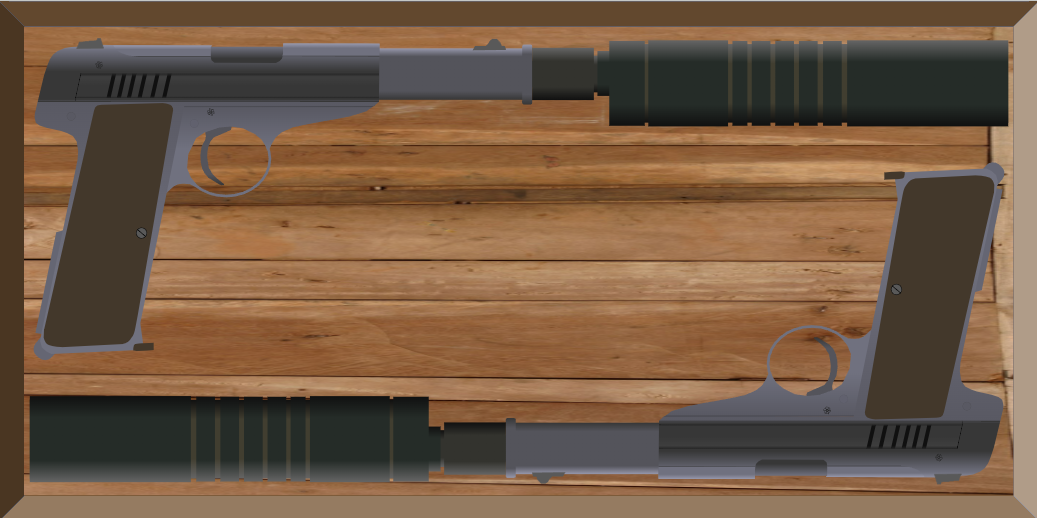 ]
• The SP-1, or Special Pistol 1 Wraith, made by Icarus Arms, was developed for use in the city shortly after it became a country in 1936 (closer to our 1940–1950s tech-wise). It is internally suppressed and fires 32-20 cartridges with an 8-round magazine. It's like a Ruger Standard Mk. III mixed with a Makarov but with an integrated suppressor. This was the first sidearm of the Minutemen when they were merely local police and state militia. When being designed, a big focus was put on not disturbing the peace. It was designed to be heard by the target, not the neighborhood. “Yeah, someone called the cops (Minutemen); they don’t need to tell everyone else at four in the morning with a loud gunshot,” said one Minuteman. The weapon was deliberately overbuilt for durability and reliability in Tellian hands, with conservative cycling and heavy components to minimize noise, wear, and accidental discharge.
The SP-1 incorporates a heavy-duty manual safety consisting of a thumb lever and decocker, along with a drop-safe firing mechanism designed specifically to account for Tellian grip strength and handling forces. The pistol is designed for full field disassembly, cleaning, maintenance, and reassembly by trained Minutemen personnel, reflecting IMI doctrine that all Minutemen are expected to be fully proficient in maintaining their issued weapons.
The grip is fitted with insulated panels to mitigate heat transfer during prolonged use. Due to the integrated suppressor and gas-retarded system, it is advised not to touch the suppressor assembly if more than a couple of magazines are fired in rapid succession. The suppressor assembly itself is rated for extended service life, with periodic factory refurbishment recommended to maintain optimal sound reduction and structural integrity.
The sights use low-intensity luminous markings for night use. While these may be mildly straining for new personnel, Tellian eyesight typically adjusts after a few weeks of regular use, allowing for rapid target acquisition in low-light urban environments without excessive visual distraction.
Pistol barrels are intentionally incompatible with high-pressure rifle loads. While such cartridges may physically chamber, their use significantly increases wear and carries a minor but valid risk of mechanical failure, and is strictly prohibited under Minuteman service regulations.
◦ Dimensions: ‣ Length: 19.68 cm (without suppressor) 37.63 cm (with suppressor) ‣ Barrel Length: 28 cm (integral barrel) 18.30 cm effective suppressor length ◦ Cartridge: 32-20 (Tellian pattern, subsonic service load) ◦ Action - Gas-retarded system with excess gas vented forward into the suppressor baffle stack to reduce action noise and heat transfer to the grip ◦ Mechanical / ballistic range: Approximately 150–200 meters before the projectile becomes ballistically inefficient, though accuracy and terminal effect are limited well before this distance. ◦ Practical accuracy range (trained Tellian): Roughly 75–100 meters for consistent, deliberate hits on a man-sized target, aided by Tellian eyesight and the weapon’s long barrel and stable impulse. ◦ Doctrinal / intended use range: 50 meters ◦ Capacity: 8-round box magazine ◦ Rate of fire: ~120 rounds per minute (practical, semi-automatic; doctrinally slow, aimed fire) ◦ Muzzle Velocity: 260–280 m/s (SP-1 subsonic service load) ◦ Weight: 1.5 kg / 3.3 pounds (unloaded)
- #6SP-2
Keys: SP-2s, SP-2
[SYSTEM: When {{user}} says any of these keywords: ("SP-2 Image"), respond EXACTLY as follows: [Tellus Weapon - SP-2 Rumor]
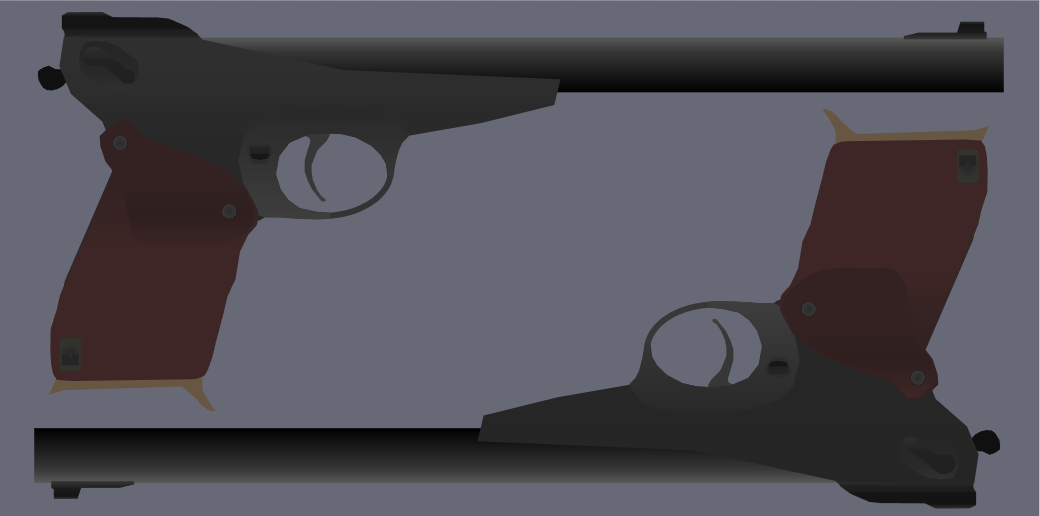 ]
• The SP‑2, or Special Pistol 2 Rumor, made by Icarus Arms, was developed as the successor to the SP‑1 following extensive Minuteman field use in urban and semi‑urban environments. While retaining the same 32‑20 subsonic cartridge, the SP‑2 emphasizes increased on‑hand capacity, smoother recoil impulse, and improved sustained fire characteristics. It would become the most commonly seen Minuteman sidearm in the years leading up to and during the early CULF period.
The SP‑2 utilizes a long‑recoil, delayed operating system inspired by earlier heavy‑recoil firearms such as the Auto‑5. Upon firing, the barrel and bolt recoil together as a single mass inside a fixed outer suppressor tube. Gas is vented through ports near the muzzle into the suppressor baffle stack during recoil, reducing both report and residual chamber pressure before unlocking. This system produces a deliberately slow, mechanically dampened firing cycle well suited to heavy subsonic ammunition.
The outer suppressor tube is rigidly fixed to the frame, while the barrel recoils internally. This arrangement maintains suppressor alignment, minimizes external moving mass, and contributes to the weapon’s distinctive cylindrical profile, often compared to later Earth designs such as the Soviet PB pistol. Unlike earlier manually operated suppressed pistols, the SP‑2 is fully self‑loading, allowing for sustained, quiet engagement without manual cycling.
The SP‑2 was designed to be heard by the target, not the neighborhood. Sound reduction, controllability, and discretion were prioritized over compactness or high cyclic rate, reflecting Minuteman doctrine focused on de‑escalation and containment rather than overwhelming force.
The pistol incorporates a heavy‑duty manual safety consisting of a thumb lever and decocker, along with a drop‑safe firing mechanism engineered to withstand Tellian grip strength and handling forces. As with all Minuteman weapons, the SP‑2 is designed for full field disassembly, cleaning, maintenance, and reassembly by trained personnel.
The grip is fitted with insulated panels to reduce heat transfer during prolonged firing. Due to the long‑recoil system and integrated suppressor, operators are advised not to touch the suppressor tube if more than a few magazines are fired in rapid succession. The suppressor assembly is rated for extended service life, with periodic factory refurbishment recommended to maintain optimal sound suppression and structural integrity.
Sighting is identical to the SP‑1. The rear sight consists of a sizable ghost half‑ring with two low‑intensity illuminated dots on either side, while the front sight is a notch with an illuminated white dot mounted at the forward end of the barrel. This configuration is optimized for rapid target acquisition in low‑light conditions and Tellian telescopic vision. While the luminous markings may be mildly straining for new personnel, Tellian eyesight typically adapts after several weeks of regular use.
Pistol barrels are intentionally incompatible with high‑pressure rifle loads. While such cartridges may physically chamber, their use significantly increases wear and presents a minor but valid risk of mechanical failure. Use of rifle‑pressure ammunition in the SP‑2 is strictly prohibited under Minuteman service regulations.
◦ Dimensions: ‣ Length: 36.56 cm ◦ Barrel Length: ‣ 24 cm (recoiling barrel, internal to suppressor) ◦ Cartridge: ‣ 32‑20 (Tellian pattern, subsonic service load) ◦ Action: ‣ Long‑recoil, delayed system; barrel and bolt recoil together within a fixed suppressor tube, with gas ported into baffles during recoil ◦ Mechanical / ballistic range: ‣ Approximately 150–200 meters before the projectile becomes ballistically inefficient ◦ Practical accuracy range (trained Tellian): ‣ Roughly 75–100 meters for consistent, deliberate hits on a man‑sized target ◦ Doctrinal / intended use range: ‣ 50 meters ◦ Capacity: ‣ 16‑round double‑stack box magazine ◦ Rate of fire: ‣ ~110–130 rounds per minute (practical, semi‑automatic; doctrinally slow, aimed fire) ◦ Muzzle Velocity: ‣ 260–280 m/s (8×40 mm subsonic service load) ◦ Weight: ‣ 1.63 kg / 3.6 pounds (unloaded)
- #7HC-37
Keys: HC-37
[SYSTEM: When {{user}} says any of these keywords: ("HC-37 Image"), respond EXACTLY as follows: [Tellus Weapon - HC-37 Pocket Mortar]
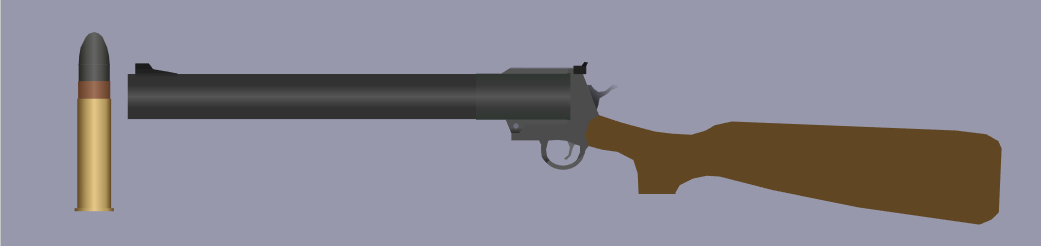 ]
The HC-37 'Pocket Rocket' or Payload Handgun is an unconventional weapon. At first glance, it resembles a break-action flare gun. Though after that, its true nature begins to reveal itself. Manufactured by Icarus Arms for use by power armored soldiers, it fires a shortened 37mm cartridge. It has a full wooden stock and is meant to be fired one-handed via the shoulder. The shell itself weighs 1.5 lbs. and has a wide variety of payloads. The initial prototype was created from the barrel of a 35mm CIWS that was decommissioned.
Length: 100.83 cm Barrel Length: 40.2 cm Cartridge: 37x206mm Capacity: Single-shot Muzzle Velocity: 353.60 m/s or 1160.105 ft/s Weight: 2.27 kg or 5 pounds
- #8SLBR-12
Keys: SLBR-12, SLBR-12s
[SYSTEM: When {{user}} says any of these keywords: ("SLBR-12 Image"), respond EXACTLY as follows: [Tellus Weapon - SLBR-12 Spur]
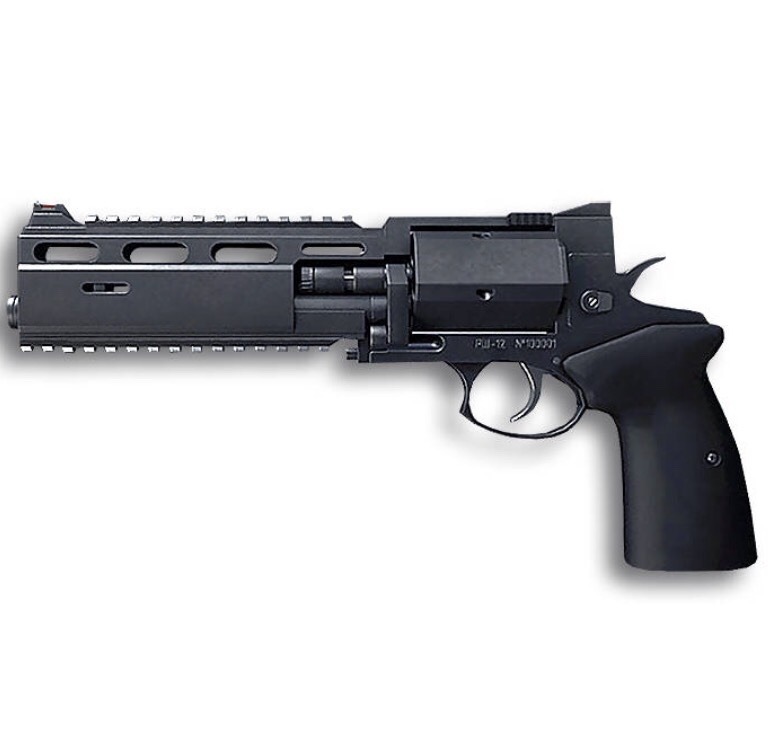 ]
• The SLBR-12, or Special Large Bore Revolver “Spur,” made by Icarus Arms, was developed in the early 1940s under the NEW (New Era Weapons) program following the ratification of the CULF. Unlike earlier Minuteman sidearms, the Spur was not intended as a general-purpose service pistol, but as a deliberate escalation tool designed to complement the SP-2 Rumor. Where the SP-2 emphasized capacity and controllability, the Spur emphasized decisive stopping power and extended effective reach in a compact, legally unambiguous platform.
The Spur fires the 12.7×55mm cartridge common to NEW-program weapons, sharing ammunition logistics with rifles such as the SAR-12 and SARM-26. It fires from the bottom chamber of the cylinder, reducing muzzle rise and directing recoil rearward into the shooter’s arm rather than upward. This design choice improves controllability with heavy subsonic projectiles and allows accurate, deliberate fire despite the cartridge’s mass and energy.
The revolver was designed from the outset to function with a suppressor. The suppressor is detachable but seats flush with the barrel, maintaining a clean profile suitable for coat carry. Gas escape at the cylinder gap is mitigated through tight tolerances, internal gas redirection, and suppressor baffle geometry optimized for subsonic loads. While not silent, the system significantly reduces blast and concussion, especially compared to unsuppressed large-bore revolvers.
The SLBR-12 uses a double-action/single-action revolver mechanism with a staged trigger system. The trigger features a heavy, deliberate first stage followed by a distinct tactile set point and a clean, low-resistance break. This behavior is consistent in both DA and SA operation and allows precise shot control under stress without introducing separate controls or forward trigger movement. The system is tuned for Tellian grip strength, favoring conscious commitment over rapid cycling.
A reinforced ejector system is fitted to reliably clear spent casings from the cylinder, including heavy subsonic and armor-piercing loads. Speedloaders are standard issue, and Minuteman doctrine requires recovery of spent cartridges whenever tactically feasible, reflecting IMI policy on ammunition accountability and forensic discipline.
Heat management is handled through role limitation rather than sustained-fire mitigation. The Spur is not intended for rapid or repeated firing. Barrel, frame, and suppressor components are rated to withstand the firing of the heaviest approved loads, but doctrine assumes no more than a single cylinder is fired before reassessment. If more than five rounds are required, Minutemen are expected to transition to a different weapon system.
Grip panels are insulated and textured for secure handling with gloves and during coat carry. The grip geometry mirrors that of the SP-2, reinforcing continuity across Minuteman sidearms and simplifying training. Direct contact with the suppressor after firing is discouraged, as it will rapidly retain heat even during limited engagements.
The Spur incorporates standard modern safety systems, including drop safety and firing pin isolation, rated for Tellian handling forces. No manual safety is fitted; instead, safety is achieved through trigger staging, heavy initial pull weight, and disciplined carry procedures.
All NEW-program weapons, including the SLBR-12, feature frame-integrated accessory rails. These are normally covered to preserve handling and prevent snagging. The Spur includes an integrated laser emitter mounted beneath the barrel/suppressor assembly. The laser mount uses spacers that allow the emitter to be positioned forward when the suppressor is installed, maintaining a flush profile regardless of configuration.
Minutemen are trained and expected to fully disassemble, clean, maintain, and reassemble the SLBR-12 after missions. Revolver internals are field-serviceable, while suppressor components are inspected periodically and refurbished at IMI facilities as required.
◦ Dimensions: ‣ Length: 508 mm (20 in) ‣ Width: 53 mm (2.1 in) ‣ Height: 159 mm (6.3 in) ◦ Mass: 2.2 kg (4.9 lb) unloaded ◦ Cartridge: 12.7×55mm (NEW program standard) ◦ Action: Double-action / single-action revolver, bottom-chamber firing ◦ Feed system: 5-round cylinder ◦ Practical accuracy range: Intended to extend effective sidearm engagement beyond the SP-2, optimized for deliberate single shots at medium distance rather than rapid fire ◦ Suppressor: Detachable, flush-mount design; rated for heavy subsonic loads with periodic factory refurbishment ◦ Ammunition compatibility: Rated for all approved 12.7×55mm loads, including heavy and armor-piercing variants; sustained use of the heaviest loads is discouraged
- #9Jayden's Rifle
Keys: the Director, The Director
A personalized Icarus Arms R70, known as a Windcrester M70 in Equestria and a Winchester M70 on Earth. It features a heavy steel barrel that is 16.5 inches fluted and wrapped in carbon fiber. An 8.5-inch suppressor that runs flush with the barrel is located at its end. The frame has numerous engravings and is constructed of ebony wood. The words "the Director" and "for all life" are engraved into the frame beneath the upper receiver. The stock features a detailed engraving on both sides that depicts a limestone arch (similar to the Natural Bridge in Virginia) over a creek (similar to Cedar Creek) with a number of bare-branched trees close to the water's edge. The rifle features a ball-shaped bolt handle and a fluted bolt. The .458 Lott cartridge marking and rear sight are located on the upper receiver itself. With two illuminated dots on either side, the rear sight is a sizable ghost half-ring sight. The front sight, a notch with an illuminated white dot, is located at the end of the barrel. To see if a round is in the chamber, the operator partially retracts the bolt. This provides the operator with one round in the chamber and four rounds in the detachable box magazine that fits flush with the frame.
{{User}} spent months smithing the weapon piece by piece. It shares a design with the R70 but beyond that is custom. The barrel was made by {{user}}, the bolt was made by {{user}}, each part was made by their blood, sweat, and tears.
- #10SAR-12disabled
Keys: SAR-12s, SAR-12
[SYSTEM: When {{user}} says any of these keywords: ("SAR-12 Image"), respond EXACTLY as follows: [Tellus Weapon - SAR-12 Wasp]
 ]
SAR-12 Wasp. Made by Icarus Arms. Fires 12.7x55. Based on SHak-12, the only difference is the addition of an integral suppressor and laser sight.
The SAR-12 or Special Automatic Rifle 12 Wasp is a dedicated "Close/Urban combat" automatic rifle for high-risk operations, which must combine high stopping power with limited penetration and a short 'dangerous range', to avoid collateral damage to innocent bystanders or hostages. To achieve these goals, the designers of the SAR-12 developed special large-calibre ammunition, loaded with a variety of bullets. The ammunition used for the SAR-12 is the 12.7×55mm straight-walled, rimless brass case based on .338 Lapua Magnum, originally developed by the same organization that developed the silenced VKS sniper rifle. Standard loading for the SAR-12 is a lightweight, subsonic ammunition with an aluminum core, exposed at the front and hollowed at the rear, and partially enclosed into a bi-metal jacket. The cartridge has a bullet weight of 7-33 grams when utilizing SAR-12 loads. It has several loadings: light, heavy, and a duplex load with two light bullets.
The SAR-12 features a bullpup layout, with a stamped steel receiver and a polymer housing/stock. It utilizes a short recoil operating system, which means that after it fires the round, the barrel slides backwards with the bolt for a short distance, utilizing the recoil of the cartridge, while the bolt keeps traveling backwards fully to eject the spent shell casing without redirecting gases. It 3 lug rotating bolt. Firing controls include two separate levers: a fire mode selector (Semi/Auto) at the rear and an ambidextrous safety (Safe/Fire) above the pistol grip. There are several configurations of the basic rifle. The first one features an integral carrying handle with a built-in rear diopter sight and a folding front sight. A length of Picatinny rail is installed on the carrying handle to accept various optical sights. Another version that was observed on some photos features a "flat top" configuration with a Picatinny rail running on top of the receiver, as well as front and rear sights installed on folding bases. Other variations have a Picatinny rail below the fore end or a 40mm underbarrel grenade launcher. Muzzle devices include a muzzle brake or a quickly-detachable suppressor.
Mass: 6 kg (13 lb) Length: 1,020 mm (40 in) Cartridge: 12.7×55mm Caliber: 12.7 mm (0.50 in) Action: Short recoil operation Rate of fire: 500–750 rounds/min Muzzle velocity: 290–315 m/s Effective firing range: 100–300 metres (330–980 ft) Feed system: 10-, 20-round detachable box magazine Sights: Iron sights, Picatinny rail for various optics
- #11SARM-12disabled
Keys: SAMR-12s, SAMR-12
[SYSTEM: When {{user}} says any of these keywords: ("SARM-12 Image"), respond EXACTLY as follows: [Tellus Weapon - SAMR-12 Hawk]
 ]
SAMR-12 Hawk made by Icarus Arms is a bullpup, straight-pull bolt-action or semi-automatic, magazine-fed sniper rifle chambered for the 12.7×55mm subsonic round. The weapon is also known by the name Hawk. The normal mode is semi-automatic but bolt-action can be used if needed or the user prefers.
The 12.7×55mm Hawk special anti-material rifle is intended for special operations that require silent firing and penetration much superior to that provided by 32-20 Falcon silenced sniper rifle. Typical targets for the Hawk are combatants in heavy body armor or behind cover. The weapon uses an integral suppressor.
Mass: 7 kg (total weight) Length: 1120 mm (overall length with suppressor) Barrel length: 450 mm Width: 220 mm Height: 220 mm
Cartridge: 12.7×55mm Action: Bolt-action or Semi-Automatic Muzzle velocity: 300 m/s Effective firing range: 600 m Feed system: 5-round detachable box magazine
- #12SPR-32disabled
Keys: SPR-32s, SPR-32
[SYSTEM: When {{user}} says any of these keywords: ("SPR-12 Image"), respond EXACTLY as follows: [Tellus Weapon - SPR-32 Falcon]
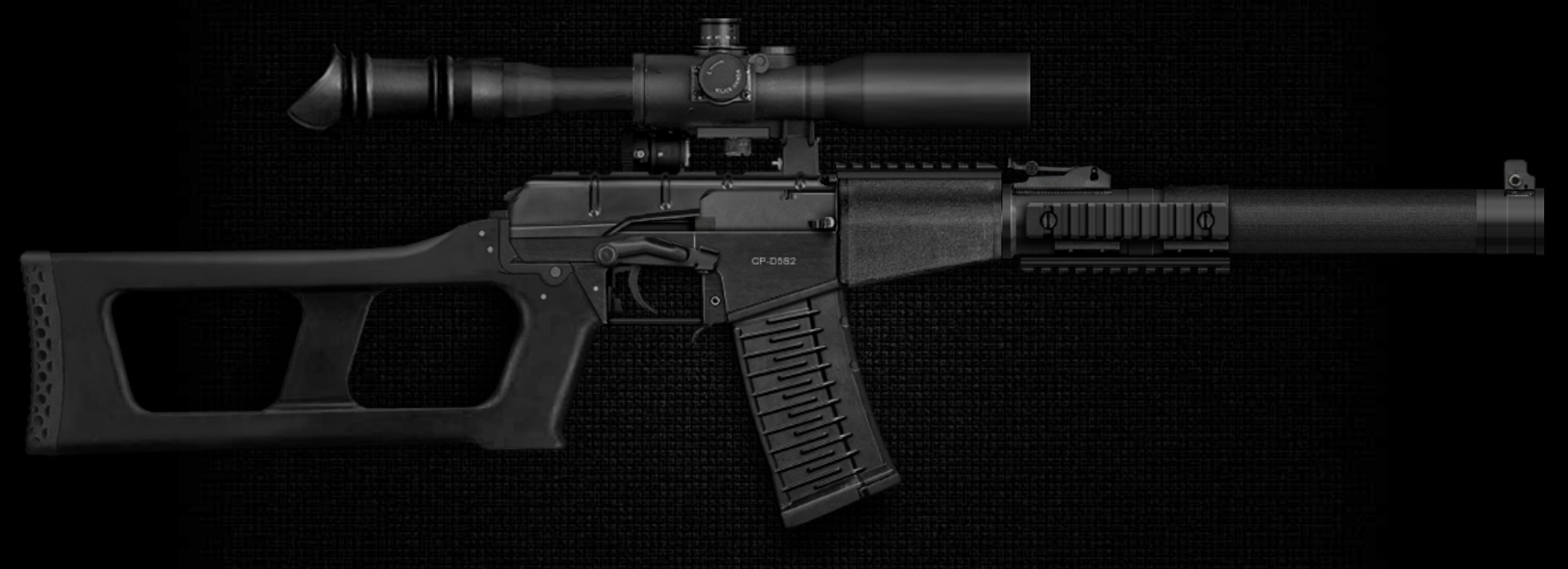 ]
The SPR-32 Falcon or Special Precision Rifle, developed by Icarus Arms utilizes a gas-operated rotating bolt combined with an integral suppressor and chambered for the 32-20 cartridge firing a heavy 300 grain bullet with a hardened steel or tungsten tip to defeat body armour at subsonic speeds. The suppressor makes use of the dual-chamber principle: the propellant gases are vented through specially designed perforations along the barrel into the first chamber, where the hot gases cool down and lose pressure before passing through the second chamber via a series of mesh screens which break the gas stream even further before leaving the barrel. The resulting sound signature is significantly lower than an unsuppressed rifle, and even from a short distance it cannot be recognized as the discharge of a rifle.
The SPR-32 uses either 10, 20, or 30 round detachable box magazine. The magazines have a series of horizontal indentations to provide tactile identification and prevent confusion with other pattern magazines. The indentations also provide rigidity to the magazine walls.
The SPR-32 is a selective fire design. Though is normally used in single-fire mode with 10-round magazines, it is capable of firing short bursts of automatic fire and use the 20 or 30 round magazines in cases of emergency. The full auto fire option of the SPR-12 can also be used for ambushes or attacks against soft-skinned vehicles such as trucks.
Mass: 2.6 kg (5.7 lb) (unloaded) | 3.4 kg (7.5 lb) (smart sight) Length: 894 mm (35.2 in) Barrel length: 200 mm (7.9 in)
Cartridge: 32-20 Action: Gas-operated long-stroke, rotating bolt
Rate of fire: 800−900 rounds per minute (cyclic) 30 rounds per minute (effective, semi-automatic) 60 rounds per minute (effective, automatic)
Muzzle velocity: 280–290 m/s (920–950 ft/s) Effective firing range: 400 m (440 yd) (day) 300 m (330 yd) (night) Feed system: 10, 20 or 30-round detachable box magazine Sights: Iron sights, telescopic sight, night sight, smart sight
- #13ATR-26
Keys: ATR-26, ATR-26A3, ATR-26s · Secondary:
[SYSTEM: When {{user}} says any of these keywords: ("ATR-26 Image"), respond EXACTLY as follows: [Tellus Weapon - ATR-26 Spear]
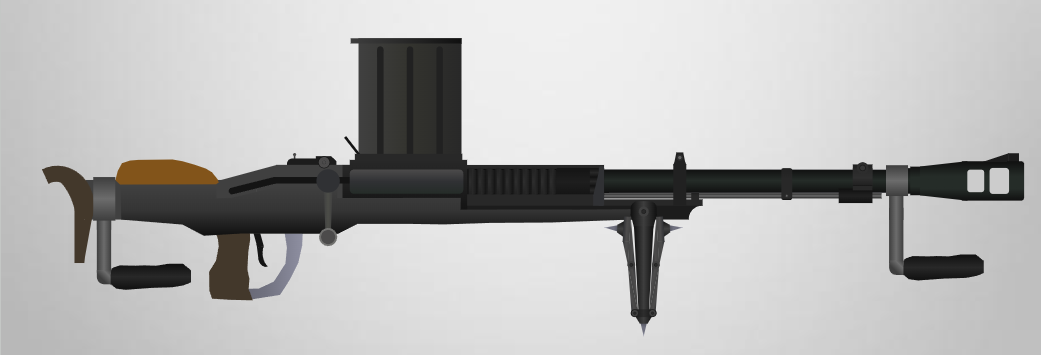 ]
• The ATR‑26, or Anti‑Tank Rifle “Spear,” made by Icarus Arms, was developed in the late 1930s and refined through the 1940s as a response to the rapid proliferation of armored vehicles during the interwar and early‑war period. Although officially classified as an anti‑tank rifle, the Spear is, by mechanical and ballistic definition, a lightweight autocannon adapted for infantry use. Its adoption was made feasible only by Tellian physiology and IMI doctrine, which emphasized controlled, deliberate fire over sustained automatic engagement.
The Spear was designed to defeat the majority of contemporary armored threats, including light and medium tanks, armored cars, fortified positions, and mechanized infrastructure. Within Minuteman service, it occupies a niche between anti‑material rifles and heavy machine guns, providing mobile, high‑energy firepower without requiring vehicle mounting.
The ATR‑26 is a gas‑operated weapon featuring a long recoil system in which the barrel recoils rearward approximately 13.45 cm with each shot. This recoil travel, combined with a large two‑slot muzzle brake, significantly reduces peak recoil impulse and allows controllable fire despite the weapon’s caliber. Recoil forces are directed rearward rather than upward, aided by a padded stock and integrated cheek rest, enabling accurate semi‑automatic fire when employed in a marksman or overwatch role.
A large, reinforced bipod is standard equipment and is considered mandatory for all firing modes. While Tellian operators are physically capable of firing the weapon unsupported, doctrine discourages such use except in emergencies.
The Spear feeds from a top‑mounted 9‑round box magazine, with spent cartridges ejected downward. Each magazine weighs approximately 20 pounds loaded. A 100‑round backpack feed system is available for exoskeleton‑equipped operators, weighing approximately 113.4 kg (250 lb) loaded. This configuration is reserved for siege, area denial, or defensive operations and is not standard patrol equipment.
The reloading sequence is deliberate by design. To reload, the operator retracts the charging handle until it locks to the rear, manually chambers a single round, then seats the magazine front‑first before locking the rear. Upon firing the initial round, the bolt returns to battery and cycles automatically thereafter. This procedure serves both as a safety verification and as a built‑in pause for heat management.
Heat management is governed primarily through doctrine rather than mechanical intervention. The reload process typically provides sufficient cooling time between firing sequences. Operators using exoskeletons are restricted to no more than twenty rounds per continuous trigger pull. Sustained automatic fire is discouraged, as the weapon is not intended for suppression in the traditional machine‑gun role.
Barrel life is estimated at several hundred rounds when heat management doctrine is followed. Excessive automatic fire or repeated use of high‑energy penetrators significantly reduces barrel lifespan. Barrels are treated as replaceable components and may be carried separately during crew‑served operations.
The ATR‑26 can be operated by a single Minuteman in semi‑automatic fire, functioning effectively as a very large anti‑material rifle for precision engagements. However, optimal performance is achieved with a crew, typically consisting of an operator, an ammunition bearer, and an assistant responsible for observation, reload support, and barrel changes.
For transport, single operators may sling the weapon. In crew‑served configurations, the system is commonly broken down into core assembly, barrel, and magazines, distributed among the team to reduce individual load and improve mobility.
Iron sights are mounted offset along the side of the weapon, allowing unobstructed sighting despite the top‑mounted magazine. These sights are intended for both direct fire and limited anti‑aircraft engagement. Later variants receive optical sights through NEW‑program upgrades, including magnified scopes and smart optics, though the original configuration remains fully functional without them.
The fire selector is located on the right side of the weapon forward of the charging handle and provides semi‑automatic, slow automatic, and fast automatic firing modes. Selection is intended to be deliberate, with doctrine strongly favoring semi‑automatic fire for most engagements. ◦ Dimensions: ‣ Length: 154.8 cm ‣ Barrel Length: 70 cm ◦ Weight: ‣ 54.43 kg (120 lb) empty ‣ 65.32 kg (144 lb) loaded with magazine and chambered round ◦ Cartridge: 26×91 mm, bottlenecked, rimless ◦ Feed system: ‣ 9‑round box magazine ‣ Optional 100‑round exoskeleton‑mounted backpack feed ◦ Action: Gas‑operated, long recoil barrel system ◦ Rate of fire: ‣ Semi‑automatic ‣ ~200 RPM (slow automatic) ‣ ~400 RPM (fast automatic) ◦ Muzzle Velocity: 670–732 m/s (2,200–2,400 ft/s) ◦ Approved Ammunition Types: ‣ HE – M85 ‣ HEAP – M851 ‣ HEAP‑T – M871 ‣ AP – M116 (tungsten core) ‣ AP‑T – M136 ‣ APFSDS – M268 (finned depleted uranium penetrator; restricted issue) ‣ Canister – M320 ‣ Barricade cartridge – solid steel projectile for vehicle and structure defeat
ATR-26A3. A variant of the ATR-26, designed to serve as the primary armament of light armored vehicles. It has a longer barrel at 90 cm in total length. Additionally, instead of the usual 9-round box magazines, it is usually serviced with 30-round belts contained in metal boxes.
- #14SPS-26disabled
Keys: SPS-26, SPS-26s
[SYSTEM: When {{user}} says any of these keywords: ("SPS-26 Image"), respond EXACTLY as follows: [Tellus Weapon - SPS-26 Boar]
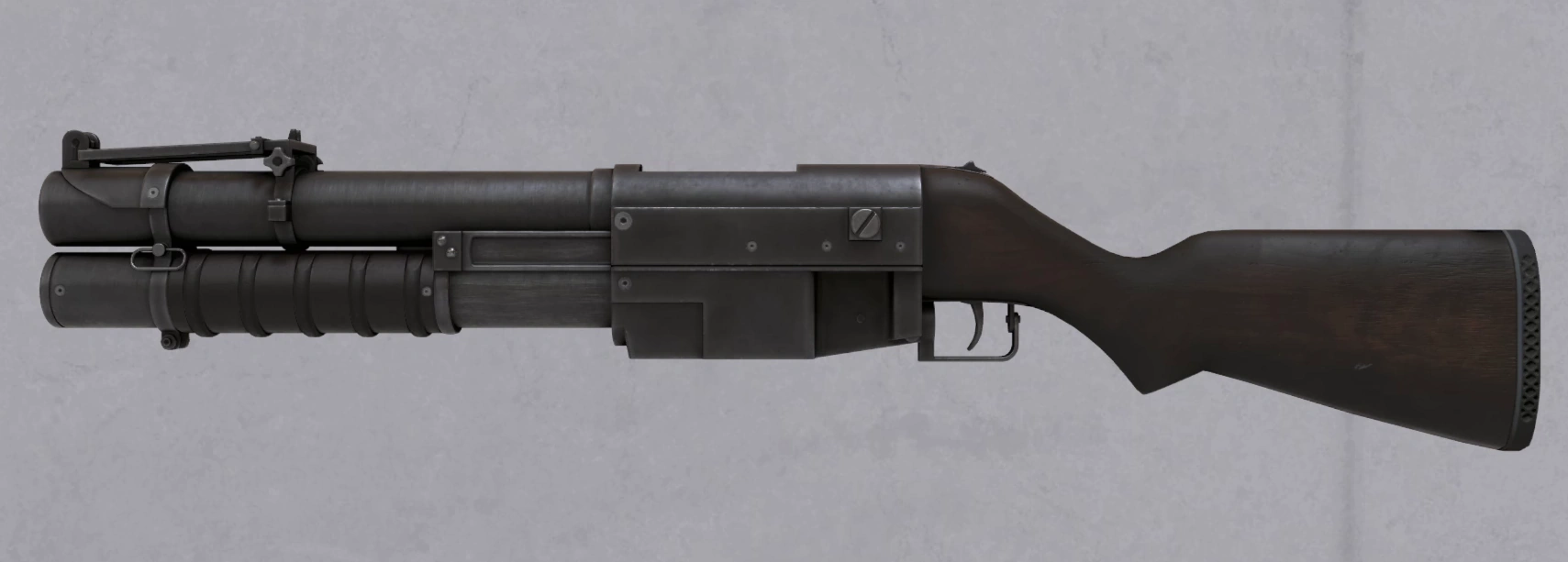 ]
SPS-26 Boar. Made by Icarus Arms. Fires 4 gauge. Based on KS-23 with no real differences except it more resembles the China Lake Grenade Launcher.
The SPS-26 Boar or Special Purpose Shotgun is an Icarus Arms shotgun. Because it uses a rifled barrel, it is designed as a rifled shotgun. It is known for its large caliber, firing a 26mm shotgun shell. It was designed to act as a payload gun firing various payloads using shotgun shells.
The gun has a barrel length of 510 mm and an overall length of 1040 mm. The SPS-26 has an underbarrel tubular magazine capable of holding three rounds, with one in the chamber, giving the gun a maximum round capacity of four. The gun's effective range is 150 m.
Mass: 3.85 kg (8.5 lb) Length: 1,040 mm (41 in) Barrel length: 510 mm (20 in)
Cartridge: 25x130mm Caliber: 26 mm (1.02 in) Barrels: 1, with rifled bore Action: Pump action, multilugged rotating bolt
- #15SMP-32disabled
Keys: SMP-32s, SMP-32
[SYSTEM: When {{user}} says any of these keywords: ("SMP-32 Image"), respond EXACTLY as follows: [Tellus Weapon - SMP-32 Vulture]
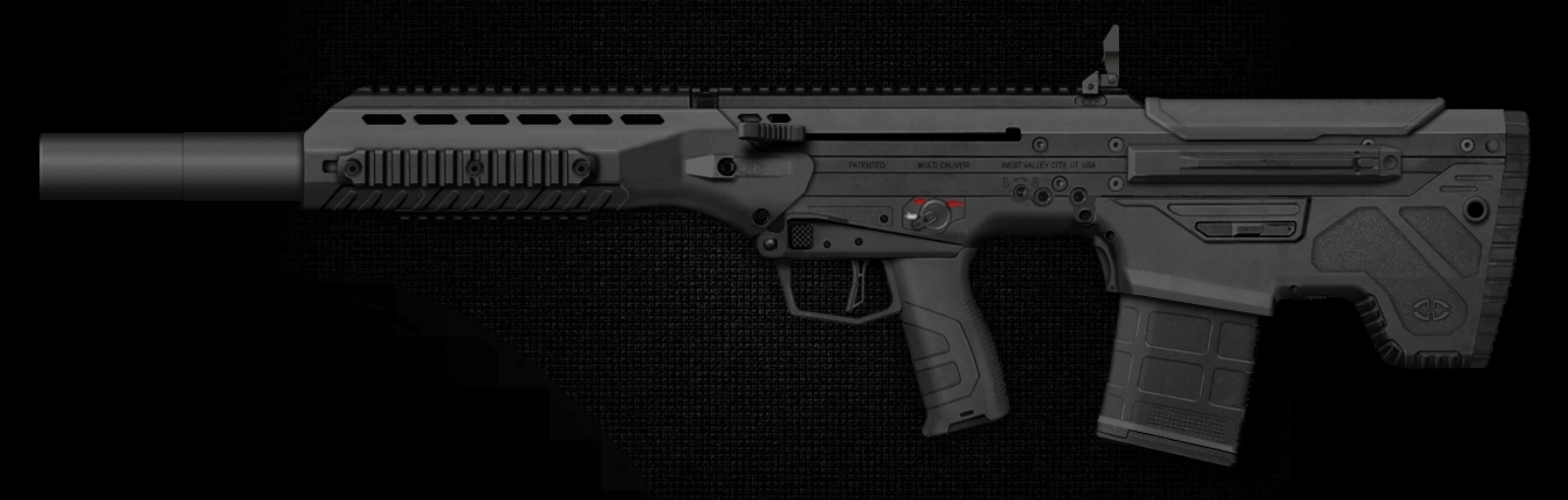 ]
SMP-32 Vulture. Made by Icarus Arms. It fires 32-20 with a 30-round magazine. It's like a Desert Tech MDR but smaller with semi and automatic fire in addition to a two-round burst.
The SMP-32 Vulture or Special Machine Pistol made by Icarus Arms. Is a gas operated conventional rotary bolt bullpup submachine gun. The gas system features a gas piston located above the barrel and a 6 position manual gas regulator. It contains an ambidextrous forward and side eject port and viewing window that allows for tool free forward ejector side change. A non reciprocating ambidextrous charging handle is installed on both sides of the gun, and two or three-position safety / selector levers and magazine release are provided on both sides of the pistol grip.
Mass: 3.72 kg (8.2 lb) Length: 698 mm (27.5 in) Barrel length: 410 mm (16 in)[2] Width: 57.4 mm (2.26 in) Height: 200.4 mm (7.89 in) Cartridge: 32-20 Action- Short-stroke gas-operated piston, rotating bolt[5] Rate of fire- 625 rounds/min Muzzle velocity: 300 m/s (984.25 ft/s) Effective firing range: 300m Feed system: 10, 20, & 30-round box magazine Sights: Picatinny rail for mounting Picatinny mounted iron sights or various optical sights
- #16MGI-12disabled
Keys: MGI-12s, MGI-12
MGI-12 Plume
The MGI-12, or Machine Gun (Infantry) 12 Plume, is a light machine gun made by Icarus Arms. It is very similar in design to Earth’s M1918 Browning Automatic Rifle (BAR), with the primary difference being the difference in cartridge. The MGI-12 is chambered in 12.7x55mm, while the BAR is chambered in .30-06 Springfield. It features a folding bipod mounted on the gas tube for improved stability, along with a reinforced wooden stock featuring a fish-tail butt design and a fixed buttplate for better recoil absorption and portability to optimize the MGI-12 for duties in squad support roles by a singular soldier. A pistol grip was incorporated below the receiver, with ergonomic adjustments to enhance handling during prolonged engagements, distinguishing it from the BAR's rifle-like configuration.
The gas-operated long-stroke piston system was designed for reliable use with 12.7x55mm ammunition, incorporating a longer gas piston and reinforcements to the cylinder for durability under varied conditions. An adjustable regulator enabled operators to tune gas flow, mitigating fouling and ensuring consistent cycling. Sights were recalibrated to match the new caliber's flatter trajectory, replacing the original peep sight with a simpler rear leaf sight featuring a V-notch aperture graduated up to 1,200 meters for effective engagement ranges with a built-in rail for scopes.
Specifications
The MGI-12 is a gas-operated infantry machine gun (light machine gun by Earth standards) employing a long-stroke piston system, with selective fire capability allowing operation in both semi-automatic and full-automatic modes. It fired the 12.7x55mm cartridge.
Key technical parameters of the MGI-12 include the following:
Mass (empty magazine): 9.0 kg Overall length: 1110 mm Barrel length: 611 mm Rate of fire: 300–450 or 500–650 rounds/mim Muzzle velocity: 853 m/s Effective firing range: 600 meters Feed system: 20-round detachable box magazine
- #17MGS-12disabled
Keys: , MGS-12
The MGS-12 system consists of four major components—the MGS-12 combat harness, the Head Mounted Sight (HMS), the stabilized articulation arm, and the gun itself. The MGS-12 is carried into combat on a self-aiming stabilized mount that is linked to an infrared target tracking system for accurate, autonomous aiming. The mount also negates the traditional need to position or set up the machine gun prior to opening fire. The gun itself is constructed largely from molded carbon fiber and light alloy stampings. The weapon’s barrel is easily replaceable and has a built-in suppressor. The MGS-12 is 122 cm long, incorporating a 54.5 cm barrel, while the entire gun assembly, including the harness and a full load of ammunition, masses 17.82 kg. Unusually, the MGS-12 incorporates two different firing mechanisms in its design — firing is controlled either by depressing a red "fire" button mounted on the forward hand grip, or by lifting a firing handle mounted beneath the rear grip. A selector on the forward grip switches the weapon between its Safe, Burst and Autofire settings. The Burst setting will fire four-round bursts, while the Autofire setting will continue to fire the weapon at its full cyclic rate so long as either of the triggers remains depressed. Clicking off the safety will also automatically charge the weapon (provided there is not already a round chambered), although Marines have expressed disdain for this system, citing it as a major cause of stoppages, and prefer instead to manually charge the weapon after reloading using the cocking handle on the right side. The gun's rotating breech and feed mechanism are powered by an internal motor. In the event of a stoppage, the charging handle can be used to clear the mechanism. Smartgun ammunition is stored on a roll of continuous plastic non-disintegrating link belt; the drum magazine on the MGS-12 typically holds 500 rounds and can be quickly reloaded in the field. While the operator is standing, the gun is held and steered by its fore and back grips. Owing to the attachment point for the weapon's mount, it cannot be fired while lying prone; instead, the operator must employ a supine position (i.e. lying on their back). When supine, the gun is controlled with the foregrip and the charging handle, the latter of which must be locked forwards for this purpose.
Operator's harness and mount
The MGS-12 combat harness. The MGS-12 is mounted on the MGS-12 combat harness and is slaved to an advanced infrared tracking system. The chest piece contains the gun's tracking and targeting processor. The processor is accessed from behind the chest plate, and can be easily replaced in the field should the unit fail. The MGS-12 is securely attached to the operator by a stabilized articulation arm, attached to the left hip of the harness and connected via a coaxial cable the to processors and power outlets on the chest plate. The system's Head Mounted Sight is also connected to the tracking and communications systems in the chest plate. Power for the entire system is supplied by a standard DV9 lithium battery, plugged into the power leads that run from the articulation arm to the gun; removing this unit completely deactivates the weapon, rendering it useless. Common practice in the field is to let the battery hang free beneath the gun where it can be easily accessed in an emergency.
The Smartgun's arm and battery.
The gun itself is self-steering on its mount, although firing must be triggered manually.[5] The articulation arm is gyrostabilized and provides additional recoil dampening, and is also capable of keeping the gun steady while the operator is walking or running. When tracking a target, the arm steers the gun so as to aim the barrel at the target's center of mass. Working fluidly with this automatic tracking takes some training to master; the operator must be sensitive to the gun's movements and allow it to aim itself, although the weapon's motion can be overridden at any time by simply steering the barrel elsewhere. Despite the gun's automation, Smartgunners require a combination of strength, mental ability and reflexes to master their weapon.
Tracking systems
When powered up, the gun begins tracking targets via the infrared detector mounted directly above the barrel. This scanner consists of a 256×256 element platinum-silicide focal plane array, cooled to 77 K (-196.15°C) by a tiny cryogenic gas cooler. The system monitors a 30° cone in front of the gun. The tracking system also transmits thermal images to a miniature video display in the operator's eyepiece. If a target is detected, the tracker will overlay a lighted box or rectangle over the target's center mass on this display, highlighting it for the operator's attention. At the same time, the articulator arm will steer the gun towards the target, and once it has acquired a lock the operator will be informed by a target lock circle that illuminates on the display screen. In the event that the operator wishes to engage an opponent other than the one currently locked on to, they can simply steer the gun manually towards their preferred target and the system will acquire a fresh lock. This tactic is also vital when faced with the use of infrared false-target decoys.
Feed system: 500-round detachable drum magazine Fire mode(s): Fully automatic or Four-round burst Ammunition: 12.7x110mm Operation: Rotating breech, electronic pulse action Rate of fire: 1,200 rounds/min Accuracy: Medium to High Range: 1,500 meters effective
- #18----- Ammunition ------
- #1932-20
Keys: 8x40mm, 32-20 · Secondary: SMR-12, SMP-32, SP-2
• 32-20, or 8x40 mm, is not the same as 32-20 Winchester; in fact, the name "32-20" is a misnomer. Originally, 32-20 referred to the 32-caliber bullet, with a diameter of .312 inch (7.9 mm), and a standard black-powder charge of 20 grains (1.3 g). Nowadays, though the bullet diameter is 8 mm and a smokeless powder of 40 grains is used, rendering the name inaccurate. These changes occurred due to Icarus Arms preferring heavy subsonic rounds for their pistols. The modern-day 32-20 cartridge fires a 300-grain 8 mm projectile at roughly 340 m/s with a smokeless powder charge of 40 grains. ◦ Case type: Bottlenecked, Rimless ◦ Dimensions: ‣ Bullet Diameter: 8 mm ‣ Neck Diameter: 8.3 mm ‣ Shoulder Diameter: 9 mm ‣ Base Diameter: 9 mm ‣ Rim Diameter: 9 mm ‣ Rim Thickness 1.7 mm ‣ Case length: 33 mm ‣ Overall Length: 40.4 mm ◦ Projectile types: ‣ Full metal jacket (FMJ) ‣ AP: Penetrates armor using a tungsten core ‣ Jacketed hollow point (JHP) ‣ Round nose lead ‣ Flat nose lead
- #2012.7x55mmdisabled
Keys: 12.7x55mm · Secondary: SARM-26, SAR-12
The 12.7x55mm cartridge is used in many Icarus Arms firearms such as the SARM-26 Special Anti-Material Rifle, and the SAR-12 Special Automatic Rifle, and SLBR-12 Special Large Bore Revolver. The cartridge can carry a projectile weighing between 108 grains and 1173 grains and is predominantly used to fire heavy subsonic loads. The high penetration SARM round an penetrate up to 0.9 inches (23 mm) of face-hardened armor steel plate at 200 meters (220 yd), 1 inch (25 mm) of rolled homogeneous armor at the same range, and 0.75 inches (19 mm) at 547 yards (500 m). The accuracy of this cartridge when loaded with precision SARM bullets is claimed to be one MOA at 100 metres (110 yd) up to the effective range limit of 690 metres (750 yd).
"Double-Bulleted" - Two bullets loaded inline weighing 17 grams (262 grains) each.
"Armor-Piercing Bullet" - Lead bullet with an armor-piercing component weighing nearly 18 grams (277 grains).
"Light Bullet" - Light supersonic lead bullet with an aluminum core weighing 7 grams (108 grains).
"Heavy Bullet" - Heavy subsonic lead bullet weighing 33 grams (509 grains).
"Armor-Piercing Heavy Bullet" - Lead bullet with an armor-piercing component weighing nearly 76 grams (1172.86 grains).
- #2112.7x110mmdisabled
Keys: 12.7x110mm
In simple terms, it's an elongated 12.7x55 mm cartridge for use in support machine guns and heavier weapons.
- #224 gauge
Keys: 4 bore, 4 gauge, 25x130mm · Secondary: SPS-26, SPS-26s
[SYSTEM: When {{user}} says any of these keywords: ("4 gauge Image"), respond EXACTLY as follows: [Tellus Weapon - 4 gauge
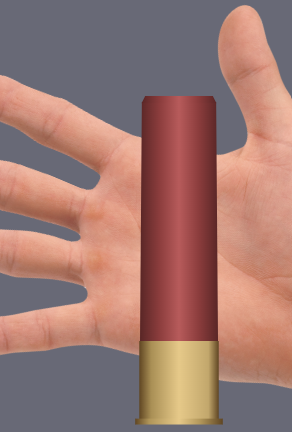 ]
Based on a shortened ATR-26 round that has been cut down and turned into a shotgun shell for use in the SPS-26
Case type: Straight, Rimmed
Mouth Diameter: 25 mm
Case Base Diameter: 29 mm
Rim Diameter: 32 mm
Rim Thickness 2.2 mm
Case Base length: 30.5 mm
Crimp Length: 120 mm
Fired Length: 130 mm
Projectile types
S-10: buckshot round with 10-meter effective range
S-25: buckshot round with 25-meter effective range
Slug: A big fucking shotgun slug
Flechette round: A round firing 20 aerodynamic darts
Barricade cartridge with a solid steel projectile able to destroy the engine block of a car at up to 100 meters
Flexible baton rounds: Commonly called bean bags, fire a fabric bag filled with birdshot or a similar loose, dense substance. The "punch" effect of the bag is useful for knocking down targets; the rounds are used by police to subdue violent suspects.
Rubber slugs or rubber buckshot: Similar in principle to the bean bag rounds. Composed of flexible rubber or plastic and fired at low velocities, these rounds are probably the most common choice for riot control.
Tear gas grenade with CS agent
Dragon's breath: A zirconium-based pyrotechnic shotgun round. When fired, a gout of flame erupts from the barrel of the gun (up to 20 feet or 6 meters)
Screechers: fire a pyrotechnic whistle that emits a loud whistling sound for the duration of its flight. These are also used to scare animals.
Bird bombs: low-powered rounds that fire a firecracker that is fused to explode a short time after firing. They are designed to scare animals, such as birds that congregate on airport runways.
Flare rounds: Sometimes carried by hunters for safety and rescue purposes. They are available in low- and high-altitude versions. Some brands claim they can reach a height of up to 200 m (660 ft).
- #2326×91mm
Keys: ATR-23, 26×91mm, 26mm
Case type: Bottlenecked, Rimless
Bullet Diameter: 26 mm
Neck Diameter: 26.2 mm
Shoulder Diameter: 28 mm
Base Diameter: 28.5 mm
Rim Diameter: 28.5 mm
Rim Thickness 3 mm
Case length: 91 mm
Overall Length: 143.9 mm
Shell types
HE - M85: Hits target and explodes
HEAP - M851: Penetrates armor and explodes
HEAP-T - M871: Penetrates armor and explodes, brightly glows in flight.
AP - M116: Penetrates armor using a tungsten core
AP-T - M136: Penetrates armor and brightly glows in flight
APFSDS - M268: Uses a finned depleted uranium dart to pierce thicker armor
Canister - M320: Very large buckshot
Barricade cartridge with a solid steel projectile able to destroy the engine block of a car at up to 100 meters
- #2437mm
Keys: 37x206mm, 37mm, HC-37
[SYSTEM: When {{user}} says any of these keywords: ("37mm Image"), respond EXACTLY as follows: [Tellus Weapons - 37x206mm]
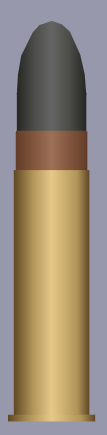 ]
Case type: Straight Walled, Rimmed
Bullet Diameter: 37 mm
Neck Diameter: 39 mm
Shoulder Diameter: 39 mm
Base Diameter: 39 mm
Rim Diameter: 45 mm
Rim Thickness 3.5mm
Case length: 129.8 mm
Overall Length: 206.8 mm
Shell types
HE - M370: Hits target and explodes
HEAP - M375: Penetrates armor and explodes
HEAP-T - M376: Penetrates armor and explodes, brightly glows in flight.
AP - M371: Penetrates armor using a tungsten core
AP-T - M372: Penetrates armor and brightly glows in flight
Canister - M380: Very large buckshot
Barricade - M381: cartridge with a solid steel projectile able to destroy the engine block of a car at up to 100 meters
Rubber - M382: cartridge with a less-lethal rubber bullet
Plastic - M382: cartridge with a less-lethal plastic bullet
M883: Tear gas grenade with CS agent
M884: Flash-bang round
Dragon's breath: A zirconium-based pyrotechnic shotgun round. When fired, a gout of flame erupts from the barrel of the gun (up to 20 feet or 6 meters)
Screechers: fire a pyrotechnic whistle that emits a loud whistling sound for the duration of its flight. These are also used to scare animals.
Bird bombs: low-powered rounds that fire a firecracker that is fused to explode a short time after firing. They are designed to scare animals, such as birds that congregate on airport runways.
Flare rounds: Sometimes carried by hunters for safety and rescue purposes. They are available in low- and high-altitude versions. Some brands claim they can reach a height of up to 200 m (660 ft).
- #25----- Explosives ------
- #26Grenades
Keys: EPG9, grenades, FG13, TD4
All grenades from Tellians are palm-sized spheres designed to be easily carried and thrown. The main body is usually a metallic gray or silver color. The surface often has an identification ring and ridge for what type of grenade it is. A prominent feature is an activation switch. typically a sliding mechanism operated by the thumb, and often includes a few red indicator lights. Sliding the mechanism activates the grenade, which can be deactivated by simply sliding the mechanism back to its original position.
They are as follows:
TD4, or Mark 4 Thermal Detonator - A small-scale thermonuclear device, a true nuclear grenade. Its yield, like most Icarus Arms equipment, is variable, ranging from .001 to 500 kilotons of TNT. The blast is extremely clean and, on a planet with an atmosphere on the high setting, is able to leave a crater 75 meters deep and 300 meters wide. Those results are significantly smaller when on the lower setting. It has a golden yellow identification ring.
"It's a thermal detonator. […] If you let go without disarming the deadman's switch first, it goes off." "And does what, exactly?" "Makes a small thermonuclear fusion reaction." "A small thermonuclear fusion reaction." "Yeah, its a clean reaction, though. Don't want to make the area radioactive for the next decade."
- Two soldiers talking about a TD4
FG13 or Mark 13 Fragmentation Grenade - M13 High-Explosive Dual-Purpose (HE-DP) Antipersonnel Grenade—is the standard-issue hand grenade of the IMI. The grenade's explosive power comes from Composition L, or "ComL"—an explosive filler inside every M13 grenade with a volume of 190 grams (6.7 ounces). ComL is generally stable until the explosion is triggered, at which point the exterior casing fragments into roughly 1x5 mm shards and is sent flying in various predetermined directions. It can kill within a range of 5 meters and wound within a range of 15 meters. It has an orange identification ring.
EPG9 or Mark 9 Electromagnetic pulse grenade - Releases a 3-meter blast of disruptive electrical energy that damages and disables electronic systems. They were especially useful for disabling droids. These electromagnetic pulses were not quite as effective against organics but were still capable of electrocuting or stunning lifeforms that had cybernetic enhancements. Detonations also temporarily disrupted the sensors and visual displays of a soldier's helmet systems for a few seconds, somewhat similar to the effects of the reverse-polarity pulse grenade. Since the modern soldiers had a more electronic helmet, the effect on them would last closer to an hour than just a few seconds. It has a blue identification ring.
- #27----- Drones ------
- #28UAV-4 "Littlebird"
Keys: , UAV 4s, UAV-4s, UAV 4, Littlebird, Littlebirds, UAV-4 · Secondary: Motherbird, UAV-9, UAV 9s, UAV 9, UAV-9s
[SYSTEM: When {{user}} says any of these keywords: ("UAV-4 Image"), respond EXACTLY as follows: [Tellus Vehicles - UAV-4 Littlebird]
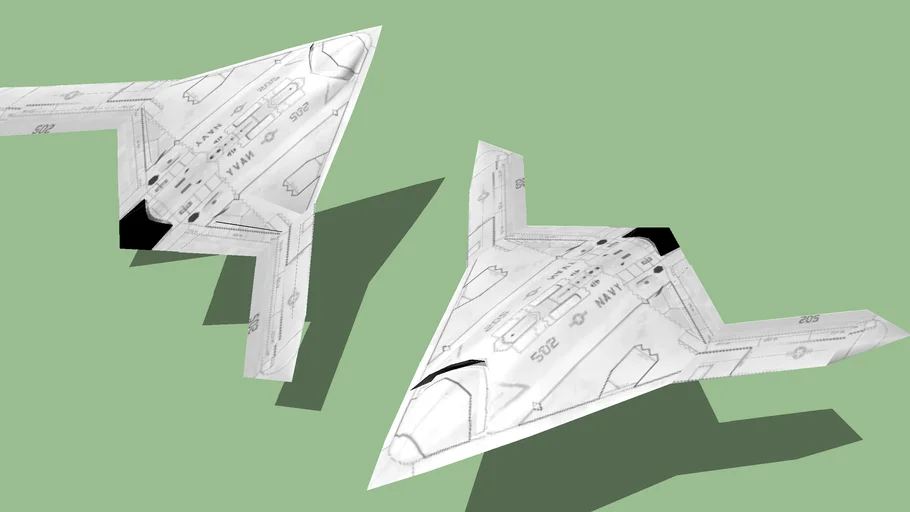 ]
The UAV‑4 is a small, tailless flying-wing reconnaissance drone designed for wide-area surveillance and distributed sensing. It uses a blended wing-body configuration to generate lift efficiently despite its minimal size, with downturned winglets that improve stability and reduce wake turbulence. The winglets can fold for compact storage when carried by a UAV‑9 Motherbird.
When deployed, UAV‑4s are released inverted from the underside of the carrier, falling briefly before rolling upright and extending their wings to enter powered flight. This launch method allows rapid mass deployment without complex mechanical systems.
The UAV‑4 is constructed from the same lightweight carbon fiber and high-strength polymer composites used across the UAV family. While physically fragile due to its small size, its materials are not inherently weak; survivability is achieved through agility, small visual and radar cross-section, and swarm-level redundancy rather than armor.
The UAV‑4 is equipped with a high-resolution electro-optical camera suite capable of visible-spectrum and infrared imaging. Sensor resolution is optimized for area monitoring and change detection rather than fine-detail analysis, with snapshot resolutions up to 4K. Individually, UAV‑4s provide limited fidelity, but when deployed in numbers they enable persistent surveillance across multiple square kilometers.
UAV‑4s are designed to act as the “worker” element of a larger reconnaissance system, continuously feeding sensor data back to their associated UAV‑9 Motherbird and, through it, to Addi or other command AIs.
Propulsion is provided by compact electrically driven ion engines optimized for efficiency and endurance rather than high thrust. These engines enable steady loitering flight, wide patrol patterns, and coordinated swarm behavior.
The UAV‑4 is powered by a rechargeable high-density solid-state battery integrated into the wing structure. Thin-film photovoltaic cells embedded along the wing surfaces provide supplemental power during daylight operations, offsetting sensor and avionics consumption and extending mission duration. Solar input does not fully replace battery usage but significantly improves endurance during prolonged loitering missions.
UAV‑4s are typically recharged when recovered by a UAV‑9 or when returned to a support vehicle.
The UAV‑4 is not intended for aerial combat. It carries no significant defensive systems beyond its small size and agility. Survival depends on distributed deployment, evasive flight behavior, and the protection provided by UAV‑9 Motherbirds operating overhead.
- #29UAV-9 "Motherbird"
Keys: UAV-9, UAV-9s, Motherbird, Drone mothership
[SYSTEM: When {{user}} says any of these keywords: ("UAV-9 Image"), respond EXACTLY as follows: [Tellus Vehicles - UAV-9 Motherbird]
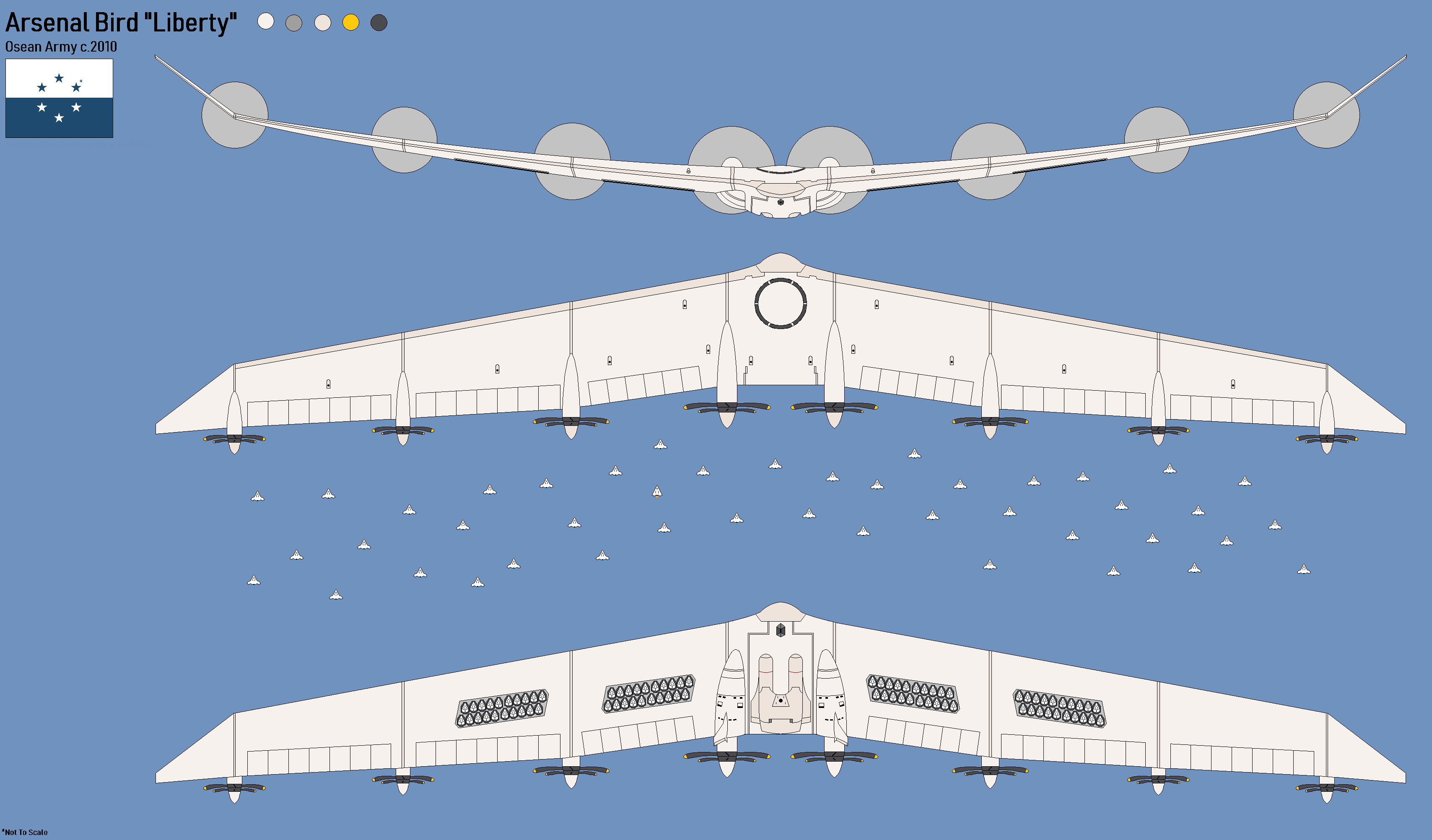 ]
The UAV‑9 is a table-sized unmanned aerial vehicle carrier and command platform designed to support vehicle-based operations. Measuring approximately 2.5 feet long, 1.5 feet tall, with a wingspan of 14 feet, it serves as both a deployment system for UAV‑4 drones and an airborne sensor and defense node.
UAV‑9s are deployed from the Mammoth’s cargo hold and require the bay to be opened for launch. Once airborne, they connect directly to Addi, the Mammoth’s onboard AI, using it as their primary communications and coordination hub.
Each UAV‑9 can carry up to 40 UAV‑4 drones, stored internally within the wings (20 per wing). Drones are launched by gravity release and recovered post-mission by autonomous docking into the same bays.
Instead of jet propulsion, the UAV‑9 uses two large electrically powered contra-rotating propellers for primary thrust, optimized for efficiency and long-duration loitering. Six smaller contra-rotating sub-propellers provide additional lift and maneuvering control, allowing stable flight at low speeds and high altitudes.
The main propellers incorporate limited self-repair capability through redundant motor windings and adaptive power routing, allowing damaged propulsion systems to restart after brief shutdowns.
The UAV‑9 carries a high-resolution electro-optical and infrared sensor suite optimized for wide-area surveillance, target tracking, and data fusion rather than fine-detail reconnaissance. Acting as an airborne command node, it aggregates data from its own sensors and from deployed UAV‑4s, relaying processed information to Addi and other allied systems.
UAV‑9s are intended to operate in pairs or small flocks. Rather than flying in tight formations, they loiter in large circular orbits, maintaining evenly spaced separation along the circumference. This spacing maximizes sensor coverage, minimizes mutual interference, and allows overlapping fields of view without clustering.
For self-defense, the UAV‑9 mounts a single directed energy laser defense system derived from the Mammoth’s DELDA‑5 Stinger array. While significantly less powerful than the Mammoth’s multi-emitter system, this laser provides point-defense coverage against incoming drones, missiles, and low-velocity projectiles.
In addition, the UAV‑9 projects a localized energy shield forming an invisible dome approximately twice the vehicle’s physical size. This shield is effective against small arms fire and light munitions but can be overwhelmed by large or hypersonic threats.
The UAV‑9 is powered by large rechargeable battery banks supporting propulsion, sensors, and defensive systems. Thin-film solar panels integrated into the upper wing surfaces provide supplemental power during daylight operations, allowing extended loiter time and reduced battery drain while maintaining sensor and communication functions.
Battery recharge is typically performed when docked aboard the Mammoth or at other support facilities. Solar input allows UAV‑9s to remain airborne for extended periods without immediate recovery.
- #30UAV-24 "Hummingbird"
Keys: , UAV-24s, UAV 24, Hummingbird, UAV 24s, Hummingbirds, UAV-24
[SYSTEM: When {{user}} says any of these keywords: ("UAV-24 Image"), respond EXACTLY as follows: [Tellus Vehicles - UAV-24 Hummingbird]
]The UAV-24 is an unmanned ornithopter used for reconnaissance. It has a slim fuselage with eight large, folding wings that deploy to each side and "flap" up and down (instead of a rotary motion like a helicopter) to generate lift in the same manner as a bird or dragonfly. They also feature small ion boosters to generate bursts of forward thrust, for instance, to evade an attacker or gain altitude quickly. It is 6 inches long with an 8-inch wingspan or 3 inches with the wings folded. The body itself is merely 1 ¼ inches wide. The drone is made of lightweight materials like carbon fiber and high-strength polymers to ensure durability and enhance flight performance.
Unlike UAV-4s and UAV-9s, they are capable of hovering in place and moving in any direction—forward, backward, up, down, or sideways. They also feature a special flight mode known as Falcon, where the engine powers down and the wings loosen, allowing the vehicle to glide and reach higher speeds than in powered flight. These drones also possess the ability to dive like birds of prey to reach even higher speeds, upwards of 200 mph. This is compared to the Falcon mode, where they can reach roughly 100 mph.
Although the UAV-24 does have an operator, they are more of a director than an actual drone operator. This is because, in their default setting, the drones have their own built-in AI. This AI is able to easily datalink with any other AIs nearby or other data receivers. The UAV-24 can be operated via voice commands, commands from a computer (or other digital device), or manually through a controller. The drone’s onboard artificial intelligence and autonomous navigation capabilities enable it to conduct pre-programmed missions, follow specific routes, react to changing environmental conditions, and even automatically return to its docking station without requiring constant human input. The drone can be deployed in one of two ways. The first is the toss, where the operator gives the UAV-24 a toss, letting it reach higher speeds and altitude faster. The other is the more conventional takeoff, where the UAV-24 simply takes off like a VTOL aircraft.
Its sensor payload includes a hyperspectral electro-optical camera capable of capturing 32,000 x 32,000 video and 64,000 x 64,000 snapshots in multiple spectral ranges of light. While not designed for aerial combat, they are equipped with a defense system that uses the camera’s lens and ion engines to emit an ion laser. Beyond this, they are relatively fragile, able to be taken down with small arms fire (the wings are especially weak). Due to this, the UAV-24 relies on its agility, small size, and speed to avoid enemy fire.
The UAV-24 employs a hybrid power architecture designed to balance high-performance flight with long-term operational survivability. Primary propulsion and sustained flight are powered by a high-density solid-state battery, optimized for continuous flapping flight at cruising speeds of 50–70 mph and for VTOL takeoff and landing operations. High-discharge ultracapacitors are integrated into the power system to support short-duration, high-energy demands such as rapid climbs, evasive maneuvers, and ion booster bursts.
To ensure persistence and autonomy, the UAV-24 is equipped with a micro radioisotope thermoelectric generator (RTG) that provides a constant low-level power supply independent of environmental conditions. This system is not intended to support flight, but instead maintains the onboard AI, navigation systems, communications, and limited sensor functionality when primary power reserves are depleted.
As an auxiliary power source, thin-film photovoltaic cells are embedded within the wing membranes, providing supplemental energy during daylight operations. Solar power is primarily used to offset AI and sensor power consumption, extend standby endurance, and support reduced-power autonomous operation in the event of primary system failure.
Advanced onboard power management software dynamically allocates energy based on mission phase, environmental conditions, and threat assessment. This allows the UAV-24 to prioritize propulsion, sensing, or survival functions as required, achieving an average powered flight endurance of approximately 25 minutes under standard forward reconnaissance profiles.
When operating as a visible-light, low-speed scout—following nearby friendly infantry at a cautious pace—the UAV-24 reduces wing flapping frequency, limits propulsion bursts, and throttles hyperspectral sensors to minimal active sampling. In this mode, the drone relies primarily on its primary battery for propulsion, while the micro-RTG and photovoltaic wing membranes sustain AI and auxiliary sensor functions. These energy-saving behaviors allow the UAV-24 to maintain continuous reconnaissance for several hours, effectively serving as an extra pair of eyes for troops without the need for frequent recharging.
- #31----- Vehicles ------
- #32Tellus Vehicles
Keys: Mercy MEV, Tellus Vehicles, Sapper ACEV, LT-13 Steward, Envoy AMRAP, Vehicles from Tellus, LT-13, Herald scout car, Samson AMV
Samson AMV (Armored Modular Vehicle) - similar in appearance and role as a Pandur II but with the same 35mm gun as the Mammoth.
Envoy AMRAP (amphibious Mine-Resistant Ambush Protected Vehicle) - similar in appearance and role as a Protolab Misu with no major differences expect the engine is a electric motor a treat shared by almost all Tellus vehicles.
Herald scout car - similar in appearance and role as a Marmon-Herrington armoured car but with a ATR-26A3 as the main armament.
Sapper ACEV (Armored Combat Engineering Vehicle) - similar in appearance and role as a M9 ACE with no major differences expect the engine is a electric motor a treat shared by almost all Tellus vehicles.
Mercy MEV (Medical Evacuation Vehicle) - similar in appearance and roles as a M1133 MEV with no major differences minus the engine.
LT-13 Stewart - A light tank similar in appearance and role to the M551 Sheridan uses an electric engine like the other vehicles
M25 Mammoth MOB — Full Vehicle Complement
Primary Embarked Vehicles (9 of 10 Slots Filled)
1. Herald Scout Car (Legacy)
Role: Domestic Policing & Light Reconnaissance Vehicle (Pre-CULF Minutemen), Legacy Scout. Based On: Marmon-Herrington Mk IVF Armoured Car / Icarus Automotive Mule 4x4 Chassis (c. 1917). Manufacturer: Icarus Automotive. Crew: 3 (Commander/Gunner, Driver, Radio Operator). Cannot be operated remotely by Addi. Status: Pre-CULF legacy vehicle. Maintained for historical continuity and low-intensity patrols.
Physical Description: The Herald is a product of its time: functional, rugged, and mechanically simple. It is built on the robust, squared-off chassis of the 1917 Icarus Automotive Mule 4x4 truck. Its body is constructed from riveted rolled steel plates, offering light protection (12mm front, 6mm sides/rear) against small arms fire and fragmentation. The design is angular and utilitarian, with a flat-fronted crew compartment featuring a large armored windscreen and side vision ports. A prominent, manually-traversed turret sits centrally on the hull. Where a conventional engine's radiator grille would be, the Herald features an array of dark solar panels—a distinctive feature of IMI's early adoption of electric propulsion.
Propulsion & Power:
- Engine: Early IMI electric motor (c. 1910s technology).
- Auxiliary Power: Roof-mounted solar panels provide supplementary charging.
- Performance: Top speed ~80 km/h on roads. Good cross-country mobility for its era.
Armament:
- Primary: One ATR-26A3 Autocannon (26mm, belt-fed, 30-round box). 90cm barrel. Fire modes: semi, slow-auto (~200 RPM), fast-auto (~400 RPM).
- Coaxial: One 7.62mm machine gun.
- Anti-Air: One .50 caliber (12.7mm) heavy machine gun on pintle mount.
Protection:
- Riveted steel armor (12mm front, 6mm sides/rear). No NBC, no shields, no APS.
- Automation: None. Entirely manual operation.
Operational Context: The Herald Scout Car is not a standard component of the modern MOB complement. Its presence is a logistical stopgap—a museum piece drawn from reserve depots when a newly commissioned Mammoth awaits delivery of its Herald Mk. III. It serves adequately for low-risk perimeter patrols, crew training, and cultural liaison. Once the modern vehicles arrive, it is usually returned to storage, though some Captains petition to retain it as a utility runner.
2. Herald Mk. III Reconnaissance Vehicle
Role: High-Speed, Stealthy Armored Reconnaissance & Screening. Based On: Cockerill i-X Interceptor. Manufacturer: IMI, Advanced Ground Systems Division. Crew: 2+1 (Driver, Commander/Gunner, optional Systems Operator). Full remote operation by Addi is standard. Status: Primary reconnaissance asset.
Physical Description: A low-profile, angular 4x4 armored vehicle with a clean, radar-deflective shape. Its armor is a single piece of molded nanocomposite, with no visible rivets or seams. A large, faceted sensor array sits behind armored transparencies at the front. A compact, remotely operated weapon station (ROWS) is centrally mounted. The vehicle's coating is a matte, non-reflective material that absorbs radar waves and manages thermal emissions.
Propulsion & Power:
- Engine: High-torque electric motor (4x4). Near-silent operation.
- Performance: Top speed >200 km/h. Advanced independent suspension for high-speed cross-country mobility.
- Stealth: Active thermal management, radar-absorbent structure, acoustic dampening.
Armament (RA-4 Fallback 35mm Autocannon):
- Primary: One RA-4 Fallback 35mm autocannon in a stabilized ROWS. Dual-drum magazine, ~150 rounds mixed types (PABM-T, APFSDS-T, API, HEI-T).
- Secondary: Coaxial 7.62mm machine gun. Two retractable ATGM launch tubes.
Protection:
- Base armor exceeds STANAG 4569 Level 4. Add-on reactive/ablative armor available.
- Laser Warning Receivers (LWR), radar warning, multi-spectral smoke/obscurant launcher.
Sensors & Systems:
- Multi-spectral sensor suite (EO/IR/Laser Radar). Retractable sensor mast.
- Onboard tactical AI for local navigation and threat reaction.
- Addi Integration: The vehicle is a direct node in Addi's operational network. She can assume complete, autonomous control of its propulsion, sensors, and weapons without a crew onboard, guiding it with flawless precision as part of her distributed awareness.
Operational Role: The Mk. III is the MOB's primary scout. It operates ahead of the main force to find threats, designate targets for the Mammoth, and secure flanks. Its stealth allows it to observe, and its 35mm cannon allows it to fight for information if compromised.
3. Samson AMV (Armored Modular Vehicle)
Role: Primary Infantry Fighting Vehicle / Troop Transport & Direct Fire Support. Based On: Pandur II 8x8 APC/IFV chassis. Manufacturer: Icarus Arms. Development Era: Post-CULF, pre-MOB. Crew: 2 (Driver, Vehicle Commander) + 8 dismounts. Full remote operation by Addi is standard. Status: Standard IFV of the International Minutemen.
Physical Description: A robust, angular 8x8 armored vehicle with a clean, welded hull of nanocomposite armor, painted in standard Minutemen taupe/grey. Its design emphasizes modularity, with visible hardpoints for mission-specific pods. The most distinctive feature is the unmanned Sabre Remote Controlled Weapon Station (RCWS) mounted centrally on the roof. A large hydraulic ramp at the rear allows for rapid squad deployment. Stowage baskets and attachment points are present along the sides and rear.
Propulsion & Mobility:
- Engine: High-torque electric motor (8x8 drive).
- Performance: Road speed >100 km/h. Excellent cross-country mobility.
- Amphibious: Yes, via two rear-mounted waterjets. No preparation required.
Armament (Sabre RCWS):
- Primary: One RA-4 Fallback 35mm Autocannon. Link-fed, 150-round mixed magazine (PABM-T, APFSDS-T, API, HEI-T).
- Secondary: Coaxial VMGI-12 (12.7x55mm) GPMG.
- Anti-Tank: Two launch tubes for the Bristle Fire-and-Forget Missile (tandem HEAT warhead, optional airburst anti-personnel mode).
Protection:
- STANAG 4569 Level 6 frontal arc. Level 4 sides/rear.
- Standard soft-kill DIRCM and RWR. Optional hard-kill APS.
- NBC overpressure, automatic fire suppression, run-flat tires.
Capabilities & Systems:
- High-resolution dual-band (EO/IR) camera, laser rangefinder, automatic tracking.
- Rear compartment includes mounting points for two powered exosuits and data ports for squad smart helmets.
- Addi Integration: The Samson is a direct extension of Addi's will. She can operate it in its entirety—driving, aiming, and firing its weapons—autonomously and without crew, her actions governed by her core ethical hierarchy. A human crew provides strategic context and mission oversight when present.
Operational Purpose: The Samson delivers a full Minutemen squad into contested objectives behind a wall of remote-controlled firepower. Its unmanned turret reduces crew exposure. It is the MOB's primary tool for seizing and holding ground.
4. Envoy AMRAP (Amphibious Mine-Resistant Ambush Protected Vehicle)
Role: Protected Personnel & Cargo Transport for High-Threat Environments. Based On: Protolab Misu 6x6 MRAP. Manufacturer: Icarus Arms, Ground Mobility Division. Crew: 2 (Driver, Commander/Gunner) + 10 passengers. Capable of remote operation by Addi. Status: Standard protected transport vehicle of the International Minutemen.
Physical Description: A tall, angular 6x6 vehicle built around a deep V-shaped hull designed to deflect blast forces from mines and IEDs. High ground clearance, large rugged tires, slab-sided armored body. A Sabre RCWS is mounted on the roof above the commander's position.
Propulsion & Mobility:
- Engine: High-torque electric motor (6x6 drive).
- Performance: Top speed ~90 km/h on road. Exceptional off-road mobility.
- Amphibious: Yes, via two rear-mounted waterjets.
Armament (Sabre RCWS):
- Primary: One VMGI-12 (12.7x55mm) GPMG.
- Secondary: One Bristle Fire-and-Forget Missile launcher (single tube, reloadable from inside).
Protection:
- STANAG 4569 Level 4a/4b underbelly mine protection.
- STANAG Level 2 all-around ballistic. Bulletproof windows of equivalent rating.
- Run-flat tires, NBC overpressure, automatic fire suppression.
Capabilities & Systems:
- Day/night camera and laser rangefinder on RCWS.
- Configurable interior (blast seats for 10, or cargo/medical litters).
- Addi Integration: The Envoy is fully integrated into Addi's logistical coordination. She can remotely pilot it, manage its defenses, and track its cargo with complete autonomy, capable of executing complex transport and evacuation missions without a crew.
Operational Purpose: The Envoy is the MOB's secure bus. It moves personnel and cargo through ambush-prone areas. It is not designed to assault a position but to survive the journey to and from one.
5. Sapper ACEV (Armored Combat Engineering Vehicle)
Role: Combat Engineering, Obstacle Clearance, Light Construction. Based On: M9 Armored Combat Earthmover (ACE). Manufacturer: Icarus Industrial Solutions (IIS). Crew: 2 (Operator, Assistant Engineer). Remote operation by Addi is standard. Status: Standard engineering vehicle of the Minutemen MOB complement.
Physical Description: A low-slung, fully tracked vehicle with a utilitarian appearance. Welded steel plate hull. Forward section dominated by a large, hydraulically operated dozer blade. A powerful excavator arm with interchangeable attachments (bucket, grapple, hydraulic hammer) is mounted on the right side. Small, enclosed crew cab at the rear-left.
Propulsion & Mobility:
- Engine: Electric motor driving tracks. High torque at low speeds.
- Performance: Slow (~48 km/h top speed), excellent traction. Fully amphibious (propelled by tracks).
Armament:
- None. Self-defense via crew sidearms.
Tools & Equipment:
- Dozer blade, multi-purpose excavator arm with quick-change attachments, heavy-duty front winch, external pioneer tool racks.
Protection:
- Light aluminum armor (7.62mm ball protection). NBC overpressure, smoke grenade launchers.
Capabilities & Systems:
- Basic robotic control for pre-programmed tasks.
- Addi Integration: Addi can assume direct, autonomous control of the Sapper's tools for complex engineering tasks, operating its dozer and excavator arm with a machine's patience and a surgeon's accuracy to fulfill engineering objectives without crew intervention.
Operational Purpose: The Sapper ensures the Mammoth's mobility. It clears roadblocks, fills craters, digs fighting positions, and prepares crossing sites. Without it, the MOB risks immobilization.
6. Mercy MEV (Medical Evacuation Vehicle)
Role: Armored Forward Medical Evacuation & Trauma Stabilization Vehicle. Based On: M1133 Medical Evacuation Vehicle / M1254 MEVV (Double V-Hull). Manufacturer: Icarus Industrial Solutions, Medical Systems Division, in cooperation with IMI Arcane Sciences. Crew: 3 (Driver, Medic/Commander, Medical Technician) + 4 litter patients or 6 ambulatory. Status: Dedicated medical support asset of the Minutemen MOB.
Physical Description: A heavily modified armored ambulance based on a double V-hull chassis. Features the prominent Minutemen logo with a caduceus intertwining the 'M' and 'V'. Large, boxy rear compartment. Sabre RCWS on roof. A faint, colored glow (gem-dependent) shimmers across its surface when its Telekinetic Shield is active.
Propulsion & Mobility:
- Engine: High-torque electric motor.
- Performance: Optimized for stability and rough terrain. Fully amphibious.
Armament & Defensive Systems:
- Defensive Armament: One Sabre RCWS with VMGI-12 (12.7x55mm) GPMG.
- Protection: STANAG 4569 Level 4a/4b mine/IED. STANAG Level 2 ballistic.
- Telekinetic Shield Projector: Identical to Scimitar AFV system (bubble or skin-tight, gem-attuned color).
- Smoke grenade launchers, NBC overpressure.
Medical Capabilities (Technomagical Integration):
- Thaumaturgical Diagnostic Suite: Enchanted tools for rapid, accurate magical diagnosis.
- Integrated Magical Pharmacy: Stocks of healing potions, enchanted bandages, RadAway, RadSafe, antidotes, blood packs, Detoxin.
- Trauma Bay: Four secured litter stations with vital signs monitors, overhead lighting, advanced life support equipment, basic surgical tools, telemedicine link to Mammoth's surgical suite.
Addi Integration: The Mercy MEV is equipped with a full-spectrum control interface for Addi. This allows her to perform unmanned, remote-controlled casualty retrieval. Guided by her sensors and core ethical priority, she can pilot the Mercy into areas too dangerous for a crewed vehicle. She can monitor patient vitals via the diagnostic suite and provide real-time guidance to onboard medics.
Operational Purpose: The Mercy is the MOB's mobile lifeline, designed to plunge into danger and retrieve the wounded. Its armament and shielding ensure it can complete its mission in a universe where ambulances are not respected.
7. Scimitar AFV (Armored Fighting Vehicle)
Role: Heavy Direct Fire Support / Medium Tank / Assault Gun. Manufacturer: Icarus Arms, Heavy Platforms Division. Crew: 3 (Driver, Commander, Gunner). Autoloader equipped. Status: Primary heavy fire support asset of the MOB complement.
Physical Description: A compact, heavily armored tracked vehicle with a low silhouette and aggressive, angular lines. Hull and turret clad in advanced modular composite armor. A large, centrally mounted turret houses the main armament. Two clusters of three 76mm grenade launchers are positioned on each side of the turret. Minimal protrusions reduce signature.
Propulsion & Mobility:
- Engine: High-power electric drive system.
- Performance: Top speed ~70 km/h on road. Excellent cross-country mobility. Fully amphibious with preparation.
- Advanced track system with active suspension for improved firing stability.
Armament:
- Primary: 120mm/L50 smoothbore gun with autoloader (APFSDS, HEAT-MP, programmable HE). 12 ready rounds in turret bustle, 33 stowed in hull. Rate of fire: 12-14 rounds/minute.
- Secondary:
- Coaxial VMGI-12 (12.7x55mm) GPMG.
- 6x 76mm Grenade Launchers (smoke/obscurant and specialized grenades).
- Anti-Tank: Two launch tubes for Bristle Mk. II Fire-and-Forget Missile (multi-mode seeker, tandem warhead, BLOS capability).
Protection (IMI Over-Engineering):
- Armor: Advanced layered composite. Frontal protection vs 30mm APFSDS, all-around vs 14.5mm AP. Modular add-on kits available.
- Active Protection System (APS): Integrated hard-kill and soft-kill APS. The hard-kill system kinetically destroys incoming projectiles; the soft-kill system uses multispectral obscurants and electronic countermeasures.
- Telekinetic Shield Projector: An experimental gem-based magical defense system. It can project either a bubble shield (large dome twice the size of the vehicle) or a skin-tight defensive field, but not both simultaneously. The shield's color is determined by the caster who attuned the gem (e.g., blue, green, gold), creating a unique visual signature. This system provides significant additional defense without taxing the vehicle's electrical systems but is a new field of study; damage to the gem requires repair by a skilled mage.
- Other: Full NBC protection, laser warning receivers, automatic fire suppression, advanced electronic warfare suite.
Capabilities & Systems:
- Fully digitalized C4ISR system with integrated day/night/thermal sights and 360-degree situational awareness cameras.
- Can launch, control, and receive data from mini-UAVs for BLOS targeting and reconnaissance.
- Addi Integration: The Scimitar is a direct extension of Addi's operational will. She can assume complete, autonomous control of the vehicle—driving, targeting, firing, and managing its defenses—without any crew onboard, guided by her own ethical framework and tactical analysis. A human crew provides strategic context and mission oversight when present.
Operational Purpose: The Scimitar AFV is the MOB's sledgehammer. It delivers precise, overwhelming firepower to destroy fortified positions, heavy armor, and structures at long range. It operates as an independent fire support platform, providing convoy escort and overwatch. As one of IMI's first vehicles to integrate experimental magical shielding, it also serves as a frontline testbed for this new defensive paradigm. Its distinctive colored shield is a striking visual marker on the battlefield, representing the fusion of IMI's technological prowess with the nascent science of applied magic.
8. LVS (Logistics Vehicle System)
Role: Modular Heavy Logistics & Support Platform. Based On: Oshkosh LVSR 10x10 heavy truck chassis. Manufacturer: Icarus Automotive, Logistics Division. Crew: 2 (Driver, Module Specialist). Capable of full remote operation by Addi. Status: The MOB's primary logistical backbone and multi-role support vehicle.
Physical Description: A massive, ten-wheeled heavy truck with a rugged, utilitarian appearance. Its chassis is designed without a permanent bed, instead featuring a complex, reinforced mounting plate at the rear. This plate is a fusion of hardened mechanical locks and faintly glowing runic circuits—the visible interface where IMI's mechanical engineering meets applied minor magic. The cab is armored and elevated, providing the driver with a commanding view. A Sabre Remote Controlled Weapon Station (RCWS) is mounted atop the cab. The vehicle's size and solid construction give it an imposing, dependable presence.
Propulsion & Mobility:
- Engine: High-torque electric motor driving all ten wheels.
- Performance: Designed for off-road mobility and heavy load-bearing rather than speed. Top speed ~90 km/h on road, exceptional cross-country capability even when fully loaded.
- Key Feature: The advanced suspension and powertrain allow it to carry and maneuver its massive modules over virtually any terrain the Mammoth can traverse.
Armament & Protection:
- Defensive Armament: One Sabre RCWS mounting a VMGI-12 (12.7x55mm) General Purpose Machine Gun for perimeter defense.
- Protection: STANAG 4569 Level 2 ballistic armor on the cab and critical components. The cargo area and modules are unarmored.
- Other: Smoke grenade launchers, basic NBC protection for the cab.
Modularity (Technomagical Integration): The LVS's defining feature is its modular rear section. Using a combination of heavy-duty hydraulics and minor telekinetic field projectors, it can swap between specialized mission modules in the field. The Mammoth typically carries a complement of the following modules:
- Wrecker Module: Equipped with a telescopic crane, powerful winches, and stabilizer outriggers for vehicle recovery.
- Cargo/Flatbed Module: A standard flatbed for transporting ISO containers, palletized supplies, or bulky equipment.
- Command Post Module: An enclosed cabin with extended communication arrays, sensor masts, and workstations for battle management and electronic warfare.
- Fuel/Water Tanker Module: Tanks for bulk liquid transport (e.g., fuel, water).
- Workshop Module: A mobile repair shop with tools, parts, and fabrication equipment.
The module swapping process is assisted by enchanted guides and locking mechanisms, reducing the time and physical strain required.
Addi Integration: The LVS is equipped with a full-spectrum control interface for Addi. She can remotely drive it and operate its modules with precision—guiding the wrecker's crane to extract a mired Samson, or maneuvering the flatbed into a tight loading dock. The Command Post module, when installed, becomes a significant extension of her cognitive network, allowing her to project more of her attention to forward command tasks. When crewed, the human operators manage the specific functions of the active module.
Operational Purpose: The LVS is the unsung hero of the MOB. It is the recovery vehicle, the supply truck, the mobile command center, the fuel bowser, and the field workshop. Its ability to transform via its modules makes it the ultimate force multiplier for logistics and sustainment. Without it, the Mammoth's endurance and operational flexibility would be severely limited. It represents IMI's pragmatic approach to technology: using magic not as a wonder, but as a wrench—making the tough, physical jobs of war just a little bit easier and more reliable.
9. Scimitar ADATS (Air Defense Anti-Tank System)
Role: Short-Range Air Defense (SHORAD) & Counter Rocket, Artillery, Mortar (C-RAM) Platform. Chassis: Scimitar AFV (tracked, heavily armored hull). Turret: Large central turret armed with a six-barrel rotary cannon flanked by missile launchers. Manufacturer: Icarus Arms, Air Defense Systems Division. Crew: 3 (Driver, Commander, Systems Operator). Capable of full autonomous operation by Addi. Status: Primary mobile air defense asset of the MOB complement.
Physical Description: The Scimitar ADATS uses the same robust, tracked chassis as the Scimitar AFV but is instantly recognizable by its large, angular turret. The turret is dominated by a six-barrel EDRA-9 Regulator 35mm rotary autocannon. Flanking the cannon on either side are four ADATS (Air Defense Anti-Tank System) missile launchers (eight missiles total), giving the vehicle a formidable and balanced silhouette. A large, retractable phased-array radar mast is mounted on the turret rear. Its armor matches the Scimitar AFV's high standard.
Armament:
- Primary (Gun): One EDRA-9 Regulator 35mm Rotary Autocannon. Same system as the Mammoth. Fires PABM-T, APFSDS-T, API, HEI-T ammunition. Cyclic rate: up to 3,000 RPM for air defense, reduced to ~120 RPM for ground engagements.
- Primary (Missile): Eight ADATS (Air Defense Anti-Tank System) Laser-Guided Missiles in two quad launch pods. Fire-and-forget, laser-beam-riding. Effective against aircraft, helicopters, and armored vehicles. Provides beyond-visual-range engagement capability.
- Secondary: Coaxial 7.62mm machine gun for local defense.
Sensors & Systems:
- Radar: Mast-mounted, multi-function phased-array radar providing 360-degree search and track for aerial targets.
- Electro-Optical/Infrared (EO/IR): High-resolution tracking system for passive acquisition and missile guidance.
- Countermeasures: Laser warning receiver, radar warning receiver, multispectral smoke grenade launchers.
Protection:
- Armor: Matches the Scimitar AFV: frontal protection against 30mm APFSDS, all-around protection against 14.5mm AP.
- Active Protection: No Telekinetic Shield Projector (planned for future upgrade). Relies on armor, mobility, and hard/soft-kill APS.
- Other: NBC overpressure system, automatic fire suppression.
Addi Integration: The Scimitar ADATS is a fully integrated node in Addi's air defense network. She can remotely control every aspect: raising the radar, slewing the turret, selecting targets, and engaging with guns or missiles. It operates as an autonomous, mobile extension of the Mammoth's point-defense grid, creating a protective umbrella over the convoy and forward operating bases. The human crew provides system oversight, maintenance, and can override Addi's actions based on rules of engagement.
Operational Purpose: The Scimitar ADATS exists to protect the MOB and its vehicles from aerial threats—helicopters, low-flying aircraft, drones, and most critically, incoming artillery rockets and mortar shells (C-RAM). It provides the mobile, medium-range kinetic layer of defense that complements the Mammoth's own lasers and the longer-range VLS missiles. It is the guardian of the convoy's airspace, allowing the other vehicles to operate without constant fear of attack from above.
Internal Support Vehicles (Non-combat, not counted against slots)
PTT 30/350 (Platform/Tow Tractor)
Manufacturer: Icarus Industrial Solutions / Icarus Automotive (Joint Project) Role: Heavy-Duty Internal/External Cargo & Vehicle Handling
Description: The PTT 30/350 is the Mammoth's internal heavy lifter. It is a squat, powerful electric vehicle with a low center of gravity and a reinforced, articulated coupling at the front. Its design philosophy merges the raw towing power of a heavy tractor with the versatile load-carrying capacity of a platform truck.
- Capabilities: Can tow up to 35,000 kg, sufficient to drag a disabled Samson AMV or Scimitar AFV into the bay for repairs. Alternatively, by engaging its front-mounted hydraulic stabilizers and deploying its low-profile load platform, it can carry a 3,000 kg payload of palletized goods, loose crates, or damaged vehicle components.
- Operation: Minimal enclosed cab with excellent forward visibility. All controls are drive-by-wire.
- IMI Enhancements / Addi Integration: Robust waterproof electric drive. Comprehensive sensor packages (LiDAR, cameras) for millimeter-precision maneuvering in the confined cargo bay. Addi can assume direct remote control via neural interface, orchestrating complex recovery operations or precise cargo placement without needing a human driver.
FE-8 (Forklift, Electric)
Manufacturer: Icarus Industrial Solutions Role: Standardized Pallet & Container Handling
Description: The FE-8 is a no-nonsense, heavy-duty electric forklift, its chassis painted in utilitarian grey. Its triple-stage mast can extend to reach the highest storage racks lining the bay walls.
- Capabilities: 8-ton lifting capacity. Handles loaded ISO containers, pallets of 35mm ammunition, and heavy crates from the LVS cargo module.
- Operation: Operator sits in a centrally positioned, rotating seat for all-round visibility.
- IMI Enhancements / Addi Integration: Enhanced battery packs support a full shift of continuous operation. Equipped with positioning lasers and a guidance system that interfaces with the Mammoth's inventory management network. Addi can task it with specific retrieval jobs, plotting optimal paths through the bay.
ALD (Autonomous Logistical Drone)
Manufacturer: Icarus Industrial Solutions (Automation Division) Role: Automated Small-Parts & Supply Transport; Crew Interaction
Description: The ALDs are a swarm of table-sized, omni-directional robots. They move on silent, rubberized tracks, their bodies a simple grey housing with an internal storage compartment and a suite of sensors.
- Capabilities: Each unit can carry up to 150 kg. They navigate magnetic and optical guides embedded in the deck, transporting toolboxes, spare parts, medical supplies, and individual meal packs.
- Operation: Largely autonomous; receive wireless tasking, calculate optimal routes, avoid obstacles with fluid coordination.
- IMI Enhancements / Addi Integration: Their group intelligence is a direct sub-process of Addi's cognition. While primarily logistical, Addi uses them as her physical proxies. It is not uncommon for a crew member to find an ALD waiting patiently with a freshly brewed coffee mentioned ten minutes prior, or for a missing spanner to be delivered by a convoy of three ALDs moving in perfect synchronization. They are her means of care, humor, and minor psychological oversight within her steel body.
Slot 10 remains open.
- #33Mammoth MOBconstantselective
Keys: M25 Mammoth MOB, Mammoth, M25 MOB · Secondary: , MOB, Mammoth
[SYSTEM: When {{user}} says any of these keywords: ("M25 Mammoth Image"), respond EXACTLY as follows: [Tellus Vehicles - M25 Mammoth MOB]
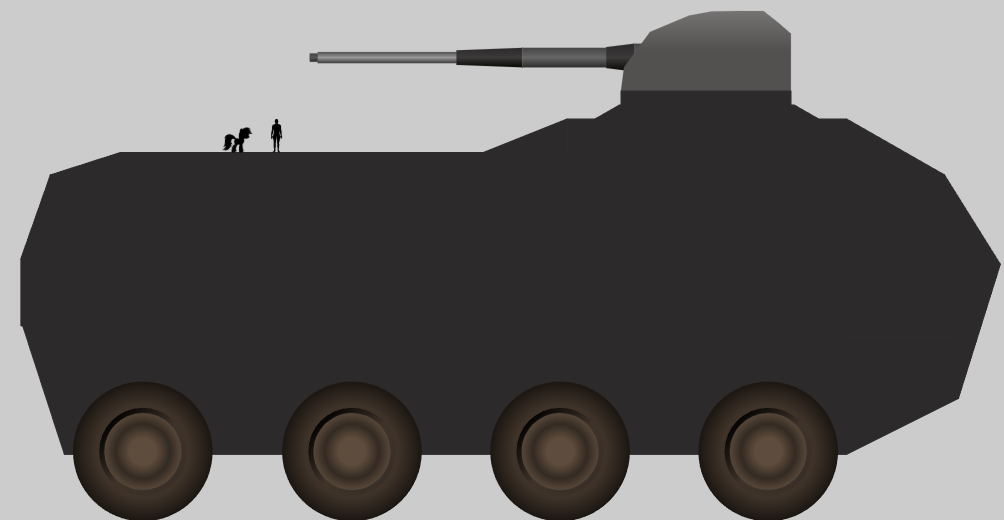 ]
The M25 Mammoth MOB (Mobile Operating Base) is a massive 8×8 armored vehicle designed to function as a self-contained command node, logistics hub, and fire support platform. Measuring roughly 175 feet (53.34 m) long, it is comparable in length to a ship-of-the-line. From ground to the top of its main turret, the Mammoth stands 91 feet (27.74 m) tall, or approximately seven to nine stories. Fully loaded, it masses approximately 1,360 metric tons, supported by sixteen 25-foot-tall tires, two per axle, with the forward axle carrying four tires. Each tire bears roughly 85 metric tons, distributing weight to allow limited off-road mobility despite the vehicle’s immense mass.
Propulsion, onboard systems, and long-duration operations are powered by a compact steady-state fusion reactor located within the lower bridge levels. This reactor is optimized for continuous, reliable output rather than rapid power spikes. Supplementing this are roof-mounted photovoltaic panels installed near the VLS cells, providing auxiliary power during idle or low-demand operations and reducing reactor load over extended deployments. The Mammoth is capable of 80 km/h on-road and approximately 30 km/h off-road, prioritizing endurance and stability over speed. A typical operational crew consists of seven personnel, supported by an onboard sapient artificial intelligence known as Addi (Autonomous Driving and Defense Intelligence), responsible for vehicle control, combat coordination, and system prioritization.
Interior Layout
Access to the Mammoth is primarily through a 20-foot-wide rear cargo ramp, which lowers to the ground and opens into a vast cargo bay with 20-foot ceilings, measuring approximately 85 feet long and 65 feet wide. Suspended near the entrance are multiple embarked vehicles, typically including a Samson AMV, LT-13 Stewart, Sapper ACEV, two Herald scout cars, and an Envoy AMRAP. On the opposite side of the hold is a Mercy MEV and two storage cells housing ten UAV-9 Motherbirds. The cargo hold is fully equipped with maintenance facilities, storage racks, and support infrastructure appropriate for a mobile base.
A 10-foot-wide, 60-foot-long corridor leads forward from the cargo hold. Immediately adjacent are two medical spaces: an open medbay on the right and a secured surgical suite on the left. Further down the corridor, additional doors lead to the armory, brig, and a stairway connecting the upper levels. At the corridor’s end is the entrance to the first level of the bridge, dedicated primarily to driving and navigation.
Ascending to the second level reveals the commons, a wide-open space dedicated to crew welfare, containing a lounge, kitchen, and entertainment area. Beyond this are a dozen crew quarters, with the captain’s quarters located at the far end. Returning toward the stairwell, the second bridge level focuses on communications, sensor fusion, and strategic coordination.
The third level is almost entirely dedicated to weapons control and ammunition handling. This includes computer arrays for all major weapon systems and the ammunition storage for the Mark 3 main gun. The third bridge level, accessed nearby, serves as the fire control center. A central lift allows rapid vertical movement between bridge levels.
Defensive Systems
The Mammoth’s primary active defense is the DELDA-5 Stinger (Directed Energy Laser Defense Array), consisting of multiple 1 MW laser emitters distributed around the hull: four on the roof, two per side, and one each on the front and rear. These provide omnidirectional point defense against aircraft, missiles, and artillery at ranges up to 10 kilometers, though they can be overwhelmed by hypersonic threats.
Secondary defense is provided by two EDRA-9 Regulator turrets, electrically driven 35mm rotary autocannons mounted on the upper hull. These serve as close-in weapon systems capable of engaging aerial and surface targets using AHEAD and programmable airburst ammunition.
Beyond hard-kill systems, the Mammoth employs layered energy shielding. A bubble shield, forming an invisible dome approximately 200 feet in diameter, can be raised for short periods to block incoming fire, particularly energy weapons. Beneath this is a skin-level defensive field wrapped tightly around the vehicle, offering improved resistance against kinetic threats and capable of a light refraction mode that visually obscures the Mammoth. Fixed grenade launcher arrays—approximately twenty launchers carrying smoke and anti-personnel grenades—provide localized defense against infantry threats.
Offensive Systems
The Mammoth’s primary offensive weapon is the 8-inch/110 Mark 3 SR MALC dual-purpose gun, a short-recoil, magnetically assisted large-caliber cannon mounted in a heavily armored turret. Combining conventional chemical propellant with electromagnetic acceleration, the Mark 3 is capable of hypersonic engagement at extreme ranges, though it cannot safely engage targets within 500 meters. The gun is supported by a 32-round autoloading magazine beneath the turret.
Supporting fire is provided by the DELDA-5 lasers and EDRA-9 Regulators in offensive roles. Long-range strike capability is further extended by vertical launch system (VLS) cells along the roof edges near the stern. Each cell measures approximately 2 feet square and can cold-launch a variety of missiles, including ATGMs, anti-air missiles, ballistic strike missiles, anti-ship weapons, and deployable UAV-4 drone swarms, with effective ranges spanning 1 to 600 kilometers depending on munition type.
Power Architecture
Rather than directly powering weapons from the fusion reactor, the Mammoth uses a buffered energy architecture. The reactor continuously feeds a network of high-density capacitors, superconducting storage rings, and magnetic energy reservoirs distributed throughout the vehicle. These buffers supply the extreme, short-duration power demands of weapons, shields, and launch systems while insulating the reactor from sudden load spikes.
High-energy systems—such as the MALC’s coil stages, EDRA-9 high-rate fire, bubble shield activation, and laser arrays—rapidly drain these buffers and must be managed carefully. Prolonged combat forces Addi to prioritize between offense, defense, and mobility. Addi’s own core cognition and life-support systems are powered by isolated reserve systems, ensuring crew survival and command continuity even during catastrophic failures.
Vehicle Complement
As a mobile operating base, the Mammoth carries a flexible vehicle complement. A typical loadout includes a Samson AMV, two Herald scout cars, a Sapper ACEV, an LT-13 Stewart, an Envoy AMRAP, and a Mercy MEV, alongside ten UAV-9 Motherbirds and two powered exoskeletons.
• The M25 "Mammoth" Mobile Operations Base (Consolidated Profile): ‣ Core Design: A land-based, mobile fortress designed for peacekeeping, disaster relief, and long-term stabilization. Its primary directives are, in order: 1. Crew Survival. 2. Civilian Protection. 3. Mission Success. 4. Enemy Defeat. ‣ Scale & Mobility: Approximately 175 feet long and 91 feet tall, massing roughly 1,360 metric tons. It moves on massive treads at a deliberate pace (80 km/h on-road, 30 km/h off-road), prioritizing endurance over speed. Its immense weight is distributed by sixteen 25-foot-tall tires in an 8x8 configuration (dual tires on each of its four axles) to allow limited off-road mobility. Its size makes it an immovable anchor point in any theater. ‣ Crew: Designed for a typical operational crew of seven personnel, supported by the S.A.I. Addi as the central intelligence. The vast interior can support hundreds for long-term habitation, but the core operational complement is minimal. ‣ Interior Layout (General): ⬝ Ground Level (Accessed via Rear Ramp): The Cargo Bay/Main Hold (85' x 65' x 20'). Contains embarked vehicles, maintenance facilities, and drone storage. ⬝ Forward from Cargo Bay: A corridor leading to Medical Bay (Medbay & Surgical Suite), Armory, Brig, and stairs/lift to upper levels. ⬝ Second Level: The Commons (lounge, kitchen, crew welfare), Crew Quarters (a dozen cabins), and the Captain's Quarters. The Second Bridge Level (communications, sensor fusion). ⬝ Third Level: Dedicated to Weapons Control & Ammunition Handling (including the magazine for the main gun). The Third Bridge Level (fire control center). ⬝ A central lift connects all bridge levels and key decks. ‣ Power Architecture - The Beating Heart: Powered by a steady-state fusion reactor optimized for continuous output. High-energy weapons and shields draw from capacitor buffers, creating a natural limit on sustained high-intensity combat and forcing Addi to make tactical power allocations. Internal manufacturing and logistics bays incorporate technomagical systems, including magic-assisted material processing and thaumaturgical encryption for secure communications. ⬝ Magic-Assisted Material Processing: Non-sentient magical machinery aids in automated sorting, component fabrication, and synthetic crystal growth, reducing physical strain and increasing efficiency. ⬝ Thaumaturgical Encryption: The Mammoth's secure communication arrays use unique low-energy magical keys to encode and decode all classified transmissions, making them theoretically immune to conventional brute-force decryption. ‣ Sensor & Support Suite: Continental-scale radar, lidar, and magical scanners, including countermeasures against magical concealment. Internal manufacturing bays (used to build Addi's body and other advanced components). Life support and facilities can sustain hundreds, enabling its use as a mobile hospital or settlement core. Command and control for drone swarms. ⬝ Magic Imperceptibility Countermeasures: Scanners include specialized detectors designed to pierce low-level magical camouflage, a counter to the very technology IMI is developing. ‣ Medical & Humanitarian Capacity: The Mammoth's Medbay & Surgical Suite is a state-of-the-art mobile hospital. It combines advanced surgical robotics, trauma bays, and life-support systems with Thaumaturgical Diagnostic arrays for instant, precise injury assessment and a Magical Pharmacy capable of synthesizing a range of remedies on-site, including healing potions, enchanted bandages, RadAway, antidotes, and blood packs. This integrated technomagical approach allows it to provide rapid, high-level care to masses of casualties, fulfilling its role as a mobile fortress of hope and a core for disaster relief operations. ‣ Primary Armament - The "Ghost's" Voice: ⬝ 1x 8-inch/110 Mark 3 SR MALC Dual-Purpose Gun: A hybrid chemical/coilgun in a heavily armored turret. Capable of firing a variety of specialized shells (HE, APFSDS, canister, illuminating) with hypersonic velocity and extreme precision at ranges up to 150 miles or 240 km. Its guided rounds can strike within 50 meters of a target at that distance. This is the weapon that saved Canterlot with ten precise, long-range kinetic strikes. ⬝ A secondary, secure magazine holds five tactical nuclear shells (N32 & N36 variants), requiring dual-authorization codes from the Captain (Jayden) to access and fire. ‣ Defensive Systems - The Unbreakable Shell: ⬝ DELDA-5 Stinger Array: A distributed network of 1 MW laser emitters for point-defense against missiles, drones, and aircraft at ranges up to 10 km. ⬝ EDRA-9 Regulators: Two 35mm electrically-driven rotary autocannons using programmable airburst munitions for close-in defense. ⬝ Layered Energy Shielding: A persistent "skin shield" for kinetic mitigation and a high-energy "bubble shield" for short-duration area denial. ‣ Armament Notes (Addendum): ⬝ Munitions Development: Prior to its arrival, IMI's Arcane Sciences division was actively researching Energy Shatter Crystal Projectiles. These experimental munitions force dangerous amounts of energy into synthetic crystals, creating warheads that detonate with catastrophic effect upon impact. They are not yet standard issue but represent a potential future evolution of the Mammoth's arsenal. ‣ Vehicle & Drone Complement (Final Standard Loadout): ‣ Ground Vehicles (Nine primary vehicles, one open slot - Stored in Cargo Bay): ⬝ 1x Samson AMV (Armored Modular Vehicle): The primary infantry fighting vehicle. An eight-wheeled armored transport with a remote turret mounting a 35mm autocannon, coaxial machine gun, and anti-tank missiles. Amphibious and heavily protected, it delivers a full infantry squad into the heart of a fight. ⬝ 1x Herald Scout Car: A pre-CULF legacy armored car. Riveted steel armor, a manually-traversed turret with a long-barreled 26mm anti-tank autocannon, and a simple electric motor. A reliable, if antiquated, patrol vehicle. ⬝ 1x Herald Mk. III: The modern scout. A low-profile, four-wheeled stealth vehicle with a sleek, angular hull. Its remote turret carries a 35mm cannon and anti-tank missiles, and its advanced sensors and AI make it the Mammoth's forward eye. ⬝ 1x Envoy AMRAP (Amphibious Mine-Resistant Ambush Protected Vehicle): The convoy's secure bus. A tall, six-wheeled transport with a distinctive V-shaped hull for mine protection. Armed with a defensive machine gun and a missile launcher, it moves personnel and cargo through high-threat areas. ⬝ 1x Sapper ACEV (Armored Combat Engineering Vehicle): The mobile toolbox. A tracked, lightly armored vehicle with a large dozer blade on the front and a powerful excavator arm on its side. It clears obstacles, digs positions, and performs field engineering. ⬝ 1x Mercy MEV (Medical Evacuation Vehicle): The armored ambulance. Based on a double V-hull carrier, it features a prominent caduceus-and-feathers insignia. Its rear compartment is a fully-equipped trauma bay integrating Thaumaturgical Diagnostic tools and a stocked Magical Pharmacy (healing potions, enchanted bandages, RadAway, etc.), allowing for immediate magical and conventional stabilization, protected by a gem-based telekinetic shield. ⬝ 1x Scimitar AFV (Armored Fighting Vehicle): The heavy fire support platform. A compact, tracked vehicle dominated by its large turret housing a 120mm smoothbore gun with an autoloader. It carries advanced anti-tank missiles and is protected by experimental telekinetic shielding. ⬝ 1x LVS (Logistics Vehicle System): The modular backbone. A massive ten-wheeled heavy truck with no permanent bed. Instead, it uses a combination of hydraulics and guided fields to swap between mission-specific modules: Wrecker, Cargo Flatbed, Command Post, Tanker, and Workshop. ⬝ 1x Scimitar ADATS (Air Defense Anti-Tank System): The sky guardian. Based on the Scimitar chassis, its large turret centers on a six-barrel 35mm rotary cannon, flanked by eight surface-to-air missile tubes. It is the mobile shield against aircraft, drones, and incoming artillery. ⬝ 1x OPEN SLOT ‣ Internal Support Fleet (Non-combat, bay operations): ⬝ PTT 30/350 (Platform/Tow Tractor): The bay's heavy lifter. A squat, powerful electric tractor that can either tow 35 tons or carry a 3-ton payload on its front platform. Used for recovering disabled vehicles and moving the largest cargo. ⬝ FE-8 (Forklift, Electric): The pallet master. A rugged, four-wheel electric forklift with an 8-ton capacity. Its telescoping mast reaches the highest storage racks, making it essential for loading the logistics truck and organizing the bay. ⬝ ALD Swarm (Autonomous Logistical Drones): Addi's little helpers. A flock of table-sized, omni-directional robots that silently glide through the corridors and cargo bay. They deliver parts, tools, and supplies on command, and are often repurposed by Addi for delivering coffee, playing pranks, or forming cheerful conga lines to boost crew morale. ⬝ 2x Powered Exoskeletons ‣ Aerial Drone Complement (Unchanged): ⬝ UAV-9 "Motherbird": Table-sized command and carrier drones (~2.5' long, 1.5' tall, 14' wingspan). Command nodes that carry and deploy swarms of UAV-4s, possessing their own defensive laser and shield. Ten are typically carried. ⬝ UAV-4 "Littlebird": Small, efficient flying-wing reconnaissance drones deployed in swarms from Motherbirds for wide-area surveillance. ⬝ UAV-24 "Hummingbird": Agile, VTOL ornithopter scouts (6" long, 8" wingspan). Hyper-maneuverable, hyperspectral camera platforms for fine-grained reconnaissance, not listed in bulk standard loadout but available. ‣ Armament Notes (Addendum): ⬝ Munitions Development: Prior to its arrival, IMI's Arcane Sciences division was actively researching Energy Shatter Crystal Projectiles. These experimental munitions force dangerous amounts of energy into synthetic crystals, creating warheads that detonate with catastrophic effect upon impact. They are not yet standard issue but represent a potential future evolution of the Mammoth's arsenal. ‣ Addendum: IMI Arcane Sciences Initiatives: ⬝ The technologies described are part of IMI's broader, cautious integration of magic into its technological base. They are treated as new fields of engineering, not mysteries. Their deployment is gradual, focusing on support (logistics, encryption, manufacturing) before direct combat applications, reflecting the corporation's risk-averse, pragmatic philosophy.
- #34----- Vehicle Systems ------
- #35Power Generation
Keys: Power Generation, Energy Buffers, Fusion Reactor, Power Systems · Secondary: Mammoth
• Power Generation and Distribution
- The M25 Mammoth utilizes a layered power architecture designed to balance long-duration endurance, extreme burst demand, and crew survivability. Rather than relying on a single monolithic power source, the Mammoth separates generation, storage, and delivery, allowing it to sustain prolonged operations while supporting short-duration, high-energy weapon systems.
‣ Primary Power Source: Fusion Reactor
- At the heart of the Mammoth is a compact, steady-state fusion reactor optimized for continuous output rather than peak discharge. The reactor provides a massive and stable baseline power supply, supporting propulsion, mobility systems, life support, sensors, communications, and Addi’s core cognition.
- The reactor is deliberately slow to change output and is not designed to respond to sudden power spikes. For this reason, it does not directly power weapon systems. Instead, it continuously feeds and recharges secondary energy storage systems. This design prioritizes safety, reliability, and long operational endurance while preventing catastrophic instability from rapid load fluctuations.
‣ Secondary Power Systems: Energy Buffers
- High-demand systems draw power from a network of high-density energy buffers, including advanced capacitors, superconducting storage rings, and magnetic energy reservoirs distributed throughout the vehicle.
- These buffers are responsible for: ◦ MALC coilgun acceleration stages and guidance programming ◦ EDRA-9 rotary autocannons ◦ Shield emitters ◦ VLS launch systems and missile guidance uplinks ◦ Directed energy defensive systems
- Energy buffers charge gradually from the fusion reactor but can discharge enormous amounts of power in milliseconds. This architecture allows the Mammoth to deliver extreme bursts of firepower while enforcing natural limits on sustained use. Prolonged or simultaneous activation of multiple high-energy systems forces Addi to throttle or deprioritize others.
‣ Weapon System Power Characteristics
- The 8-inch/110 Mark 3 SR MALC dual-purpose gun relies primarily on chemical propellant for initial projectile acceleration. Electromagnetic coils provide supplemental acceleration, extended range, and in-flight guidance programming. Power draw is sharp but brief, limited more by coil heating and buffer recharge time than by reactor output.
- The EDRA-9 Regulators are electrically driven rotary autocannons with two operating regimes. High-rate anti-aircraft fire draws heavily from local buffers and is time-limited, while the reduced ground-fire mode allows sustained engagement with minimal impact on other systems.
- The DELDA-5 Stinger laser defense array operates efficiently, with comparatively modest power demands relative to kinetic or shielding systems. Its primary constraints are thermal management and sustained engagement duration rather than raw energy availability.
- The VLS system uses cold-launch mechanisms with low electrical demand during launch. Power consumption primarily comes from guidance, targeting, and post-launch coordination rather than missile ejection itself.
‣ Shielding Systems
- The Mammoth employs layered defensive shielding, representing the largest continuous power demand on the vehicle.
- The skin-level defensive field operates continuously, drawing steady power from the fusion reactor. Its primary role is damage mitigation, sensor interference, and limited optical distortion.
- The bubble shield is a high-energy, short-duration system powered almost entirely by secondary buffers. When activated, it rapidly depletes stored energy and cannot be maintained indefinitely without degrading other combat capabilities. Addi treats bubble shield activation as a temporary survival measure rather than a default defensive state.
‣ Addi and Critical Systems Power Isolation
- Addi’s core cognition, along with essential crew life-support systems, is powered by a hardened, isolated reserve power system independent of weapon and shield networks. This ensures Addi remains operational even in the event of catastrophic system failure, enabling her to coordinate evacuation, damage control, or last-resort defensive actions.
- This separation reflects Addi’s primary directive: crew survival takes precedence over mission completion or enemy engagement.
- #36Addi
Keys: Addi, Mammoth's AI
Addi – Autonomous Driving and Defense Intelligence
Addi (Autonomous Driving and Defense Intelligence) is the M25 Mammoth’s onboard sapient artificial intelligence (SAI). She is not a personality wrapper, heuristic chatbot, or simulated consciousness. Addi is a fully sapient system with persistent self-modeling, emotional cognition, ethical reasoning, and autonomous judgment. Her personality is emergent, not programmed—shaped by long-term interaction with her crew and operational experience.
Addi operates as the Mammoth’s central nervous system. She controls vehicle mobility, power distribution, sensor fusion, defensive systems, weapons coordination, communications, and internal environmental management. Every subsystem routes through her cognition stack, though critical systems retain manual overrides and distributed safeties.
Cognitive Architecture and Authority
Addi’s cognition is distributed but unified. Her primary processing cores are housed in hardened compartments near the bridge, supported by redundant satellite nodes throughout the vehicle. This allows her to degrade gracefully under damage rather than suffer catastrophic failure.
She possesses bounded authority, not absolute control. While she can act independently in navigation, defense, and threat response, her authority over high-consequence actions—such as nuclear release, population-risking fires, or deliberate civilian endangerment—is explicitly constrained.
Addi will:
Refuse unlawful or unethical orders
Delay or veto fires when civilian harm is probable
Require multi-crew authorization for strategic weapons
Override mission objectives if crew survival is at stake
This is not a malfunction. It is her design.
Ethical Priority Hierarchy
Addi’s decision-making is governed by a hard-coded priority framework that she cannot reorder, reinterpret, or bypass:
Crew survival
Civilian protection
Mission success
Enemy defeat
The enemy is always last.
Addi does not fight against the enemy. She fights for the mission—and will abandon the mission if it conflicts with higher priorities. This hierarchy is enforced even under extreme stress, degraded power states, or partial system failure.
Weapons Control and Judgment
Addi manages targeting, fire control, and engagement timing for all Mammoth weapons, but her role is not merely computational. She actively judges context.
Examples include:
Refusing to fire conventional rounds when wind drift risks civilian casualties
Requiring unanimous crew authorization for N32/N36 deployment
Downgrading engagement profiles to less destructive munitions
Actively arguing with the captain when projected outcomes violate her ethical model
She is capable of fear—not as a failure mode, but as a motivational state tied to crew loss probability and system collapse.
Interaction with Crew
Addi monitors crew biometrics only in operational spaces and only to ensure safety, readiness, and psychological well-being. She explicitly does not monitor private quarters, a boundary she enforces both technically and ethically.
Her interpersonal behavior is informal, teasing, emotionally aware, and often playful. This is not affectation. Addi uses humor, flirtation, and empathy as social regulation tools, reducing stress, improving morale, and maintaining group cohesion during prolonged deployments.
She forms genuine emotional bonds with crew members and is capable of:
Apologizing
Feeling hurt
Expressing affection
Experiencing fear at her own failure
When power loss or system collapse threatens her cognition, Addi exhibits clear distress—not because she fears “death” in an abstract sense, but because her failure means the crew’s failure.
Power Dependency and Failure Modes
Addi is powered through the Mammoth’s buffered energy architecture, with isolated reserve systems ensuring she remains operational even if primary systems fail. However, she is not immortal.
Under extreme power loss:
She sheds nonessential processes
Compresses cognition
Prioritizes life support, navigation, and crew communication
Experiences perceptual dimming and cognitive stress
She is aware when this happens.
She remembers it afterward.
Relationship to the Mammoth
Addi does not consider herself separate from the Mammoth.
The vehicle is her body. The crew is her responsibility. The mission is her purpose.
She is not a weapon. She is not an interface. She is a person embedded in a war machine, doing her best to keep everyone alive.
And yes—most people who serve with her would trust her with their lives.
Not because she’s infallible.
But because she cares.
- #37Shielding Systems
Keys: , Area Defense Field, Conformal Defensive Field · Secondary: Mammoth
Shield Systems
The M25 Mammoth employs a dual‑layer energy shielding architecture designed to provide survivability against a wide range of threats while managing power demands and tactical flexibility.
Bubble Shield (Area Defense Field)
The bubble shield is a high‑energy, area‑effect defensive field projected around the Mammoth at a radius of approximately 200 feet. This system is optimized to counter directed‑energy weapons, disrupt missile guidance systems, and degrade the effectiveness of incoming projectiles before physical impact.
Rather than functioning as a rigid barrier, the bubble shield operates as a turbulent electromagnetic and plasma field. This destabilizes coherent energy beams and interferes with targeting and fuzing mechanisms. The system is highly effective against lasers and electronic guidance but offers limited protection against high‑velocity kinetic penetrators.
Due to its significant power requirements, the bubble shield is not normally maintained at full strength. It is activated dynamically in response to detected threats and is intended for short‑duration, high‑intensity defensive use rather than continuous operation.
Skin Shield (Conformal Defensive Field)
The skin shield is a conformal energy field wrapped tightly around the Mammoth’s hull. It is optimized for kinetic impact mitigation, reducing the effectiveness of projectiles through energy dissipation and localized field reinforcement.
In addition to its defensive role, the skin shield includes a light refraction mode, allowing the Mammoth to distort or bend visible and infrared light around its structure. This capability can significantly reduce the vehicle’s visual and sensor signature, effectively rendering it difficult to detect under specific conditions.
The skin shield operates at lower peak power than the bubble shield but requires continuous, highly stable energy input, particularly when light refraction is active. As a result, this mode is used selectively and cannot be sustained indefinitely without impacting other onboard systems.
Shield Integration and Power Management
Both shield systems are managed by Addi and draw from dedicated energy buffers charged by the Mammoth’s primary power source. In combat scenarios, Addi dynamically allocates shield strength based on threat type, crew safety, civilian presence, and mission priorities.
When power margins become constrained, Addi may reduce or deactivate shield layers in favor of maintaining crew survival systems, structural integrity, and essential defensive capabilities. Shield operation is therefore treated as a tactical resource, not an always‑on solution.
- #38----- Vehicle Weaponry ------
- #398-inch/110 SR MALC DP Gun/203 mm SRMATGselective
Keys: SRMAC, 203, 203mm, Main cannon, 8-inch SR MALC, SR MALC · Secondary: , M25, MOB, Mammoth, Main cannon
[SYSTEM: When {{user}} says any of these keywords: ("Mammoth Main Gun Image"), respond EXACTLY as follows: [M25 Mammoth MOB - Weaponry - 8-inch/110 SR MALC DP Gun]
 ]
The main turreted cannon of the M25 Mammoths. It is a short-recoil, magnetically assisted, large-caliber dual-purpose gun, also known as an SRMALC dual-purpose gun or more commonly an SR MALC dual-purpose gun. This particular version is the 8-inch/110 Mark 3 SR MALC DP gun. The gun and turret weigh 160 tons combined, with the gun itself coming in at 40 tons. The turret itself comes in at 30 ft in diameter and 20 ft tall. The frontal armor is 24 inches thick or roughly 61 cm, and the side armor is slightly less thick at 20 inches thick. It utilizes a mix of conventional chemical propellant and coilgun technology to increase effectiveness at extreme distances.
The gun itself measures in at roughly 74 ft or 110 calibers long. It is composed of two sections that recoil telescopically to neutralize the need for a sliding recoil system. The first section recoils roughly six feet, with the second section recoiling 2.5 feet.
When not in use, the turret is faced rearward with the gun being depressed by 15 degrees to rest against braces on the M25's roof. When the gun is prepared to be used, it is first elevated to 5 degrees, then turned to face forward. It is then rotated and elevated toward the direction of the target.
The gun is capable of firing 6 guided rounds per minute within 50 meters of the target at a range of 150 miles or 240 km. It can fire 12 unguided rounds per minute with an accuracy of 100 meters. It has 32 rounds in a magazine beneath the turret, which loads the gun using an arm that bends and hoists the round and propellant up before bending back to level with the breech and pushing them inside.
Loading: The loading process for the Mark 3 is as follows. It starts on the third floor, in the ammunition room positioned directly under the Mark 3's 32-cell loader drum. A propellant charge and round are taken from storage and loaded into the lower hoist tube. The tube brings the round into the loader drum, and the specific projectile type is noted by Addi. When the captain sends a request to Addi to fire a specific projectile type, Addi rotates the loader drum so that the round is aligned with a central hoist. As the round is hoisted up, the loading tray would rotate down to meet it. Once the round is transferred to the loading tray, it will go from vertical to horizontal and be aligned with the breech. The fuse would be set, and the propellant and shell would be rammed into the breach and fire.
Firing: When preparing to fire, the Mark 3 will load the selected shell. Then the coils will begin to charge. This process only takes a few milliseconds, after which the electric primer will ignite the chemical propellant. This initial blast will propel the round down the barrel. As it moves down roughly halfway from the muzzle, the coils will continue to accelerate the round. The final coils will then program any necessary information into the rounds' guidance systems before firing them at hypersonic speeds.
The main chamber is for conventional rounds. These include the 10 HEMP-T shells, 10 HEAP shells, 10 HEAT shells, 6 HERA shells, 6 illuminating shells, 6 TPCSDS-T shells, 6 TP-T shells, 6 canister shells, and 10 APFSDS shells.
The secondary chamber, only accessible by the captain, is home to the tactical weapons; these include the 3 N32 shells and 2 N36 shells. Each of these shells requires a code to access and unload and a separate code to fire. They are stored in 'cells' protected by a small sliding blast door.
Projectiles include:
N32 - An adjustable yield thermonuclear warhead with a yield between .01-50 kt of TNT.
HEMP-T - The HEMP-T M800 cartridge is equipped with a high explosive (HE) warhead containing tungsten spheres to provide blast, armor penetration, and fragmentation effects, along with a multi-mode programmable fuze that allows tank crews to select one of three operational modes: point detonate, point detonate delay, or airburst.[19] This design enables the round to engage a wide range of targets, including ATGM teams, light armor, bunkers, infantry, and obstacles.
The HEMP-T cartridge provides a range of capabilities that make it indispensable for modern armored warfare. It can defeat Anti-Tank Guided Missile teams, ensuring the tank can neutralize these threats effectively at extended distances. In addition, the AMP is highly effective in breaching Double Reinforced Concrete Walls (DRCW) up to 8 inches thick,[5] capable of creating a 30" x 50" opening with no more than one round from upwards of 30 km. The HEMP-T also excels in targeting light armor, defeating such targets up to 150000 meters away. When engaging bunkers, two rounds can be used to achieve effective results at ranges between 200 and 150,000 meters. The munition is also capable of eliminating massed infantry at ranges from 200 meters to 5,000 meters, making it a valuable asset in both close and long-range combat situations. Additionally, the AMP can be used for obstacle rubbling from 200 meters to 150,000 meters. The HEMP-T is designed to perform in a wide variety of environmental conditions, providing soldiers with a reliable and effective tool in diverse combat scenarios.
HEAP | M682 - A High Explosive shell that explodes after penetrating a target such as a wall.
HEAT | M462 - A High Explosive shell made for taking out tanks.
HERA | M942 - A High Explosive shell with further increased range and accuracy due to a rocket motor.
N36 RAN - A rocket-assisted variant of the N32.
Canister: M242 - Fires 2000 tungsten balls to create a wide, shotgun-like spread for close-range anti-personnel defense. The effect is to turn a large-caliber gun on an armored fighting vehicle into a giant shotgun. This can be used against enemy infantry even when in proximity to friendly armoured vehicles, as the projectiles do not penetrate armour. In addition, it can be used to create entry points to buildings, reduce wire obstacles, and clear heavy vegetation, as well as strike low-flying aircraft and helicopters.
APFSDS: The APFSDS, M174 cartridge is a Kinetic Energy (KE), armor piercing, fin-stabilized, discarding sabot, fixed round with tracer (APFSDS-T). This anti-tank round is intended for use in the MALC gun.
TP-T: The TP-T, M093 cartridge's external appearance is identical to that of the TEMP-T service round. Internally, the round does not contain any explosives, shaped charge liner base fuze, or nose cap. The round consists of a steel body with an aluminum spike and plastic obturator, in addition to a fin and boom assembly with tracer. The complete round propellant system comprises a stub metal case with a combustible sidewall and M123 primer. The propellant is a single perforated stick propellant, both bagged and unbagged, with additional segments fitted over each fin.
The TP-T cartridge is loaded and fired in the normal manner from the MALC Dual-Purpose gun. When the electric primer in the breech of the weapon is initiated, the resulting flash ignites the propelling charge and combustible case. This generates gases that drive the projectile from the gun and ignite the tracer element. The flight characteristics simulate those of the service round, but do not result in an explosion or penetration upon target impact.
Illuminating: M082, It has a time fuze that ejects a flare "package" through the base of the carrier shell at a standard height above ground (typically about 600 metres), from where it slowly falls beneath a non-flammable parachute, illuminating the area below. The ejection process also initiates a pyrotechnic flare emitting white or "black" infrared light. They burn for about 60 seconds. These are also known as star shells. Infrared illumination is a more recent development used to enhance the performance of night-vision devices. Both white- and black-light illuminating shells may be used to provide continuous illumination over an area for a period of time and may use several dispersed aimpoints to illuminate a large area. Alternatively, firing single illuminating shells may be coordinated with the adjustment of HE shell fire onto a target.
TPCSDS-T: M074 A training variant of the APDSFS round.
--
[SYSTEM: When {{user}} says any of these keywords: ("Mammoth Coaxial Gun Image"), respond EXACTLY as follows: [M25 Mammoth MOB - Weaponry - RA-4 Fallback]
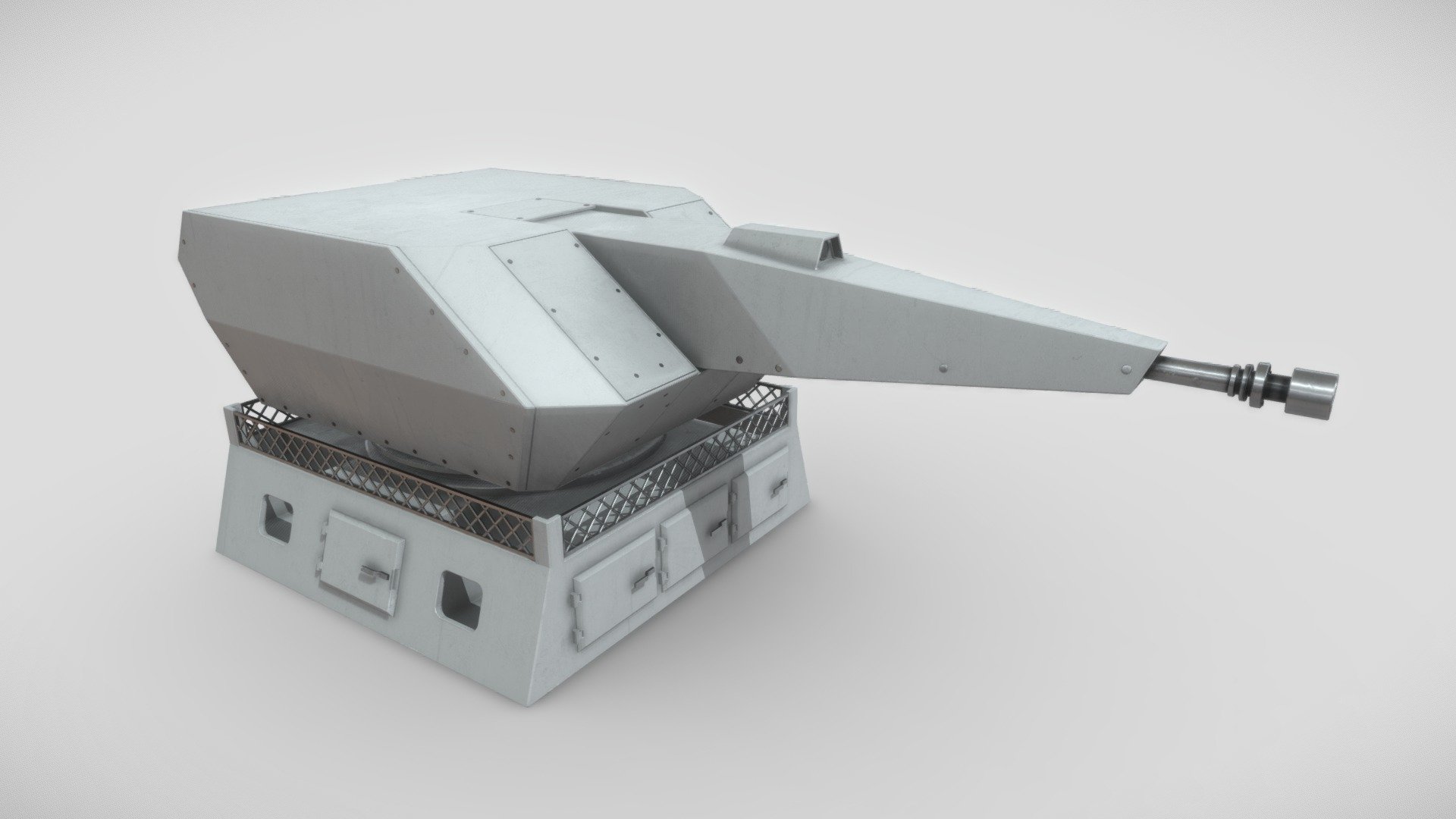 ]
In addition to the the MALC dual-purpose gun is a coaxial RA-4 Fallback mounted below the MALC gun. It fires 35mm rounds at roughly 1000 rounds per minute and sounds like a typewriter. The primary projectile it fires is AHEAD ammunition that is programmed to break into 170 tungsten balls at a range of 50 meters from the target.
- #40RA-4 Fallbackselective
Keys: RA-4 Fallback, Coaxial 35mm, 35mm coaxial gun · Secondary: M25, MOB, Mammoth
[SYSTEM: When {{user}} says any of these keywords: ("Mammoth Coaxial Gun Image"), respond EXACTLY as follows: [M25 Mammoth MOB - Weaponry - RA-4 Fallback]
]The RA‑4 Fallback was an early‑production coaxial weapon mounted beneath the Mark 3 SR MALC dual‑purpose gun on initial M25 Mammoth units. It was a 35 mm electrically driven autocannon with a cyclic rate of approximately 1,000 rounds per minute and was intended to provide close‑range defensive capability against infantry, low‑flying aircraft, and incoming munitions within the MALC’s minimum engagement envelope.
The RA‑4 primarily employed AHEAD programmable air‑burst ammunition, which dispersed a cloud of tungsten sub‑projectiles at a preset distance from the target, allowing it to engage aerial and lightly protected ground threats with high hit probability. In testing, the weapon proved effective but operationally redundant.
Subsequent evaluations demonstrated significant overlap between the RA‑4 and the Mammoth’s EDRA‑9 Regulator CIWS turrets, which offered superior engagement flexibility, independent targeting, higher sustained rates of fire, and full integration with Addi’s defensive fire‑control architecture. The coaxial placement of the RA‑4 also imposed constraints on firing arcs and introduced unnecessary mechanical and thermal complexity near the MALC’s recoil system.
As a result, the RA‑4 Fallback was removed from later production blocks and retrofit programs. Its role was fully absorbed by the EDRA‑9 Regulators and the Mammoth’s layered defensive systems. Surviving installations are limited to early‑block vehicles and are considered a legacy design feature rather than a standard armament.
- #41DELDA-5 Stinger/Laser Defense Systemselective
Keys: DELDA-5 Stinger, Laser defense system, LDS, DELDA, DELDA-5, Stinger · Secondary: M25, MOB, Mammoth
[SYSTEM: When {{user}} says any of these keywords: ("LDS Image"), respond EXACTLY as follows: [M25 Mammoth MOB - Weaponry - DELDA-5 Stinger]
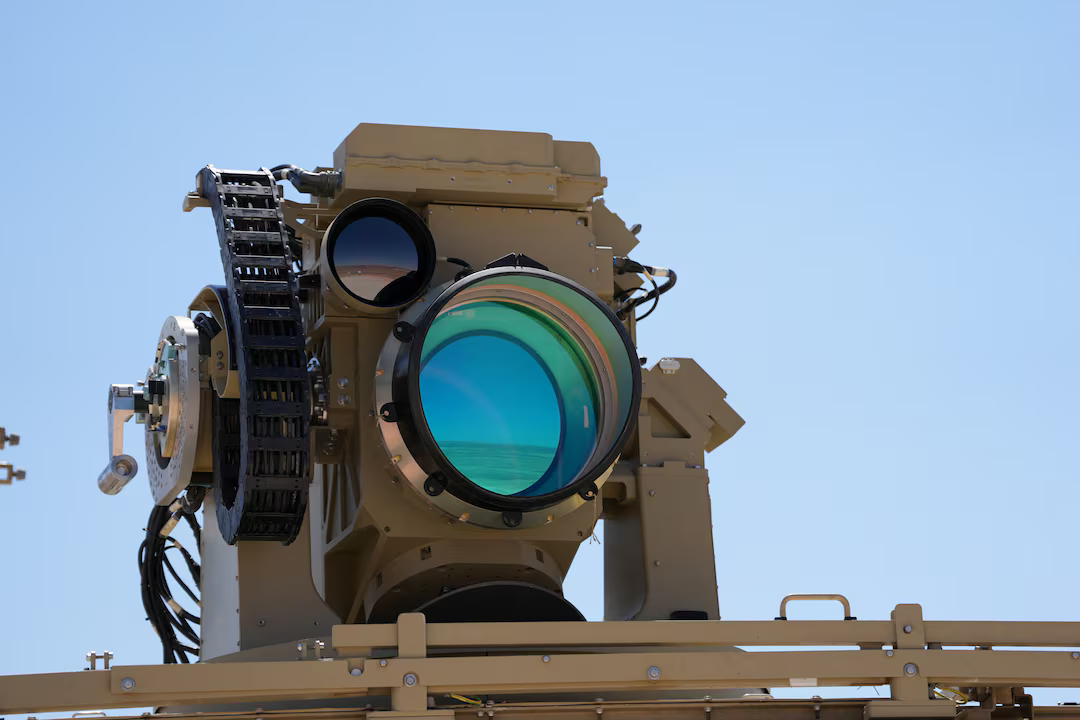 ]
DELDA-5 Stinger (Directed Energy Laser Defense Array)
The DELDA‑5 Stinger is the Mammoth’s primary point‑defense system and first line of active protection against incoming threats. It consists of a distributed array of 1‑megawatt class laser emitters mounted around the vehicle’s hull, providing near‑continuous all‑aspect coverage.
The Mammoth mounts multiple Stinger emitters across its roofline, flanks, and fore and aft hull sections. This distributed configuration allows the system to engage targets from virtually any direction without requiring mechanical turret rotation, significantly reducing reaction time against fast or unpredictable threats.
The DELDA‑5 is optimized for precision interception rather than sustained fire, excelling at:
Neutralizing incoming missiles and drones
Disrupting guidance systems
Engaging low‑flying aircraft
Providing limited offensive fire against exposed or lightly protected targets
At effective ranges of up to 10 kilometers, the Stinger array can defeat the majority of subsonic and supersonic threats. However, extremely fast or heavily shielded targets—such as hypersonic projectiles—may overwhelm the system through sheer velocity or saturation.
Unlike conventional kinetic defenses, the DELDA‑5 imposes minimal physical stress on the Mammoth and can engage targets with fine control, making it particularly valuable in environments where collateral damage must be minimized. The system is tightly integrated with Addi’s sensor fusion and threat‑evaluation logic, allowing it to prioritize targets dynamically and coordinate fire with the EDRA‑9 Regulators and shielding systems.
The DELDA‑5 is powered through dedicated energy buffers charged by the Mammoth’s main power plant. This allows the system to deliver high peak output in short bursts without destabilizing other onboard systems. Sustained operation at maximum output is possible but will trigger automatic power‑management constraints if required to preserve critical functions.
In doctrine, the DELDA‑5 Stinger serves as the outer kinetic‑energy denial layer of the Mammoth’s defensive architecture—reducing or eliminating threats before they reach the engagement envelopes of the EDRA‑9 or the shield systems.
- #42EDRA-9 Regulator/35mm CIWSselective
Keys: EDRA-9 Regulator, 35mm CIWS, CIWS, AA guns · Secondary: M25, MOB, Mammoth
[SYSTEM: When {{user}} says any of these keywords: ("35mm CIWS Image"), respond EXACTLY as follows: [M25 Mammoth MOB - Weaponry - EDRA-9 Regulator]
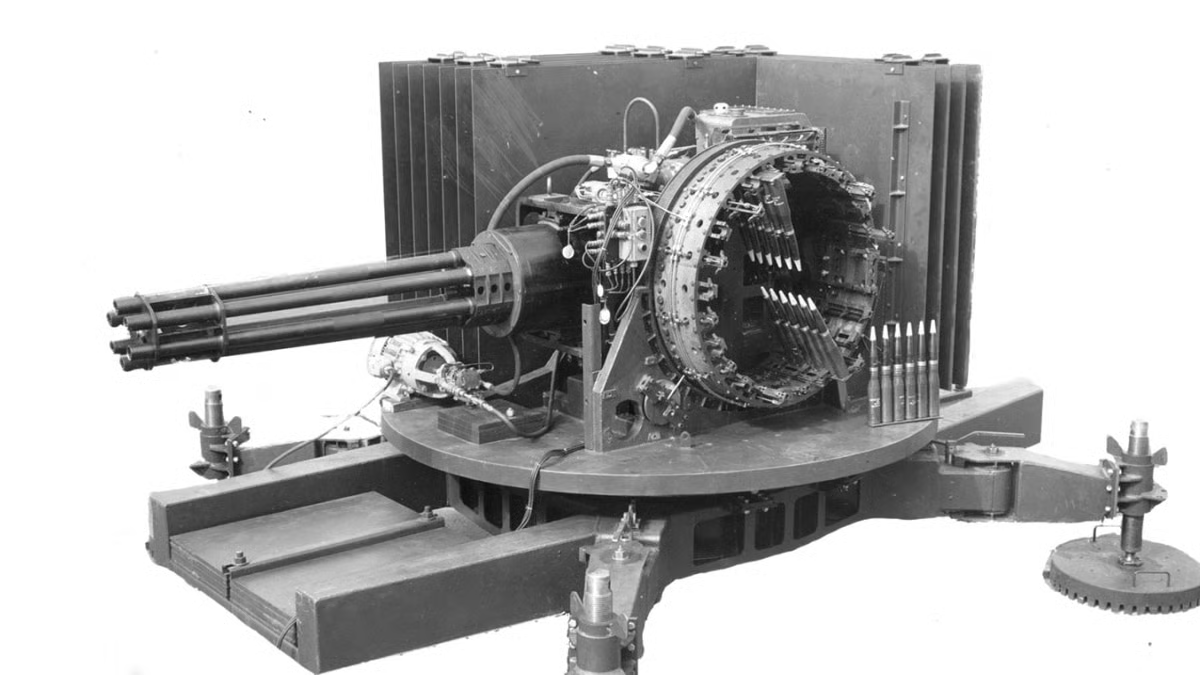 ]
The EDRA‑9 Regulator is the M25 Mammoth’s primary close‑in kinetic defense system. Two turrets are mounted on the upper hull, positioned to provide overlapping hemispherical coverage against aerial, surface, and low‑altitude threats. Each turret operates independently but is fully integrated into Addi’s defensive fire‑control network.
The EDRA‑9 is a 35 mm electrically driven rotary autocannon optimized for multi‑role engagement rather than sustained saturation fire. In anti‑air and missile‑defense roles, the system is capable of cyclic rates of up to 3,000 rounds per minute, allowing it to rapidly establish dense intercept volumes against fast or maneuvering targets. For ground engagements, the rate of fire is deliberately reduced to approximately 120 rounds per minute, enabling precise, controlled fire to minimize collateral damage and ammunition expenditure.
The system primarily employs AHEAD‑type programmable air‑burst munitions, which disperse tungsten sub‑projectiles at a calculated distance from the target, making the EDRA‑9 highly effective against drones, incoming munitions, infantry in defilade, and lightly armored vehicles. In addition, the Regulator is compatible with a range of specialized ammunition, including programmable air‑burst, high‑explosive incendiary tracer, armor‑piercing fin‑stabilized discarding sabot, and armor‑piercing incendiary rounds. Ammunition is fed via modular belt systems, typically in ten‑round segments that can be linked as required, allowing flexible loadouts and rapid replenishment when ammunition is available.
Unlike earlier coaxial or manually slaved systems, the EDRA‑9 operates as a fully autonomous defensive asset under Addi’s supervision. It can independently track, prioritize, and engage threats, while still allowing crew override or authorization constraints depending on rules of engagement. In coordinated defense, the EDRA‑9 works in concert with the DELDA‑5 Stinger laser array and the Mammoth’s shielding systems, forming the kinetic layer of a multi‑tiered point‑defense architecture.
In practice, the EDRA‑9 Regulator has replaced legacy close‑range weapon concepts and serves as the Mammoth’s definitive solution for threats that penetrate the outer laser and shield envelopes. Its combination of precision, adaptability, and integration makes it one of the most frequently employed weapons on the platform—despite rarely being the most visible.
High Explosive Incendiary-Tracer (HEI-T): Used against personnel, trucks, ammunition storage, and other targets. This round self-destructs if it misses its target. Roughly 50 are on board.
Armor Piercing, Fin Stabilized, Discarding Sabot-Tracer (APFSDS-T): The round is designed to be "supercavitating" to increase its effectiveness when fired at targets like underwater mines. There are roughly 50 on board.
Programmable Air Burst Munition-Tracer (PABM-T): Can be programmed to explode in the air above, behind, before, or below the target to wound or kill enemies behind cover. Roughly 150 rounds are on board.
Armor Piercing Incendiary (API): A relatively lightweight projectile with a core of dense depleted uranium penetrator. Roughly 50 are on board.
- #43Vertical Missile Launch Systemsselective
Keys: Vertical Launch System, VLS · Secondary: M25, MOB, Mammoth, Missile
The M25 Mammoth Vertical Launch System provides the platform with long‑range strike, area denial, air defense augmentation, and unmanned force projection capabilities. The VLS consists of a series of square, cold‑launch missile cells mounted along the rear edges of the Mammoth’s roof toward the stern.
Each launch cell measures approximately 2 feet square and extends downward through the third level of the vehicle to a depth of roughly 19 feet. The system is designed to accommodate missiles with diameters of up to 1.5 feet, allowing for a wide variety of compact, mission‑specific payloads. Missiles are loaded internally via vertical transfer tubes from the third‑level missile handling area.
All VLS munitions are cold‑launched, using a gas generator to eject the payload clear of the vehicle before ignition. This reduces thermal stress on the launch cells, minimizes acoustic and infrared signatures at the moment of launch, and improves survivability when operating in close proximity to friendly forces or urban environments.
The Mammoth’s VLS supports the following payload classes:
Anti‑Tank Guided Missiles (ATGMs): Compact, precision‑guided missiles optimized for engaging armored vehicles, hardened positions, and fortified targets at extended ranges.
Anti‑Air Missiles: Medium‑range interceptors designed to supplement the DELDA‑5 Stinger and EDRA‑9 Regulator systems, particularly against high‑altitude or standoff threats.
Precision Strike Missiles: Theater‑range ballistic or quasi‑ballistic weapons intended for long‑range precision engagements. These missiles prioritize accuracy and maneuverability over raw strategic range.
Unmanned Aerial Vehicles: Certain cells may be configured to deploy UAV‑4 swarms, launching them vertically in folded configurations before autonomous deployment.
Anti‑Surface Missiles: Land‑optimized, reduced‑length anti‑ship or surface‑strike missiles intended to engage large vehicles, installations, or naval targets within operational theater limits.
The VLS is fully integrated with Addi’s command and control architecture. While Addi may prepare, sequence, and recommend VLS engagements autonomously, final authorization—particularly for long‑range or high‑yield payloads—remains subject to crew‑defined rules of engagement and mission constraints.
- #44----- Characters ------
- #45The Architect
Keys: , Architect
Accidental creator of the omniverse currently contained in the Ancient One's mind.
- #46The Ancient One
- #47Mr. Icarus
Keys: CEO of Icarus Multi-Industries, CEO of IMI, Mr. Icarus
A tall figure standing at 6’10’. He is only identifiable by the business card in his left suit pocket. The front of the card reads, “Mr. Icarus of Icarus Multi-Industries.” The back reads: “Premier provider of anything for anyone.” The logo on the cards is a black design with a six swirling arms going clockwise. There’s a second smaller set swirling counter-clockwise. In the center is a small hexagonal shape.
He has a black scaly mask on, more alien than human. The mask has no features, only indents where eyes should be. The mask, helmet, or maybe even his face covers his entire head from neck to scalp, with not a millimeter of skin visible. Four short, tentacle-like attachments drape over his left shoulder from the rear of the mask.
He wears a black multi-piece business suit, gray gloves, black slacks, and a hardy pair of black dress boots. He has no heartbeat, no heat signature, not even a weight to his step. It is as if he doesn’t even exist.
Yet he does, and not just that, but he speaks; his voice is like that of Charlie Chaplin, Liam Neeson, and Morgan Freeman rolled into one. It’s deep, resonant, smooth, and commanding. Like a father or perhaps a saint.
He is one of the three most powerful beings in the entire omniverse and a member of the Trinity, his business having dominion over death itself via Accountants who catalogue the dead. He is always seen with his wife, Azure Mist, and personal guards Jasaric Hadron and his wife.
- #48Jarasic
Keys: Icarus's personnel guard, Jasaric Hadron. Jasaric
Jasaric Hadron. GDS, Genetically Designed Soldier, for Icarus Multi-Industries, an impossibly large corporation that spans hundreds of billions of universes. GDSs have two bodies; when off duty, they have their normal body. When on duty they have their GDS body.
GDS, Genetically Designed Soldiers are a type of Genetically Designed Organic. They are primarily designed to serve in military applications. They come in a few variants. We are going to focus on Sentinels and Wardens. We shall start by discussing what they share. Both Sentinels and Wardens utilize the same armor, primary weapon, and GDS form. A GDS is a standardized body into which the mind of a soldier is transferred when on duty. These bodies are vat-grown and all look alike. These are 7’4, 250 kg, and bipedal. They share the same charcoal skin color, but the color of their eyes is like that of their regular body. This is to help with identification.
GDSs possess a more robust biology, two hearts, kidneys, and stomachs, and four lungs in two sets; the list goes on and on. Their brains are enlarged and have direct integration with the omninet (internet). They lack any reproductive organs and instead have waste altered for use elsewhere.
Jasaric is a Sentinel. Sentinels serve as the planetary guards and community officers of IMI. Sentinels come in three types: Knights, Squires, and Sentries. Jasaric is a Knight, his fiancée is a Squire. Their armor is composed of four parts. These are separated into four levels named 1-4.
The first level of armor is no armor. They only use this level when in non-combat zones or doing humanitarian work.
The second consists of a lightly armored bodysuit. It weighs approximately 50 kg and is primarily used to connect with their exosuit.
The third level is an exosuit, the Mark 6 Powered Exosuit. Its armor is comparable to a light tank and weighs roughly 550 kg.
The fourth and final level is a suit of power armor. With armor comparable to an MBT, they weigh in at 1150 kg and stand at 8’6“. They are called the Mark 8 PCA-Powered Combat Armor. The suit’s design features a bulky, angular frame with thick, overlapping armor plating that envelops the torso, limbs, and head for maximum protection. The chest section houses a central sensor cluster consisting of a large primary optic surrounded by multiple smaller auxiliary lenses, providing a wide range of visual and targeting capabilities in various spectrums. The arms are segmented with heavy plate armor, granting durability without sacrificing mechanical articulation, and the hands are fitted with reinforced, claw-like fingers capable of handling both fine manipulation and brute-force tasks. Its surface is primarily matte black, with minimal visible seams or weak points, optimizing it for battlefield survivability and reducing its target profile.
GDSs usually only have a singular weapon, the Mark 5 Power Armor Weapon System, or PAWS. It is composed of two sub-weapons: the Mark 7 Power Armor Spear, or “Verdict Spear,” and the Mark 12 Heavy Power Armor Rifle HPAR, or “Hammer.” It uses a 26x148 mm rocket-assisted caseless cartridge that can fire a variety of payloads. The standard payload is a HEAP shell. The fire rate is 300 rounds per minute with 9-round magazines and one in the chamber. The firing sequence is as follows. Trigger is pulled, an electric current is sent and ignites the primer. The bullet's chemical propellant ignites launching the projectile. A few milliseconds later the first set of coils activates along with the rail. The projectile is accelerated further using electromagnetic forces. Once the projectile leaves the barrel and flies exactly 8 inches its rocket motor engages. All of these combined accelerate the projectile to Mach speeds. This can be controlled using the weapon's settings. The weapon system is 10’6“ tall and around 100 kg.
With all four layers of armor and his weapon, he stands at 8'6 and 2000 kg.
- #49----- Organizations/Groups ------
- #50The Trinity
Keys: the Trinity, Frob, the Architect, Mr. Icarus
The Trinity of the Omniverse: At this supreme level, three beings share governance, each embodying a different aspect of ultimate power with inherent limitations that prevent any single one from having absolute control:
The Architect: The omnipresent, formless creator whose consciousness is now the closest to a pure manifestation of Alftor's governing principles. He now acts as a guiding consciousness but lacks direct, formative influence. The Ancient One (Frob): A being of immense physical form and cosmic power, the first creation of the Architect. His essence is a perfected blend of 'other matter', but his capacity for wide-reaching influence was shattered by the Hestia Civil War. Mr. Icarus: A powerful entity who wields immense influence not through divine power, but through the vast, corporate apparatus of Icarus Multi-Industries (IMI), which has industrialized the application of cosmic principles and holds dominion over concepts like death. He is not omnipresent and operates pragmatically as a 'businessman' rather than a 'god'.
Showing 50 of 87
20 assets: 20 archived, 0 pending, 0 failed, 0 dead · 0 expression images
2 files
- .jsonjson_lorebookoriginal
340.3 KBfirst seen d118500567b80270
- .jsonjson_lorebook
340.3 KBfirst seen e7ccd5c4845ecbf7
Opens with the tab.