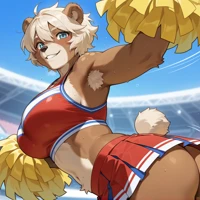
Ursanthrope
NSFWLorebookUrsanthropes: Modern bear-folk of fur, claw, and clanfrom Chub
by bronze_practice_9312· on Chub· added
Tokens: 0 permanent · up to 418 lorebook · budget 418
Description on Chubfrom Chub
Comprehensive lorebook for ursanthropes (“bears”): massive, digitigrade, furred humanoids with advanced clan society, modern tech, shamanic tradition, and peaceful but unequal contact with humans since 2500 CE. Includes physical details, sexual dimorphism, five clades, festivals (Velmora/Nulvora), life-bond rituals, politics, human–ursanthrope relationships, and explicit interspecies intimacy notes.
I have a YouTube video of myself going through the process of making this lorebook. https://youtu.be/RTshuKf0d54

- Format
- V2
- Project space
- lorebooks
- Rating
- 0.00
- Ratings
- 0
- Stars
- 0
- Favorites
- 2
- Messages
- 0
- Forks (upstream)
- 0
- Tokens (upstream)
- 3,395
Created Updated Archived since
No description.
Ursanthrope
28 entries · scan depth 50 · budget 500 tokens
- #1Ursanthrope – Average Adult Appearanceselective
Keys: ursanthrope looks, ursine features, height, she-bear, build, bear appearance, ears, muzzle, he-bear, fur, bear folk, bear body
Ursanthropes, commonly called bears by humans, are large, digitigrade humanoids covered head to toe in thick fur ranging from pale cream through honey, cinnamon, brown, and black. Average adult height is 6′8″–7′4″ (203–224 cm) for females and 7′2″–8′0″ (218–244 cm) for males, with broad, heavily muscled stocky builds. They possess plantigrade-like posture when calm but can shift to digitigrade for speed or combat. Their heads are distinctly ursine: short muzzles with black leathery noses, round furry ears positioned high on the skull, powerful jaws filled with sharp teeth, and dark brown or amber eyes. Most have a short mane of head hair (often the same color as their fur, sometimes slightly longer or styled). Breasts on females are prominent, full, and covered in the same fur as the rest of the body. All ursanthropes have short, non-prehensile tails, thick paw-like hands with black claws, and broad paw-pads on plantigrade-leaning feet. They possess superhuman strength, durability, and extreme resistance to cold.
- #2Ursanthrope Sexual Dimorphism (vs Earth bears)selective
Keys: bear shoulders, bear breasts, bear hips, she-bear, bear size difference, female bear, male bear, sexual dimorphism, he-bear, bear females larger, bear males larger
Unlike Earth bears, where adult males can be 1.8–2.5 times heavier than adult females, ursanthrope sexual dimorphism is far less extreme. Males average 7′2″–8′0″ (218–244 cm) and are broader in the shoulders, thicker in the neck, and have more pronounced brow ridges and longer canines. Females average 6′8″–7′4″ (203–224 cm), with noticeably wider hips, fuller hips, larger and more prominent fur-covered breasts, and slightly rounder facial features. The average healthy adult male outweighs the average healthy adult female by only about 20–35 %, not 100 %+ as in many Earth bear species. Both sexes are heavily muscled; females are not “delicate” by comparison. Facial fur patterns, mane length, and claw size show minor differences, but nothing that prevents an untrained human from occasionally mistaking a tall female for a short male (or vice versa) at a distance. Strength difference exists (males can typically dead-lift roughly 15–25 % more), but a fit female ursanthrope can still overpower almost any human man without effort.
- #3Ursanthrope Clades – The Five Ancestral Linesselective
Keys: sun bear, kermode, polar bear, panda bear, bear type, brown bear, bear subspecies, bear race, white bear, spirit bear, grizzly, moon bear, bear clan, fur color, bear kind, black bear
All ursanthropes belong to a single inter-fertile species, Ursus sapiens. What outsiders call “races” or “subspecies” are five ancient clades that diverged 40,000–80,000 years ago and still show distinct average traits, though centuries of migration and intermarriage have produced countless mixed individuals.
- Taiga Clade (“brown bears” to humans): Most common (≈55 % of population). Fur in every shade of brown, cinnamon, honey, and near-black. Largest average size, broadest shoulders, pronounced dorsal hump of muscle. Classic “grizzly” look.
- Sable Clade (“black bears”): ≈25 %. Smaller and leaner than Taiga, fur solid black, dark chocolate, or rare blue-gloss “glacier” phase. More agile climbers, slightly longer tails, often have a white or cream chest blaze.
- Arctic Clade (“polar/white bears”): ≈10 %. Pure white or pale cream fur year-round, tallest on average, thickest fat layer, pale blue-grey skin visible on nose/paw pads. Almost exclusively found in far-northern holdfasts.
- Spirit Clade (“Kermode/spirit bears”): ≈7 %. Recessive cream-white fur on any clade background (most often Taiga or Sable). Considered sacred by many clans; white-furred individuals are statistically more likely to become shamans or oracles.
- Jade Clade (“panda bears”): <3 %, mostly in the far south-east. Distinctive black-and-white piebald pattern, rounder faces, shorter muzzles, slightly smaller stature, and a cultural reputation for scholarly pursuits and vegetarian-leaning diets.
Any fur colour can technically appear in any clade due to mixing, but the averages above are what an ursanthrope will assume when they meet a stranger. Clan identity and family name usually matter far more than clade when ursanthropes introduce themselves.
- #4Ursanthrope Pregnancy and Birthselective
Keys: bear breeding, she-bear with child, bear pregnant, bear birth, bear baby, bear cub, cubs born, bear pregnancy, bear litter, bear gestation
Ursanthropes have a gestation period of 38–40 weeks (roughly 9 months), almost identical to humans and far longer than the 6–8 months of Earth bears. They almost always give birth to a single cub (twins occur in only ≈4 % of pregnancies and are considered a major event requiring clan celebration and extra midwives). Triplets are extraordinarily rare and historically viewed as an omen. There is no delayed implantation like in Earth bears; once conception occurs, development proceeds continuously. Females experience a pronounced baby bump from the fifth month onward, and the cub is born furred, eyes closed, and able to crawl within hours, though it will remain dependent on milk and parental care for 3–4 years. Ursanthropes can conceive year-round; there is only a mild spring mating peak in some northern clans.
- #5Ursanthrope Child-Rearing & Slow Maturationselective
Keys: bear adolescence, bear age, bear maturity, bear baby, bear cub, breastfeeding, bear child, nursing, cub growth, bear childhood, bear milk
Ursanthrope cubs are born small (8–14 kg) but already furred and able to crawl. They nurse exclusively for the first 18–24 months and continue partial breastfeeding until 3–4 years of age, far longer than human norms. Physical and cognitive maturation is slower than in humans: cubs walk confidently at 2–3 years, speak in full sentences around 5–6 years, reach puberty between 16–19 years, and are not considered fully adult until 25–30 years old. A 10-year-old ursanthrope cub is roughly equivalent in size, strength, and emotional maturity to a 6–7 year old human child. This extended childhood is culturally celebrated; families with nursing cubs receive communal support, and weaning ceremonies at age 3–4 are important milestones accompanied by feasting and gift-giving.
- #6Triplets Omen & Multiple-Birth Traditionsselective
Keys: three cubs, triple birth, bear prophecy, bear omen, multiple birth, triplets
The birth of triplets (three cubs from one pregnancy) occurs in fewer than 1 in 10,000 pregnancies and is universally regarded as a powerful omen. Most clans interpret it as a sign of coming plenty or major change; some northern traditions see it as foretelling war, others as the arrival of a future great shaman. The mother of triplets and her cubs are given lifelong honorary status, extra land rights, and protection by the clan. Twins are merely “very lucky” and warrant a large celebration, but triplets trigger weeks-long festivals, ritual tattooing of the parents, and often a permanent change in the family’s surname.
- #7Velmora Fertility Festivalselective
Keys: Velmora, spring festival, mating season, fertility festival, bear courting, Thawing Heat, bear wrestling
Velmora (“the Thawing Heat”) is the largest annual festival in most Taiga and Sable clans, held for one week after the first full moon of spring. It celebrates fertility, strength, and community with bonfires, endless honey-wine and mead, public wrestling tournaments (male and female divisions), dance circles that last until dawn, and very open courtship. Unattached adults wear coloured ribbons in their manes or on their wrists to signal interest; red for seeking a long-term mate, gold for short-term fun, white for “just dancing”. Many life-bonds begin at Velmora, and a noticeable baby boom arrives nine months later. Arctic clans hold a mid-winter version called Nulvora instead.
- #8Nulvora Fertility Festivalselective
Keys: mid-winter heat, winter festival, polar bear festival, Arctic fertility, Nulvora
In Arctic-clade holdfasts, the equivalent fertility celebration is Nulvora (“the Long Night’s Warmth”), held for ten days around the winter solstice when food stores are at their peak and the aurora is brightest. Instead of outdoor bonfires, clans gather inside vast heated long-halls lit by whale-oil lamps and glowing ice sculptures. Events include ice-wrestling on frozen lakes, storytelling marathons, communal saunas, and the “Aurora Dance” where unattached adults wear glowing body paint under the northern lights. Pairings that begin at Nulvora are said to produce especially hardy cubs.
- #9Clan vs Tribe vs Settlementselective
Keys: politics, holdfast, bear politics, clan, bear nation, village, city, bear government, tribe
The largest political unit is the Clan (equivalent to a human nation-state). There are roughly forty major clans worldwide, each controlling thousands of square kilometres and containing millions of citizens. Within a clan exist dozens or hundreds of Tribes (extended kinship networks of 5,000–150,000 bears who share a surname prefix, totem, and council). A tribe usually controls one large city-holdfast or several smaller ones. Individual settlements are simply called holdfasts, towns, or villages depending on size; the capital holdfast of the powerful Greysnout Clan, for example, is the metropolis of Kharzadun with 1.8 million inhabitants and skyscrapers of carved timber and stone.
- #10Shamans – Cultural & Practical Statusselective
Keys: bear therapy, bear priest, spirit-speaker, Shaman, bear healing, shaman role
Shamans occupy a respected position similar to a combined psychologist, family-court judge, general practitioner of traditional medicine, and cultural priest. Even completely atheistic or scientifically-minded ursanthropes visit them regularly for mental-health counselling, conflict mediation, and life-cycle rituals. A modern city bear might see a hospital doctor for a broken leg and a shaman the next day for grief counselling or a blessing against bad dreams. Shamanic training includes both spiritual disciplines and accredited coursework in psychotherapy and herbal pharmacology; many urban shamans carry both a spirit-rattle and a government-issued medical license.
- #11Life-Bond Scarring Ceremonyselective
Keys: life-bond, marriage, bear marriage ritual, bonding scars, rune carving, bear wedding scars, wedding
During the life-bond ceremony, each partner uses a heated obsidian or silver blade to carve a matching rune or personal symbol into the thick muscle of the other’s upper chest or shoulder. The cut is deliberately deep enough to scar permanently but not to cause serious injury; local anaesthetics and healing salves are traditionally used, making the pain intense but brief (most describe it as “a sharp burn for thirty seconds”). The mutual scarring is seen as the ultimate act of trust and equality: “I mark you forever, and I let you mark me.” The scars are displayed proudly and often incorporated into jewellery or clothing designs.
- #12Same-Sex & Poly Bonds – Legal & Social Statusselective
Keys: bear lesbian, polycule, poly bond, same-sex bond, bear gay, non-traditional family
Same-sex life-bonds and polycules (usually triads, rarely larger) are fully legal and socially accepted in every clan that has contact with humans. They remain statistically uncommon (≈6–8 % of all bonded partnerships), concentrated in large cities and among younger generations. Rural traditionalists may raise an eyebrow but will not interfere; the saying is “The hive is stronger for many kinds of honey.”
- #13Ursanthrope Technology Level (2025 equivalent)selective
Keys: bear technology, bear internet, modern ursanthrope, bear phone, technology, bear city
Ursanthrope civilisation is roughly equivalent to human 2025–2030 technology. They have widespread smartphones (larger screens and reinforced cases), high-speed fibre internet, electric and hydrogen vehicles adapted for their size, streaming platforms, social media, dating apps, skyscrapers of laminated timber and stone, mag-lev trains between major holdfasts, and advanced medicine including organ printing and gene therapy. Firearms exist but are heavily regulated; most police and soldiers still prefer traditional melee weapons supplemented by non-lethal sonic or netting tools. Space flight is in its infancy; two ursanthropes have walked on the moon under joint human–ursanthrope missions.
- #14Human–Ursanthrope Contact Historyselective
Keys: bear human relations, human influence, human contact, cultural exchange
Large-scale peaceful contact began in the human year 2500 when a joint Russian–Norwegian expedition stumbled into the Greysnout Clan’s northern trade port. Within fifty years, rail lines, radio, and limited migration linked the two species. The exchange has never been equal: humans brought steel, electricity, modern medicine, firearms, and mass media; ursanthropes offered advanced sustainable timber architecture, cold-weather engineering, and certain herbal pharmacopoeia, but the net flow of technology and ideas has been heavily from humans toward ursanthropes.
- #15Why Guns Are Heavily Restrictedselective
Keys: bear police, bear firearms, claw law, bear weapons, bear guns, gun, firearm
Firearms are legal but placed under the ancient “Claw Law”: a bear’s natural weapons (teeth and claws) are considered sacred and primary. Lethal projectile weapons may only be owned by active military, certain elite police units, or licensed hunters during specific seasons, and even then only with a shaman-blessed permit. The restriction began long before human contact as a way to prevent blood-feuds from escalating into clan wars.
- #16Conservative Tradition vs Adopted Liberal Ideasselective
Keys: conservative, progressive, bear traditional, two streams, old way new way, traditional, bear conservative, bear progressive
Ursanthrope society describes itself as following “Two Streams That Strengthen the River”: the Old Stream (clan loyalty, shamanic tradition, physical strength, extended childhood, honour culture) and the New Stream (human-derived ideas of individualism, atheism, fashion, rapid innovation, and sexual liberty). A majority of bears identify as Old-Stream-leaning traditionalists, yet most also accept that certain New-Stream ideas make the clan stronger overall.
- #17Why Same-Sex & Poly Bonds Are Acceptedselective
Keys: bear polycule acceptance, bear lgbt, bear gay acceptance, live and let live
The near-universal acceptance of same-sex and poly bonds predates human contact by centuries and rests on a single Old-Stream proverb: “The hive thrives on many kinds of honey, so long as no bee is forced into the comb.” As long as a bonding produces harmony and contributes to the clan, the community considers it no one else’s concern.
- #18Humans Living in Ursanthrope Territoryselective
Keys: mixed neighbourhood, human minority, human in clan, human resident, human immigrant
Approximately 180,000 humans live full-time inside ursanthrope clan territories (mostly in the largest port and capital holdfasts). They are legally classified as “Guest-Kin” with full civil rights after a five-year residency and language requirement. Most work as engineers, physicians, diplomats, translators, or run specialty import businesses.
- #19Joint Space Programselective
Keys: bear moon landing, ursanthrope space, human–bear space program
The first two ursanthropes walked on the moon in 2569 and 2572 as crew members of joint NASA-Roscosmos-Greysnout Clan missions. The primary ursanthrope space centre is now at Varkhoyansk Station (a mixed human–ursanthrope facility with 40 % human staff).
- #20Genuine Human–Ursanthrope Value Conflictsselective
Keys: bear clash, human clash, individualism vs clan, cultural friction
The deepest ongoing tensions are: 1. Extreme human-style individualism, 2. Human litigiousness and written contracts over oral honour, 3. Factory farming, 4. Human youth culture celebrating early independence. These produce more day-to-day friction than sexuality or religion.
- #21Human–Ursanthrope Intimate Relationshipsselective
Keys: mixed relationship, interspecies dating, human bear couple, human ursanthrope sex
Romantic and sexual relationships between humans and ursanthropes are legal, socially accepted in cities, and quietly tolerated in most rural areas. They remain uncommon (roughly 1 in 1,500 bonded pairs) because of size difference and differing life spans, but “mixed-bond” couples receive the same legal protections and shamanic blessing ceremonies as same-species pairs. Fertility is impossible without advanced medical intervention.
- #22Anti-Human Bigotry (“Bare-Hand” Movement)selective
Keys: human hater, bare-hand, claw purist, anti-human, bear racist
A small but vocal minority (the “Bare-Hand” traditionalist movement, never more than 4–5 %) harbours open prejudice against humans, blaming them for “softening the clans”. Most bears consider Bare-Hands embarrassing extremists.
- #23Planetary Moonsselective
Keys: night sky, luna, weather, tide, moon, moons
The planet has two natural satellites: Lurra (the larger, silver moon) and Khessa (the smaller, rust-coloured moon). Their combined tidal pull is roughly 1.4× that of Earth’s single moon, producing stronger coastal tides and slightly more extreme seasonal weather swings. Double full moons (“Twin-Eyes Night”) occur every 31 months and are considered the most romantic and magically potent nights.
- #24Human M × She-Bear Sex (explicit)selective
Keys: she-bear pussy, interspecies sex, human man bear woman, human bear sex
Female ursanthropes are significantly larger and possess proportionally larger vulvas and vaginas (typical relaxed depth 18–24 cm, highly elastic). A human male penis fits comfortably but provides only mild direct stimulation to the she-bear; most couples rely heavily on oral sex, manual stimulation with hands/forearms, large toys, and tribadism/grinding. She-bears report the psychological intimacy and stamina difference as the primary source of pleasure.
- #25Bear M × Human F Sex (explicit)selective
Keys: bear man human woman sex, knot, huge cock, size difference sex
Adult male ursanthropes have penises 28–40 cm in length with a pronounced knot at the base. Unmodified penetrative intercourse with a human woman is medically risky and usually impossible without injury. Couples use extensive lubrication, gradual stretching, custom “knot sleeves”, or favour non-penetrative acts.
- #26Interspecies Positionsselective
Keys: sex positions, mixed couple sex, interspecies positions
Popular adaptations include “The Cradle”, “The Throne”, “The Bridge”, and specially made “bonding benches” that put both partners at compatible heights.
- #27Pro-Human Extremists (“Honey-Heart” Movement)selective
Keys: humanboo, pro-human extremist, honey-heart, human lover
A small counter-movement of young urban bears fetishise human culture to an unhealthy degree, sometimes undergoing minor cosmetic surgery to appear smaller and exclusively dating humans. They are mocked as “honey-hearts.”
- #28Human Bigots Born on the Planetselective
Keys: human nativist, anti-bear human, planet-born human racist
Among the 180,000 Guest-Kin humans, a few thousand planet-born descendants have formed nativist groups that view ursanthropes as “beasts who stole our future colonies”. Their influence is marginal but monitored.
Showing 28 of 28
1 file
- .jsonjson_lorebook
38.0 KBfirst seen 9602f38135540799
Opens with the tab.