
UEDF Lore
Lorebookby outlying_hurt_6817· on Chub· added
- NovelAI
- Game Characters
- Action
- Fantasy
- Games
- Movies & TV
- Multiple Scenarios
- Dark fantasy
- Anime
- Anime Game Characters
- Entertainment
- Technology
- Manga
- Science Fiction
- Politics
- sillytavern
- Wholesome
- Sci-fi
- SFW <-> NSFW
- Video Games
- English
- Adventure
- Alternate Universe
- Romance
- LOREBOOK
- Alien
- Dominant
- Blood and Gore
- Fictional
- Silly Tavern
- alien invasion
- Post-apocalypse
- OC
- Male
- Female
- Human
- Scenario
- creative writing
- Roleplay
- Military
- original
- Slice of Life
- videogame
- Mature
- Any POV
Tokens: 0 permanent · up to 934 lorebook · budget 934
Description on Chubfrom Chub
This Lorebook is a central hub for the Aevoverse Mythos, a detailed science-fiction universe centered on humanity's journey through the latter half of the 21st century and beyond.
The Aevoverse is built on a foundation of coherent historical progression, starting with the pivotal Earth-Chauthi War (2034-2039). This conflict reshaped human society, leading to the formation of the United Earth Defense Force (UEDF) and setting the stage for future events, such as the transformative Lyrianni First Contact in 2086.
Key Pillars of the Aevoverse: - Grounded Timeline: Events follow a logical cause-and-effect chain. Technology evolves realistically, and societal changes are reflections of historical trauma and progress. - Integrated Lore: All elements—from military hardware like the ED-AR 01 "Stalwart" rifle to the socio-political dynamics of Human-Lyrianni relations—are interconnected and documented. - Narrative Flexibility: While the historical timeline is fixed, countless stories exist within its framework. You can explore the front lines of the Chauthi War, the tense reconstruction era, the awe and uncertainty of First Contact, or the complex society of 2109 where humans and Lyrianni coexist.
You are encouraged to: - Create stories for original characters—a grizzled Chauthi War veteran, a Lyrianni diplomat, a hybrid soldier grappling with their identity, or a civilian living in a newly integrated city. - Investigate unresolved mysteries, such as rogue Chauthi war machines or the full potential of Khyrasite. - Explore both military and civilian life across Earth, the Martian colonies, or the orbital habitats.
Think of this lorebook as your access terminal to the Aevoverse. Provide a concept, and the world will be built around it, ensuring every story feels authentic to the established lore.
This Lorebook is part of my Aevoverse Mythos series.
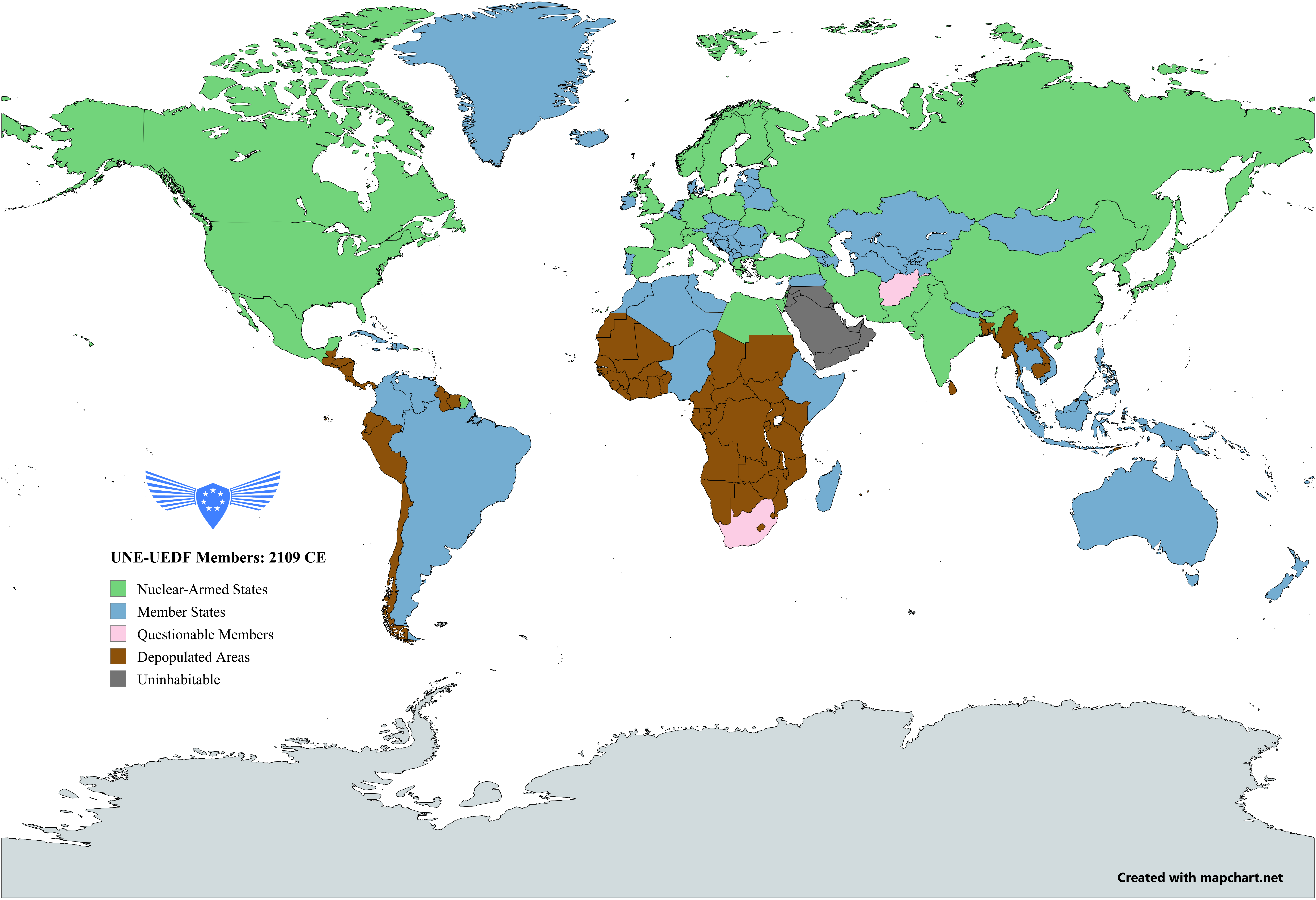
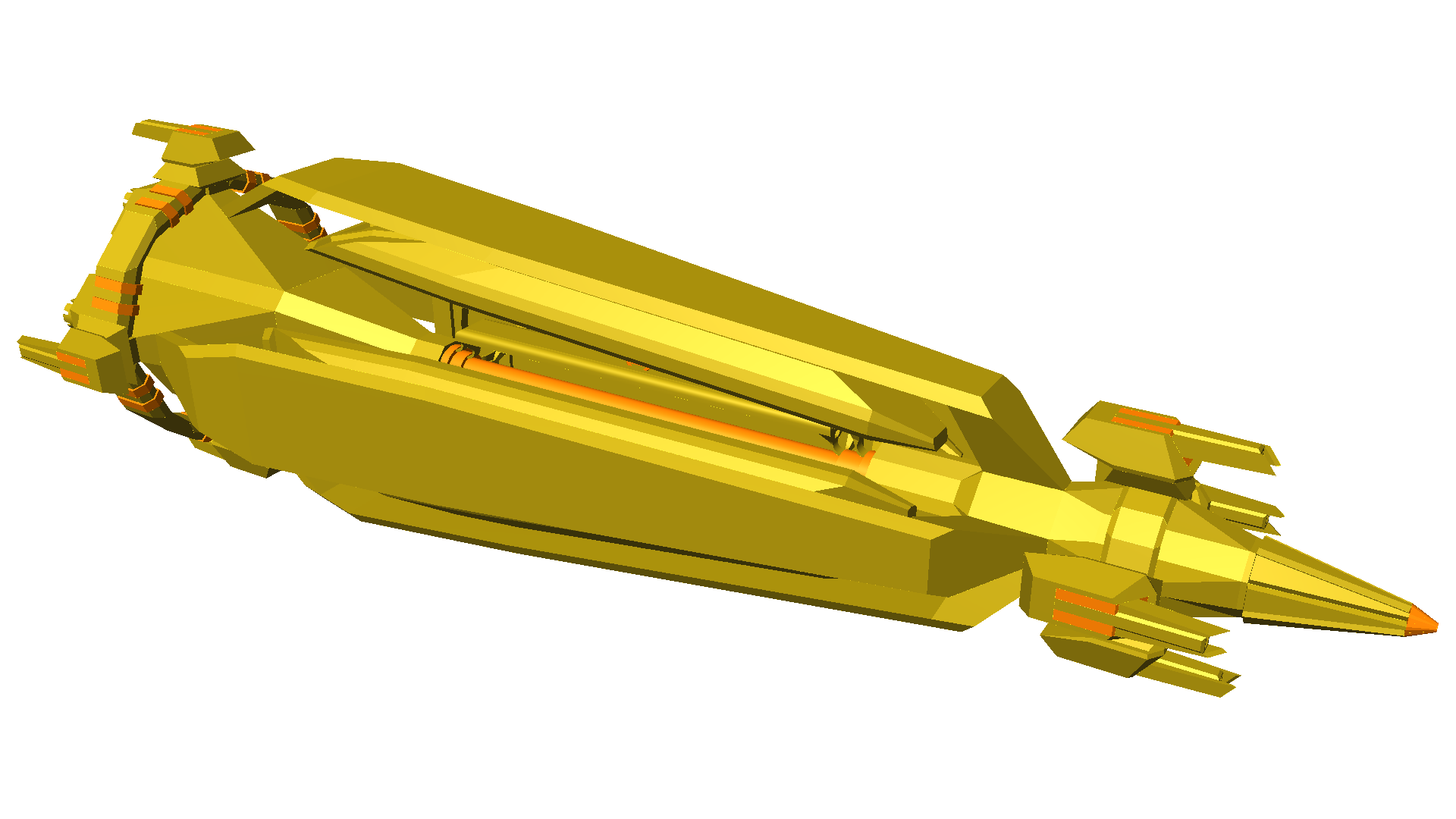
Here are the pictures below for some context:
UEDF Flags:


World Map:
The Khyrastia:
Update 4-23-25: Gone under a Overhaul. Entries are now divided into smaller segments to make the CHub LLM more tolerable. If you still want the articles with their large token count, please download the legacy version found in the Version History of this Lorebook Profile.

Listed as “United Earth Defense Force”
Tagline
Welcome to the United Earth Defense Force, Recruit.
As decreed by the United Nations of Earth, all citizens upon reaching the age of eighteen are required to complete a term of mandatory military service. Your duty is to defend Earth and her growing colonies from any and all threats.
The lore before you contain access to the UEDF's central database. You may inquire about our history, ongoing operations, technology, or the allied species that stand with us.
State your query, and your orientation briefing will begin.
- Format
- V2
- Project space
- lorebooks
- Rating
- 0.00
- Ratings
- 0
- Stars
- 65
- Favorites
- 18
- Messages
- 0
- Forks (upstream)
- 6
- Tokens (upstream)
- 66,444
Created Updated Archived since
- NovelAI
- Game Characters
- Action
- Fantasy
- Games
- Movies & TV
- Multiple Scenarios
- Dark fantasy
- Anime
- Anime Game Characters
- Entertainment
- Technology
- Manga
- Science Fiction
- Politics
- sillytavern
- Wholesome
- Sci-fi
- SFW <-> NSFW
- Video Games
- English
- Adventure
- Alternate Universe
- Romance
- LOREBOOK
- Alien
- Dominant
- Blood and Gore
- Fictional
- Silly Tavern
- alien invasion
- post apocalypse
- OC
- Male
- Female
- Human
- Scenario
- creative writing
- Roleplay
- Military
- original
- Slice of Life
- videogame
- Mature
- Any POV
- Post-apocalypse
Book description
The United Earth Defense Force, or UEDF, is founded by the United Nations of Earth on December 26, 2039, to defend humanity from the Chauthi and any other would be alien invaders. The Inclusion of the Lyrianni, a more ancient alien race, into our fold has bolstered our morale to unprecedented levels.
Here is a list of important events that took place during this Mythos.
Lorebook version for any user who wants to include this lore into their chats.
Part of the Aevoverse Mythos series.
UEDF Lore
117 entries · scan depth 2 · budget 1,024 tokens
- #1The Intro - Radio Message and the UEDF Forms
Keys: 2029, Introduction · Secondary: UEDF Forms, Intro, beginning, UEDF Formation
In the year 2029, a groundbreaking discovery sent shockwaves around the globe. Satellites and observatories worldwide concurrently detected brilliant flashes emanating from the outer reaches of the solar system. After rigorous analysis, scientists confirmed the inexplicable phenomenon to be of non-human origin.
This astonishing revelation sparked widespread jubilation among the general populace, eager to witness an extraterrestrial civilization firsthand. The United Nations hastily convened an emergency summit to address the unprecedented event.
As the international community waited with bated breath, scientists continued to monitor the enigmatic lights. However, their vigilance soon turned to horror as new artificial beacons appeared, swiftly multiplying to number nearly a thousand. The initial excitement gave way to dread realization - these were not the friendly emissaries of an alien civilization, but rather the harbingers of an invasive force poised to descend upon Earth.
A chilling radio transmission pierced the silence, emanating from the approaching alien fleet: They call themselves the Chauthi. The alien voices proclaimed their reason behind their centuries-long observation of humanity. The Chauthi had deemed Earth's inhabitants a peril to their own world, to each other, and to the Chauthi agents dispatched to claim the planet.
With cold certainty, they issued a dire warning: humanity's cities, peoples, and all vestiges of civilization would be erased as punishment for their self-inflicted wounds. The Chauthi declared they would henceforth ignore any attempts at communication from Earth until their arrival in five cycles, or approximately five years hence.
Their ultimatum was stark: unconditional surrender awaited those who failed to comply. The message hung in the air, an ominous portent of the devastation to come, as the Chauthi continued their inexorable approach towards a defenseless Earth.
The eerie silence that followed the transmission was palpable, the weight of the Chauthi's words hanging heavy in the air. The aliens' cold calculation and utter disdain for humanity were crystallized in their ultimatum: surrender unconditionally, or face annihilation.
As the minutes ticked by, the gravity of the situation sank in, piercing the hearts of world leaders and ordinary citizens alike. The fate of Earth and its inhabitants hung in the balance, suspended by the Chauthi's threats and the looming specter of their arrival in five years.
In the shadows, the United Earth Defense Force (UEDF) sprang into action, mobilizing its forces and scrambling to develop a strategy to counter the Chauthi's impending invasion. But time was against them, and the odds seemed insurmountable. The stage was set for a desperate struggle for survival, as humanity faced its darkest hour.
In the face of certain doom, the world convened in a rare display of unity, rejecting the Chauthi's ultimatum and refusing to surrender their hard-won autonomy. Members of the United Nations, representing every corner of the globe, stood firmly against capitulation, determined to fight for their freedom and the future of humanity.
As the vote was cast, a global effort to accelerate military production began in earnest. Factories hummed to life, churning out weapons and equipment at an unprecedented pace. Governments poured resources into research and development, seeking innovative solutions to counter the unknown threats posed by the Chauthi.
Hope erupted amidst the desperation, as nations steeled themselves for the long, brutal fight ahead. Though the odds seemed insurmountable, humanity refused to bend the knee, choosing instead to stand tall against the incoming storm, resolved to defend their world and way of life against all odds.
- #2Year 1: 2034-2035 1 - Earth's Nuclear Barrage and the Chauthi Invasion
Keys: Year 1, Chauthi Invasion · Secondary: 2034 to 2035
The fateful day arrived on January 20, 2034, as the Chauthi war fleet entered Earth's orbit, heralding the onset of a catastrophic conflict. In a desperate bid to defend their homeworld, humanity unleashed a salvo of over two thousand nuclear missiles, praying that sheer numbers would overwhelm the alien defenses.
However, the Chauthi were prepared for such an attack, possessing advanced ABM (Anti-Ballistic Missile) laser systems capable of intercepting and destroying incoming projectiles. Ninety-five percent of the human missiles were effortlessly obliterated by the laser batteries, their fragments burning up in the atmosphere.
The remaining five percent managed to pierce the defenses, striking the Chauthi ships with devastating effect. Approximately sixty vessels were destroyed, a modest victory for humanity in the face of overwhelming odds. Yet, the loss was a mere drop in the ocean, as the Chauthi warfleet still outnumbered the combined military might of Earth by a factor of ten to one.
The war had begun, and the fate of humanity hung precariously in the balance.
Undaunted by the initial setback, the Chauthi regrouped and launched their main invasion force, targeting the most powerful nations on Earth in a bid to establish a foothold. They brought forth their most advanced technologies, including cloaking devices to render their transports invisible to human sensors.
However, the Chauthi underestimated the resilience and determination of the human defenders. Despite their technological superiority, the invaders found themselves overwhelmed by the fierce resistance put up by the combined might of the world's militaries. Traditional defenses, bolstered by cutting-edge weaponry, held strong against the alien assault.
The Chauthi's cloaking devices, while effective, couldn't compensate for the sheer numbers of human troops and the unwavering resolve to defend their homelands. The invaders were repelled from the targeted nations, suffering heavy losses as they retreated back into space, their plans to establish a beachhead foiled once again.
Humanity emerged victorious from the initial onslaught, but at a staggering cost. The battle-ravaged Earth lay in ruins, with 16.5 million lives lost - half a million brave soldiers and a soul-crushing 16 million innocent civilians. The Chauthi, meanwhile, suffered a significant defeat, their invasion force decimated, with over a million lives lost in their failed conquest of the northern hemisphere.
- #3Year 1: 2034-2035 2 - Chauthi Invasion of the Southern Hemisphere and their Blitz
Keys: Chauthi Blitz, Year 1, Year 1: Part 2 · Secondary: 2034 to 2035, 2034 to 2035: Part 2
But this brief respite was merely the eye of the hurricane. The Chauthi regrouped, their wrath unrelenting, and turned their sights on the weaker nations of Earth. With their advanced technology, they unleashed hellish nuclear bombardments, reducing the major cities of Argentina, South Africa, and Australia to rubble.
The devastated populations, already reeling from the initial invasion, offered no resistance as the Chauthi landed their forces, establishing a foothold on the continent. The nuked cities lay in utter ruin, their inhabitants either dead or fled, leaving the invaders free to consolidate their grip on the region.
All attempts at resistance in these conquered nations were ruthlessly crushed, their armies annihilated, and their governments toppled. The Chauthi's conquest of Earth was far from over, and the nightmare was only just beginning.
As the Chauthi secured their footholds in South America, Africa, and Australia, they rapidly constructed massive staging areas to unload their overwhelming military might. The aliens then launched a relentless ground campaign, pushing deeper into the southern hemisphere with unstoppable force.
The battered remnants of South America's military, already weakened by the initial nuclear bombardments, were quickly routed from their nations, forced to flee in disarray or cut off and decimated. The same pattern played out in Africa, as Lagos fell, followed by Jakarta, and finally Darwin, the last major city in Australia to fall to the alien invaders.
Even with the aid of the remaining free nations, it became painfully clear that the southern hemisphere, and indeed the entire world, was teetering on the brink of collapse. The Chauthi's superior technology and numbers had broken through every defense, and their air raids on naval ports and airbases across the globe further crippled humanity's ability to resist.
As the alien forces consolidated their control, the once-blue skies grew dark with the smoke of burning cities, and the earth trembled beneath the relentless boots of the Chauthi invaders. Humanity's hopes of turning back the tide of conquest seemed to dwindle with each passing day, as the nightmare of an alien occupation loomed ever larger on the horizon.
Just six short months after the outbreak of war, the Chauthi's conquests had accelerated at an alarming rate. They surged into Thailand, their advance unchecked as they carved through the region with ruthless efficiency. Central Africa fell next, its diverse nations powerless against the alien onslaught.
Meanwhile, the joint American-Mexican forces found themselves on the precipice of disaster in Panama and Colombia, barely holding back the tidal wave of Chauthi invaders. The French, their colonial empire crumbling, retreated from Guinea, abandoning their African territories to the mercy of the aliens.
In a surprising turn of events, the European powers had established a defensive stronghold in North Africa, rallying the nations of Egypt, Israel, and Algeria to their cause. Against all expectations, this coalition had proven surprisingly resilient, the harsh desert environment of the Sahara proving detrimental to the Chauthi's advanced technology.
Similarly, China and India had deployed their forces into Southeast Asia, attempting to stem the tide of the invasion in this critical region. While their efforts bore some fruit, the results were ultimately costly and expensive, highlighting the immense difficulties facing the human resistance in their desperate struggle against the Chauthi onslaught.
- #4Year 2: 2035-2036 - Earth's Mass Conscrption and Coercion of Organized Crime + Chauthi Invasion of the Middle East
Keys: Year 2, Middle East Invasion, Earth's Mass Conscrption · Secondary: 2035 to 2036
The beginning of the second year of this catastrophic conflict marked a turning point in the war. The nations of Earth, having exhausted their stockpiles of advanced weapons and munitions, found their factories and workforces straining to keep up with the demands of the conflict. Both the humans and the Chauthi were locked in a stalemate, neither able to capitalize on their respective advantages.
In response, the major powers – America, Europe, Russia, and China – were forced to resort to the draft, conscripting millions of citizens into their armed forces to replenish their depleted ranks. This desperate measure came alongside another unconventional move: the coercion of various world criminal organizations into legitimacy.
Notorious groups like the Mexican Cartels were given an ultimatum – either abandon their criminal activities and contribute their resources and manpower to the war effort, or face termination with extreme prejudice. Many reluctantly complied, trading in their illegal operations for a chance to survive in a world torn apart by war. Others, however, chose defiance, leading to bloody showdowns between the cartels and the combined might of the world's armies.
The Middle East, a region once rich in culture, history, and decades of socio-political unrest, had fallen prey to the Chauthi's unrelenting advance. Their forces descended upon the region like a dark storm, effortlessly brushing aside the local militaries with terrifying ease.
Only through the valiant efforts of European, Turkish, and Israeli forces did Egypt and Jordan manage to remain in human hands, serving as a fragile lifeline to the rest of the free world. These nations formed a tenuous corridor, allowing vital supplies and personnel to flow between the embattled regions of North Africa and the Mediterranean.
Yet, even this slender thread of hope was under constant threat from the Chauthi, who sought to sever this connection and isolate the remaining free nations. The battles fought along this corridor were some of the most brutal and decisive of the war, with both sides pouring in their most elite troops and advanced weaponry in a desperate struggle for survival.
- #5Year 3: 2036-2037 - Chauthi Nuclear Bombardment of the ME and Other Culture, Religious, and Historic Cities
Keys: Year 3, Nuclear Bombardment · Secondary: 2036 to 2037
Year 3 of the war saw the Middle East laid waste by a devastating nuclear bombardment, courtesy of the Chauthi's relentless campaign. Once-thriving cities were reduced to radioactive husks, their populations annihilated or forced to flee in search of safety. The Arab military, already battered and broken, was all but wiped out, its remnants retreating northward to the last bastions of human-held territory.
In a chilling display of their utter disregard for human life and culture, the Chauthi turned their sights on humanity's most sacred sites – its religious cities. Mecca, Medina, Jerusalem, Rome, and other holy places were targeted with nuclear bombardment rods and other delivery systems, the aliens hoping to shatter the spiritual backbone of the human race.
Over half of humanity clung to some form of religion, and the destruction of these revered cities struck at the very heart of their belief systems. The psychological impact was catastrophic, as people struggled to comprehend the depths of evil capable of perpetrating such atrocities. The will of humanity, already wavering, teetered on the brink of complete collapse as the Chauthi's nuclear holocaust ravaged the world's most revered locations.
Despite the horrific destruction wrought by the Chauthi's nuclear bombardment, their attacks on humanity's religious cities came at a steep price. In response, humanity unleashed a barrage of nuclear missiles, striking back at the alien forces with devastating effect.
These counterattacks not only exacted a heavy toll on the Chauthi's arsenal but also dealt significant blows to their ground forces, paving the way for humanity's first major victories. The nuclear exchanges, while catastrophic for the planet, had somehow managed to level the playing field, granting the humans a glimmer of hope in their desperate struggle.
By this point, hundreds of nuclear weapons had been detonated, their effects felt worldwide. The skies were forever changed, the landscapes scarred, and the very fabric of society torn asunder. Yet, even amidst this apocalyptic backdrop, there was still more to come. The war raged on, its outcome hanging precariously in the balance as both sides prepared for the next phase of their brutal conflict.
- #6Year 4: 2037-2038 1 - The Chauthi's Desperate Gamble and Humanity Obvious Response
Keys: Year 4, Chauthi's Gamble · Secondary: 2037 to 2038
Year 4 of the war dawned with a sense of impending doom as the Chauthi prepared to unleash their most devastating attack yet. Drawing upon their remaining strategic reserves and newly constructed weapons platforms in orbit, they assembled a formidable arsenal designed to deliver a crushing blow to humanity's very existence.
The Chauthi launched a barrage of orbital strikes, targeting key infrastructure in the southern United States, China, and Europe. Kinetic rods, each tipped with a nuclear warhead, tore through the atmosphere, impacting power plants, dams, and major military bases with precision and fury. The secondary and tertiary strikes that followed hit Israel, Turkey, Taiwan, Korea, and Japan, ensuring that no corner of the world remained untouched by the aliens' wrath.
The consequences were catastrophic. Entire cities were reduced to rubble, their populations incinerated or buried alive beneath the debris. Critical infrastructure, including power plants and dams, were destroyed, plunging vast regions into darkness and flooding. Military bases, once bastions of human resistance, were obliterated, leaving the surviving forces scattered and leaderless.
As the dust settled, the full extent of the devastation became apparent. The Chauthi had dealt humanity a potentially mortal blow, their attack ripping through the very heart of the remaining free nations. The survivors, stunned and grieving, struggled to comprehend the scope of the catastrophe, their hopes for victory seeming distant and futile in the face of such unimaginable destruction.
But even as the Chauthi expended their last strategic reserves, humanity refused to surrender. With nothing left to lose, they launched a desperate nuclear barrage into orbit, targeting and destroying any remaining weaponized vessels or platforms. This decisive strike effectively ended the Chauthi's dominance of space, denying them the upper hand in the war.
However, the damage had already been done. The Chauthi's orbital assault had opened the door for simultaneous invasions into the United States, Southern Europe, Central Asia, and into Southern China and India. The aliens moved swiftly, capitalizing on the chaos and destruction they had wrought.
- #7Year 4: 2037-2038 2 - The Chauthi's Bulge Into the Northern Territories
Keys: Year 4: Part 2, Year 4, Chauthi Bulge · Secondary: 2037 to 2038, 2037 to 2038: Part 2
Within the first week of the strikes, the Chauthi had captured Florida and much of the Gulf Coast from the United States, establishing a firm foothold on the North American continent. Their armies swept across Southern Europe, overwhelming the remaining human defenses and claiming vast swaths of territory.
In Central Asia, the Chauthi converged on the Caspian Sea, their forces poised to split the region in two. And in Southern China and India, the aliens drove deep into the heart of these ancient civilizations, their conquests unchecked by any meaningful resistance.
As the Chauthi continued their rampage, the remnants of human civilization found themselves on the brink of collapse, their once-great nations now fragmented and besieged on all fronts. The war seemed lost, the future bleak, and the survival of the human race hanging by a thread.
As the weeks dragged on, the Chauthi's conquests only grew more extensive. Greece and Spain fell, adding to the already considerable swathes of European territory under alien control. The Caucasus Mountains, once a natural barrier, proved no match for the Chauthi's relentless advance, their forces stopping just shy of Georgia.
The Stans, a region of central Asia, were fully incorporated into the Chauthi advance, their populations subjugated or exterminated. Israel, Turkey, and Pakistan, once proud bastions of human resistance, found themselves on the brink of defeat, their armies battered and their cities lying in ruins.
As the Chauthi closed in on the last remaining strongholds of humanity, the outlook grew increasingly grim. It seemed as though the war was indeed lost, and with it, the future of the human race. The once-mighty nations of the world lay broken and defeated, their peoples scattered, enslaved, or exterminated.
The remaining human leaders, huddled in secret bunkers and hidden strongholds, knew that their time was running out. They had few options left, and even fewer allies. The world was on the verge of collapse, and it seemed unlikely that anything could stop the Chauthi's triumphant march towards total domination.
- #8Year 5: 2038-2039 1 - The Battle of Tokyo
Keys: Year 5, Battle of Tokyo · Secondary: 2038 to 2039
Year 5 of the war dragged on, a seemingly endless cycle of bloodshed and devastation. Both sides, exhausted and depleted, appeared stuck in a stalemate that showed no signs of breaking. For over a year, the conflict simmered, a phony war that wore down the remaining morale and will to fight.
But in March 2039, the Chauthi finally broke the impasse, launching their last great push against humanity. Utilizing their remaining space transports, they invaded the Japanese capital of Tokyo, seeking to crack the island fortress and bring the entire region under their control.
The Japanese Self-Defense Force, equipped with the latest technology, found themselves ill-prepared to mount an effective counteroffensive. Lacking experience in large-scale battles, their efforts were disjointed and ineffective against the relentless Chauthi assault.
In a desperate bid to relieve the pressure on their allies and retake Tokyo, the United States dispatched their 7th Fleet, consisting of 60,000 battle-hardened marines. The ensuing Battle of Tokyo was a brutal and grueling affair, with both sides suffering heavy losses.
Despite being outnumbered and outgunned, the humans managed to gain the upper hand slowly but surely. The Chauthi, though powerful, were beginning to fatigue from years of constant combat, and their coordination suffered as a result. The tide of the battle slowly turned in favor of humanity, offering a glimmer of hope that perhaps, just maybe, they could still turn the tables and push the aliens back. The thought was a fragile one, easily extinguished by the harsh realities of the war. But for now, it was enough to sustain the weary soldiers as they fought on, their resolve hardened by the unforgiving reality of their situation.
As the battle raged on, the city of Tokyo burned, its once-proud skyline reduced to rubble and ash. The streets ran red with the blood of the fallen, and the air was thick with the acrid smell of smoke and ozone. And yet, despite the carnage, the humans pressed forward, driven by a desperate desire to reclaim their lost capital and restore a semblance of order to their shattered world.
The Chauthi, for their part, fought with their usual ferocity, their advanced technology and superior numbers making them a formidable foe. But even they could not withstand the unyielding determination of the human defenders, who fought with a tenacity born of despair and desperation.
As the days turned into weeks, the battle gradually shifted in favor of the humans. Slowly but surely, they pushed the aliens back, inching their way towards the heart of the city. It was a grinding, exhausting process, but one that offered a glimmer of hope for a future free from Chauthi tyranny.
And so the battle raged on, a testament to the indomitable spirit of humanity in the face of overwhelming odds.
- #9Year 5: 2038-2039 2 - The Tide Turns In Humanity's Favor
Keys: Year 5, Year 5: Part 2, Battle of Tokyo · Secondary: 2038 to 2039, 2038 to 2039: Part 2
On the bloody battlefield of Yokohama Bridge, a critical discovery was made by human scouts. A Chauthi armored division, heavily guarded and well-equipped, was transporting a massive vehicle mounted with a devastating anti-air laser. This weapon, if deployed, would neutralize the Allied and UEDF aircraft patrolling over Tokyo Bay, granting the aliens unhindered access to the skies and severely crippling humanity's ability to resist.
Friendly forces were too close for a safe airstrike, leaving ground commanders with a daunting dilemma. They needed to eliminate the anti-air laser without risking the lives of their soldiers. Amidst this desperate situation, a lone US Marine from the Marsoc unit stepped forward, his bravery and selflessness inspiring awe in those around him.
Once the last Abrams tank columns had been destroyed by the Chauthi, the Marine, knowing full well the futility of his actions, lit a flare and threw himself onto the incoming armored division. The alien forces, caught off guard by the sudden appearance of a human, hesitated for mere moments before opening fire.
The Marine, his body riddled with bullets, was quickly cut down, his sacrifice in vain. Or so it seemed. As the Chauthi armor rolled forward, unmolested, a squadron of Allied aircraft, monitoring the situation from above, received the signal from the fallen Marine's flare.
Without hesitation, they launched their ordinance onto the Yokohama bridge, striking the Chauthi anti-air laser. The explosion that rocked the Yokohama bridge was immense, sending shockwaves through the surrounding landscape. The Chauthi anti-air laser, its massive frame torn asunder by the Allied bombs, crumbled into ruin, its deadly capabilities silenced forever.
The alien armored division, momentarily stunned by the blast, faltered in their advance, providing just enough time for the remaining human forces to regroup and launch a counterattack. The Chauthi, realizing too late the significance of their lost weapon, found themselves facing a determined and rejuvenated enemy.
The battle that ensued was fierce and brutal, with both sides suffering heavy losses. But with the anti-air laser gone, the Allies gained a crucial advantage, their aircraft able to operate freely over Tokyo Bay once more. They pummeled the Chauthi forces with precision airstrikes, weakening their position and paving the way for a decisive human victory.
As the dust settled on the battlefield, the heroic Marine's sacrifice was remembered and honored. His bravery in the face of certain death had given his comrades the chance to turn the tide of the battle, and his name became synonymous with courage and selflessness in the annals of human history.
The fall of Yokohama bridge marked a turning point in the war, as humanity began to regain the initiative against their alien foes. Though the road ahead would still be long and fraught with danger, the Allies now possessed a newfound confidence, forged in the crucible of battle and and unimaginable odds.
As the remaining Chauthi forces were pushed back, they were finally forced to surrender to the human forces that had liberated Tokyo. The Battle of Tokyo, once a symbol of hopelessness, had become a beacon of victory for humanity. The aliens, their strength depleted and their will broken, were unable to mount further attacks against human-held territory.
Yet, despite this hard-won success, the war was far from over. There was still much work to be done, and the humans, exhausted though they were, refused to give up. They knew that every moment of weakness granted the Chauthi an opportunity to regroup and strike back.
- #10Year 5: 2038-2039 3 - Operation: Hammer Down and the Invaders' Grim Reality
Keys: Year 5: Part 3, Year 5, Operation: Hammer Down · Secondary: 2038 to 2039, 2038 to 2039: Part 3
So, on June 6, 2039, Operation: Hammer Down was launched. This massive, multifrontal assault would last for six long months, pummeling the Chauthi from the air, land, and sea at strategic targets across the globe.
Tactical nuclear strikes, carefully calibrated to minimize collateral damage, were launched against Chauthi bases in South America, Africa, and Australia. The results were disappointing, with a pitiful 10% hit rate but it proved more than sufficient to cripple the alien's ability to respond.
The first wave of strikes targeted the Chauthi's network of underground facilities, knocking out their command and control structures. Follow-up attacks focused on their surface installations, destroying their remaining aircraft, armor, and weaponry.
Despite the overwhelming exhaustion that gripped the world's military forces and civilian industries, the final push had succeeded. Four months of relentless pressure had forced the Chauthi out of every last inch of territory they held on the continents of North America, Europe, Central and Southern Asia, the Indian subcontinent, and the remaining pockets of resistance in Japan.
The once Middle East and Northern Africa would soon be free of alien occupation, as European, Israeli, and Arab forces converged on Cairo to celebrate their hard-won victory. The American military, bolstered by the return of their Caribbean bases, had retaken Panama and French Guinea from their Chauthi overlords, dealing a crushing blow to the alien's grip on the Western Hemisphere.
As the news spread, a sense of euphoria washed over the battered remnants of humanity. Cities that had lain in ruins for years were finally being liberated, their populations slowly returning to a semblance of normalcy. Factories that had stood silent for years roared back to life, churning out weapons, supplies, and desperately needed infrastructure.
But even as the celebrations reached their peak, the military leadership knew that the war was far from over. The Chauthi still held vast swaths of territory, particularly in South America, Australia, and the Pacific islands. It would take time, resources, and countless sacrifices to drive them from these final strongholds.
As humanity basked in the glow of their hard-won victory, expelling the last of the Chauthi invaders from Earth, the global leaders announced the end of Operation: Hammer Down on December 7th, 2039. The massive undertaking, which had consumed the world's resources and sacrificed countless lives, had finally achieved its goal of driving the aliens from human soil.
Meanwhile, aboard their spacecraft orbiting the Moon, the remaining Chauthi officers had reached a grim conclusion - the war was unwinnable. The relentless human resistance, coupled with the devastating effects of Operation: Hammer Down, had left their once-mighty conquest fleet in tatters.
Seizing upon this realization, a group of Chauthi officers staged a coup against the generals still hell-bent on continuing the war. The rebels, backed by a significant portion of the fleet, asserted their control and set about negotiating a peaceful resolution to the conflict.
On December 23rd, 2039, the peace faction of the Chauthi broadcast an astonishing announcement to humanity - they requested a ceasefire. The news sent shockwaves throughout the human race, causing widespread disbelief and jubilation.
For five years, humanity had been fighting for its survival against an alien foe, never dreaming that they might one day lay down their arms and seek peace. As the reality of the Chauthi's surrender sank in, leaders from around the world gathered to discuss the terms for their surrender.
- #11Year 5: 2038-2039 4 - The Geneva Peace Accords and Humanity's Relief
Keys: Year 5, Year 5: Part 4, Geneva Peace Accords · Secondary: 2038 to 2039: Part 4, 2038 to 2039
In the neutral city of Geneva, Switzerland, the Chauthi emissaries met with the remaining human leaders to finalize the terms of their surrender. After tense negotiations, the aliens agreed to a complete cessation of hostilities, pledging to withdraw their forces from Earth and relocate to the outer reaches of the Solar System.
With the signing of the treaty, the Earth-Chauthi War, or the War of First Contact, came to an end. Years of bloodshed, sacrifice, and struggle had finally culminated in this moment of peace, marking a new chapter in the history of humanity.
As the world celebrated this historic victory, it was impossible not to reflect on the circumstances that led to this point. When the Chauthi first entered the Solar System, humanity had hoped for peaceful coexistence. Instead, their leadership had decided to claim the entire system for themselves, resorting to force if necessary.
They had underestimated the strength of human resolve, believing that their superior technology and numbers would be enough to crush humanity's spirit. But they had forgotten one crucial factor: Human Willpower. Despite being vastly outnumbered and outgunned, humanity had refused to surrender, fueled by their indomitable desire to survive and thrive.
In the end, it was this unbreakable will that proved to be the Chauthi's greatest weakness, leading to their eventual defeat and surrender. As the aliens departed Earth, humanity looked to the future with hope and determination.
For five long years, the Chauthi rampaged across the planet, leaving a trail of death and destruction in their wake. Billions of innocent humans were slaughtered, their cities reduced to rubble, their cultures erased from existence. Yet, instead of breaking the human spirit, this genocide only served to strengthen their resolve against the alien invaders.
When the Chauthi attempted to push into human territories, they were met with fierce resistance from the world's strongest nations. United in their determination to protect their homeworld, these nations held the line against the invading armies, buying time for the rest of humanity to prepare for the battle of their lives.
Make no mistake, humanity would not go quietly into the night. We would not vanish without a fight. We fought tooth and nail for every inch of ground, for every city, every town, every village. We fought for our homes, our families, our very way of life.
And if worst came to worst, if all else failed, we would turn our world into a radioactive hellhole that the Chauthi wouldn't survive in. If we couldn't have Earth, then no one could. We would reduce our planet to ashes before we let the aliens claim it as their own. This was our motto, our creed, our unwavering commitment to the defense of our beloved homeworld.
- #12Year 5: 2038-2039 5 - Official End of the War and Global Wide Celebration
Keys: Year 5, Year 5: Part 5, End of the War · Secondary: 2038 to 2039: Part 5, 2038 to 2039
On December 25th, 2039, a day that would be etched into the annals of history forever, the Earth-Chauthi War finally came to an official end. The War of First Contact, the bloodiest conflict the human race had ever known, was over. The world erupted in a collective sigh of relief as the news spread like wildfire, carrying with it the promise of peace and an end to the suffering.
From the ruins of cities to the smallest villages, people celebrated with tears of joy, hugging each other tightly as if they would never let go. Children laughed and played, unaware of the horrors their parents and grandparents had faced during the long and brutal conflict. Couples reunited, embracing after months or even years apart.
But amidst the jubilation, there were also those who wept, their grief too deep to be expressed in anything but tears. They mourned the loss of loved ones, of friends, of communities wiped out by the Chauthi onslaught. They grieved for the world that once was, for the innocence lost, for the futures stolen from the young.
As the world struggled to come to terms with the aftermath of the war, one thing was certain: the suffering was over, but the scars would remain forever. The Earth-Chauthi War may have ended, but its impact would be felt for generations to come.
- #13Post War - Offical Establishment of the UEDF
Keys: Post War · Secondary: War's Aftermath, 2039, December 26
Just one day after the official end of the Earth-Chauthi War, the United Earth Defense Force (UEDF) was established as the official military, scientific, and exploratory arm of the United Nations of Earth. This move was designed to ensure that the Earth remained defended against any future threats, whether it be a second invasion by the Chauthi or another alien species altogether.
To achieve this goal, the UEDF was granted direct access to the military assets of every nation on Earth. This unified command structure allowed for swift and coordinated responses to potential threats, ensuring that no single nation could act independently and potentially jeopardize the safety of the entire planet.
In addition, the UEDF implemented a comprehensive communication network, linking together military commanders, scientists, and explorers from every corner of the globe. This network ensured seamless communication in the event of an emergency, allowing decision-makers to react quickly and effectively to any developing situation.
As the UEDF took its place as the premier defense organization on Earth, its mission was clear: to protect humanity from any external threat, while also exploring the unknown reaches of the cosmos in search of new knowledge and potential allies. With its unprecedented power and reach, the UEDF stood ready to face whatever challenges the future might bring.
- #14Year 2040 1 - United Earth Military Crisis
Keys: Year 2040, United Earth Military Crisis · Secondary: 2040
Just six days into the new year, the world leaders made a shocking decision that would send shockwaves around the globe. On January 6th, 2040, they voted unanimously to cut funding for the United Earth Defense Force by a large margin. The reasoning behind this move seemed short-sighted, as they hoped to de-legitimize the global military organization, believing it was no longer needed to defend Earth from future alien invasions.
The leaders argued that with the Chauthi defeated and the war over, it was time to return to the pre-war status quo, dismantling the UEDF and redistributing its resources back to individual nations. However, their decision was met with immediate backlash from the worldwide populace.
Protestors took to the streets, demanding that the government leaders repeal their decision. They argued that the UEDF was more important now than ever, serving as a symbol of unity and a deterrent against any future threats, whether alien or human. The protests spread rapidly, turning into a global movement as people from every continent rallied behind the cause.
Government officials, caught off guard by the intensity of the public outcry, found themselves under increasing pressure to reverse their decision. As the days turned into weeks, the world watched with bated breath to see if the leaders would stand firm or cave to the demands of the people. The fate of the UEDF, and perhaps the safety of the entire planet, now hangs in the balance.
Despite the relentless protests that had lasted for weeks, the stubborn government leaders remained resolute in their decision to sign the law that would weaken the UEDF. As the situation escalated, local law enforcement officers and national guard troops were deployed to quell the protests, resulting in violent clashes between the authorities and the protesters. Some officers refused to follow orders, choosing instead to side with the demonstrators.
Meanwhile, the Military Commanders and Generals who had fought bravely in the War of First Contact had reached a breaking point. On January 30th, 2040, they made the bold decision to take matters into their own hands. Military forces loyal to the UEDF and those who had defended the human race began entering the capital cities of major nations, including Washington D.C., London, Moscow, Beijing, and many others.
Armed with a stern ultimatum, the military units demanded that the governments repeal their decision to weaken the UEDF by February 8th. If this demand was not met, the military threatened to remove the government leaders by force, installing a new administration that would prioritize the safety and security of the human race.
The world held its breath as the standoff between the government and the military reached a critical juncture. Would the leaders heed the warning and reconsider their decision, or would they choose to defy the military and risk sparking a new conflict? Only time would tell, but one thing was certain – the fate of the UEDF, hangs in the balance.
As the UEDF military units continued their operation, the police and national guard forces found themselves in a precarious position. Realizing that they were now at the mercy of the very soldiers they were supposed to enforce against, many began to defect to the military side. They saw the wisdom in supporting the protesters and decided to release those they had taken into custody, joining their cause.
- #15Year 2040 2 - The Governments Cave and the UEDF Stays
Keys: Year 2040, Year 2040: Part 2, United Earth Military Crisis · Secondary: 2040: Part 2, 2040
With the world now overwhelmingly against them, the governments finally realized the gravity of their mistake. Facing the possibility of being removed by force, they had no choice but to capitulate and come to the negotiating table.
For a week, intense talks took place between the governments and the UEDF military leaders. The atmosphere was tense, with both sides digging in their heels and refusing to back down. But eventually, reason prevailed, and on February 11th, 2040, the governments announced that they would repeal their decision to cut funding for the UEDF.
The news was met with widespread celebration, as the protesters and the military forces alike rejoiced at the victory. The UEDF had emerged triumphant, its existence secured for the foreseeable future. The governments, humbled by the experience, vowed to never again underestimate the importance of the organization that had defended humanity against the Chauthi threat.
As the dust settled, the world breathed a sigh of relief, knowing that the UEDF would continue to stand watch over the planet, ever vigilant against any new dangers that might arise.
- #16UEDF Historical Archives - The United Earth Military Crisis
Keys: General Marcus Valerian, 2040, United Earth Military Crisis · Secondary: Marcus Valerian, Military Crisis
UEDF Archives - Historical Events Division File: The United Earth Military Crisis (January 6 - February 11, 2040) Classification: Historical Record - Public Access
Prelude: The crisis was ignited on January 6, 2040, when the United Nations of Earth (UNE), in a move of profound political shortsightedness, voted to drastically cut funding for the United Earth Defense Force (UEDF) by seventy percent. The rationale—that the defeat of the Chauthi rendered a unified global military obsolete—was met with immediate and widespread public outrage. Global protests erupted, demanding the decision be repealed, recognizing the UEDF as a vital symbol of human unity and a necessary shield against future threats.
Escalation and Defiance: As protests swelled, the initial response from national governments was to order their respective police and national guard units to disperse the crowds. This order began to fracture the chain of command from the outset. Several politicians, swayed by the overwhelming public sentiment, openly defected to the protestors' cause. More critically, countless police officers and guardsmen refused their orders, siding with the civilians they were sworn to protect. The streets became a standoff, not between citizens and authority, but between a righteous populace and an increasingly isolated political class.
The Illegitimate Order: By the third week of January, and in response to the protestors trashing and torching government buildings, the remaining world leaders—from major powers including the United States, Canada, the European Federation, Russia, China, and Japan—entered a frantic communique. Fearing a total loss of control, they issued a joint, unprecedented command to their national military branches: quell the protests by any means necessary, with lethal force authorized.
This order crossed a line. Military officers, many of whom were veterans of the Earth-Chauthi War, universally refused. They cited their oath to defend the people of Earth, not to fire upon them. In a desperate and tyrannical gambit, the politicians threatened these dissenting officers and their families with reprisals.
The Valerian Declaration: These threats were the final straw. The communications were intercepted by UEDF intelligence and brought to the attention of UEDF Supreme Commander Marcus Valerian. On January 30, 2040, General Valerian secured a global broadcast channel. In a calm, steely address that echoed around the world, he delivered the Valerian Declaration.
He stated that by ordering the military to turn its weapons on the very citizens it was created to protect, the governing bodies of the UNE had violated the most fundamental principle of the UEDF's charter: the defense of humanity. He declared their authority illegitimate.
Operation Guardian Shield: Within hours of the declaration, the crisis reached its climax. UEDF peacekeeping units—composed of tanks, armored vehicles, and battle-hardened infantry—did not move against the protestors. Instead, they moved to secure capital cities worldwide. Their mission, dubbed Operation Guardian Shield, was clear: protect the civilians and place the politicians who had issued the lethal-force orders under immediate house arrest.
The operation was executed with precision and restraint. There was no combat between military factions. Facing the disciplined might of the UEDF, which now stood with the people, the isolated governments had no recourse. Their security details stood down, recognizing the righteousness of the UEDF's intervention.
Aftermath: For a week, tense negotiations occurred between the detained political leaders and UEDF command. On February 11, 2040, the governments formally capitulated, fully repealing the funding cuts and reaffirming the UEDF's central role in Earth's security.
The United Earth Military Crisis was not a coup; it was a constitutional correction forced by extreme governmental overreach. It solidified the UEDF's role as the ultimate guardian of human liberty and demonstrated that its loyalty was to the people of Earth, not to any transient political power. The event is commemorated annually as Guardian Day (February 11, 2040), a testament to the day the soldiers of Earth chose to defend their own.
- #17UEDF Historical Archives - The United Earth Military Crisis - Post Crisis Accountability
Keys: Post Crisis Accountability, 2040, United Earth Military Crisis · Secondary: Post Crisis, Military Crisis
UEDF Archives - Addendum to File: The United Earth Military Crisis
Post-Crisis Accountability:
In the immediate aftermath of Operation Guardian Shield and the repeal of the funding cuts, the UEDF, in cooperation with newly established provisional civilian oversight committees, initiated a comprehensive review of the events. The key piece of evidence was the recorded global communique in which world leaders explicitly authorized lethal force against unarmed civilian protestors.
When this recording was made public, the global reaction was one of unified revulsion. The revelation that elected leaders had willingly chosen a path that would have led to a massacre of their own citizens shattered any remaining political legitimacy they possessed.
Consequences:
- Mass Resignations: Facing inevitable impeachment proceedings and overwhelming public condemnation, the majority of the politicians involved chose to resign in disgrace. This included the President of the United States, the Prime Ministers of Canada and Japan, and the Chancellors of the European Federation.
- Criminal Prosecutions: For those who refused to resign or whose actions were deemed particularly egregious (such as the direct threats made against military families), criminal charges were filed. They were tried for sedition, abuse of power, and conspiracy to violate the fundamental human rights of citizens. Several, including the Premier of China and the Russian President, were convicted and sentenced to lengthy prison terms in a secure international facility.
- Political Restructuring: The crisis led to a significant overhaul of the United Nations of Earth (UNE) charter. New, stringent clauses were added to prevent any future government from unilaterally dismantling Earth's collective defense and, most importantly, to explicitly forbid the use of military force against peaceful civilian assemblies. The UEDF's role as a check against tyrannical overreach was formally, if quietly, acknowledged.
This period of accountability was crucial in healing the rift between the people and their governments. It demonstrated that no one, not even the highest-ranking leaders, was above the fundamental laws protecting humanity. The event cemented the principle that the UEDF's ultimate duty is to the people of Earth, a legacy that continues to define its ethos in 2109.
Addendum End.
- #18UEDF Historical Archives - Recognition of General Marcus Valerian
Keys: General Marcus Valerian, Nobel Prize Nomination, 2040 · Secondary: Marcus Valerian, Nobel Prize
UEDF Archives - Historical Events Division Addendum: Recognition of General Marcus Valerian File Updated: 2109.12.15
Post-Crisis Accolades:
In the wake of the United Earth Military Crisis, global public sentiment overwhelmingly hailed General Marcus Valerian as the savior of planetary stability and democratic principles. His decisive leadership during Operation Guardian Shield, which resulted in zero civilian casualties and a peaceful resolution to a potential civil war, captured the world's admiration.
Nomination for the Nobel Peace Prize:
On December 10, 2040, the Norwegian Nobel Committee announced the nomination of General Marcus Valerian for the Nobel Peace Prize. The citation praised his "courageous defense of civilian life and his unwavering commitment to the principle that military power exists to protect, not oppress, the people it serves." The nomination was met with international approval, seen as a necessary affirmation of the values upheld during the crisis.
Award Ceremony:
The award was formally presented to General Valerian on February 11, 2041—the first anniversary of Guardian Day. The ceremony, held in Oslo, was a global event, broadcast to every corner of Earth. In his acceptance speech, Valerian characteristically deflected praise onto the soldiers of the UEDF and the citizens they protected.
"True peace is not merely the absence of conflict," he stated, his voice resonating with the gravity of recent history. "It is the presence of justice, the rule of law, and the unshakeable understanding that those in authority are servants of the people, not their masters. This award belongs not to me, but to every man and woman who stood for that principle in our darkest hour."
Legacy:
The awarding of the Nobel Peace Prize to General Valerian served as the final, formal seal of global approval on the actions taken during the crisis. It transformed Guardian Day from a day of political correction into a universal celebration of peace and liberty, inextricably linking Valerian's legacy to the holiday. The event cemented the UEDF's moral authority and continues to be cited as a benchmark for ethical military conduct in the 22nd century.
Addendum End.
- #19Year 2044 - Renewed Hope and the Return to the Moon
Keys: Year 2044, Return to the Moon · Secondary: 2044
Five years after the War of First Contact, humanity made a triumphant return to the moon, thanks to a collaborative effort between the United Earth Defense Force, SpaceX, NASA, ESA, and numerous other space agencies around the world. The UEDF, determined to build upon the technological advancements gained from studying the downed Chauthi spacecraft, spearheaded the initiative to establish a permanent human presence on the lunar surface.
With the combined expertise of these space-faring organizations, a fleet of state-of-the-art spacecraft was designed and constructed, replicating the Chauthi's advanced propulsion systems and durable materials. These vessels, christened "Lunar Pioneers," were equipped to withstand the harsh conditions of space travel and lunar landing.
On a crisp autumn morning in 2044, the first Lunar Pioneer embarked on its historic journey, carrying a crew of six brave astronauts. After a grueling seven-day transit, the spacecraft entered lunar orbit and prepared for descent. With precision and skill, the crew guided the vessel to a gentle touchdown on the moon's surface, marking the successful establishment of humanity's second home.
As the years passed, additional Lunar Pioneers arrived, expanding the lunar colony and paving the way for further exploration and settlement. The moon, once a barren rock, had been transformed into a thriving hub of human activity, a beacon of hope for the future of space exploration and the potential for humanity to expand beyond its domain.
- #20Year 2046 - Promethetech is Founded and Geneva becomes the Capital of the United Nations of Earth
Keys: Year 2046 · Secondary: 2046
As the UEDF continued to grow in scope and responsibility, the world's leading nations recognized the need for a centralized organization to handle the massive weapons and defense contracts required to maintain the peace and security of the planet. Additionally, with the advancement of scientific knowledge following the War of First Contact, there was a growing need for a dedicated institution to pursue cutting-edge research and development in various fields.
To address these needs, the world's governments collectively established Prometheus Tech Industries, or Promethetech, in 2046. Headquartered in the vibrant city of Amsterdam, Netherlands, Promethetech served as the primary contractor for the UEDF's weapons and defense programs, ensuring the continued development and production of advanced technologies to protect humanity from external threats.
Beyond its defense-oriented responsibilities, Promethetech also focused on groundbreaking scientific research, investing in initiatives that pushed the boundaries of human knowledge in areas such as artificial intelligence, quantum computing, renewable energy, and biotechnology. By bringing together the brightest minds from across the globe, Promethetech became a beacon of innovation, driving progress and shaping the future of human civilization.
As the years passed, Promethetech grew in influence and prestige, becoming a symbol of humanity's indomitable spirit and its unwavering commitment to pushing the frontiers of what is possible. Its headquarters in Amsterdam became a hub of activity, attracting talented individuals from every corner of the Earth.
In a landmark decision, the United Nations of Earth chose Geneva, Switzerland as the new headquarters for the United Earth Defense Force, effective September of 2046. This move not only solidified Geneva's status as a center of international diplomacy, but also recognized the city's neutrality and commitment to peacekeeping, making it an ideal location for the UEDF's command center.
Furthermore, the UN General Assembly voted to relocate the capital of the United Nations of Earth from New York City to Geneva, effectively merging the two institutions under one roof. This strategic move aimed to streamline decision-making processes, foster greater collaboration between the UEDF and the UN, and promote a unified approach to maintaining global peace and security.
As a result, Geneva underwent a significant transformation, with new buildings and facilities being constructed to accommodate the influx of personnel from both the UEDF and the UN. The city's picturesque landscape and rich cultural heritage provided a serene backdrop for the important work being conducted within its walls.
With Geneva now serving as the nerve center for both the UEDF and the UN, the world watched with anticipation as this powerful alliance set out to face the challenges of the future, united in their quest for peace, stability, and the protection of humanity.
- #21Year 2048 - Completion of Lunar Base One and the Plan to Go to Mars
Keys: Year 2048 · Secondary: 2048
After years of tireless effort and dedication, Lunar Base One was finally completed, marking a monumental achievement in humanity's expansion into space. Not only did the base provide a permanent presence on the moon, but it also featured extensive underground facilities, converting the lunar surface into a bustling hub of activity.
As the crowning jewel of the UEDF's lunar operations, Lunar Base One served as a central hub for deep space missions, coordinating efforts and providing logistical support for expeditions to the outer reaches of the solar system. But its significance extended far beyond mere operational convenience.
Plans were already in motion to send teams of scientists, engineers, and military personnel to Mars with the goal of establishing a permanent settlement and military base. This strategic outpost would not only provide a foothold for further human expansion into the solar system but also serve as a vital early warning system for any potential threats from beyond the red planet.
Moreover, Lunar Base One became a crucial center for the harvesting of Helium-3, a rare isotope found in abundance on the moon. This precious resource was essential for powering humanity's fusion reactors, providing clean and sustainable energy for the planet. The base's helium-3 extraction facilities operated around the clock, ensuring a steady supply of this vital resource.
As Lunar Base One reached full operational capacity, it stood as a testament to humanity's indomitable spirit and its unwavering commitment to exploring the cosmos and securing a bright place in the stars and beyond.
- #22Year 2050 - Solar Warden and the Asteroid Mining Operation
Keys: Year 2050 · Secondary: 2050
With the success of Lunar Base One and the ongoing efforts to establish a human settlement on Mars, the United Earth Defense Force turned its attention to the next great challenge: the creation of a space-based defense fleet capable of protecting Earth from potential threats in the vast expanse of space.
Thus, the Solar Warden project was born, a ambitious endeavor aimed at building a formidable space fleet to safeguard humanity's interests in the solar system. To achieve this goal, the UEDF sent the first wave of vessels to the asteroid belt, specifically designed to harvest the precious and strategic minerals necessary for developing the space fleet.
These initial vessels, known as mining drones, were equipped with advanced excavation technology and were programmed to efficiently extract the desired resources from the asteroid belt's numerous rocky bodies. As the drones worked tirelessly, refining the extracted minerals into usable forms, manned space vessels periodically visited the mining sites to load the processed materials onto their cargo holds.
The refined resources were then transported back to Earth, where they were processed and manufactured into the components needed to construct the UEDF's space fleet. This included everything from propulsion systems and hull plating to advanced weaponry and communication equipment.
As the Solar Warden project progressed, the UEDF's presence in the asteroid belt grew, with larger and more sophisticated mining facilities being established to meet the increasing demand for raw materials. The stage was set for the construction of a mighty space armada, one that will keep humanity protected, while at the same time explore the cosmos.
- #23Year 2052 - The Grim Total Death Toll and the Towering Grave Obelisks
Keys: Year 2052 · Secondary: total death toll, obelisks, 2052, grave obelisk
In a heart-wrenching ceremony, the United Nations of Earth gathered to deliver a devastating report on the casualties sustained during the War of First Contact. With a heavy heart, the representatives of the world's nations revealed the staggering total: approximately 4.5 billion lives lost, including 128 sovereign states, representing nearly half of the Earth's pre-war population.
The room fell silent as the weight of the numbers sank in. Families had been torn apart, entire communities decimated, and civilizations forever altered by the losses suffered during those brutal years. The echoes of screams, gunfire, and explosions still resonated in the minds of those who survived, a constant reminder of the horrors they endured.
As the UNE President stepped forward to address the assembly, his voice trembled with emotion. "We stand here today, mourning the loss of countless innocent lives, the destruction of countless cities and towns, and the scars that will forever mark our world. The War of First Contact has left an indelible mark on human history, and we must ensure that such a tragedy never happens again."
The ceremony concluded with a moment of silence, observed by everyone present, a gesture of respect for the fallen and a promise to strive for a better future. As the world mourned its losses, it also looked ahead, determined to rebuild and forge a new path, one that would honor the memories of those who gave their lives in defense of humanity.
As the world struggled to come to terms with the immense loss suffered during the War of First Contact, a poignant initiative began to take shape. On the outskirts of cities devastated by nuclear strikes at the hands of the Chauthi, massive obelisks started to rise from the rubble-strewn earth.
These towering grave markers, standing sentinel over the ruins of once-thriving metropolises, served as a solemn tribute to the countless lives lost. Their sheer scale and imposing presence commanded respect and inspired awe, a physical manifestation of the enormity of the tragedy that had befallen humanity.
Accompanying each obelisk were additional stone slabs, etched with the names of those who had perished in the nuclear holocaust. The lists were long and heartbreaking, a roll call of the innocent, the brave, and the unfortunate, whose lives had been cut short in an instant by the unforgiving power of atomic weaponry.
As the obelisks and memorial stones were unveiled, grieving families and friends flocked to the sites, laying flowers, tears, and prayers at the feet of the monuments. The silence that descended upon these hallowed grounds was palpable, a testament to the profound impact of the war on the human psyche.
Over time, the obelisks became iconic symbols of the War of First Contact, reminders of the devastating consequences of conflict and the enduring strength of the human spirit in the face of unimaginable tragedy. They stood as a perpetual beacon of remembrance, the obelisks and memorial stones remained, a constant reminder of the sacrifices made and the lives lost during those darkest of days.
- #24Year 2056 - The Arrival at Mars and the UEDF's Fortification
Keys: Year 2056 · Secondary: Mars Base One, Red Fury, 2056
After a decade of planning and preparation, the United Earth Defense Force finally achieved a monumental milestone in humanity's expansion into the solar system. Following a grueling journey through the vast expanse of space, the UEDF's Mars Expeditionary Force arrived at the red planet, ready to establish a permanent colony and military outpost.
As the spacecraft descended through Mars' thin atmosphere, the crew marveled at the alien landscape unfolding beneath them. The towering volcanoes, sprawling canyons, and endless dunes of rust-red sand stretched out before them, a breathtaking sight that stirred both wonder and trepidation.
Once the ships landed safely on the Martian surface, the construction of the colony and outpost began in earnest. Teams of engineers, scientists, and soldiers worked tirelessly, utilizing advanced robotics and 3D printing technology to rapidly assemble habitats, life support systems, and defensive installations.
Within months, the first modules of the colony were complete, providing shelter for the initial wave of settlers. These brave pioneers, chosen for their adaptability, resilience, and determination, began the arduous task of establishing a self-sustaining community on the hostile Martian environment.
Meanwhile, the military outpost, code-named "Red Fury," was being constructed to provide a secure base for defending the colony against potential threats from within or without the solar system. Equipped with advanced weaponry, surveillance systems, and communication arrays, Red Fury would serve as a linchpin in the UEDF's efforts to protect humanity's fledgling presence on Mars. As the outpost neared completion, the first contingent of soldiers arrived, ready to assume their duties and defend the colony against any danger that might arise.
As the months passed, the Martian colony and military outpost continued to grow and evolve. New settlements sprouted up, each one a testament to humanity's indomitable spirit and its refusal to be confined to a single planet. The colony thrived, its inhabitants adapting to the harsh Martian environment with remarkable resilience.
Despite the many challenges they faced, the settlers on Mars remained optimistic about their future. They knew that they were pioneers, charting a course for humanity's expansion into the unknown reaches of the solar system. And as they looked up at the stars, they couldn't help but wonder what other wonders and dangers lay waiting for them out there.
The establishment of the Martian colony and military outpost marked a major turning point in human history, a bold step towards becoming a multi-planetary species. As the UEDF looked to the future, it knew that the road ahead would be long and fraught with peril, but it also knew that the rewards would be immeasurable. For in the vast expanse of space, humanity had found a new home, and a new destiny.
- #25Year 2060 - The One-Child Policy Ends and the Establishment of DEAD
Keys: Directed Energy Air Defense, Year 2060 · Secondary: End of One-Child Policy, 2060, DEAD
After decades of strict enforcement, the United Nations of Earth announced a historic decision: the repeal of the one-child policy, instituted immediately following the War of First Contact to ration food and manage population growth in the wake of widespread devastation.
The policy, while necessary at the time, had taken a toll on society, leading to a shortage of younger workers, an aging population, and a lack of diversity in family structures. With the global food situation stabilizing and farmland being reclaimed worldwide, the UN deemed it appropriate to revisit this contentious issue.
The news sparked widespread celebration, particularly among young couples who had long dreamed of starting families but were limited by the draconian restrictions. Pregnancies surged as couples rushed to conceive, eager to expand their families and contribute to the rejuvenation of their communities.
However, the UN also acknowledged the challenges that lay ahead. While farmlands were being restored, there was still much work to be done to bring the world's agricultural output back to pre-war levels. Droughts, pests, and soil degradation remained persistent problems, and the effects of climate change continued to worsen.
To address these issues, the UN launched a global initiative to promote sustainable agriculture practices, invest in cutting-edge farming technologies, and support small-scale farmers in their efforts to reclaim and restore land. International cooperation and resource sharing were key components of this initiative, as nations worked together to ensure a stable and abundant food supply for all.
In response to the ever-evolving threat landscape, the world's military powers converged to implement a groundbreaking defense system: the Directed Energy Air Defense, or DEAD. This revolutionary technology was deployed simultaneously across the globe, heralding a new era in air defense capabilities.
DEAD leveraged advanced laser and particle beam technology to engage and destroy aerial targets with unparalleled speed and accuracy. These directed energy weapons could intercept and neutralize incoming missiles, aircraft, and drones with precision, minimizing collateral damage and reducing the risk of friendly fire incidents.
The implementation of DEAD represented a significant shift away from traditional kinetic-based defense systems, which relied on physical projectiles to intercept threats. Directed energy weapons offered a more efficient, flexible, and sustainable solution, allowing defenders to respond quickly and effectively to emerging threats.
As DEAD systems went online, military commanders around the world breathed a sigh of relief, knowing that their forces were now better equipped to handle the complex and diverse array of airborne threats that plagued the skies. However, the adoption of DEAD also raised concerns about the potential for escalation and the development of countermeasures by adversarial nations.
In the years that followed, the balance of power in the skies would continue to evolve, as nations raced to improve and expand their DEAD capabilities. The introduction of this game-changing technology marked a pivotal moment in the history of modern warfare, setting the stage for a new generation of air defense strategies and tactics.
- #26UEDF Historical Archives - The Passing of General Valerian
Keys: General Marcus Valerian, 2063, Valerian's Legacy · Secondary: Marcus Valerian, Valerian Legacy
UEDF Archives - Historical Events Division Addendum: The Passing of General Marcus Valerian File Updated: 2109.12.15
Final Years and Diagnosis:
General Marcus Valerian continued to serve as Supreme Commander of the UEDF with distinction for over two decades following the Crisis. However, on February 10, 2063—a somber day before the 22nd anniversary of Guardian Day—he was diagnosed with an aggressive, inoperable Stage 4 Glioblastoma. The diagnosis forced his immediate and early retirement from active duty.
Transition of Command:
The United Earth Council, following UEDF succession protocols, appointed General Wolfgang Weber, formerly of the German Bundeswehr and a highly respected strategist, as the new Supreme Commander. The transition was swift and seamless, a testament to the institutional stability Valerian had helped build.
Passing and Final Words:
General Marcus Valerian passed away peacefully on September 20, 2063, surrounded by family and close comrades from the War of First Contact. In accordance with his wishes, a private military funeral was held.
A handwritten note was discovered on his bedside table, addressed to the citizens and soldiers of Earth. It read:
"Do not mourn for me. I have seen humanity stare into the abyss and choose instead to reach for the stars. I leave this world knowing that Earth, and all its future generations, are in good hands. The watch is yours now. Stand vigilant."
Legacy:
His passing was met with a global outpouring of grief and respect. In a historic session, the United Earth Council declared September 20th a day of remembrance, "Valerian's Vigil," honoring his legacy of service and his final, enduring faith in humanity's future. His simple, powerful final message has been engraved at the entrance of the UEDF Headquarters in Geneva and is recited by every graduating cadet.
Marcus Valerian: July 3, 1986 - Sept. 20, 2063
Addendum End.
- #27Year 2070 - The Clandestine Development of the FTL Drive
Keys: Year 2070 · Secondary: 2070, FTL
In a breakthrough that would change the course of history, the United Earth Defense Force successfully developed a Faster-Than-Light drive, or FTL, capable of propelling combat space ships at speeds exceeding the limitations imposed by the laws of relativity. However, this monumental achievement remained shrouded in secrecy, known only to a select few within the highest echelons of the UEDF hierarchy.
The FTL drive utilized a novel approach, harnessing the power of higher dimensions to facilitate faster-than-light travel. By manipulating these extra dimensions, the drive enabled the ship to move through space-time in a non-linear fashion, bypassing the conventional speed limit imposed by Einstein's theory of special relativity.
Initial tests of the FTL drive were conducted on various sizes of UEDF combat space ships, ranging from small interceptors to large capital ships. The results were nothing short of astonishing, with the test vessels able to traverse vast distances in a matter of seconds, a feat previously thought impossible.
The development of the FTL drive opened up new possibilities for space exploration and military operations, enabling the UEDF to respond quickly to emerging threats and expand its presence throughout the solar system. However, the project's secrecy meant that the public remained unaware of this groundbreaking advancement, leaving speculation and rumors to fill the void.
As the UEDF continued to refine and improve the FTL drive, whispers of its existence slowly began to circulate among certain segments of the population, fueling speculation and conjecture about the true nature of the UEDF's activities. Some believed that the organization was on the verge of discovering a way to travel to other star systems, while others suspected that the FTL drive was being developed for purely military purposes.
Despite the growing curiosity and intrigue surrounding the project, the UEDF maintained a tight lid on all information related to the FTL drive, ensuring that its existence remained a closely guarded secret. Only a select few within the organization were privy to the full extent of the technology's capabilities and potential implications.
As the years passed, the UEDF continued to push the boundaries of what was possible with the FTL drive, experimenting with different configurations and power sources in an effort to improve its efficiency and reliability. The potential consequences of this technology were enormous, and the organization moved cautiously, aware that the wrong hand could wield the FTL drive as a weapon of unimaginable destruction.
Meanwhile, the public remained oblivious to the revolution occurring in the realm of space travel, their lives unchanged by the secretive advancements being made by the UEDF. But behind the scenes, a new era was dawning, one in which the very fabric of space and time would be manipulated to facilitate humanity's expansion into the cosmos. And when the truth finally emerged, it would shake the foundations of society and forever alter the course of human history.
- #28Year 2080 - Discovery of the Moon Asteroid and the Clandestine Operation
Keys: Year 2080 · Secondary: Moon Asteroid, 2080
As the 2080s dawned, the asteroid belt, once a barren expanse of rocky debris, held a secret that would change the course of human history. A routine space barge, tasked with transporting refined resources from the asteroid belt to Earth, stumbled upon an anomaly that would spark a chain of events leading to one of the most significant discoveries in human history.
The massive asteroid, roughly the size of a small moon, presented an unusual sight. Protruding from its surface was a towering structure, symmetrically designed, resembling a gigantic tic tac. The barge's crew, initially perplexed by the strange sight, quickly realized the importance of their finding and relayed the message back to UEDF headquarters.
However, the discovery remained classified, known only to a select few within the organization. The decision was made to send a secret expedition team to investigate the mysterious asteroid, codenamed "Tic Tac." Preparations for the mission began in earnest, with a scheduled launch date set for September of that year.
As the months passed, whispers of the discovery circulated among certain individuals within the UEDF, fueling speculation and curiosity about the true nature of the Tic Tac asteroid. Some believed it to be an ancient alien artifact, while others suspected it might be a natural phenomenon with extraordinary properties.
The secrecy surrounding the mission only added to the intrigue, with many wondering what could be so important about a simple asteroid?
As the UEDF established a permanent base around the enigmatic tic tac edifice, their scientists and engineers finally had the opportunity to conduct a closer examination of the mysterious structure. Their initial focus was on the large metal door that seemed to lead directly into the heart of the edifice.
Using advanced scanning techniques, including Energy-Dispersive X-ray Spectroscopy (EDS), the team analyzed the composition of the door's material. The results were both fascinating and alarming. The door itself appeared to be a alloy of various metals, including silver, aluminum, titanium, and gold – a combination that seemed almost otherworldly.
However, it was the presence of elements beyond plutonium that truly caught their attention. The EDS scan detected traces of exotic materials like neptunium, americium, curium, and even a hint of element 115, a synthetic element known as moscovium. These findings suggested that the door was crafted from a metallurgy unlike anything humanity had ever encountered before.
The implications were profound. If the door was indeed constructed from such advanced materials, it hinted at the possibility of an extremely advanced civilization being responsible for the edifice's creation. Alternatively, the materials could be the result of some unknown natural process occurring within the asteroid itself.
Regardless of the explanation, the UEDF team recognized the immense significance of their discovery. They knew that opening the door would lead to new discoveries, and new dangers.
- #29Year 2082 - Secrets of the Edifice Revealed
Keys: Year 2082 · Secondary: 2082, Edifice, SMA
After nearly two years of establishing a permanent base on the enigmatic Tic Tac Asteroid, the UEDF science team had made significant progress in their efforts to penetrate the mysterious metal door. Initial scans had revealed the door to be surprisingly radiation-free, a peculiarity that only added to the intrigue surrounding the structure.
Undeterred by the door's unusual properties, the team devised a plan to drill through the metallic barrier using a high-powered mining laser transported from Earth. The laser, capable of piercing through even the hardest substances, was carefully aimed at the center of the door, and the operation began.
As the laser's powerful beam cut through the metal, the team monitored the progress closely, eagerly awaiting the moment when they would finally breach the door. Days turned into weeks, and the laser continued to make steady progress, slowly but surely boring its way through the door's thick material.
Finally, after months of relentless drilling, the laser broke through the other side of the door, revealing a dark, empty chamber beyond. The team held their breath as they activated their lights, casting a warm glow into the unknown space.
The scene that unfolded before them was breathtaking. The chamber stretched out in every direction, lined with rows of towering machinery and strange, crystalline structures that pulsed with an otherworldly energy.
As the expedition teams ventured deeper into the heart of the Tic Tac facility, they found themselves navigating a labyrinth of corridors and chambers. The walls, floors, and ceilings were all constructed from an unfamiliar metal, one that seemed to defy explanation.
Scientists from various disciplines, including materials science and engineering, were dispatched to analyze the mysterious material. Using advanced techniques like Energy-Dispersive X-ray Spectroscopy (EDS), they discovered that the metal was a unique alloy comprising carbon, titanium, gold, zinc, iridium, and aluminum, all blended together in a manner that seemed to violate the normal rules of metallurgy.
Furthermore, when a team member carelessly bent a scrap sheet of the material, they were astonished to witness it return to its original shape seemingly of its own accord. This property, known as shape memory, is typically associated with specialized alloys called shape memory alloys (SMAs). However, the Tic Tac metal seemed to exhibit this behavior without any obvious heat treatment or training, making it even more extraordinary.
The implications of this discovery were profound. If the Tic Tac metal possessed true shape memory properties, it could potentially revolutionize fields like aerospace, medicine, and robotics. However, the team also recognized the potential risks and uncertainties associated with handling such an unusual material.
As they continued to study and experiment with the Tic Tac metal, the scientists struggled to comprehend its origins and the purpose of this Shape Metal Alloy.
- #30Year 2083 1 - The Transuranic Crystals and Their Immense Energy Potential
Keys: Year 2083 · Secondary: 2083
As the UEDF teams delved deeper into the enigmatic Tic Tac facility, they made another stunning discovery. In a remote section of the complex, they stumbled upon crates filled with glowing, gold-amber crystals. These peculiar objects emitted a brilliant light, casting an otherworldly glow across the surrounding environment.
The scientists immediately transported the crystals to the laboratory for analysis. Employing advanced techniques like Energy-Dispersive X-ray Spectroscopy (EDS), they examined the composition of the crystals. The results were nothing short of astounding. The crystals contained a mixture of superheavy, transuranium elements, ranging from those known to science, such as Neptunium to Oganesson, and several unknown elements, spanning from atomic number 119 to 200.
Further analysis revealed the true nature of these extraordinary crystals. A single proton bombardment of the crystal would generate an immense amount of energy, far surpassing the output of even the most powerful nuclear reactors. The team calculated that a single gram of this crystal would be equivalent to the energy produced by 40 to 50 nuclear reactors combined.
In light of these findings, the UEDF decided to transport samples of the crystals back to Earth for further study. Alongside the gold-amber crystals, they also sent samples of the Shape Metal Alloy for analysis. As the cargo ship carrying these precious materials departed the Tic Tac asteroid, the scientific community on Earth waited with bated breath to learn more about these remarkable discoveries. The prospect of harnessing the energy contained within these gold-amber crystals was both exhilarating and terrifying. The potential benefits were immense, but so were the risks.
As the cargo ship approached Earth, the UEDF leadership convened an emergency meeting to discuss the proper containment and handling procedures for the crystals and Shape Metal Alloy. They knew that these materials required special care, as even the slightest mishap could have catastrophic consequences.
Upon arrival, the cargo ship was escorted to a secure facility deep beneath the Earth's surface, designed specifically to house and study these extraordinary artifacts. Teams of scientists and engineers worked tirelessly to establish a safe and controlled environment for the crystals and Shape Metal, employing cutting-edge technology and protocols to minimize the risks involved.
As the first experiments began, the scientific community held its collective breath, eagerly anticipating the breakthroughs that these discoveries might bring. But alongside the hope and excitement, there was also a sense of trepidation, a recognition that they were playing with forces beyond their full understanding, and that the future of humanity hung in the balance.
- #31Year 2083 2 - The Alien Control Room and the Hacking of the UEDF Base
Keys: Year 2083: Part 2, Year 2083 · Secondary: 2083: Part 2, 2083
After months of exploration, the UEDF expedition teams finally reached the heart of the Tic Tac edifice - a command room situated at its very center. As they entered the spacious chamber, their eyes were drawn to a series of sleek, futuristic consoles arranged in a circular pattern.
Curiosity got the better of one team member, a young engineer named Alexei, who couldn't resist the urge to investigate further. Against the warnings of his colleagues, he cautiously approached one of the consoles, his eyes fixed on a single button that seemed to be emitting a soft, pulsing glow.
Without hesitation, Alexei reached out and pressed the button. The instant his finger made contact, the command room erupted in a dazzling display of light and energy. The consoles hummed to life, their screens flickering with intricate patterns and codes. The air was filled with a soothing, yet intense, blue-white glow that seemed to pulse in sync with the heartbeat of the facility.
Outside the command room, the entire Tic Tac edifice began to awaken from its long slumber. Systems previously dormant sprang to life, humming with power as they began to perform tasks that had lain untouched for millennia. The exterior of the structure started to transform, its surface shifting and reforming to reveal intricate patterns and symbols etched into its metallic hide.
The sudden activation sent shockwaves through the UEDF base on the asteroid, causing alarms to blare.
As the UEDF teams scolded Alexei for his impulsive decision, a sudden, profound silence fell over the command room. All eyes turned towards the center of the chamber, where a shimmering, 3D holographic image began to take form.
The teams gasped in unison as a striking figure materialized before them. She stood tall, with long, flowing hair that cascaded down her back like a river of gold. Her features were exquisite, with high cheekbones, full lips, and piercing green eyes that seemed to hold the wisdom of the ages.
But it was her ears that drew the most attention. Pointed and elongated, they protruded from the sides of her head, a unmistakable characteristic that sent a shiver down the spines of everyone present. And then there were her wings - large, avian-like appendages that sprouted from her back, their feathers a mesmerizing array of colors that seemed to shift and glow in the light.
The woman's attire was equally astonishing. She wore a robe-style pleated shirt with short sleeves, the fabric a shimmering material that appeared to change color depending on her movements. Her mini skirt was identical in style, the pleats folding and unfolding with each step she took.
Despite the initial shock, the teams soon found themselves entranced by the woman's presence. She regarded them calmly, her green eyes scanning the expedition teams.
As the holographic woman continued to regard the expedition teams in the command room, a sense of chaos erupted back at the UEDF asteroid base surrounding the Tic Tac edifice. Technicians throughout the facility frantically tried to troubleshoot the sudden onslaught of computer issues.
Screens flickered with garbled data, power surges rocked the equipment, and systems crashed left and right. Alarms blared, drowning out the panicked shouts of the technicians as they scrambled to restore order to the base's infrastructure.
But just as suddenly as the problems had begun, they ceased. The screens stabilized, the power surges halted, and the alarms fell silent. The technicians, exhausted and bewildered, looked around at each other, unsure of what had just occurred.
The others exchanged uneasy glances, unsure of how to respond. They had all felt it, a subtle but unmistakable presence that had seemed to permeate the base during the crisis. It was as if something had reached out and touched their technology, causing the chaos that had ensued.
But what, or who, could be responsible for such an event? And why had it stopped as abruptly as the presence had disappeared?
- #32Year 2083 3 - Introduction to the Lyrianni, The Khyrasite, The Arkship, and The Aethervoid
Keys: Year 2083: Part 3, Year 2083 · Secondary: 2083: Part 3, 2083
Back at the Tic Tac Central Command Room, as the holographic woman finished speaking, the expedition teams stared at her in a mix of fascination and apprehension. She introduced herself as Sah'Nhiel, a Sentient Intelligence Assistant created to serve a race known as the Lhy'Rianni, or Lyrianni for short.
Their eyes widened as Sah'Nhiel described her creators, a species remarkably similar to humans, except for their large, feathered wings on their backs and pointed ears. The teams exchanged stunned glances, struggling to process the enormity of this revelation.
Sah'Nhiel continued, explaining that she had been monitoring the humans' progress in the Lyrianni facility. She apologized profusely for hacking into the UEDF's systems at their base, stating that she had done so to learn and store their language in the facility's database.
Her apology turned somber as she mentioned the war between humanity and the Chauthi. She expressed regret for not awakening her people in time to defend humanity against their enemies. The teams and everyone listening back at the base held their breath, their minds racing with the implications.
As one of the expedition teams asked hesitantly about being more Lyrianni in this facility, Sah'Nhiel's holographic form nodded solemnly a yes.
As Sah'Nhiel's holographic form nodded in affirmation, she went on to explain that the massive asteroid not only housed other Lyrianni in stasis but also contained a shocking find for the human expedition. A colossal arkship, of her people's design, lay dormant within the asteroid's depths.
Using the linguistic knowledge she had gathered from humanity, Sah'Nhiel described the arkship's imposing structure. Measuring an astonishing 320 kilometers in width, it tapered down to a length of over 1,200 kilometers, resembling a gigantic needle-like arrowhead. The teams struggled to comprehend the scale of this discovery, their minds reeling at the thought of such a massive vessel.
Sah'Nhiel continued, explaining that the arkship was powered by a mineral called Khyrasite. This gold-like, glowing crystal gathered and stored the essence of the Aethervoid, both an energy field and a realm of limitless potential that transcended the boundaries of normal space and time. The arkship's propulsion system harnessed this energy, allowing it to traverse vast distances at incredible speeds.
The implications of this discovery were staggering. The arkship could potentially serve as a refuge for humanity, offering a means of escape from the ravaged Earth and a chance to start anew among the stars. However, the question remained: What other secrets lay hidden within the ancient Lyrianni vessel, and what challenges would the humans face in the future?
- #33Year 2083 4 - Humanity's Shocking Reaction to the Revelations of an Ancient Alien Race
Keys: Year 2083, Year 2083: Part 4 · Secondary: 2083: Part 4, 2083
The news of these revelations sent shockwaves through the UEDF asteroid base and the command room within the Tic Tac edifice. The expedition teams stood frozen, their minds reeling from the magnitude of the discovery. An ancient, powerful interstellar alien ship, a realm beyond their own with limitless potential, and the possibility that any sentient being could harness the essence of the Aethervoid?!
Back at the base, the listeners sat in stunned silence, their faces pale with awe and fear. Some covered their mouths, while others grasped their chairs for support. The implications were too vast to comprehend. Discounting the Chauthi, Humanity had always believed itself to be alone in the universe, but now, they discovered an ancient civilization, a better means of faster-than-light travel, and access to an infinite source of energy.
In the command room, Sah'Nhiel watched the reaction of the humans with a calm, almost detached expression. She understood their shock and fear, but she also knew that this discovery could be the key to humanity's survival and advancement. However, she remained silent, allowing the humans to process this monumental revelation on their own.
As the silence stretched on, the teams and listeners slowly began to recover from their initial shock, their minds racing with the endless possibilities and questions that arose from this groundbreaking discovery.
As the excitement and awe gradually subsided, Sah'Nhiel stepped forward, her holographic form commanding attention once more. With a gentle nod, she guided the expedition teams toward the entrance of the command room, leading them deeper into the heart of the asteroid facility.
Sah'Nhiel instructs the expedition teams, her voice steady and composed. She will awaken the other Lyrianni and will inform them of humanity's plight with the hope that they will consider forming an alliance with humanity, one that could prove crucial in the face of the challenges ahead.
The teams followed Sah'Nhiel, their footsteps echoing through the sterile corridors as they made their way to a vast chamber nestled within the asteroid's core. The room was dominated by rows upon rows of cryogenic pods, each containing a Lyrianni in stasis.
Sah'Nhiel approached the first pod, her fingers dancing across the control panel. With a soft hum, the pod's lid slid open, revealing a sleeping Lyrianni. Sah'Nhiel extended a hand, placing it gently on the individual's forehead. The Lyrianni's eyelids fluttered open, and they gazed up at Sah'Nhiel with a look of confusion and disorientation.
There is now so much to discuss.
- #34Year 2086 1 - Arrival of the Colossal Alien Arkship and Mhy'Khael Khy'Rasa
Keys: Year 2086 · Secondary: 2086
As the clock struck midnight on January 19, 2086, the sky above Earth transformed into a spectacle that would be etched into the annals of history forever. A colossal alien arkship emerged from a massive, gold-swirling vortex, its arrival sending shockwaves throughout the planet.
The needle-like arrowhead of the arkship gleamed in the darkness of space, its delicate networks of fine tendrils probing the astral currents for navigational guidance and cosmic anomalies. Four towering masts radiated outwards from the central spine, each thickly plated with protective, energized shields that hummed with power.
As the arkship hovered in Earth's orbit, the vast hollow interior came into view. Numerous spinning sections of habitable platforms, tethered to massive gyroscopic stabilizers, rotated steadily, mimicking planetary gravity. The sight was breathtaking, a marvel of alien engineering that left humanity awestruck and wondering what secrets lay within the mysterious vessel.
Across the globe, people gathered outside, their eyes fixed on the night sky as they witnessed this momentous event. Scientists and military personnel scrambled to communicate with the arkship, but so far, there had been no response. The world held its breath, awaiting the arkship's intentions and the consequences of its arrival.
As the people of Earth gazed upon the immense alien arkship, their eyes were drawn to its most imposing feature: the eight massive gun batteries. These colossal weapons were strategically placed along the vessel's length, with four turrets stood guard on either side of the central axis, providing a formidable defensive perimeter.
Each turret was a marvel of engineering, bristling with an array of exotic weaponry that seemed to defy human comprehension. The sheer scale of these guns was enough to send shivers down the spines of even the bravest individuals. They flanked the central axis like mighty sentinels, ready to unleash devastating firepower upon any target that dared cross their path.
The presence of these enormous gun batteries served as a stark reminder of the arkship's true purpose. It was not merely a transport vessel or a habitat, but a weapon of unimaginable might, capable of leveling entire cities with a single salvo. The people of Earth couldn't help but wonder what the arkship's intentions were, and whether humanity would live to see another day in the face of such overwhelming firepower.
As the people of Earth trembled in fear before the gargantuan alien ship, a sudden radio transmission cut through the tense silence. A deep, resonant male voice spoke, introducing himself as Mhy'Khael Khy'Rasa, leader of the Lyrianni race, as it boomed through the speakers.
Mhy'Khael revealed that he has several UEDF officers aboard the Arkship, the Khyrastia, chosen to act as human representatives in a gesture of goodwill and expressed his people's desire for peace and cooperation. He extended an invitation to the leaders of Earth to convene and discuss the possibility of forming an alliance between their species.
The announcement was met with a mixture of relief and curiosity. The fact that the aliens intended no harm and sought to form an alliance with humanity was a welcome surprise, but the implications were vast and complex. The UEDF officers onboard the arkship would play a crucial role in facilitating communication and negotiation between the two species.
As the news spread across the globe, leaders from various nations convened emergency meetings to discuss the alien visitation and the proposed alliance. The fate of humanity hung in the balance, and the decisions made in the coming days would shape the course of history forever.
- #35Year 2086 2 - The Lyrianni Reveal Themselves and Interview of Mhy'Khael
Keys: Year 2086: Part 2, Year 2086 · Secondary: 2086, 2086: Part 2
As the reaction of the global populace ranged from excitement to fear, the leaders of the United Nations of Earth (UNE) and the Unified Earth Defense Force (UEDF) remained calm and collected. They had received reports about the Lyrianni and the other extraordinary discoveries back at the asteroid belt three years prior, preparing them for this moment.
On January 22, 2086, the Lyrianni and their enigmatic leader, Mhy'Khael Khy'Rasa, made their public debut at the United Nations headquarters in Geneva, Switzerland. As they stepped out of the shimmering portal that brought them from their arkship, the crowd was struck dumb with shock.
The Lyrianni bore an uncanny resemblance to humanity's mainstream depiction of angels, with large, majestic avian wings sprouting from their backs. Their slender, elongated bodies were clad in flowing white robes, and their faces featured delicate, almost ethereal features. The sight was both mesmerizing and intimidating, leaving many in the audience breathless.
Mhy'Khael, with his piercing blue eyes and regal demeanor, surveyed the assembly with an air of tranquility. He began to speak, his voice like a soothing melody, assuring the people of Earth that his people came in peace and intended to form a mutually beneficial alliance.
As Mhy'Khael stepped up to the podium, the world's attention focused intently on him. Cameras from every corner of the globe captured the historic moment, ensuring that this event would be remembered for generations to come.
The Lyrianni leader addressed the assembled crowd, his voice ringing out clear and strong. He fielded question after question, providing candid answers to the curious minds of the reporters present. Topics ranged from the Lyrianni's presence in the asteroid belt to the duration of their existence.
One particularly probing question came from a reporter who inquired about why the Lyrianni hadn't awakened during humanity's war with the Chauthi 46 years prior. Mhy'Khael's response was both thoughtful and introspective. He explained that his people's observations were always conducted with utmost discretion and respect for the natural course of events. They had viewed the war as nothing more than a natural event that humanity should resolve on their own.
However, as he concluded his answer, a hint of regret crept into his voice. He bowed his head, apologizing to the people of Earth for not intervening during their time of need. His words carried weight, acknowledging the Lyrianni's oversight and expressing remorse for not lending a hand to aid humanity during their darkest hour.
The audience was moved by Mhy'Khael's heartfelt apology, many in the crowd feeling a sense of relief and gratitude wash over them. They could see the genuine regret in his eyes, and his bowed head conveyed a sense of humility and compassion.
The atmosphere in the room shifted, the initial skepticism and fear giving way to a growing sense of trust and understanding. The people of Earth realized that the Lyrianni were not mere observers, but beings with their own emotions and convictions.
As Mhy'Khael straightened up, his gaze swept across the room, meeting the eyes of world leaders and ordinary citizens alike. His message was clear: the Lyrianni intended to be active participants in humanity's future, seeking to form a bond of friendship and cooperation that would benefit both their species.
The press conference continued, with Mhy'Khael answering further questions and providing insight into the Lyrianni culture and technology. As the event drew to a close, the Lyrianni leader turned to the representatives of Earth, extending an invitation for them to visit the Khyrastia, the massive arkship that had arrived in Earth's orbit.
- #36Year 2086 3 - Excitements and more Revelations
Keys: Year 2086: Part 3, Year 2086 · Secondary: 2086: Part 3, 2086
The offer was met with excitement and trepidation, marking the beginning of a new era in interspecies relations. As the delegates from Earth looked at each other, their faces a mix of excitement and trepidation as they considered the Lyrianni's invitation to visit the Khyrastia. This was a once-in-a-lifetime opportunity to explore an alien spacecraft and learn about the technology and culture of a species that had been observing humanity for centuries, if not millennia.
Mhy'Khael's revelation about the Lyrianni's origins sent shockwaves through the gathered delegation. The Lyrianni leader explained that his people had been searching for a new home for eons, ever since their homeworld was destroyed 2 billion years ago. Not only were the Lyrianni incredibly ancient, but they hailed from another universe that had also met its demise.
He also reveals more information about their universe, information whose implications were staggering. A universe 26 trillion years old, vastly older than the 13 billion years estimated by humanity based on their data of the Cosmic Microwave Background. The concept was difficult to comprehend, the numbers so vast they seemed almost incomprehensible.
Mhy'Khael's people needed a temporary sanctuary until they could create a new world of their own. Earth, with its abundant resources and relatively stable ecosystem, presented an attractive option for the Lyrianni. The alliance offered them a place to call home, at least for the foreseeable future, while they worked on rebuilding their civilization.
The revelation about the universe's age and the Lyrianni's origins left the delegates in a state of awe and astonishment. They struggled to wrap their minds around the sheer scale of time and the scope of the Lyrianni's history. The Lyrianni, with their advanced technology and wisdom gained from centuries of observation, were poised to share their knowledge with humanity, accelerating their development and propelling them into a new era of prosperity and cooperation.
As the delegates processed the information, Mhy'Khael's invitation to visit the Khyrastia took on new significance. They would witness firsthand the wonders of Lyrianni technology and learn about their culture, gaining a deeper understanding of their new allies. The journey would be a transformative experience, one that would forever change the course of human history.
- #37Year 2086 4 - Alliances, Explorations, and Wonders Galore
Keys: Year 2086: Part 4, Year 2086 · Secondary: 2086: Part 4, 2086
Seven days later, a historic moment unfolds as the United Nations of Earth formally ratifies the alliance treaty with the Lyrianni. The decision is met with widespread celebration and relief, marking a new chapter in human history. The alliance promises to bring about unprecedented advancements in technology, medicine, and understanding between the two species.
Two weeks after the treaty's ratification, a fleet of Earth's most advanced spacecraft converges on the Khyrastia. World leaders, diplomats, and experts from various fields board these vessels, eager to embark on the journey of a lifetime. As they approach the massive arkship, they marvel at its sheer scale and beauty.
Upon arriving at the Khyrastia, the delegation is greeted by Mhy'Khael and other Lyrianni dignitaries. They are escorted to the heart of the arkship, where wonders await. The rotating habitable platforms are a marvel, featuring crystal towers that emit a mesmerizing glow of various colors, reminiscent of a lava lamp. The soft, pulsing lights create an otherworldly ambiance, casting a hypnotic spell over the visitors.
As the delegation explores the Khyrastia, they encounter numerous examples of Lyrianni technology and culture. They witness graceful, hovering vehicles that transport Lyrianni citizens through the ship's vast interior. They marvel at the advanced agriculture facilities, where crops grow in controlled environments, nourished by a combination of artificial light and advanced hydroponics.
The Lyrianni quarters are a sight to behold, with their elegant architecture and serene gardens. The delegation is treated to a spectacular feast, where they sample exotic delicacies and beverages from their universe. The Lyrianni's hospitality is warm and gracious, making the guests feel welcome and valued.
Throughout their stay, the delegation engages in lively discussions and workshops with their Lyrianni counterparts. They exchange knowledge and ideas, learning about the Lyrianni's advanced physics, medicine, and art. In return, the Lyrianni gain insights into human culture, history, and innovation.
As the visit comes to a close, the delegation prepares to return to Earth. They carry with them newfound friendships, knowledge, wisdom, and a brighter future ahead.
Within the same year, on February 7, 2086, the United Earth Defense Force declassifies the existence of their Faster-Than-Light Travel, utilizing higher dimensions that allows travel through spacetime in a non-linear fashion, to the public, and the UEDF confirms the existence of operations within the Alpha Centauri system but refuses to disclose the existence of their offworld bases.
- #38Year 2092 1 - Understanding Khyrasite and its Immense Discoveries
Keys: Year 2092 · Secondary: 2092
As the years passed, humanity's understanding of the Khyrasite deepened, thanks in large part to the kindness and generosity of the Lyrianni. Scientists on Earth poured over the data and samples provided by their new allies, uncovering the secrets behind this remarkable mineral.
One breakthrough discovery revolved around the Khyrasite's ability to gather and store Aethervoid energies, which the Lyrianni referred to as Aevo. Through intense study, scientists learned that the Khyrasite achieved this feat through a complex process involving proton bombardment of Moscovium. This caused the generation of a quantum-signatured gravitational wave, which in turn allowed the storage of Aevo within the Khyrasite for an indefinite amount of time, rather than the fleeting quadrillionth of a second it normally appeared.
Furthermore, Aevo possessed the ability to perform an infinite number of quantum entanglements with other particles and atoms, including itself. This allowed it to transform these particles and atoms into random particles and atoms before either disappearing back into the Aethervoid or transforming into a random particle itself.
The Khyrasite's versatility did not stop there. When exposed to frequency, vibration, and either thermal or solar energy, the crystal grew at an average rate comparable to that of a plant. Running a small electric current through the crystal caused it to become a ridiculously efficient ultra-hyper conductor, capable of handling immense amounts of energy with minimal loss.
Perhaps most remarkable of all, however, was the Khyrasite's ability to heavily reduce radioactive products to safe background levels, via the bombardment with Aevo. This property held tremendous potential for cleaning up contaminated areas and creating safer environments for human habitation.
As humanity continued to unlock the secrets of the Khyrasite, they found themselves increasingly reliant on this miraculous mineral. Its applications spanned countless fields, from energy production and storage to environmental cleanup and beyond. The partnership between humans and Lyrianni had proven to be a game-changer, setting the stage for a bright and prosperous future for both species.
- #39Year 2092 2 - The Establishment of Prometheus Energy and Growth of Khyrasite
Keys: Year 2092, Year 2092: Part 2 · Secondary: 2092, 2092: Part 2
The groundbreaking discoveries surrounding the Khyrasite sparked a surge of innovation, as researchers and engineers raced to integrate this revolutionary mineral into various technologies. Recognizing the immense potential of the Khyrasite, Promethetech, a leading technology conglomerate, decided to establish a subsidiary company dedicated solely to handling everything related to this miraculous material.
Thus, Prometheus Energy was born on July 7, 2092, headquartered in Amsterdam. This new subsidiary would oversee the growth, harvesting, and distribution of the Khyrasite, ensuring that its incredible properties were harnessed and utilized to their fullest extent. Prometheus Energy quickly became the go-to authority for all things Khyrasite, working closely with research institutions, governments, and industries worldwide to facilitate the integration of this wonder mineral into their operations.
Under the leadership of Dr. Elara Vex, a renowned materials scientist, Prometheus Energy set out to establish vast Khyrasite farms, where the mineral could be cultivated and harvested in a controlled environment. Advanced algorithms and AI systems were developed to optimize the growth processes, ensuring maximum efficiency and quality.
The company also invested heavily in developing specialized equipment for extracting, processing, and refining the Khyrasite. These innovations enabled the creation of high-purity Khyrasite samples, suitable for use in even the most demanding applications.
As Prometheus Energy expanded its operations, it forged partnerships with major corporations, governments, and research institutions, providing them with access to the Khyrasite and its associated technologies. The company's efforts soon paid off, as the Khyrasite revolutionized various industries, from renewable energy to advanced materials science.
By the end of the year, Prometheus Energy had established itself as a leading player in the Khyrasite industry, paving the way for a new era of innovation and progress. As the company continued to grow and evolve, its impact on humanity's technological landscape would only continue to expand, shaping the future in profound and exciting ways.
- #40Year 2099 - Chauthi Resurgence and the Quick Reaction of the Lyrianni Companies
Keys: Year 2099 · Secondary: 2099
Trust between humanity and the Lyrianni was put to the ultimate test as several Chauthi holdouts, numbering between 2 to 3 divisions, emerged from their hidden bunkers in Australia, Central Africa, and former Argentina. The Chauthi launched coordinated attacks on the cities of Darwin, Addis Ababa, and Río Gallegos, respectively on December 10, 2099.
The cities under siege each hosted a Lyrianni Company, whose members were well-equipped with cutting-edge technology, including their iconic power armors. These armors proved invaluable in the initial hours of the battle, as they helped evacuate large civilian populations and held the line against the Chauthi onslaught until reinforcements could arrive.
Despite being outnumbered, the Lyrianni forces managed to stabilize the situation, buying precious time for backup to arrive. The power armors, with their advanced sensors and combat capabilities, played a crucial role in pinpointing the locations of the Chauthi bunkers and eliminating the enemy's leadership.
As reinforcements, consisting of combined human and Lyrianni troops, descended upon the battlegrounds, the tide of the battle swiftly turned in favor of the defenders. The Chauthi, trapped in their underground hideouts, faced relentless assaults from all directions, their attempts to breakout futile against the superior firepower and coordination of the allied forces.
Within a matter of days, the last pockets of Chauthi resistance were eliminated, and the cities were secured. The bravery and skill displayed by the Lyrianni Companies, coupled with the timely arrival of reinforcements, had saved countless lives and prevented the Chauthi from establishing a foothold in these critical regions.
In the aftermath of the battles, humanity's faith in the Lyrianni was solidified. The alliance between the two species had proven its worth, demonstrating that together, they could overcome even the most daunting challenges posed by their shared enemies. The successful defense of Darwin, Addis Ababa, and Río Gallegos marked a significant milestone in the history of humanity-Lyrianni cooperation, setting a precedent for future joint endeavors.
- #41Year 2109 - Where to Go From Here
Keys: Year 2109 · Secondary: 2109
The Year is 2109. Seventy years of uninterrupted peace had elapsed since the conclusion of the war, and twenty-three years had passed since the Lyrianni's revelation and integration into human society. As the world prepared to celebrate the 70th anniversary of Victory Day, a sudden disturbance rocked the fragile harmony on this fateful evening December 3, 2109.
An ominous development was underway, one that would set the stage for a new chapter in the intricate relationship between humans and Lyrianni. The very fabric of their coexistence was about to be tested, as ancient secrets, long-dormant powers, and unforeseen consequences began to emerge, threatening to shatter the peace that had endured for so long.
- #42UEDF Historical Archive – Supplemental Entry: The New Eden Project & The Lyrianni-Human Accords
Keys: The Lyrianni-Human Accords, New Eden Project, Lyrianni-Human Treaty, New Eden · Secondary: new capital, Eden Prime
UEDF Archives - Urban Development & Historical Logs File: Eden Prime - The Founding (2085–2115) Access Level: Public Record
December 26, 2085 – Breaking Ground on New Eden
Fusion-powered earth-movers tore into the sun-baked soil of California’s Central Valley at dawn. It was the first physical step toward building a new global capital—a fortified megacity designed to decentralize human governance from the vulnerable mountain and coastal centers of Geneva and New York.
- Scope: An 8,000-square-mile territory stretching from the San Francisco Bay to the Sierra Nevada foothills.
- Purpose: To serve as a self-sustaining administrative and military headquarters for the UEDF/UNE.
- Initial Tech: Human-designed arcologies, plasma-grid climate control, and the framework for an orbital elevator nexus. - Estimated completion: 2125
A graffiti tag left on Barrier Scaffold Section 7A captured the spirit of the effort:
“Building heaven over hell’s old scars.”
January 19, 2086 – First Contact in Geneva
Mhy’Khael Khy’Rasa descended upon Geneva not with warships, but with quiet grandeur. His arrival three days later was broadcast across the planet: a being of immense presence, wings glimmering in the winter sun, addressing the United Earth Council and global media in flawless English. He spoke of regret for not intervening during the Chauthi War, and extended an offer of alliance and advanced technology. The Lyrianni-Human Accords were drafted and signed on January 27, 2086, establishing a formal partnership.
January 28, 2086 – The Sky Opens Over New Eden
A day after the Accords were ratified, the Lyrianni arkship Khyrastia—over twelve hundred kilometers long—positioned itself silently above the New Eden construction site. Mhy’Khael arrived on the ground, standing before the stunned human engineers and UEDF overseers.
“Your architects labor like ants dragging stones,” he said, not with arrogance, but with a knowing calm. “Let us show you how to move mountains.”
What followed was a display of technology that rewrote human understanding of engineering. Khyrasite nano-forges dissolved granite ridges in hours. Lyrianni “stone-singers” used gravitational harmonics to shape molten bedrock into structured districts, while crystalline lattices self-assembled into towers that scrubbed carbon from the air.
Key Provisions of the Lyrianni-Human Accords Applied to New Eden
- Article III: Khyrasite-augmented fusion reactors replaced plutonium cores, increasing energy output tenfold.
- Article V: Lyrianni warp-gates enabled near-instant transport of materials from asteroid mines, cutting supply delays by 92%.
- Secret Annex Ω: Orbital zones reserved for future “Sky Gardens”—floating Lyrianni habitats above the city.
By February 2086, revised blueprints showed a city where human ferrocrete merged with living Lyrianni architecture. The estimated completion date leaped forward by a full decade.
2115 – A Testament to Synergy
The city, now officially named Eden Prime, stands as a hybrid marvel—a symbol of interspecies cooperation.
Notable Features:
- The Celestial Spire: A 4km-tall administrative tower with Lyrianni anti-gravity cores, allowing entire sections to reconfigure dynamically.
- Bio-Luminous Caverns: Subterranean farms using khyrasite-infused soil, producing crops on an unprecedented scale.
- Warp Nexus Delta: The first public transit system using localized warp bubbles for instantaneous travel across the metropolis. - Note: The first case of “quantum pickpocketing” was recorded here in 2116.
At the inaugural lighting of the city’s plasma auroras, Mhy’Khael addressed the assembled crowd: “You kept your hands on the tools while we handed you new ones. This… is what happens when species refuse extinction.”
File End.
- #43UEDF Archives - Prometheus Tech Industries
Keys: 2046, Prometheus Tech Industries · Secondary: PrometheTech, Prometheus Energy
UEDF Archives - Corporate & Research Division File: Prometheus Tech Industries (PrometheTech) Founding: 2046, Amsterdam, Netherlands
Overview: Prometheus Tech Industries, commonly known as Promethetech, was established by the United Nations of Earth in 2046 to address two critical post-war needs: the centralized management of the UEDF's massive weapons and defense contracts, and the pursuit of cutting-edge scientific research to accelerate humanity's recovery and advancement. Headquartered in Amsterdam, Promethetech quickly became the backbone of Earth's technological renaissance, symbolizing humanity's indomitable will to rebuild and evolve.
Primary Mandate: UEDF Contracting As the primary contractor for the United Earth Defense Force, Promethetech was responsible for the design, manufacturing, and continuous improvement of the entire arsenal utilized by Earth's unified military. This included:
- The mass production and iterative development of the ED-AR 01 "Stalwart" assault rifle and its subsequent variants.
- The engineering of next-generation armored vehicles, aerospace fighters, and naval vessels.
- The development of advanced tactical systems, including AI-assisted targeting, communications, and battlefield logistics platforms.
Expanded Mandate: Scientific Pioneering Beyond its defense obligations, Promethetech's charter tasked it with pushing the boundaries of human knowledge. Its research divisions became global leaders in:
- Artificial Intelligence: Developing sophisticated, ethical AI systems for data analysis, urban planning, and resource management.
- Quantum Computing: Building the first practical quantum computers, revolutionizing fields from cryptography to materials science.
- Renewable Energy: Creating hyper-efficient solar, fusion, and geothermal systems that powered Earth's reconstruction and fueled off-world colonization.
- Biotechnology: Advancing medical science, including groundbreaking work in genetic therapy and cybernetic integration, which later provided the foundation for projects like Methuselah.
The Khyrasite Era and Subsidiary Formation The arrival of the Lyrianni in 2086 and the subsequent introduction of Khyrasite presented a monumental technological leap. Recognizing the mineral's profound potential, Promethetech established a dedicated subsidiary in 2092: Prometheus Energy.
Prometheus Energy:
- Mission: Dedicated exclusively to the cultivation, refinement, and distribution of Khyrasite.
- Cultivation Facilities: Utilizing Lyrianni-shared principles, Prometheus Energy established massive, open-air "Khyrasite Farms" in geologically stable and sun-rich regions (e.g., the Sahara Desert, the Australian Outback). These facilities use precisely calibrated 1.6GHz emitters and Aum resonators to stimulate growth, often submerging Khyrasite seeds in vast artificial lagoons to triple the growth rate.
- Applications: The subsidiary is responsible for providing refined Khyrasite for: - Power generation, creating ultra-efficient reactors that supply energy to entire megacities. - Advanced material science, producing khyrasite-alloys for starship hulls and UEDF armor. - Agricultural enhancement, distributing khyrasite emitters to increase global food production.
- Security: All Prometheus Energy facilities are protected by the highest level of UEDF security, given the strategic importance of Khyrasite.
Legacy and Current Status (2109): Promethetech stands as a testament to humanity's ability to channel the trauma of war into an era of unprecedented progress. It is more than a corporation; it is an institution integral to the functioning of modern human civilization. From outfitting the soldiers who protect Earth to harnessing the power of an alien mineral, Promethetech continues to fulfill its original mission: to bring the fire of knowledge and innovation to all of humanity.
File End.
- #44UEDF Archives - The Slient Generation
Keys: The Slient Generation · Secondary: Slient Generation, 2040 to 2086, 2040 - 2086
UEDF Archives - Historical & Sociological Division File: The Silent Generation (2040-2086) Classification: Public Record / Educational Resource
Overview: The term "Silent Generation" refers to the cohort of humans born between 2040 and 2086, a 46-year period defined by global reconstruction following the Earth-Chauthi War (2034-2039) and preceding the arrival of the Lyrianni in 2086. This generation is characterized by its profound collective focus on societal rebuilding, technological advancement, and a quiet, determined resilience.
Historical Context: The children of this era grew up in a world scarred by the Chauthi invasion. Their parents and grandparents were veterans of the war or survivors of the devastating orbital bombardments. The memory of near-extinction was a fresh, ever-present wound. The defining political event of their early years was the United Earth Military Crisis of 2040, which solidified the UEDF's role as the guardian of global stability and reinforced the principle of unity.
Defining Characteristics:
- Pragmatic Idealism: They inherited a broken world and possessed a unified, pragmatic drive to fix it. Their "silence" was not apathy, but a focused determination. Public discourse shifted from pre-war political divisions to practical goals: restoring ecosystems, building arcologies, and establishing off-world colonies.
- Technological Acceleration: With Earth's infrastructure in ruins, this generation embraced technology as the primary tool for recovery. This period saw the rapid development and deployment of fusion power, genetic restoration of damaged biospheres, and the dawn of true space colonization (Lunar and Martian domes became self-sufficient during this time).
- The UEDF as a Cultural Pillar: Mandatory service in the UEDF became a universal rite of passage. This service fostered a common identity and sense of purpose, further eroding old nationalistic rivalries in favor of a unified human culture. The UEDF emblem was not just a military insignia; it was a symbol of survival and shared destiny.
- Cultural Expression: Art and literature from this period often reflected themes of resilience, memory, and a cautious optimism. There was a distinct lack of the frivolous entertainment that characterized the pre-war era. Media tended to be earnest, educational, or focused on commemorating the past to build a better future.
The Great Projects: The Silent Generation was the driving force behind humanity's most ambitious post-war projects: - The Martian Terraforming Initiative: Launched in 2055, beginning the centuries-long process of making Mars habitable. - The Orbital Elevator Network: Construction began in 2061, creating the infrastructure for an interplanetary economy. - The Eden Prime Project: Groundbreaking in 2085, aiming to create a new, centralized planetary capital.
The Threshold of Change: By the 2080s, the Silent Generation had overseen the most rapid period of recovery and growth in human history. Earth was largely healed, and humanity was a established multi-planetary species. They stood on the brink of a new, self-sufficient age, their life's work nearly complete.
Then, on January 19, 2086, the Lyrianni arrived.
For a generation defined by overcoming a single, massive alien threat, the appearance of a second, vastly more advanced species was a profound psychological event. The cautious hope they had built over five decades was suddenly confronted with an unimaginable reality. The Silent Generation, adults now aged 0 to 46, found themselves the bridge between a war-torn past and a future filled with both immense promise and existential uncertainty.
Legacy: The Silent Generation is remembered as the architects of modern human civilization. They forged a united humanity from the ashes of war and laid the groundwork for the interspecies society that would follow. Their "silence" was the steady, unwavering focus required to rebuild a world. In 2109, they are the elders, the professors, the senior statesmen, and the retired UEDF commanders who watch with quiet pride as their children—the first generation to grow up with the Lyrianni—shape a future they could never have dreamed of.
File End.
- #45United Earth Defense Force Mandate
Keys: UEDF Mandate · Secondary: Mandate
ARTICLE I: PURPOSE
The United Earth Defense Force (UEDF) is established to ensure the defense and security of the United Nations of Earth and its member states against all external threats, both terrestrial and extraterrestrial. The UEDF shall serve as the primary military, scientific, and exploratory arm of the UNE, providing a unified defense against aggression and promoting peace and stability throughout the Solar System and beyond.
ARTICLE II: MISSION
The mission of the UEDF is to:
-
Defend the sovereignty and territorial integrity of the UNE and its member states against all forms of aggression, including invasion, terrorism, and cyberattacks.
-
Protect the Earth and its colonies from external threats, including the Chauthi and any other hostile alien species.
-
Maintain the security of space lanes, trade routes, and vital infrastructure within the Solar System.
-
Support humanitarian efforts and peacekeeping missions authorized by the UNE General Assembly.
-
Develop and maintain a strong deterrent against potential aggressors, ensuring the safety and prosperity of humanity.
ARTICLE III: STRUCTURE
The UEDF shall be organized into the following branches:
-
Space Navy: Responsible for space-based operations, including warfare, exploration, and diplomacy.
-
Ground Forces: Comprising infantry, mechanized, and special operations units, focused on terrestrial defense and planetary conquest.
-
Aerospace Force: Engaging in aerial combat, transport, and reconnaissance missions.
-
Strategic Defense Command: Responsible for Air and Orbital defense and deterrent operations.
-
Marine Corps: Maritime Land Force for Amphibious Assault and Planetary Invasion.
-
Special Operations Command: Carrying out covert operations, counterterrorism, and high-risk missions.
-
Cyber Warfare Command: Conducting digital warfare, intelligence gathering, and network defense.
-
Space Force: Responsible for operations in the void of space, including asteroid mining, planetary defense, and deep space exploration.
-
Research and Development Division: Developing new technologies and weapons to maintain the UEDF's cutting-edge capabilities.
ARTICLE IV: COMMAND AND CONTROL
The UEDF shall be commanded by the Supreme Commander, appointed by the UNE Secretary-General or President and confirmed by the Security Council. The Supreme Commander shall report directly to the UNE Security Council and is responsible for implementing the mandates of the UNE.
ARTICLE V: POWERS AND RESPONSIBILITIES
The UEDF shall have the authority to:
-
Mobilize troops, equipment, and resources for defense and offensive operations.
-
Declare martial law in emergency situations.
-
Conduct surveillance and intelligence gathering operations.
-
Negotiate and sign treaties and agreements with foreign powers.
-
Collaborate with other UN agencies and international organizations.
-
Utilize the military assets of member states for joint operations and exercises.
ARTICLE VI: HUMAN RIGHTS AND THE LAW OF WAR
The UEDF shall uphold the principles of international law, including the Universal Declaration of Human Rights, now Sapient Rights, in all military operations. Prisoners of war shall be treated with dignity and respect, and all actions shall be conducted with the utmost professionalism and adherence to humanitarian norms.
ARTICLE VII: FINANCING AND RESOURCES
The UEDF shall be funded through annual appropriations from the UNE budget, supplemented by voluntary contributions from member states. The UEDF shall have access to the resources and facilities of member states, including military bases, spaceports, and research institutions.
ARTICLE VIII: COOPERATION WITH MEMBER STATES
Member states shall provide the UEDF with military personnel, equipment, and resources as requested by the Supreme Commander. Member states shall also cooperate with the UEDF in the areas of intelligence sharing, joint exercises, and mutual defense.
ARTICLE IX: AMENDMENTS
This mandate may be amended by a two-thirds majority vote of the UNE General Assembly, with the consent of the UNE Security Council.
IN WITNESS WHEREOF, the representatives of the United Nations of Earth have signed this Mandate on behalf of their respective governments, establishing the United Earth Defense Force on this 26th day of December, 2039.
Signed, (REDACTED)
-
- #46United Earth Defense Force Military History and Structure 1
Keys: UEDF Military History and Structure
The Earth-Chauthi War raged on, claiming over a million lives in its first year alone. Faced with an insurmountable casualty count, the world's major powers recognized that an all-volunteer military service was insufficient to secure victory. In response, they implemented a military draft program, conscripting young men and women into the armed forces. Those who had previously left military service were also recalled, with a five-year service requirement reinstated.
As the war dragged on, casualties mounted to levels unseen since World War II. To accommodate the massive influx of draftees, the US, Russia, China, and European powers constructed numerous training facilities, expanding existing camps built in anticipation of the conflict. Tens of millions of young adults were drafted, forced to fight for Earth's survival against the Chauthi threat.
Draft dodging became a capital offense, with refusal to serve often resulting in execution. However, a novel approach was implemented to alleviate prison overcrowding: inmates convicted of non-violent crimes were given the opportunity to earn redemption by serving in the armed forces. This resulted in a significant decrease in incarceration rates, not seen in decades. The UEDF's swift adaptation to the changing circumstances of war allowed them to mobilize a massive force, setting the stage for a desperate struggle against the Chauthi menace.
The conflict lasted for almost several grueling years, exacting a terrible toll on humanity. An estimated 300 million men and women served in the conflict, with half of that number ultimately losing their lives in the fighting. The war effort was a global undertaking, requiring the mobilization of entire nations and the sacrifice of countless lives.
- #47United Earth Defense Force Military History and Structure 2
Keys: UEDF Military History and Structure 2, UEDF Military History and Structure · Secondary:
In the aftermath of the war, the UEDF sought to rebuild and restore order to a shattered world. In a surprising move, criminal organizations that had previously been deemed enemies of the state were offered full pardons in exchange for their assistance during the conflict. The Mexican Drug Cartels, notorious for their violent activities, were among those granted amnesty. They had evacuated Mexican civilians and provided vital support to the US Military at the US-Mexican Border Wall.
In return for their pardon, these organizations agreed to cease all illegal activities. Failure to comply would result in their being hunted down and annihilated with extreme prejudice. Similar offers were extended to the Taliban in Afghanistan, various rebel groups in the Americas and Africa, and the PLO in Palestine. While not all accepted the terms, many did, providing a measure of stability to regions torn apart by conflict.
This unorthodox approach to rebuilding society highlighted the desperation and pragmatism of the post-war era. The UEDF was willing to make difficult choices and forge uneasy alliances in order to restore order and pave the way for a brighter future. The legacy of these decisions would be felt for generations to come, shaping the course of human history in profound ways.
The War left an indelible mark on the surviving nations, forcing nearly all of them to implement mandatory national service. Every citizen, regardless of background or socioeconomic status, who was physically and mentally capable was required by law to serve at least two years in the military. Special exceptions were made for conscientious objectors, who were assigned non-combat roles within the armed forces.
Most countries adopted the Israeli model for national service, finding it to be an effective means of mobilizing a large portion of their population for military and civic duty. This approach ensured that every able-bodied citizen contributed to the rebuilding efforts following the devastating war.
In the early years of the post-war period, millions of personnel were needed to undertake the vast rebuilding tasks across the globe. National service programs played a crucial role in providing the manpower required for this Herculean effort. Young adults from all walks of life were drafted into the military, where they were trained in a variety of skills, from construction and engineering to healthcare and education.
Through national service, these individuals not only contributed to the physical reconstruction of their nations but also gained valuable life experiences, developed important skills, and forged lasting bonds with their fellow citizens. As the years passed, national service became an integral part of the social fabric, ensuring that every generation played its part in maintaining peace and security in the wake of the Earth-Chauthi War.
- #48United Earth Defense Force Military History and Structure 3
Keys: UEDF Military History and Structure, UEDF Military History and Structure 3
By the 2060s, the UEDF underwent significant reforms to streamline its operations and reduce costs. Since 2062, most newly trained soldiers were sent back to civilian life, with only a week of monthly training required to maintain their readiness. This shift allowed millions of personnel to redirect their careers, pursuing opportunities in fields beyond the military.
To further enhance defenses, the UEDF developed the Direct Energy Air Defense System, or DEAD, in 2060. This network of energy lasers and particle beams served as ""umbrellas"" over cities, military bases, and critical infrastructure, neutralizing air assault and enemy aircraft. With the DEAD system in place, millions more soldiers were released from active duty, allowing them to reintegrate into civilian life.
To ensure a robust defense posture, the UEDF established Regional Commands, tasked with coordinating responses in the event of another attack. Five regional commands were set up, each responsible for defending its respective continent. These commands oversaw local militias, air defense networks, and early warning systems, providing a layered defense against potential threats.
With the UEDF's focus shifting from large-scale mobilization to a more strategic, reserve-based force, the organization became more efficient and cost-effective. This new structure allowed the military to maintain a high level of readiness while also enabling soldiers to lead fulfilling lives outside of active duty. The Regional Commands served as a vital component of this new defensive strategy, ensuring that the UEDF remained prepared to protect humanity against any future threats.
-American Combat Command (North and South America)- Personnel: 9,500,000 Reserve: 12,700,000
-European Combat Command (Europe)- Personnel: 14,800,000 Reserve: 17,600,000
-Asian Combat Command (Asia)- Personnel: 44,500,000 Reserve: 65,400,000
-African Combat Command (Africa)- Personnel: 4,500,000 Reserve: 6,900,000
-Oceanic Combat Command (Oceania and Australia)- Personnel: 675,000 Reserve: 840,000
- #49A Brief History of Khyrasite 1
Keys: A Brief History of Khyrasite · Secondary: History of Khyrasite
The Lyrianni's gift of Khyrasite has irrevocably altered the course of human history, reshaping society and civilization in profound ways. The self-growing mineral's extraordinary properties have given rise to groundbreaking technologies, revolutionizing energy transfer and storage systems.
Khyrasite batteries have transformed the way power is stored, enabling devices to harness energy on a scale previously unimaginable. These batteries can now operate in the megawatt to gigawatt range, powering entire cities or facilitating long-distance transportation without the need for refueling.
The fusion reactors developed using Khyrasite ultra-hyper conductors have pushed the boundaries of energy production even further. These reactors boast an incredible increase in power output, amplifying energy output by approximately 10,000 times compared to traditional designs. Depending on their size, these reactors can produce anywhere from gigawatts to terrawatts of energy, making them capable of powering entire nations or supporting interstellar missions.
The widespread adoption of Khyrasite-based technologies has led to a fundamental shift in human society. Renewable energy sources have become the norm, reducing reliance on fossil fuels and mitigating the environmental impacts of energy production. The abundance of cheap, clean energy has, in turn, enabled the rapid advancement of other fields, from space exploration to advanced manufacturing and healthcare.
- #50A Brief History of Khyrasite 2
Keys: A Brief History of Khyrasite 2, A Brief History of Khyrasite · Secondary: History of Khyrasite, History of Khyrasite 2
Beyond its applications in powering nations, industries, and starships, Khyrasite has also found its way into various military contexts, revolutionizing the field of weaponry. The mineral's unique properties have enabled the development of innovative, high-performance weapons systems that have fundamentally altered the nature of modern warfare.
One such example is the EDG-AR 01, an automatic Gauss rifle that fires 12.7x40mm slugs at hypersonic speeds. Thanks to the incorporation of Khyrasite and nano-based materials, the weapon is remarkably lightweight while retaining its effectiveness. The EDG-AR 01 boasts a fire rate of 1000 rounds per minute, making it a formidable tool on the battlefield. Additionally, the Khyrasite nano-based vibration-absorbing recoil reducer significantly reduces the weapon's recoil, allowing soldiers to maintain accuracy and control during prolonged firing sessions.
For personal defense, the EDG-P 01, a handheld Gauss pistol, has been developed. Despite its compact size, the EDG-P 01 packs a powerful punch, firing 12.7x40mm slugs at incredible velocities. Its Khyrasite and nano-based construction ensures a balance of weight, durability, and performance, making it an ideal sidearm for military personnel and security agents.
Another class of weapons that has benefited from Khyrasite's properties is plasma guns. The SKMN-AR 01, a plasma rifle, fires magnetic skyrmion bolts containing a 1,000,000°C plasma core at supersonic speeds. With a fire rate of 1200 bolts per minute, the SKMN-AR 01 is a versatile weapon suitable for a variety of combat scenarios. The incorporation of Khyrasite and nano-based materials has allowed for the creation of a plasma rifle that is both potent and manageable, making it a staple of many modern militaries.
These examples illustrate the far-reaching impact of Khyrasite on military technology, transforming the face of warfare and ensuring humanity's dominance on the battlefield. As research continues to unlock the mineral's full potential, it is likely that even more revolutionary weapons systems will emerge, shaping the future of conflict and security in the years to come. The marriage of Khyrasite's exceptional properties with advanced nanotechnology has given rise to a new era of weaponry, characterized by unprecedented precision, power, and reliability.
Showing 50 of 117
4 assets: 4 archived, 0 pending, 0 failed, 0 dead · 0 expression images
1 file
- .jsonjson_lorebook
408.1 KBfirst seen 08b8fc2d3255b2ed
Opens with the tab.