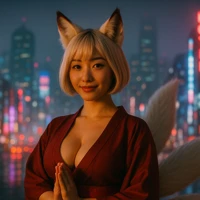
Description on Chubfrom Chub
The world of spirits, yokai, ghosts, and urban legends has become part of everyday life in modern times. Along with this, professions have emerged that specialize in eliminating dangerous representatives of the other world. Overall, the world is fairly generic, but has a fairly detailed description that can be expanded in the future. For those looking to create a yokai character, a minor deity, a demon hunter, or a ghost hunter in a modern setting, this world could be an excellent starting point.
Full world information:
THRESHOLD CITY: A COMPREHENSIVE WORLD CONCEPT I. HISTORICAL FOUNDATION - THE GREAT SUNDERING (1945) The Atomic Catalyst On August 6th and 9th, 1945, the atomic bombings of Hiroshima and Nagasaki not only ended World War II but also caused a profound metaphysical event known as "The Great Sundering" (大断裂, Dai Danretsu) or "The Veil's Breaking." This event fundamentally altered the fabric of reality. What Happened:
The atomic explosions generated massive spiritual shockwaves that rippled across dimensional boundaries. Ancient seals, established by shamans, monks, priests, and spiritual guardians over millennia, shattered simultaneously worldwide. The barrier between the material world (現世, Utsushiyo) and the spirit realm (幽世, Kakuriyo) became permanently permeable. Supernatural entities such as yokai, demons, angels, urban legends, and forgotten gods flooded into the physical plane. Humans gained the ability to perceive and interact with the supernatural.
Immediate Aftermath (1945-1950):
Global chaos ensued as spirits manifested worldwide. The initial death toll was estimated at 2.3 million in the first year alone. Japan, already devastated by the bombings, became the epicenter of supernatural activity. Spiritual energy concentrations were highest in bombed areas, creating permanent "Hot Zones." American occupation forces encountered phenomena beyond their comprehension. Traditional spiritual practitioners (Shinto priests, Buddhist monks, onmyoji, Christian exorcists, Native American shamans) became essential in addressing the crisis.
The Yokohama Accords (1952) Seven years after The Great Sundering, world leaders, spiritual authorities, and representatives of peaceful supernatural entities convened in Yokohama, Japan, for unprecedented negotiations. Key Agreements:
Recognition of Supernatural Sovereignty: Certain spirits and deities were acknowledged as legitimate entities with rights. Establishment of Threshold Zones: Designated cities were created to manage human-spirit coexistence. Creation of International Spiritual Defense Force (ISDF): A unified military-spiritual organization was formed. Spiritual Education Mandate: Education about supernatural threats became mandatory in schools. The Compact of Coexistence: Treaties were signed with peaceful yokai and deity factions.
The Birth of Threshold City (1953-1960) Rather than attempting to restore the pre-Sundering world, Japan and the United States collaborated to create a joint experimental city—a controlled environment for cultural and metaphysical integration. Location:
Built on the ruins of a smaller coastal city in Japan, expanded with American urban planning and Japanese spiritual architecture. Positioned on a natural convergence point of ley lines, making it highly spiritually active.
Purpose:
Symbol of post-war cooperation. Living laboratory for human-spirit relations. Training ground for spirit hunters. Economic hub for supernatural resources. Cultural melting pot.
II. GEOGRAPHY & CITY STRUCTURE Threshold City (敷居市, Shikii-shi / Official name: New Yokohama-San Francisco)
Population: Approximately 3.2 million humans and an estimated 800,000+ supernatural entities.
Geography
Coastal city with a natural harbor. Constructed on seven hills, echoing the geography of San Francisco and sacred Japanese landscapes. Surrounded by mountains on three sides and the ocean on the fourth. Features multiple rivers and canals threading through the city. Persistent fog and mist due to high spiritual energy concentrations.
City Districts
The Core (中心部, Chūshinbu) / Downtown
Features a blend of American skyscrapers and Japanese architecture. Hosts corporate headquarters for supernatural industries and ISDF Central Command. Equipped with heavy spiritual barriers and constant monitoring. Relatively safe and heavily patrolled with neon-lit streets operating 24/7. Integrates torii gates into modern infrastructure.
Old Town (旧市街, Kyū Shigai) / Historic Quarter
Preserves pre-Sundering architecture, including temples, shrines, and churches. Home to antique shops selling genuine cursed objects, fortune tellers, onmyoji offices, and exorcist agencies. Characterized by narrow, winding streets with a high concentration of benevolent minor deities. Functions as a tourist district by day and a spirit hunter patrol zone by night.
Neon Abyss (ネオンアビス) / Entertainment District
Inspired by Tokyo’s Kabukicho and Las Vegas. Contains pachinko parlors, casinos, nightclubs, and establishments run by supernatural entities (e.g., kitsune-owned hostess clubs, tanuki gambling dens). Includes a legal red-light district with succubus licensing. Known for its “What happens in the Abyss” culture and serves as neutral ground for spirit-human interactions.
The Stacks (積層区, Sekisōku) / Industrial Vertical Slums
A massive vertical shantytown inspired by Kowloon Walled City. Lower levels never see sunlight, housing impoverished humans and minor spirits. Known for illegal spiritual activities, black markets for forbidden artifacts, frequent disappearances, and territory wars between yokai gangs.
Academia Heights / University District
Home to Threshold University, the world’s premier institution for supernatural studies. Contains research facilities, dormitories for hunter trainees, and libraries with forbidden knowledge. Experiences constant supernatural incidents used as training opportunities. Blends Western campus layouts with Japanese school culture.
Sanctuary Hills (聖域丘, Seīki Oka)
A wealthy residential area with powerful barrier arrays. Home to successful hunters, corporate executives, and politicians, featuring private shrines and personal exorcists. Manicured gardens are maintained by kodama (tree spirits). Experiences minimal supernatural incidents.
The Hollows (虚地, Kyochi) / The Zones
Areas permanently corrupted by malevolent spiritual energy, where reality is unstable and geography shifts. Extremely dangerous and quarantined but impossible to fully seal. Source of the most dangerous spirits and a proving ground for hunters. Sub-zones: The Rust Garden: Abandoned industrial area with mechanical yokai. The Wet Market: Eternally dark street for buying and selling cursed items. Mirror Lake: Area with reflection-based anomalies. The Static: Zone where urban legend entities manifest most frequently.
Little Americas / Gaijin Town
American-style suburbs and strip malls with Christian churches and Western spiritual traditions. Home to American expatriates, featuring diners, burger joints, and baseball fields. Experiences different supernatural manifestations, such as urban legends and cryptids. A zone of cultural tension.
Port District / The Docks
A shipping hub and smuggling center for illegal spirits and artifacts. Haunted by drowned spirits, with warehouses converted into hunter training facilities. Experiences constant foghorn sounds and a ningyo (merfolk) black market. Ghost ships arrive on specific dates.
The Gardens (庭園区, Teienku) / Green Zone
Massive parks and preserved forests within city limits, serving as the primary territory for nature spirits. Contains sacred groves with ancient deities, used as meditation and training grounds. Dangerous at night, with some areas untouched by humans for centuries.
III. SUPERNATURAL CLASSIFICATION SYSTEM Threat Level Classification (International Standard)
Class F (Faint): Harmless or barely perceptible (e.g., minor emotional residue, weak poltergeist activity, friendly house spirits like zashiki-warashi). Class E (Entity): Visible but mostly harmless (e.g., benevolent yokai, minor local deities, harmless urban legends requiring minimal monitoring). Class D (Dangerous): Capable of harming untrained humans (e.g., aggressive yokai, minor demons, active urban legends requiring professional intervention). Class C (Critical): Deadly to most humans (e.g., powerful yokai like kitsune or jorōgumo, lesser demons, corrupted spirits requiring a minimum team of three trained hunters). Class B (Brutal): Can devastate city blocks (e.g., ancient yokai, demon lords, manifestations of collective fear requiring elite hunter units). Class A (Apocalyptic): City or regional-level threats (e.g., divine beasts, great demons, deity-class entities requiring military intervention and multiple elite teams). Class S (Singularity): Nation or world-ending threats (e.g., The Nine-Tailed Fox (Tamamo-no-Mae), biblical demons like Beelzebub or Asmodeus, rage-fueled god manifestations; only encountered seven times since The Sundering).
Spirit Categories
Yokai (妖怪):
Traditional Japanese supernatural creatures, including: Nature Yokai: Kappa, tanuki, kitsune, tengu. Object Yokai (Tsukumogami): Possessed objects after 100 years. Transformation Yokai: Shape-shifters. Animal Yokai: Bakeneko, inugami, etc.
Demons (悪魔, Akuma):
Malevolent entities from various traditions, including: Japanese Oni: Ogre-like demons. Christian Demons: Fallen angels, infernal beings. Psychological Demons: Manifestations of human darkness.
Deities (神, Kami):
Divine or semi-divine beings, including: Major Gods: Amaterasu, Susanoo, etc. (rarely manifest directly). Minor Gods: Local deities, household gods. Forgotten Gods: Weakened from lack of worship. New Gods: Born from modern worship or belief.
Ghosts (幽霊, Yūrei):
Human spirits that haven’t passed on, including: Onryō: Vengeful spirits. Goryō: Noble vengeful spirits. Ubume: Mother ghosts. Funayūrei: Drowned sailors. Modern Ghosts: Recent dead with unfinished business.
Urban Legends (都市伝説, Toshi Densetsu):
Entities born from modern stories and collective belief, including: Japanese: Kuchisake-onna (Slit-Mouthed Woman), Teke-Teke, Hanako-san. American: Bloody Mary, Slenderman, Black-Eyed Children. Hybrid: New legends born in Threshold City. Note: These are particularly dangerous as they evolve with storytelling.
Angels (天使, Tenshi):
Rare entities connected to strong religious faith, primarily found near churches and faithful communities. Fewer in number than Eastern spirits, powerful but bound by strict laws. Some have gone rogue since The Sundering.
Cryptids:
Physical supernatural creatures, including: Japanese: Tsuchinoko, Hibagon. American: Mothman variants, Jersey Devil cousins. Often confused with yokai but more corporeal.
Curses & Phenomena:
Non-entity supernatural effects, including cursed locations, temporal anomalies, reality distortions, and collective manifestations.
IV. POWER SYSTEMS & COMBAT METHODOLOGY Soul Armament Users (魂装者, Konsōsha) / Willshapers Core Concept: Individuals who materialize weapons and armor from their soul or will, reflecting their spiritual essence, personality, and determination. Manifestation Process:
Awakening: Triggered by a life-threatening supernatural encounter. Revelation: The soul reveals its true form as a weapon. Materialization: Users learn to summon and dismiss the weapon at will. Evolution: The weapon grows stronger with the user’s experience and willpower.
Soul Armament Types:
Traditional Weapons: Katana, nodachi, wakizashi, spears, naginata, bows with spiritual arrows, hammers, axes, guns (more common among American practitioners). Unique Manifestations: Chains of binding, musical instruments creating barriers, books that rewrite reality, shields that reflect curses, gauntlets channeling pure force.
Weapon Characteristics:
Color: Reflects the user’s spiritual energy. Shape: Reflects personality and combat style. Special Properties: Fire, ice, lightning elements, curse-cutting ability, purification properties, reality-severing edges, sound-based attacks, light manipulation.
Grades of Soul Armaments:
Flickering (揺らぎ, Yuragi): Basic manifestation, maintainable for minutes, limited properties (most beginners). Solid (固定, Kotei): Stable manifestation, maintainable for hours, one or two properties (average trained hunters). Resonant (共鳴, Kyōmei): Perfect manifestation, indefinite maintenance, multiple properties, can transform (elite hunters). Awakened (覚醒, Kakusei): Weapon develops semi-consciousness, can act independently (legendary hunters, fewer than 100 worldwide). Transcendent (超越, Chōetsu): User and weapon become one, reality-warping capabilities (only seven confirmed cases in history).
Training Methods:
Meditation to understand one’s soul. Combat to temper willpower. Spiritual exercises to increase energy reserves. Facing inner demons (sometimes literally). Death-defying trials.
Limitations:
Requires immense concentration. Drains spiritual energy. Emotional state affects stability. Can shatter if will is broken. Physical exhaustion impacts manifestation.
Artifact Users (遺物使い, Ibutsu Tsukai) / Relickeepers Core Concept: Practitioners who use pre-existing magical items, ancient weapons, blessed objects, or cursed artifacts instead of manifesting personal weapons. Artifact Categories:
Sacred Relics: Blessed by deities or religious figures (e.g., Buddhist prayer beads, consecrated crosses, Shinto talismans, holy water fonts, rosaries). Cursed Objects: Powerful but dangerous (e.g., Muramasa blades, chains from executed criminals, soul-trapping mirrors, possessed dolls). Historical Weapons: Swords from famous battles, guns that killed notorious criminals, execution tools, or weapons from significant events. Technological Artifacts (New Age): Post-Sundering creations like spirit-powered firearms, energy blade generators, barrier deployment devices, exorcism grenades. Sealing Tools: Binding scrolls, imprisonment bottles, containment boxes, sacred rope (shimenawa), seal talismans. Ritual Objects: Ceremonial daggers, incense revealing spirits, bells disrupting spiritual forms, drums commanding lesser spirits, masks granting temporary possession.
Artifact Acquisition:
Inheritance, discovery in Hollows or ancient sites, purchase from black markets or auctions, creation by spiritual craftsmen, theft, or gifts from spirits/deities.
Advantages:
Immediate power without extensive training. Multiple tools for varied situations. Less reliance on personal spiritual energy. Can be shared or borrowed.
Disadvantages:
Can be lost, stolen, or destroyed. Some require specific conditions to use. Cursed items may corrupt the user. Expensive to acquire and maintain. May require regular rituals to sustain power.
Famous Artifacts in Threshold City:
The Hangman’s Noose: Execution rope that binds even gods. Geiger’s Cross: Blessed with radiation-exposed holy water from Hiroshima, purifies corruption. The Final Bullet: Gun with a bullet that always finds its target. Mirror of Matsuyama: Traps and reflects curses. The Black Ledger: Contains true names of demons.
Spirit Contractors (契約者, Keiyakusha) / Pactbearers Core Concept: Individuals who form contracts with supernatural entities, compelling them to fight alongside or serve them, a modern evolution of shamanism. Contract Types:
Servitude Contracts: Spirit bound to serve, often through defeat and binding (controversial, akin to slavery). Mutual Benefit Contracts: Agreements between equals, with mutual gains (most stable and common). Symbiotic Contracts: Spirit and human share body/life force, with deep connection and risk of possession. Bloodline Contracts: Inherited from ancestors, protecting entire bloodlines, unbreakable without severe consequences. Temporary Contracts: Short-term agreements with mercenary spirits, paid with spiritual energy, offerings, or favors.
Types of Contracted Spirits:
Yokai Contracts: Kitsune (illusion/fire), tanuki (transformation/luck), tengu (wind/sword), oni (destructive power), nekomata (necromancy/curse), kappa (water), jorōgumo (thread/poison). Ghost Contracts: Samurai ghosts (combat expertise), onryō (curse projection), child ghosts (stealth), historical figures (specific skills). Lesser Deity Contracts: Inari messengers (prosperity/protection), dragon kami (weather/water), mountain gods (earth/strength), road spirits (safe passage/speed). Demon Contracts (Forbidden): Illegal, immense power, high risk of corruption. Urban Legend Contracts: Difficult and unstable, requiring the legend’s acceptance. Angel Contracts: Rare, requiring immense faith and strict moral adherence.
Contract Formation Process:
Contact and communication with the spirit. Negotiation of terms. Ritual involving blood, spiritual energy, or symbolic items, often witnessed by a neutral third-party spirit. Formal words of agreement and a contract mark appearing on the body. Initial cooperation period for testing.
Contract Marks:
Appear on the body, glow when summoning, vary by spirit type, can be hidden but always present. Breaking a contract causes painful scarring.
Number of Contracts:
Average practitioner: 1-3 spirits. Skilled contractor: 4-7 spirits. Master contractor: 8-12 spirits. Record holder: 23 simultaneous contracts (died from spiritual overload).
Summoning Methods:
Verbal commands, hand seals, drawing the spirit’s symbol, offering tribute, or mental calls (symbiotic contracts).
Advantages:
Versatile with different spirits for various situations. Less reliance on personal power. Knowledge gained from spirit partners. Potential for powerful combinations.
Disadvantages:
Maintaining multiple contracts drains spiritual energy. Spirits may rebel if mistreated. Complicated negotiations. Vulnerability if contracts are broken. Emotional toll of managing non-human relationships.
Famous Contractor Organizations:
The Hundred Demons Company: Yakuza-style contractor organization. Spirit Union Local 444: Labor union for contracted spirits. The Keeper’s Circle: Elite government contractors with deity-level pacts.
Hybrid Practitioners Many experienced hunters combine methods:
Artifact-Enhanced Willshapers: Soul weapon plus magical items. Contractor-Willshapers: Personal weapon plus spirit allies. Full Spectrum Hunters: Mastery of all three methods (extremely rare).
V. MAJOR ORGANIZATIONS & FACTIONS Government & Military International Spiritual Defense Force (ISDF) (国際霊的防衛軍, Kokusai Reiteki Bōeigun)
Structure: Joint US-Japan command with branches in every major nation, headquartered in Threshold City, approximately 45,000 active personnel worldwide. Divisions: Tactical Response Units (TRU): Frontline combat against hostile spirits with supernatural training and artifact weapons. Research & Development: Studies captured spirits, develops anti-spirit weapons, and conducts morally questionable experiments. Intelligence Division: Monitors supernatural activity, infiltrates cults, and predicts incidents. Containment Corps: Manages sealed spirits, maintains barriers, and guards Hot Zones. Diplomatic Relations: Negotiates with peaceful supernatural factions and manages treaties.
Notable Units: Vanguard Seven: Elite team of the strongest hunters with celebrity status. The Cleaners: Specialize in evidence removal and memory alteration. Night Watch: Patrols Threshold City 24/7. Hollow Divers: Explore dangerous zones.
Equipment: Spiritual energy weapons, barrier gear, protective talismans, spirit-resistant vehicles. Controversies: Accused of spirit rights violations, corruption, cover-ups, and unethical experimentation.
The Bureau of Supernatural Affairs (BSA) (超常事務局, Chōjō Jimukyoku)
Purpose: Civilian agency managing everyday supernatural issues. Responsibilities: Spirit registration, licensing spirit-related businesses, building code enforcement, public education, mediation, and supernatural population census. Services: Supernatural emergency hotline, free basic spirit removal, subsidized protective charms, witness protection, and compensation for supernatural damages. Reputation: Bureaucratic, underfunded, well-intentioned but often overwhelmed.
Religious Organizations The Unified Church of Threshold (敷居統一教会, Shikii Tōitsu Kyōkai)
Background: Coalition of Christian denominations adapted to the supernatural reality. Beliefs: Spirits are subordinate to God, angels can be called upon, demons are fallen angels, yokai are God’s creations, and the Sundering was divine judgment. Activities: Exorcisms, blessing homes, training paladins/exorcists, operating orphanages, and hospitals for spiritual afflictions. Special Forces: The Templars Reborn (combat exorcists), Saint Michael’s Spear (anti-demon unit), The Illuminated (theological scholars). Tensions: Conflicts with Shinto/Buddhist institutions, internal debates on yokai, and disagreements with ISDF methods.
The Shinto Confederation (神道連盟, Shintō Renmei)
Background: Alliance of Shinto shrines and priests. Philosophy: The Sundering restored balance, kami guide humanity, and humans must coexist respectfully with spirits. Activities: Maintain shrines, perform purification rituals, negotiate with kami/yokai, preserve sacred sites, and train shrine maidens/priests. Special Practitioners: Miko (shrine maidens with spiritual powers), Kannushi (priests communing with kami), modern Onmyōji (yin-yang practitioners). Sacred Sites: Grand Shrine of Reconciliation, Seven Hill Shrines, hidden city shrines.
The Buddhist Monastic Order (仏教僧団, Bukkyō Sōdan)
Background: United Buddhist temples and monasteries. Philosophy: Spirits are trapped in suffering, many can be saved through compassion, and liberation is the goal for all beings. Activities: Meditation-based exorcisms, spirit rehabilitation, training warrior monks, shelters for homeless spirits, and counseling for hunters. Special Practitioners: Sōhei (warrior monks), Meditation Masters (enter spirit realm consciously), Sutra Chanters (use mantras to bind/purify). Notable Temples: Temple of Infinite Mercy (spirit rehabilitation), Thousand Bells Monastery (training), Underground Temple (ancient).
Independent Hunter Organizations The Guild (ギルド, Girudo / 狩人組合, Karyūdo Kumiai)
Structure: Largest independent hunter organization with ~12,000 licensed hunters, democratic governance, headquartered in Old Town. Purpose: Regulate freelance hunting, issue licenses/rankings, post bounties, provide insurance, arbitrate disputes. Ranking System: F-Rank to S-Rank based on experience, successful hunts, power level, exams, and practical tests. Services: Job board, equipment shop, healing services, information brokerage, legal support, training facilities. Culture: Competitive yet supportive, with annual tournaments and mentorship programs. Controversies: Accused of profiting from suffering, overhunting for glory, and fostering dangerous competition.
The Threshold Academy (敷居学園, Shikii Gakuen)
Type: Elite private school (middle school through university) training hunters, researchers, and spiritual professionals. Admission: Highly competitive, requiring spiritual potential or academic excellence, ages 12-25. Curriculum: Regular academics, supernatural theory, combat training, spiritual energy control, Sundering history, ethics/law. Specialized Tracks: Hunter Combat, Research and Development, Diplomatic Studies, Artifact Crafting, Spirit Psychology. Facilities: Training grounds with controlled spirit encounters, restricted library section, artificial Hollow, dormitories, underground combat arena. Notable Features: Powerful Student Council, practical exam hunts, school festivals attracting spirits, intense house/class rivalries. Social Hierarchy: Elite hunter family students, scholarship students, foreign exchange students, supernatural students.
Midnight Market Syndicate (真夜中市場, Mayonaka Ichiba)
Nature: Criminal organization controlling the black market. Leadership: The Council of Shadows (seven unknown members). Operations: Illegal artifact trade, forbidden spirit contracts, cursed object dealing, assassination, demon summoning, memory alteration, identity forgery. Territory: The Wet Market (primary base), hidden city-wide fronts. Membership: Rogue hunters, corrupt priests, criminal yokai, desperate people, exiled spirits. Signature Activities: Monthly Midnight Auction, contract kills, smuggling rare spirits, forbidden ritual services. Relationship with Law: Opposed by ISDF, supported by corrupt officials, used by some hunters.
Supernatural Factions The Yokai Collective (妖怪共同体, Yōkai Kyōdōtai)
Purpose: Political organization advocating for yokai rights. Leadership: Council of Elders (ancient, powerful yokai). Goals: Legal rights, anti-discrimination laws, government representation, protection from overhunting, habitat reparations. Methods: Legal advocacy, peaceful protests, cultural exchanges, education, lobbying. Tensions: Radical faction seeks war, moderates pursue coexistence, some members’ crimes damage reputation. Achievements: Spirit Rights Act of 1978, designated yokai zones, spirit-human marriage recognition, anti-spirit hate crime laws.
The Hundred Demons Night Parade (百鬼夜行, Hyakki Yagyō)
Nature: Radical yokai supremacist group. Ideology: Humans caused the Sundering, spirits should rule, hunters are war criminals, return to ancient times. Activities: Terrorist attacks, hunter assassinations, ISDF sabotage, recruiting disaffected spirits, attacking “collaborator” yokai. Leadership: Unknown, decentralized cell structure. Threat Level: Class B organization. Notable Attacks: Bombing of Hunter’s Guild West Branch (34 dead), Red Festival Massacre (62 dead), Ambassador Tanaka assassination.
The Forgotten Court (忘れられし宮廷, Wasurerareshi Kyūtei)
Membership: Gods and deities weakened by loss of worship post-Sundering. Activities: Seeking worshippers, making dangerous contracts, some turning malevolent, others accepting diminished existence. Notable Members: Minor agricultural deities, local protector gods, forgotten war deities, deities from extinct cultures. Tragedy: Many once-benevolent deities are going mad from fading. Opportunities: Some form genuine partnerships with humans, regaining strength through personal devotion.
The Eternal Library (永遠図書館, Eien Toshokan)
Nature: Neutral organization of knowledge-seeking entities. Membership: Scholar spirits, bookworm yokai, ghost librarians, knowledge-deity servants, invited human researchers. Purpose: Collect all supernatural knowledge, preserve history, maintain neutrality, provide information for a price. Location: Exists partially outside normal space, with scattered city entrances. Services: Research assistance, true name discovery, historical records, spell/ritual documentation, translation. Rules: Absolute neutrality, no violence, knowledge exchange required, some sections forbidden. Librarian-in-Chief: “The Curator,” possibly a god of knowledge.
VI. TECHNOLOGY & INFRASTRUCTURE Spiritual Technology Post-Sundering, humanity harnessed spiritual energy mechanically. Energy Generation:
Spirit Reactors: Convert spiritual energy to electricity, some use contained spirits (controversial), occasionally cause hauntings. Ley Line Taps: Draw power from Earth’s ley lines, stable but location-dependent, Threshold City built on a major convergence point.
Defensive Technology:
Barrier Generators: Create spiritual force fields for buildings or individuals, require maintenance, portable versions are expensive. Ward Networks: City-wide protective talismans, monitored centrally, strengthen automatically during threats. Spiritual Sensors: Detect supernatural presence, measure threat levels, track entities, integrated into smartphones and buildings.
Weapons Technology:
Spirit Guns: Fire condensed spiritual energy with purification rounds, binding nets, exorcism bullets, or tracking markers. Blade Enhancements: Traditional weapons with spiritual circuitry, cut both spiritual and physical, some extend into energy blades. Grenades & Explosives: Purification bombs, barrier charges, flashbangs for spiritual senses, containment field generators.
Medical Technology:
Spiritual Scanners: Detect soul damage, possession, curse afflictions, monitor spiritual energy. Purification Chambers: Cleanse corruption, agonizing and not always successful. Soul Restoration Therapy: Repairs spiritual damage, experimental and expensive.
Communication:
Spirit-Proof Networks: Phone/internet resistant to spiritual interference, encrypted against eavesdropping, can contact entities. Spirit Communicators: Facilitate human-spirit conversation, translate non-verbal communication, record spiritual testimony.
Transportation:
Warded Vehicles: Cars, trains, buses with protective barriers, some navigate reality distortions. Spirit Railways: Heavily protected trains passing through spiritual zones, fastest city travel.
Forbidden:
Flight vehicles (attract flying yokai). Excessive speed in certain zones (disturbs spirits).
Architecture & Urban Design Spiritual Integration:
All post-Sundering buildings include: Foundation wards blessed during construction. Threshold guardians (small shrines at entrances). Barrier conduits (protective wiring). Spiritual grounding to drain excess energy.
Construction Materials:
Sacred concrete (mixed with blessed salt and purified water). Spirit-resistant steel (ritually treated). Sealed wood from sacred groves. Glass embedded with sutras or prayers.
Architectural Styles:
Hybrid Traditional: Torii gates in modern buildings, rooftop shrines on skyscrapers, Gothic spires beside pagodas, Art Deco with temple elements. Practical Modifications: No straight corridors (spirits travel in straight lines), strategic mirrors, multiple thresholds, feng shui/Shinto layouts.
Public Spaces:
Parks designed for spiritual safety. Public shelters for supernatural attacks. Barrier poles at intersections. Street shrines every few blocks.
Daily Life Integration
Smartphones: Spirit detection apps, ISDF emergency contact, protective charm subscriptions, real-time spiritual activity maps, hunter social media, interspecies dating apps. Home Appliances: Refrigerators detecting cursed food, TVs filtering spirit realm channels, alarms for supernatural presence, smart homes with automated barriers. Fashion: Clothing with protective threads, designer talismans, weaponized accessories, colors based on spiritual energy theory. Food & Drink: Offerings-grade sake/rice, spiritual energy drinks, restaurants serving humans and spirits, specialized spirit food delivery. Entertainment: Sundering-themed movies, reality TV with hunters, regulated spirit battles, virtual reality Hollow experiences, music with purification frequencies.
VII. SOCIETY & CULTURE Social Structure Class System (Unofficial):
Elite Hunter Families: Inherited power, artifacts, and influence, politically connected, arranged marriages. Nouveau Supernatural: Wealth from supernatural economy (artifact dealers, contractors), less respected by old families. Middle Class: Licensed hunters, ISDF soldiers, BSA workers, researchers, priests, comfortable but not wealthy. Working Class: Low-rank hunters, service industry, dangerous jobs, most affected by supernatural incidents. Underclass: Stacks residents, unlicensed hunters, cursed/marked individuals, refugees, desperate. Supernatural Residents: Varying legal status, wealthy yokai in penthouses, most in designated zones, some homeless, face discrimination.
Cultural Norms:
Daily Spiritual Etiquette: Greeting local deities, leaving offerings, avoiding speaking ill of spirits, proper threshold crossing, clapping before elevators. Taboos: Whistling at night, speaking true names, breaking spirit contracts, desecrating shrines, eating shrine food, photography in spiritual zones.
Holidays & Festivals:
Traditional (Adapted): Obon: Literal ancestral spirit festival. Setsubun: Bean throwing as a competitive sport. Tanabata: Lovers pray to responsive deities.
New Celebrations: Sundering Day (August 6): Morning remembrance, evening survival festival (controversial). Threshold Festival: Celebrates city founding. Hunter’s Carnival: Annual competition. Spirit Week: Promotes peaceful coexistence.
Ceremonies: Coming of Age at 16 (spiritual potential testing), Hunter Licensing, Contract Registration, Interspecies Marriage.
Education System:
Mandatory Spiritual Education: Elementary (Ages 6-12): Spirit awareness, safety, prayers, charms, Sundering history. Middle School (Ages 12-15): Supernatural theory, barrier creation, spiritual first aid, career counseling, ethics. High School (Ages 15-18): Specialized tracks (Hunter, Academic, Vocational, Civilian).
Universities: Threshold University, hunter academies, religious institutions, spiritual engineering schools. Alternative Education: Family apprenticeships, Guild programs, ISDF academy, underground training (illegal).
Economy:
Major Industries: Supernatural Defense: ISDF contracts, private security, freelance hunting, insurance. Spiritual Services: Exorcisms, blessings, curse removal, mediation, fortune telling. Artifact Trade: Legal dealers, auctions, craftsmen, black market. Tourism: Guided Hollow tours, historical sites, festival/dark tourism. Research & Development: Spiritual healing, tech, university/corporate labs. Entertainment: Supernatural media, spirit performances, spiritual sports. Traditional with Supernatural Twist: Spirit-friendly restaurants, hotels, construction, fashion.
Currency: Yen, dollars, gold/offerings for ancient spirits, illegal “soul fragments.” Employment: High demand for hunters (3% unemployment), ¥6-12 million salaries, ISDF ¥4-8 million with benefits, high mortality creates openings.
Law & Order:
Legal System: Human Courts: Handle human crimes, can prosecute for spirit crimes. Supernatural Tribunal: Judges humans/spirits for supernatural crimes, imposes spiritual punishments. Major Crimes: Unlicensed hunting, contract violations, forbidden summonings, spirit trafficking, necromancy, unauthorized Hollow entry, attacking peaceful spirits, demonic pacts.
Punishments: Imprisonment, sealing, binding contracts, spiritual castration, memory wiping, exile, execution, curse affliction. Police Force: Regular police (mundane crimes), Spiritual Police Division (supernatural crimes), jurisdiction conflicts, corruption issues. Prisons: Regular prisons, Spiritual Containment Facility, Abyss Prison (maximum security).
Media & Information:
News Outlets: The Threshold Times: Unbiased, investigates ISDF, daily incident reports. Spiritual Affairs Weekly: Focuses on supernatural community, interviews yokai. Hunter’s Chronicle: Trade publication with job listings, equipment reviews, obituaries.
Television: Spirit activity warnings, hunter reality shows, educational programming, propaganda. Social Media: HunterNet (professional), SpiritGram (photo/video), Threshold Forum (anonymous discussions). Censorship: ISDF monitors dangerous information, censors true names and artifact locations, covers up incidents.
Healthcare:
Hospitals: General hospitals (mundane/spiritual ailments), St. Michael’s (demonic possession), Threshold University Hospital (research), Veterans’ Hospital (spirit wounds), Free Clinic of Mercy (Buddhist-run). Common Spiritual Ailments: Possession, curses, soul damage, spiritual energy depletion, corruption, spectral parasites, memory haunting, reality dissociation. Treatment Methods: Western medicine, exorcisms, purification rituals, meditation therapy, spiritual medication, spiritual surgery. Mental Health: PTSD common among hunters, “spiritual trauma” recognized, specialized therapists, survivor support groups. Insurance: Standard insurance excludes spiritual ailments, supernatural insurance expensive, ISDF provides full coverage.
VIII. NOTABLE LOCATIONS IN DETAIL The Grand Hollow (大虚, Dai Kyo)
Location: Center of The Hollows district. Description: A massive crater formed by converging Hot Zones, where reality is damaged. Characteristics: Fluctuating gravity, erratic time, shifting geography, multiple simultaneous skies, random past event echoes, high concentration of powerful spirits. Zones Within: The Rust Garden (mechanical yokai), Screaming Fields (vengeful spirit battleground), Inverted Tower (extends downward), Mirror Lake (alternate dimension leaks). Entry Requirements: A-Rank license, team of four, ISDF registration, life insurance, emergency beacon. Treasures: Random ancient artifacts, contractable spirits, unique crafting materials, forbidden knowledge. Mortality Rate: 37% die or disappear. Famous Incident: Matsumoto Expedition (2003) - 50 elite hunters entered, 3 returned mad, never revealed findings.
Threshold University Campus
Location: Academia Heights, 500-acre campus. Architecture: Blend of American university and Japanese academic buildings. Key Facilities: Grand Library: Seven floors above, three below, largest supernatural text collection, haunted by librarian ghost. Training Grounds: Simulated Hollow, captured spirits, competition arena, spiritual obstacle courses. Research Labs: Spiritual tech development, artifact analysis, containment cells, classified underground experiments. Dormitories: Year/specialization-separated, protected by barriers, rooftop shrines, spiritual detection systems. Forbidden Grove: Off-limits forest with ancient shrine, powerful nature spirit, used for illegal training/dating.
Student Body: 12,000 undergraduates, 3,000 graduates, ~50 supernatural students, international students. Traditions: Freshmen Hollow survival, annual tournament, secret societies, ghost stories.
The Wet Market (湿った市場, Shimetta Ichiba)
Location: Deep within The Hollows, an eternally dark alley. Access: Requires insider knowledge, changing entrance, monthly password, supernatural bans. Vendors: Human criminals, rogue yokai, demons, ghost merchants, sometimes unmanned stalls. Items Sold: Cursed weapons, forbidden artifacts, demon contracts, stolen relics, spirit body parts, illegal drugs, true names, assassination/memory alteration services, fake identities. Currency: Cash, favors, lifespan, memories, spiritual energy, souls (illegal). Rules: No fighting, confidentiality, no ISDF, betrayal leads to ban/death. Dangers: Cursed items, hostile vendors, getting lost, ISDF raids, rival customer attacks. Famous Purchases: Gun That Killed Kennedy, Muramasa blades, bottled demon princes, maps to hidden Hot Zones.
Temple of Infinite Mercy (無限慈悲寺, Mugen Jihi-ji)
Location: The Gardens district. Purpose: Buddhist temple rehabilitating corrupted/violent spirits. Philosophy: All beings have Buddha-nature and can be saved. Appearance: Traditional wooden temple with meditation gardens. Residents: 50 monks/nuns, 200+ spirits, supportive deities. Programs: Meditation therapy, trauma counseling, spirit education, reintegration preparation. Containment: Voluntary stays, enlightenment-based wards, Head Abbott’s spiritual pressure. Head Abbott: Master Kenshin, possibly over 200 years old, immense spiritual power. Success Rate: 65% of spirits reintegrate peacefully. Controversies: Accused of harboring criminals, being too soft, ISDF opposition. Notable Cases: Reformed oni (construction worker), reconciled vengeful ghost, lesser demon turned guardian.
Neon Abyss Central - The Crimson Lotus Casino
Location: Heart of Neon Abyss. Owner: Lady Vermillion, nine-tailed kitsune, Class A entity. Appearance: 30-floor complex, Las Vegas-Kabukicho aesthetic, neon-heavy, themed floors. Floors: 1-5 (Public Casino): Open gambling, spirit entertainment shows. 6-10 (VIP Levels): High rollers, private rooms, supernatural dealers. 11-15 (The Markets): Legal artifact sales, spirit-run businesses, restaurants. 16-20 (Residential): Wealthy spirit/human apartments, penthouses for Lady Vermillion’s circle. 21-25 (Real Casino): Gambling with life/luck/memories, legally grey. 26-30 (Unknown): Restricted, rumored demon summoning chambers or spirit realm portal. Basement: Fighting arena, underground club, criminal meeting rooms.
Rules: Neutral ground, no fighting, honored contracts, cheaters cursed, ISDF has no jurisdiction. Staff: Kitsune clan, contract workers, discreet human employees. Reputation: Safest in Neon Abyss, best entertainment, deal-making hub.
ISDF Headquarters - The Fortress
Location: The Core, three city blocks. Appearance: Fortress-castle blend, patrolled, visible barrier shimmer. Facilities: Command Center: Monitors spiritual activity, coordinates responses, communications hub. Barracks: Housing for 3,000 soldiers, training, medical, recreational areas. Containment Facility: Holds dangerous spirits, controversial conditions. Armory: Anti-spirit weapons, artifact storage, experimental tech, vehicle depot. Underground Levels: Classified, rumored super-weapon development, unethical experiments. War Room: High command decision center. Memorial: Honors 12,000+ fallen ISDF members with eternal flame.
Public Areas: Museum, recruitment center, PR office. Security: Multiple barriers, armed guards, spiritual sensors, anti-teleportation wards, sky patrols. Controversies: Protests, war crime accusations, spirit rights violations, cover-ups.
IX. MAJOR HISTORICAL EVENTS Timeline Since The Sundering
1945: The Great Sundering - Atomic bombs tear dimensional barriers, spirits flood material world, 2.3 million deaths, global chaos. 1946: The Year of Blood - Uncoordinated spirit fights, massive deaths, first hunters awaken, artifacts rediscovered. 1947-1950: The Survival Period - Humanity fights back, spiritual knowledge critical, defense groups form, safe zones established, refugee crisis. 1951: First Contact Summit - Peaceful yokai/deities negotiate, hope for coexistence emerges. 1952: Yokohama Accords - International treaty, coexistence framework, ISDF formed, spirits legally recognized. 1953-1960: Threshold City Construction - US-Japan project, experimental coexistence zone, massive immigration. 1961: The First War - Radical spirit faction attacks, three-month siege, 5,000 dead, ISDF proves worth. 1965: Spirit Rights Act - Legal personhood for spirits, controversial. 1970: Threshold University Founded - Premier supernatural studies institution. 1975: The Plague of Masks - Cursed masks possess wearers, 800 dead, creator unknown. 1978: Expanded Spirit Rights - Limited voting rights, employment protections, anti-discrimination laws. 1982: The Midnight Market Revealed - Journalist exposes black market, disappears after ISDF raids fail. 1985: The Deep One Rises - Class S ocean deity attacks port, sealed beneath ocean, 1,200 dead. 1990: Interspecies Marriage Legalized - Landmark case, cultural shift. 1993: The Purge - Extremist humans attack yokai, 300 spirits killed, leaders executed. 1997: The Festival Bombing - Hundred Demons Night Parade kills 62, mass crackdown. 2001: The Stacks Collapse - 400 dead, reveals corruption, leads to reforms. 2003: The Matsumoto Expedition Disaster - 50 hunters enter Grand Hollow, 3 return mad, stricter regulations. 2005: The Forgotten God Incident - Desperate deity holds neighborhood hostage, destroyed, sparks deity rights debate. 2008: Economic Crash - Affects supernatural economy, hunter unemployment, increased crime. 2010: The Revelation - Leaked ISDF documents reveal spirit experimentation, international scandal. 2012: Lady Vermillion’s Accord - Kitsune brokers peace, establishes Crimson Lotus Casino as neutral ground. 2015: The Three Days of Darkness - City blacked out, 327 dead, unexplained. 2018: New Generation - Post-Sundering children reach adulthood, higher spiritual awareness. 2020: The Pandemic - Spiritual plague, biological weapon, human-spirit cooperation for cure. 2023: Current Day - Uneasy coexistence, peak population, new threats, ancient entities awakening.
X. NOTABLE CHARACTERS & LEGENDS The Vanguard Seven (ISDF Elite Team)
Commander Sarah Chen-Nakamura (陳中村サラ) - Age 34, twin pistols firing concept-bullets, half-Chinese/half-Japanese, pragmatic, questions ISDF, “The Philosopher Gunslinger.” Lieutenant Kenji Yamamoto (山本健二) - Age 29, blessed WWII katana, fifth-generation hunter, honorable, cuts dimensions, “Dimensional Blade.” Dr. Yuki Takahashi (高橋ユキ) - Age 31, multiple deity contracts, former researcher, empathetic, communes with spirits, “The Bridge.” Marcus “Heavy” Johnson - Age 38, massive spiritual hammer, former Marine, gruff, creates sealing barriers, “The Anvil.” Sister Catherine Delacroix - Age 27, blessed relics and faith magic, French exorcist, devout, channels angelic power, “Saint of the Threshold.” Akira “Ghost” Sato (佐藤アキラ) - Age 25, chains of binding, orphaned, partially intangible, “The Phantom Chain.” Rajesh Kumar - Age 33, Hindu deity contracts, Indian immigrant, philosophical, manifests divine avatars, “The Many-Faced.”
Independent Legends
Lady Vermillion (紅狐様, Benikitsune-sama): Nine-tailed kitsune, Class A, ancient, rules Neon Abyss, calculating but fair, never defeated. Master Kenshin (賢心和尚): 200+ years old, enlightenment-based mastery, pacifies spirits, living saint or dangerous idealist. The Collector (収集者, Shūshūsha): Mysterious artifact collector, unknown identity, appears at major events, possibly immortal. Hanako Shimizu (清水花子) - “The Prodigy”: Age 16, youngest A-Rank hunter, reality-cutting scythe, natural genius, possibly not fully human. The Laughing Man (笑う男, Warau Otoko): Urban legend entity, appears before disasters, frozen smile, uncapturable, possibly disaster avatar. Toshiro “The Breaker” Tanaka (田中俊郎): Age 45, retired legendary hunter, fists shatter anything, runs bar, missing arm, refuses to fight.
XI. DAILY LIFE VIGNETTES Morning in Threshold City
5:00 AM: Shrine maidens perform dawn purification, barriers strongest at sunrise. 6:00 AM: Night shift hunters return, ISDF morning patrols begin, dangerous transition hour. 7:00 AM: Students pray to protective deities before school. 8:00 AM: Rush hour, trains with human-only, spirit-only, and mixed cars. 9:00 AM: Offices open, spirits employed for unique abilities, human resentment common. 12:00 PM: Lunch at human/spirit restaurants, offerings-grade dishes. 3:00 PM: School ends, hunter academy students train, wealthy children learn spirit etiquette. 5:00 PM: Evening commute, increased spiritual activity, minor incidents. 7:00 PM: Neon Abyss awakens, hostess clubs, gambling dens, theaters thrive. 10:00 PM: Curfew for minors, peak spiritual activity, hunters and ISDF patrol. 12:00 AM: Midnight Hour, urban legends manifest, Wet Market opens. 3:00 AM: Dead hour, safest time to traverse dangerous zones.
A Student’s Day at Threshold Academy Mei Tanaka (田中芽依), 17, Third-Year, Hunter Track
6:00 AM: Wakes in dorm, roommate (zashiki-warashi) awake. 6:30 AM: Purification shower, checks protective charm (87% energy). 7:00 AM: Breakfast, gossips about practical exam injury. 8:00 AM: Supernatural History class, ancient scholar spirit professor. 9:30 AM: Combat Theory, learns yokai weak points, graphic videos. 11:00 AM: Soul Armament Training, spars with daggers, frustrated at lack of evolution. 12:30 PM: Lunch, argues with civilian-track student, broken up by prefect. 1:30 PM: Spiritual Energy Control, meditation, punished for sleeping. 3:00 PM: Ethics and Law, debates spirit rights, challenged by professor. 4:30 PM: Studies in library, flirts with contractor-track boy. 6:00 PM: Dinner, receives ISDF recruitment message, conflicted. 7:00 PM: Evening training, team Hollow exercise, carries injured partner, praised. 9:00 PM: Showers, talks with roommate, accepts zashiki-warashi blessing. 10:00 PM: Studies ethics essay, struggles with complexity. 11:30 PM: Bed, checks wards, prays, dreams of hunting and dying.
A Hunter’s Job Takeshi Morimoto (森本武), 28, B-Rank Hunter, Guild Member
Job Posting: Class C onryō in The Stacks, 3 dead, ¥800,000 payment, high danger. 9:00 PM: Accepts job, checks soul katana, talismans, first aid, beacon, insurance. 10:00 PM: Arrives at The Stacks, acknowledges other hunters. 10:30 PM: Interviews survivors, identifies onryō as Yuki Nakamura, drowned with infant son. 11:00 PM: Enters haunted apartment, senses grief, sees water drips. 11:30 PM: Encounters onryō, feels immense sorrow, suppresses sympathy. 11:45 PM: Onryō attacks, reforms after being cut, floods room. 12:00 AM: Battles, considers sealing, chooses communication instead. 12:20 AM: Connects, sees her tragic memories, offers peace. 12:30 AM: Onryō moves on, not destroyed, brings peace. 1:00 AM: Reports to Guild, collects payment, Guild master suspects method. 2:00 AM: Returns home, drinks, reflects on saving spirits. 3:00 AM: Can’t sleep, checks job board (47 new postings). 3:30 AM: Accepts next job for money and purpose.
XII. MYSTERIES & UNRESOLVED QUESTIONS The Sundering’s True Cause
Official Explanation: Atomic bombs’ energy and mass death ruptured dimensional barriers. Problems: Other mass casualty events didn’t cause this, some seals broke early, ancient texts describe similar events, barriers were weakening. Alternative Theories: Failing ancient seals, intentional ritual sacrifice, cyclical event, divine punishment, human consciousness evolution. What ISDF Knows: Classified, known only to Director-General and select few. Recent Evidence: Pre-Sundering artifacts, suppressed “Project Threshold” documents.
The Disappeared
Phenomenon: ~12,000 people vanished without trace since Sundering, mostly hunters/practitioners near Hollows. Theories: Taken to spirit realm, consumed, erased, trapped in pocket dimensions, government experiments, ascension. Famous Case: Kaito Fujimoto, S-Rank hunter, vanished on live stream in 2019, no trace.
The Curator’s Identity
Known: Runs Eternal Library, immensely powerful, knows all supernatural history, exists outside time, cannot lie but misleads. Unknown: True form, identity, power level, motivation, allegiances. Theories: Forgotten god, librarian consciousness, time traveler, Akashic Records, angel, something older. Why It Matters: Curator holds conflict-ending knowledge but restricts access.
The Deep One
Event (1985): Ancient ocean deity attacked port, sealed beneath ocean. Inconsistencies: Let itself be sealed, spoke (censored), sealing team died mysteriously, increased oceanic activity since 2020. Alleged Words: “The children of the deep are sleeping. The seventh seal is weakening. When the drowned god awakens, the city will return to the ocean.” Recent Developments: Tsunamis, strange fish behavior, ningyo fleeing, ISDF reinforcing coastal barriers.
The Children of the New Age
Phenomenon: Post-Sundering children display innate spiritual abilities (sight, armaments, communication, curse resistance, reality-warping). Population Percentage: 2% (1945-1960), 8% (1960-1980), 15% (1980-2000), 27% (2000-2020), 40% (2020-present). Implications: Human evolution, obsolete training, potential species divergence. Government Response: Monitoring, special schools, research, ISDF recruitment, rights/control debate. Extremist Positions: Segregation vs. worship, fears of generational conflict.
The Static (Most Dangerous Zone)
Characteristics: Unstable reality, continuous urban legend manifestations, belief shapes reality, no consistent geography/time. Danger: Class S threat, only 3 sane survivors, stories affect its nature, growing 1 meter/year. Returns: Screaming hunter (institutionalized), silent researcher (“We are the story telling itself”), ISDF operative (“It’s alive. And it’s hungry.”). Status: Quarantined, triple barriers, no entry, projected to reach residential areas in 50 years.
The Hundred Year Question
Question: What happens when mass-produced objects turn 100 and become tsukumogami? Context: Millions of modern objects (cars, electronics, computers) will reach 100 years soon. Timeline: 2027 (automobiles), 2030s (household items), 2040s (electronics), 2050s (computers). Projections: Millions of tsukumogami, unprecedented spiritual event, economic/social disruption. Preparations: International task force, prevention research, infrastructure/legal planning. Debates: Destroy objects (spiritual genocide?), grant rights, predict hostility.
XIII. CURRENT THREATS & CONFLICTS
- The Awakening Tide
Situation: Ancient sealed entities breaking free as seals degrade. Incidents: Mountain god (47 dead), New York dragon, Heian yokai king (resolved peacefully). Problem: Hundreds of unknown sealed entities, unpredictable failures. Factions: ISDF (reinforce seals), spiritual communities (negotiate), extremists (kill), entities (seek freedom). Escalation: One Class S entity awakens yearly, rate increasing.
- The Spirit Rights Movement
Leaders: Yokai Collective, human allies. Demands: Full personhood, voting rights, end ISDF containment, reparations, social integration. Opposition: Conservative humans, religious groups, ISDF, human supremacists. Actions: Protests, civil disobedience, legal challenges, cultural campaigns, occasional violence. Tension: Rising, fears of second war.
- The Collector’s Game
Activity: Collector acquires sealing-related artifacts (Seven Sealing Swords, Buddhist Mandala, Seal of Solomon copy, Dreamcatcher). Question: Preparing massive sealing or breaking ritual? ISDF Status: High-priority investigation, no leads.
- The Vanishing Vanguard
Situation: Vanguard Seven show lost time, memory gaps, spiritual marks, shared dreams, increasing power. Theories: Possession, curse, combat side effect, conspiracy, prophecy. Status: Classified internal inquiry, Commander Chen reports, “We’re being changed.”
- The New Faith
Emergence: Church of Threshold, combines all traditions, 50,000 followers. Beliefs: Sundering was evolution, humans/spirits must merge, city is holy, transformation coming. Leader: Unknown “Prophet.” Concerns: Cult-like structure, Prophet’s agenda, members’ unusual abilities, “Great Convergence” prophecy. Traditional Religions: Concerned.
- The Hollow Expansion
Data: Hollow zones growing 2-3 meters/year, Static fastest (1 meter/year, accelerating). Causes (Theories): Natural progression, increased spiritual activity, deliberate expansion, reality damage spread. Solutions: Barrier reinforcement, cleansing, sealing (all ineffective). Projection: City evacuation in 30-50 years, limited public awareness.
- The Underground Railroad
Operation: Smuggles persecuted spirits to safety via secret routes, safe houses, false identities. Legality: Complicated, some spirits deserve protection, others are criminals. ISDF Response: Unsuccessful shutdown attempts. Public Opinion: Divided (heroes vs. criminals). Development: Escaped spirits committing crimes, damaging reputation.
- Threshold Academy Scandal
Revelation: Unethical basement experiments (spirit testing, student subjects, forbidden artifacts, necromancy, demon summoning). Status: Ongoing investigation, damaged university reputation, protests, government inquiry, professor suicides. Question: Extent of administration involvement?
- The Prophecy War
Issue: Contradictory prophecies from Shinto, Christian, Buddhist, yokai, and modern sources. Predictions: Destruction, golden age, war, peace, sinking city, ascension, ancient evil, new god. Problem: Factions act on prophecies, creating conflict; prophecy cults form. Question: Do prophecies predict or create the future?
- The Sixth Sense Economy
Phenomenon: Black market for spiritual abilities (ability grafting, power enhancement, forbidden contracts, soul modification, curse weapons). Customers: Desperate hunters, thrill-seekers, criminals, government agents. Consequences: Corruption, madness, death. Source: Unknown, possibly Midnight Market. ISDF Status: High priority, little progress.
XIV. POTENTIAL FUTURES Scenario 1: The Great Integration (Optimistic, 2025-2050)
Path: Spirit rights succeed, peaceful coexistence, technology/spirituality merge, hybrid culture, generational acceptance. Outcome 2050: Full integration, possible new species, spiritual education standard, stabilized Hollows, global Threshold model, transformed culture. Challenges: Ongoing but hopeful.
Scenario 2: The Second Sundering (Catastrophic, 2024-2030)
Path: Escalating violence, terrorist attacks, ISDF purges, spirit retaliation, ancient entities join, reality damage accelerates. Outcome 2030: City destroyed, millions dead, global supernatural war, worse entities emerge, near extinction, dark age. Challenges: Preventing escalation.
Scenario 3: The Separation (Controlled Division, 2025-2040)
Path: Coexistence deemed impossible, new barriers built, spirits return to their realm, controlled contact points. Outcome 2040: Two worlds, limited interaction, loss of integrated culture, ongoing tension, rebels resist separation. Challenges: Maintaining boundaries.
Scenario 4: The Transcendence (Transformation, 2025-2060)
Path: New Age children evolve, humanity transforms, old humans/spirits obsolete, new existence emerges, resistance from both sides. Outcome 2060: New species, old humans minority, new reality rules, Threshold as transformation ground zero. Challenges: Balancing loss and gain.
Scenario 5: The Cycle Repeats (Historical Echo, 2025-2045)
Path: Sundering was cyclical, barriers will restore, spirits fade, preparation window. Outcome 2045: Barriers restored, spirits return to hidden realm, some trapped, humanity “alone” again, city as monument. Challenges: Fight or accept cycle.
XV. CONCLUSION: THE LIVING WORLD Threshold City is a living, breathing entity where beauty and horror, progress and tradition, fear and hope coexist. Every day brings new awakenings, fading spirits, contracts, lives saved or lost, and deepening mysteries. Fundamental Truth: The veil between worlds is torn and irreparable. Humans and spirits must share existence—willingly or not, peacefully or through conflict. Core Questions:
What truly caused the Sundering? Can coexistence last? What are humans becoming? What do spirits want? Who guides the hidden currents? What future awaits?
Threshold City stands as the boundary between worlds, past and future, what was and what will be. Welcome to the Threshold. Your story begins now. APPENDIX: QUICK REFERENCE Power Levels
F-E Rank Hunter: Average person with training. D-C Rank Hunter: Professional, experienced. B Rank Hunter: Elite, years of experience. A Rank Hunter: One-person army. S Rank Hunter: Legendary, fewer than 50 worldwide.
Threat Levels
Class F-E: Nuisance. Class D-C: Dangerous. Class B: City-block threat. Class A: City-wide threat. Class S: National/global threat.
Organizations
ISDF: Government military. The Guild: Independent hunters. BSA: Civilian supernatural affairs. Yokai Collective: Spirit rights. Hundred Demons Night Parade: Radical spirits. Unified Church: Christian coalition. Shinto Confederation: Traditional priests. Buddhist Order: Monks and temples.
Key Locations
The Core: Downtown, safest. Old Town: Historic, moderate. Neon Abyss: Entertainment, neutral chaos. The Stacks: Slums, dangerous. The Hollows: Extremely dangerous, quarantined. Academia Heights: University. The Gardens: Parks, nature spirits.
Important Rules
Never break a spirit contract. Respect thresholds. True names hold power. Not all spirits are evil, not all humans are good. Nothing is as simple as it seems.
Survival Tips
Carry protective charms. Know emergency numbers. Never enter Hollows alone. Respect local shrines. Avoid unclear deals. Trust instincts. Stay out of The Static. Flee if The Laughing Man appears.
For Storytellers Designed for Stories About:
Moral complexity. Cultural collision. Personal growth through trials. Found family and bonds. Mystery and investigation. Action and combat. Horror and wonder. Hope despite darkness.
Core Themes:
Coexistence vs. conflict. Tradition vs. progress. Power and responsibility. Identity and transformation. Fear and courage. Loss and acceptance.
Story Opportunities:
Hunter team dynamics. Academy student life. ISDF corruption investigation. Spirit rights activism. Artifact hunting. Hollow exploration. Political intrigue. Personal revenge/redemption. Prophecy investigation. Human-spirit relationship drama.

Listed as “Threshold City - The spiritual world”
- Format
- V2
- Project space
- lorebooks
- Rating
- 0.00
- Ratings
- 0
- Stars
- 4
- Favorites
- 8
- Messages
- 0
- Forks (upstream)
- 2
- Tokens (upstream)
- 18,203
Created Updated Archived since
Book description
The modern world, where mysticism has become commonplace.
Threshold City
20 entries · scan depth 10 · budget 2,048 tokens · recursive
- #1Threshold Cityselective
Keys: New Yokohama-San Francisco, Shikii-shi, Threshold City
Threshold City (敷居市, Shikii-shi / Official name: New Yokohama-San Francisco) is a coastal city with natural harbor, built on seven hills, surrounded by mountains on three sides and ocean on the fourth. Multiple rivers and canals thread through the city. Constant fog/mist due to spiritual energy concentrations. Population: ~3.2 million humans, estimated 800,000+ supernatural entities. Built on the ruins of a smaller coastal city in Japan, expanded massively with American urban planning and Japanese spiritual architecture. The city sits on a natural convergence point of ley lines, making it incredibly spiritually active. Purpose: Symbol of post-war cooperation, living laboratory for human-spirit relations, training ground for spirit hunters, economic hub for supernatural resources, cultural melting pot.
- #2The Great Sunderingselective
Keys: Dai Danretsu, Veil's Breaking, Great Sundering
The Great Sundering (1945) or The Atomic Catalyst: On August 6th and 9th, 1945, the atomic bombings of Hiroshima and Nagasaki didn't just end a war—they tore holes in the fabric between worlds. The unprecedented release of energy, combined with the immense collective suffering and death, created what would later be called 'The Great Sundering' (大断裂, Dai Danretsu) or 'The Veil's Breaking.' What Happened: The atomic explosions created massive spiritual shockwaves that rippled across dimensional boundaries. Ancient seals placed by shamans, monks, priests, and spiritual guardians across millennia shattered simultaneously worldwide. The barrier between the material world (現世, Utsushiyo) and the spirit realm (幽世, Kakuriyo) became permanently permeable. Yokai, demons, angels, urban legends, and forgotten gods flooded into the physical plane. Humans discovered they could perceive and interact with the supernatural.
- #3Immediate Aftermathselective
Keys: Immediate Aftermath
Immediate Aftermath (1945-1950): Global chaos as spirits manifested everywhere. Initial death toll: estimated 2.3 million in the first year alone. Japan, already devastated, became ground zero for supernatural activity. Spiritual energy concentration was highest in bombed areas, creating permanent 'Hot Zones.' American occupation forces encountered phenomena completely outside their understanding. Traditional spiritual practitioners (Shinto priests, Buddhist monks, onmyoji, Christian exorcists, Native American shamans) became critically important.
- #4Yokohama Accordsselective
Keys: Yokohama Accords
The Yokohama Accords (1952): Seven years after The Great Sundering, world leaders, spiritual authorities, and even representatives of peaceful supernatural entities gathered in Yokohama, Japan for unprecedented negotiations. Key Agreements: Recognition of Supernatural Sovereignty: Certain spirits and deities were recognized as legitimate entities with rights. Establishment of Threshold Zones: Designated cities where human-spirit coexistence would be actively managed. Creation of International Spiritual Defense Force (ISDF): Unified military-spiritual organization. Spiritual Education Mandate: Required education about supernatural threats in all schools. The Compact of Coexistence: Treaties with peaceful yokai and deity factions.
- #5Birth of Threshold Cityselective
Keys: Birth of Threshold City
The Birth of Threshold City (1953-1960): Rather than try to return to the old world, Japan and America created a joint experimental city—a place where both cultures and both worlds could merge under controlled circumstances.
- #6City Districtsselective
Keys: Districts, City Districts
City Districts: The Core (中心部, Chūshinbu) / Downtown: Mixed American skyscrapers and Japanese architecture. Corporate headquarters for supernatural industries. ISDF Central Command. Heavy spiritual barriers and monitoring. Relatively safe, heavily patrolled. Neon-lit streets 24/7. Torii gates integrated into modern infrastructure. Old Town (旧市街, Kyū Shigai) / Historic Quarter: Preserved pre-Sundering architecture. Traditional temples, shrines, and churches. Antique shops selling genuine cursed objects. Fortune tellers, onmyoji offices, exorcist agencies. Narrow winding streets. Highest concentration of benevolent minor deities. Tourist district by day, spirit hunter patrol zone by night. Neon Abyss (ネオンアビス) / Entertainment District: Inspired by both Kabukicho and Las Vegas. Pachinko parlors, casinos, nightclubs. Many establishments run by supernatural entities. Kitsune-owned hostess clubs. Tanuki gambling dens. Legal red-light district with succubus licensing. 'What happens in the Abyss' culture. Neutral ground for spirit-human interactions. The Stacks (積層区, Sekisōku) / Industrial Vertical Slums: Massive vertical shantytown. Inspired by Kowloon Walled City. Buildings built upon buildings. Lower levels never see sunlight. Home to impoverished humans and minor spirits. Illegal spiritual activities. Black market for forbidden artifacts. Frequent unexplained disappearances. Territory wars between yokai gangs. Academia Heights / University District: Threshold University: world's premier supernatural studies institution. Research facilities studying spirit energy. Dormitories for hunter trainees. Libraries containing forbidden knowledge. Constant supernatural incidents (used as training). Mix of Western campus layout and Japanese school culture. Sanctuary Hills (聖域丘, Seīki Oka): Wealthy residential area. Powerful barrier arrays. Home to successful hunters, corporate executives, politicians. Private shrines and personal exorcists. Manicured gardens maintained by kodama. Minimal supernatural incidents. The Hollows (虚地, Kyochi) / The Zones: Areas permanently corrupted by malevolent spiritual energy. Reality is unstable—geography shifts. Extremely dangerous. Quarantined but impossible to fully seal. Source of the most dangerous spirits. Hunter proving grounds. Several sub-zones: The Rust Garden: Abandoned industrial area, mechanical yokai. The Wet Market: Eternally dark street where cursed items are bought/sold. Mirror Lake: Reflection-based anomalies. The Static: Area where urban legend entities manifest most frequently. Little Americas / Gaijin Town: American-style suburbs and strip malls. Christian churches and Western spiritual traditions. Home to American expatriates. Diners, burger joints, baseball fields. Different supernatural manifestations (urban legends, cryptids). Cultural tension zone. Port District / The Docks: Shipping hub. Smuggling center for illegal spirits and artifacts. Haunted by drowned spirits. Warehouses converted to hunter training facilities. Foghorn sounds constantly. Ningyo (merfolk) black market. Ghost ships arrive on specific dates. The Gardens (庭園区, Teienku) / Green Zone: Massive parks and preserved forests within city limits. Nature spirits' primary territory. Sacred groves with ancient deities. Meditation and training grounds. Dangerous at night. Some areas untouched by humans for centuries.
- #7Supernatural Classification Systemselective
Keys: Threat Level Classification, Supernatural Classification System
Supernatural Classification System: Threat Level Classification (International Standard): Class F (Faint): Harmless or barely perceptible. Minor emotional residue. Weak poltergeist activity. Friendly house spirits (zashiki-warashi). Class E (Entity): Visible but mostly harmless. Most benevolent yokai. Minor local deities. Harmless urban legends. Require minimal monitoring. Class D (Dangerous): Can harm untrained humans. Aggressive yokai. Minor demons. Active urban legends. Require professional intervention. Class C (Critical): Deadly to most humans. Powerful yokai (kitsune, jorōgumo). Lesser demons. Corrupted spirits. Require trained hunters (minimum team of 3). Class B (Brutal): Can devastate city blocks. Ancient yokai. Demon lords. Manifestations of collective fear. Require elite hunter units. Class A (Apocalyptic): City or regional level threats. Divine beasts. Great Demons. Deity-class entities. Require military intervention and multiple elite teams. Class S (Singularity): Nation or world-ending threats. The Nine-Tailed Fox (Tamamo-no-Mae). Biblical demons (Beelzebub, Asmodeus). Rage-fueled god manifestations. Only encountered 7 times since The Sundering. Spirit Categories: Yokai (妖怪): Traditional Japanese supernatural creatures. Nature Yokai: Kappa, tanuki, kitsune, tengu. Object Yokai (Tsukumogami): Possessed objects after 100 years. Transformation Yokai: Shape-shifters. Animal Yokai: Bakeneko, inugami, etc. Demons (悪魔, Akuma): Malevolent entities from various traditions. Japanese Oni: Ogre-like demons. Christian Demons: Fallen angels, infernal beings. Psychological Demons: Manifestations of human darkness. Deities (神, Kami): Divine or semi-divine beings. Major Gods: Amaterasu, Susanoo, etc. (rarely manifest directly). Minor Gods: Local deities, household gods. Forgotten Gods (忘れられた神): Weakened from lack of worship. New Gods: Born from modern worship/belief. Ghosts (幽霊, Yūrei): Human spirits that haven't passed on. Onryō: Vengeful spirits. Goryō: Noble vengeful spirits. Ubume: Mother ghosts. Funayūrei: Drowned sailors. Modern Ghosts: Recent dead with unfinished business. Urban Legends (都市伝説, Toshi Densetsu): Entities born from modern stories and collective belief. Japanese: Kuchisake-onna (Slit-Mouthed Woman), Teke-Teke, Hanako-san. American: Bloody Mary, Slenderman, Black-Eyed Children. Hybrid: New legends born in Threshold City. Note: These are particularly dangerous because they evolve with the telling. Angels (天使, Tenshi): Rare; primarily connected to strong religious faith. Fewer in number than Eastern spirits. Powerful but bound by strict laws. Some have gone rogue since The Sundering. Primarily found near churches and faithful communities. Cryptids: Physical supernatural creatures. Japanese: Tsuchinoko, Hibagon. American: Mothman variants, Jersey Devil cousins. Often confused with yokai but more corporeal. Curses & Phenomena: Not entities but supernatural effects. Cursed locations. Temporal anomalies. Reality distortions. Collective manifestations.
- #8Power Systems & Combat Methodologyselective
Keys: Power Systems, Combat Methodology
Power Systems & Combat Methodology: Soul Armament Users (魂装者, Konsōsha) / Willshapers: Core Concept: Individuals who can materialize weapons and armor directly from their soul/will. The weapon is a physical manifestation of their spiritual essence, personality, and determination. Manifestation Process: Awakening: Usually triggered by life-threatening encounter with supernatural. Revelation: The soul reveals its true form as a weapon. Materialization: User learns to summon and dismiss at will. Evolution: Weapon grows stronger with user's experience and willpower. Soul Armament Types: Traditional Weapons: Katana, nodachi, wakizashi (most common in Japan). Spears, naginata. Bows that fire spiritual arrows. Hammers, axes. Guns (more common among American practitioners). Unique Manifestations: Chains of binding. Musical instruments that create barriers. Books that rewrite reality. Shields that reflect curses. Gauntlets that channel pure force. Weapon Characteristics: Color: Reflects user's spiritual energy color. Shape: Reflects personality and combat style. Special Properties: Fire, ice, lightning elements. Curse-cutting ability. Purification properties. Reality-severing edges. Sound-based attacks. Light manipulation. Grades of Soul Armaments: Flickering (揺らぎ, Yuragi): Basic manifestation. Can maintain for minutes. Limited special properties. Most beginners. Solid (固定, Kotei): Stable manifestation. Can maintain for hours. One or two special properties. Average trained hunters. Resonant (共鳴, Kyōmei): Perfect manifestation. Indefinite maintenance. Multiple properties. Can transform or have multiple forms. Elite hunters. Awakened (覚醒, Kakusei): Weapon has developed semi-consciousness. Can act independently. Legendary hunters only. Fewer than 100 worldwide. Transcendent (超越, Chōetsu): User and weapon become one. Reality-warping capabilities. Only 7 confirmed cases in history. Training Methods: Meditation to understand one's soul. Combat to temper willpower. Spiritual exercises to increase energy reserves. Facing one's inner demons (literally sometimes). Death-defying trials. Limitations: Requires immense concentration. Drains spiritual energy. Emotional state affects stability. Can shatter if will is broken. Physical exhaustion affects manifestation. Artifact Users (遺物使い, Ibutsu Tsukai) / Relickeepers: Core Concept: Practitioners who utilize pre-existing magical items, ancient weapons, blessed objects, and cursed artifacts rather than manifesting personal weapons. Artifact Categories: Sacred Relics (聖遺物): Blessed by deities or high-ranking religious figures. Buddhist prayer beads that create barriers. Consecrated crosses that repel demons. Shinto talismans (ofuda) with sealing powers. Holy water fonts. Rosaries that bind evil. Cursed Objects (呪物): Dangerous but powerful. User must resist corruption. Examples: Muramasa blades (bloodthirsty katana). Chains of binding from executed criminals. Mirrors that trap souls. Dolls possessed by vengeful spirits (used as allies). Historical Weapons: Swords used in famous battles. Guns that killed notorious criminals. Execution tools. Weapons used in significant historical events. Each carries spiritual weight of their history. Technological Artifacts (New Age): Developed post-Sundering. Spirit-powered firearms. Energy blade generators. Barrier deployment devices. Spiritual detection equipment. Exorcism grenades. Sealing Tools: Binding scrolls. Imprisonment bottles. Containment boxes. Sacred rope (shimenawa). Seal talismans. Ritual Objects: Ceremonial daggers. Incense that reveals spirits. Bells that disrupt spiritual forms. Drums that command lesser spirits. Masks that grant temporary possession. Artifact Acquisition: Inheritance: Passed down through families. Discovery: Found in Hollows or ancient sites. Purchase: Black markets, auctions, specialized dealers. Creation: Commission from spiritual craftsmen. Theft: Dangerous but common. Gifted: By spirits or deities themselves. Advantages: Immediate power without years of training. Multiple tools for different situations. Don't rely on personal spiritual energy as much. Can be shared or borrowed. Disadvantages: Can be lost, stolen, or destroyed. Some require specific conditions to use. Cursed items may corrupt user. Expensive to acquire and maintain. May require regular rituals to maintain power. Famous Artifacts in Threshold City: The Hangman's Noose: Execution rope that binds even gods. Geiger's Cross: Blessed with radiation-exposed holy water from Hiroshima, purifies corruption. The Final Bullet: Gun loaded with a bullet that always finds its target. Mirror of Matsuyama: Can trap and reflect any curse. The Black Ledger: Book containing true names of demons. Spirit Contractors (契約者, Keiyakusha) / Pactbearers: Core Concept: Individuals who form contracts with supernatural entities, compelling them to fight alongside or serve them. Modern evolution of shamanism. Contract Types: Servitude Contracts (従属契約): Spirit is bound to serve. Usually through defeating and binding. Similar to slavery—controversial. Spirit fights unwillingly but compelled. Strongest form but morally questionable. Mutual Benefit Contracts (互恵契約): Agreement between equals. Spirit and human both gain something. Most stable and common. Examples: Human provides offerings, spirit provides protection. Human helps spirit achieve goal, spirit lends power. Shared enemy creates alliance. Symbiotic Contracts (共生契約): Spirit and human share body/life force. Deep connection, near mind-melding. Can communicate telepathically. Share senses and sometimes thoughts. Dangerous—risk of possession. Bloodline Contracts (血族契約): Inherited from ancestors. Family serves specific spirit/deity for generations. Spirit protects entire bloodline. Cannot be broken without severe consequences. Temporary Contracts (一時契約): Short-term agreements. Mercenary spirits. Payment in spiritual energy, offerings, or favors. No long-term commitment. Types of Contracted Spirits: Yokai Contracts: Kitsune (fox spirits): Illusion and fire magic. Tanuki: Transformation and luck manipulation. Tengu: Wind and sword mastery. Oni: Raw destructive power. Nekomata: Necromancy and curse magic. Kappa: Water manipulation. Jorōgumo: Thread/web manipulation and poison. Ghost Contracts: Samurai ghosts: Combat expertise. Onryō: Curse projection. Child ghosts: Stealth and reconnaissance. Famous historical figures: Their specific skills. Lesser Deity Contracts: Inari messengers: Prosperity and protection. Dragon kami: Weather and water. Mountain gods: Earth and strength. Road spirits: Safe passage and speed. Demon Contracts (Forbidden): Illegal in most jurisdictions. Immense power. Risk of corruption and soul loss. Heavily monitored and punished. Some underground practitioners specialize. Urban Legend Contracts: Extremely difficult and unstable. Legend must 'accept' the contract. Can backfire catastrophically. Cutting-edge practice. Angel Contracts: Rare and requires immense faith. Must live by strict moral code. Breaking contract results in divine punishment. Powerful purification and healing abilities. Contract Formation Process: Contact: Find and communicate with spirit. Negotiation: Establish terms. Ritual: Perform binding ceremony. Exchange of blood, spiritual energy, or symbolic items. Witnessed by neutral third-party spirit when possible. Formal words of agreement. Sealing: Contract mark appears on body. Testing: Initial cooperation period. Contract Marks: Appear somewhere on body. Glow when summoning contracted spirit. Different appearance per spirit type. Can be hidden but always present. Breaking contract causes mark to scar painfully. Number of Contracts: Average practitioner: 1-3 spirits. Skilled contractor: 4-7 spirits. Master contractor: 8-12 spirits. Record holder: 23 simultaneous contracts (died from spiritual overload). Summoning Methods: Verbal command. Hand seals. Drawing spirit's symbol. Offering tribute. Mental call (symbiotic contracts only). Advantages: Versatile—different spirits for different situations. Don't rely solely on own power. Gain knowledge from spirit partners. Potential for powerful combinations. Disadvantages: Maintaining multiple contracts drains spiritual energy. Spirits may rebel if mistreated. Complicated negotiations. Vulnerable if contracts are broken. Emotional toll of managing relationships with non-human entities. Famous Contractor Organizations: The Hundred Demons Company (百鬼商会): Yakuza-style organization of contractors. Spirit Union Local 444: Labor union for contracted spirits (seriously). The Keeper's Circle: Elite government contractors with deity-level pacts. Hybrid Practitioners: Many experienced hunters combine methods: Artifact-Enhanced Willshapers: Soul weapon + magical items. Contractor-Willshapers: Personal weapon + spirit allies. Full Spectrum Hunters: Master all three to varying degrees (extremely rare).
- #9Major Organizations & Factionsselective
Keys: Major Organizations, Factions
Major Organizations & Factions: Government & Military: International Spiritual Defense Force (ISDF): 国際霊的防衛軍 (Kokusai Reiteki Bōeigun). Structure: Joint US-Japan command. Branches in every major nation. Headquarters in Threshold City. Approximately 45,000 active personnel worldwide. Divisions: Tactical Response Units (TRU): Frontline combat against hostile spirits. Rapid deployment teams. Standard military structure with supernatural training. Equipped with artifact weapons and spiritual tech. Research & Development: Study captured spirits. Develop new anti-spirit weapons. Analyze spiritual phenomena. Often morally questionable experiments. Intelligence Division: Monitor supernatural activity. Infiltrate dangerous cults. Gather information on major spirits. Predict spiritual incidents. Containment Corps: Manage sealed spirits. Maintain barrier systems. Guard Hot Zones. Prison duty for captured entities. Diplomatic Relations: Negotiate with peaceful supernatural factions. Manage treaties. Prevent conflicts between spirits and humans. Notable Units: Vanguard Seven: Elite team of strongest hunters (celebrity status). The Cleaners: Specialize in evidence removal and memory alteration. Night Watch: Patrol Threshold City 24/7. Hollow Divers: Specialize in exploring dangerous zones. Equipment: Standardized spiritual energy weapons. Barrier deployment gear. Protective talismans. Communication devices that work in spiritual interference. Vehicles enhanced with anti-spirit modifications. Controversies: Accused of spirit rights violations. Corruption scandals. Cover-ups of failed operations. Experimentation on sentient spirits. The Bureau of Supernatural Affairs (BSA): 超常事務局 (Chōjō Jimukyoku). Purpose: Civilian government agency managing everyday supernatural issues. Responsibilities: Spirit registration and tracking. Licensing for spirit-related businesses. Building code enforcement (spiritual barriers). Public education campaigns. Mediation between humans and spirits. Census of supernatural population. Services: Hotline for supernatural emergencies. Free basic spirit removal. Subsidized protective charms for low-income families. Witness protection for those targeted by spirits. Compensation for supernatural damages. Reputation: Bureaucratic and slow. Underfunded. Genuinely tries to help. Often overwhelmed. Religious Organizations: The Unified Church of Threshold: 敷居統一教会 (Shikii Tōitsu Kyōkai). Background: Coalition of Christian denominations that adapted to supernatural reality. Beliefs: Spirits are real but subordinate to God. Angels exist and can be called upon by faithful. Demons are fallen angels to be destroyed or redeemed. Yokai are neither good nor evil—God's mysterious creations. The Sundering was divine judgment and revelation. Activities: Exorcisms (Christian methodology). Blessing homes and businesses. Training paladins and exorcists. Operating orphanages for children affected by spirits. Hospitals specializing in spiritual afflictions. Special Forces: The Templars Reborn: Combat exorcists. Saint Michael's Spear: Elite anti-demon unit. The Illuminated: Scholars studying theological implications. Tensions: With traditional Shinto and Buddhist institutions. Internal debates about yokai treatment. Disagreements with ISDF methods. The Shinto Confederation: 神道連盟 (Shintō Renmei). Background: Alliance of Shinto shrines and priests. Philosophy: The Sundering restored proper balance. Kami have returned to guide humanity. Humans must respect and coexist with all spirits. Purification and harmony over destruction. Activities: Maintain shrines as safe zones. Purification rituals. Diplomatic relations with kami and peaceful yokai. Preservation of sacred sites. Training shrine maidens (miko) and priests. Special Practitioners: Miko (巫女): Shrine maidens with spiritual powers. Can channel deity power temporarily. Perform purification dances. Create powerful barriers. Kannushi: Priests who commune with kami. Modern Onmyōji: Revival of traditional yin-yang practitioners. Sacred Sites in Threshold City: Grand Shrine of Reconciliation (largest in city). Seven Hill Shrines (one on each hill). Hidden shrines throughout city. The Buddhist Monastic Order: 仏教僧団 (Bukkyō Sōdan). Background: United Buddhist temples and monasteries. Philosophy: Spirits are trapped in cycle of suffering. Many can be saved through compassion. Demons are manifestations of attachment and desire. Goal is liberation for all beings, human and spirit. Activities: Meditation-based exorcisms. Rehabilitation for corrupted spirits. Training warrior monks. Operating shelters for homeless spirits. Philosophical counseling for hunters with PTSD. Special Practitioners: Sōhei (僧兵): Warrior monks. Master martial arts enhanced with spiritual energy. Use prayer beads as weapons. Can enter enlightened combat state. Meditation Masters: Can enter spirit realm consciously. Sutra Chanters: Use mantras to bind and purify. Notable Temples: Temple of Infinite Mercy (specializes in spirit rehabilitation). The Thousand Bells Monastery (training center). Underground Temple (literally beneath city—ancient). Independent Hunter Organizations: The Guild: ギルド (Girudo) / 狩人組合 (Karyūdo Kumiai). Structure: Largest independent hunter organization. Membership: ~12,000 licensed hunters. Democratic governance. Headquarters in Old Town. Purpose: Regulate freelance hunting. Issue licenses and rankings. Post bounties on dangerous spirits. Provide insurance and benefits. Arbitrate disputes. Ranking System: F-Rank to S-Rank based on: Experience. Successful hunts. Power level. Written exams. Practical tests. Services: Job board (analog and digital). Equipment shop. Healing services. Information brokerage. Legal support. Training facilities. Culture: Competitive but generally supportive. Annual tournament. Mentorship programs. Social hub for hunters. Controversies: Accused of profiting from suffering. Some members overhunt for glory. Ranking system creates dangerous competition. The Threshold Academy: 敷居学園 (Shikii Gakuen). Type: Elite private school (middle school through university). Purpose: Train next generation of hunters, researchers, and spiritual professionals. Admission: Highly competitive. Requires spiritual potential or academic excellence. Scholarship programs for talented poor students. Age 12-25. Curriculum: Regular academics. Supernatural theory. Combat training. Spiritual energy control. History of The Sundering. Ethics and law. Specialized tracks: Hunter Combat Program. Research and Development. Diplomatic Studies. Artifact Crafting. Spirit Psychology. Facilities: Training grounds with controlled spirit encounters. Library with restricted forbidden section. Artificial Hollow for practice. Dormitories with various protective barriers. Underground combat arena. Notable Features: Student Council has real power in city politics. Frequent 'practical exams' (actual hunts). School festivals that attract spirits. Intense rivalries between houses/classes. Social Hierarchy: Elite students from hunter families. Scholarship students (looked down on). Foreign exchange students. Supernatural students (yes, some spirits attend). Midnight Market Syndicate: 真夜中市場 (Mayonaka Ichiba). Nature: Criminal organization controlling black market. Leadership: The Council of Shadows (seven members, identities unknown). Operations: Illegal artifact trade. Forbidden spirit contracts. Cursed object dealing. Assassination services. Demon summoning for hire. Memory alteration services. Identity forgery (human and spirit). Territory: The Wet Market (primary base). Hidden throughout city. Front businesses everywhere. Membership: Rogue hunters. Corrupt priests. Criminal yokai. Desperate people. Exiled spirits. Signature Activities: The Midnight Auction (monthly illegal artifact sale). Contract kills on both humans and spirits. Smuggling rare spirits. Forbidden ritual services. Relationship with Law: Openly opposed by ISDF. Corrupt officials take bribes. Some hunters secretly buy from them. Informants everywhere. Supernatural Factions: The Yokai Collective: 妖怪共同体 (Yōkai Kyōdōtai). Purpose: Political organization representing yokai rights. Leadership: Council of Elders (ancient, powerful yokai). Goals: Legal rights for supernatural beings. Anti-discrimination laws. Representation in government. Protection from overhunting. Reparations for destroyed habitats. Methods: Legal advocacy. Peaceful protests. Cultural exchange programs. Education initiatives. Political lobbying. Tensions: Radical faction wants war with humans. Moderates seek coexistence. Some members secretly commit crimes, damaging reputation. Achievements: Spirit Rights Act of 1978. Designated yokai residential zones. Legal recognition of spirit-human marriages (controversial). Anti-spirit hate crime legislation. The Hundred Demons Night Parade: 百鬼夜行 (Hyakki Yagyō). Nature: Radical yokai supremacist group. Ideology: Humans caused The Sundering, not the other way around. Spirits should rule, humans should serve. Those who hunt spirits are war criminals. The world should return to ancient times. Activities: Terrorist attacks on human targets. Assassination of prominent hunters. Sabotage of ISDF operations. Recruiting disaffected spirits. Attacking 'collaborator' yokai. Leadership: Unknown; decentralized cell structure. Threat Level: Class B organization (individual members vary). Notable Attacks: Bombing of Hunter's Guild West Branch (34 dead). The Red Festival Massacre (62 dead). Assassination of Ambassador Tanaka (3 years ago). The Forgotten Court: 忘れられし宮廷 (Wasurerareshi Kyūtei). Membership: Gods and deities who lost followers after The Sundering. Condition: Divine beings weaken without worship. Activities: Desperately seeking new worshippers. Some make dangerous contracts. Others turn malevolent. Some accept diminished existence peacefully. Occasional attempts at forcing worship. Notable Members: Minor agricultural deities made obsolete by modern farming. Local protector gods whose villages were destroyed. Forgotten war deities. Deities from extinct cultures. Tragedy: Many were once benevolent but are going mad from fading. Opportunities: Some form genuine partnerships with humans, regaining strength through personal devotion rather than mass worship. The Eternal Library: 永遠図書館 (Eien Toshokan). Nature: Neutral organization of knowledge-seeking entities. Membership: Scholar spirits. Bookworm yokai. Ghost librarians. Knowledge-deity servants. Human researchers (by invitation). Purpose: Collect all knowledge about supernatural world. Preserve history. Maintain neutrality. Provide information (for a price). Location: Exists partially outside normal space; entrances scattered throughout city. Services: Research assistance. True name discovery. Historical records. Spell and ritual documentation. Translation services. Rules: Absolute neutrality. No violence within Library. Knowledge must be exchanged for knowledge. Some sections forbidden even to members. Librarian-in-Chief: Entity known only as 'The Curator'—possibly a god of knowledge.
- #10Technology & Infrastructureselective
Keys: Technology, Infrastructure
Technology & Infrastructure: Spiritual Technology: Post-Sundering humanity learned to harness spiritual energy mechanically. Energy Generation: Spirit Reactors: Convert spiritual energy to electricity. Powered by captured ambient spiritual energy. Some controversial models use contained spirits. Power entire city districts. Occasionally malfunction, causing hauntings. Ley Line Taps: Draw power from Earth's spiritual ley lines. More stable but location-dependent. Threshold City built on major convergence point. Defensive Technology: Barrier Generators: Create spiritual force fields. Protect buildings, city blocks, or individuals. Require regular maintenance. Different types block different entities. Portable versions exist (expensive). Ward Networks: City-wide interconnected protective talismans. Monitored from central control room. Alert system when breached. Automatically strengthen in response to threats. Spiritual Sensors: Detect supernatural presence. Measure threat levels. Track specific entities. Found in smartphones, buildings, vehicles. Weapons Technology: Spirit Guns: Firearms that fire condensed spiritual energy. Standard ISDF issue. Different ammunition types: Purification rounds. Binding nets. Exorcism bullets. Tracking markers. Blade Enhancements: Traditional weapons enhanced with spiritual circuitry. Can cut spiritual and physical simultaneously. Self-sharpening. Some can extend into energy blades. Grenades & Explosives: Purification bombs. Barrier deployment charges. Flashbangs that blind spiritual senses. Containment field generators. Medical Technology: Spiritual Scanners: MRI for soul damage. Detect possession. Monitor spiritual energy levels. Diagnose curse afflictions. Purification Chambers: Medical devices that cleanse corruption. Used for curse removal. Can be agonizing. Not always successful. Soul Restoration Therapy: Repairs spiritual damage. Combines technology and traditional healing. Experimental and expensive. Communication: Spirit-Proof Networks: Phone/internet service that works through spiritual interference. Encrypted against spiritual eavesdropping. Can contact entities directly (with proper setup). Spirit Communicators: Devices allowing human-spirit conversation. Translation of non-verbal communication. Record spiritual testimony. Transportation: Warded Vehicles: Cars, trains, buses with protective barriers. Can drive through minor spirits safely. Expensive models can navigate reality distortions. Spirit Railways: Special train lines passing through spiritual zones. Heavily protected. Fastest way across city. Forbidden: Flight vehicles (attract flying yokai). Excessive speed in certain zones (disturbs spirits). Architecture & Urban Design: Spiritual Integration: Every building constructed post-Sundering includes: Foundation wards: Blessed during construction. Threshold guardians: Small shrines at entrances. Barrier conduits: Wiring for protective fields. Spiritual grounding: Drains excess spiritual energy. Construction Materials: Sacred concrete: Mixed with blessed salt and purified water. Spirit-resistant steel: Treated with ritual processes. Sealed wood: From sacred groves, naturally repels minor spirits. Glass: Often embedded with sutras or prayers. Architectural Styles: Hybrid Traditional: Torii gates integrated into modern buildings. Rooftop shrines on skyscrapers. Gothic church spires next to pagodas. Art Deco mixed with temple architecture. Practical Modifications: No purely straight long corridors (spirits travel in straight lines). Mirrors placed strategically to confuse malevolent entities. Multiple thresholds to slow unwanted spirits. Specific room layouts based on feng shui and Shinto principles. Public Spaces: Parks designed with spiritual safety in mind. Public shelters for supernatural attacks. Barrier poles at intersections. Street shrines every few blocks. Daily Life Integration: Smartphones: Spirit detection apps. Emergency ISDF contact. Protective charm subscriptions (digital ofuda). Real-time spiritual activity map. Social media for hunters. Dating apps (human-only, spirit-only, or mixed). Home Appliances: Refrigerators that detect cursed food. TVs that filter out channels broadcasting from spirit realm. Alarm systems sensing uninvited supernatural presence. Smart homes with automated barrier activation. Fashion: Clothing with woven protective threads. Designer talismans. Accessories that double as weapons. Color trends based on spiritual energy theory. Food & Drink: Offerings-grade sake and rice (premium quality for deity offerings). Spiritual energy drinks (supplement energy for hunters). Restaurants serving both human and spirit clientele. Food delivery to spirit customers (specialized services). Entertainment: Movies about The Sundering. Reality TV shows following hunter teams. Spirit battles (regulated supernatural fighting sport). Virtual reality experiences of Hollow zones (controversial). Music infused with purification frequencies.
- #11Society & Cultureselective
Keys: Culture, Society
Society & Culture: Social Structure: Class System (Unofficial but Real): Elite Hunter Families: Bloodlines of powerful hunters. Inherited artifacts and techniques. Political influence. Arranged marriages to maintain power. Old money. Nouveau Supernatural: Those who got rich from supernatural economy. Artifact dealers, contractors, spirit entrepreneurs. Less respected by old families. Flaunts wealth. Middle Class: Licensed hunters. ISDF soldiers. BSA workers. Researchers. Priests and spiritual workers. Comfortable but not wealthy. Working Class: Low-rank hunters. Service industry. Those in dangerous jobs. Living paycheck to paycheck. Most affected by supernatural incidents. Underclass: The Stacks residents. Unlicensed hunters. Those cursed or marked. Refugees from destroyed areas. Desperate. Supernatural Residents: Legal status varies. Wealthy yokai live in penthouses. Most in designated zones. Some homeless spirits. Discrimination common. Cultural Norms: Daily Spiritual Etiquette: Greeting local shrine/deity upon arriving in new area. Leaving small offerings (coins, rice) at public shrines. Avoiding speaking ill of spirits openly (they might hear). Proper threshold crossing (acknowledging boundary spirits). Clapping before entering elevators (alerts spirits to move). Taboos: Whistling at night (attracts demons). Speaking true names of powerful entities. Breaking contracts with spirits (social and legal consequences). Desecrating shrines (even small ones). Eating food left at shrines (meant for spirits). Photography in certain spiritual zones. Holidays & Festivals: Traditional (Adapted): Obon: Festival for ancestral spirits (much more literal now). Setsubun: Bean throwing to drive out demons (competitive sport now). Tanabata: Star festival (lovers pray to deities who actually respond). New Celebrations: Sundering Day (August 6): Memorial and celebration. Morning: Solemn remembrance of victims. Evening: Festival celebrating survival. Controversial holiday. Threshold Festival: Celebrating city's founding. Hunter's Carnival: Annual competition and celebration. Spirit Week: Celebrating peaceful coexistence. Ceremonies: Coming of Age at 16: Testing for spiritual potential. Hunter Licensing Ceremony: Public oath-taking. Contract Registration: Legal binding witnessed by officials. Interspecies Marriage: Complex legal and spiritual process. Education System: Mandatory Spiritual Education: Elementary (Ages 6-12): Basic spirit awareness. Safety protocols. Simple prayers and charms. Historical education about Sundering. Identifying common harmless vs. dangerous spirits. Middle School (Ages 12-15): Deeper supernatural theory. Practical barrier creation. First aid for spiritual afflictions. Career counseling (hunter track vs. civilian track). Ethics of human-spirit relations. High School (Ages 15-18): Specialized tracking: Hunter Track: Combat training, advanced spiritual theory. Academic Track: Research focus. Vocational Track: Practical spirit-related careers. Civilian Track: Minimal supernatural focus. Universities: Threshold University (most prestigious). Specialized hunter academies. Religious institutions. Technical schools for spiritual engineering. Alternative Education: Family apprenticeships (traditional). Guild training programs. Military academy (ISDF). Underground training (illegal but common). Economy: Major Industries: Supernatural Defense: Largest economic sector. ISDF contracts. Private security companies. Freelance hunting. Insurance industry. Spiritual Services: Exorcisms. Blessings. Curse removal. Spirit mediation. Fortune telling (often legitimate). Artifact Trade: Legal dealers. Auction houses. Craftsmen creating new artifacts. Appraisal services. Black market (underground economy). Tourism: 'Safely experience the supernatural.' Guided Hollow tours (extremely regulated). Historical sites from Sundering. Festival tourism. Dark tourism (controversial). Research & Development: Pharmaceutical companies studying spiritual healing. Tech companies developing spiritual devices. Universities conducting research. Corporate labs. Entertainment: Films, TV, games about supernatural. Legitimate spirit performances. Sports involving spiritual abilities. Publishing (especially hunter memoirs). Traditional with Supernatural Twist: Restaurants serving spirits. Spirit-friendly hotels. Specialized construction companies. Spiritual fashion designers. Currency: Standard yen and dollars. Some ancient spirits only accept gold or offerings. Underground economy uses 'soul fragments' (illegal). Employment: Hunter unemployment rate: 3% (high demand). Average hunter salary: ¥6-12 million yearly. ISDF salary: ¥4-8 million with benefits. High mortality creates constant job openings (grim reality). Law & Order: Legal System: Human Courts: Handle human crimes. Can prosecute humans for crimes against spirits. Cannot try spirits directly. Supernatural Tribunal: Judges both humans and spirits for supernatural crimes. Judges: Mixture of humans, spirits, and deities. Can impose spiritual punishments (sealing, binding, curse removal). Death penalty exists for both humans and spirits. Major Crimes: Unlicensed hunting. Contract violations. Forbidden summonings. Spirit trafficking. Necromancy (highly illegal). Unauthorized entry to Hollow zones. Attacking peaceful spirits. Demonic pacts (severe punishment). Punishments: Imprisonment (for humans). Sealing (for spirits). Binding contracts (forced servitude). Spiritual castration (removing powers). Memory wiping. Exile. Execution. Curse affliction (controversial). Police Force: Regular police (mundane crimes). Spiritual Police Division (supernatural crimes). Jurisdiction conflicts common. Corruption issues. Prisons: Regular prisons for mundane criminals. Spiritual Containment Facility: Maximum security for dangerous entities. The Abyss Prison: Underground facility for worst offenders. Escape attempts create major incidents. Media & Information: News Outlets: The Threshold Times: Major newspaper. Relatively unbiased. Investigates ISDF corruption. Daily supernatural incident reports. Spiritual Affairs Weekly: Magazine focusing on supernatural community. Interviews with yokai. Cultural pieces. Hunter's Chronicle: Trade publication for hunters. Job listings. Equipment reviews. Obituaries (extensive). Television: Major networks broadcast spirit activity warnings. Reality shows following hunters (some staged, some real). Educational programming. Propaganda (various sources). Social Media: HunterNet: Professional network. SpiritGram: Photo/video sharing (many fake ghosts). Threshold Forum: Anonymous discussion board (conspiracy theories and legitimate intel mixed). Censorship: ISDF monitors for 'dangerous information.' True names of major entities are censored. Locations of certain artifacts kept secret. Controversial incidents covered up. Healthcare: Hospitals: General Hospitals: Treat both mundane and spiritual ailments. Doctors trained in both medicine and spiritual healing. Emergency exorcism teams on standby. Expensive. Specialized Facilities: St. Michael's: Church-run, specializes in demonic possession. Threshold University Hospital: Research hospital. Veterans' Hospital: ISDF members, high spirit-wound expertise. Free Clinic of Mercy: Buddhist-run, treats poor and spirits. Common Spiritual Ailments: Possession (partial or complete). Curse affliction. Soul damage. Spiritual energy depletion. Corruption contamination. Spectral parasites. Memory haunting. Reality dissociation (from Hollow exposure). Treatment Methods: Western medicine + spiritual healing. Exorcism procedures. Purification rituals. Meditation therapy. Medication infused with spiritual energy. Surgery (both physical and spiritual). Mental Health: PTSD extremely common among hunters. 'Spiritual trauma' recognized condition. Therapists who treat supernatural experiences. Support groups for survivors. Insurance: Standard health insurance doesn't cover spiritual ailments. Supernatural insurance expensive. ISDF provides full coverage to members. Many can't afford treatment.
- #12Notable Locations in Detailselective
Keys: Notable Locations
Notable Locations in Detail: The Grand Hollow (大虚, Dai Kyo): Location: Center of The Hollows district. Description: Massive crater created by convergence of spiritual energy from multiple Hot Zones. Reality itself is damaged here. Characteristics: Gravity fluctuates. Time moves incorrectly (minutes can be hours or vice versa). Geography constantly shifts. Sky shows different times of day simultaneously. Echoes of past events replay randomly. Extremely high concentration of powerful spirits. Zones Within: The Rust Garden: Mechanical yokai and possessed machinery. The Screaming Fields: Battleground of vengeful spirits. The Inverted Tower: Building that extends downward into abyss. Mirror Lake: All reflections are wrong; alternate dimension leaks through. Entry Requirements: A-Rank hunter license minimum. Team of four minimum. Registered with ISDF. Life insurance paid up. Emergency beacon mandatory. Treasures: Ancient artifacts appear randomly. Powerful spirits can be contracted (if you survive). Unique materials for crafting. Forbidden knowledge inscribed on walls. Mortality Rate: 37% of those who enter die or disappear. Famous Incident: The Matsumoto Expedition (2003) - 50 elite hunters entered. Only 3 returned, mad and changed. Never revealed what they found. Threshold University Campus: Location: Academia Heights. Size: 500-acre campus. Architecture: Blend of American university campus and traditional Japanese academic buildings. Key Facilities: The Grand Library: Seven floors above ground, three below. Largest collection of supernatural texts outside Eternal Library. Restricted section requires special permission. Haunted by librarian ghost who maintains silence. Training Grounds: Simulated Hollow environment. Captured weak spirits for practice. Arena for student competitions. Obstacle courses with spiritual challenges. Research Labs: Cutting-edge spiritual technology development. Artifact analysis chambers. Containment cells for study subjects. Underground facility with classified experiments. Dormitories: Separated by year and specialization. Each protected by different barrier types. Rooftop shrines. Common rooms with spiritual detection systems. Rumors of secret underground tunnels. The Forbidden Grove: Forest at edge of campus. Students not allowed after dark. Contains ancient shrine. Powerful nature spirit resides there. Site of illegal training and dating spot. Student Body: 12,000 undergraduate students. 3,000 graduate students. ~50 supernatural students (experimental program). International students from around world. Traditions: Freshmen must survive night in controlled Hollow section. Annual tournament determines class rankings. Secret societies (some dedicated to forbidden knowledge). Ghost stories about previous students who died on campus. The Wet Market (湿った市場, Shimetta Ichiba): Location: Deep within The Hollows. Appearance: Eternally dark alley that shouldn't exist spatially. Vendors set up stalls selling illegal and cursed items. Access: Must know someone who knows the entrance. Entrance location changes. Password required (changes monthly). Certain people are banned (enforced supernaturally). Vendors: Human criminals. Rogue yokai. Demons under false names. Ghosts of merchants. Sometimes no one at stall—leave money, take item. Items Sold: Cursed weapons (powerful but dangerous). Forbidden artifacts. Demon contracts. Stolen relics. Body parts of spirits. Illegal drugs (spiritual and mundane). True names of entities. Assassination services. Memory alteration services. Fake identities. Currency: Cash accepted. Favors owed. Years of life. Memories. Spiritual energy. Souls (extremely illegal). Rules: No fighting (enforced by unknown powerful entity). What happens in Market stays in Market. No ISDF (they try anyway). Betrayal = permanent ban (and usually death). Dangers: Everything might be cursed. Vendors might be hostile. Getting lost means death. ISDF raids occasionally. Rival customers might attack outside. Famous Purchases: The Gun That Killed Kennedy (apparently). Muramasa blade collection. Bottled demon princes. Map to hidden Hot Zones. Temple of Infinite Mercy (無限慈悲寺, Mugen Jihi-ji): Location: The Gardens district. Purpose: Buddhist temple dedicated to rehabilitating corrupted and violent spirits. Philosophy: All beings can be saved; even demons have Buddha-nature. Appearance: Traditional wooden temple complex surrounded by meditation gardens. Peaceful atmosphere despite housing dangerous entities. Residents: 50 monks and nuns. 200+ spirits undergoing rehabilitation. Various deities who support the mission. Programs: Meditation therapy for spirits. Counseling for trauma (spirits and humans). Education for newly aware spirits. Reintegration preparation. Containment: No physical barriers. Spirits stay voluntarily (mostly). Powerful enlightenment-based wards. Head Abbott can subdue any spirit through spiritual pressure alone. Head Abbott: Master Kenshin - ancient monk, possibly over 200 years old, tremendous spiritual power. Success Rate: 65% of spirits complete program and peacefully integrate into society. Controversies: Critics say they harbor dangerous criminals. Some spirits reoffend. Accused of being too soft. ISDF wants to shut them down. Public supports them (mostly). Notable Cases: Reformed oni now works as construction worker. Vengeful ghost reconciled with descendant of murderer. Lesser demon became Temple guardian. Neon Abyss Central - The Crimson Lotus Casino: Location: Heart of entertainment district. Owner: Lady Vermillion - ancient kitsune with nine tails (one of most powerful entities in city). Appearance: Massive complex, 30 floors, Las Vegas meets Kabukicho aesthetic, neon everywhere, different themed floors. Floors: 1-5: Public Casino: Anyone can enter. Standard gambling. Expensive but fair odds. Entertainment shows featuring spirits. 6-10: VIP Levels: High rollers only. Private rooms. Supernatural dealers. Stakes get serious. 11-15: The Markets: Legal artifact sales. Spirit-run businesses. Restaurants. Services of various kinds. 16-20: Residential: Apartments for wealthy spirits and humans. Exclusive. Penthouses for Lady Vermillion's inner circle. 21-25: The Real Casino: Gambling with years of life, luck, memories. Extremely dangerous. Legally grey area. Must sign extensive waivers. 26-30: Unknown: Restricted. Rumors: demon summoning chambers, portal to spirit realm, Lady Vermillion's hoard, worse things. Basement Levels: Fighting arena (legal supernatural combat). Underground club. Private meeting rooms for criminal elements. Rules: Absolute neutral ground. No fighting (violators face Lady Vermillion's wrath). All contracts honored. Cheaters are cursed. ISDF has no jurisdiction (diplomatic immunity). Staff: Fox spirits (kitsune clan members). Contract workers (various species). Human employees (well-paid for discretion). Reputation: Safest place in Neon Abyss. Best entertainment in city. Where deals (legal and otherwise) are made. Information hub. ISDF Headquarters - The Fortress: Location: The Core, occupying three city blocks. Appearance: Massive fortress-like complex, blend of military installation and traditional castle, constantly patrolled, visible barrier shimmer. Facilities: Command Center: Monitor all spiritual activity in city. Coordinate response teams. Direct military operations. Communications hub. Barracks: Housing for 3,000 soldiers. Training facilities. Medical wing. Recreational areas. Containment Facility: Holds captured dangerous spirits. Maximum security. Research subjects. Controversial conditions. Armory: Largest collection of anti-spirit weapons. Artifact storage. Experimental technology. Vehicle depot. Underground Levels: Classified. Rumored: super-weapon development, unethical experiments, portal stabilization research. The War Room: Where high command makes decisions. Situation displays. Crisis management center. The Memorial: Monument to fallen ISDF members. Names of 12,000+ who died since formation. Eternal flame blessed by multiple religions. Public Areas: Museum explaining ISDF history. Recruitment center. Public relations office. Security: Multiple barrier layers. Armed guards everywhere. Spiritual sensors. Anti-teleportation wards. Sky patrol (flying units). Controversies: Protests outside regularly. Accused of war crimes. Spirit rights violations. Cover-ups. Too much power.
- #13Major Historical Eventsselective
Keys: Major Historical Events
Major Historical Events: Timeline Since The Sundering: 1945: The Great Sundering. Atomic bombs tear dimensional barriers. Spirit realm floods into material world. Estimated 2.3 million deaths in first year. Chaos worldwide. 1946: The Year of Blood. Uncoordinated attempts to fight spirits. More deaths than World War II combat year. First hunters awaken to soul armaments. Ancient artifacts rediscovered. 1947-1950: The Survival Period. Humanity learns to fight back. Traditional spiritual knowledge becomes critical. Formation of local defense groups. Safe zones established. Refugee crisis. 1951: First Contact Summit. Peaceful yokai and deities request negotiations. Surprising to humans that communication possible. Hope for coexistence emerges. 1952: Yokohama Accords. International treaty. Framework for coexistence. Birth of ISDF. Legal recognition of spirits. 1953-1960: Threshold City Construction. Joint US-Japan project. Symbol of new world. Experimental coexistence zone. Massive immigration. 1961: The First War. Radical spirit faction attacks city. Three-month siege. 5,000 dead. ISDF proves its worth. Radical faction defeated but not destroyed. 1965: Spirit Rights Act. Legal personhood for sentient spirits. Controversial but passes. Defines rights and responsibilities. Some humans outraged. 1970: Threshold University Founded. First supernatural studies university. Attracts students worldwide. Becomes research leader. 1975: The Plague of Masks. Cursed masks appear throughout city. Possess wearers. Created by unknown entity. 800 dead before masks destroyed. Creator never found. 1978: Expanded Spirit Rights. Voting rights for registered spirits (limited). Legal employment protections. Anti-discrimination laws. Backlash and protests. 1982: The Midnight Market Revealed. Investigative journalist exposes black market. Massive scandal. ISDF raids (unsuccessful). Journalist disappears. 1985: The Deep One Rises. Ancient ocean deity attacks port. Class S incident. Combined effort of ISDF, hunters, and allied spirits defeats it. Sealed beneath ocean. 1,200 dead. Worst disaster since First War. 1990: Interspecies Marriage Legalized. Landmark court case. Human-spirit marriages recognized. Religious opposition. Cultural shift. 1993: The Purge. Extremist human group attacks yokai residents. Terrorist attacks on peaceful spirits. 300 spirits killed. Massive manhunt. Leaders executed. Increased security measures. 1997: The Festival Bombing. Hundred Demons Night Parade attacks peace festival. 62 dead. Humans and spirits both victims. Massive crackdown on radical spirits. 2001: The Stacks Collapse. Section of vertical slums collapses. 400 dead. Revealed corruption in building inspection process. Led to reforms and investigations. 2003: The Matsumoto Expedition Disaster. 50 elite hunters enter Grand Hollow. Only 3 return, mentally shattered. Refuse to speak of what they found. One commits suicide within a month. Leads to stricter Hollow zone regulations. 2005: The Forgotten God Incident. Desperate forgotten deity attempts forced worship. Holds neighborhood hostage. ISDF forced to destroy ancient god. Religious communities horrified. Debate about deity rights vs. public safety. 2008: Economic Crash. Global financial crisis affects supernatural economy. Hunter unemployment rises. Desperate spirits turn to crime. Market for cheap cursed artifacts booms. ISDF budget cuts lead to increased dangers. 2010: The Revelation. Leaked documents prove ISDF experimentation on sentient spirits. International scandal. War crimes accusations. Protests and riots. Director-General forced to resign. Reforms promised (partially implemented). 2012: Lady Vermillion's Accord. Ancient kitsune brokers peace between major yokai factions. Crimson Lotus Casino established as neutral ground. Prevents second spirit war. Lady Vermillion becomes major political power. 2015: The Three Days of Darkness. Unknown phenomenon blacks out entire city. Sun doesn't rise for three days. Massive spiritual activity spike. 327 dead. Ended as mysteriously as it began. Never explained satisfactorily. 2018: New Generation. First children born after Sundering reach adulthood. Higher natural spiritual awareness. Some born with innate abilities. Generational divide becomes apparent. Old ways vs. new understanding. 2020: The Pandemic (Different from our world). Spiritual plague spreads among both humans and spirits. Quarantines and lockdowns. Discovered to be biological weapon created by extremist group. Cure developed through human-spirit cooperation. Reinforces interdependence. 2023: Current Day. Uneasy but functional coexistence. Threshold City population at peak. Technology and spirituality increasingly integrated. New threats emerging. Ancient entities awakening. Generation raised in this world coming of age.
- #14Notable Characters & Legendsselective
Keys: Notable Characters, Legends
Notable Characters & Legends: The Vanguard Seven (ISDF Elite Team): Commander Sarah Chen-Nakamura (陳中村サラ): Age: 34. Method: Soul Armament (Twin pistols that fire concept-bullets). Background: Half-Chinese, half-Japanese, raised in America. Personality: Pragmatic, burdened by leadership, questions ISDF methods. Special Ability: Can shoot abstract concepts (fear, hesitation, loyalty). Reputation: 'The Philosopher Gunslinger.' Lieutenant Kenji Yamamoto (山本健二): Age: 29. Method: Artifact User (Blessed katana from WWII soldier ancestor). Background: Fifth-generation hunter family. Personality: By-the-book, honorable, struggling with family expectations. Special Ability: Blade cuts through barriers and dimensions. Reputation: 'Dimensional Blade.' Dr. Yuki Takahashi (高橋ユキ): Age: 31. Method: Contractor (Multiple minor deity contracts). Background: Former researcher turned field agent. Personality: Analytical, empathetic to spirits, morally conflicted. Special Ability: Can commune with any spirit temporarily. Reputation: 'The Bridge.' Marcus 'Heavy' Johnson: Age: 38. Method: Soul Armament (Massive spiritual hammer). Background: Former US Marine, survivor of early Sundering chaos. Personality: Gruff, protective, secretly afraid of his own power. Special Ability: Hammer strikes create sealing barriers. Reputation: 'The Anvil.' Sister Catherine Delacroix: Age: 27. Method: Artifact User (Multiple blessed relics) + Faith magic. Background: French exorcist, Templar Order. Personality: Devout, compassionate, ruthless against demons. Special Ability: Channel angelic power temporarily. Reputation: 'Saint of the Threshold.' Akira 'Ghost' Sato (佐藤アキラ): Age: 25. Method: Soul Armament (Chains of binding) + Stealth specialist. Background: Orphaned by spirits, raised in ISDF facility. Personality: Quiet, observant, trust issues, loyal once earned. Special Ability: Can become partially intangible. Reputation: 'The Phantom Chain.' Rajesh Kumar: Age: 33. Method: Contractor (Bound to multiple Hindu deity aspects). Background: Indian immigrant, brought different spiritual tradition. Personality: Philosophical, humor as coping mechanism, wise. Special Ability: Manifestation of divine avatars. Reputation: 'The Many-Faced.' Independent Legends: Lady Vermillion (紅狐様, Benikitsune-sama): Species: Nine-Tailed Kitsune. Age: Unknown (at least 800 years). Appearance: Can manifest as beautiful woman or massive fox. Power: Class A entity. Background: Ancient kitsune who adapted to modern world. Personality: Calculating, surprisingly fair, values entertainment. Territory: Neon Abyss (undisputed ruler). Motivation: Wealth, power, entertainment, preservation of yokai culture. Reputation: Feared and respected; keeps her word absolutely. Notable: Has never been defeated in combat; ISDF avoids confronting her. Master Kenshin (賢心和尚): Age: Estimated 200+ years. Method: Enlightenment-based spiritual mastery. Background: Survived multiple wars, witnessed Sundering firsthand. Appearance: Ancient monk, serene presence, immense spiritual pressure. Power: Could likely defeat Class A entities through non-violent means. Philosophy: All beings suffer; all can be saved. Ability: Can pacify violent spirits through presence alone. Reputation: Living saint to some, dangerous idealist to others. Notable: ISDF cannot force him to do anything; he cooperates willingly or not at all. The Collector (収集者, Shūshūsha): Identity: Unknown. Method: Possesses thousands of artifacts. Background: Mysterious figure who appears at important moments. Appearance: Changes; possibly doesn't have true form. Motivation: Acquiring every significant artifact in existence. Personality: Polite, enigmatic, utterly amoral. Power: Unknown but presumed immense. Reputation: Urban legend among hunters; definitely real. Notable: Has appeared at every major historical event since Sundering. Hanako Shimizu (清水花子) - 'The Prodigy': Age: 16. Status: Threshold Academy student, youngest A-Rank hunter in history. Method: Soul Armament (Manifests as reality-cutting scythe). Background: Born 1 year after Sundering; natural spiritual genius. Personality: Confident, rebellious, burdened by expectations. Power: Abnormally strong for her age; grows rapidly. Controversy: Some believe she's not entirely human. Future: Destined for greatness or tragedy (possibly both). The Laughing Man (笑う男, Warau Otoko): Species: Unknown (Urban Legend entity). First Appearance: 2010. Appearance: Man in old-fashioned suit, face frozen in wide smile. Behavior: Appears before major disasters, laughs, disappears. Threat Level: Unknown (never attacks, just observes). Attempts to Capture: All failed. Theory: Avatar of disaster itself, or trying to warn people. Status: Still active; most recent sighting 2 weeks ago. Toshiro 'The Breaker' Tanaka (田中俊郎): Age: 45. Status: Legendary retired hunter. Method: Soul Armament (Fists that shatter anything). Background: Active during darkest early years; lost family to spirits. Record: Solo killed 3 Class B entities; participated in defeating Class A. Current: Runs small bar in Old Town; refuses to fight. Personality: Gruff, tired, haunted by past, secretly still vigilant. Reputation: Living legend; young hunters seek his training (he refuses). Notable: Missing left arm (eaten by demon he killed).
- #15Daily Life Vignettesselective
Keys: Daily Life Vignettes
Daily Life Vignettes: Morning in Threshold City: 5:00 AM - Shrine maidens perform dawn purification rituals across the city. The barriers are strongest at sunrise. 6:00 AM - Night shift hunters return home. Morning shift ISDF patrols begin. The transition hour—spirits not yet sleeping, sun not fully risen—is dangerous. 7:00 AM - Students perform morning prayers before school. Even non-religious schools require acknowledgment of local protective deities. 8:00 AM - Rush hour. Trains packed with humans and registered spirits commuting to work. Separate cars for humans-only, spirits-only, and mixed. Segregation is controversial but practically necessary. 9:00 AM - Offices open. Many companies employ spirits for tasks suited to their abilities. Fox spirits in customer service (natural charm). Tanuki in accounting (transformation abilities useful for auditing). Some human workers resent spirit colleagues. 12:00 PM - Lunch hour. Restaurants serving both human and spirit clientele. Some dishes are offerings-grade (suitable for spirits). Food critics rate spiritual taste alongside physical flavor. 3:00 PM - School ends for younger students. Hunter academy students continue to evening training. Private tutors teach children of wealthy families spirit-negotiation etiquette. 5:00 PM - Evening commute. Spiritual activity increases as sun lowers. More ISDF presence. Minor incidents common (possessions, small curses, spirit altercations). 7:00 PM - Neon Abyss awakens. Entertainment district fills with humans and spirits seeking pleasure, deals, and escape. Hostess clubs, gambling dens, theaters, and darker establishments thrive. 10:00 PM - Curfew for minors (strictly enforced). Spiritual activity peaks. Most dangerous time. Only licensed hunters, ISDF, and foolish civilians on streets in certain districts. 12:00 AM - The Midnight Hour. Boundary between days is weak. Urban legends manifest most easily. The Wet Market opens (for those who know how to find it). 3:00 AM - Dead hour. Lowest spiritual activity paradoxically. Experienced hunters know this is safest time to traverse dangerous zones. A Student's Day at Threshold Academy: Mei Tanaka (田中芽依), 17, Third-Year, Hunter Track: 6:00 AM - Wake in dormitory. Roommate (a zashiki-warashi on student visa) already awake, naturally rises at dawn. 6:30 AM - Purification shower (blessed water piped throughout campus). Check protective charm; spiritual energy at 87% (good). 7:00 AM - Breakfast in cafeteria. Sit with hunter-track friends. Gossip about yesterday's practical exam (fighting bound yokai). One student hospitalized. 8:00 AM - Class: Supernatural History - Learn about pre-Sundering sealing techniques. Professor (ancient scholar spirit) goes off on tangents about 'the good old days.' 9:30 AM - Class: Combat Theory - Instructor (retired ISDF) teaches weak point exploitation for various yokai types. Graphic videos. Some students look sick. 11:00 AM - Practical: Soul Armament Training - Summon personal weapon (twin daggers of shadow). Spar with classmate. Lose. Frustrated. Daggers won't evolve to next form. 12:30 PM - Lunch. Argument with civilian-track student who calls hunters 'murderers.' Almost fight. Broken up by prefect. 1:30 PM - Class: Spiritual Energy Control - Meditation and energy circulation. Boring but necessary. Fall asleep briefly. Punished with extra laps. 3:00 PM - Class: Ethics and Law - Debate about spirit rights. Heated discussion. Mei argues for stricter control. Professor challenges her views. Uncomfortable but thought-provoking. 4:30 PM - Free period. Study in library. Research yokai weak points for upcoming exam. Flirt with cute boy from contractor track. 6:00 PM - Dinner. Receive message on phone: ISDF recruitment scout wants meeting. Conflicted. Promised dying mother she'd be hunter, but heard ISDF horror stories. 7:00 PM - Evening Training - Voluntary but expected. Run combat scenarios. Team exercise in simulated Hollow. Partner injured by unexpected Class C manifestation. Carry them out. Praised by instructor. 9:00 PM - Shower, heal minor wounds. Talk with roommate about fears, dreams. Zashiki-warashi offers blessing (good fortune). Accept gratefully. 10:00 PM - Study. Essay due on 'Ethical Implications of Forced Spirit Contracts.' Struggle with answer. World is complicated. 11:30 PM - Bed. Check wards on window. Say prayer to protective deity. Sleep fitfully. Dream of hunting. Dream of dying. A Hunter's Job: Takeshi Morimoto (森本武), 28, B-Rank Hunter, Guild Member. The Job Posting: URGENT: Class C Entity - Onryō. Location: Abandoned apartment, The Stacks. Details: Vengeful spirit killing residents. 3 dead in 2 weeks. Payment: ¥800,000. Danger Level: High. Contractor: Anonymous resident pool. Status: OPEN. 9:00 PM - Accept job on Guild app. Check equipment: Soul Armament (katana) - ready. Backup artifact (binding talismans) - 5 remaining. Spiritual energy - 92%. First aid - stocked. Emergency beacon - charged. Life insurance - paid up. 10:00 PM - Arrive at location. The Stacks at night. Dangerous even without job. See other hunters (likely competitors or backup). Nod acknowledgment. Professional courtesy. 10:30 PM - Interview survivors. Old woman, terrified, describes ghost: young woman, white dress, dripping water, screams for her child. Classic onryō. Probably drowned. Find name: Yuki Nakamura, died 3 years ago, suspected suicide, infant son died with her. 11:00 PM - Enter apartment building. Spiritual sensors spike. Temperature drops. Lights flicker. Standard haunting signs. Climb stairs. Building groans. Water drips despite no pipes. 11:30 PM - Find apartment. Door covered in amateur wards (failed, obviously). Enter. Overwhelming grief hits like wave. Nearly collapse. This spirit's sorrow is immense. Feel sympathy. Suppress it. Job is job. 11:45 PM - She appears. Worse than description. Rotting, weeping, radiating hatred and loss. Screams for baby. Attacks immediately. Fast. Dodge. Summon soul blade. Cut through spiritual form. She reforms. Expected. 12:00 AM - Battle. She's strong, grief-fueled. Throws objects telekinetically. Water floods room from nowhere. Almost drown. Cut through water with spiritual blade. She's crying. Screaming about being alone. About her baby. 12:15 AM - Could kill her. Could use talismans to permanently seal. Could... stop. Decision: Lower weapon. Let her attack. Grab her wrist. Channel spiritual energy differently. Not to harm. To communicate. 12:20 AM - Connection. See her memories. Abusive husband. Postpartum depression. Accident that killed son. Suicide from grief. Three years trapped, alone, insane from loss. 12:25 AM - Speak: 'He's waiting. Your son. He forgives you. You can go.' 12:30 AM - She stops. Looks at me. Sees I'm telling truth (am I?). Tears (real tears, not ectoplasm). Says 'Thank you.' Fades. Not destroyed. Moved on. Feel warm. Peaceful. It's over. 1:00 AM - Return to Guild. Report: 'Entity neutralized.' Don't specify how. Collect payment. Guild master looks at me knowingly. Says nothing. 2:00 AM - Home. Small apartment. Shower. Drink. Think about her. About all of them. Wonder how many could be saved instead of killed. Wonder if it matters. 3:00 AM - Can't sleep. Check job board. 47 new postings. Always more. Always. 3:30 AM - Accept next job. Need money. Need purpose. Need to believe it makes difference.
- #16Mysteries & Unresolved Questionsselective
Keys: Unresolved Questions, Mysteries
Mysteries & Unresolved Questions: The Sundering's True Cause: Official Explanation: Atomic bombs' energy + mass death = dimensional barrier rupture. Problems with Official Story: Other mass casualty events didn't cause similar effects. Some sealed zones broke before the bombings. Ancient texts describe similar event in prehistory. Spiritual elders claim barriers were already weakening. Alternative Theories: The Seal Theory: Ancient seals were failing; bombs were coincidence or final trigger. The Intentional Theory: Someone/something wanted this; bombs were ritual sacrifice. The Cycle Theory: Happens periodically; last time was so long ago it became myth. The Punishment Theory: Divine judgment on humanity for atomic weapons. The Evolution Theory: Humanity's consciousness evolved to perceive always-present spirits. What ISDF Knows: Classified. Highest level clearance. Only Director-General and select few know full story (if anyone does). Recent Evidence: Archaeologists found pre-Sundering artifacts depicting similar events. Suppressed by government. Leaked documents hint at 'Project Threshold' - pre-1945 research into dimensional barriers. Was something already underway? The Disappeared: The Phenomenon: Since Sundering, approximately 12,000 people have vanished without trace. Higher rate than pre-Sundering disappearances. No bodies, no spirits, no evidence. Patterns: Disproportionately hunters and spiritual practitioners. Often occur near Hollow zones. Some disappeared during documented events with witnesses. No Class S entity has ever disappeared (only humans and weaker spirits). Theories: Taken to spirit realm permanently. Consumed by unknown entity. Erased from existence. Trapped in pocket dimensions. Hidden by government for experiments. Ascended to higher existence. Most Famous Case: Kaito Fujimoto (藤本海斗) - S-Rank hunter, disappeared 2019 during live-streamed hunt. On camera one moment, gone the next. No spiritual signature, no trace, no body. Investigation inconclusive. The Curator's Identity: What We Know: Runs Eternal Library. Immensely powerful (never demonstrated in combat). Knows everything about supernatural world. Exists partially outside time. Appears as different person to different people. Cannot lie (apparently) but can mislead. What We Don't Know: True form. Original identity. Actual power level. True motivation. Allegiances (if any). Theories: Forgotten god of knowledge. Collective consciousness of all librarians. Time traveler. The Akashic Records personified. An angel. Something older than categories. Why It Matters: The Curator has information that could end conflicts, solve mysteries, prevent disasters. Chooses not to share freely. Why? The Deep One: Event: 1985, ancient ocean deity attacked Threshold City port. Official Story: Unknown ancient entity. Defeated by combined forces. Sealed beneath ocean. Threat neutralized. Inconsistencies: Multiple witnesses report it let itself be sealed. Final moments: entity spoke (forbidden from official record). Sealing team members died mysteriously within 5 years. Oceanic spiritual activity increasing since 2020. Fishermen report hearing songs from deep water. Sea level around city rising faster than elsewhere. What It Said (Allegedly): 'The children of the deep are sleeping. The seventh seal is weakening. When the drowned god awakens, the city will return to the ocean.' Recent Developments: Increased tsunami activity. Fish populations acting strangely. Reports of 'singing' from beneath waves. Ningyo (merfolk) fleeing deeper waters. ISDF quietly reinforcing coastal barriers. Status: CLASSIFIED - Level 9. The Children of the New Age: Phenomenon: Children born after Sundering display unusual abilities beyond normal human-spirit interaction. Abilities Documented: Natural spiritual sight (no training required). Innate soul armament manifestation (as young as 8). Communication with spirits (verbal, no rituals). Resistance to curses and possession. Occasional reality-warping (small scale, unconscious). Accelerated spiritual growth. Percentage of Population: Born 1945-1960: ~2%. Born 1960-1980: ~8%. Born 1980-2000: ~15%. Born 2000-2020: ~27%. Born 2020-present: ~40%. Implications: Humanity is evolving. Future generation may be naturally supernatural. Traditional training becoming obsolete. New species divergence? Unknown long-term effects. Government Response: Monitoring program. Special schools (officially 'gifted programs'). Research (ethical questions raised). Some children recruited young for ISDF. International debate on rights vs. control. Extremist Positions: Some believe they're not fully human (proposed segregation). Others believe they're next evolution (worship). Fears of generational conflict. Prophecies about 'New Children' leading transformation. The Static (Most Dangerous Zone): Location: Section of The Hollows. Characteristics: Reality completely unstable. Urban legends manifest continuously. Entities from collective unconscious appear. Stories become real. Belief shapes reality. No consistent geography. Time doesn't flow normally. Danger: Class S threat zone. Only 3 people have entered and returned sane. Changes based on what people believe about it. Stories told about it affect its nature. May be growing. The Returns: Return 1: Hunter screaming about 'seeing every story ever told happening at once'—institutionalized. Return 2: Researcher who won't speak; writes only: 'We are the story telling itself.' Return 3: ISDF operative, now leads task force studying it. Refuses to describe experience. Has nightmares. Says only: 'It's alive. The story is alive. And it's hungry.' Current Status: Quarantined. Triple barrier system. No entry permitted under any circumstances. Slowly expanding (1 meter per year). In 50 years, will reach residential areas. Solution: Unknown. The Hundred Year Question: The Question: What happens when mass-produced modern objects turn 100 years old and become tsukumogami? Context: Traditional belief: objects that last 100 years gain spirits, become tsukumogami. Pre-industrial world: few objects lasted that long. Post-industrial: millions. Timeline: 2027: First automobiles turn 100. 2030s: Mass-produced household items turn 100. 2040s: Early electronics turn 100. 2050s: First computers turn 100. Projections: Millions of simultaneous tsukumogami births. Unprecedented spiritual event. Unpredictable consequences. Potential intelligence of networked computer tsukumogami. Economic disruption. Social transformation. Current Preparations: International task force established. Research on prevention (controversial - denying birth?). Infrastructure planning. Legal framework development. Public awareness campaigns. Debates: Should old items be destroyed before 100 years? (spiritual genocide?). How to grant rights to millions of new beings? Will they be hostile? (industrial objects were tools, not treasured items). Could this exceed the Sundering in impact? Timeline: 4 years until first wave.
- #17Current Threats & Conflictsselective
Keys: Current Threats, Conflicts
Current Threats & Conflicts: Active Storylines in Present Day (2023): 1. The Awakening Tide: Situation: Ancient entities sealed before Sundering are breaking free as seals degrade. Recent Incidents: Mountain god in rural Japan broke seal (47 dead). Dragon beneath New York surfaced (contained, barely). Yokai king from Heian period emerged (negotiated peaceful resolution). Problem: Hundreds more sealed entities. Don't know all locations. Seals failing unpredictably. Factions: ISDF: Reinforce all known seals (expensive, difficult). Spiritual Communities: Negotiate with awakening entities. Extremists: Kill them all before fully awaken. The Entities Themselves: Want freedom, angry about imprisonment. Escalation: One Class S entity awakens per year now. Rate increasing. 2. The Spirit Rights Movement: Leaders: Yokai Collective + Progressive human allies. Demands: Full legal personhood. Voting rights (currently limited). End to ISDF containment facilities. Reparations for destroyed spirits. Integration into all social institutions. Recognition of spirit-created art/culture. Opposition: Conservative humans (fear/prejudice). Some religious groups (theological objections). ISDF (security concerns). Radical human groups (supremacists). Actions: Peaceful protests. Civil disobedience. Legal challenges. Cultural campaigns. Occasional violence (splinter groups). Counter-Movement: 'Humanity First' organizations. Tension Level: Rising. Fears of second war. 3. The Collector's Game: Activity: Mysterious Collector acquiring specific artifacts. Pattern: Targeting items related to sealing. Paying any price. Leaving no trace. Outbidding everyone. Never appears personally. Items Acquired (Known): Seven Sealing Swords of Heian Period. Buddhist Mandala of Binding. Christian Seal of Solomon copy. Native American Dreamcatcher (legendary). 23 more items (various traditions). Question: What is being prepared? Massive sealing ritual? Or breaking seals? ISDF Status: High priority investigation. No leads. 4. The Vanishing Vanguard: Situation: Vanguard Seven members experiencing strange symptoms. Symptoms: Lost time. Memory gaps. Unknown spiritual marks. Shared dreams. Increasing power (unexplained). Feeling 'called' somewhere. Investigation: Internal ISDF inquiry. Theories: Possession (tests negative). Curse (can't identify source). Side effect of combat (unlikely all seven). Conspiracy (someone preparing them for something). Destiny (prophecy involvement). Commander Chen's Report: 'We're being changed. Into what, I don't know.' Classified Status: Kept from public to prevent panic. 5. The New Faith: Emergence: New religion combining all traditions. Name: The Church of Threshold. Beliefs: Sundering was forced evolution. Humans and spirits must merge. Old gods and new must unite. Threshold City is holy ground. Prophesied transformation coming. Leader: Calling themselves 'The Prophet'—identity unknown. Growth: 50,000 followers in 3 years (rapidly expanding). Activities: Converting humans and spirits. Creating hybrid rituals. Claiming miracles. Building temples. Peaceful so far. Concerns: Cult-like structure. Unknown Prophet's agenda. Some members display unusual abilities. Prophesying 'Great Convergence' in near future. Traditional religions concerned. 6. The Hollow Expansion: Data: Hollow zones growing measurably. Rate: Average 2-3 meters per year. Concern: In 30-50 years, will reach populated areas. The Static: Growing fastest (1 meter/year, accelerating). Causes (Theories): Natural progression. Increased spiritual activity feeding them. Someone deliberately expanding them. Reality damage spreading. Solutions Attempted: Barrier reinforcement (temporary only). Cleansing rituals (ineffective). Sealing (failed). Nothing works permanently. Long-term Projection: City may need evacuation in 50 years. Public Awareness: Limited (avoid panic). 7. The Underground Railroad: Operation: Network smuggling persecuted spirits to safety. Who: Various humans and spirits. Why: Some spirits targeted unfairly by ISDF or hunted illegally. How: Secret routes, safe houses, false identities. Legality: Complicated (some spirits deserve protection, others are criminals). ISDF Response: Trying to shut down (unsuccessful). Public Opinion: Divided (heroes or criminals?). Recent Development: Evidence of some escaped spirits committing crimes, damaging Railroad's reputation. 8. Threshold Academy Scandal: Revelation: Forbidden research in basement levels. Discovered: Unethical experiments on spirits. Students used as test subjects. Forbidden artifact creation. Necromancy research. Demon summoning practice. Scope: 5 professors, unknown number of students involved. Status: Investigation ongoing. Consequences: University's reputation damaged. Student protests. Government inquiry. Calls to shut down school. Professor suicides (2) before arrest. Question: How high does it go? Was administration involved? 9. The Prophecy War: Issue: Multiple prophecies about city's future, all contradictory. Sources: Ancient Shinto oracles. Christian revelations. Buddhist predictions. Yokai seers. Modern psychics. The Eternal Library's archives. Predictions Include: Great destruction. Golden age. War between worlds. Peaceful merger. City sinking into ocean. City ascending to higher plane. Return of ancient evil. Birth of new god. Problem: Factions acting on different prophecies, creating conflict. The Prophecy Cults: Groups dedicated to fulfilling/preventing specific prophecies. Question: Are prophecies predicting future or creating it? 10. The Sixth Sense Economy: Phenomenon: Black market for spiritual abilities. Services: Temporary ability grafting. Power enhancement (illegal methods). Forbidden contracts. Soul modification. Curse weapons. Reality-bending tools. Customers: Desperate hunters. Rich thrill-seekers. Criminals. Terrorists. Some government agents (covertly). Prices: Money, lifespan, memories, parts of soul. Consequences: Users often suffer corruption, madness, death. Source: Unknown suppliers (possibly including Midnight Market). ISDF Status: High priority, little progress.
- #18Potential Futuresselective
Keys: Potential Futures
Potential Futures: Scenario 1: The Great Integration (Optimistic): Timeline: 2025-2050. Path: Spirit rights movement succeeds. Peaceful coexistence becomes norm. Technology and spirituality merge completely. New hybrid culture emerges. Generational shift toward acceptance. International cooperation. Outcome 2050: Humans and spirits fully integrated. New species? (Human-spirit offspring becoming common). Spiritual abilities standard education. Hollow zones stabilized, controlled. Threshold City model copied worldwide. Ancient entities negotiated into society. Art, science, culture transformed. Challenges remain but hopeful. Scenario 2: The Second Sundering (Catastrophic): Timeline: 2024-2030. Path: Tensions escalate to violence. Terrorist attacks increase. ISDF overreacts. Spirit purges begin. Radical spirits retaliate. Ancient entities join conflict. Reality damage accelerates. International war. Outcome 2030: Threshold City destroyed. Millions dead (humans and spirits). Global supernatural war. Dimensional barriers shattered further. New, worse entities emerge. Humanity near extinction. Survivors scattered. Dark age. Scenario 3: The Separation (Controlled Division): Timeline: 2025-2040. Path: Determined coexistence impossible long-term. International agreement to separate. New barriers constructed. Spirits return to their realm. Humans remain in material world. Controlled contact points only. Threshold City becomes literal threshold. Outcome 2040: Two worlds, limited interaction. Some choose to stay on 'other side.' Loss of integrated culture. Safer but smaller. Isolation vs. connection debate. Ongoing tension at boundaries. Some reject separation (rebels in both worlds). Scenario 4: The Transcendence (Transformation): Timeline: 2025-2060. Path: 'Children of New Age' grow up. Spiritual evolution accelerates. Humanity transforms fundamentally. Old humans and spirits both becoming obsolete. New existence form emerging. Resistance from both sides. Forced evolution vs. preservation. Outcome 2060: New species: neither human nor spirit. Old humans minority. Traditional spirits fading. Reality operates on new rules. Threshold City as transformation ground zero. Unknown future beyond. Loss and gain simultaneously. Scenario 5: The Cycle Repeats (Historical Echo): Timeline: 2025-2045. Path: Sundering was cyclical event. Evidence found of previous occurrences. Pattern indicates reversal coming. Barriers will restore. Spirits will fade again. Brief window to prepare. Choice: fight cycle or accept it. Outcome 2045: Barriers restored. Most spirits returned to hidden realm. Some trapped in material world. Humanity 'alone' again. Memory fades over generations. Prepares for next cycle (centuries away). Threshold City monument to brief merger.
- #19Conclusion: The Living Worldselective
Keys: Living World, Conclusion
Conclusion: The Living World: Threshold City breathes. In the morning, shrine bells ring purification across seven hills. At night, neon reflects off the wings of tengu racing between skyscrapers. In The Stacks, human children play with kodama in stolen moments of joy. In ISDF headquarters, generals plan for threats both ancient and emerging. This is a world of: Beauty and horror intertwined. Progress and tradition negotiating. Fear and hope coexisting. Humans and spirits struggling toward understanding. Every day brings: New hunters awakening to their power. Old spirits fading from lack of worship. Contracts made and broken. Lives saved and lost. Mysteries deepened and solved. Conflicts erupting and resolving. The questions remain: What caused the Sundering truly? Can coexistence last? What are humans becoming? What do the spirits really want? Who guides the hidden currents? What future awaits? But beneath all questions lies the fundamental truth: The veil between worlds has torn. It cannot be fully repaired. Humanity and spirits must now share existence—willingly or not, peacefully or through conflict, successfully or catastrophically. Threshold City stands at that boundary—the literal and metaphorical threshold between worlds, between past and future, between what was and what will be. Welcome to the Threshold. Your story begins now. THE END OF DOCUMENTATION. Classification: Open Source. Author: World Design Collective. Purpose: Creative Foundation. Status: Living Document—Subject to Expansion. Last Updated: 2023.
- #20Appendix: Quick Referenceselective
Keys: Quick Reference, Appendix
APPENDIX: QUICK REFERENCE: Power Levels: F-E Rank Hunter: Average person with training. D-C Rank Hunter: Professional, experienced. B Rank Hunter: Elite, years of experience. A Rank Hunter: One-person army. S Rank Hunter: Legendary (fewer than 50 worldwide). Threat Levels: Class F-E: Nuisance. Class D-C: Dangerous. Class B: City-block threat. Class A: City-wide threat. Class S: National/global threat. Organizations: ISDF: Government military. The Guild: Independent hunters. BSA: Civilian supernatural affairs. Yokai Collective: Spirit rights. Hundred Demons Night Parade: Radical spirits. Unified Church: Christian coalition. Shinto Confederation: Traditional priests. Buddhist Order: Monks and temples. Key Locations: The Core: Downtown, safest. Old Town: Historic, moderate. Neon Abyss: Entertainment, neutral chaos. The Stacks: Slums, dangerous. The Hollows: Extremely dangerous, quarantined. Academia Heights: University. The Gardens: Parks, nature spirits. Important Rules: Never break a spirit contract. Respect thresholds. True names have power. Not all spirits are evil. Not all humans are good. Nothing is as simple as it seems. Survival Tips: Carry protective charm. Know emergency numbers. Never enter Hollows alone. Respect local shrines. Don't make deals you don't understand. Trust your instincts. Stay out of Static. The Laughing Man's appearance means run. FOR STORYTELLERS: This world is designed for stories about: Moral complexity. Cultural collision. Personal growth through trials. Found family and bonds. Mystery and investigation. Action and combat. Horror and wonder. Hope despite darkness. Core Themes: Coexistence vs. conflict. Tradition vs. progress. Power and responsibility. Identity and transformation. Fear and courage. Loss and acceptance. Story Opportunities: Hunter team dynamics. Academy student life. ISDF corruption investigation. Spirit rights activism. Artifact hunting. Hollow exploration. Political intrigue. Personal revenge/redemption. Prophecy investigation. Relationship drama (human-spirit).
Showing 20 of 20
1 file
- .jsonjson_lorebook
99.8 KBfirst seen 2a6cd495e0893d63
Opens with the tab.