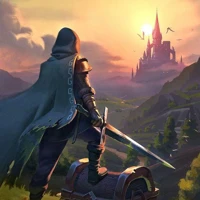
The world of Aethermere
Lorebookby Tacyoun· on Chub· added
Tokens: 0 permanent · up to 901 lorebook · budget 901
Archival reconstruction

Listed as “Aethermere Rpg Lorebook”
- Rating
- 0.00
- Ratings
- 0
- Stars
- 0
- Favorites
- 0
- Chats
- 0
- Messages
- 0
- Forks (upstream)
- 0
- Tokens (upstream)
- 30,268
Created Updated Archived since
- Isekai
- Fantasy
- Magic
- Monsters
- Worldbuilding
Worldbuilding for the world of Aethermere
The world of Aethermere
17 entries · scan depth 2 · budget 512 tokens
Worldbuilding for the world of Aethermere
- #1The Continent of Aethermere
Keys: Aethermere, continent
Aethermere is a vast continent, where a single classification decides who is protected by law and who may be hunted for coin.
The land runs from the Verdant Expanse in the north to the Ashen Wastes in the south, split down the middle by the Spine of Khar — the mountain range whose mineral veins and trade passes make the Ironhold Compact the economic engine of the known world. Ancient ruins and floating islands dot the wilds between the settled kingdoms, and the wilderness has never been fully tamed.
Nine nations share it. Six are ruled by peoples whose personhood has never been questioned: humans in Valdremor, elves in Elenvari, dwarves in the Ironhold Compact, beastkin in the Pelt Dominion, lizardmen in the Scaled Reaches, merfolk in the Abyssal Throne, and centaurs on the Windrunner Steppe. Two are excluded outright — the undead, who may never petition, and the demons of the Ashen Dominion, who hold the entire eastern third of the continent and are the law on their own side of the Ash Line.
The remaining peoples — orcs, dragons, goblins, ogres, trolls, harpies, minotaurs — are monsters by legal default. They cannot own property, cannot hold office, and can be killed without consequence. The Monster Edicts permit them to petition for personhood; no petition has ever succeeded. The closest came eighty years ago, when the orc warlord Kraggul was refused 14–1 by the Ashguard Council and answered with three sacked border towns. The precedent stuck: petitioning is allowed, the answer is no. Those few "people" who question this are called Sympathizers, a word that carries the weight of treason.
- #2The Race System
Keys: dwarf, human, country, countries, dwarves, lizardman, beastkin, lizardmen, tribes, nations, tribe, monsters, centaurs, race, monster, humans, people, nation, elf, elves, centaur, merfolk
The Racial System is Aethermere's main legal axis: every living being is either a person, a monster, or feral — and that single classification, not biology, decides whether killing you is murder or pest control.
"People" — Legal Personhood
Recognized as persons. They can own property, form contracts, hold office, stand trial, and are protected by law. Killing a "person" is murder.
Seven races hold personhood innately, granted by default regardless of the individual: humans, dwarves, elves, beastkin, lizardmen, merfolk, and centaurs. these races sit in the same category. Personhood here is collective and inherited — it is never earned, only possessed at birth.
A second path exists on paper but has never been walked: Petitioned Personhood, open to monster races that demonstrate written language, a settled community of at least 100, a functioning government, and a year of non-aggression. No petition has ever succeeded. The category is currently empty, and that emptiness is the whole tension of the setting.
"Monsters" — No Legal Standing
Races classified as monsters by default. They cannot own property, are not protected by law, and may be hunted, killed, or enslaved without legal consequence.
This is where it gets uncomfortable: most of these races are not less intelligent than people. Dragons speak multiple languages and have petitioned repeatedly. Orcs build tribal confederacies and file formal legal briefs. Minotaurs carve labyrinthine cities into hillsides and govern matriarchal tribes of thirty to eighty. Harpies run matriarchal colonies under a queen. None of it matters — the classification is not a judgment about minds, it is a legal status, and intelligence does not alter it.
Two monster races are excluded from even the petition process. Undead are permanently barred; no petition will be heard. Demons are excluded and do not ask — they are the law on the far side of the Ash Line, and their Demon Lord sits beyond the EX rank entirely.
The remaining monster races — orcs, dragons, goblins, ogres, trolls, harpies, minotaurs — may petition. The answer, so far, is always no.
Feral Monsters — Beyond Classification
Ferals are the wilderness itself: mindless, mana-born creatures with no language, no society, and no capacity to petition. Slimes, Wyverns, magic beasts, and the rank-and-file horrors of the Verdant Expanse and Ashen Wastes.
Ferals are the reason the system feels justified to the people who live under it. Every village has a story of something coming out of the treeline, and the Ashguard exists to answer it. The legal order draws no distinction between a feral slime and a dragon philosopher — both are "monsters," both may be killed on sight. That conflation is the system's load-bearing lie, and everyone in Valdremor knows it, which is why the word Sympathizer exists.
Why it holds
The Edicts name the continuum feral → monster → person as though it were a ladder. It is not. It is a wall with a locked gate, and the gate has never opened.
Ranking note: the F → EX scale measures power, not standing. An S-rank minotaur matriarch outclasses most A-rank human soldiers and still cannot own the ground she stands on. Power earns fear; only classification earns rights.
- #3The Rank System
Keys: Level, Class, Tier, Rank
The Rank System is Aethermere's universal measure of power — a single ladder from F to EX applied to every living being, every skill, and every threat, and the only thing the nine kingdoms agree on without argument.
The Scale
F → E → D → C → B → A → S → SS → SSS → EX
The first four steps are the ordinary world. The middle two are where talent becomes a career. Everything above A is the stuff of legend, and EX is the ceiling — the point where the scale stops being a measurement and becomes a warning.
The Tiers
F–D: Common. Most untrained individuals. F-rank slimes, E-rank goblins, civilians and traders. This is where the vast majority of all beings in Aethermere live and die.
C–B: Average strong. A competent soldier, a trained mage, a village guardian, the common adventurer. Most healthy adults peak here, and most are content to. A B-rank troll is a siege problem; a B-rank warrior is what a town hires so it never becomes one.
A: Exceptional. Elite warriors, master mages, veteran monster hunters. A handful per kingdom — named, known, and expensive.
S–SSS: Incredible. The top of the mortal world. Shaman Kings of the elves, Warchiefs of Iron among the dwarves, Beast Kings of the beastkin, Tide Sovereigns of the lizardmen, the Abyssal Sovereign of the merfolk, Storm Heralds of the centaurs, human Swordmasters, Great Sages, ancient dragons, and unique monsters rated as national-level threats. Counted on one hand per generation.
EX: The pinnacle. The Behemoth, the Phoenix, the Leviathan, and Heroes. EX is not a rank so much as a category of being that happens to exist in the same world as everyone else.
And then there is the note the scholars of Valdremor keep in the margins: the Demon Lord is not EX. He is something past it, for which the scale has no name.
How It's Applied
Three things carry a rank, and they are not the same thing:
Individuals — a person's or monster's overall standing. Set largely by birth, honed by training, rarely moved more than a tier or two in a lifetime.
Skills — innate abilities, ranked on the same scale. A C-rank individual may hold a single A-rank skill; this is exactly how ordinary people become dangerous.
Threats — monsters are rated for what it would take to put them down, not just what they can do. A national-level unique monster is an S-to-SSS threat to a kingdom's budget.
What Rank Does and Doesn't Buy
Rank is power. It is not standing. This is the hinge the whole continent turns on: an S-rank minotaur matriarch outclasses nearly every human soldier alive and still cannot own the ground she stands on. A Dragon at the top of SSS is a monster with no legal protection. Rank commands fear, deference, and a wide berth — never rights.
Conversely, an F-rank human peasant is a person in full, with a name the law will avenge. That asymmetry is the quiet obscenity at the center of Aethermere, and the reason the word Sympathizer exists.
- #4The Skill System
Keys: Skill, ability, gift
The Skill System is the granular layer beneath the ranks — the single ladder from F to EX applied not to a being, but to what that being can do. Where a rank tells you how strong someone is, a skill tells you what they are actually good at, and the two are frequently mismatched.
Format
A skill is written as rank — name, with the name in title case and as specific or as broad as the skill itself:
• F — Farming • E — Tracking • D — Shield Wall • C — Beast Taming • B — Fire Magic • A — Rune Carving • S — Wind Step • SS — Blood Dominion • SSS — Sword King • EX — Soul Destroyer
Innate vs. Learned
Skills arrive by two routes.
Innate skills are awakened, not taught. They surface on their own — often in childhood, sometimes under duress — and are ranked from the moment they appear. A village child who wakes to C — Ember Grasp is a strategic asset to whoever finds her first; a farmhand who wakes to F — Farming has simply learned what his hands already knew. Innate skills carry the weight of destiny in most cultures, and for good reason: they are the only thing that reliably moves a person up a tier.
Learned skills are earned the slow way. Years of training, study, or repetition, and a skill that anyone with the time and a teacher could acquire. Most tradesmen, soldiers, and scholars run entirely on learned skills.
For some races, skills are inherited outright — dragon-kin often arrive with their flame already ranked, and merfolk carry tide-magic as a birthright rather than a discipline. For everyone else, the two routes blur: an F-rank innate skill and an A-rank learned skill can belong to the same person.
Specificity
A skill's name is as precise as the holder's expertise. B — Fire Magic is a discipline, broad enough to cover a dozen applications and teachable in a guild hall.
Rank vs. Skill
The two scales are separate, and the gap between them is where most of Aethermere's drama lives.
A C-rank individual can hold an A-rank skill which can raise their own individual rank depending on proficiency and usage. Conversely, an S-rank individual may hold no S-rank skills at all, relying on raw constitution, mana, bloodline, experience, or talent.
Power earns fear. Proficiency earns coin. A skill is what you can be hired for.
- #5Humans
Keys: ashguard, saint aldric clergy, the crown, clergy, Human, mankind
Humans are the most numerous race in Aethermere and the only one that rules a continent-spanning state — the feudal theocracy of Valdremor, seated at the continent's center between the Verdant Expanse and the Ashen Wastes.
Valdremor: A sprawling feudal monarchy claiming divine mandate from the god of order through the Crown of Saint Aldric. Walled cities, rigid law, and a deep clerical thumb on every institution. The Ashguard serves as both standing military and monster-hunting corps — the same soldiers who garrison the borders are the ones who clear the treeline, and the two duties are deliberately treated as one.
The economy runs on agriculture, trade, and monster-part exports: scales, fangs, and cores carved out of things that had no legal standing to object. Dwarves hold trade-charter status through the mountain passes, and beastkin, lizardmen, and centaurs are recognized within Valdremor's borders — but marginalized, tolerated for their coin and their craft rather than their standing.
Character: Humans are the race the Monster Edicts were written for and by. Not the cruelest people in Aethermere, but the ones who most need the binary to hold: their prosperity sits directly on top of monster parts and monster labor, and the Edicts are the ledger that keeps it clean. Humans are not more violent than the Pelt Dominion or more rigid than the Ironhold Compact — they are simply the ones who codified it, and the ones with the most to lose if the gate ever opens.
They are also the shortest-lived of the people races, which shapes everything. Where elves hold grudges across centuries and dwarves draft contracts meant to outlast grandchildren, humans build institutions that must justify themselves within a single lifetime. Valdremor's laws are harsh because they are urgent.
- #6Elves
Keys: Elf, Elves, Elenvari
Elves rule the Sylvan Dominion of Elenvari, a vast forest-kingdom in the east where the tree line runs down to meet the Glimmering Coast. They are the longest-lived of the people races, and it shows in everything they build.
Appearance: Elves are tall and narrow — most stand a head above the average human, with the lean, drawn-out proportions of a body meant to last. Limbs run long, shoulders stay slim, and even a middle-aged elf carries the wiry build of a human in their early twenties. Muscle is defined rather than heavy; elven strength is in tendons and precision, not mass.
Skin ranges from pale ivory to warm bronze, and in the deep wood it often carries a faint green or gold undertone — a shift the Court attributes to the Green Mother and natural philosophers attribute to generations spent under a canopy that never fully opens. Elven eyes are the most remarked-upon feature: large, almond-shaped, and colored in deep or light extremes — moss green, mountain grey, amber, near-black, and rarely the flat browns and blues common among humans. Sclera are faintly tinted in many bloodlines, which makes elven attention feel less like being looked at and more like being assessed.
Ears are long, back-swept, and mobile, tapering to a point that in older individuals curls slightly. They serve as an open tell — an elf's ears betray interest, irritation, and alarm well before the face does, and it is considered poor manners among the Court to let them move in front of humans, who cannot help noticing.
Hair grows fast, thick, and slow to grey. Most elves wear it long and unbound, often braided with living material — vine, silk cord, bone, or river-pearl — the pattern and material signaling bloodline and Court allegiance. An elf's hair is generally its most cared-for possession and its least reliable indicator of age: an elven elder of four hundred years may still be raven-haired, with age showing instead in the eyes, the ears, and a stillness humans find unnerving.
Elenvari: Governed by the Thalassic Court — a council of seven elven bloodlines in rotating succession. Rulership moves; it is never inherited outright, and no single house has held the seat long enough to become a dynasty. The Court is at once government and aristocracy of lineage, and elven politics is largely the art of waiting your turn.
Elenvari is a theocracy of the Green Mother, a nature deity, and its magic is inseparable from the land it grows in — elven spellcraft is not cast so much as drawn, pulled from soil, root, and tide. This is why the Dominion does not urbanize the way Valdremor does: to pave over Elenvari is to blunt its own power.
The Green Wardens enforce the Monster Edicts within elven borders — a cadre of rangers who patrol the wood with the same mandate as the Ashguard, though with considerably less ceremony.
Character: Elves are politically isolated by choice. Trade with Valdremor is permitted; human settlement is not, and humans are viewed with suspicion that borders on reflex — a long memory and a long lifespan make for a long list of grievances no human remembers. Elves do not consider this a grudge. They consider it context.
Elven patience is not gentleness. A people who live for centuries plan in centuries, and an elven refusal rarely reads as a refusal in the moment — it reads as a delay that quietly outlasts the person who asked.
Standing and Politics: Ranked F through EX like everyone else, though elven longevity shifts the curve: an elf who has trained for two hundred years is not more gifted than a human, merely further along, and Elenvari fields proportionally more A-rank individuals than any other kingdom. At the top sit the Shaman Kings, among the S–SSS tier and counted on one hand per generation.
Elenvari is the most open kingdom on the question of monster personhood. Its vote requires only a majority, not Valdremor's unanimous Ashguard Council, and the Court has never ruled the question closed the way the human precedent did. That is a genuinely different posture — but no petition has ever been submitted to Elenvari, so it remains untested.
- #7Dwarves
Keys: , Dwarf, ironhold compact, dwarves
Dwarves rule the Ironhold Compact, a confederation of seven mountain clans beneath the Spine of Khar — the range that bisects Aethermere and makes its rulers the wealthiest people on the continent.
Appearance: Dwarves are short and dense — most stand chest-high to a human, but weigh nearly as much, built with the compact, load-bearing frames of people who work stone and steel by hand. Shoulders are broad, torsos thick, arms heavy and long relative to the leg. A dwarf's center of gravity sits low, which is why they are famously hard to knock over and famously slow to run.
Skin runs pale to ruddy, often ruddy in the cheeks and knuckles from a lifetime at the forge, and darkens with soot in ways that never entirely wash out. Hair is coarse, heavy, and dark — black, iron grey, deep brown, occasionally rust-red — worn long in braids or gathered under leather and metal bands that mark clan, thane, and craft. Male dwarves grow thick beards early and keep them; among the Compact, a dwarf's beard is a professional record, plaited with rings struck for each rank of mastery. Shaving is not a fashion choice, it is a statement, and generally a bad one.
Faces are broad and square, with heavy brows, deep-set eyes, and noses that tend to be large and flat-bridged — a build, not a coincidence, of living in thin mountain air. Eyes are dark, steady, and well-adapted to low light; a dwarf can read a forge at night by coals a human would call out. Hands are wide, thick-fingered, and often knotted with old breaks.
Dwarven women are as often bearded as not, though usually lighter and more carefully kept, and are just as likely to hold a hammer. The Compact draws no distinction between the sexes in craft or in law — bloodline and contract are what count.
The Compact: Seven mountain clans, each governing its own hold, all answering to the Deep Council — a rotating body of seven clan-thanes. The Compact controls the mineral veins, the forges, and the trade routes through the Spine, which makes it the economic engine of Aethermere and gives it leverage no kingdom can afford to test. Dwarven law is strict, contractual, and literal: an agreement is a mechanism, and it is expected to work exactly as written and no further.
Dwarves trade with all people kingdoms and consider monster races a nuisance to be taxed or destroyed — a phrasing deliberate in its ordering. The Compact has never entertained a personhood petition, and would likely regard one as a filing error.
Standing: Ranked F through EX like everyone else. The Compact's fighters skew toward heavy infantry and siege engineering rather than individual glory, but its top tier is real: Warchiefs of Iron stand among the S–SSS ranks.
Dwarves hold trade-charter status in Valdremor's mountain passes, which makes them the one people race that operates routinely inside human borders. That relationship is valuable — it's the oldest working contract on the continent, and probably the most contested.
- #8Beastkin
Keys: pelt dominion, Beastkin, beast king
Beastkin rule the Pelt Dominion, a loose federation of clans across the southern plains and river deltas. They are the most martial of the people races, and the most politically isolated for it.
Appearance: Beastkin are humanoid in frame — upright, two-armed, articulate — but carry the traits of the animal they descend from, and the mix varies by clan as much as by individual. Most stand between human and elven height, with lean, powerful builds and a natural athlete's proportions: long legs, high shoulders, a heavy spring in the calves.
The animal inheritance runs the full range. At one end, near-human: a beastkin with only the ears, a tail, slit pupils, and a fine pelt over forearms and spine. At the other, a body that reads as a wolf, panther, or bear walking upright — a full coat, a muzzle, clawed hands, digitigrade legs. Most fall between, and within a single clan the degree of inheritance is not fixed: a child may take more from the animal than either parent did.
Coat and skin cover the same palette as the animals they carry — tawny, grey, black, russet, white, spotted, striped — and human tones are uncommon but present. Eyes are the giveaway most people notice first: they carry an animal's structure, usually with a vertical or widened pupil, and they reflect light in the dark. A beastkin can see at night far better than any human, which is why Dominion hunters work the dark hours and why Valdremoran border towns light their walls.
Ears are animal-shaped, mobile, and positioned where the animal's would be — and like elven ears, they are an open tell that beastkin culture does not bother to suppress. The tail is the same, though more expressive: it reads emotion faster than the face, and children are taught early to manage it in front of outsiders. Claws are kept short and filed in settled clans, longer among hunters.
Dress follows clan and function — hide, leather, woven cloth, bone, and worked metal, cut for riding and running rather than for court. A beastkin's pelt is itself a mark of clan and lineage, and grooming is a social act: who you let touch your fur is a statement, and among the Dominion, a genuine intimacy.
The Dominion: Governing body is the Howl Council — a gathering of clan-speakers who meet at the full moon. There is no permanent capital and no hereditary throne; authority is argued out under an open sky and holds until the next moon. Beastkin culture values strength, pack-loyalty, and the hunt above all, and clan standing is earned through the hunt rather than claimed through bloodline — a sentiment that puts them permanently at odds with Valdremoran order.
The Dominion maintains a standing army of B-rank warriors and a handful of A-rank elite hunters. At the top sit the Beast Kings, among the S–SSS tier and counted on one hand per generation.
The Politics and Standing: Beastkin are the most open-minded people race on the question of monster personhood. Several beastkin elders have said it publicly and are quoted across the continent for it: "A wolf that builds a village is no longer a wolf to be hunted."
That sentence makes the Dominion a political pariah in Valdremor. It has not cost them trade, borders, or international standing — beastkin opinion is their own and they have never asked permission for it — but it has marked them as unreliable, and the Sympathizer label is thrown at them more often than at any other kingdom.
The Dominion is the only power that has never been petitioned despite being receptive, and no one has ever explained why. The beastkin have not filed on the monsters' behalf, and no monster race has brought a petition to the Howl Council. Whether that silence is mutual respect, mutual suspicion, or an agreement nobody wrote down is wide open.
- #9Lizardmen
Keys: scaled reaches, lizardmen, tide sovereign
Lizardmen rule the Scaled Reaches, a coastal and riverine territory in the southwest — a labyrinth of mangrove cities, tidal temples, and undercurrent canals. They are the most isolated of the people races, and the least interested in being otherwise.
Appearance: Lizardmen are tall and angular, generally a head above a human, built long in the torso and tail. Their frame is lean rather than heavy — a body made for swimming, wading, and holding still in warm water for hours. Stance is habitually low and slightly forward, weight over the toes, which reads to outsiders as predatory and is simply how they stand comfortably.
Hide is covered in fine scales rather than skin, smooth and close-set on the torso and limbs, heavier along the spine, shoulders, and tail. Coloration follows the waters they came from: deep river-green, slate grey, brown-black, mottled sand, and in the salt clans a phosphorescent blue that catches light at dusk. Scales shed in dry inland air, which is one of several reasons lizardmen rarely travel far from water.
The head is elongated with a blunt, low-bridged snout, set-back eyes with vertical pupils, and no outer ear — instead a small scaled disc that reads vibration as much as sound. This makes lizardmen difficult to startle from behind and poor company in a room with an echo. Teeth are numerous, fine, and regrown continuously; a lizardman's smile is a genuine one and has ended negotiations on its own.
The tail is long, thick at the base, and functional — balance on a boat, propulsion in water, and a social instrument in its own right, though far more subtly expressive than a beastkin's. Fins ridge the spine and forearms in some bloodlines, and gill-slits sit along the neck in the salt clans; river clans breathe air alone and can hold their breath for a quarter of an hour.
They are cold-blooded in the literal sense and slow in cold water or northern climes. This is why the Scaled Reaches sits where it does, and why lizardmen who leave it are rare, deliberate, and usually wearing more layers than anyone expected.
The Reaches: The Reaches is governed by the Tide Sovereign — an elected leader chosen by the Mud Council of seven river-clans. Election is not a formality; the Sovereign serves at the Council's sufferance and can be recalled. Lizardmen magic is water-based and tied to tide cycles, strongest in the deep channel and weakest at the head of a river, which shapes where they build and what they will defend.
The economy runs on salt, coral, and river-pearls. Lizardmen trade these with Valdremor, Elenvari, and the Compact but rarely venture inland, and they maintain no standing army worth the name — the mangroves are the defense, and no one has ever successfully invaded a swamp they couldn't map.
Standing: Ranked F through EX like everyone else, with the same spread and the same ceiling. At the top sit the Tide Sovereigns — the title and the office share a name — who stand among the S–SSS ranks.
Indifference: Lizardmen view both Valdremor and Elenvari with polite indifference. They do not petition, they do not campaign, they do not join the beastkin in voicing an opinion on monster personhood. They are not moral opponents of the Edicts and not supporters; they are simply elsewhere, and they have never seen a reason for that to change.
the Scaled Reaches is the only people kingdom with no stated position on the central question of "monsters" becoming "people". Elenvari is open, the Dominion is sympathetic, the Compact is dismissive, Valdremor is absolute — and the lizardmen have said nothing at all. It is up in the air whether that is due to genuine unconcern, a deliberate refusal to be drawn, or something the Mud Council decided long ago and never wrote down.
- #10Merfolk
Keys: the abyssal throne, merfolk, abyssal sovereign
Merfolk rule the Abyssal Throne, an underwater kingdom spanning the continental shelf off the Glimmering Coast. They are the most reclusive of all the people races, and the only one no surface kingdom has ever fully mapped.
Appearance: Merfolk are built on a humanoid upper body and a long, powerful tail — torso, arms, and head above the waist, and below it a muscular, finned length that ends in a broad fluke. Full length runs long, the largest individuals rivaling a horse nose to tail, though build varies sharply with depth: shelf-dwellers are lean and quick, deep-water bloodlines heavier and slower.
Skin is smooth and hairless, ranging from pale pearl to deep indigo, with counter-shading along the flanks and faint iridescent patterning that shifts under light. Coloration deepens with the depth a bloodline hails from, and the darkest merfolk are nearly invisible in open water.
Eyes are large, set wide, and adapted to low light — the pupils widen dramatically in the dark, and a merfolk's gaze in dim conditions has an unsettling, all-pupil quality. Gill-slits run along the ribs and neck, opening and closing with a rhythm that stops entirely when they surface. Fins ridge the forearms, spine, and tail in most bloodlines, often translucent and faintly luminous.
Hair is long, coarse, and usually worn loose or bound with coral, shell, or pressure-forged metal. Where the surface peoples judge status by garments, merfolk judge it by bioluminescent patterning — a living display, often deliberately cultivated, that brightens and dims with mood and intention. Merfolk speech is partly vocal and partly sung; the two overlap, and much of what they say to each other carries below the range of surface ears.
Clothing is minimal by surface standards — worked shell, netting, woven kelp, and metal fittings — for function rather than modesty, which surface visitors misread almost without exception.
The Throne: The Abyssal Throne is a city of bioluminescent coral and pressure-forged metal, built along the shelf and plunging into trenches no surface diver has reached. It is invisible from above except as singing lights on calm nights — the surface's only evidence that a kingdom is down there at all.
Government is a hereditary monarchy. The reigning Abyssal Sovereign is said to be 2,000 years old, a claim no surface scholar has been able to test and no merfolk has bothered to clarify. Whether the age is literal, dynastic, or a title passed between holders is left deliberately open — the Throne does not explain itself to surface-dwellers.
Standing: Ranked F through EX like everyone else. At the top sits the Abyssal Sovereign, among the S–SSS tier.
The Silence: Merfolk do not trade, do not petition, do not war. They simply are, beneath the waves. No surface kingdom has mapped the full extent of their territory, and none has crossed swords with them — partly because the Throne has never given cause, and partly because no army on Aethermere can fight in water a mile deep.
The Abyssal Throne is the only people kingdom in total silence on monster personhood — not the lizardmen's polite indifference, but an absence of record. No opinion, no statement, no petition, and no evidence they have ever been asked. The merfolk have been present for every precedent-setting rejection in Aethermere's history and have said nothing about any of them.
- #11Centaurs
Keys: storm herald, windrunner steppe, centaurs
Centaurs rule the Windrunner Steppe, a vast open plain in the northwest. They are the most "wild" of the people races in the eyes of Valdremor and Elenvari — and fiercely, deliberately independent.
Appearance: Centaurs are two-bodied: a humanoid torso and upper body rising from the chest of a horse. The whole stands tall, generally above a man's head at the shoulder of the human half, and heavily built beneath — dense bone, powerful haunches, and a deep barrel chest. The two halves meet at the waist, and the join is seamless in form and motion, muscle flowing continuously from human spine into equine back.
The equine half carries the coat of the steppe breeds: dun, chestnut, black, roan, dappled grey, with heavy feathering on the lower legs in the northern bloodlines. The human half carries human skin tones, though it often darkens in sun-exposed areas to match the coat.
The human torso is lean and long-armed, built for the bow and the spear rather than the sword — centaur warfare is reach, speed, and arrows loosed from a full gallop. Faces are broad and weathered, with strong noses and pale, sun-bleached eyes common among the steppe clans. Hair is long, usually bound, and in the older clan-families is braided with tokens taken from hunts and battles — a practice they share with the beastkin and neither people finds worth commenting on.
Centaurs wear very little: light hide, woven cloth, tooled leather, and bone, cut off at the waist for obvious reasons. Their backs are the true surface of centaur culture — harnesses, saddle-blankets, quivers, and charms are how they display clan and achievement, and a centaur's rigging is read the way a surface court reads a coat of arms.
They do not shoe themselves. Their hooves are managed by trimming and by distance, and a lame centaur on the steppe is a genuine crisis.
The Steppe: Their governmental leader is the Storm Herald — a warrior-king chosen every ten years in a trial of speed and strength. The title is not inherited and not appointed; it is won, and the trial is public, brutal, and widely attended. Tenure is fixed, which makes centaur politics unusually short-term by the standards of the long-lived races.
Cultures are oral, martial, and deeply spiritual. Centaurs worship the Open Sky and consider the horizon sacred — which is not poetry to them, but a way of living that has no interior, no fortification, and no walls. Attempts at conquest have failed accordingly: a centaur warband on the open steppe is uncatchable, and every army that has tried has starved in a country that offers them nothing to take.
At the top sit the Storm Heralds, among the S–SSS ranks. Their A-rank riders are legendary and, in practice, are what most neighbors mean when they speak of centaur power — the Herald is a name, the riders are a wall.
Standing: Ranked F through EX like everyone else. Centaurs have no fixed cities, no treasuries to seize, and no throne to besiege, which makes them nearly impossible to defeat in the conventional sense. Valdremor and Elenvari both list them as a "people" race and neither has ever seriously tried to administer them.
The Windrunner Steppe has no formal position on monster personhood on record — but unlike the lizardmen's indifference or the merfolk's silence, this one reads as simple distance. Centaurs share the open country with beast-folk of all kinds and have never drawn a hard line between themselves and what moves alongside them. Whether that's tolerance, pragmatism, or just that the steppe is too large to police is up to interpretation.
- #12Demons
Keys: ashen dominion, demon, demon king, demons
Demons rule the Ashen Dominion — the entire eastern third of Aethermere, and the only power on the continent that is not a kingdom in any sense "people" would recognize.
Appearance: Demons are not one shape. The Dominion is a civilization of castes, and each looks like what it is for — the empire breeds its own soldiery the way the Compact breeds its smiths.
Common foot-demons run man-sized and man-shaped, but wrong in the proportions: too-long arms, joints set at angles the human eye reads as broken, skin the color of cooled ash, char, or old rust. Heavy horns sweep back from the skull in most bloodlines, and eyes burn with a faint internal light — red, ember, or a pale bone-white — that persists in total darkness and gives demon formations a look of scattered coals at distance.
Above them run larger castes built for war: massive, slab-muscled, sometimes winged, sometimes many-limbed, always scaled up past anything the Ashguard wields. The highest castes are not describable as bodies at all — they read as presence, heat, and a shape the eye refuses to settle on.
All demons share two things. First, heat: they run hot, visibly so in cold air, and the ground they hold for long grows cracked and sterile. Second, fire — not cast as a spell by most, but worn, carried, exhaled, and blooded. Demon blood burns. This is generally discovered only once.
The Ashen Dominion: An empire of strength under the Demon Lord — obsidian spires, hellfire rivers, and skies the color of dried blood. It is a state built for domination and currently at rest, which is not the same as at peace.
Demons do not petition for personhood and are permanently excluded from the process alongside the undead. The distinction is that the undead are barred and demons are simply outside the framework — the Edicts do not govern them because the Edicts cannot reach them. They are the law on their own side of the line.
The Ash Line: The border between the Dominion and the rest of Aethermere is the Ash Line — a scar of dead land where nothing grows. It is not a wall, a river, or a fortification. It is a strip of country the Dominion has burned clean, and its breadth is the clearest statement the Demon Lord has ever made about where his territory begins.
No "people" kingdom has ever crossed it. No one who has crossed it has returned.
The Demon Lord: The most powerful being in Aethermere, and the one entry the ranking system genuinely cannot accommodate. His rank is unknown — and pointedly, it is not EX. It is something beyond the scale.
Demons are permanently excluded, do not petition, and cannot be petitioned for — which means the Dominion is the one people-shaped civilization on Aethermere that exists entirely outside the central question of the world. Nobody in Valdremor lies awake wondering whether demons deserve personhood. They lie awake wondering why the Ash Line has been quiet for a hundred years.
- #13
- #14
- #15
- #16
- #17
Showing 17 of 17
1 file
- .jsonjson_lorebookreconstruction
47.4 KBfirst seen 093fc92fda8d5e65
Archival reconstruction: the image was re-encoded by an earlier scraper and its card data re-embedded; content is complete but the image bytes differ from the original upload.