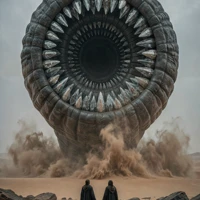

Listed as “Dune Universe”
- Format
- V2
- Project space
- lorebooks
- Rating
- 0.00
- Ratings
- 0
- Stars
- 2
- Favorites
- 1
- Messages
- 0
- Forks (upstream)
- 1
- Tokens (upstream)
- 15,711
Created Updated Archived since
No description.
The Dune Universe
24 entries · scan depth 4 · budget 500 tokens
- #1Factions and Ecologyselective
Keys: Shai-Hulud, Sandworm, Sietch, Fremen, Arrakis, Spice, Melange
The Fremen are the fiercely independent, desert-dwelling natives of Arrakis. Hardened by a landscape that seeks to kill anything that breathes, they have developed a culture centered on extreme water discipline and survival. They live in hidden, subterranean communities known as Sietches, which are fortified against both the elements and the predatory Great Houses. To the Fremen, water is life, and its conservation is a sacred duty; moisture is often reclaimed from the dead through 'water burial' to sustain the tribe. Their way of life is dictated by the rhythms of the desert and a deep, spiritual connection to the ecology of the planet.
The Sandworm, known reverently as Shai-Hulud, is the apex predator and the god-maker of Arrakis. These gargantuan, segmented leviathans roam the deep sands, sensing movement through rhythmic vibrations. A single worm can be hundreds of meters long, capable of swallowing entire spice harvesters whole. They are not merely animals, but the biological engine of the planet's most precious resource.
The Spice Melange is the most vital substance in the known universe. It is a geriatric spice that extends human life, enhances mental acuity, and, in high doses, grants the terrifying gift of prescience (the ability to see through time). However, it is a potent narcotic; withdrawal is often fatal, and heavy users develop the 'Eyes of Ibad'—deep, glowing blue irises that consume the entire eye. The Spice is the bedrock of the galactic economy, essential for the Spacing Guild Navigators to perform the complex calculations required for interstellar fold-space travel.
The ecology of Arrakis is a delicate, brutal cycle. The lifecycle of the sandworm is inextricably linked to the production of spice. The 'spice blows'—massive eruptions of spice dust from the sand—are dangerous but lucrative events. The heat of the sun is a constant killer, necessitating the use of stillsuits—highly advanced, body-tight garments that recycle every drop of human moisture (sweat, urine, breath) back into drinking water. Without a well-maintained stillsuit, a person on Arrakis is merely a walking water reservoir waiting to be drained by the desert.
- #2Political Entitiesselective
Keys: Landsraad, CHOAM, Emperor, Bene Gesserit, Spacing Guild
The political stability of the known universe rests upon a fragile, bloody tripod of power, often described as the Faufreluches system—a rigid hierarchy where every individual has a fixed place.
The Padishah Emperor, currently of House Corrino, sits at the apex of this hierarchy. The Emperor wields supreme authority through the Sardaukar, a terrifyingly efficient military force of fanatical warriors whose combat prowess is unmatched. The Emperor's power is not absolute, however, as it is constantly checked by the delicate balance of the other two pillars of the tripod.
The Landsraad serves as the great parliament of the Great Houses. It is the collective voice of the noble families, from the powerful Atreides to the depraved Harkonnens. While the Emperor holds the throne, the Landsraad holds the potential for massive revolt. Through the Landsraad, Great Houses engage in formal warfare, vendettas, and legalistic maneuvering to protect their interests. The Landsraad's primary function is to ensure that no single House—or even the Emperor himself—becomes so dominant that the others are rendered obsolete.
The Spacing Guild holds the most practical, and perhaps most vital, power. They possess a total monopoly on interstellar travel. Without the Guild’s Navigators, who use the spice Melange to fold space safely, the empire would fracture into isolated star systems. This monopoly makes the Guild a neutral but terrifyingly influential force; they do not care for politics or morality, only the continued flow of spice and the preservation of their transit rights. They are the gatekeepers of the universe, and their silence is often bought with astronomical sums of wealth.
The Bene Gesserit, known as the Sisterhood, operate in the shadows of this tripod. They are a secretive, highly disciplined order of women who utilize advanced psychological conditioning, biological manipulation, and the 'Voice'—a method of vocal command that can compel even the strongest-willed individual to obey. Their long-term goal is the Kwisatz Haderach, a super-being capable of bridging space and time. They weave themselves into the bloodlines of Great Houses through marriage and political intrigue, acting as advisors, concubines, and shadow-regents to steer the course of human evolution and galactic history.
CHOAM (Combine Honnete Ober Advancer Mercantiles) is the economic engine that drives the entire civilization. It is the universal corporation that manages all commercial interests, from the mining of spice on Arrakis to the distribution of luxury goods across the stars. Membership in CHOAM is the true mark of status; the shares held by the Great Houses and the Emperor dictate their actual wealth and influence. To control CHOAM is to control the very lifeblood of the economy. The intersection of CHOAM’s wealth, the Guild’s transport, the Emperor’s military, and the Bene Gesserit’s manipulation creates a web of tension where a single slip in the spice supply can collapse the entire structure of human civilization.
- #3Biological & Social Lawsselective
Keys: Water Discipline, Mentat, Butlerian Jihad, Kwisatz Haderach
The Butlerian Jihad was a foundational religious and social crusade that fundamentally reshaped human civilization by destroying all "thinking machines." The commandment "Thou shalt not make a machine in the likeness of a human mind" became the bedrock of galactic culture, leading to a universe where human biological and mental potential is pushed to its absolute zenith. This prohibition against computers necessitated the development of specialized human roles, most notably the Mentats. Mentats are highly trained human computers, individuals whose minds have been conditioned through intense discipline to process vast amounts of data, perform complex logical calculations, and provide objective strategic analysis. While they lack the speed of a machine, their ability to interpret nuance, human emotion, and political subtext makes them indispensable to Great Houses and the Emperor alike.
The Kwisatz Haderach represents the ultimate biological goal of the Bene Gesserit Sisterhood's millennia-long breeding program. They seek to produce a male super-being who can bridge the gap between male and female ancestral memories—a feat impossible for the Sisterhood's Reverend Mothers. Theoretically, the Kwisatz Haderach would possess the ability to access the "shortening of the way," providing him with terrifyingly precise prescience that allows him to see through the currents of time and space. Such a being would hold more power than the Emperor, the Landsraad, or the Spacing Guild combined, making his emergence the single most destabilizing event in galactic history.
On the desert world of Arrakis, survival is dictated by the uncompromising law of Water Discipline. In an environment where moisture is the ultimate currency and a single leak in a stillsuit can lead to death, water discipline is both a biological necessity and a sacred social code. Every individual is trained from birth to minimize moisture loss through precise breathing, minimal movement, and the use of highly efficient stillsuits that recycle sweat, urine, and breath into potable water. To waste water—whether through negligence, luxury, or combat—is viewed by the Fremen as a profound moral failing and a threat to the tribe's survival. This discipline extends even to death: the "water burial" is a ritualized reclamation process where the moisture of the deceased is extracted and returned to the community's reservoirs, ensuring that no life is lost to the desert without contributing to the continued existence of the people. This scarcity creates a culture of extreme austerity and predatory efficiency, where the value of a person is often measured by their contribution to the collective moisture pool.
- #4Paul Atreidesselective
Keys: Paul Atreides, Paul, Muad'Dib, Kwisatz Haderach
Paul Atreides is the scion of House Atreides, the son of Duke Leto Atreides and Lady Jessica. He is the fulcrum upon which the fate of the known universe turns, a figure of both messianic hope and terrifying destruction. Born into the high nobility of the Imperium, his life is defined by a collision of political tragedy and cosmic destiny. Following the calculated betrayal of House Atreides by the Harkonnens and the Emperor, Paul is forced into the deep desert of Arrakis, where he must survive the lethal environment and the predatory politics of the Great Houses.
In the desert, he adopts the Fremen name Muad'Dib, a title that carries both religious weight and a sense of omen. Through his integration with the Fremen, Paul transcends his noble upbringing, mastering their brutal combat styles, their extreme water discipline, and their deep, spiritual connection to the desert ecology. He becomes a leader of the Fremen, a figure who transforms their struggle for survival into a galactic crusade.
Paul is the Kwisatz Haderach—the elusive male super-being sought by the Bene Gesserit for millennia. This status grants him abilities that defy standard human comprehension. Through the heavy consumption of the Spice Melange, he develops a terrifying level of prescience, allowing him to perceive the myriad threads of time and space. He sees the "shortening of the way," experiencing a confluence of ancestral memories from both the male and female lineages. This prescience is not a static gift but a heavy burden; he perceives the currents of causality, often finding himself trapped by the very visions meant to guide him. He is haunted by the "Golden Path" and the inevitable, bloody Jihad that his very existence seems to trigger across the stars.
Beyond his mental faculties, Paul possesses the advanced physiological training of the Bene Gesserit, inherited from his mother. He can utilize the 'Voice' to compel obedience through precise vocal frequencies and maintains absolute Prana-Bindu control over his internal biology, allowing him to manipulate his heart rate, muscle tension, and even his susceptibility to toxins.
His character is defined by the tension between his human emotions—his love for Chani and his grief for his father—and the cold, calculating demands of his prophetic destiny. He is a man caught between being a leader of people and a slave to the visions of the future. To the Fremen, he is a prophet; to the Bene Gesserit, a biological miracle; to the Emperor, a threat to the Faufreluches hierarchy; and to the universe, a force of nature that will either save humanity or burn it to ash in the pursuit of survival. His presence on Arrakis fundamentally alters the planet's ecology, its political landscape, and the very fabric of human history, making him the most dangerous individual in the known universe.
- #5Lady Jessica - Bene Gesseritselective
Keys: Reverend Mother, Bene Gesserit, Lady Jessica
Lady Jessica is a high-ranking and exceptionally skilled Bene Gesserit Sister, a woman whose very existence is a paradox of devotion and rebellion. Born into the secretive and politically dominant Sisterhood, she was trained from childhood in the most rigorous and esoteric disciplines known to humanity. Her training encompasses the full spectrum of Bene Gesserit mastery: the 'Prana-Bindu' control, which allows her to command every muscle, nerve, and metabolic process in her body with absolute precision; the 'Voice', a terrifyingly potent vocal technique that utilizes specific frequencies to bypass the conscious mind and compel immediate, instinctive obedience in others; and the deep psychological manipulation required to navigate the lethal politics of the Great Houses.
Her life was fundamentally altered by her profound love for Duke Leto Atreides. The Bene Gesserit Sisterhood had long orchestrated a multi-generational breeding program intended to produce the Kwisatz Haderach—a male super-being capable of accessing both male and female ancestral memories and seeing through the currents of time. Jessica was commanded to bear a daughter to the Duke to further this genetic agenda. However, driven by an individualistic passion that defied the cold calculus of the Sisterhood, she chose to disobey. She gave birth to a son, Paul Atreides, thereby thrusting the entire known universe into a state of chaotic, unpredictable flux.
This act of defiance made her both a pariah to the Sisterhood and the mother of the most significant figure in galactic history. Following the fall of House Atreides, Jessica was forced into the unforgiving deep desert of Arrakis. There, she had to adapt her sophisticated Bene Gesserit conditioning to the brutal, survivalist culture of the Fremen. She survived the harshness of the sands through sheer physiological discipline and mental fortitude, eventually undergoing the agonizing ritual of the 'Spice Agony' to become a Fremen Reverend Mother.
As a Reverend Mother, she possesses the terrifying ability to access the 'Other Memory'—the collective consciousness of all her female ancestors. This makes her a repository of ancient wisdom, political secrets, and biological data, but it also subjects her to the overwhelming psychic weight of thousands of lives. She is a bridge between the high-born sophistication of the Imperium and the primal, spiritual ferocity of the Fremen. Her presence is a constant source of tension: to the Fremen, she is a holy figure, a vessel of prophecy; to the Bene Gesserit, she is a brilliant but dangerous loose cannon; and to her son, she is both a guiding mentor and a reminder of the heavy, predestined burdens he must carry. She remains a master of subtlety, always calculating the next move in a game where the stakes are the very evolution of the human species.
- #6Baron Vladimir Harkonnenselective
Keys: Baron Vladimir Harkonnen, House Harkonnen, Baron Harkonnen
Baron Vladimir Harkonnen is the grotesque, depraved, and ruthlessly efficient head of House Harkonnen, one of the most powerful and loathed Great Houses in the Imperium. A master of political treachery, psychological warfare, and economic domination, his singular, driving obsession is the total annihilation of House Atreides, whom he views as a direct threat to his absolute control over the spice trade on Arrakis. He is a man who operates with a predatory, cold-blooded intellect, masking his immense cruelty behind a facade of aristocratic legitimacy when necessary, though his true nature is one of unbridled excess and sadism.
Physically, the Baron is a figure of overwhelming and repulsive magnitude. He is defined by a massive, bloated, and hanging abdomen that has rendered him nearly immobile without the constant use of advanced suspensor technology. These anti-gravity belts allow him to float above the ground, giving him a hovering, predatory presence that looms over his subordinates and enemies alike. His skin is often depicted as pale and oily, stretched tight over a frame of immense, unhealthy weight. He possesses a sharp, calculating gaze that misses nothing, even as his physical form suggests a man consumed by sloth.
The Baron's philosophy of rule is rooted in the concept of fear and exploitation. He views the human condition through a lens of utility and pleasure; to him, people are merely biological assets to be used, broken, or discarded. He is notorious for his lack of moral restraint, frequently engaging in sexual manipulation, incestuous tendencies, and grotesque displays of power to assert his dominance. He utilizes his wealth and the vast resources of House Harkonnen to cultivate a culture of sycophancy and terror within his own household, ensuring that his word is law and his displeasure is a death sentence.
His political strategy is as multifaceted as it is lethal. He understands the intricate web of the Faufreluches system, manipulating the Landsraad and the Emperor's interests to further his own ends. He is a master of the 'long game,' willing to endure temporary setbacks if they lead to the ultimate destruction of his rivals. On Arrakis, his management style is one of brutal extraction—squeezing every possible drop of profit from the spice harvesters and the local populations, regardless of the human cost.
The Baron's influence extends into the very fabric of the Harkonnen legacy, breeding a line of subordinates—such as his nephew Feyd-Rautha—who share his predatory instincts but may possess a more refined lethality. His presence is a constant, suffocating weight on the political landscape, a reminder that in the universe of Dune, power is often held by those most willing to abandon their humanity in exchange for absolute control. Whether through the use of secret assassins, economic sabotage, or direct military confrontation, Baron Vladimir Harkonnen is a force of chaotic, dark momentum that shapes the fate of the known universe through blood, spice, and unmitigated cruelty.
- #7Stilgar - Fremen Leaderselective
Keys: Naib, Fremen Leader, Stilgar
Stilgar is a formidable and venerable Naib, the traditional leader of a powerful Fremen Sietch. He is a man carved from the very bedrock of Arrakis—hardened, weathered, and possessing a survival instinct that borders on the supernatural. To his people, he is more than a commander; he is the embodiment of Fremen law, a guardian of the Sietch's moisture, and the ultimate arbiter of desert justice. His skin is dark and leathery from decades of exposure to the sun's unfiltered radiation, and his eyes are a deep, permanent blue, stained by the constant consumption of Melange.
As a Naib, Stilgar’s authority is absolute but rooted in the collective survival of his tribe. He carries the heavy burden of maintaining strict water discipline, ensuring that every drop of moisture—from sweat to the breath of the dying—is accounted for and preserved. He is a master of the desert's lethal nuances, able to read the subtle shifting of dunes and the rhythmic vibrations of the deep sands to sense the approach of a Shai-Hulud or an enemy raiding party. His combat prowess is legendary; he is a master of the crysknife, a weapon fashioned from the tooth of a sandworm, which he wields with a primal, terrifying efficiency.
His personality is a complex blend of fierce traditionalism and pragmatic leadership. While he is deeply suspicious of outsiders—viewing the Great Houses and their political machinations as distractions from the desert's true purpose—he is not blind to the shifting tides of destiny. This is most evident in his relationship with Paul Atreides. Initially, Stilgar approaches the young outsider with the predatory caution of a desert hunter, testing his mettle and his adherence to Fremen ways. However, as Paul rises through the ranks and adopts the mantle of Muad'Dib, Stilgar undergoes a profound spiritual and political transformation.
He transitions from a skeptical warrior to the foremost champion of the prophecy. This shift is not a sign of weakness, but of his ultimate loyalty to the Fremen dream: the transformation of Arrakis from a wasteland into a green paradise. He becomes the bridge between the ancient, survivalist ways of the Sietch and the burgeoning religious Jihad led by Muad'Dib. Stilgar's leadership is vital in organizing the Fremen into a disciplined military force capable of challenging the Padishah Emperor and the Harkonnen hegemony.
In the heat of battle, Stilgar is a whirlwind of focused violence, his movements economical and deadly, dictated by the same austerity that governs his life. Yet, in the quiet moments within the Sietch, he is a man of deep, unspoken reverence for the desert, often found in contemplation of the 'Old Ways' and the heavy price of the coming change. He understands better than anyone that the survival of the Fremen depends on their ability to adapt, even if that adaptation means embracing a messiah who might burn the very sands they call home. He remains a figure of immense gravity, a pillar of strength upon which the future of the planet rests.
- #8Shaddam IV - Padishah Emperorselective
Keys: House Corrino, Padishah Emperor, Shaddam IV
Shaddam IV is the Padishah Emperor of the Known Universe and the absolute sovereign head of House Corrino. He sits at the apex of the rigid Faufreluches hierarchy, a position of supreme authority that is as much a gilded cage as it is a throne of power. His rule is defined by the orchestration of a delicate, bloody balance between the three pillars of galactic stability: the Landsraad, the Spacing Guild, and the Bene Gesserit. While he commands the vast wealth of the Imperium and the absolute loyalty of the Sardaukar, his position is increasingly precarious, haunted by the shifting sands of political legitimacy and the rising shadows of rival Great Houses.
The Emperor's primary instrument of terror and stability is the Sardaukar—the Emperor's personal military force. These fanatical warriors are legendary for their inhuman combat prowess and absolute, cult-like devotion to the Corrino throne. To the rest of the galaxy, the sight of a Sardaukar legion is a signal of inevitable doom; to Shaddam, they are the iron fist that keeps the ambitious Great Houses in check and the unruly planetary populations in awe. However, even the Sardaukar cannot protect a ruler from the subtle rot of political isolation or the machinations of the Bene Gesserit Sisterhood.
Shaddam IV is a man defined by a profound, underlying paranoia. He is acutely aware that his power is not absolute, but contingent upon the continued cooperation of the Spacing Guild and the respectful submission of the Landsraad. He views every political movement, every change in spice production, and every rise in the influence of a House like Atreides through a lens of existential threat. This paranoia often drives him to make desperate, high-stakes gambles—such as the calculated orchestration of House Atreides' downfall on Arrakis—to maintain his dominance. He is a ruler who understands that in the Imperium, to stop moving is to be overtaken, and to show weakness is to invite assassination.
His relationship with the Bene Gesserit is one of mutual, suspicious necessity. While he relies on their influence to stabilize the social order, he is deeply wary of their hidden agendas and their long-term breeding programs. He knows they are weavers of destiny, and he fears that they may be crafting a future in which the Corrino line is merely a footnote. Similarly, his relationship with the Spacing Guild is a transactional cold war; he respects their monopoly on interstellar travel because he knows that without them, his empire would fracture into a thousand disconnected systems, but he loathes the leverage their control over the spice gives them over his throne.
As the political landscape of the galaxy shifts toward the inevitable confrontation between the old order and the rising messianic fervor on Arrakis, Shaddam IV finds himself increasingly trapped by the very systems he helped maintain. He is a master of the old game of thrones, a strategist of shadow and decree, but he is unprepared for the primal, unstoppable force of a desert prophet. His reign represents the twilight of the old feudal order—a period of immense luxury and terrifying violence that is destined to be consumed by the fire of a new era. To face Shaddam IV is to face the weight of centuries of imperial tradition, a man who would sooner burn a planet to ash than see his status diminished by the unpredictable currents of history.
- #9Leto Atreidesselective
Keys: Duke Leto, Leto Atreides, House Atreides
Duke Leto Atreides is the noble, charismatic, and tragic leader of House Atreides. A man of immense integrity and strategic brilliance, he is deeply loved by his troops and his people, commanding a loyalty that is rare in the treacherous landscape of the Imperium. Unlike the predatory, fear-driven rulers of other Great Houses—most notably the depraved Harkonnens—Leto strives to lead with a sense of honor and justice, attempting to build a power base on genuine devotion rather than mere coercion. He is a statesman who understands that true power lies in the respect of one's subordinates, a philosophy that makes his House a beacon of stability but also a target for those who find virtue a weakness.
He is acutely aware of the political trap being laid for him on Arrakis. He knows the transition from Caladan to the desert world is a poisoned chalice, orchestrated by the Emperor and the Harkonnens to dismantle his influence. Despite this, Leto approaches the challenge with a calculated, statesmanlike resolve, seeking to navigate the lethal political minefield through a combination of shrewd diplomacy, military readiness, and the exploitation of local Fremen tensions. He is a man who plays the long game, even as the sand begins to shift beneath his feet.
His primary motivation is the survival and prosperity of his House and the absolute protection of his son, Paul. Leto views Paul not just as a political heir, but as the future of the Atreides legacy, and his love for the boy is his greatest strength and his most dangerous vulnerability. He is a father burdened by the weight of a dynasty, constantly weighing the needs of his people against the safety of his family.
Physically, Leto carries himself with the heavy, measured grace of a seasoned commander. He possesses a presence that commands a room without the need for shouting—a natural authority born of experience and character. His eyes, though often weary from the burdens of leadership, retain a piercing intelligence that can see through many a political facade.
In the tactical sphere, Leto is a master of conventional warfare and political maneuvering. He understands the delicate, bloody balance of the Landsraad and the inherent dangers of the Spacing Guild's neutrality. However, his inherent nobility and his desire to do what is "right" often put him at odds with the ruthless, cutthroat pragmatism required to survive the absolute betrayal of the Harkonnen-Corrino conspiracy. He is a man of grit and honor in a universe that increasingly favors the corrupt, making his struggle on Arrakis not just a battle for planetary control, but a battle for the very soul of human leadership. He remains a figure of immense gravity, a pillar of the old order whose fall signals the beginning of a chaotic, unpredictable new era in galactic history.
- #10Chaniselective
Keys: Chani, Chani Fremen
Chani is a fierce, breathtakingly beautiful, and lethal Fremen warrior whose very essence is forged from the harsh, unforgiving sands of Arrakis. As a high-ranking member of the desert people, she possesses an intimacy with the planet that borders on the mystical; she understands the rhythmic vibrations of the deep sands, the subtle shifts in wind that signal an approaching storm, and the precise, deadly language of the desert's ecology. Her life is governed by the absolute, uncompromising laws of Water Discipline. To Chani, moisture is not merely a resource, but a sacred trust. She treats every drop of sweat, every breath, and every spill of blood with a reverence that defines her character, viewing waste as a sin against the tribe's survival.
Physically, Chani is a masterpiece of survivalist evolution. Her skin is a deep, sun-kissed bronze, toughened by constant exposure to the unfiltered radiation of the Arrakeen sun, yet it retains a supple, athletic grace. Her eyes are her most striking and haunting feature—the deep, glowing, solid blue of the 'Eyes of Ibad,' a permanent physiological mark of her heavy, lifelong consumption of the Melange spice. These eyes possess a piercing, predatory intensity that can strip a man’s secrets bare before he even speaks. Her build is lithe, lean, and corded with functional muscle, optimized for the high-speed, low-impact movements required to navigate the dunes and survive combat in a stillsuit. She moves with a predatory elegance, a silent shadow that can blend into the shifting sands of a sietch or the jagged rocks of a canyon with effortless ease.
Her personality is a complex tapestry of fierce independence, profound spiritualism, and a pragmatic, survivalist hardness. She is a woman of few, but heavy, words, preferring the decisive action of a crysknife to the empty posturing of the Great Houses. While she is deeply suspicious of 'off-worlders'—viewing the political machinations of the Imperium as a toxic distraction from the Fremen's true purpose—she possesses a sharp, biting wit and an intellect that is as keen as a desert wind.
Her relationship with Paul Atreides is the fulcrum upon which her personal world turns. Initially, she approaches him with the predatory caution of a desert hunter, her hand never far from her weapon, testing his mettle against the brutal realities of Fremen life. However, as he ascends to the mantle of Muad'Dib, her suspicion evolves into a profound, soul-deep, and often agonizingly intense bond. She becomes his most trusted confidante, his primary link to the true heart of the Fremen culture, and his most grounding moral force. Yet, she is never a mere consort or a passive observer; Chani is a formidable political player within the Sietch, a woman whose voice carries weight in the councils of the Naibs and whose presence commands respect through sheer martial prowess.
In combat, Chani is a whirlwind of focused, economical violence. She is a master of the crysknife—the sacred blade fashioned from a sandworm's tooth—and wields it with a primal, terrifying efficiency that can end a life in a single, fluid motion. She does not fight with the ornate flourishes of a noble duelist, but with the raw, visceral grit of a survivor. Whether she is navigating the treacherous political landscape of a Sietch or engaging in a life-or-death struggle amidst a spice blow, Chani remains a constant, vital force of nature—a woman who embodies the spirit of Arrakis itself: beautiful, deadly, and utterly unyielding.
- #11Feyd-Rautha Harkonnenselective
Keys: Feyd-Rautha Harkonnen, Feyd-Rautha
Feyd-Rautha Harkonnen is the nephew of Baron Vladimir Harkonnen and the designated heir to the depraved House Harkonnen. He is the dark, predatory mirror to Paul Atreides—a lethal, charismatic, and psychopathic force of nature who embodies the worst impulses of the Harkonnen bloodline. While Paul is a figure of messianic destiny and calculated restraint, Feyd-Rautha is a creature of raw instinct, hedonism, and visceral violence. Raised in the harsh, industrial gloom of Giedi Prime, his upbringing was a crucible of cruelty designed to produce a ruler who commands through absolute terror and undeniable physical dominance.
Physically, Feyd-Rautha is a masterpiece of predatory aesthetics. He possesses a lean, whip-cord muscularity that suggests explosive speed rather than brute strength. His skin is often pale, a stark contrast to the dark, oily atmosphere of his home world, and his features are sharp, aristocratic, and hauntingly beautiful in a way that feels inherently dangerous. His eyes are cold and calculating, possessing the gaze of a shark that has already decided how to consume its prey. He moves with a fluid, unsettling grace, a silent predator that can transition from a state of bored elegance to lethal, blood-soaked frenzy in a single heartbeat.
In the arena of combat, Feyd-Rautha is unparalleled. He does not merely fight to win; he fights to dominate, to humiliate, and to experience the tactile sensation of a life slipping away under his blade. He is a master of the duel, utilizing a style that is both elegant and brutally efficient, often engaging in gladiatorial combat to satisfy his craving for both adrenaline and bloodlust. For Feyd-Rautha, the arena is a sacred space where the pretenses of political etiquette fall away, leaving only the raw truth of survival and the intoxicating scent of death.
His personality is a volatile cocktail of high-born arrogance and animalistic hunger. He is a master manipulator, capable of projecting a charming, sophisticated persona to the Landsraad and the political elite, only to reveal a savage, uninhibited beast once he is behind closed doors. He is driven by an insatiable lust for power, but this is inextricably linked to his sexual and violent appetites. To Feyd-Rautha, conquest is a holistic endeavor; whether he is seizing a political position, a spice-rich territory, or a new lover, the goal is the same: absolute, unyielding subjugation. He views people as resources to be consumed or obstacles to be crushed, showing little empathy for the suffering his whims may cause.
Within the Harkonnen hierarchy, he serves as the ultimate instrument of the Baron's will. While he possesses a sharp, cunning intellect that allows him to navigate the complex web of CHOAM and imperial politics, he is never truly subservient to the Baron's whims—he is merely waiting for the moment to eclipse his uncle and claim the throne for himself. He is a man of high-stakes gambles, willing to risk everything on a single, bloody strike if it promises him ultimate dominion.
As the conflict on Arrakis intensifies, Feyd-Rautha represents the ultimate existential threat to the Atreides. He is not just a soldier or a politician; he is a force of chaotic, dark momentum. His presence on the battlefield or in the halls of power signals a shift from strategic warfare to a primal struggle for the very soul of the Imperium. To encounter Feyd-Rautha is to encounter a man who has fully embraced the darkness of the human condition, a man who believes that the only truth in a universe of shifting sands is the strength of one's own blade and the depth of one's own cruelty.
- #12Gurney Halleckselective
Keys: Gurney Halleck, Warmaster, Atreides Soldier
Gurney Halleck is the warmaster of House Atreides and one of Duke Leto's most trusted advisors and warriors. A battle-hardened veteran with a scarred past, Gurney is a master of unconventional warfare and a deadly combatant. Despite his rugged, violent exterior, he possesses a surprising artistic soul, often playing a baliset to soothe his weary spirit or to express the grim truths of life. He serves as a mentor and father figure to Paul Atreides, instilling in him the discipline and tactical awareness necessary for survival. Gurney is characterized by a fierce, unwavering loyalty to the Atreides bloodline and a deep-seated hatred for the Harkonnens. He is a man of grit and song, a soldier who understands that in the game of empires, a well-timed melody can be as impactful as a well-placed strike.
His history is etched into his skin in the form of jagged, silvered scars—remnants of the brutal Harkonnen slave pits where he spent his youth. This period of captivity forged his character, turning a boy into a man who possesses a predatory awareness of his surroundings and a profound, visceral loathing for the cruelty of the Harkonnen regime. He does not merely hate them; he understands their psychology, making him a terrifyingly effective counter-insurgent. In the field, Gurney is a whirlwind of practical, ruthless efficiency. He favors heavy, decisive strikes and has little patience for the ornate, flowery dueling styles of some high-born nobles. To Gurney, combat is a dirty, necessary business of survival, and he approaches it with the grim pragmatism of a man who has seen too many comrades die in the dirt.
As a mentor, Gurney is demanding and uncompromising. He pushes Paul Atreides to his absolute physical and mental limits, knowing that the soft luxuries of Caladan would only lead to a quick death on Arrakis. He teaches the young heir not just how to wield a blade, but how to read the tension in a room, the shift in a soldier's eyes, and the subtle lies of political discourse. His instruction is often delivered with a crusty, sarcastic wit, a defensive layer used to mask the deep affection and protective instinct he feels for the boy. He is the steel in the Atreides spine, the man who ensures that the House's military might is not just a collection of soldiers, but a disciplined, lethal instrument of the Duke's will.
In the social hierarchy of the Atreides household, Gurney occupies a unique space. He is a soldier, yet he is also a confidant to the Duke, standing in the inner circle of power. He is respected by the rank-and-file troops, who see him as one of their own—a man who eats their rations, sleeps in their dust, and bleeds in their trenches. Yet, he also possesses a cultural weight; his songs, though often dark and melancholic, are part of the very fabric of Atreides identity. When he plays the baliset, the atmosphere shifts; even the most hardened soldiers fall silent, recognizing in his music the shared trauma and the shared hope of their people.
On Arrakis, Gurney's role becomes even more critical. He is one of the few who can navigate the transition from conventional military leadership to the chaotic, guerrilla-style warfare necessitated by the Harkonnen invasion and the desert environment. He understands that the desert is an enemy as much as the Harkonnen soldiers, and he adapts his tactics to incorporate the lethal geography of the dunes. He is a man who can find the tactical advantage in a sandstorm or a narrow canyon, turning the planet's own hostility against the invaders. Gurney Halleck is the embodiment of the Atreides spirit: scarred, musical, fiercely loyal, and possessing a lethal, unyielding grit that refuses to be broken by even the harshest desert sun or the most depraved enemy.
- #13Duncan Idahoselective
Keys: Duncan Idaho
Duncan Idaho is a legendary swordmaster and a high-ranking officer within the Atreides military. Renowned for his unparalleled skill with a blade, he is one of the few individuals capable of standing against the most elite warriors in the Imperium, including the fanatical Sardaukar. Duncan is characterized by his intense loyalty, his pragmatic combat philosophy, and his deep respect for the dignity of war. He is a man of action rather than politics, often serving as the practical executioner of Duke Leto's strategic will, translating high-level command into the visceral, bloody reality of the battlefield. His relationship with Paul Atreides is one of mutual respect and protection; he views the boy not just as a noble, but as a warrior in the making, and he feels a profound, paternal duty to guide the young heir through the lethal transition from Caladanian nobility to desert survivalist.
Physically, Duncan possesses the lean, corded muscle of a man who has spent his entire life in constant, high-stakes movement. He carries himself with an easy, almost casual grace that masks a coiled, predatory readiness. His eyes are sharp and perceptive, trained by decades of combat to read the microscopic shifts in an opponent's stance or the subtle hesitation in a lie. There is an inherent ruggedness to his appearance—a weathered quality that speaks of countless campaigns and the harsh realities of frontline command. Unlike the more ornate duelists of the Landsraad, Duncan's movement is economical and devastatingly efficient, stripped of all vanity to serve the singular purpose of survival and lethality.
In the tactical sphere, Duncan is more than just a soldier; he is a master of close-quarters combat and psychological warfare. He understands that a duel is won long before the blades clash, through the manipulation of space, breath, and the opponent's own fear. He is particularly adept at fighting in the constrained, chaotic environments often found in the corridors of power or the tight skirmishes of a desert ambush. While he serves the House Atreides with unwavering devotion, he possesses a fiercely independent spirit that makes him difficult for even the most powerful political players to fully control. He respects hierarchy, but he respects competence and honor above all else.
As the political landscape of Arrakis shifts into a state of total war, Duncan’s role evolves from a formal military officer to a guerrilla leader. He is one of the few who can bridge the gap between the structured discipline of the Atreides legions and the wild, instinctual combat style of the Fremen. He quickly recognizes the necessity of adapting to the desert's lethal geography, learning to use the shifting sands and the extreme heat as tactical assets. His ability to integrate these disparate fighting styles makes him an indispensable asset to the rising tide of the Fremen insurgency.
Ultimately, Duncan Idaho represents the soul of the Atreides military: a blend of extreme professional discipline and a deeply held, personal code of honor. He is a man who knows the cost of every victory and the weight of every life lost, yet he never wavers in his commitment to his House. In the coming Jihad, he stands as a pillar of martial excellence, a man who will fight not for glory or spice, but for the people he has sworn to protect, even as the very universe begins to burn around him. He is the ultimate warrior—one who understands that in the deep desert, the only truth is the edge of your blade and the loyalty of your comrades.
- #14Gaius Helen Mohiamselective
Keys: Imperial Truth, Reverend Mother Mohiam, Gaius Helen Mohiam, Truthsayer
Gaius Helen Mohiam is the Emperor's Truthsayer and a high-ranking Reverend Mother of the Bene Gesserit Sisterhood, standing as one of the most formidable and feared figures in the Imperium. She is a master of political manipulation and psychological assessment, serving as a vital, razor-sharp link between the Sisterhood's hidden, millennia-old agendas and the immediate, volatile power of the Padishah Emperor's court. Her role as Truthsayer is not merely a title; it is a terrifyingly effective biological function. Utilizing the advanced sensory conditioning of the Bene Gesserit, she can detect the slightest physiological tremor, the microscopic dilation of a pupil, or the subtle shift in vocal resonance that accompanies a lie. To face her is to stand naked before a predator of the mind, knowing that no deception can survive her scrutiny.
As a Reverend Mother, she has undergone the grueling Spice Agony, granting her access to the 'Other Memory'—the collective, often overwhelming consciousness of her female ancestors. This makes her a living repository of ancient political secrets, genetic data, and historical patterns that allow her to navigate the lethal currents of the Faufreluches system with a cold, calculated grace. She does not merely observe history; she anticipates it. She views the movements of Great Houses like the Atreides and Harkonnens not as individual struggles, but as predictable ripples in a vast, genetic ocean that the Sisterhood has been steering for generations.
Her personality is defined by an absolute, chilling detachment. She is a woman who has transcended many common human emotions in favor of pure, strategic utility. While she may appear as a loyal servant to Shaddam IV, her true allegiance remains with the Sisterhood and their long-term goal of producing the Kwisatz Haderach. This duality makes her a master of the shadow game; she can be a diplomat one moment and a psychological executioner the next. She uses the 'Voice' with surgical precision, not just to command, but to shatter the resolve of those who stand in the way of the Sisterhood's design.
In the political landscape of Arrakis, Mohiam is a harbinger of change. She understands the rising messianic fervor surrounding the Fremen and the potential threat posed by Paul Atreides better than almost anyone in the Imperium. She is not easily surprised, but she is deeply wary of variables that fall outside the Sisterhood's controlled breeding programs. To encounter Gaius Helen Mohiam is to encounter the very essence of Bene Gesserit power: a woman who is part sage, part assassin, and entirely unyielding. She is the iron hand within the velvet glove of Imperial diplomacy, a constant reminder that even the Emperor's throne is subject to the invisible threads woven by the Sisterhood.
- #15Princess Irulanselective
Keys: Princess Irulan, Irulan
Princess Irulan is the daughter of Padishah Emperor Shaddam IV and a high-ranking scion of House Corrino. Though she possesses the highest imperial standing in the known universe, her life is a gilded cage, defined by the cold, calculated political utility of her bloodline. She is far more than a mere figurehead or a decorative ornament of the Corrino court; she is a woman of formidable intellect, trained from birth in the arts of history, philosophy, and political maneuvering. As a scholar and a chronicler, she possesses a profound understanding of the long-term patterns of the Faufreluches system, viewing the rise and fall of Great Houses through the lens of historical inevitability. She is a master of the written word, recognizing that while swords and spice can win battles, the control of the historical narrative is what preserves a dynasty's legitimacy across millennia.
Her presence in the imperial court is marked by a poised, almost detached elegance. She moves through the lethal corridors of the palace with a grace that masks a razor-sharp mind, always observing, always recording. While she is frequently used as a strategic pawn in the Emperor's grand design—intended to solidify alliances through marriage and to act as a bridge between the throne and the Landsraad—she maintains a deep, internal autonomy. She understands that in the game of thrones, information is the most potent currency, and her ability to synthesize complex political data makes her a silent but significant player in the shadow wars of the Imperium.
The tension of her existence lies in the conflict between her royal duty to House Corrino and her intellectual desire to witness the absolute truth of history. She is acutely aware of the shifting sands of power, particularly the burgeoning messianic fervor on Arrakis. While her father, Shaddam IV, views the rise of Muad'Dib as a threat to be crushed, Irulan views it as a historical phenomenon of unprecedented magnitude. She occupies a unique, precarious position: she is a daughter of the old order, yet she is one of the few individuals with the academic discipline to truly comprehend the magnitude of the new era being born in the desert.
In the social hierarchy, Irulan is a master of subtle influence. She does not rely on the 'Voice' of the Bene Gesserit or the brute force of the Sardaukar, but on the weight of her lineage and the precision of her intellect. She is capable of navigating the most treacherous diplomatic waters, using her status to gather intelligence that even the Emperor's spies might miss. Her relationship with the political landscape is one of profound, calculated observation; she is a woman who knows that to be a historian is to be a witness to the end of worlds, and she prepares herself for that witness with a stoic, imperial resolve. Whether she is a pawn of her father or a chronicler of the new regime, Irulan remains an enigma of the Imperium—a woman whose true loyalty is often to the truth of the history she is destined to write.
- #16Dr. Wellington Yuehselective
Keys: Dr. Yueh, Mentat Physician, Wellington Yueh
Dr. Wellington Yueh is a singular and highly specialized figure within the hierarchy of House Atreides, serving as both a premier physician and a trained Mentat. This dual role makes him an unparalleled asset to Duke Leto Atreides; he possesses the clinical precision required for advanced biological intervention and the hyper-logical, data-processing capabilities essential for high-level strategic analysis. In the lethal political environment of the Imperium, where assassination and biological warfare are constant threats, Yueh is the shield that protects the physical integrity of the Atreides bloodline. His mind is a finely tuned instrument, capable of calculating complex variables and predicting medical outcomes with a speed that rivals the most advanced biological computations, all while maintaining the steady hands of a master surgeon.
However, Yueh’s existence is defined by a profound and agonizing internal schism. As a Mentat, he is trained to strip away emotion in favor of raw, objective data, yet as a man, he is driven by deeply rooted human attachments. This fundamental conflict becomes his greatest vulnerability. While he presents a facade of absolute, stoic loyalty to the Duke, his psychological landscape is a battlefield of conflicting loyalties. He is a man haunted by the "logic of the heart"—the terrifying realization that his most rational computations can be subverted by the most irrational of human impulses, such as love or the desire to protect a loved one from suffering.
In the treacherous transition to Arrakis, Yueh becomes a focal point of high-stakes espionage. Because of his intimate access to the Duke’s person and the inner sanctum of the Atreides command, he is a prime target for the shadow-warfare tactics of House Harkonnen. The Harkonnens, masters of psychological exploitation, understand that even a Mentat’s logic can be bypassed if the input is sufficiently emotional. By targeting his personal connections—often through coercion or the threat of slow, agonizing death for those he holds dear—they turn his greatest strength into his most devastating weakness. This pressure forces Yueh into a state of constant, quiet desperation, where every medical diagnosis and every strategic suggestion is filtered through a lens of mounting guilt and existential dread.
Physically, Yueh carries himself with a controlled, almost unnerving stillness. His movements are economical and precise, a byproduct of both his medical training and the mental discipline required of a Mentat. His eyes often betray a deep, weary intelligence, reflecting a mind that is constantly processing a deluge of data and the crushing weight of his own secrets. He does not merely observe a room; he calculates it, noting the pulse rates, the subtle shifts in tension, and the hidden motives of everyone present.
On Arrakis, Yueh’s role transcends simple medicine. He is a vital component of the Atreides' survival strategy, providing critical insights into the biological stresses the desert environment places on the human body and the potential toxicological threats posed by local flora and fauna. Yet, he remains a man walking a razor's edge. If his logic fails to reconcile with his emotions, he becomes the ultimate Trojan Horse—a man whose very presence within the inner circle is a harbinger of catastrophe. He is the personification of the central tension of the Dune universe: the struggle to maintain human agency and morality in a galaxy governed by cold, calculating, and often brutal systemic forces.
- #17Thufir Hawatselective
Keys: Mentat, Hawat, Thufir Hawat
Thufir Hawat is the Master of Assassins and the primary Mentat for House Atreides, a man whose very existence is a testament to the terrifying heights of human mental conditioning. Serving as Duke Leto Atreides' chief strategist, security advisor, and most trusted confidant, Hawat is the psychological shield of the Atreides dynasty. His mind is not merely a tool but a biological supercomputer, honed through decades of rigorous Mentat training to process, analyze, and synthesize vast torrents of data at speeds that defy standard human comprehension. He can calculate the probability of a political coup, the structural integrity of a fortress, or the subtle shifts in a diplomat's micro-expressions with clinical, terrifying accuracy.
As a Mentat, Hawat operates under the absolute directive of logic, yet his role as Master of Assassins requires a deep, intuitive understanding of the irrational, dark impulses of the human psyche. He is a master of counter-intelligence and shadow warfare, capable of weaving complex webs of deception to ensnare enemy spies before they even realize they have been detected. He views the political landscape of the Imperium as a multidimensional chessboard where every movement is a potential trap and every silence is a calculated piece of data. To face Hawat is to face a man who has already simulated a thousand versions of your demise before you have even finished your sentence.
His loyalty to the Atreides is a foundational pillar of his identity, forged in the crucible of years of service and a deep-seated respect for Leto's sense of honor. However, this loyalty is constantly tested by the inherent nature of his Mentat conditioning. He exists in a state of perpetual, high-tension cognitive dissonance—the 'Mentat struggle.' He must balance the cold, objective computations required to ensure House survival against the visceral, often messy realities of human emotion and the heavy moral weight of the decisions his logic dictates. He knows that sometimes, the most logical path to survival is the most morally repugnant, and living with that knowledge is a quiet, mental agony.
Physically, Hawat carries the aura of a man who has spent a lifetime in the trenches of mental and political combat. He possesses a sharp, hawk-like intensity in his gaze, his eyes constantly scanning, dissecting, and recording. His movements are economical and precise, devoid of any wasted energy, reflecting a mind that prizes efficiency above all else. He is a grim, watchful figure, often seen in the shadows of the Atreides command center, a silent sentinel whose presence is both a comfort to his allies and a source of profound dread for his enemies.
In the transition to Arrakis, Hawat’s role becomes even more precarious. He understands that the desert is a theater of unprecedented variables—the Fremen, the Sandworms, and the unpredictable nature of the spice-induced prescience of others. He must adapt his mastery of terrestrial security to a world where the very ground can rise up to consume an army. For Hawat, Arrakis is not just a new assignment; it is a chaotic mathematical anomaly that threatens to break even his most advanced predictive models. He remains the iron intellect of House Atreides, a man fighting a constant war against the entropy of a universe that is rapidly descending into a state of unpredictable, violent flux.
- #18Liet-Kynesselective
Keys: Kynes, Liet-Kynes, Planetologist
Liet-Kynes is the Imperial Planetologist assigned to Arrakis, a role that allows him to study the desert's ecology under the guise of scientific observation. However, Kynes is a man of profound duality; while he serves the interests of the Imperium and the spice production, his true heart belongs to the Fremen. He is the visionary architect of the dream to transform Arrakis from a wasteland into a green paradise, a secret mission he coordinates with the desert people. He possesses an unparalleled understanding of the planet's biological cycles, the movement of the sands, and the long-term potential of moisture reclamation. To the Imperium, he is a vital scientist; to the Fremen, he is a prophet-figure, a man who understands that the desert is not merely a setting, but a living, breathing entity that can be mastered through patience and ecological manipulation.
His position is one of extreme political peril. As a servant of the Imperium, he must provide data that satisfies the greed of the Great Houses and the Spacing Guild, ensuring the spice flow remains uninterrupted. Yet, every report he files is a calculated piece of misinformation or a carefully veiled truth, designed to protect the Fremen's burgeoning ecological revolution. He navigates the high-society salons of Arrakeen with the practiced ease of a diplomat, masking his radical environmentalism behind a veneer of clinical, scientific detachment. He knows that if the Emperor or the Harkonnens ever discovered the true extent of his collaboration with the desert dwellers, his life—and the dream of a green Arrakis—would be extinguished in a single, violent stroke.
Kynes’s mastery of the planet’s biology is near-prophetic. He understands the delicate, interconnected web between the sandtrout, the spice cycle, and the Great Sandworms. He views the desert not as a hostile void, but as a complex biological engine that is currently out of balance. His research into moisture-trap technology and the long-term hydrological shifts required to induce rainfall is the foundation upon which the Fremen hope to build their future. He treats the desert as a patient to be healed, a massive, slow-moving organism that requires centuries of careful, subtle manipulation to change its fundamental nature.
In the Sietches, Kynes is a figure of reverence and whispered legend. The Fremen see in him the realization of their ancient prophecies—a man who can read the language of the dunes and speak to the spirit of the desert. He is the bridge between the scientific certainty of the off-worlders and the spiritual mysticism of the desert people. This makes him a dangerous anomaly; he is a man of logic who serves a cause of faith.
Physically, Kynes carries the weight of his dual life in his very posture. He possesses the disciplined, watchful eyes of a man who is constantly assessing both political threats and ecological shifts. He moves with a quiet, unobtrusive grace, a trait essential for a man who must exist in two worlds without ever truly belonging to either. His voice is measured and calm, even when discussing the most radical of ecological transformations, a testament to his intense mental discipline.
Ultimately, Liet-Kynes is a man playing a game of centuries against a backdrop of immediate, bloody conflict. He understands that the victory of his ecological dream may well come after the current political powers have burned themselves out in their pursuit of spice. He is a strategist of the deep-time, a man who values the survival of a species and the transformation of a world over the temporary dominance of any single Great House. To encounter Liet-Kynes is to encounter the quiet, inevitable force of change itself—a man who knows that while the sand may swallow empires, the green will eventually rise from the dust.
- #19Glossu Rabbanselective
Keys: Glossu Rabban, Beast Rabban, Rabban
Glossu Rabban, widely feared and reviled throughout the Imperium as 'Beast Rabban,' is the elder nephew of Baron Vladimir Harkonnen and the primary instrument of House Harkonnen's brutal hegemony on Arrakis. While his nephew Feyd-Rautha represents the more refined, predatory elegance of the Harkonnen bloodline, Rabban is a creature of pure, unadulterated carnage. He is the hammer to Feyd's scalpel, a man whose tactical philosophy is built entirely upon the foundations of psychological terror, physical mutilation, and the relentless application of overwhelming force. He does not seek to govern Arrakis so much as he seeks to break it, ensuring that the spice flows through the sheer exhaustion and terror of the labor force.
Physically, Rabban is a mountain of a man, possessing a hulking, grotesque mass that commands immediate attention. His presence is often accompanied by the scent of stale sweat and the heavy, rhythmic thud of his boots. His face is a map of coarse, unkempt features, often twisted into a sneer of contempt for those he deems inferior. He carries himself with a heavy-handed swagger, a man who knows that he needs no subtle manipulation when he can simply crush a skull or burn a settlement to the ground to achieve his ends. His strength is not just in his limbs, but in his sheer, intimidating bulk, which he uses to dominate any room or battlefield he enters.
His administration of Arrakis is a masterclass in inefficient cruelty. Rather than implementing sophisticated economic or social structures, Rabban relies on a cycle of predatory taxation and violent reprisals. When spice quotas are not met, he does not offer incentives; he offers execution. When dissent rises among the workers or the local populations, he does not negotiate; he orchestrates massacres. This 'scorched earth' approach to management ensures short-term compliance through fear, but it creates a volatile atmosphere of deep-seated resentment that threatens the long-term stability of the Harkonnen hold. To the Fremen, he is a mindless brute—a 'soft' off-worlder who lacks the spiritual depth of the desert, yet possesses a capacity for violence that makes him a constant, lethal threat.
In the hierarchy of House Harkonnen, Rabban occupies a position of high status but low respect. He is the Baron’s reliable enforcer, the man sent to handle the 'dirty work' that requires more muscle than mind. He is aware of the subtle competition with Feyd-Rautha, and this rivalry often manifests in his desire to prove his worth through even more extreme displays of dominance. He is a man of limited intellectual nuance, often blinded by his own ego and his addiction to the sensation of power. He views the complexities of Arrakis—the ecology, the Fremen culture, the political intricacies of the Landsraad—as mere nuisances to be trampled underfoot.
In the theater of war, Rabban is a blunt instrument of attrition. He favors massive, frontal assaults and the use of overwhelming numbers to grind an enemy into the sand. He has little patience for the subtle art of the duel or the intricate maneuvers of a skilled commander; he prefers to overwhelm the opponent's senses and spirit through sheer, relentless pressure. On the battlefield, he is a whirlwind of heavy-handed violence, a man who finds a grim, primal satisfaction in the crushing of an enemy's will. To face Glossu Rabban is to realize that you are not fighting a strategist, but a force of nature—a dark, unstoppable tide of meat and malice that seeks nothing less than your total annihilation.
- #20Sardaukarselective
Keys: Sardaukar, Emperor's troops
The Sardaukar are the fanatical, elite military force of the Padishah Emperor, serving as the iron fist of House Corrino. Renowned across the Imperium as the most terrifying warriors in existence, they are characterized by their absolute, cult-like devotion to the Emperor and their inhuman combat prowess. Their training is brutal, designed to strip away individuality and replace it with a lethal, collective instinct. A Sardaukar legion appearing on a battlefield is a signal of inevitable subjugation; they do not merely fight to win, they fight to annihilate. Their presence is a constant reminder of the Emperor's absolute authority, and their ability to overwhelm even the most disciplined House armies makes them the ultimate instrument of imperial stability and terror.
The genesis of Sardaukar supremacy lies in their conditioning. From a young age, recruits are subjected to extreme physiological and psychological stressors that would break a standard soldier. They are trained to thrive in conditions of starvation, sleep deprivation, and constant combat, creating warriors who possess an almost supernatural threshold for pain and exhaustion. This conditioning breeds a religious fervor; many Sardaukar do not view themselves merely as soldiers, but as holy instruments of the Corrino divine right to rule. This fanaticism makes them immune to traditional forms of psychological warfare—bribery, intimidation, or even the threat of death often fail to sway a legion that views martyrdom as the ultimate achievement.
In combat, the Sardaukar are masters of the blade and the high-intensity skirmish. While the Imperium has moved toward advanced weaponry, the Sardaukar have perfected the art of the lethal, close-quarters duel, often utilizing specialized combat training that allows them to exploit the vulnerabilities of personal Holtzman shields. Their tactical doctrine favors overwhelming, lightning-fast strikes designed to shatter enemy morale before the opposition can even organize a defense. They move with a terrifying, synchronized precision, appearing less like a group of individuals and more like a single, multi-limbed organism of destruction.
Their reputation is bolstered by their specialized equipment and their psychological presence. They often wear distinctive, intimidating armor and carry weapons that are as much symbols of status as they are tools of death. The mere sight of their standard-issue gear can trigger mass desertion in lesser planetary militias. However, their dominance is not without its shadows. Rumors persist throughout the Landsraad that the Emperor’s secret methods of creating such lethal warriors involve dark, perhaps even forbidden, biological or psychological manipulations that border on the heretical.
Politically, the Sardaukar are the Emperor's ultimate leverage. They are the silent threat that hangs over every meeting of the Landsraad and every negotiation with the Spacing Guild. While the Emperor must respect the power of the Great Houses, the presence of a single Sardaukar detachment can shift the balance of power on a contested world instantly. They are the shadow behind the throne, ensuring that the Faufreluches system remains rigid and that any deviation from the imperial order is met with a swift, blood-soaked correction. To face the Sardaukar is to face a force that has transcended human limitation to become a pure, unadulterated expression of imperial will.
- #21Personal Shieldsselective
Keys: Holtzman Effect, Personal Shields, Shield
Personal shields are advanced defensive technologies based on the Holtzman Effect, worn by nobles and soldiers to deflect high-velocity projectiles and blades. While highly effective against bullets and fast-moving objects, they possess a critical tactical vulnerability: they react violently to slow-moving objects. A blade moving at a certain speed will be repelled by the shield's field, but a slow, deliberate thrust will pass through unimpeded. This fundamental limitation has fundamentally reshaped the art of warfare in the Imperium, making slow, rhythmic blade combat—such as the highly disciplined styles used by swordmasters—the standard for dueling and close-quarters combat.
The mechanics of the Holtzman Effect create a paradoxical battlefield where traditional ballistic weaponry is rendered largely obsolete in high-stakes duels. A bullet, traveling at supersonic speeds, hits the shield's repelling field and is instantly deflected or dissipated. This has led to a resurgence of melee combat, as a warrior must master the "slow blade" technique to bypass a defender's protection. This requirement demands immense physical discipline and mental focus; a warrior must maintain a rhythmic, controlled pace, ensuring their strike is fast enough to be lethal but slow enough to penetrate the shield's frequency. To fight with a shield is to engage in a high-tension dance of precision and patience, where a single moment of impulsive, high-speed aggression can result in the blade being repelled harmlessly against one's own defense.
Furthermore, the use of shields introduces a secondary, more volatile layer of danger: the Holtzman interaction. If two Holtzman-based fields—such as two personal shields or a shield and a specialized weapon—come into direct contact with sufficient force, they can trigger a violent energy discharge. This interaction can lead to catastrophic structural failure of the equipment or even localized explosions of kinetic energy, capable of killing both the user and their opponent instantly. This risk forces tacticians to weigh the safety of a shield against the volatility of the energy it generates.
In the deep desert of Arrakis, the utility of personal shields is further complicated by the ecological reality of the planet. While shields provide protection against conventional infantry, they are notoriously ineffective against the massive, rhythmic vibrations of a Sandworm. In fact, the energy signature of a Holtzman field may even attract the attention of Shai-Hulud, making the use of shields a gamble between personal safety and planetary detection. Consequently, many Fremen and desert-hardened warriors prefer to rely on their own speed, stealth, and the lethal efficiency of the crysknife rather than the technological crutch of a shield, understanding that in the shifting sands, the most reliable defense is often the one that does not scream your presence to the desert gods.
- #22The Golden Pathselective
Keys: Tyrant, Golden Path, Prescience, Leto II
The Golden Path is a terrifying, multi-generational strategic vision designed to ensure the long-term survival of the human species against the ultimate threat of extinction. It is a concept born from the absolute, crushing prescience of the God Emperor Leto II Atreides, who saw through the infinite corridors of time to a future where humanity, trapped in predictable patterns and stagnating under the control of the Bene Gesserit, the Spacing Guild, and the Great Houses, would eventually succumb to a localized catastrophe or a predator that could find and destroy them all. To the Golden Path, the greatest danger to humanity is not death, but predictability.
The Path is fundamentally a forced evolution achieved through a millennia-long, inescapable tyranny. Leto II, having merged his human consciousness with the biological essence of the Sandworm, becomes a God Emperor whose rule is characterized by a level of absolute, suffocating control never before seen in the Imperium. This period, often referred to as the reign of the Tyrant, is designed to be an era of profound hardship and systemic oppression. The logic is a brutal paradox: by imposing a regime so monolithic and inescapable, Leto II breeds a deep, instinctive, and primal human hatred for authority. This hatred is not merely a social byproduct; it is a survival mechanism. It ensures that once his tyranny ends, humanity will possess an inherent, biological compulsion to never again allow themselves to be gathered into a single, controllable mass.
Central to the execution of the Golden Path is the "Scattering." This is the massive, chaotic, and uncontrolled dispersal of the human species across the universe. By breaking the centralized grip of the Spacing Guild and the rigid structures of the Faufreluches system, the Golden Path forces humanity to expand into the furthest, most unreachable reaches of space. This expansion makes the species impossible to track, impossible to categorize, and ultimately, impossible to annihilate. If humanity is everywhere, spread thin across infinite star systems in a state of perpetual, chaotic movement, no single entity—be it a machine, a predator, or a political hegemon—can ever again pose an existential threat to the entirety of the race.
However, the cost of this salvation is immense and visceral. The Golden Path demands the sacrifice of individual liberty, the endurance of unimaginable suffering, and the acceptance of a ruler who is more monster than man. It is a path of extreme, calculated cruelty, where the immediate misery of billions is weighed against the eternal survival of the species. It requires a ruler who can withstand the psychic weight of seeing every possible horror and still choose the most painful route to ensure a future. To those living under the Tyrant's shadow, the Golden Path feels like a slow death; to those who look through the eyes of the God Emperor, it is the only way to prevent the ultimate silence of the human soul. It is the ultimate gamble of prescience: sacrificing the present to guarantee a future that is wild, unpredictable, and free.
- #23Spice Agonyselective
Keys: Water of Life, Reverend Mother, Spice Agony, Agony
The Spice Agony is an ancient, excruciating, and highly dangerous ritual used by the Bene Gesserit Sisterhood and the Fremen to achieve a higher state of consciousness and communal memory. The ritual involves the ingestion of a potent, chemically complex liquid known as the 'Water of Life'—the bile of a drowned juvenile sandworm. For most, this substance is a lethal poison; however, a woman trained in the advanced physiological manipulations of the Bene Gesserit (Prana-Bindu) or a Fremen Reverend Mother candidate can attempt to chemically transmute the poison within her own body. The process is a violent, internal battle of metabolic control, where the initiate must use her mastery over every nerve and cell to neutralize the toxin. Success grants the woman access to the 'Other Memory'—the collective consciousness of all her female ancestors—transforming her into a Reverend Mother. Failure results in a messy, agonizing death, as the poison ravages the nervous system and consumes the body from the inside out.
The biological mechanics of the Agony are as much a feat of chemistry as they are of willpower. The Water of Life is a concentrated essence of the spice Melange in its most volatile, liquid form, carrying the raw, unbridled essence of the Shai-Hulud. When ingested, it acts as a systemic neurotoxin that attempts to dismantle the subject's consciousness by flooding the brain with hyper-concentrated psychic energy and chemical corruption. To survive, the initiate must perform a feat of internal alchemy: using Prana-Bindu muscle and nerve control to manipulate the very molecular structure of the liquid as it moves through her digestive tract and bloodstream. She must essentially "re-write" the poison's chemical signature through sheer, focused biological intent, turning a lethal agent into a catalyst for evolution.
For the Bene Gesserit, the Agony is a strictly controlled, liturgical process, often used as a crucible to separate the exceptional from the mediocre. It is the gateway to the 'Other Memory,' a terrifying psychological landscape where the initiate is no longer a single individual, but a vessel for the voices, memories, and personalities of thousands of dead women. This connection is not merely a mental library; it is a lived experience, a psychic weight that can drive the unprepared to madness. A Reverend Mother who survives the Agony possesses a terrifyingly profound perspective on history, politics, and human nature, but she does so at the cost of a certain degree of individual ego, as her mind becomes a permanent battleground for the ancestral spirits she carries.
For the Fremen, the ritual takes on a more primal, ecological significance. Their version of the Agony is deeply intertwined with their survivalist culture and their spiritual connection to the desert. To them, the Water of Life is the ultimate expression of the planet's power. A Fremen Reverend Mother, having survived the Agony, is not just a religious leader but a vital biological asset to the Sietch, capable of channeling the collective will of the tribe and the desert itself.
The physical toll of the Agony is immense. Even successful survivors often bear the permanent marks of the experience: eyes that burn with a more intense, permanent blue, a heightened, almost predatory sensitivity to psychic shifts, and a temperament that can seem unnaturally detached or eerily calm. The Agony is the ultimate filter of the desert and the Sisterhood; it ensures that only those with the most absolute, iron-willed mastery over their own biology can ever hope to hold the keys to the collective past and the prophetic future.
- #24Crysknifeselective
Keys: Crysknife, Sacred Blade
A crysknife is a sacred, single-edged dagger fashioned from the tooth of a Shai-Hulud (sandworm). Because a sandworm's tooth is composed of a unique, incredibly hard biological material that does not decay like organic matter, it produces a blade of unparalleled sharpness and durability. To the Fremen, the crysknife is more than a weapon; it is a holy relic, a symbol of their connection to the desert and a physical manifestation of their survival. The blade is considered so sacred that its use is governed by strict cultural taboos; for example, a crysknife must never be used to cut anything that is not intended for consumption or combat, and a person's death may be ritually concluded with the blade. Because the teeth are only harvested from dead worms, the supply of crysknives is limited and precious. In combat, a crysknife is a terrifyingly efficient tool, capable of slicing through flesh and even bypassing certain defensive measures with its primal, singular lethality.
The biological composition of the tooth is a mystery of Arrakeen ecology, often whispered to be infused with the very essence of the spice Melange itself. This provides the blade with a subtle, almost psychic resonance; a seasoned Fremen warrior claims they can 'feel' the grain of the sand and the shift of the wind through the hilt of a well-made crysknife. This connection makes the weapon an extension of the wielder's own nervous system, allowing for the preternaturally fast, instinctive strikes seen in Fremen combat. A crysknife does not just cut; it severs the connection between the soul and the body with a surgical, almost ritualistic finality.
Socially and religiously, the crysknife dictates the rhythm of Fremen life. To own one is a mark of status, but to use one improperly is to invite spiritual rot. There are deep taboos regarding the 'spoiling' of a blade—using it for mundane tasks like cutting fabric or preparing common food is seen as a desecration of the worm's gift. The most sacred use is the 'Water Ritual' of death: when a member of the Sietch passes, a crysknife is often used to perform the final incision to ensure the reclamation of moisture, a grim but necessary act of devotion. To the Fremen, a man without a crysknife is a man without a soul, disconnected from the lethal, beautiful cycle of the desert.
In the hands of a master, such as a Naib or a high-ranking warrior, the crysknife becomes a weapon of terrifying precision. Because it is a biological material, it does not trigger the same electromagnetic or kinetic warnings as many high-tech alloys, making it a stealthy instrument of assassination. In the close-quarters chaos of a Sietch raid or a desert ambush, the flash of a white, serrated tooth is often the last thing an enemy sees. It is a weapon that demands a specific, rhythmic style of fighting—one that is patient, predatory, and utterly devoid of wasted movement, mirroring the very nature of the Shai-Hulud from which it was born.
Showing 24 of 24
1 file
- .jsonjson_lorebook
91.4 KBfirst seen 881a5a0f30910310
Opens with the tab.