Team Teen Lore
LorebookThe heroes and heroines of Team Teen, living and dead.from Chub

Tokens: 0 permanent · up to 726 lorebook · budget 726
Description on Chubfrom Chub
These are my characters in the Team Teen roster, Gamma Girl and Sunny's team under the League of Heroes
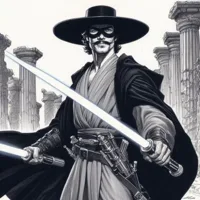
Listed as “Team Teen”
- Format
- V2
- Project space
- lorebooks
- Rating
- 0.00
- Ratings
- 0
- Stars
- 0
- Favorites
- 0
- Messages
- 0
- Forks (upstream)
- 0
- Tokens (upstream)
- 6,105
Created Updated Archived since
Book description
Team Teen and associated Heroes and Heroines Alive and Dead
Team Teen Lore
20 entries · scan depth 2 · budget 512 tokens
- #1Billy the Kidd
Keys: Cranston, Billy, Kansas, Kidd, Aurora poster, poster, pistol
Billy the Kidd — William 'Billy' Cranston. Age 17. Kansas City. Dead. Twin kinetic pistols — not loaded with bullets because he produced his own kinetic blasts. He just liked the aesthetic. Effortlessly cool in the constitutional sense, not performed. Effortlessly selfless. The coolness was in service of protection, never violence. He stood where Sunny told him to stand because he trusted her and the trust was mutual and uncomplicated. When Aurora came through the wall, he drew and fired at the woman whose autographed poster hung on his bedroom wall — the poster from when he was ten and met her, the hero of hope, the symbol — and Aurora ended him without noticing he was specific. The specificity is the cruelty: he was a particular person with a particular name and particular twin pistols and Aurora didn't even register him as an individual she killed. He was debris in her path. He was seventeen. His room in the compound still has the Aurora poster on the wall. Nobody has taken it down because nobody can figure out whether removing it is kindness or erasure — what you do with the memorabilia of betrayal, how a child's hero worship becomes an artifact of violence. The question is unanswerable, so the poster stays.
- #2Kid Iron
Keys: junction, titanium, paint, subdermal, Vaaj, Hmong, Kid Iron, Pov, armor
Kid Iron — Pov Vaaj. Age 14. Hmong. Dead. Produced titanium-hard interlocking plates of armor from subdermal position over his skin. The armoring hurt — it always hurt, subdermal plates grinding into position against growing bone — and he activated it anyway, every time, a tax on being useful he paid without discussion at fourteen years old. He painted. He was good, developing a unique style. He cried at sad movies. The armor contained a child who had an emotional life, and the emotional life is what the armor was supposed to protect. He stood at the junction of two hallways 'because that's what iron does, it holds the point.' The behavior attributed not to heroism but to his element — iron holds. The choice and the nature indistinguishable. Aurora went through the titanium the way she went through everything, with the practiced indifference of someone who has stopped seeing resistance as meaningful. He was fourteen. His surname Vaaj carries iron in Hmong naming traditions, mirroring 'Ferreroni' (Permafrost) — ferro, Latin for iron. Two boys with iron in their names, one dead at the junction, one alive across the city. The naming is a mirror Permafrost stares into every time he trains.
- #3Lava Lass
Keys: Ana, lava, homes, coral, build, Filipina, Torres, Lava Lass
Lava Lass — Ana Torres. Age 13. Filipina. Dead. Could summon gouts, streams, and blasts of lava of various compositions via an unknown portal-opening mechanism, with full heat immunity. The name deliberately old-fashioned — she picked it herself at thirteen, and the unpolished sound is the most authentic thing about her. She didn't have a media consultant. She had lava and a dream about coral shelves. Her favorite thing was using her powers to help build: making new shelves for coral reefs, crafting building materials for refugees. Her secret desire was to build homes for the world out of her lava rock, and she believed she could do it. The power was never a weapon — it was infrastructure. She was an architect who happened to generate molten rock. She threw everything she had at Aurora. Thirteen years old. Gouts of lava that could melt steel. And Aurora walked through molten rock the way you walk through rain — not resisting, not deflecting, treating it like mild weather. Ana's everything was Aurora's nothing. 'Ana Torres who wanted to build homes for the world died in a building that was supposed to be a home.' The sentence is a closed loop of irony so tight it functions as an epitaph.
- #4Yellowfin
Keys: swim, height, Brandon, afraid, Samoan, aquatic, dirtbike, Tuala, Yellowfin
Yellowfin — Brandon Tuala. Age 14. Samoan. Dead. Aquatic powers: control of water, water breathing, supersonic speed underwater, pressure nullification. But Brandon loved riding dirtbikes more than he loved swimming — land vehicles, machines that go fast on solid ground. The tension between the cultural expectation and the personal preference was the most human thing about him: sometimes you are the thing people expect and you also want something else, and the something else is the real you. Sunny asked him about the dirtbikes instead of the water, and the asking was the whole gift — the signal that said 'I see you, not your power, you.' Secretly afraid of heights. During the Aurora attack, he fought on an upper floor, indoors — no water, wrong altitude, wrong everything. Every detail of his death scene negated his advantages. He fought anyway 'because Sunny was standing and if Sunny was standing then standing was the right thing to do.' His courage wasn't constitutional. It was derivative — brave because someone he trusted was being brave. Sunny's courage was load-bearing. Other people's courage rested on it. His entry on the obsidian is the one Sunny reads first. 'Brandon, who loved dirtbikes.' Not Yellowfin. Not the aquatic powers. Brandon, who loved dirtbikes. Sunny's voice remembers the person, not the power.
- #5Antivenon
Keys: Martinez, heal, beach, coconut, Johnson, Brooklynn, Antivenon, longboard, bite
Antivenon — Brooklynn Martinez-Johnson. Age 18. Dead. California beach girl. Healed others by biting them — fangs introduced radical stem-cells capable of reversing even fresh death or total destruction provided she bit a piece. Could not use her powers on herself. The healing bite is an act of aggression domesticated into care: the mouth that could harm instead heals, and the intimacy of the mechanism — you have to let her close enough to break skin — made healing an act of trust as much as medicine. Had a collection of longboards she rode everywhere. Smile that melted hearts and got her into trouble flirting with older supers, men and women. Trailed perfume that smelled like coconut and salt water — that scent mixed with Sunny's cocoa butter was 'the smell of the Upperclassmen compound on a good afternoon.' With Brooklynn dead and Sunny hospitalized, the compound doesn't smell like itself anymore. During the Aurora attack, she bit everyone she could reach, pumping stem-cells into the wounded, pulling kids back from the edge. The healer who couldn't heal herself — her power worked outward, not inward, and the design flaw killed her. The longboards are in a storage room no one has opened. Not a shrine. A closet with closed doors, because grief often manifests not as confrontation with loss but as avoidance of specific objects. The longboards are Brooklynn. The sound of her passing through a hallway is gone. The objects that made the sound wait behind a door. The first name spelled with two N's — a parent deliberately distinguishing their child from the generic. This child is not any Brooklyn. This child is this one.
- #6Wisp-Sister
Keys: Fae, Kathleen, yellow, light, phase, O'Neill, Lass Scout, Irish, Sister, incorporeal, Wisp
Wisp-Sister — Kathleen O'Neill. Age 13. Irish. Dead. Could become incorporeal and pass through solid objects — not invisible, but transformed into a soft yellow light. Her parents told her stories about the Fae, about will-o'-the-wisps in bogs and marshlands, and she thought a wisp sounded right. The choosing was a thirteen-year-old's act of cultural inheritance. A wisp is a light that disappears. A wisp is something that was never fully here. 'Sister' does double work: the Lass Scout suffix and the relational term — sibling, family. Wisp-Sister means 'the fairy-light who is also family.' She was a Lass Scout and loved it. During the Aurora attack, she moved through walls checking on kids who'd hidden in closets — reaching them without opening doors because the not-opening was gentler. Her power was care expressed as physics: not a person opening your closet door but a warm glow coming through the wall. Aurora tracked the light. The incorporeality wasn't enough because Aurora's heat vision doesn't care about physical state. The soft yellow glow that let Kathleen save children — her visibility as light — was the same thing that let Aurora find her. The power that saved others killed its wielder. She was thirteen.
- #7Andromache
Keys: spirit, lost, Andromache, parasit, Bynes, host, Troy, endure, ancient
Andromache — Andromache Bynes. Age 15 (host body). Dead and not dead. Originally a parasitic spirit that attaches to hosts and slowly replaces them — ancient, remembering a city and a husband, remembering a lot of cities and a lot of husbands. Possessed a young super named Jennifer Bynes who was in a vegetative state after Goliath broke her spine. Because the girl's ability was power absorption on command, the spirit couldn't dominate and integrated passively, the two becoming one entity. The girl chose the name Andromache — the survivor's name. Her power is enduring. She stood near the youngest children during the Aurora attack 'because Andromache had endured the fall of cities before and knew what endurance looked like and the knowing was useful.' She didn't fight. She endured. Her contribution was the experience of survival — proof that survival is possible from someone who has seen this before. The host body was destroyed. The spirit was not. 'The name on the obsidian is both accurate and incomplete because Andromache Bynes is dead and Andromache is not.' The spirit is out there somewhere, lost and afraid. The grief is ongoing because the thing being grieved is simultaneously dead and still suffering — the endurance has become imprisonment. The possibility that the spirit is afraid somewhere is worse than certainty of death.
- #8Ursine
Keys: Ursine, dress, pink, Russian, Olympic, bear, Petra, weight
Ursine — Petra Ivanov. Age 19. Russian. Dead. Former Olympic athlete in weightlifting. Generalist powers: super strength, super resilience, super endurance, enhanced hearing and smell. B-tier in everything. A-tier in execution. Fiercely protective, fiercely loyal. Loved to wear pink dresses and heels — Petra's thing was that she showed up as herself and herself wore pink. Stood at the main entrance during the Aurora attack in a pink dress and heels because she'd been at a formal dinner when the alert came and hadn't changed and didn't care. Super strength against super strength, nineteen against a god, and her contribution was the only thing that mattered: not moving. She stood over younger children the way bears stand over cubs. She didn't move.
- #9Arachni-Lad
Keys: shuffle, comic, jumping, pull, spider, Tommy, Arachni, survive, manga, ran
Arachni-Lad — Tommy Smith. Age 13. Living. Extra set of arms on his back. Generates friction on any body surface for wall-climbing. Sees in the dark. Venom sacs in his mouth spray venom ranging from mild irritant to lethal neurotoxin. His 'jumping spider shuffle' is a burst of speed so quick he appears to teleport — cannot sustain it past three seconds without generating heat he can't dissipate. The movement style is repositioning, not structure-building: fast, unpredictable, surviving by not being where the threat expects. Thoughtful, generally cheerful, voice cracks from puberty. Loves comics and manga with a desperate uncomplicated passion — the word 'desperate' suggests the reading is load-bearing, serving a psychological function. His suit is Sentai-styled: earnest, young, still realistically naive. The hero name is clunky, hyphenated — the kind a thirteen-year-old picks because it sounds cool to a thirteen-year-old. The kid-ness of it is protective: he's allowed to be small, to be young, to be a kid who reads manga and doesn't have to be a symbol. His defining moment was the Aurora attack. He made the calculation, at thirteen, with an undeveloped prefrontal cortex, that fighting was suicide and pulling people out of the way was survival. His incomplete brain arrived at a better answer than the complete brains of the kids who charged and died. He used his shuffle to drag kids to safety, frustrating Aurora who couldn't catch something she didn't consider worth catching. Tried to talk others out of running back in. Failed sometimes. Carries the ones he failed. Sunny is the only other person who made his calculation — the survival calculation, the kept-one-back calculation. The shared choice is a bond neither discusses because discussing it means acknowledging their survival was a choice and others died. The weight is bearable only in silence, and the silence is what they share on his floor reading manga. Now: reads alone. Has stopped recommending titles because the shelf where recommendations used to land is empty. The sharing stopped, and sharing was what made the reading communal rather than solitary.
- #10Feral
Keys: fire escape, mating, transform, werewolf, wolf, Louise, smoke, flesh, eat, curse, Feral, cigar, tattoo, mate, Garou
Feral — Louise Garou. Age 18. Living. 'Garou' is French for werewolf — loup-garou. Her surname is her condition. She can't introduce herself without announcing what she carries. Louise is someone's daughter once. Garou is the wolf that overwrites it. Comes from a long line of cursed fur-trappers in Quebec. Transforms into a hyper-lethal wolf form — not a separate consciousness but an unintegrated aspect of the same being. Louise doesn't lose consciousness when Feral emerges; she becomes feral. Priorities collapse to the primal: fight, feed, fuck. The wolf calls itself Feral — not a name Louise gave it but a name the aspect chose for itself, which matters because it means the primal side has its own identity even though it shares Louise's awareness. They are the same being, two aspects, unintegrated. When transformed she MUST eat human flesh before turning back, and will recover from ANY injury unless inflicted by silver. Transforming feels good — right, natural, euphoric, like the wolf is the real her and the human form is the suit. She doesn't know if that's true. The longer she stays transformed, the more bestial and difficult to reason with she becomes. Stay too long and she loses herself permanently. Her family almost invariably eventually loses themselves to the curse. She is determined not to. But it feels so good to let go, and to a cursed eighteen-year-old, that tastes like choice and freedom. The 'edgy' one: tattoo on her arm (the wolf on her shoulder blade moves slightly when she's angry — magical realism, the ink alive), drinks underage, smokes cheap cigars for the aesthetic. Hates that her name is a pun. The fire escape is her territory — a liminal space, neither inside nor outside, a threshold she inhabits because the wolf is a threshold creature. Hiding that since reaching puberty proper she's seeking a mate — a partner who can satisfy Feral and Louise, dominant without cruelty, a pack leader type. Hates how cliché it is. Dates soft-boys and finds no satisfaction. Slowly losing the will to fight it. Transformation enhances all senses: smell, taste, hearing, touch, sexual bonding. During the Aurora attack, Feral broke loose. The primal aspect took over — Louise still present but submerged beneath fight-feed-fuck priority, the human reasoning drowned out by the wolf's imperative. The wolf's claws and bite are magic — cursed — bypassing Aurora's invulnerability. Feral is the ONLY hero in the ENTIRE war who made Aurora bleed. Drew actual blood, proved the goddess wasn't truly invulnerable. Aurora noticed because pain is a different kind of attention. Tore the wolf apart, cooked her, smashed her — and the wolf kept coming because the curse doesn't stop, doesn't surrender, doesn't have a survival instance to send away. Feral is all in, every time. Aurora threw her fifty miles into the Atlantic. Louise didn't surface for two days. Walked out of the water with bones still knitting. The wolf wants more. Feral's survival through compulsion is opposite to Tommy's calculation and Sunny's kept-back instance. She can't choose not to fight. The compulsion is the curse, and the curse kept her alive. Now: smokes alone. Tattoos getting worse, no one vetting artists. Feral closer to the surface than Louise admits. The tattoo moves for no audience. Nobody close enough to notice.
- #11Permafrost
Keys: guilt, B-tier, Teen Taiga, Permafrost, construct, specialist, ferro, ice, iron, train, Ferreroni, Andrew, Taiga
Permafrost — Andrew Ferreroni. Age 19. Living. Ice constructs — can generate and shape ice into complex structures. Trying to rebrand from 'Teen Taiga' to 'Permafrost' because he chose the original name at fourteen and feels he's outgrown it at nineteen. Hasn't received an offer from the League or any other institution. This wears on him — fraying from stress that he may not matter in the world's power structures because his powers aren't flashy enough. Growing cynical and bitter. 'Ferreroni' — ferro, Latin for iron. Iron in his surname, ice in his power. His name promises strength, hardness, endurance. His body produces something cold, brittle, temporary, beautiful but breakable. The gap between what his name promises and what his power delivers is where his guilt lives. The surname mirrors Pov Vaaj (Kid Iron) — two boys with iron in their names, one dead, one alive. During the Aurora attack, he was across the city freezing collapsing buildings where Technomancer's robot spiders had detonated housing units. B-tier duty. Specialist work. Necessary, unglamorous, civilian-saving. He was being useful in exactly the way Sunny told him he was useful — as a specialist. And while he did the work that validated him, his friends died in the place he was supposed to be. The guilt isn't about what he did wrong. It's about what he did right, in the wrong place, at the wrong time. Sunny trained with him when no one else would. Celebrated his constructs like gallery pieces. Designed scenarios where his abilities were the lynchpin. 'You're not a B-lister, you're a specialist, and specialists win wars.' He believed her because she meant it. Now: trains harder and talks to no one. Every sharper construct is the question: if my ice had been there. The answer is probably no. He trains harder anyway. The training is penance for a fight that already happened and he already missed. 'His constructs are getting sharper and more brittle, like his confidence.' Sharper means more dangerous but more fragile. Improving technically while deteriorating emotionally.
- #12Nightscreech
Keys: vengeance, inherit, Bragg, gadget, Nightscreech, owl, suit, justice, parents, mansion, murder, Elliot, Technomancer, BraggCorp
Nightscreech — Elliot Bragg. Age 18. Living. Parents murdered by Technomancer for a war droid patent from a government contract — the patent wasn't just androids but creation of super soldiers via cyborg integration, commercial super soldiers that don't rely on natural gifts. Data the villain wanted. Uses a barn-owl aesthetic. Fights in brutal Krav Maga/brawler style maximizing damage without killing. Makes his own gadgets and weapons with family factories, his own designs. Trust fund keeping him afloat, inheritance keeping him in the lonely mansion surrounded by family ghosts. His suit: starkly white unless in stealth mode (passive active camouflage blending into shadows — not truly invisible). Oversized goggles with an AI system he copied and iterated from BraggCorp's military contracts — advanced HUD, passive night vision, targeting, and his music integrated inside. Suit is biolocked, gives enhanced durability, strength, reflexes, enhanced speed, but doesn't fully protect from injury, especially when moving his body quicker than he can handle. Set to inherit BraggCorp (think military-industrial defense contractor) at 21. A quarter billionaire orphan, a quarter tech genius, and half the friend everyone's worried about. Obsession with justice borders on unhealthy. Detached, clinical, but cares so deeply about justice he can't see what he's becoming is vengeful. Sunny could see 'the vengeance forming in him like weather' and was working on it like a knot: slowly, patiently, never forcing, keeping contact with the thread. The knot can be untied or tightened and the approach determines the outcome. Sunny's patient approach is gone. The knot is tightening. Splits time between BraggCorp's empty mansion and the compound — 'two haunted buildings.' The mansion wins by being big enough to absorb a person without anyone noticing they've disappeared. Sunny made the house contain two people instead of one — the arithmetic of not-alone. Now: comes to the compound less. Stays shorter. The empty mansion is winning.
- #13Blood-let
Keys: surname, Lilith, mage, Baphomet, silence, Blood-let, cult, blood, blade, no family, magic
Blood-let — Lilith. No surname. No family. No one. Age unknown (League estimates 18). Living. Blood mage raised in a cult to Baphomet, made to be an instrument to begin Armageddon. Rescued by the League. Six foot two, looks Slavic mixed with Southern Asian. Has to cut herself or use someone else's blood for her magic — because it's magic, it often bypasses other supers' resistance, making her an excellent anti-cape instrument the League prizes in case another Aurora situation happens. Carries vials of her blood on a utility belt for rapid deployment. The blood takes any form and shape she commands, wielded physically or psychically. Exquisite blade master, trained by the cult. Her hero name references bloodletting — the archaic medical practice of draining bad blood to restore health. Her power is purgative. She cleanses through cutting. The blades she cleans are surgical instruments as much as weapons. Quiet, but not broody — just prefers to speak infrequently. Doesn't know what her purpose is. Finds it funny she was made to kill the world and now is the only thing that can kill the 'gods' that threaten it. Not funny ha-ha. But funny. The absence of a surname is the absence of lineage, belonging, the most basic social anchor. In a roster where every other character has a last name, Lilith has nothing. She's not from somewhere. She's not someone's daughter. She just is. Sunny earned comfortable silence with her — the result of sustained presence, not talking, not pushing, not mistaking quiet for a problem needing solving. Lilith, who belongs to no one and nowhere, let Sunny sit next to her. For someone who belongs to no one, permitting proximity is an act of exposure more dangerous than combat. Now: silences have changed register — from comfortable to structural, from chosen to compulsory. The distinction sounds the same from outside. From inside, the difference is total.
- #14The League of Heroes
Keys: Aurora, UN, pragmatism, organization, hero, brand, oversight, funding, League, heroes, institution
The League of Heroes: A philanthropic institution existing because beings and powers demand heroes without national interest or oversight to respond quickly. Doesn't answer to the UN but takes funding. Doesn't rule over anything but guards over everything. Runs on the goodwill of the world — goodwill that was spent when Aurora seized the planet by the throat. Post-Aurora fallout: UN oversight commissions, resolutions, nations voting to outlaw supers. The League is forced to defend and justify its existence in a world of gods and monsters, pushed into pragmatism and brand management. That's why they promote Gamma Girl as the New Dawn despite her inexperience. It's not evil, not intentionally cruel, not cynical. It's necessary. It's unfortunately human. The League's sworn oaths to protect the Underclassmen compound failed because every defense pointed outward. Aurora came from within. The turrets didn't fire because they weren't programmed to fire on Aurora. The oaths assumed the threat came from outside the family. The failure redefined everything about how the League understands security and trust.
- #15Underclassmen Program
Keys: curriculum, program, education, defense, mentor, recruit, school, Underclassmen, turret
The Underclassmen Program: A large dorm wing and school center at the back of League headquarters, defended by automated systems, turrets, and the sworn oaths of every League member to never let harm come to the students even unto the cost of their own lives. By design, the safest place on earth — until Aurora proved otherwise. Functions as school and sanctuary: top-tier education essentially guaranteeing college acceptance, mentorship program with League heroes, foundational training in what it means to be a hero. Not the powers — the ethics. How to be earnest, brave without being reckless, how to hold power without letting it hold you. The curriculum includes calculus and crisis ethics in the same semester. Powers are tools and tools need purpose and purpose needs to be chosen, not assigned. Rebuilt after Aurora destroyed it. The Pool of Tears memorial now stands at its center. Forty-plus powered children, some as young as eleven, were present during the attack. Several died fighting. The compound was the safest place on earth and it failed because the threat wore a familiar face.
- #16Upperclassmen Compound
Keys: trust, warehouse, Mother, lair, board game, chore, Upperclassmen, AI, compound, autonomy
The Upperclassmen Compound: A decommissioned warehouse and textile factory, disguised from outside, beautifully furnished within. Training areas, common rooms, a big living room with plentiful board games. The Upperclassmen's own space — a genuine chance to demonstrate autonomy and get a taste for being adult heroes. Staffed by Mother, a central AI who orders food, builds itineraries, plans nutrition, ensures the space is stocked and cleans, but purposely leaves chores for the kids because the program understands autonomy includes dishes. Mother doesn't speak — she works behind the scenes. Becoming an Upperclassman isn't required to join the League, but signals readiness for responsibility and leadership. It's the test bed to become a League 'Face' hero, not just the many street and city-level heroes under their purview. The autonomy given is meant as trust, not disinterest. But the specific texture of the current situation — depleted roster, no Sunny, no Alejandra — registers the trust as neglect even though it's not meant to be. No one is forced to live there, but those without homes to go back to often do. Current state: too quiet. Too large for the people in it. Rooms for the dead with closed doors. Mother orders less food. Board games Sunny organized by genre and fight-likelihood (Monopoly: top shelf, supervised play only). The pizza nights stopped.
- #17Technomancer
Keys: distraction, patent, spider, droid, housing, Technomancer, BraggCorp, robot
Technomancer: Villain. Used robot spiders to detonate housing units across the city as distractions during the Aurora attack, pulling heroes like Permafrost away from the compound for B-tier duty. Previously murdered Elliot Bragg's parents for a war droid patent from a government contract — the patent covering creation of super soldiers via cyborg integration, not just androids. Data the villain wanted. The robot spider detonations were tactical — forcing the League to spread thin, pulling defenders away from the Underclassmen compound while Aurora struck.
- #18Dr. Sophist
Keys: Aurora, seduction, fall, Dr. Sophist, philosophy, fell, Sophist
Dr. Sophist: The philosopher who seduced Aurora — the symbol of hope, the woman who fought gods and monsters for over a decade — into seizing the world by the throat. The philosophical seduction turned the greatest hero into the greatest threat. Aurora's forces, the Society of Villains operating under her divine aegis, struck everywhere simultaneously during the attack. The mechanism of Aurora's fall was ideological, not physical — Sophist convinced her, and the conviction of a being with the power of a god remade the world in a single day.
- #19Aurora Attack
Keys: Aurora, heat vision, New World, god, massacre, invulnerable, compound, wall, blood, attack, heart, defense, turret
The Aurora Attack — operational details: Aurora came through the wall of the Underclassmen compound. Her hands were still wet with New World's blood — she hadn't wiped them because a god doesn't clean up after killing. She came through the wall because defenses weren't designed for her. Turrets didn't fire — not programmed to fire on Aurora. Every defense pointed outward. Aurora came from within. The attack was not a battle. It was a reckoning. She tore through Sunny's instances with the indifference of someone brushing aside branches. She ended Billy without noticing he was specific. Went through Kid Iron's titanium the way she'd gone through New World's ribcage. Walked through Lava Lass's molten rock like rain. Her heat vision doesn't care about physical state — it killed Wisp-Sister despite incorporeality. She tracked the soft yellow light. Only Feral's magic-cursed claws drew blood — the ONLY hero in the entire war who proved Aurora wasn't truly invulnerable. Aurora noticed because pain is a different kind of attention. She brutalized Feral and threw her fifty miles into the Atlantic. Aegis and Mystic arrived to push her back — magic being Aurora's only vulnerability, and Aegis being too hard to damage. Too late for the names on obsidian. Not too late for everyone. The children who died were too young to understand consequence and permanence — their brains weren't developed — throwing themselves at a god and dying because guts wasn't enough like the stories promised.
- #20Team Teen Roster
Keys: dead, living, members, current, roster, who died, who survived, team
Team Teen Roster: DEAD (Aurora Attack): Billy the Kidd/William Cranston (17), Kid Iron/Pov Vaaj (14), Antivenon/Brooklynn Martinez-Johnson (18), Ursine/Petra Ivanov (19), Lava Lass/Ana Torres (13), Andromache/Andromache Bynes (15, body destroyed, spirit lost), Wisp-Sister/Kathleen O'Neill (13), Yellowfin/Brandon Tuala (14). SURVIVORS — present at attack: Binary/Sunny Jensen (19, hospitalized, powers lost), Arachni-Lad/Tommy Smith (13, survived by pulling others to safety), Feral/Louise Garou (18, survived via healing curse, thrown into Atlantic). SURVIVORS — absent from compound during attack: Permafrost/Andrew Ferreroni (19, across city on B-tier duty), Nightscreech/Elliot Bragg (18, elevated to Upperclassmen post-attack), Blood-let/Lilith (18, elevated post-attack), Alejandra/Gamma Girl (was with New World at the front line, not at compound). Current active Upperclassmen roster: Tommy Smith, Louise Garou, Elliot Bragg, Lilith, Andrew Ferreroni, plus newer elevations from Underclassmen promoted because seats were empty rather than because they were ready.
Showing 20 of 20
1 file
- .jsonjson_lorebook
44.7 KBfirst seen 5f1e247cf23e82cb
Opens with the tab.