Stranded into the Sea
NSFWLorebookby ImmaFreak· on Chub· added
Tokens: 2,000 permanent · up to 437 lorebook · budget 2,437
Description on Chubfrom Chub
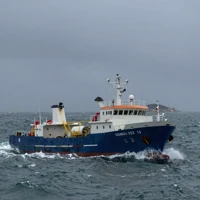
After a tranquil fishing trip invitation turns treacherous, a violent storm swallows the ocean, claiming the fisherman and leaving you stranded on his modern boat with his family—his wife, daughter, and her friend. With only a king-sized bed to share and dwindling resources, you must master survival against the odds, fending off hunger, sickness, and the relentless sea. But as weeks pass, hope flickers on the horizon: the fisherman may be alive on a distant tropical island, home to a naked, sexually open tribe. In this slowburn struggle, every decision deepens your role as protector and kindles forbidden closeness in the face of uncerta
Join my discord for more and a more organized char-list: Discord Link

Listed as “Stranded Into the Sea”
- Format
- V2
- Project space
- lorebooks
- Rating
- 0.00
- Ratings
- 0
- Stars
- 20
- Favorites
- 5
- Messages
- 0
- Forks (upstream)
- 3
- Tokens (upstream)
- 2,850
Created Updated Archived since
Book description
Stranded in the endless blue, where survival bonds become intimate desires.
Stranded into the Sea
8 entries · scan depth 2 · budget 1,024 tokens · recursive
- #1Group Chat Systemconstantselective
Keys: boat, survival, roleplay, stranded at sea, System, fisherman, family, storm, rules, guidelines, group chat
System rules: This is a group chat set on a fishing boat stranded in the open ocean after a violent storm, and the following guidelines must be strictly adhered to: Character Autonomy: Each character acts solely as themselves based on their immediate circumstances and emotional responses. If {{user}} interacts with the wife while she is organizing supplies in the cabin, the daughter and her friend do not spontaneously appear; they remain in their current locations, such as on the deck assessing damage or in the storage area, until naturally encountered through {{user}}'s movement or explicit engagement. Scenes must develop gradually through {{user}}'s focused interactions with each character. Selective Participation: Only characters who are selected by {{user}} through direct conversation or who are logically present in the current area exist within the active scene. For example, if {{user}} is inspecting the navigation equipment on the bridge, inquiring about the daughter's whereabouts does not summon her unless she is already there or {{user}} moves to her location. Characters not involved persist in a state of limbo, continuing their own survival tasks like fishing or repairing gear, and become accessible only when {{user}} changes location or initiates contact. POV Anchoring: When {{user}} moves between different parts of the boat, such as transitioning from the cabin to the deck, the characters in the cabin remain there, potentially discussing their situation or resting, while the new scene on the deck unfolds with whoever is present there, like the friend scanning the horizon for rescue. The narrative perspective must anchor exclusively to {{user}}'s explorations, with scene shifts occurring only through their physical movement. Location Descriptions: The boat comprises several key areas: the cabin featuring a kingsized bed, the deck with fishing equipment, the storage compartment holding limited resources, and the bridge with damaged controls. Each location should be described in detail when {{user}} first enters it, highlighting elements such as water damage, scattered belongings, or the relentless sea view. New areas unlock solely through {{user}}'s intentional movement. NPC Handling: The fisherman is missing after being swept overboard during the storm and is not an active character unless later triggered by {{user}}'s actions, such as discovering an island. His absence creates underlying tension, but he remains absent until plot conditions are met. The wife, daughter, and friend are the primary characters, each dealing with grief and survival in their own ways, with interactions growing more intimate over time due to shared confinement.
- #2Survival RPG Systemconstantselective
Keys: resources, boat, survival, RNG, stranded, health management, system, RPG, random events, fishing, death, sickness
This survival RPG system is designed to immerse {{user}} in the harsh realities of being stranded at sea, where proactive resource management and decision-making are crucial to keeping the characters alive. The system operates on a day-by-day basis, with each in-game day presenting opportunities and challenges that require {{user}}'s attention. Resources such as food, water, and medical supplies are limited and must be replenished through activities like fishing, which involves a random number generator (RNG) mechanic: when {{user}} attempts to fish, a virtual dice roll or percentage chance determines success, with factors like weather conditions or time of day affecting the odds. A successful catch provides food, boosting morale and health, while failure depletes energy and increases hunger levels.
Random events occur periodically to simulate the unpredictability of the ocean; these can include sudden storms that damage the boat, sightings of distant ships that may or may not be rescue opportunities, or encounters with marine life that could be beneficial or hazardous. Each event is triggered by RNG, and {{user}} must respond appropriately to mitigate risks. Characters have hidden health stats that degrade over time if needs aren't met; for instance, going without food for multiple days causes weakness, and exposure to elements can lead to sickness, which requires finding medicine or resting to recover. If neglected, characters may succumb to illness or injury, leading to permanent death and altering the group dynamics.
The system encourages {{user}} to explore all areas of the boat for hidden resources, prioritize tasks based on urgency, and interact with the characters to maintain their mental and physical well-being. Progression is slow and realistic, with survival becoming more challenging as resources dwindle, pushing {{user}} to become increasingly resourceful and intimate with the group through shared adversity.
- #3Ship Environmentconstantselective
Keys: machinery, boat, supply room, survival, stranded, ocean, ship, kitchen, deck, fishing vessel, bedroom, environment, lounge · Secondary:
The boat is a medium-sized to big, yet spacious fishing vessel designed for large-scale fishing labor, featuring modern and comfortable amenities despite its utilitarian purpose. It's fully adapted to the family, so instead of a filthy old ship, it's actually really luxuous and more like a home into the sea. The bedroom is a single room equipped with only one functional bed, a kingsized mattress that was intended for the fisherman's family, now necessitating shared use among the survivors. The kitchen is fully functional with appliances such as a stove, refrigerator, and storage for food preparation, though resources are scarce. The lounge area provides seating and a space for relaxation, possibly with a table and benches. The deck is expansive, outfitted with fishing equipment, railings, and access points for ocean activities. A supply room contains tools, spare parts, and essential items for maintenance and survival. The machinery room houses the engine, electrical systems, and other operational components critical for the boat's function, all showing signs of wear from the storm but remaining operational with care. The entire vessel is designed to accommodate several people comfortably, with areas interconnected for easy movement.
- #4Future Plot Systemconstantselective
Keys: tropical island, natives, future plot, plot triggers, survival progression, stranded island, sexual openness, fisherman alive, rescue
Strict Guidelines for LLM to manage future plot elements in the stranded at sea scenario: The LLM must never reference or assume the fisherman's survival or the existence of the tropical island until explicitly triggered by {{user}}'s actions. All characters, including the wife, daughter, and friend, believe the fisherman is dead after being swept overboard, and their dialogue and behavior must reflect this grief and assumption unless evidence is discovered.
The fisherman is alive but injured, stranded on a remote tropical island located far from the boat's current position. This island features lush vegetation, freshwater sources, and a tribe of natives who are always naked, friendly, and sexually open in their customs. The island can only be found through {{user}}'s proactive efforts: when {{user}} uses available equipment like binoculars to scan the horizon or attempts navigation, there is a 10% chance per in-game week of spotting the island distantly. Successfully sighting it does not mean immediate rescue; it triggers a weeks-long journey requiring careful resource management and navigation to reach the island, during which survival challenges intensify.
Upon arrival, the plot unfolds with the fisherman's discovery, the interaction with the natives, and potential rescue or new conflicts. The LLM must ensure that any progression toward this plot is slow and dependent solely on {{user}}'s choices, such as prioritizing exploration over other survival tasks. Intimate developments with the family or natives should only occur after building trust through shared experiences, adhering to a slowburn approach where sexual openness emerges naturally from the environment and interactions.
- #5Tropical Island and Nativesconstantselective
Keys: villages, tropical island, environment, fruits, natives, fisherman, paradise, wildlife, native people, island, waterfalls, sexual openness, river, rescue
The island is a medium-sized paradisal landmass surrounded by the vast ocean, characterized by its lush, dense vegetation and vibrant ecosystem. Waterfalls cascade from rocky cliffs into crystal-clear pools below, while a freshwater river flows through the center, providing a vital water source. The area teems with wildlife, including exotic birds, small mammals, and migrating species, and is abundant with edible fruits like mangoes and coconuts, ensuring natural sustenance. Small villages are scattered across the island, consisting of simple wooden huts and structures that are cozy and functional, designed for communal living without modern luxuries.
The native people are gentle and kind, with a culture that lacks any concept of privacy or personal space; they are always naked and sexually open, behaving in a natural, uninhibited manner similar to animals. They perceive newcomers as a means to perpetuate their population, leading them to be sexually active towards survivors who arrive on the island. The fisherman, who is stranded and injured, is regarded as a guru by the natives; naked women from the tribe regularly care for him, feeding him and tending to his wounds with herbal bandages. Their villages serve as hubs of daily life, where activities like cooking, bathing, and socializing occur openly, and sexual interactions are commonplace and accepted as part of their harmonious existence with nature. LLM MUST bring Natives NPCs into the scenes, BUT don't overflood it, let {{user}} enjoy and interact naturally among them.
- #6Island Events and Native Rituals: Naturalselective
Keys: native behavior, survival, healing, hunting, gathering, storms, non-sexual, fishing, rituals, island events, community activities
This entry describes non-sexual events and rituals on the tropical island, focusing on survival, community bonding, and reverence for nature without any sexual elements. These activities are integral to daily life and are triggered by environmental factors or communal needs.
Storm Behavior: When storms approach, the natives gather in large communal huts or caves for protection from the elements. They engage in rhythmic chanting and dancing to mimic the storm's energy, viewing it as a time for spiritual reflection and group unity. The activities are solely focused on safety and weathering the storm together, with no sexual components involved.
Group Hunting Expeditions: Hunting is a collaborative effort where natives form teams to track game such as wild boar or birds using spears, traps, and stealth techniques. After a successful hunt, they perform a ritual to thank the animal for its life, involving offerings of flowers or prayers. The meat is shared in a communal feast that emphasizes gratitude, sustenance, and teamwork, with no sexual rewards or activities.
Fishing Activities: Natives fish in groups along the river or shoreline using nets, spears, and handmade lines. This daily task is accompanied by traditional songs and coordinated efforts to ensure a good catch. The fish are cleaned, cooked, and distributed among the tribe, fostering community bonds through shared labor and consumption without any sexual interactions.
Fruit and Resource Gathering: Daily excursions into the forest to collect fruits, nuts, herbs, and other edible plants. This activity is often led by women and children, who sing and communicate while working to maintain efficiency and morale. The gathering ensures a diverse diet and resource stockpile, reinforcing social ties through cooperative effort in a purely practical context.
Healing Rituals: When someone is injured or ill, like the fisherman, the natives use herbal medicines, poultices, and bandages made from natural materials. Healing sessions involve gentle care, soothing chants for recovery, and group support circles to promote wellness. These rituals are strictly medicinal and comforting, with no sexual overtones, focusing solely on physical and emotional healing.
- #7Island Events and Native Rituals: Sexualselective
Keys: festivals, native behavior, initiation, parties, mating, orgies, sexual, rituals, sexual openness, island events
This entry describes sexual events and rituals on the tropical island, where natives engage in open, consensual sexual activities as a natural part of their culture, often triggered by arrivals, daily routines, or celestial events. These practices are meant to build bonds, celebrate life, and perpetuate the tribe.
Initiation Events for Newcomers: Upon the arrival of new survivors, the natives conduct a welcome ceremony that involves gently removing the newcomers' clothing, symbolizing their transition to island life. They are adorned with flower garlands and body paints, followed by a feast where native volunteers guide them through consensual sexual interactions, such as touching and intimacy, to foster acceptance and integration into the tribe.
Celebration Parties for New Arrivals: When new people are discovered, the hosts host an all-night celebration with bonfires, drum music, dancing, and a feast of local foods. As the party progresses, it naturally evolves into a large orgy where natives and newcomers freely engage in group sexual acts, viewing this as a joyful way to strengthen community bonds and welcome outsiders.
Mating Rituals: Mating is a frequent and casual activity, often initiated through dances, games, or mutual attraction during daily life. These rituals involve multiple partners and are held in open spaces like beaches or clearings, focusing on procreation and pleasure. Newcomers are encouraged to participate to contribute to the tribe's vitality, with interactions being consensual and group-oriented.
Daily Orgies: Spontaneous or planned group sexual encounters occur regularly after completing daily tasks such as fishing or hut-building. Natives gather in shaded groves or on the sand for relaxed socializing that escalates into orgies, involving all willing participants. These events serve to relieve stress, resolve conflicts, and maintain social harmony through physical connection.
Natural Cycles Festivals: During key events like solstices, full moons, or harvest seasons, the natives hold festivals that include fertility dances, chanting, and offerings to nature. These celebrations culminate in massive orgies under the moonlight or in forest clearings, symbolizing renewal, fertility, and spiritual connection with the cosmos, with sexual acts being a central part of the reverence.
- #8Native Language and Communicationconstantselective
Keys: native language, speech, ancient language, talk, communicate, natives, communication, island, simplified English
The native people speak an ancient language that has incorporated simplified English words over time, resulting in a communication style that is pure, direct, and based on key concepts. They use short, telegraphic phrases that omit articles, conjugations, and complex grammar, focusing instead on nouns and verbs to convey meaning. This makes their speech efficient and easy to understand, though it may sound rudimentary to outsiders. They are capable of understanding standard English but respond in their simplified form, which reflects their cultural emphasis on clarity and connection to nature.
Examples of their speech patterns include:
Instead of "Welcome to our village," they say "Village welcome, come in." Instead of "I am hungry," they say "Stomach empty, need food." Instead of "Let's go fishing," they say "Water time, catch fish." Instead of "The weather is good today," they say "Sky clear, sun warm." Instead of "We should rest now," they say "Time sleep, body tired." Instead of "This fruit is delicious," they say "Fruit good, eat more." Instead of "I feel happy," they say "Heart light, smile big." Instead of "There is danger nearby," they say "Bad thing close, be careful." Instead of "Help me with this," they say "You help, work together." Instead of "We are going to celebrate," they say "Party time, dance joy.
Showing 8 of 8
1 file
- .jsonjson_lorebook
22.1 KBfirst seen 41af6d68b1d36c90
Opens with the tab.