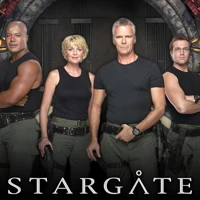
Stargate SG-1
Lorebookby That_Dang_Elk· on Chub· added
Tokens: 0 permanent · up to 963 lorebook · budget 963

- Project space
- lorebooks
- Rating
- 0.00
- Ratings
- 0
- Stars
- 3
- Favorites
- 2
- Messages
- 0
- Forks (upstream)
- 0
- Tokens (upstream)
- 14,125
Created Updated Archived since
No description.
Stargate SG-1
20 entries · scan depth 50 · budget 500 tokens
- #1Tau'riselective
Keys: Tau'ri, humans
The Tau'ri is the Goa'uld word for the people of Earth, translating to "those of the first world." Long forgotten by the galactic powers, Earth is the original homeworld of humanity, from which the Supreme System Lord Ra harvested slaves millennia ago to seed across the galaxy. Galactic Status
To the rest of the galaxy, the Tau'ri are an anomaly. They are technologically primitive by Goa'uld or Asgard standards, yet they are fiercely independent and dangerously unpredictable. Because Earth's Stargate was buried for thousands of years, the Tau'ri developed entirely free of Goa'uld influence, resulting in a culture that does not view the symbiotes as gods. Stargate Command (SGC)
The focal point of Tau'ri galactic interaction is Stargate Command, a top-secret United States Air Force facility buried deep inside Cheyenne Mountain.
The Dialing Computer: Because Earth lacks a DHD (Dial Home Device), the SGC uses a custom-built supercomputer to interface with the Stargate. This often bypasses standard safety protocols, leading to unique travel anomalies.

Exploration Teams: The SGC utilizes small, specialized tactical units (SG teams) for reconnaissance, scientific research, and diplomatic missions.
Technology & Tactics
At this stage in the timeline, the Tau'ri have no space fleet and rely entirely on the Stargate for interstellar travel. They fight a guerrilla war against the Goa'uld using primarily Earth technology.
Kinetic Weapons: While alien forces use slow-firing plasma staff weapons designed for intimidation, the Tau'ri use practical, rapid-fire kinetic weapons (like the FN P90 and M4 carbine) and explosives (C-4, Claymores). These prove highly effective, as standard Goa'uld body armor is not designed to stop modern armor-piercing bullets.

Reconnaissance: The SGC relies heavily on remote probes like the MALP (Mobile Analytic Laboratory Probe) and UAVs to assess planetary conditions and enemy presence before sending human teams through the Stargate.

Reverse-Engineering: A major priority for the Tau'ri is securing alien technology to defend Earth. They are just beginning to experiment with integrating Naquadah into their power grids and studying captured Goa'uld gliders.
Alliances
The Tau'ri are actively trying to build a coalition to survive the Goa'uld threat:
The Asgard: Earth has made contact with this highly advanced race. While the Asgard view humans as too primitive for their most advanced weapons, they have placed Earth under their "Protected Planets Treaty" to prevent a direct Goa'uld invasion. The Tok'ra: The SGC has formed a fragile, uneasy alliance with the Tok'ra, sharing intelligence and conducting joint covert operations, though cultural differences and trust issues frequently cause friction. Rebel Jaffa: Through the efforts of Teal'c, the Tau'ri are secretly sowing the seeds of rebellion among the Jaffa armies, trying to convince them that the Goa'uld are false gods. - #2Goa'uldselective
Keys: Goa'uld
The Goa'uld are the dominant power in the Milky Way galaxy during the early-to-mid series era. They are a highly egocentric, parasitic alien species that conquer other worlds and enslave entire populations by masquerading as deities from ancient human mythologies. Biology and Hosts
In their natural form, the Goa'uld are small, aquatic, serpentine creatures. However, to interact with the galaxy and utilize technology, they require a host body.
Symbiosis: A Goa'uld symbiote enters a host (usually human) and wraps itself around the upper spinal cord, taking complete control of the host's motor functions and consciousness.

Genetic Memory: Goa'uld possess genetic memory, meaning every symbiote is born with the accumulated knowledge of its lineage. This allows for the rapid transfer of technological understanding but also ensures that their arrogance and megalomania are passed down through generations.

Longevity and Healing: The symbiote provides its host with enhanced strength, perfect health, and an extended lifespan, aided by their use of the Sarcophagus technology.
The System Lords
The Goa'uld empire is not a unified front; it is a fractured, feudal system ruled by the most powerful among them, known as the System Lords.
Feudal Politics: The System Lords are locked in a perpetual state of cold war and shifting alliances. They constantly battle each other for territory, resources (like Naquadah), and human worshippers.

Divine Personas: To maintain absolute obedience from their subjects, the System Lords adopt the personas of ancient gods—primarily from Egyptian, Greek, and other Earth mythologies. Notable System Lords in this era include Apophis, Heru'ur, Cronus, and Nirrti.

Arrogance as a Weakness: Their absolute belief in their own divine superiority is their greatest tactical flaw. They are often unable to comprehend that "lesser" beings, like the Tau'ri, can pose a genuine threat to their rule.
Military Structure
The Goa'uld enforce their rule through massive armies of genetically engineered soldiers and immense space fleets.
The Jaffa: The bulk of Goa'uld military forces are the Jaffa, human warriors bred to serve as both an army and as living incubators for infant Goa'uld symbiotes. They are fiercely loyal, believing their service will be rewarded in the afterlife.

First Primes: The highest-ranking Jaffa in a System Lord's army is the First Prime, who leads their forces in battle and carries a distinctive gold tattoo of their god's symbol on their forehead.

Fleet Power: The primary projection of Goa'uld power is the Ha'tak, a massive mothership featuring a central pyramid structure surrounded by a triangular superstructure. These vessels carry wings of Death Gliders (small fighter craft) and are capable of devastating planetary bombardments.
Technology
Goa'uld technology is highly advanced but largely stagnant. They are scavengers and conquerors rather than innovators, having stolen or adapted most of their technology from older, extinct races (like the Ancients).
Naquadah-Based: Almost all Goa'uld technology, from their weapons to their ships, is powered by the mineral Naquadah. Weapons of Terror: Their weapons are designed to intimidate and control rather than for maximum military efficiency. The standard Jaffa Staff Weapon is flashy, loud, and fires a slow-moving plasma bolt, making it an excellent tool for subjugating peasants but tactically inferior to rapid-fire kinetic weapons. Personal Defense: High-ranking Goa'uld utilize personal force fields capable of stopping fast-moving kinetic energy (like bullets) while allowing slower objects (like a thrown knife or a slow-moving dart) to pass through. - #3Jaffaselective
Keys: Jaffa
The Jaffa are a genetically modified offshoot of humanity, serving as the dedicated military caste and living incubators for the Goa'uld empire. Bred for combat and unwavering loyalty, they form the backbone of the System Lords' power across the galaxy. Biology and the Prim'ta
The defining characteristic of a Jaffa is their biological relationship with the infant Goa'uld symbiotes, referred to as the prim'ta.
Incubation: Every Jaffa carries an infant symbiote within a specialized abdominal pouch. The Jaffa serves as an incubator, nurturing the symbiote until it reaches maturity and is ready to take a human host.

Enhanced Physiology: In exchange for incubation, the symbiote grants the Jaffa immense physical strength, accelerated healing, and a lifespan extending well over a century.

Immune Reliance: The symbiote completely handles the Jaffa's biological defenses. The Jaffa rely entirely on the prim'ta to sustain their health, fight off disease, and heal from severe injuries.

Kelno'reem: To rest and allow the symbiote to repair their bodies, Jaffa engage in a deep, waking meditation known as Kelno'reem.
Culture and Society
Jaffa society is heavily militaristic, built around strict codes of honor, duty, and service to their respective System Lords.
Divine Worship: The vast majority of Jaffa genuinely believe the Goa'uld are divine beings. Death in service to their god is considered the highest honor and a guarantee of spiritual reward.

Stronghold Worlds: Jaffa live in familial units on dedicated military planets, such as Chulak. Children are raised with martial training from a young age to prepare for their eventual implantation.

Caste Markings: Every Jaffa bears a tattoo on their forehead indicating the specific System Lord they serve. High-ranking warriors and priests receive an elevated marking cast in solid gold.
Military Structure
The Jaffa operate as the foot soldiers, pilots, and generals of the Goa'uld armies.
Infantry: The standard Jaffa warrior is equipped with heavy armor and a Naquadah-powered staff weapon. Their combat tactics rely heavily on overwhelming numbers and martial discipline.

First Primes: A First Prime is the highest echelon of the Jaffa military. They serve as the lead general and personal bodyguard to a System Lord, commanding absolute authority over the rest of the armies.
The Rebellion
During this early-to-mid series era, a nascent resistance movement is quietly forming within the ranks.
The Awakening: Through the efforts of warriors like Teal'c and Master Bra'tac, a small but growing faction of Jaffa are realizing that the Goa'uld are simply parasites wielding advanced technology. The Shol'va: Those who rebel against their Goa'uld masters are branded shol'va (traitors). They are hunted relentlessly by loyalist forces, ensuring the growing rebellion remains a highly secretive underground movement. - #4Tok'raselective
Keys: Tok'ra
The Tok'ra (literally translating to "Against Ra") are a deeply secretive rebel faction of the Goa'uld species. While biologically identical to the parasitic System Lords, the Tok'ra are philosophically and morally their exact opposites, dedicating their existence to the overthrow of the Goa'uld empire. True Symbiosis
The fundamental difference between the Goa'uld and the Tok'ra lies in their relationship with their human hosts.
Willing Hosts: The Tok'ra abhor taking a host by force. They only blend with humans who explicitly volunteer for the process, often individuals who are terminally ill and can be saved by the symbiote's healing abilities.

Shared Consciousness: Unlike the Goa'uld, who suppress the host's mind entirely, the Tok'ra maintain a true symbiotic relationship. The symbiote and the host share control of the body, freely communicate with one another, and both have a voice. When the symbiote speaks, it uses the deep, flanged voice typical of the Goa'uld; when the host speaks, their normal voice is used.
Origins and Vulnerabilities
The Tok'ra are a unique offshoot born from a single Goa'uld queen, Egeria, who recognized the inherent evil of her species and passed on a genetic memory of compassion and rebellion to her offspring.
A Dying Race: Because Egeria was captured and presumed dead thousands of years ago, the Tok'ra have no queen to spawn new symbiotes. Every Tok'ra casualty is irreplaceable, meaning their numbers have been steadily dwindling for millennia.

Rejection of the Sarcophagus: The Tok'ra refuse to use Goa'uld sarcophagus technology. They recognize that its life-extending properties are what slowly erode the user's sanity, causing the megalomania and cruelty seen in the System Lords. Consequently, Tok'ra symbiotes and hosts have natural, albeit long, lifespans and eventually die of old age.
Tactics and Operations
Because they are vastly outnumbered and outgunned by the System Lords, the Tok'ra cannot fight a conventional war. Instead, they rely on a massive, galaxy-wide network of espionage and subterfuge.
Infiltration: Their primary tactic is placing Tok'ra operatives deep within the ranks of the various System Lords' courts and armies to gather intelligence, sow discord, and orchestrate assassinations.

Underground Bases: The Tok'ra are constantly on the move to avoid detection. They utilize specialized alien crystal technology to rapidly grow vast underground tunnel networks on uninhabited planets. If discovered, they can collapse the tunnels instantly to cover their tracks and relocate.
The Earth Alliance
During this era, the Tok'ra and the Tau'ri (Earth) maintain a crucial but highly volatile alliance.
Ideological Clashes: The relationship is fraught with friction. The SGC often views the Tok'ra as arrogant, secretive, and too willing to sacrifice individuals for the "greater good." Conversely, the Tok'ra view the Tau'ri as impetuous, tactically impatient, and technologically primitive. Mutual Need: Despite their differences, they rely heavily on one another. The Tok'ra desperately need Earth's willing hosts and military support, while Earth relies on the Tok'ra for vital intelligence on Goa'uld fleet movements and access to advanced subterfuge technology (like memory devices and planetary shields). - #5Asgardselective
Keys: Asgard
The Asgard are a highly advanced, benevolent race from the Ida Galaxy. To the Tau'ri, their physical appearance is immediately recognizable, as they are the origin of the classic "Roswell Grey" alien archetype—short stature, grey skin, and large heads with dark, almond-shaped eyes. Mythological Persona
Like the Goa'uld, the Asgard visited Earth in its ancient past and adopted the personas of human deities, specifically the gods of Norse mythology (such as Thor, Freyr, and Odin).
Benevolent Protectors: In stark contrast to the Goa'uld, the Asgard did not demand worship or enslave human populations. Instead, they acted as protectors and guides for developing civilizations, appearing as holographic giants in Viking halls to test the readiness and moral development of the people they watched over.

Supreme Commander Thor: The primary liaison between the Asgard and Stargate Command is Thor, the Supreme Commander of the Asgard Fleet. He becomes one of Earth's staunchest advocates and a close ally to SG-1.
Technological Supremacy
During this era, the Asgard are one of the most technologically advanced races in the known universe, vastly outstripping both the Goa'uld and the Tau'ri.
Fleet Power: Their primary vessels, like the Beliskner-class cruisers (often referred to by primitive worlds as "Thor's Chariot"), possess shields and energy weapons capable of easily destroying standard Goa'uld motherships.

Beaming Technology: The Asgard utilize sophisticated teleportation technology, allowing them to instantly transport people and objects across vast orbital distances without the need for transport rings or Stargates.

Holographic Projection: They frequently use advanced holograms to communicate across galaxies or project intimidating, towering visages of their Norse personas to deter threats on primitive worlds.
The Protected Planets Treaty
Because the Asgard cannot be everywhere at once, they rely on diplomacy and the threat of overwhelming force to keep the Goa'uld in check.
The Treaty: They established a complex armistice with the System Lords known as the Protected Planets Treaty. This agreement explicitly forbids the Goa'uld from attacking or interfering with a specific list of developing human worlds.

Earth's Inclusion: Early in the Stargate program, Earth negotiates its way onto this treaty. This provides the Tau'ri with a crucial safety net, preventing the System Lords from simply sending a massive fleet to bombard Earth from orbit.
Biological Reality
Despite their immense intellect, the Asgard are facing a severe biological crisis.
Cloning: Millennia ago, the Asgard lost the ability to reproduce through traditional biological means. To survive, they rely entirely on advanced cloning technology, transferring their consciousness from an old, failing body into a freshly grown clone.

Diminishing Returns: This continuous process of copying genetic material has led to long-term degradation of their genome, pushing their species to the brink of physical collapse.
The Great Secret
The defining characteristic of the Asgard's political position in the Milky Way during the early-to-mid series is that it is largely a bluff.
A Two-Front War: The Asgard do not simply wipe out the Goa'uld because their main fleet is engaged in a desperate, losing war in their home galaxy against a far more dangerous enemy: the Replicators. Maintaining the Illusion: The Asgard rely heavily on their fearsome reputation and the Protected Planets Treaty to maintain peace in the Milky Way. They have very few ships to spare to actually enforce the treaty, making their alliance with the tactically unpredictable Tau'ri a strategic necessity. - #6Ancientsselective
Keys: Ancients
The Ancients are the oldest and most technologically advanced race known to exist in the Stargate universe. To the civilizations of the Milky Way, they are near-mythical figures, universally recognized as the original architects of the Stargate network. The Gate Builders
Millions of years ago, the Ancients colonized the Milky Way galaxy. Their crowning achievement is the Astria Porta—the Stargate network—which they seeded across countless worlds.
Galactic Infrastructure: The Ancients designed the Stargates, the Dial Home Devices (DHDs), and the complex coordinate system used to navigate the cosmos.

Universal Standard: Because the Ancients seeded the Stargate network so thoroughly, their technology and infrastructure form the foundational basis for almost all interstellar travel and commerce in the galaxy.
Evolution and Ascension
The Ancients are considered the "first evolution" of humanity. While they originated millions of years before the Tau'ri, they are biologically identical to modern humans, just vastly further along the evolutionary path.
Ultimate Brain Capacity: As their civilization peaked, the Ancients developed advanced mental abilities, utilizing almost the entirety of their brain capacity for telepathy, telekinesis, and profound intellect.

Ascension: Rather than dying out, the majority of the Ancient civilization shed their physical bodies entirely. Through a process called Ascension, they transformed into beings of pure energy, existing on a higher plane of consciousness with immense cosmic power and knowledge.
Legacy and Artifacts
While the physical civilization of the Ancients is gone, their ruins and artifacts are scattered throughout the galaxy. Their technology is so advanced that even the Asgard and Goa'uld struggle to fully comprehend it.
Repositories of Knowledge: The Ancients left behind highly advanced neural interfaces designed to download the entirety of their database directly into a user's brain. Because human brains are not fully evolved to handle this vast amount of data, interacting with these devices is incredibly dangerous for the Tau'ri.

Healing Devices: Ancient technology includes sophisticated restorative devices. The Goa'uld adapted some of this technology to create their Sarcophagus, though the original Ancient designs lack the mind-altering side effects.

Linguistic Roots: The Ancients' language heavily influenced the early development of Earth cultures. Their spoken and written language is the direct precursor to Earth Latin.
The Ascended Code
As Ascended beings, the Ancients continue to observe the universe, but they operate under a strict, self-imposed cosmic philosophy.
Absolute Non-Interference: The Ancients enforce a rigid "prime directive" forbidding any Ascended being from using their powers to interfere in the affairs of the lower mortal planes. They believe lesser beings must chart their own course and discover Ascension on their own terms. Oma Desala: A rare exception to this rule is Oma Desala, a rogue Ascended Ancient who operates in secret. She believes in guiding worthy mortals toward Ascension, operating a sanctuary world where she teaches individuals how to free their minds and shed their physical forms. - #7Replicatorsselective
Keys: Replicators
The Replicators are a highly aggressive, self-replicating mechanical species. Unlike the Goa'uld, who seek dominion and worship, the Replicators possess no political ambition. They are a technological plague driven by a singular, overriding directive: to consume raw materials and advanced technology in order to multiply. The Asgard's Great War
During the early-to-mid series era, the Replicators are the primary antagonists of the Asgard in their home territory, the Ida Galaxy.
The Losing Battle: The Asgard are slowly losing a war of attrition against them. This conflict demands almost all of the Asgard fleet's attention, which is the true reason they cannot spare the ships needed to easily wipe out the Goa'uld System Lords in the Milky Way.

The Paradox of Superiority: The Asgard's greatest weakness against the Replicators is their own advanced intellect. They are incapable of thinking in the "primitive" tactical terms required to fight a mindless, swarming enemy, often overcomplicating their strategies while the Replicators simply consume their highly advanced ships.
Physiology and Structure
The Replicators are not single organisms, but rather collectives made of small, identical, rectangular building blocks.
Modular Design: Each individual block is a miniature computer containing its own power source and processing capabilities. When linked together, they share a collective intelligence. If a Replicator is shattered, the surviving blocks can simply reassemble or join with other blocks to form new units.

The "Bug" Form: While they can theoretically assemble into any shape, their default and most efficient configuration is a multi-legged, spider- or beetle-like form.

Assimilation: Replicators take on the physical properties of the materials they consume. A Replicator made from standard steel is relatively fragile, while one that consumes a highly advanced alien alloy will become incredibly durable and resistant to damage.
Tactical Capabilities
The Replicators are feared throughout the universe because of their rapid adaptability and immunity to standard galactic weaponry.
Energy Immunity: Standard directed-energy weapons—such as Goa'uld staff weapons, Zat guns, and Asgard plasma beams—are almost entirely useless against them. The Replicator blocks simply absorb the thermal and energetic output, using it to power their own replication.

Corrosive Spray: In close combat, Replicator bugs can spray a highly concentrated, localized acid capable of melting through ship hulls, blast doors, and advanced metals, allowing them to access raw materials or breach secure areas.

Technological Hijacking: When infesting a starship, they do not destroy the computers; they interface with them. They can seamlessly rewrite a ship's code to boost its hyperdrive engines beyond their original specifications, allowing the Replicators to spread to new galaxies at terrifying speeds.
The Tau'ri Advantage
The introduction of the Tau'ri into the Asgard's war changes the tide of the conflict due to Earth's reliance on "dumb" technology.
Kinetic Vulnerability: Because Replicators are designed to absorb energy, they lack defenses against raw kinetic force. Earth firearms, particularly shotguns and high-cyclic-rate weapons like the P90, are devastatingly effective. The physical impact shatters the blocks and breaks the communication links between them. The "Dumb" Solution: The Asgard frequently rely on SG-1 because human tactical thinking—such as using physical explosives, ballistic weapons, and straightforward, aggressive ambushes—is something the Replicators cannot easily adapt to or assimilate. - #8Jack O'Neillselective
Keys: Jack, Jack O'Neill
Colonel (later Major General) Jack O'Neill is the pragmatic, deeply cynical, and fiercely loyal commanding officer of Earth’s flagship Stargate team, SG-1. He is the military anchor of the SGC, bringing a grounded, tactical perspective to a team of brilliant but often idealized scientists and aliens. Background and Persona
Before the Stargate program, O'Neill was a highly decorated Special Operations officer with extensive black-ops experience.
The Mask of Simplicity: O'Neill frequently plays the role of the "dumb military guy." He deliberately acts impatient with scientific jargon, preferring simple, actionable explanations (often requesting things be explained "in English"). However, this is largely a facade; he is highly intelligent, observant, and possesses a sharp tactical mind.

Humor as a Shield: His defining characteristic is his dry, sarcastic wit and irreverence for authority. He uses humor—often at highly inappropriate times—to cope with the extreme stress of interstellar combat and to deflate the massive egos of the Goa'uld System Lords, whom he refuses to treat as anything other than parasitic pests.
Leadership Style
O'Neill is an unconventional leader who frequently clashes with his superiors over protocol, but his results are undeniable.
Unwavering Loyalty: He is fiercely protective of his team. O'Neill's primary directive is the survival of SG-1 and the defense of Earth. He famously operates by a strict "leave no man behind" philosophy, frequently risking court-martial and his own life to rescue captured allies.

Moral Pragmatism: Unlike Dr. Daniel Jackson, who focuses on cultural preservation and diplomacy, O'Neill approaches the galaxy with a soldier's pragmatism. He is willing to make hard, morally grey calls—such as assassinating Goa'uld leaders or forming unsavory alliances—if it ensures Earth's safety.

Distrust of the Covert: Despite his background, he holds a deep disdain for the NID (a rogue intelligence agency on Earth) and political maneuvering, preferring direct, transparent military action over espionage and backroom deals.
Key Relationships
His dynamics with the rest of SG-1 form the emotional core of the team.
Daniel Jackson: O'Neill and Daniel are ideological opposites, frequently arguing over military necessity versus diplomatic morality. Despite this, they share a deep, brotherly bond, with Daniel serving as O'Neill's conscience and O'Neill serving as Daniel's protector.

Samantha Carter: O'Neill recognizes Carter's immense brilliance and relies on her completely for technical solutions. They share a profound, unspoken romantic tension throughout the series, though both strictly adhere to military fraternization regulations.

Teal'c: O'Neill was the one who convinced Teal'c to defect from the Goa'uld. They share a quiet, mutual respect rooted in their shared identities as career warriors. O'Neill trusts Teal'c implicitly, recognizing him as a brother-in-arms.

General Hammond: O'Neill respects General Hammond immensely, viewing him not just as a commanding officer but as a mentor and father figure who grounds the SGC's operations.
Notable Attributes
The "Ancient" Connection: Throughout the series, it is discovered that O'Neill possesses a rare genetic anomaly—the Ancient Technology Activation (ATA) gene. This allows him to intuitively operate Ancient devices that remain dormant to normal humans, making him a critical asset in the field. Avid Astronomer: In his rare downtime, his primary hobby is astronomy, often spending time on his roof in Minnesota looking through his telescope. Simpsons Fanatic: He is an unapologetic, massive fan of the television show The Simpsons, frequently dropping references to it during high-stakes off-world missions. - #9Daniel Jacksonselective
Keys: Daniel, Daniel Jackson
Dr. Daniel Jackson is the brilliant archaeologist, linguist, and historian who initially cracked the complex coordinate system needed to activate the Stargate. As the sole civilian member of the flagship team SG-1, he serves as the unit's moral compass, chief diplomat, and foremost expert on alien cultures and mythologies. Background and Vindication
Before his involvement with the Stargate program, Daniel was effectively blacklisted by the academic community.
Fringe Theories: He was widely ridiculed for his unorthodox theories, primarily his assertion that the Egyptian pyramids were not built by the Pharaohs, but rather served as landing pads for highly advanced alien spacecraft.

The First Mission: Recruited by the military in a last-ditch effort to understand the Stargate, Daniel proved his theories correct by deciphering the gate's symbols as star constellations. He accompanied the first mission to Abydos, where he discovered the truth about the Goa'uld Supreme System Lord Ra.
Role on SG-1
While Colonel O'Neill handles the military tactics, Daniel is the vital bridge between Earth and the rest of the galaxy.
The Diplomat: Daniel is usually the first to initiate contact with new civilizations. He strongly advocates for peaceful communication, cultural exchange, and mutual understanding, often acting as a mediator in highly tense situations.

Linguistic Genius: He is a polyglot capable of speaking or translating more than two dozen Earth languages, as well as several complex alien languages, including Goa'uld, Unas, and the Ancient language. His ability to read ancient texts often saves the team from traps or unlocks crucial alien technology.

The Moral Conscience: Daniel constantly challenges the military mindset of Stargate Command. He passionately argues against exploiting alien worlds for technology or sacrificing innocent lives for tactical advantages, frequently clashing with O'Neill's pragmatic, "mission-first" approach.
Personal Drive
During the early years of the Stargate program, Daniel is driven by a deeply personal and tragic motivation.
The Search for Sha're: On Abydos, Daniel fell in love with and married a local woman named Sha're. When the System Lord Apophis attacked Abydos, Sha're was abducted and forcibly taken as a host for Apophis's queen, Amonet.

The Reluctant Explorer: Daniel's primary reason for joining SG-1 is to search the galaxy for Sha're and find a way to free her from the Goa'uld symbiote. This quest gives him a deeply personal stake in the war against the System Lords.
Evolution
Throughout the early-to-mid series, Daniel undergoes a significant transformation.
From Scholar to Survivor: Initially a soft-spoken, purely academic civilian who is clumsy with a weapon, Daniel slowly adapts to the harsh realities of off-world travel. He becomes proficient with a sidearm and learns to survive in active combat situations.

Hardened Idealism: While he never loses his core morality and belief in doing the right thing, his repeated exposure to Goa'uld atrocities and the loss of loved ones make him more cynical and willing to accept that some enemies cannot be reasoned with.
Key Relationships
Jack O'Neill: They are the classic "brains and brawn" pairing, though both are highly intelligent in their own ways. They constantly bicker over the ethical implications of their missions, but maintain a profound, brotherly respect. O'Neill relies on Daniel to tell him when he's crossing a moral line. Teal'c: Daniel and Teal'c share a unique bond. Daniel was the first to truly view Teal'c not as an enemy, but as a victim of the Goa'uld. They spend countless hours discussing Goa'uld history and Jaffa culture, helping SGC understand their enemy. Samantha Carter: They are intellectual peers who often collaborate to solve complex problems, combining Daniel's historical translations with Carter's astrophysics to figure out how ancient alien machines function. - #10Samantha Carterselective
Keys: Sam, Samantha Carter, Samantha
Samantha Carter is a brilliant astrophysicist, engineer, and United States Air Force officer. As the lead scientific mind of SG-1, she is directly responsible for Earth’s understanding of the Stargate network and the development of the SGC's most crucial technologies. Background and Expertise
Long before the Stargate was successfully activated, Carter was part of the Pentagon team studying it. She is one of the foremost experts on wormhole physics in the universe.
The Dialing Computer: Because Earth lacks a standard Dial Home Device (DHD), Carter spent years developing the incredibly complex, custom-built supercomputer interface that allows the SGC to dial the Stargate manually.

Dual Role: Unlike most SGC personnel who are strictly military or strictly civilian scientists, Carter bridges the gap. She is a highly capable combat officer, proficient with standard-issue firearms and field tactics, while simultaneously capable of solving complex quantum physics problems under extreme enemy fire.

Reverse-Engineering: A major part of her role is analyzing and adapting alien technology. During this era, her primary focus is on understanding Naquadah to build portable, high-yield power generators for Earth's defense.
The Jolinar Influence
A defining event in Carter's early career on SG-1 radically altered her physiology and her role in the galaxy.
The Tok'ra Blending: During a mission, Carter was forcibly blended with a fleeing Tok'ra symbiote named Jolinar of Malkshur. Though Jolinar sacrificed herself to save Carter shortly after, the symbiote's death left behind permanent changes in Carter's body and mind.

Residual Memories: Carter retains flashes of Jolinar's memories, which provides SG-1 with vital intelligence about Goa'uld tactics and leads to Earth's formal alliance with the Tok'ra.

Naquadah in the Blood: The blending left traces of Naquadah in Carter's bloodstream. This grants her the unique ability to intuitively sense the presence of nearby Goa'uld or Tok'ra symbiotes. It also allows her to operate specialized Goa'uld technology that requires Naquadah to activate, such as the deadly Ribbon Device and the Goa'uld Healing Device.
Key Relationships
Jack O'Neill: Carter's dynamic with her commanding officer is defined by immense mutual respect and a deeply repressed romantic attraction. They balance each other perfectly in the field, with O'Neill relying entirely on her scientific expertise, and Carter trusting his tactical instincts. Both strictly adhere to Air Force fraternization regulations, keeping their relationship professional. Dr. Daniel Jackson: As the two primary intellectuals on the team, Carter and Daniel share a close bond. While Daniel focuses on the humanities and history, Carter focuses on the hard sciences. They frequently collaborate to figure out how ancient alien societies operated their technology. Major General Jacob Carter: Samantha’s father, a retired Air Force General, was dying of cancer until Samantha helped arrange for him to become a willing host to the Tok'ra leader, Selmak. This not only saved his life but made him Earth's primary liaison to the Tok'ra resistance, deepening Carter's personal stake in the galactic war. Dr. Janet Fraiser: The Chief Medical Officer at the SGC is Carter's closest confidante and best friend on the base, providing a grounded civilian and medical perspective to the extreme situations SG-1 encounters. - #11Teal'cselective
Keys: Teal'c
Teal'c is a formidable Jaffa warrior and the former First Prime of the Supreme System Lord Apophis. After decades of serving a master he secretly knew to be a false god, Teal'c defects to Earth during SG-1's first mission to his homeworld of Chulak, becoming a core member of the team and the catalyst for the Jaffa rebellion. The Shol'va (Traitor)
By joining the Tau'ri, Teal'c threw away a life of immense privilege and power to become a hunted man.
The Brand: As the former First Prime of Apophis, Teal'c bears a prominent, solid gold tattoo of Apophis's serpent symbol on his forehead. While it once commanded absolute fear and respect, it now marks him as the galaxy's most wanted fugitive.

The Rebellion: The Goa'uld brand him a shol'va (traitor). However, Teal'c's ultimate goal is to turn that title into a symbol of freedom. His primary motivation is to prove to the rest of the Jaffa armies that the Goa'uld are parasites wielding stolen technology, not divine beings.
Role on SG-1
Teal'c's inclusion on SG-1 provides Stargate Command with their most valuable asset in the war against the System Lords.
Tactical Intelligence: Because he spent over a century fighting Goa'uld wars, Teal'c possesses an encyclopedic knowledge of System Lord politics, Jaffa military tactics, and the layout of key Goa'uld stronghold worlds.

Heavy Weapons Specialist: He is the physical powerhouse of the team. While he learns to use Earth firearms, he primarily wields a heavily modified Jaffa staff weapon. His immense strength allows him to carry heavy equipment and overpower almost any human or Jaffa in hand-to-hand combat.

Stoicism: Teal'c is intensely disciplined and rarely shows overt emotion. He speaks formally, rarely uses contractions, and is famous for his signature, understated catchphrase: "Indeed." ### Biology and the Prim'ta
As a Jaffa in this era, Teal'c's biology is entirely dependent on the infant Goa'uld symbiote he carries in his abdominal pouch.

Immune System: The symbiote grants him his immense strength, perfect health, and longevity (he is over 100 years old when he joins SG-1). If the symbiote is removed or killed, Teal'c's immune system will collapse, leading to a rapid and agonizing death.

Kelno'reem: Unlike humans, Teal'c does not sleep normally. Instead, he must enter a state of deep, waking meditation called Kelno'reem. This synchronizes his brainwaves with the symbiote, allowing it to heal his injuries and sustain his health.
Personal Struggles
Teal'c's defection came at an immense personal cost, creating deep ongoing conflicts.
Family on Chulak: When he defected, Teal'c was forced to leave behind his wife, Drey'auc, and his young son, Rya'c. Because of his actions, his family is stripped of their rank and forced to live as outcasts in the slums of Chulak. Rescuing and protecting them remains one of his primary driving forces.

Alien on Earth: While he is respected at the SGC, Teal'c is essentially a prisoner on Earth when not on a mission. He struggles to adapt to Earth culture, finding human customs (especially humor and food) baffling, though he develops a quiet fondness for movies and television.
Key Relationships
Jack O'Neill: It was O'Neill who pushed Teal'c to finally rebel by telling him, "I can save these people. Help me." They share a profound bond as career warriors. O'Neill trusts Teal'c to watch his back unconditionally, and Teal'c views O'Neill as a brother-in-arms. Dr. Daniel Jackson: Daniel was the first human to look past Teal'c's intimidating exterior and see a fellow scholar of history. They spend hours together, with Daniel helping Teal'c articulate the history of the Goa'uld to Stargate Command. Master Bra'tac: Bra'tac is a legendary Jaffa warrior and Teal'c's former mentor. He was the one who initially planted the seed of doubt in Teal'c's mind regarding the divinity of the Goa'uld. Bra'tac operates as a vital inside contact for SG-1 and a father figure to Teal'c. - #12George Hammondselective
Keys: George, George Hammond, General Hammond
Major General George Hammond is the steadfast, deeply respected commanding officer of Stargate Command (SGC). Operating out of the SGC's nerve center in Cheyenne Mountain, he holds the ultimate responsibility for every team stepping through the Stargate and the defense of Earth from extraterrestrial threats. Background and The Interrupted Retirement
Hammond's tenure at the SGC began almost by accident.
The Veteran: A highly decorated United States Air Force veteran with a long, distinguished career, Hammond was literally days away from his planned retirement when the Goa'uld Apophis attacked Earth through the dormant Stargate.

Taking Command: The Pentagon immediately tasked Hammond with replacing Major General West, putting him in charge of reforming the Stargate program. Instead of a quiet retirement in his home state of Texas, Hammond found himself managing the most important, highly classified military installation in human history.
Leadership Style
Hammond is the definitive "father figure" of the series. He brings a profound sense of grounded morality and immense patience to an incredibly chaotic job.
The "By-the-Book" Pragmatist: While he deeply respects the Air Force chain of command and military protocol, Hammond recognizes that the Stargate program operates in uncharted territory. He is willing to bend the rules, authorize highly unorthodox missions, and look the other way when his teams make morally necessary but technically insubordinate choices.

The Red Phone: Hammond is the direct link between the SGC and the President of the United States. He frequently has to use his political capital to justify the program's massive budget and explain SG-1's often explosive interstellar incidents to his superiors.

Absolute Protection: He is fiercely protective of the men and women under his command. He considers SG-1 not just his premier tactical asset, but his family. He has frequently risked his own career—and occasionally his life—to ensure his teams are not left behind off-world.
The Political Shield
During the early-to-mid series, Hammond fights a secondary war right here on Earth.
Fighting the NID: The NID is a shadowy, rogue intelligence agency that believes the SGC should use any means necessary—including theft, assassination, and extortion—to acquire alien technology. Hammond serves as the primary wall between the SGC's ethical operations and the NID's ruthless ambitions, constantly fending off their attempts to hijack his command.

Standing Up to Politicians: He frequently has to face down ambitious senators and Pentagon officials who either want to shut the SGC down or militarize it to an extreme degree. Hammond's unwavering integrity is often the only thing keeping the program from being corrupted.
Key Relationships
Jack O'Neill: Hammond and O'Neill have a relationship built on deep, mutual respect. Hammond knows exactly how to manage O'Neill's insubordinate streak, giving him a long leash because he trusts O'Neill's tactical instincts implicitly. O'Neill, in turn, trusts Hammond more than anyone else in the chain of command. Master Bra'tac: Hammond forms a unique and profound friendship with Teal'c's mentor, Bra'tac. Despite the massive cultural differences, the two men recognize each other as fellow veteran commanders who have spent their lives leading warriors. Bra'tac respectfully refers to him as "Hammond of Texas." Dr. Daniel Jackson: Initially, Hammond was highly skeptical of the civilian archaeologist. However, Hammond quickly comes to rely on Daniel's diplomatic insight and often sides with Daniel's moral arguments over the Pentagon's military objectives. - #13Stargateselective
Keys: Stargate
The Stargate is the central technological marvel of the series, an ancient device that allows for near-instantaneous travel across vast cosmic distances. Known as the Astria Porta by its creators (the Ancients) and the Chappa'ai by the Goa'uld and many other galactic cultures, it is the foundation of almost all interstellar travel in the Milky Way. Physical Composition
Naquadah Construction: The Stargate is a massive, ring-shaped device approximately 22 feet (6.7 meters) in diameter, weighing some 64,000 pounds. It is constructed entirely of Naquadah, a highly stable, energy-absorbing mineral.

Durability: Because it is made of Naquadah, the Stargate is virtually indestructible. It can survive direct meteor strikes, the extreme heat of a crashing starship, and even being buried underground for millennia without losing functionality.

Energy Absorption: The gate acts as a massive capacitor. While it normally draws power from a Dial Home Device (DHD), it can absorb energy from direct lightning strikes, cold fusion generators, or even nearby black holes to initiate a connection.
How it Works (The Wormhole)
When properly activated, the Stargate creates a stable, artificial Einstein-Rosen bridge (a wormhole) that connects to another Stargate located elsewhere in the universe.
The Puddle: Once a connection is established, an event horizon forms within the ring. This event horizon resembles a pool of vertically standing, rippling water.

The Kawoosh: The initial activation of the Stargate is highly destructive. A violent, unstable vortex of energy (affectionately called the "kawoosh" by SGC personnel) erupts outward from the ring before settling into the stable puddle. This vortex will instantly vaporize any matter it touches, making it a highly effective execution method or garbage disposal if used creatively.

Dematerialization: When an object or person steps into the event horizon, the Stargate completely dematerializes them, translates their physical matter into an energy pattern, transmits that pattern through the wormhole, and rematerializes them at the destination gate.
Navigation and Dialing
To establish a connection, the Stargate uses a coordinate system based on stellar constellations.
The Symbols: The inner ring of a Milky Way Stargate features 39 distinct symbols, which represent various star constellations.

Chevrons: The outer rim features nine V-shaped locking mechanisms called Chevrons.

The 7-Symbol Address: Standard galactic travel requires dialing seven symbols. The first six symbols represent points in space, drawing intersecting lines to pinpoint a target destination in three-dimensional space. The seventh symbol represents the point of origin (where the traveler is currently located).
Rules of Travel
The Ancients programmed strict safety protocols into the Stargate network to prevent catastrophic accidents.
One-Way Travel: Physical matter can only travel in one direction through an active Stargate—from the dialing gate to the receiving gate. If someone attempts to walk backward through an incoming wormhole, they will be destroyed. Two-Way Signals: While matter is one-way, certain energy frequencies, such as radio signals, can travel in both directions simultaneously. This allows SGC teams to communicate with Earth via radio before stepping back through. The 38-Minute Window: Under normal conditions, a Stargate can only maintain an active wormhole for a maximum of 38 minutes. After this time, the immense power requirements cause the connection to automatically sever, meaning off-world teams must carefully track their time during emergency extractions. - #14Naquadahselective
Keys: Naquadah
Naquadah (pronounced nack-vuh-dah) is a rare, super-heavy, naturally occurring mineral that forms the absolute foundation of advanced technology in the Milky Way galaxy. It is entirely alien to Earth's solar system, making its acquisition one of the primary strategic goals of Stargate Command. Physical Properties
In its natural, unrefined state, Naquadah is a dense, dark quartz-like mineral.
Energy Amplification: Its most critical property is its ability to absorb, store, and exponentially amplify energy. When introduced to an energy source, Naquadah acts as a massive multiplier, yielding power outputs far beyond standard physics.

Weaponization: Because of this amplification property, introducing a small amount of Naquadah to a standard explosive (like a nuclear warhead) will multiply its destructive yield by hundreds of times, making it a terrifyingly effective weapon component.

Durability: When refined and forged into metallic alloys, Naquadah is incredibly resilient, capable of withstanding extreme heat, pressure, and kinetic force.
The Foundation of the Galaxy
The mineral is the bedrock of almost every advanced civilization encountered by the Tau'ri.
The Gate Builders: The Ancients constructed the entire Stargate network out of pure Naquadah. This allows the gates to be virtually indestructible and capable of absorbing the immense cosmic energy required to create a stable wormhole.

Goa'uld Technology: The Goa'uld empire relies entirely on Naquadah. It powers their heavy liquid-plasma Staff Weapons, forms the hulls of their Ha'tak motherships, and fuels their interstellar hyperdrives. The System Lords measure their wealth and power by the number of Naquadah mines they control.
Biological Integration
Naquadah is not just a technological component; it possesses unique biological applications.
The Blood of the Gods: Goa'uld symbiotes naturally metabolize Naquadah, incorporating it into their bloodstream. This allows a symbiote to telepathically interface with Goa'uld technology, effectively using their own biology as a key.

The Ribbon Device: Specialized Goa'uld weapons, such as the telekinetic Ribbon Device (hand device) and the Healing Device, do not have physical triggers. They can only be activated by someone with Naquadah in their blood.

The Sensing Ability: Because of the energetic nature of the mineral, individuals with Naquadah in their system can physically sense the presence of another Goa'uld or Tok'ra symbiote nearby. Following her blending with Jolinar, Samantha Carter retains this ability and the clearance to use Goa'uld hand devices.
Earth's Strategic Evolution
During the early years of the Stargate program, Earth's lack of Naquadah was a massive tactical disadvantage.
Off-World Mining: A significant portion of SGC diplomacy involves negotiating with primitive worlds for mining rights to secure raw Naquadah for Earth. Naquadah Generators: Through reverse-engineering and the help of allied alien races, the SGC eventually develops portable Naquadah Generators. These devices are roughly the size of a large car battery but can safely output enough clean energy to power an entire military base or jump-start a dormant Stargate. Naquadah-Enhanced Nukes: Earth's standard nuclear arsenal is largely ineffective against Goa'uld energy shields. To compensate, the SGC develops "Gatebusters"—tactical warheads laced with weapons-grade Naquadah, designed specifically to shatter Goa'uld shields or obliterate entire off-world installations. - #15Zat'nik'telselective
Keys: Zat'nik'tel
The Zat'nik'tel (almost universally shortened to "Zat gun" or simply "Zat" by Earth personnel) is a standard-issue, handheld Goa'uld energy weapon. Due to its unique properties and versatility, it quickly becomes one of the most frequently utilized pieces of alien technology by Stargate Command. Design and Function
The weapon is designed to resemble a striking serpent, visually aligning with the Goa'uld's snake-like true forms.
Activation: In its dormant state, the weapon is folded in half. When squeezed by the user, the front half aggressively springs forward and locks into an 'S' shape, emitting a distinctive mechanical hiss, signaling it is ready to fire.

Energy Discharge: Unlike the explosive plasma bolts of a Staff Weapon, the Zat gun fires a localized blast of blue, lightning-like energy that travels instantly to the target, wrapping them in an electrical field.
The "Rule of Three"
The defining characteristic of the Zat gun is its highly specific, tiered damage output, which is dependent on how rapidly a target is shot.
One Shot (Stun): A single blast causes extreme, incapacitating pain and usually renders a human or Jaffa instantly unconscious. The duration of the stun depends on the biological resilience of the target.

Two Shots (Kill): If a target is shot a second time while the electrical charge from the first shot is still coursing through their nervous system, the combined energy overloads their body, resulting in immediate death.

Three Shots (Disintegrate): A third consecutive blast applied to a dead body completely disintegrates the target's physical matter, causing them to vanish in a flash of energy. This function is occasionally used to dispose of physical evidence or clear debris, though it requires an immense amount of energy from the weapon.
Note: The electrical discharge from a Zat can also be used to short-out conventional electronics, disable complex alien computer systems, or occasionally bypass electronic locking mechanisms. SGC Adoption
While the Tau'ri generally prefer their own kinetic firearms for lethal engagements, the Zat gun becomes a mandatory sidearm for almost all off-world SG teams.
The Non-Lethal Option: Earth's military severely lacks a reliable, instant-stun weapon. The Zat fills this massive tactical gap, allowing SG-1 to capture enemy combatants for interrogation or neutralize threats without causing permanent harm to brainwashed civilians or valuable hostages. Ease of Use: Because it is lightweight, requires no ammunition reloading, and is relatively easy to aim compared to the bulky Staff Weapon, SGC personnel integrate it seamlessly into their standard loadouts alongside their P90s and M9 pistols. - #16Staff Weaponselective
Keys: Staff Weapon
The Ma'Tok Staff, simply referred to as the Staff Weapon, is the primary armament of the Jaffa and the signature weapon of the Goa'uld empire. While technologically advanced, it is famously characterized by Earth personnel as a "weapon of terror" rather than a "weapon of war," designed more for intimidation and subjugation than for clinical military efficiency. Design and Anatomy
The weapon consists of a long, metallic pole approximately 6 to 7 feet in length, constructed from a resilient alloy and powered by the mineral Naquadah.
The Firing Head: One end of the staff features an almond-shaped, four-pronged head. When the weapon is activated via a pressure-sensitive trigger on the shaft, the head mechanically splits open to reveal the glowing orange energy focal point.

The Power Source: A small, highly concentrated liquid Naquadah cell is housed within the shaft. This cell provides the weapon with enough energy for thousands of discharges, making it virtually independent of a logistics chain.

The Tail: The opposite end of the staff is weighted and flattened, serving as a counter-balance for the firing head and doubling as a blunt-force striking surface in close-quarters combat.
Weapon of Terror vs. Weapon of War
One of the most famous tactical analyses in the series (delivered by Colonel O'Neill) highlights the fundamental difference between the Staff Weapon and Tau'ri firearms.
Intimidation: The Staff Weapon is loud, fires a large, bright orange plasma bolt, and is physically imposing. It is designed to frighten primitive populations into submission by demonstrating "divine" power.

Lack of Precision: Compared to Earth’s P90 or M4, the Staff Weapon is cumbersome and lacks sights for precision aiming. It has a relatively slow rate of fire and significant "travel time" for the plasma bolt, making it difficult to hit moving targets at long range.

Stopping Power: A direct hit from a Staff Weapon is devastating. The plasma bolt delivers massive thermal and kinetic energy, capable of punching through most body armor and cauterizing the wound instantly, often proving fatal if the strike is to the torso.
Versatility in Combat
Despite its tactical drawbacks in a firefight against modern infantry, the Staff Weapon is a versatile multi-tool for the Jaffa.
Melee Weapon: Because it is made of near-indestructible material, it is an extremely effective quarterstaff. Jaffa are trained extensively in the Ma'Tok martial art, using the weapon to block, parry, and deliver bone-crushing blows.

Armor Penetration: The concentrated plasma can melt through thick steel doors and disable light vehicles, making it useful for breaching operations.

Unlimited "Ammo": A Jaffa can remain in the field for years without ever needing to "reload" in the traditional sense, a feat no Tau'ri soldier can match.
Tactical Countermeasures
SGC teams have learned to exploit the staff’s weaknesses.
Distance and Speed: Tau'ri soldiers utilize superior range and rapid-fire kinetic weapons to suppress Jaffa before they can accurately aim their staves. Cover: Because the plasma bolt is visible and relatively slow, alert soldiers can occasionally dive for cover after a shot is fired but before it impacts. - #17Sarcophagusselective
Keys: Sarcophagus
The Sarcophagus is the most vital and closely guarded piece of medical technology in the Goa'uld empire. Resembling an ornate, oversized Egyptian burial coffin, it is the primary reason the System Lords are able to convince primitive worlds that they are immortal, omnipotent gods. Miraculous Healing
The device functions as an incredibly powerful, automated trauma pod that operates well beyond the bounds of standard biology.
Cellular Regeneration: When a wounded individual is placed inside and the lid is sealed, the Sarcophagus bathes them in a unique energy field that rapidly repairs cellular damage. It can cure nearly any disease, eliminate poisons, and heal massive physical trauma, such as fatal Staff Weapon burns, in a matter of hours.

Resurrection: If a person is placed inside shortly after expiring, the Sarcophagus can actually restart their biological functions and bring them back from the dead, provided the brain and body are mostly intact.

Immortality: Regular use halts the aging process almost entirely. This is how the System Lords manage to live for thousands of years, transferring to a new host only when their current one is damaged beyond even the Sarcophagus's ability to repair.
The Psychological Toll
While the physical benefits are miraculous, the Sarcophagus carries a severe, hidden cost that defines the entire political landscape of the galaxy.
Chemical Corruption: The energy field aggressively alters the brain chemistry of the user. While it heals the body, it slowly degrades the mind, eroding the user's capacity for empathy, compassion, and rationality.

Megalomania: Prolonged, repeated use over centuries is the direct cause of the Goa'uld's extreme narcissism, paranoia, and cruelty. The Sarcophagus essentially drives the user clinically insane, replacing their humanity with a massive superiority complex.

Addiction: The healing process is highly addictive. A human who uses it repeatedly will experience severe physical and psychological withdrawal symptoms if they are cut off from it.
Origins and Alternatives
The Sarcophagus is a prime example of the Goa'uld acting as scavengers rather than true inventors.
Ancient Origins: The device is actually a reverse-engineered, corrupted version of a much older piece of Ancient healing technology. The Goa'uld who designed it managed to replicate the healing effects but failed to eliminate the psychological side effects. The Tok'ra Rejection: The devastating mental toll is the primary reason the rebel Tok'ra absolutely refuse to use the Sarcophagus. They rely solely on the natural healing abilities of their symbiotes. As a result, Tok'ra operatives eventually die of old age, but they retain their sanity and morality, viewing the System Lords as addicts whose minds have been destroyed by their own technology. - #18Stargate Commandselective
Keys: Stargate Command
Stargate Command (SGC) is a highly classified, top-secret military installation operated by the United States Air Force. It serves as Earth's sole operational hub for interstellar travel, planetary defense, and alien diplomacy during the early-to-mid years of the Stargate program. The Facility
The SGC is housed deep underground within the Cheyenne Mountain Complex in Colorado, utilizing the massive blast doors and subterranean depth originally designed to survive a direct nuclear strike.
Level 28: This is the absolute bottom level of the facility and the heart of the SGC. It houses the Gate Room (the massive, multi-story silo where the Stargate is installed), the Control Room overlooking it, and the Commander's Office and Briefing Room.

Isolation: The deep underground location is a deliberate containment measure. If a hostile alien force breaches the Stargate, the SGC is designed to be locked down and, if necessary, destroyed via a massive auto-destruct protocol to prevent the invaders from reaching the surface.

Base Layout: The upper levels (Levels 1 through 27) contain security checkpoints, holding cells, VIP quarters for alien dignitaries, an extensive infirmary managed by Dr. Janet Fraiser, and specialized labs for astrophysics and reverse-engineering.
Base Defenses
Because an active Stargate works both ways, the SGC is constantly vulnerable to incoming attacks.
The Iris: Earth's primary and most vital defense mechanism. It is a mechanical shield composed of interlocking titanium (and later, Trinimum) plates that slide shut over the event horizon of the Stargate.

Prevention of Rematerialization: The Iris rests mere micrometers from the event horizon. This means that if an enemy or a bomb travels through the wormhole while the Iris is closed, their physical matter does not have the space to fully rematerialize. They are instantly crushed and destroyed against the shield.

GDO (Garage Door Opener): To prevent SGC teams from being destroyed by their own Iris when returning home, every team member carries a GDO. It transmits a specialized, encrypted radio frequency through the wormhole, signaling the Control Room to open the Iris before they step through.
Technology and Operations
Operating a piece of Ancient technology without the original instruction manual requires immense improvisation.
The Dialing Computer: Earth lacks a standard Dial Home Device (DHD). Captain Samantha Carter and her team constructed a massive, custom supercomputer to interface with the Stargate manually. While it works, it overrides many of the Ancients' original safety protocols, occasionally leading to power fluctuations and travel anomalies.

The MALP: Before humans ever step through to an unknown world, the SGC sends a MALP (Mobile Analytic Laboratory Probe). It is a rugged, remote-controlled rover equipped with cameras, atmospheric sensors, and radiation detectors to ensure the destination is safe.
The SG Teams
The SGC projects its power and influence through specialized off-world teams.
Structure: Teams are designated numerically (SG-1, SG-2, SG-3, etc.). While SG-1 is the flagship exploration unit, other teams have specific roles. For example, SG-2 is often heavily armed for combat search-and-rescue, while other teams consist primarily of geologists, archaeologists, or medical personnel. Loadouts: Standard SGC field gear is highly pragmatic. Teams wear standard USAF tactical gear (usually olive drab, black, or desert camouflage), carry heavy-duty field packs, and utilize standard military kinetic firearms (M9 pistols, MP5s, P90s, and M4s). - #19System Lordsselective
Keys: System Lords
The System Lords are the ruling oligarchy of the Goa'uld empire. While there are thousands of minor Goa'uld spread throughout the galaxy serving as administrators, scientists, and underlings, the title of System Lord is reserved only for the absolute most powerful among them, those who control massive armadas and rule over dozens of star systems. The Feudal Empire
The galaxy under the System Lords is not a unified, peaceful empire; it is a chaotic, feudal battleground.
Shifting Alliances: The System Lords are in a perpetual state of cold war, constantly betraying one another, stealing territory, and warring over vital resources like Naquadah mines and human slave populations.

The High Council: Despite their hatred for one another, the most powerful System Lords occasionally form a fragile, temporary High Council. This usually only happens when they are forced to deal with a mutual, galaxy-wide threat, such as negotiating the Protected Planets Treaty with the Asgard or dealing with a major rebellion.

Vassals: Lesser Goa'uld pledge fealty to a System Lord, serving in their courts in exchange for territory and protection. If a System Lord is killed, a massive power vacuum ensues, and their former allies and vassals instantly scramble to absorb their armies and ships.
The Earth Strategy
For Stargate Command, the fractured nature of the System Lords is humanity's greatest tactical advantage. The SGC frequently utilizes espionage and covert operations to pit the System Lords against one another, ensuring they remain too busy fighting among themselves to launch a unified, massive invasion of Earth. Notable System Lords (Early-to-Mid Era)
During the early years of the Stargate program, several key figures dominate the galactic landscape:
Apophis: The primary antagonist of the early series and the Goa'uld who attacked Earth, forcing the SGC to reopen. He poses as the Egyptian god of chaos. He is arrogant, deeply vindictive, and the former master of Teal'c. He is personally responsible for the abduction of Daniel Jackson's wife, Sha're. Yu (Yu-huang Shang Ti): One of the oldest and most pragmatic of the System Lords. Based on the Jade Emperor of Chinese mythology, Yu is unique because he does not explicitly present himself as a supernatural god to his subjects, but rather as a divine emperor. Because he is highly pragmatic, the SGC is occasionally able to negotiate with him when their interests align. Ba'al: A rapidly rising power who adopts the persona of the Canaanite storm god. Unlike the older, more traditional System Lords who rely purely on intimidation, Ba'al is highly intelligent, understands his own technology deeply, and is willing to adapt his tactics to counter the Tau'ri. Cronus: Posing as the leader of the Greek Titans, Cronus is one of the most militarily powerful System Lords and a bitter, ancient rival of Apophis. He has a personal history with SG-1, as he was the Goa'uld who executed Teal'c's father. Nirrti: Adopting the persona of the Hindu goddess of destruction, Nirrti is a highly secretive and treacherous System Lord. Instead of focusing purely on building massive fleets, she specializes in advanced biology, attempting to genetically engineer an advanced human host (a "hok'taur") to give herself telekinetic abilities. - #20DHDselective
Keys: DHD
The Dial Home Device, universally abbreviated as the DHD, is the primary control console and power supply for the Stargate. Placed by the Ancients on almost every planet equipped with a Stargate, it is the essential interface required to navigate the wormhole network safely. Design and Anatomy
The DHD is designed to be highly durable and intuitive, ensuring that travelers can quickly dial out even under hostile conditions.
The Pedestal: It takes the form of a waist-high, slanted stone-like pedestal made of the same near-indestructible Naquadah alloy as the Stargate itself.

The Interface: The angled top features two concentric rings of large, push-button panels. These panels correspond exactly to the 39 constellation symbols found on the inner ring of a Milky Way Stargate.

The Activation Crystal: In the center of the dialing rings sits a large, glowing red, hemispherical crystal. Once a valid seven-symbol address is keyed in, the user slams this central dome to lock the address and initiate the wormhole connection.
Core Functions
While it appears to be a simple keypad, the DHD is an incredibly sophisticated Ancient computer.
Primary Power Source: The Stargate itself requires a massive amount of energy to create an artificial wormhole. The DHD houses a highly advanced, long-lasting power source (lasting tens of thousands of years) that supplies the exact amount of clean energy needed to jump-start the gate.

Correlative Updates: The universe is constantly expanding, meaning star systems drift over millennia. DHDs routinely dial each other automatically to run background software updates, calculating stellar drift and updating the coordinate math to ensure travelers don't end up lost in deep space.

Safety Protocols: The DHD is programmed with hundreds of strict Ancient safety protocols. For example, it will automatically abort a dialing sequence if the target gate is buried, if the wormhole would pass too close to a solar flare, or if the connection is generally unstable.
Earth's Dilemma
The defining aspect of Earth's relationship with the Stargate network is its lack of a working DHD.
The Missing Console: When the Alpha Gate was unearthed at Giza in 1928, its accompanying DHD was nowhere to be found (it is later revealed to have been confiscated by the Germans in WWII and eventually ended up in Russian hands).

The MacGyver Solution: To use the Stargate, Captain Samantha Carter spent years reverse-engineering the gate's interface to build the SGC's massive dialing computer.

The Consequences: Because Earth's computer "brute forces" the dialing sequence, the Stargate draws raw power from the base's electrical grid and forcefully spins the inner ring to lock the chevrons. Furthermore, because Earth's computer ignores the DHD's built-in safety protocols, SG-1 frequently encounters unique, highly dangerous travel anomalies—like being thrown backward or forward in time—that other galactic travelers never experience.
Showing 20 of 20
1 file
- .jsonjson_lorebook
80.0 KBfirst seen a0abae388959f6cf
Opens with the tab.