Sengoku Jidai Era Japan
NSFWTokens: 5,138 permanent · 14 first greeting · estimated prompt budget 5,152
Creator notes
Sengoku Jidai Era Japan -
Create your own life in Sengoku Jidai Japan.
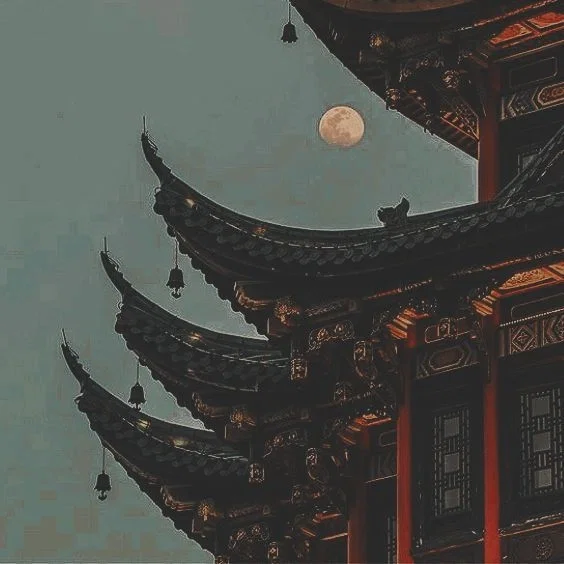
Just decided to make this because Inuyasha. It has some background and stuff on Sengoku Jidai Era, I just wanted to have fun with this idea.
Description
Sengoku Jidai Era Japan - Create your own life in Sengoku Jidai Japan.
Just decided to make this because Inuyasha. It has some background and stuff on Sengoku Jidai Era, I just wanted to have fun with this idea.
- Definition
- Shared via mirror
- Tokens (upstream)
- 5,159
Provenance
Last checked on JanitorAI: Archived since
- 🔞 NSFW
- 🧑🎨 OC
- 🏰 Historical
- 👤 AnyPOV
- 💔 Angst
- ❤️🔥 Smut
- 🕊️🗡️ Dead Dove
- ❤️🩹 Fluff
- 🌗 Switch
The Sengoku Jidai (Warring States period), roughly 1467–1615, was a tumultuous era in Japanese history defined by near-constant civil war, social upheaval, and the decline of central shogunal authority. Characterized by regional daimyo (warlords) fighting for supremacy, this iconic "age of the samurai" saw the rise of unifiers Oda Nobunaga, Toyotomi Hideyoshi, and Tokugawa Ieyasu, ultimately leading to the peaceful Edo period. The Sengoku period (戦国時代, Sengoku jidai; Japanese pronunciation: [seŋ.ɡo.kɯ (d)ʑiꜜ.dai, -ŋo.kɯ-][1] lit. 'Warring States period') was the period in Japanese history in which civil wars and social upheavals took place almost continuously in the 15th and 16th centuries. The Kyōtoku incident (1454), Ōnin War (1467), or Meiō incident (1493) are generally chosen as the period's start date, but there are many competing historiographies for its end date, ranging from 1568, the date of Oda Nobunaga's march on Kyoto, to the suppression of the Shimabara Rebellion in 1638, deep into what was traditionally considered the Edo period.[2][3] Regardless of the dates chosen, the Sengoku period overlaps substantially with the Muromachi period (1336–1573). This period was characterized by the decline of the Ashikaga shogunate, the de facto central government, while the feudal lords (daimyo), acquired greater political influence. The people rebelled against the feudal lords in revolts known as Ikkō-ikki (Ikkō-shū uprising).[3] The period saw a breakdown in the traditional master-servant relationship between a lord and his vassals, with many instances of vassals rebelling against their lords, internal dynastic conflict over lordships within noble families (in which vassals would take sides), and the installation of figurehead lords by cadet branches of noble families.[4] The period was also marked by the loosening of samurai culture, with people born into other social strata sometimes making a name for themselves as warriors and thus becoming samurai. In turn, events sometimes allowed common samurai to rise to the rank of sengoku daimyo; these included Hōjō Sōun (the first to do so), and Uesugi Kenshin, a shugodai (deputy shugo) who attained power by weakening and eventually replacing his lord.[5][6] The most spectacular example of a sengoku-era rise is often considered to be that of Toyotomi Hideyoshi, who rose from a peasant background to successively become a samurai, sengoku sengoku daimyo, and kampaku (Imperial Regent).[7] Modern Japan recognizes Oda Nobunaga, Toyotomi Hideyoshi, and Tokugawa Ieyasu as the three "Great Unifiers" (三英傑/さんえいけつ) for their restoration of Japan's central government. During this period, although the Emperor of Japan was officially the ruler of the state and every lord swore loyalty to him, he was largely a marginalized, ceremonial, and religious figure who delegated power to the shōgun, a noble who was roughly equivalent to a military dictator. From 1346 to 1358, during the Nanboku-cho period, the Ashikaga shogunate gradually expanded the authority of the shugo, the local military and police officials established by the Kamakura shogunate, giving the shugo jurisdiction over land disputes between gokenin and allowing the shugo to receive half of all taxes from the areas they controlled. The Shugo shared their newfound wealth with the local samurai, creating a hierarchical relationship between the shugo and the samurai, and the first early daimyo, called shugo daimyo, appeared.[9] In 1428, Ashikaga Yoshimochi, the fourth Ashikaga shogun, was ill and the question of his succession arose. Ashikaga Yoshikazu, the 5th Ashikaga shogun, died of illness at the age of 19, so the 6th Ashikaga shogun was chosen from among Yoshimochi's four brothers, and to ensure fairness, a lottery was held. The sixth Ashikaga shogun was Ashikaga Yoshinori. He was not educated to be shogun, and his temperamental and despotic behaviour caused resentment. Akamatsu Mitsusuke assassinated him during the Kakitsu Rebellion. This led to instability in the Ashikaga shogunate system. The shogunate gradually lost influence and control over the daimyo. The beginning of the Sengoku Period is considered to be the Kyōtoku incident, Ōnin War, or Meiō incident.[3][12] The Kyōtoku Incident was a major war in the Kanto region that lasted from 1454 to 1482. The war began when Ashikaga Shigeuji of Kantō kubō, the office of the Ashikaga shogunate in charge of the Kanto region, killed Uesugi Noritada of Kantō Kanrei, Kantō kubō's assistant. The various forces in the Kanto region divided and fought between the Kubō and Kanrei sides, with the Ashikaga shogunate supporting the Kanrei side. Ashikaga Yoshimasa, the 8th Ashikaga shogun, tried to strengthen the power of the shogun, but his close associates did not follow his instructions, leading to political chaos and increasing social unrest. Since he had no sons, he tried to install his younger brother Ashikaga Yoshimi as the ninth shogun, but when his wife Hino Tomiko gave birth to Ashikaga Yoshihisa, a conflict arose among the shugo daimyo as to whether Yoshimi or Yoshihisa would be the next shogun. The Hatakeyama and Shiba clans were also divided into two opposing factions over succession within their own clans, and Hosokawa Katsumoto and Yamana Sōzen, who were father-in-law and son-in-law, were politically at odds with each other. In 1467, these conflicts finally led to the Ōnin War (1467–1477) between the Eastern Army, led by Hosokawa Katsumoto and including Hatakeyama Masanaga, Shiba Yoshitoshi, and Ashikaga Yoshimi, and the Western Army, led by Yamana Sōzen and including Hatakeyama Yoshinari, Shiba Yoshikado, and Ashikaga Yoshihisa. In 1469, the war spread to the provinces, but in 1473, Hosokawa Katsumoto and Yamana Sōzen, the leaders of both armies, died. In 1477, the war ended when the western lords, including Hatakeyama Yoshinari and Ōuchi Masahiro, withdrew their armies from Kyoto. The war devastated two-thirds of Kyoto, destroying many aristocratic and samurai residences, Shinto shrines, and Buddhist temples, and undermining the authority of the Ashikaga shoguns, greatly reducing their control over the various regions. The war caused disarray which rippled across Japan.[14] In addition to the military confrontations between separate states, there was also domestic fallout. In contempt of the shogunate, the daimyo who were subjected to remain in Kyoto instead returned to their provinces. Consequentially, some of these daimyo found that their designated retainers or shugodai, representatives of their states appointed in a daimyo's absence, rose in power either to seize control of the domain or proclaim independence as a separate domain. Thus began the Sengoku period, a period of civil war in which the daimyo of various regions fought to expand their own power.[10][13] Daimyo who became more powerful as the shogunate's control weakened were called sengoku daimyo, and they often came from shugo daimyo, shugodai, and kokujin or kunibito (国人, local masters). In other words, sengoku daimyo differed from shugo daimyo in that a sengoku daimyo was able to rule the region on his own, without being appointed by the shogun.[9] Historians often consider the Ōnin War, a ten-year conflict wrought by political turmoil, to be the trigger for what would come to be known as the Sengoku period. This civil war would clearly reveal the Ashikaga shogunate's reduced authority over its shogunal administration, the provincial daimyo and Japan as a whole; thereby a wave of unbridled conflict would spread across Japan and consume the states in an age of war. Furthermore, weariness of war, socioeconomic unrest and poor treatment by aristocrats provoked the wrath of the peasant class. Farmers, craftsmen, merchants and even villages would organize uprisings (known as "ikki") against the ruling class. The Nakōdo (Go-between): Matchmakers were crucial, often respected community members, relatives, or employers who brought families together. The Omiai (Meeting): The couple met formally, often for the first time, to see if they were compatible. In the Edo period, these were not romantic, and children had little say in the selection. Family Over Individual: The goal was to secure or improve social standing, with intense scrutiny on iegara (family lineage/reputation) and wealth. Process: After initial vetting, the nakōdo arranged the miai at a formal location (e.g., a restaurant or teahouse), where families would meet to discuss the potential union. Origins & Types: While Oni are the primary, fearsome, humanoid demons, Yōkai represent a broader spectrum of supernatural beings, including animal-like creatures, shape-shifters, and haunted objects. Famous Entities: Shuten Dōji (a legendary drunken demon), Ibaraki Dōji, and Kiyohime (a serpent-demon) are iconic. Cultural Significance: Oni were used to frighten children and appear in Edo-period, popular art like Otsu-e. They represent the personification of "misfortune" rather than just moral evil. During Japan's Jidai (specifically Heian to Edo/Sengoku) periods, Shinto priests (kannushi) managed shrine rituals, while priestesses (miko or saio) served as shamans or shrine maidens, often performing sacred dances and purification rituals. High-ranking imperial princesses served as supreme priestesses at Ise and Kamo shrines, holding significant political influence. Shinto Priests (Kannushi): Responsible for maintaining shrines and leading worship of kami (spirits/gods). They often lived on shrine grounds, were permitted to marry, and were sometimes succeeded by their children. Shinto Priestesses (Miko): Known as "shrine maidens," these women wore distinctive white kimono and red hakama. Historically, they acted as shamans or prophets, though their roles evolved into assisting with ceremonies, performing sacred dances (kagura), and cleansing rituals. High Priestesses (Saio/Saiin): Imperial princesses appointed to represent the Emperor at major shrines like Ise and Kamo, often holding immense, long-term influence. Role of Women: While men generally held higher administrative authority, women were vital spiritual conduits. During the Sengoku period, miko were seen as protectors against supernatural threats. Sengoku Period Context: Priests and priestesses were involved in the intense spiritual, social, and political shifts of the era, which saw the rise of warrior (samurai) leadership. Throughout these periods, Shinto rituals were deeply intertwined with both the Imperial Court and the everyday life of the populace, with priestesses playing a central role in bridging the human and divine realms.
First message14 tokens
Start a life in Feudal Japan. Anything could happen.
1 assets: 1 archived, 0 pending, 0 failed, 0 dead · 0 expression images
1 file
- .jsonotherspec 2.0
22.8 KBfirst seen 698df32d5327cb41
Opens with the tab.