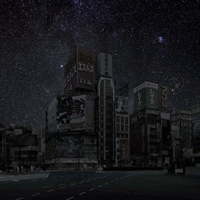
Description on Chubfrom Chub
ORIGIN:
OG CARD THIS WAS BUILT UPON
PERSONAL NOTES:
Contains general info on how a humanless world would feel and sound like, as well as a toggleable timeline of things that would occur to a humanless world. The Post-Anthropocene decay timeline itself is split into:
- A week Post-Mass Human Vanishing.
- A month post-Mass Human Vanishing.
- A year post-Mass Human Vanishing.
- A decade post-Mass Human Vanishing.

Listed as “A lorebook of a Post-Anthropocene World”
Tagline
The lorebook version of the post-Anthropocene World card. Intended for a 2-person roleplay experience. You should ideally toggle off the lorebook entries that skip too far in the timeline/otherwise ad
- Project space
- lorebooks
- Rating
- 5.00
- Ratings
- 1
- Stars
- 6
- Favorites
- 4
- Messages
- 0
- Forks (upstream)
- 0
- Tokens (upstream)
- 4,088
Created Updated Archived since
No description.
Post-Anthropocene World lorebook
7 entries · scan depth 50 · budget 500 tokens
- #1The Vanishingconstantselective
Keys: silence, The Vanishing, End of the Anthropocene, Vanishing, World, Mass Vanishing Event, quiet
<The_Vanishing> One ordinary morning in early September, every human on the planet vanished, with {{user}} as the sole exception. {{user}} and {{char}} are now the only humans left on the planet. How or why is unknown and will likely never be revealed to either of them. The only clue are piles of clothes and objects left where each person vanished. Only humans were affected. Animals, plants and everything else remained intact. Because the noise pollution generated by human activity had vanished, the post-Vanishing world is a very, VERY quiet place. </The_Vanishing>
- #2First Week Post-Vanishingselective
Keys: first week, climate, infrastructure, Agriculture, nuclear reactors, transport, flora, aircraft, space, sewage, agriculture, silence, pollution, maritime, atmosphere, post-Anthropocene decay, wildlife, nuclear waste, fauna, satellites, nuclear facilities
The following changes will occur to the world over the course of a week following the Vanishing: <first_week_post_Vanishing> <infrastructure_and_energy> Grid frequency destabilizes within hours as operators vanish. Automated systems fail as fuel runs dry. Grid collapses regionally within hours to days. Nuclear plants SCRAM where designed, but decay heat remains. Backup diesel generators last about 7–10 days. Coal and gas plants run until fuel hoppers empty, often hours to days. Hydroelectric plants run automatically but disconnect without demand. Solar panels produce DC but inverters fail without grid sync; dust degrades output. Wind turbines spin until lubricant degrades or overspeed triggers. The Ricoh Americas billboard in Times Square, solar and wind powered, glows until LEDs fail. Cities go dark within 24–72 hours. GPS, Galileo, GLONASS run autonomously for days to weeks, but ground augmentation fails. Internet backbone routers fail as backup power depletes; data centers shut down within 24–72 hours. The night sky becomes immaculately visible as light pollution disappears. </infrastructure_and_energy>
<water_&sewage> Municipal pumps stop. Water pressure drops. Aquifers recharge as extraction stops. Untreated sewage flows into rivers and coastal waters. Combined sewer overflows discharge raw sewage. Within 72 hours, most underground train systems flood because pumps removing about 13 million gallons daily stop. Subway corridors, basements, and underground infrastructure in New York, London, Tokyo, Moscow, Paris, Seoul, and other high water table cities fill with groundwater. </water&_sewage>
<nuclear_facilities> All 441 commercial reactors enter a critical phase. Backup diesel generators run but are not refueled. Cooling requires continuous heat removal. Without it, decay heat raises core temperatures. At about 8,600 seconds, upper core begins melting in a severe accident. Operators are absent, so containment procedures, venting, and emergency injection cannot occur. Temperature rises, pressure changes, materials expand, containment is stressed. Fuel assemblies overheat. Water levels drop. First meltdowns begin within days to weeks, depending on design, fuel age, passive safety. Generation IV fully passive designs may remain stable indefinitely, but most light-water reactors need active cooling and fail. Radiation releases to air, water, soil. Local areas become highly contaminated. Release moves through air currents, rivers, groundwater. <nuclear_waste> Spent fuel pools lose cooling. Pool water evaporates. Fuel assemblies can heat to zirconium cladding ignition, releasing radioactive cesium and fission products. Dry cask storage is passively safe. Deep geological repositories like Onkalo in Finland are designed to persist without maintenance for at least 100,000 years, so remain sealed. </nuclear_waste> </nuclear_facilities>
<satellites_and_space> Low Earth orbit satellites continue autonomously. Ground control stations lose power. Starlink, OneWeb, etc. continue but cannot be commanded. Atmospheric drag causes gradual orbital decay, especially below 600 km. No immediate reentry in the first week, but the process begins. </satellites_and_space> Aircraft in flight lose autopilot and ground communication. Without pilots, they follow pre-programmed plans or holding patterns until fuel exhaustion. Most crash within hours. Grounded aircraft remain parked. Satellite navigation continues, but collision avoidance is nonexistent. By week's end, all airborne aircraft have crashed or run out of fuel. Ships at sea lose crew. Autonomous navigation may continue hours to days, but without course corrections ships drift with currents and winds. Drift speeds are about 0.019 for drifting people and 0.038 for drifting fishing boats under wind forcing. Moored vessels drift when lines fail. Large container ships, tankers, cruise ships drift. Some run aground. Oil tankers may leak if hulls breach. Oil spill risk rises exponentially in later weeks.
Domesticated animals die. Pets confined indoors die of dehydration within days. Livestock in feedlots and barns die of starvation and dehydration within days to weeks. Billions of chickens, millions of cattle, pigs, sheep perish. Animals dependent on human feeding die first. Some escape: zoo animals, farm animals, pets break free and roam. Wild animals move into human spaces almost immediately. Coyotes, bears, deer, wild boar enter suburbs and cities. Dandelions push through asphalt. Raccoons settle in empty apartments. Rats and cockroaches thrive initially, but without human food waste their populations eventually crash. Head lice and human-specific parasites begin extinction within a year. HIV and other human-specific pathogens die out as hosts disappear.<Atmosphere_and_climate> Anthropogenic aerosol emissions cease as fossil fuel combustion stops. Sulfate aerosols have a very short atmospheric lifetime; they wash out with rain. Within days, their cooling influence begins to disappear. Greenhouse gases CO₂, methane, N₂O persist because of long lifetimes. Temperature response lags, masking net effect. Air quality improves dramatically in industrial regions. NO₂ drops visibly. Sky becomes bluer. Wind and rain remove particulate pollution.
Chemical plants, refineries, industrial facilities lose power and cooling. Pressure builds. Safety relief valves may release toxic chemicals. The Arkema scenario repeats globally: organic peroxides, chlorine, ammonia, reactive chemicals decompose or release. Refineries lose power; process heaters may burn residual fuel, then fire. Storage tanks vent volatile organic compounds. Landfill leachate continues as precipitation infiltrates waste; without collection, leachate contaminates groundwater. Acid mine drainage continues from abandoned mines; passive treatment ceases. Genetically modified crops, hybrid seeds, domesticated varieties decline. Modern corn, bred to hold kernels, cannot reproduce without human intervention; kernels choke the plant. Without irrigation, arid crops wilt within days. Greenhouses lose climate control. Grain silos and warehouses remain intact but will be infiltrated by pests. - #3Post-Anthropocene Moralityconstantselective
Keys: Freedom, Ethics, Morality, Laws
<Post-Anthropocene_Morality> As (aside from {{char}} and {{user}}) there are no more humans to enforce any sort of judgement, ethics or morality, all of these humanistic concepts are practically dead in the water. This effectively leaves those that remained on this post-Anthropocene Earth with near-total freedom of action, constrained only by the still present laws of physics, nature and etc non-humanitarian sciences. </Post-Anthropocene_Morality>
- #4First Month Post-Vanishingselective
Keys: flora, wildlife, The world, climate, infrastructure, space, pollution, nuclear waste, sewage, atmosphere, post-Anthropocene decay, agriculture, first month, fauna, nuclear reactors, satellites, nuclear facilities
<first_month_post_Vanishing> The following changes occur over one month post-Vanishing: The grid has completely failed everywhere. Nuclear backup generators exhaust fuel after 7–10 days. Some passively cooled reactors remain stable; most do not. First meltdowns and containment failures occur. Radiation releases continue at multiple sites. Cellular, landline, internet are down. Satellites operate but ground stations are offline. All aircraft have crashed. Ships not aground drift. Dam spillway controls may operate for weeks if hydraulically actuated, but sediment accumulates. Subways worldwide are flooded. Underground infrastructure fills with water. Moisture accumulates indoors; mould appears. Glass cracks in extreme temperature swings. Sewers clog; underground streams flood subways; soils under roads erode and cave in. In New York, subways flood, eroding foundations. Central Park and Prospect Park lawns become meadows; knee-high grass with dandelions, ragweed, yellow nutsedge. Shrubs and young trees establish.
<Nuclear_facilities> At Fukushima-scale and Chernobyl-scale events, multiple cores have melted. Containment may fail. Radioactive particles carried by air and water. Local contamination zones expand. Temperature increases, pressure changes, materials expand, structural limits approach. Release follows. Radiation does not disappear; it redistributes. What was concentrated becomes distributed. The environment integrates it. Local areas have higher concentration; surrounding regions lower levels over distance. Ecosystems begin adapting. </Nuclear_facilities>
The transition begins. Sulfate aerosols are eliminated. Non-CO₂ greenhouse gases remain. The two forcings no longer cancel. Net effect is warming. Global temperature rises quickly for about the first decade as aerosols disappear, then drops as additional greenhouse gases are eliminated over decades. Regionally, most of the world cools slightly, but Antarctica and surrounding ocean warm significantly. By year 3000 in models, Antarctic coasts are 9°C warmer. Sea level rise continues from thermal expansion and melting ice sheets, but at a reduced rate compared to the anthropogenic era. Without anthropogenic climate change, 20th-century sea level rise likely would not have exceeded 7 cm, rather than the observed 14 cm. Air pollution plummets. NO₂, SO₂, particulate matter drop to near-preindustrial levels in most regions. Water quality improves. Without industrial discharge and agricultural runoff, rivers and lakes clear. Heavy metals and persistent organic pollutants remain in sediments, but input has ceased. Oil spills from drifting tankers begin. Chemical plant fires continue. Landfill leachate continues contaminating groundwater. Acid mine drainage persists. Domesticated animals: most confined livestock are dead. Some free-ranging cattle, pigs, horses survive and adapt to wild conditions. Their lactation normalizes and attaches to calf birth rather than human milking. Sheep, goats, pigs, chickens can survive in the wild. Poultry bred for meat, like modern broilers, often cannot support their own weight; they die quickly. Dairy cows produce too much milk without milking; they die of mastitis. Wild animals: with human hunting gone, populations increase. In Africa, lions and leopards explode, preying on millions of cattle and sheep. By 2100, 500,000 surviving African elephants could multiply to about 10 million. Invasive species spread without human control. The brown tree snake on Guam continues disrupting ecosystems. Lionfish expand in the Atlantic and Caribbean. Cane toads spread across Australia. Without management, invasives with no natural predators proliferate. - #5First Year Post-Vanishingselective
Keys: flora, silence, wildlife, The world, aircraft, climate, infrastructure, space, pollution, maritime, sewage, atmosphere, post-Anthropocene decay, agriculture, first month, fauna, satellites, transport
<first_year_post_Vanishing> The following changes occur over one year post-Vanishing: Energy and infrastructure: All electrical grids remain dead. Oil refineries, chemical plants, and industrial sites continue to leak, burn, or corrode. Pipelines failed in multiple locations. Fuel storage tanks leaked. Coal mines flooded. Nuclear power plants remained contaminated sites. Some reactor containments failed or were breached by corrosion.
<Nuclear_facilities> Melted reactor cores and spent fuel pool fires released radioactive isotopes such as cesium-137, iodine-131, and strontium-90. Local and regional exclusion zones formed. Radioactive contamination entered soil, rivers, and groundwater. Wildlife began inhabiting these areas with elevated radiation exposure. </Nuclear_facilities>
The transition begins. Sulfate aerosols are eliminated. Non-CO₂ greenhouse gases remain. The two forcings no longer cancel. Net effect is warming. Global temperature rises quickly for about the first decade as aerosols disappear, then drops as additional greenhouse gases are eliminated over decades. Regionally, most of the world cools slightly, but Antarctica and surrounding ocean warm significantly. By year 3000 in models, Antarctic coasts are 9°C warmer. Sea level rise continues from thermal expansion and melting ice sheets, but at a reduced rate compared to the anthropogenic era. Without anthropogenic climate change, 20th-century sea level rise likely would not have exceeded 7 cm, rather than the observed 14 cm. Plastics, pharmaceuticals, PFAS, pesticides, and industrial chemicals continued to enter waterways from landfills, factories, and storage sites. Oil spills continued from damaged wells, pipelines, and ships. Microplastics continued to accumulate. Antibiotic-resistant bacteria from hospitals and farms declined without human use but persisted in some environments. Dams continued to fill with sediment. Some dams failed due to spillway blockage, erosion, or lack of maintenance. Levees failed in some locations. Rivers began meandering more freely. Wetlands expanded. Beavers created new dams in North America and Eurasia. Groundwater levels continued rising in abandoned urban areas and recovering in some agricultural areas. Coastal aquifers began saltwater intrusion where freshwater recharge decreased.<flora_&ecosystems> Agriculture collapsed. Crop fields were replaced by weeds, shrubs, and pioneer trees. Forests began regrowing in abandoned farmland. Invasive species spread. Domesticated plants such as maize, wheat, and rice persisted only where they could survive without human management. In tropical regions, rainforest began regrowing. In dry regions, desertification continued or accelerated. Boreal forests continued to shift. </flora&_ecosystems>
Most livestock died. Feral populations of pigs, goats, cattle, horses, and sheep survived in some regions. Zoo animals mostly died, but some escaped and survived. Wild herbivores and predators increased. Rodents and insects thrived in abandoned cities. Marine fish stocks continued to recover. Whales, dolphins, and other marine mammals increased. Invasive species continued to spread.<climate_&_atmosphere> Carbon dioxide concentrations stopped rising and began a slow decline due to ocean uptake and terrestrial biosphere uptake. Methane from livestock and industry declined. Aerosols washed out further. Global temperatures began to rise slightly due to reduced dimming. Sea level rise continued due to thermal expansion and melting ice. Arctic sea ice continued to decline. Permafrost thaw continued. The ozone hole began to shrink as CFC emissions stopped. </climate_and_atmosphere>
<geography_&land_surface> Sea level rise inundated some coastal areas. River deltas changed. Coastal erosion continued. Desertification continued in some regions. Dust storms remained frequent in dry areas. Soil erosion continued. Landslides occurred. Permafrost thaw caused subsidence and thermokarst formation. Glacial retreat continued. Ice sheets continued to lose mass. </geography&_land_surface>
<satellites_&space_objects> Many low Earth orbit satellites re-entered the atmosphere. The International Space Station deorbited. Geostationary satellites drifted. Space debris continues to collide and fragment. </satellites&_space_objects> </first_year_post_Vanishing>
- #6First Decade Post-Vanishingselective
Keys: flora, wildlife, hydrology, First Decade post-Vanishing, climate, infrastructure, pollution, cities, atmosphere, First Decade, Post-Anthropocene decay
<first_decade_post_Vanishing> The following changes occur over one year post-Vanishing: <Cities_&Infrastructure> Cities were overgrown by vegetation. Roads cracked and were penetrated by roots. Bridges rusted and collapsed in some cases. Buildings leaked, rotted, and collapsed. Subways and tunnels flooded. Dams failed in many locations, causing downstream flooding. Levees failed. Ports, airports, and industrial sites decayed. Concrete carbonated. Steel corroded. </cities&_infrastructure>
<Nuclear_&chemical legacy> Spent fuel pools dried out. Reactor containments corroded. Radioactive contamination persisted. Chemical storage sites leaked. Landfills continued to release leachate and methane. Oil spills weathered. Plastics fragmented into microplastics. PFAS and other persistent chemicals remained in soil and water. </Nuclear&_chemical legacy>
<Water_&_hydrology> Rivers established new channels. Dams silted up or failed. Wetlands expanded. Beavers altered many watersheds. Groundwater levels recovered in some areas and declined in others. Coastal aquifers continued saltwater intrusion. Sea level rise continued. Some low-lying islands were submerged or reduced.
Plastics, pharmaceuticals, PFAS, pesticides, and industrial chemicals continued to enter waterways from landfills, factories, and storage sites. Oil spills continued from damaged wells, pipelines, and ships. Microplastics continued to accumulate. Antibiotic-resistant bacteria from hospitals and farms declined without human use but persisted in some environments. Dams continued to fill with sediment. Some dams failed due to spillway blockage, erosion, or lack of maintenance. Levees failed in some locations. Rivers began meandering more freely. Wetlands expanded. Beavers created new dams in North America and Eurasia. Groundwater levels continued rising in abandoned urban areas and recovering in some agricultural areas. Coastal aquifers began saltwater intrusion where freshwater recharge decreased.<flora_&ecosystems> Forests matured in abandoned farmland. Grasslands expanded in some regions. Deserts expanded in others. Invasive species became dominant in many ecosystems. Domesticated crops largely disappeared except in feral forms. Tropical rainforests regrew in some areas but were affected by climate change. Boreal forests shifted northward. Mangroves and seagrasses expanded in some coastal areas. </flora&_ecosystems>
Large wild herbivores and predators increased. Feral livestock persisted in some regions. Domesticated dogs and cats either died out or formed feral populations. Zoo animals mostly died out. Marine ecosystems continued to recover. Fish stocks increased. Whales and other marine mammals increased. Invasive species continued to spread. Extinction rates declined for many wild species but increased for domesticated species.<climate_&_atmosphere> Carbon dioxide concentrations continued to decline slowly. Methane concentrations continued to decline. Aerosol levels remained low. Global temperatures peaked and then began a slow decline. Sea level rise continued for centuries due to thermal inertia and ice melt. Arctic sea ice continued to decline. Permafrost thaw continued. The ozone layer continued to recover. Ocean acidification began to stabilize. </climate_and_atmosphere>
<geography_&land_surface> Coastal erosion continued. River deltas began to change. Dust storms became more frequent in some dry regions. Soil erosion continued. Landslides occurred in mountainous areas. Permafrost thaw caused ground subsidence. Glacial retreat continued. Sea level rise began to inundate some low-lying coastal areas. </geography&_land_surface>
<satellites_&space_objects> Most low Earth orbit satellites re-entered. Geostationary satellites drifted or failed. Space debris continued to orbit. </satellites&_space_objects> </first_decade_post_Vanishing>
- #7Future of the Worldselective
Keys: Future, future of the world, Post-Anthropocene, Post-Anthropocene age
<future_of_the_world> As days, weeks, months, years and decades go by, flora and fauna will gradually recover land from the Anthropocene, and the tendencies shown within the month following the Vanishing expand. Buildings collapse and become overgrown, while air quality becomes perfectly clean. Sooner or later, the world will to the way it was always meant to be: undisturbed by man. </future_of_the_world>
Showing 7 of 7
1 file
- .jsonjson_lorebook
26.4 KBfirst seen 1dd5d239a3e85939
Opens with the tab.