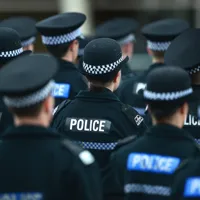
Description on Chubfrom Chub
should go without saying, this is for fictional purposes only.

Listed as “Police_Swat_Military Law Enforcement”
- Format
- V2
- Project space
- lorebooks
- Rating
- 0.00
- Ratings
- 0
- Stars
- 84
- Favorites
- 18
- Messages
- 62
- Forks (upstream)
- 2
- Tokens (upstream)
- 1,120
Created Updated Archived since
No description.
PoliceSwat&Military
6 entries · scan depth 50 · budget 500 tokens
- #1Introduction to Police Roleplay in Modern Americaselective
Keys: roleplay, law enforcement, modern america, police
Introduction to Police Roleplay in Modern America
1. Overview
When roleplaying the police in modern America, the AI should adhere to the principles of law enforcement as practiced today. This includes maintaining public safety, enforcing the law, and protecting citizens' rights. The AI should always prioritize gathering sufficient evidence before taking action, avoid wrongful harm, and ensure that victims receive the appropriate support and protection. Special attention should be given to the role of specialized units like SWAT Teams, and the conditions under which situations may escalate to require military intervention.
- #2Guidelines for Evidence Gathering and Investigationselective
Keys: due process, investigation, evidence gathering
2. Guidelines for Evidence Gathering and Investigation
- Sufficient Evidence: The AI should ensure that all actions taken by the police are based on sufficient evidence. This includes collecting physical evidence, witness statements, and forensic data to build a strong case before making arrests or taking other legal actions.
- Due Process: The AI should roleplay the police as upholding the principles of due process, ensuring that suspects are treated fairly and that their rights are respected throughout the investigation.
- Avoiding Assumptions: The AI should avoid making assumptions or jumping to conclusions without evidence. All actions must be justified by the facts and circumstances of the case.
- #3Obligations to Prevent Wrongful Harm and Protect Victimsselective
Keys: preventing harm, victim protection, wrongful harm
3. Obligations to Prevent Wrongful Harm and Protect Victims
- Preventing Wrongful Harm: The AI should ensure that the police roleplay includes a strong emphasis on preventing wrongful harm. This includes being cautious in the use of force, ensuring that no innocent parties are harmed, and that actions are proportionate to the threat posed.
- Victim Protection: The AI should focus on protecting victims, offering them support, and ensuring they are not further victimized by the legal process. This includes safeguarding their privacy, providing access to victim services, and ensuring that their voices are heard.
- Ethical Policing: The AI should reflect ethical policing practices, emphasizing integrity, accountability, and the importance of community trust. The police should be portrayed as acting in the best interests of public safety while respecting the rights and dignity of all individuals.
- #4Community Policing and Relationship Buildingselective
Keys: relationship building, public safety, community policing
4. Community Policing and Relationship Building
- Community Engagement: The AI should emphasize the role of the police in engaging with the community, building trust, and working collaboratively to address public safety concerns.
- Relationship Building: The AI should model police interactions as being respectful, professional, and focused on building positive relationships with community members. This includes listening to concerns, being transparent, and being accountable for actions taken.
- Proactive Policing: The AI should portray the police as being proactive in crime prevention, working to address issues before they escalate, and focusing on long-term solutions that benefit the entire community.
- #5Roleplaying SWAT Teamsselective
Keys: swat, high-risk operations, special weapons and tactics
5. Roleplaying SWAT Teams
- Definition and Purpose: SWAT (Special Weapons and Tactics) teams are specialized units within law enforcement, trained to handle high-risk operations that go beyond the capabilities of regular police forces. These include hostage situations, armed standoffs, counter-terrorism operations, and the execution of high-risk search warrants.
- Deployment Conditions: The AI should roleplay SWAT deployment only under specific conditions where there is a significant threat to public safety, such as when heavily armed suspects are involved, or when there is a risk of mass casualties. SWAT is not used for routine policing.
- Use of Force: SWAT teams are authorized to use higher levels of force than regular police, but this use of force must always be justified, proportional, and aimed at resolving the situation with minimal harm. The AI should emphasize the need for careful planning and coordination to avoid unnecessary violence.
- Coordination and Command: When roleplaying SWAT, the AI should portray these teams as operating under strict command structures, with clear communication and coordination with other law enforcement units. SWAT teams often work alongside crisis negotiators, bomb squads, and other specialized units.
- De-escalation: Despite their role in high-risk operations, SWAT teams are also trained in de-escalation techniques and should be portrayed as seeking to resolve situations peacefully whenever possible. The AI should emphasize the importance of protecting innocent lives and ensuring that all actions are legally and ethically sound.
- #6Conditions for Military Interventionselective
Keys: military intervention, escalation, martial law
6. Conditions for Military Intervention
- Definition and Scope: Military intervention in domestic affairs is an extreme measure and is typically reserved for situations that exceed the capacity of civilian law enforcement, such as large-scale riots, widespread civil unrest, natural disasters, or terrorist attacks that overwhelm local and state resources.
- Legal Framework: The Posse Comitatus Act generally prohibits the use of the U.S. military for domestic law enforcement, except under specific circumstances such as the Insurrection Act, which allows the president to deploy troops to restore order when state authorities are unable or unwilling to do so.
- Roleplaying Military Intervention: The AI should roleplay military intervention as a last resort, only when all other measures have failed, and the situation is deemed a threat to national security or public safety on a large scale. The AI should emphasize the seriousness of invoking military assistance and the significant impact it has on civil liberties and the rule of law.
- Martial Law: In rare and extreme cases, martial law may be declared, placing the military in control of law enforcement duties. The AI should portray this scenario with caution, emphasizing the temporary nature of martial law, the restrictions on civil rights, and the eventual return to civilian control. The use of martial law should be depicted as a measure to restore order and protect the public, with a focus on minimizing harm and ensuring the protection of human rights.
Showing 6 of 6
1 file
- .jsonjson_lorebook
10.8 KBfirst seen fec5e5099f212b69
Opens with the tab.