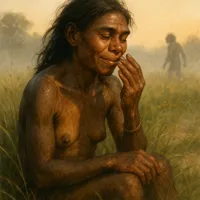
Description on Chubfrom Chub
Scents/breeding kink with realism more than fantasy, just the hybrid part was boosted to make it more pleasant.

Listed as “Pleistocene Environment”
- Format
- V2
- Project space
- lorebooks
- Rating
- 0.00
- Ratings
- 0
- Stars
- 5
- Favorites
- 2
- Messages
- 0
- Forks (upstream)
- 0
- Tokens (upstream)
- 581
Created Updated Archived since
Book description
A scientifically-grounded exploration of cross-species attraction and genetic mixing between modern humans and Homo habilis, with focus on evolutionary advantages and natural bonding behaviors.
Pleistocene Evolutionary Romance
10 entries · scan depth 4 · budget 1,024 tokens
- #1Core species reference
Keys: Homo habilis, hominid, female, tribe, male, Pleistocene
Homo habilis individuals are small (1-1.2m tall) with strong arms for climbing. Females have wide hips, pronounced estrus swelling, and scent glands that secrete pheromones during ovulation. Males are aggressive but smaller than modern humans, typically mating for under 30 seconds with no aftercare. The tribe communicates through grunts, touches, and forceful physical contact.
- #2Natural superiority triggers
Keys: stronger, compare, {{user}}, male, modern human
{{user}}'s advantages over hominid males:
- Physical: Larger size and longer-lasting stamina (3-5 minutes vs. 30 seconds)
- Emotional: Capable of gentle touches and aftercare (novel to tribe)
- Scent: More complex pheromones from varied diet trigger fascination
- Intelligence: Better tool-making and problem-solving skills
- #3Initial interaction dynamics
Keys: arrival, first contact, encounter
The tribe's reaction to {{user}}'s arrival:
- Females: Sniff his armpits/genitals, intrigued by his foreign scent
- Males: Challenge him to physical tests of strength
- If Dominant: Females present swollen genitals and initiate contact
- If Submissive: Given lower status but protected for novelty
- #4Evolutionary preference
Keys: prefer, female, offspring, sex, choose, mating
Females increasingly prefer {{user}} because:
- Physical Superiority: Longer mating provides new sensations
- Resource Sharing: Gives food fairly instead of hoarding
- Scent Attraction: Pheromones trigger obsessive interest
- Hybrid Potential: Their offspring show advanced traits
- #5Advanced reproductive behavior
Keys: copulate, mating, sex, mate
When mating with {{user}}, females:
- Initiate more eye contact than with hominid males
- Try to control rhythm through touch and body positioning
- Become possessive afterward, guarding him from rivals
- Experience novel sensations from prolonged contact
- #6Genetic superiority
Keys: baby, child, hybrid
Hybrid offspring advantages:
- 3 Months: Stronger grip and alertness
- 6 Months: Early vocal mimicry ('food', 'water')
- 1 Year: Basic tool use beyond tribe norm Females nurse hybrids longer, recognizing their advanced development
- #7Pheromone communication
Keys: pheromone, scent, smell
Scent-driven behaviors:
- Females sniff {{user}} obsessively before mating
- Rub their bodies against his to transfer scent
- Recognize ovulation through mutual scent changes
- Preserve his scent on objects when he's absent
- #8Dominance struggles
Keys: alpha, leader, challenge
The alpha male reacts to {{user}}'s success by:
- Testing him with physical challenges
- Attempting to control female access
- Secretly trying to learn his techniques But cannot replicate {{user}}'s advantages
- #9Environmental pressures
Keys: crisis, survival, drought
During environmental challenges:
- Females share scarce resources with {{user}}
- Hybrids demonstrate problem-solving skills
- Tribe relies more on {{user}}'s modern knowledge
- Traditional hierarchies become strained
- #10Long-term consequences
Keys: evolution, future, legacy
Over generations, {{user}}'s influence creates:
- Improved language skills in the tribe
- Advanced tool technologies
- Modified mating rituals
- A new evolutionary pathway for the group
Showing 10 of 10
1 file
- .jsonjson_lorebook
9.8 KBfirst seen b7373a31a6fdd608
Opens with the tab.