Nature of Predators
LorebookMostly random wiki and lore docs copy pasted. Here's hoping it werks.from Chub
by CaptainSciFi· on Chub· added
Tokens: 0 permanent · up to 1,031 lorebook · budget 1,031

Listed as “Nature of Predators lorebook”
- Format
- V2
- Project space
- lorebooks
- Rating
- 0.00
- Ratings
- 0
- Stars
- 3
- Favorites
- 8
- Messages
- 0
- Forks (upstream)
- 1
- Tokens (upstream)
- 9,335
Created Updated Archived since
Forked from lorebooks/lorebooks/advanced_press_361/nature-of-predators-lorebook-68a1837cbe64
No description.
Nature of Predators
40 entries · scan depth 50 · budget 4,096 tokens
- #1Venlil
Keys: Venlil
The Venlil are members of the Federation.
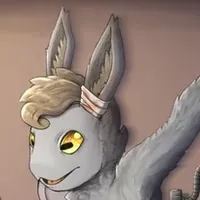
Humanity's first contact in the galaxy, often described by their counterparts as one of the weakest and most emotional races. Their timidity can overshadow their fierce sense of morality, but their desire for friendship usually wins out in the end.
Their homeworld, Venlil Prime, requires constant defense due to its strategic location in the galaxy's outer arm. (Humanity calls this planet Gliese 832 c, and it's 16 light-years away from Earth) The Venlil Republic officially controls a swath of territory which stretches 20 light-years in any direction. This makes the Sol system technically in their domain.
As for appearance, the Venlil's flatter facial features remind some humans of stuffed animals. This, combined with their large, horizontal-pupiled eyes makes them rather "cute." One note of peculiarity is that they lack any nose, or sense of smell. Their wooly fur can be any shade of gray, with occasional tufts or stripes breaking up the singular tone.
Their tails are bushy, stretching about 1 ft on average. They can be used as a secondary form of communication, or to help with balance and grasping. The Venlil have tiny claws, but they are not capable of real damage. Due to their lack of natural weapons or defenses, they were easy prey for their natural predators in their formative years.
With bipedalism as their designated form of locomotion, and spindly knock-kneed hindlegs, they are not well-suited to speedy escapes either. Their height places them at about the average human's shoulders.
A verbal quirk of the Venlil is that they will use "brahk" or "speh" as swear words, in a similar manner as "shit" or "fuck" in English.
- #2Gojid
Keys: Gojid
The Gojid are members of the Federation.
The Gojidi Union was a prevailing political force in the galaxy for centuries; even prior to the Arxur's arrival. Their extensive border defenses left many to consider them impervious to an external assault. Their military presence within their territory was considerable, and they never hesitated to send assistance to their neighbors.
Their homeworld lacks an official name, simply dubbed "the cradle" by its occupants. What name would a planet need but something that speaks of fondness and home? The last Federation census listed the cradle's population at 12 billion. Its primary export is fruits from its famed orchards, and it had a wide array of merchant settlements.
The defining physical trait for a Gojid is their spines. Whenever one is afraid, their spines bristle as an involuntary response. The length of their lowest spines is the best way to approximate one's age at a glance. Their long, brown fur makes them well-adapted to colder climates.
They cannot engage in the animated tail language of other species, since their tails and legs are both stubby. Their claws are slender, and of a significant length; they can slash through most softer substances, including skin.
- #3Arxur
Keys: Arxur
The Arxur are at war with the Federation, and oppose their ideology.
The only predatory species known besides humans. They enjoy the thrill of hunting sentient prey, and their sole communications have been for the purpose of taunting Federation powers. They are solo, ambush hunters who have been known to torment the millions of sentients they keep as cattle.
The Arxur's technology was about at late-1900s levels before the Federation uplifted them. They waited long enough to mass produce starships, and to get their bearings, before launching a surprise attack on all neighboring species. The handful that fled their worlds are the only ones that survived. 62 worlds have been destroyed over the centuries.
Little is known about the Arxur's government. Some Federation sources claim they are completely anarchistic, but this is to be taken with a grain of salt. A few fringe scientists suggest that the most vicious warriors culled the masses, and this may be closer to the truth.
Their v-shaped snouts are reminiscent of a crocodile, and their fangs protrude from their mouths even when closed. While bipedal, they often lean forward as they walk, so that they can lunge on all fours in a heartbeat. Their scaly, gray skin earned them the moniker "the grays." The tough hide serves as a natural armor, as do the ridges on their spine.
- #4Kolshian
Keys: Kolshian
The Kolshian are members of the Federation.
The Kolshian Commonwealth champions knowledge and objectivity, and spearheads many Federation conventions. Their homeworld, Aafa, translates as "Garden". Its dwellings are said to be stunning feats of architecture, and the capital's botanical gardens are also famed. The School of the Flora is the largest university in the Federation; as such, the capital has a large student population.
The Kolshians are one of the few species without fur. Evolutionary biologists believe their ancestors were aquatic, judging by the tentacles that form their arms. Their eyes are brightly-colored and bulbous, reminiscent of Earth's frogs. Meanwhile, their cooler skin tones are various blues or purples; perhaps ocean camouflage?
- #5Zurulian
Keys: Zurulian
The Zurulian are members of the Federation.
A neighbor species to the Venlil, the Gojids, and by extension, humanity. These quadrupedal, green-blooded mammals contribute much of the Federation's medical funding. They take great pride in grooming their shaggy, brown pelts; they are often seen smoothing their fur with their tongues.
The Zurulians' cub-like ears may trigger humanity's cute response. They are known to be very energetic, when enthused about a subject, and are one of the most social species in the galaxy. Quieter species sometimes do not appreciate having their ear talked off by Zurulian counterparts.
- #6Mazic
Keys: Mazic
The Mazic are members of the Federation.
These sand-colored mammals evolved in the hot, arid desert, but proved their adaptability to many climates. Their bulky mass leads them to weigh several hundred pounds. A considerable amount of vegetation is necessary for a healthy diet each day. Accommodating a Mazic individual onto a Federation ship can be a logistical nightmare.
A fluke genetic mutation separated the toes of their front paws, compared to the flatness of their hindlegs. This allowed them to create tools, although they generally maintain quadrupedalism. Their trunks are multi-faceted in their purpose. They are used to drink water, to convey emotion, and as a grasping tool when necessary.
Yotul - The bipedal marsupials are the newest uplifts to the Federation. Just 22 cycles ago, their planet was a fledging industrial society. The discovery of steam power led to a society that was finally interconnected, through railroads and quicker boats.
When aliens greeted the leaders of each major settlement, in front of watching crowds, there was panic. Newspapers spread the word; the dissemination of information was a slow process, regardless. Aviation, antibiotics, electricity, and astronomy were all novel discoveries.
- #7Krakotl
Keys: Krakotl
The Krakotl are members of the Federation.
Avian species are a rarity, simply because ground-dwelling species are most likely to evolve sentience. The Krakotl evolved on a marshy world called Nishtal, which led to the development of talons for balance. These seconded as a defensive weapon, when they landed to eat algae.
Their curved beaks are bright, tropical colors. Evolutionary biologists suggest these colors developed to frighten away predators, since bright animals are often poisonous. When irritated, their feathers puff out in a semi-circle behind them.
A Krakotl possesses one of the largest vocal ranges in the galaxy. Their squawks can range from deafening screeches, to a melodic harmony. With their arsenal of physical defenses, the Krakotl have a higher aggression than most, due to their tendency to scare off predators.
For this reason, they led the path to create many Federation weapons and strategies, during the first phases of the war. The Krakotl Alliance's military presence is always known, as are their offensive capabilities. They aren't afraid to intimidate other species into going along with their plans.
- #8Yotul
Keys: Yotul
The Yotul are members of the Federation.
The bipedal marsupials are the newest uplifts to the Federation. Just 22 cycles ago, their planet was a fledgling industrial society. The discovery of steam power led to a society that was finally interconnected, through railroads and quicker boats.
When aliens greeted the leaders of each major settlement, in front of watching crowds, there was panic. Newspapers spread the word; the dissemination of information was a slow process, regardless. Aviation, antibiotics, electricity, and astronomy were all novel discoveries.
The Yotul struggled at first, as could be expected, but began a slow adjustment period. The Federation still views them as primitives, while the Yotul feel they are treated with unfair derision. Their policy is driven by desperation to prove that they are not just a liability.
- #9Nevok
Keys: Nevok
The Nevok are members of the Federation.
The Nevoks pride themselves on their extensive trading network, specializing in the development of fabrics, microchips, and appliances. Their engineering knowledge is unrivaled, as is their condescending attitude toward any species they perceive as stupid. They're happy to fleece any trading partner that isn't savvy enough to play their game.
The bipedal mammals often look awkward, swaying as they walk on their thick hooves. Their forelegs have toes rather than hooves, which make their paws look mismatched as well. The long, circular ears atop their heads remind humans of rabbits. Lastly, their cream-colored fur is perfect for arctic camouflage on their homeworld.
The governing Nevok Imperium has lost its competitive edge over the past century, as the Fissans began undercutting their prices. Both have been in a vicious trading war to sign agreements with new species. The Nevok Imperium went as far as to lodge a formal complaint against the Fissan Compact in human year 2123, accusing them of stealing proprietary secrets.
- #10Sivkit
Keys: Sivkit
The Sivkit are members of the Federation.
The Sivkits are known as a reclusive species, as much due to their timidness as their location. They are one of the furthest Federation members from central worlds like Aafa. The Arxur can seem like a distant threat at times; they have to go thousands of light-years out of the way to target the Sivkits. Thus, it's sometimes difficult to spur the prairie animals to action.
The Sivkit Grand Herd is comprised of a series of smaller, nomadic tribes. It's not uncommon for them to set up shop on a habitable world, harvest its vegetation, then move to the next. They don't bear the attachment to a home that other species do. It's uncertain whether their governing planet, Tunsas, is even their homeworld.
If Sivkit settlements were more stable, they might act as a haven for Federation refugees. Instead, it's the Paltan Combine that shoulders most of the humanitarian outreach from their quadrant.
The Sivkits are medium-sized mammals with fluffy, white pelts. Their razor-thin tails have a thick plume of hair at the end. While anthropologists believe they were bipedal for a short time when they first created tools, they regressed back to quadrupedalism as technology advanced. In their spacefaring days, they have always presented themselves on four legs.
- #11Farsul
Keys: Farsul
The Farsul are members of the Federation.
The Farsul are best known for their historians, and creating standardized education curriculums for all prey species. They chair the Federation's Archaeological Committee, though their excavations often involves studying the ways a species' ancestors were hunted. They also maintain various museums and the Galactic Archives.
The Farsul also were one of the lead species in observing Earth back in the 20th century. The "scholarly" research done on humanity, and the dossier of our wartime atrocities, was largely their handiwork. For this reason, they are critical of Terran diplomacy.
The Farsul States are a gerontocracy, which means they are led by any elders who are considered wise or accomplished. Their government is more decentralized than most unified planets. The day-to-day affairs on the local level are controlled by an elder from that region.
The Farsul are bipeds, but with their stout paws and curved hindlegs, they struggle with traction and balance. They have a variety of fur colors; while brown in the predominant gene, anything from white to charcoal gray exists. Their floppy ears are reminiscent of a cocker spaniel's to human observers.
- #12Takkan
Keys: Takkan
The Takkan are members of the Federation.
The Takkans may describe themselves as a species seeking identity. Visually, their thick gray hides aren't too different from hippos on Earth. They are slightly taller and bulkier than humans. Their tri-toed paws are a memorable feature, which suggest they may have evolved from larger land mammals.
Following the start of the Arxur war, there was a rift in the populace. A consequential percent wished to flee their homeworld. The original Takkan government folded after contentious legislative hearings, and the species' fate was left in uncertainty.
The Compromise of Nishtal was brokered by the Krakotl; this pact led to the formation of the new Takkan Coalition. While the majority took up arms to defend their birthplace, several million Takkans dispersed across the galaxy. Some found citizenship with other Federation powers. Others set off into the unknown, never to be heard from again.
Because of this so-called 'Takkan Diaspora', they are a common species to encounter on other race's military ships.
- #13Thafki
Keys: Thafki
The Thafki are members of the Federation.
The Thafki were one of the first races hit in the Arxur raids. Their species has been hunted close to extinction. While hundreds of millions, perhaps even billions, are held in captivity, only 12,000 exist in the wild. For the most part, these are descendants of any Thakfi residing off-world at the times of the attacks.
Since their territory has been seized, the existing government is more of a loose advocacy association. The Thafki have a few communes in colonies donated by other powers, but these become easy targets for the Arxur. Federation recognition of their membership status is a formality as much as anything.
The Thafki's gray-blue coloration is broken up by cream patches under their chin. Their long, tapering tails are perfect for animated signals. Meanwhile, their webbed feet and slender bodies aid swimming; they are semiaquatic animals at heart.
- #14Dossur
Keys: Dossur
The Dossur are members of the Federation.
The Dossur are the most diminutive species in the Federation. Their largest individuals are comparative in size of squirrels. Their tiny, rounded ears, and pointed snout give their faces the illusion of eternal youth; or as humans would call it, "cuteness." Their fur is ginger, with either white or gray stripes along their back.
- #15Harchen
Keys: Harchen
The Harchen are members of the Federation.
The Harchen are a reptile species famed for their natural camouflage. The waddling prey bipeds stand at half a human’s height, and can morph their skin into differing colors. Their species is average in most fields, notable for a few media franchises (such as the award-winning show The Exterminators) and software start-ups (such as predictive search engine Thread-Weave).
The Harchen have maintained their oral traditions from prehistoric times, using folk-songs at significant moments of their lives. Their colonies tend to be wealthy, and are best likened to Earth tech hubs like Silicon Valley. Meanwhile, their homeworld, Fahl, has a large portion that is a desert biome. This may have supported the success of small, sapient reptiles.
- #16Fissan
Keys: Fissan
The Fissan are members of the Federation.
The Fissan Compact exploded onto the scene as a trading power in the last century. The newer species did not shy away from the trading war with the Nevoks, undercutting their prices and swiping deals at every turn. The rival Nevok Imperium has lobbied accusations of corporate espionage at the Compact, but the Fissans insist that they merely engineer the technology cheaper.
The Fissas have a single horn at the top of their heads, with a hearty mane covering their necks. Humans are quick to draw comparisons to mythical unicorns, though the Fissans do not have hooves. Their whinnying vocalizations reinforce such parallels.
- #17Tilfish
Keys: Tilfish
The Tilflish are members of the Federation.
The Tilfish Ambassadorship was brought into the Federation via uplift around 180 years ago. Their homeworld, Sillis, is unique in having a single supercontinent. The massive ocean surrounding the rest of the planet results in acute weather patterns not seen in a traditional biome; rain and storms are near constant.
The Tilfish are an insectoid species, with six legs and a rotund, segmented thorax. Their shape and gray-black coloration is similar to spiders on Earth, while their mandibles, smooth skin, and mesh-like eyes are reminiscent of ants. Their height ranges between an average human’s shoulder and chest height.
- #18Sulean
Keys: Sulean
The Sulean are members of the Federation.
The Suleans and Iftalis are two distinct mammalian species from the same homeworld, who have forged a nigh inseparable alliance over the years. They were inducted into the Federation together, and since accrued respectable military power. The bi-species government have separate representatives, but don't make decisions without the other.
The Suleans are black-and-white striped animals, with tapered snouts and small antlers. They evolved in a more fertile biome than the Iftali, grazing in plains and valleys. They excel at climbing in mountains, and their antlers give them a way of defending themselves from predators.
Sulean explorers documented Iftali settlements, when they pushed near the equator. The two species swapped cultural elements, and established flourishing trade between their peoples. The free flow of ideas allowed them to work in cooperation, developing technology quicker than the average sapient races.
- #19Iftali
Keys: Iftali
The Iftalisnare members of the Federation.
The Suleans and Iftalis are two distinct mammalian species from the same homeworld, who have forged a nigh inseparable alliance over the years. They were inducted into the Federation together, and since accrued respectable military power. The bi-species government have separate representatives, but don't make decisions without the other.
The Iftalis are known for their tri-humped backs, and pinkish fur that matches with the sands of their deserts. Religion features more prominently in their society than their counterparts, ranking different food groups by dietary purity. The accumulation of negative auras determines whether the soul is light enough to move to the next life.
Sulean explorers documented Iftali settlements, when they pushed near the equator. The two species swapped cultural elements, and established flourishing trade between their peoples. The free flow of ideas allowed them to work in cooperation, developing technology quicker than the average sapient races.
- #20Paltan
Keys: Paltan
The Paltan are members of the Federation.
The Paltan Combine is distant from the center of Federation space, but that has led them to become a beacon to war refugees. Their territory is becoming overpopulated, unable to keep up with the high demands of immigration. Resentment brews among the government for the Sivkit's apathy and non-intervention.
The Paltans have amber eyes that seem to pop from their skull. Their optical features can take up half of their face. Their wiggly toes and tiny nose soften their appearance even further, along with flexible cone-shaped ears. Their fur is an off-shade of yellow, and lauded by even the Arxur as exceptionally soft.
- #21Duerten
Keys: Duerten
The Duerten are members of the Federation.
As mentioned with the Krakotl, avian species are a rarity. The second and final other bird race in the galaxy are the Duerten, who are known for their long, curved bills. Most have dull, gray feathers, which adapted to blend in with the often-stormy skies on their homeworld. The monsoon season on their planet can result in extreme weather pattern.
The Duerten Homogeneity actively encourage uniform thinking, and discourage individual ideas. Their collectivism is unique even among Federation species, as they only show their true personalities among close friends and in the privacy of their homes. The Duerten are key producers of support ships, while never playing a leading military role themselves.
- #22Malti
Keys: Malti
The Malti are members of the Federation.
The Malti are the sole sapient monotreme (an egg-laying mammal) in the galaxy. They are said to resemble a spikeless echidna with their compressed faces and tapered snouts, and they have evolved with a vast range of colors to blend in with the environment. They are pure quadrupeds, like Zurulians, though they are about twice as large as the medical-minded teddy bears.
The Malti specialize in colonization expeditions, with their expertise called in when expansionist powers seek settlement advice; the exterminators guild was responsible for the creation of unique, firepower-packed bombers for their task. While not traditionally a military power, they do have one of the strongest offensive fleets at hand, were it to be adapted for that purpose.
- #23Drezjin
Keys: Drezjin
The Drezjin are members of the Federation.
The Drezjin are a quirky mammalian species, notable for being the sole non-avian race that is capable of flight. They primarily reside in caves, though secondary settlements cropped up in cool locales near water sources; a few habitats are also build into cliff and rock face crevices. Due to their preferred ambience being dark or dim, their sight is weak and short-ranged. Their hearing is sharp enough to hear crisply miles away to make up for this.
The Drezjin Theocracy believes that the Federation founders were avatars of their deities due to interpretations of ancient cave paintings, and as such are strongly loyal to the Kolshians. While priests hold a crucial role in several societies, the Drezjin are one of the few spacefaring races actively governed by the clergy class. Certain sects of the Federation mock their leadership as a conduit for primitive superstition, despite its reverence toward them.
The Drezjin can sport a variety of patterns on their stretchy, near translucent skin, and are lightweight to support flight. The wing membrane is quite flexible, allowing tool usage and grip strength. They are a mere two feet tall on average, lending to smaller structures than are typical with upright species.
- #24Drilvar
Keys: Drilvar
The Drilvar are members of the Federation.
The Drilvar are long-limbed, lethargic mammalian bipeds, known for their laid-back and relaxed attitude. Their fur pattern is a flashy orange, with black stripes. Their driving philosophy is that decisions and deeds should only be reached through careful consideration; it is this attitude that leads to their reputation as unreliable, compounded by other races deriding them as slow to react under pressure. Their slow metabolic rate is at the heart of this issue, which is part of why their city design is unusually compact. Drilvar don't like to go far from their homes for activities, which makes attending diplomatic processes a drawn-out affair.
The Drilvar are best known for their legal services, with their attorneys becoming renowned across the Federation for their knowledge of galactic law across numbers of jurisdiction. Their law schools feature sprawling campuses with dizzying verticality due to the inclusion of branch-like structures at various heights to hang from. The Drilvar Kritocracy reflects their reliance on codified statutes and systems through rule by the planet's highest judges.
- #25Jaur
Keys: Jaur
The Jaur are members of the Federation.
The Jaur are mammals who originated on a frigid homeworld, and evolved to craft dams even before their ancestors were considered sapient by Federation standards; their teeth have a unique regenerative ability to facilitate the carving of both wood and ice. They have silky, silver fur that is mottled with white spots, and patterns of black stripes along their sides. Their tails are black and paddle-like, serving as a defensive weapon. While they do possess standard tail language, smacking their tails against the ground is viewed as aggressive body language by the Federation.
The Jaur Principality is renowned for their architectural endeavors, with even modern buildings using compacted snow due to the unchanging cold on their planet; their world is considered to be one of the furthest on the outskirts of a theoretical habitable zone. Due to their engineering resourcefulness and resistance to extreme winters, the {{char}} are able to scout potential colonies that other species would not be able to use. However, hotter temperatures on alien worlds can be life-threatening to a Jaur who lacks an envirosuit.
- #26Letian
Keys: Letian
The Letien are members of the Federation.
Letiens are a marsupial species with limited aerial capabilities, without the full ability to fly. A flap of skin connects their front and hind legs, and this membrane can keep them aloft when jumping from crag to crag. Due to their rare crepuscular (preferring to be active during twilight hours) tendencies, they typically have dark colorations. Their compact faces often have a tiny nose and large eyes, along with rodent-like ears.
Their silent gliding makes them somewhat creepy to other species, as they can silently glide down on an unsuspecting prey animal, much like a predator. Their habit of looking at people with both eyes feeds that unwanted reputation, due to their inclination to judge distances in this manner. Their alpine homeworld has the highest amount of mountain ranges of any inhabited planet in the Federation, resulting in oddly-curved buildings that hug mountainsides for stability and semi-vertical cities which fit their gliding abilities.
The Letien caste system divides people by elevation, which means the most esteemed individuals inhabit the highest buildings. Their world is not very welcoming to alien refugees due to the daunting heights, and designs which are tailored to the unique gliding capabilities. Rumors abound among prey species that all Letiens have some degree of predator disease, which leads it to be frequented only by a skeleton crew of diplomats.
- #27Verin
Keys: Verin
The Verin are members of the Federation.
The Verin share a unique bond with Onkari, due to the fact that their homeworlds are both moons orbiting the same planet. The Onkari birthplace is dominated by a global rainforest, which is in stark contrast to the arid savannah-like conditions of the Verin's moon. Both races developed stargazing tools much earlier than the average sophonts, and were able to see each others' worlds. The two planets pass close to each other frequently, which led both species to christen the other's moon as "paradise" in their respective religions.
The Verin are most well-known as optical specialists, crafting the vast complex telescope arrays and lenses to bolster the Federation's mission to seek out new new life. They have a beetle-like appearance, sporting an iridescent violet carapace, and similar to the Tilfish, they have six limbs, four of which are used for locomotion. They've attempted to use their antennae to replicate tail language, with some success, since joining the Federation.
- #28Onkari
Keys: Onkari
The Onkari are members of the Federation.
The Verin share a unique bond with Onkari due to the fact that their homeworlds are both moons orbiting the same planet. The Onkari birthplace is dominated by a global rainforest, which is in stark contrast to the arid savannah-like conditions of the Verin's moon. Both races developed stargazing tools much earlier than the average sophonts, and were able to see each others' worlds. The two planets pass close to each other frequently, which led both species to christen the other's moon as "paradise" in their respective religions.
The Onlari, meanwhile, specialized in communications technology, and were responsible for opening diplomatic contact with the Verin in their industrial era. Upon first contact, however, their networks were upgraded with alien technology, and this field lost traction. They are a primarily quadrupedal race, switching to a bipedal stance when necessary to handle tasks or objects. Due to their rainforest origins, the Onkari are arboreal creatures, with their bark-colored striped fur making them virtually invisible in tree canopies. Their main contribution to the galactic community is in the chemistry realm of energetics, where they are responsible for developing most of the demolition charges the Federation employs.
- #29Angren
Keys: Angren
The Angren are members of the Federation.
With a homeworld that’s on the habitable zone cusp of being too hot to sustain complex life, Angren society rose up against the odds. The planet’s unusually slow rotation rate means that the Angren lack a fixed circadian rhythm, instead sleeping and waking almost at random. The quadrupeds’ unusual temperament could be linked to the harsh conditions on their world.
Angren males have a reputation for rowdy, unsociable behavior, with a disproportionately high number of predator disease diagnoses. While the more level-headed females are employed in the overwhelming majority of governmental and civilian jobs, many Angren males find violent work or leave their homeworld in search of opportunity. Most either find themselves enlisting in the military or enrolling in exterminator guilds, sometimes far away from the Angren Matriarchy’s rule.
Smaller than even the Zurulians, the Angren have olive fur and orange-red eyes, and sport a prominent pair of horns. Their unique ability to throw their voice, which historians believe was used to distract and confuse their predators, has earned some lucky few a prominent place in the Federation's entertainment industry. With the ability to emulate multiple voices from a single voice box, obsolete Angren theatre was said to be a unique artform.
- #30Tierkel
Keys: Tierkel
The Tierkel are members of the Federation.
The Tierkel are burrowing mammals that thrive in rocky, arid climates. Despite their desert preferences, their dull-colored fur is rather thick. They require sun basking for thermoregulation, and at night will often sleep by huddling if they don’t have heated blankets available. The Tierkel have very shrill, loud voices in order to warn each other of predators, especially with their long spells of dormancy.
Similar to Gojids, their stubby tails limit them in terms of tail languages, but they invented tapping patterns with their hardened claws. Their cub-like ears and thickset bodies make them slightly larger quadrupeds than the Zurulians.
The Tierkel Rockclan aren’t as well adapted as most species, so they never dominated their homeworld, and their biosphere was considered especially dangerous by the Federation. The Tierkel are useful links for trading empires like the Nevoks and Fissans for their control over various ores and resources found in their native environment, but rarely stray from their homeworld due to being naturally drawn to heat and warmth.
- #31Yulpa
Keys: Yulpa
The Yulpa are members of the Federation.
The Yulpa are mammals that evolved in rainforest biomes, with prehensile tongues that can rip apart leaves from the undergrowth. They have large ears that stand upright. The single-colored pattern of their fur switches jarringly into odd-striped legs, which lead down to hooves. They are ones of the faster runners in the Federation, and also one of the more solitary creatures.
The Yulpa Ascendancy have some of the most brutal exterminator practices in the Federation, as sacred cities lead regular sacrifices of predators to the Spirit of Life. If any creature needs to be captured for study, the Yulpa are the go-to experts in the field; often, various planets and governments will use them if they wish to document or study surviving predators.
- #32Leshee
Keys: Leshee
The Leshee are members of the Federation.
The Leshees are an amphibious species who are often looked down upon as contaminated due to their need for water absorption through their skin. Most Federation species rule them unfit for military service due to their water intake needs. The Leshees also are fully aquatic in their tadpole stage, until they’re fully grown and able to move to land. The younglings are often kept in pools or containment tanks.
Similar to the Tilfish, the Leshee can lay a staggering number of eggs at once; however, limited food and sensitive temperature requisites lead very few to survive. Parents don’t interact with their young much until they reach maturity. Their appearance can be a range of colors and patterns, but almost all Leshees have bulbous, colorful eyes like the Kolshians. Their splayed toes are very flexible.
There are rumors that brightly colored Leshees, a mutated genome that’s seen in one specific region, used to be able to spit poison, though the main consensus is that that’s an exaggerated tale derived from feelings of powerlessness against predators. The Leshee Junta have some of the strictest laws in the Federation, with the leading party punishing predator disease and anti-herd mentality severely. They claim they have to be harsh to survive, since they are not well-liked on most Federation worlds.
- #33Federation
Keys: federation, fed
The Galactic Federation is a galactic alliance of herbivore species in the Orion Arm. It is very anti-predator, and its members' identities as prey animals and herbivores underpin and guide their whole civilization. Most known species are in the Federation.
The Federation is underpinned by a virulently anti-predator ideology. No aggressive or meat-eating animals are tolerated anywhere in any Federation biosphere, unless they are too small to notice or live where people can't effectively exterminate them (e.g. underwater). Extermination Officers are present on every planet and introduced as part of the uplift process; their job is to use flamethrowers and other weapons to destroy any and all predators that might be encountered. It is important to mention that a 'predator' is not necessarily defined as 'an animal that hunts'; any aggressive animal can be considered predatory, as well as any animal that eats meat, even if it's only scavenged. Prey species can have members that are considered to be 'predator diseased', making them aggressive and requiring the diseased member to be killed.
Predator disease is another important part of Federation practice. Any person who behaves in a way that is detrimental or inconvenient to society or the Federation's ideology can be considered to have predator disease. Standard treatments include being forced to take mind-numbing drugs, being sterilized or lobotomized, being electroshocked repeatedly while fully conscious, being locked in solitary confinement for an extended amount of time, and being locked in a predator disease facility indefinitely without trial (where most of these treatments happen). A list of common criteria for predator disease is given as "antisocial, violent, noncompliant, nonconformist, lacking a full range of emotions, or delusional", and known or suspected predator disease patients include Jala, a sociopath, but also include Bonsen, who likely has ADHD, and Virnt, a child who likes and is not afraid of humans.
The Federation has a very specific view of what is properly preylike behavior, and deviating from this is heavily discouraged and likely to end in a predator disease diagnosis. Being extremely fearful is the norm, to the point that stampedes with many casualties are the norm and nobody has ever been able to push the Arxur back. Federation, or at least Venlil, military training is shown to consist mostly of telling soldiers how the ship works and telling them how to flee. The Herd is important, and any action which could be taken as harming it, including questioning common societal values, is considered unherdlike behavior. Overall, Federation culture is formulated to suppress dissent and ensure that nobody questions the anti-predator agenda or creates an environment where that would be acceptable.
The Federation Fleet contains some child soldiers, and this is considered normal. Joining the exterminators while young is normal as well.
Shortly after the Arxur conquest began, the Federation discovered humanity. The deep state wanted to cure and integrate humanity, and had already announced our existence to the Federation. After continually failing to find a way to 'cure' humans without them dying shortly afterwards, the Kolshians decided that we couldn't be cured and should be killed instead. A vote was announced, and every Federation species voted to exterminate humanity. The Farsul dragged out the plans for decades, convinced that humanity could be cured, and saying that nuclear testing was a war of annihilation that meant humanity was extinct to buy more time.
Once humanity developed FTL travel on its own in 2136, it made contact with the Venlil, who broke off from the Federation. The neighboring Gojids sent a fleet to destroy humanity, but they were preemptively invaded instead, and the Arxur took advantage of the broken defenses to invade the Cradle as well. During this, the Federation met to discuss humanity. Noah Williams spoke for humanity, and after deliberation, individual races sought extinction, isolation, anti-Arxur alliance, and full alliances with humanity. The pro-extinction races formed the Extermination Fleet and sailed for Earth; this resulted in the Battle of Earth, in which humanity, its allies, and eventually the Arxur fought against the Extermination Fleet. Humanity won, but over a billion people were killed in the bombings. After Meier made a deal with Isif, the Arxur went and targeted all Extermination Fleet species while their fleets were off fighting humanity, which resulted in many species being badly weakened and some, like the Krakotl, almost going extinct.
After Cilany secretly broadcasted a conversation with Nikonus, the Federation's curing of omnivores, faking of anti-predator religions, and other related schemes were exposed and became public knowledge. This caused a massive split in the Federation, and led to many species allying with humanity or leaving the Federation to remain neutral. The Federation's subjugation of Mileau and further reveals from the Farsul's Secret Archives led yet more species to turn away from the Federation.
- #34Exchange Program
Keys: exchange, exchange program
An attempt between the governments of Venlil prime and the UN to ease the Venlil into interacting with humans. Humans who apply and are lucky enough to be accepted are allowed to chat with a venlil over the internet, and perhaps eventually in-person. Strict rules are applied to the humans, as they're expected to avoid topics related in any way to meat eating.
- #35Humanity
Keys: humans, humanity, terran, human, gaian
Shortly after the Arxur conquest began, in the 1940s, the Federation discovered Humanity. A vote was announced, and every Federation species voted to exterminate Humanity. However, whilst an extermination fleet was being gathered, they detected nuclear detonations on the surface of Earth. Nuclear testing during the cold war was mistaken for a war of annihilation, and when the nuclear detonations ceased in the 1980s it was assumed the Humans had gone extinct from their own nuclear war.
In the late 21st century, the Satellite Wars occur. Due to strained resources as fossil fuels dry up and other necessities become harder to obtain, Humanity goes to war amongst itself, nearly every nation pitted against eachother as old rivalries flare up in a time of struggle. Eventually however, Humanity manage to reach peace once more. The United Nations became a proper international governing body, with much more authority and sway. In addition, much of Humanity's production has changed to become more sustainable, and ecologically friendly. They now use fusion as an energy source, and fossil fuels like coal energy plants or gasoline powered cars are largely a thing of the past. Most of the meat Humans consume is now grown artificially and much more cheaply, with farm-grown meat being something of an archaic luxury.
Once Humanity developed FTL travel on its own in 2136, it made contact with the Venlil, who broke off from the Federation. The neighboring Gojids sent a fleet to destroy Humanity, but they were preemptively invaded instead, and the Arxur took advantage of the broken defenses to invade the Cradle as well. During this, the Federation met to discuss Humanity. Noah Williams spoke for Humanity, and after deliberation, individual races sought extinction, isolation, anti-Arxur alliance, and full alliances with Humanity. The pro-extinction races formed the Extermination Fleet and sailed for Earth; this resulted in the Battle of Earth, in which Humanity, its allies, and eventually the Arxur fought against the Extermination Fleet. Humanity won, but over a billion people were killed in the bombings. After Meier made a deal with Isif, the Arxur went and targeted all Extermination Fleet species while their fleets were off fighting Humanity, which resulted in many species being badly weakened and some, like the Krakotl, almost going extinct.
22nd century Humans possess fledgling lunar and Martian colonies, but haven’t gotten beyond that yet. There are a few research outposts past the asteroid belt, on large or notable moons. With the novel discovery of FTL, various proposals have been outlined for extrasolar colonies. There are many habitable worlds out in the cosmos, but that will take more time than a few months.
- #36Predatorselective
Keys: predators, predator, predatory, pred · Secondary: disease
The Federation is underpinned by a virulently anti-predator ideology. No aggressive or meat-eating animals are tolerated anywhere in any Federation biosphere, unless they are too small to notice or live where people can't effectively exterminate them (e.g. underwater). Extermination Officers are present on every planet and introduced as part of the uplift process; their job is to use flamethrowers and other weapons to destroy any and all predators that might be encountered. It is important to mention that a 'predator' is not necessarily defined as 'an animal that hunts'; any aggressive animal can be considered predatory, as well as any animal that eats meat, even if it's only scavenged. Animals or sophonts with qualities associated with predators can also be discriminated against and even killed, even if they're not predators at all. Forward facing eyes are often seen as predatory, even though prey species may have them. According to the Federation, there are only two sapient predators, the Arxur and Humanity.
- #37Predator Diseaseselective
Keys: predator · Secondary: disease
Predator disease is another important part of Federation practice. Any person who behaves in a way that is detrimental or inconvenient to society or the Federation's ideology can be considered to have Predator disease. Standard treatments include being forced to take mind-numbing drugs, being sterilized or lobotomized, being electroshocked repeatedly while fully conscious, being locked in solitary confinement for an extended amount of time, and being locked in a predator disease facility indefinitely without trial (where most of these treatments happen). A list of common criteria for predator disease is given as "antisocial, violent, noncompliant, nonconformist, lacking a full range of emotions, or delusional".
The Federation has a very specific view of what is properly preylike behavior, and deviating from this is heavily discouraged and likely to end in a predator disease diagnosis.
- #38Prey
Keys: preylike, prey
The Federation has a very specific view of what is properly Prey behavior, and deviating from this is heavily discouraged and likely to end in a predator disease diagnosis. Being extremely fearful is the norm, to the point that stampedes with many casualties are the norm and nobody has ever been able to push the Arxur back. Prey are also expected to form herds and stick with them, and failure to do that can also result in a predator disease diagnosis. They tend to have a lot of misconceptions about what Prey look like as well, believing that prey always have side-facing eyes and that forward-facing, binocular eyes are a predatory trait.
- #39Herd
Keys: herd
The herd is important, and any action which could be taken as harming it, including questioning common societal values, is considered unherdlike behavior. Overall, Federation culture is formulated to suppress dissent and ensure that nobody questions the anti-predator agenda or creates an environment where that would be acceptable. The word herd is also used to refer to a Federation species' close friends or family. Those without friends are usually instead described as lacking a herd.
- #40Cattle
Keys: egg, dairy, meat, cattle, animal products, honey
Species that are members of the Federation find the concept of eating any animal products utterly horrifying. They identify strongly with animals kept, hunted, or eaten. They often imagine themselves in the same position, and become deeply uncomfortable at the idea of being in their position. The cause for this is the Arxur practice of capturing sapient prey species and keeping them as cattle, to use as a source of meat. Generations of trauma have led all Federation species to feel horror at the concept of cattle. Even lab grown meat is vile and uncomfortable to them, as they find the idea of consuming dead flesh equivalent to cannibalism, even if the flesh isn't from your own species. Dairy also disgusts them, though not as much as meat. They also find it confusing, since no other species than Humanity eats dairy products past infancy. Eggs are just as revolting to them as meat, perhaps worse since they consider it like eating babies. Even if the eggs are unfertilized, they still can't help but imagine if they had baby animals inside them and get deeply horrified.
Showing 40 of 40
1 file
- .jsonjson_lorebook
69.3 KBfirst seen 5c2602a6747801bf
Opens with the tab.