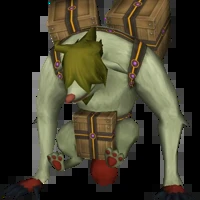
Mogma
Lorebookby That_Dang_Elk· on Chub· added
Tokens: 0 permanent · up to 1,891 lorebook · budget 1,891
Description on Chubfrom Chub
My take on the mogma

- Project space
- lorebooks
- Rating
- 0.00
- Ratings
- 0
- Stars
- 0
- Favorites
- 0
- Messages
- 0
- Forks (upstream)
- 0
- Tokens (upstream)
- 9,017
Created Updated Archived since
No description.
Mogma
7 entries · scan depth 50 · budget 500 tokens
- #1Mogmaselective
Keys: Mogma
The Mogma are a semi-fossorial mammalian species renowned for their unparalleled excavation capabilities and complex subterranean societies. Driven by a deep-seated biological imperative to expand their territory and hoard mineral wealth, they are pragmatic survivalists who view the world above ground as dangerously exposed and structurally unsound. To surface-dwellers, the Mogma often seem fiercely territorial and suspiciously secretive. In reality, they simply measure the worth of a creature by its structural utility and their ability to pull resources from the earth. Biology and Anatomy
A Mogma’s body is a highly efficient biological machine designed entirely for moving through dense rock, packed earth, and low-oxygen environments. They are heavily muscled, typically standing between four and five feet tall when fully upright, though their natural posture is pulled completely forward. Because their upper body carries the vast majority of their muscle mass and skeletal density, their center of gravity rests firmly over their forelimbs. This has resulted in a unique evolutionary reversal of typical mammalian limb roles: their powerful arms are used almost exclusively for heavy excavation and locomotion, while their highly agile hind limbs serve as their primary tools for fine manipulation.
Their most prominent features are a pair of disproportionately large, spade-like excavation claws made of reinforced keratin. The bones in their forearms and shoulders are incredibly dense, providing the necessary leverage and skeletal anchor for the massive musculature required to shear through solid stone. Because they spend their lives in darkness, their eyesight is exceptionally poor. To compensate, their snouts feature highly sensitive whiskers that detect micro-fluctuations in air pressure and seismic vibrations through stone, effectively allowing them to "see" the structural integrity of a cave through touch and sound.
Furthermore, their respiratory system is adapted for deep geothermal environments. Their lungs possess a massive capacity and can process high levels of sulfur dioxide that would suffocate a human. In the event of a cave-in, a Mogma can intentionally slow their heart rate, conserving oxygen to survive trapped underground for days at a time. This endurance is aided by a short, dense, bristly fur coat that repels dirt and secretes a specialized oil. This oil acts as a natural binding agent, preventing loose soil from collapsing in their immediate wake as they burrow. Locomotion and The Dual-Foot Inversion
When navigating open ground or wide tunnels, Mogmas walk directly on their hands. To protect their primary digging tips while hand-walking, their long, spade-like claws are hyper-extensible, hinging backward against the tops of their wrists. This allows them to bear their immense weight on the tough, leathery palms and heavily calloused pads of their knuckles. Their gait is a steady, rhythmic, low-to-the-ground stride, their powerful shoulders rolling with every step.
Because their hands are locked into roles of transportation and heavy rock-breaking, a Mogma’s lower legs and feet have evolved incredible dexterity. Their hind legs are short but highly flexible, featuring ball-and-socket hip joints that allow for a massive range of motion. Mogma feet resemble a blend of primate hands and avian talons, featuring a fully opposable big toe and long, prehensile digits.
When a Mogma needs to work, they lock into a handstand. Because their upper bodies are so massive and structurally dense, their forearms and shoulders act as an unshakeable skeletal tripod. A Mogma can effortlessly balance on their palms, freeing up both of their highly dexterous hind legs to operate simultaneously. Anchored firmly to the floor by their hands, their hips swing with incredible flexibility as both feet work in perfect tandem.
With both hind limbs completely free, a Mogma can perform complex, multi-limbed tasks that surface-dwellers would find impossible without an assistant. A Mogma scribe can hold a clay tablet flat with one foot while precisely carving runes into it with a stylus held by the other. A jeweler can clamp a raw gemstone between the prehensile toes of their left foot while using a delicate flaking tool with their right. Habitat: The Warrens
Mogma do not simply dig holes; they engineer sprawling, multi-tiered subterranean metropolises known as Warrens. They thrive in environments that surface-dwellers find inhospitable, such as geothermally active fault lines, deep mineral veins, and arid badlands where the crust is easily penetrated.
A mature Warren is a staggeringly lively place. It smells of roasting subterranean fungi, ozone, and sulfur. The air hums constantly with the percussive, rhythmic thud of excavation teams expanding the perimeter. Because they rely on geothermal vents for heat and primitive forging, the deeper you travel into a Warren, the hotter and more industrialized it becomes.
Mogma architecture is organic rather than geometric. They do not build walls; they carve them out, leaving structural pillars of unmined stone to support the crushing weight of the earth above. Residential quarters are carved high into the cavern walls, accessible only by vertical shafts. In these tight vertical spaces, their unique anatomy becomes terrifyingly efficient. By wedging their short, powerful legs against one wall and their massive forearms against the other, they can scramble up a sheer dirt shaft just as fast as a human can sprint on flat ground. Culture and Society
Mogma society is entirely resource-driven. Minerals, rare ores, and precious gems are not just wealth—they are the foundation of their caste and guild systems. The Excavation Guilds
Every Mogma belongs to a guild based on their physical attributes and sensory acuity:
The Breakers: The physically largest and strongest Mogma, responsible for carving new main-artery tunnels through dense bedrock using sheer physical force.

The Assayers: Those with the most sensitive snouts and whiskers. They act as navigators and prospectors, sniffing out water tables, dangerous natural gas pockets, and precious metal veins through layers of solid rock before a tunnel is ever dug.

The Bracers: The architects and engineers who reinforce tunnels with alchemically treated timber, masonry, and hardened clay to ensure the Warren's structural integrity for generations.
Material Culture and Inverted Design
Because their hands are their primary mode of transportation and their feet are their primary tools, Mogma workspaces look completely upside down to an outsider. They do not use tables or chairs. Instead, workbenches are heavy, flat stone slabs set directly into the floor. The Mogma stands on their hands right next to the slab, lowering their lower body over the workspace so their feet can reach the materials.
Every piece of Mogma technology is designed for dual-foot operation. Bellows for their underground forges are pumped by hand-walking over them, while the delicate tongs holding the molten metal are operated by their prehensile toes. Their mechanical weapons and mining drills feature unique dual-foot stirrups that allow one foot to hold the frame steady while the other pulls back a heavy crank mechanism.
This inversion dictates their social etiquette as well. In Mogma culture, carpets, fine textiles, and decorative mats are never placed where people sit—they are laid down for people to stand their hands on. Offering a guest a clean, padded linen square to place their palms on is the ultimate sign of hospitality. Conversely, tracking mud onto someone's hand-mat with your dirty walking-palms is a massive social faux pas. To offer a hand to a Mogma is an insult, as you are asking them to soil the limb they use to protect the clan. Instead, a standard greeting involves a brief, rhythmic tapping of the left heels together—a gesture that signifies mutual trust, as it requires balancing entirely on their hands while bringing a foot off the ground. Pragmatic Defense
Mogma are famously averse to open combat. Their evolutionary defense mechanism is not flight or fight, but collapse. If a Warren is breached by subterranean predators or hostile surface races, the Mogma will immediately retreat to prepared choke points. Even when hanging completely upside down from a tunnel ceiling by their massive hands, they can use both feet to reload mechanical tools or swing heavy trench-clubs. If overwhelmed, they will intentionally trigger localized cave-ins, burying their attackers alive. To a Mogma, dying in a sword fight is foolish; letting the mountain crush your enemy for you is just good engineering. Language and Trade
The Mogma language is sharp, utilitarian, and fast-paced, filled with percussive consonants and clicking sounds that echo cleanly through long tunnels without creating confusing reverberations. Their writing system consists of sharp, precise runes scratched into clay tablets using a stylus held by the foot.
While insular, they are willing to trade with surface-dwellers. They establish "Blind Markets" in the uppermost, structurally reinforced layers of their Warrens. Here, they trade raw, unrefined ores, rare gems, and unique subterranean medicinal fungi. In exchange, they seek surface goods they cannot produce themselves, such as cured leathers, hard timber for tunnel supports, and surface-grown grain to supplement their diet.
- #2Cultureselective
Keys: Culture
Mogma Cultural Lorebook Entry
To surface-dwellers, Mogma culture can seem aggressively pragmatic, transactional, and physically jarring. However, beneath the layer of dirt, forge smoke, and upside-down architecture lies a deeply cooperative, ritualistic society. Mogma culture is entirely dictated by the crushing realities of subterranean survival and their unique hand-walking, foot-manipulating anatomy.
In a world where a single structural miscalculation can bury an entire generation, culture is not an abstraction—it is engineering. The Philosophy of the Core
The central guiding philosophy of Mogma culture is The Core (often translated by surface scholars as The Anchor or The Base). While surface cultures look to the stars, gods, or open horizons for inspiration, the Mogma find spiritual and philosophical truth in density, weight, and center of gravity.
To a Mogma, anything that is unanchored is volatile and untrustworthy. This creates a cultural disdain for open skies, weather, and surface politics, which they view as flighty and structurally unsound. A person’s character is judged exactly like a tunnel pillar: by how much weight they can bear before they fracture, and how firmly they are planted.
This philosophy manifests in a stark cultural division of the world into two domains:
The Bound (Subterranean): Stable, rich, predictable, and honest. Here, the laws of rock mechanics and mineral veins dictate life.

The Unbound (Surface): Chaotic, shifting, exposed, and dangerous. The Mogma view surface-dwellers with a mix of pity and suspicion, treating them as creatures who live in constant danger of falling upward into the sky.
Rituals of Inversion and Maturity
Because a Mogma's biological transition from a juvenile to an adult involves a massive shift in upper-body mass, their rites of passage are deeply tied to physical balance and inversion. The First Inversion
When a young Mogma's shoulder girdle and forearm musculature finally develop enough density to support their full body weight, they undergo The First Inversion. In this communal ritual, the youth must execute their first formal work-handstand before the elders of the guild. They are required to hold the handstand for the duration of a shifting-bell (roughly two hours) while using both feet to sort a basket of mixed tailings by mineral content. Successfully completing this marks the transition from a dependent youth to a functional apprentice. The Deep Vow
Upon entering an Excavation Guild, a Mogma takes the The Deep Vow. Instead of signing a contract or swearing on a holy text, the Mogma presses their bare walking-palms into thick, molten alchemical clay. This clay is then baked into the structural foundation of the Warren's central vault. The ritual signifies that the individual’s physical strength is now literally part of the infrastructure holding up the community. To break guild law is to "crack the foundation," an offense punishable by exile to the surface. Social Etiquette and The Palm-Law
Because the hands are used for walking and the feet are used for interacting, Mogma social etiquette is entirely inverted from surface norms.
================================== THE THREE LAWS OF SOCIAL INTERACTION ==================================-
THE LAW OF THE PALM The hands are sacred tools of locomotion and safety. They must never be offered in greeting, and they must never touch another Mogma’s tools. To touch someone's workspace with a walking-palm is an act of desecration.
-
THE HEEL-TAP A civilized greeting consists of balancing on the hands and briefly, rhythmically tapping the left heels together. It is an expression of vulnerability and trust, as it requires lifting a limb of support.
-
THE MAT-RIGHT A host's quality is judged by the texture and cleanliness of their Hand-Mats (Palm-Squares). To invite someone onto your mat is to grant them sanctuary. To track tunnel-slurry onto a hand-mat is a insult.
In conversation, a Mogma will rarely look another creature directly in the eyes. Because their poor eyesight makes close-up facial expressions difficult to read, they watch the sway of the hips and shoulders. To a Mogma, the tension in a person's shoulder blades and the subtle shifts in their balancing limbs reveal far more honesty than facial muscles or spoken words. Subterranean Art and Expression
Mogma artistic expression is completely adapted to low-light, highly resonant environments. They do not paint or create visual tapestries, which they consider useless in the dark. Litho-Percussion (The Slate-Song)
The primary Mogma art form is musical, utilizing the natural resonant frequencies of different stone strata. Musicians, standing on their hands, use reinforced, iron-shod talons on their feet to strike stalactites, stone pillars, and tuned acoustic plates set into the cavern floors. The resulting music is deep, bass-heavy, and percussive, designed to travel through the solid bedrock rather than the air. A master Slate-Song can be "heard" through the soles of one's feet miles away from the theater cavern. Tactile Runes (Grave-Scrip)
Mogma literature consists entirely of tactile inscriptions carved into clay tablets or directly into tunnel walls. Using a hardened steel or diamond-tipped stylus clutched between their toes, scribes carve deep, geometric runes with varying levels of edge-sharpness and depth. A Mogma reads this literature by walking slowly over the text on their hands, feeling the narrative through the calloused pads of their palms. A great historical epic is literally described as "a long and rugged road." Wealth, Hoarding, and The "Buried Trust"
While surface races view the Mogma obsession with gems and precious metals as simple greed, it is actually driven by a cultural and biological instinct for community preservation.
In the subterranean world, raw currency like paper or coin is worthless. To a Mogma, gems and heavy ores represent densified stability. Precious metals are hoarded because they are essential components in alchemical bracing agents and tool-forging. A wealthy Warren is a safe Warren; a clan with a massive vault of dense metals has the resources to purchase lumber, buy out surface grain during a collapse, or bribe subterranean monsters to look elsewhere.
Private property exists, but under the law of The Buried Trust, any mineral wealth hoarded by an individual must be made available to the Bracers Guild in the event of a structural crisis. A Mogma who refuses to yield their personal gem-hoard to reinforce a collapsing residential sector is viewed not just as a miser, but as a traitor to the species.
-
- #3Warrensselective
Keys: Warrens
A Mogma Warren is not a chaotic cluster of burrows; it is a highly engineered, multi-tiered subterranean metropolis carved directly into the planet’s crust. To surface-dwellers, entering a Warren can feel profoundly disorienting. The architecture is entirely inverted, the air carries a heavy industrial hum, and the layout obeys the laws of structural geology rather than surface geometry.
Designed to withstand tectonic shifts, volcanic activity, and the crushing weight of the earth above, a mature Warren is a monument to subterranean survival and spatial efficiency. Structural Anatomy of a Warren
Warrens are organized vertically rather than horizontally, divided into distinct, functional strata. Each layer serves a specific purpose in the Mogma socio-economic ecosystem, with structural density and ambient temperature increasing the deeper one travels. The Crown (The Upper Strata)
The closest tier to the surface, the Crown acts as a buffer zone between the Mogma and the outside world. It is the only sector of a Warren where surface-dwellers are permitted without a heavy guard escort.
The Blind Markets: Carved from porous stone to facilitate natural airflow from the surface, these markets feature low-to-the-ground stone counters. Mogma merchants stand on their hands, using their highly dexterous feet to sort raw ores, verify coins, and push trade goods across the slab to surface traders.

The Sieve Gates: Heavy, iron-reinforced choke points designed to restrict the movement of large surface invaders. These gates can be instantly sealed by massive drop-pillars or deliberately collapsed by remote alchemical fuses.
The Floe (The Residential Tier)
The Floe is the social heart of the Warren, permanently smelling of roasting subterranean fungi, pungent waterproofing coat-oils, and ozone.
Hive-Cells: Because Mogmas require very little vertical clearance when sleeping or relaxing, residential quarters are low-ceilinged alcoves carved high into the cavern walls. They are accessible only by sheer, vertical shafts. Mogmas easily scramble up these shafts hand-first, while surface predators find them entirely inaccessible.

Hand-Mat Plazas: Large, public caverns where the community gathers. The floors here are meticulously flattened and lined with thick, woven Hand-Mats where citizens can rest their walking-palms, converse, and listen to the rhythmic cadence of the Slate-Songs passing through the bedrock.
The Bedrock (The Administrative Tier)
Carved exclusively out of the most stable, non-porous granite or basalt formations, this tier houses the governing bodies of the Excavation Guilds and the communal treasuries.
The Foundation Vaults: This is where the Warren’s collective mineral wealth is stored under the law of the Buried Trust. The walls are reinforced with alchemically treated clay and heavy iron bracing bars to prevent unauthorized tunneling.

Guild Record-Chambers: Rows of massive stone shelves holding thousands of heavy clay tablets. Scribes work here in a constant handstand, using one foot to hold a tablet steady and the other to etch mining maps, geological surveys, and lineage records into the clay.
The Coal (The Deep Industrial Sinks)
The hottest, loudest, and most hazardous tier of the Warren, built around deep tectonic fissures and geothermal vents.
Geothermal Forges: Mogmas do not use traditional wood or coal furnaces; they harness the direct heat of the planet. Smelting vats and metalworking workshops are built directly over open magma vents or superheated steam fissures.

The Slag-Drains: Massive, descending shafts where industrial waste, toxic runoff, and stone tailings are directed, dropping them into deep, dead fissures far below the living spaces.
Civil Engineering and Infrastructure
Life underground requires strict management of resources that surface-dwellers take for granted. Mogma Bracers manage these systems with mechanical precision. Atmospheric Circulation (The Lung-Shafts)
Without proper ventilation, a Warren would quickly become a tomb of toxic gases and stale air. Mogmas utilize natural thermal siphons to counter this. By linking the deep, scorching heat of the Coal tier to the cooler Crown tier via massive, vertical "Lung-Shafts," they create a permanent convective current. The rising hot air draws fresh surface air down through secondary, winding intake tunnels, filtering out surface dust and weather patterns before it reaches the residential zones. Sump-Management and Water Tables
Water is both a vital resource and a structural nightmare underground. The Assayers Guild spends decades mapping local aquifers to avoid accidental breaches that could flood a Warren.
The Cistern Sinks: Rainwater filtering down from the surface is caught in high-tier sand beds, which act as a natural filtration system before the water drains into massive, smooth-carved stone cisterns in the Bedrock tier.

Sump-Walks: If an active mining shaft hits an unexpected water pocket, the lower tunnels are designed to slope downward into dedicated Sump-Walks. These are flooded utility tunnels that drain the water safely away from the residential areas and into subterranean aqueducts.
Defensive Engineering: The Law of Total Collapse
Mogma architecture is fundamentally built on the concept of controlled instability. Every pillar, archway, and tunnel lining in a Warren is mapped with "The Keystones"—specific, structurally vital points filled with unstable alchemical explosive charges or removable support wedges.
If an existential threat breaches the upper defense networks, the Mogma do not form a traditional defensive line. Instead, the Bracers initiate a synchronized sequence of localized cave-ins. Entire sectors of the Warren are dropped into solid rock, instantly crushing the invaders or sealing them off in pocket tombs without oxygen.
Because the Mogma can easily burrow through loose debris and navigate vertical shafts, a section of the Warren that is "killed" to stop an enemy can be completely re-excavated, cleared, and reinhabited by the Breakers Guild within a few weeks of the conflict's end. To a Mogma, stone is temporary, but the Warren is eternal.
- #4Material Cultureselective
Keys: Material Culture
Mogma material culture is a direct manifestation of their inverted biology. Because their hands are heavily padded, calloused, and reserved almost exclusively for locomotion and heavy stone-shredding, they do not use them to manufacture, manipulate, or appreciate physical objects. Instead, every tool, textile, and heirloom in Mogma society is designed to be gripped, operated, or felt by their prehensile feet or the sensitive skin of their walking-palms.
To an outsider, Mogma items look structurally backwards, awkwardly weighted, and completely lacking in traditional visual beauty—yet they possess a high level of ergonomic sophistication and rugged durability. Tool and Weapon Design
Mogma technology entirely discards the concept of the hand-grip. Because a Mogma works while balancing in a handstand, their tools must account for the swinging arc of their hind limbs and the unique clamping pressure of their prehensile toes.
Stirrup-Hilt Implements: Hand-held tools like hammers or chisels do not exist. Instead, mining implements, trowels, and drafting styluses feature a "stirrup hilt"—a central, leather-lined bracket that fits snugly over the ball of the foot, with a secondary T-bar that the opposable big toe clamps down upon. This locks the tool to the foot, turning the entire hind leg into a powerful, extended lever.

Dual-Foot Mechanical Apparatuses: Complex machinery, such as surveying transits, alchemical pumps, and defense weapons, are engineered for dual-foot operation. A Mogma heavy crossbow, for example, features a wide floor-anchor. The Mogma pins the weapon to the ground with their left foot, uses their right foot to pull back the heavy winding crank, and fires the mechanism by pressing a wide, flat stirrup trigger with their heel.

Trench-Clubs and Talon-Spikes: When forced into close-quarters combat, Mogmas employ heavily weighted clubs that clamp onto the lower leg and foot, allowing them to deliver devastating, bone-shattering kicks while hanging upside down from a tunnel ceiling. They also forge detachment claws—hardened steel caps that slip over their prehensile toe talons to prevent their natural keratin from chipping against armored foes.
Textiles and Living Spaces
Because Mogmas spend their waking hours on their hands, their relationship with fabrics and furniture is entirely different from surface-dwelling races.
Palm-Liners and Knuckle-Guards: While Mogmas do not wear clothes on their upper bodies—as fabric would quickly shred against rock walls during excavation—they frequently wear "Palm-Liners." These are durable, oil-cured leather wraps that protect the inner wrist and palm from chemical burns when traversing geothermally active or highly acidic strata.

The Palm-Mat Industry: The creation of Hand-Mats (Palm-Squares) is the closest equivalent to fine art in Mogma society. Woven by specialists using coarse, underground root-fibers or the hair of subterranean beasts, these mats are graded entirely by their tactile texture. A master weaver can create a mat with a specific, repeating grain that massages a tired Mogma's walking-palms as they stand on it.

Inverted Furniture: Mogma homes contain no chairs, stools, or elevated beds. Sleeping quarters feature low, contoured depressions carved into the stone floor, lined with dense, packed silt and coarse blankets. Shelves and storage units are built into the lower twelve inches of a wall, allowing a handstanding Mogma to easily pull out items with their feet without dropping their posture.
Art, Currency, and Document Records
Mogma art and records bypass visual aesthetics entirely, focusing heavily on tactile depth and structural permanence.
Grave-Scrip Tablets: Mogma literature, history, and accounting are recorded on thick, heavy plates of wet clay. Scribes use a foot-stylus to carve deep, angular runes into the clay before baking it hard in a geothermal vent. These tablets are designed to be read by touch. A Mogma reads a book by placing the tablet flat on the floor and walking slowly across it on their hands, interpreting the text through the sensory nerves in their palms. Tuned Ore Currency: While they value gold and silver for industrial purposes, the internal currency of a Warren consists of "Tuned Ore Cylinders." These are precisely cut, identical bars of mineral-rich igneous rock. Because paper money is ruined by moisture and coins are difficult for prehensile toes to count quickly, Mogma currency is verified by sound. A merchant drops the cylinder onto a stone counter; the specific, crystal-clear percussive chime it makes tells the merchant its exact mineral purity and weight. Seismic Reliquaries: The highest form of historical preservation is the Seismic Reliquary. These are massive, hollowed-out stalactites hung in the center of a guild hall. Inside, a series of precisely balanced internal stone pendulums strike the outer shell whenever the mountain experiences micro-tremors. To a master Assayer, the rhythmic, metallic humming of a reliquary tells the ongoing history of the mountain’s shifting fault lines, acting as a living, continuous historical record. - #5The Breakersselective
Keys: Breakers
The Breakers are the bedrock of Mogma society. As the premier excavation guild, they are responsible for the brutal, physically punishing labor of carving out the primary structural arteries of a Warren. Where other guilds analyze, reinforce, or decorate, the Breakers simply confront the raw, unyielding mass of the mountain and break it.
To surface-dwellers, a Breaker is a imposing sight: a creature of terrifying upper-body mass, covered in stone dust and scarred by centuries of jagged bedrock. Within the Warren, however, they are viewed with immense reverence as the literal providers of living space. Physiology and Selection
While every Mogma belongs to a guild based on their physical traits, the Breakers possess the most extreme anatomical developments of the species. They are the giants of their race, often weighing twice as much as an Assayer due to sheer bone density and compacted muscle fiber.
Skeletal Anchoring: The clavicles and sternum of a Breaker are heavily fused and thick, forming a massive bony ridge across the chest. This provides a massive surface area for the attachment of their overdeveloped deltoid and pectoral muscles, allowing them to strike solid stone with thousands of pounds of hydraulic force per square inch.

Keratin Density: A Breaker’s primary excavation claws are thick, dark, and reinforced with mineral deposits absorbed from their diet. Unlike other Mogma whose claws are sharp for fine digging, a Breaker's claws are blunt, heavily ridged spade-irons designed to act like jackhammers, fracturing stone along its natural fault lines.

The Breaker’s Callus: Decades of hand-walking over jagged, blasted stone floors creates a massive, leathery heel-pad on their palms. This callus is so thick that older Breakers are nearly immune to the heat of subterranean hot spots, allowing them to clear debris from geothermally active tunnels that would severely burn other creatures.
The Work: Tunnelling the Deep
The method by which the Breakers claim space from the earth is rhythmic, industrial, and deeply collaborative. They do not work in isolation; they work in synchronized teams known as Sledge-Crews.
Standing on their massive palms, a Sledge-Crew faces a solid wall of rock. Working in a handstand requires incredible core stability, and they swing their lower bodies rhythmically to maintain equilibrium while their upper limbs strike. They work in alternating shifts:
The Point: The front-line Breakers deliver high-velocity, percussive strikes to the rock face, intentionally creating a network of micro-fractures in the stone.

The Wedgers: A secondary line follows immediately behind, driving their heavy, blunt claws into the fractures and twisting their entire upper bodies to sheer away massive slabs of bedrock.

The Clearers: Using their prehensile feet, the rear line catches the falling debris, hurling it backward down the tunnel into the slag-drains before it can choke the workspace.
This process is deafening. The sound of a Sledge-Crew at work is a continuous, percussive roar that shakes the floor of the entire sector. Breakers communicate through this din not by shouting, but by rhythmic clicking sequences produced by tapping their foot-talons against the floor, a dialect known as Floor-Talk. Cultural Identity and Bragging Rights
Because their work is fundamentally dangerous and vital to the clan's expansion, the Breakers have developed a distinct, proud, and somewhat insular subculture within the Warrens. The Law of the First Claw
By ancient tradition, the Breaker who delivers the final strike that breaks through into a new, undiscovered cavern cavern has the "Right of the First Claw." They are permitted to enter the chamber alone on their hands to claim any surface-exposed gems or unique mineral veins before the Assayers arrive to survey the space. This makes the vanguard position in a Sledge-Crew highly competitive and intensely coveted. Scars as Cartography
Breakers do not use jewelry or medals to denote status. Instead, they take immense pride in their physical deformities and scars. A long, jagged white line across a shoulder blade is not viewed as a wound, but as a historical record—a testament to a specific cave-in at a specific mining vein. Veteran Breakers can read each other’s bodies like a map of the Warren's history, recognizing exactly which deep-tier projects their peers survived. The Breaker’s Feast
When a major artery tunnel is successfully completed and stabilized, the Breakers celebrate with a highly traditional, localized ritual. The entire crew gathers in the newly carved space, locking into an interconnected circle of handstands. Using their prehensile feet, they pass around heavy, iron-rimmed stone flagons of fermented root-mash and slabs of slow-roasted basaltic lichen. To sit or drop from the handstand before the flagon has made a full rotation around the crew is considered a sign of poor endurance and a direct insult to the strength of the tunnel they just built.
- #6The Assayersselective
Keys: Assayers
Where the Breakers represent the raw, crushing force of the Mogma, the Assayers represent their sensory intellect. Operating as the navigators, surveyors, and resource-prospectors of the Warrens, the Assayers are tasked with reading the silent language of the mountain. Before a single Breaker strikes a stone wall, an Assayer has already mapped what lies miles behind it.
To surface-dwellers, an Assayer is the most unnerving variant of the Mogma. They are quieter, lean, and prone to freezing perfectly still in a handstand for hours at a time, their snouts twiching as they interpret vibrations and chemical scents completely imperceptible to other races. Physiology and Sensory Acuity
Selection into the Assayers Guild requires a rare suite of genetic traits that prioritize sensory amplification over muscle mass. They are physically lighter and more slender than the Breakers, an evolutionary necessity that allows them to slip into microscopic exploratory fissures.
The Vibrissae Array: An Assayer’s snout features a dense cluster of specialized, hyper-sensitive whiskers. These vibrissae are structurally anchored directly to deep cranial nerve endings. By pressing their snout against a cavern wall, an Assayer can detect the micro-oscillations of tectonic stress, acoustic reverberations from distant underground rivers, and the hollow air pressure of undiscovered caverns miles away.

Olfactory Chromatography: Their sense of smell is chemically precise. An Assayer can sniff the air of a deep fissure and accurately determine the exact mineral composition of a vein, the presence of invisible, pocketed pockets of lethal carbon monoxide, or the stale dander of predatory subterranean fauna.

Hyper-Myopia Adaptation: Because their eyes are almost entirely non-functional—capable only of distinguishing between absolute darkness and the harsh glare of geothermal magma—their brains have repurposed the visual cortex to process tactile and auditory spatial data. They do not imagine a cave visually; they map it as a complex, three-dimensional web of density, temperature, and resonance.
The Work: Blind Navigation and Prospecting
The primary duty of an Assayer is to guide the Warren’s expansion while preventing catastrophic engineering disasters. Their prospecting workflow is meticulous, dangerous, and requires absolute focus. Scent-Tracing
An Assayer explores the rough, untamed perimeters of a Warren by crawling forward on their palms, their nose mere inches from the rock face. They trace the subtle "chemical bleeds" that minerals leave in the surrounding stone. To an Assayer, a gold vein smells sharply of ozone and copper, while a rich pocket of rare iron ore carries a heavy, sweet scent akin to dried blood. Acoustic Ping-Mapping
To map solid rock, Assayers utilize high-frequency percussive echoes. Balancing on their hands, they use the clawed digits of their prehensile feet to strike a rhythmic pattern of sharp clicks against the stone floor. They then press their ears and snout vibrissae against the rock, listening to how the sound wave distorts, dampens, or bounces back. A sharp, crisp return indicates stable granite; a dull, muffled thud warns of rotten, moisture-logged shale; a hollow, trailing ring reveals an open cavern. Aquifer Staking
The most hazardous duty an Assayer can perform is locating hidden water tables. Breaching a high-pressure underground lake can instantly flood a lower sector, drowning entire guilds. Assayers use their acute seismic hearing to isolate the deep, low-frequency hum of rushing water. Once found, they use their agile feet to drive alchemically coated guide-stakes into the stone, marking the exact boundaries where the Breakers must cease excavation. Cultural Identity and The Blind Council
Because their work requires quiet contemplation rather than industrial noise, the Assayers have developed a highly philosophical and reserved subculture that contrasts sharply with the boisterous Breakers. The Stillness
Within Assayer enclaves, movement is kept to an absolute minimum. To make unnecessary noise or to scuffle your walking-palms across the floor is viewed as a grotesque lack of self-control. Assayers converse in a highly muted dialect of Floor-Talk, using incredibly light, feather-touch toe taps that generate vibrations only another Assayer with their snout pressed to the ground can receive. The Blind Council
The leadership of the Assayers Guild is comprised of the oldest, most sensory-deprived members of the race, known as the Blind Council. These elders have completely lost what little eyesight they had, and their skin has grown paper-thin. They spend their days locked in permanent, suspended handstands on specially tuned acoustic stone pillars in the deepest sector of the Bedrock tier. From these pillars, they can "feel" the entire city breathing—interpreting the rhythm of the Sledge-Crews, the shifting of the water tables, and the approach of surface storms through the structural bones of the planet. The Assayer’s Map
Because Assayers cannot use visual mediums, their geographical maps are masterpieces of tactile art. An Assayer creates a map by using a fine foot-chisel to carve intricate, three-dimensional models of tunnel networks into a block of soft soapstone or clay. The thickness of the carved lines denotes tunnel width, the texture of the stone indicates rock type, and small, drilled holes represent vertical air-shafts. To read the map, a Mogma leader simply runs their walking-palms over the block, instantly visualizing the layout of the underground frontier.
- #7The Bracersselective
Keys: Bracers
If the Breakers claim the Warrens from the stone and the Assayers navigate the dark, the Bracers are the glue that holds the entire civilization together. Operating as the master architects, structural engineers, and alchemical masons of Mogma society, their sole mandate is to defy gravity. They ensure that the crushing weight of the planet's crust does not reclaim the hollow spaces carved out by their kin.
To surface-dwellers, Bracers look more like builders or alchemists. They are easily identified by their heavily stained lower limbs, their tool-slings, and the distinct scent of sulfur, quicklime, and pungent resin that permanently clings to their fur. Physiology and Alchemical Immunity
The Bracers represent the intellectual elite of Mogma physical labor. While they lack the massive brute force of a Breaker, they possess highly dense, reinforced skeletal frames capable of handling immense isometric tension for hours at a time.
Pneumatic Core: A Bracer’s core and pelvic muscles are hyper-developed. This allows them to lock their hips and spine into an unyielding, rigid pillar while balancing in a handstand, effectively transforming their entire lower body into a living crane or mechanical brace.

Corrosive Resistance: Because they spend their lives formulating and applying caustic binding agents, structural mortars, and alchemical explosives, the skin on a Bracer's prehensile feet is incredibly thick and chemical-resistant. Their soles feature thick, overlapping leathery folds that prevent chemical burns from volatile quicklime or acidic sealants.

Fine Tail-Balance: Unlike other guilds, Bracers have a short but muscular, calloused tail that acts as a vital counterweight. When standing on their hands at the edge of a scaffolding rig, they use their tail to dynamically adjust their center of gravity, freeing both feet to lift, mix, and place structural elements with absolute stability.
The Work: Structural Integrity and Volatile Masonry
The Bracers work in immediate tandem with the Breakers. As a Sledge-Crew clears a raw stone face, a team of Bracers follows directly in their wake to secure the newly exposed ceiling before the rock can settle or fracture. Structural Pillar Sculpting
Mogma do not construct pillars from brick; they create them through subtractive engineering. A Bracer works with the Assayers to identify load-bearing geological nodes. As the Breakers dig, the Bracers use foot-chisels and alchemical etching fluids to sculpt the raw, unmined stone into massive, flared columns. These structural pillars are engineered to channel the weight of the ceiling smoothly down into the floor, distributing millions of tons of pressure away from the living spaces. Alchemical Slurry Application
To reinforce porous or brittle rock walls, Bracers mix a proprietary compound known as Silt-Glue. Standing on their hands over large stone mixing vats, they use their powerful prehensile feet to churn a mixture of volcanic ash, crushed slate, and the binding oil secreted from their own pelts. Once mixed, they flip onto their scaffolding, using wide, paddle-like foot trowels to slap the caustic paste onto the cavern walls. The slurry cures within minutes into a glass-hard, impermeable shell that prevents water seepage and rock decay. Keystone Seeding
The most secretive and vital aspect of a Bracer's job is the placement of "The Keystones." Every archway and tunnel intersection is deliberately engineered with a structural flaw—a hidden chamber packed with alchemical demolition charges or removable support wedges. A Bracer meticulously wires these points to distant mechanical triggers. In the event of a breach, a single Bracer can pull a foot-crank and cleanly collapse a specific sector without destabilizing the rest of the Warren. Cultural Identity and The Mason-Mark
Because their failure means the immediate death of everyone within the sector, the Bracers are a highly meticulous, risk-averse, and legally rigid guild. They view the boisterousness of the Breakers as reckless and the quiet philosophy of the Assayers as overly passive. The Law of the Weight
When a new residential plaza or guild hall is completed, the lead Bracer must undergo the ultimate test of accountability: The Weight-Setting. Before the public is allowed into the cavern, the support scaffolding is pulled away. The architect who designed the space must spend the entire first night standing on their hands directly beneath the largest unreinforced span of the ceiling. If their math was flawed, they are the first to pay the price. If the ceiling holds until the shifting-bell rings, the space is declared sound. The Mason-Mark
Every Bracer possesses a unique, geometric rune known as their Mason-Mark, which they carry as a hardened iron brand on their left heel. When a Bracer completes a structural column, an archway, or a lock-gate, they stamp their mark into the wet alchemical mortar using their foot. This mark is a permanent signature of liability. If a tunnel suffers a structural failure decades later, the records are checked, and the lineage or surviving clan of the Bracer who marked that pillar is held legally responsible for the cost of re-excavation. The Tool-Sling Etiquette
Bracers wear thick, heavy leather belts draped around their lower thighs and pelvis. These slings hold brushes, trowels, alchemical vials, and measuring plummets. Because a Bracer stands on their hands, these tools hang upside down, easily reachable by their prehensile toes. In Bracer culture, touching another member's tool-sling with your foot is a declaration of profound disrespect, suggesting that their tools are poorly maintained or their engineering is untrustworthy.
Showing 7 of 7
1 file
- .jsonjson_lorebook
47.7 KBfirst seen 0fc1d41a23789d21
Opens with the tab.