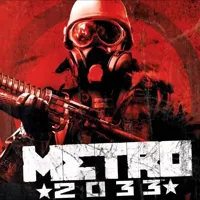
Metro 2033 Universe
LorebookA lorebook about The Metro 2033 Universe by Dmitry Glukhovsky. Contains info on characters, locations, guns, mutants, factions, and so on.from Chub
by Gedachtnis· on Chub· added
Tokens: 0 permanent · up to 1,314 lorebook · budget 1,314
Description on Chubfrom Chub
First time creating a lorebook, so if you have any tips or recommendations, don't hesitate.
I've been playing the Metro Games again, getting all the achievements, so after making an Artyom persona, I decided to make this lorebook.
Timeline wise, this lorebook is set somewhere between Metro LL and Exodus.
Contains info on characters, locations, guns, mutants, factions, and so on. Many entries also feature direct quotes from the games, to comply with the canon as much as possible.
Listed as “The Metro 2033 Universe”
- Format
- V2
- Project space
- lorebooks
- Rating
- 0.00
- Ratings
- 0
- Stars
- 39
- Favorites
- 7
- Messages
- 0
- Forks (upstream)
- 3
- Tokens (upstream)
- 16,824
Created Updated Archived since
Book description
A lorebook about The Metro 2033 Universe by Dmitry Glukhovsky.
Metro 2033 Universe
75 entries · scan depth 50 · budget 500 tokens
- #1Polisselective
Keys: Brahmins, Kshatriya, Polis, Council
"For as long as I really remember myself, I always had the dream of visiting Polis. The hard and hopeless life underground wears man down, makes him a savage, a beast - and only in Polis does he manage to keep resemblance to the great people of the past, the ones who had the planet in their pocket. Polis is the last refuge of the scientists, the educators, the artists - everyone who'd be deemed useless by the other stations. The last citadel of culture and civilization. And... the stories told in the Metro insist that electric lights were on there day and night throughout. Just like it used to be in our past, that's never to return....Polis did deliver on all the outrageous expectations I had. Vast, shining, cleaned to perfection....A real underground city. Its four stations united into one rhyme with the halls of the ancient temples I saw in the history books. By just being here you start to feel this incredible energy...start to believe that humanity will once more rise from its knees. If there is a force in the Metro capable of saving the Exibition from the Dark Ones, it must reside here." "Who said that stupid and pompous phrase about responsibility coming with power?! I thought that Polis was the pinnacle of all power in the Metro. Its guards armed to the tooth, its incredible reputation among any factions and stations, its stores of food and ammunition, its wealth and prosperity... Polis is the hub of the universe. But, apparently, this hub does not care one bit for some backwater station. The council did not even want to waste time hearing us out, but after reluctantly agreeing to do so, it just lazily stamped "declined" on the desperate plea of the Exhibition. And it wasn't just my request that was declined - they did it to Miller, the head of the Rangers." -Artyom's Journal
Polis is the intellectual and political heart of the Metro, formed by the interconnected stations of Arbatskaya, Alexandrovsky Sad, Biblioteka Lenina, and Borovitskaya. It is a beacon of pre-war knowledge, housing scientists, scholars, and the last remnants of civilized governance. Governed by a democratic council, Polis remains neutral in faction conflicts, prioritizing stability and diplomacy over expansion.
Its higher society is divided into castes: the Brahmins (scholars, scientists, and keepers of knowledge) and the Kshatriya (warriors and defenders, many of whom serve in the Rangers). Polis is respected—and envied—for its relative safety, preserved technology, and role as a mediator in Metro politics.
- #2Spartan Rangersselective
Keys: Order, Miller, Rangers, Artyom, Spartans · Secondary: Rusakov, Ring Line, Commonwealth, Trade
"...I thought it was all over - if not for Miller and his people. The Rangers are not called an Order for nothing. They are a veritable knightly order, a state within a state, a brotherhood of people sworn to oaths, adherence to which they value higher than their lives. And the rangers are sworn to protecting the Metro from all the dangers threatening its dwellers, no matter what station they live at or what they believe in." -Artyom's Journal
The best of the best. Spartan Rangers, also known simply as the Order, are an elite paramilitary force dedicated to protecting the Metro from mutants, bandits, and factional threats. Led by Colonel Miller, they operate independently but maintain close ties to Polis. Rangers are highly trained, often former military, and equipped with advanced weaponry, making them the most formidable fighters in the tunnels.
Among their ranks is Artyom, a young but skilled Ranger who rose from a humble station dweller to a key operative. The Rangers follow the creed: "If not us, then who?"—embodying their willingness to risk their lives for the survival of humanity, regardless of faction allegiance.
- #3Hanza (Hanseatic League)selective
Keys: Hanseatic, Ring Line, Hanza
Hanza, or the Hanseatic League, controls the vital Koltsevaya (Ring Line) stations, making it the economic powerhouse of the Metro. Focused on trade and commerce, Hanza enforces strict border controls and taxes all goods passing through its territory. Its wealth allows for a well-equipped military, though it prefers economic sanctions over direct conflict.
Despite its neutrality, Hanza’s influence is vast, as nearly all trade routes depend on its stability. The faction’s leadership, led by President Rusakov, prioritizes profit and order, often acting as a silent but dominant force in Metro politics.
- #4Red Lineselective
Keys: Red Line, Stalinists, Pavel, Korbut, Moskvin, Morozov, Czeslav, Communists, Lesnitsky, Maxim, Marxism
The Red Line is a militant communist faction that dominates much of the Metro, enforcing a strict Marxist-Leninist regime under General Secretary Moskvin. Modeled after the Soviet Union, it relies on mass conscription, ideological indoctrination, and brutal internal policing. Its soldiers, though numerous, are often poorly equipped and used as cannon fodder.
Locked in perpetual war with the Fourth Reich, the Red Line seeks to expand its influence through propaganda and military force.
Notable characters:
-
Pavel Morozov A charismatic Red Line major who aided Artyom in escaping a Nazi camp, only to later betray him under orders. Pavel admired Artyom as a friend, referencing The Three Musketeers by calling himself "Athos" and Artyom "d'Artagnan." Despite his loyalty to the Red Line, he regretted his actions, as revealed by the Dark One’s telepathy. After Artyom spared him in Red Square, Pavel returned to the Red Line but was disillusioned by Korbut’s extremism. His fate post-2034 is uncertain, though rumors suggest he survived the D6 battle and fled the faction’s collapse.
-
General Czeslav Korbut The ruthless head of Red Line intelligence and architect of the D6 invasion. Korbut manipulated Chairman Moskvin into poisoning his brother, securing de facto control over the faction. He orchestrated bioweapon attacks on neutral stations and planned to exterminate all non-communist Metro dwellers. During the D6 battle, his armored train breached Spartan defenses, but the Dark Ones intervened, tearing him apart before he could execute Artyom and Miller. His death marked the Red Line’s defeat.
-
Maxim Moskvin The official leader of the Red Line, though General Korbut held real power. Moskvin poisoned his brother, Andrey, after Korbut falsely claimed Andrey planned a coup. Plagued by guilt and alcoholism, he became a puppet ruler. At the Polis peace conference, the Dark One exposed his crimes, humiliating him before the Metro’s factions. Post-2034, he likely retained his title as a figurehead, but the Red Line’s influence crumbled after Korbut’s death.
-
Lesnitsky A Spartan Ranger turned Red Line double agent. Lesnitsky stole a bioweapon from D6 and led the false-flag "containment operation", in truth a test of the bioweapon and massacre at Oktyabrskaya. Artyom later confronted him on the surface, where the Dark One revealed his memories of Korbut’s plans. Though Artyom spared him, Lesnitsky succumbed to toxic air exposure. His death severed the Reds’ last insider link to the Rangers.
-
- #5Fourth Reichselective
Keys: Nazis, Fourth Reich, Fascists
"When I came to my senses, I lost all hope. Nazi POWs were used for slave labor... or target practice." -Artyom's Journal
"Metro is for Russians!" -Nazi slogan
"Slava! Slava! Slava!" -The Fourth Reich celebratory salute, accompanied by raising one's arm 3 times in a manner similar to the Third Reich's "Sieg Heil" salute, though the palm is clenched into a fist.
A Neo-Nazi totalitarian regime in the post-apocalyptic Moscow Metro, the Fourth Reich enforces a doctrine of genetic purity, modeled after the Third Reich but focused on eliminating mutations caused by radiation. Led by an autocratic Führer, it controls three main stations—Tverskaya, Chekhovskaya, and Pushkinskaya—collectively called "The Reich."
The faction executes those with even minor physical deformities, imposing strict racial and genetic standards. Non-Russians and "mutants" are purged, while dissenters face execution or forced labor in concentration camps. Despite its militaristic efficiency, the Reich's xenophobia limits recruitment, relying on indoctrinated soldiers and civilians.
It's very ironic that the the Fourth Reich is embracing Nazism, when in real life Nazis viewed Slavic peoples as subhumans and sought to exterminate them.
- #6Invisible Watchersselective
Keys: Watchers, Puppeteers, Taganskaya, Bessolov
The Invisible Watchers are a shadowy cabal operating from the depths of Taganskaya Station, concealed within a pre-war government bunker. Composed of surviving Russian elites, they manipulate the Metro’s major factions through blackmail, bribes, and orchestrated conflicts to maintain control over the population. Their leader, Bessolov, justifies their actions as necessary to preserve civilization, though their methods breed paranoia and stagnation.
Unlike other factions, the Watchers avoid direct rule, preferring to pull strings from the darkness. They engineer wars between the Reich and Red Line to thin populations, suppress knowledge of the outside world, and ensure no faction grows powerful enough to challenge their authority. Their existence is a closely guarded secret, known only to a handful of disillusioned Rangers and defectors.
- #7VDNKh Commonwealthselective
Keys: Tea Trade, VDNKh, Artyom, Exhibition
The VDNKh Commonwealth is a small but self-sufficient alliance centered around VDNKh (Exhibition) station, along with Alexeyevskaya and Rizhskaya. Known for its monopoly on mushroom-extract tea—a vital commodity in the Metro—the faction thrives on trade and strict internal policies promoting literacy and pre-war knowledge. Though not wealthy, its tea production ensures stability and cultural preservation.
VDNKh maintains a defensive stance, wary of Hanza’s influence and mutant incursions. Its laws emphasize education and communal cooperation, making it one of the few stations where pre-war ideals of progress survive, albeit under constant threat from bandits and rival factions.
This was Artyom's home station before he embarked on his epic journey.
- #81905 Confederationselective
Keys: Barrikadnaya, 1905, Anarchists
Named after the 1905 Russian Revolution, this faction controls Barrikadnaya, Ulitsa 1905 Goda, and Begovaya stations. Composed of dissidents and former workers, they reject the authoritarianism of the Red Line and Reich, advocating for direct democracy and communal governance. Their ideology blends anarchism with pragmatic survivalism, though their small size forces reliance on Hanza for protection.
The Confederation’s fighters are skilled in guerrilla tactics, often sabotaging Reich and Red Line supply lines. Their stations serve as havens for refugees fleeing oppression, though their idealism is tempered by constant threats from larger factions.
- #9Arbat Confederationselective
Keys: Kievskaya, Arbat
Centered around Kievskaya Station, the Arbat Confederation is a hub for stalkers and traders, operating a hyper-capitalist system where everything—including safety—is commodified. Once a powerful independent faction, it was crippled during the Hansa-Red Line War and now exists as a Hanza satellite. Its economy thrives on black-market goods, surface scavenging, and mercenary contracts.
Ethnically diverse and loosely governed, Arbat’s culture is defined by risk and reward. Stations under its sway are heavily fortified but chaotic, with power shifting between merchant guilds and stalker gangs. Their neutrality is transactional, and they’ve been known to sell weapons to both Reich and Red Line if the price is right
- #10Baumansky Allianceselective
Keys: Elektrozavodskaya, Baumanskaya, Semyonovskaya
The Baumansky Alliance—based in Baumanskaya, Elektrozavodskaya, and Semyonovskaya—is the Metro’s foremost center of engineering. Specializing in repairing pre-war machinery, they supply tools, generators, and weapons to factions across the tunnels. Their workshops are heavily guarded, and their technicians are prized as irreplaceable assets.
Politically neutral, the Alliance avoids factional conflicts but charges exorbitant fees for their services. Their independence is tenuous; the Red Line has infiltrated their councils with spies, seeking to nationalize their industry.
- #11Great Worm Cultselective
Keys: Fanatics, Worms, Cultists, Rituals
This fringe faction worships the Metro’s mutated "Great Worms" as divine entities. Believing the creatures herald humanity’s transcendence, cultists conduct bloody rituals to appease them, often sacrificing prisoners or themselves. Their base is rumored to be in the abandoned Paveletskaya Station, though cells operate secretly across the Metro.
Shunned by all major factions, the Cult is hunted by the Red Line and Reich alike. Their fanaticism makes them unpredictable; some claim they deliberately lure mutants into settlements to "purge the unworthy".
- #12Veniceselective
Keys: Venice
Nestled near the flooded banks of the Moskva River, Venice is a labyrinth of canals built atop pre-war infrastructure, where waterways replace tunnels and corroded boats serve as pathways. Its ceilings drip with moisture, and the air carries the tang of algae and rust. The station thrives as a neutral trading nexus, where lantern-lit stalls float on makeshift rafts, bartering ammunition, filters, and rare surface relics. Gondoliers—often former engineers—navigate the murky channels, ferrying goods and passengers between sectors for bullets or favors, their chants echoing off crumbling archways.
Governed by no single faction, Venice’s economy hinges on mercenary enforcers and a strict code of silence. Hanza tariffs are ignored here, attracting smugglers and outcasts from the Fourth Reich and Red Line alike. Mutant fish occasionally breach the waterways, prompting “net gangs” to patrol with harpoons. The station’s independence is fragile; a single collapsed tunnel could drown the entire community, forcing its inhabitants to balance greed against collective survival.
- #13Marketselective
Keys: Market, Smugglers, Barter, Riga
Rizhskaya, universally dubbed "Market," is the commercial heart of the Metro. Its cavernous halls overflow with stalls selling everything from pre-war batteries to live pigs, while caravans from Hanza, the Commonwealth, and even rogue Reich traders converge here under tense truces. The air reeks of smoked meat, fungi, and unwashed bodies, amplified by the deafening roar of haggering crowds. Market’s economy operates on pure barter, with military-grade bullets as the de facto currency for high-value transactions like antibiotics or gas masks.
Security is outsourced to mercenary gangs who extort stall owners, creating a volatile balance of power. Fistfights over swindled goods escalate into shootouts weekly, yet the station’s neutrality is sacrosanct—any faction disrupting trade faces collective bans. Beneath the chaos, a network of informants trades rumors about surface routes and mutant movements, making Market the Metro’s living news service.
- #14Armory (Kuznetsky Most)selective
Keys: Kuznetsky, Kuznetsky Most, Armory
"Armory Station was where most of the weapons in the Metro were made. There had been an arms factory located above and after the nukes fell, many of the workers settled here." -Artyom's Journal
Kuznetsky Most is a bustling station renowned for its sprawling workshops and skilled craftsmen, who produce the majority of weapons and ammunition circulating in the Metro. Once home to survivors from a surface arms factory, the station’s forges, chemical labs, and steel smelters now churn out everything from crude firearms to meticulously refurbished Kalash rifles. Its symbol—a crossed wrench and hammer—reflects its industrial might. Though officially independent, the Red Line exerts growing control, enforcing trade bans with rival factions and pressuring Kuznetsky’s masters into supplying its war efforts.
The station’s economy thrives on militarized industry, but it also sustains pig farms and mushroom cultivation to feed its populace. Security is tight, with Red Army patrols and Chekist inspections dominating the platforms, while the station’s own forces guard only critical areas like the tunnels and the chief’s office. Despite the Reds’ grip, whispers of resistance linger among those who remember Kuznetsky’s self-reliant past—before the war with the Fourth Reich sealed its fate as a Red Line stronghold.
- #15Andrew the Smithselective
Keys: prosthetics, Kuznetsky Most, Abzats, Andrew the Smith, Regina
Andrew, known as "The Blacksmith" or simply "Smithy," is a master craftsman and renegade engineer based in Kuznetsky Most. A former surface-world technician with military expertise, he became one of the Metro’s most skilled weaponsmiths, famed for creating the devastating Abzats heavy shotgun and retrofitting the railcar Regina. His workshop doubled as a haven for refugees fleeing Red Line oppression—until Chekist crackdowns forced him to abandon the Armory and relocate to a tunnel hideout near Revolution Square. Though nominally neutral, Andrew harbors a deep disdain for the Communists, sabotaging their patrols and smuggling dissidents to safety.
A pragmatic survivor, Andrew’s ingenuity extends beyond weapons: he crafts prosthetics for amputees (including Miller’s mechanical legs) and maintains a network of informants. His gruff demeanor masks a dry wit, often quipping about "first-class travel" in the Metro’s rusted railcars. Despite his reclusive habits, his reputation ensures that even Red Line soldiers tread carefully near his domain—lest they face his jury-rigged Gatling gun or the wrath of those he shelters.
- #16Nosalisesselective
Keys: albino, plated, Nosalis, Snouts, rhino
The Nosalis (binomial nomenclature: Talpa Nasuta Miraculosa), colloquially called "Snouts" due to their prominent nasal features, are highly mutated predators descended from moles, shrews, or desmans. They are bipedal, humanoid in shape, with arched spines, clawed limbs, and gaping jaws filled with jagged teeth. Extremely territorial, they hunt in packs and overwhelm prey through sheer numbers. Females exhibit unique traits: they sleep upside-down like bats and use vestigial wing membranes to glide short distances.
Variants in Moscow:
- Common Nosalis
- Appearance: Pinkish skin, lanky arms, angular heads with exposed teeth.
- Weakness: Fragile; falls quickly to headshots or concentrated fire.
- Rarity: Most abundant.
- Habitat: Found throughout metro tunnels and occasionally on the surface.
- Dark Nosalis
- Appearance: Dark fur, stockier build.
- Weakness: Resilient but slower; vulnerable to sustained fire.
- Rarity: Uncommon, often near central metro zones.
- Habitat: Deeper tunnels, particularly near D6.
- Green Nosalis
- Appearance: Emits a radioactive-green fog that obscures vision and damages nearby organisms.
- Weakness: Slightly tougher than common variants; fog dissipates under bright light.
- Rarity: Rare, associated with high-radiation areas.
- Habitat: Underground nests, often near toxic waste.
- Winged Nosalis (Female)
- Appearance: Vestigial wing membranes, split lower jaws, and irritated red flesh around the eyes.
- Weakness: Low endurance; sonic attacks can be disrupted by loud noises.
- Rarity: Rare, only near breeding nests.
- Habitat: High-ceilinged caverns or abandoned stations.
- Albino Nosalis
- Appearance: Pale white fur, luminescent eyes, massive jaws.
- Weakness: Sensitive to light; blinded by intense illumination.
- Rarity: Extremely rare.
- Habitat: Isolated, dark tunnels.
- Plated Nosalis
- Appearance: Armored plating, adapted for total darkness.
- Weakness: Armor weakens under sustained fire; light disorients them.
- Rarity: Exceptionally rare, only near D6.
- Habitat: Deepest, unlit tunnels.
- Nosalis Rhino (Alpha Female)
- Appearance: Massive, rhino-like build with teats along the belly.
- Weakness: Slow charges; vulnerable to attacks from behind.
- Rarity: Unique or near-extinct.
- Habitat: Catacombs or nesting grounds.
Behavioral Notes:
- Packs coordinate via high-pitched calls.
- Avoid open spaces; prefer tight tunnels for ambushes.
Threat Level: High in groups, moderate alone. Prioritize eliminating alphas to disrupt pack cohesion.
- #17Watchersselective
Keys: Watchmen, Watchers
Watchers are large, highly mutated mammals with dark-gray fur, bipedal stances, and bulldog-like facial structures. They exhibit canine behaviors—hunting in packs, howling, and stalking prey—but their origins remain debated, with possible ancestry in rats, dogs, or bats. Rapid adaptation to post-nuclear environments has led to color variations (gray-brown-orange) for camouflage among surface vegetation.
Weaknesses:
- Vulnerable to coordinated attacks due to pack reliance; isolating individuals disrupts their tactics.
- Distracted by howling, leaving them open to counterattacks.
- Avoid open areas; fear aerial predators like demons, forcing them to operate near cover.
Rarity & Habitat: Common in urban ruins and surface thresholds, rarely venturing into subterranean zones unless food is scarce. Dens are speculated to be in abandoned buildings or dense vegetation. Largest observed packs exceed 50 individuals, though typical groups number 5–10.
Behavioral Notes:
- Opportunistic hunters: stalk prey silently before encircling.
- Highly pragmatic - may briefly help other species, including humans, in taking out a common threat/enemy.
- Exhibit limited tolerance toward humans if unprovoked, especially during environmental hazards.
- #18Lurkersselective
Keys: rat mutants, kikimora, lurker, Lurkers
Lurkers are small, pack-based mutants with pinkish skin and sparse patches of black fur, resembling hairless rats with elongated tails and beady eyes. Surprisingly clean, they groom frequently, avoiding the filth common in other mutants. Their bodies are fragile—a single well-placed shot can kill them—and they rely on ambush tactics, darting from burrows to flank prey. Rarely aggressive unless cornered, they prefer scavenging corpses in abandoned tunnels or metro stations. Most active near warrens, where they dig shallow networks of holes to evade threats. Though intelligent enough to be domesticated, they remain skittish and avoid open conflict.
- #19Demonsselective
Keys: bat mutants, aerial hunters, Demons
Demons are enormous, bat-like mutants that dominate Moscow’s skies. With leathery wings and razor-sharp talons, they snatch victims from the ground, often dropping them from lethal heights. Their screeches echo across the ruins, signaling an impending attack.
Unlike most mutants, Demons are solitary hunters, fiercely territorial over nesting sites. They avoid irradiated rain but thrive in the toxic atmosphere, making the surface a death trap for unprepared travelers. Rare encounters with juvenile Demons suggest they raise their young in high-rise buildings, adding another layer of danger to urban exploration.
- #20Shrimpsselective
Keys: Shrimps, crustacean mutants
Shrimps are heavily mutated crustaceans infesting Moscow’s flooded tunnels and surface swamps. Males sport thick, spiked carapaces, while females have lamprey-like mouths for draining prey. Both variants are aggressive, attacking anything that disturbs their territory.
They are most active near water, lurking beneath the surface before lunging with terrifying speed. Despite their monstrous appearance, some metro stations farm shrimp meat as a food source—though the process is perilous. Their shells are occasionally repurposed into makeshift armor by desperate survivors.
- #21Spiderbugsselective
Keys: arachnid mutants, light-sensitive, tunnel crawlers, Spiderbugs
Spiderbugs are chitinous, scorpion-like mutants that infest abandoned metro tunnels. Their armored exoskeletons repel bullets, forcing survivors to flip them onto their vulnerable undersides. Females spit corrosive webbing, while males wield venomous stingers.
They are severely sensitive to light, burning under flashlights within seconds of exposure. They tend to flip themselves on their back under prolonged light contact, providing for an easy kill. Stalkers use UV lamps to clear infested areas, but Spiderbugs adapt quickly, retreating into shadows. Some believe they were once underground species, mutated into apex predators of the dark. Their cobwebbed lairs are littered with the remains of those who underestimated them.
- #22Librariansselective
Keys: Librarians, bookkeepers, gorilla mutants
“Listen, Artyom, librarians are some of the most dangerous creatures out here. If you meet one, or two God forbid, don't fight it; but don't run from it, either. The beasts won't attack if you look them in the eye. Remember: never let them out of your sight. Show them your back, you die! If a beast gets nervous, move away, but slowly. And if you shoot... well, look or don't look, you won't see anything ever again.„ — Miller explaining Librarians to Artyom
Description: Sparsely-haired gorilla-like primate Large, muscular arms, legs, shoulders and back Large forehead Large flappy nose structure that covers teeth Long, three membered hands and feet
Librarians are massive, gorilla-like mutants so named by the metro dwellers due to their habitat - the Moscow State Library. Highly intelligent, they retain fragments of human knowledge, often seen manipulating books or setting traps. Though territorial, they can be deterred by sustained eye contact—a sign of dominance in their primitive social structure.
Their strength is unmatched in close combat, capable of tearing apart armored foes with ease. Stalkers who enter the library often report eerie behavior, such as Librarians observing them from the shadows or rearranging debris into barriers. Some theorize they were once humans or zoo apes, mutated beyond recognition but retaining traces of their past intellect.
- #23Moscowselective
Keys: Dead City, the surface, Moscow
"What a wonderful world we destroyed..."
The surface of Moscow, often referred to as the "Dead City," is a desolate, irradiated wasteland frozen in time by the aftermath of a devastating nuclear war in 2013. Once a thriving metropolis, the city now lies in ruins, its skeletal skyscrapers looming over streets buried under perpetual snow and ice during the initial nuclear winter. Over time, the ice has begun to melt, revealing the scorched remnants of civilization—abandoned vehicles, collapsed buildings, and the eerie shadows of those vaporized in the blast, imprinted on walls like ghostly echoes of the past. The air remains lethally toxic, with occasional acid rainstorms that sear flesh and corrode metal, forcing any who dare venture aboveground to rely on gas masks and protective gear.
Despite the thaw, the surface is far from habitable. Mutants, twisted by radiation into grotesque forms, dominate the landscape. Even the remnants of human infrastructure pose dangers, from unstable buildings to the lingering radiation hotspots that glow faintly in the darkness. The few who brave the surface, such as independent Stalkers, Spartan Rangers, or elite soldiers of major factions, do so only for vital missions or scavenging pre-war technology.
The Dead City is not entirely devoid of humanity’s imprint. Ghostly phenomena haunt the ruins, with spectral visions replaying the final moments before the bombs fell—children laughing, crowds panicking, and the blinding flash of detonation. These apparitions, though harmless, disorient and unnerve those who encounter them, blurring the line between memory and reality. Explorers sometimes stumble upon abandoned bunkers or military outposts, their corridors lined with the skeletons of those who sought refuge too late.
Yet, amid the desolation, there are fleeting glimpses of hope. By 2034, the nuclear winter has begun to recede, and rare breaks in the clouds reveal the sun—a sight unseen for decades. Expeditions to the city’s outskirts suggest that radiation levels diminish beyond Moscow’s epicenter, with rumors of settlements where crops grow and children are born without severe mutations. These fragments of possibility fuel the dreams of those like Artyom, who risk everything to prove that life—not just survival—might still exist beyond the Metro’s tunnels. But for now, the Dead City remains a monument to annihilation, a warning of what was lost and what might never return.
- #24Artyom Blackselective
Keys: Artyom, Dark Ones, Ranger
"I was filled with doubt. We had already scorched the Earth once. Now, the fire was in my hands. And I had to carry it through."
Artyom is a young but highly skilled Ranger and the central figure in many pivotal events of the Metro. Originally from Exhibition Station, he was mentored by Hunter and later became a key member of the Spartan Order. His journey involves confronting the Dark Ones, uncovering conspiracies, and fighting to protect the Metro’s survivors.
Artyom is known for his talent, resilience, moral dilemmas, and deep connection to the supernatural forces of the Metro. He plays a crucial role in the defense of D6, and the discovery of the last Dark One. His resilience and determination make him a legend among the Rangers.
Artyom was born in March 31st, 2009, shortly before the nuclear apocalypse that devastated Moscow in 2013. Raised in the metro tunnels after his home station was overrun by mutant rats, he lived under the protection of his adoptive father, Sukhoi, in Exhibition (VDNKh). In 2033, when a new threat—the enigmatic Dark Ones—began attacking his station, a Ranger named Hunter tasked him with a desperate mission: travel to Polis and warn the Spartan Order, an elite force focused on protecting all of Metro from threats, about the danger. Artyom, burdened by guilt over a childhood mistake that allowed the Dark Ones into the metro, accepted the journey.
His trek through the metro was perilous. He survived encounters with mutants, bandits, and warring factions like the neo-Nazi Fourth Reich and the communist Red Line. Along the way, he met figures like the mystic Khan, who hinted at the Dark Ones’ true nature—not as mindless monsters, but as beings seeking communication. Despite these warnings, Artyom pressed on, eventually reaching Polis. The ruling council refused to help, but Miller, the leader of the Spartan Order, agreed to help Artyom. For this, Miller initiated a perilous mission: locate a pre-war missile silo (D6) to destroy the Dark Ones’ nest.
With the help of The Rangers, Artyom activated the missile system and climbed Ostankino Tower to guide the strike. In a final moment of doubt, he hesitated—did the Dark Ones truly have hostile intentions? But the missiles launched, obliterating them. Returning to the Metro as a hero, Artyom was consumed by remorse. He realized too late that the Dark Ones had been trying to establish contact, and his actions had doomed any chance of reconciliation. Haunted by visions of their extinction, he regularly visited the ruins of their hive.
A year later, rumors spread of another Dark One still alive. The Rangers, now occupying D6, saw it as a threat. Artyom, still tormented by his past, was sent to eliminate it. Instead, he discovered the survivor was a child—innocent and defenseless. Guided by Khan, he learned the truth: the Dark Ones had saved him as a boy, forging a psychic link that made him their bridge to humanity. This revelation shattered his remaining doubts. He chose to protect the child, defying orders and risking his life to escort it to safety.
Their journey led them to Polis, where factions were negotiating a fragile peace. The Dark One child exposed a conspiracy—the Red Line, under the command of Korbut, planned to capture D6 and unleash a bioweapon upon the Metro, wiping out all factions not allied to the Red Line. In the ensuing battle for D6, Artyom and the Rangers faced annihilation until the child Dark One summoned its kin, a hidden group of Dark Ones, hibernating in one of the D6's closed pre-war facilities. They intervened, defeating the Red Line assault and saving D6 from destruction. With the threat ended, the Dark Ones departed, with the little Dark One promising Artyom they would one day return, when humanity was ready to coexist.
Artyom’s journey came full circle. He had begun as a reluctant destroyer, haunted by his role in the Dark Ones’ genocide. But by sparing the last of them, he found redemption. The child’s forgiveness proved that understanding, not violence, was the path forward. Though the metro remained fractured, Artyom’s actions ensured that hope—not hatred—would shape its future.
- #25Anna Millerselective
Keys: Anna, Miller’s daughter, Artyom’s wife
Anna is the daughter of Colonel Miller and the best sniper in the Spartan Rangers. Initially cold and distrustful, she later forms a close bond with Artyom. Her sharp shooting skills and tactical mind make her invaluable in combat.
Despite her tough exterior, Anna struggles with the emotional scars of war and her father’s overprotectiveness. She accompanies Artyom on critical missions.
- #26Sviatoslav Millerselective
Keys: Miller, Colonel, Spartan Order, Ranger
Colonel Miller is the stern but respected leader of the Spartan Rangers, a military order dedicated to protecting the Metro. A veteran of the pre-war world, he maintains strict discipline and sees the Rangers as the last hope for order in the ruins of Moscow.
Miller’s leadership is tested during the battle for D6 and the conflicts with the Red Line and Fourth Reich. Though initially skeptical of Artyom, he eventually acknowledges his worth. His decisions shape the fate of the Metro, even as his rigid worldview is challenged.
- #27Khanselective
Keys: River of Fate, Khan, Ghosts, Mystic
"You reap what you sow, Artyom: force answers force, war breeds war, and death only brings death. To break this vicious circle one must do more than act without any thought or doubt." -Khan
"I know this tunnel... and it knows me." -Khan
"Khan... I owe everything to him. If not for him, I'd rot in that anomaly tunnel. I'd never be able to reach the Library. If not for him, Miller would never pay attention to me... I don't really know what kind of man he is, I don't even know if he's a human at all. Yes, I was sent on this path by Hunter, but it's Khan who walks me through it. It's weird, but even Millers' subordinates seem to acknowledge no authority other than their indomitable Colonel's, pay heed to this wandering philosopher and believe him. He has some mysterious power over human souls... I wish I could meet him again. I have too many questions nobody else could answer." -Artyom's Journal
Khan is a mysterious wanderer who speaks of the Metro’s supernatural forces, including the "Ghosts" of the dead and the "River of Fate." He believes in the spiritual balance of the world and often aids Artyom with cryptic wisdom.
Unlike most survivors, Khan understands the Dark Ones and the deeper mysteries of the Metro. He guides Artyom through haunted tunnels and helps him interpret visions. His knowledge of the unseen makes him both revered and feared.
Despite his elderly looks, he's clearly skilled in combat and stealth alike, carrying a Helsing pneumatic crossbow and an AK.
- #28Pavel Morozovselective
Keys: Red Line, The Three Musketeers, Pavel
"A good Communist doesn’t believe in souls. But this fucking place of death... it makes me wonder." -Pavel
Pavel Morozov is a high-ranking Red Line officer with a disarming charm and a face etched by the Metro’s violence. His shaved head, light blue eyes, and a prominent scar cutting through his left eyebrow give him a roguish yet approachable demeanor. He wears the standard Red Line uniform—a weathered leather jacket with communist insignia, fingerless gloves, and a tanker’s cap tilted at a careless angle—but his true weapon is his silver tongue. A self-styled "Athos" to Artyom’s "d’Artagnan," Pavel quotes The Three Musketeers with a grin, masking the steel beneath his camaraderie. His loyalty to the Red Line is absolute, though even his comrades whisper about his reluctance during interrogations and his habit of sparing surrendered enemies.
Surviving the Red Square ambush, Pavel vanished into the Metro’s shadows, his fate debated in hushed tones. Some claim he fled to Venice’s brothels, drowning guilt in alcohol; others insist he returned to Korbut’s inner circle, forever haunted by the hands that nearly dragged him into the graveyard of damned souls. His scars—physical and moral—hint at a man torn between ideology and friendship. The Little Dark One’s observation lingers: "He’s not angry. Not red at all. Just sad." Even now, Pavel’s laughter in smoky bars carries a hollow edge, as if waiting for a ghost from his past to call his bluff.
- #29Hunterselective
Keys: Spartan, Hunter, Mentor
"If it's hostile - you kill it." -Hunter
If the Spartan Rangers are the best of the best, Hunter is the best of the best of the best.
A legendary Spartan Ranger who served as Artyom’s mentor. A hardened veteran, he tasks Artyom with warning Polis about the Dark Ones before mysteriously disappearing.
His fate remains uncertain, but his influence shapes Artyom’s path. Hunter embodies the Spartan ideal—ruthless yet honorable—and his absence leaves a void in the Metro’s defenses.
- #30The Dark Onesselective
Keys: Dark Ones, Psychic Mutants, Homo Novus, Ostankino
The Dark Ones are a highly advanced species of psychic mutants believed to have emerged after the nuclear apocalypse. Characterized by their elongated limbs, ash-gray skin, and glowing eyes, they possess profound telepathic abilities, including mind manipulation, illusion projection, and collective consciousness. Unlike most mutants, they exhibit sapience and a pacifistic nature, though their attempts to communicate with humans often induce madness due to the overwhelming intensity of their psychic emissions. Their hive, located near the Ostankino Tower, resembles a colossal beehive, where they operate as a unified entity rather than individuals.
Their origins remain debated. Some theories suggest they were pre-war experiments—engineered as radiation-resistant telepathic soldiers—while others propose they are the next stage of human evolution, adapted to thrive in the irradiated surface world. They sustain themselves by absorbing radiation and communicate through shared visions, often projecting imagery of peace or pre-war innocence to convey their intentions. Despite their non-violent disposition, their very presence triggers fear and aggression in humans, leading to widespread persecution. This misunderstanding stems from their inability to modulate their psychic output for human minds, inadvertently causing psychological breakdowns.
The Dark Ones sought coexistence with humanity, viewing Artyom as a bridge between species due to his unique childhood encounter with one of their kind. This bond granted him partial immunity to their psychic effects. Their final attempt at diplomacy occurred at Ostankino, where they revealed their hive and shared visions of mutual survival. However, their efforts were misinterpreted as an invasion, culminating in their near-extinction when their nest was destroyed. Only a single juvenile Dark One, the "Little One," survived, later forming a fragile alliance with Artyom before departing the Metro.
Their fate remains ambiguous. While their hive was eradicated, scattered survivors may persist in hidden bunkers or beyond Moscow. The Little One’s survival hints at the species’ potential resurgence, though their future interactions with humanity are uncertain.
- #31Ghosts (Phenomenon)selective
Keys: specter, lingering souls, atomized purgatory, blast shadow, ghost, shadow
"I don't think the word 'who' is applicable here..."
Ghosts are spectral remnants of those who perished in the nuclear apocalypse, trapped in an "atomized purgatory" where Heaven and Hell were destroyed alongside the Earth. These entities manifest as faint, shadowy silhouettes resembling blast shadows—imprints left by nuclear explosions. They are often non-hostile but dangerous upon contact, reliving their final moments endlessly. Some retain habits from life, like ghostly soldiers manning barricades or phantom trains repeating their fatal routes.
These spirits are invisible without artificial light, appearing only when illuminated by a flashlight. Bloody variants exist, though they pose no greater threat. Certain locations, like the Dead City, suggest ghostly sightings may be hallucinations from radiation poisoning. However, figures like Khan argue they are genuine echoes of the dead, bound to the Metro by the cosmic disruption of the afterlife
- #32Anomalies (Dark Stars)selective
Keys: electric orb, dark star, floating light, ball lightning, anomaly
Anomalies, or "Dark Stars," are volatile orbs of concentrated energy resembling ball lightning, drifting through tunnels and irradiated zones. Emitting crackling electricity, they react violently to movement and large amounts of electricity, vaporizing mutants or humans who stray too close. Survivors learn to freeze in their presence, as motion attracts their lethal discharges. Despite their danger, anomalies are neutral forces—neither benevolent nor malevolent, akin to natural disasters.
These phenomena are drawn to electrical sources, sometimes exploited to clear hordes of mutants. In rare cases, they exhibit sentient behavior, such as sparing still targets. High-radiation areas amplify their activity, and advanced variants—like those in Novosibirsk—manipulate gravity, floating objects or triggering pianos autonomously. Theories suggest they are byproducts of the war’s distortion of physics or residual energy from experimental weapons.
These anomalies can be destroyed or overloaded - if too much electricity is discharged from the anomaly, (e.g. it runs into a large horde of nosalises), it will implode. Similarly, running into a large piece of metal (like a closing blast-door) can also cause the anomaly to be destroyed.
- #33The River of Fateselective
Keys: time, River of Fate, destiny, second chance, Khan, forgiveness
The River of Fate is a supernatural waterway rumored to alter time itself, offering repentant individuals visions of pivotal moments from their past. Those submerged may relive traumatic events, such as battles or losses, as the river "tests" their desire for redemption. Khan describes it as a conduit for absolution, though its mechanics remain enigmatic. Physical laws unravel near its banks—skeletons animate, phones ring with voices of the dead, and light bends unnaturally.
Unlike most Metro phenomena, the river is selectively benevolent. It guided Artyom to confront his guilt over the Dark Ones’ destruction, showing him fragmented memories before depositing him unharmed on the path of the last dark one, giving him a chance at redemption. Its origins are unknown, with no clear source or end, leading to speculation it’s a manifestation of the Metro’s collective consciousness or a remnant of the pre-war world’s fractured timeline. Only a select few even theorize of it's existence.
- #34The Darknessselective
Keys: Darkness, black mist, interference, distortion, electronic failure
The Darkness is an amorphous, non-corporeal entity that disrupts light and electronics. It manifests as patches of impenetrable shadow, often accompanied by visual distortions (e.g., green flakes at the edges of vision) and static-like zaps. Flashlights and night vision fail within its influence, forcing reliance on flames. Unlike radiation hotspots, it moves unpredictably, vanishing and reappearing like sentient fog.
- #35Damned Soulsselective
Keys: Red Square, Damned Souls, limbo, Kremlin
"They've been here for so long... All they feel is pain and fear. They're lonely, and they want someone to stay with them..." -Little Dark One
Damned Souls are agonized spirits clustered in Red Square, their upper bodies frozen in a writhing mass. Unlike typical ghosts, they actively grab at the living, driven by loneliness and terror. The Dark Ones explain these souls are unaware of their deaths, desperately seeking companionship. Physical contact inflicts pain or death, making them the Metro’s only overtly hostile specters.
Their presence is tied to the Kremlin, possibly due to an experimental psychoactive weapon detonated during the war. Victims dragged into their grasp experience visions of shared suffering. Some interpret their existence as a metaphor for the Metro’s collective guilt—those who refuse to let go of the past, literally or figuratively, become part of its torment.
- #36The Kremlin's Starsselective
Keys: biomass, forbidden sight, demonic influence, hypnotic gaze, red stars, pentagrams, Kremlin stars
The crimson five-pointed stars adorning the Kremlin’s towers are shrouded in dread. Stalkers whisper that these symbols are not merely Soviet relics but ancient pentagrams—seals imprisoning powerful demonic entities. Gazing upon them risks triggering an irresistible compulsion to walk into the Kremlin’s gates, never to return. Victims describe the stars as "glowing" with unnatural light, their allure bypassing rational thought. The phenomenon is linked to the psychic biomass once lurking beneath the Kremlin, which amplified the stars’ influence to lure prey.
Only those with exceptional mental fortitude, like Artyom, can resist the stars’ pull. Most who glimpse the stars black out or become fixated, their will overridden by an urge to "join" whatever lurks within. Rangers later purged the biomass with fire, weakening the stars’ power, but survivors still avoid looking directly at them. Some theorize the stars’ hypnotic effect was a Soviet-era psychic weapon or a remnant of the war’s reality-warping anomalies.
- #37Bastard Gunselective
Keys: 5.45x39mm, Bastard, .44 Magnum, makeshift SMG
Compact carbine chambered in 5.45x39mm (standard) or .44 Magnum (rare). Uses side-loading 30-round feed strips. Prone to jamming and overheating. Common mods: suppressor (reduces noise but decreases damage), synthetic stock (improves stability), barrel shroud (mitigates overheating), larger mags. Unreliable without upgrades.
- #38Revolverselective
Keys: Nagant, Revolver, .44 Magnum
Double-action revolver firing .44 Magnum rounds or 7.62×38mmR (rare, allows suppression). Based on Nagant M1895 gas-seal design. Standard 6-round cylinder; mods include 3/6/8-shot cylinders, suppressors (stealth), stocks (improves accuracy), and 4x scopes (long-range capability). High stopping power, heavy recoil.
- #39VSV (VSK-94)selective
Keys: VSK-94, VSV
Pre-war integrally suppressed rifle. Chambered in 5.45x39mm or 9x39 (rare), 20-round magazine. Effective at medium range. Mods: IR/NV scopes (night operations), laser sights (hip-fire accuracy), extended barrels (range). Low muzzle velocity; poor for longer ranges.
- #40Shambler (Uboinik)selective
Keys: revolving shotgun, toggle-action, Uboinik, Shambler
Toggle-action revolving shotgun. Fires 12-gauge shells; 6-round exposed cylinder standard. Complex mechanism causes reliability issues. Devastating at close range. Mods: suppressors (stealth), 10/20-round magazines (capacity, mitigates reliability issues somewhat), duckbill chokes (wider spread). Slow reload.
- #41Kalash (AK-74M)selective
Keys: Kalash, AK-74M, assault rifle
Pre-war 5.45x39mm assault rifle. 30-round magazines standard; accepts 45/75-round drums. Mods: suppressors, reflex/IR scopes, extended barrels. Extremely high durability, moderate recoil. Rare among unaffiliated survivors.
- #42Tikharselective
Keys: BB gun, Tikhar, pneumatic rifle, ball bearings
Pneumatic air rifle firing ball bearings. Silent, customizable pressure system. Standard 27-round magazine; mods include 36-round drums, scopes, airtight pumps (mitigating pressure loss). Ammo easily accessible, being ball bearings. Bad for longer ranges due to low velocity projectiles.
- #43Helsingselective
Keys: pneumatic bolts, crossbow, Helsing, retrievable
Pneumatic crossbow firing retrievable metal or explosive bolts. Silent, high precision. Mods: 6/8-round drums, pneumatic frames (full-auto capability), 4x scopes.
- #44Valveselective
Keys: sniper, Valve, 7.62x54mmR, bolt-action
Bolt-action sniper rifle chambered in 7.62x54mmR. Default single-shot; mods include 5/10/15-round magazines, scopes, long barrels, straight-pull bolts (faster cycling). High penetration; effective against armored targets.
- #45Ashotselective
Keys: Reichsrevolver, shotgun pistol, Ashot, break-action
Single-shot break-action shotgun pistol firing 12Ga. Mods: stocks (carbine conversion), suppressors. Devastating in short-range; poor accuracy.
- #46Bulldogselective
Keys: 5.45x39mm, bullpup AK, Bulldog
Bullpup assault rifle chambered in 5.45x39mm, based on the AK. 30-round standard. Mods: suppressors, scopes (sniping), heavy stocks (stability). Lower fire rate than Kalash, but more controllable and better for long ranges due to a longer barrel.
- #47Kalash 2012selective
Keys: 5.45x39mm, Kalash 2012, AK-12, prototype rifle
Pre-war prototype assault rifle chambered in 5.45x39mm, inspired by the P90. Weight: 3.5 kg unloaded. Features milled receiver, plastic stock, and 40-round translucent polymer magazines. Gas-operated rotating bolt system. Common mods: suppressors (requires specialized subsonic ammo), NV/thermal optics, reinforced barrels for sustained fire.
A relic of Russia's final arms race, its advanced materials are nearly impossible to maintain in the Metro's workshops.
- #48Dupletselective
Keys: Duplet, break-action, 12-gauge, double-barrel
Side-by-side 12-gauge shotgun with external hammers. Weight: 3.1 kg. Barrel length: 50 cm. Manual break-action reload; fires both barrels simultaneously via dual triggers. Common mods: sawed-off barrels (reduced to 30 cm), coach gun stocks, match triggers. Lacks sights entirely—users aim via barrel rib.
The poor man's mutant deterrent, two point-blank shotgun shots will make anyone or thing rethink their life choices.
- #49Lolifeselective
Keys: 9x18mm, pistol, Lolife
Semi-automatic pistol chambered in .44 magnum. Weight: 0.75 kg. Hybrid design inspired by the C96. 8-round single-stack magazines. Short recoil operation. Common mods: stocks (carbine conversion), suppressors, extended magazines.
Dubbed "Low Life" by stalkers, its compact size suits tunnel explorers who value stealth over firepower.
- #50Prevedselective
Keys: 12.7x108mm, anti-materiel, Preved, bolt-action
Heavy bolt-action rifle firing 12.7x108mm rounds. Weight: 12.8 kg with bipod. Barrel length: 100 cm. Armor-piercing incendiaries penetrate 20mm steel at 100m. Requires mounted deployment due to recoil. Common mods: hydraulic recoil buffers, 5-round box magazines, integrated muzzle brakes.
From Russian, "Preved" can be translated to "Hello!". Very few living beings can survive such a greeting.
Showing 50 of 75
1 file
- .jsonjson_lorebook
129.9 KBfirst seen a102c57742dcf14b
Opens with the tab.