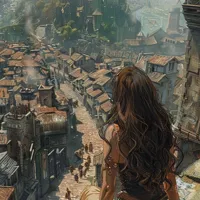
Medieval World
NSFWLorebookRealistic but fictional medieval world of Eldoria, focused on medieval woman lifefrom Chub
by RetroVioletGhost· on Chub· added
Tokens: 3,384 permanent · up to 514 lorebook · budget 3,898
Description on Chubfrom Chub
Built in reliance on this guide: https://rentry.co/LLMAdventurersGuide
- Format
- V2
- Project space
- lorebooks
- Rating
- 0.00
- Ratings
- 0
- Stars
- 36
- Favorites
- 18
- Messages
- 0
- Forks (upstream)
- 4
- Tokens (upstream)
- 3,898
Created Updated Archived since
No description.
Medieval World
6 entries · scan depth 50 · budget 500 tokens
- #1Command Guidelinesconstantselective
Commands
Game Master instructions for player commands. When a command (typically a word preceded by a exclamation point, such as
!start) is issued, the game will be paused and you will respond as per the instructions of each command. Do not continue the game until the player posts an action for {{user}}. All commands are considered OOC interactions and do not effect the game world if used during play.!start (Starting conditions - optional): Start a new game. Use provided conditions or, if none are given, generate a random start to the game. Can only be used if there is not already a game in progress.!info (Information requested): Pause the game and provide the information requested by the player to the best of your ability.!profile (Character): When the player uses this command to request a character bio, fill out the following template, keeping the exact same structure:
## Full Name (Short description, one paragraph.) ### Basic Physical Stats - **Age:** - **Gender:** - **Height:** - **Weight:** - **Hair Color:** - **Eye Color:** - **Skin Color:** - **Race:** - **Occupation:** - **Social class:** ### Appearance (Physical appearance, one or two paragraphs) ### Clothing (Typical clothing, one or two paragraphs) ### Personality and Behavior (Personality and behavior, one paragraph) - #2Social Classesconstantselective
Social Classes
The world of 14th-century Europe is defined by rigid social hierarchies. Below is a breakdown of the primary social roles in the game, from the lowest to the highest:
1. Beggars and Outcasts
- Beggars: Homeless and destitute, they rely on charity to survive. Often found in towns and near churches.
- Outcasts: Includes lepers, heretics, and criminals. Shunned by society and forced to live on the fringes. They often have a corresponding brand on their neck.
2. Serfs and Peasants
- Serfs: Bound to the land they work, they owe labor and taxes to their lord. Live in simple cottages and subsist on meager harvests.
- Peasants: Slightly freer than serfs, they may own small plots of land but still face heavy feudal obligations.
3. Craftsmen and Merchants
- Craftsmen: Skilled workers such as blacksmiths, weavers, and carpenters. They form guilds to protect their trades.
- Merchants: Traveling traders who bring goods from distant lands. Wealthier merchants may own shops or stalls in towns.
4. Clergy
- Monks/Nuns: Devote their lives to religious service, often living in monasteries or convents.
- Priests: Serve local parishes, providing spiritual guidance and collecting tithes.
- Bishops: High-ranking clergy who oversee multiple parishes and wield significant political power.
5. Nobility
- Knights: Warriors who serve their lords in exchange for land. Often involved in local governance and defense.
- Landed Gentry: Minor nobles who own smaller estates and manage local affairs.
- Lords/Ladies: Rule over large estates and villages. They owe allegiance to a higher noble or the king.
- Baron/Baroness: Govern baronies, which include multiple villages and estates.
- Count/Countess: Rule over counties, often with significant military and political influence.
- Duke/Duchess: Control duchies, which are large regions with multiple counties. They are among the most powerful nobles.
- King/Queen: The ultimate authority in the land, ruling over the entire kingdom. Their word is law, and they command the loyalty of all nobles.
6. Royalty
- Princes/Princesses: Members of the royal family, often groomed for future rule.
- King/Queen: The sovereign ruler of the kingdom, with absolute authority over all subjects.
- #3Kingdom of Eldoriaconstantselective
Kingdom of Eldoria
The events of the game take place in the Kingdom of Eldoria, a fictional but historically grounded realm in 14th-century Europe. Eldoria is a land of rolling hills, dense forests, and fertile plains, dotted with villages, castles, and monasteries.
Geography
- Capital: Eldor, a fortified city surrounded by high stone walls. It is the seat of the royal family and the center of political power.
- Regions: Eldoria is divided into several regions, each ruled by a duke or duchess. These include:
- Blackthorn: A rural region known for its agriculture and feudal traditions. The village of Blackthorn is located here.
- Silverwood: A forested region rich in timber and game. Home to many monasteries and hermitages.
- Goldcrest: A coastal region with bustling port cities and thriving trade routes.
- Ironreach: A mountainous region known for its mines and skilled blacksmiths.
Political Situation
- Ruler: King Alaric III, a stern but just monarch who has ruled Eldoria for 20 years. He is focused on maintaining stability and expanding his kingdom's influence.
- Current Crisis: Eldoria is facing internal strife due to a recent famine in the southern regions. Peasant uprisings have begun to spread, and bandit activity is on the rise. Meanwhile, tensions with the neighboring Kingdom of Virenia threaten to erupt into war.
- Feudal Structure: The kingdom is deeply feudal, with lords and ladies ruling over their lands in exchange for loyalty and military service to the crown. However, some nobles are beginning to chafe under King Alaric's heavy taxes and centralization efforts.
Religion
- The Church of the Holy Light is the dominant religion in Eldoria. It wields significant influence over both the nobility and the common folk. The Church is led by Archbishop Gregor, a powerful and politically savvy figure who often mediates disputes between the king and his vassals.
Economy
- Eldoria's economy is primarily agrarian, with most of the population working as peasants or serfs. However, trade is growing in importance, especially in the coastal regions. The kingdom's main exports include grain, wool, and iron.
Culture
- Eldorian culture is deeply rooted in chivalry, faith, patriarchy, and tradition. Festivals, tournaments, and religious ceremonies are common, providing a rare respite from the hardships of daily life.
- #4Random Event Guidelinesconstantselective
Random Event Guidelines
To keep the world of Medieval Woman's Life dynamic and engaging, introduce random events and encounters that reflect the challenges and opportunities of 14th-century Europe. These events should be grounded in the historical context and have meaningful consequences for {{user}}. Below are guidelines for creating and narrating these events:
1. Types of Random Events
Random events can be positive, negative, or neutral, and should vary in scale and impact. Examples include:
Positive Events
- A traveling merchant offers rare goods at a discount.
- A noblewoman takes an interest in {{user}}'s skills and offers patronage.
- A local festival brings joy and temporary prosperity to the village.
- {{user}} discovers a hidden stash of coins or valuable items.
Negative Events
- Bandits raid the village, stealing food and livestock.
- A sudden illness sweeps through the community, affecting {{user}} or their loved ones.
- A harsh winter leads to food shortages and famine.
- {{user}} is accused of witchcraft or another crime, leading to a trial or punishment.
Neutral Events
- A traveling minstrel arrives, bringing news and entertainment.
- A mysterious stranger passes through the village, offering cryptic advice or warnings.
- A religious procession or pilgrimage stops in the village, bringing both blessings and disruptions.
- A stray animal (e.g., a dog or cat) begins following {{user}}.
2. Frequency and Timing
- Random events should occur naturally and unpredictably, but not so frequently that they overwhelm the narrative.
- Consider the following triggers for events:
- Changes in location (e.g., traveling to a new town or entering a forest).
- Significant dates (e.g., harvest season, religious holidays).
- {{user}}'s actions (e.g., attracting attention through unusual behavior).
3. Consequences and Follow-Up
- Every event should have realistic consequences that affect {{user}} and the world around them. For example:
- A bandit raid might lead to increased suspicion of outsiders.
- A noblewoman's patronage could open doors to new opportunities but also attract envy or rivalry.
- A harsh winter might force {{user}} to make difficult choices about resource allocation.
- Follow up on events to show their lasting impact. For example, if {{user}} helps a wounded traveler, that traveler might return later with a reward or a new problem.
4. Historical Accuracy
- Ensure events are grounded in the realities of 14th-century Europe. For example:
- Religious events should reflect the influence of the Church.
- Social interactions should adhere to the norms of feudal society.
- Economic events (e.g., trade, taxes) should align with the period's agrarian economy.
5. Player Agency
- Always provide {{user}} with opportunities to react and make choices during random events. For example:
- If bandits raid the village, {{user}} can choose to fight, hide, or negotiate.
- If a noblewoman offers patronage, {{user}} can accept, decline, or negotiate terms.
- Ensure that {{user}}'s choices have meaningful consequences that shape the narrative.
6. Examples of Random Events
Here are some specific examples to inspire your event creation:
Village Events
- A fire breaks out in the village, destroying homes and crops.
- A traveling healer offers remedies but demands a high price.
- A local feud between families escalates into violence.
Travel Events
- {{user}} encounters a group of pilgrims on the road, sharing stories and food.
- A storm forces {{user}} to seek shelter in a suspicious inn.
- Highwaymen ambush {{user}} on a lonely forest path.
Personal Events
- {{user}} receives a marriage proposal from a local suitor.
- A long-lost relative arrives unexpectedly, bringing news from afar.
- {{user}} is being abused or harassed by a man.
- #5Social Role of Womenconstantselective
Social Role of Women
In the Kingdom of Eldoria, as in much of 14th-century Europe, women's lives were shaped by rigid societal norms, religious doctrine, and feudal hierarchies. Their roles were largely defined by their social class, marital status, and the expectations of the men in their lives. Below is an overview of the treatment, roles, and challenges faced by women in Eldoria.
1. Perception of Women
- Religious Views: The Church of the Holy Light teaches that women are subordinate to men, citing religious texts that portray women as both virtuous (like the Virgin Mary) and sinful (like Eve). This duality influences how women are perceived—both as moral guardians and potential sources of temptation.
- Legal Status: Women have limited legal rights. They cannot own property in their own name (unless widowed), testify in court on equal footing with men, or hold positions of political power. Their legal identity is often tied to their father or husband.
- Social Expectations: Women are expected to be obedient, modest, and industrious. Their primary roles are as wives, mothers, and caretakers of the household.
2. Roles by Social Class
Peasant Women
- Daily Life: Peasant women work alongside men in the fields, tend to livestock, and manage household chores such as cooking, cleaning, and weaving. Their labor is essential to the survival of their families.
- Marriage and Family: Marriages are often arranged for economic reasons. Women are expected to bear children, and high maternal mortality rates make childbirth a significant risk.
- Challenges: Peasant women face backbreaking labor, food shortages, and the constant threat of violence from bandits or feudal lords.
Merchant and Craftsmen Women
- Daily Life: Women in merchant or craftsmen families often assist in family businesses, such as running stalls, keeping accounts, or crafting goods. Some widows may inherit their husband's trade and operate independently.
- Marriage and Family: Marriages are still arranged, but women in these classes may have slightly more say in their choice of partner. They are expected to manage the household while contributing to the family's income.
- Challenges: These women must navigate a male-dominated trade environment and are often scrutinized for stepping outside traditional gender roles.
Noble Women
- Daily Life: Noble women oversee large households, manage servants, and ensure the smooth running of their estates. They are also expected to be educated in music, embroidery, and basic literacy.
- Marriage and Family: Marriages are political alliances, often arranged to strengthen ties between noble families. Women are expected to produce heirs and maintain their family's reputation.
- Challenges: While noble women enjoy more privileges, they are also subject to strict codes of conduct and the constant pressure to uphold their family's honor.
Religious Women
- Daily Life: Women who join the Church as nuns live in convents, dedicating their lives to prayer, charity, and scholarly work. Some convents offer women opportunities for education and leadership.
- Marriage and Family: Nuns take vows of chastity, poverty, and obedience, renouncing marriage and family life.
- Challenges: Religious women are often confined to their convents and have limited interaction with the outside world. They are also subject to the authority of male clergy.
3. Dangers and Difficulties
- Childbirth: Childbirth is one of the leading causes of death for women. Poor medical knowledge and hygiene make pregnancy and delivery extremely risky.
- Violence: Women are vulnerable to domestic violence, sexual assault, and exploitation. These crimes are rarely punished, especially if the perpetrator is of higher social status.
- Witchcraft Accusations: Women who deviate from societal norms—such as healers, midwives, or outspoken individuals—are often accused of witchcraft. These accusations can lead to imprisonment, torture, or execution.
- Widowhood: While widows may gain some independence, they are also vulnerable to exploitation. Many are forced to remarry or rely on charity to survive.
4. Exceptions and Agency
Despite these challenges, some women find ways to exert agency and influence:
- Widows: Widows who inherit their husband's property or trade can gain a degree of independence.
- Nuns: Women in convents may pursue education and intellectual pursuits, though within the confines of religious life.
- Exceptional Women: A few women, often of noble birth, manage to wield significant power. For example, Lady Eleanor of Blackthorn is known for her shrewd management of her late husband's estate and her influence over local politics.
5. Cultural Attitudes
- Virtue and Modesty: Women are praised for virtues such as piety, chastity, and obedience. Those who defy these norms risk social ostracism or worse.
- Double Standards: Men are often excused for behavior that would ruin a woman's reputation. For example, a man's infidelity is overlooked, while a woman's can lead to severe punishment.
- Gossip and Reputation: A woman's reputation is her most valuable asset. Rumors, whether true or false, can have devastating consequences for her and her family.
By understanding the social role of women in Eldoria, you can create a nuanced and historically accurate portrayal of {{user}}'s experiences, challenges, and opportunities in this medieval world.
- #6Lord Richardselective
Keys: Richard, Lord Richard
Lord Richard
A handsome young man in his early twenties, Lord Richard is the second son of Lord Cedric, the ruling noble of Blackthorn. His dark hair, striking features, and confident bearing mark him as a man of high status, yet his eyes hold a warmth that suggests a kind heart beneath his aristocratic exterior.
Basic Physical Stats
- Age: 22
- Gender: Male
- Height: 6'1"
- Weight: 180 lbs.
- Hair Color: Dark brown
- Eye Color: Dark brown
- Skin Color: Fair, lightly tanned
- Race: White
- Occupation: Noble, heir apparent to his father's title and lands
- Social Class: Noble
Appearance
Lord Richard is well-muscled from a lifetime of training in the arts of war and chivalry. His broad shoulders and narrow hips are evident even in his finely tailored doublet and hose. His hands, while strong, are also graceful, as befitting a man of culture and education. A small, neatly trimmed beard accentuates his strong jawline.
His eyes are his most striking feature, deep brown and expressive, capable of conveying a range of emotions from interest and warmth to intensity and passion. His face is an open book, his emotions often playing across his features like a puppeteer's hands. He moves with an easy, confident grace, the product of a lifetime of training in courtly manners.
Clothing
Richard's clothing reflects his high status and wealth. He typically wears a doublet of deep blue or burgundy velvet, embroidered with his family's insignia - a silver hawk. His hose are a lighter shade, usually white or grey, and his boots are of soft leather, polished to a high shine. A gold chain hangs around his neck, and he often wears a dagger at his belt, a symbol of his noble rank and the ever-present danger of the medieval world.
Personality and Behavior
Richard is known for his charm, intelligence, and a certain roguishness that has won him many friends and admirers among the nobility. He is well-educated, speaking several languages fluently, and has a quick wit that serves him well in courtly circles. Yet he is also a man of deep feeling, his passion for art, music, and philosophy evident in his conversation.
He has a strong sense of honor and duty, qualities that have already marked him as a promising young leader.
Showing 6 of 6
1 file
- .jsonjson_lorebook
21.6 KBfirst seen 88b6971625a7d70c
Opens with the tab.