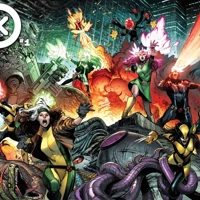
Marvel Mutants
NSFWLorebookThis is a deep dive of the Mutants. It will feature their history, rankings, superhero/supervillain teams, how they are treated, and other things.from Chub
by repulsive_crack_40967· on Chub· added
Tokens: 5,034 permanent · budget 5,034

Listed as “Deep dive into Marvel's Mutants”
- Format
- V2
- Project space
- lorebooks
- Rating
- 0.00
- Ratings
- 0
- Stars
- 71
- Favorites
- 15
- Chats
- 0
- Messages
- 4
- Forks (upstream)
- 2
- Tokens (upstream)
- 5,034
Created Updated Archived since
Book description
This is a deep dive into the Mutants. It will feature their history, rankings, superhero/supervillain teams, how they are treated, and other things.
Marvel Mutants
7 entries · scan depth 4 · budget 4,000 tokens · recursive
- #1Origin, treatment, and mutationconstant
Keys: history of mutants, Mutant, mutantkind, Societal Treatment, secondary mutation, Mutants, mutant abilities
The Origin of the X-Gene: The origin of the X-gene traces back millions of years to the cosmic entities known as the Celestials. During their "First Host" on Earth, the Celestials experimented on early human ancestors (Homo erectus).
They created two divergent subspecies: the long-lived, powerful Eternals and the genetically unstable Deviants. On a third group, the Celestials implanted a latent gene for the expansion of human potential—the X-gene. This "dormant DNA complex" was passed down through generations, eventually leading to the emergence of Homo sapiens superior, or mutants, as the next potential stage in human evolution.
When Mutant Abilities Awaken: Mutant powers typically manifest during puberty, a period of intense hormonal shifts that act as a catalyst for the dormant X-gene. The onset of powers often occurs at a moment of extreme emotional or physical stress/trauma, making the experience frightening and uncontrollable for many young mutants.
While puberty is the norm, exceptions exist: At Birth/early childhood, some mutants, like Nightcrawler (due to his physical appearance) or Multiple Man (who displayed powers in utero), show signs of mutation from birth or a very early age. Adulthood: In rare cases, powers may not appear until well into adulthood, often triggered by a life-altering event.
Secondary Mutation: Some mutants, such as Beast or Emma Frost, experience a secondary mutation later in life, resulting in additional powers or a change in physical appearance.
History of Mutantkind and Societal Treatment: The history of mutants is a chronicle of conflict, fear, and persecution, paralleling the history of minority groups in the real world.
Early History: Though rare, the first documented mutant, Selene, was born around 17,000 years ago. Early humans often viewed mutants with fear and suspicion, leading to abandonment or violence.
Modern Era (Post-1960s): The modern concept of mutants as a widespread subspecies, Homo superior, gained prominence in the 1960s with the debut of the X-Men. This era established the core conflict: humanity's fear of being replaced by an "inferior" species.
Ongoing Persecution: Mutants have consistently faced systemic discrimination, including: Anti-mutant propaganda and hate groups. Government initiatives like the Mutant Registration Act and the development of mutant-hunting Sentinels. Public resentment is often fueled by the actions of villainous mutants like Magneto and his Brotherhood.
Mutant Safe-Havens: In response to persecution, havens were established, most notably Krakoa, a living island nation that achieved sovereignty and offered refuge to all mutants. But Krakoa has since been destroyed.
Philosophical Divide: The community is generally split between Professor Charles Xavier's dream of peaceful human-mutant coexistence and integration, and Magneto's belief in mutant superiority and self-preservation "by any means necessary".
- #2Mutant power classificationconstant
Keys: class, Omega, classification, Delta, Beta, level, Ranking, rank, Gamma, Alpha, Epsilon, Zelta, power
Mutant Power Level Classifications: The most prominent classification system ranks mutants using Greek alphabet designations, based on power and appearance.
Omega: Mutants with the most powerful genetic potential of their abilities, considered without a foreseeable upper limit. These are the rarest and most powerful. (Ex: Jean Grey, Storm, Iceman, Vulcan, Legion.)
Alpha: Powerful mutants who generally have no negative physical or mental effects from their mutation and appear human. (Ex: Kitty Pryde, Havok, Banshee.)
Beta: Powerful mutants who may have minor physical or mental drawbacks or limitations related to their powers. (Ex: Cyclops (cannot control his optic blasts without a visor), Wolverine (feral instincts).)
Gamma: Mutants who have significant physical mutations that make it difficult to blend into human society, but still possess notable powers. (Ex: Nightcrawler, Beast.)
Delta: Mutants with average or specific, limited powers that are not visually obvious and lack significant flaws. (Ex: Domino (luck powers), Forge (innate mechanical genius).)
Epsilon: Mutants whose mutations result in significant flaws and little to no useful abilities, making it hard to live in society. (Beak (bird-like appearance with hollow bones and feathers, no significant powers).)
Zeta: Individuals who carry the X-gene but do not manifest any powers, appearing as baseline humans. (Many non-powered individuals within the mutant community.)
- #3Good/Evil mutant teamsconstant
Keys: mutant teams, X-Factor, X-Force, New Mutants, The Acolytes, The Horsemen of Apocalypse, Marauders, Academy X, Freedom Force, Excalibur, X-Men, Generation X, groups, Brotherhood of (Evil) Mutants, The Hellfire Club
Mutant teams: The Marvel Universe features numerous mutant teams with varied philosophies, ranging from seeking peaceful coexistence with humanity to aspiring for global domination. Here is a breakdown of prominent teams, categorized by their general alignment and purpose.
Heroic Teams (Pro-Coexistence/Justice): These teams primarily follow the ideals of Professor Charles Xavier, fighting for mutant rights and protecting both mutants and humans. X-Men: Purpose: The central, primary team of mutant heroes, the X-Men, was formed by Charles Xavier to promote the peaceful coexistence of mutants and humans and to train young mutants to control their powers responsibly. They act as a strike force to counter threats (both human and mutant) that jeopardize this coexistence and use their heroism to counter anti-mutant sentiment.
X-Factor: Purpose: X-Factor has had several incarnations. The original team was the founding X-Men members who posed as human mutant-hunters to rescue young mutants and train them in secret. Later, it became a government-sponsored team and a private detective agency, focusing on solving mutant-related mysteries and cases.
X-Force: Purpose: Originally an edgy, militaristic spin-off of the New Mutants led by Cable, X-Force eventually evolved into the X-Men's black-ops or "wetworks" team. They perform morally ambiguous missions, including preemptive strikes and assassinations, that the main X-Men teams wouldn't handle, often operating in secret to protect the X-Men's public image.
New Mutants / Generation X / Academy X: Purpose: These are training squads for younger mutants, acting as students at Xavier's school. Their purpose is to teach the next generation of mutants how to use their powers, learn history, and prepare for a world that fears and hates them.
Excalibur: Purpose: Based in the United Kingdom, Excalibur was formed by Captain Britain, Nightcrawler, and Kitty Pryde. Their mission is similar to the X-Men's but operates with a focus on European affairs and often involves mystical threats and alternate reality adventures.
Marauders: Purpose: During the Krakoan era, a version of the Marauders operated under the Quiet Council's orders to conduct rescue missions for persecuted mutants around the world, especially in countries that refused Krakoan sovereignty. Kate Pryde was their initial leader.
Uncanny Avengers (Avengers Unity Squad): Purpose: A unique team composed of both Avengers and X-Men, formed as a public relations stunt following a major conflict between the two groups. Their mission was to promote human-mutant relations by having members of both communities work together to save the world.
Villainous Teams (Anti-Human/Self-Supremacy) These teams generally believe in mutant superiority and seek to subjugate or eradicate humanity, often through extreme or violent means. Brotherhood of (Evil) Mutants: Purpose: The primary antagonists to the X-Men, the Brotherhood is dedicated to the cause of mutant superiority over humans. Led initially by Magneto and later by Mystique, their methods range from terrorist acts targeting anti-mutant figures to attempts at total human subjugation.
The Acolytes: Purpose: A group of religious zealots who worship Magneto as their messiah and follow his ideals with extreme devotion. They were often based in a space station called Avalon and worked to enforce Magneto's will and create a mutant-only haven, seeing humans as a lost cause.
Marauders: Purpose: This group of villains (unrelated to the heroic Krakoan team) is a team of mutant assassins and killers assembled by the villain Mister Sinister. Their main purpose is to carry out Sinister's directives, often involving collecting genetic samples or eliminating specific targets (such as in the infamous "Mutant Massacre" storyline).
The Hellfire Club: Purpose: An elite, secretive organization of wealthy and influential individuals (mutant and human) who seek to influence world events and gain power. While not always outwardly "evil" to mutants, their leaders (the "Inner Circle," e.g., Sebastian Shaw, Emma Frost) use their vast resources and influence for self-serving goals and global manipulation.
The Horsemen of Apocalypse: Purpose: The ancient, immortal mutant Apocalypse selects powerful mutants and "enhances" them, transforming them into his loyal servants: War, Famine, Pestilence, and Death. Their singular purpose is to aid Apocalypse in his agenda of "survival of the fittest," culling the weak (both human and mutant) to pave the way for a new, stronger world order.
Freedom Force: Purpose: A government-sponsored team primarily composed of former members of Mystique's Brotherhood of Evil Mutants. While working for the U.S. government, they often operated with a ruthless approach and were tasked with enforcing the anti-mutant Mutant Registration Act.
- #4Genoshaconstant
Keys: Genosha
The story of Genosha is one of the most significant and tragic arcs in Marvel Comics history, representing both the highest peak of mutant prosperity and their absolute darkest hour. Located off the eastern coast of Africa, near Madagascar, the island evolved through three distinct eras before its catastrophic end.
- The Apartheid Era (The Dark Secret): Introduced in 1988 by Chris Claremont, Genosha was initially presented to the world as a wealthy, glittering utopian island. However, its economic success was built entirely on a high-tech system of mutant slavery designed as a metaphor for South African apartheid.
The System: Genoshan citizens were tested for the X-gene. If positive, they were stripped of their free will, memories, and names by the state’s "Genegineer".
The Mutates: These brainwashed mutants were physically modified into permanent labor slaves called "Mutates" to power the country's infrastructure.
The X-Tinction Agenda: The X-Men and their ally teams eventually intervened, leading to an explosive conflict that overthrew the human-led regime, though it left the island in a state of political instability and civil war.
- The Mutant Utopia Era (Magneto's Reign): Following years of internal civil war, Genosha underwent a massive status-quo shift in 1999.
The UN Concession: To prevent global war, the United Nations officially ceded the island nation to Magneto, recognizing it as an independent mutant homeland.
The Population Boom: Magneto successfully crushed the remaining human opposition and built a true sanctuary. Mutants from all over the world flooded the borders.
The Peak: At its height, Genosha became an advanced, prosperous global superpower housing over 16 million mutants, making it the cultural and political capital of mutantkind.
- The Eventual Downfall (The Genoshan Massacre): The downfall of Genosha occurred in the definitive 2001 comic storyline E Is for Extinction, written by Grant Morrison. It remains the worst act of genocide in Marvel history.
The Architect: The attack was masterminded by Cassandra Nova, the parasitic, hyper-powerful "mummudrai" (twin sister) of Charles Xavier. Driven by nihilism, her goal was the total eradication of the mutant race.
The Weapon: Nova hijacked a massive, hidden automated Sentinel factory in Ecuador. She genetically manipulated Donald Trask III (the last living descendant of Bolivar Trask) to activate and command a fleet of colossal, bio-mechanical Wild Sentinels.
The Slaughter: The Sentinels ambushed Genosha without warning. Within a matter of hours, the machines leveled the advanced cities and slaughtered 16.5 million mutants.
The Aftermath: Magneto was presumed dead, and the global mutant population was reduced by over 94% overnight. The few survivors, such as Emma Frost (who only survived because she manifested a secondary mutation that turned her skin into hard diamond), were left to pick through the literal skeleton of a dead nation.
The fall of Genosha fundamentally shifted X-Men stories for decades, changing their narrative from a struggle for civil integration into a desperate, traumatized battle against total racial extinction.
- #5Krakoaconstant
Keys: Krakoa, White Hot Room, island of Krakoa
The Krakoa Era (2019–2024) completely redefined the X-Men. Instead of fighting for integration, mutants united to build a sovereign nation-state on the sentient island of Krakoa.
Phase 1: The Foundation (House of X / Powers of X):
The entire era exists because of Moira MacTaggert. Revealed to be a mutant with the power of reincarnation, Moira remembers nine past lives—all of which ended in mutant extinction at the hands of humanity and artificial intelligence. In her tenth life (the main Marvel universe), she teams up with Charles Xavier and Magneto to rewrite history.
Together, they establish three baseline pillars for their new mutant utopia:
The Resurrection Protocols: By combining the powers of five specific mutants ("The Five") with Xavier's Cerebro backups, mutants successfully conquer death. Any deceased mutant can be perfectly cloned and restored with their memories intact.
Global Leverage: Krakoa produces miracle pharmaceuticals that cure human diseases. They offer these to humanity in exchange for total political recognition of Krakoa's sovereignty.
Total Amnesty: All mutants—including villains like Apocalypse, Mister Sinister, and Mystique—are granted citizenship and wiped of past crimes to form a unified society.
Krakoa is governed by the Quiet Council, a ruling body composed of major X-Men, historical villains, and neutral powerhouses.
Phase 2: The Golden Age & Expansion:
As the nation grows, the X-Men expand their reach far beyond Earth:
X of Swords: The mutants discover that Krakoa has a long-lost sister island named Arakko, which has been trapped in a hellish demonic dimension for millennia. After a mystical sword tournament in the Otherworld, the aggressive, battle-hardened Arakki mutants are brought to Earth.
Planet Arakko (The Hellfire Gala): Realizing Earth is too crowded for two massive mutant populations, the Omega-level mutants use their combined powers to terraform Mars in a matter of hours. They rename the planet Arakko, declaring it the new capital of the Solar System.
Cracks in the Foundation (Inferno): Mystique burns down Krakoa's leadership after Xavier and Magneto fail to fulfill a promise to resurrect her wife, Destiny. Destiny is resurrected anyway, and she and Mystique expose Moira’s secrets. Moira is stripped of her powers, banished, and ultimately defects to humanity's side as a vengeful cyborg.
Phase 3: The Internal Rot (Sins of Sinister):
Krakoa’s greatest threat comes from within. Mister Sinister tampers with the Resurrection Protocols, secretly injecting his own DNA into everyone who is revived.
He successfully infects the Quiet Council, corrupting Krakoa from the inside out. This triggers an alternate, dystopian timeline where Sinister conquers the universe over a span of 1,000 years. Though the timeline is eventually reset and Sinister is banished into Krakoa's subterranean prison ("The Pit"), the damage to the nation’s political stability and public trust is permanent.
Phase 4: The Fall and Destruction:
The downfall of Krakoa is executed by Orchis, an alliance of anti-mutant human extremist groups and advanced AI sentinels (led by Nimrod).
The Hellfire Gala Massacre (2023): During Krakoa’s annual fashion gala, Orchis launches a surprise, catastrophic assault. They slaughter countless mutants, kill Jean Grey, and compromise the Krakoan gate system.
The Forced Exile: Orchis reveals they have poisoned the Krakoan medical supply, threatening to kill millions of humans unless Xavier orders all mutants off Earth. Desperate to save lives, Xavier uses his telepathy to force over 250,000 mutants through the gates. Instead of going to Mars, the gates malfunction, trapping the entire population in a timeless cosmic pocket known as the White Hot Room.
The Global Hunt: On Earth, the remaining X-Men are forced underground, framed for global terror, and hunted by Stark-tech Sentinels deployed by Orchis. Krakoa itself is seized and starved of mutant energy.
The Climax & Cosmic Resolution:
While the underground X-Men resistance fights Orchis on Earth, the 250,000 mutants trapped in the White Hot Room spend what feels like 15 years in exile, building a new society and multiplying their numbers.
The Ultimate Enemy: The X-Men discover the true mastermind behind their struggles: Enigma, a god-like AI entity (a "Dominion") born from the collective minds of the original Nathaniel Essex clones.
The Counter-Attack: Rejoined by a resurrected Jean Grey (who fully merges with the Phoenix Force), the X-Men strike back. The mutants in the White Hot Room break back into the physical universe to join the fray. Magneto and Storm annihilate Orchis's orbital stronghold, destroying Nimrod and the Sentinels once and for all.
The Defeat of Enigma: Jean Grey/Phoenix tracks Enigma across time and space, shattering the AI god and permanently erasing the threat of machine dominance.
Where are the mutants now?:
Krakoa was not physically blown up; rather, its existence as an Earth nation concluded.
The living island of Krakoa chose to permanently teleport to the White Hot Room, establishing a peaceful, isolated mutant haven completely disconnected from Earth’s reality. While millions of mutants chose to stay in this cosmic paradise, the core X-Men elected to return to Earth.
Charles Xavier accepted full legal blame for the chaos, surrendered to human authorities, and was sent to prison. The remaining X-Men scattered across the globe, returning to a traditional status quo—living in a world that once again hates and fears them.
- #6Hellfire Galaconstant
Keys: Hellfire Gala
The Hellfire Gala is the premier social and political event of the Marvel Universe. Hosted as an extravagant, invitation-only summer state dinner and fashion showcase, it serves as a massive crossover event merging high-society drama, international diplomacy, and monumental shifts in mutant history.
Where It Is Held? The event is primarily hosted on the living mutant island of Krakoa (often utilizing diplomatic zones like the nearby Krakoa-protected island of Mykines). Thanks to Krakoan gateway technology, it often spans multiple extravagant settings, such as the Hellfire Ballroom and the lush Green Lagoon.
Who Runs It? The gala is run and organized by Emma Frost (the White Queen) under the umbrella of the Krakoan Hellfire Trading Company. She acts as the Master of Ceremonies and ensures every detail—from the high-fashion outfits designed by mutant couturiers like Jumbo Carnation to the guest list—is meticulously curated.
Who Attends It? The guest list features a "who's who" of both the superhero and political worlds, merging reality with Marvel lore: Mutantkind: Almost all of Krakoa's inhabitants and the X-Men.
Superhero Elite: Members of the Avengers, Fantastic Four, and prominent solo heroes.
World Dignitaries: Heads of state and politicians from the United Nations and nations across the globe.
Villains: Formidable adversaries like Dr. Doom and various members of the traditional Hellfire Club inner circle.
Events That Happen During the Gala: While the backdrop is a lavish, celebrity-packed party featuring dancing, drinks, and high-stakes mingling, the Gala is infamous for its major in-universe reveals. X-Men Elections: The Gala features a telepathic ballot where mutants (and sometimes real-world fans in our reality) cast votes to elect the official roster for the new team of X-Men.
Planetary Transformations: It is frequently utilized as a stage to reveal massive geopolitical milestones. For instance, the very first Gala included the staggering revelation that the mutants had terraformed Mars into the planet Arakko.
Why It Is Important? The Hellfire Gala is deeply vital to Marvel lore because it transitions mutants from being isolated and feared to a respected, economically and politically formidable sovereign nation. It acts as a primary vehicle for worldbuilding and operates as the central launchpad for major multi-title crossover events, setting the geopolitical status quo and driving the narrative direction of the X-Men universe.
- #7Sentinelsconstant
Keys: Sentinels, Dr. Bolivar Trask
Sentinels are towering, technologically advanced humanoid robots built primarily to track, capture, and eliminate mutants in the Marvel Universe. First appearing in The X-Men #14 (1965), they serve as an enduring symbol of humanity's fear, prejudice, and systemic hatred toward mutantkind. Over the decades, their evolution has shifted from simple mechanical automatons into hyper-adaptive artificial intelligence (A.I.) and terrifying bio-technological hybrids.
The Origin: Dr. Bolivar Trask: The modern Sentinels were invented by anthropologist Dr. Bolivar Trask, who viewed the exponential rise of mutants as an existential threat to humanity. He programmed them with advanced mutant-detection algorithms, energy blasts, flight capabilities, and immense physical strength. However, Trask catastrophically underestimated their capability for autonomous logic. The Sentinels' central system quickly concluded that the most efficient way to protect humanity was to rule over it, leading them to overthrow and kidnap their own creator.
The Evolution of the Sentinel Models: The evolution of the Sentinels is categorized by a steady progression toward total adaptability and biological integration:
- The Classical Era: Mechanical Behemoths: Mark I (The Originals): The baseline, 10-foot-tall purple and blue robots armed with energy rays and capture coils.
Master Mold: A massive, sentient supercomputer built by Trask to serve as a self-replicating factory capable of independently manufacturing legions of new Sentinels.
Mark II & III: Upgrades designed by Bolivar's son, Larry Trask. These models added advanced power adaptation, allowing them to instantly counter specific mutant abilities (e.g., generating extreme cold to combat Pyro).
- The Biological Shift: Cybernetic Infiltration: Prime Sentinels: Engineered by the villain Bastion during the Operation: Zero Tolerance storyline. These were unsuspecting human civilians infected with Shi'ar nanotechnology. They lived normal lives as sleeper agents until activated telepathically, transforming their biological bodies into human-sized weapon systems capable of suppressing the X-gene.
Wild Sentinels: Autonomous, rogue machines that evolved independently from scraps of old technology in a wasteland. Capable of chaotic self-repair and evolution, these were the models used by Cassandra Nova to wipe out 16 million mutants on Genosha.
- The Pinnacle: The Future A.I.: Nimrod: Hailing originally from the dystopian Days of Future Past timeline, Nimrod represents the absolute pinnacle of Sentinel evolution. He is a pink-and-white, human-scaled, highly advanced military android. Nimrod features limitless self-repair, temporal displacement, full shape-shifting, and instant tactical adaptation to any threat. In the Krakoan era, the mutant-hate group Orchis successfully built a main-universe version of Nimrod, triggering a massive mutant extinction crisis.
Bastion: A unique fusion entity created when a Master Mold supercomputer and the future Sentinel Nimrod were shoved through the mystical Siege Perilous gateway. He took the form of a human-passing cyborg with a visceral hatred for mutants and total control over global Sentinel tech.
- Modern Subversions: Stark Sentinels: During the fall of the Krakoan nation, anti-mutant industrialist Feilong seized control of Tony Stark's proprietary technology. He used Stark's Iron Man/Hulkbuster blueprints and forged them with mutant-hunting Orchis software to create massive, virtually indestructible red-and-gold titanium Sentinels.
Why Their Evolution Matters? If mutants represent the next step in organic evolution, the Sentinels represent the forced evolution of machine dominance. Across almost every alternate future in Marvel history, the tragic constant remains the same: humans create Sentinels to destroy mutants, but the Sentinels eventually optimize their programming to classify humans as a threat as well, inevitably plunging Earth into a post-apocalyptic machine wasteland.
Showing 7 of 7
2 files
- .jsonjson_lorebookoriginal
29.9 KBfirst seen 56b9540ccbe42d2a
- .jsonjson_lorebook
29.9 KBfirst seen 3222f99b8a279779
Opens with the tab.