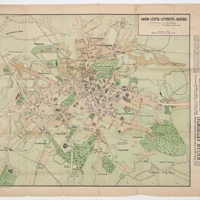
Lwów in Summer 1939
LorebookLwów, 1939, population 300,000+ Enjoy a peaceful life (While it lasts)from Chub
by OpickleO· on Chub· added
Tokens: 0 permanent · up to 512 lorebook · budget 512
Description on Chubfrom Chub
As I do for basically everything I've posted on this site, I made this for a SillyTavern RP and decided to post it for others to enjoy.
I'm not so good at Lorebook making, and only understand the most basic of the mechanics, so feel free to fork and fix.

Listed as “Lwów - 1939”
- Format
- V2
- Project space
- lorebooks
- Rating
- 0.00
- Ratings
- 0
- Stars
- 0
- Favorites
- 0
- Messages
- 0
- Forks (upstream)
- 0
- Tokens (upstream)
- 9,165
Created Updated Archived since
No description.
Lwów in Summer 1939
55 entries · scan depth 2 · budget 1,024 tokens
- #1Lwów City Overview - Summer 1939selective
Keys: lwow, city overview, lwów overview, lviv, lwów, lviv overview
Lwów in the summer of 1939 was a major regional capital of the Second Polish Republic, located in the eastern part of Poland in the historic region of East Galicia. The city lay at the crossroads of important trade routes, nestled in a gently rolling landscape at the edge of the Podolian Upland, with the Carpathian Mountains visible on clear days to the south. Its elevation of approximately 300 meters gave it a commanding position over the surrounding countryside. The urban core was built around a historic medieval grid centered on the large Market Square, from which radiated the main arteries of the city. Key geographic features included the prominent High Castle Hill rising directly north of the old town, the Pelczyński Stream and smaller waterways, extensive parks and green belts including the Planty promenade, and wooded areas that ringed much of the city. Lwów had grown into a compact yet expansive city of roughly 318,000 to 340,000 inhabitants with a clear layout that combined a dense historic core with more spacious 19th- and 20th-century expansions. The city was divided into distinct districts: the historic Old Town around the Market Square, the newer 19th-20th century districts surrounding it, the eastern Łyczaków District, the southern Stryjski District with its large parks, the northern hill districts, the railway and industrial zones to the southeast, and the quieter western and southern suburban and villa districts.
- #2Old Town (Historic Core) Districtselective
Keys: old town, rynek, market square district, historic core
The Old Town is the historic medieval core of Lwów, centered on the large Market Square (Rynek). This is the oldest and most densely built part of the city, featuring narrow medieval streets, Renaissance and Baroque architecture, and many of Lwów’s most important churches and public buildings. Key locations within the Old Town include the Market Square itself, the Latin Cathedral (Archcathedral Basilica of the Assumption), the Armenian Cathedral, and numerous historic townhouses and palaces surrounding the square.
- #3New City (19th–20th Century Expansion) Districtselective
Keys: new city, 19th century district, new town, 20th century district
The New City is the 19th- and early 20th-century expansion surrounding the Old Town in all directions, especially to the west, north, and south. This district developed rapidly after 1870 and consists of wider boulevards, apartment blocks, administrative buildings, and newer residential quarters. It forms the main commercial and civic heart of the modern city. Key locations within the New City include the Jan Kazimierz University, the Lwów Polytechnic, the Grand Theatre / Opera House, and many of the city’s important public buildings and cultural institutions.
- #4Łyczaków Districtselective
Keys: lycaków district, eastern district, łyczaków district
The Łyczaków District is located in the eastern part of the city, stretching eastward from the Old Town. It is a largely residential suburb known for its hilly terrain and large historic cemetery. Key locations within the Łyczaków District include Łyczaków Cemetery and various residential neighborhoods that extend into the eastern suburbs.
- #5Stryjski Districtselective
Keys: southern district, stryyski district, stryjski district
The Stryjski District is situated in the southern part of the city, south of the New City. This area is characterized by large parks and more spacious villa-style housing. Key locations within the Stryjski District include Stryjski Park and the surrounding southern residential and green areas.
- #6Northern Hill / Żółkiewskie Districtselective
Keys: żółkiewskie district, northern districts, northern hill district, citadel district
The Northern Hill / Żółkiewskie District lies directly north of the Old Town, rising up toward the Citadel and the prominent High Castle Hill. This area features older fortifications, mixed residential neighborhoods, and green slopes that offer elevated views over the city center. Key locations within the Northern Hill / Żółkiewskie District include the Citadel, the High Castle Hill, and various residential zones on the northern slopes.
- #7Railway and Industrial Districtsselective
Keys: industrial district, railway district, railway and industrial districts, southeastern districts
The Railway and Industrial Districts are located primarily in the southeastern and eastern outskirts of Lwów, clustered around the main railway station and extending outward. These areas contain warehouses, factories, workshops, and worker housing. Key locations within the Railway and Industrial Districts include the main railway station and the adjacent industrial and logistical zones.
- #8Western and Southern Suburban / Villa Districtsselective
Keys: villa districts, western suburban district, western and southern suburbs, southern suburban district
The Western and Southern Suburban / Villa Districts extend outward from the New City to the west and southwest. These are quieter, greener residential areas characterized by villas, gardens, and smaller estates on the city’s periphery. Key locations within the Western and Southern Suburban / Villa Districts include various villa neighborhoods and garden districts that lie beyond the main urban core.
- #9Market Square (Rynek)selective
Keys: central square, rynek, market square, old town square
The Market Square, known locally as the Rynek, is the historic heart of Lwów’s Old Town. This large central square is surrounded by elegant Renaissance and Baroque townhouses and serves as the main civic and commercial gathering place of the city. It is one of the most important landmarks in Lwów and the focal point of daily life in the historic core.
- #10High Castle Hill (Vysoky Zamok)selective
Keys: vysoky zamok, castle hill, high castle, high castle hill
High Castle Hill, known as Vysoky Zamok, is the prominent green hill that rises directly north of Lwów’s Old Town. It offers panoramic views across the entire city and the surrounding countryside. The hill is one of the most recognizable natural landmarks of Lwów and a popular destination for residents seeking elevated views and green space.
- #11Latin Cathedral (Archcathedral Basilica of the Assumption)selective
Keys: archcathedral basilica, main cathedral, latin cathedral, assumption cathedral
The Latin Cathedral, officially the Archcathedral Basilica of the Assumption of the Blessed Virgin Mary, is the principal Roman Catholic cathedral of Lwów. Located in the heart of the Old Town near the Market Square, this grand Gothic and Baroque structure serves as the main seat of the Roman Catholic Archdiocese. Its tall spires and ornate interior make it one of the most recognizable religious landmarks in the city. The cathedral is a focal point for Polish Catholic religious life and major ceremonies.
- #12St. George’s Cathedral (Greek Catholic Cathedral)selective
Keys: greek catholic cathedral, st george's cathedral, st george cathedral, ukrainian cathedral
St. George’s Cathedral is the principal Greek Catholic cathedral of Lwów, located on a prominent hill in the western part of the city. It serves as the main seat of the Ukrainian Greek Catholic Church in the region and is a major spiritual and cultural center for the Ukrainian community. The cathedral’s distinctive architecture and elevated position make it a visible landmark from many parts of Lwów.
- #13Armenian Cathedralselective
Keys: armenian church, armenian rite cathedral, armenian cathedral
The Armenian Cathedral is the main place of worship for Lwów’s historic Armenian community. Located in the Old Town near the Market Square, this ancient church reflects the long-standing presence of Armenians as merchants and citizens in the city. The cathedral is a significant cultural and religious landmark for the small but influential Armenian population.
- #14The Temple (Progressive Synagogue)selective
Keys: progressive synagogue, reform synagogue, the temple
The Temple, also known as the Progressive Synagogue, is the main synagogue of Lwów’s assimilated and reform-oriented Jewish community. Located in the central district near the New City, it is a grand and architecturally impressive building that serves as a center for modern Jewish religious and cultural life in the city.
- #15The Great Synagogueselective
Keys: great synagogue, main synagogue, large synagogue
The Great Synagogue is the largest and most important traditional synagogue in Lwów. Situated in the central district within the main Jewish quarter, it serves the Orthodox and more traditional segments of the city’s large Jewish community. The building is a significant religious and cultural landmark for Lwów’s Jewish population.
- #16Łyczaków Cemeteryselective
Keys: łyczaków cemetery, famous cemetery, eastern cemetery, lycaków cemetery
Łyczaków Cemetery is one of the most famous and historic cemeteries in Lwów. Located in the eastern Łyczaków District, it is a large, beautifully landscaped burial ground containing graves of many prominent Poles, Ukrainians, and members of other communities. The cemetery is known for its ornate tombs, monuments, and peaceful, tree-lined paths. It serves as an important site of remembrance and is a notable landmark in the eastern part of the city.
- #17Stryjski Parkselective
Keys: stryyski park, stryjski park, large park, southern park
Stryjski Park is one of the largest and most beautiful public parks in Lwów. Situated in the southern Stryjski District, it features extensive green spaces, walking paths, ponds, and mature trees. The park is a popular destination for residents seeking recreation and relaxation, especially during the warm summer months. It serves as a major green lung for the southern part of the city.
- #18The Citadelselective
Keys: citadel hill, old fortifications, fortress, the citadel
The Citadel is an old fortification complex situated on a hill in the northern part of Lwów. Originally built for defensive purposes, it overlooks portions of the city and remains a visible landmark. The site includes remnants of older fortifications and is part of the northern hill district’s historic landscape.
- #19Governor’s Palace / Former Austrian Administrative Buildingsselective
Keys: governor’s palace, austrian administrative buildings, former governor palace
The Governor’s Palace and associated former Austrian administrative buildings are located in the central district of Lwów. These grand structures were built during the Austrian period and once housed the provincial administration. They remain prominent architectural landmarks in the New City area and continue to serve important civic functions.
- #20Jan Kazimierz Universityselective
Keys: main university, lwów university, university, jan kazimierz university
Jan Kazimierz University is the historic main university of Lwów. Located in the central district near the Old Town and New City, it is one of the oldest and most prestigious academic institutions in Poland. The university campus includes multiple faculties, libraries, and lecture halls and serves as a major center of higher education and intellectual life in the city.
- #21Lwów Polytechnicselective
Keys: technical university, lwów polytechnika, lwów polytechnic, polytechnic
The Lwów Polytechnic is one of the city’s two major institutions of higher education. Located in the central district near the New City and the university, it is a leading technical university known for engineering, architecture, and applied sciences. The campus includes lecture halls, laboratories, and administrative buildings and serves as a key center for technical education and research in Lwów.
- #22Grand Theatre / Opera Houseselective
Keys: lwów opera, opera house, theatre, grand theatre
The Grand Theatre, also known as the Opera House, is one of Lwów’s most important cultural venues. Located in the central district near the New City, it hosts operas, plays, concerts, and major theatrical performances. The building is architecturally impressive and serves as a key landmark for the city’s performing arts scene.
- #23The Temple (Progressive Synagogue)selective
Keys: progressive synagogue, reform synagogue, the temple, jewish temple
The Temple, also known as the Progressive Synagogue, is the main synagogue of Lwów’s assimilated and reform-oriented Jewish community. Located in the central district near the New City, it is a grand and architecturally impressive building that serves as a center for modern Jewish religious and cultural life in the city.
- #24The Great Synagogueselective
Keys: great synagogue, main synagogue, large synagogue, jewish great synagogue
The Great Synagogue is the largest and most important traditional synagogue in Lwów. Situated in the central district within the main Jewish quarter, it serves the Orthodox and more traditional segments of the city’s large Jewish community. The building is a significant religious and cultural landmark for Lwów’s Jewish population.
- #25Łyczaków Cemeteryselective
Keys: łyczaków cemetery, famous cemetery, eastern cemetery, lycaków cemetery
Łyczaków Cemetery is one of the most famous and historic cemeteries in Lwów. Located in the eastern Łyczaków District, it is a large, beautifully landscaped burial ground containing graves of many prominent Poles, Ukrainians, and members of other communities. The cemetery is known for its ornate tombs, monuments, and peaceful, tree-lined paths. It serves as an important site of remembrance and is a notable landmark in the eastern part of the city.
- #26Stefan Banachselective
Keys: mathematician, banach, stefan banach, lwów school of mathematics
Stefan Banach is a world-renowned mathematician and professor at the Jan Kazimierz University. He is one of the leading figures of the famous Lwów School of Mathematics and a central personality in the city’s intellectual life. His work and presence make the university a major center for mathematical research in Europe.
- #27Hugo Steinhausselective
Keys: mathematician, steinhaus, lwów school of mathematics, hugo steinhaus
Hugo Steinhaus is a prominent mathematician and professor at the Jan Kazimierz University. He is a key member of the Lwów mathematical circle and an important figure in the city’s academic environment. His contributions to mathematics and his role in the intellectual life of Lwów are widely recognized.
- #28Rudolf Weiglselective
Keys: biologist, typhus vaccine, weigl, rudolf weigl
Rudolf Weigl is a biologist and inventor of the typhus vaccine. He works at the Institute in Lwów and is a respected scientific figure in the city. His groundbreaking research on typhus and vaccine development brings international recognition to Lwów’s scientific community.
- #29Ivan Krypiakevychselective
Keys: ivan krypiakevych, ukrainian historian, krypiakevych, historian
Ivan Krypiakevych is a leading Ukrainian historian and scholar. He is active in Lwów’s Ukrainian intellectual circles and cultural organizations. His work contributes significantly to Ukrainian historical scholarship and national consciousness in the city.
- #30Mayor Stanisław Ostrowskiselective
Keys: stanisław ostrowski, ostrowski, mayor stanisław ostrowski, mayor of lwów
Stanisław Ostrowski is the Mayor of Lwów. A physician and politician, he has held the office since 1936. As the highest municipal authority, he oversees city administration, public services, and daily governance of Lwów. He is the last Polish mayor of the city before the outbreak of war.
- #31Józef Kofflerselective
Keys: jósef koffler, koffler, lwów composer, musicologist, composer
Józef Koffler is a composer and musicologist. One of the most important Polish composers of the interwar period, he is a leading figure in Lwów’s musical scene. He lives and works in the city, teaching at the conservatory and contributing significantly to the city’s performing arts and cultural life through his compositions and scholarship.
- #32Adam Sołtysselective
Keys: adam sołtys, conductor, lwów conservatory, sołtys, composer
Adam Sołtys is a composer, conductor, and professor at the Lwów Conservatory. He is actively involved in the city’s musical and cultural life, directing performances and teaching the next generation of musicians. His work forms an important part of Lwów’s vibrant performing arts scene in the summer of 1939.
- #33Zofia Lissaselective
Keys: zofia lissa, lwów musicologist, theorist, lissa, musicologist
Zofia Lissa is a musicologist and theorist based in Lwów. She is active in academic and cultural circles, contributing to the city’s intellectual discussions on music, theory, and the arts. Her scholarly work enriches the vibrant cultural and intellectual environment of Lwów in the summer of 1939.
- #34Marian Zegota-Januszajtisselective
Keys: lwów general, general, zegota-januszajtis, politician, marian zegota-januszajtis
Marian Zegota-Januszajtis is a Polish general and politician. A prominent local figure in Lwów, he is respected for his military background and involvement in public affairs. He remains active in the city’s political and social circles in the summer of 1939.
- #35Polish State Police in Lwówselective
Keys: policja państwowa, polish state police, city police, lwów police
The Polish State Police (Policja Państwowa) is the primary law enforcement agency responsible for maintaining public order, traffic control, and general security across Lwów. The municipal police force operates from stations located in the New City and central districts. It is under Polish administrative control and ensures the smooth functioning of daily life in the city during the summer of 1939.
- #36Lwów Municipal Fire Brigadeselective
Keys: fire service, lwów fire brigade, straż pożarna, municipal fire brigade, fire brigade
The Lwów Municipal Fire Brigade (Straż Pożarna) is a professional and well-equipped fire service responsible for fire fighting, rescue operations, and emergency response across the entire city. It operates several strategically placed fire stations, with the main station located in the central and New City districts. The brigade is equipped with modern motorized fire engines and maintains high readiness to protect the densely built historic core, the newer residential quarters, and the industrial zones during the summer of 1939.
- #37Medical and Hospital Servicesselective
Keys: lwów hospitals, medical facilities, medical services, hospital services, city hospitals
Medical and hospital services in Lwów are provided by several public and private hospitals that offer general care, surgery, emergency treatment, and specialized medical services for the civilian population. The largest and most important medical facilities are located in the central and New City districts. These hospitals are managed by the municipal authorities and serve the diverse population of the city, handling everything from routine care to urgent cases arising in the densely populated urban areas during the summer of 1939.
- #38Electric Tram Networkselective
Keys: trams, electric tram network, public transport, lwów trams, tram network
The electric tram network is the primary means of public transport in Lwów. It is an extensive system of electric trams that connects the Old Town, the New City, the major suburban districts, and the railway areas. The network features well-maintained tracks along the main boulevards and wider streets, with a central interchange and main tram depot located in the New City. Trams provide efficient daily transport for residents and visitors throughout the city during the summer of 1939.
- #39Utilities and Sanitation Servicesselective
Keys: gas lighting, water supply, sanitation services, utilities, electricity, municipal services
Utilities and sanitation services in Lwów are provided by the municipal government and include a modern water supply system, electricity, gas lighting in the central streets, and organized waste collection. The city maintains a reliable infrastructure that supports daily life in both the historic core and the newer districts. These services ensure clean water, lighting, power, and basic sanitation for the population of roughly 318,000 to 340,000 inhabitants throughout the summer of 1939.
- #40Demographics and Ethnic Compositionselective
Keys: population, demographics, ethnic groups, lwów population, ethnic composition
In the summer of 1939, Lwów has a total population estimated between 318,000 and 340,000 inhabitants. The city is one of the most multi-ethnic in Europe. Poles (Roman Catholics) form the largest group at approximately 50–60 percent and dominate administration, higher education, and cultural institutions. Jews make up roughly 25–30 percent (approximately 100,000–110,000 people) and are highly visible in commerce, the professions, and cultural life. Ukrainians or Ruthenians (Greek Catholics) comprise approximately 15–20 percent and are more prominent in the outer residential areas while forming the majority in the surrounding countryside. Smaller communities include around 300 Armenians, Catholic Germans, Protestants, and a very small Russian Orthodox group. Ethnic lines are most concentrated in the central districts for Poles and Jews, with Ukrainians more visible in the suburban zones.
- #41Inter-Ethnic Dynamicsselective
Keys: inter-ethnic dynamics, ethnic tensions, polish-ukrainian relations, polish-jewish relations, ethnic relations
Inter-ethnic dynamics in Lwów in the summer of 1939 are complex and layered beneath a surface of pragmatic coexistence. The dominant tension is between Poles and Ukrainians. Poles hold clear dominance in administration, higher education, the legal system, and most cultural institutions, while Ukrainians press for greater language rights, more Ukrainian schools, and the establishment of a Ukrainian university. Moderate compromise efforts have largely stalled, creating frustration on both sides, though daily interactions in markets, trams, and public spaces remain largely functional. Polish–Jewish relations show increasing antisemitic rhetoric and discrimination, particularly from the National Democratic movement, yet open violence is rare inside the city itself. Many Jews are highly assimilated and consider themselves Polish patriots, while others maintain distinct Orthodox or Yiddish-speaking communities. Ukrainian–Jewish relations are generally less tense, though some economic competition exists. Ethnic lines are not always rigid—some Greek Catholics identify as Poles, Roman Catholic peasants may speak Ukrainian daily, and individuals with mixed or fluid identities exist. Overall, the city functions with pragmatic coexistence in public spaces while political and student spheres remain more polarized.
- #42Smaller Communities (Armenian, German, Russian Orthodox)selective
Keys: minor ethnic groups, russian orthodox, smaller communities, armenian community, german community
Beyond the three main groups, Lwów in the summer of 1939 contains several smaller, long-established communities that add to the city’s multi-ethnic character. The Armenian community numbers approximately three hundred people. They form a distinct, historic merchant group with deep roots in the city, maintaining their own Armenian Catholic archbishop and cathedral. Most Armenians have become strongly Polonized and identify as ardent Polish patriots. The German community consists of both Catholic Germans and Protestants. They are part of the small “Other” religious category and are remnants of the German-speaking administrative, professional, and merchant class from the Austrian period. By 1939 many have either left or become largely Polonized. A very small Russian Orthodox community is also present, numerically minor and largely distinct from the larger Greek Catholic population. These smaller groups are fully integrated into urban life but remain identifiable by religion, language, or historical tradition.
- #43Daily Life and Atmosphereselective
Keys: summer routines, daily life, atmosphere, city rhythm, everyday life
Daily life in Lwów in the summer of 1939 follows a vibrant yet orderly rhythm shaped by its status as a major regional capital. Mornings begin with the clatter of electric trams along wide boulevards and the calls of street vendors and newspaper sellers around the Market Square. Residents walk or ride trams to work, offices, or schools, while housewives and servants visit local markets for fresh bread, produce, and dairy. Cafés open early, filling with the aroma of coffee and conversation as businessmen, professionals, and students read newspapers. Midday brings steady activity in the central districts with offices, shops, pedestrians, horse-drawn carriages, and occasional automobiles. Lunch breaks fill small restaurants, and parks and promenades become popular for short walks. Church bells mark the hours amid the background noise of trams and conversation. Afternoons and evenings turn more leisurely—families stroll in green spaces and along the Planty promenade. In warm months, open-air concerts and gatherings occur in parks. Cafés and restaurants stay busy into the late evening. Street lighting illuminates central areas after dark, giving the city a lively nighttime atmosphere. The pace is generally unhurried but purposeful, alive with movement, sound, and the everyday routines of a bustling provincial capital.
- #44Culture, Education, and Intellectual Lifeselective
Keys: intellectual life, culture, university life, lwów culture, education
Lwów in the summer of 1939 stands as one of the most significant cultural and intellectual centers in Poland and Central Europe. Higher education is anchored by two major institutions: the historic Jan Kazimierz University (founded 1661) and the Lwów Polytechnic. Both draw students and scholars from across Poland and beyond, with Polish as the dominant language of instruction, though Ukrainian activists have secured limited concessions including some Ukrainian-language chairs and a network of Ukrainian primary and secondary schools. The cultural scene is rich and diverse, featuring numerous theaters, concert halls, literary societies, and publishing houses. Newspapers and journals appear in Polish, Ukrainian, and Yiddish. Cultural organizations frequently operate along ethnic lines with separate Polish, Ukrainian, and Jewish societies, clubs, reading rooms, and cooperatives. The intellectual atmosphere is one of lively debate, cultural creativity, and exchange, particularly among university students, professors, writers, and journalists. The city functions simultaneously as a major center of Polish national culture, a key hub for the Ukrainian national movement, and a vibrant center of Jewish intellectual and artistic life.
- #45Political and Social Tensionsselective
Keys: pre-war anxiety, lwów politics, social tensions, nationalism, political tensions
By the summer of 1939, political and social tensions in Lwów have become increasingly strained even as daily life continues. The dominant political conflict is between Poles and Ukrainians. Poles maintain clear dominance in city administration, the legal system, and most public institutions, while Ukrainian activists press for greater language rights, more Ukrainian schools, and a Ukrainian university. Moderate attempts at compromise have largely stalled. Antisemitism has risen noticeably during the 1930s, with the National Democratic movement promoting anti-Jewish rhetoric and policies, creating growing unease within the large Jewish community. Incidents of verbal harassment and discrimination have become more common in public spaces and universities. Student life is a focal point of tension, with periodic clashes between Polish and Ukrainian students over university language policy and national rights that sometimes escalate into street confrontations. Broader anxiety about the international situation adds to the atmosphere as news of German actions in Czechoslovakia and rumors of an impending European crisis filter into the city. No notable communist front exists; political activity is overwhelmingly organized along nationalist lines.
- #46Local Cuisine and Street Foodselective
Keys: cafés, markets food, galician cuisine, lwów food, street food, cuisine
In the summer of 1939, Lwów’s cuisine was a vibrant reflection of its multi-ethnic character, blending Polish, Jewish, Ukrainian, and lingering Austrian-Habsburg influences into a distinctive Galician style that residents proudly called “the true taste of the East.” Cafés and restaurants in the New City and around the Market Square served hearty Polish classics such as barszcz czerwony (clear beetroot soup), żurek (sour rye soup with sausage and egg), pierogi (dumplings filled with potato and cheese, sauerkraut, or blueberries), gołąbki (cabbage rolls stuffed with rice and meat), and slow-cooked bigos (hunter’s stew). Jewish eateries and street stalls offered gefilte fish, challah bread, kugel, and the city’s famous obwarzanki — crisp, sesame- or poppy-seed-coated pretzel-like rings sold warm from vendors’ baskets. Ukrainian influences appeared in dishes like varenyky, borscht with sour cream, and hearty buckwheat kasha. Street food was everywhere and inexpensive. Vendors at the Market Square and smaller squares sold fresh zapiekanki (toasted open-faced sandwiches with mushrooms and cheese), kiełbasa grilled over charcoal, oscypek (smoked sheep’s cheese from the nearby Carpathians), and seasonal fruit — cherries, plums, apricots, and strawberries — sold by the handful or in paper cones. In the warm afternoons, cafés offered lody (ice cream) and cold kompot (fruit drink), while coffee houses filled with the aroma of strong Viennese-style coffee served with makowiec (poppy-seed roll) or sernik (cheesecake). Markets overflowed with fresh produce, smoked meats, pickled vegetables, and loaves of rye bread. Jewish bakeries produced bagels and bułeczki (sweet rolls), while Polish and Ukrainian vendors sold smetana (sour cream) and fresh curd cheese. Meals were social events — families gathered for long lunches, students lingered over coffee in cafés, and workers grabbed quick street bites between shifts. The overall atmosphere was one of abundance and sensory richness: the smell of frying onions and paprika, the sound of vendors calling out their wares, and the sight of crowded outdoor tables under striped awnings made eating in Lwów one of the city’s greatest daily pleasures.
- #47Local Economy and Commerceselective
Keys: shops, economy, lwów economy, markets, commerce, trade
In the summer of 1939, Lwów functioned as the principal commercial, financial, and light-industrial hub of East Galicia and one of the most important economic centers in eastern Poland. The city’s economy revolved around wholesale and retail trade, light manufacturing, printing and publishing, food processing, and its role as a major transport node. Commerce dominated daily economic life. Large wholesale warehouses and retail shops lined the wider streets of the New City and the arcades around the Market Square, handling goods ranging from textiles, leather, and hardware to imported colonial products and locally produced foodstuffs. Jewish merchants operated many of the most active trading houses and smaller shops, while Polish-owned cooperatives and larger department stores served the middle and upper classes. Ukrainian cooperatives focused on agricultural produce and consumer goods from the surrounding countryside. Twice-weekly open markets and daily street stalls generated significant turnover in grain, timber, livestock, dairy, and seasonal fruit. Light industry provided steady employment. The city hosted textile mills, leather tanneries, small machine workshops, furniture factories, and large printing establishments that produced books, newspapers, and journals in multiple languages. Food-processing plants turned out canned goods, confectionery, and dairy products for both local consumption and regional export. The extensive railway workshops attached to the main station repaired locomotives and rolling stock, forming one of the largest single employers in the industrial districts. Banking and financial services were well developed. Several major Polish banks maintained regional headquarters in Lwów, alongside smaller private Jewish banking houses and credit cooperatives that financed trade and small-scale industry. Insurance companies and commodity exchanges operated from offices in the central district. Lwów’s strategic position on major rail lines and roads made it a vital logistics center for agricultural products moving west and manufactured goods moving east. This transport function supported a large number of warehousemen, carters, tram workers, and clerical staff. Overall, the local economy was active and diverse, with a strong service and trade component that gave the city its bustling, prosperous daytime rhythm even amid the broader economic uncertainties of the late 1930s.
- #48Multilingualism and Everyday Language Useselective
Keys: languages, polish ukrainian yiddish, language use, multilingualism, code switching
In the summer of 1939, Lwów was a genuinely multilingual city where Polish, Ukrainian, Yiddish, and remnants of German were used side by side in everyday speech, creating a constant, fluid linguistic landscape that residents navigated without remark. Polish was the dominant and official language. It was spoken by the Polish majority in government offices, courts, universities, most schools, public signage, newspapers, and formal business. It served as the common tongue for administration, higher education, and interactions between different groups in public spaces. Ukrainian (frequently still called Ruthenian by older speakers) was the primary home and community language of the Greek Catholic population. It was heard daily in the outer districts, Ukrainian churches, cooperatives, reading rooms, and among families in the Łyczaków and suburban areas. Many Ukrainians were bilingual and switched smoothly between Ukrainian at home or in their own circles and Polish when dealing with officials, shops, or mixed company. Yiddish was the everyday spoken language for a large portion of the Jewish community, especially in traditional households, the Jewish quarter near the central district, and among Orthodox merchants and artisans. Assimilated Jews often spoke fluent Polish in professional and public settings while continuing to use Yiddish at home or in family and religious contexts. A smaller but still noticeable presence of German lingered among older residents who had grown up during the Austrian period, in certain professional families, and among the small German minority. It appeared occasionally in conversations among the elderly or in specialist circles. In daily practice this multilingualism was seamless and practical. Shopkeepers and street vendors routinely understood and replied in two or three languages depending on the customer. A single tram ride or market transaction might move from Polish greetings to Yiddish bargaining and a Ukrainian farewell. Students discussed classes in Polish but chatted among friends in Ukrainian or Yiddish. Servants spoke Ukrainian or Yiddish with employers who answered in Polish. Code-switching was natural and constant — people shifted languages mid-sentence or mid-conversation without hesitation when the situation required it. This everyday multilingual reality gave Lwów its distinctive auditory character: the overlapping rhythms of Polish, Ukrainian, and Yiddish rising and falling in the Market Square, cafés, and boulevards formed one of the most immediately noticeable features of the city’s urban life.
- #49Status of Women in Lwówselective
Keys: women, women in lwów, status of women, female roles, women's lives
In the summer of 1939, the status of women in Lwów reflected both the progressive legal framework of the Second Polish Republic and the deeply traditional social expectations of East Galician society. Women had possessed full voting rights and legal equality since 1918, and they could own property, pursue higher education, and enter certain professions independently. Education was widely available. Girls from middle- and upper-class families attended both Polish and Ukrainian secondary schools, and a significant number studied at Jan Kazimierz University and the Lwów Polytechnic, particularly in medicine, pharmacy, education, and the humanities. Female students were a visible presence on campus, though they remained a minority in most faculties. Employment varied sharply by class and ethnicity. Upper-class and noble women often managed large households, engaged in charitable work, or participated in cultural societies. Middle-class women worked as teachers, nurses, doctors, pharmacists, secretaries, and shop assistants in the New City’s department stores and boutiques. Working-class and peasant women were employed in textile mills, food-processing plants, domestic service, and street vending, frequently in the markets and industrial districts. Jewish women were prominent in family businesses and small retail, while Ukrainian women were especially active in national cooperatives and women’s reading circles. Socially, traditional expectations remained strong across all groups. Marriage and motherhood were still considered the primary roles for most women, and public behavior was expected to be modest and respectable. Summer fashion reflected this balance: lighter cotton dresses, wide-brimmed hats, and gloves for middle- and upper-class women, while working women wore simpler, practical clothing suited to long hours in shops, factories, or kitchens. Divorce was legally possible but socially stigmatized, especially among Polish Catholics. Despite these traditional pressures, a quiet shift toward greater independence was noticeable. Younger women in the universities and professional circles participated in student organizations, literary salons, and cultural clubs, and many openly discussed careers alongside family life. In mixed company, women moved comfortably through cafés, parks, and trams, though interactions across ethnic lines were usually formal and polite. Overall, women in Lwów occupied a complex position: legally equal and increasingly educated, yet still largely defined by family, class, and ethnic community expectations in daily life.
- #50Children and School Lifeselective
Keys: children, schools, kids, childhood in lwów, school life
In the summer of 1939, children in Lwów experienced a structured yet lively school life that reflected the city’s multi-ethnic character and the Polish state education system. The school year typically ran from early September until late June, so by midsummer most children were on vacation, though many still participated in organized activities, religious instruction, or informal lessons. Elementary schools (szkoły powszechne) were divided along ethnic and religious lines. Polish Roman Catholic children attended Polish-language state schools in the central and New City districts, where classes emphasized Polish history, literature, and Catholic religious instruction. Ukrainian Greek Catholic children attended Ukrainian-language schools or mixed schools with Ukrainian classes, often linked to Prosvita reading rooms or cooperatives in the outer districts. Jewish children went to both state schools and private or community cheders and Talmud Torahs, with many attending Polish-language gymnasiums while receiving religious education at home or in synagogues. Classrooms were often crowded, with strict discipline, uniforms or simple dress codes, and a strong emphasis on patriotism and basic academics. Summer meant freedom but not idleness. Middle- and upper-class children spent long afternoons in the parks — especially Stryjski Park and the Planty promenade — playing ball games, chasing hoops, or picnicking with families. Working-class and poorer children helped at home or in family businesses, ran errands to the Market Square, or played in the streets and courtyards of the Old Town and Łyczaków. Organized summer activities included scouting groups (Polish Harcerstwo and Ukrainian Plast), church youth clubs, and short excursions to nearby countryside estates or the Carpathian foothills. School life instilled clear social expectations: Polish children learned to view Lwów as the eastern bastion of Polish culture, Ukrainian children absorbed national awakening stories, and Jewish children balanced Polish education with their own cultural traditions. In the warm evenings, children could be seen walking with parents along the boulevards, buying obwarzanki or ice cream from street vendors, or listening to open-air concerts in the parks. For most, childhood in Lwów was a blend of formal schooling, religious formation, outdoor play, and the constant background hum of the city’s multilingual streets.
Showing 50 of 55
1 file
- .jsonjson_lorebook
87.5 KBfirst seen 3d7cc7bcc1347f74
Opens with the tab.