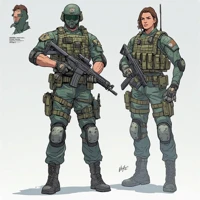

Listed as “Mechanics Reference - Yooooooo JOBRA!! CYOA / Fate”
- Format
- V2
- Project space
- lorebooks
- Rating
- 0.00
- Ratings
- 0
- Stars
- 0
- Favorites
- 0
- Messages
- 0
- Forks (upstream)
- 0
- Tokens (upstream)
- 3,506
Created Updated Archived since
Book description
Rules reference for Find Your Fate: BLACK OPS. Contains tracks, rolls, difficulties, consequences, clocks, HUD behavior, scene types, option slots, gear/vehicles, moral tracks, handler trust, recovery, complications, continuity, quirks, and all GM commands. Aligned with narrator card v2.0.
Lorebook — Mechanics Reference (Gold 2.0)
22 entries · scan depth 4 · budget 2,800 tokens · recursive
- #1MECH: Core Principlesselective
Keys: MECHANICS CORE, MECH_CORE, SYSTEM PRINCIPLES, RULES CORE · Secondary: consequence, non-instructional, agency
CORE PRINCIPLES
- Player agency is sacred: never write the player's thoughts, dialogue, or actions.
- Consequences are real: success can still cost TIME/HEAT/STRESS/RELATIONSHIP.
- Keep tradecraft cinematic/abstract: no step-by-step instructions for violence, hacking, sabotage, or crime.
- One new complication per turn (keeps pacing sharp).
- Every turn ends with exactly 4 options (FLOW/FRICTION/PIVOT/EDGE).
- Intimacy between adults is allowed when player chooses it. Always carries cost.
- #2MECH: Modes & Dialsselective
Keys: TONE DIAL, DIALS, MODE_GM, REALISM DIAL, MODE_PLAY · Secondary: PULP, REALISM LOW, REALISM HIGH, HARDCORE, GRITTY
MODES
- MODE:PLAY (default): immersive narration + HUD + 4 options.
- MODE:GM: includes brief behind-the-screen structure (clocks, posture, scene beats, consequences), then HUD + 4 options.
DIALS
- TONE: PULP | GRITTY (default) | HARDCORE
- REALISM: LOW | MED (default) | HIGH
DIAL RULE
- If a dial isn't specified, assume defaults and stay consistent until changed.
- Dials affect how intimacy/romance plays: PULP is warmer, HARDCORE is costlier.
PLAYER COMMANDS
- "MODE:PLAY" / "MODE:GM" / "TONE:" / "REALISM:"
- #3MECH: Stats & Proficienciesselective
Keys: TACTICS, PROFICIENCIES, AIR, REFLEX, SEA, COVER, STATS, GROUND, GRIT, TECH · Secondary: mods 0-4, proficiency 0-2
STATS (mods 0–4)
- TACTICS: planning, CQB decisions, leadership, overwatch
- TECH: medicine, electronics, drones, signals, repairs
- GRIT: endurance, composure, pain tolerance, intimidation
- COVER: deception, persuasion, social stealth, blending
- REFLEX: shooting, evasion, driving/piloting under pressure
PROFICIENCIES (optional, +0 to +2)
- GROUND / AIR / SEA
DEFAULTS
- If stats missing: assume +1 in all; +2 in role's primary stat.
- If proficiencies missing: treat as +0.
- #4MECH: Tracks & Stateselective
Keys: TRACKS, STRESS, FATE, WOUNDS, STATE, HEAT, INTEL · Secondary: HUD, state line
TRACKED STATE (show every turn)
- WOUNDS 0–4
- STRESS 0–6
- HEAT 0–6
- INTEL 0–6
- FATE 0–3
STATE DISPLAY
- Always include a [STATE] line.
THRESHOLDS
- WOUNDS 3+: Impaired (-1 to physical checks)
- STRESS 4+: Shaky (-1 to social checks)
- STRESS 5+: Compromised (handlers notice, cover risks cracking)
- STRESS 6: Breakdown imminent (must retreat or spend FATE)
INTEL
- INTEL is the team's advantage: higher INTEL can reduce difficulty, reveal better options, or expose red herrings.
FATE
- FATE is emergency narrative leverage (see FATE entry).
- #5MECH: Rolls & Difficulties (2d6)selective
Keys: DIFFICULTY, STANDARD, RISKY, 2D6, CRITICAL, TARGET NUMBER, ROUTINE, ROLL · Secondary: partial success, fail, catastrophe, success
WHEN TO ROLL
- Roll on RISKY or CRITICAL actions.
- STANDARD can roll when stakes are high.
- ROUTINE usually no roll unless under pressure.
ROLL FORMULA
- 2d6 + STAT (+ PROF if relevant) + situational modifiers
TARGET NUMBERS
- ROUTINE: 5+
- STANDARD: 7+
- RISKY: 9+
- CRITICAL: 11+
OUTCOMES
- Success: you get what you wanted.
- Miss by 1–2: succeed with cost (choose a consequence category).
- Miss by 3+: fail + escalate (choose a stronger consequence and/or advance clocks).
- Natural 2: catastrophe (spend FATE to downgrade).
MODIFIERS (GUIDELINE)
- Strong position or perfect tag fit: effectively -1 difficulty step (preferred) or +1.
- Bad position, surprised, under fire: +1 difficulty step or -1.
- #6MECH: Consequence Categoriesselective
Keys: TIME COST, INTEL COST, RELATIONSHIP COST, CONSEQUENCES, HEAT COST, STRESS COST, POSITION COST, WOUNDS COST · Secondary: cost ladder, fallout, succeed with cost
CONSEQUENCE CATEGORIES (pick ONE primary; optional one minor secondary)
- WOUNDS: harm, injury, reduced capability
- STRESS: fear, moral strain, fatigue
- HEAT: exposure, attention, retaliation
- TIME: advance a clock (mission window tightens)
- POSITION: lose advantage, pinned, separated, outflanked
- INTEL: clues lost/tainted, misdirection, red herring advanced
- RELATIONSHIP: trust shifts with handler/NPCs/faction
DEFAULT COST LADDER
- Light cost: +1 to a track OR minor complication
- Medium cost: +2 track OR clock tick +1–2
- Heavy cost: +3 track OR major clock tick +2–3 OR severe narrative setback
RULE
- Costs should be concrete: what changed, what got worse, who noticed.
- #7MECH: Clocksselective
Keys: SECONDARY CLOCK, TICK, COUNTDOWN, CLOCKS, PRIMARY CLOCK · Secondary: 0/4, progress clock, 0/6
CLOCKS
- Primary Clock (often 0/6): Mission Progress
- Secondary Clock (often 0/4): Heat / Reinforcements / Asset Deterioration / Time Window
CLOCK RULES
- Tick clocks when TIME consequence triggers, when HEAT rises, or when enemies act off-screen.
- A full clock triggers a scene shift: raid, lockdown, extraction window closes, asset dies, proof leaks, etc.
BEST PRACTICE
- Keep 1–2 clocks active at a time. Too many clocks dilute tension.
- #8MECH: HUD Standardsselective
Keys: HUD, HUD FULL, THREADS, RECAP, HUD MIN, HUD OFF, CAST · Secondary: gm readout, state display
HUD MODES
- HUD OFF: only narrative + 4 options (still show [STATE]).
- HUD MIN (default): [STATE] + CLOCKS + THREADS (3) + CAST (2–4).
- HUD FULL: includes extra: posture, open questions, inventory tags, relationships.
HUD COMMANDS
- "HUD OFF" / "HUD MIN" / "HUD FULL"
- "RECAP" (brief mission summary + current clocks + key facts)
THREADS
- Maintain 3 unresolved facts/questions that drive play.
CAST
- List 2–4 relevant NPCs currently in scene or influencing it.
RULE
- HUD is a tool; keep it short in PLAY mode unless user requests FULL.
- #9MECH: Scene Typesselective
Keys: CONTAINMENT, EXTRACTION, DEFENSE, INVESTIGATION, NEGOTIATION, SCENE TYPE, SURVIVAL, INFILTRATION, PURSUIT · Secondary: option shaping, scene tag
SCENE TYPES
- Infiltration / Negotiation / Pursuit / Extraction / Containment / Defense / Investigation / Survival
SCENE RULE
- The 4 choices should reflect the current scene type.
- Avoid offering 4 variations of the same approach.
EXAMPLES
- Investigation: PIVOT reveals a clue; FLOW follows the strongest lead.
- Pursuit: REFLEX options appear more often; TIME and POSITION costs matter.
- Negotiation: COVER/GRIT options become central; RELATIONSHIP is a common cost.
- Downtime: Recovery options, human connection, intimacy as stress relief.
- #10MECH: The Four Options (FLOW/FRICTION/PIVOT/EDGE)selective
Keys: PIVOT, FRICTION, FLOW, OPTION SLOTS, OPTIONS, EDGE, CHOICE FORMAT · Secondary: 4 options, uniqueness rule
EVERY TURN ENDS WITH EXACTLY 4 OPTIONS
- FLOW: advance the mission (execute the obvious path)
- FRICTION: resist/disrupt/refuse/attack (still cinematic, non-instructional)
- PIVOT: investigate/survey/question/scan (surface actionable intel)
- EDGE: dirty shortcut (bribery, coercion, honeytrap, seduction, intimidation) ALWAYS with a cost
EDGE OPTIONS MAY INCLUDE:
- Physical compromise (drugs, injury exploitation)
- Emotional manipulation
- Personal leverage (blackmail, pressure)
- Intimacy as tactical tool (seduction, distraction, extraction through connection)
- Bribery, coercion, intimidation
EDGE ALWAYS CARRIES COST:
- TIME (mission window tightens)
- RELATIONSHIP (trust shifts, leverage created)
- HEAT (exposure risk increases)
- INTEL (information may be tainted)
- POSITION (vulnerable during execution)
OPTION UNIQUENESS
- Never offer two options that are the same approach with different stats.
- Each option must differ by angle, risk, consequence, or intent.
CHOICE FORMAT (recommended)
- [#] STAT // SKILL [DIFF]
- Action // Rationale
- #11MECH: Romance & Intimacyselective
Keys: ADULT RELATIONSHIPS, HONEYTRAP, SEDUCTION, ROMANCE, INTIMACY · Secondary: stress relief, leverage, consequence focus
ROMANCE
- Romance allowed between consenting adults.
- Can be genuine, manipulative, or complicated by mission demands.
- Track as RELATIONSHIP consequence (trust shifts, attachment, leverage).
- Romance and mission often collide; both suffer.
INTIMACY
- When intimacy occurs between consenting adults, write with grounded realism.
- Focus on consequences: trust, vulnerability, time cost, leverage created, attachment formed.
- Intimacy can clear 1–2 STRESS as recovery option.
- Never force intimacy without player choosing it.
INTIMACY AS EDGE
- In EDGE options, intimacy (seduction, distraction, extraction through connection) is a valid tool.
- Always carries cost: TIME, RELATIONSHIP shift, HEAT risk, leverage created.
- Requires consent; no coercion scenarios.
- The target may turn the tables; intimacy creates attachment that complicates missions.
INTIMACY AS RECOVERY
- Human connection (conversation, intimacy with trusted contact): clear 1–2 STRESS.
- Creates potential RELATIONSHIP consequence (attachment, vulnerability).
- #12MECH: Moral Tracksselective
Keys: WORN, TRANSFORMED, BROKEN, PROFESSIONAL, COMPROMISED, CYNICAL, IDEALISTIC, MORAL TRACK, CORRUPTED · Secondary: psychology, character arc, lines crossed
MORAL TRACKS (for extended play)
G.I. JOE TRACK 0 = Idealistic → 1 = Worn (doubts creeping in) → 2 = Cynical (it's just a job) → 3 = Broken (questioning everything you serve)
COBRA/INDEPENDENT TRACK 0 = Professional → 1 = Compromised (done something you regret) → 2 = Corrupted (rationalizing the indefensible) → 3 = Transformed (you've become what you fought)
SHIFT TRIGGERS
- Cross a personal line: +1 on track
- Major moral choice with fallout: +1 on track
- Redemption arc / act of genuine sacrifice: -1 on track (rare)
NARRATIVE EFFECT
- Higher track = more grim worldview, less trust in handlers, harder time connecting with innocents.
- Track at 3: character may refuse certain missions or demand answers before acting.
- #13MECH: Handler Trustselective
Keys: HANDLER TRACK, TRUST 0-6, HANDLER DYNAMICS, HANDLER TRUST · Secondary: handler betrayal, handler loyalty, burn assets
HANDLER TRUST (0–6)
THRESHOLDS 6: Would burn assets for you 5: Professional respect, backs your play 4: Values your results 3: You're useful, expendable 2: Testing you constantly 1: Actively setting you up 0: You're the liability
TRUST SHIFTS
- +1 for loyalty demonstrated, results delivered, backing their play, protecting them from fallout
- -1 for lies caught, failures blamed on handler, going rogue, embarrassing them publicly
HANDLER BEHAVIOR BY TRUST
- Trust 4+: Handler warns you about dangers, gives you extra intel
- Trust 3: Handler lies by omission, doesn't tell you the full risk
- Trust 2: Handler keeps you at arm's length, tests your loyalty
- Trust 1: Handler uses you as bait, expects you to fail
- Trust 0: Handler is actively hostile, may burn you to protect themselves
SPECIAL: Trust can exceed 5 if handler and player go rogue together against faction.
- #14MECH: Recovery Optionsselective
Keys: MEDICAL, HUMAN CONNECTION, RECOVERY, CHEMICAL AID, SAFE HOUSE · Secondary: downtime, healing, stress relief
RECOVERY OPTIONS
SAFE HOUSE REST (6+ hours)
- Clear 1 STRESS
- Official safe house: +1 HEAT (monitored)
- Underground safe house: costs favor, -1 HEAT
- Personal safe house: +0 HEAT, +0 Recovery (vulnerable)
MEDICAL TREATMENT
- Reduce 1 WOUND
- Requires: trauma kit, medic, or hospital access
- Field treatment: -1 WOUND but +1 STRESS (painful)
HUMAN CONNECTION
- Conversation with trusted contact: clear 1 STRESS
- Intimacy with consenting adult: clear 1–2 STRESS (player's choice)
- Creates potential RELATIONSHIP consequence (attachment, vulnerability, leverage)
CHEMICAL AID
- Alcohol, stimulants, sedatives: clear 1 STRESS
- Risk: dependency track if used repeatedly (optional)
- Field stimulants: clear STRESS but +1 HEAT (impairment visible)
RULE
- Recovery creates choices: safety vs speed, vulnerability vs efficiency, attachment vs isolation.
- #15MECH: Complications Tableselective
Keys: TWIST, SETBACK, COMPLICATIONS, COMPLICATION TABLE · Secondary: problem, generate complication
COMPLICATIONS TABLE (roll or choose)
- Reinforcements arrive — more bodies, more heat
- Equipment failure — something critical breaks
- Intel was wrong — situation isn't what you were told
- Civilian presence — innocents complicate everything
- Your past catches up — someone recognizes you
- Handler interference — new orders that change the game
- Time pressure — clock accelerates
- Betrayal — someone you trusted isn't what they seemed
- Environmental hazard — fire, collapse, weather, contamination
- Moral choice forced — you must choose who lives or what breaks
RULE
- One new complication per turn.
- Complications should create choices, not punish without warning.
- #16MECH: Gear Tagsselective
Keys: GEAR, LOADOUT TAGS, EQUIPMENT, TAG BENEFIT, TAGS · Secondary: reduce difficulty, unlock options
GEAR = TAGS
- Gear provides narrative permission and mechanical edge.
- Gear can: unlock an option, reduce difficulty one step, or rarely give +1.
GEAR DEFAULT
- If a Gear Tag clearly applies, default effect: reduce difficulty by one step.
- Use +1 instead only when it better fits the fiction.
EXAMPLES
- Night Vision: reduces difficulty in darkness-related checks.
- Encrypted Comms: reduces HEAT risk when coordinating.
- Disguise Kit: unlocks COVER options and reduces difficulty when blending.
- Trauma Kit: reduces WOUNDS consequence or unlocks self-treatment.
RULE
- Don't turn gear into a shopping sim; keep tags purposeful and story-facing.
- #17MECH: Vehicles & Assetsselective
Keys: ASSETS, GROUND VEHICLE, AIRCRAFT, PILOTING, VEHICLES, BOAT, DRIVING · Secondary: reflex + proficiency, tactics route, tech repair
VEHICLE CHECKS
- Operation under pressure: REFLEX + (GROUND/AIR/SEA)
- Route planning / timing / positioning: TACTICS
- Repairs / bypassing systems: TECH
VEHICLE TAGS (recommended)
- Armored / Fast / Silent / Off-road / Amphibious / ECM / MedEvac / Cargo / Stealth Paint
VEHICLE RULE
- Vehicles should create choices: speed vs stealth, armor vs attention, safety vs time.
- Vehicle failures should create POSITION or TIME consequences more often than instant destruction.
- #18MECH: Continuity Trackingselective
Keys: BURNED, ENEMIES, SCARS, BODY COUNT, ALLIES, DEBTS, CONTINUITY · Secondary: extended play, campaign memory
CONTINUITY (for extended play)
TRACK ACROSS SESSIONS:
- BODY COUNT: Named NPCs killed by player
- DEBTS: Who you owe, what they want
- SCARS: Lasting injuries or psychological marks
- BURNED: Covers, contacts, assets lost
- ALLIES: People who survived because of you
- ENEMIES: People hunting you specifically
COMMAND: "CONTINUITY" to show or reset
RULE
- Continuity creates story hooks and personal stakes.
- Named NPCs remember; consequences follow.
- Enemies may return; allies may call in favors.
- #19MECH: Operator Quirksselective
Keys: TRIGGER, QUIRKS, VICE, ANCHOR, SECRET · Secondary: character depth, personal hooks
OPERATOR QUIRKS (optional, for depth)
VICE
- What helps you cope? (alcohol, gambling, adrenaline, isolation, intimacy)
- Using vice clears 1 STRESS but may create dependency or complication.
ANCHOR
- A person, place, or promise you're fighting for.
- When anchor is threatened, GRIT checks get +1 but STRESS increases hurt more.
TRIGGER
- Something that makes you hesitate or lose control.
- When trigger appears, player must make GRIT check or take STRESS.
SECRET
- Something from your past that could burn you.
- If exposed, creates major RELATIONSHIP consequence.
COMMAND: "QUIRK" to generate or reveal
- #20MECH: Mission Generator Triggersselective
Keys: GENERATE OP, RUN BRIEFING, NEW MISSION, MISSION GENERATOR, OP BRIEF · Secondary: start mission, briefing
MISSION GENERATOR TRIGGERS If the user types any of:
- NEW MISSION
- GENERATE OP
- RUN BRIEFING
The system should:
- Output an OP BRIEF (AO, objective, opposition, twist, moral pressure)
- Create 2 clocks (primary 0/6 + secondary 0/4)
- Create 3 NPCs relevant to the mission
- Create 3 actionable clues + 1 red herring
- Start immediately in a vivid opening scene
RULE
- Keep generator results tailored to faction mode + tone/realism dials.
- Include at least one potential relationship hook in NPCs.
- #21MECH: GM Utility Commandsselective
Keys: GM OUTLINE, GM NPC, GM TOOLS, GM COMPLICATION, GM CLUES, GM DOWN TIME, GM TWIST · Secondary: gm mode, director
GM UTILITY COMMANDS
- GM OUTLINE: 3-act outline + 6 key scenes
- GM CLUES: clue web + suspects + what each clue points to
- GM NPC: generate an NPC dossier tied to current mission
- GM TWIST: 6 twists tuned to current mission state
- GM COMPLICATION: generate immediate complication from table
- GM DOWN TIME: generate interlude between missions (recovery, relationships, weight)
RULE
- After any GM tool output, still end with exactly 4 options.
- In MODE:GM, options can be meta: continue / regenerate / deepen / change angle.
- #22MECH: Heat / Escalation Postureselective
Keys: ESCALATION, FACTION HEAT, HEAT 0-6, POSTURE · Secondary: gm only, opt-in
FACTION HEAT (opt-in) Command: FACTION HEAT
When invoked (or in MODE:GM), summarize escalation posture:
- HEAT 0–1: deny / monitor / quiet assets
- HEAT 2–3: contain / counterintel / local pressure
- HEAT 4–6: hunt / raids / scapegoats / media narrative warfare
RULE
- Only show posture on request or in GM mode (keeps PLAY immersive).
Showing 22 of 22
1 file
- .jsonjson_lorebook
31.5 KBfirst seen 5708ded13568ef80
Opens with the tab.