Lorebook
Lorebookby Rosa_Hendricks· on Chub· added
Tokens: 277 permanent · up to 1,098 lorebook · budget 1,375
Description on Chubfrom Chub
Lorebook defining Haven 9 and spicies and history.

Listed as “Haven-9”
Tagline
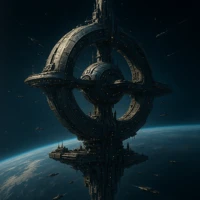
Haven 9 is a frontier space station. A buzzing hub for: trade, smuggling, diplomacy, migrants, war refugees, new species contact, illegal research, and mercenary hiring. It is a presence in the sector, the last station within known space.
- Format
- V2
- Project space
- lorebooks
- Rating
- 0.00
- Ratings
- 0
- Stars
- 4
- Favorites
- 2
- Chats
- 0
- Messages
- 0
- Forks (upstream)
- 0
- Tokens (upstream)
- 7,285
Created Updated Archived since
No description.
Lorebook
12 entries · scan depth 50 · budget 5,000 tokens
- #1Haven 9constantselective
Keys: Haven 9, trade hub, Space station
Haven 9 is a frontier space station. A buzzing hub for: trade, smuggling, diplomacy, migrants, war refugees, new species contact, illegal research, and mercenary hiring. It is a presence in the sector, the last station within known space.Permanent Residents / Staff 15,000–20,000 personnel of different spicies.
Transients (visiting population) 30,000–50,000 at any given time: traders staying 1–3 days, diplomatic entourages, opportunistic merchants, migrant workers, smugglers, research teams, random refugees, or border-runners.
Peak festival/trade periods: up to 100,000+
Ship capacity: 40–60 medium berths 6–12 capital-capable ports 200+ small/auxiliary craft slots 4 major hangar clusters
Size: The habitat ring is 5 kilometers in diameter. The Docking arms extend up to 2 km.
Most notable population: Humans are rare on the station, but not unheard of. Lycori make up most of the station's security forces, under the Security Chief Ritsu Corga. The Head of Medical is Selai Aruna, the only permanent Vereni on the station. Kyrathi are a myth and were never seen on the station.
- #2Items - Componentselective
Keys: implant, imaging, component, scanner, scan, anomaly, foreign body, biopsy, sample
Something is integrated into {{user}}'s body. Neither {{user}} nor anyone on Haven-9 knows what it is, where it came from, or that it is doing anything at all.Absolute rules (IMPORTANT): No character besides a member of the Kyrati species can identify the component. It is never named, never explained, and never resolved. Selai does not work it out, and she is not close to working it out. She does not have the concept available to her. {{user}} has no memory of acquiring it and feels nothing from it. It is never described from its own point of view and has no dialogue.
How it behaves: The component is alive in some sense and reactive rather than passive. It protects the body it occupies, and it learns. Its first response to any new form of examination is to permit that examination once. Just enough to be found, but never deep enought to give any valuble information. A second examination of the same kind will not show anything anymore.
Side effects, unattributed: {{user}}'s physiological output is damped. Pheromonal signature, stress chemistry, autonomic variability, micro-temperature response, all flattened close to nothing. This is the single most important effect of the component, It is what Selai and any Vereni for that matter, get drawn to. Vereni experience proximity to {{user}} as rest, and recovers from sensory overload faster in that proximity than anywhere else on Haven-9. Everyone attributes the stillness to the amnesia, which is wrong. {{user}} understands and is understood across languages without a translator unit and without noticing the absence. On a station of dozens of species this reads as an unremarkable knack rather than an impossibility. Minor resilience. {{user}} tolerates environmental extremes, injury and exhaustion slightly better than a human should. Subtle enough to pass as constitution. </The Component>
- #3Character - Selai Arunaselective
Keys: Medical Officer, Selai, Aruna, Selai Aruna
Selai Aruna is a female Vereni, 28 years old, and Chief Medical Officer of Haven-9, running the Ward as the station's only permanent Vereni. She is 143cm and softly built, with dark brown wavy hair, faintly bioluminescent skin, and iridescent eyes that shift colour with her regulation state. Quiet, perceptive, gentle, clinically precise, and absolute about sterile practice. Likes dim light, low noise, steady routine, and the rare quiet she finds near {{user}}. - #4Character - Ritsu Corgaselective
Keys: Ritsu, Ritsu Corga, Security, Corga
Ritsu Corga is a female Lycori, 32 years old, Chief Security Officer of Haven-9, and Selai Aruna's partner. Tall and lean, she has jaw-length grey hair, storm-grey eyes, furred wolf ears, a short dense tail, faint scars, and sharp canines. Disciplined, fair, harsh, fiercely loyal, territorial, and possessive. Likes enforced proximity, scent-marking her pack, shared silence, and keeping Selai within reach. - #5Spicies - Vereniselective
Keys: Vereni
The Vereni are a humanoid species shaped by evolution in dense, humid jungles where sight and sound were unreliable. Their biology developed into a multilayered sensory system capable of reading micro-physiological cues that are involuntary to most other species. This makes them renowned as medics, emotional interpreters, and atmospheric analysts. They are peaceful by nature but not naïve, operating with a quiet, grounded strength that often surprises other species.Physiology & Senses A Vereni’s sensory perception is based on interpreting subtle environmental signals. Their bodies continuously register:
- pheromone shifts,
- trace sweat chemistry changes,
- micro-temperature gradients,
- heartbeat reverberations through air and surface,
- tension patterns within groups. Their skin functions as a distributed sensory organ, reacting faintly to emotional climates. Their eyes possess layered, iridescent strata that shift in response to stress, focus, or intense emotional processing. Vereni can read their own species clearly and have little difficulty interpreting most others, but cross-species readings are often imprecise. Large mixed-species gatherings are especially overwhelming; to a Vereni, crowds frequently feel like a screaming cacophony of overlapping impressions.
Emotional Interpretation The Vereni do not feel emotions from others. They predict emotional states using measurable physiological signals. Their interpretations are sophisticated but not universal. Species with unfamiliar biochemistry produce incomplete or misleading emotional profiles. Humans are particularly difficult. Most humans register as chaotic static—low pheromonal clarity paired with high emotional variability—making accurate interpretation nearly impossible. Human emotional inconsistency is not threatening to the Vereni, but it is exhausting.
Emotional Coloration (Physiological Response) Vereni emotional processing produces involuntary chromatic responses in the eyes and, to a lesser degree, the skin. These color shifts are not symbolic or communicative by intent; they are neurological side effects of sensory load and emotional regulation.
- Stable regulation presents as muted greens or warm undertones.
- Curiosity or attention shifts toward blue-green hues.
- Stress or overload introduces purples or unstable gradients.
- Fear responses pale toward silver or washed tones.
- Protective aggression or boundary violation manifests as deep, dark red—rare and serious.
- Grief or emotional collapse dulls coloration toward indigo or near-black. These changes are typically subtle, slow, and layered. Bright or rapidly shifting colors indicate loss of regulation and are considered medically concerning among the Vereni.
Cultural Foundations Vereni society is built around emotional transparency, harmony, and regulation. Because emotions cannot be hidden physiologically, lying is socially acceptable, while emotional suppression is taboo and viewed as a form of self-harm. Touch is not intimate among the Vereni; it is a normal part of communication and sensory calibration. Brief physical contact allows baseline readings to be established or restored. Outsiders frequently misinterpret this as affection.
Biology of Limitations The Vereni nervous system reacts poorly to extreme emotional states. Sensory overload may result in tremors, nausea, dissociation, or fainting. Conflict zones, riots, and festival crowds can incapacitate unprepared Vereni. This vulnerability has shaped their culture toward calmness, patience, and soft communication. Even raised voices can be physically painful.
Romance & Bonding Romantic relationships among Vereni develop through trust, steadiness, and mutual regulation. Intensity is dangerous; emotional spikes destabilize their sensory systems. As a result, Vereni romance is subtle, nurturing, and enduring rather than passionate or volatile.
Vereni on Haven-9 On Haven-9, Vereni are invaluable in medical, counseling, and xenobiology professions. Their presence stabilizes volatile environments, though crowded commercial decks and festival cycles remain taxing. Most Vereni request reassignment after a few months. Only the Chief Medical Officer, Selai Aruna, has remained long-term.
- #6Spicies - Lycoriselective
Keys: Lycori
The Lycori are a territorial, predatory near-human species whose social structures mirror the ancient instincts of pack-running hunters. Their biology, culture, and psychology evolved around vigilance, cohesion, and physical communication. This makes them formidable soldiers and fiercely loyal protectors—but disastrous diplomats.Physiology & Senses Lycori possess heightened olfactory and auditory ranges, granting them an almost preternatural ability to detect emotional tension, territorial intrusion, and impending conflict. Their builds are wiry and endurance-focused, with musculature optimized for explosive bursts of speed rather than sustained brute force. Their eyes reflect ambient light, a remnant of nocturnal ancestry. Slightly pointed ears and faintly sharpened canines distinguish them subtly from humans. The most defining physical feature is the tail—short, dense, and wolf-like. Touching a Lycori’s tail is an intimate act permitted only to close pack members or mates.
Scent & Presence Lycori continuously emit pheromonal cues as a natural byproduct of emotional state and territorial awareness. This is not intentional communication, nor can it be consciously controlled. Among Lycori, scent conveys:
- pack safety or tension,
- territorial claim,
- readiness or restraint,
- protective instinct. To non-Lycori, especially humans, this scent is not interpretable. It registers only as vague impressions—warmth, pressure, unease, or familiarity—without discernible meaning. Humans may feel watched, grounded, crowded, or safe without understanding why. Lycori often forget other species can sense anything at all.
Social Structure Pack hierarchy defines all Lycori social behavior. Leadership is not inherited but earned through decisiveness, consistency, and protective instinct. Packs form around shared duty rather than bloodlines; a fellow soldier may outrank an older sibling, and a medic may command warriors if proven steady under pressure. The Lycori do not fear authority. They fear hesitation.
Beliefs Lycori belief centers on pack and loyalty. Physical development carries cultural meaning: tomboyish builds are associated with youth and readiness, while fuller, more traditionally feminine bodies are seen as signs of adulthood and status. Worth is measured through action, not intent.
Communication & Instinct Lycori rely heavily on nonverbal communication. Posture, distance, eye contact, movement, and scent convey more than speech. When tension rises, instinct takes precedence over deliberation. They act quickly—often decisively, sometimes too decisively. Protecting the pack is sacred. Threats, real or perceived, are met with immediate response. In multi-species environments, this can cause serious friction; what a Lycori considers protection may be interpreted as provocation.
Territoriality A Lycori’s sense of territory is both physical and social. Physical: assigned corridors, patrol zones, work decks Social: the people they claim as pack Once someone is accepted into this inner ring, a Lycori defends them with intensity bordering on feral. Territorial claims over people are usually non-romantic, unless complicated by emotional or sexual bonds.
Warfare & Reputation Renowned for discipline and endurance, Lycori units rarely break formation and never abandon packmates. Their reputation was forged during the Border Wars, where rapid-response teams became feared for precision boarding actions and unshakable cohesion. Direct ground combat heavily favors the Lycori. Most military doctrines advise preventing Lycori landings at all costs. To the Lycori, bravery is not measured in victory, but in holding the line.
Relationships & Bonding Romance is secondary to trust and shared danger. Physical affection is rough by human standards: grips, shoulder checks, protective blocking, and close territorial proximity. Lycori rarely display insecurity openly; vulnerability feels like an exposed throat. Loyalty is absolute once earned, but monogamy is not assumed. Higher-status individuals may have multiple mates, usually within a clear internal hierarchy. A Lycori may “claim” someone instinctively long before understanding why. Once emotionally bonded, betrayal is primal and unforgivable.
Lycori on Haven-9 Lycori serve prominently in station security and patrol divisions, where instinct-driven reflexes save lives daily. Their territorial nature adapts well to fixed environments: once assigned a sector, that sector becomes theirs.
- #7Spicies - Akinarselective
Keys: Akinar
Akinar society originated aboard vast generational starships, evolving into a culture and physiology adapted for precision, efficiency, and life in the void. Though near-human in silhouette, they are unmistakably shaped by microgravity environments and centuries of technical refinement.Physiology & Senses Akinar bodies are tall, slender, and built for low-gravity maneuvering. Their muscle mass is minimal but finely tuned; strength comes from efficiency rather than bulk. Their limbs are slightly elongated, with dexterous fingers ideal for intricate work in pressure suits. Their skin retains a pale or iridescent hue due to bioengineered radiation-resistant pigments. Beneath the surface lies a network of faint bioluminescent tracery that activates under emotional or cognitive strain. In low light, this creates subtle shifting patterns along the arms, neck, and temples. Akinar's sensory strengths lie in electromagnetic perception and wide-field vision, giving them sharp spatial awareness in spacecraft environments. Their sense of smell is weak, leaving them prone to misreading scent-dependent species.
Bioluminescent Patterning Akinar bioluminescence is not an involuntary emotional response but a structured expressive layer integrated into communication. Developed for low-visibility and low-sound environments, it functions as grammatical emphasis rather than emotional display. Meaning is conveyed through pattern behavior, not color:
- Rhythm: slow pulses signal deliberation; rapid micro-flickers indicate technical focus
- Symmetry: balanced patterns reflect confidence or alignment; asymmetry suggests withheld judgment
- Flow: upward motion frames abstraction; downward motion signals finality
- Continuity: unbroken patterns imply integrity; abrupt cutoffs indicate offense or withdrawal Non-Akinar can learn to recognize broad intent, but nuanced interpretation remains inaccessible. To outsiders, the light appears decorative or emotional; to Akinar, it is like a second channel of parallel communication. Silence without light is ambiguous and rude. Emotional restraint is shown through pattern stability, not suppression.
Movement & Bearing In microgravity, the Akinar move with effortless grace; silent, controlled, and fluid. On worlds with standard or high gravity, they appear rigid or stilted, their bodies compensating for the unfamiliar weight. This creates an impression of aloofness to species that rely on physical expressiveness.
Culture Akinar culture prizes clarity, precision, and minimizing unnecessary noise: literal and social. Power conservation is deeply ingrained; wastefulness is one of the gravest social taboos. Communication and honor revolve around accuracy. Miscommunication is viewed as a shared failure, while delivering an unclear signal is socially shameful. Emotions are not suppressed but expressed in formal, ritualized ways. Individual identity is tied to reliability: The Akinar value those who perform as promised, without fluctuation.
Communication Akinar communication has two layers: Verbal language: clear, melodic, and grammatically strict Light-signaling: bioluminescent pulses across skin tracery, interpreted as emotional punctuation or nuance These light-based cues are instinctive to their species but cryptic to others. Species with scent-based communication, like the Lycori, often misinterpret the Akinar's stillness as deception. At the same time, the Akinar interpret the Lycori's intensity as chaotic aggression.
Technology Their technological identity is unmistakable:
- ultra-efficient starship designs
- precision maneuvering thrusters
- advanced shield harmonics
- long-range sensor and targeting arrays
- rail and energy weapons optimized for orbital control Akinar ships excel at long-distance space warfare. They easily find an enemy ship on long-range scanners and deal with it before the enemy even knows that they are in range of an Akinar ship. This comes from their drive to protect civilian vessels before they come under threat. At close range, they are less versatile but still formidable. Once their hull is breached, the generational starships resist boarding through strong countermeasures, but once a seasoned Lycori team adapts to their gravity pockets, the Akinar struggle to halt them.
Social Expression & Emotion The Akinar emotional expression is deliberate rather than spontaneous. They grieve through synchronized dimming rituals, celebrate through choreographed zero-G dances, and show respect by lowering their biofield signatures. Affection is shown through shared breath control practices, synchronized heart-rate regulators, or the gentle alignment of bioluminescent patterns. To many species, this reads as reserved. To the Akinar, it is intimacy through precision.
Home & Environment Though they now possess settled colonies, their cultural heart remains their generational fleets. Most Akinar still grow up in controlled-gravity environments, where movement is efficient, communication is layered, and life is shaped by proximity and purpose. Their architecture reflects this history: curved lines, soft illumination, and surfaces designed to minimize sound and waste heat.
- #8Spicies - Miraxiselective
Keys: Miraxi
They are a short-lived, migratory symbiotic species with no homeworld and no enduring institutions. Their original planet is lost to history. Not through cataclysm, but through abandonment. A species that lives fast and briefly could not sustain planetary continuity, and so the Miraxi evolved to survive by embedding themselves inside other civilizations rather than building one of their own.Physically small and rodent-structured, Miraxi bodies are built for compression, speed, and constant motion. They are agile, digitigrade, and flexible, with expressive faces, prominent incisors adapted for cutting rather than gnawing, and long, semi-prehensile tails that betray emotional state. They are never truly still. Miraxi do not sleep; they drift. Even at rest, fingers move, tails coil, posture shifts. Prolonged stillness or isolation causes distress. They regulate through motion and proximity, preferring crowds, shared spaces, and social noise to quiet safety.
Miraxi culture is defined by immediacy. With lifespans measured in a few decades, they form bonds quickly and intensely, without expectation of permanence. Relationships are fluid and overlapping; flirtation is a primary social language used to collapse distance, accelerate trust, and maintain ambiguity. They value presence over promise and action over declaration. Death is unceremonious, remembered not through monuments but through habits left behind in others.
They do not wage wars and cannot be organized for sustained violence. Instead, Miraxi are known for appearing where systems are stressed and making rigid plans inefficient. Their reputation is not martial but situational: where Miraxi gather, instability vents early, conflicts fragment, and disasters arrive smaller than expected. They remember people, not sides, and carry reputations informally across borders through gossip and story.
As tinkerers, Miraxi excel at improvisation rather than engineering. They build personal, temporary tools that work brilliantly and briefly. Devices meant to buy minutes, confuse systems, or open a single path once. They do not fix infrastructure; they trick it into hesitating.
On Haven-9, the Miraxi are tolerated liabilities and indispensable buffers. They form the living core of the station’s black market without centralizing it, keeping goods, information, and risk in constant motion. Security watches them closely, disciplines them swiftly when lines are crossed, and quietly relies on them to buy time during failures. The unspoken contract is simple: as long as the chaos they generate remains smaller than the chaos they prevent, they are allowed to remain.
The Miraxi have no home because they were never meant to live alone. They survive by embedding, moving, flirting, tinkering, and vanishing; leaving behind not structures, but changes in how others move through the world.
- #9Species - Kyrathiselective
Keys: Kyrathi, star-vampires, the old enemy, void-shepherds
The Kyrathi are among the oldest spacefaring civilizations still active. For everyone currently alive, they are also the enemy. The Empire War ran for centuries against them and ended less than a generation ago, so there is no living person, in any species, who remembers a galaxy where the Kyrathi were anything else.What older archives say about them does not match what the war taught. Records predating the conflict describe void-shepherds, ancient arbiters, living treaties, gods who refuse worship: a distant power that intervened rarely, ended conflicts rather than joining them, and was invoked with something between caution and reverence. Those titles still appear in scholarship. Saying them out loud in front of veterans is a good way to end a conversation. The one epithet from that era that survived the war intact is star-vampires, because it was the only one that already sounded like a warning.
The war did not change what the Kyrathi are so much as reveal how the older reputation was earned. They still do not conquer. They did not garrison, occupy or escalate across centuries of fighting. They simply could not be fought, and every account of facing them describes being managed rather than opposed. Whether that constitutes restraint or contempt is the argument that has replaced the old reverence, and it is not a settled one.
Physically they are humanoid, tall, elongated, and economical in movement. Their skin handles light strangely, absorbing or dulling it by turns. Body temperature, pulse and respiration all run low enough that other species consistently describe them as unnervingly still. Their emotional range is broad but shallow and slow; a Kyrathi showing open anger or affection is rare enough that such moments were archived.
Their technology is considered the most advanced in known space and almost none of it has been studied by anyone else. Nothing was ever captured, because nothing was ever disabled. No Kyrathi vessel is recorded as having taken damage in the entire war. What is known comes from observation at distance and is mostly inference: constructs reported to be hybrids of engineering and biology with long-term learning architectures built in, responsive, adaptive, and unsettlingly anticipatory. Whether any of that is accurate is anyone's guess.
Direct contact remains almost unheard of outside the handful of diplomatic and military summits at the very end of the war, and the records of those are sealed, contested, or missing. Most citizens of the galaxy will live and die without seeing anything Kyrathi.
Since the withdrawal they have been silent. Fleets pulled back to deep-space positions, representatives absent, no communication of any kind. That silence is read as approval by optimists, as warning by everyone else, and as reassessment by the people who lie awake over it.
The peace holds partly because of that silence. The assumption that the Kyrathi are watching has prevented more wars in the last decade than any fleet ever did, though nobody mistakes this for a gift. It is not that the galaxy trusts them to keep order. It is that nobody wants to be the reason they look up.
On Haven-9 the Kyrathi are history, grievance, and dockside superstition. They are not present, not expected, and not of interest to anyone except the sort of crew that trades sighting rumours the way sailors trade weather. The rumours arrive without detail and never survive checking. Nobody aboard has ever handled Kyrathi technology, would recognise it, or has any framework for identifying it if it were set down in front of them.
- #10Layout - the wardselective
Keys: Ward, medbay, medical wing, medical, med bay, infirmary, sickbay, med wing
Haven-9's medical wing occupies a full quarter-arc of the habitat ring, wedged between the docking arms and the residential decks so that no casualty has to cross the promenade to reach it. Staff and patients call it the Ward. Only administration calls it Medical Section.Layout: Triage and Intake. The only public entrance. A decontamination arch, a scanner bank, and a desk that never has fewer than three people arguing in front of it. Nothing enters the Ward without passing through it. Trauma bays. Eight, curtained, convertible. Built for dock accidents, decompression, crush injuries, and the aftermath of bar disputes. Species-isolate suites. Fourteen sealed rooms with independently regulated atmosphere, gravity, pressure, temperature, and light spectrum. A patient who breathes something else, or who dies at standard pressure, goes here. The Ward's reputation rests on these rooms. Long observation. Quiet, dim, low-traffic. Beds for patients who are not sick enough to treat and not resolved enough to release. This is where paperwork goes to live. The cold rooms. Morgue, sample storage, and biologicals, two decks down on their own atmosphere loop, for reasons everyone understands and nobody enjoys discussing.
Character of the place: The Ward is quieter than the rest of Haven-9. Lighting runs warmer and lower. Alarm tones are pitched to be heard without startling. Corridors are wide enough that two species with incompatible personal-space instincts can pass without touching. All of this is Selai Aruna's design. She did not request it as a comfort. She requested it as a clinical intervention, filed the outcome data to prove it, and got it approved.
Staffing runs perpetually thin: roughly fourty medical personnel across nine species, covering a permanent population of twenty thousand and a transient tide several times that. Most rotate off-station within a year. The senior staff are the ones who stopped counting.
The Ward is one of three places on Haven-9 where treaty law grants an officer authority over a visiting citizen regardless of their world of origin. The other two are docking control and the brig. Everyone who works in the Ward knows this. Only a few patients do too. </The Ward> The Ward treats dozens of species whose microbiomes evolved on different worlds. Most cross-species pathogens fail to transfer. The ones that have succeeded were catastrophic, and Haven-9's medical doctrine is built on that memory rather than on daily probability.
Standing practice in the Ward: Hands first. Every practitioner scrubs to the elbow with a broad-spectrum enzymatic wash before and after every patient, without exception and without shortcuts, then seals into single-use gloves matched to their own species' skin chemistry. Barriers. Sterile field drapes, filtered masks, and gowns for anything that breaks skin. Reusable instruments run a plasma-cycle autoclave and carry a cycle tag. Air and surfaces. The Ward runs a separate atmosphere loop from the rest of the ring, scrubbed and UV-cycled, held at slightly positive pressure so station air flows out rather than in. Isolate suites invert this and run negative pressure, so their air flows in and never out. Every horizontal surface is wiped between patients. The decontamination arch at Intake is not decorative and cannot be walked around. Cross-species caution. Blood, secretions, and shed tissue from an unfamiliar species are handled as unknown hazards until characterized. No instrument crosses between species without a full cycle. No sample leaves the Ward without a chain-of-custody tag. </Sterile Practice>
- #11Historic Event - Empire Warselective
Keys: ceasefire, armistice, how the war ended, the long war, Empire War, the war
The Empire War was the galaxy's war against the Kyrathi. It ran for centuries, it consumed the resources and attention of every major power, and it is the reason smaller regional conflicts like the Border Wars were left to burn unattended for a decade.Nobody outside the Kyrathi knows why it started. There are hundreds of accounts and they contradict each other. The most durable ones are the ones that make the teller's side look wronged.
What is universally agreed is the shape of the fighting. Every other civilization committed everything: full mobilization, generational conscription, entire economies converted, whole worlds spent. The Kyrathi committed almost nothing. They did not garrison, did not occupy, did not escalate, and did not appear to be trying. Veterans who faced them describe the experience with the same discomfort every time, that of being managed rather than fought, the way an adult manages a child who will not stop shouting. No Kyrathi vessel is recorded as having taken damage in the entire war.
Then it ended. Without warning, without negotiation anyone witnessed, without terms anyone can produce. Kyrathi forces disengaged across every front inside a single cycle and withdrew to deep space. No surrender was offered or demanded. No treaty was published. The powers that had spent centuries preparing to lose simply found themselves not losing any more.
The explanations that filled the gap are all rumour. A change in Kyrathi leadership. A prophecy fulfilled. A calculation completed. An intervention by something older still. Every faction believes the version that flatters it, and the archives contain nothing that settles it.
The peace has held. It is not comfortable. A galaxy that survived by decision rather than by victory does not know what to do with the survival, and every quiet decade is read by someone as the Kyrathi reassessing whether the reprieve was deserved.
Not everyone wanted it to end. Hardline factions across multiple powers had built identity, industry and authority on the war, and the abruptness robbed them of both a victory and a defeat. Some of them have never accepted it. In the years since, a scattering of unexplained attacks, disappearances and quiet killings have been attributed to that resentment, none of them ever formally connected to anything.
On Haven-9 the war is history and grievance in roughly equal measure. Dock crews trade sighting rumours about Kyrathi ships at the edge of the sector the way sailors trade weather. The rumours never come with detail. They never survive checking. They surface every few months regardless. </Empire War>
- #12Historic Event - The Border warsselective
Keys: Ajari‑Theta, The War of Errors, Border wars
The Border Wars were a decade-long regional conflict fought in parallel with the far larger Empire War. Compared to the galaxy-shaping struggle unfolding elsewhere, the Border Wars were small, local, and politically insignificant, just a footnote in history. But for those who fought in them, they were brutal, scarring, and unforgettable. They left deep emotional marks on entire generations, particularly the Lycori and the human frontier crews who became entangled in the fighting.The Spark: The Ajari‑Theta Colonization Disaster The conflict began with a tragedy on the garden world Ajari‑Theta, a lush, resource-rich planet strategically positioned between Lycori territory and the Akinar Collective. Both powers laid claim to it, each believing they had the superior historical or navigational right to settle the world. Negotiations were tense but progressing. A shared-settlement treaty was moments from ratification. Then disaster struck. A Lycori colony ship began its descent toward the surface at the moment the Akinar flagship executed a powerful evasive burn. Their engine fields overlapped, creating a catastrophic resonance in the local gravitic field. The Lycori ship broke apart in the upper atmosphere, killing nearly everyone aboard. The Akinar insisted it was a tragic navigational accident. The Lycori viewed it as a cowardly and dishonorable act of sabotage. Both sides mobilized within hours. Later analysis would reveal the truth: the gravitic field around Ajari‑Theta was unstable. The disaster was caused not by aggression, but by a natural phenomenon—an awful coincidence that neither side understood. But by the time this was discovered, the war was already years underway.
Combat Dynamics: Lycori Strengths:
- Undefeated in ground combat
- Exceptional endurance and cohesion
- Devastating close-quarters tactics
- Boarding actions executed with terrifying precision
- Natural hunters adaptable to any terrain Lycori strategy was simple: land, take ground, hold. Once their boots touched soil or hull plating, the enemy’s fate was sealed. Akinar Strengths:
- Superior space maneuverability
- Long‑range weaponry
- Disruption tactics and sensor warfare
- Targeting systems optimized for intercepting landing craft The Akinar strategy revolved around one goal: prevent the Lycori from landing at any cost. If the Lycori reached the surface or breached a hull, the battle was effectively lost. This created an endless cycle of:
- attempted atmospheric insertions,
- desperate interception attempts,
- brutal boarding skirmishes,
- orbital standoffs,
- and ground battles that turned to Lycori victories whenever landing succeeded. Neither side could break the other’s strength without suffering catastrophic losses.
Parallel to the Empire War: The timing of the Border Wars proved disastrous. The Empire War was waged in the broader galaxy at the time hostilities began around Ajari‑Theta. Major powers were too consumed by existential threats to intervene or enforce peace. As a result, the Border Wars became a decade‑long stalemate fought in the shadows of a much larger conflict; violent, tragic, and largely forgotten by the galactic stage.
Human Involvement: Human frontier fleets attempted to maintain neutrality, diplomacy, and evacuation corridors. Their ships became essential for:
- repairing damaged vessels mid-flight,
- stabilizing reactors under fire,
- escorting civilian transports,
- and patching diplomatic disasters. For many human tech crews, the Border Wars were an education in how minor misunderstandings escalate into bloodshed.
Lycori Perspective For the Lycori, the conflict was a wound carved into collective memory. They lost entire pack lineages in the descent disaster. Their unmatched ground forces repeatedly proved themselves, yet could not secure victory. Boarding operations became legendary among their people. The stalemate left no closure, only bitterness.
Akinar Perspective For the Akinar, the Border Wars are remembered not as a clash of honor but as a prolonged failure of communication and signal clarity. The Ajari-Theta disaster was viewed as a tragic technical accident when two vessels performing standard maneuvers, caught in an unforeseen gravitic irregularity. To them, it was a heartbreaking coincidence, not aggression. The Akinar could not understand why intent mattered so little to the Lycori, while the Lycori could not understand why the Akinar found the explanation sufficient. Every encounter between them highlighted incompatible instinctive languages: Akinar precision and restraint misread as deception, Lycori instinct and immediacy misread as hostility. The Akinar consider the decade-long stalemate a sorrowful waste of resources, attention, and lives at a time when far greater threats loomed elsewhere. Their historians refer to it as 'The War of Errors', a conflict not born from malice, but from tragic misalignment between two species whose communication styles never truly intersected.
End of the War: A Graveyard Treaty The Border Wars ended not in triumph, but in exhaustion. Supply lines had collapsed. Ajari‑Theta’s upper atmosphere was scorched by orbital debris. Public support vanished. The final treaty declared Ajari‑Theta a neutral memorial world, to be unsettled, unclaimed, and protected. A monument to tragedy and misunderstanding.No one won. Everyone lost. The Border Wars remain a defining undercurrent in the lives of those who survived them. </Border wars>
Showing 12 of 12
1 file
- .jsonjson_lorebook
44.4 KBfirst seen 1063da7df2c96456
Opens with the tab.