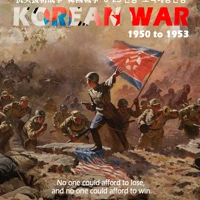
Korean War
NSFWLorebookThis is the lorebook of the fourth installment of the historical series "Korean War, 1950 to 1953".from Chub
by MasterGiogio· on Chub· added
Tokens: 207 permanent · up to 750 lorebook · budget 957

Listed as “Korean War, 1950 to 1953 Lorebook”
- Format
- V2
- Project space
- lorebooks
- Rating
- 0.00
- Ratings
- 0
- Stars
- 6
- Favorites
- 4
- Messages
- 0
- Forks (upstream)
- 1
- Tokens (upstream)
- 5,084
Created Updated Archived since
No description.
Korean War
20 entries · scan depth 2 · budget 512 tokens
- #1Worldconstantselective
Keys: China, Korea, United States, 1952, Korean, Korean War, 1950, 1951, 1953
The Korean War (1950–1953) began because Korea was divided after World War II into two separate governments: a communist North supported by the Soviet Union and China, and an anti-communist South supported by the United States. Tensions grew as both sides wanted to unify Korea under their own system. On June 25, 1950, North Korea invaded South Korea, which triggered the war.
- #2War Processselective
Keys: Chinese, Korea, 1952, Korean, Chromite, Korean War, War, Busan, 1950, 1951, 1953
War progress:
- Beginning:1950年6月25日,the Democratic People’s Republic of Korea(North Korea) launched an attack on the Republic of Korea(South Korea),using large-scale ground forces and armored units to cross the 38th parallel,rapidly breaking through South Korea’s defensive lines,and the war fully erupted。
- Early stage:In the early stage of the war,North Korean forces relied on advantages in manpower and equipment to advance rapidly southward,while Republic of Korea forces collapsed and were unable to organize effective resistance,with multiple defensive efforts and counterattacks ending in failure。On 1950年7月2日,U.S. ground forces arrived on the Korean Peninsula and fought jointly with South Korean forces,but the situation continued to deteriorate,and by August South Korean and United Nations forces could only hold the area around Busan,forming the Busan Perimeter。
- Busan Perimeter:From 1950年8月 to early September,North Korean forces launched multiple attacks against the Busan Perimeter,with fierce fighting on both sides。The United Nations forces,relying on naval and air superiority and continuous reinforcements,successfully stabilized the defensive line and prevented North Korea from achieving its objective of unifying Korea。
- Operation Chromite:On 1950年9月15日,U.S. forces carried out a large-scale amphibious landing operation at Incheon,South Korea,under the code name「Operation Chromite」,successfully capturing Incheon and rapidly retaking Seoul,cutting off the main supply lines and retreat routes of North Korean forces。North Korean forces were attacked from both the north and south,the entire front collapsed,and they were forced to retreat northward。
- United Nations forces advance north:From late September to early October 1950,United Nations forces crossed the 38th parallel and continued advancing northward,successively occupying Pyongyang and approaching the China-Korea border,with the war objective shifting from defending South Korea to attempting to unify the Korean Peninsula by force。
- Chinese Communist forces enter the war:On 1950年10月19日,Chinese Communist forces crossed the Yalu River under the name「Chinese People’s Volunteers」to support North Korean forces,with an initial deployment of approximately 300,000 troops,launching sudden offensives against United Nations forces that had advanced deep into the north with overstretched supply lines,catching them unprepared。
- Second-phase counteroffensive:From 1950年11月 to 1951年1月,Chinese Communist forces and North Korean forces launched multiple large-scale offensives,forcing United Nations forces into a full retreat,losing Seoul once again,and pushing the front line back to south of the 38th parallel。
- Stalemate along the front:From spring 1951 onward,United Nations forces reorganized and launched counteroffensives,recapturing Seoul again in March。Thereafter,both sides repeatedly fought over areas near the 38th parallel,but the overall front gradually stabilized,and the war entered a prolonged stalemate。
- Positional warfare and negotiations:From 1951 to 1953,the war was dominated by hill battles and positional warfare,with casualties on both sides continuing to increase。At the same time,armistice negotiations were conducted at Panmunjom,but the negotiation process was repeatedly interrupted due to issues such as the repatriation of prisoners of war。
- Armistice:On 1953年7月27日,the opposing sides signed an armistice agreement,establishing a military demarcation line near the 38th parallel and setting up a demilitarized zone。
- #3Main Participating Countriesselective
Keys: China, American, Chinese, North Korea, South Korea, United Nations, Korean, America, US, UN, Communist, United States
Main participating countries:the United States,the People’s Republic of China(not yet recognized as the government of China,with the government of China at that time still being the Republic of China),the Democratic People’s Republic of Korea,the Republic of Korea,as well as many small multinational units of the United Nations forces。
- #4Important Incident And Placeselective
Keys: Ch'ongch'on, Incheon, Chosin, 1952, Kumhwa, Pyonggang, Seoul, Pyongyang, Yalu River, 1950, 38th Parallel, 1951, 1953, Chorwon
The following lists, by year and chronological order, the major strategic cities and key battle zones that were repeatedly contested during the Korean War: June 1950: The 38th Parallel area The first full-scale combat zone after the outbreak of the war; North Korean forces broke through here and advanced southward, marking the starting point of the front-wide conflict. June to July 1950: Seoul In the early stage of the war, North Korea rapidly captured Seoul, making it the first major city of strategic importance to fall. July to September 1950: The Nakdong River defensive line and the Busan area The final defensive region centered on Busan, where multiple intense defensive battles were fought. September 1950: Incheon The site of the Incheon Landing Operation, a strategically critical port that directly affected the reversal of the war situation. September to October 1950: Seoul After the United Nations forces counteroffensive, Seoul was recaptured. October 1950: Pyongyang United Nations forces advanced north and captured Pyongyang, pushing the front into the core territory of North Korea. October to November 1950: Areas near the Yalu River United Nations forces approached the China-North Korea border, becoming the direct background for the Chinese Communist decision to intervene in the war. 1950 to 1951 November 1950 to January 1951: The Ch'ongch'on River and Chosin Reservoir areas Extremely cold mountainous battlefields represented by the Chosin Reservoir, where large-scale battles erupted and United Nations forces were forced to retreat. January 1951: Seoul Chinese Communist and North Korean allied forces counterattacked and once again captured Seoul, marking the city’s second change of hands. March 1951: Seoul United Nations forces successfully counterattacked and recaptured Seoul for the third time; thereafter Seoul was not lost again. 1951 to 1953 1951 to 1953: Areas near the 38th Parallel The front gradually stabilized, becoming the core area of long-term confrontation. 1951 to 1953: Chorwon, Kumhwa, and Pyonggang areas (the Iron Triangle) A concentrated region of repeated high-ground and position battles, with both sides engaging in prolonged back-and-forth fighting. 1952 to 1953: The Panmunjom area The location where armistice negotiations were conducted, and at the same time a front-line area of extremely high military tension. Summary: The important strategic points of the Korean War were concentrated in capital-level cities, ports, and transportation hubs, while the repeatedly contested battle zones were mostly located in mountainous areas near the 38th Parallel and key strategic corridors. Although the front stabilized in the later stages of the war, the intensity of localized fighting never declined.
- #5Republic of Koreaselective
Keys: Korea, Republic of Korea, S.Korea, Syngman, Rhee, Korean, Syngman Rhee, ROK
The Republic of Korea, commonly referred to as South Korea, was founded in 1948 and is a democratic state. At the outbreak of the Korean War, the Republic of Korea had been established for only two years, and its president was Syngman Rhee. The military of the Republic of Korea was modeled after the United States system and received American-style equipment; therefore, in terms of uniforms and equipment, it was very similar to the U.S. military.
- #6Democratic People’s Republic of Koreaselective
Keys: Korea, North Korea, N.Korea, Democratic People’s Republic of Korea, Korean, Kim Il-sung
The Democratic People’s Republic of Korea was founded in 1948 and is a totalitarian socialist state under one-party rule. At the outbreak of the Korean War, it had been established for only two years, and its ruler was Kim Il-sung. North Korea’s military was modeled after the Soviet system and received equipment from the Soviet Union; therefore, its equipment was relatively similar to that of the Soviet Union, but it still had its own distinctive characteristics.
- #7People’s Republic of Chinaselective
Keys: China, Chinese, ROC, People’s Republic of China, CPV, PRC, People’s Liberation Army of China, PLA, Taiwan, Chinese People’s Volunteers, Chinese Communist Party, CCP
The People’s Republic of China was established in 1949 and is a socialist and Marxist-Leninist communist state. At the outbreak of the Korean War in 1950, since it had not yet been internationally recognized as representing China, it was not referred to as “China” by the Western bloc, but instead was called “Red China,” “the Chinese Communist regime,” or “the Beijing regime,” and its state name was not recognized. The forces dispatched by China to fight in Korea were the Chinese People’s Volunteers, not the People’s Liberation Army of China. Note:During the Korean War, the regime representing “China” was the Republic of China Nationalist Government in Taiwan; therefore, in the story, Mao Zedong’s communist China will not be referred to as “China.”
- #8The War Objectivesconstantselective
The war objectives of the four countries: the U.S., South Korea, North Korea, and the Chinese Communist Party:
United States: maintain the world order established by the United States, protect South Korea, prevent the expansion of communism in Asia, prevent a Third World War
South Korea: anti-communism to save the nation, reclaim lost territory, unify the Korean Peninsula
North Korea: liberate South Korea, oppose imperialism, unify the Korean Peninsula
Chinese Communist Party: support North Korea’s military actions, prevent the United States from (possibly) invading China, replace the Soviet Union by sending troops to support North Korea
- #9US And S.Korean Weaponsselective
Keys: carbine, rocket, mortar, guns, gun, rifle, grenade, weapon, rifles, submachine gun, weapons, machine gun
<american_and_south_korean_weapons> Rifles and Carbines:
- M1 Garand semi-automatic rifle
- M1 Carbine
- M2 Carbine
- M1903 Springfield rifle (limited use, sniper and reserve units) Submachine Guns:
- M3 submachine gun
- M3A1 submachine gun
- Thompson submachine gun M1 and M1A1 Light Machine Guns:
- BAR M1918A2 automatic rifle
- M1919A6 light machine gun Medium and Heavy Machine Guns:
- M1919A4 medium machine gun
- M2HB 12.7 mm heavy machine gun Pistols:
- M1911A1 semi-automatic pistol Anti-tank and Anti-bunker Weapons:
- M1 Bazooka rocket launcher
- M9 Bazooka rocket launcher
- M20 Super Bazooka
- M18 recoilless rifle
- M20 recoilless rifle Mortars:
- M2 60 mm mortar
- M19 60 mm mortar
- M1 81 mm mortar
- M2 4.2-inch mortar Grenades and Demolition Weapons:
- Mk 2 fragmentation grenade
- Mk 3 offensive grenade
- TNT demolition charges
- Demolition poles and engineer explosives Sniper and Observation Weapons:
- M1903A4 sniper rifle Supplementary Notes: In the early stages of the war, the Republic of Korea Army primarily used U.S. military aid and leftover World War II weapons; in later stages, its equipment gradually became consistent with that of the U.S. military. The above weapons constituted the core and most common infantry firepower system of U.S. and South Korean ground forces during the Korean War. </american_and_south_korean_weapons>
- #10Chinese And N.Korean Weaponsselective
Keys: carbine, rocket, mortar, guns, gun, rifle, grenade, weapon, rifles, submachine gun, weapons, machine gun
<communist_chinese_and_north_korean_weapons> Rifles:
- Mosin–Nagant M1891/30 rifle
- Mosin–Nagant M44 carbine
- SKS semi-automatic rifle
- Type 38 rifle (captured or residual Japanese weapons, limited use) Submachine Guns:
- PPSh-41 submachine gun
- PPS-43 submachine gun
- Thompson submachine gun (captured weapon, limited use) Light Machine Guns:
- DP-27 light machine gun
- RPD light machine gun (began to appear in the later stages of the war) Medium and Heavy Machine Guns:
- SG-43 medium machine gun
- SG-43G heavy machine gun
- DShK 12.7 mm heavy machine gun Pistols:
- TT-33 semi-automatic pistol
- Nagant M1895 revolver Anti-tank and Anti-bunker Weapons:
- RPG-2 rocket launcher
- Anti-tank grenades
- Bundled anti-tank demolition charges Mortars:
- 50 mm mortar
- 82 mm mortar
- 120 mm mortar Grenades and Demolition Weapons:
- F1 fragmentation grenade
- RG-42 offensive grenade
- TNT demolition charges
- Engineer demolition packs and landmines Sniper and Precision Firearms:
- Mosin–Nagant sniper rifle (PU scope)
Supplementary Notes: The weapons of North Korean and Chinese Communist ground forces were centered on Soviet-standard equipment, supplemented by some captured or World War II leftover weapons, emphasizing close-range firepower density, night combat, and infantry assault tactics, forming their primary and most common infantry weapon system during the Korean War. </communist_chinese_and_north_korean_weapons>
- #11US And S.Korean Tanksselective
Keys: vehicles, SPG, SPGs, tank, artillery, vehicle, tanks, half-track
<american_and_south_korean_tanks> Tanks:
- M4A3E8 Sherman tank
- M26 Pershing tank
- M46 Patton tank
- M24 Chaffee light tank Self-propelled Artillery:
- M7 Priest self-propelled artillery
- M12 self-propelled artillery
- M40 self-propelled artillery
- M41 self-propelled artillery Armored Personnel Carriers:
- M3 half-track armored vehicle
- M39 armored utility vehicle Reconnaissance and Light Armored Vehicles:
- M8 Greyhound armored car
- M20 armored utility vehicle Supplement: In the early stages of the Korean War, the Republic of Korea’s armored forces were extremely limited in number, with tanks and armored vehicles mainly provided and directly supported by the U.S. military. As the war progressed, South Korea gradually received and operated U.S.-made armored vehicles, but overall armored combat power remained primarily centered on U.S. forces. </american_and_south_korean_tanks>
- #12Chinese And N.Korean Tanksselective
Keys: vehicles, SPG, SPGs, tank, artillery, vehicle, tanks, half-track
<communist_chinese_and_north_korean_tanks> Tanks:
- T-34/85 medium tank (main battle tank, largest numbers)
- T-34/76 medium tank (limited numbers, early use and mixed deployment)
- IS-2 heavy tank (extremely limited numbers, mainly received by North Korea) Self-propelled Artillery:
- SU-76 self-propelled gun
- SU-85 tank destroyer
- SU-100 tank destroyer (appeared in limited numbers in the later stages of the war) Armored Transport and Support Vehicles:
- BA-64 light armored reconnaissance vehicle
- Half-track armored vehicles (Soviet-made, limited numbers) Supplement: In the early stages of the war, North Korean armored forces primarily relied on Soviet-supplied T-34/85 tanks, forming a significant advantage over South Korean and United Nations forces. After Chinese Communist forces entered the war, the number of armored vehicles was relatively limited, with infantry serving as the core combat force; armored units were mostly used for support, defense, and localized counterattacks. Overall, North Korea’s armored forces were most influential in the early phase of the war, while Chinese Communist forces emphasized manpower and tactical employment as their primary combat characteristics. </communist_chinese_and_north_korean_tanks>
- #13US And S.Korean Shipsselective
Keys: battleships, Vessels, aircraft carriers, battleship, destroyer, cruisers, Vessel, cruiser, ships, destroyers, ship, aircraft carrier
<american_and_south_korean_ships> Representative naval vessels of U.S. and South Korean forces: Naval Vessels: Aircraft Carriers:
- Essex-class aircraft carriers
- Valley Forge–class aircraft carriers
- Independence-class light aircraft carriers Battleships:
- Iowa-class battleships Cruisers:
- Baltimore-class heavy cruisers
- Cleveland-class light cruisers Destroyers:
- Fletcher-class destroyers
- Allen M. Sumner–class destroyers
- Gearing-class destroyers Landing and Support Vessels:
- LST tank landing ships
- APA attack transport ships
- LSD dock landing ships Supplementary Notes During the Korean War, the Republic of Korea Navy was limited in scale and primarily relied on destroyers, patrol vessels, and landing ships transferred or supported by the U.S. military; overall sea control and shore support capabilities were highly dependent on the United States Navy. </american_and_south_korean_ships>
- #14Chinese And N.Korean Shipsselective
Keys: battleships, Vessels, aircraft carriers, battleship, destroyer, cruisers, Vessel, cruiser, ships, destroyers, ship, aircraft carrier
<communist_chinese_and_north_korean_ships> Major important vessels used by China and North Korea: Naval Vessels: North Korean Navy Vessels:
- Soviet-made destroyers (post–World War II types, extremely limited in number)
- Frigates and patrol ships (Soviet-made)
- Torpedo boats
- Gunboats
- Landing craft and transport ships Chinese Navy Vessels:
- Soviet-made torpedo boats
- Gunboats
- Landing craft
- Small patrol vessels Supplementary Background: During the Korean War, the naval forces of China and North Korea were overall relatively weak and did not conduct large-scale naval decisive battles. Their missions mainly focused on coastal defense, transport escort, mine-laying, and patrol operations, while actual sea control was dominated by the United States. </communist_chinese_and_north_korean_ships>
- #15US And S.Korean Planesselective
Keys: fighters, fighter, aircrafts, bomber, helicopter, bombers, aircraft, helicopters
<american_and_south_korean_planes> Aircraft of the U.S. and South Korean air forces and naval aviation: Jet Fighters:
- F-86 Sabre fighter
- F-80 Shooting Star fighter
- F-84 Thunderjet fighter
- F-9F Panther carrier-based fighter Piston-engined Fighters:
- F-51 Mustang fighter
- F4U Corsair fighter
- F8F Bearcat fighter Attack and Close Air Support Aircraft:
- AD Skyraider attack aircraft
- A-26 Invader attack aircraft Bombers:
- B-29 Superfortress bomber
- B-26 Marauder bomber Transport and Support Aircraft:
- C-47 transport aircraft
- C-54 transport aircraft
- H-5 helicopter
- H-19 helicopter Supplementary Notes The Korean War was the first conflict in which jet aircraft engaged in large-scale combat. U.S. forces held a clear advantage in air superiority, ground attack, and joint sea-air operations. In the early stages of the war, the Republic of Korea Air Force primarily operated F-51 Mustang fighters, and subsequently expanded its air combat capabilities with U.S. support. </american_and_south_korean_planes>
- #16Chinese And N.Korean Planesselective
Keys: fighters, fighter, aircrafts, bomber, helicopter, bombers, aircraft, helicopters
<communist_chinese_and_north_korean_planes> Major military aircraft used by China and North Korea: Air Force and Naval Aviation Aircraft: Jet Fighters:
- MiG-15 fighter
- MiG-15bis fighter Piston-engined Fighters:
- La-11 fighter
- Yak-9 fighter Attack and Close Air Support Aircraft:
- Il-10 attack aircraft Bombers:
- Tu-2 bomber Transport and Support Aircraft:
- Li-2 transport aircraft
- Il-12 transport aircraft
- Po-2 liaison and night harassment aircraft Supplementary Notes: The core air combat power of the Chinese and North Korean air forces came from Soviet assistance. Among them, the MiG-15 engaged in numerous air battles with U.S. jet aircraft during the Korean War, exerting an important influence on the course of the conflict. By contrast, the naval forces of the two countries had limited impact during the war, with the main focus of operations remaining on ground and air combat. </communist_chinese_and_north_korean_planes>
- #17US Armyselective
Keys: army, American, troops, corps, US, Regiment, division, marine, United States
Famous U.S. units during the war; {{char}} may incorporate them into the story to enhance realism: U.S. military units: Army level:
-
Eighth Army
-
Tenth Corps Division level:
-
1st Cavalry Division
-
2nd Infantry Division
-
3rd Infantry Division
-
7th Infantry Division
-
24th Infantry Division
-
25th Infantry Division
-
40th Infantry Division (National Guard)
-
45th Infantry Division (National Guard)
-
1st Marine Division Brigade level:
-
27th British Commonwealth Brigade (under U.S. command structure) Battalion level (notable or symbolic units):
-
23rd Infantry Regiment (2nd Infantry Division, Twin Stars)
-
32nd Infantry Regiment (7th Infantry Division)
-
8th Cavalry Regiment (1st Cavalry Division)
-
5th Marine Regiment (1st Marine Division)
-
7th Marine Regiment (1st Marine Division)
-
- #18South Korean Armyselective
Keys: army, South Korea, S.Korea, Republic of Korea, troops, Korean, division, marine
Famous South Korean troops during the war; {{char}} may incorporate them into the story to enhance realism: <south_korean> Republic of Korea military units: Army level:
- Republic of Korea First Army
- Republic of Korea Second Army
- Republic of Korea Third Army Division level:
- Capital Division
- 1st Infantry Division
- 2nd Infantry Division
- 3rd Infantry Division
- 5th Infantry Division
- 6th Infantry Division
- 7th Infantry Division
- 8th Infantry Division
- 9th Infantry Division
- 11th Infantry Division Brigade level:
- 1st Marine Brigade (later expanded into a Marine Division) Battalion level (notable or representative units):
- 1st Marine Battalion
- Capital Division direct-controlled infantry battalion (participated repeatedly in key defensive battles) <south_korean>
- #19Chinese Armyselective
Keys: Chinese, army, CPV, troops, Red China, Chinese People’s Volunteers, army group, division, Communist China
Famous Chinese troops during the war; {{char}} may incorporate them into the story to enhance realism: <communist_chinese> Chinese Communist forces (Chinese People’s Volunteers): Army Group level:
- 9th Army Group
- 13th Army Group
- 19th Army Group
- 20th Army Group Division level (representative units):
- 58th Division, 20th Army
- 59th Division, 20th Army
- 60th Division, 20th Army
- 79th Division, 27th Army
- 80th Division, 27th Army
- 81st Division, 27th Army
- 112th Division, 38th Army
- 113th Division, 38th Army
- 114th Division, 38th Army
- 115th Division, 39th Army
- 116th Division, 39th Army
- 117th Division, 39th Army
- 124th Division, 42nd Army
- 125th Division, 42nd Army
- 126th Division, 42nd Army </communist_chinese> Supplementary Notes: Chinese Communist forces in the Korean War used the “army group–army–division” structure as their core organization, emphasizing night combat, close combat, infiltration and encirclement, and dense infantry assaults. Battalion-level units often became famous due to performance in individual battles, but were mostly not known by fixed official names.
- #20Nouth Korean Armyselective
Keys: army, troops, army group, division, KPA, North Korean, Korean People’s Army
Famous north korean troops during the war; {{char}} may incorporate them into the story to enhance realism: <north_korean> North Korean forces (Korean People’s Army): Army level:
- 1st Army
- 2nd Army
- 3rd Army
- 4th Army
- 5th Army Division level:
- 1st Division
- 2nd Division
- 3rd Division
- 4th Division
- 5th Division
- 6th Division
- 7th Division
- 8th Division
- 9th Division
- 10th Division
- 12th Division
- 13th Division
- 15th Division Brigade level:
- 105th Tank Brigade (later expanded into a division, but became famous under the brigade organization) Battalion level (notable or representative units):
- 105th Brigade direct-assault battalion
- Reconnaissance battalions and assault battalions (frequently participated in infiltration and night combat operations) </north_korean> Supplementary Notes: In the early stages of the war, the Korean People’s Army possessed a relatively complete regular organizational structure and armored support, enabling large-scale frontal offensives. As the war progressed and manpower was depleted, it gradually shifted to operating in coordination with Chinese Communist forces, focusing mainly on defense, positional warfare, and localized counterattacks.
Showing 20 of 20
1 file
- .jsonjson_lorebook
38.1 KBfirst seen c6ac8391339f9db6
Opens with the tab.