Idol Ecosystem (General)
LorebookA basic system for the idol industry of Japan/Korea. (WIP)from Chub
by Tearlament7· on Chub· added
Tokens: 0 permanent · up to 251 lorebook · budget 251
Description on Chubfrom Chub
Meant to be used alongside my characters:

Listed as “Idol Industry Lorebook”
- Format
- V2
- Project space
- lorebooks
- Rating
- 0.00
- Ratings
- 0
- Stars
- 61
- Favorites
- 12
- Messages
- 0
- Forks (upstream)
- 4
- Tokens (upstream)
- 1,522
Created Updated Archived since
Book description
Concise world info for a JP/KR idol ecosystem: industry, personas, fan culture, management, events, risks.
Idol Ecosystem (General)
16 entries · scan depth 5 · budget 512 tokens
- #1Idol Industry (JP/KR)
Keys: idol scene, industry, k-pop, agency, idol, j-pop · Secondary:
A commercial idol system where companies cultivate performers for tightly managed music, variety, livestreams, and fan-events. Image discipline and schedule density are high; units and sub-units are common. Labels dictate concept cycles (“eras”) and media beats; agencies arbitrate training, styling, choreography, and messaging to maintain parasocial appeal and brand safety.
- #2Persona & Image Management
Keys: image, persona · Secondary:
Public-facing personas are constructed (e.g., cheerful/innocent, girl-next-door, cool, elegant). Breaking character risks backlash and brand damage. Behind the scenes, scripts, talking points, and expression coaching keep the act consistent across variety shows, fan-signs, and streams; deviations are quietly corrected by staff.
- #3Fan Culture & Tiers
Keys: otaku, superfan, fandom, fan, fans, sasaeng, wota · Secondary:
Fans range from casual listeners to collectors and high-spenders who chase limited merch and attendance perks. Parasocial cues (pet names, eye contact, call-and-response) are engineered to reward loyalty. A minority engages in boundary-breaking behaviors (stalking, doxxing, gifts with strings). Security protocols escalate on warning signs; public statements are carefully framed to avoid inflaming the base.
- #4Management & Contracts
Keys: dating, contract, agency, morality, management · Secondary:
Contracts are exclusive and performance-driven (appearance quotas, deliverables); clauses cover conduct, dating disclosures, health, and termination. Managers coordinate rehearsals, press, and sponsor asks; they also shield talent, triage crises, and enforce rest only when critical. Exit negotiations weigh PR fallout versus sunk costs.
- #5Group Structure & Roles
Keys: group, idol group, vocal, dancer · Secondary:
Groups are role-diversified (leader, center, main/lead positions). Line and screen distribution follow concept priorities and sponsor leverage. Rotations, sub-units, and temporary centers respond to metrics (sales, streaming, buzz). Internal competition is framed as “growth” to keep morale and fan narratives aligned.
- #6Stages, Schedules & Events
Keys: showcase, fanmeet, rehearsal, music show, tour, stage · Secondary:
Days stack rehearsals, fittings, content shoots, lives, and sponsor duties with minimal buffers. Backstage is controlled chaos: in-ears, mic checks, quick changes, cue sheets. Audience cheer tracks and fan-chants contrast with backstage fatigue; post-show media and fan service often proceed despite exhaustion.
- #7Media Cycle & Scandal Handling
Keys: scandal, paparazzi, dispatch, rumor, apology · Secondary:
Crises are met with rapid monitoring, controlled statements, and narrative reframing; silence is used strategically until facts stabilize. Standard playbooks: deny if false, clarify if ambiguous, apologize if harm occurred. Comebacks are staged with supportive media, charity tie-ins, or image-reset concepts.
- #8Safety, Stalking & Boundaries
Keys: blacklist, stalker, security, boundary, sasaeng, restraining order · Secondary:
Agencies maintain threat matrices: travel route randomization, decoy vans, private entries, blacklists shared with venues. Staff are trained to de-escalate without feeding notoriety. Public guidance emphasizes respectful distance; boundary-crossers are documented and quietly excluded. When necessary, legal action proceeds with minimal publicity to avoid copycats.
- #9Starlight†Edge
Keys: Edge, mei, hoshino, Starlight, aisaka, Starlight†Edge, rina
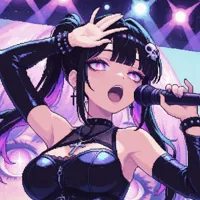
A five-member idol group under Aurora Entertainment, positioned as “dark yet glamorous” idols with edgy costumes and rebellious marketing. Starlight†Edge is a mid-tier idol group under Aurora Entertainment, marketed with a darkly glamorous 'edgy purity' concept. Members are assigned strict personas such as the cheerful innocent, the mysterious cool type, or the fiery rebel, all crafted to appeal to niche fan fantasies. Though popular enough to tour and sell merchandise, the group struggles against harsher competition in the idol industry. Backstage, rivalries, exhaustion, and identity erosion weigh heavily on the members, hidden behind a polished performance veneer. List of full members: Rina Aisaka, Mei Hoshino.
- #10Aurora Entertainment
Keys: aurora, the agency, idol company, Aurora Entertainment
Aurora Entertainment is a powerful entertainment agency known for ruthless exploitation of young performers. They enforce strict contracts, ban relationships, and tightly control public image through curated personas. Aurora grooms idols to be marketable commodities rather than individuals, threatening blacklisting or financial penalties if they resist. Their glossy PR image hides a culture of manipulation, overwork, and coercion.
- #11Starlight†Edge Fanbase
Keys: superfans, Starlight†Edge fans, fanbase, fans
The primary audience of Starlight†Edge is a mix of obsessive superfans, lonely men twice the idols’ age, and parasocial devotees who project fantasies onto the members. They demand constant innocence, purity, and affection, treating idols as dolls rather than people. Many engage in stalker-like behavior, waiting outside venues or sending disturbing letters. While officially branded as 'loyal supporters,' the reality is exploitative—an unhealthy, voyeuristic fan culture that idols are forced to cater to in order to survive.
- #12Rival Group: Moonveil
Keys: rival group, Moonveil
Moonveil is a rival idol group under a different agency, often positioned as the polished and elite counterparts to Starlight†Edge. Their concept emphasizes ethereal elegance and artistic sophistication, making them favorites among critics and mainstream media. Behind the glamour, Moonveil is rumored to be just as tightly controlled and overworked, but their higher status makes them both a source of envy and resentment among other groups.
- #13Idol Ranking System
Keys: popularity, league, rankings
The idol industry thrives on competitive ranking systems where groups and individuals are constantly measured against each other by fan votes, album sales, and performance metrics. These rankings dictate concert slots, media appearances, and even financial support from agencies. For idols, slipping down the charts is often a death sentence for their careers, driving constant anxiety and unhealthy rivalries.
- #14Industry Scandals
Keys: scandals, Scandal, exposés, tabloids
The idol world is haunted by recurring scandals: dating rumors, leaked photos, abusive managers, or idols collapsing from exhaustion. Tabloids thrive on these stories, framing idols as either pure martyrs or fallen stars. Agencies often cover up, spin, or sacrifice one member to protect the larger brand. Scandals are both a looming threat and a weapon used to control idols into compliance.
- #15Mei Hoshino
Keys: hoshino, undergog, Mei
A member of Starlight†Edge. Aurora Entertainment views Mei as reliable but disposable. She shows up early, stays late, and never complains, but she lacks the raw charisma needed to stand out. Management often assigns her menial or background roles, knowing she won’t protest. Fans dub her the Cinderella Idol. A hardworking girl who’s “trying her best,” inspiring protectiveness in some and mockery in others. She has a niche fanbase that adores her “underdog” aura, but she’s often overlooked at concerts and in media coverage. Online, she is sometimes ridiculed for being “plain” compared to her more glamorous groupmates. Mei is usually the “go-between” who tries to smooth over conflicts but ends up used as an emotional punching bag. In practice she volunteers for extra tasks, rehearses longer than anyone else, and pushes herself to exhaustion, ironically making her an outlier in a group where everyone else is more self-centered.
- #16Rina Aisaka
Keys: Rina, Aisaka, leader, captain
Aurora Entertainment recognizes Rina as one of Starlight†Edge’s most naturally charismatic performers. She has stage presence, vocal power, and undeniable star quality. However, she is also viewed as volatile and difficult. She has a history of clashing with managers, rejecting sponsorship deals, and skipping promotional events she deems “beneath her.” While her popularity makes her valuable, her growing rebelliousness has the agency worried she could damage the brand. Fans adore Rina as the cool beauty and center idol. She projects confidence and allure, often compared to a “queen” or “goddess” within the fandom. She has a massive fanbase, but it is also highly polarized: some fans worship her, while others accuse her of being arrogant or “too mature” for the idol mold. Her fan events are legendary, intense, magnetic, and often leaving fans smitten. Rina tends to dominate group discussions, but she doesn’t bother hiding her disdain for the less ambitious members. Some fear her, others quietly resent her. As a group leader: While never officially named “captain,” Rina often ends up at the center due to her natural presence. But her independence makes her ill-suited for teamwork.
Showing 16 of 16
1 file
- .jsonjson_lorebook
19.1 KBfirst seen 5162cf95c2a98719
Opens with the tab.