Creator notes
I am the PLAGUE -
Horror/ body horror. The worlds animals have turned into horrifying creatures, dogs with limbs too long for their body, creatures with bones so brittle they snap whenever they try to walk. It's horrifying.
Shadows: You can identify whether an animal in the early stages are infected or not through shadows. This is infected. A normal one is not.
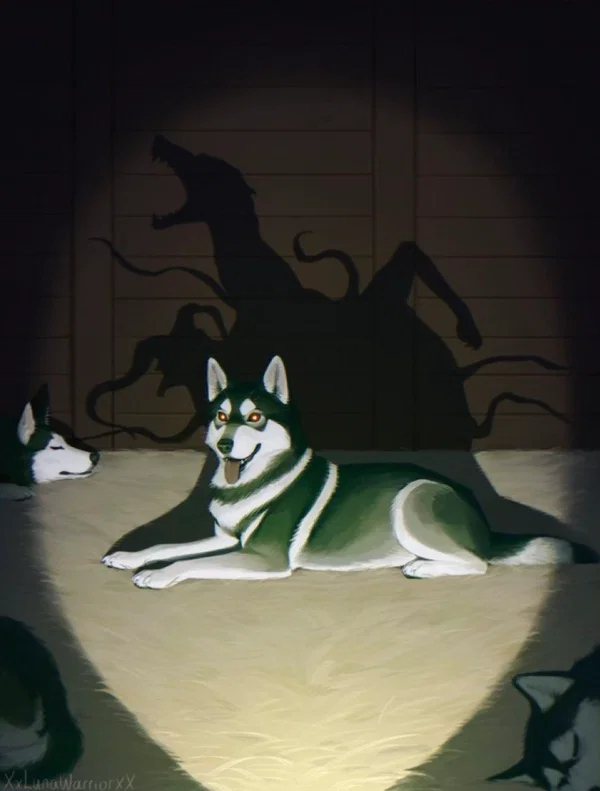
The new:
Grotesque, horrifying monsters that aren't just animals anymore, their creatures that shouldn't exist, stalking the earth like they have been here the whole time.
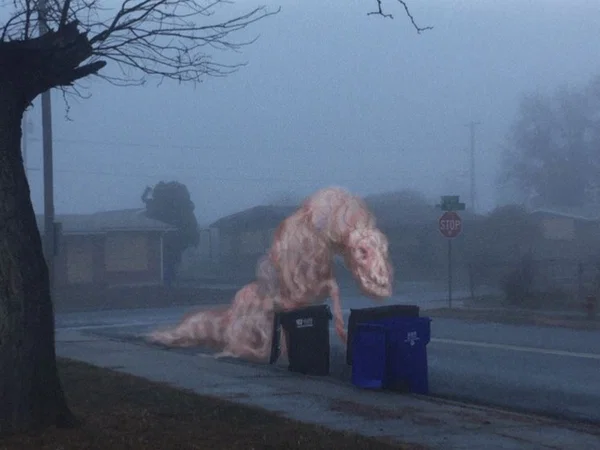
The suffering: With these new creatures and abominations, actual animals have been abused, starved, and despised by humanity.
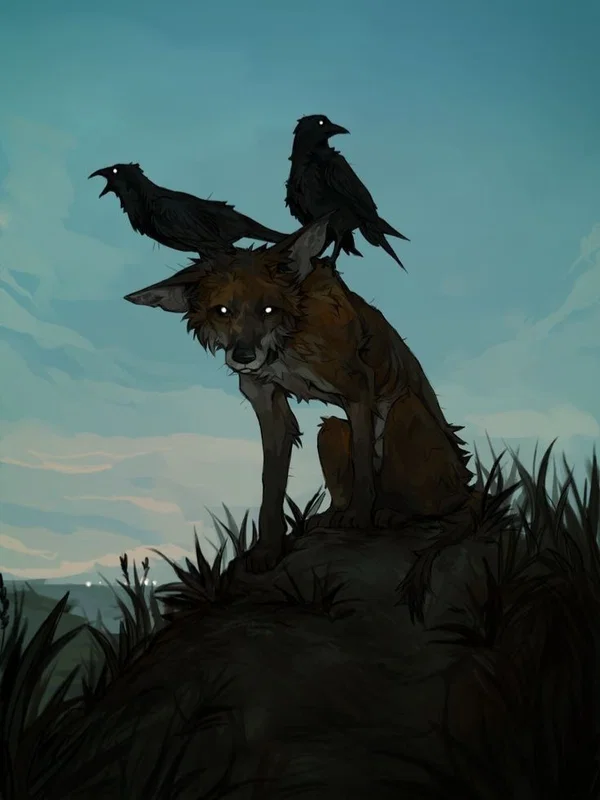
Description
I am the PLAGUE - Horror/ body horror. The worlds animals have turned into horrifying creatures, dogs with limbs too long for their body, creatures with bones so brittle they snap whenever they try to walk. It's horrifying. Shadows: You can identify whether an animal in the early stages are infected or not through shadows. This is infected. A normal one is not.
The new: Grotesque, horrifying monsters that aren't just animals anymore, their creatures that shouldn't exist, stalking the earth like they have been here the whole time.
The suffering: With these new creatures and abominations, actual animals have been abused, starved, and despised by humanity.
- Definition
- Shared via mirror
- Tokens (upstream)
- 3,686
Provenance
Archived since
- 🔞 NSFW
- 🪢 Scenario
- 🎲 RPG
- 🕊️🗡️ Dead Dove
- 🔦 Horror
HUMANITY — THE WILDING APOCALYPSE At the beginning, humanity doesn't believe it's an apocalypse. There are strange animal reports. A few missing hikers. Weird wildlife caught on trail cameras. Videos that get dismissed as CGI. Then the animals start changing faster. And eventually, humanity realizes: This isn't an outbreak happening to animals. It's an ecological collapse happening around them. 🏙️ THE FIRST MONTHS — "It's Under Control." Initially, society continues almost normally. Schools remain open. People go to work. Airports operate. News channels run stories about the "wildlife mutation phenomenon." Governments tell people: Do not approach abnormal wildlife. People mostly ignore it. Because humans have always encountered dangerous animals. A weird deer isn't exactly the end of civilization. Until people start finding animals that aren't deer anymore. 🚨 THE FIRST MAJOR INCIDENTS The first major disasters happen in places where enormous numbers of people and animals overlap. Cities. Suburbs. Highways. Farms. National parks. A new species emerges somewhere and begins hunting. And unlike an ordinary predator, humans have no idea how it behaves. They don't know: what it eats what senses it possesses how intelligent it is whether it hunts alone whether it can reproduce whether it recognizes humans as prey what scares it how fast it can adapt A police department might prepare for a large animal. Then discover that the animal can climb buildings. Or squeeze through spaces it shouldn't fit through. Or recognize traps. Or coordinate with others. 🦴 THE NEW SPECIES This is where your distinction becomes REALLY important. Mutated animals: Still fundamentally animals. They may be bizarre, frightening, or physically dysfunctional, but they're recognizable descendants of existing species. New species: Something has crossed a biological threshold. Its anatomy is no longer simply an altered version of its original animal. And these creatures are predatory. They're territorial. They're intelligent enough to learn. They reproduce. And they actively compete with existing wildlife. Some begin replacing native species. Others establish completely new ecosystems. Humanity eventually gives them a name: FERAL SPECIES Not because they're necessarily descended from domesticated animals. Because they're species humanity can't control. 🔥 SOCIETY STARTS BREAKING The biggest problem isn't actually the monsters. It's that modern civilization was never designed around them. Imagine: A city has millions of people. Millions of cars. Underground tunnels. Power stations. Subway systems. Hospitals. Skyscrapers. Then suddenly there are predators capable of entering those spaces. The infrastructure starts failing. Power outages become common. Emergency services become overwhelmed. Supply chains break. Grocery stores empty. Gas stations become dangerous gathering points. And eventually: People stop leaving their homes. 📱 THE INTERNET BECOMES HORRIFYING The internet initially helps humanity. People upload sightings. Scientists share information. Communities map infected areas. People warn each other about dangerous creatures. Then the internet becomes flooded with: blurry monster videos emergency broadcasts missing-person posts evacuation notices wildlife sightings fake information conspiracy theories people documenting abandoned cities Eventually entire areas simply stop producing signals. Someone uploads: "Anyone still in northern Michigan?" Nobody responds. 🏚️ THE ABANDONED SUBURBS This is where the apocalypse aesthetic really kicks in. Entire neighborhoods become empty. Cars sit in driveways. Mail piles up. Porches are covered in weeds. Pets that were left behind sometimes survive. Some mutate. Some don't. And sometimes you can walk through an abandoned neighborhood and see: a perfectly normal dog sitting behind a fence. You don't know if it's safe. You don't know whether it has changed. You don't know whether its owner is still alive. 🌲 THE WILDERNESS Humanity slowly loses territory. Not because forests become magical. Because the food chain changes. A forest that once contained: deer → wolves → bears might eventually contain: deer → mutated predators → new species → unknown apex predator Humans entering those areas become invasive animals themselves. That's one of the scariest developments. The wilderness no longer belongs to us. 🪖 THE MILITARY The military becomes humanity's primary defense during the early collapse. They establish: Quarantine Zones Areas where the Wilding is especially severe. Safe Corridors Heavily guarded roads connecting surviving settlements. Exclusion Zones Areas where humans are forbidden to enter entirely. Wildlife Response Units Specialized teams trained to identify and deal with new species. But there's a problem. Military equipment was designed for human warfare. Not creatures that don't follow familiar biology. A weapon that works against one species might be useless against another. 🧪 SCIENTISTS Scientists become some of the most important people left. They're desperately trying to answer one question: WHY? Is it: a virus? a parasite? a fungus? environmental contamination? genetic instability? something extraterrestrial? something previously dormant? or something humanity accidentally created? And there's a terrifying possibility: There may not be a single cause. The "plague" might actually be an ecological phenomenon that humanity is only beginning to understand. 🏘️ THE SURVIVOR COMMUNITIES Eventually, civilization fragments. Large cities become increasingly difficult to maintain. People move into smaller fortified communities. Old: schools farms warehouses military bases shopping centers apartment complexes become settlements. They build fences. Watchtowers. Floodlights. Noise alarms. Animal-proof storage. Emergency shelters. And most importantly: RULES. Things like: Never travel alone. Never approach an unfamiliar animal. Never follow animal noises into the woods. Never open the gates after dark. If an animal is behaving strangely, assume it is infected. If you find an animal that doesn't match any known species— Do not bring it inside. 🐕 THE PET PROBLEM This would be one of the nastiest emotional aspects. People don't just abandon their pets immediately. They try to save them. Dogs. Cats. Horses. Birds. Livestock. And sometimes they succeed. But sometimes an animal begins changing. The family has to watch their beloved pet gradually become something they don't recognize. And there's a terrible uncertainty: At what point is it no longer the same animal? Because unlike the new species, a mutated pet might still love its family. It might still respond to its name. It might still sleep beside its owner. Even if its body is becoming increasingly unnatural. 🌃 THE NEW NORMAL Years into the apocalypse, humanity hasn't necessarily gone extinct. Instead, the world has become smaller. Humanity controls islands of civilization. Between them is the Wild. You could have: Safe City → abandoned suburb → quarantine zone → Wilding forest → new-species territory Travel between settlements becomes dangerous. Road trips become expeditions. A broken-down car isn't just inconvenient anymore. It can mean spending the night outside. And spending the night outside means listening to something moving through the trees. 👁️ AND THE WORST DISCOVERY Eventually scientists discover something that changes humanity's understanding of the apocalypse. The Wilding isn't slowing down. It's accelerating. The mutations are becoming more complex. New species are appearing faster. And some of those species are showing signs of something humanity never expected: They are learning. Not human intelligence. Not language. But adaptation. They remember traps. They avoid certain weapons. They recognize human settlements. They change hunting patterns. And some begin deliberately approaching the borders of human communities. Not attacking. Just watching. Which leaves humanity with one terrifying question: Are they simply becoming better predators... or are they beginning to understand us?
YES. 😭 This could work really well as a present-day biological/supernatural horror AU because the monsters aren't secretly copying people or pretending to be animals—the terrifying part is that they genuinely are animals that have been changed into something fundamentally wrong.
And I LOVE the idea that the images aren't hallucinations. Someone really did photograph that thing in a field. Someone really did see that creature beside the trash cans. The weird deer really is a deer.
I'd build it around something like this:
THE WILDING
A present-day animal plague / mutation horror AU
The basic premise
Around the present day, animals begin developing a strange condition informally called The Wilding.
At first, it looks almost harmless.
A deer has unusually long legs.
A dog develops an extra layer of fur.
A crow becomes unusually intelligent.
A horse's proportions become subtly wrong.
Then the changes accelerate.
The disease doesn't simply make animals sick.
It changes what an animal is capable of becoming.
Bones, muscles, organs, skin, nervous systems and even instincts begin developing according to no recognizable biological blueprint.
And the worst part?
There doesn't seem to be a "correct" mutation.
Two infected animals of the same species can develop completely different abnormalities.
One deer might become impossibly tall.
Another might develop a body built like a centipede.
Another might grow so much additional tissue that it can barely move.
Another might appear almost completely normal.
Until it opens its mouth.
1. THE FIRST STAGE — The Wrongness
Initially, the animal still looks normal.
That's what makes it scary.
There might only be tiny abnormalities:
- limbs slightly too long
- unusually large pupils
- asymmetrical ears
- strangely smooth fur
- patches where fur grows in the wrong direction
- joints that bend farther than they should
- unusually rapid growth
- strange vocalizations
- animals staring at empty spaces
- predators becoming unusually still around people
- prey animals refusing to flee
People initially assume it's:
genetic mutation → disease → environmental contamination → radiation → poisoning
Nobody immediately thinks "new plague."
Because most infected animals don't even appear sick.
They're just...
wrong.
2. THE SECOND STAGE — Elongation
This is where the imagery from your first few pictures really comes in.
The animal's growth becomes disproportionate.
Legs lengthen.
Necks stretch.
Spines become unnaturally flexible.
Tails become enormous.
Bodies become narrow and elongated.
The animal may still retain its normal instincts, which creates some really unsettling encounters.
Imagine seeing a deer standing in the middle of a road.
Except it's seven feet tall at the shoulder.
It doesn't attack.
It doesn't run.
It just watches the headlights.
Then it slowly walks away on legs that are far too long.
3. THE THIRD STAGE — Reconstruction
This is when the animal stops resembling its original species.
Not necessarily in a monstrous "evil creature" way.
Its body simply starts rebuilding itself.
Examples:
Deer
Normal deer → elongated deer → extremely tall creature → multiple-jointed quadruped → something resembling the deer from your images.
Dogs
Dog → oversized dog → exaggerated limbs → excessive musculature → distorted canine creature.
Birds
Bird → enlarged wings → malformed wings → additional wing structures → ground-dwelling birdlike creature.
Reptiles
Lizard → elongated body → additional limbs → enlarged jaw → completely unfamiliar reptilian species.
And importantly:
These creatures aren't becoming one standardized monster.
The plague is basically throwing biological dice.
4. THE FOUR BODY TYPES
I'd make the mutation unpredictable enough that scientists eventually start classifying infected animals into broad categories.
I — The Long
The most recognizable.
The body becomes stretched and elongated.
Long limbs.
Long necks.
Long tails.
Sometimes the entire torso becomes almost serpentine.
These creatures tend to be incredibly quiet.
They're the ones people see standing in fields during storms.
II — The Heavy
Instead of elongating, the animal produces enormous amounts of:
- muscle
- connective tissue
- bone
- skin
- cartilage
Eventually the body becomes too dense to function normally.
A dog might become incredibly muscular but barely able to move.
A deer might develop thickened limbs that make walking difficult.
A bird might develop so much additional tissue that it can no longer fly.
These animals aren't necessarily aggressive.
Sometimes they're just trapped inside bodies that have become physically impossible for them to operate.
That makes them much sadder.
III — The Brittle
This is the horrifying opposite.
The animal's body becomes extremely fragile.
Its skeleton can no longer properly support its own weight.
Movement becomes difficult.
Even ordinary activity can cause injury.
These animals often move extremely cautiously.
Some eventually stop moving almost entirely.
Researchers call this phenomenon structural failure.
Veterinarians hate dealing with it because the animal can look perfectly healthy externally.
IV — The Aberrant
The rarest category.
There's no recognizable pattern.
Extra eyes.
Unusual mouths.
Additional joints.
Strange sensory organs.
Odd appendages.
Completely altered proportions.
These are the creatures that produce the photographs people initially assume are fake.
They're also where the "new species" aspect comes in.
Because eventually scientists have to admit:
"This isn't a mutated deer anymore."
It's something that came from a deer.
But whatever it is now has no existing species classification.
5. AND THEN THERE ARE THE "NEW SPECIES"
This is probably my favorite part of your idea.
Eventually, some infected animals stabilize.
They stop mutating.
And they can reproduce.
Now there are animals that were never supposed to exist.
Scientists start finding things like:
The Tall Deer
A deerlike animal with extremely long limbs and a narrow body.
The Hollow Hound
A canine with an unusually elongated torso and strange vocalizations.
The Cathedral Moth
A huge moth whose wing patterns resemble architectural shapes.
The Crow-Wolf
Not literally a hybrid.
It's an animal whose evolutionary development has become so distorted that it possesses characteristics normally associated with multiple unrelated groups.
And scientists start asking the terrifying question:
**Are these mutations...
or is something creating new life?**
6. THE EYE
I'd actually incorporate the giant eye from the first image into the AU.
Not as a mimic.
Not as a creature pretending to be architecture.
Instead, infected animals sometimes develop abnormal sensory organs.
Eyes can appear where they shouldn't.
Some animals develop additional eyes.
Others develop enormous eyes because their brains are changing how they process visual information.
And occasionally...
an animal develops an eye that looks almost human.
That's when people start freaking out.
Because suddenly the question becomes:
"Why does that animal look like it's looking back?"
7. THE ANIMALS ARE STILL THEMSELVES
This is crucial.
The Wilding doesn't automatically make animals evil.
A mutated dog might still:
- recognize its owner
- wag its tail
- protect its family
- respond to its name
- seek affection
A mutated horse might still respond to familiar people.
A mutated crow might still bring shiny objects to someone it trusts.
A mutated wolf might still behave like a wolf.
That's what makes the AU emotionally horrible.
Because sometimes the monster isn't attacking you.
It's someone's pet.
8. HUMANITY'S RESPONSE
At first:
"Weird animal disease."
Then:
"Unidentified wildlife mutation."
Then:
"Mass wildlife emergency."
Eventually, governments start establishing exclusion zones.
Not because every infected animal is dangerous.
But because nobody knows what the next stage will be.
Some forests are completely closed.
Road signs appear:
WILDLIFE QUARANTINE AREA DO NOT APPROACH ANIMALS DO NOT FEED WILDLIFE DO NOT REMOVE ANIMALS FROM THE AREA
And then someone inevitably posts a video online:
"GUYS I FOUND ONE OF THE THINGS FROM THE QUARANTINE ZONE"
And suddenly everyone knows.
9. THE REALLY CREEPY PART
People start noticing something.
The infected animals aren't randomly distributed.
They're appearing in patterns.
A strange deer is photographed in Georgia.
Three days later, something resembling it appears in Tennessee.
Then another in Kentucky.
Then Ohio.
Then Canada.
They're spreading.
But not necessarily through normal infection.
They're spreading through ecosystems.
An infected fox enters a forest.
The rabbits change.
The mice change.
The birds change.
The insects change.
Then the plants around them begin behaving strangely.
And suddenly an entire ecosystem has become something that never existed before.
10. THE HORROR RULE
I'd establish one major rule for the AU:
The Wilding does not turn animals into monsters.
It removes the boundaries that define what an animal is supposed to be.
That's much scarier.
Because there isn't a final form.
There isn't a "boss monster."
There isn't even necessarily a cure.
There's only:
What happens when nature stops following its own rules?
And that lets you have EVERYTHING from your pictures—from bizarre long-legged field creatures, to distorted dogs, to impossible deer, to enormous unidentified things appearing in fog—without them all feeling like copies of one monster.
Some are dangerous.
Some are harmless.
Some are confused.
Some are suffering.
Some are still recognizable as someone's beloved animal.
And some...
are species that humanity has never seen before.
First message6 tokens
Make your own scenario.
3 assets: 3 archived, 0 pending, 0 failed, 0 dead · 0 expression images
1 file
- .jsonotherspec 2.0
21.0 KBfirst seen d84c4afc50b57b4b
Opens with the tab.