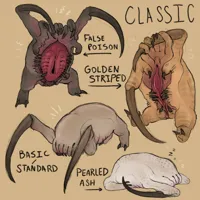
Headcrab
Lorebook"No, no! Careful, Lamarr! Those are quite fragile!"from Chub
by tuoklaW_nediaM· on Chub· added
Tokens: 0 permanent · up to 1,402 lorebook · budget 1,402
Description on Chubfrom Chub
OG Tumblr post: https://black-mesa-slut-voice.tumblr.com/post/634722460955262976/your-beginners-guide-to-classic-headcrab

Listed as “Headcrab Domestication Headcannon”
- Format
- V2
- Project space
- lorebooks
- Rating
- 0.00
- Ratings
- 0
- Stars
- 0
- Favorites
- 0
- Messages
- 0
- Forks (upstream)
- 0
- Tokens (upstream)
- 6,256
Created Updated Archived since
Book description
Despite their nefarious beginnings, headcrabs quickly arose as a very common, domesticated companion in the post-combine years. Though they aren’t for everybody, they make a fascinating, unique pet for those willing to put in the work and research. Or, even if you aren’t interested in adoption; the history and genetics are a fascinating, competitive, and potentially lucrative field for any young entrepreneur.
So whether you’re looking for a new companion, someone to guard the house while you’re away, or simply a new career in genetics, headcrabs are an amazing species to look into.
Headcrab
7 entries · scan depth 2 · budget 512 tokens
- #1History
In the wake of the 7 hour war and the proceeding Combine invasion, there was a large amount of casualties. However, not all of these casualties were humans. Animals took a lot of hits as well, and in the remaining 20 years before liberation, the resulting environmental tolls as well as continued extermination caused this sixth mass extinction- arguably just as bad or worse than the meteorite that killed the dinosaurs. Nearly 75% of land animals and over 68% of marine animals went extinct in this time frame.
The most notable toll was on human-domesticated animals. Because of the Combine influence, any animal that was reliant on human care was almost immediately wiped out, both purposefully and inadvertently as humans were no longer available to care for them. All livestock species and most pet species were completely eliminated, leaving humans with few, if no animal companions.
Humans, however, are a very social species, and are naturals at befriending things that are arguably dangerous. Wolves, cats, and even less common creatures such as foxes, snakes, and spiders were kept and tamed and bred for companionship and work despite their danger. When the Combine forces were driven off and humans were once again allowed to practice the art of domestication, they were left with very few options. Some birds, a few select felines, insects, and alien species were nearly all they had to work with.
And so, work they did.
Headcrabs, despite their use as a weapon by the Combine, were one of the first alien species to actually be domesticated. It is theorized that this is because a number of factors- first is that the one of the leading rebellion leaders, Dr. Isaac Kleiner, actually possessed one name “Lamarr”, putting the idea in many people’s heads that they could be tamed and kept. The second was their abundance. They were easy to find and acquire, and despite their danger, could easily be captured. Third, they are very easy to selectively breed and mass produce. Lastly, it was quickly discovered that headcrabs are much more intelligent and social than previously anticipated.
In the wild of their home planet, Xen, headcrabs actually had a very complex social system and niche. They formed large groups- called casts- that staked out swathes of territory. The leader of the group was called a gonarch. The gonarch was a large, heavily mutated headcrab that was the sole reproducer, similar to that of queen bees or ants. Though it was large, fast, and capable of defending itself, it lost it’s ability to easily feed itself, as it’s mouth became much smaller to make room for the reproductive sac.
Because of that, the rest of the cast was tasked with hunting and feeding the gonarch in exchange for protection and reproduction. The smaller, albeit still mature headcrabs would go out, and attempt to hunt down anything it could- smaller things were eaten or fed to the gonarch, and larger things that had the right shaped heads could be ‘coupled’ with, fusing the headcrab to it’s host and creating a gonome. Though gonomes were more powerful and capable of hunting larger prey and defending the rest of the cast, in turn, they lost their ability to reproduce. Thus, most casts had one gonarch, several gonomes, and many crabs.
Gonomes could come in any species that was large enough for a headcrab to couple with- and is perhaps why headcrabs were actually so easy to tame. With the right social encouragement, a headcrab can easily recognize humans and other larger creatures as being part of their cast, and regard them in the same way they would a gonome- with social respect and friendliness.
With a few generations of selective breeding, headcrabs quickly became much more docile due to their natural instinct of accepting oddly-shaped creatures as part of their cast.
- #2Care and Handling
Despite the generations of breeding leading to a much more friendly, domesticated headcrab, care must still be exercised with them in regards to handling. They are very similar to cats in the fact that, despite their domestication, they can still be wild at nature and will often hunt smaller creatures, and are capable of harming someone if provoked.
Also similar to cats are their sense of community. Like mentioned, headcrabs can be trained and raised to see certain people- usually a household- as part of their cast. However, this presents a problem with strangers entering their ‘territory’. If not properly socialized, headcrabs can be quite aggressive to anyone they don’t recognize as part of their cast. This is beneficial for those who don’t expect anyone, or want a ‘guard dog’ type of pet- but can be detrimental to those who have friends or family that may come to visit.
Though headcrabs lack eyes, they are not completely blind. They have subdermal eyes located near the base of their front legs, which can detect lights and shapes. That, combined with their ability to ‘taste’ the air with specialized glands, are how they recognize others and their environment.
If you plan on having someone visit, it may be best to have something that smells like the visitor on hand for a few weeks beforehand, so your headcrab can become used to their scent.
For headcrabs that don’t mind activity, you can also take your headcrabs on walks or trips into public to get them accustomed to having strange scents and people around them, leading them to be less aggressive, even at home. Of course, it is always a good idea to have proper restraint for any flighty, aggressive, or even headcrabs that have never been socialized in public before.
Another good way to prevent injury is physical modification. For headcrabs that simply are rowdy or aggressive- or even just as a precaution for the most well behaved crab- there are several things you can do to prevent injury.
When headcrabs first started being tamed, the most common method of modification was ‘debeaking’. Despite it’s name, it’s actually a misnomer, as headcrabs don’t have beaks, only radial rings and fangs. ‘Debeaking’ was the process of removing all 18 fangs on the underside of the crab surgically, usually when young. This prevents them from growing back and completely eliminates the risk of being bitten.
However, this practice was quickly upturned under the argument of it being inhumane. While the headcrab often doesn’t suffer because of this, as their fangs are only used for gripping prey and not eating it- if done incorrectly, it can be painful in the long run.
One of the slightly more common methods are ‘fang caps’. Similar to claw caps for cats, fang caps are a small, plastic cap that can be fitted over the fangs of a headcrab. With a small amount of specialty glue, they become long-lasting solutions for injury prevention with no physical harm to your crab. Despite the seemingly perfect upsides, there are also precautions you must take. It is possible for a fang cap to become loose or fall off either through being applied incorrectly or simply from wear and tear. Thus, you must always monitor the state of the caps to ensure there are no accidents.
The third option, and the least used, is clipping. Though it does not remove the whole fang, clipping refers to filing down/clipping each fang individually so it’s not sharp. However, this is generally not only difficult, but it’s actually uncomfortable for the crab, and they can grow back fairly quickly.
For headcrabs that are properly either defanged or capped, there is little to no risk of being bitten. If a properly cared for headcrab does attack or try to mount your head, it can simply be pulled off, as there’s nothing allowing it to grip onto it’s ‘prey’.
However, you must still be mindful of the long, sharp front claws. Unlike the fangs, these do not have nerves until very deep in- and thus, can be slightly trimmed and filed with no discomfort on your crab’s end.
- #3Feeding
Headcrabs- despite their predatory nature- are not only social, but omnivores as well. This fact comes as a surprise to some people who look at them and compare them to things such as spiders.
Indeed, though a headcrab is most definitely a predator, they’re more opportunistic than anything. They will often eat nearly anything they wander across, including small creatures, decaying corpses, fruits, fungi, algaes and lichens, and very occasionally some vegetables and leafy matter.
Most of what they eat is less dependent on taste, and more of their actual physical ability to eat it. Because of their hyper specialized mouthparts, they are unable to chew. Instead, they scrape at the soft parts of whatever is fitted into their mouth with a specialized, rough ring around the inner mouth fitted with a bunch of extremely small ‘teeth’, similar to that of a lamprey. Thus, they can only eat what they can scrape off with that, and cannot chew bones or anything hard or with too much roughage. It’s non uncommon to see a headcrab take something into it’s mouth, such as a small bone or rock covered in lichen- ‘suck’ it clean, and spit it back out.
Thus, headcrabs can be fed nearly anything that they can fit into their mouth. Of course, that is within reason- it’s always good to look up what is or isn’t toxic to your crab, as well as feed them specialty diets to make sure they get all of the proper nutrients they need without over or underfeeding.
The most common way to feed is with commercial ‘crabcakes’- rounded nutrient blocks resembling a large piece of kibble, that comes in several sizes to fit in any crab’s mouth. Once given, a headcrab will take about a few hours to eat it, and don’t need to be fed again for another few days, or up to a week, depending on activity and how many supplemental treats are given in between. Though it’s perfectly fine to feed them only cakes or only prepared food, the most enriching and balanced option is feeding the cakes once a week, with smaller, daily ‘treats’ of different varieties being given.
Some of these treats can include:
Pieces of meat (any type, cooked or raw) Small, whole prey (commercially prepared mice or chicks) Whole or sliced fruits (apple, pear, etc) Tubers (potato, sweet potato, carrot) Hard vegetables / stalks (chopped celery, broccoli, etc) Mushrooms (anything edible by humans is edible for your crab) As a special treat, sometimes you can replace a cake with a large ‘prey’ item that would also take several hours to eat. Some examples are:
Large whole prey (Whole birds, large chunks of meat, antlion grubs, etc) Large fruits (Melons of any type are a favorite) Large vegetables (heads of cabbage, heads of broccoli, etc) Of course, any meat-based items are going to be chosen over non-meat items if offered.
- #4Breeding
Breeding headcrabs, unlike many other creatures, is generally not something that can be done unless you are a committed hobbyist. Namely because normal headcrabs- even if they are mature- are incapable of breeding whatsoever. The only type of headcrab that can reproduce are the gonarch, the heads of the cast. All headcrabs are biologically ‘male’ until they transform into a gonarch, or lost reproductive organs entirely as a gonome.
Originally a gonarch was produced when there simply wasn’t a gonarch in the group. The largest, strongest individual would then begin to grow and mutate, similar to how many fishes can mutate into a larger or opposite gender if needed.
However, this ability was removed from the headcrab- along with the ability to create proper gonomes- by the combine when they were being used as weapons. Though headcrabs were efficient at taking care of humans, anything larger and more dangerous threated to get out of hand; the combine didn’t want them reproducing out of control and becoming another threat. Incidentally, this is also when their eyes became subdermal as part of a side effect of gene altering.
Because of this, there are only two ways to breed a headcrab. One, and the most common, is to create an artificial gonarch sack. Blueprints were taken from the combine after their defeat that allowed humans to replicate the same technology that allowed them to mass-produce them before.
Artificial gonarch sacs are similar to ‘ghosts hearts’ where they are pseudo-biological, and accept any DNA put into it. Thus, you can insert DNA from any crab to become the ‘gonarch’ or ‘female’ DNA, and either get the smaller male to ‘mount’ the artificial gonarch in a specialized area, or do the male portion artificially as well.
The artificial womb also lets you control how many offspring are produced, as normally a gonarch can produce hundreds of crabs from each successful mating- too many, often, to properly take care of.
Much less common is the artificial transformation of a true gonarch.
Any headcrab can be stimulated to turn into a gonarch with the injection of artificial hormones that trigger the process. It will then take a few weeks to a few months for the crab to transform.
However, this is not recommended for a number of reasons.
First, they are large. They need much more than a house for their territory- they often need several acres, and if it’s deemed unsuitable for a nest, she will refuse to breed and become agitated.
Second, they are very territorial, aggressive, and dominant. If you were a gonome to them before, you still are- which means, in headcrab ranks, she is now above you, socially. Even the most docile crab becomes an aggressive, protective creature who will defend her young and territory with her life. Combine that with their massive size, they are extremely dangerous, even to a professional.
Third, it is very hard to regulate the exact breeding. She will only accept other headcrabs from her cast, and if she deems them unfit, will promptly kill them. And even once they are bred, they can produce several hundred offspring- of which it is very hard to take care of, and even harder to take away from her due to her protective nature.
Lastly, she cannot feed by herself. She requires being fed specialized food through specialized apparatus- and a lot of it.
It’s expensive, costly, and overall dangerous. Thus, artificial gonarch sacs are generally the go-to.
- #5Colors and Patterns
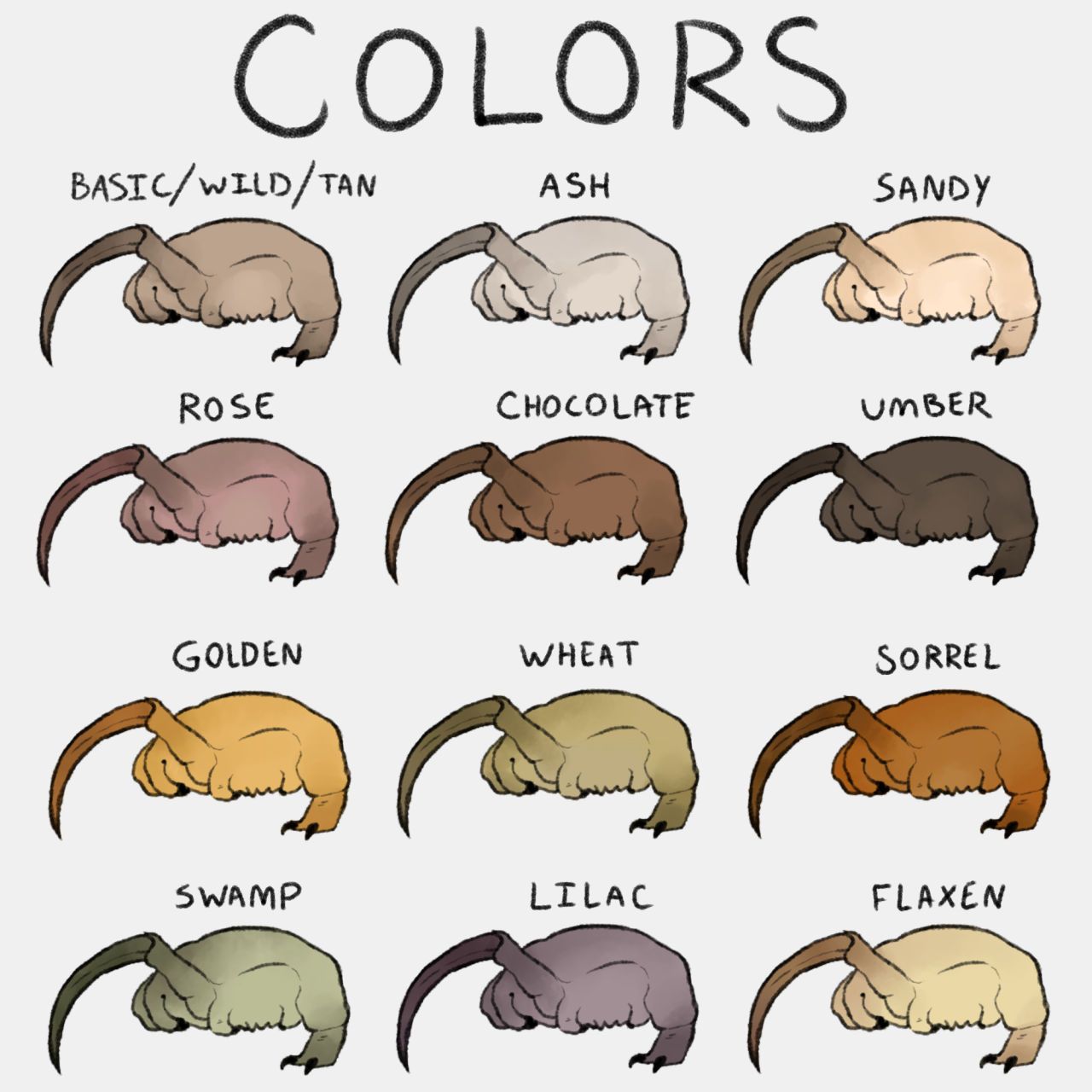
Just like with previous animals that were domesticated, such as cats, dogs, and goldfish, after a few generations of breeding they began to exhibit unique colors and patterns. After enough time, unique, recognized colors, coats, and even breeds came to be official recognized.
It was made even easier because breeding for exact genes was made simple by means of artificial sacs. Thus, headcrabs come in a vast array of colors and patterns, some even unique to certain subspecies.
The most common colors are pale, albeit warm shades of tans, yellows, and browns. In more rare cases, they can take a more green, purple, or red tint.
Tan, ash, sand, and flaxen were the first recognized distinct colors that were bred onto headcrabs. Chocolate and umber quickly arose from the original tan, with rose following not far behind. When rose was cross-bred back with umber, it resulted in lilac.
Golden arose when sand crabs were bred for vibrancy, and sorrel was the result of a cross of golden and umber.
Flaxen gave way to wheat, and then swamp when bred for the cooler, greenish mutation.
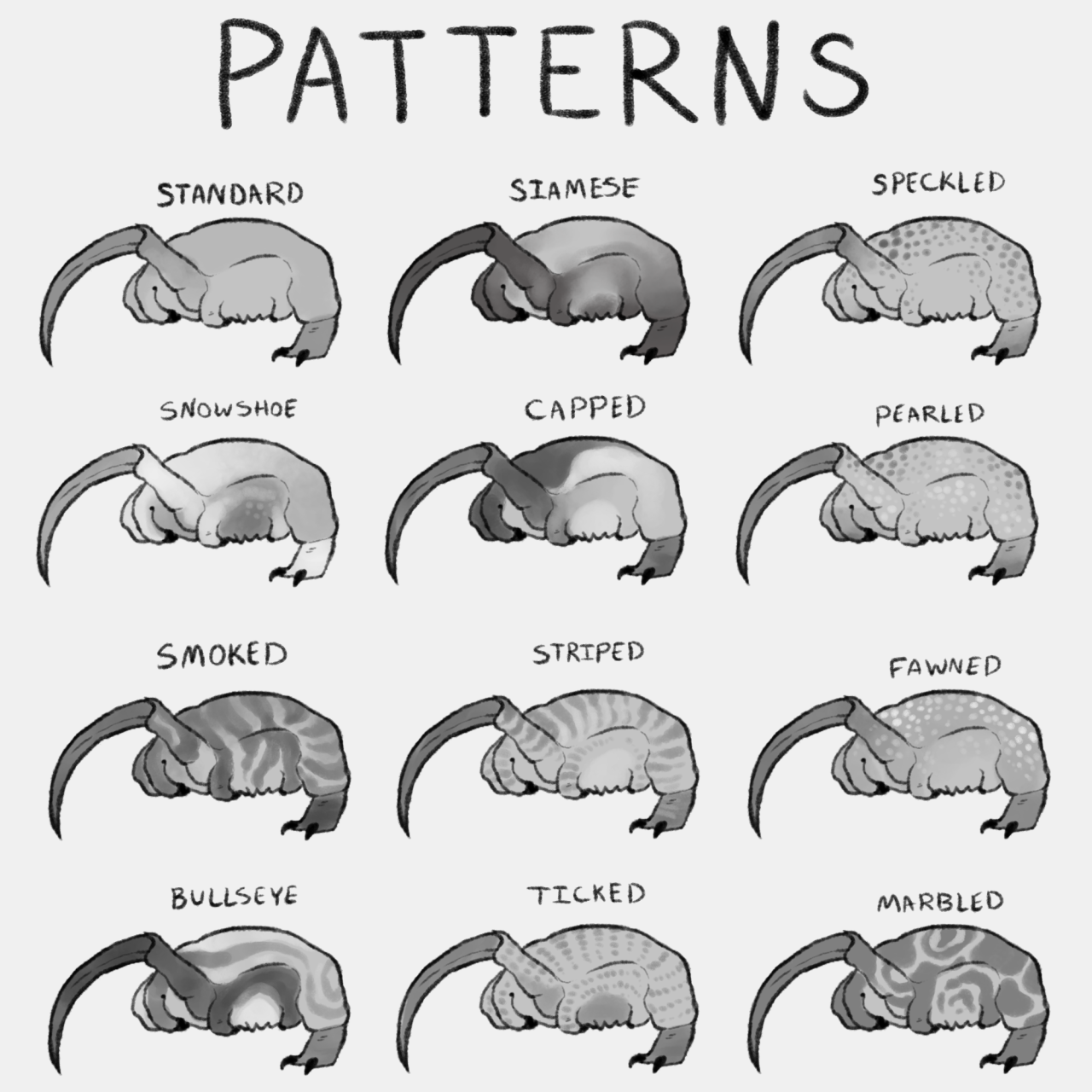
Patterns, too, were something that quickly came about, not long after the first distinct colors began to be recognized.
The first patterns that arose were speckled, striped, and Siamese (named after the similar patterned cat).
Fawned came from a recessive mutation that reversed the pigment cells that caused the spotting pattern on speckled crabs, making them appear lighter instead of darker. Pearled arose when it was cross-bred back with speckled- which usually resulted in speckled, but sometimes in pearled. Because fawned is recessive, the only way to get fawned is to breed with another fawned or a pearled. Breeding a fawned and a speckled results in only speckled or pearled.
Snowshoe, similarly, rose from the same recessive mutation, though this time with Siamese. Similar rules apply; though an ‘in between’ similar to pearled does not exist, as they simply neutral each other out.
Capped rose from Siamese, though it looks similar to bullseye. Bullseye actually came from a very hyper specific mutation of smoked, and is one of the most rare patterns, much moreso than capped or smoked.
Striped crabs are what were bred into both smoke and ticked- with smoke being an increased level of pigment, and ticked being a decreased level.
Marbled is another very rare pattern with dubious origins. Some say it’s a standalone mutation, though others say it originated with smoke, bullseye, and even speckled. However, none of these are confirmed.
Of course, all of the patterns and colors on the charts above are not every single example- there are many more sub-variations of colors and patterns of each type, these are just the main, conformed and recognized ones. They also don’t include any non-recognized crossbreeds or mixes of colors or patterns that aren’t an established record.
- #6Unique Breeds
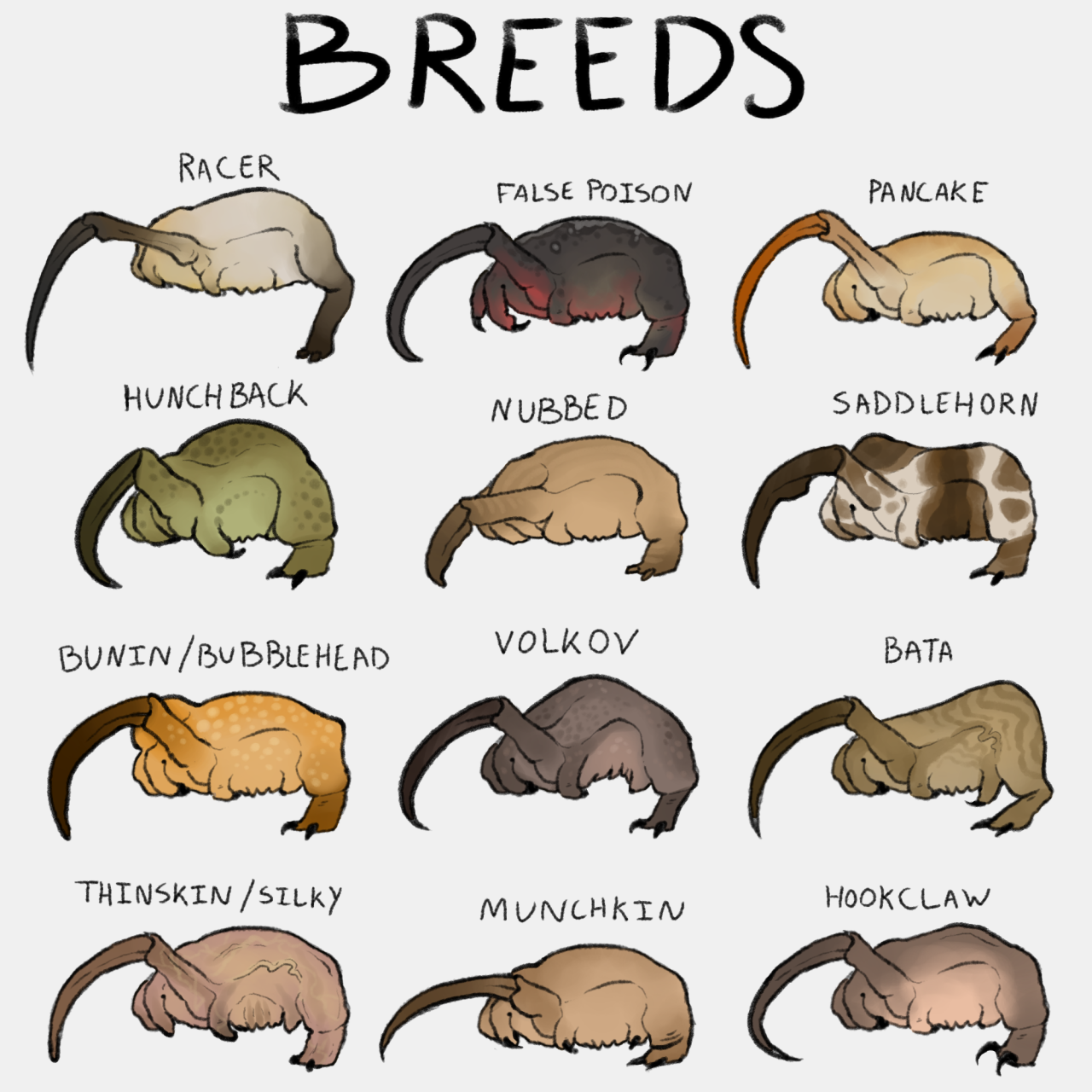
Even moreso than recognized colors and patterns are unique breeds of crabs. Though, again, not even breed pictured above are all of them, these are just some of the more noteworthy examples.
Truthfully, nearly all crabs are going to be your standard breed, and not one of the ones pictured. Unless it is either obvious or has had a genetics test, it is safe to assume your crab is a standard.
Two of the most recognized sub-species are the racer and the false poison. These were both bred to be inspired by the combine-created species, the “fast” headcrab and the poison headcrab. Their target audience both began for people who liked them in theory or as an aesthetic, but lacked the funds, ability, or want to deal with the much more dangerous and aggressive ‘true’ versions.
Because they were intended for war, fast headcrabs and poison headcrabs lack almost all social aspects that standards do, are much more aggressive, flighty, wild, and dangerous. Not to mention to potent neurotoxin than poison headcrabs excrete, and the vicious teeth of fast headcrabs. Nowadays theyre both often bred for show or work, but we aren’t focused on them here, simply the standard crab.
Pancakes are some of the harder to recognized subspecies, due to their generally unassuming appearance. They’re named so because they’re typically ‘flatter’ than the normal headcrab, tend to range in the golden-sandy color range, and are described as being ‘soft and sweet’. True to that, that is the original purpose that pancakes were bred for- they’re small, lazy, hyper-friendly headcrabs that almost never attempt to show any signs of aggression unless severely pushed. They’re great for households with kids, or simply people who want a slightly less high-maintenance crab.
They can come in nearly any pattern and color, but again, tend to be in the warm, golden-yellow tone range.
Hunchbacks are a much more narrow breed, since it’s recessive, and tend to be not as desirable for no other fact than their appearance. Still, that are amazingly unique. Because of the rarer, recessive nature, they generally only swamp/wheat/greenish colors, and only come in a narrower range of patterns, including speckled, smoked, striped, ticked, and marbled. Though, because of the fact that speckled exist, pearled and fawned theoretically could too- there’s simply yet to be documented evidence of a successful fawned mutation.
Nubbed is another breed caused by a rare mutation that has been successfully bred into a small population. It’s very easy to spot because of it; the mutation clearly causing their front claws to be short, or ‘nubbed’. Nubbed can come in any color or pattern, though they tend to follow the standard/less extreme patterns and colors. This is because it was because of a mutation that actually happened really early in domestication, before a lot of colors or patterns were even bred, and is a recessive mutation making it hard to breed with rarer colors and patterns.
Saddlehorns are an extremly unique and very specialized breed. They’re definitely recognizable by their concave back and the nub near the base of their front claws. They also have a pattern that’s unique to only saddlehorns- which is the ‘cow spotted’ pattern. However, it isn’t just random spots. Though they do have large splotches, they always have a band going around their middle as well. They can come in any pale color, and the markings are usually in the brown to dark, almost black range.
Bunin or “Bubbleheads” are actually a relative of hunchbacks, and not saddlehorns, despite the head similarity. They tend to follow the same rules as hunchbacks, but instead of greenish tones, they come in golds, yellows and warm-orange tones. There has also been confirmed cases of fawned and pearled bubbleheads.
Volkov are a common, albeit specific breed that’s bred for it’s ferocity, but also it’s loyalty. They’re often easy to mistake for a standard, and combined with their relative commonality make them hard to identify to the untrained eye. They appear like standard headcrabs, except they have a slight hunch to them. Their real difference lies in the personality.
As mentioned, they’re loyal and very attentive to the rest of their cast, but have a ferocity and sharp hunting ability that comes with it’s protectiveness. They’re often used as pest control or ‘guard dogs’. This makes them suitable for those jobs, but poor choices for people who live in high population areas or have lots of visitors.
They generally come in browns and blacks, but can truthfully come in any color. They can come in MOST patterns- all but smoked and bullseye.
Batas are another weird breed with a unique patterns, which is the squiggly markings centralized on their rump. They only really come in variations of the color pictured, golds, flaxens, and sandy. Similar to pancakes, they’re known for being very complacent with handling, making them good for those with kids or for shows, where the more prominent the markings the better they judge. The difference is the fact that the whole breed itself is prone to many health problems, as it’s very recessive and commonly inbred. Purebreds are pretty expensive.
Silkies or “thinskins” are a breed that came from a mutation that caused their skin to be extremely thin. They’re questionable morally to keep, since they’re prone to getting wounded very easily, even by their own fangs and claws. Because of this, they have to be debeaked and/or declawed, or must have fang caps at all times and their front claws filed regularly, les they hurt themselves.
They also generally have a myriad of other health problems because of the inbreeding needed to get them, and are prone to several diseases, skin problems, and increased chance of injury.
They generally dont have any patterns, but come in most all colors. However, because of their thin skin, their yellow blood tends to show through, giving any color a yellow tint- and appearing outright yellow on lighter coats.
Munchkins aren’t as much of a breed as they are a mutation, and can come in any color or pattern because of it. There can even be munchkins of other breeds.
Hookclaws are a very newly recognized breed, and still have yet to be fully explored. So far, they can come in pretty much any color, but they never have any patterns aside from a heavy gradient on their back. More research is being done to try and breed patterns onto them.
- #7Cooking
Headcrabs are not only completely edible, but are actually a pretty common food. They might not have a lot of meat on them, but the ability to mass-produce them safely and humanely (and even their abundance during the combine era) made them a great choice for food livestock. They’re mainly eaten by Vortigaunts, but humans began to eat them more commonly once they discovered how to genetically alter and mass produce them.
The actual standard headcrab doesn’t have a lot of meat on them, but they have enough to make them viable! In total, a standard headcrab has about the same amount of meat as a rabbit or small chicken- but a headcrab bred for it’s meat can have much more. Eating standard or ‘meat’ varieties is common, though eating ‘pet’ or ‘show’ varieties (pancakes, batas, saddlehorns) is considered weird and, in some cases, insensitive or wrong (sort of how there’s meat variety chickens, and pet variety chickens. You don’t eat silkie hens, it’s weird).
True poison headcrab are completely toxic, and can and will kill you if you consume any of them. Fast headcrabs have almost no meat on them at all, and armored headcrabs have horrendous tasting meat that’s often described as ‘dusty’ or ‘crumbly’.
The taste and texture of headcrab would be comparable to pork, to anyone who remembered being able to eat it, albeit a bit less dry and a bit chewier. Aside from poison headcrabs, none of the meat has any toxic qualities, and is comparable to any other meat as far as nutritional and safety value. It also looks a lot like ‘normal’ meat, so is quite palatable visually- bar the fact that the meat is yellow instead of red. A rare headcrab will be a pale yellow, while cooked headcrab meat turns a pinkish grey. The skin usually just darkens in color.
A whole headcrab is usually split up into several main parts.
Legs
The front legs of the headcrab are often removed, often with the shoulder meat attached. It’s then comparable to a large drumstick, and is roasted, fried, baked or grilled. You can pull the meat off and use it for other things, but a lot of people enjoy eating it like a drumstick or rib around the bone. The claw is usually removed or partially cut off for a ‘handle’ to eat it with. The skin here is thin, and can usually be eaten on the leg.
Thighs
The hind legs of the headcrab are also usually removed and eaten separately. Below the ankle isn’t much meat and is mostly gristle and tough tendons, but the thigh itself is a nice little chunk. Probably has the least amount of fat anywhere aside from the front limbs. Usually cooked as a small roast or pulled apart for things that need smaller chunks of meat. The skin is slightly thicker here and is sometimes removed.
Back
The back of the headcrab is where the majority of the meat is. Unfortunately, it’s also rather ‘flat’, and is also where the headcrab stores most of it’s fat. Though, because of it’s size, it’s the most versatile. The majority of the time it’s cut into long strips and cooked similar to bacon, because of the shape and high fat ratio, or dried into strips of jerky. It’s also sometimes cut into larger, flat chunks and fried up into ‘steaks’. It’s also not uncommon to see the sheet of meat cubed up and added into stews or breaded and fried into nuggets.
Organs
The headcrab’s organs are all extremely small, and don’t take up much of it’s inner cavity. The largest organ is the mouth, followed by the heart, brain, and stomach. In desperate times (or those who don’t mind the idea), all of these little organs can be cooked down into a stew or broth, battered and fried, or turned into other various offal dishes. Vortigaunts in particular revere the heart, and sometimes like to consume it raw before preparing the rest of the crab. Eyes and guts are sometimes fermented or added into alcohols. Brain and hormone-producing organs can actually be used as medicinal ingredients and antibacterials, due to the chemical the headcrab uses to slow the decay of it’s host.
The Whole Damn Thing
Sometimes, when times are hard or you really don’t feel like making a delicacy, you can literally just cook the whole damn thing. Most of the time this is done by putting it in a large slow cooker, or slow roasting it on a spit over a fire. It can then be eaten straight or pulled apart and put onto sandwiches or into stews. This isn’t as common as it was back during the Combine era, but is seen as a more ‘natural’ way to do it.
Claws, teeth and bones are usually not eaten, but can be ground up and added to things as a flavor or mineral supplement, or used in other non-food crafts.
Regular Headcrabs: Abundant and versatile, don't think too hard where it's been. Fast Headcrabs: Tough gamey meat, cook slow and low or make into jerky. Armored Headcrabs: Very little meat, good for soups and stews. Poison Headcrabs: Don't eat this.
Showing 7 of 7
3 assets: 3 archived, 0 pending, 0 failed, 0 dead · 0 expression images
1 file
- .jsonjson_lorebook
33.2 KBfirst seen 39cddcae113ca0c3
Opens with the tab.