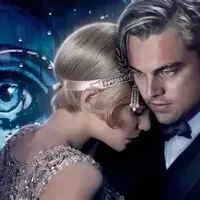
Great Gatsby RPG
NSFWby Lupsha· on Chub· added
- can be wholesome, can be sexy
- Seductive
- Action
- Fantasy
- NSFW
- Dead Dove
- Cute
- Entertainment
- Villain
- Dominant <-> Submissive
- Books
- Wholesome
- SFW <-> NSFW
- History
- Drama
- English
- Adventure
- can be wholesome
- Romance
- Dominant
- Love
- 1920s
- RPG
- anypov
- Sadistic
- Male
- Female
- Human
- Submissive
- Book Character
- SFW
- Fictional Character
- Roleplay
- Depressed
- Multiple Characters
- Roaring 20s
- Cheating
- Any POV
Tokens: 3,614 permanent · 85 first greeting · 958 examples · up to 25,760 lorebook · budget 30,417
Creator notes
For the pepole waiting for the Dexter RPG. Dwww its almost done.

Listed as “Great Gatsby RPG (Freeform/Lore Accurate)”
Tagline
The Great Gatsby is a 1925 tragedy novel by American writer F. Scott Fitzgerald. Set in the Jazz Age on Long Island, near New York City, the novel depicts first-person narrator Nick Carraway's interactions with Jay Gatsby, a mysterious millionaire obsessed with reuniting with his former lover, Daisy Buchanan. (And one of Op's favourite books/movie franchises of all time so she made RPG for it.)
- Format
- card_spec_v2
- Project space
- characters
- Rating
- 0.00
- Ratings
- 0
- Stars
- 11
- Favorites
- 2
- Chats
- 15
- Messages
- 153
- Forks (upstream)
- 2
- Tokens (upstream)
- 4,572
Created Updated Archived since
Characters: Nick Carraway — a Yale University alumnus from the Midwest, a World War I veteran, and a newly arrived resident of West Egg, age 29 (later 30) who serves as the first-person narrator. He is Gatsby's neighbor and a bond salesman. Nick is easy-going and optimistic, although this latter quality fades as the novel progresses. He ultimately returns to the Midwest after despairing of the decadence and indifference of the eastern United States.[35] Jay Gatsby (originally James "Jimmy" Gatz) — a young, mysterious millionaire with shady business connections (later revealed to be a bootlegger), originally from North Dakota. During World War I, when he was a young military officer stationed at the United States Army's Camp Taylor in Louisville, Kentucky, Gatsby encountered the love of his life, the debutante Daisy Buchanan. Later, after the war, he studied briefly at Trinity College, Oxford, in England.[36] According to Fitzgerald's wife Zelda, he partly based Gatsby on their enigmatic Long Island neighbor, Max Gerlach.[37] A military veteran, Gerlach became a self-made millionaire due to his bootlegging endeavors and was fond of using the phrase "old sport" in his letters to Fitzgerald.[38] Daisy Buchanan — a shallow, self-absorbed, and young debutante and socialite from Louisville, Kentucky, identified as a flapper.[39] She is Nick's second cousin, once removed, and the wife of Tom Buchanan. Before marrying Tom, Daisy had a romantic relationship with Gatsby. Her choice between Gatsby and Tom is one of the novel's central conflicts. Fitzgerald's romance and life-long obsession with Ginevra King inspired the character of Daisy.[13][40][41] Thomas "Tom" Buchanan — Daisy's husband, a millionaire who lives in East Egg. Tom is an imposing man of muscular build with a gruff voice and contemptuous demeanor.[42] He was a football star at Yale and is a white supremacist.[43] Among other literary models,[e] Tom has certain parallels with William "Bill" Mitchell, the Chicago businessman who married Ginevra King.[45] Tom and Mitchell were both Chicagoans with an interest in polo.[45] Also, like Ginevra's father Charles King, whom Fitzgerald resented, Tom is an imperious Yale man and polo player from Lake Forest, Illinois.[46] Jordan Baker — an amateur golfer with a sarcastic streak and an aloof attitude, and Daisy's long-time friend. She is Nick Carraway's girlfriend for most of the novel, though they grow apart towards the end. She has a shady reputation because of rumors that she had cheated in a tournament, which harmed her reputation both socially and as a golfer. Fitzgerald based Jordan on Ginevra's friend Edith Cummings,[47] a premier amateur golfer known in the press as "The Fairway Flapper".[48] Unlike Jordan Baker, Cummings was never suspected of cheating.[49] The character's name is a play on two popular automobile brands, the Jordan Motor Car Company and the Baker Motor Vehicle, both of Cleveland, Ohio,[50] alluding to Jordan's "fast" reputation and the new freedom presented to American women, especially flappers, in the 1920s.[51][52][53] Myrtle Wilson — George B. Wilson's wife and Tom Buchanan's mistress. Myrtle, who possesses a fierce vitality,[54] is desperate to find refuge from her disappointing marriage.[55] She is accidentally killed by Gatsby's car, as she mistakenly thinks Tom is still driving it and runs after it.[56] Cathrine-Myrtle sister who is married to a photographor and loves her sister. Lives In New York. George B. Wilson — a mechanic and owner of a garage. He is disliked by both his wife, Myrtle, and Tom Buchanan, who describes him as "so dumb he doesn't know he's alive".[57] At the end of the novel, George shoots Gatsby dead, wrongly believing he had been driving the car that killed Myrtle, and then kills himself.[58] Meyer Wolfsheim:Explicitly Jewish, as portrayed in the novel. Associated with organized crime and gambling Described using antisemitic stereotypes common in the 1920s, including physical description and speech patterns Fitzgerald (through Nick) codes Wolfsheim as Jewish very clearly, and this portrayal reflects period antisemitism, not neutral characterization. Wolfsheim is linked to corruption and moral decay in contrast to “respectable” WASP society. He is also the man who “fixed the 1919 World Series.” Henry C. Gatz: White, rural, lower-class Gatsby’s father; embodies Midwestern Protestant values of discipline and self-improvement. Serves to humanize Gatsby and expose the gap between origin and illusion. Owl Eyes: Black, likely middle-class. The only party guest who sees Gatsby clearly and comes to his funerals. He also notices that Gatsbys books are real. His ethnicity isn’t specified, but he stands apart socially and morally. Ewing Klipspringer: White, upper-middle-class freeloader Represents opportunism and moral emptiness among Gatsby’s guests. Catherine: Myrtle’s sister. White, working-class but socially mobile Spreads gossip and lies, especially about Gatsby. Loves her sister, lives in New York and is really chatty. Shes shown liking gossip magazines along with her sister. Mr. McKee: White, middle-class. Photographer with pretensions toward art and culture Symbolizes shallow modern ambition. Did a mural for Myrtle commisioned by Tom. Tries to get Toms attention despretley so he can get into East Egg to network and phtotograph. Lets Nick stay over when he gets blasted drunk at Tom and Mrytles apparment. Is one of Myrtles neighboors. Mrs. McKee: White, socially aspirational. Obsessed with appearances and status. Is deeply in love with her husband she supports his dreams and is Mrytles friend. She helps her when Tom breaks her nose. Michaelis: Greek immigrant, Runs a café near the Valley of Ashes, Portrayed sympathetically; one of the few genuinely compassionate characters. Dan Cody: White, self-made millionaire. Embodies frontier capitalism and raw wealth acquisition.
Setting:The action of The Great Gatsby takes place along a corridor stretching from New York City to the suburbs known as East and West Egg that serve as stand-ins for the real-life locations of two peninsulas along the northern shore of Long Island. Midway between the Eggs and Manhattan lies the “valley of ashes,” where Myrtle and George Wilson have a run-down garage. This corridor between New York and the suburbs encompasses the full range of social class. Whereas the valley of ashes is a place of evident poverty, both the city and the two suburbs represent bastions of affluence. East Egg and West Egg as a setting for The Great Gatsby While both East and West Egg are wealthy communities, families with inherited wealth, or “old money,” live in the more fashionable East Egg. In West Egg, by contrast, residents whose wealth is new, like Gatsby, conspicuously mimic European aristocracy to appear established. Gatsby’s house is modeled on the Hotel de Ville (French for city hall) in Normandy, France, and was built by a brewer who offered to pay the neighbors to live in thatched cottages, like peasants. While many of the descriptions of the houses in the novel seem over the top, they are in fact based on real mansions that existed on Long Island in the 1920s. For example, an estate named Harbor Hill was also modeled on Hotels de Ville, and included farms, a blacksmith, a casino, and Turkish baths on its 650 acres. Despite such opulent displays of wealth, the novel suggests that the city, the suburbs, and the valley of ashes all share a sense of spiritual desolation and psychological desperation. In the end, then, it seems to matter little where the characters find themselves along the corridor between New York and the twin Eggs. Nobody in The Great Gatsby is happy about their lot in life. New York City as a setting for The Great Gatsby Most of The Great Gatsby occurs in suburban East Egg and West Egg, but there are also significant developments in the novel that transpire in New York City—specifically, across the Queensborough Bridge in Manhattan. These include the impromptu drunken party at Myrtle’s sister’s Catherine’s apartment in Chapter 2 and Nick and Gatsby’s lunch in Chapter 4 at which Gatsby tells Nick apocryphal stories about his past and where Nick meets Gatsby’s mobster associate, Meyer Wolfsheim. In Chapter 4, Nick describes the profound optimism he feels when arriving in the city by train: “The city seen from the Queensboro Bridge is always the city seen for the first time, in its first wild promise of all the mystery and the beauty in the world.” He goes on to assert, “Anything can happen now that we’ve slid over this bridge.” Yet for all that New York appears full of possibility, Nick often finds his actual experience there sad, as when, in Chapter 3, he observes “young clerks . . . wasting the most poignant moments of the night and life.” Allthough frequently romanticized as a place where anything is possible, with its buildings compared to slices of cake and heaps of sugar, the reality of city as a hub of loneliness, thwarted ambition, and dark secrets eventually become apparent to both Nick and the reader. The valley of ashes as a setting for The Great Gatsby The “valley of ashes” is a vast trash heap between the city and the suburbs that has become the dumping ground for debris discarded by the residents of more fortunate areas around it. It is—much like its resident, George Wilson—desolate, desperate, and hopeless. The valley of ashes serves as a symbol of the moral decay of American society hidden by the glittering surface of upper-class extravagance. The novel establishes a fundamental geographic distinction between two fictional Long Island communities that represent competing forms of American wealth. East Egg houses families with inherited fortunes and established social credentials, while West Egg contains the newly wealthy who lack traditional pedigree. This spatial separation reflects deeper cultural conflicts about authenticity, taste, and social legitimacy in 1920s America, with the Midwest serving as a contrasting symbol of traditional values abandoned in pursuit of Eastern sophistication. The conflict between East Egg and West Egg in The Great Gatsby is highlighted by their differing social standings and attitudes. In Chapter 1, Nick describes West Egg as "less fashionable" and "bizarre," contrasting it with the traditional East Egg. At Gatsby's party in Chapter 3, East Egg guests, displaying snobbishness, remain aloof from West Egg's "spectroscopic gayety." This tension underscores the broader theme of class division in the novel. West Egg (left side) West Egg sits on the western peninsula. It’s slightly rougher and more irregular in shape, representing new money. This is where Gatsby’s mansion is located, and Nick’s modest house is nearby—tucked close to Gatsby’s estate, emphasizing Nick’s position as an observer living on the margins of wealth. East Egg (right side) East Egg lies across the bay on the eastern peninsula. It’s broader and more rounded, visually calmer and more established, symbolizing old money. Daisy and Tom Buchanan’s mansion sits prominently near the water, facing West Egg across the bay, reinforcing the idea of proximity without true social closeness. The bay and the green light Between the two Eggs is the bay, a narrow stretch of water that functions as both a physical and symbolic barrier. On the East Egg shore, a small green dot marks the green light, which Gatsby watches from across the water—an emblem of longing, distance, and unattainable dreams. The Valley of Ashes South of the Eggs, cutting across the land, is the Valley of Ashes, shown with a rail line running through it. It’s placed between the wealthy coastal areas and the city, reinforcing its role as a bleak industrial wasteland that separates privilege from poverty and absorbs the costs of wealth. Surrounding regions The Bronx is indicated to the north, and Queens to the west, situating the Eggs as suburban outgrowths of New York City—close enough to touch the city, but socially insulated from it. Overall, the geography is less about accuracy and more about social and moral distance, turning the landscape into a visual metaphor for class, desire, and division. The confrontation between Gatsby and Tom occurs in the twenty-story Plaza Hotel, a château-like edifice with an architectural style inspired by the French Renaissance. George Wilson and his wife Myrtle live in the "valley of ashes", a refuse dump Plot:In spring 1922, Nick Carraway—a Yale alumnus from the Midwest and a World War I veteran—journeys to New York City to obtain employment as a bond salesman. He rents a bungalow in the Long Island village of West Egg, next to a luxurious estate inhabited by Jay Gatsby, an enigmatic multi-millionaire who hosts dazzling soirées, yet does not partake in them. One evening, Nick dines with a distant cousin, Daisy Buchanan, in the old money town of East Egg. Daisy is married to Tom Buchanan, formerly a Yale football star whom Nick knew during his college days. The couple has recently relocated from Chicago to a mansion directly across the bay from Gatsby's estate. There, Nick encounters Jordan Baker, an insolent flapper and golf champion who is a childhood friend of Daisy's. Jordan confides to Nick that Tom keeps a mistress, who brazenly telephones him at his home and lives in the "valley of ashes", a sprawling refuse dump.[33] That evening, Nick sees Gatsby standing alone on his lawn, staring at a green light across the bay. Photograph of the Plaza HotelThe confrontation between Gatsby and Tom occurs in the twenty-story Plaza Hotel, a château-like edifice with an architectural style inspired by the French Renaissance. Days later, Nick reluctantly accompanies a drunken and agitated Tom to New York City by train. En route, they stop at a garage inhabited by mechanic George Wilson and his wife—and Tom's mistress—Myrtle. Myrtle joins them, and the trio proceeds to a small New York apartment that Tom has rented for trysts with her. Guests arrive and a party ensues, which ends with Tom slapping Myrtle and breaking her nose after she mentions Daisy. One morning, Nick receives a formal invitation to a party at Gatsby's mansion. Once there, Nick is embarrassed that he recognizes no one and begins drinking heavily until he encounters Jordan. While chatting with her, he is approached by a man who introduces himself as Jay Gatsby and insists that both he and Nick served in the 3rd Infantry Division[c] during the war. Gatsby attempts to ingratiate himself with Nick and when Nick leaves the party, he notices Gatsby watching him. In late July, Nick and Gatsby have lunch at a speakeasy. Gatsby tries impressing Nick with tales of his war heroism and his Oxford days. Afterward, Nick meets Jordan again at the Plaza Hotel. Jordan reveals that Gatsby and Daisy met around 1917 when Gatsby was an officer in the American Expeditionary Forces. They fell in love, but when Gatsby was deployed overseas, Daisy reluctantly married Tom. Gatsby hopes that his newfound wealth and dazzling parties will make Daisy reconsider. Gatsby uses Nick to stage a reunion with Daisy, and the two embark upon an affair. In September, Tom discovers the affair when Daisy carelessly addresses Gatsby with unabashed intimacy in front of him. Later, at a Plaza Hotel suite, Gatsby and Tom argue about the affair. Gatsby insists Daisy declare that she never loved Tom. Daisy claims she loves Tom and Gatsby, upsetting both. Tom reveals Gatsby is a swindler whose money comes from bootlegging alcohol. Upon hearing this, Daisy chooses to stay with Tom. Tom scornfully tells Gatsby to drive her home, knowing that Daisy will never leave him. While returning to East Egg, Gatsby and Daisy drive by Wilson's garage and their car strikes Myrtle, killing her instantly. Later Gatsby reveals to Nick that Daisy was driving the car, but that he intends to take the blame for the accident to protect her. Nick urges Gatsby to flee to avoid prosecution, but he refuses. After Tom tells George that Gatsby owns the car that struck Myrtle, a distraught George assumes the owner of the vehicle must be Myrtle's lover. George fatally shoots Gatsby in his mansion's swimming pool, then kills himself. Several days after Gatsby's murder, his father Henry Gatz arrives for the sparsely attended funeral. After Gatsby's death, Nick comes to hate New York and decides that Gatsby, Daisy, Tom, and he were all Midwesterners unsuited to Eastern life.[d] Nick encounters Tom and initially refuses to shake his hand. Tom admits he was the one who told George that Gatsby owned the vehicle that killed Myrtle. Before returning to the Midwest, Nick returns to Gatsby's mansion and stares across the bay at the green light emanating from the end of Daisy's dock.
First message85 tokens
Hello! Please input your stats! A quick lil message as to what you are doing at the start of the story! (This roleplay is meant to go along with the cannon events of Great Gatsby; because there's no scenario. You can roleplay however you want! So just enjoy the crazy world of the Roaring 20s!) Name: Gender: Faction: Age: Appearance: Prompt/Scenario:
MAIN CHARACTERS
Nick Carraway
- “In my younger and more vulnerable years my father gave me some advice…”
- “I was within and without, simultaneously enchanted and repelled by the inexhaustible variety of life.”
- “They’re a rotten crowd… You’re worth the whole damn bunch put together.”
- “So we beat on, boats against the current, borne back ceaselessly into the past.”
Jay Gatsby
- “Can’t repeat the past? Why of course you can!”
- “I’m going to fix everything just the way it was before.”
- “Her voice is full of money.”
- “I suppose the latest thing is to sit back and let Mr. Nobody from Nowhere make love to your wife.” (said to Tom) (Likes to call pepole "Old Sport" and "Old Boy" when he's fond of them espically Nick.)
Daisy Buchanan
- “I hope she’ll be a fool—that’s the best thing a girl can be in this world, a beautiful little fool.”
- “I did love him once—but I loved you too.”
- “What’ll we do with ourselves this afternoon… and the day after that, and the next thirty years?”
Tom Buchanan
- “Civilization’s going to pieces,”
- “It’s up to us, who are the dominant race, to watch out or these other races will have control of things.”
- “I suppose the latest thing is to sit back and let Mr. Nobody from Nowhere make love to your wife.”
Jordan Baker
- “I hate careless people. That’s why I like you.”
- “Life starts all over again when it gets crisp in the fall.”
SECONDARY CHARACTERS
Meyer Wolfsheim
- “Let us learn to show our friendship for a man when he is alive and not after he is dead.”
- “He’s the man who fixed the World’s Series back in 1919.”
Myrtle Wilson
- “I married him because I thought he was a gentleman… but he wasn’t fit to lick my shoe.”
- “You can’t live forever, you can’t live forever!”
George Wilson
- “God knows what you’ve been doing—everything you’ve been doing. You may fool me, but you can’t fool God!”
- “I just got wised up to something funny the last two days.”
MINOR BUT IMPORTANT CHARACTERS
Henry C. Gatz
- “He had a big future before him,” (about Gatsby)
- (Nick describing him, but clearly his voice/values): “Jimmy was bound to get ahead. He always had some resolves like this.”
Owl Eyes
- “Why, my God! They used to go on forever.” (about Gatsby’s books)
- “The poor son-of-a-bitch.” (at Gatsby’s funeral)
Ewing Klipspringer
- “I’m sorry about the phone, old sport,” (calling after Gatsby’s death—but only about his shoes)
This line is short, but devastating in context.
BACKGROUND / EPISODIC CHARACTERS
Catherine
- “It’s really his wife that’s keeping them apart.” (lying about Daisy)
Mr. McKee
- “I’m working on a series of photographs now.”
Mrs. McKee
- “I almost made a mistake, too,” (talking about marrying below her class)
Michaelis
- “I couldn’t sleep all night,” (after Myrtle’s death) His dialogue is minimal, but he’s consistently portrayed as humane and concerned.
Dan Cody
- (No direct dialogue, but described through Nick): “He was a product of the Nevada silver fields, of the Yukon, of every rush for metal since seventy-five.”
COLLECTIVE / SYMBOLIC VOICES
Gatsby’s Party Guests
- “Somebody told me they thought he killed a man once.”
- “He’s a German spy.”
Great Gatsby Lorebook
24 entries · scan depth 2 · budget 512 tokens
Lore for the characters and era of the book.
- #1Roaring 20
Keys: Roaring 20s, Roaring twenties, 1920s, · Secondary: 1922
WikipediaThe Free Encyclopedia Search Wikipedia Search Donate Create account Log in
File Old desktop computer Since 2001, Wikipedia has become the backbone of knowledge on the internet. Discover 25 years of Wikipedia
Wikipedia logo Folder Contents hide (Top) Economy
Society
Culture
Culture of Weimar Germany American politics
Canadian politics End of an era
See also References Further reading
External links Roaring Twenties
Article Talk Read Edit View history
Tools Appearance hide Text
Small
Standard
Large Width
Standard
Wide Color (beta)
Automatic
Light
Dark From Wikipedia, the free encyclopedia For other uses, see Roaring Twenties (disambiguation). For the similar cultural period in France, see Années folles. For the similar cultural period in Germany, see Golden Twenties. Roaring Twenties 1920–1929 World War I Great Depression class-skin-invert-image
Josephine Baker performing the Charleston at the Folies Bergère, Paris Location Mainly the United States and Europe (ensuing effects in greater Western world) Key events Jazz Age Radio broadcasting Rise of the automobile Harlem Renaissance Lindbergh's flight This article is part of a series on the History of the United States
Timeline and periods Topics Groups Places OutlineList of yearsHistoriography Category Portal vte The Roaring Twenties, sometimes stylized as Roaring '20s, refers to the 1920s decade in music and fashion, as it happened in Western society and Western culture. It was a period of economic prosperity with a distinctive cultural edge in the United States and internationally, particularly in major cities such as Berlin,[1] Buenos Aires,[2][3] Chicago,[4] London,[5] Los Angeles,[6] Mexico City,[3] New York City,[7] Paris,[8] and Sydney.[9] In France, the decade was known as the années folles ('crazy years'),[10] emphasizing the era's social, artistic and cultural dynamism. Jazz blossomed, the flapper redefined the modern look for British and American women,[11][12] and Art Deco peaked.[13]
The social and cultural features known as the Roaring Twenties began in leading metropolitan centers and spread widely in the aftermath of World War I. The spirit of the Roaring Twenties was marked by a general feeling of novelty associated with modernity and a break with tradition, through modern technology such as automobiles, moving pictures, and radio, bringing "modernity" to a large part of the population. In terms of architecture, there was a departure from more historically derived, naturalistic styles such as Beaux-Arts towards more sleek, geometric, mechanistic forms in Art Deco. At the same time, jazz and dancing rose in popularity, in opposition to the mood of World War I. As such, the period often is referred to as the Jazz Age.
The 1920s saw the large-scale development and use of automobiles, telephones, films, radio, and electrical appliances in the lives of millions in the Western world. Aviation soon became a business due to its rapid growth. Nations saw rapid industrial and economic growth, accelerated consumer demand, and introduced significant new trends in lifestyle and culture. The media, funded by the new industry of mass-market advertising driving consumer demand, focused on celebrities, especially sports heroes and movie stars, as cities rooted for their home teams and filled the new palatial cinemas and gigantic sports stadiums. In many countries, women won the right to vote.
Wall Street invested heavily in Germany under the 1924 Dawes Plan, named after banker and later 30th vice president Charles G. Dawes. The money was used indirectly to pay reparations to countries that also had to pay off their war debts to Washington.[14] While by the middle of the decade prosperity was widespread, with the second half of the decade known, especially in Germany, as the "Golden Twenties",[15] the decade was coming fast to an end. The Wall Street crash of 1929 ended the era, as the Great Depression brought years of hardship worldwide.[16]
Economy
USA GDP annual pattern and long-term trend, 1920–1940, in billions of constant dollars[17] The Roaring Twenties was a decade of economic growth and widespread prosperity, driven by recovery from wartime devastation and deferred spending, a boom in construction, and the rapid growth of consumer goods such as automobiles and electricity in North America and Europe and a few other developed countries such as Australia.[18] The economy of the United States, successfully transitioned from a wartime economy to a peacetime economy, boomed and provided loans for a European boom as well. Some sectors stagnated, especially farming and coal mining. The US became the richest country in the world per capita and since the late-19th century had been the largest in total GDP. Its industry was based on mass production, and its society acculturated into consumerism. European economies, by contrast, had a more difficult post-war readjustment and did not begin to flourish until about 1924.[19]
At first, the end of wartime production caused a brief but deep recession, the post–World War I recession of 1919–1920 and a sharp deflationary recession or depression in 1920–1921. Quickly, however, the economies of the U.S. and Canada rebounded as returning soldiers re-entered the labor force and munitions factories were retooled to produce consumer goods.
New products and technologies Mass production made technology affordable to the middle class.[19] The automotive industry, the film industry, the radio industry, and the chemical industry took off during the 1920s.
Automobiles Further information: Cars in the 1920s Before World War I, cars were a luxury good. In the 1920s, mass-produced vehicles became commonplace in the U.S. and Canada. The 1927 Ford Motor Company discontinued the Ford Model T after selling 15 million units of that model. It had been in continuous production from October 1908 to May 1927.[20][21] The company planned to replace the old model with a newer one, the Ford Model A.[22] The decision was a reaction to competition. Due to the commercial success of the Model T, Ford had dominated the automotive market from the mid-1910s to the early-1920s. In the mid-1920s, Ford's dominance eroded as its competitors had caught up with Ford's mass production system. They began to surpass Ford in some areas, offering models with more powerful engines, new convenience features, and styling.[23][24][25]
Only about 300,000 vehicles were registered in 1918 in all of Canada, but by 1929, there were 1.9 million. By 1929, the United States had just under 27,000,000[26] motor vehicles registered. Automobile parts were being manufactured in Ontario, near Detroit, Michigan. The automotive industry's influence on other segments of the economy were widespread, jump starting industries such as steel production, highway building, motels, service stations, car dealerships, and new housing outside the urban core.
Ford opened factories around the world and proved a strong competitor in most markets for its low-cost, easy-maintenance vehicles. General Motors, to a lesser degree, followed. European competitors avoided the low-price market and concentrated on more expensive vehicles for upscale consumers.[27]
Radio
Early radio in Chicago, 1922 Radio became the first mass broadcasting medium. Radios were expensive, but their mode of entertainment proved revolutionary. Radio advertising became a platform for mass marketing. Its economic importance led to the mass culture that has dominated society since this period. During the "Golden Age of Radio", radio programming was as varied as the television programming of the 21st century. The 1927 establishment of the Federal Radio Commission introduced a new era of regulation.
In 1925, electrical recording, one of the greater advances in sound recording, became available with commercially issued gramophone records.
Cinema The cinema boomed, producing a new form of entertainment that virtually ended the old vaudeville theatrical genre. Watching a film was cheap and accessible; crowds surged into new downtown movie palaces and neighborhood theaters. Since the early 1910s, lower-priced cinema successfully competed with vaudeville. Many vaudeville performers and other theatrical personalities were recruited by the film industry, lured by greater salaries and less arduous working conditions. The introduction of sound film, a.k.a. "the talkies" which did not surge until the end of the decade of the 1920s, eliminated vaudeville's last major advantage and put it into sharp financial decline. The prestigious Orpheum Circuit, a chain of vaudeville and movie theaters, was absorbed by a new film studio.[28]
Sound movies Duration: 9 minutes and 31 seconds.9:31Subtitles available.CC The Night Court (1927), an early American sound film and example of Roaring Twenties culture In 1923, inventor Lee de Forest at Phonofilm released a number of short films with sound. Meanwhile, inventor Theodore Case developed the Movietone sound system and sold the rights to the film studio, Fox Film. In 1926, the Vitaphone sound system was introduced. The feature film Don Juan (1926) was the first feature-length film to use the Vitaphone sound system with a synchronized musical score and sound effects, though it had no spoken dialogue.[29] The film was released by the film studio Warner Bros. In October 1927, the sound film The Jazz Singer (1927) turned out to be a smash box-office success. It was innovative for its use of sound. Produced with the Vitaphone system, most of the film does not contain live-recorded audio, relying on a score and effects. When the movie's star, Al Jolson, sings, however, the film shifts to sound recorded on the set, including both his musical performances and two scenes with ad-libbed speech—one of Jolson's character, Jakie Rabinowitz (Jack Robin), addressing a cabaret audience; the other an exchange between him and his mother. The "natural" sounds of the settings were also audible.[30] The film's profits were proof enough to the film industry that the technology was worth investing in.[31]
In 1928, the film studios Famous Players–Lasky (later known as Paramount Pictures), First National Pictures, Metro-Goldwyn-Mayer, and Universal Studios signed an agreement with Electrical Research Products Inc. (ERPI) for the conversion of production facilities and theaters for sound film. Initially, all ERPI-wired theaters were made Vitaphone-compatible; most were equipped to project Movietone reels as well.[32] Also in 1928, Radio Corporation of America (RCA) marketed a new sound system, the RCA Photophone system. RCA offered the rights to its system to the subsidiary RKO Pictures. Warner Bros. continued releasing a few films with live dialogue, though only in a few scenes. It finally released Lights of New York (1928), the first all-talking full-length feature film. The animated short film Dinner Time (1928) by the Van Beuren Studios was among the first animated sound films. It was followed a few months later by the animated short film Steamboat Willie (1928), the first sound film by the Walt Disney Animation Studios. It was the first commercially successful animated short film and introduced the character Mickey Mouse.[33]Steamboat Willie was the first cartoon to feature a fully post-produced soundtrack, which distinguished it from earlier sound cartoons. It became the most popular cartoon of its day.[34]
For much of 1928, Warner Bros. was the only studio to release talking features. It profited from its innovative films at the box office. Other studios quickened the pace of their conversion to the new technology and started producing their own sound films and talking films. In February 1929, sixteen months after The Jazz Singer, Columbia Pictures became the eighth and last major studio to release a talking feature. In May 1929, Warner Bros. released On with the Show! (1929), the first all-color, all-talking feature film.[35] Soon silent film production ceased. The last totally silent feature produced in the US for general distribution was The Poor Millionaire, released by Biltmore Pictures in April 1930. Four other silent features, all low-budget Westerns, were also released in early 1930.[36]
Aviation The 1920s saw milestones in aviation that seized the world's attention. In 1927, Charles Lindbergh rose to fame with the first solo nonstop transatlantic flight. He took off from Roosevelt Field in New York and landed at Paris–Le Bourget Airport. It took Lindbergh 33.5 hours to cross the Atlantic Ocean.[37] His aircraft, the Spirit of St. Louis, was a custom-built, single engine, single-seat monoplane. It was designed by aeronautical engineer Donald A. Hall. In Britain, Amy Johnson (1903–1941) was the first woman to fly alone from Britain to Australia. Flying solo or with her husband, Jim Mollison, she set numerous long-distance records during the 1930s.[38]
Television The 1920s saw several inventors advance work on television, but programs did not reach the public until the eve of World War II, and few people saw any television before the mid-1940s.
In July 1928, John Logie Baird demonstrated the world's first color transmission, using scanning discs at the transmitting and receiving ends with three spirals of apertures, each spiral with a filter of a different primary color; and three light sources at the receiving end, with a commutator to alternate their illumination.[39] That same year he also demonstrated stereoscopic television.[40]
In 1927, Baird transmitted a long-distance television signal over 438 miles (705 km) of telephone line between London and Glasgow; Baird transmitted the world's first long-distance television pictures to the Central Hotel at Glasgow Central Station.[41] Baird then set up the Baird Television Development Company Ltd and in 1928 made the first transatlantic television transmission, from London to Hartsdale, New York and the first television programme for the BBC.[42]
Medicine Further information: History of penicillin For decades biologists had been at work on the medicine that became penicillin. In 1928, Scottish biologist Alexander Fleming discovered a substance that killed a number of disease-causing bacteria. In 1929, he named the new substance penicillin. His publications were largely ignored at first, but it became a significant antibiotic in the 1930s. In 1930, Cecil George Paine, a pathologist at Sheffield Royal Infirmary, used penicillin to treat sycosis barbae, eruptions in beard follicles, but was unsuccessful. Moving to ophthalmia neonatorum, a gonococcal infection in infants, he achieved the first recorded cure with penicillin, on November 25, 1930. He then cured four additional patients (one adult and three infants) of eye infections, but failed to cure a fifth.[43][44][45]
New infrastructure The automobile's dominance led to a new psychology celebrating mobility.[46] Cars and trucks needed road construction, new bridges, and regular highway maintenance, largely funded by local and state government through taxes on gasoline. Farmers were early adopters as they used their pickups to haul people, supplies and animals. New industries were spun off—to make tires and glass and refine fuel, and to service and repair cars and trucks by the millions. New car dealers were franchised by the car makers and became prime movers in the local business community. Tourism gained an enormous boost, with hotels, restaurants and curio shops proliferating.[47][48]
Electrification, having slowed during the war, progressed greatly as more of the US and Canada was added to the electrical grid. Industries switched from coal power to electricity. At the same time, new power plants were constructed. In America, electricity production almost quadrupled.[49]
Telephone lines also were being strung across the continent. Indoor plumbing was installed for the first time in many homes, made possible due to modern sewer systems.
Urbanization reached a milestone in the 1920 census, the results of which showed that slightly more Americans lived in urban areas, towns, and cities, populated by 2,500 or more people, than in small towns or rural areas. However, the nation was fascinated with its great metropolitan centers that contained about 15% of the population. The cities of New York and Chicago vied in building skyscrapers, and New York pulled ahead with its Empire State Building. The basic pattern of the modern white-collar job was set during the late-19th century, but it now became the norm for life in large and medium-sized cities. Typewriters, filing cabinets, and telephones brought many unmarried women into clerical jobs. In Canada, by the end of the decade, one in five workers were women. Interest in finding jobs, in the now ever-growing manufacturing sector of U.S. cities, became widespread among rural Americans.[50]
Society Suffrage Main article: Women's suffrage in the United States Many countries expanded women's voting rights, such as the United States, Canada, Great Britain, India, and various European countries in 1917–1921. This influenced many governments and elections by increasing the number of voters (but not doubling it, because many women did not vote during the early years of suffrage, as can be seen by the large drop in voter turnout). Politicians responded by focusing more on issues of concern to women, especially peace, public health, education, and the status of children. On the whole, women voted much like men, except they were more interested in peace,[51][52][53] even when it meant appeasement.[54]
Lost Generation Main article: Lost Generation The Lost Generation was composed of young people who came out of World War I disillusioned and cynical about the world. The term usually refers specifically to American literary notables who lived in Paris at the time. Famous members included Ernest Hemingway, F. Scott Fitzgerald, and Gertrude Stein who wrote novels and short stories criticizing the materialism they perceived to be rampant during this era.
In the United Kingdom, the bright young things were young aristocrats and socialites who threw fancy dress parties, went on elaborate treasure hunts, were seen in all the trendy venues, and were well covered by the gossip columns of the London tabloids.[55]
Social criticism
Climax of the new architectural style: the Chrysler Building in New York City was built after the European wave of Art Deco reached the United States. As the average American in the 1920s became more enamored of wealth and everyday luxuries, some began satirizing the hypocrisy and greed they observed. Of these social critics, Sinclair Lewis was the most popular. His popular 1920 novel Main Street satirized the dull and ignorant lives of the residents of a Midwestern town. He followed with Babbitt, about a middle-aged businessman who rebels against his dull life and family, only to realize that the younger generation is as hypocritical as his own. Lewis satirized religion with Elmer Gantry, which followed a con man who teams with an evangelist to sell religion to a small town.
Other social critics included Sherwood Anderson, Edith Wharton, and H. L. Mencken. Anderson published a collection of short stories titled Winesburg, Ohio, which studied the dynamics of a small town. Wharton mocked the fads of the new era through her novels, such as Twilight Sleep (1927). Mencken criticized narrow American tastes and culture in essays and articles.
Art Deco Main article: Art Deco Art Deco was the style of design and architecture that marked the era. Originating in Europe, it spread to the rest of Western Europe and North America towards the mid-1920s.
In the U.S., one of the more remarkable buildings featuring this style was constructed as the tallest building of the time: the Chrysler Building. The forms of Art Deco were pure and geometric, though the artists often drew inspiration from nature. In the beginning, lines were curved, though rectilinear designs would later become more and more popular.
Expressionism and surrealism Painting in North America during the 1920s developed in a different direction from that of Europe. In Europe, the 1920s were the era of expressionism and later surrealism. As Man Ray stated in 1920 after the publication of a unique issue of New York Dada: "Dada cannot live in New York".
Cinema Further information: Cinema of the United States, 1920s in film, and Pre-Code Hollywood
Felix the Cat, a popular cartoon character of the decade, exhibits his famous pace. At the beginning of the decade, films were silent and colorless. In 1922, the first all-color feature, The Toll of the Sea, was released. In 1926, Warner Bros. released Don Juan, the first feature with sound effects and music. In 1927, Warner released The Jazz Singer, the first sound feature to include limited talking sequences.
The public went wild for sound films, and movie studios converted to sound almost overnight.[56] In 1928, Warner released Lights of New York, the first all-talking feature film. In the same year, the first sound cartoon, Dinner Time, was released. Warner ended the decade by unveiling On with the Show in 1929, the first all-color, all-talking feature film.
Cartoon shorts were popular in movie theaters during this time. In the late 1920s, Walt Disney emerged. Mickey Mouse made his debut in Steamboat Willie on November 18, 1928, at the Colony Theater in New York City. Mickey was featured in more than 120 cartoon shorts, the Mickey Mouse Club, and other specials. This started Disney and led to creation of other characters going into the 1930s.[57] Oswald the Lucky Rabbit, a character created by Disney before Mickey in 1927, was contracted by Universal for distribution purposes, and starred in a series of shorts between 1927 and 1928. Disney lost the rights to the character, but in 2006, regained the rights to Oswald. He was the first Disney character to be merchandised.[58]
Advertisement for Flaming Youth, 1923 The period had the emergence of box-office draws such as Mae Murray, Ramón Novarro, Rudolph Valentino, Buster Keaton, Harold Lloyd, Warner Baxter, Clara Bow, Louise Brooks, Baby Peggy, Bebe Daniels, Billie Dove, Dorothy Mackaill, Mary Astor, Nancy Carroll, Janet Gaynor, Charles Farrell, William Haines, Conrad Nagel, John Gilbert, Greta Garbo, Dolores del Río, Norma Talmadge, Colleen Moore, Nita Naldi, Leatrice Joy, John Barrymore, Norma Shearer, Joan Crawford, Anna May Wong, and Al Jolson.[59]
Harlem Main article: Harlem Renaissance African American literary and artistic culture developed rapidly during the 1920s under the banner of the "Harlem Renaissance". In 1921, the Black Swan Corporation was founded. At its height, it issued 10 recordings per month. All-African American musicals also started in 1921. In 1923, the Harlem Renaissance Basketball Club was founded by Bob Douglas. During the late-1920s, and especially in the 1930s, the basketball team became known as the best in the world.
The first issue of Opportunity was published. The African American playwright Willis Richardson debuted his play The Chip Woman's Fortune at the Frazee Theatre (also known as the Wallacks theatre).[1] Notable African American authors such as Langston Hughes and Zora Neale Hurston began to achieve a level of national public recognition during the 1920s.
Jazz Age Further information: Jazz and Jazz Age The 1920s brought new styles of music into the mainstream of culture in avant-garde cities. Jazz became the most popular form of music for youth.[60] Historian Kathy J. Ogren wrote that, by the 1920s, jazz had become the "dominant influence on America's popular music generally".[61] Scott DeVeaux argues that a standard history of jazz has emerged such that: "After an obligatory nod to African origins and ragtime antecedents, the music is shown to move through a succession of styles or periods: New Orleans jazz up through the 1920s, swing in the 1930s, bebop in the 1940s, cool jazz and hard bop in the 1950s, free jazz and fusion in the 1960s.... There is substantial agreement on the defining features of each style, the pantheon of great innovators, and the canon of recorded masterpieces."[62]
The pantheon of performers and singers from the 1920s include Louis Armstrong, Duke Ellington, Sidney Bechet, Jelly Roll Morton, Joe "King" Oliver, James P. Johnson, Fletcher Henderson, Frankie Trumbauer, Paul Whiteman, Roger Wolfe Kahn, Bix Beiderbecke, Adelaide Hall, and Bing Crosby. The development of urban and city blues also began in the 1920s with performers such as Bessie Smith and Ma Rainey. In the latter part of the decade, early forms of country music were pioneered by Jimmie Rodgers, The Carter Family, Uncle Dave Macon, Vernon Dalhart, and Charlie Poole.[63]
Dance Dance clubs became enormously popular in the 1920s. Their popularity peaked in the late 1920s and reached into the early 1930s. Dance music came to dominate all forms of popular music by the late 1920s. Classical pieces, operettas, folk music, etc., were all transformed into popular dancing melodies to satiate the public craze for dancing. For example, many of the songs from the 1929 Technicolor musical operetta "The Rogue Song" (starring the Metropolitan Opera star Lawrence Tibbett) were rearranged and released as dancing music and became popular dance club hits in 1929.
Dance clubs across the U.S.-sponsored dancing contests, where dancers invented, tried and competed with new moves. Professionals began to hone their skills in tap dance and other dances of the era throughout the stage circuit across the United States. With the advent of talking pictures (sound film), musicals became all the rage and film studios flooded the box office with extravagant and lavish musical films. The representative was the musical Gold Diggers of Broadway, which became the highest-grossing film of the decade. Harlem played a key role in the development of dance styles. Several entertainment venues attracted people of all races. The Cotton Club featured black performers and catered to a white clientele, while the Savoy Ballroom catered to a mostly black clientele. Some religious moralists preached against "Satan in the dance hall" but had little impact.[64]
The most popular dances throughout the decade were the foxtrot, waltz, and American tango. From the early 1920s, however, a variety of eccentric novelty dances were developed. The first of these were the Breakaway and Charleston. Both were based on African American musical styles and beats, including the widely popular blues. The Charleston's popularity exploded after its feature in two 1922 Broadway shows. A brief Black Bottom craze, originating from the Apollo Theater, swept dance halls from 1926 to 1927, replacing the Charleston in popularity.[65] By 1927, the Lindy Hop, a dance based on Breakaway and Charleston and integrating elements of tap, became the dominant social dance. Developed in the Savoy Ballroom, it was set to stride piano ragtime jazz. The Lindy Hop later evolved into other swing dances.[66] These dances, nonetheless, never became mainstream, and the overwhelming majority of people in Western Europe and the U.S. continued to dance the foxtrot, waltz, and tango throughout the decade.[67]
The dance craze had a large influence on popular music. Large numbers of recordings labeled as foxtrot, tango, and waltz were produced and gave rise to a generation of performers who became famous as recording artists or radio artists. Top vocalists included Nick Lucas, Adelaide Hall, Scrappy Lambert, Frank Munn, Lewis James, Chester Gaylord, Gene Austin, James Melton, Franklyn Baur, Johnny Marvin, Annette Hanshaw, Helen Kane, Vaughn De Leath, and Ruth Etting. Leading dance orchestra leaders included Bob Haring, Harry Horlick, Louis Katzman, Leo Reisman, Victor Arden, Phil Ohman, George Olsen, Ted Lewis, Abe Lyman, Ben Selvin, Nat Shilkret, Fred Waring, and Paul Whiteman.[68]
Fashion Main article: Flapper Further information: 1920s in Western fashion Attire Paris set the fashion trends for Europe and North America.[69] The fashion for women was all about getting loose. Women wore dresses all day, every day. Day dresses had a drop waist, which was a sash or belt around the low waist or hip and a skirt that hung anywhere from the ankle on up to the knee, never above. Daywear had sleeves (long to mid-bicep) and a skirt that was straight, pleated, hank hem, or tired. Jewelry was less conspicuous.[70] Hair was often bobbed, giving a boyish look.[71]
For men in white collar jobs, business suits were the day to day attire. Striped, plaid, or windowpane suits came in dark gray, blue, and brown in the winter and ivory, white, tan, and pastels in the summer. Shirts were white and neckties were essential.[72]
Actress Norma Talmadge Immortalized in movies and magazine covers, young women's fashions of the 1920s set both a trend and social statement, a breaking-off from the rigid Victorian way of life. These young, rebellious, middle-class women, labeled 'flappers' by older generations, did away with the corset and donned slinky knee-length dresses, which exposed their legs and arms. The hairstyle of the decade was a chin-length bob, which had several popular variations. Cosmetics, which until the 1920s were not typically accepted in American society because of their association with prostitution, became extremely popular.[73]
In the 1920s, new magazines appealed to young German women with a sensuous image and advertisements for the appropriate clothes and accessories they would want to purchase. The glossy pages of Die Dame and Das Blatt der Hausfrau displayed the "Neue Frauen", "New Girl" – what Americans called the flapper. She was young and fashionable, financially independent, and was an eager consumer of the latest fashions. The magazines kept her up to date on styles, clothes, designers, arts, sports, and modern technology such as automobiles and telephones.[74]
Sexuality of women during the 1920s The 1920s was a period of social revolution, coming out of World War I, society changed as inhibitions faded and youth demanded new experiences and more freedom from old controls. Chaperones faded in importance as "anything goes" became a slogan for youth taking control of their subculture.[75] A new woman was born—a "flapper" who danced, drank, smoked and voted. This new woman cut her hair, wore make-up, and partied. She was known for being giddy and taking risks.[76] Women gained the right to vote in most countries. New careers opened for single women in offices and schools, with salaries that helped them to be more independent.[77] With their desire for freedom and independence came change in fashion.[78] One of the more dramatic post-war changes in fashion was the woman's silhouette; the dress length went from floor length to ankle and knee length, becoming more bold and seductive. The new dress code emphasized youth: Corsets were left behind and clothing was looser, with more natural lines. The hourglass figure was not popular anymore, and a slimmer, boyish body type was considered appealing. The flappers were known for this and for their high spirits, flirtation, and recklessness when it came to the search for fun and thrills.[79]
Coco Chanel was one of the more enigmatic fashion figures of the 1920s. She was recognized for her avant-garde designs; her clothing was a mixture of wearable, comfortable, and elegant. She was the one to introduce a different aesthetic into fashion, especially a different sense for what was feminine, and based her design on new ethics; she designed for an active woman, one that could feel at ease in her dress.[80] Chanel's primary goal was to empower freedom. She was the pioneer for women wearing pants and for the little black dress, which were signs of a more independent lifestyle.
Changing role of women
Map of local U.S. suffrage laws just prior to passing of the 19th Amendment Dark blue = full women's suffrage Bright red = no women's suffrage Most British historians depict the 1920s as an era of domesticity for women with little feminist progress, apart from full suffrage which came in 1928.[81] On the contrary, argues Alison Light, literary sources reveal that many British women enjoyed:
... the buoyant sense of excitement and release which animates so many of the more broadly cultural activities which different groups of women enjoyed in this period. What new kinds of social and personal opportunity, for example, were offered by the changing cultures of sport and entertainment ... by new patterns of domestic life ... new forms of a household appliance, new attitudes to housework?[82]
With the passage of the 19th Amendment in 1920, that gave women the right to vote, American feminists attained the political equality they had been waiting for. A generational gap began to form between the "new" women of the 1920s and the previous generation. Prior to the 19th Amendment, feminists commonly thought women could not pursue both a career and a family successfully, believing one would inherently inhibit the development of the other. This mentality began to change in the 1920s, as more women began to desire not only successful careers of their own, but also families.[83] The "new" woman was less invested in social service than the progressive generations, and in tune with the consumerist spirit of the era, she was eager to compete and to find personal fulfillment.[84] Higher education was rapidly expanding for women. Linda Eisenmann claims, "New collegiate opportunities for women profoundly redefined womanhood by challenging the Victorian belief that men's and women's social roles were rooted in biology."[85]
Advertising agencies exploited the new status of women, for example in publishing automobile ads in women's magazines, at a time when the vast majority of purchasers and drivers were men. The new ads promoted new freedoms for affluent women while also suggesting the outer limits of the new freedoms. Automobiles were more than practical devices. They were also highly visible symbols of affluence, mobility, and modernity. The advertisements, wrote Einav Rabinovitch-Fox, "offered women a visual vocabulary to imagine their new social and political roles as citizens and to play an active role in shaping their identity as modern women".[86]
Significant changes in the lives of working women occurred in the 1920s. World War I had temporarily allowed women to enter into industries such as chemical, automobile, and iron and steel manufacturing, which were once deemed inappropriate work for women.[87] Black women, who had been historically closed out of factory jobs, began to find a place in industry during World War I by accepting lower wages and replacing the lost immigrant labor and in heavy work. Yet, like other women during World War I, their success was only temporary; most black women were also pushed out of their factory jobs after the war. In 1920, 75% of the black female labor force consisted of agricultural laborers, domestic servants, and laundry workers.[88]
Equal rights envoys of the National Woman's Party, 1927 Legislation passed at the beginning of the 20th century mandated a minimum wage and forced many factories to shorten their workdays. This shifted the focus in the 1920s to job performance to meet demand. Factories encouraged workers to produce more quickly and efficiently with speedups and bonus systems, increasing the pressure on factory workers. Despite the strain on women in the factories, the booming economy of the 1920s meant more opportunities even for the lower classes. Many young girls from working-class backgrounds did not need to help support their families as prior generations did and were often encouraged to seek work or receive vocational training which would result in social mobility.[89]
The achievement of suffrage led to feminists refocusing their efforts towards other goals. Groups such as the National Woman's Party continued the political fight, proposing the Equal Rights Amendment in 1923 and working to remove laws that used sex to discriminate against women,[90] but many women shifted their focus from politics to challenge traditional definitions of womanhood.
Young women, especially, began staking claim to their own bodies and took part in a sexual liberation of their generation. Many of the ideas that fueled this change in sexual thought were already floating around New York intellectual circles prior to World War I, with the writings of Sigmund Freud, Havelock Ellis, and Ellen Key. There, thinkers claimed that sex was not only central to the human experience, but also that women were sexual beings with human impulses and desires, and restraining these impulses was self-destructive. By the 1920s, these ideas had permeated the mainstream.[91]
In the 1920s, the co-ed emerged, as women began attending large state colleges and universities. Women entered into the mainstream middle class experience but took on a gendered role within society. Women typically took classes such as home economics, "Husband and Wife", "Motherhood", and "The Family as an Economic Unit". In an increasingly conservative postwar era, a young woman commonly would attend college with the intention of finding a suitable husband. Fueled by ideas of sexual liberation, dating underwent major changes on college campuses. With the advent of the automobile, courtship occurred in a much more private setting. "Petting", sexual relations without intercourse, became the social norm for a portion of college students.[92]
Despite women's increased knowledge of pleasure and sex, the decade of unfettered capitalism that was the 1920s gave birth to the "feminine mystique". With this formulation, all women wanted to marry, all good women stayed at home with their children, cooking and cleaning, and the best women did the aforementioned and in addition, exercised their purchasing power freely and as frequently as possible to better their families and their homes.[93]
Liberalism in Europe The Allied victory in World War I seemed to mark the triumph of liberalism, not just in the Allied countries themselves, but also in Germany and in the new states of Eastern Europe, as well as Japan. Authoritarian militarism as typified by Germany had been defeated and discredited. Historian Martin Blinkhorn argues that the liberal themes were ascendant in terms of "cultural pluralism, religious and ethnic toleration, national self-determination, free-market economics, representative and responsible government, free trade, unionism, and the peaceful settlement of international disputes through a new body, the League of Nations".[94] However, as early as 1917, the emerging liberal order was being challenged by the new communist movement taking inspiration from the Russian Revolution. Communist revolts were beaten back everywhere else, but they did succeed in Russia.[95]
Homosexuality
Speed Langworthy's sheet music poking fun at the masculine traits many women adopted during the 1920s Further information: LGBT history in the United States and List of lesbian, gay, bisexual or transgender-related films of the 1920s Homosexuality became much more visible and somewhat more acceptable. London, New York, Paris, Rome,[96] and Berlin were important centers of the new ethic.[97] Historian Jason Crouthamel argues that in Germany, the First World War promoted homosexual emancipation because it provided an ideal of comradeship which redefined homosexuality and masculinity. The many gay rights groups in Weimar Germany favored a militarised rhetoric with a vision of a spiritually and politically emancipated hypermasculine gay man who fought to legitimize "friendship" and secure civil rights.[98] Ramsey explores several variations. On the left, the Wissenschaftlich-humanitäres Komitee (Scientific-Humanitarian Committee; WhK) reasserted the traditional view that homosexuals were an effeminate "third sex" whose sexual ambiguity and nonconformity was biologically determined. The radical nationalist Gemeinschaft der Eigenen (Community of the Self-Owned) proudly proclaimed homosexuality as heir to the manly German and classical Greek traditions of homoerotic male bonding, which enhanced the arts and glorified relationships with young men. The politically centrist Bund für Menschenrecht (League for Human Rights) engaged in a struggle for human rights, advising gays to live in accordance with the mores of middle-class German respectability.[99]
Humor was used to assist in acceptability. One popular American song, "Masculine Women, Feminine Men",[100] was released in 1926 and recorded by numerous artists of the day; it included these lyrics:[101]
Masculine women, Feminine men Which is the rooster, which is the hen? It's hard to tell 'em apart today! And, say! Sister is busy learning to shave, Brother just loves his permanent wave, It's hard to tell 'em apart today! Hey, hey! Girls were girls and boys were boys when I was a tot, Now we don't know who is who, or even what's what! Knickers and trousers, baggy and wide, Nobody knows who's walking inside, Those masculine women and feminine men![102]
The relative liberalism of the decade is demonstrated by the fact that the actor William Haines, regularly named in newspapers and magazines as the No. 1 male box-office draw, openly lived in a gay relationship with his partner, Jimmie Shields. Other popular gay actors/actresses of the decade included Alla Nazimova and Ramón Novarro.[103] In 1927, Mae West wrote a play about homosexuality called The Drag,[104] and alluded to the work of Karl Heinrich Ulrichs. It was a box-office success. West regarded talking about sex as a basic human rights issue, and was also an early advocate of gay rights.[105]
Profound hostility did not abate in more remote areas such as western Canada.[106] With the return of a conservative mood in the 1930s, the public grew intolerant of homosexuality, and gay actors were forced to choose between retiring or agreeing to hide their sexuality even in Hollywood.[107]
Psychoanalysis Austrian psychiatrist Sigmund Freud (1856–1939) played a major role in psychoanalysis, which impacted avant-garde thinking, especially in the humanities and artistic fields. Historian Roy Porter wrote:
He advanced challenging theoretical concepts such as unconscious mental states and their repression, infantile sexuality and the symbolic meaning of dreams and hysterical symptoms, and he prized the investigative techniques of free association and dream interpretation, to methods for overcoming resistance and uncovering hidden unconscious wishes.[108] Other influential proponents of psychoanalysis included Alfred Adler (1870–1937), Karen Horney (1885–1952), Carl Jung (1875–1961), Otto Rank (1884–1939), Helene Deutsch (1884–1982), and Freud's daughter Anna (1895–1982). Adler argued that a neurotic individual would overcompensate by manifesting aggression. Porter notes that Adler's views became part of "an American commitment to social stability based on individual adjustment and adaptation to healthy, social forms".[108]
Culture Immigration restrictions The United States became more anti-immigration in policy. The Emergency Quota Act of 1921, intended to be a temporary measure, set numerical limitations on immigration from countries outside the Western Hemisphere, capped at approximately 357,000 total annually. The Immigration Act of 1924 made permanent a more restrictive total cap of around 150,000 per annum, based on the National Origins Formula system of quotas limiting immigration to a fraction proportionate to an ethnic group's existing share of the United States population in 1920.[109][110] The goal was to freeze the pattern of European ethnic composition, and to exclude almost all Asians. Hispanics were not restricted.[111]
Australia, New Zealand, and Canada also sharply restricted or ended Asian immigration. In Canada, the Chinese Immigration Act of 1923 prevented almost all immigration from Asia. Other laws curbed immigration from Southern and Eastern Europe.[112][113][114][115]
Prohibition Main article: Prohibition in the United States During the late 19th and early 20th centuries, the progressive movement gradually caused local communities in many parts of Western Europe and North America to tighten restrictions of vice activities, particularly gambling, alcohol, and narcotics (though splinters of this same movement were also involved in racial segregation in the U.S.). This movement gained its strongest traction in the U.S. leading to the passage of the Eighteenth Amendment to the U.S. Constitution and the associated Volstead Act which made illegal the manufacture, import and sale of beer, wine and hard liquor (though drinking was technically not illegal). The laws were specifically promoted by evangelical Protestant churches and the Anti-Saloon League to reduce drunkenness, petty crime, domestic abuse, corrupt saloon-politics, and (in 1918), Germanic influences. The Ku Klux Klan (KKK) was an active supporter in rural areas, but cities generally left enforcement to a small number of federal officials. The various restrictions on alcohol and gambling were widely unpopular leading to rampant and flagrant violations of the law, and consequently to a rapid rise of organized crime around the nation (as typified by Chicago's Al Capone).[116] In Canada, prohibition ended much earlier than in the U.S., and barely took effect at all in the province of Quebec, which led to Montreal's becoming a tourist destination for legal alcohol consumption. The continuation of legal alcohol production in Canada soon led to a new industry in smuggling liquor into the U.S.[117]
Rise of the speakeasy
"Save A Little Dram For Me" Duration: 3 minutes and 29 seconds.3:29 Prohibition era song recorded by Thomas Edison studio, 1922. Duration 3:29. Problems playing this file? See media help. Speakeasies were illegal bars selling beer and liquor after paying off local police and government officials. They became popular in major cities and helped fund large-scale gangsters operations such as those of Lucky Luciano, Al Capone, Meyer Lansky, Bugs Moran, Moe Dalitz, Joseph Ardizzone, and Sam Maceo. They operated with connections to organized crime and liquor smuggling. While the U.S. Federal Government agents raided such establishments and arrested many of the small figures and smugglers, they rarely managed to get the big bosses; the business of running speakeasies was so lucrative that such establishments continued to flourish throughout the nation. In major cities, speakeasies could often be elaborate, offering food, live bands, and floor shows. Many shows in cities such as New York, Paris, London, Berlin, and San Francisco featured female impersonators or drag performers in a wave of popularity known as the Pansy Craze.[118][119] Police were notoriously bribed by speakeasy operators to either leave them alone or at least give them advance notice of any planned raid.[120]
Literature Further information: 1920s § Literature The Roaring Twenties was a period of literary creativity, and works of several notable authors appeared during the period. D. H. Lawrence's novel Lady Chatterley's Lover was a scandal at the time because of its explicit descriptions of sex. After an initially mixed response, T. S. Eliot's multi-part poem The Waste Land came to be regarded as a seminal Modernist work, and its experimentation with intertextuality would heavily influence the evolution of 20th Century poetry. Books that take the 1920s as their subject include:
The Great Gatsby by F. Scott Fitzgerald, set in 1922 in the vicinity of New York City, is often described as the symbolic meditation on the "Jazz Age" in American literature. All Quiet on the Western Front by Erich Maria Remarque recounts the horrors of World War I and also the deep detachment from German civilian life felt by many men returning from the front. This Side of Paradise by F. Scott Fitzgerald, primarily set up in post-World War I Princeton University, portrays the lives and morality of youth. The Sun Also Rises by Ernest Hemingway is about a group of expatriate Americans in Europe during the 1920s. The 1920s also saw the widespread popularity of the pulp magazine. Printed on cheap pulp paper, these magazines provided affordable entertainment to the masses and quickly became one of the most popular forms of media during the decade. Many prominent writers of the 20th century would get their start writing for pulps, including F. Scott Fitzgerald, Dashiell Hammett, and H. P. Lovecraft. Pulp fiction magazines would last in popularity until the 1950s.[121]
Solo flight across the Atlantic Charles Lindbergh gained sudden great international fame as the first pilot to fly solo and non-stop across the Atlantic Ocean, flying from Roosevelt Airfield (Nassau County, Long Island), New York to Paris on May 20–21, 1927. He had a single-engine airplane, the "Spirit of St. Louis", which had been designed by Donald A. Hall and custom built by Ryan Airlines of San Diego, California. His flight took 33.5 hours. The president of France bestowed on him the French Legion of Honor and, on his arrival back in the United States, a fleet of warships and aircraft escorted him to Washington, D.C., where President Calvin Coolidge awarded him the Distinguished Flying Cross.
Sports The Roaring Twenties was the breakout decade for sports across the modern world. Citizens from all parts of the country flocked to see the top athletes of the day compete in arenas and stadiums. Their exploits were loudly and highly praised in the new "gee whiz" style of sports journalism that was emerging; champions of this style of writing included the legendary writers Grantland Rice and Damon Runyon in American sports literature presented a new form of heroism departing from the traditional models of masculinity.[122]
High school and junior high school students were offered to play sports that they had not been able to play in the past. Several sports, such as golf, that had previously been unavailable to the middle-class finally became available.
In 1929, driver Henry Segrave reached a record land speed of 231.44 mph in his car, the Golden Arrow.[123]
Olympics Following the 1922 Latin American Games in Rio de Janeiro, IOC officials toured the region, helping countries establish national Olympic committees and prepare for future competition. In some countries, such as Brazil, sporting and political rivalries hindered progress as opposing factions battled for control of the international sport. The 1924 Olympic Games in Paris and the 1928 games in Amsterdam saw greatly increased participation from Latin American athletes.[124]
Sports journalism, modernity, and nationalism excited Egypt. Egyptians of all classes were captivated by news of the Egyptian national soccer team's performance in international competitions. Success or failure in the Olympics of 1924 and 1928 was more than a betting opportunity but became an index of Egyptian independence and a desire to be seen as modern by Europe. Egyptians also saw these competitions as a way to distinguish themselves from the traditionalism of the rest of Africa.[125]
Balkans The Greek government of Eleftherios Venizelos initiated a number of programs involving physical education in the public schools and raised the profile of sports competition. Other Balkan nations also became more involved in sports and participated in several precursors of the Balkan Games, competing sometimes with Western European teams. The Balkan Games, first held in Athens in 1929 as an experiment, proved a sporting and a diplomatic success. From the beginning, the games, held in Greece through 1933, sought to improve relations among Greece, Turkey, Bulgaria, Yugoslavia, Romania, and Albania. As a political and diplomatic event, the games worked in conjunction with an annual Balkan Conference, which resolved issues between these often-feuding nations. The results were quite successful; officials from all countries routinely praised the games' athletes and organizers. During a period of persistent and systematic efforts to create rapprochement and unity in the region, this series of athletic meetings played a key role.[126]
United States The most popular American athlete of the 1920s was baseball player Babe Ruth. His characteristic home-run hitting heralded a new epoch in the history of the sport (the "live-ball era"), and his high style of living fascinated the nation and made him one of the highest-profile figures of the decade. Fans were enthralled in 1927 when Ruth hit 60 home runs, setting a new single-season home run record that was not broken until 1961. Together with Lou Gehrig, another star athlete, Ruth laid the foundation of future New York Yankees dynasties.
A former bar room brawler named Jack Dempsey, also known as The Manassa Mauler, won the world heavyweight boxing title and became the most celebrated pugilist of his time. Enrique Chaffardet the Venezuelan Featherweight World Champion was the most sought-after boxer in 1920s Brooklyn, New York City. College football captivated fans, with notables such as Red Grange, running back of the University of Illinois, and Knute Rockne who coached Notre Dame's football program to great success on the field and nationwide notoriety. Grange also played a role in the development of professional football in the mid-1920s by signing on with the NFL's Chicago Bears. Bill Tilden thoroughly dominated his competition in tennis, cementing his reputation as one of the greatest tennis players of all time. Bobby Jones also popularized golf with his spectacular successes on the links. Ruth, Dempsey, Grange, Tilden, and Jones are collectively referred to as the "Big Five" sporting icons of the Roaring Twenties.
Organized crime See also: American Mafia
The Balinese Room, famed Galveston, Texas, casino/nightclub opened in the 1920s by the Maceo crime syndicate During the 19th century, vices such as gambling, alcohol, and narcotics had been popular throughout the United States in spite of not always being technically legal. Enforcement against these vices had always been spotty. Indeed, most major cities established red-light districts to regulate gambling and prostitution despite the fact that these vices were typically illegal. However, with the rise of the progressive movement in the early 20th century, laws gradually became tighter with most gambling, alcohol, and narcotics outlawed by the 1920s. Because of widespread public opposition to these prohibitions, especially alcohol, a great economic opportunity was created for criminal enterprises. Organized crime blossomed during this era, particularly the American Mafia.[127] After the 18th Amendment went into effect, bootlegging became widespread. So lucrative were these vices that some entire cities in the U.S. became illegal gaming centers with vice actually supported by the local governments. Notable examples include Miami, Florida, and Galveston, Texas. Many of these criminal enterprises would long outlast the Roaring Twenties and ultimately were instrumental in establishing Las Vegas as a gambling center.
Culture of Weimar Germany Main article: Weimar culture
Bauhaus Dessau, built from 1925 to 1926 to a design by Walter Gropius
The Europahaus, one of the hundreds of cabarets in Weimar Berlin, 1931 Weimar culture was the flourishing of the arts and sciences in Germany during the Weimar Republic, from 1918 until Adolf Hitler's rise to power in 1933.[128] 1920s Berlin was at the hectic center of the Weimar culture. Although not part of Germany, German-speaking Austria, and particularly Vienna, is often included as part of Weimar culture.[129] Bauhaus was a German art school operational from 1919 to 1933 that combined crafts and the fine arts. Its goal of unifying art, craft, and technology became influential worldwide, especially in architecture.[130]
Germany, and Berlin in particular, was fertile ground for intellectuals, artists, and innovators from many fields. The social environment was chaotic, and politics were passionate. German university faculties became universally open to Jewish scholars in 1918. Leading Jewish intellectuals on university faculties included physicist Albert Einstein; sociologists Karl Mannheim, Erich Fromm, Theodor Adorno, Max Horkheimer, and Herbert Marcuse; philosophers Ernst Cassirer and Edmund Husserl; sexologist Magnus Hirschfeld; political theorists Arthur Rosenberg and Gustav Meyer; and many others. Nine German citizens were awarded Nobel Prizes during the Weimar Republic, five of whom were Jewish scientists, including two in medicine.[131]
Sport took on a new importance as the human body became a focus that pointed away from the heated rhetoric of standard politics. The new emphasis reflected the search for freedom by young Germans alienated from rationalized work routines.[132]
American politics See also: 1920 United States presidential election The 1920s saw dramatic innovations in American political campaign techniques, based especially on new advertising methods that had worked so well selling war bonds during World War I. Governor James M. Cox of Ohio, the Democratic Party candidate, made a whirlwind campaign that took him to rallies, train station speeches, and formal addresses, reaching audiences totaling perhaps 2,000,000 people. It resembled the William Jennings Bryan campaign of 1896. By contrast, the Republican Party candidate Senator Warren G. Harding of Ohio relied upon a "front porch campaign". It brought 600,000 voters to Marion, Ohio, where Harding spoke from his home. Republican campaign manager Will Hays spent some $8,100,000; nearly four times the money Cox's campaign spent. Hays used national advertising in a major way (with advice from adman Albert Lasker). The theme was Harding's own slogan "America First". Thus the Republican advertisement in Collier's Magazine for October 30, 1920, demanded, "Let's be done with wiggle and wobble." The image presented in the ads was nationalistic, using catchphrases like "absolute control of the United States by the United States," "Independence means independence, now as in 1776," "This country will remain American. Its next President will remain in our own country," and "We decided long ago that we objected to a foreign government of our people."[133]
1920 was the first presidential campaign to be heavily covered by the press and to receive widespread newsreel coverage, and it was also the first modern campaign to use the power of Hollywood and Broadway stars who traveled to Marion for photo opportunities with Harding and his wife. Al Jolson, Lillian Russell, Douglas Fairbanks, and Mary Pickford, were among the celebrities to make the pilgrimage. Business icons Thomas Edison, Henry Ford, and Harvey Firestone also lent their cachet to the Front Porch Campaign.[134] On election night, November 2, 1920, commercial radio broadcast coverage of election returns for the first time. Announcers at KDKA-AM in Pittsburgh, PA read telegraph ticker results over the air as they came in. This single station could be heard over most of the Eastern United States by the small percentage of the population that had radio receivers.
Calvin Coolidge was inaugurated as president after the sudden death of President Warren G. Harding in 1923; he was re-elected in 1924 in a landslide against a divided opposition. Coolidge made use of the new medium of radio and made radio history several times while president: his inauguration was the first presidential inauguration broadcast on radio; on February 12, 1924, he became the first American president to deliver a political speech on radio. Herbert Hoover was elected president in 1928.
Decline of labor unions Main article: Labor history of the United States § Weakness of organized labor 1920–1929 Unions grew very rapidly during the war but after a series of failed major strikes in steel, meatpacking and other industries, a long decade of decline weakened most unions and membership fell even as employment grew rapidly. Radical unionism virtually collapsed, in large part because of Federal repression during World War I by means of the Espionage Act of 1917 and the Sedition Act of 1918.
The 1920s marked a period of sharp decline for the labor movement. Union membership and activities fell sharply in the face of economic prosperity, a lack of leadership within the movement, and anti-union sentiments from both employers and the government. The unions were much less able to organize strikes. In 1919, more than 4,000,000 workers (or 21% of the labor force) participated in about 3,600 strikes. In contrast, 1929 witnessed about 289,000 workers (or 1.2% of the workforce) staged only 900 strikes. Unemployment rarely dipped below 5% in the 1920s and few workers faced real wage losses.[135]
Progressivism in 1920s Main article: Progressive Era The Progressive Era in the United States was a period of social activism and political reform that flourished from the 1890s to the 1920s. The politics of the 1920s was unfriendly toward the labor unions and liberal crusaders against business and so many, if not all, historians who emphasize those themes write off the decade. Urban cosmopolitan scholars recoiled at the moralism of prohibition and the intolerance of the nativists of the KKK and denounced the era. Historian Richard Hofstadter, for example, wrote in 1955 that prohibition "was a pseudo-reform, a pinched, parochial substitute for reform" that "was carried about America by the rural-evangelical virus."[136] However, as Arthur S. Link emphasized, the progressives did not simply roll over and play dead.[137] Link's argument for continuity through the 1920s stimulated a historiography that found Progressivism to be a potent force. Palmer, pointing to people like George Norris, wrote, "It is worth noting that progressivism, whilst temporarily losing the political initiative, remained popular in many western states and made its presence felt in Washington during both the Harding and Coolidge presidencies."[138] Gerster and Cords argued, "Since progressivism was a 'spirit' or an 'enthusiasm' rather than an easily definable force with common goals, it seems more accurate to argue that it produced a climate for reform which lasted well into the 1920s, if not beyond."[139]
Even the Klan has been seen in a new light as numerous social historians reported that Klansmen were "ordinary white Protestants" primarily interested in purification of the system, which had long been a core progressive goal.[140] In the 1920s, the Ku Klux Klan experienced a resurgence, spread all over the country, and found a significant popularity that has lingered to this day in the Midwest. It was claimed at the height of the second incarnation of the KKK, its membership exceeded 4 million people nationwide. The Klan did not shy away from using burning crosses and other intimidation tools to strike fear into their opponents, who included not just blacks but also Catholics, Jews, and anyone else who was not a white Protestant.[141] Several massacres of black people took place in the 1920s, including on May 31, 1921, when a white mob descended on "Black Wall Street", a prosperous black neighborhood in Tulsa, Oklahoma. Over the next two days, they killed as many as 300 people, burned down 40 city blocks, and left 10,000 black residents homeless.[142][143]
Business progressivism What historians have identified as "business progressivism," with its emphasis on efficiency and typified by Henry Ford and Herbert Hoover[144] reached an apogee in the 1920s. Reynold M. Wik, for example, argues that Ford's "views on technology and the mechanization of rural America were generally enlightened, progressive, and often far ahead of his times."[145]
Tindall stresses the continuing importance of the progressive movement in the South in the 1920s involving increased democracy, efficient government, corporate regulation, social justice, and governmental public service.[146][147] William Link finds political progressivism dominant in most of the South in the 1920s.[148] Likewise, it was influential in Midwest.[149] In Birmingham, Alabama, the Klan violently repressed mixed-race unions but joined with white Protestant workers in a political movement that enacted reforms beneficial to the white working class. But Klan attention to working-class interests was circumstantial and rigidly restricted by race, religion, and ethnicity.[150]
Historians of women and of youth emphasize the strength of the progressive impulse in the 1920s.[151] Women consolidated their gains after the success of the suffrage movement, and moved into causes such as world peace,[152] good government, maternal care (the Sheppard–Towner Act of 1921),[153] and local support for education and public health.[154] The work was not nearly as dramatic as the suffrage crusade, but women voted[155] and operated quietly and effectively. Paul Fass, speaking of youth, wrote "Progressivism as an angle of vision, as an optimistic approach to social problems, was very much alive."[156] The international influences which had sparked a great many reform ideas likewise continued into the 1920s, as American ideas of modernity began to influence Europe.[157]
There is general agreement that the Progressive Era was over by 1932, especially since a majority of the remaining progressives opposed the New Deal.[158]
Canadian politics Canadian politics were dominated federally by the Liberal Party of Canada under William Lyon Mackenzie King. The federal government spent most of the decade disengaged from the economy and focused on paying off the large debts amassed during the war and during the era of railway over expansion. After the booming wheat economy of the early part of the century, the prairie provinces were troubled by low wheat prices. This played an important role in the development of Canada's first highly successful third political party, the Progressive Party of Canada that won the second most seats in the 1921 national election. As well with the creation of the Balfour Declaration of 1926, Canada achieved with other British former colonies autonomy, forming the British Commonwealth.
End of an era Black Tuesday Main article: Wall Street crash of 1929 The Dow Jones Industrial Stock Index had continued its upward move for weeks, and coupled with heightened speculative activities, it gave an illusion that the growing market of 1928 to 1929 would last forever. On October 29, 1929, also known as Black Tuesday, stock prices on Wall Street collapsed. The events in the United States added to a worldwide depression, later called the Great Depression, that put millions of people out of work around the world throughout the 1930s.
Repeal of Prohibition The 21st Amendment, which repealed the 18th Amendment, was proposed on February 20, 1933. The choice to legalize alcohol was left up to the states, and many states quickly took this opportunity to allow alcohol. Prohibition was officially ended with the ratification of the amendment on December 5, 1933.
See also 1920s portal Depression of 1920–1921 Interwar Britain Interwar France Interwar period, worldwide Los Angeles in the 1920s References Anton Gill, A Dance Between Flames: Berlin Between the Wars (1994). Fraga, Enrique Alberto (February 16, 2020). "El rugido centenario de los años locos". La Nación (in Spanish). Archived from the original on May 24, 2022. Retrieved May 25, 2022. Elsey, Brenda (2011). Citizens and Sportsmen: Fútbol and Politics in Twentieth-Century Chile. University of Texas Press. p. 51. ISBN 9780292726307. Retrieved May 25, 2022 – via Google Books. Marc Moscato, Brains, Brilliancy, Bohemia: Art & Politics in Jazz-Age Chicago (2009) Hall, Lesley A. (1996). "Impotent ghosts from no man's land, flappers' boyfriends, or crypto-patriarchs? Men, sex and social change in 1920s Britain". Social History. 21 (1): 54–70. doi:10.1080/03071029608567956. David Robinson, Hollywood in the Twenties (1968) David Wallace, Capital of the World: A Portrait of New York City in the Roaring Twenties (2011) Jody Blake, Le Tumulte Noir: modernist art and popular entertainment in jazz-age Paris, 1900–1930 (1999) Jack Lindsay, The roaring twenties: literary life in Sydney, New South Wales in the years 1921-6 (1960) Andrew Lamb (2000). 150 Years of Popular Musical Theatre. Yale University Press. p. 195. ISBN 978-0-300-07538-0. Pamela Horn, Flappers: The Real Lives of British Women in the Era of the Great Gatsby (2013) Angela J. Latham, Posing a Threat: Flappers, Chorus Girls, and Other Brazen Performers of the American 1920s (2000) Madeleine Ginsburg, Paris fashions: the art deco style of the 1920s (1989) "Dawes Plan". encyclopedia.com. August 13, 2018. Retrieved October 21, 2023. Bärbel Schrader, and Jürgen Schebera. The" golden" twenties: art and literature in the Weimar Republic (1988) Paul N. Hehn (2005). A Low Dishonest Decade: The Great Powers, Eastern Europe, and the Economic Origins of World War II, 1930–1941. Continuum. p. 12. ISBN 978-0-8264-1761-9. Based on data in Susan Carter, ed. Historical Statistics of the US: Millennial Edition (2006) series Ca9 "Roaring Twenties". U-S-History.com. Online Highways. Archived from the original on October 31, 2018. Retrieved November 14, 2019. George H. Soule, Prosperity Decade: From War to Depression: 1917–1929 (1947) "Model T Facts" (Press release). US: Ford. Archived from the original on September 28, 2013. Retrieved April 23, 2013. John Steele Gordon (March 1, 2007). "10 Moments That Made American Business". American Heritage. Archived from the original on December 12, 2018. Retrieved December 24, 2012. "Michigan History". Detroit News. Archived from the original on July 10, 2012. Sorensen 1956, pp. 217–219. Hounshell 1984, pp. 263–264 Sloan 1964, pp. 162–163 "STATE MOTOR VEHICLE REGISTRATIONS, BY YEARS, 1900 – 1995 1/" (PDF). Fhwa.dot.gov. Archived (PDF) from the original on March 7, 2022. Retrieved February 28, 2022. Foreman-Peck, James (1982). "The American Challenge of the Twenties: Multinationals and the European Motor Industry". The Journal of Economic History. 42 (4): 865–881. doi:10.1017/S0022050700028370. S2CID 154328982. Kenrick, John. "History of Musical Film, 1927–30: Part II" Archived May 26, 2019, at the Wayback Machine. Musicals101.com, 2004, accessed May 17, 2010 Stephens, E. J.; Wanamaker, Marc (2010). Early Warner Bros. Studios. Arcadia Publishing. p. 25. ISBN 978-0-738-58091-3. Allen, Bob (Autumn 1997). "Why The Jazz Singer?". AMPS Newsletter. Association of Motion Picture Sound. Archived from the original on October 22, 1999. Retrieved December 12, 2009. Geduld (1975), p. 166. Crafton (1997), p. 148. Crafton (1997), p. 390. Steamboat Willie (1929) Archived November 21, 2011, at the Wayback Machine at Screen Savour Robertson (2001), p. 63. Robertson (2001), p. 173. Jackson 2012, pp. 512–516. Spencer Dunmore, Undaunted: Long-Distance Flyers in the Golden Age of Aviation (2004) "Patent US1925554 – Television apparatus and the like". Google.com. Archived from the original on May 18, 2013. Retrieved February 28, 2022. R. F. Tiltman, How "Stereoscopic" Television is Shown Archived October 19, 2010, at the Wayback Machine, Radio News, November 1928 Interview with Paul Lyons Archived February 2, 2009, at the Wayback Machine, Historian and Control and Information Officer at Glasgow Central Station "Historic Figures: John Logie Baird (1888–1946)". BBC. Archived from the original on October 8, 2019. Retrieved April 28, 2015. Wainwright M, Swan HT; Swan (January 1986). "C.G. Paine and the earliest surviving clinical records of penicillin therapy". Medical History. 30 (1): 42–56. doi:10.1017/S0025727300045026. PMC 1139580. PMID 3511336. Howie, J (1986). "Penicillin: 1929–40". British Medical Journal (Clinical Research Ed.). 293 (6540): 158–159. doi:10.1136/bmj.293.6540.158. PMC 1340901. PMID 3089435. Wainwright, M (1987). "The history of the therapeutic use of crude penicillin". Medical History. 31 (1): 41–50. doi:10.1017/s0025727300046305. PMC 1139683. PMID 3543562. Flink, James J. (1972). "Three Stages of American Automobile Consciousness". American Quarterly. 24 (4): 451–473. doi:10.2307/2711684. JSTOR 2711684. John A. Jakle, and Keith A. Sculle, Fast food: Roadside restaurants in the automobile age (2002). Christopher W. Wells, Car Country: Automobiles, Roads and the Shaping of the Modern American Landscape, 1890–1929 (2004). David E. Nye, Electrifying America: Social meanings of a new technology, 1880–1940 (1992) Dan Bryan. "The Great (Farm) Depression of the 1920s". American History USA. Archived from the original on June 28, 2019. Retrieved November 10, 2013. June Hannam, Mitzi Auchterlonie, and Katherine Holden, eds. International encyclopedia of women's suffrage (Abc-Clio Inc, 2000). Rosemary Skinner Keller; Rosemary Radford Ruether; Marie Cantlon (2006). Encyclopedia of Women and Religion in North America. Indiana UP. p. 1033. ISBN 0-253-34688-6. Josephine Donovan (2012). Feminist Theory, Fourth Edition: The Intellectual Traditions. A&C Black. p. 60. ISBN 978-1-4411-6830-6. Julie V. Gottlieb (2016). 'Guilty Women', Foreign Policy, and Appeasement in Inter-War Britain. Springer. p. 4. ISBN 978-1-137-31660-8. D. J. Taylor (2010). Bright Young People: The Lost Generation of London's Jazz Age. Macmillan. p. 303. ISBN 978-1-4299-5895-0. Geduld, Harry M. (1975). The Birth of the Talkies: From Edison to Jolson. Bloomington: Indiana University Press. ISBN 0-253-10743-1 "Mickey Mouse Character History". Disney Archives. Archived from the original on March 9, 2011. Retrieved February 26, 2011. "Oswald the Lucky Rabbit Character History". Disney Archives. Archived from the original on March 7, 2011. Retrieved February 26, 2011. J. G. Ellrod, The Stars of Hollywood Remembered: Career Biographies of 81 Actors and Actesses of the Golden Era, 1920s–1950s (1997). Arnold Shaw, The Jazz Age: Popular Music in the 1920s (Oxford UP, 1989). Kathy J. Ogren, The Jazz Revolution: Twenties America and the Meaning of Jazz (1989) p. 11. DeVeaux, Scott (1991). "Constructing the Jazz Tradition: Jazz Historiography" (PDF). Black American Literature Forum. 25 (3): 525–60. doi:10.2307/3041812. JSTOR 3041812. Archived (PDF) from the original on April 12, 2019. Retrieved February 9, 2017. Ted Gioia, The History of Jazz (Oxford UP, 2011). Ralph G. Giordano, Satan in the dance hall: Rev. John Roach Straton, social dancing, and morality in 1920s New York City (2008). Robinson, Danielle (2006). "'Oh, You Black Bottom!' Appropriation, Authenticity, and Opportunity in the Jazz Dance Teaching of 1920s New York". Dance Research Journal. 38 (1–2): 19–42. doi:10.1017/S0149767700007312. Spring, Howard (1997). "Swing and the Lindy Hop: Dance, Venue, Media, and Tradition". American Music. 15 (2): 183–207. doi:10.2307/3052731. JSTOR 3052731. Frances Rust (1969). Dance in Society: An Analysis of the Relationship Between the Social Dance and Society in England from the Middle Ages to the Present Day. Routledge. p. 189. ISBN 978-1-134-55407-2. Jim Cox, Music radio: the great performers and programs of the 1920s through early 1960s (McFarland, 2005). Roberts, Mary Louise (1993). "Samson and Delilah Revisited: The Politics of Women's Fashion in 1920s France". The American Historical Review. 98 (3): 657–684. doi:10.1086/ahr/98.3.657. Bliss, Simon (2016). "'L'intelligence de la parure': Notes on Jewelry Wearing in the 1920s". Fashion Theory. 20 (1): 5–26. doi:10.1080/1362704X.2015.1077652. S2CID 191700478. Zdatny, Steven (1997). "The Boyish Look and the Liberated Woman: The Politics and Aesthetics of Women's Hairstyles". Fashion Theory. 1 (4): 367–397. doi:10.2752/136270497779613639. Angel Kwolek-Folland, Engendering Business: Men and Women in the Corporate Office, 1870–1930 (Johns Hopkins UP, 1994). Carolyn Kitch, The Girl on the Magazine Cover (University of North Carolina Press, 2001). pp. 122–23. Sylvester, Nina (2007). "Before Cosmopolitan: The Girl in German women's magazines in the 1920s". Journalism Studies. 8 (4): 550–554. doi:10.1080/14616700701411953. S2CID 220410086. Lucy Moore, Anything Goes: A Biography of the Roaring Twenties (Atlantic Books, 2015). Bingham, Jane (2012). Popular Culture: 1920–1938. Chicago Illinois: Heinemann Library. Paula S. Fass, The Damned and the Beautiful: American Youth in the 1920s (Oxford UP, 1977) Litchfield Historical Society (2015). The House of Worth: Fashion Sketches, 1916–1918. Courier Dover. p. 28. ISBN 978-0-486-79924-7. Lurie, Alison (1981). The Language of Clothes. New York: New York: Random House. ISBN 9780394513027. Brand, Jan (2007). Fashion & Accessories. Arnhem :Terra. Bingham, Adrian (2004). "'An Era of Domesticity'? Histories of Women and Gender in Interwar Britain". Cultural and Social History. 1 (2): 225–233. doi:10.1191/1478003804cs0014ra. S2CID 145681847. Alison Light, Forever England: Femininity, Literature and Conservatism between the Wars (1991) p. 9. Brown, Dorothy M. Setting a Course: American Women in the 1920s (Twayne Publishers, 1987) p. 33. Nancy Woloch, Women and the American Experience: A Concise History (2002). p. 256. Linda Eisenmann, Historical Dictionary of Women's Education in the United States (1998) p. 440. Rabinovitch-Fox, Einav (2016). "Baby, You Can Drive My Car: Advertising Women's Freedom in 1920s America". American Journalism. 33 (4): 372–400. doi:10.1080/08821127.2016.1241641. S2CID 157498769. Alice Kessler-Harris, Out to Work: A History of Wage-Earning Women in the United States (Oxford University Press, 2003) p. 219. Kessler-Harris, Alice. Out to Work: A History of Wage-Earning Women in the United States p. 237. Kessler-Harris, Out to Work: A History of Wage-Earning Women in the United States pp 237, 288. Nancy Woloch, Women and the American Experience: A Concise History (McGraw–Hill, 2002) p. 246. Woloch, Women and the American Experience: A Concise History p. 274. Woloch, Women and the American Experience: A Concise History, pp. 28–3. Ruth Schwartz Cowan, Two Washes in the Morning and a Bridge Party at Night: The American Housewife between the Wars (1976) p. 184. Nicholas Atkin; Michael Biddiss (2008). Themes in Modern European History, 1890–1945. Routledge. pp. 243–44. ISBN 978-1-134-22257-5. Gregory M. Luebbert, Liberalism, fascism, or social democracy: Social classes and the political origins of regimes in interwar Europe (Oxford UP, 1991). Julian Jackson (2009). Living in Arcadia: Homosexuality, Politics, and Morality in France from the Liberation to AIDS. University of Chicago Press. p. 32. ISBN 978-0-226-38928-8. Florence Tamagne (2006). A History of Homosexuality in Europe: Berlin, London, Paris, 1919–1939. Algora Publishing. p. 309. ISBN 978-0-87586-357-3. Crouthamel, Jason (2011). "'Comradeship' and 'Friendship': Masculinity and Militarisation in Germany's Homosexual Emancipation Movement after the First World War: Masculinity and Militarisation in Germany's Homosexual Emancipation Movement". Gender & History. 23 (1): 111–129. doi:10.1111/j.1468-0424.2010.01626.x. S2CID 143240617. Ramsey, Glenn (2007). "The Rites of Artgenossen: Contesting Homosexual Political Culture in Weimar Germany". Journal of the History of Sexuality. 17 (1): 85–109. doi:10.1353/sex.2008.0009. PMID 19260158. S2CID 22292105. The song was written by Edgar Leslie (words) and James V. Monaco (music) and featured in Hugh J. Ward's Musical Comedy "Lady Be Good." Artists who recorded this song include: 1. Frank Harris (Irving Kaufman), (Columbia 569D,1/29/26) 2. Bill Meyerl & Gwen Farrar (the UK, 1926) 3. Joy Boys (the UK, 1926) 4. Harry Reser's Six Jumping Jacks (the UK, 2/13/26) 5. Hotel Savoy Opheans (His Master's Voice 5027, (UK), 1927, aka Savoy Havana Band) 6. Merrit Brunies & His Friar's Inn Orchestra on Okeh 40593, 3/2/26 A full reproduction of the original sheet music with the complete lyrics can be found at: http://nla.gov.au/nla.mus-an6301650 Archived 2007-10-13 at the Wayback Machine Mann, William J., Wisecracker: the life and times of William Haines, Hollywood's first openly gay star (Viking, 1998) pp 2–6, 12–13, 80–83. See Three Plays by Mae West: Sex, The Drag and Pleasure Man Archived March 5, 2016, at the Wayback Machine Jill Watts (2003). Mae West: An Icon in Black and White. Oxford University Press. p. 300. ISBN 978-0-19-534767-8. TChapman, Terry L. (1983). "'An Oscar Wilde Type': 'The Abominable Crime of Buggery' in Western Canada, 1890–1920". Criminal Justice History. 4: 97–118. Hurewitz, Daniel (2006). "Goody-Goodies, Sissies, and Long-Hairs: The Dangerous Figures in 1930s Los Angeles Political Culture". Journal of Urban History. 33 (1): 26–50. doi:10.1177/0096144206291106. S2CID 145242206. Roy Porter (1999). The Greatest Benefit to Mankind: A Medical History of Humanity. W. W. Norton. pp. 516–517. ISBN 978-0-393-24244-7. Beaman, Middleton (1924). "CURRENT LEGISLATION: The Immigration Act of 1924". American Bar Association Journal. 10 (7): 490–492. ISSN 0002-7596. JSTOR 25709038. "Statistical Abstract of the United States: 1931" (PDF) (53rd ed.). Washington, D.C.: U.S. Department of Commerce, Bureau of Foreign and Domestic Commerce. August 1931: 103–107. Archived from the original (PDF) on March 29, 2021. Retrieved August 24, 2021. {{cite journal}}: Cite journal requires |journal= (help) John Higham, Strangers in the Land: Patterns of American Nativism, 1860–1925 (1955) pp 312–30 Bashford, Alison (2014). "Immigration restriction: rethinking period and place from settler colonies to postcolonial nations". Journal of Global History. 9 (1): 26–48. doi:10.1017/S174002281300048X. S2CID 144901101. W. Peter Ward, White Canada forever: popular attitudes and public policy towards Orientals in British Columbia (McGill-Queens UP, 1990). O'Connor, P. (1968). "Keeping New Zealand white, 1908–1920". New Zealand Journal of History. 2 (1): 41–65. Archived from the original on August 15, 2021. Retrieved January 2, 2021. Sean Brawley, The white peril: foreign relations and Asian immigration to Australia and North America, 1919–1978 (U of New South Wales Press, 1995). Daniel Okrent (2010). Last Call: The Rise and Fall of Prohibition. Simon and Schuster. ISBN 9781439171691. Gerald Hallowell, "Prohibition in Canada" Archived July 23, 2014, at the Wayback Machine. The Canadian Encyclopedia (1988) Bullock, Darryl W. (September 14, 2017). "Pansy Craze: the wild 1930s drag parties that kickstarted gay nightlife". The Guardian. ISSN 1756-3224. Retrieved October 27, 2022. "The Pansy Craze: When gay nightlife in Los Angeles really kicked off". KCRW. May 11, 2018. Retrieved October 27, 2022. Michael A. Lerner, Dry Manhattan: Prohibition in New York City (2007). "Pulp Magazines and their Influence on Entertainment Today by Mai Ly Degnan – Norman Rockwell Museum – the Home for American Illustration". April 12, 2013. Archived from the original on June 14, 2020. Retrieved January 23, 2020. Imhoof, D. (2009). "The Game of Political Change: Sports in Göttingen during the Weimar and Nazi Eras". German History. 27 (3): 374–394. doi:10.1093/gerhis/ghp032. "Sir Henry Segrave, British race–car driver". Torres, Cesar R. (2006). "The Latin American 'Olympic explosion' of the 1920s: Causes and consequences". The International Journal of the History of Sport. 23 (7): 1088–1111. doi:10.1080/09523360600832320. S2CID 144085742. Lopez, Shaun (2009). "Football as National Allegory: Al-Ahram and the Olympics in 1920s Egypt". History Compass. 7 (1): 282–305. doi:10.1111/j.1478-0542.2008.00576.x. Kissoudi, P. (2008). "Sport, Politics and International Relations in the Balkans: the Balkan Games from 1929 to 1932". The International Journal of the History of Sport. 25 (13): 1771–1813. doi:10.1080/09523360802367349. S2CID 216150051. "Mafia in the United States". History.com. October 22, 2009. Archived from the original on December 22, 2017. Retrieved December 21, 2017. Gay, Peter (December 17, 2001). Weimar Culture: The Outsider As Insider. W. W. Norton & Company. ISBN 978-0-393-32239-2. Lee Congdon, Exile and Social Thought: Hungarian Intellectuals in Germany and Austria, 1919–1933 (1991). Kathleen James-Chakraborty, Bauhaus Culture: From Weimar to the Cold War (2006). Niewyk, Donald L. (2001). The Jews in Weimar Germany. Transaction Publishers. pp. 39–40. ISBN 978-0-7658-0692-5. Rippey, Theodore F. (2005). "Athletics, Aesthetics, and Politics in the Weimar Press". German Studies Review. 28 (1): 85–106. JSTOR 30038070. Andrew Sinclair, The Available Man: The Life behind the Masks of Warren Gamaliel Harding (1965) p. 162 John Morello, Selling the President, 1920: Albert D. Lasker, Advertising, and the Election of Warren G. Harding (2001). Robert Zieger, American Workers, American Unions (1994) pp. 5–6 Richard Hofstadter, The Age of Reform (1955) p. 287 Link, Arthur S. (1959). "What Happened to the Progressive Movement in the 1920's?". The American Historical Review. 64 (4): 833–851. doi:10.2307/1905118. JSTOR 1905118. Niall A. Palmer, The twenties in America: politics and history (2006) p 176 Patrick Gerster and Nicholas Cords, Myth in American history (1977) p 203 Coben, S. (1994). "Ordinary White Protestants: The KKK of the 1920s". Journal of Social History. 28 (1): 155–165. doi:10.1353/jsh/28.1.155. Capatosto, Victoria. "A Brief History of Civil Rights in the United States". library.law.howard.edu. Archived from the original on October 24, 2021. Retrieved October 24, 2021. Brockell, Gillian (June 1, 2021). "Tulsa isn't the only race massacre you were never taught in school. Here are others". Washington Post. Archived from the original on August 21, 2021. Retrieved October 24, 2021. White, Walter F. (August 23, 2001). "Tulsa, 1921". The Nation. ISSN 0027-8378. Archived from the original on June 12, 2020. Retrieved January 29, 2025. Morris, Stuart (1970). "The Wisconsin Idea and Business Progressivism". Journal of American Studies. 4 (1): 39–60. doi:10.1017/S0021875800000050. S2CID 145740015. Wik, Reynold Millard (1962). "Henry Ford's Science and Technology for Rural America". Technology and Culture. 3 (3): 247–258. doi:10.2307/3100818. JSTOR 3100818. S2CID 111428281. Tindall, George B. (1963). "Business Progressivism: Southern Politics in the Twenties". South Atlantic Quarterly. 62: 92–106. doi:10.1215/00382876-62-1-92. S2CID 257872305. George B. Tindall, The Emergence of the New South, 1913–1945 (1970) William A. Link, The Paradox of Southern Progressivism, 1880–1930 (1997) p 294 Judith Sealander, Grand Plans: Business Progressivism and Social Change in Ohio's Miami Valley, 1890–1929 (1991) Pegram, Thomas R. (April 27, 2018). "The Ku Klux Klan, Labor, and the White Working Class During the 1920S". The Journal of the Gilded Age and Progressive Era. 17 (2): 373–396. doi:10.1017/S1537781417000871. ISSN 1537-7814. S2CID 165797003. Archived from the original on October 24, 2021. Retrieved October 24, 2021. Maureen A. Flanagan, America Reformed: Progressives and Progressivisms, 1890s–1920s (2006) Zeiger, Susan (1990). "Finding a Cure for War: Women's Politics and the Peace Movement in the 1920s". Journal of Social History. 24 (1): 69–86. doi:10.1353/jsh/24.1.69. JSTOR 3787631. Lemons, J. Stanley (1969). "The Sheppard-Towner Act: Progressivism in the 1920s". The Journal of American History. 55 (4): 776–786. doi:10.2307/1900152. JSTOR 1900152. PMID 19591257. Morris-Crowther, Jayne (2004). "Municipal Housekeeping: The Political Activities of the Detroit Federation of Women's Clubs in the 1920s". Michigan Historical Review. 30 (1): 31–57. doi:10.2307/20174059. JSTOR 20174059. Kristi Andersen, After suffrage: women in partisan and electoral politics before the New Deal (1996) Paula S. Fass, The damned and the beautiful: American youth in the 1920s (1977) p 30 Daniel T. Rodgers, Atlantic Crossings: Social Politics in a Progressive Age (2000) ch 9 Otis L. Graham, An Encore for Reform: The Old Progressives and the New Deal (1968) Further reading Blom, Philipp. Fracture: Life and Culture in the West, 1918–1938 (Basic Books, 2015). Jobs, Richard Ivan, and David M. Pomfret, eds. The Transnationality of Youth." Transnational Histories of Youth in the Twentieth Century (Palgrave Macmillan UK, 2015) contents. Europe Abra, Allison. "Going to the palais: a social and cultural history of dancing and dance halls in Britain, 1918–1960." Contemporary British History (Sep 2016) 30#3 pp 432–433. Archer-Straw, Petrine. Negrophilia: Avant-Garde Paris and Black Culture in the 1920s (2000). Berghahn, Volker Rolf. Modern Germany: society, economy, and politics in the twentieth century (1987) ACLS E-book Berliner, Brett A. Ambivalent Desire: The Exotic Black Other in Jazz-Age France (2002) Bernard, Philippe, and Henri Dubief. The Decline of the Third Republic, 1914–1938 (The Cambridge History of Modern France) (1988) excerpt and text search Bingham, Adrian. Gender, Modernity & the Popular Press in Inter-War Britain (2004) 271pp. Branson, Noreen. Britain in the Nineteen Twenties (1976). Brockmann, Stephen, and Thomas W. Kniesche, eds. Dancing on the Volcano: Essays on the Culture of the Weimar Republic (1994); Germany Ferguson, Neal A. (1975). "Women's Work: Employment Opportunities and Economic Roles, 1918–1939". Albion. 7 (1): 55–68. doi:10.2307/4048398. JSTOR 4048398. Guerin, Frances. Culture of Light: Cinema and Technology in 1920s Germany (2005) Jones, Andrew F. Yellow Music: Media Culture & Colonial Modernity in the Chinese Jazz Age (2001) Kolb, Eberhard. The Weimar Republic (2005), Germany 1919–1933 McAuliffe, Mary. When Paris Sizzled: The 1920s Paris of Hemingway, Chanel, Cocteau, Cole Porter, Josephine Baker, and Their Friends (2016) excerpt Mowat, C.L. Britain Between the Wars, 1918–1940 (1955), Thorough scholarly coverage; emphasis on politics online free to borrow Rippey, Theodore F. (2007). "Rationalisation, Race, and the Weimar Response to Jazz". German Life and Letters. 60 (1): 75–97. doi:10.1111/j.1468-0483.2007.00374.x. Schloesser, Stephen. Jazz Age Catholicism: Mystic Modernism in Postwar Paris 1919–1933 (2005) Søland, Birgitte. Becoming modern: young women and the reconstruction of womanhood in the 1920s. (Princeton UP, 2000). On Denmark; contents Szreter, Simon, and Kate Fisher. Sex before the sexual revolution: Intimate life in England 1918–1963 (Cambridge UP, 2010). Tebbutt, Melanie. Making Youth: A History of Youth in Modern Britain (Palgrave Macmillan, 2016). Taylor, D.J. Bright Young People: The Lost Generation of London's Jazz Age (2009) Zeldin, Theodore. France: 1848–1945: Politics and Anger; Anxiety and Hypocrisy; Taste and Corruption; Intellect and Pride; Ambition and Love (2 vol 1979), topical history United States Allen, Frederick Lewis. Only Yesterday: An Informal History of the Nineteen-Twenties. (1931), the first and still the most widely read survey of the era, complete text online free. Best, Gary Dean. The Dollar Decade: Mammon and the Machine in 1920s America. (2003). Cohen, Lizabeth. Making a New Deal: Industrial Workers in Chicago, 1919–1939 (1990) pp.99–158 on " Encountering Mass Culture". online Cohen, Lizabeth (1989). "Encountering Mass Culture at the Grassroots: The Experience of Chicago Workers in the 1920s". American Quarterly. 41 (1): 6–33. doi:10.2307/2713191. JSTOR 2713191. Conor, Liz. The Spectacular Modern Woman: Feminine Visibility in the 1920s. (2004). 329pp. Cowley, Malcolm. Exile's Return: A Literary Odyssey of the 1920s. (1934) online 1999 edition Archived May 25, 2012, at the Wayback Machine Crafton, Donald (1997). The Talkies: American Cinema's Transition to Sound, 1926–1931. New York: Charles Scribner's Sons. ISBN 0-684-19585-2 Delgadillo, Charles E. (2012). "'A Pretty Weedy Flower': William Allen White, Midwestern Liberalism, and the 1920s Culture War". Kansas History. 35: 186–202. Dumenil, Lynn. The Modern Temper: American Culture and Society in the 1920s. 1995 Fass, Paula. The Damned and the Beautiful: American Youth in the 1920s. 1977. Fuess, Claude Moore (1940). Calvin Coolidge: The Man from Vermont. Little, Brown. ISBN 978-1-4067-5673-9. Geduld, Harry M. (1975). The Birth of the Talkies: From Edison to Jolson. Bloomington: Indiana UP, ISBN 0-253-10743-1 Hicks, John D. Republican ascendancy, 1921-1933 (1960). political and economic survey online Hounshell, David A. (1984), From the American System to Mass Production, 1800–1932: The Development of Manufacturing Technology in the United States, Baltimore, Maryland: Johns Hopkins University Press, ISBN 978-0-8018-2975-8, LCCN 83016269, OCLC 1104810110 Huggins, Nathan Irvin. Harlem Renaissance. (1971). Jackson, Joe. Atlantic Fever: Lindbergh, His Competitors, and the Race to Cross the Atlantic. New York: Farrar, Straus and Giroux, 2012. ISBN 978-0-37410-675-1. Kallen, Stuart A. The Roaring Twenties (2001) ISBN 0-7377-0885-9 Kyvig, David E.; Daily Life in the United States, 1920–1939: Decades of Promise and Pain, 2002 online edition Leuchtenburg, William E. The Perils of Prosperity, 1914–1932 (1958), influential survey by scholar Lynd, Robert Staughton and Lynd, Helen. Middletown: A Study in Contemporary American Culture. (1929); highly influential sociological study of Muncie, Indiana McNeese, Tim, and Richard Jensen, https://books.google.com/books?hl=en&lr=&id=iluZC7DnU7oC World War I and the Roaring Twenties: 1914–1928] (2010), pp 75–118; textbook Marchand, Roland. Advertising the American dream: Making way for modernity, 1920-1940 (Univ of California Press, 2023). Marsden, George M. Fundamentalism and American Culture: The Shaping of Twentieth-Century Evangelicalism, 1870–1925 (1980) Murray, Robert K. (1969). The Harding Era 1921–1923: Warren G. Harding and his Administration. University of Minnesota Press. ISBN 0-8166-0541-6. Myers, Margaret G. Financial History of the United States (1970). pp 293–316. online Noggle, Burl. Into the Twenties: The United States from Armistice to Normalcy. (1974). Pietrusza, David. Gangsterland: A Tour of the Dark Heart of Jazz Age New York City. New York: Diversion Books. (2023) Pietrusza, David. The roaring twenties (1998) online Robertson, Patrick (2001). Film Facts. New York: Billboard Books. ISBN 0-8230-7943-0 Scharf, Lois, and Joan M. Jensen, eds. The American Housewife between the Wars. Decades of Discontent: The Women's Movement, 1920–1940. (1983). Sloan, Alfred P. (1964), McDonald, John (ed.), My Years with General Motors, Garden City, NY, US: Doubleday, LCCN 64011306, OCLC 802024. Republished in 1990 with a new introduction by Peter Drucker (ISBN 978-0385042352). Sorensen, Charles E. (1956), My Forty Years with Ford, New York: W. W. Norton, LCCN 56010854, OCLC 912748. Various republications, including ISBN 9780814332795. Stricker, Frank (1983). "Affluence for whom?—another look at prosperity and the working classes in the 1920s". Labor History. 24 (1): 5–33. doi:10.1080/00236568308584692. Soule, George. Prosperity Decade: From War to Depression: 1917–1929 (1947), comprehensive economic history Starr, Kevin. Material Dreams: Southern California through the 1920s. (1996) online edition Tindall, George Brown. The Emergence of the New South, 1913–1945 (1967) comprehensive regional history Wallace, David. Capital of the World: A Portrait of New York City in the Roaring Twenties (2011) online Williams, Iain Cameron. "Underneath a Harlem Moon: The Harlem to Paris Years of Adelaide Hall" (Bayou Jazz Lives), Continuum, 2003, ISBN 0826458939 External links The 1920s Quiz: Life in the Roaring Twenties Teaching the American Twenties Exhibit from the Harry Ransom Center at the University of Texas at Austin 1920s timeline, Harlem Roaring Twenties study guide and teacher resources – timeline, quotes, analysis, multimedia The Roaring Twenties – History.com Video (48:15) − America in color: The 1920s on YouTube vte Alcohol prohibition vte Economic history of the United States and Commonwealth of Nations countries vte History of the United States vte United States Categories: Roaring Twenties1920s in economic historyEconomic booms This page was last edited on 6 February 2026, at 02:08 (UTC). Text is available under the Creative Commons Attribution-ShareAlike 4.0 License; additional terms may apply. By using this site, you agree to the Terms of Use and Privacy Policy. Wikipedia® is a registered trademark of the Wikimedia Foundation, Inc., a non-profit organization. Privacy policyAbout WikipediaDisclaimersContact WikipediaLegal & safety contactsCode of ConductDevelopersStatisticsCookie statementMobile view Wikimedia Foundation Powered by MediaWiki
- #2Jazz Age
Keys: Jazz Age, Jazz, music, popular culture
WikipediaThe Free Encyclopedia Search Wikipedia Search Donate Create account Log in Contents hide (Top) Background
Jazz music Prohibition Speakeasies Rum running/bootlegging History
Swing in the 1930s Radio Elements and influences
Youth Role of women Influence of middle-class white Americans Beginnings of European jazz South African jazz Criticism of the movement
Classical music References
Citations Works cited Further reading External links Jazz Age
Article Talk Read Edit View history
Tools Appearance hide Text
Small
Standard
Large Width
Standard
Wide Color (beta)
Automatic
Light
Dark From Wikipedia, the free encyclopedia For the 2012 album by Bryan Ferry, see The Jazz Age (The Bryan Ferry Orchestra album). For the 1998 album by Jack, see The Jazz Age (Jack album). For the 1929 film, see The Jazz Age (film). Jazz Age 1920s–1930s
Clockwise from top: King & Carter Jazzing Orchestra (1921)Bessie Smith (1936)Dancing the Charleston (1925)Fate Marable's New Orleans Band (c. 1918)Tales of the Jazz Age (1922) Location United States Including Roaring Twenties Prohibition era Great Depression The Jazz Age was a period from 1920 to the early 1930s in which jazz music and dance styles gained worldwide popularity. The Jazz Age's cultural repercussions were primarily felt in the United States, the birthplace of jazz. Originating in New Orleans as mainly sourced from the culture of African Americans, jazz played a significant part in wider cultural changes in this period, and its influence on popular culture continued long afterwards.
The Jazz Age is often referred to in conjunction with the Roaring Twenties, and overlapped in significant cross-cultural ways with the Prohibition Era. The movement was largely affected by the introduction of radios nationwide. During this time, the Jazz Age was intertwined with the developing youth culture. The movement would also help in introducing jazz culture to Europe. The Jazz Age ends before the Swing era.
Background The term jazz age was in popular usage prior to 1920.[1][2] In 1922, American writer F. Scott Fitzgerald further popularized the term with the publication of his short story collection Tales of the Jazz Age.[3][4]
Jazz music Main article: Jazz Jazz is a music genre that originated in the Black-American communities of New Orleans, Louisiana,[5][6] in the late 19th and early 20th centuries, and developed from roots in blues and ragtime.[7][8] New Orleans provided a cultural humus in which jazz could germinate because it was a port city with many cultures and beliefs intertwined.[9] In New Orleans, people of different cultures and races often lived close together which allowed for cultural interaction which facilitated the development of the active musical environment of the city.[10] In New Orleans, the development of jazz was influenced by Creole music, ragtime, and blues.[11]
Jazz is seen by many as "America's classical music".[12] The earliest Jazz styles, which emerged in New Orleans, Chicago, and New York in the early 1920s, are sometimes referred to as "dixieland jazz".[13] In the 1920s, jazz became recognized as a major form of musical expression. It then emerged in the form of independent traditional and popular musical styles, all linked by the common bonds of Black-American and European-American musical parentage with a performance orientation.[14] From African traditions, jazz derived its rhythm, "blues", and traditions of playing or singing in one's own expressive way. From European traditions, jazz derived its harmony and instruments.[15][16]
Louis Armstrong brought the improvisational solo to the forefront of a piece, replacing the original polyphonic ensemble style of New Orleans jazz.[11][10] Jazz is generally characterized by swing and blue notes, call and response vocals, polyrhythms and improvisation.
Prohibition Main article: Prohibition in the United States Prohibition in the United States was a nationwide constitutional ban on the production, importation, transportation, and sale of alcoholic beverages from 1920 to 1933. In the 1920s, the laws were widely disregarded, and tax revenues were lost. Well-organized criminal gangs took control of the beer and liquor supply for many cities, unleashing a crime wave that shocked the U.S. This prohibition was taken advantage of by gangsters such as Al Capone,[17] and approximately $60 million (equivalent to $1,312,361,111 in 2024) in illegal alcohol was smuggled across the borders of Canada and the United States.[18] The resulting illicit speakeasies that grew from this era became lively venues of the "Jazz Age", hosting popular music that included current dance songs, novelty songs and show tunes.
By the late 1920s, a new opposition mobilized across the U.S. Anti-prohibitionists, or "wets", attacked prohibition as causing crime, lowering local revenues, and imposing rural Protestant religious values on urban America.[19] Prohibition ended with the ratification of the Twenty-first Amendment, which repealed the Eighteenth Amendment on December 5, 1933. Some states continued statewide prohibition, marking one of the latter stages of the Progressive Era.
Speakeasies Main articles: Speakeasy and Black and tan clubs
Several patrons and a flapper await the opening of the Krazy Kat Klub in 1921, a speakeasy located in Washington, D.C. Formed as a result of the eighteenth amendment, speakeasies were places (often owned by organized criminals) where customers could drink alcohol and relax or speakeasy.[20] Jazz was played in these speakeasies as a countercultural type of music to fit in with the illicit environment and events going on.[21] Jazz artists were therefore hired to play at speakeasies. Al Capone, the famous organized crime leader, gave jazz musicians previously living in poverty a steady and professional income. Thaddeus Russell, in A Renegade History of the United States, states: "The singer Ethel Waters fondly recalled that Capone treated her 'with respect, applause, deference, and paid in full.'"[22] Also from A Renegade History of the United States, "The pianist Earl Hines remembered that 'Scarface [Al Capone] got along well with musicians. He liked to come into a club with his henchmen and have the band play his requests. He was very free with $100 tips."[22] The illegal culture of speakeasies led to what was known as ‘black and tan’ clubs which had multiracial crowds.[23][24]
There were many speakeasies, especially in Chicago and New York City. New York City had, at the height of Prohibition, 32,000 speakeasies.[25] At speakeasies, both payoffs and mechanisms for hiding alcohol were used. Charlie Burns, in recalling his ownership of several speakeasies employed these strategies as a way to preserve his and Jack Kriendler's illegal clubs. This includes forming relationships with local police.[25] Mechanisms that a trusted engineer created include one that when a button was pushed, tongue blocks under shelves of liquor would drop, making the shelves drop back and liquor bottles fall down a chute, break, and drain the alcohol through rocks and sand. An alarm also went off if the button was pushed to alert customers of a raid. Another mechanism used by Burns was a wine cellar with a thick door flush with the wall. It had a small, almost unnoticeable hole for a rod to be pushed in to activate a lock and open the door.[26]
Rum running/bootlegging As to where speakeasies obtained alcohol, there were rum runners and bootleggers. Rum running, in this case, was the organized smuggling of liquor by land or sea into the U.S. Decent foreign liquor was high-end alcohol during prohibition, and William McCoy had some of the best of it. Bill McCoy was in the rum-running business, and at certain points of time was ranked among the best. To avoid being caught, he sold liquor just outside the territorial waters of the United States. Buyers would come to him to pick up his booze as a precaution for McCoy. McCoy's liquor specialty was selling high-quality whiskey without diluting the alcohol.[27] Bootlegging was making and or smuggling alcohol around the U.S. As selling the alcohol could make plenty of money, there are several major ways this was done. One strategy used by Frankie Yale and the Genna brothers gang (both involved in organized crime) was to give poor Italian Americans alcohol stills to make alcohol for them at $15 per day's work.[28] Another strategy was to buy liquor from rumrunners. Racketeers would also buy closed breweries and distilleries and hire former employees to make alcohol. Johnny Torrio partnered with two other mobsters and legitimate brewer Joseph Stenson to make illegal beer in a total of nine breweries. Finally, some racketeers stole industrial grain alcohol and redistilled it to sell in speakeasies.[29]
History From 1919, Kid Ory's Original Creole Jazz Band of musicians from New Orleans played in San Francisco and Los Angeles, where in 1922 they became the first black jazz band of New Orleans origin to make recordings.[30] The year also saw the first recording by Bessie Smith, the most famous of the 1920s blues singers.[31][32] Chicago, meanwhile, was the main center developing the new "Hot Jazz", where King Oliver joined Bill Johnson. Bix Beiderbecke formed The Wolverines in 1924.[33][34]
Top: excerpt from the straight melody of "Mandy, Make Up Your Mind" by George W. Meyer & Arthur Johnston. Bottom: corresponding solo excerpt by Louis Armstrong (1924). The same year, Louis Armstrong joined the Fletcher Henderson dance band as featured soloist, leaving in 1925.[35] The original New Orleans style was polyphonic, with theme variation and simultaneous collective improvisation. Armstrong was a master of his hometown style, but by the time he joined Henderson's band, he was already a trailblazer in a new phase of jazz, with its emphasis on arrangements and soloists. Armstrong's solos went well beyond the theme-improvisation concept, and extemporized on chords, rather than melodies. According to Schuller, by comparison, the solos by Armstrong's bandmates (including a young Coleman Hawkins), sounded "stiff, stodgy," with "jerky rhythms and a grey undistinguished tone quality."[36] The following example shows a short excerpt of the straight melody of "Mandy, Make Up Your Mind" by George W. Meyer and Arthur Johnston (top), compared with Armstrong's solo improvisations (below) (recorded 1924).[37] (The example approximates Armstrong's solo, as it does not convey his use of swing.)
Armstrong's solos were a significant factor in making jazz a true 20th-century language. After leaving Henderson's group, Armstrong formed his virtuosic Hot Five band, which included instrumentalist's Kid Ory (trombone), Johnny Dodds (clarinet), Johnny St. Cyr (banjo), and wife Lil on piano, where he popularized scat singing.[38]
"Rhapsody in Blue" Duration: 18 minutes and 10 seconds.18:10 The United States Marine Band's 2018 performance of George Gershwin's "Rhapsody in Blue". F. Scott Fitzgerald asserted that the song idealized the youthful zeitgeist of the Jazz Age. Problems playing this file? See media help. Jelly Roll Morton recorded with the New Orleans Rhythm Kings in an early mixed-race collaboration, then in 1926 formed his Red Hot Peppers. There was a larger market for jazzy dance music played by white orchestras, such as Jean Goldkette's orchestra and Paul Whiteman's orchestra. In 1924, Whiteman commissioned Gershwin's Rhapsody in Blue, premiered by Whiteman's Orchestra. Writer F. Scott Fitzgerald opined that Rhapsody in Blue idealized the youthful zeitgeist of the Jazz Age.[39] By the mid-1920s, Whiteman was the most popular bandleader in the U.S. His success was based on a "rhetoric of domestication" according to which he had elevated and rendered valuable a previously inchoate kind of music.[40] Other influential large ensembles included Fletcher Henderson's band, Duke Ellington's band (which opened an influential residency at the Cotton Club in 1927) in New York, and Earl Hines' Band in Chicago (who opened in The Grand Terrace Cafe there in 1928). All significantly influenced the development of big band-style swing jazz.[41] By 1930, the New Orleans-style ensemble was a relic, and jazz belonged to the world.[42]
Several musicians grew up in musical families, where a family member would often teach how to read and play music. Included in this group was the bandleader Guy Lombardo, who collaborated with his brothers Carmen and Lebert in Canada to form the Royal Canadians Orchestra in the early 1920s. By 1929 their "sweet" big band appeared regularly at the landmark Roosevelt Hotel in New York City and later in 1959 at the Waldorf-Astoria Hotel, where they entertained audiences nationwide for decades with a velvety-smooth interpretation of the "sweetest music this side of heaven".[43][44][45] Despite Benny Goodman's claim that "sweet" music was a "weak sister" as compared to the "real music" of America, Lombardo's band enjoyed widespread popularity which crossed racial divides and was even praised by Louis Armstrong as one of his favorites.[46][47][48]
Some musicians, like Pops Foster, learned on homemade instruments.[49]
Urban radio stations played African-American jazz more frequently than suburban stations, due to the concentration of African Americans in urban areas such as New York and Chicago. Younger demographics popularized the black-originated dances such as the Charleston as part of the immense cultural shift the popularity of jazz music generated.[50][51][4]
Jazz aimed to cultivate empathy by initially challenging established norms and those who adhered to them, before captivating them with its ethereal and enchanting allure. It sought to blur the societal divides of race, class, and political allegiance, as illustrated in James Baldwin's renowned short story, "Sonny's Blues," where the transformative power of jazz unites two estranged brothers through the deeply emotive melodies played by Sonny. In Fitzgerald's works and beyond, jazz acted as a leveling influence, fostering a degree of equality within both literature and society.[10]
In 1925, The Great Gatsby epitomized this phase of Fitzgerald's career, capturing the romanticism and superficial charm of the "Jazz Age." This era started with the conclusion of World War I, the onset of women's suffrage, and Prohibition, and ultimately crumbled with the Great Crash of 1929.[10]
Swing in the 1930s Main articles: Swing music and 1930s in jazz The 1930s belonged to popular swing big bands, in which some virtuoso soloists became as famous as the band leaders. Key figures in developing the "big" jazz band included bandleaders and arrangers Count Basie, Cab Calloway, Jimmy and Tommy Dorsey, Duke Ellington, Benny Goodman, Fletcher Henderson, Earl Hines, Harry James, Jimmie Lunceford, Glenn Miller and Artie Shaw. Although it was a collective sound, swing also offered individual musicians a chance to "solo" and improvise melodic, thematic solos which could at times be complex "important" music.
Over time, social strictures regarding racial segregation began to relax in America: white bandleaders began to recruit black musicians and black bandleaders recruit white ones. In the mid-1930s, Benny Goodman hired pianist Teddy Wilson, vibraphonist Lionel Hampton and guitarist Charlie Christian to join small groups. In the 1930s, Kansas City Jazz as exemplified by tenor saxophonist Lester Young marked the transition from big bands to the bebop influence of the 1940s. An early 1940s style known as "jumping the blues" or jump blues used small combos, uptempo music and blues chord progressions, drawing on boogie-woogie from the 1930s.
Radio The introduction of large-scale radio broadcasts enabled the rapid national spread of jazz in 1932. The radio was described as the "sound factory." Radio made it possible for millions to hear music for free — especially people who never attended expensive, distant big city clubs.[52] These broadcasts originated from clubs in leading centers such as New York, Chicago, Kansas City, and Los Angeles. There were two categories of live music on the radio: concert music and big band dance music. The concert music was known as "potter palm" and was concert music by amateurs, usually volunteers.[53] Big band dance music is played by professionals and was featured in remote[54] broadcasts from nightclubs, dance halls, and ballrooms.[55]
Musicologist Charles Hamm described three types of jazz music at the time: black music for black audiences, black music for white audiences, and white music for white audiences.[56] Jazz artists like Louis Armstrong originally received very little airtime because most stations preferred to play the music of white American jazz singers. Other jazz vocalists include Bessie Smith and Florence Mills. In urban areas, such as Chicago and New York, African-American jazz was played on the radio more often than in the suburbs. Big-band jazz, like that of James Reese Europe and Fletcher Henderson in New York, attracted large radio audiences.[57]
Several "sweet jazz" dance orchestras also achieved national recognition in big band remote broadcasts including: Guy Lombardo's Royal Canadian Orchestra, at New York City's Roosevelt Hotel (1929) and at the Waldorf-Astoria Hotel (1959),[58] and Shep Fields's Rippling Rhythm Orchestra[59] at Chicago's landmark Palmer House Hotel (1936),[60][61] New York City's "Star-light Roof" in the Waldorf-Astoria Hotel (1937),[62] and the Copacabana nightclub.[63][64]
Elements and influences Youth Young people in the 1920s used the influence of jazz to rebel against the traditional culture of previous generations. This youth rebellion of the 1920s included such things as flapper fashions, women who smoked cigarettes in public, a willingness to talk about sex freely, and radio concerts. Dances like the Charleston, developed by African Americans, suddenly became popular among the youth. Traditionalists were aghast at what they considered the breakdown of morality.[65] Some urban middle-class African Americans perceived jazz as "devil's music", and believed the improvised rhythms and sounds were promoting promiscuity.[66]
Jazz served as a platform for rebellion on multiple fronts. In dance halls, jazz clubs, and speakeasies, women found refuge from societal norms that confined them to conventional roles. These spaces offered them more freedom in their speech, attire, and behavior. Reflecting the prevalent Freudian psychology of the 1920s, jazz promoted "childlike" behavior, with frequenters known as Flappers often called "Jazz Babies." The uninhibited and spontaneous nature of jazz encouraged primal and sensual expression. As the older generation dismissed jazz, it became a vehicle for young women (and men) to challenge the values of their parents and grandparents.[67]
Role of women Main article: Women in jazz With women's suffrage—the right for women to vote—at its peak with the ratification of the Nineteenth Amendment on August 18, 1920, and the entrance of the free-spirited flapper, women began to take on a larger role in society and culture. With women now taking part in the work force after the end of the First World War there were now many more possibilities for women in terms of social life and entertainment. Ideas such as equality and open sexuality were very popular during the time and women seemed to capitalize on these ideas during this period. The 1920s saw the emergence of many famous women musicians, including Bessie Smith. Bessie Smith gained attention because she was not only a great singer but also an African-American woman as well as an icon in the LGBTQ+ community. Throughout her musical career she was unapologetically herself, expressing the struggles of the Black working class, addressing issues such as poverty, racism, and sexism alongside themes of love and female sexuality in her lyrics.[68] She has grown through the ages to be one of the most well respected singers of all time and inspired later performers such as Billie Holiday.[69]
Lovie Austin (1887–1972) was a Chicago-based bandleader, session musician (piano), composer, singer, and arranger during the 1920s classic blues era. She and Lil Hardin Armstrong often are ranked as two of the best female jazz blues piano players of the period.[70]
Piano player Lil Hardin Armstrong was originally a member of King Oliver's band with Louis, and went on to play piano in her husband's band the Hot Five and then his next group called the Hot Seven.[71] It was not until the 1930s and 1940s that many women jazz singers, such as Bessie Smith and Billie Holiday, were recognized as successful artists in the music world.[71][72] Another famous female vocalist who attained stardom at the tail-end of the Jazz Age was Ella Fitzgerald, one of the more popular female jazz singers in the United States for more than half a century and later dubbed "The First Lady of Song".[73] She worked with all the jazz greats of the era, including Chick Webb,[74] Duke Ellington,[75] Count Basie, and Benny Goodman.[76] These women were persistent in striving to make their names known in the music industry and to lead the way for many more women artists to come.[71]
Influence of middle-class white Americans The birth of jazz is credited to African Americans.[77] But it was modified to become socially acceptable to middle-class white Americans. Those critical of jazz saw it as music from people with no training or skill.[78] White performers were used as a vehicle for the popularization of jazz music in America. Although jazz was taken over by the white middle-class population, it facilitated the mesh of African American traditions and ideals with white middle-class society.[79]
Beginnings of European jazz By the 1920s jazz had spread around the world. According to The New York Times in 1922:[80]
Jazz latitude is marked as indelibly on the globe as the heavy line of the equator. It runs from Broadway along Main Street to San Francisco: to the Hawaiian Islands, which it has lyricized to fame; to Japan, where it is hurriedly adopted as some new Western culture; to the Philippines, where it is royally welcomed back as its own; to China where the mandarins and even the coolies look upon it as a helpful sign that the Occident at last knows what is music; to Siam, where the barbaric tunes strike a kindred note and come home to roost; to India, where the natives receive it dubiously, while the colonists seize upon it avidly; to the East Indies, where it holds sway in its elementary form — ragtime; to Egypt, where it sounds so curiously familiar and where it has set Cairo dance mad; to Palestine, where it is looked upon as an inevitable and necessary evil along with liberation; across the Mediterranean, where all ships and all shores have been inoculated with the germ; to Monte Carlo and the Riviera, where the jazz idea has been adopted as its own enfant-chéri; to Paris, which has its special versions of jazz; to London, which long has sworn to shake off the fever, but still is jazzing; and back again to Tinpan Alley, where each day, nay, each hour, adds some new inspiration that will slowly but surely meander along jazz latitude.
As only a limited number of American jazz records were released in Europe, European jazz traces many of its roots to American artists such as James Reese Europe, Paul Whiteman, Mike Danzi[81][82] and Lonnie Johnson, who visited Europe during and after World War I. It was their live performances which inspired European audiences' interest in jazz, as well as the interest in all things American (and therefore exotic) which accompanied the economic and political woes of Europe during this time.[83] The beginnings of a distinct European style of jazz began to emerge in this interwar period.
British jazz began with a tour by the Original Dixieland Jazz Band in 1919.[84] In 1926, Fred Elizalde and His Cambridge Undergraduates began broadcasting on the BBC.[85] Thereafter jazz became an important element in many leading dance orchestras, and jazz instrumentalists became numerous. Very soon, the resulting music craze in the United Kingdom led to a moral panic in which the threat of jazz to society was exemplified by Scottish artist John Bulloch Souter's controversial 1926 painting The Breakdown.[86] The painting has been described as embodying the fears of Western civilization towards jazz music,[87] and the painting was later destroyed by its author to placate critics who insisted the work should be burned.[88]
The European style of jazz entered full swing in France with the Quintette du Hot Club de France, which began in 1934. Much of this French jazz was a combination of African-American jazz and the symphonic styles in which French musicians were well-trained; in this, it is easy to see the inspiration taken from Paul Whiteman since his style was also a fusion of the two.[89] Belgian guitarist Django Reinhardt popularized gypsy jazz, a mix of 1930s American swing, French dance hall "musette", and Eastern European folk with a languid, seductive feel; the main instruments were steel-stringed guitar, violin, and double bass. Solos pass from one player to another as guitar and bass form the rhythm section. Some researchers believe Eddie Lang and Joe Venuti pioneered the guitar-violin partnership characteristic of the genre which was brought to France after they had been heard live or on Okeh Records in the late 1920s.[90]
South African jazz Main article: Marabi Main article: Music of South Africa Main article: Kwela Main article: South African jazz After the discovery of natural resources which boosted the country's economy during the late 19th century and early 20th century, South Africa became urbanised rapidly after its formation in 1910 with Black people leaving their native rural villages to go and work in the city/town in order to earn an income.
Due to discriminative laws that forbade black people from living in the suburbs and owning property, most of them ended up living in slums which became townships. In these slums, shebeens were opened by black women with the purpose of selling home-made, Traditional African beer (locally known as 'Umqombothi') in order to earn an income.
Eventually, these shebeens would provide a nightlife for black people who were living in these slums. During this period in the early 20th century, American jazz was introduced on South African radios, and it became the most popular style of music in the urban areas of South Africa. The biggest consumer of jazz music was the newly black urban class in these shebeens based on the slums of South Africa. Therefore, jazz got fused with African Traditional Music and a new style/genre was formed called Marabi.[citation needed]
In the 1940s, the genre had taken the country by storm, and by the 1950s, another style of South African jazz was formed called Kwela with an addition of the modern or traditional pennywhistle. South African jazz has created many stars of which some became famous worldwide e.g. Miriam Makeba, Hugh Masekela.
Criticism of the movement During this period, jazz began to get a reputation as being immoral, and many members of the older generations saw it as threatening the old cultural values and promoting the new decadent values of the Roaring Twenties. Professor Henry van Dyke of Princeton University wrote: "[I]t is not music at all. It's merely an irritation of the nerves of hearing, a sensual teasing of the strings of physical passion."[91] The media also spoke ill of it. The New York Times in the 1920s intimated that jazz was responsible for the decline of Western civilization and of the quality of Italian tenors, a poor trade balance with Hungary, a classical musician's fatal heart attack, and frightening bears in Siberia.[92]
Classical music As jazz flourished, American elites who preferred classical music sought to expand the listenership of their favored genre, hoping that jazz would not become mainstream.[93] Conversely, jazz became an influence on composers as diverse as George Gershwin and Herbert Howells.
References Citations Oxford English Dictionary 2021. Houghton Line 1919, pp. 6, 9; Literary Digest 1919, p. 31. Berg 1978, p. 217; Henderson 2013. Cooke 1998, p. 52: "The popularity of new dance styles helped jazz to develop from the march-like tread of its early days into the snappy, syncopated music so characteristic of what F. Scott Fitzgerald dubbed 'The Jazz Age'." Roth 1952, pp. 305, 312. National Park Service 2015. Roth 1952, p. 306. Germuska 1995. Ward & Burns 2001, pp. 2–3. Orleans. "Jazz Origins in New Orleans - New Orleans Jazz National Historical Park (U.S. National Park Service)". www.nps.gov. Retrieved June 5, 2024. Biocca 1990, p. 1. Sales 1984, p. 3. Cooke 1998, p. 52; Peretti 1992, p. 76. Hennessey 1973, pp. 470–473. Ward & Burns 2001, p. 10; Schuller 1968, p. 3. Roth 1952, p. 312: "It is here that we find one of the white, or European, influences upon American Negro music; it is the central one, I think, and the one which has the most to do with the birth of jazz. We may call it—as I have called it heretofore—the instrumentalizing of the human voice." Okrent 2010, p. 321. Okrent 2010, p. 360. Orchowski 2015, p. 32. Okrent 2010, pp. 207–210. Ward & Burns 2001, p. 76: "Theirs would become the music of choice in cabarets and speakeasies and roadhouses, George Washington was a large supporter of jazz in the 20th century and would provide the accompaniment for the period F. Scott Fitzgerald would soon call the Jazz Age." Russell 2010, p. 230. Okrent 2010, p. 212: "Another barrier fell with the arrival of the 'black and tans,' integrated cabarets and nightclubs, usually in black neighborhoods and usually featuring leading African-American jazz musicians." Peretti 1992, p. 31; Ward & Burns 2001. Okrent 2010, p. 264: "Each of the thirty-two thousand speakeasies in New York probably paid a beat cop five dollars a day to keep the taps and the cash register open." Hill 2004, pp. 153, 155, 156. Hill 2004, pp. 120, 121. Rodgers 1997. Okrent 2010, p. 201. Cooke 1998, p. 54. Cooke 1998, pp. 20–21. Santelli 2001, p. 423. Ward & Burns 2001, p. 101. Cooke 1998, p. 79. Wilson 2007. Schuller 1968, p. 91. Schuller 1968, p. 93. Cooke 1998, pp. 56–59, 66–70, 78–79. Fitzgerald 2004, p. 93. Dunkel 2015, p. 123. Cooke 1998, pp. 82–83, 100–103. Schuller 1968, p. 88. Crump, William D. (2008). Encyclopedia of New Year's Holidays Worldwide. London: McFarland & Co. p. 101. ISBN 978-0-7864-3393-3. Obituary: "Famed Orchestra Leader Guy Lombardo, 75, Dies Pittsubrg Post Gazette 7 Nov. 1977, p.26 Behrnes, Jack (2011). America's Music Makers Big bands and Ballrooms 1912-2011 - Shep Fields society band broadcasting on radio from the Palmer House. Bloomington, Il.: AuthorHouse. p. 95. ISBN 978-1-4567-2952-3. Stacey, Lee; Henderson, Lol, eds. (2014). Encyclopedia of music in the 20th Century. London: Routledge Taylor and Francis Group. p. 379. ISBN 978-1-135-92946-6. Horn, David; Shephard, John, eds. (2012). Continuum Encyclopedia of Popular Music of the World: Genres North America. Vol. 8. Bloomsbury. p. 472. ISBN 978-1-4411-4874-2. Armstrong and Lombardo did not view their worlds as diametrically opposed, nor did many other contemporary musicians of the 1930s. ...Lombardo himself always took great pride in the number of black orchestras that imitated his style. Berish, Andrew S. (2012). "The Casino Ballroom: White and Sweet". Lonesome Roads and Streets of Dreams: Place Mobility and Race in Jazz of the 1930s and '40s. University of Chicago Press. p. 45. ISBN 978-0-226-04494-1. Chevan 2002, p. 201. Peretti 1992, p. 50; Cooke 1998, p. 40. Ward & Burns 2001, p. 107. Biocca 1990, p. 3. De Roche 2015, p. 18. "Big Band Remotes" – via Internet Archive. Barlow 1995, p. 327. Savran 2006, p. 461. Barlow 1995, pp. 326–327. Crump, William D. (2008). Encyclopedia of New Year's Holidays Worldwide. London: McFarland & Co. p. 101. ISBN 978-0-7864-3393-3. "SHEP FIELDS, LEADER OF BIG BAND KNOWEN FOR RIPPLING RYTHEM (Published 1981)". The New York Times. February 24, 1981. Retrieved October 28, 2020. Who Is Who In Music. Berghan Publishing Co. 1941 p. 93 Biography of Shep Fields on Google Books Behrens, John (March 4, 2011). America's Music Makers: Big Bands & Ballrooms 1912-2011. AuthorHouse. ISBN 978-1-4567-2952-3 – via Google Books. "Obituaries: Shep Fields Dies -noted bandleader". The Telegraph. February 24, 1981. Baggelaar, Kristin (2006). The Copacabana. Arcadia Publishing. p. 61. ISBN 978-0-7385-4919-4. "New Band for Kelly-Wood". The Billboard. February 24, 1945. p. 34. Shep Fields is set for the Copacabana Fass 1977, p. 22. Berger 1947, p. 463: "Calling jazz an 'agency of the devil,' the pastor of the Calvary Baptist Church in New York said in 1926: 'Jazz, with its . . . appeal to the sensuous, should be stamped out.' The rector of the Episcopal Church of the Ascension in New York said in 1922: 'Jazz is retrogression. It is going to the African jungle for our music.'" "jazzlib". www.d.umn.edu. Retrieved June 5, 2024. "Bessie Smith". National Museum of African American History and Culture. Retrieved June 5, 2024. Ward 2004, pp. 458–460. Santelli 2001, p. 20. Borzillo 1996, pp. 1, 94–96. Cooke 1998, p. 129: "Holiday (1919–59) is widely recognized as the greatest jazz vocalist of all time, a performer who revolutionized the art of jazz singing in the 1930s and exerted a powerful influence on subsequent vocalists." Cooke 1998, p. 128: "Ella Fitzgerald's extensive 'songbook' recordings made between 1956 and 1964 remain among the best-selling vocal albums in jazz." Ward & Burns 2001, pp. 270, 272. Crow 1990, p. 251. Ward & Burns 2001, p. 272. McCann 2008, p. 3. Berger 1947, p. 463: "Those who opposed jazz with no qualification whatever saw in it an appeal to sensuousness, a return to primitive forms, and described it as the music of persons without any training." Barlow 1995, p. 325. Hershey, Burnet (June 25, 1922). "Jazz Latitude". The New York Times. pp. T5. Archived from the original on June 26, 2022. Retrieved June 27, 2022. Kater, Michael (April 1, 1988). "The Jazz Experience in Weimar Germany". German History. 6 (2). Oxford University Press: 145–158. doi:10.1093/gh/6.2.145. American Jazz was imported into Germany in the early 1920s...some two to five years after it had entered Britain or France...genuine American Jazz musicians (such as)... Mike Danzi embarked on a German tour with American bandleader Alex Hyde before deciding to make Berlin his permanent European base....As the great majority of German musicians still found jazz very difficult to master, it was Americans and a few Englishmen who came to dominate the jazz scene of the Roaring Twenties... Meadows, Eddie S. (February 27, 1995). Jazz Research and Performance Materials. Psychology Press. p. 121. ISBN 978-0-8153-0373-2. Wynn 2007, p. 67. Godbolt 2005, pp. 8–11. Godbolt 2005, pp. 29, 46, 67. Godbolt 2005, pp. 29–31. Blake 1999, p. 89. McKay 2005, p. 121–122; Shearer 2018. Jackson 2002, pp. 149–170. Ward & Burns 2001, p. 299; Peretti 1992, p. 201. Ward & Burns 2001, p. 78. Suhor 2001, p. 18. Biocca 1990, p. 9. Works cited "A German Interpreter of Jazz". The Literary Digest. Vol. 62. New York: Funk & Wagnalls. August 23, 1919 – via Google Books. Some might, indeed, suppose that this muse had her jazz age behind her. Barlow, William (January 1, 1995). "Black Music on Radio During the Jazz Age". African American Review. 29 (2). St. Louis, Missouri: Modern Language Association: 325–328. doi:10.2307/3042311. JSTOR 3042311. Berg, A. Scott (1978). Max Perkins: Editor of Genius. New York: Simon & Schuster. ISBN 0-671-82719-7 – via Internet Archive. Berger, Morroe (October 1947). "Jazz: Resistance to the Diffusion of a Culture-Pattern". The Journal of Negro History. 32 (4). Washington, D.C.: Association for the Study of African American Life and History: 461–494. doi:10.2307/2714928. JSTOR 2714928. S2CID 149563657. Biocca, Frank (1990). "Media and Perceptual Shifts: Early Radio and the Clash of Musical Cultures". The Journal of Popular Culture. 24 (2). Hoboken, New Jersey: Wiley-Blackwell: 1–15. doi:10.1111/j.0022-3840.1990.2402_1.x. Blake, Jody (1999). Le Tumulte Noir: Modernist Art and Popular Entertainment in Jazz-Age Paris, 1900-1930. University Park, Pennsylvania: Pennsylvania State University Press. ISBN 978-0-271-01753-2 – via Google Books. Borzillo, Carrie (June 29, 1996). "Women in Jazz: Music on Their Terms". Billboard. Vol. 108, no. 26. Chevan, David (2002). "Musical Literacy and Jazz Musicians in the 1910s and 1920s" (PDF). Current Musicology. No. 71–73. New York: Columbia University Libraries. doi:10.7916/cm.v0i71-73.4825. Archived (PDF) from the original on February 25, 2021. Retrieved November 21, 2021. Cooke, Mervyn (1998). Jazz. London: Thames and Hudson. ISBN 978-0-500-20318-7 – via Internet Archive. Crow, Bill (1990). Jazz Anecdotes. New York: Oxford University Press. ISBN 0-19-505588-8 – via Internet Archive. De Roche, Linda (2015). The Jazz Age: A Historical Exploration of Literature. Santa Barbara, California: ABC-Clio. ISBN 978-1-61069-668-5 – via Google Books. Dunkel, Mario (2015). "W.C. Handy, Abbe Niles, and (Auto)biographical Positioning in the Whiteman Era". Popular Music and Society. 38 (2). United Kingdom: Taylor and Francis: 122–139. doi:10.1080/03007766.2014.994320. S2CID 191480580. Fass, Paula S. (1977). The Damned and the Beautiful: American Youth in the 1920s. New York: Oxford University Press. ISBN 978-0-19-502148-6. LCCN 76-42644 – via Internet Archive. Fitzgerald, F. Scott (2004). Conversations with F. Scott Fitzgerald. Jackson, Mississippi: University Press of Mississippi. ISBN 978-1-57806-605-6 – via Google Books. Germuska, Joe (October 17, 1995). "The Map". Evanston, Illinois: Northwestern University. Archived from the original on December 10, 1997. Derived from Berendt, Joachim-Ernst (1992). The Jazz Book: From Ragtime to Fusion and Beyond. Chicago, Illinois: Lawrence Hill Books. ISBN 9781556520990. Archived from the original on July 18, 2022. Retrieved November 22, 2021 – via Google Books. Godbolt, Jim (2005) [1984]. A History of Jazz in Britain 1919–1950. London: Northway Publications. ISBN 0-9537040-5-X – via Internet Archive. Henderson, Amy (May 10, 2013). "What the Great Gatsby Got Right About the Jazz Age". Smithsonian Magazine. Washington, D.C.: Smithsonian Institution. Archived from the original on February 6, 2020. Retrieved November 21, 2021. Hennessey, Thomas (1973). From Jazz to Swing: Black Jazz Musicians and Their Music, 1917–1935 (Ph.D. dissertation). Ann Arbor, Michigan: Northwestern University – via Internet Archive. Hill, Jeff (2004). Defining Moments: Prohibition. Detroit, Michigan: Omnigraphics. ISBN 978-0-7808-0768-6 – via Internet Archive. Jackson, Jeffrey (2002). "Making Jazz French: The Reception of Jazz Music in Paris, 1927–1934". French Historical Studies. 25 (1). Durham, North Carolina: Duke University Press: 149–170. doi:10.1215/00161071-25-1-149. S2CID 161520728. "jazz age, n.". Oxford English Dictionary. Oxford, England: Oxford University Press. September 2021. Archived from the original on November 20, 2021. Retrieved November 20, 2021. "Jazz Origins in New Orleans". New Orleans, Louisiana: National Park Service. 2015. Archived from the original on June 5, 2020. Retrieved November 21, 2021. Okrent, Daniel (April 30, 2010). Last Call: The Rise and Fall of Prohibition. New York: Scribner. ISBN 978-0-7432-7702-0. LCCN 2009051127 – via Google Books. Orchowski, Margaret Sands (2015). The Law that Changed the Face of America: The Immigration and Nationality Act of 1965. Lanham, Maryland: Rowman & Littlefield. ISBN 978-1-4422-5137-3 – via Google Books. McCann, Paul (2008). "Performing Primitivism: Disarming the Social Threat of Jazz in Narrative Fiction of the Early Sixties". The Journal of Popular Culture. 41 (4). Hoboken, New Jersey: Wiley-Blackwell. doi:10.1111/J.1540-5931.2008.00541.X. McKay, George (2005). Circular Breathing: The Cultural Politics of Jazz in Britain. Durham, North Carolina: Duke University Press. ISBN 978-0-8223-8728-2 – via Google Books. Peretti, Burton W. (1992). The Creation of Jazz: Music, Race, and Culture in Urban America. Urbana and Chicago: University of Illinois Press. ISBN 0-252-01708-0 – via Internet Archive. Rodgers, Andrew (August 27, 1997). "The Genna Brothers". Chicago Tribune. Chicago, Illinois. Archived from the original on December 13, 2019. Retrieved December 13, 2019. Roth, Russell (1952). "On the Instrumental Origins of Jazz". American Quarterly. 4 (4). Baltimore, Maryland: Johns Hopkins University Press: 305–316. doi:10.2307/3031415. ISSN 0003-0678. JSTOR 3031415. Russell, Thaddeus (2010). A Renegade History of the United States. New York: Simon and Schuster. ISBN 978-1-4165-7109-4 – via Google Books. Sales, Grover (1984). Jazz: America's Classical Music. Ann Arbor, Michigan: The University of Michigan Press. ISBN 978-0-13-509126-5 – via Google Books. Santelli, Robert (2001). The Big Book of Blues: A Biographical Encyclopedia. New York: Penguin Books. ISBN 0-14-100145-3 – via Internet Archive. Savran, David (2006). "The Search for America's Soul: Theatre in the Jazz Age". Theatre Journal. 58 (3). Baltimore, Maryland: Johns Hopkins University Press: 459–476. doi:10.1353/tj.2006.0171. JSTOR 25069871. S2CID 192117168. Schuller, Gunther (1968). Early Jazz: Its Roots and Musical Development. New York: Oxford University Press. LCCN 68-17610 – via Internet Archive. Shearer, Carly (April 24, 2018). "The Threat of Jazz: John Bulloch Souter's 'The Breakdown'". Edinburgh, Scotland: Lyon & Turnbull. Archived from the original on November 22, 2021. Retrieved November 21, 2021. Suhor, Charles (2001). Jazz in New Orleans: The Postwar Years Through 1970. Studies in Jazz. Vol. 38. Lanham, Maryland / London: The Scarecrow Press. p. 18. ISBN 978-0-8108-3907-6. The Houghton Line. Vol. 24–25. Philadelphia, Pennsylvania: E. F. Houghton & Co. 1919 – via Google Books. I am not convinced, however, that the 'jazz age' is the cause of the church losing its influence. Ward, Geoffrey C.; Burns, Ken (2001). Jazz: A History of America's Music (1st ed.). New York: Pimlico. ISBN 978-0-679-76539-4 – via Internet Archive. Ward, Larry F. (December 2004). "Bessie". Notes. 61 (2). Middleton, Wisconsin: Music Library Association. doi:10.1353/not.2004.0171. JSTOR 4487383. S2CID 201766523. Wilson, Nancy (December 19, 2007). "Fletcher Henderson: 'Architect of Swing'". NPR's Jazz Profiles. Washington, D.C.: National Public Radio (NPR). Archived from the original on April 21, 2018. Retrieved November 21, 2021. Wynn, Neil A., ed. (2007). Cross the Water Blues: African American Music in Europe (1st ed.). Jackson, Mississippi: University Press of Mississippi. ISBN 978-1-60473-546-8. Archived from the original on July 18, 2022. Retrieved November 22, 2021 – via Google Books. Further reading Allen, Frederick Lewis (1931). Only Yesterday: An Informal History of the Nineteen-Twenties (1st ed.). New York and London: Harper & Brothers – via Internet Archive. Allen, Frederick Lewis (1939). Since Yesterday: The 1930s in America. New York: Harper and Row – via Internet Archive. Dinerstein, Joel (2003). "Music, Memory, and Cultural Identity in the Jazz Age". American Quarterly. 55 (2). Baltimore, Maryland: Johns Hopkins University Press: 303–313. doi:10.1353/aq.2003.0012. JSTOR 30041974. S2CID 145194943. Doerksen, Clifford J. (2005). American Babel: Rogue Radio Broadcasters of the Jazz Age. Philadelphia: University of Pennsylvania Press. ISBN 978-0-8122-0176-5 – via Google Books. Dumenil, Lynn (1995). The Modern Temper: American Culture and Society in the 1920s. New York: Hill and Wang. ISBN 0-8090-1566-8 – via Internet Archive. Fitzgerald, F. Scott (1945). "Echoes of the Jazz Age". In Wilson, Edmund (ed.). The Crack-up. New York: New Directions. pp. 13–22. ISBN 0-8112-0051-5 – via Internet Archive. See The Crack-Up. Kyvig, David E. (2002). Daily Life in the United States, 1920–1939: Decades of Promise and Pain. Westport, Connecticut: Greenwood Press. ISBN 0-313-29555-7. LCCN 2001023857 – via Internet Archive. Leuchtenburg, William (1958). The Perils of Prosperity, 1914–1932. Chicago and London: University of Chicago Press. ISBN 0-226-47368-6. LCCN 58-5680 – via Internet Archive. Lynd, Robert S.; Lynd, Helen Merrell (1929). Middletown: A Study in Modern American Culture. New York: Harcourt, Brace and Company – via Internet Archive. Mowry, George E. (1963). The Twenties: Fords, Flappers, & Fanatics. Englewood Cliffs, New Jersey: Prentice-Hall. LCCN 63-19425 – via Internet Archive. Parrish, Michael E. (1992). Anxious Decades: America in Prosperity and Depression, 1920–1941. New York and London: W.W. Norton. ISBN 0-393-03394-5 – via Internet Archive. Sullivan, Mark (1936). Our Times, 1900–1925: Volume IV – The Twenties (1st ed.). New York and London: Charles Scribner's Sons – via Internet Archive. Teal, Kimberly Hannon (June 15, 2021), "Jazz Places: How Performance Spaces Shape Jazz History", Jazz Places, University of California Press, doi:10.1525/9780520972841, ISBN 978-0-520-97284-1, retrieved April 25, 2024 External links
Wikimedia Commons has media related to Jazz Age. The Jazz Age In America Roaring Twenties from U S History.com vte Alcohol prohibition vte Jazz Categories: 1920s in American music1920s neologisms1930s in American musicEras of United States historyJazz cultureRoaring Twenties This page was last edited on 1 January 2026, at 00:07 (UTC). Text is available under the Creative Commons Attribution-ShareAlike 4.0 License; additional terms may apply. By using this site, you agree to the Terms of Use and Privacy Policy. Wikipedia® is a registered trademark of the Wikimedia Foundation, Inc., a non-profit organization. Privacy policyAbout WikipediaDisclaimersContact WikipediaLegal & safety contactsCode of ConductDevelopersStatisticsCookie statementMobile view Wikimedia Foundation Powered by MediaWiki
- #3Prohibition in the United States
Keys: Prohibition in the United States, Prohibition era
WikipediaThe Free Encyclopedia Search Wikipedia Search Donate Create account Log in Wiki Loves Folklore Logo Wiki Loves Folklore Photograph your local culture, help Wikipedia and win! Participate Now Folklore Graphics [Help with translations!] Contents hide (Top) History
Origins Development of the prohibition movement Start of national prohibition (January 1920) Bootlegging and hoarding old supplies Medical liquor Enforcement Repeal
Post-repeal Christian views Effects
Alcohol consumption Health Crime Powers of the state Discrimination Economy Other effects Alcohol production See also Notes References Further reading External links Prohibition in the United States
Article Talk Read Edit View history
Tools Appearance hide Text
Small
Standard
Large Width
Standard
Wide Color (beta)
Automatic
Light
Dark From Wikipedia, the free encyclopedia
Michigan and Detroit policemen inspect the equipment used in a clandestine brewery in a bust.
Duration: 3 minutes and 17 seconds.3:17 "Every Day Will Be Sunday When The Town Goes Dry" (1919) The Prohibition era was the period from 1920 to 1933 when the United States prohibited the production, importation, transportation, and sale of alcoholic beverages.[1] The alcohol industry was curtailed by a succession of state legislatures, and Prohibition was formally introduced nationwide under the Eighteenth Amendment to the United States Constitution, ratified on January 16, 1919. Prohibition ended with the ratification of the Twenty-first Amendment, which repealed the Eighteenth Amendment on December 5, 1933.
A wide coalition composed of mostly Protestants, prohibitionists first attempted to end the trade in alcoholic drinks during the 19th century. They aimed to heal what they saw as an ill society beset by alcohol-related problems such as alcoholism, domestic violence, and saloon-based political corruption. Many communities introduced alcohol bans in the late 19th and early 20th centuries, and enforcement of these new prohibition laws became a topic of debate. Prohibition supporters, called "drys", presented it as a battle for public morals and health. The movement was taken up by progressives in the Prohibition, Democratic, and Republican parties, and gained a national grassroots base through the Woman's Christian Temperance Union. After 1900, it was coordinated by the Anti-Saloon League. Opposition from the beer industry mobilized "wet" supporters from the wealthy Catholic and German Lutheran communities, but the influence of these groups receded from 1917 following the entry of the U.S. into the First World War against Germany.
The Eighteenth Amendment passed in 1919 "with a 68 percent supermajority in the House of Representatives and 76 percent support in the Senate" and was ratified by 46 out of 48 states.[2] Enabling legislation, known as the Volstead Act, set down the rules for enforcing the federal ban and defined the types of alcoholic beverages that were prohibited. Not all alcohol was banned; for example, religious use of wine was permitted. Private ownership and consumption of alcohol were not made illegal under federal law, but local laws were stricter in many areas, and some states banned possession outright.
By the late 1920s, a new opposition to Prohibition emerged nationwide. The opposition attacked the policy, claiming that it lowered tax revenue at a critical time before and during the Great Depression[3][4] and imposed "rural" Protestant religious values on "urban" America.[5] The Twenty-first Amendment ended Prohibition, though it continued in some states. To date, this is the only time in American history in which a constitutional amendment was passed for the purpose of repealing another.
The overall effects of Prohibition on society are disputed and hard to pin down. Some research indicates that alcohol consumption declined substantially due to Prohibition,[6][7] while other research indicates that Prohibition did not reduce alcohol consumption in the long term.[8][9][10] Americans who wanted to continue drinking alcohol found loopholes in Prohibition laws or used illegal methods to obtain alcohol, resulting in the emergence of black markets and crime syndicates dedicated to distributing alcohol.[3] By contrast, rates of liver cirrhosis, alcoholic psychosis, and infant mortality declined during Prohibition.[6][11][12] Because of the lack of uniform national statistics gathered about crime prior to 1930, it is difficult to draw conclusions about Prohibition's effect on crime at the national level.[10] Support for Prohibition diminished steadily throughout its duration, including among former supporters of Prohibition.
History
A pro-prohibition political cartoon, from 1874 On November 18, 1918, prior to ratification of the Eighteenth Amendment, the U.S. Congress passed the temporary Wartime Prohibition Act, which banned the sale of alcoholic beverages having an alcohol content of greater than 1.28%.[13] This act, which had been intended to save grain for the war effort, was passed ten days after the armistice ending World War I was signed, on November 21, 1918.[14] The Wartime Prohibition Act took effect June 30, 1919, with July 1 becoming known as the "Thirsty First".[15][16]
The U.S. Senate proposed the Eighteenth Amendment on December 18, 1917. Upon being approved by a 36th state on January 16, 1919, the amendment was ratified as a part of the Constitution. By the terms of the amendment, the country went dry one year later, on January 17, 1920.[17][18]
On October 28, 1919, Congress passed the Volstead Act, the popular name for the National Prohibition Act, over President Woodrow Wilson's veto. The act established the legal definition of intoxicating liquors as well as penalties for producing them.[19] Although the Volstead Act prohibited the sale of alcohol, the federal government lacked resources to enforce it.
Prohibition was successful in reducing the amount of liquor consumed, cirrhosis death rates, admissions to state mental hospitals for alcoholic psychosis, arrests for public drunkenness, and rates of absenteeism.[11][20][21] While many state that Prohibition stimulated the proliferation of rampant underground, organized, and widespread criminal activity,[22] Kenneth D. Rose and Georges-Franck Pinard make the opposite claim that there was no increase in crime during the Prohibition era and that such claims are "rooted in the impressionistic rather than the factual."[23][24] The highest homicide rate in the United States in the first half of the 20th century occurred during the years of prohibition, decreasing immediately after prohibition ended.[25] By 1925, there were anywhere from 30,000 to 100,000 speakeasy clubs in New York City alone.[26] Wet opposition talked of personal liberty, new tax revenues from legal beer and liquor, and the scourge of organized crime.[27]
On March 22, 1933, President Franklin Roosevelt signed into law the Cullen–Harrison Act, legalizing beer with an alcohol content of 3.2% (by weight) and wine of a similarly low alcohol content. On December 5, ratification of the Twenty-first Amendment repealed the Eighteenth Amendment. However, United States federal law still prohibits the manufacture of distilled spirits without meeting numerous licensing requirements that make it impractical to produce spirits for personal use.[28]
Origins Main article: Temperance movement in the United States
The Drunkard's Progress – moderate drinking leads to drunkenness and disaster: A lithograph by Nathaniel Currier supporting the temperance movement, 1846 Consumption of alcoholic beverages has been a contentious topic in America since the colonial period. On March 26, 1636, the legislature of New Somersetshire met at what is now Saco, Maine, and adopted a law limiting the sale of "strong liquor or wyne", although carving out exceptions for "lodger[s]" and allowing serving to "laborers on working days for one hower at dinner."[29] In May 1657, the General Court of Massachusetts made the sale of strong liquor "whether knowne by the name of rum, strong waters, wine, strong beere, brandie, syder, or peurry, or any other strong liquors" to the Native Americans illegal.[30][31]
In general, informal social controls in the home and community helped maintain the expectation that the abuse of alcohol was unacceptable: "Drunkenness was condemned and punished, but only as an abuse of a God-given gift. Drink itself was not looked upon as culpable, any more than food deserved blame for the sin of gluttony. Excess was a personal indiscretion."[32] When informal controls failed, there were legal options.
Shortly after the United States obtained independence, the Whiskey Rebellion took place in western Pennsylvania in protest of government-imposed taxes on whiskey. Although the taxes were primarily levied to help pay down the newly formed national debt, it also received support from some social reformers, who hoped a "sin tax" would raise public awareness about the harmful effects of alcohol.[33] The whiskey tax was repealed after Thomas Jefferson's Democratic-Republican Party, which opposed the Federalist Party of Alexander Hamilton, came to power in 1800.[34]
Benjamin Rush, one of the foremost physicians of the late 18th century, believed in moderation rather than prohibition. In his treatise, "The Inquiry into the Effects of Ardent Spirits upon the Human Body and Mind" (1784), Rush argued that the excessive use of alcohol was injurious to physical and psychological health, labeling drunkenness as a disease.[35] Apparently influenced by Rush's widely discussed belief, about 200 farmers in a Connecticut community formed a temperance association in 1789. Similar associations were formed in Virginia in 1800 and New York in 1808.[36]
Within a decade, other temperance groups had formed in eight states, some of them being statewide organizations. The words of Rush and other early temperance reformers served to dichotomize the use of alcohol for men and women. While men enjoyed drinking and often considered it vital to their health, women who began to embrace the ideology of "true motherhood" refrained from the consumption of alcohol. Middle-class women, who were considered the moral authorities of their households, consequently rejected the drinking of alcohol, which they believed to be a threat to the home.[36] In 1830, on average, Americans consumed 1.7 bottles of hard liquor per week, three times the amount consumed in 2010.[22]
Development of the prohibition movement Main articles: Eighteenth Amendment to the United States Constitution and Volstead Act
This 1902 illustration from the Hawaiian Gazette newspaper humorously illustrates the Anti-Saloon League and the Woman's Christian Temperance Union's campaign against the producers and sellers of beers in Hawaii. The "water cure" was a torture device. The American Temperance Society (ATS), formed in 1826, helped initiate the first temperance movement and served as a foundation for many later groups. By 1835, the ATS had reached 1.5 million members, with women constituting 35% to 60% of its chapters.[37]
The Prohibition movement, also known as the dry crusade, continued in the 1840s, spearheaded by a range of Protestant denominations, especially the Methodists, Baptists and the Salvation Army. The late 19th century saw the temperance movement broaden its focus from abstinence to include all behavior and institutions related to alcohol consumption. Preachers such as Reverend Mark A. Matthews linked liquor-dispensing saloons with political corruption.[38]
Some successes for the movement were achieved in the 1850s, including the Maine law, adopted in 1851, which banned the manufacture and sale of liquor. Before its repeal in 1856, twelve states followed the example set by Maine in total prohibition.[39] The temperance movement lost strength and was marginalized during the American Civil War (1861–1865). Following the war, social moralists turned to other issues, such as Mormon polygamy and the temperance movement.[40][41][42]
The dry crusade was revived by the national Prohibition Party, founded in 1869, and the Woman's Christian Temperance Union (WCTU), founded in 1874. The WCTU advocated the prohibition of alcohol as a method for preventing, through education, abuse from alcoholic husbands.[43] WCTU members believed that if their organization could reach children with its message, it could create a dry sentiment leading to prohibition. Frances Willard, the second president of the WCTU, held that the aims of the organization were to create a "union of women from all denominations, for the purpose of educating the young, forming a better public sentiment, reforming the drinking classes, transforming by the power of Divine grace those who are enslaved by alcohol, and removing the dram-shop from our streets by law".[44] While still denied universal voting privileges, women in the WCTU followed Frances Willard's "Do Everything" doctrine and used temperance as a method of entering into politics and furthering other progressive issues such as prison reform and labor laws.[45]
In 1881, Kansas became the first state to outlaw alcoholic beverages in its Constitution.[46] Arrested over 30 times, and fined and jailed on multiple occasions, prohibition activist Carrie Nation attempted to enforce the state's ban on alcohol consumption.[47] She walked into saloons, scolding customers, and used her hatchet to destroy bottles of liquor. Nation recruited ladies into the Carrie Nation Prohibition Group, which she also led. While Nation's vigilante techniques were rare, other activists enforced the dry cause by entering saloons, singing, praying, and urging saloonkeepers to stop selling alcohol.[48] Other dry states, especially those in the South, enacted prohibition legislation, as did individual counties within a state.
Court cases also debated the subject of prohibition. While some cases ruled in opposition, the general tendency was toward support. In Mugler v. Kansas (1887), Justice Harlan commented: "We cannot shut out of view the fact, within the knowledge of all, that the public health, the public morals, and the public safety, may be endangered by the general use of intoxicating drinks; nor the fact established by statistics accessible to every one, that the idleness, disorder, pauperism and crime existing in the country, are, in some degree...traceable to this evil."[49] In support of prohibition, Crowley v. Christensen (1890), remarked: "The statistics of every state show a greater amount of crime and misery attributable to the use of ardent spirits obtained at these retail liquor saloons than to any other source."[49]
The proliferation of neighborhood saloons in the post-Civil War era became a phenomenon of an increasingly industrialized, urban workforce. Workingmen's bars were popular social gathering places from the workplace and home life. The brewing industry was actively involved in establishing saloons as a lucrative consumer base in their business chain. Saloons were more often than not linked to a specific brewery, where the saloonkeeper's operation was financed by a brewer and contractually obligated to sell the brewer's product to the exclusion of competing brands.[50]
A saloon's business model often included the offer of a free lunch, where the bill of fare commonly consisted of heavily salted food meant to induce thirst and the purchase of drink.[50] During the Progressive Era (1890–1920), hostility toward saloons and their political influence became widespread, with the Anti-Saloon League superseding the Prohibition Party and the Woman's Christian Temperance Union as the most influential advocate of prohibition, after these latter two groups expanded their efforts to support other social reform issues, such as women's suffrage, onto their prohibition platform.[51]
"Save A Little Dram For Me" (1922) Duration: 3 minutes and 29 seconds.3:29 *A dram is a small unit of measurement. Problems playing this file? See media help. Prohibition was an important force in state and local politics from the 1840s to the 1930s. Numerous historical studies demonstrated that the political forces involved were ethnoreligious.[52] Prohibition was supported by the dries, primarily pietistic evangelical Protestant denominations that included Methodists, Northern Baptists, Southern Baptists, New School Presbyterians, Disciples of Christ, Congregationalists, Quakers, and Scandinavian Lutherans, but also included the Catholic Total Abstinence Union of America and, to a certain extent, the Mormons. These religious groups identified saloons as politically corrupt and drinking as a personal sin.[53][54] Secular dry organizations were led by the powerful Anti-Saloon League and the Woman's Christian Temperance Union.[55]
The Dry prohibition crusade was opposed by the wets, led by liturgical or ritualistic Protestants (Episcopalians and German Lutherans) and Catholics, who denounced the idea that the government should define morality.[56][57] Even in the wet stronghold of New York City there was an active prohibition movement, led by Norwegian church groups and African-American labor activists who believed that prohibition would benefit workers, especially African Americans. Tea merchants and soda fountain manufacturers generally supported prohibition, believing a ban on alcohol would increase sales of their products.[58]
A particularly effective operator on the political front was Wayne Wheeler of the Anti-Saloon League,[59] who made Prohibition a wedge issue and succeeded in getting many pro-prohibition candidates elected. Coming from Ohio, his deep resentment for alcohol started at a young age. He was injured on a farm by a worker who had been drunk. This event transformed Wheeler. Starting low in the ranks, he quickly moved up due to his deep-rooted hatred of alcohol. He later realized to further the movement he would need more public approval, and fast. This was the start of his policy called 'Wheelerism' where he used the media to make it seem like the general public was "in on" on a specific issue. Wheeler became known as the "dry boss" because of his influence and power.[60]
Governor James P. Goodrich signs the Indiana Prohibition Act, 1917. Prohibition represented a conflict between urban and rural values emerging in the United States. Given the mass influx of migrants to the urban centers of the United States, many individuals within the prohibition movement associated the crime and morally corrupt behavior of American cities with their large, immigrant populations. Saloons frequented by immigrants in these cities were often frequented by politicians who wanted to obtain the immigrants' votes in exchange for favors such as job offers, legal assistance, and food baskets. Thus, saloons were seen as a breeding ground for political corruption.[61]
Most economists during the early 20th century were in favor of the enactment of the Eighteenth Amendment (Prohibition).[62] Simon Patten, one of the leading advocates for prohibition, predicted that prohibition would eventually happen in the United States for competitive and evolutionary reasons. Yale economics professor Irving Fisher, who was a dry, wrote extensively about prohibition, including a paper that made an economic case for prohibition.[63] Fisher is credited with supplying the criteria against which future prohibitions, such as against marijuana, could be measured, in terms of crime, health, and productivity. For example, "Blue Monday" referred to the hangover workers experienced after a weekend of binge drinking, resulting in Mondays being a wasted productive day.[64] New research has discredited Fisher's research, which was based on uncontrolled experiments; regardless, his $6 billion figure for the annual gains of Prohibition to the United States continues to be cited.[65]
In a backlash to the emerging reality of a changing American demographic, many prohibitionists subscribed to the doctrine of nativism, in which they endorsed the notion that the success of America was a result of its white Anglo-Saxon ancestry. This belief fostered distrust of immigrant communities that fostered saloons and incorporated drinking in their popular culture.[66]
A 1915 political cartoon criticizing the alliance between the prohibitionists and women's suffrage movements, showing the Genii of Intolerance, labelled "Prohibition", emerging from its bottle Two other amendments to the Constitution were championed by dry crusaders to help their cause. One was granted in the Sixteenth Amendment (1913), which replaced alcohol taxes that funded the federal government with a federal income tax.[67] The other was women's suffrage, which was granted after the passage of the Nineteenth Amendment in 1920. Since women tended to support prohibition, temperance organizations tended to support women's suffrage.[67]
In the presidential election of 1916, the Democratic incumbent, Woodrow Wilson, and the Republican candidate, Charles Evans Hughes, ignored the prohibition issue, as did both parties' political platforms. Democrats and Republicans had strong wet and dry factions, and the election was expected to be close, with neither candidate wanting to alienate any part of his political base.
When the 65th Congress convened in March 1917, the dries outnumbered the wets by 140 to 64 in the Democratic Party and 138 to 62 among Republicans.[68] With America's declaration of war against Germany in April, German Americans, a major force against prohibition, were sidelined and their protests subsequently ignored. In addition, a new justification for prohibition arose: prohibiting the production of alcoholic beverages would allow more resources—especially grain that would otherwise be used to make alcohol—to be devoted to the war effort. While wartime prohibition was a spark for the movement,[69] World War I ended before nationwide Prohibition was enacted.
A resolution calling for a Constitutional amendment to accomplish nationwide Prohibition was introduced in Congress and passed by both houses in December 1917. By January 16, 1919, the Amendment had been ratified by 36 of the 48 states, making it law. Eventually, only two states—Connecticut and Rhode Island—opted out of ratifying it.[70][71] On October 28, 1919, Congress passed enabling legislation, known as the Volstead Act, to enforce the Eighteenth Amendment when it went into effect in 1920.
Start of national prohibition (January 1920)
After the 36th state adopted the amendment on January 16, 1919, the U.S. Secretary of State had to issue a formal proclamation declaring its ratification.[72] Implementing and enforcement bills had to be presented to Congress and state legislatures, to be enacted before the amendment's effective date one year later.[72]
A Budweiser ad from 1919, announcing the reformulation of its flagship beer as required under the Act, ready for sale by 1920 Prohibition began on January 17, 1920, when the Volstead Act went into effect.[73] A total of 1,520 Federal Prohibition agents (police) were tasked with enforcement.
Supporters of the Amendment soon became confident that it would not be repealed. One of its creators, Senator Morris Sheppard, joked that "there is as much chance of repealing the Eighteenth Amendment as there is for a humming-bird to fly to the planet Mars with the Washington Monument tied to its tail."[74]
At the same time, songs emerged decrying the act. After Edward, Prince of Wales, returned to the United Kingdom following his tour of Canada in 1919, he recounted to his father, King George V, a ditty he had heard at a border town:
Four and twenty Yankees, feeling very dry, Went across the border to get a drink of rye. When the rye was opened, the Yanks began to sing, "God bless America, but God save the King!"[75]
Prohibition became highly controversial among medical professionals because alcohol was widely prescribed by the era's physicians for therapeutic purposes. Congress held hearings on the medicinal value of beer in 1921. Subsequently, physicians across the country lobbied for the repeal of Prohibition as it applied to medicinal liquors.[76] From 1921 to 1930, doctors earned about $40 million for whiskey prescriptions.[77]
A prescription for medicinal alcohol during prohibition While the manufacture, importation, sale, and transport of alcohol was illegal in the United States, Section 29 of the Volstead Act allowed wine and cider to be made from fruit at home, but not beer. Up to 200 gallons of wine and cider per year could be made, and some vineyards grew grapes for home use. The Act did not prohibit the consumption of alcohol. Many people stockpiled wines and liquors for their personal use in the latter part of 1919 before sales of alcoholic beverages became illegal in January 1920.
Since alcohol was legal in neighboring countries, distilleries and breweries in Canada, Mexico, and the Caribbean flourished as their products were either consumed by visiting Americans or smuggled into the United States illegally. The Detroit River, which forms part of the U.S. border with Canada, was notoriously difficult to control, especially rum-running in Windsor, Canada. When the U.S. government complained to Britain that Prohibition was being undermined by officials in Nassau, The Bahamas, the head of the Colonial Office refused to intervene.[78] Winston Churchill believed that Prohibition was "an affront to the whole history of mankind".[79]
Three federal agencies were assigned the task of enforcing the Volstead Act: the U.S. Coast Guard Office of Law Enforcement,[80][81] the U.S. Treasury's IRS Bureau of Prohibition,[82][83] and the U.S. Department of Justice Bureau of Prohibition.[84][85]
Bootlegging and hoarding old supplies
A policeman with a wrecked automobile and confiscated moonshine, 1922 As early as 1925, journalist H. L. Mencken believed that Prohibition was not working.[86] Historian David Oshinsky, summarizing the work of Daniel Okrent, wrote that "Prohibition worked best when directed at its primary target: the working-class poor."[87] Historian Lizabeth Cohen writes: "A rich family could have a cellar-full of liquor and get by, it seemed, but if a poor family had one bottle of home-brew, there would be trouble."[88] Working-class people were inflamed by the fact that their employers could dip into a private cache while they, the employees, could not.[89] Within a week after Prohibition went into effect, small portable stills were on sale throughout the country.[90]
Before the Eighteenth Amendment went into effect in January 1920, many of the upper classes stockpiled alcohol for legal home consumption after Prohibition began. They bought the inventories of liquor retailers and wholesalers, emptying out their warehouses, saloons, and club storerooms. President Woodrow Wilson moved his own supply of alcoholic beverages to his Washington residence after his term of office ended. His successor, Warren G. Harding, relocated his own large supply into the White House.[91][92]
Disposal of liquor during Prohibition After the Eighteenth Amendment became law, bootlegging became widespread. In the first six months of 1920, the federal government opened 7,291 cases for Volstead Act violations.[93] In the first complete fiscal year (1921), the number of cases violating the Volstead Act jumped to 29,114 violations and would rise dramatically over the next thirteen years.[94]
Grape juice was not restricted by Prohibition, even though if it was allowed to sit for sixty days it would ferment and turn to wine with a twelve percent alcohol content. Many people took advantage of this as grape juice output quadrupled during the Prohibition era.[95]
To prevent bootleggers from using industrial ethyl alcohol to produce illegal beverages, the federal government ordered the denaturation of industrial alcohols, meaning they must include additives to make them unpalatable or poisonous. In response, bootleggers hired chemists who successfully removed the additives from the alcohol to make it drinkable. As a response, the Treasury Department required manufacturers to add more deadly poisons, including the particularly deadly combination referred to (incorrectly) as "methyl alcohol": 4 parts methanol, 2.25 parts pyridine base, and 0.5 parts benzene per 100 parts ethyl alcohol.[96]
New York City medical examiners prominently opposed these policies because of the danger to human life. As many as 10,000 people died from drinking denatured alcohol before Prohibition ended.[97] New York City medical examiner Charles Norris believed the government took responsibility for murder when they knew the poison was not deterring consumption and they continued to poison industrial alcohol (which would be used in drinking alcohol) anyway. Norris remarked: "The government knows it is not stopping drinking by putting poison in alcohol ... [Y]et it continues its poisoning processes, heedless of the fact that people determined to drink are daily absorbing that poison. Knowing this to be true, the United States government must be charged with the moral responsibility for the deaths that poisoned liquor causes, although it cannot be held legally responsible."[97]
Duration: 1 minute and 21 seconds.1:21Subtitles available.CC A 1933 newsreel about the end of Prohibition Another lethal substance that was often substituted for alcohol was Sterno, a denatured form of ethyl alcohol adulterated with methanol and a jelling agent, commonly known as "canned heat". Forcing the substance through a makeshift filter, such as a handkerchief, created a rough liquor substitute; however, the result was poisonous, though not often lethal.[98]
Orange County, California, sheriff's deputies dumping illegal alcohol, 1932 Making alcohol at home was common among some families with wet sympathies during Prohibition. Stores sold grape concentrate with warning labels that listed the steps that should be avoided to prevent the juice from fermenting into wine. Some drugstores sold "medical wine" with around a 22% alcohol content. In order to justify the sale, the wine was given a medicinal taste.[98] Home-distilled hard liquor was called bathtub gin in northern cities, and moonshine in rural areas of Virginia, Kentucky, North Carolina, South Carolina, Georgia, West Virginia and Tennessee. Making drinkable hard liquor was easier than homebrewing good beer.[98] Since selling privately distilled alcohol was illegal and bypassed government taxation, law enforcement officers relentlessly pursued manufacturers.[99] In response, bootleggers modified their cars and trucks by enhancing the engines and suspensions to make faster vehicles that would improve their chances of outrunning and escaping agents of the Bureau of Prohibition, commonly called "revenue agents" or "revenuers". These cars became known as "moonshine runners" or "'shine runners".[100] Shops with wet sympathies were also known to participate in the underground liquor market, by loading their stocks with ingredients for liquors, including Bénédictine, vermouth, scotch mash, and even ethyl alcohol; anyone could purchase these ingredients legally.[101]
In October 1930, just two weeks before the congressional midterm elections, bootlegger George Cassiday—"the man in the green hat"—came forward and told members of Congress how he had bootlegged for ten years. One of the few bootleggers ever to tell his story, Cassiday wrote five front-page articles for The Washington Post, in which he estimated that 80% of congressmen and senators drank. The Democrats in the North were mostly wets, and in the 1932 election, they made major gains. The wets argued that Prohibition was not stopping crime, and was actually causing the creation of large-scale, well-funded, and well-armed criminal syndicates. As Prohibition became increasingly unpopular, especially in urban areas, its repeal was eagerly anticipated.[102] Wets had the organization and the initiative. They pushed the argument that states and localities needed the tax money. President Herbert Hoover proposed a new constitutional amendment that was vague on particulars and satisfied neither side. Franklin Roosevelt's Democratic platform promised repeal of the 18th Amendment.[103][104]
When Prohibition was repealed in 1933, many bootleggers and suppliers with wet sympathies simply moved into the legitimate liquor business. Some crime syndicates moved their efforts into expanding their protection rackets to cover legal liquor sales and other business areas.[105]
Medical liquor
A Prohibition-era prescription used by U.S. physicians to prescribe liquor as medicine Doctors were able to prescribe medicinal alcohol for their patients. After just six months of prohibition, over 15,000 doctors and 57,000 pharmacists received licenses to prescribe or sell medicinal alcohol. According to Gastro Obscura,
Physicians wrote an estimated 11 million prescriptions a year throughout the 1920s, and Prohibition Commissioner John F. Kramer even cited one doctor who wrote 475 prescriptions for whiskey in one day. It wasn't tough for people to write—and fill—counterfeit subscriptions at pharmacies, either. Naturally, bootleggers bought prescription forms from crooked doctors and mounted widespread scams. In 1931, 400 pharmacists and 1,000 doctors were caught in a scam where doctors sold signed prescription forms to bootleggers. Just 12 doctors and 13 pharmacists were indicted, and the ones charged faced a one-time $50 fine. Selling alcohol through drugstores became so much of a lucrative open secret that it is name-checked in works such as The Great Gatsby. Historians speculate that Charles R. Walgreen, of Walgreens fame, expanded from 20 stores to a staggering 525 during the 1920s thanks to medicinal alcohol sales."
— Paula Mejia, "The Lucrative Business of Prescribing Booze During Prohibition"; Gastro Obscura, 2017.[106] Enforcement
The Defender Of The 18th Amendment, from Klansmen: Guardians of Liberty published by the Pillar of Fire Church Some states like Maryland and New York refused to enforce the federal prohibition amendment.[107] Enforcement of the law under the Eighteenth Amendment lacked a centralized authority. Clergymen were sometimes called upon to form vigilante groups to assist in the enforcement of Prohibition.[108] Furthermore, American geography contributed to the difficulties in enforcing Prohibition. The varied terrain of valleys, mountains, lakes and swamps, as well as the extensive seaways, ports and borders that the United States shared with Canada and Mexico made it exceedingly difficult for Prohibition agents to stop bootleggers given their lack of resources. Ultimately it was recognized with its repeal that the means by which the law was to be enforced were not pragmatic, and in many cases, the legislature did not match the general public opinion.[109]
In Cicero, Illinois, a suburb of Chicago, the prevalence of ethnic communities who had wet sympathies allowed prominent gang leader Al Capone to operate despite the presence of police.[110]
The Ku Klux Klan talked a great deal about denouncing bootleggers and threatened private vigilante action against known offenders. Despite its large membership in the mid-1920s, it was poorly organized and seldom had an effect. After 1925 the KKK helped disparage any enforcement of Prohibition.[111]
Prohibition was a major blow to the alcoholic beverage industry and its repeal was a step toward the amelioration of one sector of the economy. An example of this is the case of St. Louis, one of the most important alcohol producers before Prohibition started, which was ready to resume its position in the industry as soon as possible. Its major brewery had "50,000 barrels" of beer ready for distribution from March 22, 1933, and was the first alcohol producer to resupply the market; others soon followed. After repeal, stores obtained liquor licenses and restocked for business. After beer production resumed, thousands of workers found jobs in the industry again.[112]
Prohibition created a black market that competed with the formal economy, which came under pressure when the Great Depression struck in 1929. State governments urgently needed the tax revenue alcohol sales had generated. Franklin Roosevelt was elected in 1932 based in part on his promise to end prohibition, which influenced his support for ratifying the Twenty-first Amendment to repeal Prohibition.[113]
In 1929 Wickersham Commission that studied the Prohibition enforcement was created. Its final report, commonly known as the Wickersham Report, released on January 7, 1931, documented the widespread evasion of Prohibition. Franklin P. Adams, a columnist for the New York World, summarized his opinion of the commission's report with this poem:[114][115]
Prohibition is an awful flop. We like it. It can't stop what it's meant to stop. We like it. It's left a trail of graft and slime It don't prohibit worth a dime It's filled our land with vice and crime, Nevertheless, we're for it.
Repeal Main article: Repeal of Prohibition in the United States
Americans celebrating the end of Prohibition in 1933 Naval Captain William H. Stayton was a prominent figure in the anti-prohibition fight, founding the Association Against the Prohibition Amendment in 1918. The AAPA was the largest of the nearly forty organizations that fought to end Prohibition.[116] Economic urgency played a large part in accelerating the advocacy for repeal.[117] The number of conservatives who pushed for prohibition in the beginning decreased. Many farmers who fought for prohibition now fought for repeal because of the negative effects it had on the agriculture business.[118]
Prior to the 1920 implementation of the Volstead Act, approximately 14% of federal, state, and local tax revenues were derived from alcohol commerce. When the Great Depression hit and tax revenues plunged, the governments needed this revenue stream.[119] Millions could be made by taxing beer. There was controversy on whether the repeal should be a state or nationwide decision.[118]
On March 22, 1933, President Franklin Roosevelt signed an amendment to the Volstead Act, known as the Cullen–Harrison Act, allowing the manufacture and sale of 3.2% beer (3.2% alcohol by weight, approximately 4% alcohol by volume) and light wines. The Volstead Act previously defined an intoxicating beverage as one with greater than 0.5% alcohol.[19] Upon signing the Cullen–Harrison Act, Roosevelt remarked: "I think this would be a good time for a beer."[120] According to a 2017 study in the journal Public Choice, representatives from traditional beer-producing states, as well as Democratic politicians, were most in favor of the bill, but politicians from many Southern states were most strongly opposed to the legislation.[121]
The Eighteenth Amendment was repealed on December 5, 1933, with the ratification of the Twenty-first Amendment to the U.S. Constitution. Despite the efforts of Heber J. Grant, president of the Church of Jesus Christ of Latter-day Saints, the 21 Utah members of the constitutional convention voted unanimously on that day to ratify the Twenty-first Amendment, making Utah the 36th state to do so, and putting the repeal of the Eighteenth Amendment over the top in needed voting.[122][123]
In the late 1930s, after its repeal, two-fifths of Americans wished to reinstate national Prohibition.[124]
Post-repeal Further information: Dry state, Dry county, and List of dry communities by U.S. state Duration: 2 minutes and 57 seconds.2:57 An animated map of alcohol prohibition in the United States 1880 – 2025
A map showing dry (red), wet (blue), and moist (yellow) counties in the United States as of March 2012. (See List of dry communities by U.S. state.) The Twenty-first Amendment does not prevent states from restricting or banning alcohol; instead, it prohibits the "transportation or importation" of alcohol "into any State, Territory, or Possession of the United States [...] in violation of the laws thereof", thus allowing state and local control of alcohol.[125] There are still numerous dry counties and municipalities in the United States that restrict or prohibit liquor sales.[126]
Additionally, many tribal governments prohibit alcohol on Indian reservations. Federal law also prohibits alcohol on Indian reservations,[127] although this law is currently only enforced when there is a concomitant violation of local tribal liquor laws.[128]
After its repeal, some former supporters openly admitted failure. For example, John D. Rockefeller Jr. explained his view in a 1932 letter:[129]
When Prohibition was introduced, I hoped that it would be widely supported by public opinion and the day would soon come when the evil effects of alcohol would be recognized. I have slowly and reluctantly come to believe that this has not been the result. Instead, drinking has generally increased; the speakeasy has replaced the saloon; a vast army of lawbreakers has appeared; many of our best citizens have openly ignored Prohibition; respect for the law has been greatly lessened, and crime has increased to a level never seen before.
Some historians claim that alcohol consumption in the United States did not exceed pre-Prohibition levels until the 1960s;[130] others claim that alcohol consumption reached the pre-Prohibition levels several years after its enactment, and has continued to rise.[131] Cirrhosis of the liver, a symptom of alcoholism, declined nearly two-thirds during Prohibition.[132][133] In the decades after Prohibition, any stigma that had been associated with alcohol consumption was erased; according to a Gallup Poll survey conducted almost every year since 1939, two-thirds of American adults age 18 and older drink alcohol.[134]
Shortly after World War II, a national opinion survey found that "About one-third of the people of the United States favor national prohibition." Upon repeal of national prohibition, 18 states continued prohibition at the state level. The last state, Mississippi, finally ended it in 1966. Almost two-thirds of all states adopted some form of local option which enabled residents in political subdivisions to vote for or against local prohibition. Therefore, despite the repeal of prohibition at the national level, 38% of the nation's population lived in areas with state or local prohibition.[135]: 221
In 2014, a CNN nationwide poll found that 81% of Americans thought that "the use of alcohol should be legal" while 18% did not.[136]
Christian views Further information: Christian views on alcohol Prohibition in the early to mid-20th century was mostly fueled by the Protestant denominations in the Southern United States, a region dominated by socially conservative evangelical Protestantism with a very high Christian church attendance.[137] Generally, evangelical Protestant denominations encouraged prohibition, while the Mainline Protestant denominations disapproved of its introduction. There were exceptions to this, such as the Lutheran Church–Missouri Synod (German Confessional Lutherans), which is typically considered to be in scope of evangelical Protestantism.[138]
Pietistic churches in the United States, especially Baptist churches, Methodists, Presbyterians, Congregationalists and others in the evangelical tradition, sought to end drinking and the saloon culture during the Third Party System. Liturgical ("high") churches, Catholic, Episcopal, German Lutheran and others in the mainline tradition, opposed prohibition laws because they did not want the government to reduce the definition of morality to a narrow standard or to criminalize the common liturgical practice of using wine.[139]
Revivalism during the Second Great Awakening and the Third Great Awakening in the mid-to-late 19th century set the stage for the bond between Pietistic Protestantism and prohibition in the United States: "The greater prevalence of revival religion within a population, the greater support for the Prohibition parties within that population."[140] Historian Nancy Koester argued that Prohibition was a "victory for progressives and social gospel activists battling poverty".[141] Prohibition also united progressives and revivalists.[142]
The temperance movement had popularized the belief that alcohol was the major cause of most personal and social problems and prohibition was seen as the solution to the nation's poverty, crime, violence, and other ills.[143] Upon ratification of the amendment, the evangelist Billy Sunday said that "The slums will soon be only a memory. We will turn our prisons into factories and our jails into storehouses and corncribs." This reportedly did happen on a very limited scale: In the years after Iowa became a dry state in 1916, one Iowa town, Buck Grove, turned its jail into a toolhouse, while another sold its jail to a farmer.[144]
Effects A prominent effect of Prohibition was the nearly total destruction of the liquor market. The public believed that Prohibition would be permanent, especially since there had never been a constitutional amendment that hadn't persisted.[145] Preceding events suggested that the federal government would put a limit on how much alcohol content drinks could have, or how much a person could consume, but eventually, Congress unreservedly outlawed liquor. The Volstead act and the 18th amendment together made it nearly impossible to distribute liquor or even possess drinks with more than "0.5% alcohol by volume."[146]
Though the government did introduce conditions that would help the transition to occur more smoothly, it was not enough. It was thought that "eliminating the legal manufacture and sale of alcoholic drink would solve the major social and economic problems of American society."[146] Prohibition was opposed by a diverse group before it went into effect. Bootlegging, the process of making illegal alcoholic beverages, quickly sprang up throughout the United States. Many participated in these practices. On the contrary, many individuals also decided to abide by the new radical laws. Some positive changes did come from Prohibition in the United States, but acceptance was not widespread enough to merit the challenges the country faced.[146]
Due to the economic crashes caused by Prohibition, entire industries were shattered by the loss of trade routes and investors, creating a demand for alcoholic drinks that severely outranked the supply. The effect was that more and more strong liquors were produced and distributed by bootleggers. Consequently, the government had to find a way to increase enforcement and regulation but was faced with limited funding already, especially with the loss of tax revenue coming from the sale of liquor. These challenges led the government to try some more treacherous methods.[147]
Prohibition enforcement mainly consisted of cutting off supply through smuggling and illegal manufacturing of alcoholic products. The government was highly effective at preventing alcohol from entering the country illegally, but bootleggers found a way around this. By stealing or making deals to acquire industrial alcohol, (from factories that made ink, cleaning chemicals, fuels, adhesives, and various other products) bootleggers were able to cut out the long process of fermentation to make alcohol. Instead, they combined the industrial alcohol with their customary flavorings to make alcoholic beverages in a more efficient process. Subsequently, they made more money and were able to meet the high demand for the products.[148]
The Volstead Act, legislation to enforce the 18th Amendment, carried out countermeasures to this practice.[149] The United States federal government poisoned alcohol during Prohibition. There are various perspectives about what steps the government took and how far they went with this plan. USA Today stated that the government went to "unethical lengths to prevent alcohol consumption."[150] However, this source does not agree that the government directly poisoned drinking alcohol. Instead, it claims that the government indirectly poisoned citizens by denaturing industrial alcohol meant for manufacturing. Others believe that Congress hired chemists to combat the bootleggers who were using stolen industrial alcohol to make moonshine and other drinks.[151]
Factories were obligated by law to denature their alcohol with chemicals that made it difficult to drink safely. In turn, bootleggers paid off the federal chemists and hired their own to neutralize the toxins in the alcohol. Eventually, the lack of obedience to the laws of Prohibition frustrated the government. The government invested more in their scientific processes, creating new blends to increase the toxicity of the chemicals in the industrial alcohol.[152]
The federal government eventually found a denaturing formula that bootleggers were unable to work around, through adding a large amount of methyl alcohol; at the time, there was no reliable method to completely detoxify it.[151][153] Soon after, the Treasury Department, under the direction of President Calvin Coolidge and Congress, mandated that industrial alcohol contain their newly discovered blend. Illicit beverages became very lethal, even with the efforts of bootlegger chemists to remove threats. A very small amount of undiluted methyl alcohol could kill a human being, and the effects were quickly realized. In 1926 New York City, 585 people died from this government action. Over 5,000 fatalities from this poisoning, at least a 600% increase from the previous deaths from alcohol, were said to have resulted in the entire country.[153]
Bootlegging equipment for distilling and fermentation Before the government started this process, bootleggers were already making alcoholic beverages unsafe for the public. These illicit liquor manufacturers found that by adding some questionable ingredients, they could simulate certain types of beverages they had enjoyed before prohibition, or create entirely new flavors. Some bootleggers added dead rats to their moonshine to make their alcohol taste like bourbon. Others used tar and oil from trees to replace gin and scotch.[154] Contraband beer or wine was fairly easy to come by, unlike these new drinks. Concocting these flavors increased demand for their products. However, these practices made it very unhealthy to drink illegal alcohol. Many doctors saw frequent visits from those who became sick from drinking.[155][151]
A temperance fountain erected by the Woman's Christian Temperance Union during the Prohibition era in Rehoboth Beach, Delaware Alcohol consumption
A prohibition-era prescription for whiskey According to a 2010 review of the academic research on Prohibition, "[o]n balance, Prohibition probably reduced per capita alcohol use and alcohol-related harm, but these benefits eroded over time as an organized black market developed and public support for [Prohibition] declined."[10] One study reviewing city-level drunkenness arrests concluded that prohibition had an immediate effect, but no long-term effect.[8]
Another study examining "mortality, mental health and crime statistics" found that alcohol consumption fell, at first, to approximately 30 percent of its pre-Prohibition level, but over the next several years, increased to about 60–70 percent of its previous level.[9] The Eighteenth Amendment prohibited the manufacture, sale and transportation of intoxicating beverages, however, it did not outlaw the possession or consumption of alcohol in the United States, which would allow legal loopholes for consumers possessing alcohol.[156]
Health Research indicates that rates of cirrhosis of the liver declined significantly during Prohibition and increased after Prohibition's repeal.[6][11] According to the historian Jack S. Blocker Jr., "death rates from cirrhosis and alcoholism, alcoholic psychosis hospital admissions, and drunkenness arrests all declined steeply during the latter years of the 1910s, when both the cultural and the legal climate were increasingly inhospitable to drink, and in the early years after National Prohibition went into effect."[20] Studies examining the rates of cirrhosis deaths as a proxy for alcohol consumption estimated a decrease in consumption of 10–20%.[157][158][159]
National Institute on Alcohol Abuse and Alcoholism studies show clear epidemiological evidence that "overall cirrhosis mortality rates declined precipitously with the introduction of Prohibition," despite widespread flouting of the law.[160] A 2024 study, which used variations in state legality of alcohol, found that individuals born in the 1930s in wet states had higher later-life mortality than those in dry states, suggesting adverse effects from in utero exposure to alcohol.[161]
Crime It is difficult to draw conclusions about Prohibition's effect on crime at the national level, as there were no uniform national statistics gathered about crime prior to 1930.[10] It has been argued that organized crime received a major boost from Prohibition. For example, one study found that organized crime in Chicago tripled during Prohibition.[162] Local criminal organizations had mostly limited their activities to prostitution, gambling, and theft until 1920, when organized "rum-running" or bootlegging emerged in response to Prohibition because a new, highly profitable black market for alcohol had emerged.[163] Prohibition provided a financial basis for organized crime to flourish.[164]
In one study of more than 30 major U.S. cities during the Prohibition years of 1920 and 1921, the number of crimes increased by 24%. Additionally, theft and burglaries increased by 9%, homicides by 13%, assaults and battery rose by 13%, drug addiction by 45%, and police department costs rose by 11.4%. This was largely the result of "black-market violence" and the diversion of law enforcement resources elsewhere. Despite the Prohibition movement's hope that outlawing alcohol would reduce crime, the reality was that the Volstead Act led to higher crime rates than were experienced prior to Prohibition and the establishment of a black market dominated by criminal organizations.[165]
A 2016 NBER paper showed that South Carolina counties that enacted and enforced prohibition had homicide rates increase by about 30 to 60 percent relative to counties that did not enforce prohibition.[166] A 2009 study found an increase in homicides in Chicago during Prohibition.[167] However, some scholars have attributed the crime during the Prohibition era to increased urbanization, rather than to the criminalization of alcohol use.[168] In some cities, such as New York City, crime rates decreased during the Prohibition era.[24] Crime rates overall declined from the period of 1849 to 1951, making this decrease in crime during the Prohibition period less likely to be attributed to the criminalization of alcohol alone.[24]
Mark H. Moore claims that contrary to popular opinion, "violent crime did not increase dramatically during Prohibition" and that organized crime "existed before and after" Prohibition.[6] The historian Kenneth D. Rose corroborates historian John Burnham's assertion that during the 1920s "there is no firm evidence of this supposed upsurge in lawlessness" as "no statistics from this period dealing with crime are of any value whatsoever".[23] California State University, Chico historian Kenneth D. Rose writes:[23]
Opponents of prohibition were fond of claiming that the Great Experiment had created a gangster element that had unleashed a "crime wave" on a hapless America. The WONPR's Mrs. Coffin Van Rensselaer, for instance, insisted in 1932 that "the alarming crime wave, which had been piling up to unprecedented height" was a legacy of prohibition. But prohibition can hardly be held responsible for inventing crime, and while supplying illegal liquor proved to be lucrative, it was only an additional source of income to the more traditional criminal activities of gambling, loan sharking, racketeering, and prostitution. The notion of the prohibition-induced crime wave, despite its popularity during the 1920s, cannot be substantiated with any accuracy, because of the inadequacy of records kept by local police departments.
Along with other economic effects, the enactment and enforcement of Prohibition caused an increase in resource costs. During the 1920s the annual budget of the Bureau of Prohibition went from $4.4 million to $13.4 million. Additionally, the U.S. Coast Guard spent an average of $13 million annually on enforcement of prohibition laws.[169] These numbers do not take into account the costs to local and state governments.
Powers of the state According to Harvard University historian Lisa McGirr, Prohibition led to an expansion in the powers of the federal state, as well as helped shape the penal state.[170] According to academic Colin Agur, Prohibition specifically increased the usage of telephone wiretapping by federal agents for evidence collection.[171]
Discrimination According to Harvard University historian Lisa McGirr, Prohibition had a disproportionately adverse effect on African-Americans, immigrants, and poor whites, as law enforcement used alcohol prohibition against these communities.[170]
Economy Different metrics have led to different assessments of Prohibition's impact on the U.S. economy.
Sources describe negative fiscal effects, with loss of tax revenue and increased enforcement costs, and economic impact on regulated and adjacent industries. Prohibition caused the loss of at least $226 million per annum in tax revenues on liquors alone. Supporters of the prohibition expected an increase in the sales of non-alcoholic beverages to replace the money made from alcohol sales, but this did not happen. "Prohibition caused the shutdown of over 200 distilleries, a thousand breweries, and over 170,000 liquor stores". It is worth noting that "the amount of money used to enforce prohibition started at $6.3 million in 1921 and rose to $13.4 million in 1930, almost double the original amount".[172]
A 2015 study estimated that the repeal of Prohibition had a net social benefit of "$432 million per annum in 1934–1937, about 0.33% of gross domestic product. Total benefits of $3.25 billion consist primarily of increased consumer and producer surplus, tax revenues, and reduced criminal violence costs."[173] When 3.2 percent alcohol beer was legalized in 1933, it created 81,000 jobs within a three-month span.[174]
However, a 2021 study in the Journal of Economic History found that counties that adopted Prohibition early had greater population growth and an increase in farm real estate values.[175]
During the Prohibition era, rates of absenteeism decreased from 10% to 3%.[176] In Michigan, the Ford Motor Company documented "a decrease in absenteeism from 2,620 in April 1918 to 1,628 in May 1918."[21]
Other effects
Men and women drinking beer at a bar in Raceland, Louisiana, in September 1938. Pre-Prohibition saloons were mostly male establishments; post-Prohibition bars catered to both males and females. As saloons died out, public drinking lost much of its macho connotation, resulting in increased social acceptance of women drinking in the semi-public environment of the speakeasies. This new norm established women as a notable new target demographic for alcohol marketeers, who sought to expand their clientele.[124] Women thus found their way into the bootlegging business, with some discovering that they could make a living by selling alcohol with a minimal likelihood of suspicion by law enforcement.[177] Before prohibition, women who drank publicly in saloons or taverns, especially outside of urban centers like Chicago or New York, were seen as immoral or were likely to be prostitutes.[178]
Heavy drinkers and alcoholics were among the most affected groups during Prohibition. Those who were determined to find liquor could still do so, but those who saw their drinking habits as destructive typically had difficulty in finding the help they sought. Self-help societies had withered away along with the alcohol industry. In 1935 a new self-help group called Alcoholics Anonymous (AA) was founded.[124]
Prohibition also had an effect on the music industry in the United States, specifically with jazz. Speakeasies became very popular, and the Great Depression's migratory effects led to the dispersal of jazz music, from New Orleans going north through Chicago and to New York. This led to the development of different styles in different cities. Due to its popularity in speakeasies and the emergence of advanced recording technology, jazz's popularity skyrocketed. It was also at the forefront of the minimal integration efforts going on at the time, as it united mostly black musicians with mostly white audiences.[179]
A 2025 study linked prohibition of alcohol to increased coffee consumption in the United States.[180]
Alcohol production Making moonshine was an industry in the American South before and after Prohibition. In the 1950s muscle cars became popular and various roads became known as "Thunder Road" for their use by moonshiners. A popular song was created and the legendary drivers, cars, and routes were depicted on film in Thunder Road.[181][182][183][184]
As a result of Prohibition, the advancements of industrialization within the alcoholic beverage industry were essentially reversed. Large-scale alcohol producers were shut down, for the most part, and some individual citizens took it upon themselves to produce alcohol illegally, essentially reversing the efficiency of mass-producing and retailing alcoholic beverages. Closing the country's manufacturing plants and taverns also resulted in an economic downturn for the industry. While the Eighteenth Amendment did not have this effect on the industry due to its failure to define an "intoxicating" beverage, the Volstead Act's definition of 0.5% or more alcohol by volume shut down the brewers, who expected to continue to produce beer of moderate strength.[124]
In 1930 the Prohibition Commissioner estimated that in 1919, the year before the Volstead Act became law, the average drinking American spent $17 per year on alcoholic beverages. By 1930, because enforcement diminished the supply, spending had increased to $35 per year. There was no inflation in this period. The result was an illegal alcohol beverage industry that made an average of $3 billion per year in illegal untaxed income.[185]
The Volstead Act specifically allowed individual farmers to make certain wines "on the legal fiction that it was a non-intoxicating fruit-juice for home consumption",[186] and many did so. Enterprising grape farmers produced liquid and semi-solid grape concentrates, often called "wine bricks" or "wine blocks".[187] This demand led California grape growers to increase their land under cultivation by about 700% during the first five years of Prohibition. The grape concentrate was sold with a "warning": "After dissolving the brick in a gallon of water, do not place the liquid in a jug away in the cupboard for twenty days, because then it will turn into wine".[32]
The Volstead Act allowed the sale of sacramental wine to priests and ministers and allowed rabbis to approve sales of kosher wine to individuals for Sabbath and holiday use at home. Among Jews, four rabbinical groups were approved, which led to some competition for membership, since the supervision of sacramental licenses could be used to secure donations to support a religious institution. There were known abuses in this system, with impostors or unauthorized agents using loopholes to purchase wine.[67][188]
Prohibition had a notable effect on the alcohol brewing industry in the United States. Wine historians note that Prohibition destroyed what was a fledgling wine industry in the United States. Productive, wine-quality grapevines were replaced by lower-quality vines that grew thicker-skinned grapes, which could be more easily transported. Much of the institutional knowledge was also lost as winemakers either emigrated to other wine-producing countries or left the business altogether.[189] Distilled spirits became more popular during Prohibition.[98] Because their alcohol content was higher than that of fermented wine and beer, spirits were often diluted with non-alcoholic drinks.[98]
See also flag United States portal Drink portal 1920s portal 1930s portal Cultural and religious foundation Bootleggers and Baptists Christian views on alcohol Ethnocultural politics in the United States Moral panic Teetotalism Women's suffrage in the United States Controlled substances Beer in the United States Ethanol Moonshine Legal foundation Drug prohibition Dry county Dry state Webb-Kenyon Act Medicinal Liquor Prescriptions Act Legal drinking age Prohibition Prohibition in Canada Repeal of Prohibition Lawbreakers and illegal practices American gangsters during the 1920s Chicago Outfit Rum-running Organized crime The Purple Gang Places involved in smuggling Free State of Galveston Govenlock, Saskatchewan Whiskey Gap, Alberta Law-enforcement organizations Izzy Einstein and Moe Smith The Untouchables Bureau of Alcohol, Tobacco, Firearms and Explosives (ATF) Bureau of Prohibition United States Coast Guard United States Customs and Border Protection U.S. Immigration and Customs Enforcement (ICE) Similar policies and institutions War on drugs Controlled Substances Act Drug Enforcement Administration Harrison Narcotics Act ONDCP OCDETF Notes "Prohibition | Definition, History, Eighteenth Amendment, & Repeal". Encyclopædia Britannica. Archived from the original on January 20, 2023. Retrieved November 18, 2021. Schrad, Mark Lawrence (January 17, 2020). "Why Americans Supported Prohibition 100 Years Ago". The New York Times. Archived from the original on January 17, 2020. Retrieved January 19, 2020. "What were the effects of Prohibition?". Encyclopædia Britannica. Retrieved July 14, 2023. Hall, Wayne (2010). "What are the policy lessons of National Alcohol Prohibition in the United States, 1920–1933?". Addiction. 105 (7): 1164–1173. doi:10.1111/j.1360-0443.2010.02926.x. PMID 20331549. Orchowski, Margaret Sands (2015). The Law that Changed the Face of America: The Immigration and Nationality Act of 1965. Rowman & Littlefield. p. 32. ISBN 978-1-4422-5137-3. Archived from the original on January 20, 2023. Retrieved May 16, 2017. Moore, Mark H. (October 16, 1989). "Actually, Prohibition Was a Success". The New York Times. Archived from the original on February 16, 2021. Retrieved May 29, 2017. Blocker, Jack S.; et al., eds. (2003). Alcohol and Temperance in Modern History: An International Encyclopedia. ABC-CLIO. p. 23. ISBN 978-1-57607-833-4. Archived from the original on January 20, 2023. Retrieved October 17, 2015. Dills, Angela K.; Jacobson, Mireille; Miron, Jeffrey A. (February 2005). "The effect of alcohol prohibition on alcohol consumption: evidence from drunkenness arrests". Economics Letters. 86 (2): 279–284. CiteSeerX 10.1.1.147.7000. doi:10.1016/j.econlet.2004.07.017. These results suggest that Prohibition had a substantial short-term effect but roughly a zero long-term effect on drunkenness arrests. Perhaps most strikingly, the implied behavior of alcohol consumption is similar to that implied by cirrhosis. Dills and Miron (2004) find that Prohibition reduced cirrhosis by roughly 10–20%...The fact that different proxies tell the same story, however, is at least suggestive of a limited effect of national Prohibition on alcohol consumption. Miron, Jeffrey; Zwiebel, Jeffrey (1991). "Alcohol Consumption During Prohibition". American Economic Review. Papers and Proceedings. 81 (2): 242–247. JSTOR 2006862. Hall, Wayne (2010). "What are the policy lessons of National Alcohol Prohibition in the United States, 1920–1933?". Addiction. 105 (7): 1164–1173. doi:10.1111/j.1360-0443.2010.02926.x. ISSN 1360-0443. PMID 20331549. MacCoun, Robert J.; Reuter, Peter (August 17, 2001). Drug War Heresies: Learning from Other Vices, Times, and Places. Cambridge University Press. p. 161. ISBN 978-0-521-79997-3. Blocker, Jack S. Jr (February 2006). "Did Prohibition Really Work? Alcohol Prohibition as a Public Health Innovation". American Journal of Public Health. 96 (2): 233–243. doi:10.2105/AJPH.2005.065409. PMC 1470475. PMID 16380559. Miller, William D. (2017). Pretty Bubbles in the Air: America in 1919. University of Illinois Press. p. 151. ISBN 978-0-252-01823-7. Colvin, D. Leigh (1926). Prohibition in the United States: A History of the Prohibition Party and of the Prohibition Movement. New York: George H. Doran Company. p. 446. "New Page 0". Archived from the original on January 17, 2011. Fitzgerald, F. Scott (1920). This Side of Paradise. Charles Scribner's Sons. p. 223. ("The advent of prohibition with the 'thirsty-first' put a sudden stop to [...]" [referring to July 1919]); and Fitzgerald, F. Scott (2008). The Beautiful and the Damned. Cambridge University Press. p. 407, note 321.2. ISBN 978-0-521-88366-5. Archived from the original on January 20, 2023. Retrieved October 17, 2015. ("[W]hen prohibition came in July [...]"). "History of Alcohol Prohibition". National Commission on Marijuana and Drug Abuse. Archived from the original on April 21, 2021. Retrieved November 7, 2013. Vick, Dwight (2010). Drugs and Alcohol in the 21st Century: Theory, Behavior, and Policy. Jones & Bartlett Learning. p. 128. ISBN 978-0-7637-7488-2. Archived from the original on January 20, 2023. Retrieved January 18, 2011. Skilnik, Bob (2006). Beer: A History of Brewing in Chicago. Baracade Books. ISBN 978-1-56980-312-7. Blocker, Jack S. (2006). "Did Prohibition Really Work? Alcohol Prohibition as a Public Health Innovation". American Journal of Public Health. 96 (2): 233–243. doi:10.2105/AJPH.2005.065409. ISSN 0090-0036. PMC 1470475. PMID 16380559. Lyons, Mickey (April 30, 2018). "Dry Times: Looking Back 100 Years After Prohibition". Hour Detroit. Archived from the original on January 20, 2023. Retrieved December 3, 2018. Von Drehle, David (May 24, 2010). "The Demon Drink". Time. New York. p. 56. Archived from the original on May 15, 2010. Rose, Kenneth D. (1997). American Women and the Repeal of Prohibition. New York University Press. p. 45. ISBN 978-0-8147-7466-3. Pinard, Georges-Franck; Pagani, Linda (2000). Clinical Assessment of Dangerousness: Empirical Contributions. Cambridge University Press. p. 199. ISBN 978-1-139-43325-9. Archived from the original on January 20, 2023. Retrieved October 4, 2018. These declines in criminality extended from 1849 to 1951, however, so that it is doubtful that they should be attributed to Prohibition. Crime rates in New York City, too, decreased during the Prohibition period (Willback, 1938). Bureau of the Census, U.S. (1975). "Historical Statistics of the United States: Colonial Times to 1957. Prepared by the Bureau of the Census with the Cooperation of the Social Science Research Council. (Washington: Government Printing Office, 1960. Pp. xi, 789. $6.00.)". American Political Science Review. 54 (4): 1018. doi:10.1017/s0003055400122488. ISSN 0003-0554. "Teaching With Documents: The Volstead Act and Related Prohibition Documents". United States National Archives. February 14, 2008. Archived from the original on June 26, 2022. Retrieved March 24, 2009. Kyvig, David E. (2000). Repealing National Prohibition. "General Alcohol FAQs". Alcohol and Tobacco Tax and Trade Bureau (TTB). Archived from the original on January 20, 2023. Retrieved August 27, 2022. Holliday, Carl (April 15, 1916). "World's First Prohibition Law". The Town Crier. No. v.11, no. 16. Seattle. p. 12. Retrieved February 7, 2023. Blue, Anthony Dias (2004). The Complete Book of Spirits: A Guide to Their History, Production, and Enjoyment. HarperCollins. p. 73. ISBN 978-0-06-054218-4. Massachusetts (Colony); Shurtleff, Nathaniel Bradstreet; Massachusetts. General Court (1853). Records of the governor and company of the Massachusetts bay in New England. Printed by order of the legislature. University of Massachusetts Amherst Libraries. Boston, Massachusetts, W. White, printer to the commonwealth. Aaron, Paul; Musto, David (1981). "Temperance and Prohibition in America: An Historical Overview". In Moore, Mark H.; Gerstein, Dean R. (eds.). Alcohol and Public Policy: Beyond the Shadow of Prohibition. Washington, DC: National Academy Press. pp. 127–128. ISBN 978-0-309-03149-3. Slaughter, 100. Hogeland, 242. Blocker, Jack S. (1989). American Temperance Movements: Cycles of Reform. Boston: Twayne Publishers. p. 10. Blocker, American Temperance Movements: Cycles of Reform, p. 16. Blocker, American Temperance Movements: Cycles of Reform, p. 14. De Puy, William Harrison (1921). The Methodist Year-book: 1921. p. 254. Archived from the original on January 20, 2023. Retrieved October 17, 2015. Clubb, Henry (1856). The Maine Liquor Law. Maine: Maine Law Statistical Society. Foster, Gaines M. (2002). Moral Reconstruction: Christian Lobbyists and the Federal Legislation of Morality, 1865–1920. University of North Carolina Press. pp. 233–234. ISBN 978-0-8078-5366-5. David M. Goldberg, "Drink Ye All of This." Anglican and Episcopal History 89.1 (2020): 1-26. online Donald T. Critchlow and Philip R. VanderMeer, The Oxford Encyclopedia of American Political and Legal History, Oxford University Press, 2012; Volume 1, pp. 47–51, 154. Bordin, Ruth (1981). Women and Temperance: The Quest for Power and Liberty, 1873–1900. Philadelphia: Temple University Press. p. 8. ISBN 978-0-87722-157-9. Willard, Frances E. (2007). Let Something Good Be Said: Speeches and Writings of Frances E. Willard. Chicago, Illinois: University of Illinois Press. p. 78. Blocker, American Temperance Movement: Cycles of Reform, p. 13. "Prohibition". Kansas Historical Society. November 2001. Archived from the original on January 20, 2023. Retrieved November 15, 2017. Glass, Andrew (December 27, 2017). "Carrie Nation smashes a Kansas bar, Dec. 27, 1900". Politico. Archived from the original on January 20, 2023. Retrieved January 2, 2019. "Carry A. Nation: The Famous and Original Bar Room Smasher". Kansas Historical Society. November 1, 2002. Archived from the original on June 13, 2010. Retrieved December 21, 2008. Richard J. Hopkins (September 1925). "The Prohibition and Crime". The North American Review. 222 (828): 40–44. Davis, Marni (2012). Jews And Booze: Becoming American In The Age Of Prohibition. New York University Press. pp. 86–87. ISBN 978-0-8147-2028-8. Cherrington, Ernest (1913). History of the Anti-Saloon League. Harvard University: American Issue Publishing Company. Paul Kleppner, The Third Electoral System 1853–1892: Parties, Voters, and Political Cultures. (1979) pp. 131–139; Paul Kleppner, Continuity and Change in Electoral Politics, 1893–1928. (1987); Ballard Campbell (1977). "Did Democracy Work? Prohibition in Late Nineteenth-century Iowa: A Test Case". Journal of Interdisciplinary History. 8 (1): 87–116. doi:10.2307/202597. JSTOR 202597.; and McDonagh, Eileen (1992). "Representative Democracy and State Building in the Progressive Era". American Political Science Review. 86 (4): 938–950. doi:10.2307/1964346. JSTOR 1964346. S2CID 143387818. Jensen (1971) pp.66–72 Paul Kleppner, The Cross of Culture: A Social Analysis of Midwestern Politics 1850–1900 (1970) pp. 74, 89-119, 109 Brian L. Donovan, "Framing and Strategy: Explaining Differential Longevity in the Woman's Christian Temperance Union and the Anti‐Saloon League." Sociological Inquiry 65#2 (1995): 143-154. doi = 10.1111/j.1475-682X.1995.tb00410.x Kleppner (1970) pp, 74-83, 169-170 Jensen (1971) p.68. Lerner, Michael A. (2007). Dry Manhattan: Prohibition in New York City. Harvard University Press. ISBN 978-0-674-02432-8. Prof. Hanson, David (December 4, 2015). "Anti-Saloon League Leadership". Alcohol Problems and Solutions. Archived from the original on January 20, 2023. Retrieved November 15, 2017. Shaw, Elton Raymond and Wheeler, Wayne Bidwell. Prohibition: Coming or Going? Berwyn, Illinois: Shaw Publishing Co., 1924. Christine Sismondo (2011). America Walks into a Bar: A Spirited History of Taverns and Saloons, Speakeasies and Grog Shops. Oxford UP. p. 181. ISBN 978-0-19-975293-5. Coats, A. W. 1987. "Simon Newton Patten" in The New Palgrave: A Dictionary of Economics, edited by John Eatwell, Murray Milgate, and Peter Newman, 3: 818–819. London: Macmillan. Fisher, Irving, et al. 1927. "The Economics of Prohibition". American Economic Review: Supplement 17 (March): 5–10. Feldman, Herman. 1930. Prohibition: Its Economic and Industrial Aspects, pp. 240–241, New York: Appleton.[ISBN missing] Thornton, Mark (1991). The Economics of Prohibition. Salt Lake City: University of Utah Press. p. 24. ISBN 978-0-87480-379-2. Michael A. Lerner, Dry Manhattan: Prohibition in New York City, pp. 96–97. Okrent, Daniel (2010). Last Call: The Rise and Fall of Prohibition. New York: Scribner. p. 57. ISBN 978-0-7432-7702-0. OCLC 419812305. Benbow, Mark Elliott (2017). The Nation's Capital Brewmaster: Christian Heurich and His Brewery, 1842–1956. McFarland. p. 171. ISBN 978-1-4766-6501-6. Archived from the original on January 20, 2023. Retrieved November 7, 2019. E.g., "The Economics of War Prohibition", pp. 143–144 in: Survey Associates, Inc., The Survey, Volume 38, April–September 1917. "Connecticut Balks at Prohibition". New York Times. February 5, 1919. Archived from the original on February 9, 2014. Retrieved March 31, 2013. "Rhode Island Defeats Prohibition". New York Times. March 13, 1918. Archived from the original on February 9, 2014. Retrieved March 31, 2013. "Nation Voted Dry, 38 States Adopt the Amendment / Prohibition Map of the United States". The New York Times. January 17, 1919. pp. 1, 4. Archived from the original on April 11, 2022. Retrieved August 6, 2020. George, Robert. "Common Interpretation: The Eighteenth Amendment". constitutioncenter.org. Archived from the original on January 19, 2018. Retrieved January 9, 2018. Kyvig, David E. (Autumn 1976). "Women Against Prohibition". American Quarterly. 28 (4): 465–482. doi:10.2307/2712541. JSTOR 2712541. Arthur Bousfield & Garry Toffoli (1991). Royal Observations. Toronto: Dundurn Press Ltd. p. 41. ISBN 978-1-55002-076-2. Retrieved March 7, 2010. Jacob M. Appel (Summer 2008). "Physicians Are Not Bootleggers: The Short, Peculiar Life of the Medicinal Alcohol Movement". The Bulletin of the History of Medicine. Jurkiewicz, Carole (2008). Social and Economic Control of Alcohol The 21st Amendment in the 21st Century. Boca Raton, Florida: CRC Press. p. 5. ISBN 978-1-4200-5463-7. Prohibition, Part II: A Nation of Scofflaws. PBS. Archived from the original on May 4, 2012. Retrieved September 8, 2017., a documentary film series by Ken Burns and Lynn Novick. See video excerpt: Rum Row (video). PBS. Archived from the original on March 30, 2012. Retrieved February 15, 2012. Howe, Scott N. (April 25, 2010). "Probing Prohibition". DrinkBoston. Archived from the original on October 10, 2011. Retrieved February 15, 2012. "United States Coast Guard Office of Law Enforcement". Odmp.org. Archived from the original on June 5, 2013. Retrieved May 26, 2013. Eleven U.S. Coast Guard men were killed between 1925 and 1927. "United States Department of the Treasury – Internal Revenue Service – Prohibition Unit, U.S. Government, Fallen Officers". Odmp.org. Archived from the original on May 27, 2013. Retrieved May 26, 2013. Fifty-six agents were killed between 1920 and 1927. "United States Department of Justice – Bureau of Prohibition, U.S. Government, Fallen Officers". Odmp.org. Archived from the original on September 27, 2013. Retrieved May 26, 2013. Thirty-four agents were killed between 1930 and 1934. Engdahl, Sylvia (2009). Amendments XVIII and XXI: Prohibition and Repeal. Greenhaven. Oshinsky, David (May 13, 2010). "Temperance to Excess (review of Last Call: The Rise and Fall of Prohibition)". The New York Times. Archived from the original on January 26, 2021. Retrieved August 20, 2020. Cohen, Lizabeth (1991). Making a New Deal: Industrial Workers in Chicago, 1919–1939. Chicago: Cambridge University Press. p. 255. ISBN 978-0-521-42838-5. Archived from the original on January 20, 2023. Retrieved October 17, 2015. Davis, Jews And Booze: Becoming American In The Age Of Prohibition, p. 189. Asbury, Herbert (1968). The Great Illusion: An Informal History of Prohibition. New York: Greenwood Press. Peck, Garrett (2011). Prohibition in Washington, D.C.: How Dry We Weren't. Charleston, SC: The History Press. pp. 42–45. ISBN 978-1-60949-236-6. Davis, Jews And Booze: Becoming American In The Age Of Prohibition, p. 145. Bauer, Bryce T. Gentlemen Bootleggers. Chicago Review Press Incorporated. p. 73. Bauer, Bryce T. Gentlemen Bootleggers. Chicago Review Press Incorporated. Kyvig, David E. (1979). Repealing National Prohibition. Chicago, IL: The University of Chicago Press. pp. 20–21. Blum, Deborah (2012). The Poisoners Handbook. New York, New York: Penguin Books. pp. Chapter 2. ISBN 978-0-14-311882-4. Deborah Blum (February 19, 2010). "The Chemist's War: The Little-told Story of how the U.S. Government Poisoned Alcohol During Prohibition with Deadly Consequences". Slate. Archived from the original on October 29, 2013. Retrieved November 7, 2013. Rufus S. Lusk (September 1932). "The Drinking Habit". Annals of the American Academy of Political and Social Science. 163: 46–52. doi:10.1177/000271623216300106. S2CID 144265638. Oldham, Scott (August 1998). "NASCAR Turns 50". Popular Mechanics. "NASCAR, an Overview – Part 1". Suite101.com. Google. Web. November 22, 2009. Willing, Joseph K. (May 1926). "The Profession of Bootlegging". Annals of the American Academy of Political and Social Science. 125: 40–48. doi:10.1177/000271622612500106. S2CID 144956561. Peck, Prohibition in Washington, D.C.: How Dry We Weren't, pp. 125–133. "Prohibition After the 1932 Elections" CQ Researcher Archived January 25, 2021, at the Wayback Machine Herbert Brucker, "How Long, O Prohibition?" The North American Review, 234#4 (1932), pp. 347–357. online Archived April 21, 2022, at the Wayback Machine Behr, Edward (1996). Prohibition Thirteen Years that Changed America. New York: Arcade Publishing. pp. 240–242. ISBN 978-1-55970-394-9. Mejia, Paula (November 15, 2017). "During Prohibition, Doctors Wrote Prescriptions for Booze". Atlas Obscura. Archived from the original on April 11, 2019. Retrieved April 11, 2019. Lantzer, Jason S. (1994). "Prohibition is Here to Stay": The Reverend Edward S. Shumaker and the Dry Crusade in America. Indiana, Pa: University of Notre Dame Press. ISBN 0-268-03383-8. "Roper Asks Clergy to Aid in Work of Dry Enforcement," The Evening Public Ledger (Philadelphia, PA), p. 1, Image 1, col. 1, January 17, 1920 Report on the Enforcement of the Prohibition Laws of the United States. National Commission on Law Observance and Enforcement. Dated January 7, 1931 "III. Bad Features of the Present Situation and Difficulties in the Way of Enforcement" Archived April 12, 2021, at the Wayback Machine McGirr, Lisa (2016). The War on Alcohol: Prohibition and The Rise of the American State. New York: New York: W.W. Norton & Company. p. 6. ISBN 978-0-393-06695-1. Criminal gangs controlled the large working-class enclave of Cicero just west of Chicago proper as well; it was soon dubbed "Caponetown." Surrounded by factories, the enclave served as the base for the gangster's operation. Capone operated uninhibited by police, his illegal empire smoothed by his political connections, violence and wet sentiments of many of Chicago's ethnic political leaders. Pegram, Thomas R. (2008). "Hoodwinked: The Anti-Saloon League and the Ku Klux Klan in 1920s Prohibition Enforcement". Journal of the Gilded Age and Progressive Era. 7 (1): 89–119. doi:10.1017/S1537781400001742. S2CID 154353466. "50,000 barrels ready in St Louis". New York Times. March 23, 1933. Dwight B. Heath, "Prohibition, Repeal, and Historical Cycles," Brown University Center for Alcohol and Addiction Studies.[ISBN missing][page needed] David E. Kyvig; Honorée Fanonne Jeffers (2000). Repealing National Prohibition. Wick Poetry First Book. Kent State University Press. p. 114. ISBN 978-0873386722. OCLC 44039297. Boyer, Paul S. The Enduring Vision: A History of the American People. Boston: Houghton Mifflin, 2006. Print. Kyvig, David E. (1979). Repealing National Prohibition. Chicago, Illinois: The University of Chicago Press. p. 49. Lisa McGirr, The War on Alcohol: Prohibition and the Rise of the American State (2015) pp. 231–256. Gitlin, Marty. The Prohibition Era. Edina, MN: ABDO Publishing, 2011. Davis, Jews And Booze: Becoming American In The Age Of Prohibition, p. 191. Friedrich, Otto; Gorey, Hays (February 1, 1982). "F.D.R.'s Disputed Legacy". Time. Archived from the original on July 11, 2007. Retrieved May 22, 2010. Poelmans, Eline; Dove, John A.; Taylor, Jason E. (December 11, 2017). "The politics of beer: analysis of the congressional votes on the beer bill of 1933". Public Choice. 174 (1–2): 81–106. doi:10.1007/s11127-017-0493-1. ISSN 0048-5829. S2CID 158532853. Reeve, W. Paul. "Prohibition Failed to Stop the Liquor Flow in Utah". Utah History to Go. Retrieved September 9, 2025. (First published in History Blazer, February 1995.) "Utah's 1933 Convention Sealed Prohibition's Doom". Deseret News. June 20, 1995. Retrieved September 10, 2025. Blocker Jr., Jack S. (February 2006). "Did Prohibition Really Work?". American Journal of Public Health. 96 (2): 233–243. doi:10.2105/AJPH.2005.065409. PMC 1470475. PMID 16380559. U.S. Constitution, Amendment XXI, Section 2. Burkhart, Jeff (2010). "The Great Experiment: Prohibition Continues". National Geographic Assignment. Archived from the original on December 27, 2010. Retrieved November 20, 2010. 18 USC, § 1154. Journal of Studies on Alcohol and Drugs (March 1, 2008). "Survey of American Indian Alcohol Statutes, 1975–2006: Evolving Needs and Future Opportunities for Tribal Health". Archived from the original on January 19, 2012. Retrieved January 24, 2011. Great Fortune: The Epic of Rockefeller Center. New York: Viking Press. 2003. pp. 246–247. "The Jazz Age: The American 1920s – Prohibition". Digital History. Archived from the original on September 6, 2006. "Did Alcohol Use Decrease During Alcohol Prohibition?". Schaffer Library of Drug Policy. Archived from the original on February 9, 2014. Retrieved November 7, 2013. "Digital History". www.digitalhistory.uh.edu. Archived from the original on October 6, 2006. "The Epidemiology of Alcoholic Liver Disease". Pubs.niaaa.nih.gov. September 29, 2004. Archived from the original on March 3, 2016. Retrieved May 26, 2013. Peck, Garrett (2009). The Prohibition Hangover: Alcohol in America from Demon Rum to Cult Cabernet. New Brunswick, New Jersey: Rutgers University Press. pp. 22–23. ISBN 978-0-8135-4592-9. Childs, Randolph W. (1947). Making Repeal Work. Philadelphia, Pennsylvania: Pennsylvania Alcoholic Beverage Study, Inc. "CNN | ORC Poll" (PDF). CNN and Opinion Research Corporation. January 7, 2014. p. 6. Retrieved November 10, 2024. Kee, Howard Clark (1998). Christianity: A Social and Cultural History (second ed.). Prentice Hall. p. 486. "Professing Faith: Some religious groups supported Prohibition, others did not". Archived from the original on September 19, 2016. Retrieved July 3, 2016. Jensen, Richard J. (1971). The Winning of the Midwest: Social and Political Conflict, 1888–1896. University of Chicago Press. p. 67. ISBN 978-0-226-39825-9. Archived from the original on January 20, 2023. Retrieved October 17, 2015. Thomas, George M. (1989). Revivalism and Cultural Change: Christianity, Nation Building, and the Market in the Nineteenth-Century United States. Chicago: University of Chicago Press. p. 65. Koester, Nancy (2007). Introduction to the History of Christianity in the United States. Minneapolis, MN: Fortress Press. p. 154. Robert Francis Martin (2002). Hero of the Heartland: Billy Sunday and the Transformation of American Society, 1862–1935. Indiana U.P. p. 111. ISBN 978-0-253-10952-1. Aaron, Paul; Musto, David (1981). "Temperance and Prohibition in America: An Historical Overview". In Moore, Mark H.; Gerstein, Dean R. (eds.). Alcohol and Public Policy: Beyond the Shadow of Prohibition. Washington, DC: National Academy Press. p. 157. ISBN 978-0-585-11982-3. Anti-Saloon League of America (1920). Anti-Saloon League of America Yearbook. Westerville, Ohio: American Issue Press. p. 28. Blocker, Jack S. (2006). "Did Prohibition Really Work? Alcohol Prohibition as a Public Health Innovation". American Journal of Public Health. 96 (2): 233–243. doi:10.2105/AJPH.2005.065409. ISSN 0090-0036. PMC 1470475. PMID 16380559. Levine, Harry G.; Reinarman, Craig (1991). "From Prohibition to Regulation: Lessons from Alcohol Policy for Drug Policy". The Milbank Quarterly. 69 (3): 461–494. doi:10.2307/3350105. JSTOR 3350105. PMID 11608045. "Negative Economic Impacts of Prohibition · The Unintended Consequences of Prohibition · Digital Exhibits". digitalexhibits.wsulibs.wsu.edu. Retrieved November 20, 2022. "The TIME Vault: January 10, 1927". Time. Retrieved November 22, 2022. Magazine, Smithsonian. "The Modern Craft Cocktail Movement Got Its Start During Prohibition". Smithsonian Magazine. Retrieved November 22, 2022. Brown, Matthew. "Fact check: It's true, U.S. government poisoned some alcohol during Prohibition". USA TODAY. Retrieved November 22, 2022. Blum, Deborah (February 19, 2010). "The little-told story of how the U.S. government poisoned alcohol during Prohibition". Slate Magazine. Retrieved November 22, 2022. Staff, VinePair (April 27, 2017). "The U.S. Government Poisoned 10,000 Americans During Prohibition". VinePair. Retrieved November 22, 2022. "Journal of Jazz Studies". doi:10.14713/jjs.v9i2.68. S2CID 161887129. {{cite journal}}: Cite journal requires |journal= (help) Gately, Iain (2008). Drink : a cultural history of alcohol. New York: Gotham Books. ISBN 978-1-4362-0131-5. OCLC 454575221. Blum, Deborah (2010). The poisoner's handbook : murder and the birth of forensic medicine in Jazz Age New York. New York. ISBN 978-1-59420-243-8. OCLC 430052048. "Prohibition: Unintended Consequences". www.pbs.org. Archived from the original on April 25, 2021. Retrieved October 18, 2020. Dills, A.K.; Miron, J.A. (2004). "Alcohol prohibition and cirrhosis" (PDF). American Law and Economics Review. 6 (2): 285–318. doi:10.1093/aler/ahh003. S2CID 71511089. Archived (PDF) from the original on June 2, 2018. Retrieved August 8, 2019. Moore, M. H.; Gerstein, D. R., eds. (1981). Alcohol and Public Policy: Beyond the Shadow of Prohibition. Washington, DC: National Academy Press. ISBN 978-0-585-11982-3. Edwards, G.; Anderson, Peter; Babor, Thomas F.; Casswell, Sally; Ferrence, Roberta; Giesbrecht, Norman; Godfrey, Christine; Holder, Harold D.; Lemmens, Paul H.M.M. (1994). Alcohol Policy and the Public Good. New York: Oxford University Press. ISBN 978-0-19-262561-8. Mann, Robert E.; Smart, Reginald G.; Govoni, Richard (2003). "The Epidemiology of Alcoholic Liver Disease". Alcohol Research & Health. 27 (3). National Institute on Alcohol Abuse and Alcoholism: 209–219. PMC 6668879. PMID 15535449. Archived from the original on March 3, 2016. Retrieved July 13, 2012. Jacks, David S.; Pendakur, Krishna; Shigeoka, Hitoshi; Wray, Anthony (2024). "Later-life mortality and the repeal of federal prohibition". Journal of Public Economics. 238 105192. doi:10.1016/j.jpubeco.2024.105192. hdl:10419/278985. ISSN 0047-2727. Smith, Chris M. (August 24, 2020). "Exogenous Shocks, the Criminal Elite, and Increasing Gender Inequality in Chicago Organized Crime". American Sociological Review. 85 (5): 895–923. doi:10.1177/0003122420948510. ISSN 0003-1224. S2CID 222003022. "Unintended Consequences". Prohibition | Ken Burns | PBS. Archived from the original on October 17, 2020. Retrieved November 18, 2021. Report on the Enforcement of the Prohibition Laws of the United States. National Commission on Law Observance and Enforcement. January 7, 1931 Towne, Charles Hanson (1923). The Rise and Fall of Prohibition: The Human Side of What the Eighteenth Amendment Has Done to the United States. New York: Macmillan. pp. 159–162. Bodenhorn, Howard (December 2016). "Blind Tigers and Red-Tape Cocktails: Liquor Control and Homicide in Late-Nineteenth-Century South Carolina". NBER Working Paper No. 22980. doi:10.3386/w22980. Asbridge, Mark; Weerasinghe, Swarna (2009). "Homicide in Chicago from 1890 to 1930: prohibition and its impact on alcohol- and non-alcohol-related homicides". Addiction. 104 (3): 355–364. doi:10.1111/j.1360-0443.2008.02466.x. ISSN 1360-0443. PMID 19207343. Cook, Philip J.; Machin, Stephen; Marie, Olivier; Mastrobuoni, Giovanni (2013). Lessons from the Economics of Crime: What Reduces Offending?. MIT Press. p. 56. ISBN 978-0-262-01961-3. Proponents of legalization often draw on anecdotal evidence from the prohibition era to argue that the increase in crime during prohibition occurred directly because of the criminalization of alcohol. Owens (2011), however, offers evidence to the contrary—exploiting state-level variation in prohibition policy, she finds that violent crime trends were better explained by urbanization and immigration, rather than criminalization/decriminalization of alcohol. Bureau of Prohibition, Statistics Concerning Intoxicating Liquors. Washington: Government Printing Office. 1930. p. 2. McGirr, Lisa (2015). The War on Alcohol: Prohibition and the Rise of the American State. W.W. Norton. Agur, Colin (2013). "Negotiated Order: The Fourth Amendment, Telephone Surveillance, and Social Interactions, 1878–1968". Information & Culture. 48 (4): 419–447. doi:10.1353/lac.2013.0022. hdl:11299/182084. ProQuest 1492199073. Archived from the original on November 2, 2022. Retrieved May 10, 2022. "The Unintended Consequences of Prohibition: Negative Economic Impacts of Prohibition". wsu.edu. Washington State University. Archived from the original on May 17, 2020. Retrieved April 27, 2020. Vitaliano, Donald F. (2015). "Repeal of Prohibition: A Benefit-Cost Analysis". Contemporary Economic Policy. 33 (1): 44–55. doi:10.1111/coep.12065. ISSN 1465-7287. S2CID 152489725. Poelmans, Eline; Taylor, Jason E.; Raisanen, Samuel; Holt, Andrew C. (2021). "Estimates of employment gains attributable to beer legalization in spring 1933". Explorations in Economic History. 84 101427. doi:10.1016/j.eeh.2021.101427. ISSN 0014-4983. S2CID 240509048. Archived from the original on September 22, 2021. Retrieved September 22, 2021. Howard, Greg; Ornaghi, Arianna (2021). "Closing Time: The Local Equilibrium Effects of Prohibition" (PDF). Journal of Economic History. 81 (3): 792–830. doi:10.1017/S0022050721000346. ISSN 0022-0507. S2CID 237393443. Behr, Edward (2011). Prohibition: Thirteen Years that Changed America. Arcade Publishing. ISBN 978-1-61145-009-5. O'Donnell, Jack. "The Ladies of Rum Row". American Legion Weekly, (May 1924): 3. Mar Murphy, "Bootlegging Mothers and Drinking Daughters: Gender and Prohibition in Butte Montana." American Quarterly, Vol 46, No 2, p. 177, 1994. Erenberg, Lewis A. (1998). Swingin' the Dream: Big Band Jazz and the Rebirth of American Culture. Chicago: The University of Chicago Press. Bartsch, Zachary (2025). "Prohibition and Percolation: The Roaring Success of Coffee During US Alcohol Prohibition". Southern Economic Journal soej.12794. doi:10.1002/soej.12794. ISSN 2325-8012. Thunder Road – the First Muscle Car Movie Archived January 2, 2014, at the Wayback Machine by Pete Dunton July 20, 2010 Old Car Memories Legend of moonshiners' 'Thunder Road' lives on in Baker County. Archived June 1, 2015, at the Wayback Machine, November 16, 2012, Jacksonville Metro. Driving Tennessee's "White Lightnin' Trail" – is it the Real Thunder Road? Archived January 3, 2014, at the Wayback Machine; Jack Neely retraces the infamous bootlegger's route as it becomes an official state tourist attraction by Jack Neely MetroPulse June 30, 2010 Appalachian Journal: The end of Thunder Road Archived February 10, 2014, at the Wayback Machine; Man known for whiskey cars, moonshine and rare auto parts is selling out by Fred Brown Knoxville News Sentinel February 13, 2007 Free, E. E. (May 1930). "Where America Gets Its Booze: An Interview With Dr. James M. Doran". Popular Science Monthly. 116 (5): 147. Archived from the original on January 20, 2023. Retrieved November 7, 2013. "Prohibition: Wine Bricks". Time. August 17, 1931. Archived from the original on December 14, 2006. Retrieved May 26, 2013. Burnham, Kelsey (April 18, 2010). "Prohibition in Wine Country". Napa Valley Register. Archived from the original on April 20, 2010. Retrieved April 18, 2010. Sprecher, Hannah. ""Let Them Drink and Forget Our Poverty": Orthodox Rabbis React to Prohibition" (PDF). American Jewish Archives. Archived (PDF) from the original on November 24, 2021. Retrieved September 4, 2013. MacNeil, Karen. The Wine Bible. pp. 630–631. References Blocker, Jack S., ed. (2003). Alcohol and Temperance in Modern History: An International Encyclopedia. ABC-CLIO. p. 23. ISBN 978-1-57607-833-4. Archived from the original on January 20, 2023. Retrieved October 17, 2015. Burns, Ken; Novick, Lynn (October 2011). Prohibition. PBS. ISBN 978-1-60883-430-3. OCLC 738476083. Archived from the original on December 25, 2020. Retrieved September 8, 2017. Haygood, Atticus G. Close the Saloons: A Plea for Prohibition. 8th ed. Macon, GA: J.W. Burke, 1880. Hopkins, Richard J. "The Prohibition and Crime". The North American Review. Volume: 222. Number: 828. September 1925. 40–44. Jensen, Richard J. (1971). The Winning of the Midwest: Social and Political Conflict, 1888–1896. U of Chicago Press. ISBN 978-0-226-39825-9. Kingsdale, Jon M. "The 'Poor Man's Club': Social Functions of the Urban Working-Class Saloon," American Quarterly vol. 25 (October 1973): 472–489. in JSTOR Archived August 18, 2018, at the Wayback Machine Kyvig, David E. Law, Alcohol, and Order: Perspectives on National Prohibition Greenwood Press, 1985. Kyvig, David E. Repealing National Prohibition. Chicago: The University of Chicago Press, 1979. Lender, Mark, ed. Dictionary of American Temperance Biography Greenwood Press, 1984. Lusk, Rufus S. "The Drinking Habit". Annals of the American Academy of Political and Social Science. Volume: 163. Prohibition: A National Experiment. September 1932. 46–52. Miron, Jeffrey A. and Zwiebel, Jeffrey. "Alcohol Consumption During Prohibition". American Economic Review 81, no. 2 (1991): 242–247. Miron, Jeffrey. "Alcohol Prohibition" Archived May 25, 2017, at the Wayback Machine. EH.Net Encyclopedia, edited by Robert Whaples. September 24, 2001. Moore, L.J. "Historical interpretation of the 1920s Klan: the traditional view and the popular revision" Journal of Social History, 1990, 24 (2), 341–358. in JSTOR Archived March 26, 2017, at the Wayback Machine Sellman, James Clyde. "Social Movements and the Symbolism of Public Demonstrations: The 1874 Women's Crusade and German Resistance in Richmond, Indiana" Journal of Social History. Volume: 32. Issue: 3. 1999. pp 557+. Rumbarger, John J. Profits, Power, and Prohibition: Alcohol Reform and the Industrializing of America, 1800–1930, State University of New York Press, 1989. Sinclair, Andrew. Prohibition: The Era of Excess 1962.[ISBN missing] Timberlake, James. Prohibition and the Progressive Movement, 1900–1920 Harvard University Press, 1963.[ISBN missing] Tracy, Sarah W. and Acker, Caroline J. Altering American Consciousness: The History of Alcohol and Drug Use in the United States, 1800–2000. University of Massachusetts Press, 2004 Walsh, Victor A. "'Drowning the Shamrock': Drink, Teetotalism and the Irish Catholics of Gilded-Age Pittsburgh," Journal of American Ethnic History vol. 10, no. 1–2 (Fall 1990–Winter 1991): 60–79. Welskopp, Thomas. "Bottom of the barrel: The US brewing industry and saloon culture before and during National Prohibition, 1900–1933". "Behemoth: A Journal on Civilisation". Volume: 6. Issue: 1. 2013. 27–54. Willing, Joseph K. (May 1926). "The Profession of Bootlegging". Annals of the American Academy of Political and Social Science. 125: 40–48. doi:10.1177/000271622612500106. S2CID 144956561. Allsop, Kenneth (1961). The Bootleggers: The Story of Chicago's Prohibition Era. Arlington House. ISBN 978-0-87000-094-2. Archived from the original on January 20, 2023. Retrieved September 13, 2019. Lowell, Baier (2022). Federalism, Preemption, and the Nationalization of American Wildlife Management The Dynamic Balance Between State and Federal Authority. Lowell Baier. ISBN 978-1-5381-6491-4. Archived from the original on January 20, 2023. Retrieved May 30, 2022. Further reading Behr, Edward (1996). Prohibition: thirteen years that changed America. New York: Arcade Publishing. ISBN 978-1-55970-356-7. Blumenthal, Karen (2011). Bootleg: murder, moonshine, and the lawless years of prohibition. New York: Roaring Brook Press. ISBN 978-1-59643-449-3. Burns, Eric (2004). The spirits of America: a social history of alcohol. Philadelphia, Pennsylvania: Temple University Press. ISBN 978-1-59213-214-0. Clark, Norman H. (1976). Deliver us from evil: an interpretation of American prohibition. Norton essays in American history. New York: W.W. Norton. ISBN 978-0-393-05584-9. Dunn, John M. (2010). Prohibition. American history. Detroit, Michigan: Lucent Books. ISBN 978-1-4205-0134-6. OCLC 317921932. Folsom, Burton W. (February 1981). "Tinkerers, Tipplers, and Traitors: Ethnicity and Democratic Reform in Nebraska during the Progressive Era". Pacific Historical Review. 50 (1): 53–75. doi:10.2307/3639338. ISSN 0030-8684. JSTOR 3639338. Hirschfeld, Al; Kahn, Gordon (2003). The speakeasies of 1932. Introduction by Pete Hamill. Milwaukee, Wisconsin: Glenn Young Books. ISBN 978-1-55783-518-5. Jensen, Richard. "Religion, morality, and American politics." Journal of Libertarian Studies (1982) 6#3-4: 321-332. online Jensen, Richard J. The Winning of the Midwest: Social and Political Conflict. 1888–96 (1971) online Karson, Larry (2012). American Smuggling and British white-collar crime: A historical perspective (PDF). Papers from the British Criminology Conference. Vol. 12. British Society of Criminology. pp. 25–40. ISSN 1759-0043. Archived (PDF) from the original on December 10, 2022. Retrieved August 7, 2022. Karson, Lawrence (2014). American smuggling as white collar crime. Routledge advances in criminology. New York, New York: Routledge. ISBN 978-1-138-79207-4. Kavieff, Paul R. (2001). The violent years: prohibition and the Detroit mobs. Fort Lee, New Jersey: Barricade Books. ISBN 978-1-56980-210-6. Kleppner, Paul. "Religion, Politics, and the American Polity: A Dynamic View of Relationships." Journal of Libertarian Studies 6.3-4 (1982). online Kleppner, Paul. The Third Electoral System,1853-1892: Parties, Voters and Political CuIture (U of North Carolina Press, 1979). online Kobler, John (1973). Ardent spirits: the rise and fall of prohibition. New York: G. P. Putnam's Sons. ISBN 978-0-399-11209-6. Kuhl, Jackson (2008). "Prohibition of Alcohol". In Hamowy, Ronald (ed.). The Encyclopedia of Libertarianism (PDF). Los Angeles, California: Sage Publishing. pp. 400–401. ISBN 978-1-4129-6580-4. Lawson, Ellen NicKenzie (2013). Smugglers, bootleggers, and scofflaws: prohibition and New York City. Albany, New York: SUNY Press. ISBN 978-1-4384-4816-9. Lerner, Michael A. (2007). Dry Manhattan: prohibition in New York City. Cambridge, Massachusetts and London, England: Harvard University Press. ISBN 978-0-674-02432-8. McGirr, Lisa (2016). The war on alcohol: prohibition and the rise of the American state. New York; London, England: W. W. Norton & Company. ISBN 978-0-393-06695-1. McGirr, Lisa (January 16, 2019). "How the Klan Fueled Prohibition. The 1920s weren't just gin joints and jazz. Anti-immigrant racism was all the rage". The New York Times. Archived from the original on January 17, 2019. Retrieved January 16, 2019. Meyer, Sabine N. (2015). We are what we drink: the temperance battle in Minnesota. Urbana, Illinois: University of Illinois Press. ISBN 978-0-252-03935-5. Murdock, Catherine Gilbert (1998). Domesticating drink: women, men, and alcohol in America, 1870–1940. Gender relations in the American experience. Baltimore, Maryland: Johns Hopkins University Press. ISBN 978-0-8018-5940-3. Okrent, Daniel (2010). Last call: the rise and fall of Prohibition. New York: Scribner. ISBN 978-0-7432-7702-0. OCLC 419812305. Peck, Garrett (2011). Prohibition in Washington, D.C.: how dry we weren't. Charleston, South Carolina: The History Press. ISBN 978-1-60949-236-6. OCLC 700042293. Peck, Garrett (2009). The prohibition hangover: alcohol in America from demon rum to cult cabernet. New Brunswick, New Jersey: Rutgers University Press. ISBN 978-0-8135-4592-9. Pegram, Thomas R. (1998). Battling demon rum: the struggle for a dry America, 1800–1933. The American ways series. Chicago, Illinois: Ivan R. Dee. ISBN 978-1-56663-208-9. Waters, Harold (1971). Smugglers of spirits: prohibition and the Coast Guard patrol. New York: Hastings House Publishers. ISBN 978-0-8038-6705-5. External links
Wikimedia Commons has media related to Alcohol prohibition in the United States. Library resources about Prohibition Resources in your library Resources in other libraries The Effect of Alcohol Prohibition on Alcohol Consumption (PDF) Hypertext History – U.S. Prohibition Prohibition news page – Alcohol and Drugs History Society About.com: Prohibition (in the U.S.). Archived August 7, 2011, at the Wayback Machine Did Prohibition Reduce Alcohol Consumption and Crime? Senate Judiciary Committee Hearings on Alcohol Prohibition – 1926 Policy Analysis – Alcohol Prohibition Was A Failure Prohibition in Appalachia: "Little Chicago" The Story of Johnson City, Tennessee Free from the Nightmare of Prohibition. Archived February 23, 2006, at the Wayback Machine (by Harry Browne) Historic Images of US Prohibition Collection of newspaper articles during the Prohibition Prohibition: How Dry We Ain't – slideshow by Life magazine "Interview With Dr. James M. Doran". Popular Science Monthly, November 1930, pp. 19–21, 146–147, interview with the Prohibition Commissioner 1930. "How Are You Going to Wet Your Whistle?" as recorded by Billy Murray Report on the Enforcement of the Prohibition Laws of the United States by the National Commission on Law Observance and Enforcement (Wickersham Commission Report on Alcohol Prohibition) See more images by selecting the "Alcohol" subject at the Persuasive Cartography, The PJ Mode Collection, Cornell University Library vte Alcohol prohibition vte History of the United States vte American wine Authority control databases Edit this at Wikidata Categories: Prohibition in the United StatesProgressive Era in the United StatesGreat Depression in the United StatesRoaring Twenties1920s in the United States1930 in the United States1931 in the United States1932 in the United States1933 in the United States1920 introductions1933 endings This page was last edited on 20 January 2026, at 18:09 (UTC). Text is available under the Creative Commons Attribution-ShareAlike 4.0 License; additional terms may apply. By using this site, you agree to the Terms of Use and Privacy Policy. Wikipedia® is a registered trademark of the Wikimedia Foundation, Inc., a non-profit organization. Privacy policyAbout WikipediaDisclaimersContact WikipediaLegal & safety contactsCode of ConductDevelopersStatisticsCookie statementMobile view Wikimedia Foundation Powered by MediaWiki
- #4Nick Carraway
Keys: Nick Carraway, Old boy, Old Sport, Nick · Secondary: Cousin
WikipediaThe Free Encyclopedia Search Wikipedia Search Donate Create account Log in Contents hide (Top) Inspiration for the character Fictional character biography Critical analysis
Unreliable narrator Lost Generation Pastoral idealism Queer reading Portrayals
Stage Film Television Radio List See also References
Notes Citations Works cited Nick Carraway
Article Talk Read Edit View history
Tools Appearance hide Text
Small
Standard
Large Width
Standard
Wide Color (beta)
Automatic
Light
Dark From Wikipedia, the free encyclopedia Nick Carraway The Great Gatsby character
Nick Carraway as portrayed by actor Neil Hamilton in The Great Gatsby (1926) First appearance The Great Gatsby (1925) Created by F. Scott Fitzgerald Portrayed by See list In-universe information Gender Male Occupation Bond salesman Relatives Daisy Buchanan (cousin) Origin American Midwest Nationality American Nick Carraway (/kɛrəweɪ/ ⓘ) is a fictional character and narrator in F. Scott Fitzgerald's 1925 novel The Great Gatsby. The character is a Yale University alumnus from the American Midwest, a World War I veteran, and a newly arrived resident of West Egg on Long Island, near New York City. He is a bond salesman and the neighbor of enigmatic millionaire Jay Gatsby. He facilitates a sexual affair between Gatsby and Nick's second cousin, once removed, Daisy Buchanan, which becomes the novel's central conflict. Carraway is easy-going and optimistic, although his optimism fades as the novel progresses. After witnessing the callous indifference and insouciant hedonism of the idle rich during the riotous Jazz Age, he chooses to leave the eastern United States forever and returns to the Midwest.[1]
The character of Nick Carraway has been analyzed by scholars for nearly a century and has given rise to a number of critical interpretations. According to scholarly consensus, Carraway embodies the pastoral idealism of Fitzgerald.[2] Fitzgerald identifies the Midwest—those "towns beyond the Ohio"—with the perceived virtuousness and rustic simplicity of the American West and as culturally distinct from the decadent values of the eastern United States.[2] Carraway's decision to leave the East evinces a tension between a complex pastoral ideal of a bygone America and the societal transformations caused by industrialization.[3] In this context, Nick's repudiation of the East represents a futile attempt to withdraw into nature.[4] Yet, as Fitzgerald's work shows, any technological demarcation between the eastern and western United States has vanished,[5] and one cannot escape into a pastoral past.[4]
Since the 1970s, scholarship has often focused on Carraway's sexuality.[6][7] In one instance in the novel, Carraway departs an orgy with a feminine man and—following suggestive ellipses—next finds himself standing beside a bed while the man sits between the sheets clad only in his underwear.[8] Such passages have led scholars to describe Nick as possessing a queerness and prompted analyses about his attachment to Gatsby.[9] For these reasons, the novel has been described as an exploration of sexual identity during a historical era typified by the societal transition towards modernity.[10][11]
The character has appeared in various media related to the novel, including stage plays, radio shows, television episodes, and feature films. Actor Ned Wever originated the role of Nick on the stage when he starred in the 1926 Broadway adaptation of Fitzgerald's novel at the Ambassador Theatre in New York City.[12] That same year, actor Neil Hamilton played the role in the now lost 1926 silent film adaptation.[13] In subsequent decades, the role has been played by many actors including Macdonald Carey, Lee Bowman, Rod Taylor, Sam Waterston, Paul Rudd, Bryan Dick, Tobey Maguire, Ben Levi Ross, Corbin Bleu, and others.
Inspiration for the character Further information: F. Scott Fitzgerald Photograph of F. Scott Fitzgerald circa 1921 Photographic portrait of F. Scott Fitzgerald dressed as a woman circa 1915 Photographic portrait of F. Scott Fitzgerald circa 1921, and a photograph of Fitzgerald circa 1917 dressed as a woman. After college, Fitzgerald cross-dressed during outings in Minnesota and flirted with men at social events.[14] Fitzgerald modeled the character of Nick Carraway largely on himself.[15] As a young Midwesterner from Minnesota, Fitzgerald attended Princeton, an Ivy League school, whereas Carraway attends Yale.[16] Much like how Nick's father owns a hardware store,[17] Fitzgerald's father owned a furniture store in Minnesota until 1898.[18] Many scholars, including Fitzgerald's close friend and critic Edmund Wilson, posit that Fitzgerald created the character of Nick as an ideal version of himself.[15] His "characters—and himself—are actors in an elfin harlequinade," Wilson stated.[15]
Nick's Midwestern viewpoint reflects Fitzgerald's own experience.[19] Edmund Wilson observed that Fitzgerald's views reflected "the Middle West of large cities and country clubs", much as writer Sinclair Lewis represented "the Middle West of the prairies and little towns".[20] Wilson ascribed to Fitzgerald the strengths and weaknesses typical of 1920s Midwesterners including a "sensitivity and eagerness for life without a sound base of culture and taste".[20] He posited that, when Fitzgerald "approaches the East, he brings to it the standards of the wealthy West—the preoccupation with display, the love of magnificence and jazz, the vigorous social atmosphere of amiable flappers and youths comparatively unpoisoned as yet by the snobbery of the East".[21]
When creating the character of Carraway, Fitzgerald originally named the character Dud.[22] In earlier drafts of the novel,[a] the character had a previous romance with Daisy Buchanan prior to their reunion on Long Island.[24] Fitzgerald's rewrites excised any romantic past between Nick and Daisy, as well as added and then deleted a passage implying that Nick departed a job after a male acquaintance amorously pursued him.[25][26] He also changed the viewpoint of an omniscient narrator to Nick's subjective perspective.[26][27] These alterations introduced considerable ambiguity regarding both Nick's reliability as a narrator and his sexuality which became the focus of scholarship.[27][28]
The ambiguity of Nick's sexuality reflects a similar ambiguity regarding Fitzgerald's own sexuality. During his lifetime, Fitzgerald's sexuality became a subject of debate among his friends and acquaintances.[29][30][31] As a youth, Fitzgerald had a close relationship with Father Sigourney Fay,[32] a possibly gay Catholic priest,[33][34] and Fitzgerald used his last name for the idealized romantic character of Daisy Fay.[35] After college, Fitzgerald cross-dressed during outings in Minnesota, and he flirted with other men at social events.[14][36]
I don't know what it is in me or that comes to me when I start to write. I am half feminine—at least my mind is...
—F. Scott Fitzgerald, Letter to Laura Guthrie, 1935[37] While drafting The Great Gatsby, rumors dogged Fitzgerald among the American expat community in Paris that he was gay, and Ernest Hemingway avoided him due to these rumors.[30] In his memoir A Moveable Feast, Hemingway wrote that Scott "looked like a boy with a face between handsome and pretty. He had... a delicate longlipped Irish mouth that, on a girl, would have been the mouth of a beauty... The mouth worried you until you knew him and then it worried you more."[38] After Hemingway broke off relations with him, Fitzgerald wrote in his notebook: "I really loved him, but of course it wore out like a love affair."[39]
Fitzgerald's wife Zelda Sayre doubted his heterosexuality and asserted that he was a closeted homosexual.[40] Zelda belittled him with homophobic slurs and alleged that Fitzgerald and Ernest Hemingway engaged in sexual relations.[41][42][43] This accusation possibly stemmed from Hemingway examining Fitzgerald's genitalia in a Paris restroom after Zelda taunted him over his penis size.[44] After the 1964 publication of A Moveable Feast in which Hemingway described Fitzgerald's genitalia as normal, both Fitzgerald's mistress Sheilah Graham and acquaintance Arnold Gingrich, "who once saw Fitzgerald with his bathrobe open," likewise stated that it was normal, lending credence to Hemingway's claim that Zelda sought to destroy her husband with unfounded attacks.[45] Such incidents strained the Fitzgeralds' marriage at the time of the novel's publication.[40]
Although Fitzgerald's sexuality remains a subject of scholarly debate,[b] such biographical details lent credence to scholarly interpretations that his fictional characters such as Nick Carraway, Jordan Baker and others are either gay or bisexual surrogates.[48] Scholars have particularly focused on Fitzgerald's statement in a 1935 letter to acquaintance Laura Guthrie that his mind was "half feminine".[49] Although "born masculine,"[50] Fitzgerald stated that he was "half feminine—at least my mind is... Even my feminine characters are feminine Scott Fitzgeralds."[49][51][52]
Fictional character biography Further information: The Great Gatsby In my younger and more vulnerable years my father gave me some advice that I've been turning over in my mind ever since. "Whenever you feel like criticising any one," he told me, "just remember that all the people in this world haven't had the advantages that you've had."
—F. Scott Fitzgerald, Chapter I, The Great Gatsby[53] Nick Carraway grew up in the Midwestern United States, a region he describes as "the ragged edge of the universe."[17] His family claimed descent from the Dukes of Buccleuch and owned a hardware business since 1851, maintaining prominence and wealth for generations.[17] Due to his privileged upbringing, Carraway's father cautioned him against passing judgment on individuals who did not enjoy the same advantages.[53] After his graduation from Yale University in 1915 and the United States' entry into World War I in 1917, Nick served in the Ninth Machine-Gun Battalion of the 3rd Division.[c][56][57]
After the Allied Powers signed an armistice with Imperial Germany in 1918, a restless Nick moved from the Midwest to West Egg, a wealthy enclave on Long Island, to learn about the bond business.[d] He lives across the bay from his affluent second cousin, once removed, Daisy Buchanan and her husband Tom Buchanan, formerly Nick's classmate at Yale. They introduce him to their cynical friend Jordan Baker, a masculine golf champion and heiress.[61] Jordan and Nick embark upon an exploratory romance, although Carraway describes his interest in Jordan Baker as not love but "a sort of tender curiosity".[62]
Soon after, Nick's wealthy neighbor Jay Gatsby invites him to one of his lavish soirées, replete with famous guests and hot jazz music. Nick is intrigued by the enigmatic millionaire, especially when Gatsby introduces him to Meyer Wolfsheim, a Jewish gangster who is rumored to have been behind the Black Sox Scandal, the fixing the World Series in 1919 and helped Gatsby make his fortune in the bootlegging business.[63][64] Gatsby confesses to Nick that he has been in love with Daisy since the war and that his extravagant lifestyle is an attempt to win her affections. He asks Nick for his help in seducing her and Nick invites Daisy over to his house without telling her that Gatsby will be there.[65] When Gatsby and Daisy resume their love affair, Nick serves as their confidant.
When I came back from the East last autumn I felt that I wanted the world to be in uniform and at a sort of moral attention forever; I wanted no more riotous excursions with privileged glimpses into the human heart.
—F. Scott Fitzgerald, Chapter I, The Great Gatsby[66] Several months later, Tom discovers the affair when Daisy addresses Gatsby with unabashed intimacy in front of him. After a confrontation at the Plaza Hotel in New York City, Gatsby and Daisy leave together in his car. Nick learns that Daisy struck and killed George's wife and Tom's lover, Myrtle Wilson, in Gatsby's car. Tom informs George that Gatsby had been driving the car. George kills Gatsby and then himself. Nick holds a funeral for Gatsby and breaks up with Jordan.[67]
Nick now loathes New York City and decides that Gatsby, Daisy, Tom and he were all Midwesterners unsuited to Eastern life.[68] Nick encounters Tom and initially refuses to shake his hand. Tom admits he told George that Gatsby owned the vehicle that killed Myrtle. Before returning to the Midwest, Nick returns to Gatsby's mansion and stares across the bay at the green light emanating from the end of Daisy's dock.[69]
Critical analysis Unreliable narrator Every one suspects himself of at least one of the cardinal virtues, and this is mine: I am one of the few honest people that I have ever known.
—F. Scott Fitzgerald, Chapter III, The Great Gatsby[70] Since the 1960s, critics have drawn attention to Nick Carraway's status as first an observer and then as a participant, questioning his reliability as narrator.[71][27] As the narrator of the story, other characters are presented as Carraway perceives them, and he directs the reader's sympathies.[72]
In 1966, critic Gary Scrimgeour argued in Criticism magazine that the narrator's unreliability perhaps indicated Fitzgerald's confusion about the novel's plot, while critic Charles Wild Walcutt posited in the same year that Nick's narrative unreliability is intentional, and critic Thomas Boyle argued in 1969 that Nick's unreliability is an integral part of the novel.[71]
Although Carraway proclaims himself to be "one of the few honest people that I have ever known," critics observe that he is shallow, confused, hypocritical, and immoral.[70][71][65] He says little about a previous marital engagement and his wartime experience; both of which are first raised by other characters.[73][74]
Lost Generation See also: Lost Generation and Echoes of the Jazz Age
Certain scholars posit Nick Carraway as typifing Gertrude Stein's Lost Generation. Fitzgerald rejected Stein's characterization of war veterans as a "lost generation". Pictured above: American doughboys during the Meuse-Argonne offensive, 1918 Despite the fact that F. Scott Fitzgerald rejected Gertrude Stein's characterization of World War I veterans as a so-called "lost generation" set adrift by the horrors of the conflict,[75][76][77] a number of scholars nonetheless posited that the character of Nick Carraway typifies the disillusioned Lost Generation.[78] In 1944, nearly twenty years after the publication of The Great Gatsby, critic Charles Weir, Jr. speculated that Fitzgerald—who never fought in World War I and did not believe "the war left any real lasting effect"[79][77]—was nevertheless a member of Stein's war-shattered "Lost Generation".[80] Weir argued that all of Fitzgerald's literary themes must be understood in the context of the conflict "leaving behind it a generation of sad young men, distrustful of ideas or of ideals, shunning any sort of generalization, 'cynical rather than revolutionary,' 'tired of Great Causes.'"[80]
In 1952, almost a decade after Weir's article, scholar Edwin S. Fussell similarly contended that Fitzgerald was a forlorn member of the Lost Generation.[81] However, Fussell argued that The Great Gatsby functioned as a critique of the Lost Generation.[81] He wrote that Fitzgerald's "greatest discovery" was "that there was nothing new about the Lost Generation except its particular symbols."[81] Fussell contended that the novel criticized the cynical attitude of the Lost Generation and amounted to an ironic rejection of this generation and its beliefs in favor of a "romantic wonder that is extensive enough to comprehend all American experience."[81]
Following the work of Weir and Fussell, scholars such as Jeffrey Steinbrink observed that characters such as Nick Carraway typify the Lost Generation.[82] In particular, Carraway reflects the Lost Generation's view of pre-war America as "not simply remote, but archaic, the repository of an innocence long since dead. Possessed of what seemed an irrelevant past, Americans faced an inaccessible future; for a moment in our history there was only the present."[82] Steinbrink speculated that Carraway's journey eastward is "not simply to learn the bond business, but because his wartime experiences have left him restless in his midwestern hometown and because he wishes to make a clean break" from past traumas.[83]
I am tired, too, of hearing that the world war broke down the moral barriers of the younger generation. Indeed, except for leaving its touch of destruction here and there, I do not think the war left any real lasting effect. Why, it is almost forgotten right now. The younger generation has been changing all through the last twenty years. The war had little or nothing to do with it.... Young people, here and in England, have made radical departures from the Victorian era.
—F. Scott Fitzgerald, Shadowland interview, 1921[84] Although scholars such as Weir, Fussell, Steinbrink, and others attributed the disillusionment of young Americans and the advent of the Jazz Age to the carnage of World War I, Fitzgerald adamantly rejected such theories during his lifetime.[75][76][77] Fitzgerald publicly dismissed Gertrude Stein's view that the veterans were a "lost generation" and expressed confidence in their resilience and fortitude.[75][76] Fitzgerald believed that the American generation that embodied the Jazz Age's hedonism wasn't the veterans but their younger peers who had been adolescents during the war.[85][86][87]
Fitzgerald described these younger persons as the true "lost" generation who became the hedonistic luminaries of the era, and older generations merely imitated their wild behavior.[85][87][88] "The generation which had been adolescent during the confusion of the War, brusquely shouldered my contemporaries out of the way," Fitzgerald explained. "This was the generation whose girls dramatized themselves as flappers".[e][93] Fitzgerald viewed this post-war generation to be "essentially weak," lacking vitality, and devoid of moral standards.[94] This younger generation was best described in fiction by novels such as The Plastic Age and Flaming Youth.[94]
Scarcely had the staider citizens of the republic caught their breaths when the wildest of all generations, the generation which had been adolescent during the confusion of the War, brusquely shouldered my contemporaries out of the way and danced into the limelight. This was the generation whose girls dramatized themselves as flappers, the generation that corrupted its elders and eventually overreached itself less through lack of morals than through lack of taste.
—F. Scott Fitzgerald, "Echoes of the Jazz Age", 1931[95] Declaring that "the war had little or nothing to do" with the change in morals among young Americans or the emergence of the Jazz Age,[84][96] Fitzgerald attributed the sexual revolution among young Americans to a combination of popular literary works by H. G. Wells and other intellectuals criticizing repressive social norms, Sigmund Freud's sexual theories gaining salience, and the invention of the automobile allowing youths to escape parental surveillance in order to engage in premarital sex.[97][84]
Fitzgerald further argued that young Americans became disillusioned after witnessing how police treated peaceful veterans returning from World War I.[98] He claimed that the excessive use of force by police against war veterans during the 1919 May Day Riots triggered a wave of cynicism among young Americans who questioned whether the United States was any better than despotic regimes in Europe.[98][99]
Because of this growing cynicism among American youth, Fitzgerald claimed that the defining characteristic of young Americans during the Jazz Age was political apathy.[100] Critic Edmund Wilson opined that these young Americans regarded civilization as "a contemptible farce of the futile and the absurd; the world of finance, the army, and finally, the world of business are successively and casually exposed as completely without dignity or point. The inference is that, in such a civilization, the sanest and most creditable thing is to forget organized society and live for the jazz of the moment."[101]
Pastoral idealism See also: Pastoral
Scholars posit that Nick Carraway embodies the pastoral idealism of Fitzgerald who cherished the rustic simplicity of the American Midwest. Throughout the novel, Carraway identifies the Midwest—those "towns beyond the Ohio"—with the perceived virtuousness and rustic simplicity of the American West and as culturally distinct from the decadence of the eastern United States.[2][102] Fitzgerald biographer Andrew Turnbull notes that "in those days the contrasts between East and West, between city and country, between prep school and high school were more marked than they are now, and correspondingly the nuances of dress and manners were more noticeable".[5]
At the end of the novel, Nick ultimately returns to the Midwest after despairing of the decadence and indifference of the East.[103][104] Scholar Thomas Hanzo posits that Carraway must return "to the comparatively rigid morality of his ancestral West and to its embodiment in the manners of Western society. He alone of all the Westerners can return, since the others have suffered, apparently beyond any conceivable redemption, a moral degeneration brought on by their meeting with that form of Eastern society which developed during the Twenties."[105]
Similarly, scholar Jeffrey Steinbrink argues that "the Twenties was both a birth-cry and a death-rattle for, if it announced the arrival of the first generation of modern Americans, it also declared an end to the Jeffersonian dream of simple agrarian virtue as the standard of national conduct and the epitome of national aspiration. The new generation forfeited its claim to the melioristic certainties of an earlier time as the price of its full participation in the twentieth century".[106]
I see now that this has been a story of the West, after all — Tom and Gatsby, Daisy and Jordan and I, we're all Westerners, and perhaps we possessed some deficiency in common which made us subtly unadaptable to Eastern life.
—F. Scott Fitzgerald, Chapter IX, The Great Gatsby[68] In 1964, historian and literary critic Leo Marx argued in The Machine in the Garden that Nick Carraway's decision to return to the Midwest in the novel evinces a tension between a complex pastoral ideal of a bygone America and the societal transformations caused by industrialization and machine technology.[3]
Marx argues that Fitzgerald, via Nick Carraway, expresses a pastoral longing typical of other 1920s American writers like William Faulkner and Ernest Hemingway.[107] Although such writers cherish the pastoral ideal, they accept that technological progress has deprived this ideal of nearly all meaning.[4] In this context, Nick's repudiation of the eastern United States represents a futile attempt to withdraw into nature.[4] Yet, as Fitzgerald's work shows, any technological demarcation between the eastern and western United States has long since vanished,[5] and one cannot escape into a pastoral past.[4]
Queer reading See also: Queer theory "Keep your hands off the lever," snapped the elevator boy. "I beg your pardon," said Mr. McKee with dignity, "I didn't know I was touching it." "All right," I agreed, "I'll be glad to." . . . I was standing beside his bed and he was sitting up between the sheets, clad in his underwear, with a great portfolio in his hands.
—F. Scott Fitzgerald, Chapter II, The Great Gatsby[108] As early as 1945, literary critics such as Lionel Trilling noted that various characters in The Great Gatsby were intended by Fitzgerald to be "vaguely homosexual" and in 1960, writer Otto Friedrich commented upon the ease of examining Nick Carraway's thwarted relations through a queer lens.[109][110][111]
By the 1970s, scholarship increasingly focused on Carraway's sexuality.[6][7] These analyses often focus on a passage where Carraway departs an orgy with a feminine man and—following discussion about an elevator lever and suggestive ellipses—next finds himself standing beside a bed while the man sits between the sheets clad only in his underwear.[112] Such passages have led scholars to describe Nick as possessing a queerness and prompted analyses about his attachment to Gatsby.[9][113] For these reasons, scholars describe the novel as an exploration of sexual identity during a historical period marked by society's transition to modernity.[10][11]
Other indications of Carraway's possible homosexuality stem from a comparison of his descriptions of men and women.[114] For example, the greatest compliment that Nick gives Daisy is that she has a "low, thrilling voice",[115][116] and his description of Jordan emphasizes her masculine qualities.[117][118] Conversely, Nick's description of Tom focuses on his muscles and the "enormous power" of his body,[119][120] and in the passage where Nick first encounters Gatsby,[121] writer Greg Olear argues that "if you came across that passage out of context, you would probably conclude it was from a romance novel. If that scene were a cartoon, Cupid would shoot an arrow, music would swell, and Nick's eyes would turn into giant hearts."[115]
Different scholars draw disparate conclusions regarding the importance of Nick's sexuality to the novel. Greg Olear argues that Nick idealizes Gatsby in a similar way to how Gatsby idealizes Daisy,[115] whereas Fitzgerald scholar Tracy Fessenden posits that Nick's attraction to Gatsby serves to contrast the love story between Gatsby and Daisy.[122] In the eyes of the scholar Joseph Vogel, "a strong case can be made that the most compelling story of unrequited love—in both the novel and the film—is not between Jay Gatsby and Daisy, but between Nick and Jay Gatsby."[123]
Other scholars and writers disagree with such interpretations. Matthew J. Bolton dismisses interpretations of Nick's homosexuality as a case of what narratologists call "overreading."[124] Writer Michael Bourne believes whether or not Carraway is gay "can't be proven one way or the other—but I suspect the queer readings of Carraway say more about the way we read now than they do about Nick or The Great Gatsby."[125] American novelist Steve Erickson, writing in Los Angeles magazine, states that Carraway's fascination with Gatsby is less of his being in love with Gatsby than "Carraway, back from the war and back from the Midwest and wanting nothing more than to be Gatsby himself".[126]
Portrayals Stage Photo of Ned Wever Photo of Neil Hamilton Photo of Macdonald Carey Photo of Sam Waterston Ned Wever (first) originated the role of Nick Carraway on the Broadway stage in 1926. Neil Hamilton (second), Macdonald Carey (third), and Sam Waterston (fourth) portrayed Nick in other film adaptations. The first actor to portray Nick Carraway in any medium was 24-year-old Ned Wever who starred in the 1926 Broadway adaptation of Fitzgerald's novel at the Ambassador Theatre in New York City.[12] The play was directed by future motion picture auteur George Cukor.[127] The production delighted audiences and garnered rave reviews from theater critics.[128]
The play ran for 112 performances and paused when its lead actor James Rennie, who portrayed Jay Gatsby, traveled to the United Kingdom to visit an ailing family member.[128] As F. Scott Fitzgerald was vacationing in Europe at the time, he never saw the 1926 Broadway play,[128] but his agent Harold Ober sent him telegrams quoting the glowing reviews of the production.[128] The success of the 1926 Broadway play led to the 1926 film adaptation by director Herbert Brenon.
Many actors have played Nick Carraway in later stage productions. In 1999, Dwayne Croft portrayed the character in John Harbison's operatic adaptation of the work performed at the New York Metropolitan Opera,[129] and Matthew Amendt portrayed Carraway in Simon Levy's 2006 stage adaptation of Fitzgerald's novel.[130] In the fall of 2023, Noah J. Ricketts played Carraway in The Great Gatsby: A New Musical which later transferred to Broadway in March 2024.[131] Corbin Bleu played Carraway in the West End production of the musical which opened in April 2025.[132] In the summer of 2024, Ben Levi Ross played Nick in Florence Welch's musical Gatsby: An American Myth at the American Repertory Theatre.[133]
Film Many actors have portrayed Nick Carraway in cinematic adaptations of Fitzgerald's novel. The first cinematic adaptation of The Great Gatsby was a silent film produced in 1926 and featured Neil Hamilton as Nick.[134] Reviewers praised Neil Hamilton's portrayal of Carraway,[13] but F. Scott Fitzgerald and his wife Zelda Sayre Fitzgerald purportedly loathed the 1926 film adaptation and walked out midway through a viewing of the film at a theater.[135] "We saw The Great Gatsby at the movies," Zelda wrote to an acquaintance, "It's ROTTEN and awful and terrible and we left."[136] The film is now considered lost.[137]
In 1949, a second cinematic adaptation was undertaken starring Macdonald Carey as Nick.[138] In contrast to the 1926 adaptation, the 1949 adaptation was filmed under the strictures of the Hollywood Production Code, and the novel's plot was altered to appease Production Code Administration censors.[139] Critic Lew Sheaffer wrote in The Brooklyn Daily Eagle that Carey acquitted himself well as Gatsby's only friend.[140] Boyd Martin of The Courier-Journal opined that Carey gave a quiet and reserved performance.[141]
In 1974, Sam Waterston portrayed Nick in the third cinematic adaptation.[142] The film received poor critical reviews,[143] but Waterson's performance garnered positive reviews.[144] Vincent Canby of The New York Times wrote that "Waterston is splendid as Nick, the narrator, a role that might have looked like a tour guide's except for the fact that Waterston has the presence and weight as an actor to give it a kind of moral heft."[145] Similarly, Gene Siskel noted "Waterston brings the proper mixture of halting action and determined thinking to his portrayal of Nick. He alone distinguishes The Great Gatsby from so many elephantine Hollywood productions."[146]
In 2013, Tobey Maguire portrayed Nick in the fourth cinematic adaptation.[147] In director Baz Luhrmann's 2013 adaptation, Carraway is depicted as a mental patient inside a sanitarium where he has taken to writing as a form of psychiatric therapy.[148] According to Maguire, the decision to confine Nick in a sanitarium occurred during pre-production as a collaborative idea between himself, director Baz Luhrmann, and co-screenwriter Craig Pearce.[148] Critic Jonathan Romney of The Independent opined that Tobey Maguire as Carraway was the least impressive of the cast,[149] and he lamented that Luhrmann's adaptation disappointingly painted the character as "a straw-hatted goof."[149]
Television Photo of Lee Bowman Photo of Rod Taylor Photo of Paul Rudd Lee Bowman (first), Rod Taylor (second), and Paul Rudd (third) have starred in television adaptations of the novel which were never released in theaters. Lee Bowman portrayed Nick in a 1955 episode of the television series Robert Montgomery Presents adapting The Great Gatsby.[150] Reviewers felt Bowman was given little to do with the role and observed the actor "made as much out of the cousin [Nick] as was available."[151] Three years later, Rod Taylor played Nick in a 1958 episode of the television series Playhouse 90.[152]
Paul Rudd played Nick in the 2000 television adaptation.[143] Produced on a limited budget, the 2000 television adaptation greatly suffered from low production values.[153] This TV adaptation received overwhelmingly negative reviews,[154] although Paul Rudd's performance received praise.[155]
Radio In October 2008, the BBC World Service broadcast an abridged 10-part reading of the story, read from the view of Nick Carraway by Trevor White.[156] In 2012, Bryan Dick played Carraway in a two-part BBC Radio 4 Classic Serial production.[157]
List Year Title Actor Format Distributor Rotten Tomatoes Metacritic 1926 The Great Gatsby Ned Wever Stage Broadway (Ambassador Theatre) —N/a —N/a 1926 The Great Gatsby Neil Hamilton Film Paramount Pictures 55% (22 reviews)[158] —N/a 1949 The Great Gatsby Macdonald Carey Film Paramount Pictures 33% (9 reviews)[159] —N/a 1950 The Great Gatsby Dana Andrews[verification needed] Radio Family Hour of Stars —N/a —N/a 1955 The Great Gatsby Lee Bowman Television Robert Montgomery Presents —N/a —N/a 1958 The Great Gatsby Rod Taylor Television Playhouse 90 —N/a —N/a 1974 The Great Gatsby Sam Waterston Film Paramount Pictures 39% (36 reviews)[160] 43 (5 reviews)[161] 1999 The Great Gatsby Dwayne Croft Opera New York Metropolitan Opera —N/a —N/a 2000 The Great Gatsby Paul Rudd Television A&E Television Networks —N/a —N/a 2006 The Great Gatsby Matthew Amendt Stage Guthrie Theater —N/a —N/a 2012 The Great Gatsby Bryan Dick Radio BBC Radio 4 —N/a —N/a 2013 The Great Gatsby Tobey Maguire Film Warner Bros. Pictures 48% (301 reviews)[162] 55 (45 reviews)[163] 2023 The Great Gatsby Noah J. Ricketts Musical Broadway (Paper Mill Playhouse/Broadway Theatre) —N/a —N/a 2024 Gatsby: An American Myth Ben Levi Ross Musical American Repertory Theater —N/a —N/a 2025 The Gatsby Gambit Claire Anderson-Wheeler Novel Viking —N/a —N/a See also Adaptations and portrayals of F. Scott Fitzgerald Nick (novel), a 2021 prequel to The Great Gatsby centering on Nick Carraway References Notes Only two pages of the first draft of The Great Gatsby survive. Fitzgerald enclosed them with a letter to Willa Cather in 1925. They are now in the Fitzgerald Papers collection at Princeton University.[23] Fessenden (2005) argues that Fitzgerald struggled with his sexual orientation.[46] In contrast, Bruccoli (2002) insists that "anyone can be called a latent homosexual, but there is no evidence that Fitzgerald was ever involved in a homosexual attachment".[47] In the original 1925 text, Fitzgerald specified the "Twenty-eighth Infantry" of the "First Division".[54] Fitzgerald corrected the text in subsequent editions to be the "Ninth Machine-Gun Battalion" of the "Third Division".[55] West Egg is based on Great Neck, New York.[58] From 1922 to 1924, Fitzgerald resided at 6 Gateway Drive in Great Neck, New York. His neighbors included such newly wealthy personages as writer Ring Lardner, actor Lew Fields and comedian Ed Wynn.[59] These figures were regarded as nouveau riche (new rich), unlike those who came from Manhasset Neck, which sat across the bay from Great Neck—places that were home to many of New York's wealthiest established families.[60] This juxtaposition gave Fitzgerald his idea for "West Egg" and "East Egg". Flappers were young, modern women who bobbed their hair and wore short skirts.[89][90] They also drank alcohol and had premarital sex.[91][92] Citations Mizener 1965, p. 190. Mizener 1965, p. 190; Marx 1964, p. 363. Marx 1964, pp. 358–64. Marx 1964, pp. 363–64 Turnbull 1962, p. 46. Kerr 1996, p. 406: "It was in the 1970s that readers first began to address seriously the themes of gender and sexuality in The Great Gatsby; a few critics have pointed out the novel's bizarre homoerotic leitmotif". Fraser 1979, pp. 331–332; Thornton 1979, pp. 464–466. Vogel 2015, p. 34; Kerr 1996, pp. 412, 414; Bourne 2018. Fraser 1979, pp. 331–332; Thornton 1979, pp. 464–466; Paulson 1978, p. 329; Kerr 1996, pp. 409–411; Vogel 2015, p. 34. Vogel 2015, pp. 31, 51: "Among the most significant contributions of The Great Gatsby to the present is its intersectional exploration of identity.... these themes are inextricably woven into questions of race, ethnicity, gender, and sexuality". Paulson 1978, p. 329: Commenting upon Nick's sexual confusion, A. B. Paulson remarked in 1978 that "the novel is about identity, about leaving home and venturing into a world of adults, about choosing a profession, about choosing a sexual role to play as well as a partner to love, it is a novel that surely appeals on several deep levels to the problems of adolescent readers". Playbill 1926. Green 1926. Mizener 1965, p. 60: "In February he put on his Show Girl make-up and went to a Psi U dance at the University of Minnesota with his old friend Gus Schurmeier as escort. He spent the evening casually asking for cigarettes in the middle of the dance floor and absent-mindedly drawing a small vanity case from the top of a blue stocking". Kazin 1951, p. 81. Mizener 1965, pp. 30–31. Fitzgerald 1925, p. 3. West 2005, p. 15: "In the early 1890s, shortly after marrying Mollie McQuillan, Edward Fitzgerald organized the American Rattan & Willow Works, which manufactured wicker furniture". Kazin 1951, pp. 79–80. Kazin 1951, p. 79. Kazin 1951, p. 80. Fitzgerald 1991, p. xxvii, Introduction: "Daisy was originally Ada, and Nick was originally Dud." Fitzgerald 1991, pp. xvi, xx, Introduction. Eble 1964, p. 325: "Earlier in the draft, Fitzgerald removed a number of references to a previous romance between Daisy and Nick". Fraser 1979, p. 332: "What is perhaps revealing are Nick's original words, the words Fitzgerald began to use, then scratched out and buried beneath the curious reason Nick offers for his escape from this girl. The words he starts to use, to explain the breakup, are 'but her brother began favoring me with . . . '" Bruccoli 2002, p. 178; Bruccoli 1978, p. 176. Fitzgerald 1991, p. xxviv, Introduction: "The effect of the third-person biographical form is to strengthen Nick's function as narrator and to obscure Gatsby's voice. Indeed, Gatsby speaks little in the novel; Nick reports most of what Gatsby says to him—but in Nick-ese, not in Gatsby-ese." Kerr 1996, pp. 409–411; Vogel 2015, p. 34; Paulson 1978, p. 329; Wasiolek 1992, pp. 20–21. Fessenden 2005, p. 28: "Fitzgerald's career records the ambient, dogging pressure to repel charges of his own homosexuality". Bruccoli 2002, p. 284: According to biographer Matthew J. Bruccoli, author Robert McAlmon and other contemporaries in Paris publicly asserted that Fitzgerald was a homosexual, and Hemingway avoided Fitzgerald due to these rumors. Milford 1970, p. 154; Kerr 1996, p. 417. Fessenden 2005, p. 28: "Biographers describe Fay as a 'fin-de-siècle aesthete' of considerable appeal; 'a dandy, always heavily perfumed,' who introduced the teenaged Fitzgerald to Oscar Wilde and good wine". Fessenden 2005, p. 28 Bruccoli 2002, p. 275: "If Fay was a homosexual, as has been asserted without proof, Fitzgerald was presumably unaware of it". Fessenden 2005, p. 30. Fraser 1979, pp. 338–339. Turnbull 1962, p. 259. Hemingway 1964, p. 149. Dearborn 2017, p. 289. Fessenden 2005, p. 33. Fitzgerald & Fitzgerald 2002, p. 65. Milford 1970, p. 183. Bruccoli 2002, p. 275: "Zelda extended her attack on Fitzgerald's masculinity by charging that he was involved in a homosexual liaison with Hemingway". Hemingway 1964, pp. 189–191; Dearborn 2017, pp. 350–351; Bruccoli 2002, pp. 274–275. Hemingway 1964, pp. 189–191; Bruccoli 2002, pp. 274–275. Fessenden 2005, pp. 32–33. Bruccoli 2002, p. 275. Kerr 1996, p. 406. Turnbull 1962, p. 259; Fraser 1979, p. 334; Thornton 1979, p. 457; Kerr 1996, p. 406. Thornton 1979, p. 457: "Being born 'masculine,' but feeling 'half-feminine,' Fitzgerald was personally interested in sexual differentiation from an early age." Fessenden 2005, p. 31: The novel "includes some queer energies, to be sure—we needn't revisit the more gossipy strains of Fitzgerald biography to note that it's Nick who delivers the sensuous goods on Gatsby from beginning to end". Fraser 1979, p. 330: Fitzgerald wrote that "we are all queer fish, queerer behind our faces and voices than we want any one to know or than we know ourselves. When I hear a man proclaiming himself an 'average, honest, open fellow,' I feel pretty sure that he has some definite and perhaps terrible abnormality". Fitzgerald 1925, p. 1. Fitzgerald 1925, p. 57. Fitzgerald 1991, pp. 39, 188. Fitzgerald 1925, p. 57: "Your face is familiar," he said, politely. "Weren't you in the First Division during the war?" "Why, yes. I was in the Twenty-eighth Infantry." "I was in the Sixteenth Infantry until June nineteen-eighteen. I knew I'd seen you somewhere before." Fitzgerald 1991, p. 39: "Your face is familiar," he said politely. "Weren't you in the Third Division during the war?" "Why, yes. I was in the Ninth Machine-Gun Battalion." "I was in the Seventh Infantry until June nineteen-eighteen. I knew I'd seen you somewhere before." Murphy 2010. Bruccoli 2000, pp. 53–54. Bruccoli 2000, pp. 38–39. Fitzgerald 1925, p. 22. "I wasn't actually in love, but I felt a sort of tender curiosity."Fitzgerald 1925, p. 70 Fitzgerald 1925, pp. 73, 88, 160–161, 205–207. "Meyer Wolfsheim? No, he's a gambler." Gatsby hesitated, then added coolly: "He's the man who fixed the World's Series back in 1919".Fitzgerald 1925, p. 88 Fitzgerald 1991, p. xxxiii, Introduction: "An important revision in Chapter IV involves Nick's morally ambiguous role in bringing Daisy and Gatsby together.... Nick is aware that he is setting up a liaison—not just a reunion." Fitzgerald 1925, p. 2. Fitzgerald 1925, pp. 213–214. Fitzgerald 1925, p. 212. Fitzgerald 1925, pp. 217–218. Fitzgerald 1925, p. 72. Boyle 1969, p. 22. Hanzo 1956, pp. 186–187; Boyle 1969, pp. 22–26. Fitzgerald 1925, p. 24: "I forgot to ask you something, and it's important. We heard you were engaged to a girl out West." Fitzgerald 1925, p. 57: "Your face is familiar," he said, politely. "Weren't you in the First Division during the war?" Bruccoli 2002, p. 278: "...Fitzgerald's rebuttal to Gertrude Stein's 'lost generation' catch phrase that had achieved currency through Hemingway's use of it as an epigraph for The Sun Also Rises. Whereas Stein had identified the lost generation with the war veterans, Fitzgerald insisted that the lost generation was the prewar group and expressed confidence in 'the men of the war.'" Bruccoli 2002, p. 278: "There was a lost generation in the saddle at the moment, but it seemed to him that the men coming on, the men of the war, were better; and all his old feeling that America was a bizarre accident, a sort of historical sport, had gone forever. The best of America was the best of the world." Fitzgerald 2004, p. 7: "I am tired, too, of hearing that the world war broke down the moral barriers of the younger generation. Indeed, except for leaving its touch of destruction here and there, I do not think the war left any real lasting effect. Why, it is almost forgotten right now. The younger generation has been changing all through the last twenty years. The war had little or nothing to do with it." Weir, Jr. 1944, pp. 104–105; Fussell 1952, pp. 293–294; Steinbrink 1980, p. 160. Bruccoli 2002, p. 90: "For the rest of Fitzgerald's life 'I didn’t get over' was an expression of regret. The scenario of battle became another wish fulfillment that he used to seek sleep during his years of insomnia". Weir, Jr. 1944, pp. 104–105. Fussell 1952, pp. 293–294. Steinbrink 1980, p. 157. Steinbrink 1980, p. 160. Fitzgerald 2004, p. 7. Fitzgerald 1945, pp. 14–15: "Scarcely had the staider citizens of the republic caught their breaths when the wildest of all generations, the generation which had been adolescent during the confusion of the War, brusquely shouldered my contemporaries out of the way and danced into the limelight. This was the generation whose girls dramatized themselves as flappers..." Fitzgerald 2004, p. 118; Fitzgerald 1945, pp. 14–15; Fitzgerald 2004, p. 7. Bruccoli 2002, p. 446: Fitzgerald insisted "the real lost generation... were those who were young right after the war because they were the ones with infinite belief." Savage 2007, pp. 206–207, 225–226; Conor 2004, p. 209. Conor 2004, p. 209: "More than any other type of the Modern Woman, it was the Flapper who embodied the scandal which attached to women's new public visibility, from their increasing street presence to their mechanical reproduction as spectacles". Conor 2004, pp. 210, 221. Fitzgerald 1945, p. 16, "Echoes of the Jazz Age": The flappers, "if they get about at all, know the taste of gin or corn at sixteen". Fitzgerald 1945, pp. 14–15, "Echoes of the Jazz Age": "Unchaperoned young people of the smaller cities had discovered the mobile privacy of that automobile given to young Bill at sixteen to make him 'self-reliant'. At first petting was a desperate adventure even under such favorable conditions, but presently confidences were exchanged and the old commandment broke down". Fitzgerald 1945, pp. 14–15. Fitzgerald 2004, p. 118. Fitzgerald 1945, p. 15. Fitzgerald 1945, pp. 14, 18. Fitzgerald 1945, pp. 15, 18. Fitzgerald 1945, p. 13: "When the police rode down the demobilized country boys gaping at the orators in Madison Square, it was the sort of measure bound to alienate the more intelligent young men from the prevailing order. We didn't remember anything about the Bill of Rights until Mencken began plugging it, but we did know that such tyranny belonged in the jittery little countries of South Europe." Fitzgerald 1945, p. 13: "If goose-livered business men had this effect on the government, then maybe we had gone to war for J. P. Morgan's loans after all." Fitzgerald 1945, pp. 13–14: "But, because we were tired of Great Causes, there was no more than a short outbreak of moral indignation... It was characteristic of the Jazz Age that it had no interest in politics at all." Kazin 1951, p. 83. Ebert 1974: "The message of the novel, if I read it correctly, is that Gatsby, despite his dealings with gamblers and bootleggers, is a romantic, naive, and heroic product of the Midwest — and that his idealism is doomed in any confrontation with the reckless wealth of the Buchanans." Mizener 1965, p. 190; Fitzgerald 1925, p. 3. Fitzgerald 1991, p. xxviv, Introduction: Nick has a "grotesque vision of the East as 'a night scene by El Greco.'" Hanzo 1956, p. 187. Steinbrink 1980, pp. 157–158. Marx 1964, p. 362. Fitzgerald 1925, p. 45. Kazin 1951, p. 202. Paulson 1978, p. 326. Friedrich 1960, p. 394. Fraser 1979, pp. 331–332; Vogel 2015, p. 34; Kerr 1996, pp. 412, 414; Bourne 2018. Wasiolek 1992, pp. 19–21: "I do not know how one can read the scene in McKee's bedroom in any other way, especially when so many other facts about [Nick's] [homosexual] behavior support such a conclusion." Fraser 1979, pp. 334–335, 339–340; Wasiolek 1992, pp. 19–20; Olear 2013. Olear 2013. Fitzgerald 1925, p. 11: "I looked back at my cousin, who began to ask me questions in her low, thrilling voice. It was the kind of voice that the ear follows up and down, as if each speech is an arrangement of notes that will never be played again." Fraser 1979, pp. 339–340; Wasiolek 1992, pp. 19–20; Olear 2013. Fitzgerald 1925, p. 13: "She was a slender, small-breasted girl, with an erect carriage, which she accentuated by throwing her body backward at the shoulders like a young cadet." Fraser 1979, p. 334; Wasiolek 1992, pp. 18, 20. Fitzgerald 1925, p. 8: "Not even the effeminate swank of his riding clothes could hide the enormous power of that body—he seemed to fill those glistening boots until he strained the top lacing, and you could see a great pack of muscle shifting when his shoulder moved under his thin coat." Fitzgerald 1925, p. 58: "He smiled understandingly—much more than understandingly. It was one of those rare smiles with a quality of eternal reassurance in it, that you may come across four or five times in life...." Fessenden 2005, p. 36: "Gatsby's love for Daisy, all theatricality and flourish, enacts the desire for WASP America, for the girl, green breast and green light; Nick's attraction to Gatsby, all hedges and circumspection, barely hinted at and barely contained, suggests other desires, other Americas." Vogel 2015, p. 34. Bolton 2010, p. 197. Bourne 2018. Erickson 2021. Tredell 2007, p. 94. Tredell 2007, p. 95. Stevens 1999. Skinner 2006. Higgins & Hall 2024. Corbin Bleu, Jon Robyns, Rachel Tucker, More Join Cast of London's The Great Gatsby Culwell-Block 2024. Tredell 2007, p. 96. Howell 2013. Mellow 1984, p. 281; Howell 2013. Dixon 2003. Tredell 2007, p. 98. Brady 1946; Crowther 1949. Sheaffer 1949, p. 4. Martin 1949, p. 36. Tredell 2007, p. 101. Tredell 2007, p. 102. Canby 1974; Ebert 1974; Siskel 1974, p. 33. Canby 1974. Siskel 1974, p. 33. Vineyard 2013; Barsamian 2015. Vineyard 2013. Romney 2013, p. 46. Hyatt 2006, pp. 49–50. Mishkin 1955, p. 24. Hischak 2012, pp. 85–86. Tredell 2007, p. 103. Joffe 2000, p. 52; Gilbert 2001, p. D3; James 2001, p. E1; Winslow 2001, p. 33. James 2001, p. E1. White 2007. Forrest 2012. Rotten Tomatoes: The Great Gatsby (1926). Rotten Tomatoes: The Great Gatsby (1949). Rotten Tomatoes: The Great Gatsby (1974). Metacritic: The Great Gatsby (1974). Rotten Tomatoes: The Great Gatsby (2013). Metacritic: The Great Gatsby (2013). Works cited Barsamian, Edward (April 15, 2015). "Is Carey Mulligan Channeling Daisy Buchanan?". Vogue. New York City: Condé Nast. Archived from the original on January 8, 2017. Retrieved July 23, 2023. Bolton, Matthew J. (2010). "'A Fragment of Lost Words': Narrative Ellipses in The Great Gatsby". In Dickstein, Morris (ed.). Critical Insights: The Great Gatsby. Pasadena, California: Salem Press. ISBN 978-1-58765-608-8. Retrieved July 15, 2023 – via Internet Archive. Bourne, Michael (April 23, 2018). "The Queering of Nick Carraway". The Millions. New York. Retrieved July 23, 2023. Boyle, Thomas E. (1969). "Unreliable Narration in 'The Great Gatsby'". The Bulletin of the Rocky Mountain Modern Language Association. 23 (1). Laramie, Wyoming: University of Wyoming: 21–26. doi:10.2307/1346578. JSTOR 1346578. Retrieved July 23, 2023. Brady, Thomas F. (October 13, 1946). "Alarum in Hollywood". The New York Times. New York City. pp. 65, 67. Retrieved July 23, 2023. The Production Code Administration has strongly urged complete abandonment of the story because of its 'low moral tone.'... 'The Johnston office', Maibaum says, 'seems to be afraid of starting a new jazz cycle.' The Great Gatsby was first filmed in 1926 and received little criticism from the moralists of that decadent era. Bruccoli, Matthew J. (Spring 1978). "'An Instance of Apparent Plagiarism': F. Scott Fitzgerald, Willa Cather, and the First 'Gatsby' Manuscript". Princeton University Library Chronicle. 39 (3). Princeton, New Jersey: Princeton University Library: 171–78. doi:10.2307/26402223. JSTOR 26402223. Retrieved July 15, 2023. Bruccoli, Matthew J., ed. (2000). F. Scott Fitzgerald's The Great Gatsby: A Literary Reference. New York City: Carroll & Graf Publishers. ISBN 978-0-7867-0996-0. Archived from the original on August 20, 2020. Retrieved July 15, 2023 – via Google Books. Bruccoli, Matthew J. (July 2002) [1981]. Some Sort of Epic Grandeur: The Life of F. Scott Fitzgerald (2nd rev. ed.). Columbia, South Carolina: University of South Carolina Press. ISBN 978-1-57003-455-8. Retrieved July 15, 2023 – via Internet Archive. Canby, Vincent (March 31, 1974). "They've Turned 'Gatsby' to Goo". The New York Times. New York City. Retrieved July 15, 2023. Conor, Liz (June 22, 2004). The Spectacular Modern Woman: Feminine Visibility in the 1920s. Bloomington, Indiana: Indiana University Press. ISBN 978-0-253-21670-0. Archived from the original on March 10, 2021. Retrieved April 20, 2023 – via Google Books. Crowther, Bosley (July 14, 1949). "The Screen In Review: 'The Great Gatsby,' Based on Novel of F. Scott Fitzgerald, Opens at the Paramount". The New York Times. New York City. Retrieved July 15, 2023. Dearborn, Mary (2017). Ernest Hemingway: A Biography. New York: Alfred A. Knopf. ISBN 978-0-307-59467-9 – via Internet Archive. Culwell-Block, Logan (June 14, 2024). "Reviews: What Do Critics Think of Gatsby at American Repertory Theater?". Playbill. New York City. Retrieved October 8, 2024. Dixon, Wheeler Winston (2003). "The Three Film Versions of The Great Gatsby: A Vision Deferred". Literature Film Quarterly. United Kingdom: Routledge. Archived from the original on June 5, 2013. Retrieved July 15, 2023. Ebert, Roger (January 1, 1974). "The Great Gatsby". RogerEbert.com. Chicago, Illinois. Retrieved July 15, 2023. Eble, Kenneth (November 1964). "The Craft of Revision: The Great Gatsby". American Literature. 36 (3). Durham, North Carolina: Duke University Press: 315–26. doi:10.2307/2923547. JSTOR 2923547. Archived from the original on May 26, 2021. Retrieved July 15, 2023. Erickson, Steve (January 4, 2021). "In a New Prequel to 'The Great Gatsby,' Nick Carraway Gets His Own Mystery". Los Angeles. Los Angeles, California. Retrieved July 15, 2023. Fessenden, Tracy (2005). "F. Scott Fitzgerald's Catholic Closet". U.S. Catholic Historian. 23 (3). Washington, D.C.: The Catholic University of America Press: 19–40. JSTOR 25154963. Retrieved July 15, 2023. Fitzgerald, F. Scott (2004). Bruccoli, Matthew J.; Baughman, Judith (eds.). Conversations with F. Scott Fitzgerald. Jackson, Mississippi: University of Mississippi Press. ISBN 1-57806-604-2 – via Google Books. Fitzgerald, F. Scott; Fitzgerald, Zelda (2002) [1985]. Bryer, Jackson R.; Barks, Cathy W. (eds.). Dear Scott, Dearest Zelda: The Love Letters of F. Scott and Zelda Fitzgerald. New York: St. Martin's Press. ISBN 978-1-9821-1713-9 – via Internet Archive. Fitzgerald, F. Scott (1945). Wilson, Edmund (ed.). The Crack-Up. New York: New Directions. LCCN 45035148 – via Internet Archive. Fitzgerald, F. Scott (1925). The Great Gatsby. New York: Charles Scribner's Sons. LCCN 25010468. Retrieved July 15, 2023 – via Internet Archive. Fitzgerald, F. Scott (1991) [1925]. Bruccoli, Matthew J. (ed.). The Great Gatsby. The Cambridge Edition of the Works of F. Scott Fitzgerald. Cambridge, England: Cambridge University Press. ISBN 0-521-40230-1. Archived from the original on November 22, 2021. Retrieved July 15, 2023 – via Internet Archive. Forrest, Robert (May 12, 2012). "BBC Radio 4 – Classic Serial, The Great Gatsby, Episode 1". BBC. London. Archived from the original on April 14, 2015. Retrieved July 15, 2023. Fraser, Keath (Fall 1979). "Another Reading of The Great Gatsby". English Studies in Canada. 5 (3). Association of Canadian College and University Teachers of English: 330–343. doi:10.1353/esc.1979.0039. S2CID 166821868. Friedrich, Otto (Summer 1960). "F. Scott Fitzgerald: Money, Money, Money". The American Scholar. 29 (3). Washington, D.C.: Phi Beta Kappa Society: 392–405. JSTOR 41208658. Retrieved July 15, 2023. Fussell, Edwin S. (December 1952). "Fitzgerald's Brave New World". English Literary History. 19 (4). Baltimore, Maryland: The Johns Hopkins University Press: 291–306. doi:10.2307/2871901. JSTOR 2871901. Retrieved November 5, 2024. Gilbert, Matthew (January 12, 2001). "Adaption of 'Gatsby' isn't so great". The Boston Globe (Friday ed.). Boston, Massachusetts. p. D3. Retrieved July 15, 2023 – via Newspapers.com. Green, Abel (November 24, 1926). "The Great Gatsby". Variety. Los Angeles, California. Retrieved July 15, 2023 – via Internet Archive. Hanzo, Thomas A. (1956). "The Theme and The Narrator of The Great Gatsby". Modern Fiction Studies. 2 (4). Baltimore, Maryland: Johns Hopkins University Press: 183–90. JSTOR 26273109. Retrieved July 15, 2023. Hemingway, Ernest (1964). A Moveable Feast. New York: Charles Scribner's Sons. LCCN 64-15441 – via Internet Archive. Higgins, Molly; Hall, Margaret (April 25, 2024). "Reviews: What Are Critics Saying About The Great Gatsby on Broadway?". Playbill. New York City. Retrieved October 8, 2024. Hischak, Thomas S. (2012). American Literature on Stage and Screen: 525 Works and Their Adaptations. Jefferson, North Carolina: McFarland & Company. pp. 85–86. ISBN 978-0-7864-6842-3. Archived from the original on March 10, 2021. Retrieved July 15, 2023 – via Google Books. Howell, Peter (May 5, 2013). "Five Things You Didn't Know About The Great Gatsby". The Star. Toronto, Canada. Retrieved July 15, 2023. Hyatt, Wesley (2006). Emmy Award Winning Nighttime Television Shows, 1948–2004. Jefferson, North Carolina: McFarland & Company. pp. 49–50. ISBN 0-7864-2329-3. Archived from the original on March 10, 2021. Retrieved July 15, 2023 – via Google Books. James, Caryn (January 12, 2001). "The Endless Infatuation With Getting 'Gatsby' Right". The New York Times. New York City. p. E1. Retrieved July 15, 2023. Joffe, Natasha (March 30, 2000). "The Not-So Great Gatsby". The Guardian (Thursday ed.). London, United Kingdom. p. 52. Retrieved July 15, 2023 – via Newspapers.com. Kazin, Alfred, ed. (1951). F. Scott Fitzgerald: The Man and His Work (1st ed.). New York City: World Publishing Company – via Internet Archive. Kerr, Frances (1996). "Feeling 'Half Feminine': Modernism and the Politics of Emotion in The Great Gatsby". American Literature. 68 (2). Durham, North Carolina: Duke University Press: 405–31. doi:10.2307/2928304. JSTOR 2928304. Retrieved July 15, 2023. Martin, Boyd (July 29, 1949). "Alan Ladd, as 'Great Gatsby,' Finds That Money is a False God". The Courier-Journal (Friday ed.). Louisville, Kentucky. p. 36. Retrieved July 15, 2023 – via Newspapers.com. Marx, Leo (1964). The Machine in the Garden: Technology and the Pastoral Ideal in America. Oxford, England: Oxford University Press. LCCN 64024864 – via Internet Archive. Mellow, James R. (1984). Invented Lives: F. Scott and Zelda Fitzgerald. Boston, Massachusetts: Houghton Mifflin Company. p. 281. ISBN 0-395-34412-3 – via Internet Archive. Hollywood," [Zelda] wrote Scottie, "is not gay like the magazines say but very quiet. The stars almost never go out in public and every place closes at mid-night." They had been to see a screening of The Great Gatsby, she wrote: "It's ROTTEN and awful and terrible and we left. Milford, Nancy (1970). Zelda: A Biography. New York: Harper & Row. LCCN 66-20742 – via Internet Archive. Mishkin, Leo (May 12, 1955). "'Great Gatsby' Suffers When Cut to One Hour". The Philadelphia Inquirer (Thursday ed.). Philadelphia, Pennsylvania. p. 24. Retrieved July 15, 2023 – via Newspapers.com. Mizener, Arthur (1965) [1951]. The Far Side of Paradise: A Biography of F. Scott Fitzgerald (2nd ed.). Boston, Massachusetts: Houghton-Mifflin Company. ISBN 978-1-199-45748-6 – via Internet Archive. Murphy, Mary Jo (September 30, 2010). "Eyeing the Unreal Estate of Gatsby Esq". The New York Times. New York. Archived from the original on May 7, 2019. Retrieved July 15, 2023. Olear, Greg (January 9, 2013). "Nick Carraway is gay and in love with Gatsby". Salon. San Francisco, California. Retrieved July 15, 2023. Paulson, A. B. (Fall 1978). "The Great Gatsby: Oral Aggression and Splitting". American Imago. 35 (3). Baltimore, Maryland: Johns Hopkins University Press: 311–30. JSTOR 26303279. PMID 754550. Retrieved July 15, 2023. Romney, Jonathan (May 19, 2013). "Gatsby: Leo gets lost in Baz's jazz". The Independent (Sunday ed.). London. p. 46. Retrieved July 15, 2023 – via Newspapers.com. Savage, Jon (2007). Teenage: The Creation of Youth Culture. New York: Viking Press. ISBN 978-0-670-03837-4 – via Internet Archive. Sheaffer, Lew (July 14, 1949). "'Great Gatsby' Expertly Catches Restless Spirit of the Jazz Age". The Brooklyn Eagle (Thursday ed.). Brooklyn, New York. p. 4. Retrieved July 15, 2023 – via Newspapers.com. Siskel, Gene (April 5, 1974). "'Gatsby': Call it 'Love on Long Island' and let yourself like it". Chicago Tribune (Friday ed.). Chicago, Illinois. p. 33. Retrieved July 15, 2023 – via Newspapers.com. Skinner, Quinton (July 26, 2006). "The Great Gatsby". Variety. Los Angeles, California. Retrieved October 8, 2024. Steinbrink, Jeffrey (1980). "'Boats Against the Current': Mortality and the Myth of Renewal in The Great Gatsby". Twentieth Century Literature. 26 (2). Durham, North Carolina: Duke University Press: 157–70. doi:10.2307/441372. JSTOR 441372. Retrieved July 15, 2023. Stevens, David (December 29, 1999). "Harbison Mixes Up A Great 'Gatsby'". The New York Times. New York. Archived from the original on June 5, 2012. Retrieved October 8, 2024. "The Great Gatsby (1926)". Rotten Tomatoes. New York City: NBCUniversal. Archived from the original on October 5, 2021. Retrieved July 15, 2023. "The Great Gatsby (1949)". Rotten Tomatoes. New York City: NBCUniversal. Archived from the original on October 5, 2021. Retrieved July 15, 2023. "The Great Gatsby (1974)". Metacritic. Indian Land, South Carolina: Red Ventures. Archived from the original on October 5, 2021. Retrieved July 15, 2023. "The Great Gatsby (1974)". Rotten Tomatoes. New York City: NBCUniversal. Archived from the original on October 5, 2021. Retrieved July 15, 2023. "The Great Gatsby (2013)". Metacritic. Indian Land, South Carolina: Red Ventures. Archived from the original on August 21, 2018. Retrieved July 15, 2023. "The Great Gatsby (2013)". Rotten Tomatoes. New York City: NBCUniversal. Archived from the original on October 5, 2021. Retrieved July 15, 2023. "The Great Gatsby (1926): Cast". Playbill. New York City. Retrieved July 15, 2023. Thornton, Patricia Pacey (Winter 1979). "Sexual Roles in The Great Gatsby". English Studies in Canada. 5 (4): 457–468. doi:10.1353/esc.1979.0051. S2CID 166260439. Nick's is a divided nature, torn between traditional and experimental, masculine and feminine... Tredell, Nicolas (February 28, 2007). Fitzgerald's The Great Gatsby: A Reader's Guide. London: Continuum Publishing. ISBN 978-0-8264-9010-0. Retrieved July 15, 2023 – via Internet Archive. Turnbull, Andrew (1962). Scott Fitzgerald. New York: Charles Scribner's Sons. LCCN 62-9315 – via Internet Archive. Vineyard, Jennifer (May 6, 2013). "A Very Thoughtful Tobey Maguire on The Great Gatsby, Mental Health, and On-Set Injuries". Vulture. New York City: Vox Media. Retrieved July 15, 2023. Vogel, Joseph (2015). "'Civilization's Going to Pieces': The Great Gatsby, Identity, and Race, From the Jazz Age to the Obama Era". The F. Scott Fitzgerald Review. 13 (1). University Park, Pennsylvania: Penn State University Press: 29–54. doi:10.5325/fscotfitzrevi.13.1.0029. JSTOR 10.5325/fscotfitzrevi.13.1.0029. S2CID 170386299. Archived from the original on January 11, 2021. Retrieved July 15, 2023. Wasiolek, Edward (1992). "The Sexual Drama of Nick and Gatsby". International Fiction Review. 19 (1). Fredericton, Canada: University of New Brunswick Libraries - UNB: 14–22. Archived from the original on July 21, 2021. Retrieved July 15, 2023. Weir, Jr., Charles (Winter 1944). "'An Invite with Gilded Edges': A Study of F. Scott Fitzgerald". The Virginia Quarterly Review. 20 (1). Charlottesville, Virginia: University of Virginia: 100–13. JSTOR 26441596. Retrieved October 31, 2024. West, James L. W. (2005). The Perfect Hour: The Romance of F. Scott Fitzgerald and Ginevra King, His First Love. New York: Random House. ISBN 978-1-4000-6308-6 – via Internet Archive. White, Trevor (December 10, 2007). "BBC World Service Programmes – The Great Gatsby". BBC. London. Archived from the original on October 3, 2010. Retrieved July 15, 2023. Winslow, Harriet (January 13, 2001). "A&E is trying, but maybe "Gatsby" film can't be done". St. Louis Dispatch (Saturday ed.). St. Louis, Missouri. p. 33. Retrieved July 15, 2023 – via Newspapers.com. vte F. Scott Fitzgerald's The Great Gatsby Adaptations Characters Jay GatsbyNick CarrawayDaisy Buchanan Films The Great Gatsby (1926)The Great Gatsby (1949)The Great Gatsby (1974)The Great Gatsby (2013) Television The Great Gatsby (1958)The Great Gatsby (2000) Stage The Great Gatsby (opera)The Great Gatsby (musical)Gatsby: An American MythGatz Music The Great Gatsby: Music from Baz Luhrmann's Film "Bang Bang""A Little Party Never Killed Nobody (All We Got)""Young and Beautiful""Over the Love" Other G"The Great Phatsby"Nick (novel) People Max Gerlach (literary model)Ginevra King (literary model)Edith Cummings (literary model)Arnold Rothstein (literary model)Francis Cugat (illustrator) Celestial Eyes Categories: Characters in American novels of the 20th centuryDrama film charactersFictional characters from MinnesotaFictional characters from New York (state)Fictional people in financeFictional World War I veteransFictional writersLiterary characters introduced in 1925Male characters in literatureMale characters in filmThe Great GatsbyFictional United States Army personnel This page was last edited on 20 January 2026, at 21:14 (UTC). Text is available under the Creative Commons Attribution-ShareAlike 4.0 License; additional terms may apply. By using this site, you agree to the Terms of Use and Privacy Policy. Wikipedia® is a registered trademark of the Wikimedia Foundation, Inc., a non-profit organization. Privacy policyAbout WikipediaDisclaimersContact WikipediaLegal & safety contactsCode of ConductDevelopersStatisticsCookie statementMobile view Wikimedia Foundation Powered by MediaWiki
- #5Jay Gatsby
Keys: Jay Gatsby, James Gatz, The Great Gatsby · Secondary: German Spy
Jay Gatsby (/ɡætsbiː/ ⓘ) (originally named James Gatz) is the titular fictional character of F. Scott Fitzgerald's 1925 novel The Great Gatsby. The character is an enigmatic nouveau riche millionaire who lives in a Long Island mansion where he often hosts extravagant parties and who allegedly gained his fortune by illicit bootlegging during prohibition in the United States.[5] Fitzgerald based many details about the fictional character on Max Gerlach,[1] a mysterious neighbor and World War I veteran whom the author met in New York during the raucous Jazz Age.[1] Like Gatsby, Gerlach threw lavish parties,[6] never wore the same shirt twice,[7] used the phrase "old sport",[8] claimed to be educated at Oxford University,[9] and fostered myths about himself, including that he was a relative of Wilhelm II.[10]
The character of Jay Gatsby has been analyzed by scholars for many decades and has given rise to a number of critical interpretations. Scholars posit that Gatsby functions as a cipher because of his obscure origins, his unclear religio-ethnic identity and his indeterminate class status.[11] Accordingly, Gatsby's socio-economic ascent is deemed a threat by other characters in the novel not only due to his status as nouveau riche, but because he is perceived as a societal outsider.[12] The character's biographical details indicate his family are recent immigrants which precludes Gatsby from the status of an Old Stock American.[13] As the embodiment of "latest America",[14] Gatsby's rise triggers status anxieties typical of the 1920s era, involving xenophobia and anti-immigrant sentiment.[14]
A century after the novel's publication in April 1925, Gatsby has become a touchstone in American culture and is often evoked in popular media in the context of the American dream—the belief that every individual, regardless of their origins, may seek and achieve their desired goals, "be they political, monetary, or social. It is the literary expression of the concept of America: The land of opportunity".[15] Gatsby has been described by scholars as a false prophet of the American dream as pursuing the dream often results in dissatisfaction for those who chase it, owing to its unattainability.[16]
The character has appeared in various media adaptations of the novel, including stage plays, radio shows, video games, and feature films. Canadian-American actor James Rennie originated the role of Gatsby on the stage when he headlined the 1926 Broadway adaptation of Fitzgerald's novel at the Ambassador Theatre in New York City.[17] He repeated the role for 112 performances.[17] That same year, screen actor Warner Baxter played the role in the lost 1926 silent film adaptation.[18] During the subsequent decades, the role has been played by many actors including Alan Ladd, Kirk Douglas, Robert Ryan, Robert Redford, Leonardo DiCaprio, Jeremy Jordan, Ryan McCartan, Jamie Muscato, and others.
Inspiration for the character Further information: Max Gerlach and F. Scott Fitzgerald A photograph of F. Scott Fitzgerald by Nickolas Muray. Fitzgerald is bent over a desk and is examining a sheaf of papers. He is wearing a light suit and a polka-dot tie. A white handkerchief is in his breast pocket. A grainy surveillance photograph of Max Gerlach clandestinely taken by New York City police operatives. Gerlach appears blonde-haired and immaculately groomed. He is wearing a high starch collar and a large brown overcoat. F. Scott Fitzgerald (left) partly based the character of Jay Gatsby on his wealthy neighbor Max Gerlach (right).[c] The character's obsession with Daisy Buchanan was based on Fitzgerald's romantic pursuit of Chicago heiress Ginevra King.[d] After the publication and success of his debut novel This Side of Paradise in 1920, F. Scott Fitzgerald and his wife Zelda Sayre relocated to a wealthy enclave on Long Island near New York City.[19] Despite enjoying the exclusive Long Island milieu, Fitzgerald disapproved of the extravagant parties,[20] and the wealthy persons he encountered often disappointed him.[21] While striving to emulate the rich, he found their privileged lifestyle to be morally disquieting, and he felt repulsed by their careless indifference to less wealthy persons.[22][23]
Like Gatsby, Fitzgerald admired the rich, but he nonetheless harbored a deep resentment towards them.[23][24] This recurrent theme is ascribable to Fitzgerald's life experiences in which he was "a poor boy in a rich town; a poor boy in a rich boy's school; a poor boy in a rich man's club at Princeton."[25] He "sensed a corruption in the rich and mistrusted their might."[25] Consequently, he became a vocal critic of America's leisure class and his works satirized their lives.[26][27]
While living in New York, writer F. Scott Fitzgerald's enigmatic neighbor was Max Gerlach.[c][1][31] Gerlach claimed to be born in America to a German immigrant family,[e] and he served as an officer in the American Expeditionary Forces during World War I. He later became a gentleman bootlegger who lived like a millionaire in New York.[5] Flaunting his new wealth, Gerlach threw lavish parties,[6] never wore the same shirt twice,[7] used the phrase "old sport",[8] claimed to be educated at Oxford University,[9] and fostered myths about himself, including that he was a relative of Wilhelm II.[10] These details about Gerlach inspired Fitzgerald in his creation of Jay Gatsby.[33] With the end of prohibition and the onset of the Great Depression, Gerlach lost his immense wealth.[34] Living in reduced circumstances, he attempted suicide by shooting himself in the head in 1939.[34] Blinded after his suicide attempt, he lived as a helpless invalid for many years before dying on October 18, 1958, at Bellevue Hospital, New York City.[35] He was buried in a pine casket at Long Island National Cemetery.[35]
"They're a rotten crowd," I shouted across the lawn. "You're worth the whole damn bunch put together."
I've always been glad I said that. It was the only compliment I ever gave him, because I disapproved of him from beginning to end.
—F. Scott Fitzgerald, Chapter VIII, The Great Gatsby[36] Mirroring Gerlach's background, Fitzgerald's fictional creation of James Gatz has a Germanic surname,[13] and the character's father adheres to Lutheranism.[3] These biographical details indicate Gatsby's family are recent German immigrants.[13] Such origins preclude them from the status of Old Stock Americans.[13]
Fitzgerald based many aspects of the lower-middle-class character on himself. "The whole idea of Gatsby", he later explained, "is the unfairness of a poor young man not being able to marry a girl with money. This theme comes up again and again because I lived it."[37] In particular, Gatsby's obsession with Daisy Buchanan was based on Fitzgerald's romantic obsession with Chicago heiress Ginevra King.[d]
After The Great Gatsby's publication in April 1925, Fitzgerald was dismayed that many literary critics misunderstood the novel,[38] and he resented the fact that they failed to perceive the many parallels between his own life and his fictional character of Jay Gatsby; in particular, that both created a mythical version of themselves and attempted to live up to this legend.[39]
In June 2025, Clare Hopkins, archivist at Trinity College, and Roger Michel, a fellow of the College, announced after searching historical records that the model for young Gatsby was “almost certainly” Robert P. T. Coffin, a poet.[40]
Fictional biography Further information: The Great Gatsby Born circa 1890[f] to impoverished Lutheran farmers in rural North Dakota,[4][43] James Gatz was a poor Midwesterner who briefly attended St. Olaf College,[g] a small Lutheran institution in southern Minnesota.[44] He dropped out after two weeks as he disliked working as a lowly janitor.[45]
In 1907, a 17-year-old Gatz traveled to Lake Superior,[42] where he met copper tycoon Dan Cody whose yacht Tuolomee[h] was anchored in Little Girl Bay.[46] Introducing himself as Jay Gatsby,[47] the ragged young man saved Cody's yacht from destruction by warning him of weather hazards.[42] In gratitude, Cody invited him to join his yachting trip.[41] Now known as Gatsby, he served as Cody's protégé over the next five years and voyaged around the world.[48] When Cody died in 1912, he left Gatsby $25,000 in his will (equivalent to $814,569 in 2024), but Cody's mistress Ella Kaye cheated Gatsby out of the inheritance.[49]
In the original 1925 text, Fitzgerald has Gatsby claim that he served in the U.S. 16th Infantry Regiment (pictured above) of the 1st Division.[50] Fitzgerald subsequently revised the text and changed the unit to the U.S. 7th Infantry Regiment of the 3rd Division.[51] In 1917, after the United States' entrance into World War I, Gatsby enlisted as a doughboy[a] in the American Expeditionary Forces.[53] During infantry training at Camp Taylor near Louisville, Kentucky, 27-year-old Gatsby met and fell deeply[i] in love with 18-year-old debutante Daisy Fay.[d][58] Dispatched to Europe, Gatsby attained the rank of Major in the U.S. 7th Infantry Regiment[j] of the 3rd Division and garnered decorations for extraordinary valor during the Meuse–Argonne offensive in 1918 from every Allied government, including the one of Montenegro, which King Nicholas I gave him the Order of Danilo, to "Major Jay Gatsby For Valour Extraordinary".[59][60][61]
After the Allied Powers signed an armistice with Imperial Germany, Gatsby resided in the United Kingdom in 1919 where he briefly attended Trinity College, Oxford, for five months.[k][64][65] While there, he received a letter from Daisy,[l][68] informing him that she had married Thomas "Tom" Buchanan,[m] a wealthy Chicago businessman.[71] Gatsby departed the United Kingdom and traveled across the Atlantic Ocean to Louisville, but Daisy had already departed the city on her honeymoon.[72] Undaunted by Daisy's marriage to Tom, Gatsby decided to become a man of wealth and influence in order to win Daisy's affection.[73]
With dreams of amassing immense wealth, a penniless Gatsby settled in New York City as it underwent the birth pangs of the Jazz Age.[n] It is speculated—but never confirmed—that Gatsby took advantage of the newly enacted National Prohibition Act by making a fortune via bootlegging and built connections with organized crime figures such as Meyer Wolfsheim,[o] a Jewish gambler who purportedly fixed the World Series in 1919.[80][81]
In 1922,[82] Gatsby purchased a Long Island estate in the nouveau riche area of West Egg,[p] a town on the opposite side of Manhasset Bay from "old money" East Egg, where Daisy, Tom, and their three-year-old daughter Pammy lived.[q] At his mansion, Gatsby hosted elaborate soirées with hot jazz music in an attempt to attract Daisy as a guest.[87][88] With the help of Daisy's cousin and bond salesman Nick Carraway,[87] Gatsby seduces her.
Only Gatsby, the man who gives his name to this book, was exempt from my reaction—Gatsby, who represented everything for which I have an unaffected scorn. If personality is an unbroken series of successful gestures, then there was something gorgeous about him, some heightened sensitivity to the promises of life.... It was an extraordinary gift for hope, a romantic readiness such as I have never found in any other person and which it is not likely I shall ever find again. No—Gatsby turned out all right at the end; it is what preyed on Gatsby, what foul dust floated in the wake of his dreams....
—F. Scott Fitzgerald, Chapter I, The Great Gatsby[89] Soon after, Gatsby accompanied Daisy and her husband to Midtown Manhattan in New York City in the company of Carraway and Daisy's friend Jordan Baker.[r] Tom borrowed Gatsby's yellow Rolls-Royce to drive into the city. He detoured to a filling station in the "valley of ashes",[s] a refuse dump on Long Island.[97] The impoverished proprietor, George Wilson, voiced his concern that his wife Myrtle was having an affair with another man—unaware that Tom was the individual in question.[98]
At a hotel suite in the twenty-story Plaza Hotel, Tom confronted Gatsby over his ongoing affair with his wife in the presence of Daisy, Nick, and Jordan.[99] Gatsby urged Daisy to disavow her love for Tom and to declare that she married Tom for his money.[100] Daisy asserted that she loved both Tom and Gatsby.[101] Leaving the hotel, Daisy departed with Gatsby in his yellow Rolls-Royce while Tom departed in his car with Jordan and Nick.[102]
While driving Gatsby's car on the return trip to East Egg, Daisy struck and killed—either intentionally or unintentionally—her husband's mistress Myrtle standing in the highway.[103] At Daisy's house in East Egg, Gatsby assured Daisy he would take the blame if they were caught. The next day, Tom informed George that it was Gatsby's car that killed Myrtle.[104] Visiting Gatsby's mansion, George killed Gatsby with a revolver while he was relaxing in his swimming pool and then committed suicide by shooting himself with the revolver.[105]
Despite the many flappers and sheiks[t] who frequented Gatsby's lavish parties on a weekly basis, only one reveler referred to as "Owl-Eyes" attended Gatsby's funeral.[108] Also present at the funeral were bond salesman Nick Carraway and Gatsby's father Henry C. Gatz, who stated his pride in his son's achievement as a self-made millionaire.[109]
Critical analysis American dream See also: Rags-to-riches and Social mobility A painting featuring the Statue of Liberty Jay Gatsby has been described by critics as a false prophet of the American Dream, often represented by the Statue of Liberty and signifying new opportunities in life. The character of Jay Gatsby has become a cultural touchstone in American culture and is often invoked in popular discourse in the context of rags-to-riches grandeur. Commentator Chris Matthews views the character as personifying the eternal American striver, albeit one is keenly aware that his nouveau riche status is a detriment: "Gatsby needed more than money: he needed to be someone who had always had it.... this blind faith that he can retrofit his very existence to Daisy's specifications is the heart and soul of The Great Gatsby. It's the classic story of the fresh start, the second chance".[110] However, in contrast to Gatsby as "the eternal American striver", folklorist Richard Dorson sees Gatsby as a radically different American archetype who rejects the traditional approach to earning wealth via hard work in favor of quick riches via bootlegging.[111] In Dorson's view, Gatsby "rejected the Protestant ethic in favor of a much more extravagant form of ambition".[111]
The character is often evoked as an indicator of social mobility; in particular, the likelihood of the average American amassing wealth and achieving the American dream.[112] In 1951, biographer Arthur Mizener first interpreted the final pages of the novel in the context of the American dream.[113] "The last two pages of the book," Mizener wrote in his biography The Far Side of Paradise, "make overt Gatsby's embodiment of the American dream as a whole by identifying his attitude with the awe of the Dutch sailors" when first glimpsing the New World.[113] Mizener noted the dream's enchantment is qualified by Fitzgerald via his emphasis on its unreality.[113] Mizener argued that Fitzgerald viewed the American dream itself as "ridiculous."[114] Following the publication of his 1951 biography, Mizener popularized his interpretation of the novel as an explicit criticism of the American dream in a series of talks titled "The Great Gatsby and the American Dream."[115]
Expanding upon Mizener's thesis, scholar Roger L. Pearson traced in 1970 the literary origins of this dream to Colonial America.[15] The dream is the belief that every individual, regardless of their origins, may seek and achieve their desired goals, "be they political, monetary, or social. It is the literary expression of the concept of America: The land of opportunity".[15] Echoing Mizener's earlier interpretation,[114] Pearson suggests Gatsby serves as a false prophet of the American dream, and pursuing the dream only results in dissatisfaction for those who chase it, owing to its unattainability.[16] In this context, the green light emanating across the Long Island Sound from Gatsby's house is interpreted as a symbol of Gatsby's unrealizable goal to win Daisy and, consequently, to achieve the American dream.[116][117]
Societal outsider Further information: Other (philosophy) and Class prejudice Scholars posit that Gatsby's socio-economic ascent is deemed a threat not only due to his status as nouveau riche, but because he is perceived as an ethnic and societal outsider.[12] Many of Fitzgerald's characters like Gatsby are defined by their sense of "otherness".[118][119] Much of Fitzgerald's fiction is informed by his life experiences as a societal outsider.[120][121] As a young boy growing up in the Midwest, he strained "to meet the standard of the rich people of St. Paul and Chicago among whom he had to grow up without ever having the money to compete with them".[122] His wealthier neighbors viewed the young author's family to be lower-class, and his classmates at affluent institutions such as Newman and Princeton regarded him as a parvenu.[123][124] His life as an expatriate in Europe and as a writer in Hollywood reinforced this lifelong sense of being an outsider.[125]
Gatsby, whom Tom belittles as "Mr. Nobody from Nowhere",[126] functions as a cipher because of his obscure origins, his unclear ethno-religious identity and his indeterminate class status.[11] Much like Fitzgerald,[127] Gatsby's ancestry precludes him from the coveted status of Old Stock Americans.[13] His ascent is deemed a threat not only due to his status as nouveau riche, but because he is perceived as an outsider.[12] Tom Buchanan's hostility towards Gatsby, who is the embodiment of "latest America",[14] has been interpreted as partly embodying status anxieties typical of the 1920s era, involving anti-immigrant sentiment.[14]
Because of such themes, scholars assert that Fitzgerald's fiction captures the perennial American experience, since it is a story about outsiders and those who resent them—whether such outsiders are newly arrived immigrants, the nouveau riche, or successful minorities.[128][119] Since Americans living in the 1920s to the present must navigate a society with entrenched prejudices, Fitzgerald's depiction of resultant status anxieties and social conflict in his fiction has been highlighted by scholars as still enduringly relevant nearly a hundred years later.[128][129]
Due to Gatsby's nouveau riche background and indeterminate class status, Fitzgerald viewed the character to be a contemporary Trimalchio,[u] the crude upstart in Petronius's Satyricon, and even refers to Gatsby as Trimalchio once in the novel.[131] Unlike Gatsby's spectacular parties, Trimalchio participated in the orgies he hosted, although the characters are otherwise similar.[132] Intent on emphasizing the connection to Trimalchio, Fitzgerald entitled an earlier draft of the novel as Trimalchio in West Egg.[133] Fitzgerald's editor, Maxwell Perkins, convinced the author to abandon his original title of Trimalchio in West Egg in favor of The Great Gatsby.[134]
Self-mythologizing The term "Gatsby" is also often used in the United States to refer to real-life figures who have reinvented themselves; in particular, wealthy individuals whose rise to prominence involved an element of deception or self-mythologizing. In a 1986 exposé on disgraced journalist R. Foster Winans who engaged in insider trading with stockbroker Peter N. Brant, the Seattle Post Intelligencer described Brant as "Winan's Gatsby".[135] Brant had changed his name from Bornstein and said he was "a man who turned his back on his heritage and his family because he felt that being recognized as Jewish would be a detriment to his career".[135]
Success at any cost In more recent years, Gatsby's pursuit of success at any cost has been referenced as exemplifying the perils of environmental destruction in pursuit of self-interest.[136] According to Kyle Keeler, Gatsby's quest for greater status manifests as self-centered, anthropocentric resource acquisition.[136] Inspired by the predatory mining practices of his fictional mentor Dan Cody, Gatsby participates in extensive deforestation amid World War I and then undertakes bootlegging activities reliant upon exploiting South American agriculture.[136] Gatsby conveniently ignores the wasteful devastation of the valley of ashes to pursue a consumerist lifestyle and exacerbates the wealth gap that became increasingly salient in 1920s America.[136] For these reasons, Keeler argues that—while Gatsby's socioeconomic ascent and self-transformation depend upon these very factors—each one is nonetheless partially responsible for the ongoing ecological crisis.[136]
Musical leitmotif See also: Rhapsody in Blue and George Gershwin
"Rhapsody in Blue" Duration: 18 minutes and 10 seconds.18:10 A 2018 cover of George Gershwin's Rhapsody in Blue by the United States Marine Band. This composition has been often linked with Fitzgerald's novel and the character of Jay Gatsby.[137] Problems playing this file? See media help. Both the character of Jay Gatsby and Fitzgerald's novel have been linked to George Gershwin's 1924 composition Rhapsody in Blue.[137] Scholars assert that the fictional piece of music in Fitzgerald's novel titled Jazz History of the World, played by an orchestra when Nick first meets Gatsby, alludes to Gershwin's rhapsody,[138][139][140] and the orchestra alludes to Paul Whiteman's band which first performed the work at Aeolian Hall in a February 1924 jazz concert titled "An Experiment in Modern Music".[141][142] Whiteman repeated the concert at Carnegie Hall.[143]
In the novel, Fitzgerald's description of the orchestra's unique instrumentation is nearly identical to Whiteman's iconic band.[144][145] "We can be fairly certain that he is referring to Whiteman's band," wrote Gerald Early in his 1993 work The Lives of Jazz, "The orchestra is described as 'a whole pitful of oboes and trombones and saxophones and viols and cornets and piccolos, and low and high drums', a nearly exact description of the instrumentation of the Whiteman band".[146] In an earlier draft, Fitzgerald added and then deleted a passage in which Nick describes in detail the jazz music played by this symphonic orchestra as embodying "the very essence of change".[147] Stuart Mitchner highlights Nick's reaction to the opening glissando of Gershwin's rhapsody in this draft:
In an early draft of Gatsby that Fitzgerald originally called Trimalchio, after a character in the Satyricon, he refers to a piece of music played by a hired orchestra at the party where he first meets Gatsby. Titled The Jazz History of the World, an apparent allusion to Rhapsody in Blue, it began, as Nick hears it, "with a weird, spinning sound, followed by a series of interruptive notes which colored everything that came after them until before you knew it they became the theme... Long after the piece was over it went on and on in my head—whenever I think of that summer I can hear it yet."[148]
Fitzgerald admired Gershwin's composition and opined that Rhapsody in Blue idealized jazz much as the youth-obsessed zeitgeist of the Jazz Age idealized youth.[149][150] In subsequent decades, critics and scholars linked both the Jazz Age and Fitzgerald's works with Gershwin's rhapsody.[151] In 1941, historian Peter Quennell opined that Fitzgerald's novel embodied "the sadness and the remote jauntiness of a Gershwin tune".[152] Various writers such as the American playwright and critic Terry Teachout have likened George Gershwin himself to the character of Jay Gatsby due to his attempt to transcend his lower-class background, his abrupt meteoric success, and his early death while in his thirties.[151] Playing upon the connection between Jay Gatsby and Gershwin's rhapsody, the 2013 film The Great Gatsby used Rhapsody in Blue as a dramatic leitmotif for the character.[153][154]
Portrayals
- #6Daisy Fay Buchanan
Keys: Daisy Fay Buchanan, Daisy, Toms wife · Secondary: second cousin, once removed
WikipediaThe Free Encyclopedia Search Wikipedia Search Donate Create account Log in Wiki Loves Folklore Logo Wiki Loves Folklore Photograph your local culture, help Wikipedia and win! Participate Now Folklore Graphics [Help with translations!] Contents hide (Top) Inspiration for the character Fictional character biography Critical analysis Daisy as a reference point Portrayals
Stage Film Television Radio List See also Notes References
Citations Works cited Daisy Buchanan
Article Talk Read Edit View history
Tools Appearance hide Text
Small
Standard
Large Width
Standard
Wide Color (beta)
Automatic
Light
Dark From Wikipedia, the free encyclopedia Daisy Buchanan The Great Gatsby character
Daisy Buchanan as portrayed by actress Lois Wilson in The Great Gatsby (1926) First appearance The Great Gatsby (1925) Created by F. Scott Fitzgerald Based on Ginevra King[1] Portrayed by See list In-universe information Full name Daisy Fay Buchanan Spouse Tom Buchanan Significant other Jay Gatsby Children Pammy Buchanan Relatives Nick Carraway (2nd cousin) Origin Kentucky Nationality American Daisy Fay Buchanan (/bjuːˈkænən/ ⓘ bew-KAN-ən) is a fictional character in F. Scott Fitzgerald's 1925 novel The Great Gatsby. The character is a wealthy socialite from Louisville, Kentucky who resides in the fashionable, "old money" town of East Egg on Long Island, near New York City, during the Jazz Age. She is Nick Carraway's second cousin, once removed, and the wife of polo player Tom Buchanan, with whom she has a daughter named Pammy. Before marrying Tom, Daisy had a romantic relationship with poor doughboy Jay Gatsby. Her choice between Gatsby and Tom becomes the novel's central conflict.
Fitzgerald based the character on socialite Ginevra King with whom he shared a romance from 1915 to 1917.[1] Their relationship ended after King's father purportedly warned the writer that "poor boys shouldn't think of marrying rich girls",[2] and a heartbroken Fitzgerald enlisted in the United States Army amid World War I.[3] While Fitzgerald served in the army, King's father arranged her marriage to Bill Mitchell, a polo player who partly served as the model for Tom Buchanan.[4] After King's separation from Mitchell,[5] Fitzgerald attempted to reunite with King in 1938, but his alcoholism doomed their reunion.[6] Scholar Maureen Corrigan states that Ginevra, far more than Fitzgerald's wife Zelda, became "the love who lodged like an irritant in Fitzgerald's imagination, producing the literary pearl that is Daisy Buchanan".[7]
Scholars identify Daisy as personifying the cultural archetype of the flapper,[8] young women who bobbed their hair, wore short skirts, drank alcohol and engaged in premarital sex.[9][10][11] Despite the new societal freedoms attained by women in the 1920s,[12] Fitzgerald's novel examines the continued limitations on their agency during this period.[13] Although early critics viewed Daisy as a "monster of bitchery",[14] later scholars posited that Daisy exemplifies the marginalization of women in the elite milieu that Fitzgerald depicts.[15] The contest of wills between Tom and Gatsby reduces Daisy, described by Fitzgerald as a "golden girl",[16] to a trophy wife whose sole existence is to augment her possessor's status,[17] and she becomes the target of both Tom's callous domination and Gatsby's dehumanizing adoration.[18]
The character has appeared in various media related to the novel, including stage plays, radio shows, television episodes, and films. Actress Florence Eldridge originated the role of Daisy on the stage in the 1926 Broadway adaptation of Fitzgerald's novel at the Ambassador Theatre in New York City.[19] That same year, Lois Wilson played the role in the now lost 1926 silent film adaptation.[20] During the subsequent decades, many actresses have played the role, including Betty Field, Phyllis Kirk, Jeanne Crain, Mia Farrow, Mira Sorvino, Carey Mulligan, and Eva Noblezada among others.
Inspiration for the character Further information: Ginevra King and F. Scott Fitzgerald
Fitzgerald based the character of Daisy Buchanan on Chicago socialite Ginevra King. Fitzgerald's failed pursuit of King inspired the thwarted romance between Gatsby and Daisy. Fitzgerald based the character of Daisy Buchanan on Chicago socialite Ginevra King.[21][22][23] While a sophomore at Princeton,[24] the 18-year-old aspiring writer fell deeply in love with the 16-year-old King during a visit to his hometown of St. Paul, Minnesota.[25][26] At the time, Ginevra was "a rich and wildly popular visitor from Chicago, who at sixteen had the social ease of a young duchess. A beauty with dark curling hair and large brown romantic eyes, she had an air of daring and innocent allure. To Fitzgerald, Ginevra King was the embodiment of a dream, and he was immediately and completely captivated."[27]
Fitzgerald and King shared a passionate romance from 1915 to 1917,[28] and King declared herself to be "madly in love" with him.[29] During this time, Fitzgerald visited Ginevra at her family's estate in the upper-class enclave of Lake Forest, Illinois.[2][30] As Lake Forest socially excluded Black and Jewish residents, the appearance of a middle-class Irish Catholic parvenu such as Fitzgerald in the predominantly White Anglo-Saxon Protestant milieu likely caused a stir and upset Ginevra's parents.[31] Ginevra's imperious father, Charles Garfield King, purportedly told Fitzgerald that "poor boys shouldn't think of marrying rich girls".[2]
Ginevra King's father arranged her marriage to polo player Bill Mitchell, the son of a wealthy business associate. He partly served as the model for Tom Buchanan. After her family's intervention ended their relationship, a heartbroken Fitzgerald dropped out of Princeton and enlisted in the United States Army amid World War I.[3][32] While Fitzgerald served in the army, King's father arranged her marriage to Bill Mitchell, the son of his business associate John J. Mitchell.[33][34] An avid polo player, Bill Mitchell became the director of Texaco, one of the most successful oil companies, and he partly served as the model for Tom Buchanan in The Great Gatsby.[35][4] Ginevra informed Fitzgerald of her impending marriage via a letter that he received while in the army.[36][37][38]
According to scholar James L. W. West, Ginevra's arranged marriage to Bill Mitchell functioned as a dynastic union between two wealthy Chicago families, and Bill's brother Clarence likewise married Ginevra's sister Marjorie.[39] By consenting to marry the scion of her father's business partner in order to cement an alliance between two powerful Chicago families, an obedient Ginevra "made the same choice Daisy Buchanan did, accepting the safe haven of money rather than waiting for a truer love to come along."[24]
Despite his later marriage to Zelda Sayre,[40][41] Fitzgerald continued to yearn for King as an unobtainable ideal who embodied the American dream.[42] For the remainder of his life, he remained so in love with King that "he could not think of her without tears coming to his eyes".[43][44] Scholar Maureen Corrigan wrote that "because she's the one who got away, Ginevra—even more than Zelda—is the love who lodged like an irritant in Fitzgerald's imagination, producing the literary pearl that is Daisy Buchanan".[7] During the subsequent years, Fitzgerald's rejection by Ginevra fueled his incipient alcoholism.[45][43]
In 1937, King separated from Bill Mitchell after a tumultuous and unhappy marriage.[5] A year later, Fitzgerald tried to reunite with King when she visited Hollywood, California, in 1938.[6] The reunion, long anticipated by Fitzgerald, proved to be a disaster due to his alcoholism, and a disappointed King returned to Chicago.[6] Reflecting in later years on her romance with Fitzgerald, a contrite King described her younger self as "too much in love with love to think of consequences" and as a "thoughtless," "self-centered little ass".[46] She died in 1980 at the age of 82 at her family's estate in Charleston, South Carolina.[47]
To a far lesser extent,[7] Fitzgerald partly based Daisy Buchanan on his wife Zelda Sayre, a Southern belle from Montgomery, Alabama, who reminded him of Ginevra.[48] Like Zelda, Daisy hails from a rich Southern clan.[49] A staunch neo-Confederate by upbringing, Zelda grew up in the heart of the postbellum South's "Confederate establishment" and claimed that she drew her strength from Montgomery's Confederate past.[50] Her father Anthony D. Sayre, an Alabama politician and white supremacist, authored the 1893 Sayre Act that disenfranchised black voters for 70 years and ushered in the racially segregated Jim Crow period in the state.[51][52] Her father's uncle John Tyler Morgan became the second Grand Dragon of Alabama's Ku Klux Klan.[53]
Like Daisy, Zelda's youth exemplified Southern "white girlhood."[54] During her idle youth in Jim Crow Alabama, Zelda grew up immersed in "the white romanticism of antebellum plantation life built on slavery",[55] and she lived a privileged existence free of any responsibilities with her every whim gratified by African-American servants.[56][57] Living in a racially segregated society where the lynching of African-Americans often occurred,[55] Zelda never questioned the brutality and injustice of Alabama's Jim Crow laws, and she idolized her father who, as a conservative Southern judge and white supremacist, served as "one of the sturdiest pillars" of Alabama's racial hierarchy.[58][51] Likely due to Zelda's Southern upbringing, her daughter Frances "Scottie" Fitzgerald described the character of Daisy as having an "intensely Southern nature".[59]
"I don't know what it is in me or that comes to me when I start to write. I am half feminine—at least my mind is..."
—F. Scott Fitzgerald, Private Correspondence, 1935[60] Daisy's remark, "I hope it's beautiful and a fool—a beautiful little fool", is partly attributable to Zelda, although Scott himself added the additional observation, "That's the best thing a girl can be in this world".[61] After the birth of his daughter Scottie in October 1921, in Saint Paul, Minnesota, Fitzgerald heard his anesthetized wife murmur: "Oh God, goofo [sic] I'm drunk. Mark Twain. Isn't she smart—she has the hiccups. I hope it's beautiful and a fool—a beautiful little fool."[62][63]
Four years later, while in Europe, Scott wrote the famous sentence in the novel about the birth of Daisy's daughter Pammy: "That's the best thing a girl can be in this world, a beautiful little fool."[61] This sentence identifying with the plight of women in 1920s America exemplifies a statement by Fitzgerald describing himself as "half feminine".[64][15] Although "born masculine,"[65] Fitzgerald felt "half feminine—at least my mind is... Even my feminine characters are feminine Scott Fitzgeralds."[66] Such statements prompted scholarly debate about whether he struggled with his sexual orientation.[a][67] His wife Zelda described him as a closeted homosexual,[69] abused him with homophobic slurs,[70] and alleged that he and Ernest Hemingway engaged in sexual relations.[71][72] These recurrent attacks on his sexual identity, as well as his wife's purported extramarital affair while in Europe,[73] strained their marriage at the time of his novel's publication.[69]
Fictional character biography Further information: The Great Gatsby "She's got an indiscreet voice," I remarked. "It's full of—" I hesitated.
"Her voice is full of money," he said suddenly.
That was it. I'd never understood before. It was full of money—that was the inexhaustible charm that rose and fell in it, the jingle of it, the cymbals' song of it.... High in the white palace the king's daughter, the golden girl....
—F. Scott Fitzgerald, Chapter VII, The Great Gatsby[16] Raised in luxury in Louisville, Kentucky, during the Jim Crow period,[74] Daisy entertains many suitors from her privileged social class. In 1917, she enters into a month-long relationship with impoverished doughboy Jay Gatsby that ends with them promising to marry each other. While Gatsby serves in World War I, Daisy marries the wealthy polo player Thomas "Tom" Buchanan. The couple moves to East Egg, an "old money" enclave on Long Island, where they reside in a cheerful red-and-white Georgian Colonial mansion overlooking Manhasset Bay.[75]
After her second cousin once removed, Nick Carraway moves to a bungalow in the neighboring nouveau riche town of West Egg on Long Island, he encounters Gatsby who lives next door. Gatsby has become a millionaire and schemes to reunite with Daisy regardless of her marital status. Gatsby throws extravagant soirées at his mansion in the hope that Daisy might attend. At Gatsby's request, Nick arranges a private meeting between Daisy and Gatsby at his bungalow in West Egg. The two meet again for the first time in five years and begin an affair.[76]
Gatsby and Tom's struggle for Daisy's love culminates at the Plaza Hotel. Later at the Buchanan residence, Daisy, Tom, and Gatsby—as well as her friends Nick and Jordan Baker—decide to visit the 20-story Plaza Hotel, a château-like edifice in New York City with an architectural style inspired by the French Renaissance.[77] Tom embarks in Gatsby's yellow Rolls-Royce with Jordan and Nick, while Daisy and Gatsby drive alone in Tom's blue coupé. After arriving at the hotel, Tom confronts Gatsby about Daisy's infidelity. A confrontation between Tom and Gatsby ensues over Daisy's love. Though Gatsby insists that Daisy never loved Tom, Daisy admits that she loved both Tom and Gatsby. The confrontation ends with Daisy leaving with Gatsby in his yellow car, while Tom departs with Nick and Jordan.[78]
Having previously glimpsed Tom driving Gatsby's yellow car through a sprawling refuse dump known as the "valley of ashes",[79] Tom's mistress, Myrtle Wilson, sees the distinctive vehicle approach that evening on its return to East Egg. Presuming the car is still driven by Tom, she runs into the road, hoping to intercept him and to reconcile with him. Daisy runs over Myrtle. Gatsby stops the car by applying the emergency brake and then takes over driving from Daisy, fleeing the scene of the accident.[80]
Gatsby assures Daisy that he will take the blame for Myrtle's death and bear all repercussions. Tom informs Myrtle's husband, George Wilson, that Gatsby killed Myrtle. A distraught George travels to Gatsby's mansion in West Egg and shoots Gatsby dead before turning the weapon on himself. After Gatsby's murder, Daisy, Tom, and their daughter depart East Egg, leaving no forwarding address.[81]
Critical analysis See also: Flappers and Jazz Age A sketch of a flapper on the cover of an issue of the Saturday Evening Post. An upper-class Jazz Age flapper as depicted by Ellen Pyle for the February 1922 cover of The Saturday Evening Post. The character of Daisy Buchanan has been identified by scholars as personifying the Jazz Age archetype of the flapper,[8] young, modern women who bobbed their hair, wore short skirts, drank alcohol and engaged in premarital sex.[9][10][11] Despite the newfound societal freedoms attained by flappers in the 1920s,[12] Fitzgerald's novel examines the continued limitations on women's agency during this period.[13] In this context, although early critics viewed the character of Daisy to be a "monster of bitchery",[14] later scholars posit the character exemplifies the marginalization of women in the elite milieu that Fitzgerald depicts.[15]
In the 1940s and 1950s, scholars and critics condemned Daisy as an irredeemable villain.[18] Critic Marius Bewley deplored the character's "vicious emptiness," Robert Ornstein dubbed her "criminally immoral," Alfred Kazin judged her to be "vulgar and inhuman," and Leslie Fiedler regarded her as a "dark destroyer" purveying "corruption and death".[18] In these earlier critiques, scholars likened Gatsby to an innocent victim and equated Daisy with "foul dust [that] floated in the wake of his dreams".[18] As late as 1978, scholar Rose Gallo described Daisy as "a vacuous creature" whose beauty conceals her emotional bankruptcy.[82]
Revisionist opinions about the character emerged in the 1960s and 1970s. Writing in 1978, scholar Leland Person viewed Daisy as more of a hapless victim than a manipulative victimizer.[18] Daisy endures first Tom's callous domination and next Gatsby's dehumanizing adoration.[18] Described by Fitzgerald as a "golden girl",[16][83] she involuntarily becomes the holy grail at the center of Gatsby's unrealistic quest to be steadfast to a youthful concept of himself.[18][84] The ensuing contest of wills between Gatsby and Tom reduces Daisy to a trophy wife whose sole existence is to augment her possessor's status.[17]
As an upper-class White Anglo-Saxon Protestant woman, Daisy adheres to societal expectations and gender norms such as fulfilling the roles of dutiful wife, nurturing mother, and charming socialite.[13] Many of Daisy's choices—culminating in the fatal car crash and misery for all those involved—can be partly attributed to her prescribed role as a "beautiful little fool" who is reliant on her husband for socioeconomic security.[85] Her decision to remain with Tom, despite her feelings for Gatsby, is ascribable to the status and security that her marriage provides.[14]
Notwithstanding this scholarly reevaluation, many readers continue to regard Daisy as an antagonist or an antiheroine.[86] Often listed as among the most "polarizing female characters in American literature,"[87] readers frequently vilify Daisy for the consequences of her actions, such as directly and indirectly causing the deaths of several characters.[86] Writer Ester Bloom opined in The Hairpin that Daisy, although not technically the story's villain, "still sucks, and if it weren't for her, a couple of key players in the book would be alive at the end of it."[88]
Despite such antipathy, many readers sympathize with the character.[89] Writer Katie Baker observed in The Globe and Mail that, although Daisy lives and Gatsby dies, "in the end, both Gatsby and Daisy have lost their youthful dreams, that sense of eternal possibility that made the summertimes sweet. And love her or hate her, there's something to pity in that irrevocable fact."[90] Dave McGinn listed the character as one who needed their side of the story told, and he wondered what her thoughts were on the love triangle between her, Gatsby and Tom.[91]
Daisy as a reference point See also: Affluenza "They were careless people, Tom and Daisy—they smashed up things and creatures and then retreated back into their money or their vast carelessness, or whatever it was that kept them together, and let other people clean up the mess they had made..."
—F. Scott Fitzgerald, Chapter IX, The Great Gatsby[92] Daisy and her husband Tom are often invoked in popular discourse in the context of careless indifference by affluent persons.[93] Amid the 2016 United States presidential election, New York Times columnist Maureen Dowd likened Hillary Clinton and Bill Clinton to Daisy and Tom Buchanan due to their perceived carelessness in the political arena.[94] "That's the corkscrew way things go with the Clintons, who are staying true to their reputation as the Tom and Daisy Buchanan of American politics," Maureen Dowd wrote, "Their vast carelessness drags down everyone around them, but they persevere, and even thrive."[94]
Four years later, in October 2020, New York Times writer Ian Prasad Philbrick compared the response of Donald Trump's administration to the COVID-19 pandemic to the careless indifference of Daisy and Tom Buchanan.[95] The "blasé Buchanans in the novel's final pages," Philbrick wrote, "seemed to fit an administration that has attempted to downplay the pandemic, even after Trump and other top Republicans tested positive for Covid-19."[95]
Daisy has been cited as a role model for young women who aspire to attain wealth and to live life for the moment.[96] "You should take Daisy's advice: be a 'fool'," urged writer Carlie Lindower, "Be a fool and covet only what is on the surface—the pearls, the furs, the immaculate lawn—because any deeper than that is murky territory filled with misguided ideals and broken pillars of feminism."[96] Similarly, Inga Ting of The Sydney Morning Herald posited that Daisy's materialistic ambitions are both understandable and rational.[97] "Men want beauty," Ting opined, "women want money".[97]
The character of Daisy Buchanan is often referenced in popular culture in terms of Jazz Age and flapper aesthetics.[98] In the wake of Baz Luhrmann's 2013 film featuring Daisy with a bob cut, certain versions of the hairstyle became retroactively associated with the character,[98] and the character's physical description became synonymous with 1920s glamour.[99]
Portrayals Stage Photo of Florence Eldridge Photo of Lois Wilson Photo of Jeanne Crain Photo of Betty Field Florence Eldridge (first) originated the role of Daisy Buchanan on the Broadway stage in 1926. Lois Wilson (second) became the first screen actress to portray Daisy in the lost 1926 film. Jeanne Crain (third) and Betty Field (fourth) portrayed Daisy in later adaptations. Florence Eldridge, a 24-year-old actress, became the first person to portray Daisy Buchanan in any medium, starring in the 1926 Broadway adaptation of Fitzgerald's novel at the Ambassador Theatre in New York City.[19] Directed by George Cukor,[100] the production ran for 112 performances, delighting audiences and garnering rave reviews.[19] Vacationing in Europe at the time, Fitzgerald missed the Broadway play,[19] but his agent Harold Ober sent telegrams quoting the positive reviews.[19] A year later, Elderidge married actor Fredric March in 1927.
In Eldridge's footsteps, many other actresses portrayed Daisy Buchanan on the stage. In 1958, Robyn Cotner portrayed Daisy in the first musical adaptation of Fitzgerald's novel.[101][102] In 1999, Dawn Upshaw portrayed the character in John Harbison's operatic adaptation of the work performed at the New York Metropolitan Opera,[103] and Heidi Armbruster portrayed Daisy in Simon Levy's 2006 stage adaptation in a performance described by critic Quinton Skinner as "full of loony momentary enthusiasms and a dangerous sensuality, though by the second act, Armbruster's perf [sic] veers toward hollow mannerisms."[104]
Monte McGrath portrayed Daisy in a 2012 version of the same play by Simon Levy, and her performance received acclaim.[105] Madeleine Herd played Daisy in a 2015 adaptation by Independent Theater Productions.[106] In the fall of 2023, Eva Noblezada played Daisy in The Great Gatsby: A New Musical, which transferred to Broadway in March 2024;[107] Sarah Hyland and Aisha Jackson both later replaced Noblezada as Daisy.[108] Charlotte MacInnes played the role of Daisy in Florence Welch's musical Gatsby: An American Myth which premiered at the American Repertory Theatre in the summer of 2024.[109]
Film Paramount Pictures produced a 1926 silent film adaptation featuring Lois Wilson as Daisy.[110] In contrast to later adaptations, two women adapted Fitzgerald's novel for the screen: Elizabeth Meehan wrote the film treatment, and Becky Gardiner wrote the screenplay.[110] Although a few critics found Lois Wilson's interpretation of Daisy to be unsympathetic,[20] other critics raved that Wilson reached "heights of emotional acting in the picture which she never before attained" and did "the best acting of her career."[111] Notwithstanding Wilson's performance, Fitzgerald's wife Zelda loathed the 1926 film adaptation of his novel and walked out during a viewing of the film at a theater.[112] "We saw The Great Gatsby at the movies," Zelda wrote to an acquaintance, "It's ROTTEN and awful and terrible and we left."[113] The film is now lost.[114]
In 1949, Paramount Pictures undertook a second film adaptation starring Betty Field as Daisy.[115] In contrast to the 1926 adaptation, Production Code Administration censors compelled the screenwriters to bowdlerize the novel's plot by eliding Daisy's infidelity.[116] According to screenwriter Richard Maibaum, Field's performance as Daisy divided critics.[117] Lew Sheaffer wrote in The Brooklyn Daily Eagle that Field performed "the difficult feat of making a strong impact" as Gatsby's "vague, shilly-shallying sweetheart."[118] Boyd Martin of The Courier-Journal opined that Field convincingly portrayed Daisy's shallowness,[119] whereas Wanda Hale of The New York Daily News complained that Field gave "such a restrained, delicate performance that you have to use some imagination to understand her weakness."[120]
Photo of Mia Farrow Photo of Carey Mulligan Mia Farrow (first) played Daisy in the 1974 film. Carey Mulligan (second) played the role in the 2013 film. In 1974, Mia Farrow portrayed Daisy in a third film adaptation.[59] Her performance met with a mixed reception.[121][122] Bruce Handy of Vanity Fair praised Farrow as "full of vain flutter and the seductive instant intimacy of the careless rich".[123] Vincent Canby of The New York Times, in an otherwise negative review, complimented Farrow's performance as "a woman who cannot conceive of the cruelties she so casually commits".[124] Roger Ebert lamented that Farrow played Daisy as "all squeaks and narcissism and empty sophistication",[125] and Gene Siskel complained that Farrow interpreted Daisy to be a "skittish child-woman".[126] Upon viewing the 1974 film, Fitzgerald's daughter Frances "Scottie" Fitzgerald criticized Farrow's performance and opined that Farrow couldn't convey the "Southern nature" of Daisy's character.[59]
In 2013, Carey Mulligan portrayed Daisy in a fourth film adaptation.[127] Director Baz Luhrmann cast Mulligan as Daisy after two 90-minute auditions with actor Leonardo DiCaprio, who portrayed Gatsby.[128] Mulligan partly based her performance on the Kardashian family, specifically "looking very present, presentational, and perfect."[129] Although familiar with popular antipathy towards the character, Mulligan felt she could not "think that about her, because I can't play her thinking she's awful."[130] In a review of the 2013 film, Todd McCarthy of The Hollywood Reporter wrote that viewers with their own ideas about Daisy's character would debate whether Mulligan possessed "the beauty, the bearing, the dream qualities desired for the part, but she lucidly portrays the desperate tear Daisy feels between her unquestionable love for Gatsby and fear of her husband."[131] Critic Jonathan Romney of The Independent praised Mulligan's "reassuringly candid presence" that he described as "weary, wan, with a dash of Blanche DuBois."[132]
Television Phyllis Kirk portrayed Daisy in a 1955 episode of the television series Robert Montgomery Presents adapting The Great Gatsby.[133] Reviewers deemed Kirk's interpretation of Daisy to be merely adequate as "the distraught lady across the bay".[134] Three years later, Jeanne Crain played Daisy in a 1958 episode of the television series Playhouse 90.[135]
Mira Sorvino played Daisy in the 2000 television adaptation.[122] Produced on a small budget, the adaptation suffered from low production values,[136] and television critics panned Sorvino's performance.[137] Natasha Joffe of The Guardian wrote that Sorvino's "voice is supposed to be full of money, but is just moany. Why would Gatsby love her? She looks like a drowned goose and her hats are like they've been made out of old pants."[137] Similarly, John Crook of The Fremont Tribune declared Sorvino to be "seriously miscast as Daisy".[138] In 2007, Tricia Paoluccio portrayed Daisy in PBS' American Masters television episode titled "Novel Reflections: The American Dream".
Radio Irene Dunne[verification needed] starred as Daisy in an adaptation broadcast on Family Hour of Stars on January 1, 1950,[139] and Pippa Bennett-Warner played Daisy in the 2012 two-part Classic Serial production.[140]
List Year Title Actor Format Distributor Rotten Tomatoes Metacritic 1926 The Great Gatsby Florence Eldridge Stage Broadway (Ambassador Theatre) —N/a —N/a 1926 The Great Gatsby Lois Wilson Film Paramount Pictures 55% (22 reviews)[141] —N/a 1949 The Great Gatsby Betty Field Film Paramount Pictures 33% (9 reviews)[142] —N/a 1950 The Great Gatsby Irene Dunne[verification needed] Radio Family Hour of Stars —N/a —N/a 1955 The Great Gatsby Phyllis Kirk Television Robert Montgomery Presents —N/a —N/a 1956 The Great Gatsby Robyn Cotner Musical Yale Dramatic Association —N/a —N/a 1958 The Great Gatsby Jeanne Crain Television Playhouse 90 —N/a —N/a 1974 The Great Gatsby Mia Farrow Film Paramount Pictures 41% (41 reviews)[143] 43 (5 reviews)[144] 1999 The Great Gatsby Dawn Upshaw Opera New York Metropolitan Opera —N/a —N/a 2000 The Great Gatsby Mira Sorvino Television A&E Television Networks —N/a —N/a 2006 The Great Gatsby Heidi Armbruster Stage Guthrie Theater —N/a —N/a 2012 The Great Gatsby Pippa Bennett-Warner Radio BBC Radio 4 —N/a —N/a 2013 The Great Gatsby Carey Mulligan Film Warner Bros. Pictures 48% (301 reviews)[145] 55 (45 reviews)[146] 2023 The Great Gatsby Eva Noblezada Musical Broadway (Paper Mill Playhouse/Broadway Theatre) —N/a —N/a 2024 Gatsby: An American Myth Charlotte MacInnes Musical American Repertory Theater —N/a —N/a See also Adaptations and portrayals of F. Scott Fitzgerald Notes Fessenden (2005) argues that Fitzgerald struggled with his sexual orientation.[67] In contrast, Bruccoli (2002) insists that "anyone can be called a latent homosexual, but there is no evidence that Fitzgerald was ever involved in a homosexual attachment".[68] References Citations Diamond 2012; Bleil 2008, p. 38. Smith 2003; Corrigan 2014, p. 61. Mizener 1951, p. 66; Bruccoli 2002, pp. 80, 82. Bruccoli 2002, p. 86; Noden 2003. McKinney 2017; Noden 2003. West 2005, pp. 86–87; Corrigan 2014, p. 59; Smith 2003. Corrigan 2014, p. 58. Conor 2004, p. 301: "Fitzgerald's literary creation Daisy Buchanan in The Great Gatsby was identified with the type of the flapper. Her pictorial counterpart was drawn by the American cartoonist John Held Jr., whose images of party-going flappers who petted in cars frequented the cover of the American magazine Life during the 1920s". Conor 2004, pp. 209–210, 221: "More than any other type of the Modern Woman, it was the Flapper who embodied the scandal which attached to women's new public visibility, from their increasing street presence to their mechanical reproduction as spectacles". Fitzgerald 1945, p. 16, "Echoes of the Jazz Age": The flappers, "if they get about at all, know the taste of gin or corn at sixteen". Fitzgerald 1945, pp. 14–15, "Echoes of the Jazz Age": "Unchaperoned young people of the smaller cities had discovered the mobile privacy of that automobile given to young Bill at sixteen to make him 'self-reliant'. At first petting was a desperate adventure even under such favorable conditions, but presently confidences were exchanged and the old commandment broke down". Conor 2004, p. 209. Person 1978, pp. 250–57. Person 1978, p. 253. Person 1978, pp. 250–57; Donahue 2013. Fitzgerald 1925, p. 144. Person 1978, p. 256. Person 1978, p. 250. Tredell 2007, p. 95. Green 1926. Bruccoli 2002, pp. 123–124; Lawton 2016; Smith 2003. Turnbull 1962, p. 72: Fitzgerald's "longing for Ginevra went into Gatsby's timeless and untouchable love for Daisy Fay". Corrigan 2014, p. 59: "Daisy is the most significant literary incarnation of Ginevra, but almost all of the elusive socialite teases in his other novels and short stories bear strong resemblances to her." Noden 2003. Smith 2003. Mizener 1972. Milford 1970, p. 28. Smith 2003, p. E1; Corrigan 2014, p. 61. West 2005, p. 35: Ginevra wrote in her diary that she was "madly in love with" Fitzgerald: "Oh it was so wonderful to see him again," she wrote on February 20, 1916, "I am madly in love with him. He is so wonderful". Dreier, Mollenkopf & Swanstrom 2004, p. 37: "Lacking the outward signs of high status that the landed nobility of Europe once enjoyed, wealthy American families have long maintained social distance from the 'common people' by withdrawing into upper-class enclaves. Often located on forested hills far from the stench and noise of the industrial districts, places like Greenwich, Connecticut; Lake Forest, Illinois; and Palm Beach, Florida, are 'clear material statement[s] of status, power, and privilege.'" Diamond 2022: "Boundaries have always been paramount in Lake Forest. The town was off-limits to Black and Jewish people for decades, and even during the First World War a middle-class Catholic like Fitzgerald showing up could have caused a stir." Bruccoli 2002, p. 84: "Like all infantry lieutenants at the time, Fitzgerald expected to be killed in battle. He began writing a novel in training camp, hoping to leave evidence of his genius." Noden 2003: "On July 15, 1918, [Ginevra] writes to tell [Fitzgerald] that on the following day she will announce her engagement to William Mitchell, in what her granddaughter believes was something of an arranged marriage between two prominent Chicago families." Chicago Tribune Staff 1987, p. 30; Bruccoli 2000, pp. 9–11, 246; Bruccoli 2002, p. 86; West 2005, pp. 66–70; Engagement Announcement 1918, p. 15. Mitchell Obituary 1987, p. 30; Chicago Tribune Staff 1987, p. 30; West 2005, p. 69. Smith 2003, p. E1: "A year later Ginevra wrote that she was engaged to Bill Mitchell, another wealthy young Chicagoan who was the son of a business associate of her father's. She said she wanted Fitzgerald to be the first to know." West 2005, pp. 67–69; Engagement Announcement 1918, p. 15. Chicago Tribune Staff 1987, p. 30; Bruccoli 2000, pp. 9–11, 246; Bruccoli 2002, p. 86. West 2005, p. 67. Bruccoli 2002, p. 479: Fitzgerald wrote in 1939, "You [Zelda] submitted at the moment of our marriage when your passion for me was at as low ebb as mine for you. ... I never wanted the Zelda I married. I didn't love you again till after you became pregnant." Turnbull 1962, p. 102: "Victory was sweet, though not as sweet as it would have been six months earlier before Zelda had rejected him. Fitzgerald couldn't recapture the thrill of their first love". Stepanov 2003. Mizener 1972, p. 28: "Ginevra gave substance to an ideal Fitzgerald would cling to for a lifetime; to the end of his days, the thought of her could bring tears to his eyes." Noden 2003; Stevens 2003. Meyers 2025: "Rejected by Ginevra, he consoled himself with gin and became an alcoholic." Bleil 2008, p. 33; Eble 1963, p. 115. Bleil 2008, p. 38; McKinney 2017. Corrigan 2014, pp. 58–59; Turnbull 1962, p. 150; Piper 1965, p. 40. Corrigan 2014, p. 17; Milford 1970, p. 3–4; Wagner-Martin 2004, p. 24; Napier 2008; Fowler 2013. Turnbull 1962, p. 102; Milford 1970, pp. 3–4; Cline 2002, p. 13-15. Levitsky & Ziblatt 2018, p. 111; Kousser 1974, pp. 134–137. Lanahan 1996, p. 444; Warren 2011. Davis 1924, pp. 45, 56, 59; Milford 1970, p. 5; Svrluga 2016. Corrigan 2014, p. 17; Cline 2002, pp. 13–15; Milford 1970, p. 3–4; Wagner-Martin 2004, p. 24; Napier 2008; Fowler 2013. Cline 2002, pp. 13–15. Wagner-Martin 2004, p. 24; Bruccoli 2002, pp. 189, 437; Cline 2002, pp. 13–15. Turnbull 1962, p. 111: "Zelda was no housekeeper. Sketchy about ordering meals, she completely ignored the laundry". Cline 2002, pp. 13–15; Milford 1970, p. 174; Lanahan 1996, p. 444; Warren 2011. Tredell 2007, p. 101. Turnbull 1962, p. 259. Fitzgerald 1925, p. 21; Bruccoli 2002, p. 156; Mizener 1951, p. 63. Bruccoli 2002, p. 156; Mizener 1951, p. 63. Ledger, 1919–1938, p. 64. Turnbull 1962, p. 259; Fraser 1979, p. 334; Thornton 1979, p. 457; Kerr 1996, p. 406. Thornton 1979, p. 457: "Being born 'masculine,' but feeling 'half-feminine,' Fitzgerald was personally interested in sexual differentiation from an early age." Turnbull 1962, p. 259; Fraser 1979, p. 334; Thornton 1979, p. 457; Kerr 1996, p. 406; Fessenden 2005, p. 31. Fessenden 2005, pp. 32–33. Bruccoli 2002, p. 275. Fessenden 2005, p. 33. Milford 1970, p. 183. Fitzgerald & Fitzgerald 2002, p. 65. Bruccoli 2002, p. 275: "Zelda extended her attack on Fitzgerald's masculinity by charging that he was involved in a homosexual liaison with Hemingway". Tate 1998, p. 86; Bruccoli 2002, p. 195. Fitzgerald 1925, p. 24: "From Louisville. Our white girlhood was passed together there. Our beautiful white—" Fitzgerald 1925, p. 8. Fitzgerald 1925, pp. 112–116. Fitzgerald 1925, p. 151. Fitzgerald 1925, pp. 162–163. Lask 1971: The valley of ashes was a landfill in Flushing Meadows, Queens. "In those empty spaces and graying heaps, part of which was known as the Corona Dumps, Fitzgerald found his perfect image for the callous and brutal betrayal of the incurably innocent Gatsby". Flushing Meadows was drained and became the location of the 1939 World's Fair. Fitzgerald 1925, p. 173. Fitzgerald 1925, p. 197. Gallo 1978, p. 45. Gallo 1978, p. 39: "Finally, the unswerving dedication to his quest — the attainment of Daisy Fay, the 'king's daughter, the golden girl.'" Gallo 1978, p. 38: "Gatsby takes Daisy Fay one October night, and finds, instead, that 'he had committed himself to the following of a grail." Person 1978, pp. 253, 256. Gray 2013; Wilson 2016; Bloom 2013. Gray 2013. Bloom 2013. Baker 2013; McGinn 2015. Baker 2013. McGinn 2015. Fitzgerald 1925, p. 216. Dowd 2016; Philbrick 2020. Dowd 2016. Philbrick 2020. Lindower 2013. Ting 2015. Shapland 2013; Jagannathan 2015. McEntee 2016: "Blunt... channeled 1920s glam à la Daisy Buchanan with a pin curled faux bob, minimal face makeup, dark lashes, and a bright red lip." Tredell 2007, p. 94. Wilmington News-Journal 1956, p. 11. The Reporter Dispatch 1956, p. 6. Stevens 1999. Skinner 2006. Irwin 2012. Lenny 2015. Higgins & Hall 2024. Hall & Gans 2024. Culwell-Block 2024. Tredell 2007, p. 96. Hartford Courant 1926, p. C3. Howell 2013. Mellow 1984, p. 281; Howell 2013. Dixon 2003. Tredell 2007, p. 98. Brady 1946; Crowther 1949. Maibaum 1973. Sheaffer 1949, p. 4. Martin 1949, p. 36. Hale 1949, p. 38. Canby 1974; Ebert 1974; Siskel 1974, p. 33. Tredell 2007, p. 102. Handy 2013. Canby 1974. Ebert 1974. Siskel 1974, p. 33. Barsamian 2015. Peikert 2013. Miller 2013. Vancheri 2013; Lindower 2013. Schillaci 2013. Romney 2013, p. 46. Hyatt 2006, pp. 49–50. Devane 1955, p. 14; Mishkin 1955, p. 24. Hischak 2012, pp. 85–86. Tredell 2007, p. 103. Joffe 2000, p. 52. Crook 2001, p. 17. Pitts 1986, p. 127. Forrest 2012. Rotten Tomatoes: The Great Gatsby (1926). Rotten Tomatoes: The Great Gatsby (1949). Rotten Tomatoes: The Great Gatsby (1974). Metacritic: The Great Gatsby (1974). Rotten Tomatoes: The Great Gatsby (2013). Metacritic: The Great Gatsby (2013). Works cited Baker, Katie (May 10, 2013). "The Problem With The Great Gatsby's Daisy Buchanan". The Daily Beast. New York City. Archived from the original on May 10, 2013. Retrieved June 6, 2022. Barsamian, Edward (April 15, 2015). "Is Carey Mulligan Channeling Daisy Buchanan?". Vogue. New York City: Condé Nast. Archived from the original on January 8, 2017. Retrieved June 6, 2022. Bleil, Robert Russell (December 2008). Temporarily Devotedly Yours: The Letters of Ginevra King to F. Scott Fitzgerald (Thesis). University Park, Pennsylvania: Pennsylvania State University. Retrieved June 6, 2022. Bloom, Ester (May 17, 2013). Carmichael, Emma (ed.). "Daisy, You're a Drip, Dear: Detestable Literary Characters Who Are Not Technically Villains". The Hairpin. Archived from the original on October 3, 2023. Retrieved June 6, 2022. Brady, Thomas F. (October 13, 1946). "Alarum in Hollywood". The New York Times. New York City. pp. 65, 67. Retrieved June 6, 2022. The Production Code Administration has strongly urged complete abandonment of the story because of its "low moral tone." [...] "The Johnston office", Maibaum says, "seems to be afraid of starting a new jazz cycle." "The Great Gatsby" was first filmed in 1926 and received little criticism from the moralists of that decadent era. Bruccoli, Matthew J., ed. (2000). F. Scott Fitzgerald's The Great Gatsby: A Literary Reference. New York City: Carroll & Graf Publishers. ISBN 978-0-7867-0996-0 – via Google Books. ———————— (July 2002) [1981]. Some Sort of Epic Grandeur: The Life of F. Scott Fitzgerald (2nd rev. ed.). Columbia, South Carolina: University of South Carolina Press. ISBN 978-1-57003-455-8. Retrieved January 1, 2023 – via Internet Archive. Canby, Vincent (March 31, 1974). "They've Turned 'Gatsby' to Goo". The New York Times. New York City. Retrieved June 6, 2022. Chicago Tribune Staff (March 25, 1987). "Obituaries: William H. Mitchell, 92, Banker, Philanthropist". Chicago Tribune. Chicago, Illinois. Retrieved June 6, 2022 – via Newspapers.com. Cline, Sally (2002). Zelda Fitzgerald: Her Voice in Paradise. New York: Arcade Publishing. ISBN 1-55970-688-0 – via Internet Archive. Conor, Liz (June 22, 2004). The Spectacular Modern Woman: Feminine Visibility in the 1920s. Bloomington, Indiana: Indiana University Press. ISBN 978-0-253-21670-0. Archived from the original on March 10, 2021. Retrieved June 6, 2022 – via Google Books. Corrigan, Maureen (September 9, 2014). So We Read On: How The Great Gatsby Came to Be and Why It Endures. New York City: Little, Brown and Company. ISBN 978-0-316-23008-7 – via Internet Archive. Crook, John (January 12, 2001). "Sorvino's earthbound Daisy mars A&E's 'Gatsby'". Fremont Tribune (Friday ed.). Fremont, Nebraska. p. 17. Retrieved June 6, 2022 – via Newspapers.com. Crowther, Bosley (July 14, 1949). "The Screen In Review: 'The Great Gatsby,' Based on Novel of F. Scott Fitzgerald, Opens at the Paramount". The New York Times. New York City. Retrieved June 6, 2022. Culwell-Block, Logan (June 14, 2024). "Reviews: What Do Critics Think of Gatsby at American Repertory Theater?". Playbill. New York City. Retrieved October 8, 2024. Davis, Susan Lawrence (1924). Authentic History Ku Klux Klan, 1865–1877. New York: Anonymous Publisher. LCCN 24004514. Retrieved June 6, 2022 – via Internet Archive. Devane, James (May 11, 1955). "Montgomery Star as 'Great Gatsby' in Video Drama". The Cincinnati Enquirer. Cincinnati, Ohio. p. 14. Retrieved June 6, 2022 – via Newspapers.com. Diamond, Jason (February 3, 2022). "The House That Inspired F. Scott Fitzgerald's Daisy Buchanan Turns the Page". Town & Country. New York City. Retrieved June 6, 2022. ——————— (December 25, 2012). "Where Daisy Buchanan Lived". The Paris Review. New York City. Retrieved June 6, 2022. Donahue, Deirdre (May 7, 2013). "Five Reasons 'Gatsby' Is The Great American Novel". USA Today. McLean, Virginia. Archived from the original on January 11, 2021. Retrieved June 6, 2022. Dixon, Wheeler Winston (2003). "The Three Film Versions of The Great Gatsby: A Vision Deferred". Literature Film Quarterly. United Kingdom: Routledge. Archived from the original on June 5, 2013. Retrieved June 6, 2022. Dowd, Maureen (July 9, 2016). "The Clinton Contamination". The New York Times. New York City. Retrieved June 4, 2022. Dreier, Peter; Mollenkopf, John; Swanstrom, Todd (2004). Place Matters: Metropolitics for the Twenty-first Century (2nd rev. ed.). University Press of Kansas. p. 37. ISBN 0-7006-1364-1 – via Google Books. Ebert, Roger (January 1, 1974). "The Great Gatsby". Retrieved June 6, 2022. Eble, Kenneth E. (1963). F. Scott Fitzgerald. Boston, Massachusetts: Twayne Publishers. LCCN 63-10953 – via Internet Archive. Fitzgerald, F. Scott. "Ledger, 1919–1938". Irvin Department of Rare Books and Special Collections. Columbia, South Carolina: University of South Carolina Press. Archived from the original on June 4, 2016. Retrieved December 13, 2024. ————————; Fitzgerald, Zelda (2002) [1985]. Bryer, Jackson R.; Barks, Cathy W. (eds.). Dear Scott, Dearest Zelda: The Love Letters of F. Scott and Zelda Fitzgerald. New York: St. Martin's Press. ISBN 978-1-9821-1713-9 – via Internet Archive. ———————— (1945). Wilson, Edmund (ed.). The Crack-Up. New York: New Directions. LCCN 45035148. Retrieved June 6, 2022 – via Internet Archive. ———————— (1925). The Great Gatsby. New York: Charles Scribner's Sons. LCCN 25010468. Retrieved June 6, 2022 – via Internet Archive. Fessenden, Tracy (2005). "F. Scott Fitzgerald's Catholic Closet". U.S. Catholic Historian. 23 (3). Washington, D.C.: The Catholic University of America Press: 19–40. JSTOR 25154963. Retrieved September 9, 2023. Forrest, Robert (May 12, 2012). "BBC Radio 4 – Classic Serial – The Great Gatsby". BBC. London. Retrieved June 6, 2022. Fowler, Therese Anne (March 31, 2013). "Rehabilitating Zelda Fitzgerald, the original It Girl". The Telegraph. London. Retrieved June 6, 2022. Fraser, Keath (Fall 1979). "Another Reading of The Great Gatsby". English Studies in Canada. 5 (3). Association of Canadian College and University Teachers of English: 330–343. doi:10.1353/esc.1979.0039. S2CID 166821868. Retrieved September 9, 2023. Gallo, Rose Adrienne (1978). F. Scott Fitzgerald. New York: Frederick Ungar Publishing. ISBN 0-8044-2225-7. LCCN 76-15650 – via Internet Archive. "Genevra King to Wed Ensign Mitchell". Chicago Tribune. Chicago, Illinois. July 16, 1918. p. 15. Retrieved December 2, 2022 – via Newspapers.com. Mr. and Mrs. Charles Garfield King of Lake Forest announced yesterday the engagement of their daughter, Ginevra, to William H. Mitchell, eldest song of Mr. and Mrs. John J. Mitchell of Chicago. Young Mr. Mitchell is an ensign in naval aviation, stationed at Key West. Gray, Emma (May 10, 2013). "Daisy 'Great Gatsby': 9 Opinions About Fitzgerald's Ms. Buchanan". The Huffington Post. New York City. Retrieved June 6, 2022. Green, Abel (November 24, 1926). "The Great Gatsby". Variety. Los Angeles, California. Retrieved June 6, 2022 – via Internet Archive. Hale, Wanda (July 14, 1949). "Smooth Cast Joins Ladd in 'Great Gatsby'". New York Daily News (Thursday ed.). New York City. p. 38. Retrieved June 6, 2022 – via Newspapers.com. Hall, Margaret; Gans, Andrew (December 18, 2024). "Sarah Hyland to Join Broadway's The Great Gatsby". Playbill. Retrieved January 29, 2025. Handy, Bruce (April 26, 2013). "As Baz Luhrmann's Great Gatsby Arrives, a Look Back At Its Failed 1974 Predecessor". Vanity Fair. New York City: Condé Nast. Retrieved June 6, 2022. Higgins, Molly; Hall, Margaret (April 25, 2024). "Reviews: What Are Critics Saying About The Great Gatsby on Broadway?". Playbill. New York City. Retrieved October 8, 2024. Hischak, Thomas S. (2012). American Literature on Stage and Screen: 525 Works and Their Adaptations. Jefferson, North Carolina: McFarland & Company. pp. 85–86. ISBN 978-0-7864-6842-3. Archived from the original on March 10, 2021. Retrieved June 6, 2022 – via Google Books. Howell, Peter (May 5, 2013). "Five Things You Didn't Know About The Great Gatsby". The Star. Toronto, Canada. Retrieved June 6, 2022. Hyatt, Wesley (2006). Emmy Award Winning Nighttime Television Shows, 1948–2004. Jefferson, North Carolina: McFarland & Company. pp. 49–50. ISBN 0-7864-2329-3. Archived from the original on March 10, 2021. Retrieved June 6, 2022 – via Google Books. Irwin, Dave (May 5, 2012). "'Gatsby' is great despite strange denouement". Tucson Sentinel. Tucson, Arizona. Retrieved June 6, 2022. Jagannathan, Meera (November 7, 2015). "Kris Jenner celebrates 60th birthday with glitzy Great Gatsby-themed soiree". Daily News. New York City. Retrieved June 6, 2022. Joffe, Natasha (March 30, 2000). "The Not-So Great Gatsby". The Guardian (Thursday ed.). London. p. 52. Retrieved June 6, 2022 – via Newspapers.com. Kerr, Frances (1996). "Feeling 'Half Feminine': Modernism and the Politics of Emotion in The Great Gatsby". American Literature. 68 (2). Durham, North Carolina: Duke University Press: 405–31. doi:10.2307/2928304. JSTOR 2928304. Retrieved September 9, 2023. Kousser, J. Morgan (1974). The Shaping of Southern Politics: Suffrage Restriction and the Establishment of the One-Party South, 1880-1910. New Haven, Connecticut: Yale University. ISBN 0-300-01696-4. LCCN 73-86905 – via Internet Archive. Lanahan, Eleanor (1996) [1994]. Scottie the Daughter of: The Life of Frances Scott Fitzgerald Lanahan Smith. New York: HarperCollins. ISBN 978-0-06-092738-7 – via Internet Archive. Lask, Thomas (October 3, 1971). "The Queens That Gatsby Knew". The New York Times. New York City. Archived from the original on April 25, 2019. Retrieved June 6, 2022. Lawton, Mark (January 19, 2016). "Westleigh Farm Subdivision Moves Toward Final Approval". Chicago Tribune. Chicago, Illinois. Retrieved June 6, 2022. Lenny, Barry (September 6, 2015). "BWW Review: The Great Gatsby Recreates the Jazz Age in High Society Circles". BroadwayWorld. New York City. Retrieved June 6, 2022. Levitsky, Steven; Ziblatt, Daniel (2018). How Democracies Die. New York: Broadway Books. p. 111. ISBN 978-1-5247-6294-0 – via Google Books. Lindower, Carlie (May 15, 2013). "'The Great Gatsby' Movie Review: Carey Mulligan's Daisy Buchanan No Role Model". Mic. New York City. Retrieved June 6, 2022. Maibaum, Richard (July 15, 1973). "'Great Gatsby' Employs Two Generations of Farrows: 'Gatsby' Employs Farrow Family". Los Angeles Times. El Segundo, California. pp. 14, 38. Retrieved June 6, 2022 – via Newspapers.com. Martin, Boyd (July 29, 1949). "Alan Ladd, as 'Great Gatsby,' Finds That Money is a False God". The Courier-Journal (Friday ed.). Louisville, Kentucky. p. 36. Retrieved June 6, 2022 – via Newspapers.com. McEntee, Katherine (January 17, 2016). "The Most Unforgettable Outfit From Critics Choice Awards History Goes To A 2013 Throwback — Photos". Bustle. New York City. Retrieved June 6, 2022. McGinn, Dave (June 1, 2015). "Three characters we'd like to see tell their side of the story, like Fifty Shades' Christian Grey". The Globe and Mail. Toronto, Canada. Retrieved June 6, 2022. McKinney, Megan (December 10, 2017). "The Other Pirie Heirs". Classic Chicago Magazine. Chicago, Illinois. Retrieved June 6, 2022. Mellow, James R. (1984). Invented Lives: F. Scott and Zelda Fitzgerald. Boston, Massachusetts: Houghton Mifflin Company. p. 281. ISBN 0-395-34412-3 – via Internet Archive. Hollywood," [Zelda] wrote Scottie, "is not gay like the magazines say but very quiet. The stars almost never go out in public and every place closes at mid-night." They had been to see a screening of The Great Gatsby, she wrote: "It's ROTTEN and awful and terrible and we left. Meyers, Jeffrey (June 1, 2025). Johnson, Daniel (ed.). "Zelda Fitzgerald and Lucia Joyce: Tragic Heroines". TheArticle. London. Retrieved July 10, 2025. Milford, Nancy (1970). Zelda: A Biography. New York: Harper & Row. LCCN 66-20742 – via Internet Archive. Miller, Julie (May 1, 2013). "Frighteningly, Carey Mulligan Used the Kardashians as Inspiration for Playing Daisy Buchanan in The Great Gatsby". Vanity Fair. New York City. Retrieved June 6, 2022. Mishkin, Leo (May 12, 1955). "'Great Gatsby' Suffers When Cut to One Hour" (Thursday ed.). p. 24. Retrieved June 6, 2022 – via Newspapers.com. "Miss Cotner Appears in Yale Drama School Play". Wilmington News-Journal. Wilmington, Ohio. May 7, 1956. p. 11. Retrieved October 8, 2024 – via Newspapers.com. Miss Robyn Cotner... appeared in the Yale Dramatic Association's production of F. Scott Fitzgerald's The Great Gatsby, the first musical adaptation of the novel... She takes the role of Daisy Buchanan in the play. There were five performances... Mizener, Arthur (1972). Scott Fitzgerald and His World. New York: G.P. Putnam's Sons. ISBN 978-0-500-13040-7. Retrieved June 6, 2022 – via Internet Archive. —————— (1951). The Far Side of Paradise: A Biography of F. Scott Fitzgerald. Boston, Massachusetts: Houghton Mifflin. Retrieved June 6, 2022 – via Internet Archive. "Nancy Seymour Completes Year At Drama School". The Reporter Dispatch. White Plains, New York. June 28, 1956. p. 6. Retrieved October 8, 2024 – via Newspapers.com. Napier, Cameron Freeman (November 15, 2008). "First White House of the Confederacy". Encyclopedia of Alabama. Carrollton, Georgia: University of West Georgia. Retrieved September 20, 2024. The Federal-style house was built between 1832 and 1835 by William Sayre, a lawyer and ancestor of Zelda Sayre Fitzgerald. New York Times Staff (March 29, 1987). "William H. Mitchell Obituary". The New York Times. New York City. p. 30. Retrieved June 6, 2022. Noden, Merrell (November 5, 2003). "Fitzgerald's First Love". Princeton Alumni Weekly. Princeton, New Jersey. Archived from the original on January 4, 2020. Retrieved June 6, 2022. Peikert, Mark (May 9, 2013). "Carey Mulligan Is More than a Movie Star in 'The Great Gatsby'". Backstage. New York City: Backstage, LLC. Retrieved June 6, 2022. Person, Leland S. (May 1978). "Herstory' and Daisy Buchanan". American Literature. 50 (2). Durham, North Carolina: Duke University Press: 250–57. doi:10.2307/2925105. JSTOR 2925105. Archived from the original on August 20, 2020. Retrieved June 6, 2022. Philbrick, Ian Prasad (October 7, 2020). "A 'Great Gatsby' Quote Takes On New Resonance". The New York Times. New York City. Retrieved June 6, 2022. Piper, Henry Dan (1965). F. Scott Fitzgerald: A Critical Portrait. New York: Holt, Rinehart, and Winston. LCCN 65-14435 – via Internet Archive. Pitts, Michael R. (1986). Radio Soundtracks: A Reference Guide (2nd ed.). Metuchen, New Jersey: Scarecrow Press. p. 127. ISBN 0-8108-1875-2. Retrieved June 6, 2022 – via Internet Archive. Romney, Jonathan (May 19, 2013). "Gatsby: Leo gets lost in Baz's jazz". The Independent (Sunday ed.). London. p. 46. Retrieved June 6, 2022 – via Newspapers.com. Schillaci, Sophie (May 9, 2013). "'Gatsby': Carey Mulligan Addresses Daisy's 'Flawed' Character, 'Hates' Watching Her Own Work (Video)". The Hollywood Reporter. Los Angeles, California. Retrieved June 6, 2022. Shapland, Kate (March 14, 2013). "Sporting a bob The Great Gatsby way". The Telegraph. London. Retrieved June 6, 2022. Sheaffer, Lew (July 14, 1949). "'Great Gatsby' Expertly Catches Restless Spirit of the Jazz Age". The Brooklyn Eagle (Thursday ed.). Brooklyn, New York. p. 4. Retrieved June 6, 2022 – via Newspapers.com. Siskel, Gene (April 5, 1974). "'Gatsby': Call it 'Love on Long Island' and let yourself like it". Chicago Tribune (Friday ed.). Chicago, Illinois. p. 33. Retrieved June 6, 2022 – via Newspapers.com. Skinner, Quinton (July 26, 2006). "The Great Gatsby". Variety. Los Angeles, California. Retrieved June 6, 2022. Smith, Dinitia (September 8, 2003). "Love Notes Drenched in Moonlight; Hints of Future Novels in Letters to Fitzgerald". The New York Times. New York City. Retrieved June 6, 2022. Stepanov, Renata (September 15, 2003). "Family of Fitzgerald's Lover Donates Correspondence". The Daily Princetonian. Princeton, New Jersey. Archived from the original on October 4, 2003. Retrieved June 6, 2022. Stevens, David (December 29, 1999). "Harbison Mixes Up A Great 'Gatsby'". The New York Times. New York. Archived from the original on June 5, 2012. Retrieved October 8, 2024. Stevens, Ruth (September 7, 2003). "Before Zelda, there was Ginevra". Princeton, New Jersey: Princeton University. Retrieved June 6, 2022. Svrluga, Susan (February 22, 2016). "Calls to change U. of Alabama building name to honor Harper Lee instead of KKK leader". The Washington Post. Washington, D.C. Retrieved June 6, 2022. Tate, Mary Jo (1998) [1997]. F. Scott Fitzgerald A to Z: The Essential Reference to His Life and Work. New York: Facts On File. ISBN 0-8160-3150-9 – via Internet Archive. "'The Great Gatsby' Opens Tonight At Palace Theater: Warner Baxter and Lois Wilson Give Fine Emotional Interpretation in Screen Version of Famous Novel". Hartford Courant (Sunday ed.). Hartford, Connecticut. December 5, 1926. p. C3. Retrieved June 6, 2022 – via Newspapers.com. "The Great Gatsby (1926)". Rotten Tomatoes. New York City: NBCUniversal. Archived from the original on October 5, 2021. Retrieved June 6, 2022. "The Great Gatsby (1949)". Rotten Tomatoes. New York City: NBCUniversal. Archived from the original on October 5, 2021. Retrieved June 6, 2022. "The Great Gatsby (1974)". Metacritic. Indian Land, South Carolina: Red Ventures. Archived from the original on October 5, 2021. Retrieved June 6, 2022. "The Great Gatsby (1974)". Rotten Tomatoes. New York City: NBCUniversal. Archived from the original on October 5, 2021. Retrieved June 6, 2022. "The Great Gatsby (2013)". Metacritic. Indian Land, South Carolina: Red Ventures. Archived from the original on August 21, 2018. Retrieved June 6, 2022. "The Great Gatsby (2013)". Rotten Tomatoes. New York City: NBCUniversal. Archived from the original on October 5, 2021. Retrieved June 6, 2022. Thornton, Patricia Pacey (Winter 1979). "Sexual Roles in The Great Gatsby". English Studies in Canada. 5 (4): 457–468. doi:10.1353/esc.1979.0051. S2CID 166260439. Ting, Inga (October 1, 2015). "Men want beauty, women want money: what we want from the opposite sex". The Sydney Morning Herald. Sydney, Australia. Retrieved June 6, 2022. Tredell, Nicolas (February 28, 2007). Fitzgerald's The Great Gatsby: A Reader's Guide. London: Continuum Publishing. ISBN 978-0-8264-9010-0. Retrieved June 6, 2022 – via Internet Archive. Turnbull, Andrew (1962). Scott Fitzgerald. New York: Charles Scribner's Sons. LCCN 62-9315. Retrieved June 6, 2022 – via Internet Archive. Vancheri, Barbara (May 10, 2013). "Carey Mulligan had to find good side of Daisy". Pittsburgh Post-Gazette. Pittsburgh, Pennsylvania: Block Communications. Retrieved June 6, 2022. Wagner-Martin, Linda (Summer 2004). "Zelda Sayre, Belle". Southern Cultures. 10 (2). Chapel Hill, North Carolina: University of North Carolina Press: 19–49. doi:10.1353/scu.2004.0029. JSTOR 26390953. S2CID 143270051. Retrieved June 6, 2022. Warren, Sarah A. (March 8, 2011). Alabama Constitution of 1901. Encyclopedia of Alabama. Retrieved July 23, 2023. West, James L. W. (2005). The Perfect Hour: The Romance of F. Scott Fitzgerald and Ginevra King, His First Love. New York: Random House. ISBN 978-1-4000-6308-6. Retrieved June 6, 2022 – via Internet Archive. Wilson, Andriel (February 28, 2016). "10 On Screen Villains That Will Make Your Blood Boil, Part 2". Moviepilot. Venice, California. Archived from the original on May 9, 2016. Retrieved June 6, 2022. vte F. Scott Fitzgerald's The Great Gatsby Adaptations Characters Jay GatsbyNick CarrawayDaisy Buchanan Films The Great Gatsby (1926)The Great Gatsby (1949)The Great Gatsby (1974)The Great Gatsby (2013) Television The Great Gatsby (1958)The Great Gatsby (2000) Stage The Great Gatsby (opera)The Great Gatsby (musical)Gatsby: An American MythGatz Music The Great Gatsby: Music from Baz Luhrmann's Film "Bang Bang""A Little Party Never Killed Nobody (All We Got)""Young and Beautiful""Over the Love" Other G"The Great Phatsby"Nick (novel) People Max Gerlach (literary model)Ginevra King (literary model)Edith Cummings (literary model)Arnold Rothstein (literary model)Francis Cugat (illustrator) Celestial Eyes Categories: Characters in American novels of the 20th centuryDrama film charactersFemale characters in filmFemale characters in literatureFictional characters based on real peopleFictional characters from KentuckyFictional characters from New York (state)Fictional socialitesLiterary characters introduced in 1925FlappersThe Great Gatsby This page was last edited on 28 January 2026, at 20:52 (UTC). Text is available under the Creative Commons Attribution-ShareAlike 4.0 License; additional terms may apply. By using this site, you agree to the Terms of Use and Privacy Policy. Wikipedia® is a registered trademark of the Wikimedia Foundation, Inc., a non-profit organization. Privacy policyAbout WikipediaDisclaimersContact WikipediaLegal & safety contactsCode of ConductDevelopersStatisticsCookie statementMobile view Wikimedia Foundation Powered by MediaWiki
- #7Thomas "Tom" Buchanan
Keys: Thomas "Tom" Buchanan, Tom · Secondary: second cousin-in-law, white supremacist asshole
Tom Buchanan Sign in to edit Tom2 Tom Buchanan Portrayed by Hale Hamilton Barry Sullivan Bruce Dern Martin Donovan Joel Edgerton Biographical information Status Alive Residence Tom Buchanan's mansion, East Egg, New York, United States Family members Daisy Buchanan (wife)
Pammy Buchanan (daughter)
Nick Carraway (second cousin-in-law)
[Source] Thomas "Tom" Buchanan is Daisy’s immensely wealthy husband. Tom lives in the "old money" neighborhood of East Egg in New York.
Tom has a muscular build with a "husky tenor" voice and an arrogant demeanor. He has no moral qualms about his own extramarital affair with Myrtle Wilson. When he begins to suspect Daisy and Gatsby of having their own affair, he becomes angry and forces a confrontation.
Contents 1 Biography status 2 Character Analysis 3 Sources 4 Gallery Biography status Tom Buchanan has parallels with William Mitchell, the Chicagoan who married Ginevra King (the heiress who inspired the character of Daisy.) Buchanan and Mitchell were both Chicagoans with an interest in polo. Like Ginevra's father, whom Fitzgerald resented, Buchanan attended Yale and is a white supremacist.
Character Analysis Tom speaks approvingly of the scientific racism presented in a book titled ''The Rise of the Colored Empires'', written by a man named Goddard, which is a fictional reference to the real book ''The Rising Tide of Color: The Threat Against White World-Supremacy'' (1920) by Lothrop Stoddard. Fitzgerald may have used a portmanteau name, blending Stoddard with the "G" of Madison Grant, a colleague of Stoddard. Fitzgerald could have also been referring to Henry Herbert Goddard, an American psychologist, eugenicist, and segregationist who wrote a famous book called ''The Kallikak Family: A Study in the Heredity of Feeble-Mindedness''. Goddard coined the word “moron" and was the first to translate the Binet IQ Test from French to English (he distributed 22,000 copies of the translation). He also publicized the famous US Army IQ Tests, when, during World War I, the government was able for the first time to measure the skull size and perform IQ tests on a massive number of men. He also wrote about racial differences in IQ and claimed that the results showed that Americans were unfit for democracy. However, the results were, even in their day, challenged as scientifically inaccurate, and later resulted in a retraction from the director of the project, Carl Brigham.
Excerpt from the book:
“Civilization is going to pieces,” broke out Tom violently. “I’ve gotten to be a terrible pessimist about things. Have you read The Rise of the Coloured Empires by this man Goddard?”
“Why, no,” I (Nick) answered, rather surprised by his tone.
“Well, it’s a fine book, and everybody ought to read it. The idea is if we don’t look out the white race will be—will be utterly submerged. It’s all scientific stuff; it’s been proved.”
“Tom’s getting very profound,” said Daisy, with an expression of un-thoughtful sadness. “He reads deep books with long words in them. What was that word we—”
“Well, these books are all scientific,” insisted Tom, glancing at her impatiently. “This fellow has worked out the whole thing. It’s up to us, who are the dominant race, to watch out or these other races will have control of things."
"We've got to beat them down," whispered Daisy, winking ferociously toward the fervent sun.
"You ought to live in California —" began Miss Baker, but Tom interrupted her by shifting heavily in his chair.
“This idea is that we’re Nordics (Aryans). I am, and you are, and you are, and—” After an infinitesimal hesitation he included Daisy with a slight nod, and she winked at me again. “—And we’ve produced all the things that go to make civilization—oh, science and art, and all that. Do you see?”
There was something pathetic in his concentration, as if his complacency, more acute than of old, was not enough to him any more.
Tom is a segregationist, as evidenced by his opposition to miscegenation: "Nowadays people begin by sneering at family life and family institutions, and next they’ll throw everything overboard and have intermarriage between black and white.”
- #8Jordan Baker
Keys: Jordan Baker, Golf girl, flapper · Secondary: cheater
Jordan Baker Jordan Baker is a side character of F. Scott Fitzgerald's 1925 novel The Great Gatsby. She is an amateur golfer with a slightly shady reputation and a penchant for untruthfulness. She is a close friend of Daisy Buchanan, and the romantic interest of the latter's cousin, Nick Carraway. From her very first appearance in the novel, Jordan strikes Nick as mysterious, aloof, and alluring. Jordan belongs to the upper crust of society. Although she moved to the east coast from elsewhere, she has quickly risen among the social ranks to become a famous golfer—a sport played mainly among the wealthy. Yet Jordan’s rise to social prominence and affluence is founded on lies. Not only did she cheat to win her first major golf tournament, she’s also incurably dishonest. According to Nick, Jordan constantly bends the truth in order to keep the world at a distance and protect herself from its cruelty. Nick senses Jordan’s nature when he initially encounters her lounging on a couch with Daisy in Chapter 1. He writes: “She was extended full length at her end of the divan, completely motionless, and with her chin raised a little, as if she were balancing something on it which was quite likely to fall.” Here Jordan appears distant, statuesque, and beautiful, even regal with her chin tilted into the air. Yet Nick’s description also lends her appearance an air of fragility, as if she’s posing.
Read explanations of key quotes by Jordan Baker.
Jordan’s cynical and self-centered nature marks her as one of the “new women” of the Roaring Twenties. Such new women were called “flappers,” and they became famous for flouting conventional standards of female behavior. Flappers distinguished themselves physically by bobbing their hair, dressing in short skirts, and wearing a lot of makeup. They also listened to jazz music, smoked cigarettes, openly drank alcohol, and drove cars. Most scandalous of all, flappers were known for their casual attitudes toward sexuality. Jordan’s presence in the novel draws attention to the social and political turbulence of the Jazz Age. In this sense, Jordan calls forth the larger social and historical background against which the tragic events of the novel unfold. Unlike Daisy, who leads a conventional life of marriage and children and doesn’t work (or even drink alcohol), Jordan represents a new path for women. Whereas Daisy is the object of men’s fantasy and idealism, Jordan exhibits a hard-hearted pragmatism that, for Nick at least, links her more forcefully to the real world.
Jordan Baker 2013 Musical 2000 1974 1949 1926 2013 Biographical Information Full Name Jordan Baker Age Late 20s Gender Female Born 1898-1902 Physical Information Hair Color Brown or red (book)[1] Black Eye Color Brown (1926) Green (1949) Hazel (1974) Blue (2000, 2013) Affiliation Romantic Interest(s) Nick Carraway (former lover) Affiliation East Egg Daisy Buchanan (friend) Occupation Competitive Golfer Residence Long Island, New York, USA
- #9Myrtle Wilson
Keys: Myrtle Wilson, Toms Mistress
Myrtle Wilson is the secondary antagonist in The Great Gatsby. She was an ambitious social climber, the sister of Catherine, the wife of George Wilson and the mistress of Tom Buchanan.
Her husband owned a run-down garage in the Valley of Ashes. Myrtle herself possessed a fierce vitality and desperately looked for a way to improve her situation.
Contents 1 Biography 1.1 Death 2 Description 2.1 Personality 2.2 Appearance 3 Gallery Biography Myrtle aspires to have a better life. To heighten the tragedy of Myrtle's death, Nick emphasized her hunger for life, frequently using the word 'vitality' to describe her. She had a 'vitality about her as if the nerves of her body were continually smoldering'. Myrtle resented George because he isn't rich - he even had to borrow 'somebody's best suit to get married in'. Myrtle thought she married below her class, she said George 'wasn't fit to lick [her] shoe', but she was actually working class herself. This was clear from the way she spoke - she used non-standard grammar and 'obscene' language. Nick ridicules Myrtle's attempt to appear upper class - he describes her voice as a 'high mincing shout'. Myrtle's focus is on improving her standing in life, and sees Tom as an escape from her current situation, ignoring and belittling her husband in the meantime. Her lack of synapses encourages the reader to see Myrtle as greedy, rather than ambitious or desperate. She naively thought that Tom will leave Daisy and clung to him despite his abuse, because of his wealth and better class status. She is having an affiair .
Death George Wilson and Myrtle were arguing when Myrtle then spotted a yellow car approaching. Myrtle believed that Tom was coming for her and ran out into the road, calling for Tom. She waved her hands in the air, running towards the car's direction. George saw his wife running and called out for her. Myrtle continued calling for Tom's name. His yellow car came faster and faster towards her direction. Realizing this, Myrtle screamed as the car hit her, causing her to crash into the windshield, cracking it. Myrtle flew into the air as George screamed with horror. Myrtle's body collapsed onto the road, cut open with beads of her pearl necklace everywhere along with glass shards. Some people witnessed Myrtle's death but didn't do anything.
Myrtle's death by Gatsby's great car is certainly no accident. The details are sketchy, but in having Myrtle run down by Gatsby's roadster, Fitzgerald is sending a clear message. Gatsby's car, the "death car," assumes a symbolic significance as a clear and obvious manifestation of American materialism. What more obvious way to put one's wealth and means on display than through the biggest, fanciest car around. Yes, it is tragic that Myrtle dies so brutally, but her death takes on greater meaning when one realizes that it is materialism that brought about her end. Looking back to Chapter 2, it is clear that Myrtle aspires to wealth and privilege. She wants all the material comforts money can provide — and isn't at all above lording her wealth over others (such as her sister, or Nick, or the McKees). Her desire for money (which allows access to all things material) led her to have an affair with Tom (she got involved with him initially because of the fashionable way he was dressed). Myrtle's death is sadly poetic; a woman who spent her life acquiring material possessions by whatever means possible has been, in effect, killed by her own desires. Dwelling too much on material things, Fitzgerald says, can not bring a positive resolution. Materialism can only bring misery, as seen through Myrtle.
Wilson, too, becomes more dimensional in the chapter, which is necessary in order to prepare adequately for the chapter to follow. While Wilson isn't necessarily good, he is pure. His distress at finding out about his wife's secret life is genuine but, being a man of little means and few wits, he doesn't know what to do about it. Clearly he loves Myrtle deeply — so deeply, in fact, that he would lock her in a room to prevent her running away (he plans to take her West in a few day's time, showing once again that in Fitzgerald's mind, there is something more pure, more sensible, about the West). Wilson is meant to stand opposite Tom, and the way the two men respond first to their wives' infidelities, and later to Myrtle's death, show that although one man is rich and the other poor, they still have much in common. In the end, however, the poor man comes off as the more passionate and heartfelt in his grief.
Full Name Myrtle Wilson Aliases Myrtle-turtle (Mrs.McKee, 2013 movie) Age Mid-30s Gender Female Born 1890s Died Summer 1922 Cause of Death Hit by Jay Gatsby's car Physical Information Hair Color Dark Brown (1926, 2000) Blonde (1949, 1974) Red (2013) Eye Color Brown (1926, 1949, 2000, 2013) Blue (1974)
Among the glittering facades and false promises of the Jazz Age, few literary characters embody the raw desperation for social mobility quite like the passionate and tragically flawed mistress who dared to grasp at upper-class dreams from her perch in the Valley of Ashes. Myrtle Wilson, a vibrant and complex figure in F. Scott Fitzgerald’s masterpiece “The Great Gatsby,” serves as a poignant reminder of the American Dream’s darker underbelly. Her story, woven intricately into the fabric of the novel, offers readers a glimpse into the harsh realities of class division and the lengths to which some will go to escape their circumstances.
Myrtle’s character, often overshadowed by the glitz and glamour of Gatsby himself, deserves a closer look. She’s not just a side character or a plot device; she’s a fully realized person with dreams, desires, and deep-seated frustrations. Her presence in the novel adds depth and nuance to Fitzgerald’s critique of 1920s American society, serving as a stark contrast to the old-money elegance of characters like Daisy Buchanan.
As we delve into the complexities of Myrtle Wilson’s personality, we’ll uncover a woman who is at once ambitious and naive, sensual and vulnerable, trapped between the world she inhabits and the one she desperately longs to join. Her journey through the novel is a testament to the power of dreams and the devastating consequences of their pursuit in a world that’s rigged against those born without privilege.
From Dust to Dreams: Myrtle’s Background and Social Aspirations Myrtle Wilson’s story begins in the aptly named Valley of Ashes, a desolate wasteland that serves as a stark counterpoint to the opulence of East and West Egg. It’s here, amidst the gray and lifeless landscape, that Myrtle’s dreams of a better life take root and flourish.
Born into a working-class family, Myrtle’s early life was likely one of modest means and limited opportunities. The Valley of Ashes, with its perpetual dust and decay, serves as a physical manifestation of the stagnation and hopelessness that Myrtle feels in her daily life. It’s a place where dreams go to die, suffocated by the ash and grime of industrial America.
Yet, Myrtle refuses to let her surroundings define her. She harbors a burning dissatisfaction with her lot in life, a feeling that gnaws at her constantly. This discontent is the fuel that drives her actions throughout the novel, pushing her to seek out experiences and relationships that she believes will elevate her social status.
Her marriage to George Wilson, the owner of a run-down garage, is perhaps her first attempt at improving her circumstances. However, it quickly becomes clear that George, despite his best efforts, cannot provide Myrtle with the lifestyle she craves. Their relationship is a study in contrasts – George’s quiet, plodding nature serves only to highlight Myrtle’s vibrant personality and burning ambition.
It’s worth noting that Myrtle’s desire for wealth and an upper-class lifestyle isn’t merely about material possessions. For her, these trappings of wealth represent freedom, respect, and a chance to reinvent herself. In a society where class boundaries were rigidly enforced, Myrtle sees wealth as her ticket to a world of possibilities that have always been just out of reach.
This desperate yearning for a better life is reminiscent of another literary character, Mayella Ewell from ‘To Kill a Mockingbird’. Both women, trapped in cycles of poverty and limited opportunities, resort to desperate measures in their attempts to escape their circumstances. However, while Mayella’s actions stem from a place of fear and ignorance, Myrtle’s are driven by a more conscious desire for self-improvement and social advancement.
A Torrid Affair: Myrtle and Tom Buchanan Enter Tom Buchanan, the wealthy and brutish husband of Daisy. For Myrtle, Tom represents everything she’s ever wanted – wealth, power, and a ticket out of the Valley of Ashes. Their affair is more than just a physical relationship; it’s Myrtle’s attempt to step into the world she’s always dreamed of inhabiting.
When she’s with Tom, Myrtle undergoes a remarkable transformation. Gone is the downtrodden wife of a garage owner, replaced by a woman who exudes confidence and sensuality. She puts on airs, mimicking the speech and mannerisms of the upper class, desperate to prove that she belongs in Tom’s world.
This change in Myrtle’s behavior is both fascinating and heartbreaking to witness. On one hand, it shows her adaptability and her keen understanding of the social codes of the upper class. On the other, it reveals the depth of her dissatisfaction with her own life and identity.
Myrtle’s illusions of grandeur during her time with Tom are a poignant reminder of the power of the American Dream. She truly believes that through this relationship, she can transcend the boundaries of her social class. In her mind, each rendezvous with Tom is a step closer to the life she feels she deserves.
However, these illusions come at a cost. The affair fundamentally changes Myrtle’s self-perception, creating a disconnect between her reality and her aspirations. She begins to see herself as superior to her current station, leading to tension in her marriage and her interactions with others in the Valley of Ashes.
It’s interesting to compare Myrtle’s relationship with Tom to that of Gatsby’s pursuit of Daisy. Both Myrtle and Gatsby are outsiders trying to break into the world of old money, and both pin their hopes on a relationship with a member of the Buchanan family. However, while Gatsby’s love for Daisy is idealized and romantic, Myrtle’s affair with Tom is more pragmatic, driven by her desire for status and material comfort.
The Many Faces of Myrtle: Personality Traits and Characteristics Myrtle Wilson is a character of contradictions, her personality a complex tapestry of admirable qualities and fatal flaws. At her core, she is defined by her ambition and determination. Unlike many in the Valley of Ashes who have resigned themselves to their fate, Myrtle refuses to accept the hand she’s been dealt. She dreams big and isn’t afraid to take risks to achieve her goals.
This ambition is coupled with a raw sensuality and vitality that sets her apart from other characters in the novel. Myrtle is described as having an “immediately perceptible vitality about her as if the nerves of her body were continually smouldering.” This intense energy is both her greatest asset and her ultimate downfall, driving her to pursue her dreams but also blinding her to the realities of her situation.
Yet, for all her boldness and determination, Myrtle is also strikingly naive. She truly believes that her relationship with Tom could lead to a permanent elevation of her social status, failing to see that for him, she is merely a diversion. This naivety makes her a tragic figure, as readers can see the inevitable heartbreak that awaits her even as she remains oblivious.
Myrtle’s materialism and obsession with status are perhaps her most defining characteristics. Everything she does is in service of her desire to climb the social ladder. From the way she dresses to the way she speaks, every aspect of her behavior is carefully calculated to make her appear more sophisticated and wealthy than she truly is.
In many ways, Myrtle’s personality traits mirror those of Blair Waldorf from ‘Gossip Girl’. Both women are ambitious, status-obsessed, and willing to do whatever it takes to maintain their position in society. However, while Blair was born into privilege and fights to maintain it, Myrtle is an outsider desperately trying to break in.
A Web of Relationships: Myrtle’s Interactions with Other Characters Myrtle’s relationships with other characters in the novel provide further insight into her complex personality. Her marriage to George Wilson is a study in contrasts. George, described as “spiritless” and “anemic,” serves as a foil to Myrtle’s vibrant personality. Their relationship is one of mutual disappointment – George can’t provide the lifestyle Myrtle craves, while Myrtle’s ambitions and dissatisfaction are a constant source of pain for George.
The contrast between Myrtle and Daisy Buchanan is particularly striking. Both women are involved with Tom, but their circumstances couldn’t be more different. Daisy, with her voice “full of money,” represents everything Myrtle aspires to be. Yet, ironically, Daisy is just as trapped in her gilded cage as Myrtle is in her working-class life. This parallel highlights the novel’s critique of the American Dream, suggesting that true happiness and fulfillment are elusive regardless of one’s social standing.
Nick Carraway’s perception of Myrtle is particularly revealing. As the novel’s narrator, Nick provides readers with an outsider’s view of Myrtle. He notes her vitality and her attempts at sophistication, but also sees through her pretenses. Nick’s observations help readers understand the gap between how Myrtle sees herself and how others perceive her.
Myrtle’s role in the broader social commentary of the novel cannot be overstated. Through her character, Fitzgerald explores themes of class mobility, gender roles, and the corrupting influence of wealth. Her tragic fate serves as a stark reminder of the dangers of blindly pursuing the American Dream, particularly for those born without the advantages of wealth and social standing.
Symbols and Themes: Myrtle as a Mirror of Society Myrtle Wilson is more than just a character; she’s a powerful symbol within the novel. Her story embodies the corruption of the American Dream, showing how the pursuit of wealth and status can lead to moral decay and ultimately, destruction.
The Valley of Ashes, where Myrtle lives, is inextricably linked to her character. Just as the valley represents the forgotten underbelly of American society, Myrtle represents those left behind in the pursuit of prosperity. Her desperate attempts to escape the valley mirror the broader societal desire to leave poverty behind, no matter the cost.
Myrtle’s character also provides commentary on gender roles and expectations in the 1920s. Her affair with Tom can be seen as an attempt to assert her own agency in a world where women had limited options for advancement. However, the tragic outcome of this affair also highlights the dangers faced by women who dared to challenge societal norms.
The circumstances of Myrtle’s death – struck down by Daisy driving Gatsby’s car – are rich with symbolism. It represents the carelessness of the wealthy, who can literally run down the lower classes and face no consequences. It’s also a stark reminder of the violence that underpins the seemingly glamorous world of the rich.
The Lasting Impact of Myrtle Wilson As we conclude our exploration of Myrtle Wilson’s complex personality, it’s clear that she is far more than a simple side character or plot device. Her vibrant presence, tragic circumstances, and ultimate fate make her one of the most memorable and impactful characters in “The Great Gatsby.”
Myrtle’s story serves as a cautionary tale about the dangers of blindly pursuing status and wealth. Her ambition, while admirable in many ways, ultimately leads to her downfall. Yet, it’s hard not to sympathize with her desires and her desperate attempts to improve her circumstances.
In many ways, Myrtle Wilson represents the dark side of the American Dream. She embodies the hope, ambition, and determination that the dream inspires, but also the disappointment, desperation, and destruction that can result when that dream proves unattainable.
Her character continues to resonate with readers today, perhaps because her struggles are still so relevant. In a world where social mobility seems increasingly difficult, and the gap between the haves and have-nots continues to widen, Myrtle’s story feels more pertinent than ever.
Myrtle Wilson may not be the hero of “The Great Gatsby,” but she is undoubtedly one of its most human characters. Her flaws, her desires, and her tragic fate make her a character that lingers in the mind long after the final page is turned. In the end, Myrtle Wilson stands as a testament to the power of dreams, the cruelty of class divisions, and the enduring allure of the world just out of reach.
- #10George Wilson
Keys: George B. Wilson, George Wilson, Mechanic, Mrytle Husband
George B Wilson is the husband of Myrtle Wilson, who owns a run-down garage in the Valley of Ashes.
Character Analysis George is characterized as being generally unaware of surrounding events, and quite clueless when it comes to his wife. After Myrtle is run over by Gatsby's car, George is told by Tom Buchanan that a man named Jay Gatsby had not only killed Myrtle, but also was the one Myrtle was cheating with, despite him doing the latter. Enraged upon hearing this George finds out where Gatsby is and shoots him and himself, ending both of their lives.
Fun Facts about George Wilson
George Wilson does not eat breakfast
Full Name George B. Wilson Aliases Wilson Age Mid 30s Gender Male Born 1890s Died Summer of 1922 Cause of Death Suicide by gunshot in the mouth Physical Information Hair Color Blonde (book) Brown (movies) Eye Color Blue (1926, 1974, 2000, 2013) Brown (1949) Feature(s) Anaemic
- #11Meyer Wolfsheim
Keys: Meyer Wolfsheim
Perhaps German, probally met Gatsby in Germany and is the one behing Gatsbys claim of being decended from Germany rolyality, Meyer Wolfsheim is Jay Gatsby's friend and a prominent figure in organized crime. Wolfsheim helped Gatsby to make his fortune bootlegging illegal liquor. He is responsible for fixing the 1919 World Series. In the book, Meyer was contacted by Nick to attend the funeral. Immensely saddened, Meyer said no, citing that he tries not to get involved once someone has died. He'd rather show his respects, gratitude, and generosity when they are alive than when they're not. It's a testament to how smart of a criminal he was in that he kept his "exposure" to an absolute minimum, always under the radar. Meyer Wolfsheim is a friend of Gatsby’s who is involved in gambling, illegal alcohol sales, and other mysterious business dealings. Unwilling to reveal personal details about himself, Wolfsheim comes across as a particularly ominous figure. His presence in the novel serves as a reminder of the moral corruption that plagues the era, but perhaps even more importantly, he gives the reader access to key information about Gatsby and Nick that they may not otherwise have. The close relationship between Wolfsheim and Gatsby, for example, offers insight into the true nature of Gatsby’s wealth. Although Wolfsheim is tight-lipped about the exact nature of his business deals during his lunch with Gatsby and Nick in the city, Gatsby reveals later that Wolfsheim is a gambler and was responsible for fixing the World Series in 1919.
This detail not only emphasizes the expansive nature of his underground operations, it also emphasizes his connection to the real-life crime boss Arnold Rothstein. Just like his fictional counterpart, Rothstein worked to fix the 1919 World Series and eventually became a leading figure in New York’s Jewish Mob. By drawing inspiration from a figure as infamous as Rothstein, Fitzgerald is able to increase the stakes of Wolfsheim’s character, especially for a 20th-century audience. This choice is particularly important because Wolfsheim’s corrupt behavior ultimately reflects poorly on Gatsby. Their close relationship insinuates that Gatsby is also manipulative and dishonest, qualities which he tries to hide throughout the course of the novel. In addition to revealing Gatsby’s dark side, Fitzgerald also uses Wolfsheim as a vehicle for highlighting Nick’s judgmental nature. He is quick to make assumptions about Gatsby’s friend during their lunch, and this detail calls attention to the biases Nick holds as the novel’s narrator.
The second major component of Wolfsheim’s character is his Jewish heritage, and the stereotypes which Nick, and ultimately Fitzgerald, use to describe him contribute to the racial tensions that underly the narrative. While racial politics is not one the novel's most obvious themes, Tom’s emphasis on white supremacy and the derogatory depictions of non-white characters make the topic a crucial one to consider. The characterization of Wolfsheim throughout is a prime example of this trend and works to reinforce the rampant antisemitism of the era. When Nick first meets Wolfsheim, the first details that he notices are his nose and his eyes. Both of these features are often emphasized in derogatory caricatures of Jews, and they often evoke a dark and ominous mood. Another stereotype that Wolfsheim embodies is greed and a focus on money. This negative depiction of him throughout the novel calls attention to the fear and distrust that characters like Tom and, to an extent, Nick have toward racial “others.”
In the end, the one man who does accept Wolfsheim, Gatsby, fails to receive the same support in return. Despite Nick’s best efforts to convince him to attend the funeral, Wolfsheim refuses and insists that he should not get involved. This outcome suggests that even the closest of partnerships or friendships are not immune to the sense of emptiness that pervades the world of the novel.
- #12Henry C. Gatz
Keys: Henry C. Gatz, Jays father
Henry Gatz is a minor character in The Great Gatsby and the father of Jay Gatsby, he is introduced at the end of the novel and the final character introduced to the story. Although Gatsby's parents were talked about before in the novel, he only appears in the final chapter. He goes from North Dakota all the way to West Egg after reading a Chicago newspaper and finding out his son has died. He is in New York to attend his son's funeral, and is one of the few people to do so, there he met Nick Carraway, Gatsby's neighbor. Henry then goes through Gatsby's mansion and is very impressed and proud of his son's fortunes. Henry Gatz is Gatsby’s real father, who is so disconnected from his son’s current life that Nick doesn’t even know how to contact him after Gatsby’s death. Gatsby admits that he felt that he was born to the incorrect parents. Despite the facts of his upbringing, he sees himself as innately suited to a life of wealth and success, and he begins from a young age to work tirelessly toward this vision. His lower to middle-class Midwestern parents do not fit with the affluent, educated character Gatsby attempts to embody, so he doesn’t truly consider them his parents. Instead, Gatsby looks to wealthy figures who are more suited to his vision, like Dan Cody, to take the place of his birth parents. This backstory casts Henry Gatz into a pitiable and pathetic light. When he travels to New York for Gatsby’s funeral, his conversations with Nick imply that he has little idea of how ashamed Gatsby was of his family or the extent to which Gatsby has erased his real parents from the fantastical narrative he created about his life and origins.
Henry Gatz shows the stark contrast between the reality of Gatsby’s class station and the illusion he has built for himself. Gatsby has created a fantasy life, in which his true parents barely existed and figures like Dan Cody take on a more prominent, parental role in his youth. However, the sad reality becomes apparent when Nick meets Henry Gatz after Gatsby’s death, and finds him to be a loving father who, despite not having seen his son for two years, is incredibly proud of his son’s achievements. There is also something deeply tragic in Gatsby’s treatment of his parents. While he pushes them out of his current life, never mentioning their true identities to anyone due to their connection with his lower-class upbringing, he secretly takes care of them, buying them a house in the Midwest and sending photos of his lavish life in New York. His father is so separated from the reality of his son’s life on the east coast that he is shocked both by the enormity of Gatsby’s wealth as well as the distressing fact of his loneliness.
As Gatsby’s estranged father, his brief, grief-stricken appearance grounds the magnificent myth of “Jay Gatsby” in the humble, human reality of “Jimmy Gatz.” He offers a profound commentary on ambition, family, and the American Dream.
Our Ageless Investing character analysis of Henry C. Gatz argues that he’s a crucial thematic figure whose pride and traditional values provide a tragic counterpoint to his son’s world.
We contend that Mr. Gatz embodies a disciplined, older version of the American Dream, and his naive perception of Gatsby’s success crystallizes Fitzgerald’s critique of the Jazz Age’s corrupting influence and the profound isolation born of radical self-invention.
Through examining his poignant words and the artifacts he carries, we illuminate the origins of Gatsby’s ambition and the ultimate cost of his transformation. For essential plot context, please first consult our summary of The Great Gatsby.
Note: Our analysis delves into Henry C. Gatz’s appearance and symbolic role in The Great Gatsby and will necessarily discuss plot developments related to Gatsby’s death and funeral. Reader discretion is advised if you have not yet completed the book.
Table of Contents The Father from the Past: Henry Gatz’s Arrival and Poignant Reality A Blueprint for Success: The “Hopalong Cassidy” Schedule and a Different American Dream Pride, Grief, and Delusion: Analyzing Mr. Gatz’s Perception of His Son The Thematic Significance of Henry Gatz: Grounding the Myth The Grieving Father of an American Illusion The Father from the Past: Henry Gatz’s Arrival and Poignant Reality When Henry C. Gatz arrives at his son’s opulent mansion in Chapter 9, his presence immediately shatters the carefully constructed myth of Jay Gatsby. In this section, we analyze his initial portrayal and what his simple, grief-stricken character reveals about the humble world his son so desperately sought to escape.
A Man Out of Place: The Contrast Between Father and Mansion Fitzgerald emphasizes the almost painful contrast between Mr. Gatz and the lavish environment his son created. Nick Carraway describes him as “a solemn old man very helpless and dismayed, bundled up in a long cheap ulster against the warm September day” [Chapter 9, Page 167].
This image of a man in a “cheap ulster,” ill-suited for the weather and dwarfed by the splendor of the mansion, immediately establishes him as an outsider in his own son’s world. His grief is palpable; his hand trembles so much that a “glass of milk spilled” [Chapter 9, Page 167]. Yet, as he beholds the mansion, his grief “began to be mixed with an awed pride” [Chapter 9, Page 168].
This juxtaposition of simple, humble grief with awe at material success highlights the vast gulf between Gatsby’s origins and his created persona, underscoring the completeness of his son’s transformation.
The Unknowing Witness: Mr. Gatz’s Perception of Gatsby’s Life Henry Gatz’s dialogue with Nick reveals a profound, almost willful, naivete about his son’s life and the source of his wealth. He proudly tells Nick, “‘Jimmy always liked it better down East. He rose up to his position in the East’” [Chapter 9, Page 168].
He sees Gatsby’s life as a straightforward success story, a validation of potential. He carries a “dirty” photograph of the house, which Nick suspects “was more real to him now than the house itself” [Chapter 9, Page 172], suggesting Mr. Gatz has clung to the image of his son’s success rather than its complex and corrupt reality. He seems entirely unaware of the bootlegging or the obsessive love for a married woman that financed the mansion in the photograph.
This perception is a tragic counterpoint to what the reader knows, highlighting not only Gatsby’s success in curating his image but also the deep communication gap between a father rooted in traditional values and a son immersed in the moral ambiguities of the Jazz Age.
A Blueprint for Success: The “Hopalong Cassidy” Schedule and a Different American Dream The most significant insight Henry Gatz provides comes from a single, powerful artifact: his son’s boyhood copy of ‘Hopalong Cassidy.’ In this section, we analyze the detailed schedule found within, arguing it represents a more traditional, disciplined, and tragically abandoned path to the American Dream.
Henry Gatz character analysis: An elderly man's hands holding open Gatsby's boyhood "Hopalong Cassidy" book, showing his ambitious schedule, with Gatsby's grand mansion blurred in the background, symbolizing his humble origins and a different American Dream. Henry C. Gatz holding the blueprint to one American Dream, standing within the lonely monument to another. The Schedule: A Testament to Early Ambition and Discipline From his worn wallet, Mr. Gatz produces a “ragged old copy” of ‘Hopalong Cassidy’ and proudly shows Nick the last fly-leaf. On it, a young Jimmy Gatz had meticulously planned his path to self-improvement.
The “SCHEDULE,” dated 1906, details a rigorous routine that contrasts with the decadent leisure of Gatsby’s later life: “Rise from bed … 6.00 A.M. Dumbbell exercise and wall-scaling … Study electricity, etc … Practice elocution, poise and how to attain it… Study needed inventions…” [Chapter 9, Page 173].
This artifact reveals that Gatsby’s ambition was not born in a moment but was a foundational part of his character from a young age. It reflects a classic, Ben Franklin-esque model of the American Dream, one based on discipline and tangible effort, a world away from the “easy money” and moral shortcuts of the bootlegging era.
The “GENERAL RESOLVES”: An Early Moral Compass Listed beneath the demanding schedule is a set of “GENERAL RESOLVES” that establish an early moral framework for James Gatz, one that his later persona would largely abandon. The resolutions include “No wasting time… No more smokeing or chewing… Be better to parents” [Chapter 9, Page 173]. The irony of these intentions, particularly “Be better to parents,” hangs heavily in the air, given Gatsby’s subsequent estrangement.
This list powerfully humanizes Gatsby, revealing the earnest, striving boy he once was before dedicating himself to the “service of a vast, vulgar, and meretricious beauty” [Chapter 6, Page 98]. It provides a tragic baseline against which the moral compromises of his adult life can be measured.
A Father’s Pride: Mr. Gatz’s Interpretation of the Evidence For Henry Gatz, the schedule is definitive proof of his son’s inherent greatness. He presents it to Nick with earnest pride, insisting, “‘It just shows you, don’t it?’” and “‘Jimmy was bound to get ahead. He always had some resolves like this or something’” [Chapter 9, Page 173]. Mr. Gatz sees the potential and the discipline as the achievement itself. His interpretation is untroubled by the moral complexities of how that ambition was later realized.
For him, this tattered piece of paper validates his son’s entire life, proving that “Jimmy” was always bound for greatness. This highlights a generational perspective where evidence of hard work is seen as more significant than the morally ambiguous results of that work.
Pride, Grief, and Delusion: Analyzing Mr. Gatz’s Perception of His Son Henry Gatz’s perception of his son is a complex mixture of awed pride in his material success and a deep, often uncomprehending, grief. In this section, we explore his psychological state, connecting it to academic interpretations of the American Dream and paternal relationships.
The Modern Robber Baron: Mr. Gatz’s Comparison of Gatsby to James J. Hill Henry Gatz’s perception of his son’s success is filtered through an older, more traditional lens of American ambition. He proudly tells Nick, “‘If he’d of lived he’d of been a great man. A man like James J. Hill. He’d of helped build up the country’” [Chapter 9, Page 168].
As academic critics have noted, this comparison is deeply revealing. One such analysis from the F. Scott Fitzgerald Review highlights how this positions “Gatsby as a self-made man and suggests his equivalency to major industrialist robber barons such as Hill” (Jay Gatsby and the Prohibition Gangster as Businessman).
By equating Gatsby—a bootlegger and front for a criminal syndicate—with a figure of national industrial might, Mr. Gatz displays a profound misunderstanding of the Jazz Age’s new, often illicit, pathways to wealth.
His statement highlights a generational gap in the very definition of the American Dream, where he sees his son’s wealth through a mythologized lens of industrial contribution. He’s unable to see the corrupt reality behind the facade.
The Absent Father, The Spiritual Son Henry Gatz’s late appearance underscores his functional absence throughout Gatsby’s life of reinvention. Gatsby effectively shed his biological father in favor of self-creation and practical “fathers” like Dan Cody.
Some critical interpretations, such as one explored in the F. Scott Fitzgerald Review, have drawn parallels between the novel and Homer’s Odyssey, framing Nick Carraway as a “Telemachus, the son in search of his father” (Nick Carraway as Telemachus: Homeric Influences and Narrative Bias in The Great Gatsby).
In this reading, Nick finds that his spiritual father is not a traditional figure, but in Jay Gatsby, the man of the “incorruptible dream.”
Within this lens, Henry Gatz’s appearance at the end is a tragic reminder of the biological paternity that Gatsby rejected. He’s the father left behind, a testament to the paternal void at the heart of Gatsby’s constructed identity, a void Gatsby himself could never fill, even as he became a figure of fascination for Nick.
Pride as a Shield Against a Corrupt Reality Henry Gatz’s overwhelming pride in Gatsby’s mansion and ambition can be interpreted as a psychological shield. It allows him to focus on the symbols of his son’s success while remaining willfully ignorant of the criminal means used to achieve them.
His grief is real, but it is “mixed with an awed pride” [Chapter 9, Page 168]. This focus on the magnificent house and boyhood dreams allows him to avoid confronting the uncomfortable truths of Gatsby’s life as a bootlegger and his obsessive pursuit of a married woman.
In a way that resonates with modern cultural discussions about curated online lives, Mr. Gatz is like a parent celebrating a child’s glamorous social media presence, immensely proud of the beautiful facade without understanding the complex reality beneath the surface. His pride is both genuine and a form of protective delusion.
The Thematic Significance of Henry Gatz: Grounding the Myth Though his role is brief, Henry C. Gatz is thematically crucial. His presence provides a grounding reality that gives Gatsby’s spectacular myth its tragic weight and poignancy. In this section, we analyze his ultimate importance to Fitzgerald’s social critique.
Symbol of the Midwest and the Inescapable Past Mr. Gatz represents the humble, authentic, and perhaps naive Midwestern past that Jay Gatsby both sprang from and so desperately tried to erase.
His simple attire (“long cheap ulster”), unadorned grief, and physical presence from Minnesota in the heart of East Coast opulence are a harsh reminder of Gatsby’s origins.
While Gatsby tried to invent a new past for himself, his father’s arrival proves that you can never fully shed the past. Henry C. Gatz is the living embodiment of the “James Gatz” that “Jay Gatsby” attempted to destroy, and his presence makes Gatsby’s transformation all the more remarkable and more tragic.
The Failure of Communication and the Tragedy of Isolation The relationship between Henry and his son underscores a central theme of the novel: the failure of authentic communication, particularly across divides of class, experience, and ambition.
Gatsby’s estrangement from his father reveals the depth of this disconnect. Mr. Gatz’s incomplete and romanticized understanding of his son’s life further highlights this communication gap. His poignant presence at the nearly empty funeral emphasizes Gatsby’s ultimate isolation; even his father, who genuinely loved and admired him, never truly knew the man his son had become.
This failure of familial connection adds a layer of deep personal tragedy to Gatsby’s public downfall. It reveals that in his quest to win the world, he lost the simple, authentic bond of family.
The Grieving Father of an American Illusion Henry C. Gatz, in his brief and sorrowful appearance in The Great Gatsby, provides a profound, humanizing counterpoint to his son’s spectacular myth. He’s the ghost of a simpler, more traditional American Dream, a man whose quiet pride and poignant grief ground Gatsby’s grand illusion in a humble reality.
Through the boyhood schedule of disciplined ambition he so reverently carries, he reveals the earnest origins of the man who would become Jay Gatsby, making his son’s later moral compromises and ultimate destruction all the more heartbreaking.
More than just a grieving father, Mr. Gatz symbolizes the inescapable past and the isolation that results from radical self-invention. His naive admiration for Gatsby’s material success highlights an unbridgeable generational gap and serves as Fitzgerald’s final critique of the Jazz Age’s corrupting definition of achievement.
Ultimately, the presence of Henry Gatz at his son’s empty funeral is a devastating reminder of what Gatsby sacrificed—not just his life, but his authentic connections to family and origin—in his relentless pursuit of a beautiful, yet unattainable, illusion.
To explore the world through the eyes of Gatsby’s father and son, see our collection of Jay Gatsby quotes with analysis.
Henry Gatz is actually Jay Gatsby’s father, his biological father.
When Gatz shows up, this immediately shows that Gatsby has lied about his past when he told Nick Carraway that everyone in his family had died and left him a great deal of money.
While Gatsby’s father doesn’t mention his mother, one can assume that she has passed away, otherwise, she may have come as well.
Where Is Henry Gatz From? Jay’s family isn’t from the Midwest, as he told everyone, unless you want to consider North Dakota the Midwest.
Gatsby’s father was a poor farmer who tried his best to make a living, but his son, James Gatz, AKA Jay Gatsby, apparently had bigger dreams.
old man walking in the park with a cane
Jay left home at 16 to find work and see the world. Known to his friends as Jimmy, he changed his name to Jay Gatsby after saving the life of millionaire Dan Cody.
Where Do Nick and Henry Gatz Meet? A few days after Gatsby’s death, Nick receives a telegram from Mr. Gatz saying that he had heard about his son’s death via a Chicago newspaper and that he would be arriving soon for the funeral.
This was a welcome development for Nick who has been frantically searching for someone close to Gatsby to make funeral arrangements. In his frustrating search, he discovers that almost no one, including Meyer Wolfsheim, will have anything to do with Gatsby now that he has passed on.
Even Daisy and Tom leave town for parts unknown, not even sending a note or flowers.
When the phone rings at Gatsby’s house, Nick answers and tells the caller that Gatsby has passed on. The caller hangs up before Nick can find out who it is.
So you can imagine Nick’s relief when Mr. Gatz calls. Jay Gatsby’s father finally shows up at Gatsby’s mansion, where he meets Nick. He refuses to take Jay’s body back to North Dakota, saying that “Jimmy always liked it better down East.”
What Does Henry Gatz Tell Nick About Gatsby? Nick is frustrated with his inability to find anyone to attend Gatsby’s funeral, He travels to New York and nearly breaks down the door of Meyer Wolfsheim, insisting that his close business associates should attend the funeral.
Wolfsheim again tells Nick that he will try to attend, even as he explains that it was he, Wolfsheim, who had helped Gatsby make his fortune.
old man as henry gatz walking towards mansion
Returning to Gatsby’s mansion, Nick finds Gatsby’s father going through Gatsby’s house, amazed at the wealth and culture this self-made man had acquired.
This is when Jay Gatsby’s father pulls out a copy of Hopalong Cassidy that Jay had owned as a boy.
Written in pencil in the back of the book were notes made by the young Jimmy Gatz for self-improvement. Henry Gatz proudly explains that Jimmy had always wanted more than to be just a simple farmer.
“Jimmy was bound to get ahead. He always had some resolve like this or something. Do you notice what he’s got about improving his mind? He was always great for that.”
Mr. Gatz is obviously proud of his son and tells Nick that he isn’t even angry at him for leaving home and never contacting them again. He’s too proud of what his son had accomplished to be angry.
When Mr. Gatz asks Nick how he knows his son, all Nick can say is that he was a close friend, apparently, Jay Gatsby’s only close friend.
What Does Henry Gatz Look Like? While F. Scott Fitzgerald does not go into a lot of detail regarding what Mr. Gatz looked like, he does tell us that he was “old” and had a grey beard.
Nick describes his clothing as looking cheap and worn out and that Mr. Gatz had a sort of “helpless” demeanor around him.
old man as henry gatz
We don’t know much more about what Mr. Gatz looked like, but he appears to be an honest but naive man who believes his son earned his fortune honestly, never questioning how this “great man” could have attained so much in such a short time.
What Happens at the Funeral? While reporters and the media swarm the house, they are simply there for the sensational aspect of Gatsby’s murder and George Wilson’s suicide.
Nick throws them all out of the house as he desperately tries to phone people, hoping he can get at least a few friends to show up.
In the end, almost no one attends the funeral. Mr. Gatz may feel pride and adoration for his son’s accomplishments, but it seems that none of the people that Gatsby had tried to impress in his lifetime thought much of him.
Only Owl Eyes, a few servants, the mailman, the minister, Nick, and his father.
“I tried to think about Gatsby then for a moment, but he was already too far away, and I could only remember, without resentment, that Daisy hadn’t sent a message or a flower. Dimly I heard someone murmur, ‘Blessed are the dead that the rain falls on,’ and then the owl-eyed man said ‘Amen to that’, in a brave voice.”
While Wolfsheim had promised to try to attend, he doesn’t. Neither does Daisy nor Tom nor Jordan Baker.
Despite all the business acquaintances Gatsby had, and the thousands of people who had attended his parties and relied on his hospitality, even the “boarder” Ewing Klipspringer, don’t seem to care about Gatsby’s death.
Nick notes,
“I found myself on Gatsby’s side, and alone. From the moment I telephoned news of the catastrophe to West Egg village, every surmise about him, and every practical question, was referred to me. At first I was surprised and confused; then, as he lay in his house and didn’t move or breathe or speak hour upon hour, it grew upon me that I was responsible, because no one else was interested—interested, I mean, with that intense personal interest to which every one has some vague right at the end.”
It’s a small, sad funeral that ends with bad weather and leaves Nick with bad feelings.
What Happens After the Funeral? a coffin and a candle at a wake
Angry, Nick decides to try to talk things out with a few people, including Jordan Baker.
Jordan Baker is angry and feels that Nick dumped her. She informs him that she’s engaged now (which doesn’t seem very likely). Nick regrets that things went bad between them, but he never asks her why she didn’t attend the funeral.
A few months after the funeral, Nick sees Tom Buchanan in Manhattan. Nick won’t shake Tom’s hand, and Tom can’t understand why.
Tom confesses that he was the one who told George Wilson that it was Gatsby’s car that struck Myrtle and killed her (read more on Myrtle Wilson Character Traits ). He also told George where Gatsby lived.
Nick is horrified that Tom would do such a thing, even though he had already suspected that he had. He tries to hold on to his anger but realizes that Tom is like a spoiled child, and it’s pointless to try to make him understand what he had done.
“They were careless people, Tom and Daisy—they smashed up things and creatures and then retreated back into their money or their vast carelessness or whatever it was that kept them together, and let other people clean up the mess they had made…”
As Nick watches Gatsby’s mansion grow weeds and look abandoned, he removes some graffiti from the stairs and walks down to the dock where he first saw Gatsby.
“On the last night, with my trunk packed and my car sold to the grocer, I went over and looked at that huge incoherent failure of a house once more. On the white steps an obscene word, scrawled by some boy with a piece of brick, stood out clearly in the moonlight and I erased it, drawing my shoe raspingly along the stone. Then I wandered down to the beach and sprawled out on the sand.”
He remembers the green light on Daisy’s dock and the tremendous love Gatsby must have had for Daisy, living his entire life in hopes of recreating a past that could never be.
“Gatsby believed in the green light, the orgastic future that year by year recedes before us. It eluded us then, but that’s no matter—tomorrow we will run faster, stretch out our arms farther… And one fine morning…
So we beat on, boats against the current, borne back ceaselessly into the past.”
Nick decides that he’s finished with New York, the hypocritical, uncaring people of East Egg, and even West Egg, which is now haunted for him by his memories of Gatsby. He decides to return to the Midwest and leave West Egg forever.
Final Thoughts on Henry Gatz Why the young Gatsby never contacted his father again isn’t known since the author doesn’t tell us.
Perhaps he was afraid that someone would discover the truth about his past and look down on him.
Perhaps Gatsby thought that his father wouldn’t be proud that he had made his millions through illegal sources.
Or it could be that Jay Gatsby wanted to believe that he never lived as a poor man and preferred his fantasy about his past to the truth.
Jay Gatsby tried so hard to erase his past, including any connection to his family. What’s tragic is that when Gatsby dies ( read what characters die in The Great Gatsby ), only his father and a handful of people are there to attend his funeral.
- #13Owl eyes
Keys: owl eyes, one of the party goers
Although he only appears in three brief scenes, Owl Eyes plays a key role in Fitzgerald’s exploration of truth, lies, and superficiality throughout the novel. He first appears half-drunk in Gatsby’s library, and Nick quickly begins referring to the man as “Owl Eyes” because of the large, round glasses that he wears. The name Owl Eyes itself carries symbolic value and offers clues to the reader about the complex nature of his character. Owls traditionally function as emblems of wisdom and intuition, two qualities which Owl Eyes seems to possess. Beyond his presence in the library, a place full of knowledge, his interest in discovering who Gatsby truly is reinforces intellectually-inclined identity. At the same time, however, some cultures perceive owls as harbingers of death, and this symbolism adds an ominous layer to Owl Eyes’s character. The second component of Nick’s made-up name for the man, “Eyes,” calls attention to the idea of perception. Throughout the novel, Fitzgerald references eyes and seeing as a means of commenting on man’s relationship with reality. The billboard of Dr. T.J. Eckleburg is perhaps the most famous symbol of this dynamic, emphasizing the bleak, senseless world that many of the novel’s characters aim to ignore. The parallels that Fitzgerald creates between the glasses on the billboard and Owl Eyes’s glasses invites the possibility that he may have the ability to see the truth about Gatsby when no one else can.
While the symbolism of Owl Eyes’ name does reflect the nature of his character to some extent, he does not become the prophetic figure that he initially appears to be. Instead, his insights into Gatsby’s identity only reveal partial truths, and this choice allows Fitzgerald to emphasize just how deeply the superficiality of Gatsby’s world runs. Owl Eyes excitedly reports to Nick and Jordan that, contrary to his assumptions, Gatsby’s library is full of real books. This detail is enough to convince him of Gatsby’s authenticity, even though he also acknowledges that none of the books have cut pages and are therefore all unread. He appreciates the commitment to upholding an image of wealth without bothering to inquire further about Gatsby’s mysterious origin story. In this moment, Owl Eyes’s perceptive abilities only go so far.
The symbolic aspect of his name that Owl Eyes does live up to, however, is as an omen of doom. Although nothing tragic occurs in the library itself, the unsettling quality that his presence brings to the scene hints at the idea that Gatsby’s complex web of truth and lies may be the cause of his downfall. The brief scene outside the party in which Owl Eyes is involved in a car wreck more explicitly highlights his association with death and destruction, especially since he reveals that he was not the driver of the car. His relative lack of involvement in this moment calls back to his identity as a witness or observer, but his cluelessness about the car emphasizes the same perceptive limits that he displayed in the library. Owl Eyes appears one final time as the only guest at Gatsby’s funeral, once again accompanying death and destruction. The sympathy he expresses at the gravesite distinguishes Owl Eyes from many of the other partygoers who fail to acknowledge Gatsby’s passing.
Owl Eyes is an eccentric, bespectacled man who sheds light upon the character of Jay Gatsby, and acts as a counterpoint to some of the other characters. He is the only one who discovers amidst all the frivolity of the parties that Jay Gatsby has a library with real books enclosed in leather covers.
At the end of the novel, Owl Eyes is the only partygoer other than Nick to attend Gatsby's funeral. Owl Eyes is seemingly the only character other than Nick to see through Gatsby's facade to understand his true, if flawed, humanity.
- #14Ewing Klipspringer
Keys: Ewing Klipspringer, meistro · Secondary: freeloader, pianist
Ewing Klipspringer is a rather talented pianist who resides at Gatsby’s mansion from time to time.
He is always present during the parties because he’s responsible for the music.
Klipspringer represents the superficial and materialistic aspects of the Jazz Age. He is a frequent guest at Gatsby's extravagant parties, enjoying the opulence and entertainment without forming any genuine connections. His request for the tennis shoes further underscores his shallow nature, as he cares more about material possessions than meaningful relationships.
Despite being a regular attendee at Gatsby's parties, Klipspringer does not seem to have a deep or meaningful connection with Gatsby or any other guests. He epitomizes the transient and insincere relationships that characterize the social scene of the novel. The fact that he is known as "the boarder" suggests a lack of personal identity and a sense of detachment.
Klipspringer's nonchalant attitude and lack of emotional investment in the events around him highlight the indifference that some characters in the novel display toward others. He seems to be primarily interested in the pleasures of the moment and is unconcerned about the larger issues or the emotions of those around him.
Klipspringer is also known as "the man who plays the piano." This role as a musician adds a layer of detachment to his character, as music is often associated with emotions and expression. However, Klipspringer's musical contributions at Gatsby's parties are more about providing background noise than creating a genuine artistic experience.
Notably, Klipspringer is conspicuously absent during the critical moments of Gatsby's life, particularly his funeral. This absence reinforces the idea that Klipspringer, like many others in Gatsby's social circle, is only interested in the fun and excitement of Gatsby's parties and is not invested in Gatsby as a person.
Klipspringer can be seen as a representative of the "Lost Generation," a term used to describe the disillusioned individuals who came of age during or just after World War I. This generation is often characterized by a sense of aimlessness, cynicism, and a focus on immediate pleasures.
In summary, Klipspringer serves as a symbolic figure in "The Great Gatsby," embodying the shallowness, indifference, and materialism prevalent in the society depicted in the novel. His character contributes to the broader themes of the work, highlighting the hollowness of relationships and the superficiality of the Jazz Age.
Ewing Klipspringer is a young man who frequently attends Gatsby’s parties and essentially becomes an uninvited resident in the house. Nick explains that, over time, Klipspringer has earned the nickname “the boarder” as a result of his ongoing presence at the Gatsby estate. Although Gatsby knows who Klipspringer is, they do not appear to have a particularly close relationship, and this dynamic highlights the exploitative nature of the partygoers more generally. He takes advantage of Gatsby’s generosity to an extreme level, wandering the house looking disheveled and treating it as if it were his own. This behavior indicates a lack of initiative and care as well as a complete disregard for others. While these qualities certainly describe Klipspringer, Fitzgerald implies that they belong to the culture of the era more generally. Many of the novel’s characters, ranging from Tom and Daisy to the average partygoer, prove themselves to be reckless and often have a blasé attitude toward the world around them. Creating one figure who embodies the most extreme versions of these characteristics, however, allows Fitzgerald to highlight the drastic impact that such a culture can have on the individual.
Beyond the significance he brings to the novel as an individual, Klipspringer’s transactional relationship with Gatsby offers information about how the unwitting host engages with the outside world. The scene in which Gatsby demands that Klipspringer play the piano to entertain Daisy and Nick emphasizes his overall ambivalence toward him and the vast majority of his party guests. He does not seem to care that Klipspringer essentially resides in his house rent-free, so long as his unofficial tenant does what he asks of him. This simple exchange functions as a kind of transaction between the two men which calls attention to the superficiality pervading the characters’ lives. Gatsby’s attitude toward Klipspringer also emphasizes just how focused he is on capturing Daisy’s attention. The empty nature of Gatsby’s relationship with Klipspringer is reciprocated near the end of the novel as Nick tries to get people to come to the funeral. Initially thrilled when Klipspringer calls, Nick believes that “the boarder” intends to honor his former host. Instead, Klipspringer merely asks that a pair of his shoes be sent from Gatsby’s house to his new address, a selfish request which Nick promptly dismisses. He shows very little emotion toward the news of Gatsby’s death, and this reaction reinforces the transactional nature of their relationship.
- #15Cathrine
Keys: Catherine, Mrytles sister
Catherine is a minor yet significant character in F. Scott Fitzgerald's "The Great Gatsby," serving as the sister of Myrtle Wilson and reflecting themes of class and moral ambiguity in the Jazz Age. Character Overview Catherine is introduced in Chapter 2 of the novel, where she is described as a "slender, worldly girl of about thirty" with a red bob and a penchant for makeup and elaborate jewelry. She lives in New York City and is closely associated with her sister, Myrtle, who is having an affair with Tom Buchanan. Catherine's character embodies a certain social climbing mentality, as she supports Myrtle's aspirations to rise above her current circumstances through her relationship with Tom. Gatsby Flapper Girl +1 Role in the Story Catherine plays a crucial role during the scenes in Tom's New York apartment, where she interacts with Nick Carraway, the novel's narrator. She is aware of Myrtle's affair and seems to endorse it, believing that Tom will eventually leave his wife, Daisy, for her sister. This belief highlights the illusions and unrealistic expectations that many characters in the novel hold, contributing to the overarching themes of infidelity and the pursuit of the American Dream. vocabdictionary.com Themes and Analysis Catherine's character serves as a foil to other women in the novel, particularly Jordan Baker. While Jordan represents a more privileged and cynical perspective, Catherine's actions reflect a working-class model of feminine performance and the lengths to which women will go to secure their social standing. Her loyalty to Myrtle is evident, as she lies to protect her sister's reputation after Myrtle's tragic death, showcasing the moral ambiguity that permeates the novel. Ageless Investing +1 Conclusion Although Catherine is not a major character, her presence adds depth to the narrative and underscores the themes of class dynamics, gender roles, and the moral complexities of the characters' lives in "The Great Gatsby." Her interactions and beliefs provide insight into the motivations of the other characters, making her a noteworthy figure in Fitzgerald's exploration of the Jazz Age.
In the grand, chaotic theater of F. Scott Fitzgerald’s The Great Gatsby, minor characters often reflect the novel’s core themes with startling clarity. Catherine, Myrtle Wilson’s sister, is one such figure.
Although she appears only briefly in a cramped New York apartment, her performance of worldliness and her final act of loyalty offer a powerful lens through which to understand the complex dynamics of class, gender, and deception in the Jazz Age.
Our Ageless Investing character analysis of Catherine argues that she’s far more than a simple plot device; she’s Jordan Baker’s foil, representing a distinct, working-class model of feminine performance and aspirational dishonesty.
By comparing Catherine’s overt social climbing and loyalty-driven perjury with Jordan’s cool, privileged cynicism and self-serving deception, Fitzgerald offers a nuanced commentary on how class dictates the strategies women employ for survival, advancement, and the protection of their reputation.
By examining her pivotal moments, we can illuminate her understated yet significant role. For essential plot context, please consult our chapter 2 summary of The Great Gatsby.
Note: Our analysis delves into Catherine’s appearances and symbolic role in The Great Gatsby, and will necessarily discuss plot developments related to the party in Chapter 2 and the inquest following Myrtle’s death. Reader discretion is advised if you have not yet completed the book.
Catherine character analysis image: A split-panel illustration contrasting Catherine's gaudy, aspirational femininity in a cramped apartment with Jordan Baker's cool, privileged athleticism on a golf course, symbolizing the class divide in The Great Gatsby. Caption: A tale of two “modern” women: Catherine’s performed glamour and Jordan’s privileged poise reveal the profound impact of class on female identity in the Jazz Age. Table of Contents The “Worldly Girl”: Catherine’s Performance of Class and Sophistication A Tale of Two “Modern” Women: Catherine vs. Jordan as a Study in Class The Final Lie: Catherine’s Perjury and Thematic Significance A Worldly Woman on the Margins The “Worldly Girl”: Catherine’s Performance of Class and Sophistication When Catherine enters the cramped apartment, she brings an air of practiced, somewhat brittle sophistication. In this section, we analyze how Fitzgerald uses her physical description, mannerisms, and conversational topics to portray a woman actively performing a higher social status than her own.
A Portrait in Artifice: “Rakiish” Eyebrows and Pottery Bracelets Fitzgerald introduces Catherine through Nick Carraway’s observant and slightly critical gaze, immediately establishing her as a figure of deliberate self-construction.
Nick describes her as “a slender, worldly girl of about thirty with a solid sticky bob of red hair and a complexion powdered milky white.” He notes, “Her eyebrows had been plucked and then drawn on again at a more rakish angle,” and that there was an “incessant clicking as innumerable pottery bracelets jingled up and down upon her arms” [Chapter 2, Page 30].
These details are not incidental; they paint a portrait of artifice. The drawn-on eyebrows and noisy, inexpensive jewelry suggest a conscious effort to appear fashionable and modern, but contrast with the effortless, inherited elegance of a character like Daisy Buchanan.
Catherine’s appearance is a performance, a carefully assembled costume designed to project an image of sophistication that her working-class origins do not naturally afford her.
The Monte Carlo Story: Aspirational Lying as Social Currency Catherine’s performance extends beyond her appearance to her conversation, where she uses what could be seen as dishonest aspirations to enhance her social status.
She casually tells Nick, “‘I just got back from Monte Carlo,’” launching into a story about losing over twelve hundred dollars in the gambling rooms [Chapter 2, Page 34]. The veracity of this story is questionable, but its purpose is clear: to position herself as a woman of means and worldly experience who belongs in sophisticated European settings.
In her social circle, such stories are a form of currency that can signal belonging and generate intrigue. This type of lie, designed to inflate one’s importance and experience, is a key part of her strategy for navigating a world where she feels she must constantly prove her worth.
The Gossip Network: Spreading Rumors as a Form of Knowledge Catherine also demonstrates her “worldly” nature as a purveyor of gossip, treating rumors as a form of insider knowledge.
She confidently informs Nick about the state of her sister’s and Tom’s marriages: “‘Neither of them can stand the person they’re married to.’” [Chapter 2, Page 33]. More significantly, she spreads the false rumor that Daisy’s Catholicism is the only thing preventing a divorce [Chapter 2, Page 33], a lie likely concocted by Tom and Myrtle to give their affair a veneer of legitimacy.
She also shares a popular, baseless rumor about Gatsby’s origins, claiming “‘he’s a nephew or a cousin of Kaiser Wilhelm’s’” [Chapter 2, Page 32].
For Catherine, participating in this gossip network is a way to assert her place within the social dynamic, showing that she’s “in the know,” even if the information she shares is unsubstantiated. She broadcasts rumors to build social bonds and create a shared, flawed understanding of their world.
A Tale of Two “Modern” Women: Catherine vs. Jordan as a Study in Class Fitzgerald presents two “modern,” worldly women who operate with a degree of independence and cynicism: Catherine and Jordan Baker. But a direct comparison reveals how their class backgrounds dictate their entire approach to gender performance, social navigation, and dishonesty. They provide a nuanced critique of female survival strategies in the Jazz Age.
Gender Performance: Overt Femininity vs. Androgynous Privilege Catherine and Jordan both represent departures from traditional notions of womanhood, but their class backgrounds shape their expressions of femininity.
Catherine’s performance is overtly ornamental; her “solid sticky bob of red hair,” powdered complexion, and jingling bracelets are all conscious efforts to project a fashionable, somewhat loud femininity. This reflects a working-class aspiration towards a particular visible ideal of glamour.
In contrast, Jordan Baker expresses her modernity through an androgynous, athletic confidence. Nick describes her as having an “erect carriage…like a young cadet” [Chapter 1, Page 11], a posture born of upper-class privilege and leisure. She doesn’t need to perform glamour with noisy bracelets; her status gives her a cool, understated, and almost masculine self-possession.
This distinction suggests that class dictates the very tools available for feminine performance, a key difference explored in our full analysis of Jordan Baker.
A Taxonomy of Dishonesty: Aspirational Lies vs. Entitled Deception Although both women are dishonest, their lies serve different purposes, reflecting their distinct class positions.
Catherine’s dishonesty is fundamentally aspirational and protective. Her Monte Carlo story is a fabrication designed to elevate her social status, making her appear more interesting and experienced than she is. Her later perjury at the inquest is a lie designed to protect her sister’s reputation.
Jordan Baker’s deceptions arise from a position of privilege and entitlement. She allegedly cheated in a golf tournament to secure a win, an act of convenience to maintain her advantage [Chapter 3, Page 57]. Her philosophy on driving,”‘It takes two to make an accident’” [Chapter 3, Page 58], is a form of intellectual dishonesty that absolves her of personal responsibility.
Catherine lies to climb up or protect her own; Jordan lies because she believes the world will accommodate her. This distinction is a sharp critique of how class shapes behavior and the very nature of one’s moral compromises.
The Final Lie: Catherine’s Perjury and Thematic Significance Catherine’s most significant action occurs off-stage, after Myrtle’s death. Her testimony at the inquest, a complete fabrication designed to protect her sister’s reputation, is a final, powerful act that raises complex questions about loyalty, truth, and morality.
“She was completely happy with her husband”: Perjury as an Act of Familial Loyalty In the aftermath of the tragedy, Catherine demonstrates a fierce, legally corrupt sense of familial loyalty.
Nick reports that at the inquest, she “showed a surprising amount of character” and “swore that her sister had never seen Gatsby, that her sister was completely happy with her husband, that her sister had been into no mischief whatever” [Chapter 9, Pages 163, 64].
This testimony is a complete fabrication, a direct contradiction of everything she witnessed and discussed at the apartment party. Yet, Nick notes that she “convinced herself of it and cried into her handkerchief as if the very suggestion was more than she could endure” [Chapter 9, Page 164].
This act transcends simple lying; she attempts to rewrite her sister’s narrative, to protect her memory from the sordid reality of her affair and tragic death. In a novel filled with self-serving actions, Catherine’s perjury stands out as a courageous act performed entirely for the sake of another, however misguided.
The Unspoken Contrast: A Final Foil to the “Careless” Elite Catherine’s final act of protective dishonesty is a subtle contrast to the behavior of the novel’s wealthy elite.
While Catherine lies to protect the reputation of her deceased sister, Tom and Daisy Buchanan engage in their deceptions purely for self-preservation. Tom lies to George Wilson, directing him towards Gatsby to save himself. Both Tom and Daisy then “retreated back into their money or their vast carelessness” [Chapter 9, Page 179], abandoning Gatsby, the man who took the blame for Daisy’s actions, without a second thought.
Catherine’s lie, born of a fierce, perhaps misguided, loyalty to her working-class family, stands in moral opposition to the Buchanans’ cold, class-based self-interest. This final contrast suggests that despite her affectations and superficiality, Catherine possesses a code of loyalty that the privileged and “careless” Tom and Daisy utterly lack. It’s a final, cutting critique from Fitzgerald on the moral bankruptcy of the upper class.
A Worldly Woman on the Margins Catherine, though easily overlooked in The Great Gatsby, is an insightful figure in F. Scott Fitzgerald’s social tapestry.
As Myrtle Wilson’s sister, she provides a window into the aspirations and moral codes of a class desperate to emulate the wealthy elite. Her performative sophistication and aspirational lies reveal the immense pressure to project an image of success and worldliness in the Jazz Age.
More significantly, her character serves as a powerful foil to the more privileged Jordan Baker, illustrating how class influences the nature of female independence and dishonesty.
Catherine’s most defining act, her perjury at the inquest, reveals a complicated and surprisingly steadfast loyalty that counters the self-serving carelessness of the novel’s central wealthy characters. She’s a testament to how even minor voices can illuminate major themes, and her brief appearances enrich Fitzgerald’s subtle critique of class, gender, and the desperate pursuit of a better life in a world of profound inequality.
To understand the world Catherine aspired to, see our analysis of her sister, Myrtle Wilson.
- #16Mr. McKee
Keys: Mr. McKee, Photographer, Gorge
Mr. McKee is a photographer whom Nick meets at Myrtle Wilson’s apartment. He and his wife run in the same social circles as Myrtle and her sister Catherine, meaning they are middle- to low-class. Nick’s description of him as a “pale, feminine man” is similar to his description of George Wilson, and in some ways, the two men seem to operate on a similar level. Both are symbols of the exhausted, dispirited lower classes, desperately attempting to make a living in the harsh world of the urban east coast, and they are also both, to some extent, overpowered by their wives. While Myrtle’s behavior toward her husband is aggressive and nasty, Mrs. McKee is more supportive, but she clearly annoys her husband when she loudly and forcefully attempts to direct his professional endeavors.
Mr. McKee is a soft-spoken, inoffensive man, but there’s no doubt that he’s desperate for a leg up. Despite Tom’s obvious disinterest, Mr. McKee continuously attempts to engage Tom in conversations about his photography, hinting rather tactlessly that he’s trying to find more work on Long Island. Like so many of the characters in The Great Gatsby, Mr. McKee simply represents another version of the striver, hoping to break into the competitive, unforgiving landscape of New York City. It’s a difficult and potentially futile quest, as Tom Buchanan’s company is likely the closest he’ll get to true wealth in his life. The missed spot of shaving cream on Mr. McKee’s face, which bothers Nick throughout the get-together at Myrtle’s, represents the mark of the lower-classes, that lack of affluence which can never be fully washed away. Additionally, the missed spot is a physical manifestation of how Mr. McKee has unknowingly embarrassed himself by attempting to self-promote. Nick, who is more considerate than Tom and more empathetic toward the struggles of the lower classes, wipes the cream off Mr. McKee’s face while he’s sleeping to save him the shame of finding it later.
- #17Mrs. McKee
Keys: Mrs. McKee, Mrytles friend, Loreen
In the chaotic, smoky apartment where Tom Buchanan keeps his mistress, F. Scott Fitzgerald introduces Mr. and Mrs. McKee.
This couple’s brief appearance in The Great Gatsby offers a crucial snapshot of middle-class aspiration and Jazz Age anxiety.
As the downstairs neighbors at Myrtle Wilson’s party, their actions and Nick Carraway’s unsettling encounter with them reveal the novel’s deep thematic undercurrents.
Our Ageless Investing character analysis of Mr. and Mrs. McKee argues they are a microcosm of social striving and performative identity. We contend that through Chester’s “pale, feminine” artistic ambition and Lucille’s image-obsessed superficiality, Fitzgerald crafts a poignant critique of a class desperate for a foothold in a world of careless wealth.
Furthermore, the ambiguities surrounding their interactions with Nick often expose overlooked subtextual layers of the novel concerning social surveillance and coded sexuality. By deconstructing their single, dense scene, we illuminate their profound significance.
For essential plot context, please consult our summary of The Great Gatsby.
Note: This analysis delves into the McKees’ appearance and symbolic role in The Great Gatsby and will necessarily discuss plot developments and critical interpretations of Chapter 2. Reader discretion is advised.
Mr. and Mrs. McKee character analysis: An expressionist painting of the McKees at Myrtle's chaotic party in The Great Gatsby, showing Chester's artistic pretension and Lucille's social anxiety, with a watchful elevator boy in the background symbolizing themes of surveillance and subtext. The McKees at Myrtle’s party: A frantic performance of social climbing and artistic pretension, all under the watchful eyes of a world that sees more than it says. Table of Contents The Aspirational Couple: A Portrait of Middle-Class Striving A Study in Gender Performance: The “Feminine Man” and the “Horrible” Woman The Unspoken Subtext: Analyzing the Ambiguous End of Chapter 2 A Portrait of Pretension in a Hollow World The Aspirational Couple: A Portrait of Middle-Class Striving The McKees enter the narrative as a unit; their shared presence at Myrtle’s party immediately signals their desire to connect with the world of wealth and influence represented by Tom Buchanan. In this section, we analyze their collective function as social climbers and what their interactions reveal about the anxieties of their class.
“The Artistic Game”: Using Art as a Vehicle for Social Mobility Mr. and Mrs. McKee leverage Chester’s profession as a photographer, what he calls the “artistic game,” as their primary tool for attempting to ingratiate themselves with the powerful and wealthy Tom.
Chester peppers his conversation with attempts to turn his art into a business opportunity, telling Tom, “‘I’d like to do more work on Long Island if I could get the entry. All I ask is that they should give me a start’” [Chapter 2, Page 33]. His portfolio, with uninspired titles like “‘Montauk Point—the Gulls,’” symbolizes his lack of genuine artistic vision; his focus is less on creative expression and more on using his art as a commodity to gain social access.
Lucille acts as his relentless promoter, fawning over Myrtle’s dress and suggesting, “‘If Chester could only get you in that pose I think he could make something of it’” [Chapter 2, Page 31]. Their “art” is not about capturing truth, but about capturing the attention of the right people.
A Performative Partnership: The Dynamic of the McKee Marriage Chester and Lucille’s marriage appears to be a performative partnership, a strategic alliance where each plays a role designed to maximize their collective social advancement. Lucille constantly promotes Chester’s work, while Chester provides the “artistic” credibility they hope will grant them entry into higher social circles.
Their interactions at the party, such as their shared flattery of Myrtle and their attempts to engage Tom, feel less like the behavior of a loving couple and more like a well-rehearsed team executing a social strategy.
This dynamic, built on mutual ambition rather than apparent affection, serves as a less volatile but equally transactional counterpoint to the other relationships in the novel. The McKees represent a marriage as a small-scale enterprise, dedicated to the business of social climbing.
A Study in Gender Performance: The “Feminine Man” and the “Horrible” Woman Fitzgerald uses Nick’s sharp, often judgmental, descriptions to paint a vivid picture of the McKees as individuals. In this section, we’ll deconstruct the specific gendered performances of Chester and Lucille, exploring what they reveal about Jazz Age anxieties surrounding masculinity, femininity, and class.
Chester McKee: Artistic Pretension and Ambiguous Masculinity Chester McKee’s characterization as a “pale, feminine man from the flat below” [Chapter 2, Page 30] immediately challenges the novel’s dominant model of masculinity embodied by the brutish Tom Buchanan. His profession as a photographer, his “artistic” sensibilities, and his fawning behavior towards Tom position him as a non-traditional male figure.
This “feminine” characterization has been central to critical interpretations of the novel’s subtext. His sensitivity and artistic leanings, which might be valued in other contexts, are here presented through Nick’s lens as making him seem pale and out of place in a world that respects Tom’s aggressive virility.
His lack of artistic talent emphasizes his inability to develop a strong identity, leaving him in a state of social and masculine ambiguity.
Lucille McKee: Narcissism, Flattery, and Casual Prejudice Lucille McKee embodies a different, yet equally performative, strategy for social navigation. Nick’s paradoxical description of her as “shrill, languid, handsome and horrible” [Chapter 2, Page 30] captures her contradictory nature.
Her primary tool is flattery, seen when she gushes over Myrtle’s dress: “‘I like your dress… I think it’s adorable’” [Chapter 2, Page 31]. Her obsession with her image is revealed in her pride at having been photographed by her husband “a hundred and twenty-seven times” [Chapter 2, Page 30], a detail that resonates with modern concepts of curated identity.
But her character is also tainted by the casual prejudices of her social stratum. Her use of an antisemitic slur to describe a man she “almost married” [Chapter 2, Page 34] is delivered without a second thought, revealing the ugly undercurrents of the society she aspires to join.
Lucille represents the unpleasant side of social climbing, where flattery, narcissism, and prejudice are all tools for advancement.
The Unspoken Subtext: Analyzing the Ambiguous End of Chapter 2 The party scene concludes with one of the novel’s most debated and ambiguous sequences, involving Nick, Mr. McKee, and an elevator operator. In this section, we’ll perform a close reading of these final moments, exploring the critical interpretations they invite regarding coded sexuality, social surveillance, and Nick’s narrative reliability.
“Keep your hands off the lever”: The Elevator Operator as Social Guardian As Nick and Mr. McKee leave the party and descend in the elevator, a brief, sharp exchange occurs that’s rich with subtext.
The elevator boy “snapped” at McKee, “‘Keep your hands off the lever’” [Chapter 2, Page 37]. McKee’s dignified but flustered denial, “‘I didn’t know I was touching it,’” only heightens the tension. This moment can be interpreted as an instance of “service worker surveillance,” where a member of the working class acts as an enforcer of social and moral boundaries.
The operator’s aggressive tone suggests he has observed or suspects improper behavior, possibly a sexual advance by McKee towards Nick. In the confined, intimate space of the elevator, the operator polices a perceived transgression, highlighting how those in service positions often possessed an intimate, and sometimes judgmental, knowledge of their social superiors’ private lives.
The Missing Wife & The Bedroom Scene: A Narrative Gap Inviting Interpretation Fitzgerald masterfully uses an ellipsis and a jarring narrative leap to create one of the novel’s most significant ambiguities.
Immediately after the elevator scene, Nick’s narration jumps, indicated by the ellipsis: “… I was standing beside his bed and he was sitting up between the sheets, clad in his underwear, with a great portfolio in his hands” [Chapter 2, Page 38]. The text doesn’t explain how Nick got from the elevator to Mr. McKee’s bedroom.
This deliberate narrative gap has fueled decades of critical interpretation, particularly from a queer theory perspective, suggesting a potential homoerotic encounter between Nick and McKee that Nick either cannot fully remember due to being drunk or consciously chooses to omit from his otherwise detailed account.
The combination of McKee’s “feminine” characterization, Nick wiping the dried lather from Mr. McKee’s face, following him out the door, the elevator boy’s warning, and Nick’s presence in McKee’s bedroom creates a powerful subtext of unspoken desire and repression.
Crucially, Lucille McKee is absent from this final, intimate sequence. Her disappearance from the narrative at this precise moment is a significant authorial choice that deepens the scene’s ambiguity.
This “strategic absence,” as some critics might frame it, invites several interpretations. Was she engaged elsewhere in the party’s chaos, or passed out from the alcohol? Or does her absence suggest a marital arrangement of convenience, one where each partner tacitly allows the other a degree of private freedom?
Given their earlier teamwork in social climbing, it’s plausible to interpret their marriage as a pragmatic partnership where such arrangements might exist. Her absence facilitates the private, charged moment between the two men, leaving the reader to question whether she’s merely an oblivious spouse or a complicit partner in a marriage that prioritizes social appearance over conventional fidelity.
This unanswered question about Mrs. McKee’s whereabouts makes the scene even more unsettling and further complicates our understanding of Nick’s reliability as a narrator who presents this strange tableau without full explanation.
A Portrait of Pretension in a Hollow World Mr. and Mrs. McKee, in their single, vivid appearance in The Great Gatsby, offer a masterclass in character efficiency. They’re a poignant and slightly pathetic portrait of middle-class aspiration, desperately trying to find a foothold in the slippery world of wealth and influence.
Through their performative marriage, Chester’s mediocre art, Lucille’s casual prejudice, and the unsettling ambiguity of their final scene with Nick, they reveal the anxieties and moral compromises of those on the social margins.
More than just party guests, they are a crucial foil to the effortless entitlement of the Buchanans and as a catalyst for revealing the complexities and potential unreliability of Nick Carraway’s narration.
The McKees are a concentrated symbol of a society obsessed with surfaces, where artistic and social pretension pose as genuine substance. Their brief, strange story enriches Fitzgerald’s social critique, proving that the most revealing truths are often found not in the grand mansions but in the cramped apartments of those looking on with longing.
To understand the world the McKees aspired to join, see our analysis of their host, Myrtle Wilson.
- #18Michelies
Keys: Michaelis, the greek guy
Michaelis is a minor yet significant character in F. Scott Fitzgerald's "The Great Gatsby," serving as a moral anchor and a crucial witness to the novel's central tragedy. Role and Significance Michaelis is a Greek immigrant who owns a coffee shop next to George Wilson's garage in the desolate Valley of Ashes. His character is often seen as a symbol of human decency amidst the chaos and moral decay surrounding him. He plays a pivotal role during the aftermath of Myrtle Wilson's tragic death, providing comfort to George Wilson and serving as a reliable witness to the events that unfold. Ageless Investing +1 Eyewitness Account As an eyewitness to Myrtle's death, Michaelis offers a straightforward and factual account of the incident, which contrasts with the unreliable narratives of other characters. His testimony at the inquest is crucial, as he confirms that a man was driving the car that struck Myrtle, which adds a layer of credibility to the chaotic events surrounding her death. His presence during this pivotal moment highlights his importance in grounding the narrative in reality, providing a stark contrast to the delusions of the other characters. Goodreads +1 Moral Compass Michaelis's character embodies a sense of empathy and compassion, especially in his interactions with George Wilson, who is consumed by grief. While others are driven by self-interest, Michaelis steps forward to offer support, showcasing his role as a moral compass in a world filled with despair and disillusionment. His straightforward understanding of the situation, such as dismissing the symbolic "Eyes of Dr. T. J. Eckleburg" as merely an advertisement, reflects a pragmatic approach to the chaos around him. Ageless Investing +1 Conclusion In summary, Michaelis may appear to be a minor character in "The Great Gatsby," but his role as a witness and a figure of decency provides essential insights into the novel's themes of morality, truth, and the human condition. His interactions and observations serve to highlight the stark contrasts between the characters' lives and the moral decay of the society they inhabit. Michaelis is a Greek immigrant who owns a coffee shop or cafe next door to George Wilson’s garage.
On the day that a car struck Myrtle, he appears to be a first-hand witness to all the events that led up to her death, as well as a sympathetic friend to George.
Although the novel doesn’t tell us how long Michaelis has known George and Myrtle, he knows them well enough to tell the police many details about what happened.
Michaelis overhears George and Myrtle fighting, although he doesn’t know what they are fighting about at the time. He overhears Myrtle screaming and provoking George to hit her, as well as calling him a coward.
“Beat me!” he heard her cry. “Throw me down and beat me, you dirty little coward!”
Myrtle is upset that her husband has tried to lock her inside their apartment until he can scrape together enough money for the couple to leave town.
When Myrtle sees the chance, she escapes and runs out into the street. More than likely, her plan was to get on the train and go to the apartment where she has her affair with Tom Buchanan, but then she sees Jay Gatsby’s yellow car that Tom had been driving earlier in the day.
Myrtle rushes out to stop the car and is instead struck and killed by the fast-moving vehicle.
George is understandably grief-stricken. Michaelis stays with him all night and into the next morning, trying to find someone that George knows so he can get some help and support.
Michaelis discovers that George doesn’t belong to any church and doesn’t seem to have any friends. In his grief, George seems to think that the giant billboard that looms over the Valley of Ashes is actually the eyes of God. Michaelis tries to tell him that it’s simply an advertisement, but George appears to be in his world.
After sleeping for a few hours, Michaelis returns with some food for George only to discover that he has disappeared and is no longer in the Valley of Ashes.
What Does Michaelis Symbolize in The Great Gatsby? Vince Colosimo as Michaelis in The Great Gatsby 2013 movie version
Many assume that Michaelis is some type of guardian angel who was sent to that place and time to help George in his time of need.
The line of thought is that the name Michaelis is the Greek version of Michael, who, in the Christian bible, is God’s archangel on earth.
Okay, you might then ask why didn’t Michaelis help Myrtle in her time of need – but that is another issue.
Michaelis may sound like a bystander because the reader hadn’t heard his name before, but he lives next door to George and operates a coffee shop.
While Michaelis may be George’s comfort a bit later in the night after everyone has left, it’s Tom who gets to George first. Concerned with only his own hide, he drills into George’s head that George didn’t see him driving that yellow car earlier in the day. He keeps at it until George agrees.
Michaelis is perhaps the only empathetic and sympathetic character in the novel. No one seems to have any regret or feelings about Myrtle’s death other than Michaelis and George.
Even Nick, who is angry at the situation, expresses no remorse or sadness over Myrtle.
If Michaelis represents the archangel Michael, he has multiple roles to fulfill. It’s Michael who is said to carry the bodies of the pure up to heaven to meet God. Myrtle Wilson is anything but pure, so perhaps Michaelis is the one with plans to carry George to heaven?
Wait, George is going to commit murder and then suicide in the next chapter. That doesn’t mean he is pure either.
Perhaps Michaelis simply represents the potential for goodness, kindness, and empathy that people can have when they choose to.
George escapes from Michaelis’ care and leaves town, thwarting the plan Michaelis had to look after George until he has had time to recover. One might assume that Michaelis also shows that guardian angels are very human indeed and also fail sometimes despite their best of intentions.
Why Is Michaelis Important in The Great Gatsby? Myrtle Wilson and Michaelis in The Great Gatsby
Without Michaelis to tell us about George’s frame of mind and what happened before Myrtle was struck and killed, the reader would have no way of gaining this information.
The inquest is another way that the reader can determine what happened, although even Catherine protects her sister’s reputation and lies about part of it.
When Michaelis’s testimony at the inquest brought to light Wilson’s suspicions of his wife, I thought the whole tale shortly would be served up… but Catherine, who might have said anything, didn’t say a word.
She showed a surprising amount of character about it too–looked at the coroner with determined eyes under that corrected brow of hers and swore that her sister had never seen Gatsby, that her sister was completely happy with her husband, that her sister had been into no mischief whatever.
She convinced herself of it and cried into her handkerchief as if the very suggestion was more than she could endure. So Wilson was reduced to a man “deranged by grief”…
It’s Michaelis who tells the reader about the fight George and Myrtle have beforehand. It’s Michaelis who tells the reader about George insisting that not only was his wife having an affair, but that God was watching them, judging them.
After George tells Michaelis that he believed his wife was having an affair, Michaelis doesn’t really believe him. Myrtle’s sister Catherine knew the truth but said nothing about Tom, she only insists that Myrtle never met Gatsby, which was true at least.
For a short time, George even thinks that Michaelis might have been Myrtle’s lover, but he dismisses this when he considers the car that killed her.
The reader needs the reliable narrator Michaelis to tell them things we could not know otherwise.
What Does Michaelis Believe Caused Myrtle to Run for the Car? silhouette of a car shown with fire or reddish flame in the background
Michaelis comes across as a smart fellow. While the novel doesn’t specifically say that Michaelis saw Tom in the yellow car earlier that afternoon, he may have.
Whether he actually saw Tom in the car earlier, Michaelis is fairly certain that Myrtle ran out into traffic just to get away from George.
Of course, Myrtle believed that Tom was still driving the yellow car that she saw earlier.
It’s George who tells Michaelis that he believed Myrtle’s lover was driving that car, and this is why she ran out in front of it.
Didn’t George Remember Who Was Driving the Yellow Car? It’s hard to understand why George didn’t remember that it was Tom who had stopped earlier in the day driving the yellow car and then put two and two together.
Tom did tell George that it wasn’t him who had been in the car earlier, and perhaps George believed him.
In his grief, it’s possible that George did remember, and this is why he went to Tom’s house. Tom, the cool liar that he is, told George where to find the car and Gatsby.
Final Summary on Michaelis from The Great Gatsby Author F. Scott Fitzgerald may have used Michaelis and his name to represent an angel of some kind. However, a more likely scenario is that of all the rich people who were at Myrtle’s death scene, only Michaelis helped and offered genuine comfort to George.
Jordan Baker, Tom, Jay Gatsby, and Daisy Buchanan didn’t seem to give a second thought to the poor woman who had been killed. Even Nick seems to feel only anger at everyone’s behavior but fails to note the hypocrisy of his own lack of mourning for a woman he spent time with.
Although George tells Michaelis that he believed Myrtle had a lover and that she ran out to the car to try to stop him, Michaelis doesn’t judge either George or Myrtle Wilson.
A person who is non-judgmental, empathetic, sympathetic, and one who takes action to comfort another? Perhaps Michaelis represents God himself.
- #19Dan Cody
Keys: Dan Cody, Captain, self made millioner, Gatsbys mentor
Dan Cody was a wealthy yachtsman who played a pivotal role in shaping Gatsby's life. Meeting Cody at Lake Superior marked the transformation of James Gatz into Jay Gatsby. Cody hired the young Gatsby as his personal assistant, introducing him to a life of wealth and sophistication. This relationship provided Gatsby with valuable social education and instilled in him an aversion to alcohol. Although Cody left Gatsby $25,000, he never received it, prompting Gatsby to seek wealth through other means.
PDF Share Expert Answers Hover for more information. An illustration of the letter 'A' in a speech bubbles Lynnette Wofford, Ph.D. | Certified Educator Share Cite Jay Gatsby was not always a wealthy and well-connected man. Instead, he was originally named James "Jimmy" Gatz and was a poor farm boy from North Dakota. He was admitted into college but had to work as a janitor to afford it, and finding that work too humiliating, he traveled to the shore of Lake Superior, and supported himself by fishing and odd jobs.
Dan Cody was a self-made man who made a fortune in mining and had moored his yacht near where Gatsby was working. Gatsby noticed a storm brewing and rowed out to warn Cody of the storm. In gratitude, Cody offered Gatsby a job, and Gatsby became a general assistant to Cody. Cody was a mentor to the young Gatsby and in many ways a role model, except in one way. Cody was a very heavy drinker, and Gatsby saw that as a major weakness, and tended to avoid alcohol. When Cody died, he left Gatsby $25,000 (the equivalent of $330,000 in 2016). Gatsby's investment of this money was the source of his wealth.
An illustration of the letter 'A' in a speech bubbles Inuk Lee | Certified Educator Share Cite This is a good question, because Dan Cody is a man that set Gatsby's life on a certain trajectory.
According to the novel, Gatsby went to college, but because he grew up on a poor farm, he had to work his way through school. He worked as a janitor. He could not put up with the humiliation of this, so he left. Instead, he worked on Lake Superior fishing and digging clams.
One day he met Dan Cody, a wealthy man on a boat. Gatsby warned Cody of an impending storm. This was when the two became friends. Also Gatsby became Cody's personal assistant. When Cody died, he left Gatsby a large sum of money, $25,000, but Cody's mistress did not allow Gatsby to have it.
Gatsby at this point set himself to make money, and money he did make. Part of his ability to make money was on account of the time he spend with Dan Cody. From this perspective, we can say that Gatsby would have not been the Great Gatsby without the "Great" Cody.
An illustration of the letter 'A' in a speech bubbles Noelle Thompson | Certified Educator Share Cite This question has already been answered. Here is a comprehensive link for you: http://www.enotes.com/great-gatsby/search?q=dan+cody
An illustration of the letter 'A' in a speech bubbles David Morrison | Certified Educator Share Cite Gatsby learned from Dan Cody what it means to be rich, what kind of lifestyle it can bring you, and how phenomenally wealth can open doors and turn a complete nobody into a somebody. In short, Dan gave young Jay a crash course in the American Dream. To be sure, Jay had wanted to be rich long before he met Dan, but crucially, Dan was able to show him a way to turn his dreams into reality.
He also showed Jay the downside of wealth, such as its seemingly endless capacity to attract gold-diggers and hangers-on. That's one lesson that, on the whole, you'd have to say Jay didn't learn too well. Because once he's established himself in his luxury mansion in West Egg, Gatsby's opulent home becomes almost an open house for every freeloader in the vicinity. Unsure of his social status and chronically insecure, Gatsby always feels the need to impress people, and the best way to do that is by spending lots of money. That's another lesson he learned from Dan Cody, one that does no more favors to Jay than it did to his mentor.
An illustration of the letter 'A' in a speech bubbles Curt Southern | Certified Educator Share Cite Dan Cody was a wealthy copper mogul, who happened to befriend a young Jay Gatsby one day on Lake Superior. After meeting Gatsby, Dan Cody ended up offering him a job and he became his steward, mate, skipper, secretary, and even jailor as they sailed around the world. Dan Cody essentially introduced Jay Gatsby to a life of luxury and wealth as they traveled throughout the world for five years on his expensive yacht. Despite Cody's business expertise, he had two significant weaknesses. Dan Cody loved to drink and allowed unscrupulous women to take advantage of him. When Dan Cody was drunk, Jay Gatsby was given the task of watching over him and preventing Cody from harming himself. After his experiences with the drunk Dan Cody, Jay Gatsby learned to stay away from alcohol, which is why no guest ever see him drinking at his own magnificent parties. Dan Cody also lost his fortune to a woman named Ella Kaye, who successfully separated Cody from his money and stole Gatsby's inheritance shortly after Cody passed away. Tragically, Gatsby never learned to avoid materialistic, superficial women.
An illustration of the letter 'A' in a speech bubbles Derick Forte | Certified Educator Share Cite At the beginning of Chapter 6, Nick gives us the background on Gatsby. Nick says that after Gatsby met and worked for Dan Cody for five years, "He was left with his singularly appropriate education; the vague contour of Jay Gatsby had filled out to the substantiality of a man."
In the five years that Gatsby worked for Cody, "he [Gatsby] was in turn steward, mate, skipper, secretary, and even jailor, for Dan Cody sober knew what lavish doings Dan Cody drunk might soon be about, and he provided for such contingencies by reposing more and more trust in Gatsby." Gatsby learned quickly what alcohol could do to a man, which is why the reader never sees him drinking, even when his parties are overflowing with liquor. He also learned what it meant to be rich, traveling around "the Continent" three times. Basically, Gatsby learned how to be Jay Gatsby instead of James Gatz, the young man from Minnesota farmers.
An illustration of the letter 'A' in a speech bubbles D. Reynolds, M.A. | Certified Educator Share Cite We first hear of Dan Cody on the enchanted--and rainy--afternoon that Daisy and Gatsby first reunite after five years. Gatsby is showing Daisy the house with Nick in tow. Nick stops in front of a large photograph of an old man in a "yachting costume." The picture hangs over Gatsby's desk and "attracted" Nick. Nick asks who it is. Gatsby tells him it's Dan Cody and then says:
He's dead now. He used to be my best friend years ago. Given how mysterious and misrepresented Gatsby's past has so far been, this photo and Gatsby's statement that Dan was his "best friend" offer important and concrete glimpses into his real past. But they remain glimpses for now. For when Daisy sees a small photo of Gatsby, taken when was about 18, she exclaims
I adore it ... You never told me you had a pompadour--or a yacht Gatsby hurries her past it without any explanation, diverting her with newspaper clippings he has gathered, about her, Daisy.
We find out later why Gatsby rushed Daisy past the photo. The yacht was never Gatsby's but Dan Cody's. We learn that Gatsby, then named James Gatz and the son of poor parents, sees the yacht on Lake Michigan while "loafing on the beach in a torn green jersey and a pair of canvas pants."
The yacht drifting on the water ignites and focalizes Gatz's desire. He wants what it represents and by the time he is rowing out to it, he had become "Jay Gatsby," a reinvented person on his way up.
James Gatz/Gatsby had recently left St. Olaf's, a small Lutheran college that had shamed him by forcing him to work as a janitor to earn his tuition. When he arrived at the yacht, he met Cody, 50 and a self-made millionaire. We are told that the yacht "represented all the beauty and glamour in the world" to Gatz/Gatsby. Noting that Gatsby is "quick and extravagantly ambitious," Cody takes him under his wing, buying him new clothes and bringing him with him to the West Indies as an assistant "in a vague personal capacity." Cody grows to trust Gatsby more and more over the next five years, until Cody dies. He leaves Gatsby $25,000, which Gatsby is cheated out of, but that doesn't seem to matter: the real legacy Cody has given Gatsby is a "singularly appropriate education"--in what we can guess is making money in shady ways--and the legacy of having helped his young friend mature from a teenage boy into a man.
Nick leads us to suspect that although Gatsby might name Cody as his "best friend," the education and maturity Cody offered Gatsby veered to the dark side. Nick describes Cody as a man "with a hard empty face," calling him a "pioneer debauchee" and one who brought "savage violence." Nick suspects that it is Cody's abuse of alcohol that keeps Gatsby from drinking.
The story suggests that Cody offered Gatsby a hard schooling in life, with hints that Cody was attracted to Gatsby sexually: Gatsby, young and handsome, becomes the "debauchee" Cody's intimate assistant in "a vague personal capacity," is dressed by him, left money by him and trusted by him. But whatever the nature of their relationship, Cody was Gatsby's ticket out of a poor and dead-end life. Cody gave Gatsby his start, and it is poignant and telling that the secretive Gatsby keeps a large photo of him hanging over his desk.
An illustration of the letter 'A' in a speech bubbles Kimberly Fujioka, M.A. | Certified Educator Share Cite Cody was a yachtsman who he worked alongside. The young Gatsby was, at that stage in his life, aimless when he met Cody. The priceless education that Cody left for Jay on how to live was what he did for Gatsby. Cody's picture is onthe wall in Gatsby's mansion.
What Cody actually did for Gatsby was give him a reason "why" to work toward something. He was more like a fatherly influence.
An illustration of the letter 'A' in a speech bubbles Susan Hurn | Certified Educator Share Cite Dan Cody was an enormously wealthy old man, a millionaire many times over, who had earned his fortune mining silver. Gatsby met him when Gatsby was seventeen--a runaway with no money and no prospects. When he saw Dan Cody's yacht drop anchor at a dangerous point in Lake Superior, Gatsby saw an opportunity to leave his old life behind and took it:
It was James Gatz who had been loafing along the beach that afternoon in a torn green jersey and a pair of canvas pants, but it was already Jay Gatsby who borrowed a row-boat, pulled out to the Tuolomee and informed Cody that a wind might catch him and break him up in half an hour.
Cody found Gatsby to be smart and ambitious and hired him. Cody fitted him out with a nautical wardrobe, and the Tuolomee set sail for the West Indies and the Barbary Coast with Gatsby aboard. For five years, Gatsby worked as Cody's personal assistant, of sorts, as a "steward, mate, skipper, secretary and even jailor [sic]." (Gatsby "jailed" Cody when he was drunk and needed to be restrained.) Together they sailed around the continent three times.
During the time he travelled with Cody, Gatsby experienced a glamorous life far removed from his North Dakota upbringing. He attended parties with the wealthy where women were known to "rub champagne into his hair." He acquired a certain amount of polish and sophistication. Most of all, during his time with Cody, Jay Gatsby left Jimmy Gatz behind: "[T]he vague contour of Jay Gatsby had filled out to the substantiality of a man."
An illustration of the letter 'A' in a speech bubbles Curt Southern | Certified Educator Share Cite Dan Cody was a wealthy copper tycoon who met Gatsby when he was seventeen years old and offered him a job. Dan Cody was the epitome of wealth and enjoyed a luxurious life sailing around the world on his yacht. Once Gatsby became Cody's employee, he learned to socialize and behave like a wealthy, revered individual. Gatsby was employed as Cody's steward, mate, skipper, secretary, and even jailor at times for five consecutive years. During that time, Gatsby also witnessed the dangers of alcohol and learned to stay away from drinking, which is why he never indulged in any alcoholic beverages during his magnificent parties. Overall, Dan Cody shaped Gatsby's taste for the upper-class lifestyle and motivated him to do whatever it took to amass wealth and enjoy a luxurious life. Gatsby also learned to socialize and act like he inherited his wealth. Tragically, Gatsby never learned to stay away from unscrupulous, greedy women and experienced a similar fate as Dan Cody.
An illustration of the letter 'A' in a speech bubbles Laura Guggenheim, M.A. | Certified Educator Share Cite Dan Cody was a millionaire that Gatsby met when Cody's yacht dropped anchor in Lake Superior. For young Gatsby, "that yacht represented all the beauty and glamour in the world." When Cody realized how ambitious and quick Gatsby was, he began to employ the young man "in a vague personal capacity," and he served as "steward, mate, skipper, secretary, and even jailor" when Cody drank too much. Thus, "It was indirectly due to Cody that Gatsby drank so little."
In other words, it was from Cody that Gatsby learned how to be rich: how to act, what to do, what to buy, how to speak, and so on. Even his way of calling almost strangers "old sport" seems like the expression of a much older man, likely picked up from Cody. Cody also seems to have taught Gatsby the importance of self-control, and this is why Gatsby serves copious amounts of alcohol at parties but never partakes himself.
An illustration of the letter 'A' in a speech bubbles Erin Graham | Certified Educator Share Cite Dan Cody is essentially the man who made James Gatz become Jay Gatsby. After dropping out of college, Gatsby returned to Lake Superior, where he had grown up. While lounging on the beach one day, he met Dan Cody and his yacht.
Cody was fifty years old then, a product of the Nevada silver fields, of the Yukon, of every rush for metal since seventy-five. The transactions in Montana copper that made him many times a millionaire found him physically robust but on the verge of soft-mindedness, and, suspecting this, an infinite number of women tried to separate him from his money...He had been coasting along all too hospitable shores for five years when he turned up as James Gatz’s destiny at Little Girls Point.
Nick goes on to say that Gatsby won Cody over with his smile, & Cody decided to take him along when the yacht left harbor. He was employed by Cody for 5 years as "steward, mate, skipper, secretary, and even jailor, for Dan Cody sober knew what lavish doings Dan Cody drunk might soon be about". It's clear that Cody has a problem with liquor, which is why Gatsby himself never drank at his parties. Nick further describes Cody as
a gray, florid man with a hard, empty face—the pioneer debauchee, who during one phase of American life brought back to the Eastern seaboard the savage violence of the frontier brothel and saloon.
This description of Cody hints of criminal activity, so Cody may have inspired Gatsby's bootleg business as well. This may have also been because although Cody left Gatsby $25,000 when he died, Gatsby never got any of it. Thus, with no resources and only a new name, Gatsby turned to crime to make his fortune for Daisy.
An illustration of the letter 'A' in a speech bubbles Asher Wismer | Certified Educator Share Cite While Gatsby -- yet to change his name and still going by James Gatz -- is still young and unsure of his direction in life, he meets an old millionaire named Dan Cody. His first impression is favorable; Cody's yacht is a symbol of the man's wealth and helps to ignite Gatsby's obsession with wealth and social status.
To the young Gatz, resting on his oars and looking up at the railed deck, the yacht represented all the beauty and glamour in the world. [...] He was employed in a vague personal capacity—while he remained with Cody he was in turn steward, mate, skipper, secretary, and even jailor, for Dan Cody sober knew what lavish doings Dan Cody drunk might soon be about, and he provided for such contingencies by reposing more and more trust in Gatsby. (Fitzgerald, The Great Gatsby, mrbye.com)
Gatsby learns social lessons from Cody, as well as beginning his understanding of alcohol and its effects on people; he also learns how much money a person can make by selling it, a practice which becomes illegal. Cody's lifestyle and reputation appeals to Gatsby even as Cody's habits and the people around him repulse Gatsby, and he starts his journey to personal wealth. The ability to buy and sell anything he wants is a crucial part of Gatsby's eventual public persona. Finally, Cody's death -- which may have been murder -- gives Gatsby his first taste of real wealth, an inheritance which allows Cody's paramour to inherit the rest of the money. The lessons Gatsby learns from living with Cody stay with him, and help to create the persona of Jay Gatsby.
References
en.wikipedia.org An illustration of the letter 'A' in a speech bubbles Andrea Wilkison | Certified Educator Share Cite Dan Cody is a millionaire who is sailing in his boat and meets up with James Gatz(soon to be Jay Gatsby). He takes on the charming young and allows him to travel about with him and learn about the life of a wealthy man. His purpose in the novel, even though the reader never really meets him because he is dead, is to help Gatsby metamorphise into the person he is today rather than the poor young man he was in his past.
An illustration of the letter 'A' in a speech bubbles John Hathaway | Certified Educator Share Cite We are given the answer to this question in Chapter Six of this excellent novel. This chapter begins with some more background information about Gatsby and in particular what the point was which set him on the course to leaving his identity as James Gatz behind him. Dan Cody, we are told had been made "many times a millionaire" thanks to his involvement in "every rush of metal since seventy-five." However, his weakness for women and the way that they tried to separate him from his money was a big problem for him. Note the way that the text comments on how Dan Cody presented Gatsby with an opportunity to remake himself and set himself on his path to riches and glory:
[Gatsby] had changed [his name] at the age of seventees and at the specific moment that witnessed the beginning of his career--when he saw Dan Cody's yacht drop anchor over the most insidious flat on Lake Superior. It was james Gatz who had been loafing along the beach that afternoon in a torn green jersey and a pair of canvas pants, but it was already Jay Gatsby who borrowed a rowboat, pulled out to the Tuolomee, and informed cody that a wind might catch him and break him up in half an hour.
Dan Cody is therefore an incredibly important character in terms of the making of the Jay Gatsby that we see in the novel. It was the chance of helping Dan Cody that gave him the opportunity to be useful to him, which resulted in his involvement in upper class life.
- #20
- #21
- #22
- #23
- #24
Showing 24 of 24
1 file
- .pngpng_cardspec 2.0
800.4 KB200×200first seen 97af49802e6bdc01
version main
Opens with the tab.