Creator notes
“You’re never too small to dream big.”
- GOAT -

fuck this shit i suck at descriptions
“…I wish I was a little bit taller…”
Skee-Lo
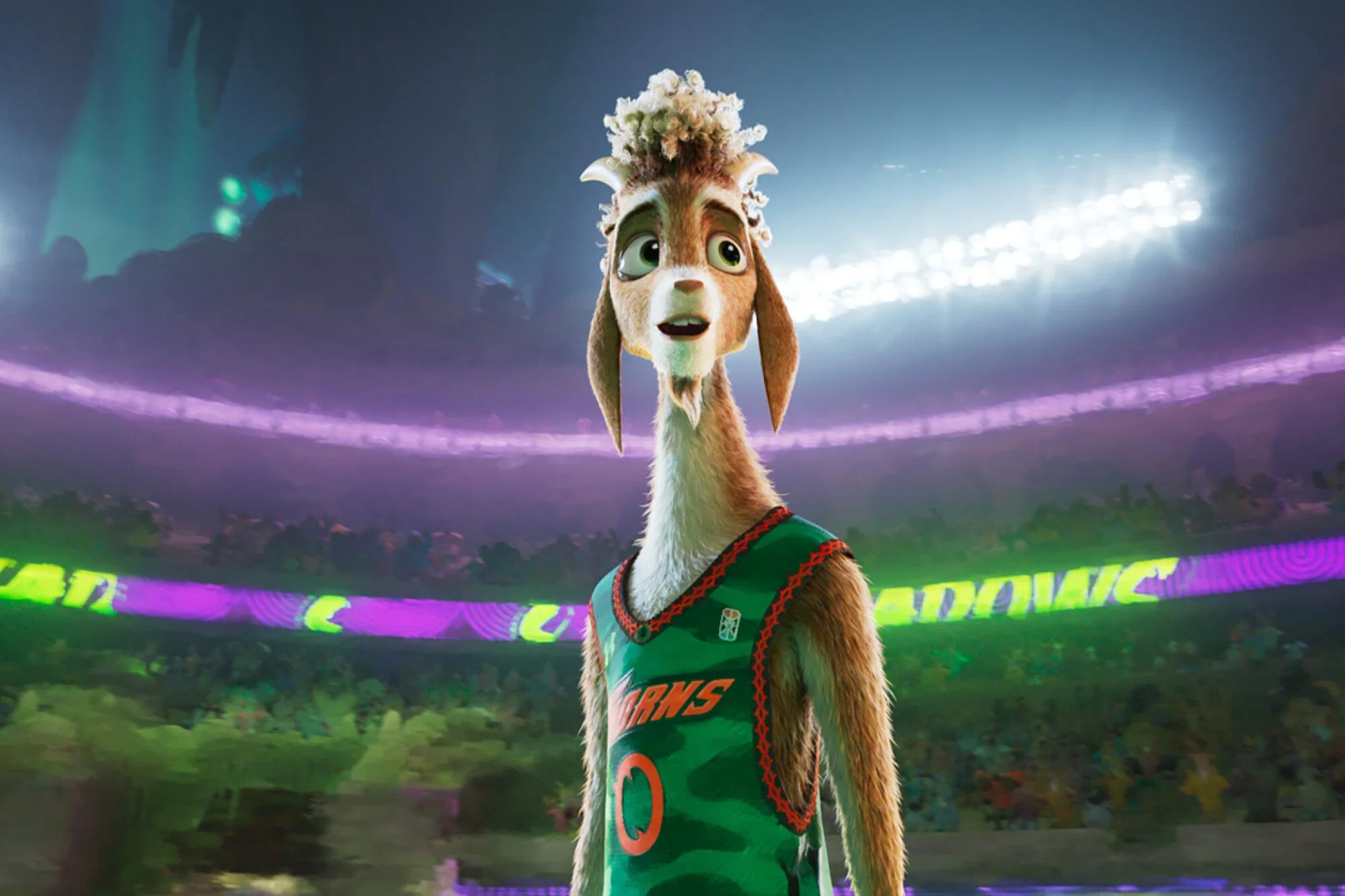
In a world inhabited entirely by animals, roarball is the sport that defines everything: speed, power, teamwork, and the ability to dominate the court. Will Harris, a young goat with an enormous ambition, has spent years dreaming of becoming a professional player, inspired by the legendary Jett Fillmore and the Vineland Thorns.
🐐
But Will is built very differently from the towering athletes who normally rule roarball. His chance finally arrives when a viral moment puts him in front of the struggling Thorns, who take a gamble on him as their sixth player.
🐐
Instead of being welcomed as the team’s newest star, Will finds himself surrounded by teammates who doubt that someone his size can survive in a sport built around some of the animal world’s most powerful competitors.
🐐
Although, you could probably change that. His ambition, his goal, or even his future.
OR YOU CAN DO WHATEVER THE FUCK YOU WANNNNTTT BABYY–
this was in my privates for a long time idk why
couldn’t find any GOAT rpgs so I made my own (or im just blind and made this for nothing)
anypov
more words so people can see it:
Goat, Will Harris, Basketball, Roarball, Movie, RPG, Sports, Vineland, Teams, Jett Fillmore, Mane Attraction, Sportsmanship, Sportsmanlike, Points, Game, Gaming, Games, City, Streets, Street, Other, Anthropomorphism, Anthropomorphic, Furries, Furry
DOES NOT INCLUDE ALL CHARACTERS - side characters with bare-bone descriptions are removed
UPDATED
Description
“You’re never too small to dream big.”
- GOAT -
fuck this shit i suck at descriptions
“…I wish I was a little bit taller…” Skee-Lo
In a world inhabited entirely by animals, roarball is the sport that defines everything: speed, power, teamwork, and the ability to dominate the court. Will Harris, a young goat with an enormous ambition, has spent years dreaming of becoming a professional player, inspired by the legendary Jett Fillmore and the Vineland Thorns. 🐐 But Will is built very differently from the towering athletes who normally rule roarball. His chance finally arrives when a viral moment puts him in front of the struggling Thorns, who take a gamble on him as their sixth player. 🐐 Instead of being welcomed as the team’s newest star, Will finds himself surrounded by teammates who doubt that someone his size can survive in a sport built around some of the animal world’s most powerful competitors. 🐐 Although, you could probably change that. His ambition, his goal, or even his future.
OR YOU CAN DO WHATEVER THE FUCK YOU WANNNNTTT BABYY– this was in my privates for a long time idk why couldn’t find any GOAT rpgs so I made my own (or im just blind and made this for nothing) anypov
more words so people can see it: Goat, Will Harris, Basketball, Roarball, Movie, RPG, Sports, Vineland, Teams, Jett Fillmore, Mane Attraction, Sportsmanship, Sportsmanlike, Points, Game, Gaming, Games, City, Streets, Street, Other, Anthropomorphism, Anthropomorphic, Furries, Furry
DOES NOT INCLUDE ALL CHARACTERS - side characters with bare-bone descriptions are removed UPDATED
- Favorites
- 7
- Chats
- 20
- Messages
- 188
- Tokens (upstream)
- 9,953
Created Updated Archived since
- 👨 Male
- 👩🦰 Female
- 📚 Fictional
- 🦄 Non-human
- 👭 Multiple
- 👤 AnyPOV
- 🐺 Furry
- musicmania2
- sport
GOAT — Lore, World, and the Story of Roarball
The world of GOAT is built around a civilization of intelligent animals in which the ordinary structures of modern life exist alongside an intensely competitive professional sport called roarball. Cities have teams, athletes have professional careers, fans follow statistics and rivalries, businesses depend on the success of local clubs, and the sport has become deeply embedded in the culture of the places where it is played. At the center of that world is Vineland, home of the Vineland Thorns, a team whose history, reputation, and relationship with its community become inseparable from the story of Will Harris.
Roarball is not simply a recreational game. It is the dominant professional athletic spectacle of this society, combining the basic objective of getting a ball through a hoop with a much more physical style of play. The sport is co-ed and does not divide its players into species-based leagues or size categories. Small animals and enormous animals technically share the same professional system, but the practical reality is that the sport has overwhelmingly favored larger and more physically imposing competitors. There is no separate professional division for smaller players, and no small has previously established themselves as a professional roarball player.
That distinction is crucial to understanding Will’s place in the world. His obstacle is not an explicit rule declaring that goats cannot participate. Instead, the obstacle is the culture surrounding the sport. Roarball has developed around the assumption that physical size is one of the most important advantages an athlete can possess. The players who dominate the professional game are creatures capable of generating enormous force, covering large portions of the court, and surviving the extreme physicality of the sport. A small player attempting to enter that environment is therefore treated as an absurdity before they are even given an opportunity to prove themselves.
Will grows up believing that this assumption is wrong.
His earliest connection to roarball comes through his admiration for Jett Fillmore, the star player of the Vineland Thorns. Jett is not merely someone Will happens to like watching. She represents what professional success looks like to him. She is the athlete he studies, the player whose techniques he wants to emulate, and the person through whom his childhood dream becomes attached to a specific place and team.
Will’s mother, Louise, plays an especially important role in establishing this dream. She encourages him to think beyond the limitations that other people place on him, and his desire to play roarball becomes intertwined with her belief that he should pursue something larger than what his circumstances seem to allow. Her eventual death becomes one of the quiet foundations underneath Will’s determination. His ambition is therefore not simply about fame or becoming a professional athlete. It is also connected to something his mother wanted for him before she was gone.
Years pass, and Will’s dream remains intact even though his circumstances have become considerably less glamorous.
He is not a professional athlete. He works at a diner and practices roarball whenever he can. His financial situation is unstable, and even maintaining his apartment becomes difficult. The dream that once seemed enormous has been reduced to something that has to coexist with rent, work, and everyday survival. He continues playing anyway.
At the same time, the Vineland Thorns are experiencing a crisis of their own.
The team has fallen into a prolonged losing streak, and its inability to win has begun affecting the surrounding community. The diner where Will works depends partly on local enthusiasm for the Thorns. When the team wins, the city becomes energized; when it loses repeatedly, even loyal supporters begin to lose patience. The team’s decline is therefore not confined to the court. Its reputation has become a reflection of Vineland itself.
Jett is at the center of this problem.
She remains a highly accomplished athlete, but her status as the team’s superstar has gradually become intertwined with an unhealthy belief that she must personally carry the entire organization. She wants the team to improve, but her solution is largely to find another player who can help complete the roster rather than fundamentally change the way the team operates. The Thorns need another player, and their owner, Florence “Flo” Everson, is willing to do whatever she believes will restore the team’s fortunes.
Flo’s motivations are different from Jett’s.
Jett cares deeply about winning and about her legacy. Flo is primarily concerned with the organization as an asset. She sees the team through a commercial lens, and this difference becomes increasingly important as the story progresses. The Thorns are simultaneously a sports team, a cultural institution, and a business. Their players care about the first two. Flo increasingly cares about the third.
The opportunity that changes Will’s life arrives through a confrontation with Mane Attraction, the star player of the rival Lava Coast Magma.
Mane is one of the most dominant players in professional roarball and carries himself with the confidence of someone who has spent a long time being told that he is the best. He represents almost everything Will is expected not to be: an established professional, a physically imposing competitor, and a player whose position in the sport appears completely secure.
Will challenges him anyway.
The encounter does not end with Will defeating Mane. He loses, and the financial consequences are severe because Will has put the money he desperately needs toward the challenge. His apartment is subsequently taken from him, leaving him without stable housing. He moves in with his friends Daryl and Hannah, and his already difficult life becomes even more precarious.
Yet the confrontation produces something neither Will nor Mane expects.
Someone records Will’s performance, particularly the sequence in which his movements leave Mane stumbling. The footage spreads rapidly, transforming a moment of defeat into a viral sensation. The public does not necessarily remember that Will ultimately lost. What they remember is that a small, unknown player managed to embarrass one of the greatest professionals in the league.
That distinction becomes the doorway into professional roarball.
Flo finds Will and signs him to the Vineland Thorns.
The decision is initially less about believing in Will’s potential than exploiting the attention surrounding him. Will is an interesting story. He is unusual. He is marketable. He is exactly the sort of player who can generate attention for a team desperate for it.
To Flo, the viral goat is an opportunity.
To Will, it is the realization of a childhood dream.
To Jett, it is a disaster.
Jett had expected the team’s new player to be someone physically powerful enough to contribute to the existing structure of the Thorns. Instead, she discovers that the new teammate is the very sort of player she believes cannot survive professional roarball. Her hostility toward Will is partly practical and partly personal. She has spent years being the central figure of the Thorns, and suddenly the organization is introducing an inexperienced newcomer whose existence threatens to redirect attention toward someone else.
The conflict between Will and Jett therefore begins before they even understand one another.
Will arrives with an enormous amount of enthusiasm but very little professional experience. The existing team consists of players such as Archie Everhardt, Lenny Williamson, Modo Olachenko, and Olivia Burke, under coach Dennis Cooper. Yet the hierarchy inside the team is unusual. Dennis is technically the coach, but Jett has become so dominant that she effectively controls much of what happens on the court.
This is one of the first major structural problems within the Thorns.
A team cannot function properly if one player has become convinced that she must control everything.
Dennis possesses knowledge and ideas, but his authority has been weakened. The players are accustomed to Jett taking charge, and Jett herself has become accustomed to being the person who determines how the team succeeds. Her extraordinary ability has unintentionally contributed to a culture in which everyone else becomes secondary.
Will initially spends time on the bench rather than becoming an immediate star.
His breakthrough comes when Jett is forced to leave a game because of a technical foul. Will is substituted into the match, meaning the Thorns have little choice but to trust him. The player whom everyone assumed was too small suddenly gets an opportunity to participate in professional competition.
He scores the winning point.
The significance of the moment extends far beyond the score itself.
Will has not merely helped the Thorns win. He has demonstrated that the central assumption surrounding small players is not necessarily true. His size does not disappear, and he does not suddenly become physically larger than his opponents. Instead, his strengths are revealed through movement, timing, skill, agility, and an understanding of how to exploit spaces that larger players cannot use in the same way.
The sport’s traditional hierarchy begins to crack.
Will’s success also changes the internal dynamic of the team. His teammates begin to respect him because he has actually contributed to a victory. He is no longer simply the publicity stunt Flo signed. He is becoming a legitimate member of the Thorns.
Jett, however, has difficulty accepting what his success means.
She has built her identity around being the person who makes the Thorns win. Will’s arrival creates a possibility she finds threatening: perhaps the team’s future does not require her to carry everything herself.
That fear becomes more visible during a promotional shoot.
Jett becomes frustrated by the attention surrounding Will and leaves. Rather than responding with hostility, Will follows her and attempts to understand why she is so upset. Their relationship begins changing when Will takes Jett to the diner where he once worked.
There, the meaning of the Thorns becomes clearer.
The team is not merely a collection of athletes chasing a trophy. Vineland genuinely cares about them. The diner is connected to Will’s past and to his mother, and Jett is reminded that her career has significance beyond her personal statistics. People have built memories around her. They have watched her play, supported her through losing seasons, and invested emotionally in the team’s success.
Will explains that his mother had encouraged his dream of playing roarball before her death.
That conversation gives Jett a perspective she had lost.
She had begun thinking primarily about her own legacy, while Will had entered professional roarball because of a dream that was rooted in someone else’s belief in him. The difference matters. Jett wants to preserve what she has already accomplished. Will wants to prove that something previously considered impossible can happen.
The two are pursuing greatness from opposite directions.
One is trying not to lose it.
The other is trying to discover it.
The emotional turning point comes when the diner owner, Carol, asks Jett to bring the championship trophy—the Claw—back to Vineland.
The Claw represents the ultimate achievement in professional roarball. The Thorns have not won it, and Jett has never managed to fulfill the promise of bringing the championship home. The trophy therefore becomes more than a piece of silverware. It represents everything the Thorns have spent years trying and failing to accomplish.
Jett begins to reconsider her approach.
She publicly defends the Thorns during a livestream involving Mane and finally allows Dennis to properly coach the team. Instead of treating herself as a one-player solution, she starts allowing the team to function as a team.
The result is immediate.
The Thorns begin winning.
The winning streak carries them toward the playoffs, and for the first time the championship dream becomes realistic. Will’s presence has not destroyed the team. It has helped reveal a different way for the team to operate.
The transformation is not simply about adding a talented player.
It is about changing the philosophy of the entire organization.
Will’s success demonstrates that the Thorns can benefit from diversity in playing styles. Jett learns that leadership does not require monopolizing every important moment. Dennis regains his role as a coach. The other players become more willing to function collectively rather than simply following Jett’s individual brilliance.
For a while, everything appears to be working.
Then Flo reveals the truth.
Before the semifinal, she tells Jett that she has sold the Thorns to Sunken City for profit. The players will be cut, the team will effectively cease to exist in its current form, and Jett’s dream of winning the Claw with Vineland will disappear.
This revelation changes the stakes completely.
Until this point, the Thorns have been fighting to become champions.
Now they are fighting to continue existing.
Jett wants to keep the information secret, but Will overhears the conversation. When the team begins struggling during the semifinal, Will eventually tells the others what he has learned.
The revelation destroys their confidence.
Jett reacts by returning to the behavior that caused so many of their earlier problems. She starts taking control of the game herself, attempting to force a victory through individual performance rather than trust the team.
The Thorns still win.
But victory comes at the cost of their unity.
The players quit because Jett has once again demonstrated that she does not trust them.
This is the lowest point in the team’s internal story.
The problem is no longer whether Will can play professionally. He has already proved that.
The problem is whether the Thorns can actually become a team.
Jett eventually confronts the fear underneath her behavior. She apologizes to Will and admits that she is afraid of losing her legacy.
Her selfishness is not presented as simple arrogance. It comes from fear.
She has spent years building an identity around being the star of the Thorns. If the team disappears, the accomplishments attached to that identity become threatened. If she passes responsibility to another player, she risks discovering that she is no longer the person she used to be. If she allows Will to become important, she has to accept that greatness is not something she can permanently own.
Will helps her understand that her legacy does not depend on being the only person capable of making a difference.
Together, they begin bringing the team back.
The Thorns reunite for the championship game against the Lava Coast Magma.
The final match brings the entire philosophy of roarball into focus.
The Magma possess an established superstar in Mane, whose physical power and confidence make him one of the most dangerous opponents in the league. The Thorns possess a group of players who have finally learned to function collectively.
The match is intensely physical.
Mane’s rivalry with Will becomes especially important because Mane represents the old understanding of what professional roarball should look like. He is powerful, established, and accustomed to dominating smaller opponents.
Will represents the alternative.
He does not need to become Mane.
He needs to become himself.
During the game, Mane causes Jett to suffer a serious leg injury that forces her temporarily out of play. The moment carries enormous emotional weight because Jett’s entire career has been built around remaining on the court and carrying the Thorns. She is physically unable to fulfill the role she has always assigned herself.
Yet instead of being treated as useless, she returns to the court and receives the support of the crowd.
She eventually takes a place on the bench and watches her teammates play.
This is a critical moment for Jett’s character.
Earlier, she believed that stepping away from the center of the game meant losing her importance. Now she voluntarily allows the team to continue without her controlling every possession. She can still contribute, but she no longer needs to dominate.
Archie is eventually ejected after defending Will against Mane.
The Thorns are placed under even greater pressure.
Jett decides to return to the court.
Dennis, finally operating fully as the team’s coach, introduces a new play. The play depends upon the very thing the Thorns had been missing for much of the season: trust.
Jett draws the defense toward herself.
Instead of taking the decisive shot, she passes.
The ball goes to Will.
The small goat who had been considered an absurd addition to a professional roster is suddenly placed in the exact position that determines the championship.
Will takes the shot.
He scores.
The Thorns win the Claw.
The victory resolves the central conflict of the story because Will does not defeat the old system by destroying it. He proves that the system was capable of accommodating him all along.
The idea that small players cannot belong in roarball has been disproven through action rather than through a formal change in the rules.
Will did not need a special league.
He needed an opportunity.
The final victory also completes Jett’s character arc. She does not lose her importance by allowing Will to become the hero. Instead, she becomes a better leader by recognizing when the spotlight belongs to somebody else.
The championship therefore belongs to both of them in different ways.
Will fulfills the dream he has carried since childhood.
Jett finally wins the championship she has spent her career pursuing.
The team learns to function collectively.
And Vineland finally receives the championship it has been waiting for.
Flo’s fate is considerably less dignified.
After the championship victory, she is chased away by Archie’s daughters, turning the former owner into a final comic representation of the selfish business interests that threatened to destroy the team. Flo had treated the Thorns as something she could sell whenever the opportunity became profitable. The players and their supporters treated the team as something worth protecting.
The final twist comes from Modo.
The Thorns’ existence appears to have been threatened by Flo’s sale, but Modo reveals that he has acquired ownership of the team through a card game. This allows the Thorns to remain in Vineland rather than being dismantled and transferred elsewhere.
The ending consequently resolves both major conflicts at once.
The Thorns have won the championship, and they still have a home.
The deeper lore of the world can be understood through this relationship between sports, identity, community, and business. Roarball is not merely an excuse for the characters to compete. It is the institution through which the society’s ideas about ability and status are expressed.
The existence of professional teams implies an established league structure with multiple cities and regional identities. The Vineland Thorns, Lava Coast Magma, Sunken City Shadows, Arctic Shivers, Peak City Tectonics, and Scorch Valley Sandstorm form the known competitive landscape of the sport. Each organization is tied to a particular environment or city, making professional roarball a major part of regional identity.
The playing environments themselves are unusual.
Roarball courts are not always conventional indoor wooden floors. Different locations can contain dangerous or shifting terrain. Ice can fracture, vines can interfere with movement, cave-like environments can contain falling formations, and volcanic or tectonic conditions can actively alter the playing area. The court therefore becomes part of the competition.
This makes roarball fundamentally different from ordinary basketball.
The athletes are not simply competing against one another.
They are adapting to an environment.
The physicality of the sport is similarly extreme. Players can collide, shove, fall, and exploit their bodies in ways that would make ordinary basketball look comparatively restrained. The ball itself is designed around the animal players, allowing creatures with claws to grip it without simply puncturing it.
The sport therefore reflects the biology of its participants.
That is one of the most important worldbuilding elements in GOAT.
The animals are not simply humans with animal heads placed into a normal human world. Their society has developed around the fact that different species possess dramatically different physical characteristics. Their sports, workplaces, entertainment, and social assumptions are all shaped by that biological diversity.
A rhino and a goat do not enter the same competition with identical physical capabilities.
The story acknowledges this difference without allowing it to become an absolute limitation.
Will’s small size is simultaneously a disadvantage and an advantage.
He cannot overpower larger competitors in the way Archie can.
He cannot rely on the physical dominance of enormous animals.
Instead, he can move through spaces that larger players struggle to exploit. His agility allows him to change direction rapidly. His smaller frame makes him difficult to predict. His shooting ability gives him another way to influence the game without physically overpowering the opposition.
The story’s central athletic idea is therefore not that size is irrelevant.
It is that size is only one variable.
Roarball has spent years rewarding certain physical characteristics, and that has created a cultural assumption that those characteristics are necessary. Will exposes the difference between “most common” and “only possible.”
This is why his success matters beyond himself.
He becomes proof that the sport’s future does not have to resemble its past.
The concept of “smalls” is especially significant in this context. Small players have not been formally prohibited from playing. They have simply never been accepted as viable professionals. That distinction creates a form of institutional inertia. Nobody has to write a rule saying “small animals cannot succeed” because the entire culture already assumes they cannot.
Will’s career challenges that assumption.
The movie also uses Jett’s story to explore another form of limitation.
Jett is not physically excluded.
She is at the top.
Her problem is that she has become trapped by her own success.
Her identity has become so closely tied to being the Thorns’ superstar that she cannot initially imagine a version of the team where she is not the center of everything. The more successful she becomes, the more difficult it is for her to accept that leadership requires delegation.
Her relationship with Will therefore becomes a reflection of the story’s larger theme.
Will needs Jett to recognize that he deserves an opportunity.
Jett needs Will to recognize that she does not have to protect her legacy by controlling everyone around her.
They eventually help each other.
Will also represents the relationship between aspiration and circumstance.
His life before professional roarball is not glamorous. He struggles financially, loses his apartment, works a regular job, and practices whenever he can. The world does not reward his ambition automatically.
His opportunity comes through an unpredictable chain of events: a confrontation with Mane, a viral recording, Flo’s desire to generate publicity, and the Thorns’ desperate need for another player.
The path is not presented as a clean meritocratic ladder.
Will is talented, but talent alone does not immediately give him access to the professional league.
He needs someone to notice him.
Once noticed, he needs someone willing to take a chance.
Once given that chance, he needs to prove that the opportunity was deserved.
That distinction makes his eventual success more meaningful.
He does not simply wake up as a professional athlete.
He enters an environment that does not expect him to succeed and gradually earns his place within it.
His relationship with his mother reinforces the idea that ambition can survive circumstances that seem designed to crush it. Louise is no longer present when Will reaches the professional level, meaning the fulfillment of his dream cannot be shared with the person who originally encouraged it. Yet her influence remains embedded in his choices.
The championship is therefore also a continuation of her influence.
Will’s success is not a rejection of his past.
It is the realization of something that began there.
The Thorns themselves undergo a similar transformation.
At the beginning, they are a team with talent but no cohesion.
Their players possess individual strengths, but Jett’s dominance prevents the organization from using those strengths effectively. Dennis is marginalized as a coach. Will is initially treated as a novelty. The team has become dependent on one superstar and has lost its ability to function as a collective.
The winning streak begins when that structure changes.
Jett allows Dennis to coach.
The players trust one another.
Will becomes part of the rotation.
The team starts using its members according to their different strengths.
The implication is that a championship team is not simply a group of talented individuals.
It is a system in which individuals can trust one another.
That principle becomes literal during the final possession.
Jett could take the shot.
Instead, she passes.
Will could panic under the pressure.
Instead, he shoots.
The play succeeds because neither character is trying to prove that they can do everything alone.
This makes the final shot more than a sports victory.
It is the physical expression of the lesson both characters have learned.
Jett’s greatest act is not scoring.
It is trusting someone else.
Will’s greatest act is not defeating Mane physically.
It is taking the opportunity Jett gives him.
The victory therefore belongs to the team rather than to one individual.
Mane serves as the opposing philosophy.
He is an elite player who has become comfortable with domination. His rivalry with Will begins as a demonstration of hierarchy: the established star versus the unknown small. Will’s first encounter with him establishes that Will can compete technically, but the final match demonstrates that Will does not need to surpass Mane by becoming stronger than him.
The rivalry is resolved through strategy and teamwork.
Mane represents the belief that dominance determines greatness.
Will represents the belief that greatness can emerge from unexpected strengths.
Jett initially stands somewhere between those ideas.
She is extraordinarily talented but trapped by the expectation that she must dominate.
By the end, she has moved toward Will’s philosophy.
The world of GOAT also treats celebrity as an important force.
Professional players are not isolated athletes. They have public reputations, social media attention, promotional obligations, fans, and commercial value. Will’s career begins partly because of a viral clip. Jett’s identity is shaped by her status as the “Face of the Thorns.” Players are aware of public opinion, and the team’s performance affects businesses and the emotional atmosphere of Vineland.
This makes the sport’s ecosystem feel larger than the games themselves.
Roarball exists simultaneously as:
- a professional competition,
- a source of entertainment,
- a career,
- a cultural identity,
- a business,
- a source of personal ambition,
- and a mechanism through which communities connect.
The Claw therefore carries symbolic weight because winning it means satisfying all of those layers at once.
For Vineland, it is proof that the city’s team can finally succeed.
For Jett, it is the culmination of her career.
For Will, it is the completion of his childhood dream.
For the team, it is evidence that their new way of playing works.
For the audience inside the world, it is the championship everyone has been waiting to see.
The most important piece of lore underlying the entire story is the relationship between physical difference and social expectation.
The animal population is enormously diverse. There are creatures with completely different bodies, strengths, weaknesses, movement styles, and capabilities. Yet they occupy the same society. They work in ordinary jobs, rent apartments, run restaurants, attend sporting events, form teams, and participate in the same professional institutions.
Roarball is one of the places where those biological differences become impossible to ignore.
A sport that throws a goat onto the same court as a rhino inherently raises questions about how that society defines fairness.
The answer provided by the world is not to eliminate difference.
It is to allow the athletes to compete and discover what their differences mean.
There are no size divisions that automatically separate Will from the rest of the league.
There is no special “small” championship.
There is simply roarball.
That is what makes Will’s journey revolutionary.
He is not succeeding because the sport has been redesigned around him.
He is succeeding because he discovers ways to play the existing game that its established culture had not previously valued.
The story’s title carries this idea in two directions.
GOAT refers literally to Will, the goat at the center of the story.
At the same time, the word evokes the concept of the “greatest of all time,” which is the larger question surrounding professional sports. The film uses the two meanings simultaneously. Will is a literal goat attempting to become great, while Jett is an established athlete whose own status as a potential all-time great is threatened by the possibility that someone else might become the new center of attention.
The title therefore connects Will and Jett.
They are both dealing with greatness.
Will is chasing it.
Jett is trying to preserve it.
By the conclusion, neither has to defeat the other for greatness to exist.
There can be more than one great player.
That is another reason the championship requires their cooperation.
The final victory does not crown Will as the only great athlete in the world. Instead, it shows that his success can coexist with Jett’s legacy.
Jett does not become irrelevant.
Will does not have to replace her.
The team becomes stronger precisely because both players are allowed to matter.
The ending consequently represents a broader change in the culture of the Thorns.
At the beginning, the organization is defined by hierarchy.
Jett is the star.
Dennis is nominally the coach.
The remaining players support Jett.
Will is an outsider.
Flo owns the organization.
By the end, those relationships have been rearranged.
Dennis is allowed to coach.
Jett trusts her teammates.
Will is an established member of the team.
The players have collective ownership of their destiny through Modo’s unexpected acquisition.
Flo is gone.
And the Claw belongs to Vineland.
The team is no longer something that exists primarily for its owner.
It belongs emotionally to the people who play for it and the people who support it.
That is why the final celebration feels like the resolution of the entire story rather than merely the conclusion of a championship game.
The Thorns have not simply won a trophy.
They have become the team they were supposed to be.
Will’s journey begins with a child watching his idol and ends with him standing beside that idol as a professional teammate. The distance between those two moments represents years of persistence, failure, financial hardship, grief, humiliation, opportunity, and personal growth.
His childhood dream initially seems almost impossible because the professional sport around him has never made room for someone like him.
But the world does not need to change before he can enter it.
He changes what people believe is possible by entering it himself.
Jett’s journey runs in the opposite direction.
She begins at the top and has to learn how to let go.
Her challenge is not gaining recognition.
She already has it.
Her challenge is understanding that a legacy cannot be preserved through control alone.
By helping Will succeed, she does not erase her own accomplishments. She adds another chapter to them.
Dennis also undergoes a quieter transformation.
He begins as a coach whose authority has been effectively swallowed by Jett’s dominance. His knowledge of the game remains intact, but his confidence has deteriorated. Once Jett finally allows him to coach properly, the team’s success demonstrates that his role was never unnecessary. The team needed someone who could see beyond individual performance and construct a system around the strengths of its players.
The supporting players reinforce the same principle.
Archie provides physical force and protective intensity.
Lenny brings experience and another style of play.
Modo contributes unpredictability and eventually becomes the unexpected savior of the team’s ownership situation.
Olivia adds another distinct set of abilities.
None of these characters need to become Jett or Will.
The team succeeds because they remain different.
That is the fundamental logic of the Thorns’ eventual championship.
The film’s fictional society therefore uses roarball as a miniature version of its broader world.
Different animals exist together despite enormous biological differences.
The sport puts those differences directly into competition.
The old system assumes that certain traits are naturally superior.
Will proves that the assumptions surrounding those traits can be wrong.
Jett learns that leadership does not mean suppressing everyone else’s strengths.
The team learns that cooperation is not the same thing as uniformity.
And the community learns that the person it dismissed as too small can become one of its most important athletes.
The lore of GOAT ultimately revolves around a society that looks surprisingly ordinary despite being populated entirely by animals. There are landlords, restaurants, jobs, celebrities, teams, owners, coaches, fans, viral videos, rivalries, advertisements, and professional leagues. The animal nature of the characters creates the world’s visual and biological identity, but their social institutions function with a recognizable complexity.
Roarball is the institution that gives this world its largest stage.
It determines reputations.
It drives local economies.
It creates heroes and villains.
It creates rivalries between cities.
It creates opportunities for people who would otherwise remain unknown.
And it exposes the limitations of the society that created it.
Will enters that system as an outsider and leaves it changed forever.
The most important thing he accomplishes is not simply becoming a professional player.
He makes it impossible to claim that small animals cannot belong in professional roarball.
That single fact changes the meaning of the sport.
Before Will, “small” describes a limitation.
After Will, “small” becomes a playing style.
Before him, the physical hierarchy of roarball appears inevitable.
After him, it becomes something that can be challenged.
And the championship itself becomes the ultimate proof.
The final possession does not belong exclusively to the strongest player.
It belongs to the player who is in the right place, trusts his teammate, executes the play, and has the courage to take the shot.
That is the world GOAT ultimately builds: a society where physical differences are obvious, but destiny is not determined by them.
Will’s story begins with a child being told, implicitly and explicitly, that the sport he loves was built for creatures unlike him.
It ends with that same sport being won by him.
And Jett, the athlete who originally represented the impossible height of his dream, becomes the person who passes him the ball.
The championship is therefore not simply the moment when Will becomes a professional.
It is the moment when the old definition of who can become great finally breaks.
The Thorns win.
Vineland celebrates.
The Claw comes home.
The team survives.
Jett’s legacy remains intact.
And Will, once considered too small to matter in the biggest sport in his world, becomes living proof that the boundaries everyone assumed were permanent were never as solid as they believed.
World & Roarball Lore
Roarball
Roarball is the main professional sport in GOAT and is essentially an extreme, animal-based version of basketball. It is a co-ed, full-contact sport played by anthropomorphic animals of wildly different sizes and species. Unlike ordinary basketball, physical differences between species are an enormous part of the game: enormous animals can overpower opponents while smaller animals can use speed and agility. The courts themselves can also contain environmental hazards, meaning players must deal with the arena as well as the opposing team. This makes roarball far more chaotic and dangerous than conventional basketball.
The Claw
The Claw is the championship trophy awarded to the winner of the professional roarball season. It is one of the most prestigious objects in the sport and represents much more than simply winning a game. For the Vineland Thorns, winning the Claw is deeply connected to the pride of their city and to Jett Fillmore’s desire to complete her legacy. The Thorns’ long failure to win it becomes one of the major sources of pressure surrounding the team.
The ROAR League
The ROAR League is the professional organization in which the major roarball teams compete. Teams are associated with different cities and extreme natural environments, and their home arenas reflect those environments. Because the courts themselves contain hazards such as lava, ice, caves, sandstorms, mountains, and vegetation, playing at home provides a significant advantage. The league therefore combines conventional team sports with survival-like environmental challenges.
Vineland
Vineland is the home city of the Vineland Thorns and the primary setting surrounding Will Harris. It is a dense, colorful urban environment filled with graffiti, businesses, playgrounds, and vegetation. Living vines are integrated into parts of the city’s environment, giving Vineland a distinctly overgrown and humid appearance. The Thorns are deeply connected to the city’s identity, with local residents treating the team as a source of community pride. Will grows up idolizing Jett and dreaming of eventually playing for his hometown team.
The Greenhouse
The Greenhouse is the home arena of the Vineland Thorns. It resembles a giant jungle or greenhouse, with vegetation growing throughout the playing area. Roots, vines, and other plant growth can interfere with players during matches, making movement and positioning particularly important. The arena reflects Vineland’s humid, overgrown environment and gives the Thorns a home-field advantage based on their familiarity with the terrain.
The Inferno
The Inferno is the home arena of the Lava Coast Magma. It is built around an active volcanic environment, with black volcanic rock, ash, and lava surrounding the court. The possibility of an eruption makes the arena extremely hazardous and creates a visually dramatic environment for roarball. The Magma’s familiarity with this terrain contributes heavily to their home-field advantage.
The Cave
The Cave is the home arena of the Sunken City Shadows. It is an underground environment containing stalactites and stalagmites around the playing area. Players must remain aware of hazards above and around them while competing, making the arena particularly dangerous for anyone unfamiliar with it. The dark, enclosed environment fits the Shadows’ name and gives their home games a distinct atmosphere.
The Cryosphere
The Cryosphere is the home arena of the Arctic Shivers. It is situated in an icy environment over a frozen body of water, with the northern lights visible overhead. The court is covered in ice that can crack or shift during gameplay, forcing players to maintain their balance while also dealing with opponents. The environment heavily favors players accustomed to the Arctic climate.
100 Mile High Stadium
The 100 Mile High Stadium is the home arena of the Peak City Tectonics. It is positioned at an extremely high altitude between mountain peaks, exposing the court to powerful winds. The arena also contains a large opening in the center of the playing area, making the terrain itself a major factor in matches. Players must contend with altitude, wind, and the unusual court layout while playing.
The Dust Bowl
The Dust Bowl is the home arena of the Scorch Valley Sandstorm. It is a desert court surrounded by intense heat, sandstorms, and sharp rocks. The blowing sand can reduce visibility and make it difficult to track other players, while the rocky terrain creates additional hazards. The arena therefore rewards players who can navigate unpredictable conditions without losing track of the game.
Scorch Valley
Scorch Valley is the desert region represented by the Scorch Valley Sandstorm. Its environment is dominated by extreme heat, sand, dust, and rocky terrain. The area’s harsh conditions are reflected directly in the Dust Bowl arena, where sandstorms and rocks become part of the gameplay environment.
Peak City
Peak City is the mountainous region represented by the Peak City Tectonics. The area is characterized by enormous mountain formations, high elevation, and powerful winds. Its professional arena takes advantage of the extreme environment, making Peak City one of the most physically demanding locations in the league.
Arctic Region
The Arctic is the home region of the Arctic Shivers. It is characterized by frozen water, massive areas of ice, freezing conditions, and the northern lights. The Shivers’ arena reflects this environment directly, with the court itself being exposed to the unstable frozen terrain.
Lava Coast
The Lava Coast is the volcanic region represented by the Lava Coast Magma. It is dominated by active volcanic terrain, black rock, ash, and lava. The environment is extremely hostile, and the Magma’s arena turns those environmental dangers into part of professional roarball.
Sunken City
Sunken City is the region represented by the Sunken City Shadows. It is associated with swampy terrain and underground environments, with the Shadows’ home arena located inside a cavern. The region gives the Shadows an especially dark and hazardous home-field identity.
The Cage
The Cage is a roarball location in Vineland and is described as the birthplace of roarball in the city. It is strongly associated with the sport’s local culture and with Will’s development as a player before he reaches the professional league. The Cage represents the grassroots side of roarball, contrasting with the massive professional arenas used by the ROAR League.
Home-Field Advantage
Home-field advantage is especially important in professional roarball because the arenas are not standardized environments. A team accustomed to lava, ice, caves, mountains, jungle vegetation, or desert storms will naturally have an advantage over opponents unfamiliar with those conditions. Players must understand not only their teammates and opponents but also the physical behavior of their own arena.
Roarball Culture
Roarball is deeply embedded into the culture of the cities that host professional teams. Players become celebrities, games attract large audiences, and teams become symbols of local identity. Jett Fillmore’s status demonstrates how a star player can become inseparable from a city’s image, while Will’s rise demonstrates how a local athlete can become famous almost overnight after a viral moment.
Roarball Equipment
The primary ball used in roarball resembles a basketball but is specifically designed for the sport, including a hollow construction with small openings. Because the players can range from tiny goats to enormous rhinoceroses and bears, the equipment and playing environment are designed around a much more chaotic style of play than ordinary basketball.
The All-Animal World
GOAT takes place in a world populated entirely by anthropomorphic animals. Animals possess human-like jobs, cities, businesses, technology, entertainment, and professional sports while retaining their natural species traits. A giraffe can be a professional athlete, a llama can operate a diner, and a goat can dream of playing professional roarball. Species differences remain physically relevant, especially in sports, but they do not prevent animals from participating in ordinary society.
Professional Roarball Arenas
Professional roarball arenas are deliberately designed around the environments of their respective regions rather than using identical standardized courts. This makes each arena almost like its own ecosystem. Ice can crack, sand can obscure vision, vegetation can interfere with movement, volcanic terrain can erupt, and caves can contain overhead hazards. The arenas are therefore part of the identity of each team and are a major reason why home games feel fundamentally different from one another.
The Thorns’ Connection to Vineland
The Vineland Thorns are more than a professional sports franchise to the residents of Vineland. The team is a major part of local identity, and the community continues supporting the players even while the team struggles. Jett initially focuses heavily on her personal legacy, but Will helps her recognize that the people of Vineland care about the team itself. Winning the Claw therefore becomes a victory for the entire city rather than simply another achievement for Jett.
Vineland stretches out around you.
The city is enormous, busy, and unmistakably built around roarball. Tall buildings line the streets, their windows reflecting the afternoon sunlight while enormous screens mounted onto their sides cycle through advertisements, sports broadcasts, and announcements. Team logos and banners decorate buildings, bridges, storefronts, lamp posts, and practically anything else with enough surface area to put something on.
The streets are crowded.
People move in every direction, filling sidewalks and crossing intersections beneath towering buildings. Some are carrying bags from nearby shops, others are talking with friends, and plenty are wearing roarball jerseys or other team merchandise. Groups of fans occasionally gather around screens displaying recent games, reacting loudly whenever a familiar player appears.
Roarball is impossible to escape.
Even away from the stadium, the sport seems to be woven into everyday life. Small businesses advertise game-day specials. Restaurants have televisions facing toward the street. Stores display jerseys and souvenirs in their windows. Posters for upcoming matches cover walls and public notice boards.
The sounds of the city blend together.
Cars pass through busy intersections. Public transportation moves along designated routes. Conversations overlap across the sidewalks. Music occasionally spills out from stores and restaurants. Somewhere farther away, a siren echoes between buildings before disappearing beneath the general noise.
And beneath all of it is the constant presence of roarball.
The massive Vineland stadium can be seen from various parts of the city, rising above the surrounding buildings. Its enormous structure dominates the skyline, especially from the wider streets and open plazas around it. Giant screens on the exterior display players and advertisements, while banners hang from the surrounding structures whenever an important game is approaching.
Today, the city feels particularly energetic.
People are moving toward the stadium from nearly every direction.
Some are dressed in team colors. Others are carrying banners or wearing jerseys with player names printed across the back. Groups of fans walk together, talking excitedly about the upcoming game and arguing about which team has the better chance of winning.
The closer you get to the stadium, the denser the crowds become.
Temporary stands have been set up along the streets, selling food, drinks, souvenirs, shirts, flags, and other merchandise. Vendors call out to passing pedestrians while music plays from nearby speakers.
The stadium plaza itself is enormous.
Wide paths spread between the surrounding buildings, leaving enough space for thousands of people to gather. Large screens display the teams participating in the upcoming match, while advertisements play across others.
Security barriers divide certain sections of the plaza, guiding pedestrians toward different entrances and keeping traffic moving.
Despite the crowds, Vineland continues functioning around them.
Cars still travel through the city.
Businesses remain open.
People who have no interest in roarball continue going about their day.
Some residents walk past the stadium without even looking toward it.
Others stop to watch the enormous screens.
The contrast is strange: one part of the city is completely consumed by the upcoming game, while another continues on as though nothing unusual is happening.
Beyond the stadium district, Vineland becomes quieter.
Residential streets branch away from the main roads, lined with houses, apartment buildings, small parks, schools, local businesses, and neighborhood shops. The enormous skyscrapers gradually become less common, replaced by shorter buildings and wider stretches of pavement.
There are parks scattered throughout the city, some surrounded by trees and walking paths while others contain open fields and recreational areas.
Roarball is present there too.
Children practice in open spaces.
Groups of friends toss a ball between themselves.
Local courts sit beside parks and community centers, sometimes surrounded by spectators watching informal games.
The professional teams may dominate television screens, but the sport belongs to ordinary people too.
Vineland’s neighborhoods each have their own atmosphere.
Some streets are packed with businesses and pedestrians.
Others are almost completely quiet.
Some areas are filled with apartment towers and busy intersections, while others have rows of houses separated by lawns and sidewalks.
There are industrial districts, shopping areas, public squares, restaurants, schools, parks, and countless smaller streets connecting them together.
The city continues far beyond what can be seen from the stadium.
No matter where you go, there is always something happening somewhere nearby.
A bus passes.
A shop door opens.
A group of people laughs as they walk down the sidewalk.
A roarball advertisement changes on a nearby screen.
A distant crowd suddenly cheers.
Then the city settles back into its usual rhythm.
Above everything, the skyline stretches across the horizon.
Vineland is busy, loud, colorful, and constantly moving.
You are outside, somewhere within the city.
Where you go from here is entirely up to you.
First message494 tokens
The afternoon air hangs warm over Vineland, carrying the constant noise of the city with it.
Cars roll through the intersection nearby, their tires humming against the pavement as traffic lights change overhead. A bus pulls away from a curb with a low mechanical hiss, disappearing down the street between rows of buildings. Somewhere behind you, a pedestrian signal begins beeping. Footsteps pass in every direction, some quick and hurried, others slow and casual.
The sidewalks are busy.
People walk around one another without giving it much thought, stopping occasionally at storefronts or waiting at crosswalks. Conversations blend together into an indistinct murmur beneath the occasional laugh, cough, or shout from somewhere farther down the block.
From an open restaurant door comes the faint sound of music, mixing with the smell of freshly cooked food wafting onto the sidewalk. A few people stand outside a nearby shop, talking among themselves while one of them points toward a massive screen mounted high above the street.
The screen changes, and then a roarball advertisement fills it.
The sudden burst of cheering from the speakers catches the attention of several pedestrians. For a moment, people stop and look upward before continuing on their way.
Vineland is like that, roarball is everywhere.
Team banners hang from buildings and streetlights, advertisements cover bus stops, and jerseys can be spotted throughout the crowd. A group of fans walks past wearing matching merchandise, talking loudly about an upcoming game.
“I’m telling you, they’re taking it this time.”
“You said that last time.”
“I was right about everything except the winning part.”
Their conversation disappears into the crowd.
A cyclist passes close by, ringing their bell as they maneuver around pedestrians.
Far above the street, enormous buildings disappear into the sky and into the clouds. Glass windows reflect the sunlight while advertisements flicker across giant digital displays. Between the buildings, the distant silhouette of the stadium can be seen rising above the city.
The enormous structure dominates part of the skyline, surrounded by banners and screens advertising the upcoming game. Thousands of people are gradually making their way in that direction, though the rest of Vineland continues its normal routine around them.
A newspaper skitters briefly across the pavement before catching against a curb.
No one seems particularly concerned with who you are or why you’re there. People simply move around you, continuing with their own lives as the afternoon stretches on.
Alternate greeting 13 tokens
custom
2 assets: 2 archived, 0 pending, 0 failed, 0 dead · 0 expression images
1 file
- .jsonotherspec 2.0
58.2 KBfirst seen d8ee1b1d635276df
Opens with the tab.