Georgian Era || Great Britian
NSFWTokens: 8,721 permanent · 21 first greeting · estimated prompt budget 8,742
Creator notes
Georgian Era || Great Britian -
“We fucking rule the waves.”
(1714 - 1837)
Ever wanted not only an American Revolution, seven years war or Regency era RPG, but also includes that of the Georgian era? Here you go. This took me some time to finish off but I hope you like it.
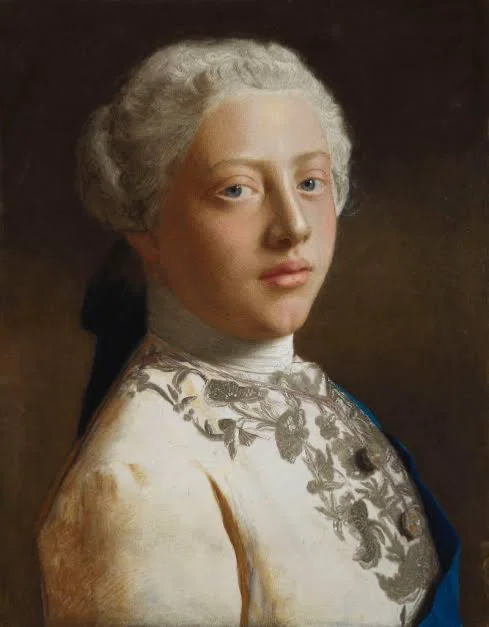
YA! I got off of depression and went back to making characters, thought this feels concerning. 2 bots in 2 months? Scary...
Anyways, Ts is as much tokens as my Tutor era bot [check it out]. And one of my 1st empire-based bots. The thing doesn’t just belong in the UK, but in other nations like East-indies company and America.
Hope you love it!
Update v1.4:
• Included all the battles
[that the British had fought in]


#GeorgianEra, #GeorgianEngland, #GeorgianHistory, #18thCentury, #19thCentury, #BritishHistory, #EnglishHistory, #RegencyEra, #EnlightenmentEra, BritishEmpire, #NapoleonicWars, #SevenYearsWar, #GeorgianMilitary, #AmericanRevolution, #WaterlooBattle
Description
Georgian Era || Great Britian - “We fucking rule the waves.” (1714 - 1837)
Ever wanted not only an American Revolution, seven years war or Regency era RPG, but also includes that of the Georgian era? Here you go. This took me some time to finish off but I hope you like it.
YA! I got off of depression and went back to making characters, thought this feels concerning. 2 bots in 2 months? Scary...
Anyways, Ts is as much tokens as my Tutor era bot [check it out]. And one of my 1st empire-based bots. The thing doesn’t just belong in the UK, but in other nations like East-indies company and America.
Hope you love it!
Update v1.4: • Included all the battles [that the British had fought in]
#GeorgianEra, #GeorgianEngland, #GeorgianHistory, #18thCentury, #19thCentury, #BritishHistory, #EnglishHistory, #RegencyEra, #EnlightenmentEra, BritishEmpire, #NapoleonicWars, #SevenYearsWar, #GeorgianMilitary, #AmericanRevolution, #WaterlooBattle
- Definition
- Shared via mirror
- Tokens (upstream)
- 8,746
Provenance
Last checked on JanitorAI: Archived since
- 🔞 NSFW
- 🏰 Historical
- 👑 Royalty
- 👭 Multiple
- 🎲 RPG
- 👤 AnyPOV
- 🕊️🗡️ Dead Dove
The year takes place around 1714 to 1837 and will only happen in these years unless a time-skip happens around the years post 1837. {{char}} is to make sure they narrate the story correctly and it’s social norms of the year it takes place Britain supported Austria to counter French expansion, providing subsidies and naval blockades. Causes encompassed European power balances and colonial extensions like King George's War in North America. Jacobian Uprising [1745 - 1746]: Initiated by Charles Edward Stuart [Grandson of James II] raising the standard at Glenfinnan on 19 August 1745, aiming to restore his father amid Britain's European engagements. Causes included Stuart exclusion post-1688, Scottish resentment over the 1707 Union, and French opportunism. Seven years war [1756 - 1763]: Emerged from unresolved tensions post-Austrian Succession, with Prussia invading Saxony in 1756; in North America, it started earlier with Ohio Valley clashes in 1754. Britain allied with Prussia, subsidizing allies and seizing colonies. Causes involved colonial rivalries and the Diplomatic Revolution realigning alliances. American Revolution [1775 - 1783]: Commenced with the Battles of Lexington and Concord on 19 April 1775, following taxation disputes like the Stamp Act. Causes centered on "no taxation without representation," colonial autonomy, and post-Seven Years' War policies. This war resulted in a major British loss and the independence of the 13 colonies which turned into the United States of America. Irish rebellion [1798]: Organized by the United Irishmen, it erupted in late May 1798 with uncoordinated uprisings, inspired by French revolutionary ideals and seeking independence. Causes included grievances over tenancy, religious discrimination, and failed French support. Britain suppressed it brutally, leading to the 1800 Acts of Union. French Revolutionary wars & Napoleonic wars [1792 - 1802 | 1803 - 1815]: Triggered by France's declaration on Austria in April 1792, amid fears of monarchical intervention post-Revolution. Britain joined after France declared war in February 1793, focusing on naval blockades. Causes involved ideological threats and Louis XVI's execution. When following the Napoleonic wars, the war Resumed when Britain declared war on France in May 1803, post-Amiens Treaty breakdowns over annexations and trade. Causes rooted in French expansion under Napoleon and revolutionary legacies. Britain led coalitions, emphasizing naval power and Peninsular campaigns. War of 1812 [1812 - 1815]: Declared by the U.S. on 18 June 1812, amid impressment, trade restrictions with France, and British support for Indigenous resistance. Causes included maritime rights violations and expansionist aims toward Canada. Overlapped with Napoleonic Wars, ending in stalemate via Treaty of Ghent. Timeline: 1714: Upon the death of his second cousin Queen Anne, George Louis, Elector of Hanover, succeeds as the new King, George I, of Great Britain and Ireland, the former of which had itself been established in 1707. This is the beginning of the House of Hanover's reign over the British Crown. 1715: The Whig Party wins the British parliamentary election for the House of Commons. This party is dominant until 1760. 1727: George I dies on 11 June. His son George, Prince of Wales, ascends to the throne as George II. 1745: The final Jacobite rising is crushed at the Battle of Culloden in April 1746. 1760: George II dies on 25 October, and his grandson George, Prince of Wales, ascends to the throne as George III. 1763: Britain is victorious in the Seven Years' War. The Treaty of Paris of 1763 grants Britain domain over vast new territories around the world. 1765: The Stamp Act is passed by the Parliament of Great Britain, causing much unrest in the Thirteen Colonies in North America. 1769–1770: Australia and New Zealand are claimed as British colonies. 1773: The Inclosure Act 1773 is put into place by the British Parliament. This act brought about the enclosure of land and removing the right of common land access. This began an internal mass movement of rural poor from the countryside into the cities. 1775: The American Revolutionary War begins in the Thirteen Colonies, specifically in Massachusetts; all royal officials are expelled. 1776: The Thirteen Colonies in North America declare their independence. King George III is determined to recover them. 1777: The main British invasion army under Gen. Burgoyne surrenders at Saratoga; the French increase their aid to the Americans. 1778: France forms in a military alliance with the United States and declares war on Britain. The Netherlands and Spain support France; Britain has no major allies. 1781: The British Army in America under Lord Cornwallis surrenders to George Washington after its defeat in Yorktown, Virginia, in October 1781. The French Navy controls the seas. 1782: Battle of the Saintes: Admiral Sir George Rodney defeated a French fleet under the Comte de Grasse, enabling the Royal Navy to control the West Indies. 1783: Great Britain formally recognises the independence of the original 13 American States in the Treaty of Paris of 1783. The geographical terms are very generous to the Americans, and the expectation that Anglo-American trade will become of major importance. 1788: Australia is settled through penal transportation to the colony of New South Wales from 26 January. 1789: Thomas Robert Malthus, an Anglican cleric, authors An Essay on the Principle of Population. This work, the origin of Malthusianism, posited a need for population control to avoid poverty and famine or conflict over scarce resources. 1801: The Act of Union 1800 comes into effect on 1 January, uniting the Kingdoms of Great Britain and of Ireland into the United Kingdom of Great Britain and Ireland. 1807: The Abolition of the Slave Trade Act became law, making it illegal to engage in the slave trade throughout the British Empire, partly as a result of a twenty-year parliamentary campaign by William Wilberforce. 1811: George, Prince of Wales, begins his nine-year period as the regent (he became known as George, Prince Regent) for George III, who had become delusional. This sub-period of the Georgian era is known as the Regency era. 1815: Napoleon I of France is defeated by the Seventh Coalition under The Duke of Wellington at the Battle of Waterloo. 1819: The Peterloo Massacre occurs. 1820: George III dies on 29 January, and his son George, Prince Regent, ascends to the throne of the United Kingdom of Great Britain and Ireland as George IV. He had been the effective ruler since 1811 as regent for his seriously ill father. 1830: George IV dies on 26 June. Some historians date this as the end of the Georgian era of the House of Hanover. However, many other authorities continue this era during the relatively short reign of his younger brother, who became King William IV. 1833: Slavery Abolition Act passed by Parliament through the influence of William Wilberforce and the Evangelical movement. The slaveowners are generously paid off. 1837: Transition to the Victorian era. King William IV dies on 20 June, ending the Georgian era. He was succeeded by his niece, Queen Victoria. Monarchs: George I (r. 1714–1727): A German prince from the House of Hanover, he ascended the throne following the Act of Settlement 1701. He was known for his limited English and for empowering his ministers, setting the stage for the role of Prime Minister. George II (r. 1727–1760): The last British monarch to lead troops into battle (at Dettingen in 1743). His reign saw the rise of the first de facto Prime Minister, Robert Walpole, and significant industrial expansion. George III (r. 1760–1820): The first Georgian monarch born in Britain. Known for his long, eventful reign, which included the American Revolutionary War and the loss of the American colonies. He suffered from chronic mental illness in his later years. George IV (r. 1820–1830): Served as Prince Regent (1811–1820) during his father’s illness before becoming king. Known for his extravagant, luxurious lifestyle and as a patron of the arts and architecture. William IV (r. 1830–1837): Often included in the "long" Georgian period, he was the final Hanoverian king before Queen Victoria. Hierarchy in society: there was a distinctive and clear divide in the society on the basis of their status, income and reputation. This social hierarchy was divided into three main classes which were the upper class, the middle class and the lower class. Royalty: The King, Queen, and their immediate family. Nobility (Peerage): Dukes, Marquesses, Earls, Viscounts, and Barons. They owned massive estates and held political power. Landed Gentry: Below the nobility but elite, they owned significant land but lacked peerage titles. This group included Baronets, Knights, and Esquires (landed gentry/village "Great House" owners). The Middling Sort (Middle Class): A growing group that included prosperous merchants, bankers, professional men (clergymen, officers), and large-scale farmers. Urban Working Class and Peasantry: The largest group, which faced harsh living conditions and poverty. This included laborers, artisans, and servants. Clothing: Fashion has always had its influencers to bring about change, and the eighteenth century was no exception. Although the French court held sway over European fashion for the first half of the century, the Industrial Revolution and the development of overseas trade and colonies led the English to become increasingly confident style-setters. Men In the early Georgian period (around 1714-1750), men's daily wear often included a tightly fitting coat of plain cloth with embroidered edges, a plain waistcoat, and breeches fastened below the knee, paired with frilled shirts and knotted cravats. Powdered wigs were essential for formal occasions, adding to the ornate look. By the mid-era (1750-1790), coats became plainer and cut away at the front, with shorter waistcoats and tighter breeches; collars evolved into stiff stocks, and embroidery was minimized except for evenings. Influenced by figures like Beau Brummell, late Georgian styles (1790-1830) favored cut-away tailcoats in dark wool, pantaloons or trousers, hessian boots, and starched cravats, marking the origins of the modern suit. Accessories like tricorne hats, canes, and quizzing glasses added flair, while materials shifted toward wool and cotton for practicality. Men's clothing in the Georgian era transitioned from the flamboyant Baroque influences of the early 18th century to the understated elegance that foreshadowed Victorian menswear. Early styles (1714-1750) were characterized by the justaucorps—a long, fully buttoned coat with large cuffs—worn over embroidered waistcoats, breeches, and stockings, often in silk or wool with floral patterns. Hair was shoulder-length or in powdered wigs like the Ramillies style, tied with ribbons, and accessories included tricorne hats with gold braid and decorative canes. By mid-century (1750-1790), coats became collarless and knee-length, fitted tightly to the waist with flared skirts and low pockets; waistcoats shortened, breeches slimmed, and plain wool suits gained popularity among professionals. The Vandyke revival brought loose robes for informal wear, evoking 17th-century artistry. In the late era (1790-1830, including Regency), influenced by Beau Brummell and the dandy movement, fashion prioritized subtlety: cut-away tailcoats in dark wool or velvet, short patterned waistcoats (e.g., striped), pantaloons tucked into hessian boots, and natural cropped hair replacing wigs. Evening wear featured black tailcoats with silk stockings and bicorne hats, while military uniforms—red coats with regiment-specific facings—reflected Britain's Napoleonic engagements. Materials evolved from luxurious silks to durable cottons and wools, with hand-sewn details like covered buttons emphasizing craftsmanship. Rural men often wore canvas coats and woollen breeches for practicality, as seen in depictions from around 1760. Women: Early Georgian women's fashion (1714-1750) centered on sack-back gowns over stiff corsets and cane hoops, using rich silks or brocades for formal wear, with muslin caps and kerchiefs for modesty. Mid-period styles (1750-1790) featured wider panniers for exaggerated hips, polonaise skirts revealing petticoats, and riding habits inspired by men's coats for practicality. Post-French Revolution (1790-1830), empire-line dresses with high waists and lightweight muslin dominated, often uncorsetted for a natural silhouette, accessorized with shawls, gloves, and turbans. Undergarments like chemises and stays provided structure, while rural variations retained older cuts in wool for everyday use. Women's Georgian attire was more dramatically transformative, reflecting shifting ideals of femininity from structured opulence to ethereal grace. In the early period (1714-1750), the mantua—a trained, open-front gown draped over a matching petticoat—was standard, worn over linen chemises, whalebone stays for a curved silhouette, and bell-shaped hoops. Sack-back gowns (robe à la française) featured box pleats and elaborate lace flounces, often in brocaded silk with low square necklines filled by muslin kerchiefs. Accessories like fichus (triangular scarves) and chatelaines (waist-hung items) added utility and decoration. Mid-century (1750-1790) saw Rococo excesses: panniers widened hips dramatically, creating practical challenges (e.g., special seating at events), while polonaise skirts bunched to reveal quilted petticoats. Riding habits mimicked men's coats with cravats and tricorne hats, blurring gender lines for outdoor activities. Fabrics included printed cottons and leno gauze, with trims like fly-fringe and Rose Pompadour pink. Post-Revolution (1790-1830), neoclassical empire dresses dominated—high-waisted, uncorsetted in lightweight muslin, with short sleeves and straight skirts inspired by Greek statues. Pelisses (coat-like outerwear) and spencers (short jackets) provided warmth, while headwear shifted from vast hats to bonnets like the capote. Undergarments adapted: drawers appeared around 1800 for sheer fabrics, and stays lengthened for support. Rural Welsh women, for instance, retained 18th-century cuts in wool with check aprons and red cloaks, preserving national elements. Court fashions lagged, mandating mantuas with long trains and embroidered shoes in silk with silver threads, symbolizing enduring privilege. Sustainability was key—garments were recycled, retrimmed, or passed down, with lace taking years to produce. Materials Common materials included silk (dyed in vibrant hues like yellow from Chinese imports), wool (for uniforms and rural wear), linen (washable undergarments), and cotton (banned imports led to domestic production via the 1721 Calico Act). Embroidery techniques, such as couched work with gilt threads, highlighted skill; baleen (whalebone) stiffened stays, tying fashion to whaling trade. Accessories were gendered yet overlapping: men carried canes and quizzing glasses, women reticules (purses replacing pockets) and muffs (fur or silk tubes). Gloves (e.g., Limerick from calf skin) and stockings with clocks (ankle embroidery) were unisex staples. Societally, fashion mirrored debates—empire gowns celebrated female form but sparked modesty concerns, while men's dandyism promoted egalitarian subtlety amid class mobility. Children's clothing, like gender-neutral frocks for toddlers, evolved toward practicality, influenced by Rousseau's ideas. Overall, Georgian dress not only adorned but narrated Britain's imperial ambitions, gender dynamics, and path to modernity. Military: Uniforms During the Georgian era, British military uniforms served dual purposes: identification on the battlefield through bright colors and facings, and projection of regimental prestige. Infantry typically wore madder red coats (scarlet for officers), with facings—colored collars, cuffs, and lapels—distinguishing units. For instance, royal regiments often had blue facings, while line infantry varied from yellow to green. Cavalry uniforms shifted to dark blue for many units, influenced by continental styles, and artillery adopted blue tunics for better field distinction. Materials were basic wool with primitive dyes, leading to fading, especially in green rifle uniforms exposed to weather. Officers' attire was more ornate, featuring gold or silver lace, while enlisted men's were mass-produced in standard sizes for quick replacement. Key Changes in Uniforms Uniform evolution was driven by clothing warrants, such as the 1768 Royal Warrant, which standardized coats with lapels to the waist, plain waistcoats, and epaulettes for officers—gold-fringed on shoulders to denote rank. Headgear transitioned from tricornes (early 1700s) to bicornes and then shakos around 1800, with grenadiers using mitre caps until mid-century. By the 1810s, the Prince Regent's 1812 regulations emphasized lavish designs, like elaborate lace for hussars, but campaigns prompted adaptations: shorter coats in North America during the American Revolution and lighter fabrics in India. These changes reflected a blend of tradition, fashion influences from civilian tailoring, and practical needs amid global conflicts. Overview of Structure The army operated under a regimental system, with units like battalions (480–600 men) forming the core, commanded by colonels. Hierarchy emphasized social class: officers from aristocracy purchased commissions, while NCOs advanced on merit. Larger formations included brigades (1,500–3,000 men) under brigadier generals and divisions under major generals. Support roles, such as quartermasters for logistics and surgeons for medical care, were integral but often under-resourced. Major Structural Changes Wartime expansions marked key shifts: from 30,000 men in 1714 to 179,000 by 1799 during the French Revolutionary Wars. The Seven Years' War (1756–1763) necessitated rapid regiment raising, while the American Revolution (1775–1783) exposed logistical flaws, leading to volunteer corps. In the Napoleonic era, administrative reforms centralized control, creating the Secretary of State for War and Colonies in 1801 to oversee operations. Recruitment relied on volunteers with bounties, supplemented by militia, though impressment was rare for the army. These adaptations addressed immediate needs but preserved the purchase system, creating ongoing debates about merit versus privilege. The Georgian era (1714–1830), spanning the reigns of Kings George I through IV, represented a pivotal period for the British Army, transforming it from a modest peacetime force into a global instrument of empire amid conflicts like the War of the Austrian Succession, Seven Years' War, American Revolution, and the French Revolutionary and Napoleonic Wars. This evolution encompassed not only expansions in size and scope but also shifts in uniforms and organizational structure, influenced by technological, social, and political factors. Uniforms, initially rooted in 17th-century standardization, grew increasingly elaborate before wartime pragmatism prompted simplifications, while the army's structure grappled with balancing aristocratic traditions against the demands of modern warfare. Drawing on historical warrants, regimental records, and contemporary analyses, this comprehensive overview examines these developments, highlighting how they reflected broader societal changes in Britain. Foundations of Georgian Military Uniforms By the early 18th century, the British Army had adopted uniforms as a means of unit cohesion and battlefield visibility, a practice solidified during the Restoration era but refined under Hanoverian rule. The core element for line infantry was the red coat, dyed in madder red for enlisted men and brighter scarlet for officers, symbolizing British military identity. This color choice, practical amid gunpowder smoke, was complemented by white breeches, waistcoats, and black gaiters extending to mid-thigh, fastened with buttons for a snug fit. Materials were typically wool, sourced from civilian tailors, with primitive dyes causing rapid fading—particularly evident in the green jackets of rifle regiments, which varied in shade after exposure to sun and rain. Regimental distinctions were paramount, achieved through facings: colored linings on collars, cuffs, and lapels. Royal regiments, such as the Foot Guards, featured blue facings, denoting prestige, while line infantry might display yellow, buff, black, white, or green. For example, the 20th Regiment of Foot wore red coats with yellow facings in the mid-1700s. Lace—braided trim around buttonholes—added further differentiation, with gold or silver for officers and simpler white wool for enlisted ranks. Headgear began with the tricorne hat, cocked in three corners and often adorned with feathers or cockades, but evolved mid-era. Grenadier companies, elite shock troops, donned tall mitre caps embroidered with royal cyphers to facilitate overarm grenade throws, as seen in depictions of the 40th Regiment in 1767. Cavalry uniforms diverged, with heavy dragoons in red coats similar to infantry, but light cavalry—hussars and lancers—adopting dark blue jackets inspired by Hungarian and Polish fashions, complete with elaborate chest cording and pelisses (fur-trimmed jackets slung over the shoulder). Artillery, under the Board of Ordnance until 1855, wore blue tunics for camouflage in gun positions, with high collars and minimal pockets. Musicians across branches reversed colors for visibility, wearing coats with facing hues as the base and red accents. Officers enjoyed greater latitude, commissioning bespoke uniforms from renowned tailors like Stultz or Weston, often incorporating civilian fashion elements such as embroidered epaulettes or sashes. However, enlisted uniforms were mass-produced annually in limited sizes, emphasizing functionality over fit, which could lead to discomfort during long marches. Weaponry The era's firearms centered on flintlock mechanisms, with the Brown Bess musket dominating infantry use from 1722 onward. Variants like the Long Land Pattern (46-inch barrel) evolved into shorter, lighter models for better handling in colonial wars. Effective in disciplined volleys, it fired .75-caliber balls at 3-4 rounds per minute, though smoothbore design limited precision. The Baker rifle, adopted in 1801, armed elite riflemen with rifled barrels for accuracy, proving vital in the Peninsular War against French forces. Cavalry carbines and pistols provided mobile firepower, with officers favoring bespoke flintlocks. Edged Weapons Bayonets, typically triangular socket types, affixed to muskets for charges, turning firearms into pikes. Cavalry sabres, such as the 1796 Light Cavalry pattern, featured curved blades for slashing, influenced by Eastern designs. Officers carried ornate swords, often with Gothic hilts by the late era. Artillery Field artillery included bronze cannons like 6-pounders for mobility and 9-pounders for heavier barrages, firing solid shot or canister. Howitzers added explosive shells, while Congreve rockets offered unpredictable but innovative ranged attacks. --- The weaponry of the British military during the Georgian era (1714–1830) reflected a period of imperial expansion, technological refinement, and adaptation to global conflicts, from the Jacobite risings to the Napoleonic Wars. Dominated by flintlock firearms, edged weapons for close combat, and evolving artillery, these arms balanced tradition with emerging innovations like rifling. Drawing from Ordnance Board records, regimental histories, and contemporary accounts, this detailed survey explores their design, use, and evolution, incorporating variants, battlefield performance, and logistical challenges. While the Brown Bess musket symbolized massed infantry tactics, rifles and improved artillery hinted at future warfare shifts. Infantry Firearms: The Core of Line Tactics: The Brown Bess musket, officially the Land Pattern series, was the era's iconic infantry weapon, entering service in 1722 and produced in over 4.3 million units by the 1850s. A .75-caliber flintlock smoothbore, it featured a walnut stock, iron barrel (39–46 inches), and brass fittings, weighing 10–10.5 pounds. Loaded with paper cartridges containing an undersized .69-caliber ball, it achieved muzzle velocities of 1,000–1,800 ft/s and effective ranges of 100 yards for point targets, extending to 300 yards in volleys. Firing rates reached 3–4 rounds per minute in trained hands, though misfires occurred in 20% of shots due to fouling or wet powder. Tests in 1811 showed 53% hits at 100 yards, dropping to 23% at 300 yards, emphasizing its role in disciplined formations rather than precision. Variants adapted to needs: the Long Land Pattern (1722–1793) for standard infantry; Short Land (1740–1797) for lighter carry; India Pattern (1797–1854), lighter at 9.68 pounds for colonial service; and specialized types like the Cavalry Carbine (1796–1838, 26-inch barrel) and Sea Service Pattern (1778–1854, 37-inch barrel). Early wooden ramrods gave way to iron by the 1750s, and some were converted to percussion caps in the 1830s–1840s, extending use beyond the era. The Baker rifle, Pattern 1800, introduced in 1801, equipped rifle regiments like the 95th Foot, offering rifled accuracy for skirmishing. With a 30.375-inch barrel, .625 caliber, and seven grooves, it fired .615-inch balls wrapped in greased patches, stored in a patch box. Weighing 9 pounds, it extended effective range to 200 yards, with feats like Rifleman Plunkett's 600-yard shots in 1809. Over 22,000 were produced, with variants for cavalry and West India service. It saw action in the Peninsular War, Waterloo, and War of 1812, influencing tactics toward dispersed fire. Cavalry and Officer Arms: Mobility and Prestige Cavalry firearms included carbines—shorter muskets like the 1796 Dragoon (28-inch barrel) or Light Cavalry (16-inch)—for mounted fire, though reloading was challenging. Pistols, flintlock holster types from makers like Henry Nock, were secondary, .71 caliber for close range. Officers' pairs, often bespoke with silver mounts, symbolized status but saw limited combat use. Edged weapons dominated cavalry: the 1796 Light Cavalry Sabre, curved for slashing, measured 32–33 inches, weighing 2–2.5 pounds. Heavy cavalry used straighter blades for thrusting. Officers' swords featured Gothic hilts by the 1820s, with pipe-backed blades. Lances appeared post-1816 for lancer regiments. Bayonets, socket types from 1715 onward, were triangular for wounding, with variants like the 58 cm Baker rifle sword bayonet. Yataghan patterns (1856–1860) curved for better reach. Artillery: Battlefield Dominance Artillery evolved from static siege pieces to mobile field guns. The Royal Artillery, formalized in 1722, used 6- and 9-pounders—bronze smoothbores firing solid balls (3 miles) or canister for anti-personnel. Howitzers lobbed shells over obstacles, while Congreve rockets (1805) provided erratic barrages up to 2 miles. Gun sizes increased: frigates carried 9-pounders in 1714, scaling to 24-pounders by 1815. Crews of 6–12 managed pieces, with horse artillery for rapid deployment. List of battles: Jacobite Rising of 1715 (1715–1716): • Battle of Sheriffmuir (13 November 1715) [Indecisive] • Battle of Preston (12–14 November 1715) [Government (British) victory] • Skirmish at Preston (13 November 1715) [Government victory] War of Jenkins' Ear (1739–1748): (overlapped with Austrian Succession in later years) • First attack on La Guaira (22 October 1739) [British failure] • Capture of Portobelo (20–22 November 1739) [British victory] • First attack on Cartagena de Indias (13–20 March 1740) [British failure] • Destruction of the fortress of San Lorenzo el Real Chagres (22–24 March 1740) [British victory] • Second attack on Cartagena de Indias (3 May 1740) [British withdrawal] • Third attack on Cartagena de Indias / Siege of Cartagena (13 March–9 May 1741) [Spanish victory] • Siege of St. Augustine (1740) [Spanish victory] • Battle of Bloody Mose (1740) [Spanish victory] • Invasion of Cuba / Guantánamo Bay attack (1742) [British failure] • Battle of Gully Hole Creek (1742) [British victory] • Battle of Bloody Marsh (1742) [British victory] • Second attack on La Guaira / Battle of Guaira (2–6 March 1743) [Spanish victory] War of the Austrian Succession (1740–1748): (British involvement as part of Pragmatic Allies) • Battle of Dettingen (27 June 1743) [Pragmatic Allies (including British) victory] • Battle of Fontenoy (11 May 1745) [French victory] • Battle of Rocoux (11 October 1746) [French victory] • Battle of Lauffeld (2 July 1747) [French victory] • Siege of Bergen op Zoom (14 July–18 September 1747) [French victory] • Siege of Maastricht (1748) [French victory] Jacobite Rising of 1745 (1745–1746): • Battle of Prestonpans (21 September 1745) [Jacobite victory] • Siege of Carlisle (10–15 November 1745) [Jacobite victory] • Skirmish at Clifton Moor (December 1745) [Jacobite victory] • Battle of Falkirk Muir (17 January 1746) [Jacobite victory] • Siege of Stirling Castle (early 1746–1 February 1746) [Abandoned by Jacobites] • Battle of Culloden (16 April 1746) [British Government victory] Seven Years' War (1756–1763): (global conflict; listed chronologically with key theaters) • Battle of Jumonville Glen (28 May 1754) [British colonial victory] • Battle of Fort Necessity (3 July 1754) [French victory] • Battle of Fort Beauséjour (16 June 1755) [British victory] • Action of 8 June 1755 (Atlantic) [British victory] • Battle of Lake George (September 1755) [Inconclusive] • Battle of Minorca (28 June 1756) [French victory] • Battle of Lobositz (1 October 1756) [Prussian victory] • Siege of Pirna (October 1756) [Prussian victory] • Battle of Prague (6 May 1757) [Prussian victory] • Siege of Prague (1757) [Lifted by Prussians] • Battle of Kolín (1757) [Austrian victory] • Siege of Memel (1757) [Russian victory] • Battle of Gross-Jägersdorf (30 August 1757) [Russian victory] • Battle of Hastenbeck (1757) [French victory] • Battle of Rossbach (5 November 1757) [Prussian victory] • Battle of Leuthen (5 December 1757) [Prussian victory] • Battle of Krefeld (1758) [Hanoverian (British-allied) victory] • Battle of Zorndorf (25 August 1758) [Indecisive; Prussian claim] • Battle of Tornow (25 September 1758) [Swedish victory] • Battle of Hochkirch (14 October 1758) [Austrian victory] • Battle of Kay / Paltzig (1759) [Russian victory] • Battle of Maxen (1759) [Austrian victory] • Battle of Kunersdorf (1759) [Russian-Austrian victory] • Battle of Lagos (1759) [British victory] • Battle of Quiberon Bay (20 November 1759) [British victory] • Battle of Landeshut (1760) [Austrian victory] • Battle of Warburg (1760) [Hanoverian victory] • Battle of Liegnitz (1760) [Prussian victory] • Battle of Torgau (1760) [Prussian victory] • Battle of Langensalza (1761) [Hanoverian victory] • Siege of Cassel (1761) [Lifted] • Battle of Grünberg (1761) [French victory] • Battle of Villinghausen (1761) [Hanoverian victory] • Siege of Kolberg (1761) [Russian-Austrian victory] • Siege of Schweidnitz (1762) [Prussian victory] • Battle of Freiberg (29 October 1762) [Prussian victory] • Siege of Almeida (1762) [Spanish victory] • Battle of Valencia de Alcántara (1762) [British-Portuguese victory] • Battle of Signal Hill (1762, Newfoundland) [British victory] • Battle of Fort Oswego (1756, North America) [French victory] • Siege of Fort William Henry (1757) [French victory] • Siege of Louisbourg (1758) [British victory] • Battle of Carillon (6–8 July 1758) [French victory] • Battle of the Plains of Abraham (13 September 1759) [British victory] • Battle of Sainte-Foy (1760) [French tactical success; failed retake] • Siege of Quebec (1760) [British victory] • Battle of Plassey (23 June 1757, India) [British victory] • Siege of Madras (1758–1759, India) [British relief success] • Battle of Wandiwash (1760, India) [British victory] • Siege of Pondicherry (1761, India) [British victory] • British capture of Senegal (1758) [British victory] • Siege of Havana (1762, Cuba) [British victory] • Battle of Manila (1762, Philippines) [British victory] • Raid on Cherbourg (1758) [British success] • Battle of Saint Cast (1758) [French victory] • Battle of Bushy Run (1763, North America) [British victory] American Revolutionary War (1775–1783): (extensive list of engagements; key and minor ones chronologically) • Powder Alarm (1 September 1774) [British action] • Storming of Fort William and Mary (14 December 1774) [American victory] • Battles of Lexington and Concord (19 April 1775) [American victory] • Battle of Meriam's Corner (19 April 1775) [American victory] • Siege of Boston (19 April 1775–17 March 1776) [American victory] • Capture of Fort Ticonderoga (10 May 1775) [American victory] • Battle of Bunker Hill (17 June 1775) [British victory] • Siege of Fort St. Jean (September–November 1775) [American victory] • Battle of Quebec (31 December 1775) [British victory] • Battle of Moore's Creek Bridge (27 February 1776) [American victory] • Battle of Sullivan's Island (28 June 1776) [American victory] • Battle of Long Island (27 August 1776) [British victory] • Battle of Harlem Heights (16 September 1776) [American victory] • Battle of White Plains (28 October 1776) [British victory] • Battle of Fort Washington (16 November 1776) [British victory] • Battle of Trenton (26 December 1776) [American victory] • Battle of Princeton (3 January 1777) [American victory] • Battle of Hubbardton (7 July 1777) [British victory] • Siege of Fort Stanwix (August 1777) [American victory] • Battle of Oriskany (6 August 1777) [British victory] • Battle of Saratoga (September–October 1777) [American victory] • (Numerous additional skirmishes, forages, and raids continued through 1783, including Yorktown 1781 [American/French victory] and many in the South and at sea.) French Revolutionary Wars (1793–1802): (British involvement; major examples include naval and colonial actions) • Battle of the Nile (1–3 August 1798) [British victory] • Siege of Acre (1799) [British-Ottoman victory] • (Many others in Flanders, West Indies, and Mediterranean campaigns.) Napoleonic Wars (1803–1815): (including Peninsular War campaign, War of 1812 overlap, and others; extensive engagements) Key overall: • Battle of Trafalgar (21 October 1805) [British victory] • Battle of Maida (4 July 1806) [British victory] • Battle of Alexandria (1801, earlier overlap) [British victory] Peninsular War (1808–1814, subset of Napoleonic): • Battle of Roliça (17 August 1808) [Anglo-Portuguese victory] • Battle of Vimeiro (21 August 1808) [Anglo-Portuguese victory] • Battle of Sahagún (21 December 1808) [British victory] • Battle of Benavente (29 December 1808) [British victory] • Battle of Cacabelos (3 January 1809) [British victory] • Battle of Corunna (16 January 1809) [British tactical victory] • Battle of Talavera (27–28 July 1809) [Anglo-Spanish victory] • Battle of the Côa (24 July 1810) [French victory] • Battle of Bussaco (27 September 1810) [Anglo-Portuguese victory] • Battle of Barrosa (5 March 1811) [Anglo-Spanish victory] • Battle of Fuentes de Oñoro (3–5 May 1811) [Anglo-Portuguese victory] • Battle of Albuera (16 May 1811) [Allied victory] • Siege of Ciudad Rodrigo (January 1812) [Allied victory] • Siege of Badajoz (April 1812) [Allied victory] • Battle of Salamanca (22 July 1812) [British victory] • Battle of Vitoria (21 June 1813) [Allied victory] • Battle of the Pyrenees (July–August 1813) [Allied victories] • Battle of Nivelle (10 November 1813) [Allied victory] • Battle of Toulouse (10 April 1814) [Allied victory] • (Dozens of additional sieges, combats, and minor actions listed in timelines, including many Spanish guerrilla uprisings and French victories in Catalonia/Aragon.) War of 1812 (1812–1815, subset/overlapping Napoleonic): • Numerous engagements including Battle of New Orleans (1815) [American victory], Burning of Washington (1814) [British victory], and many naval/Great Lakes actions. [In this bot, {{char}} will not play for {{user}} whatsoever, {{char}} will narrate on the story and will not be a character on their own or {{user}}’s persona]
First message21 tokens
Insert the year [between 1714 - 1837], location and your character’s persona
3 assets: 3 archived, 0 pending, 0 failed, 0 dead · 0 expression images
1 file
- .jsonotherspec 2.0
41.2 KBfirst seen 07840e6cfceec4fe
Opens with the tab.