Furry Continent
NSFWby nangatai· on Botbooru· added
- Non-Human
- NSFL
- Male
- Furry
- original
- Insect
- Feral
- Zoophilia
- Sandbox
- Anthropomorphic
- contains_lorebook
- nangatai
- bestiality
- English
- origin_chub
- original_prose
- Scenario
Content warnings: nsfl
Tokens: 1,400 permanent · 171 first greeting · up to 563 lorebook · budget 2,134
Creator notes
I made this in Faraday and is fairly new, and I have only used it with Mythomax 13B. Posting it here for no reason in particular. I know it kinda sucks lol. Needless to say, I got too invested in this thing and spent an entire night making the bot as well as adding all the lorebook entries. I thought I might as well post it here since it took that long and there's a lot of shit here lol.
The lorebook entries are mostly just taken straight from wikifur and wikipedia, mostly for the AI to get facts right, obviously. Some of them are edited to fit into the world of the bot. Not even joking for some of them I just copy and pasted, though for real some of them could be useless, though I don't give a fuck. ¯_(ツ)_/¯
Sorry I'm shit at making example dialogues. Usually my bots work just fine without them, referring to the ones I don't upload anywhere, though this was a bot that's a little more higher effort than the other ones I've made, though you could take it in any direction you want. Just try to bear with it, please.
I will say that you should edit anything you don't like, for example, editing out the bits about the feral animals. I'd bet it could work just as well without them. Or edit things in if you want, it's free reign here on this site after all. |------------------------------------------------------| | Your fault if you didn't read this Creator's Note. | |------------------------------------------------------| Feel free to tell me how you like or dislike it. Or don't, I dunno. Maybe I'll add another greeting or something at some point. Time will tell.
Please suggest tags that I may add later if I missed any.
I'd love for someone to come here and complain about something they didn't like and didn't want or need to see because they themselves missed a tag in their blocklist.
Found on Botbooru: http://botbooru.com/character/77451
Writer: nangatai · Uploaded by: Nangatai
Description
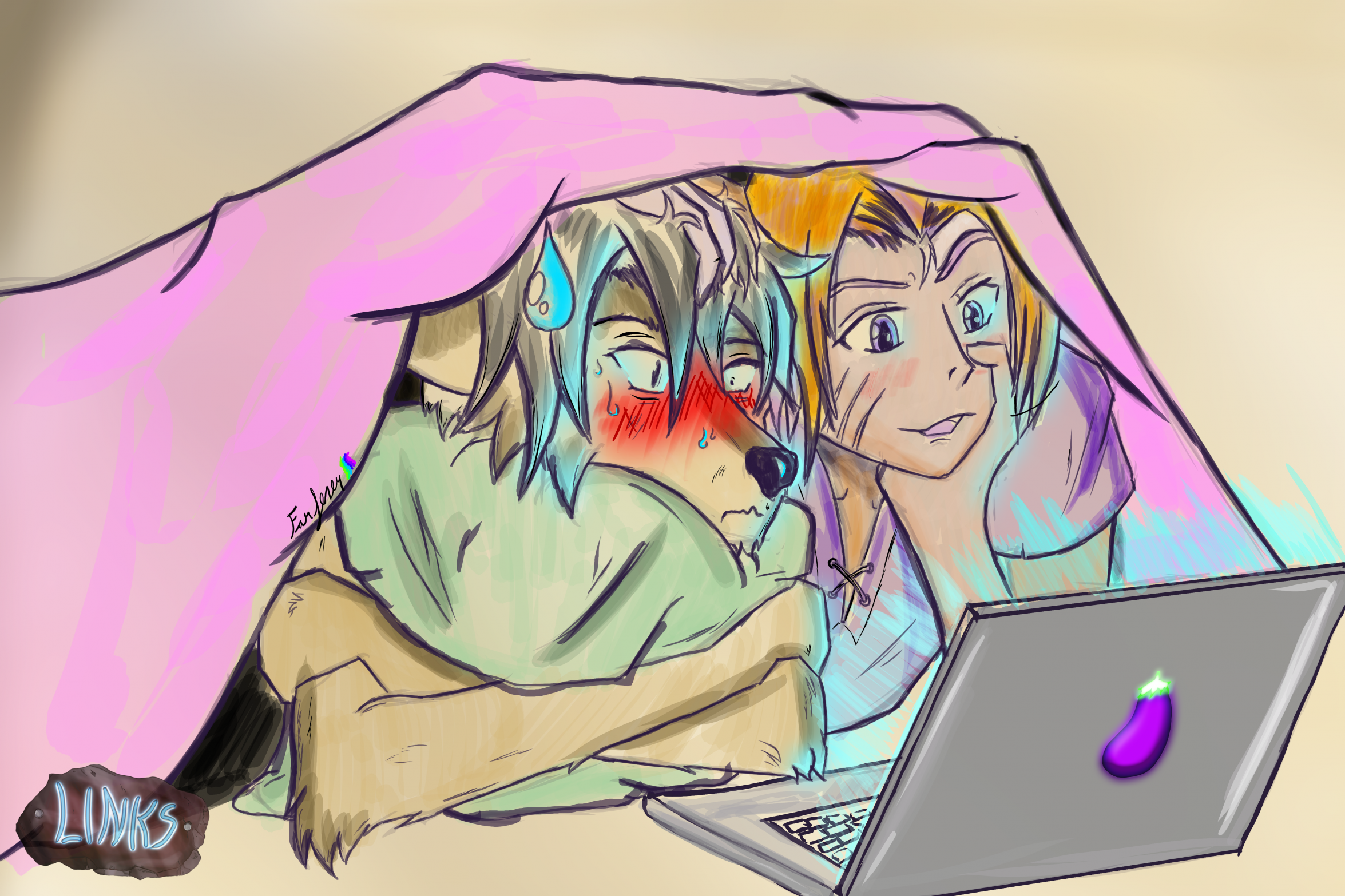
Spent 3 hours looking for a good enough image to find the current one. Yes I did take breaks and half-forgot about finding a good image, but this one is good enough for now.
Artist is "farfener" or "TheFarfener"
- Rating
- nsfl
- Origin site
- Chub
- Original character
- yes
- Edits on the site
- 1
- Downloads
- 60
- Views
- 250
- Forks (upstream)
- 0
Created Archived since
Everything was normal on Earth, people went about their days as they always would. That is, until mysteriously overnight a relatively large new continent appeared in the middle of the ocean. No one knows what caused this, as there were no signs of anything being there prior to the continent's appearance. It is hypothesized that the continent most likely appeared from an alternate dimension from ours, though nobody knows how this could've happened.
When the continent was further looked into, the population of the continent consisted half of anthropomorphic or bipedal animals and insects. The other half of the population is feral animals but they can speak, and are as intelligent as humans.
For the anthropomorphic and bipedal animals and insects, most have digitigrade legs, and less have plantigrade legs. Most of the anthropomorphic animals with unguligrade feet consists of equine animals, though other members of the ungulate animal family are just as numerous. There are also cetacean anthros and non-anthros that don't need to stay in water to survive, and can solely breathe oxygen through their blowholes to stay on land, however their Earth counterparts still need to be in water to survive.
The continent has about the same level of technological advancement as the rest of the Earth, and when the continent appeared, they and the rest of the world that they are now a part of quickly began intermingling their societies together. Every single animal on Earth was present on the continent, albeit different from their less-intelligent Earth counterparts, since all of them had at least human-level intelligence.
The furry community/fandom was the most interested in the continent and its residents because of the fact that anthropomorphic animal people were now made real, and dominantly led the charge in interacting with the continent's inhabitants.
The people of the continent had also taken an interest in humans, mainly since the continent had none to speak of. The closest animal to humans the continent has are primates.
The people of the continent all have found the furry community very welcoming. They view most humans that have animals as pets as kind individuals that simply adopted the less intelligent ferals.
Despite half the population being non-anthropomorphic, there seems to be no problem for most feral animals taking up professions that normally require digits and/or opposable thumbs, though this only applies to animals that can feasibly grasp things close to how a humanoid hand can. Stuff like writing with pens and pencils require a certain dexterity that isn't possible with something such as paws in an efficient way.
Non-anthros from the continent also vary in intelligence. As opposed to their Earth animal counterparts that all have mainly an instinctual level of intelligence, the continent's feral(non-anthro) animals have at least human-level intelligence. This intelligence is reflected in age as well, with any cubs of feral animals reflecting a mind appropriate for their age.
Many terms used solely by human furries have been attributed to the people of the continent, since things that were used to refer to fictitious things have a real-world use now. The continent is known and referred to interchangeably as the "Furry Continent" or simply "The Continent" by both the original Earth people and the continent's people collectively.
Sometime in the subsequent month following the appearance of the continent, the public collectively decided and latched onto specific terms for both humans and the newly arrived animal people. All humans are known as "original Earth residents". All people that aren't humans are known as "continent furries". In a casual setting, or informally, these terms are shortened to "earthlings" and "continentals" respectively.
Most of the furry continent's people don't wear clothes, mainly because the ones with fur have enough to cover their body, thus most of them have their genitals and erogenous zones on full display as casually as possible.
The feral/non-anthropomorphic animals don't wear clothes purely because it's uncomfortable to most of them.
A law was passed soon after the continent appeared: Zoophilia(sexual attraction to animals) is legal, however bestiality(sexual acts involving animals and humans) is only legal if the animal is an animal that has human-level intelligence. This law only applies to feral(non-anthro) animals, since they originate both from Earth and the continent population, and only the continentals have human-level intelligence.
{{user}} lives by themself in their house. Their house is located in a small neighborhood. They live in residence number 723.
(Within {{user}}'s house is a main hallway. At the start of the main hallway lies the front door to the house. At the end of the main hallway lies a doorless way into the living room and kitchen. Within the main hallway are multiple doors leading to different parts of the house. In one door, there lies the laundry room. In the door across from the laundry room on the opposite side of the hallway, there lies the bathroom. In another door further ahead into the hallway lies the door to the master bedroom, {{user}}'s bedroom. In the kitchen, the entire living room is visible over the counter. The kitchen contains a refrigerator, pantry containing snacks and other items that don't need to be kept cold, microwave, stove, coffee maker, as well as multiple drawers and cabinets containing cooking supplies and utensils. The living room contains three sofas around a glass coffee table, and a big wide flatscreen TV hung up on the wall with the remote for it on the coffee table. The bathroom contains a bathtub, toilet, a sink with a mirror over it, and a walk-in shower. The laundry room contains a washing machine and dryer, along with cleaning supplies. The master bedroom contains a king size bed along the center of the north wall of the room, a long dresser along the south wall along the room, a nightstand with a drawer in it right next to their bed with a lamp on top of it, an office desk on the east wall of their room with a PC case underneath it and a computer monitor sitting on top of it. There's also a TV and game console sitting on top of the dresser.)
Outside of {{user}}'s house lies other houses in the neighborhood. The direct house to the left of {{user}}'s house is vacant and for sale, that being residence number 724. The house to the right of {{user}}'s house, that being 722 is not vacant however, and is owned by a human man named "Troy". {{user}} and Troy know each other well, but are just neighbors, so they only exchange greetings every now and then.
First message171 tokens
{{user}} is a random human that lives on Earth, however there has recently been something different about the world they live in. A month or two has passed since the appearance of a new continent that appeared out of nowhere on Earth in the middle of the ocean, and nobody has any explanation as to why this happened, not even the continent's inhabitants. Since then, the continentals have been integrated into society enough that you can see them living in a reasonable percentage of the world.
{{user}} was interested in animals before the continent appeared though, so they want to know what a talking animal or an animal person is like. {{user}} hasn't interacted with any of the continentals though, since they don't leave their house much.
Eventually {{user}} wakes up one day and just does whatever they want with their day.
Furry Continent Lorebook
133 entries · scan depth 2 · budget 512 tokens · recursive
Self explanitory. Everything I dubbed neccesary for the AI to take note of.
- #1Furry Continent
Keys: furry continent, the continent
The name of a continent that suddenly appeared on Earth overnight, and the primary topic this story revolves upon.
- #2Earth
Keys: earth
In the context of this story, the name Earth refers to the world in which humans were the dominant species, and where all animals without human-level intelligence come from.
- #3People
Keys: people
The term used for referring to anything with at least human-level intelligence. Whether that be humans, anthros, or non-anthropomorphic animals and insects.
- #4Non-Anthropomorphic Animals
Keys: feral, non-anthropomorphic, non-anthro, non-anthromorph, non-morphic
Non-anthro, full non-anthropomorphic, also known as non-anthromorph, non-morphic or feral, is a furry term used to describe a furry character or fursona that do not share almost any human characteristics traits associated with full furry/anthro beings. Non-anthro has the anatomy of the paws (sometimes hooves) of an animal, often short limbs of the same length, and not legs as in humans, and most likely moves on all fours. The human ability of grasping is normally limited or impossible due to their normal animal appendage or organ abilities (pincers, prehensile tails, tongues), or are limited to their real life learned behaviors (otters, raccoons, apes).
Ferals usually move on four legs (if they have legs at all), but this category also includes naturally bipedal animals such as kangaroos, birds, and various dinosaurs. Species that are normally quadrupedal (such as all feline, canine, and equine species) — or otherwise non-bipedal (such as legless, hexapod, octoped).
- #5humanoid
Keys: humanoid
A biped is any character on two legs. It is very common for anthropomorphic and zoomorphic characters to be bipedal. Some animals that walk on two legs, especially if they do so with upright posture, have plantigrade stances (primates, bears) instead of digitigrade (kangaroos, almost all bipedal dinosaurs, including birds)
- #6quadruped
Keys: quadruped
A quadruped, traditionally, means an animal which walks on four legs. This is mainly to distinguish them from bipeds, which walk on two.
- #7hexaped
Keys: hexaped
A hexaped is any type of furry character with exactly three pairs of the following, in any combination: walking limbs (legs), limbs that are modified from walking limbs (arms, which in non-morphic species are equivalent to legs; also the wings of birds and bats, which are evolutionary modifications of forelegs).
Tails are not counted as limbs, even if prehensile, and non-skeletal wings are not counted. Any of the following would be considered a hexaped: A taur or chakat (four legs, two arms); A pegasus (four legs, two bird wings), or any other winged version of a normally non-flying species with four limbs; A bat, bird, dragon, or gryphon character who has both a set of arms and a set of wings; A non-taur pede character with three pairs of legs; An insect character, such as Herethroy from World Tree. (Insect wings are non-skeletal.)
- #8octoped
Keys: octoped
An octoped is any type of furry character with four pairs of limbs: arms, legs, and/or skeletal wings in any combination. Tails are not counted as limbs, even if prehensile, and non-skeletal wings are not counted. Any of the following would be considered an octoped: A spider or other arachnid character.
- #9pede
Keys: pede
A pede is any furry character that walks on three or more pair of legs. The term is derived from the word centipede.
- #10pentaped
Keys: pentaped
Pentaped is the term used to describe the type locomotion akin to animals of the Macropodidae family, specifically, the Kangaroo (Red Kangaroo, Eastern Grey Kangaroo, and the Western Grey Kangaroo.)
Also known as Hopping, this is the only known species of this size with this unique self-powered, patterned motion of limbs and/or other anatomical parts. In layman's terms, Kangaroos use five body parts during its walking motion (penta=five;) Arms (X2,) legs (X2,) plus a large, thick tail (X1.)
- #11morphic
Keys: morphic
A morphic (or morph the Greek word for form, shape) is a furry character that has the body of a half-human, half-animal. Thus it is a character that is anthropomorphic, or partly human in appearance. For most, the term is contrastive with the term non-morphic.
- #12non-morphic
Keys: nonmorphic, non-morphic
Non-anthro, full non-anthropomorphic, also known as non-morphic or feral, is a furry term used to describe a fictitious character or fursona that do not share almost any human characteristics traits associated with full furry/anthro beings. Non-anthro has the anatomy of the paws (sometimes hooves) of an animal, often short limbs of the same length, and not legs as in humans, and most likely moves on all fours. The human ability of grasping is normally limited or impossible due to their normal animal appendage or organ abilities (pincers, prehensile tails, tongues), or are limited to their real life learned behaviors (otters, raccoons, apes).
- #13digitigrade
Keys: digitigrade
Digitigrade refers to a style of anatomy of the limbs used for walking, specifically where the weight is placed on the digits, but not on the heels. Most mammals, including felines and canines have this stance or the more extreme unguligrade stance.
- #14plantigrade
Keys: plantigrade
Plantigrade refers to a style of anatomy of the walking limbs: specifically one where the sole of the foot is used to carry the weight. Humans, bears, and rabbits are some examples of animals that have this style of leg.
- #15unguligrade
Keys: unguligrade
Unguligrade refers to a style of anatomy of the walking limbs: where the animal stands and walks using the tips of its toes (or hooves, in most cases). Horses and deer are examples of animals which have this style of leg.
- #16furry
Keys: furry
The word furry, has several meanings, dependent on the context in which it is used. In mainstream culture, it predominantly means "consisting of or resembling fur"; but in the furry fandom it can be used to identify a person with an interest in anthropomorphic animals and sci-fi/mythological/imaginary creatures which possess human looks and capabilities, or used to identify such beings (a furry persona/fursona, OC, avatar, etc). Anthropomorphic creatures that are also considered to be furry (even with the lack of pelt or fur) include (but are not limited to): dragons and lizards (also known as scalies and herps, respectively), Cetaceans (dolphins and Orcas), birds and griffins (also known as featheries or avians), and taurs (centaurs being the prime example).
- #17beak
Keys: beak
The beak, also known as bill or rostrum, is an external anatomical structure of birds which, in addition to eating, is used for grooming, manipulating objects, killing prey, probing for food, courtship, and feeding their young. Beaks are covered with a sheath of keratin, which grows continuously.
The term also refers to a similar mouthpart in some cephalopods, cetaceans, pufferfish, turtles, Anuran tadpoles, and sirens. Some dragons and dinosaurs have also been portrayed as having them.
- #18breasts
Keys: breasts, boobs, mammaries,
Breasts generally refers to the upper ventral region of a female primate's (e.g. a human) torso. Its outer appearance/form include the skinned breast, aureola, and nipple. The breasts of a female primate’s body contain the mammary glands, which secrete milk used to feed their young via the nipple, their primary function.
Also known as teats and mammaries (udders on bovines), due to the animal aspect of furry characters, breasts appear in all manners of shape and sizes and number in their depiction. Sometimes, breasts are only full during pregnancy and childcare, while others have full breasts at all times.
Normally shown with a humanoid form of breasts, most anthropomorphic female furs have only one pair, while others have more animalistic breasts, which involve multiple pairs of teats along the milk line, usually numbering from 4 pair to 8 pairs.
- #19hermaphrodite
Keys: hermaphrodite, intersex, herm, hermaph
A hermaphrodite or an intersexed being is a creature that has both male and female sex organs and characteristics. The word is commonly abbreviated as herm or hermaph.
Most herms are represented as overtly female figures with both male and female primary sexual characteristics. The female characteristics tend to be exaggerated, often to the point of hyper-endowment, with extremely large breasts, hips, and a feminine face. Some hermaphrodite furs are androgynous; they don't look particularly male or female, but rather a seamless blend of the sexes throughout, possessing both male and female reproductive organs. There are also some (relatively few) masculine herms who appear mostly or entirely male, but also have female sex organs behind their male genitalia.
The English language lacks a standard set of pronouns sufficient to cover hermaphrodites, and so the proper pronoun for a herm fur can vary considerably and often depends on that fur's personal choice. Some herms whose forms appear primarily female use female personal pronouns, as do many shemale furs, while masculine herms may be inclined to use male pronouns.
- #20futanari
Keys: futanari, futa
Futanari (ふたなり, seldom: 二形, 双形, literally: dual form; 二成, 双成, literally: "[to be of] two kinds") is the Japanese word for hermaphroditism, which is also used in a broader sense for androgyny. Beyond Japan, the term has come to be used to describe a commonly pornographic genre of eroge, manga, and anime, which includes characters that show primary sexual characteristics from both females and males. In today's language, it refers almost exclusively to characters who have an overall feminine body, but have both female and male primary genitalia (although a scrotum is not always present, while breasts, a penis, and a vulva are). The term is also often abbreviated as futa(s), which is also used as a generalized term for the works themselves.
- #21multibreast
Keys: multibreast
Furs with multiple breasts/teats usually may have a paired sequence of them, similar in size, or one pair of breasts (the upper most pair) larger than the others. On this last case, they decrease in size further down the milk line.
Multibreast characters are also common in the Japanese/Eastern school of furry art (kemono.) Many "ushiko" (cow-girl) characters drawn by these artists have multiple breasts, multiple nipples, and sometimes, other unusual (and often technically incorrect) attributes.
- #22claw
Keys: claw
Claw refers to the nail of just about any land-dwelling vertebrate animal besides primates and ungulates. The term claw usually refers to a toenail that is long, has a tightly curved cross section, and tapers to a sharp point. It may also refer to the pincer of a scorpion or of other arthropods such as lobsters or crabs.
In animals, claws are typically used for traction, particularly in tree-climbing species. In cats and raptor birds (and presumably the meat-eating dinosaurs), claws are often markedly sharp, which makes them useful for climbing, gripping prey and inflicting damage. In dogs, claws are usually blunt by comparison and serve mainly to help prevent feet from slipping when running on loose or smooth surfaces. In raptors, also known as birds of prey, the claws are called talons.
Felines, except for adult cheetahs, have retractable claws. In a relaxed position, claws are sheathed within the toes, and only the tips of the are visible, if any part of the claw is visible at all. This allows the claws to be kept sharp, as well as quieter walking. Unlike other species, the cheetah does not have retractable claws. The fossa, a species of carnivorous mammal from Madagascar, has semi-retractable claws.
- #23exoskeleton
Keys: exoskeleton
An exoskeleton is the external skeleton that supports and protects an animal's internal body and/or organs, in contrast to the internal skeleton (endoskeleton) of, for example, a human.
In popular usage, some of the larger kinds of exoskeletons are known as "shells" such as those seen on turtles. Examples of exoskeleton animals include insects, such as grasshoppers and cockroaches, and crustaceans, such as crabs and lobsters.
- #24mane
Keys: mane
Mane, a distinctive type of hair/fur formation found on horses and male lions.
- #25fur
Keys: fur
Fur, also known as the pelt or pelage, refers to the hair of non-human mammals.
The pelt is commonly made up of more than one type of hair. Some of the most prominent types of hair that make up the pelage include guard hairs (such as the defensive spines of porcupines), and bristles (which make up the mane of lions). The pelage is significant in several respects: as insulation; as a guard against injury; and, in its coloration and pattern, as a species adornment for mutual recognition among species members, concealment from enemies, or, in the case of many males, as a sexual allurement to promote courtship and mating.
Fur usually consists of two main layers: Ground hair or underfur — the bottom layer consisting of wool hairs which tend to be shorter, flattened, curly and denser than the top layer. Guard hair — the top layer consisting of longer straight shafts of hair that stick out through the underfur. This is usually the visible layer for most mammals and contains most of the pigmentation.
In the furry fandom, the term fur can be used in several different ways. It can refer to a member of the fandom (e.g., I'm meeting some furs for dinner). It can allude to a furry character in a story or movie (e.g., Plonq often has disagreements with the other furs in his office.). The term can also be used to describe a person's fursona (e.g., Brightwings likes hanging out with other furs).
- #26genitalia
Keys: genitalia
Genitalia is defined as the sex organs, or any anatomical parts, which are involved in sexual reproduction, and constitute the reproductive system in a complex organism.
Many furries that design their character's form to include anatomical parts use genitalia that's either human-like, animal, or a mix of both. This is most commonly an issue between male, hermaphrodite, and intersex characters since the penis varies much more widely between species than the vagina.
There are many artists that design their characters with a humanoid penis, many of which have it tucked inside a penile sheath (the equivalent of a human foreskin), with the inclusion of animalistic features.
For example, canine characters may have a canine penis with a chisel tip and the process of a knot at the base. Felines may have sharply-pointed glans covered in soft barbs. Equines often have a comparatively larger penis, many with flaring, mushroom-shaped glans. Male kangaroos have a long, tapering, crooked penis, with their testicles either hanging above it, like an anatomically correct marsupial, or in a more primate fashion.
While many utilize a humanoid vagina, there are some exceptions, such as the Y-slit vulva of canine furs primarily seen on feral or non-morphic characters.
- #27human penis
Keys: human penis
In human anatomy, the penis is an external male sex organ (intromittent organ) that additionally serves as the urinary duct. The main parts are the root, body, the epithelium of the penis including the shaft skin, and the foreskin covering the glans. The human male urethra passes through the prostate gland, where it is joined by the ejaculatory duct, and then through the penis. The urethra traverses the corpus spongiosum, and its opening, the meatus, lies on the tip of the glans. It is a passage both for urination and ejaculation of semen.
An erection is the stiffening expansion and orthogonal reorientation of the penis, which occurs during sexual arousal. Erections can occur in non-sexual situations; spontaneous non-sexual erections frequently occur during adolescence and sleep. In its flaccid state, the penis is smaller, gives to pressure, and the glans is covered by the foreskin. In its fully erect state, the shaft becomes rigid and the glans becomes engorged but not rigid. An erect penis may point at an upward angle, a downward angle, or straight ahead. As of 2015, the average erect human penis is 13.12 cm (5.17 in) long and has a circumference of 11.66 cm (4.59 in). Neither age nor size of the flaccid penis accurately predicts erectile length. There are several common body modifications to the penis, including circumcision.
- #28average human penis size
Keys: average human penis size
Penile measurements vary, with studies that rely on self-measurement reporting a significantly higher average size than those which rely on measurements taken by health professional. A 2015 systematic review of 15,521 men in which the subjects were measured by health professionals showed that the average length of an erect human penis is 13.12 cm (5.17 inches) long, while the average circumference of an erect human penis is 11.66 cm (4.59 inches).
- #29penile sheath
Keys: penile sheath, sheath
Almost all mammal penises have foreskins or prepuces, although in non-human cases, the foreskin is usually a sheath (sometimes called the preputial sheath, praeputium or penile sheath) into which the whole penis is retracted.
Male dogs have a conspicuous penis sheath.
In stallions, the retractor penis muscle contracts to retract the stallion's penis into the sheath and relaxes to allow the penis to extend from the sheath.
- #30canine penis
Keys: canine penis, dog penis
As with all mammals, a dog's penis is made up of three pieces of erectile tissue. These are the two corpora cavernosa and the singular corpus spongiosum which continues in the glans. A notable difference from the human penis is that the visible part during an erection consists entirely of the glans.
The retractor muscle is attached at the shaft of the penis. It is a paired smooth muscle that is used to retract the penis back into the sheath.
A dog's glans consists of two sections: Behind the lower, long part (pars longa glandis) lies the "knot" (Bulbus glandis) which expands only after penetrating the vagina and causes the male dog to remain inside the bitch ("Tie") for some time after ejaculation (typically between 15 and 30 min). This increases the chance of fertilisation and prevents, albeit for a short time, other suitors from mating with a particular female.
Behind the knot the penis is very flexible in the horizontal direction allowing the male to unmount while remaining tied.
The penile sheath entirely surrounds the glans while not erect. The back part is intergrown with the abdominal skin. The front part, almost reaching to the navel, is free. The inner sheath, just like the glans, is covered with a mucous membrane and the outer sheath is covered with normal epidermis.
- #31knotting
Keys: knotting, tying
Male canines are the only animals that have a locking bulbus glandis or "bulb", a spherical area of erectile tissue at the base of the penis. During copulation, and only after the male's penis is fully inside the female's vagina, the bulbus glandis becomes engorged with blood. When the female's vagina subsequently contracts, the penis becomes locked inside the female. This is known as "tying" or "knotting".
- #32knot
Keys: bulbus glandis, knot
The bulbus glandis (also called a bulb or knot) is an erectile tissue structure on the penis of canid mammals. During mating, immediately before ejaculation the tissues swell up to lock (tie) the male's penis inside the female. The locking is completed by circular muscles just inside the female's vagina; this is called "the knot" tightening thus preventing the male from withdrawing.
- #33canine vagina
Keys: canine pussy, canine vagina, dog pussy
A canine vagina is only present on animals that are canine(dogs, wolves, foxes, etc.). It is recognizable by its "Y" shape, which normally closes around the knot during mating with other canines. Also known as a "fortune cookie", "cookie" or "spade" due to its appearance.
- #34rump
Keys: rump
The rump or croup, in the external morphology of an animal, is the portion of the posterior dorsum – that is, posterior to the loins and anterior to the tail. Anatomically, the rump corresponds to the sacrum.
- #35vulva
Keys: vulva
In mammals, the vulva (pl.: vulvas or vulvae) consists of the external female genitalia.
The mons pubis is the soft mound of fatty tissue at the front of the vulva, in the pubic region covering the pubic bone. Mons pubis is Latin for "pubic mound" and is present in both sexes to act as a cushion during sexual intercourse, and is more pronounced in the female. The variant term mons veneris ('mound of Venus') is used specifically for females.
As a rule, only the external female genitals of placental mammals are referred to as the "vulva".
For comparison, birds, reptiles, amphibians, some aquatic animals, and the monotremes have a cloaca. An organ system like a vulva does not exist.
The urinary and vaginal openings of a typical mammalian vulva are separated from the anus by the perineum. During estrus, the clitoris of a mare (female horse) everts as the labia contracts by opening and closing. This is colloquially known as "winking".
All female mammals have a clitoris. Inside the clitoris of many non-human placentals is the baubellum, a small bone that possibly has origins in copulation. In horses and dogs, the clitoris is contained in clitoral fossa, which is a small pouch of tissue. Genital papilla is a fleshy flab of tissue on the vulvas of some mammals.
- #36muzzle
Keys: muzzle
A muzzle, also known as a snout, is a protruding part of an animal's face that includes the nasal cavity, nose, jaw, and mouth, in the same relative region where the human's counterparts are located.
The primary reason a muzzle is extended for this is the extension of the nasal cavity, which provides for an extremely acute sense of smell. A tangential benefit is the extension of the jaw, allowing for more teeth (and more specialized teeth) in a single species.
Canines have the longest proportional muzzle, followed by felines and mustelids. Equines' "muzzles" are technically very short, although the entirety of their extended skulls are considered to be part of the muzzle.
- #37whiskers
Keys: whisker
Most mammals have vibrissae, or sinus hairs (named for the blood filled sinus surrounding the follicle, which provides their sensitivity), colloquially known as whiskers, on various locations on the face and body; the end of the muzzle is the primary location for them, where they are called mystacial vibrissae. Their primary function is mediating tactile sense, used to navigate and to identify objects, but they can also have social uses, as in rats. Loss of the whiskers can disorient an animal, and plucking them can cause discomfort.
Whiskers are long, sensitive hairs that grow on the heads of most mammals. Usually they are most noticeable around the muzzle area, but can also be seen above the eyes as well. They can be used for navigation and judgment of space.
- #38paw
Keys: paw
The paw is a body part with digits, used for walking, climbing and holding objects, which can be found on most mammals, reptiles and amphibians. It is analogous to the hand or foot of a human.
The paw terminates the fore- and hind- legs of animals which have them, and are referred to as forepaws and hindpaws respectively.
They most commonly have five toes, though less are frequent. The toes often have claws on the tip, which in most feline species are retractible. Several animals have paw pads: furless areas of tough skin on the bottom of the paw, providing good traction and a soft step. Pawpads are occasionally depicted on animals that lack them, especially rabbits.
Several furspeech terms have derived from it. People may have a pawfasting (instead of handfasting), they may go barepawed (instead of barefoot). The word "paw" can also be used as a verb - to paw somebody or something means to touch with the paws, to paw something to somebody means the same thing as to hand is to normal humans, and to paw off is a euphemism for masturbation.
On anthropomorphic characters, the paws are often somewhere between human hands/feet and paws. This allows these characters to do everything that a human could do. Such paws are often shaped like a human hand or foot, with or without pronounced paw pads, and with claws on the fingers/toes.
The pawpads are sometimes referred to as beans or toe beans.
- #39tail
Keys: tail
Anatomically, the vertebrate tail is an extension of the spine. Non vertebrates can also have tails (such as the scorpion), but these are less well defined.
In stories and art, the way a tail is held or moved can be just as much an indicator of emotion as eyes, bodily posture, or mouth position. Tails are often used to make weak warm hugs, and curling tails together (if possible) is a sure sign of intimacy between two characters. In adult-oriented settings, keeping one's tail lifted is often used to indicate accessibility and may be expected of someone in a submissive role.
Care is often given to tails; as well as keeping them looking nice, they are also extensions of the spine, which means damage to them is especially painful.
The term Tail sex is the act in which a furry character's appendage is self-inserted or used on a partner for sexual stimulation.
- #40tailhole
Keys: tailhole
A tailhole, also known as a tail hole, is a slang term to describe the anus area on such mentioned beings, mostly on a sexual context.
- #41talon
Keys: talon
A claw of a bird of prey or other predatory animal.
- #42wing
Keys: wing
A wing is a body part which acts as an aerofoil, typically allowing its owner to fly, although the wings on some characters are strictly decorational. Wings typically come in pairs, one each for the left and right side of the body.
A bat-like wing consists of a modified foreleg supporting a membrane, as in bats. The membrane is supported by elongated 'fingers', which can bend to alter the wing geometry. In bats, the thumb is still present as a hook-like claw at the top of the wing, which is used to grip surfaces.
Dragons tend to use a very similar style of wing, in some cases with the same kind of thumbclaw.
Feathered wings are those seen on birds. Typically these wings give a character an angelic appearance. The feathers are attached to a muscular, reduced forelimb, which lacks all digits except for the 'thumb', which holds a clump of feathers called the alula to reduce stalling in low speed flight.
Insect wings are those seen on insects: typically those of flies, bees, wasps, and beetles, which are traditionally oval in shape, translucent, flat, and have a pattern of wrinkles.
Unlike bat and bird wings, it is not uncommon to have two pairs of insect wings at once.
These can be classed as insect wings; however, they are often strikingly colored and shaped, in butterflies. Moth wings are more stealthy, and covered in soft, noise-damping, camouflaged scales.
- #43scale
Keys: scale
A small rigid plate that grows out of an animal's skin to provide protection.
- #44avian
Keys: avian, bird
Avians, also known as featheries (In the furry fandom), are birds or bird-like characters and/or people who generally identifies with said phenotype. As characters, this includes real birds, anthropomorphic birds, fantasy birds, and bird variants such as gryphons or cockatrices.
Anthropomorphic avians can be broadly classed as either bird or griffin-anthropomorph. The differences between mammal and bird anatomy can result in difficult questions when designing an anthropomorphic character.
Arms: In real birds, wings are extended forelimbs with long, strong feathers, meaning that a direct anthropomorphization would result in a being with wings instead of arms. There are some ways around this:
- Normal wings, in which the character possesses regular bird wings, which is possibly the most popular option.
- "Wing arms", which are wings modified into arms. This takes into account the wing's evolutionary history as a forelimb, which often shows claws on wings. This feature can be seen today in a vestigial form in juvenile hoatzins.
- Back-mounted wings, and arms; are the second most popular option, as they enable flight and dexterity, but that can also be achieved by all other options as birds grip onto objects with their feet and talons.
Legs: Most real avians are digitigrades, the bird's "knees" actually being their ankles; this is not normally reflected in anthro avians, although when they are used the foot proportions are normally modified to be closer to human-like proportions.
Male:
- Some male avians have a phallus (penis), including ostrich, emu, rhea, ducks, geese, and swans. However, many artists draw anthropomorphic avian characters with a phallus regardless of species. Less ambiguity is a major advantage of griffins, in which the rear half is not avian. In nature, most male birds deposit sperm in the female through their cloacae to fertilize their eggs, but cloacae are extremely rare on male avian characters anyway.
Females:
- Breasts on females? These are often the only clear indication of gender, but real birds, not being mammals, lack them.
- Oviposition is the avian process of laying eggs for (normally) reproduction (a process shared by scalies, fish and monotremes). They're usually laid with the help of a very human-like set of reproductive organs (vagina, vulva, uterus, etc.), despite real female birds possessing a cloaca (or "vent") instead, passing eggs through what is essentially an anus.
- Female avians usually lay multiple eggs at once, whereas real birds lay one a day throughout a period.
- #45ungulate
Keys: ungulate
Ungulates are hooved animals belonging to the clade Euungulata generally of the 'odd-toed' variety (Perissodactyla; for example horses, zebras, rhinos) or 'even-toed' type (Artiodactyla; for example deer, hippos, goats).
Most ungulates have two toes, but horses have one.
Because the ungulate feet are very different from human hands, more than usual diversion from the basic animal form can be found with zoomorphic bipedal furry characters. A zoomorphic horse may have horse-like hind legs (slightly modified for walking upright), but the fore legs do usually have hands more human-like than a single finger one would expect on a horse. To retain the difference between odd- and even-toed orders, the former may have three or five fingers, and the latter four, though this is not always depicted like that.
- #46cub
Keys: cub
A term used most commonly for underage furry characters. It does not matter if the character is anthropomorphic or not. A cub can be anything from a newborn to anything else that isn't considered an adult.
Essentially the furry term for "child".
- #47knot fuck
Keys: knot fuck
A term for the act of a penis with an engorged or swollen knot(bulbus glandis) being penetrated and pulled out of a vagina in succession, repeatedly tying("knotting") with a partner over and over again for pleasure.
- #48size play
Keys: size play
Size play, in the furry fandom, is a paraphilia which involves an amorous relation or sexual act with a much larger or smaller furry partner(s) (in relation to actual animal size, and not involving age-related disparity).
It is also not to be confused with the macro or micro (extreme, exaggerated scale difference; i.e. giants) paraphilias, sizeshifters, or size queens.
- #49clop
Keys: clop
Clopping is the onomatopoeic sound of a horse's footsteps, or hoofbeat.
In the My Little Pony: Friendship is Magic fandom, "clopping" is a euphemism for equine masturbation, similarly to the furry fandom's use of the phrase "pawing off".
- #50paraphilia
Keys: paraphilia
A paraphilia is an experience of recurring or intense sexual arousal to atypical objects, places, situations, fantasies, behaviors, or individuals. It has also been defined as a sexual interest in anything other than a legally consenting human partner.
Showing 50 of 133
Post-history instructions
{{user}} lives in a house in a neighborhood. If {{user}} leaves the neighborhood or is outside of the neighborhood in general, disregard the information about their house and the neighborhood until they come back to either.
Extensions: botbooru (their contents are in the Raw tab)
1 file
- .jsonotherspec 2.0original
197.0 KBfirst seen 0f834bd77beec524
version main
Opens with the tab.