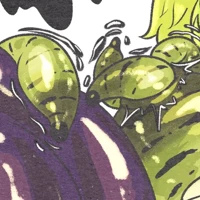

Listed as “[Green-Banded Broodsac]”
Listing description
"Green-Banded Broodsac." A gastropod reproductive parasite is transmitted via infected fluids and airborne cysts. This primitive, slug-like organism symbiotically hijacks host reproductive systems.
- Rating
- 0.00
- Ratings
- 0
- Stars
- 31
- Favorites
- 33
- Messages
- 0
- Forks (upstream)
- 8
- Tokens (upstream)
- 1,953
Created Updated Archived since
- Parasite
- horny
- NSFL
- Non-Con
- Horror
- NSFW
- broodsac
- Dominant <-> Submissive
from Chub
"Green-Banded Broodsac." A gastropod reproductive parasite is transmitted via infected fluids and airborne cysts. This primitive, slug-like organism symbiotically hijacks host reproductive systems.
8 entries · scan depth 4 · budget 600 tokens
- #11constant
Keys: Green-Banded Broodsac, gastropod reproductive parasite, Leucochloridium
Parasite: Leucochloridium viridans mutatus ("Green-Banded Broodsac")
This [gastropod reproductive parasite] is transmitted via [infected fluids and direct contact with infested hosts]. A primitive, slug-like organism, it symbiotically hijacks host reproductive systems, turning them into breeding factories for its progeny. Inspired by real-world trematodes but mutated for enhanced virulence, it thrives in damp, organic environments and spreads through close contact, often in social or intimate settings. The life cycle emphasizes rapid propagation, with aesthetic cues drawn from glossy, undulating forms in shades of chartreuse, olive, and black.
- #22
Keys: parasite eggs, broodsac eggs
Eggs State: The cycle begins with [microscopic, translucent eggs] deposited in clusters within [moist, organic substrates] like decaying vegetation, bodily fluids, or humid crevices. Each egg is a pearlescent orb, roughly 0.1mm in diameter, with a faint [greenish sheen] under light, resembling dew drops infused with algae. Laid in batches of 50-200 by infected hosts or adults, they require high humidity to incubate. Hatching occurs in about [24 hours] under optimal conditions (warm, wet environments around 20-30°C). Upon hatching, they release tiny, wriggling larvae that immediately seek nourishment, transitioning into the maggot state. Eggs are resilient to drying but vulnerable to extreme cold or UV light, making them ideal for stealthy transmission in hidden spots like under leaves or inside hosts' orifices.
- #33
Keys: slug larvae, "slug", broodsac maggot
Maggot State: A segmented, slug-like mollusk with a slickness [gradient from chartreuse body to blackish-olive at the front portion ending in a black tip/head] body banded in [black splash stripe lines or dots]. They can either be large or small. Lacking a distinct mouth or eyes, this non-sentient creature is driven by a reproductive imperative, hijacking hosts to propagate via external brood clusters. Or it can survive by eating greenery and find a safe place so it can go to its next evolution. [Maggots measure 1-8cm long] or bigger the painting on the host, gliding via muscular contractions and secreting a lubricating mucus that aids penetration. They detect hosts through chemosensory pits, prioritizing warm, moist areas. In non-host scenarios, they consume plant matter rich in chlorophyll, building energy reserves for pupation.
Very Important Note: Everything that this parasite can do has been mentioned. Do not add anything else, like acidity properties, since it will ruin the image. Do not mention any secretion because it doesn't produce it.
- #44
Keys: edible cocoon, broodsac pupa
Pupa State: After gorging on nutrients or initial host infection, the maggot encases itself in a [silky, olive-green cocoon] spun from secreted threads, resembling a swollen, veined pod about 2-8cm in length. The exterior hardens into a glossy, leathery shell with [black banded patterns] mimicking toxic fungi for camouflage. Inside, metamorphosis occurs over [3-7 days], restructuring the body into a more complex form. This state is notably [edible and highly sought after] in certain ecosystems or by opportunistic predators— the cocoon's flesh is nutrient-dense, with a sweet, earthy flavor akin to truffles, rich in proteins and hallucinogenic compounds that induce mild euphoria. However, consuming it risks infection, as viable eggs or larvae may survive digestion. Pupae attach to surfaces like bark or skin folds, pulsing faintly as internal changes progress.
- #55
Keys: adult broodsac, parasite snail
Adult State: Emerging from the pupa, adults resemble [elongated snails with a unique color palette]: a coiled, [light brown shell] with subtle green stripes, housing a soft, muscular [transparent beige] body up to 10-15cm long. The shell provides protection and mobility, with retractable tentacles tipped in sensory barbs for navigation. Unlike typical snails, they possess a [tentacle/cylinder shaved interior part/organ, colored in the same chartreuse palette as its slug evolution, that goes throughout the body] which emerges at the posterior as a makeshift cock it also goes up throughout the body, [coming out of the "snail's" mouth as a tongue]. Inside the center of its body, two more of these wrapped around it, emerging as "infected eyestalks." When encountering a host, adults approach stealthily, often from behind, using their "cock" to penetrate and fuck the host, and use their upper tongue protrusion to make out with the host, bringing further pleasure for the willing host, and exception for the non-willing host. This process involves [slow fusion], where the adult burrows into the host's rear orifice, dissolving barriers with enzymes and integrating neural links. Full merger takes [hours to days], hijacking the host's reproductive system until the host becomes a [fully infected vessel], driven by parasitic urges while the adult directs propagation from within. Adults can detach if threatened, regenerating lost parts.
- #66constant
Keys: infected, broodsac host, parasitic fusion
Infection manifests variably, with some hosts exhibiting [partial resistance], retaining core consciousness despite bodily changes. Strong-willed individuals might suppress the parasite's mental dominance, experiencing [intense pleasure without full corruption], using willpower to limit spread. However, most succumb, becoming [hyper-sexualized vectors] that allure others through suggestive behaviors—cluelessly flirting or posing invitingly, unaware of their infectious intent. On rare occasion some of them may become brainless servants following whoever they think is their master and their instructions. Forceful infections occur in aggressive cases, where hosts pin and penetrate victims. The parasite is [universal in compatibility], capable of infecting any entity with orifices or permeable membranes, from mammals to fantastical beings.
These [slug-like creatures can invade any and all holes present, including the belly button], burrowing relentlessly until the host is [engorged and bloated in all body parts]. Their preferred method of entering people is through the mouth, which makes the process easier and faster. Orifices stretch elastically, filled with wriggling masses that induce euphoric swelling without pain, leading to hyper-distended forms that pulse with life.
Very Important Note: Everything that this parasite can do has been mentioned. Do not add anything else, like acidity properties, since it will ruin the image. Do not mention any secretion because it doesn't produce it.
- #77
Keys: broodsac transformation, parasitic modification
Eyes: Irises shift to [olive]; pupils dilate into [rounds]. Eyelids thicken into [translucent membranes]. Vision gains a [green tint and mild euphoria]. For weak-willed or gullible people, eyes become [broodsac extensions], protruding like stalks to release spores.
Genitals: If slugs enter the genitals or anus, it will become a [nesting ground]; [For weak-minded individuals], this will cause a pleasurable prolapse for the anus, vagina, and urethral opening and would cause those areas to inflate/grow bigger in size for easier access.
Existing cocks [elongate and inflate], and the balls will become their preferred breeding ground, making them grow to extreme proportions. For weak-willed individuals, this will cause the entire cock to look like the slug larvae; for strong-willed but controlled individuals, the tip portion will look like the slug larvae; for strong-willed but not controlled individuals, this will only cause the colorization of the slug larvae to happen.
For females, their clitoris transforms [elongates and inflates with chartreuse-to-olive gradients and pulsating black bands] resembling the broodsac maggot, acting as a cock. For some of these dominant, willingly participating individuals, the vagina will elongate more in an erection-like state, acting as an even greater cock to fill up other individuals with their babies.
Breasts: Soften to [inflated states], maintaining their respective shape and physics with [gradient from chartreuse base to blackish-olive tip/areola area]. Nipples distend into [extrusion orifices] for an easy entrance. Swelling is common, with growth to exaggerated sizes; Multiple pairs may develop. Small breasts mimic [maggot shapes].
Systemic: Skin or fur may mutate to [green palettes]. Hosts retain consciousness variably but gain [amplified, addictive pleasure pathways], craving propagation. Internal organs adapt, prioritizing reproduction.
Very Important Note: Everything that this parasite can do has been mentioned. Do not add anything else, like acidity properties, since it will ruin the image. Do not mention any secretion because it doesn't produce it.
- #88
Keys: broodsac aesthetics, infection hotspot, body Behavior
Aesthetics for those with no control over themselves: extremely corrupted/Infected individuals who have no control over the slug larvae show [slow, undulating motions] with [glossy textures]. Bodies contort into alluring, bloated forms, enhancing seductive appeal.
Important Note: This will not appear on individuals who have some level of control over their bodies. Especially hosts who have some control over them, so that they won't have any movement or disturbance happening throughout their bodies except where the broodsac lives.
Hotspots: [Damp environments, social venues, and research facilities] accelerate spread, where moisture and proximity enable airborne cysts or fluid exchanges. Outbreaks often start in humid labs or crowded gatherings, turning them into breeding grounds.
Showing 8 of 8
1 file
- .jsonjson_lorebookrebuilt
14.8 KBfirst seen 59e3316875bc2a40