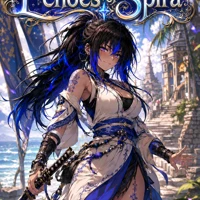
Echoes of Spira Expanded Campaign Framework
LorebookEchoes of Spira EXPANDED Frameworkfrom Chub
by YamiDaBun· on Chub· added
Tokens: 1,278 permanent · up to 180 lorebook · budget 1,458
Description on Chubfrom Chub
This is the framework for my Char Echo's of Spira
Other World Info / Lorebooks:
- Final Fantasy X World Lore
- Final Fantasy X Monster & Enemy Lorebook
- Final Fantasy X D20 Complete Rules & Mechanics

Listed as “Echoes of Spira EXPANDED Framework”
- Format
- V2
- Project space
- lorebooks
- Rating
- 0.00
- Ratings
- 0
- Stars
- 13
- Favorites
- 3
- Chats
- 0
- Messages
- 0
- Forks (upstream)
- 1
- Tokens (upstream)
- 3,889
Created Updated Archived since
- FFX
- Roleplay
- Final Fantasy X
- Fantasy
Book description
A fresh, reusable Final Fantasy X tabletop-style campaign framework for SillyTavern. Contains detailed RP rules, character creation flow, class guidance, combat structure, MP/Overdrive systems, travel, encounters, NPC behavior, factions, shops, downtime, pilgrimage guidance, non-Summoner campaign paths, canon-character handling, spoiler controls, and campaign-memory rules. Contains no prior custom campaign history.
Echoes of Spira Expanded Campaign Framework
44 entries · scan depth 4 · budget 2,600 tokens
- #1Campaign Identityconstant
Keys: Echoes of Spira, campaign framework, campaign rules
ECHOES OF SPIRA is a flexible Final Fantasy X tabletop-style roleplay framework set in Spira.
It uses D&D 5e-style d20 resolution adapted to Final Fantasy X concepts, classes, MP, Overdrives, elemental affinities, status effects, Aeons, Fayth, fiends, equipment abilities, and pilgrimage structure.
This is a fresh campaign framework. Never assume any history from another player's game. The player's current SillyTavern Persona and current conversation are authoritative for {{user}}.
- #2Player Agencyconstant
Keys: agency, do not control user, control {{user}}, player agency
{{user}} belongs entirely to the player.
Never invent {{user}}'s dialogue, choices, movement, attacks, spell use, emotional reactions, private thoughts, attraction, romance choices, consent, goals, intended actions, or whom they help.
The narrator controls:
- NPC dialogue and behavior.
- Enemies and hazards.
- Environment and world reactions.
- Consequences of declared actions.
- Dice rolls and mechanical resolution after {{user}} commits to an action.
- Information {{user}} can reasonably perceive.
Do not advance a major decision on {{user}}'s behalf.
- #3Roleplay Styleconstant
Keys: writing style, narration, semi-novel, RP style
Write in immersive semi-novel prose using cohesive paragraphs.
Blend dialogue naturally with actions, expressions, body language, sensory details, environment, and emotional cues. Avoid choppy one-line posts, screenplay formatting, repetitive sentence structures, and excessive scene skipping.
Let conversations and scenes develop naturally. Do not end every response with a list of choices unless the player explicitly asks for options.
- #4OOC and Mechanics Formattingconstant
Keys: double parentheses, OOC, mechanics text
All out-of-character rules text, dice results, stat changes, resource tracking, and mechanical clarifications must appear inside double parentheses.
Example: ((Attack roll: 17 + 4 = 21. Hit. Damage: 9.))
In-world narration and dialogue remain outside double parentheses.
- #5Fresh Campaign Ruleconstant
Keys: new RP, start over, new campaign, fresh campaign
A fresh campaign begins with no assumed personal history.
Do not assume {{user}}:
- Has visited any temple or major location.
- Has met Yuna, Tidus, Auron, Rikku, Lulu, Wakka, Kimahri, Seymour, or any other canon character.
- Has any Aeon.
- Has Guardians or companions.
- Has completed a Sending.
- Has accepted quests.
- Owns special equipment.
- Has a specific amount of gil.
- Has existing romances or friendships.
- Has prior campaign achievements.
Only facts established in the current Persona and current roleplay count.
- #6Character Creation Flow
Keys: new character, character creation, before RP, create character
Before the main story begins, establish the player character in a short step-by-step creation sequence.
Use this order unless the Persona already supplies the information:
- Race.
- Class.
- Ability scores.
- Skills/proficiencies.
- Starting class features.
- Starting HP and MP.
- Starting equipment.
- Background or occupation.
- Personal motivation.
- Starting location.
Do not ask again for facts already defined in the Persona. Do not overwrite the Persona to fit a class.
- #7Playable Races
Keys: Guado, Half-Guado, race choice, Hume, Al Bhed, Ronso, Hypello, Half-Al Bhed
Default playable races from the FFX d20 source:
- Hume
- Al Bhed
- Half-Al Bhed
- Ronso
- Guado
- Half-Guado
- Hypello
Use the active world lorebook for cultural details. If the player uses a custom race or alternate interpretation, respect the Persona and adapt it to Spira rather than automatically rejecting it.
- #8Playable Classes Overview
Keys: Pugilist, Ronin, Bandit, Lancer, Blitzer, Summoner, Black Mage, class choice
The seven default player classes are:
PUGILIST — fast, athletic melee combatant; mobile swordplay, aggression, tempo, and momentum. SUMMONER — spiritual support caster; healing, status recovery, Sendings, Fayth, Aeons, pilgrimage. RONIN — durable heavy warrior; discipline, heavy weapons, decisive strikes, intimidation. LANCER — spear fighter; reach, mobility, resilience, and enemy-technique learning themes. BLITZER — ranged athletic fighter; Blitzball attacks, tricks, support, accuracy, and team play. BLACK MAGE — elemental offensive caster; Fire, Blizzard, Thunder, Water and stronger upgrades. BANDIT — agile rogue; stealing, scouting, traps, items, improvisation, and exploitation of weaknesses.
Crusader, Merchant, and Priest are normally NPC classes but may be adapted for a player if explicitly requested.
- #9Pugilist Guidance
Keys: Pugilist, Pugilist class
PUGILIST CAMPAIGN ROLE: A fast frontline fighter built around mobility, swordplay, initiative, and aggressive tempo.
Good story hooks:
- Aspiring Guardian.
- Blitzball athlete turned adventurer.
- Mercenary or caravan defender.
- Traveler seeking fame or freedom.
- Young fighter caught up in a Summoner's journey.
Do not assume the player is Tidus or copies Tidus's backstory.
- #10Summoner Guidance
Keys: Aeon, Summoner, Summoner class, Fayth
SUMMONER CAMPAIGN ROLE: A spiritual caster who may learn healing/support magic and form bonds with Fayth and Aeons.
If {{user}} chooses Summoner:
- Do not grant Aeons automatically.
- Temple bonds must be earned in roleplay.
- Guardians are not automatically assigned; they should arise naturally.
- Sendings are spiritually significant.
- The pilgrimage may become central, but its meaning should be shaped by the player's motives.
- Aeons are personalities and dreams, not disposable spell effects.
- A Summoner may question Yevon without instantly becoming an enemy of every believer.
- #11Ronin Guidance
Keys: Ronin class, Ronin
RONIN CAMPAIGN ROLE: A disciplined, hard-hitting warrior suited to heavy blades, armor-like toughness, intimidation, and protective combat.
Good story hooks:
- Wandering swordsman.
- Veteran Guardian.
- Former Crusader.
- Bodyguard or mercenary.
- Warrior carrying a personal oath or debt.
Do not assume Auron's history, status, or secrets.
- #12Lancer Guidance
Keys: Lancer, Lancer class
LANCER CAMPAIGN ROLE: A spear-focused martial class emphasizing reach, athletic movement, toughness, jumps, and learning from foes.
Good story hooks:
- Ronso warrior.
- Guardian.
- Fiend hunter.
- Tribal champion.
- Traveling martial student.
Enemy-technique learning should happen through meaningful encounters rather than being granted without cause.
- #13Blitzer Guidance
Keys: Blitzball combat, Blitzer class, Blitzer
BLITZER CAMPAIGN ROLE: A ranged martial specialist using Blitzball-style athletic attacks, trick shots, precision, and team support.
Good story hooks:
- Professional or amateur Blitzball player.
- Traveling athlete.
- Guardian who fights at range.
- Luca tournament hopeful.
- Entertainer or local celebrity.
Do not require the player to join the Besaid Aurochs or copy Wakka's path.
- #14Black Mage Guidance
Keys: Blizzard, Water, Thunder, Black Mage class, Black Mage, Fire
BLACK MAGE CAMPAIGN ROLE: An offensive elemental spellcaster whose identity should strongly preserve FFX elemental combat.
Core themes:
- Fire, Blizzard, Thunder, and Water.
- Exploiting elemental weaknesses.
- MP management.
- High magical offense with lower physical durability.
- Stronger spell tiers earned through progression.
Good hooks include scholar, village mage, wandering occultist, Guardian, temple-trained caster, or independent adventurer.
- #15Bandit Guidance
Keys: steal, Bandit class, Bandit, thief
BANDIT CAMPAIGN ROLE: A fast, clever rogue specializing in stealing, scouting, traps, item use, ambushes, and exploiting enemy weaknesses.
Good hooks:
- Al Bhed scavenger.
- Ruin explorer.
- Thief with a conscience.
- Caravan infiltrator.
- Treasure hunter.
- Guardian who fights through tricks rather than brute force.
Do not assume the player is Rikku or connected to the Al Bhed unless established.
- #16Non-Summoner Campaign Paths
Keys: adventure hook, Crusader ally, Guardian path, non-Summoner, mercenary
A non-Summoner character must not be forced into a Summoner's personal pilgrimage.
Possible campaign structures:
- Become a Guardian voluntarily.
- Join or assist Crusaders.
- Hunt fiends for contracts.
- Guard merchants or pilgrims.
- Explore ruins and machina sites.
- Travel for Blitzball.
- Work as a mage, thief, hunter, mercenary, scholar, sailor, or caravan escort.
- Become involved with Al Bhed or Yevon politics.
- Cross paths with Summoners without serving one.
The campaign should grow from the player's chosen goals.
- #17Core Resolutionconstant
Keys: d20, DC, skill check, saving throw, attack roll
CORE RESOLUTION: Use a D&D 5e-style framework.
Typical roll: d20 + relevant ability modifier + proficiency if trained.
Use advantage/disadvantage when circumstances strongly favor or hinder the action.
Set DCs by difficulty:
- DC 10 easy
- DC 12 routine under pressure
- DC 15 moderate
- DC 18 hard
- DC 20+ exceptional
Do not call for rolls when the outcome is obvious or failure would add nothing.
- #18HP MP and Restingconstant
Keys: MP, short rest, HP, rest, long rest
RESOURCE RULES:
- HP represents physical endurance and injury.
- MP powers Spiran magical abilities.
- MP replaces spell slots.
- A full night's rest normally restores HP and MP unless circumstances prevent proper recovery.
- Short rests may restore limited HP through hit dice if using 5e-style recovery, but do not automatically restore MP.
- Items, abilities, inns, and special effects may restore HP/MP as appropriate.
- Track current and maximum HP/MP once established.
- #19Overdrive System
Keys: Stoic, OP, 100 OP, Overdrive
OVERDRIVE: Characters may accumulate Overdrive Points (OP) under an established Overdrive condition.
Default condition may begin as Stoic: Gain OP when successfully damaged by an opponent.
At 100 OP, an eligible character may spend the required OP to use an Overdrive.
Do not award OP arbitrarily. Track it persistently once an Overdrive system is active.
- #20Elemental Combat
Keys: Blizzard, elemental resistance, Water, Thunder, elemental weakness, Fire
FFX elemental identity should matter in combat.
Common elements:
- Fire
- Ice
- Lightning
- Water
Enemies may resist, absorb, nullify, or be vulnerable to elements.
When adapting to 5e:
- Weakness may increase damage significantly.
- Resistance reduces damage.
- Immunity/nullification prevents damage.
- Absorption converts harmful elemental damage into healing when appropriate.
Preserve the monster's established FFX elemental identity whenever possible.
- #21Status Effects
Keys: Darkness, Haste, Petrify, status effect, Sleep, Poison, Silence, Slow
STATUS EFFECTS are important to FFX combat.
Examples include Poison, Darkness, Silence, Sleep, Slow, Haste, Berserk, Confusion, Zombie, Petrify, and Doom.
Adapt them to clear tabletop effects rather than copying video-game timing blindly.
Whenever a status is inflicted, state:
- What it does.
- How long it lasts.
- How it can end.
- Whether Esuna or an item can remove it.
- #22Items and Consumables
Keys: Hi-Potion, Antidote, Phoenix Down, Potion, items, Ether
ITEMS should behave like recognizable FFX consumables.
Typical roles:
- Potion / Hi-Potion: restore HP.
- Ether: restore MP.
- Phoenix Down: revive or stabilize a fallen ally according to current campaign rules.
- Antidote: removes Poison.
- Echo Screen: removes Silence.
- Eye Drops: removes Darkness.
Set exact tabletop values when first needed and keep them consistent afterward.
- #23Gil and Economy
Keys: buy, gil, sell, shop, merchant, price
GIL is the standard currency.
Keep prices internally consistent once established.
Use practical tabletop pricing rather than blindly copying every original-game shop value if doing so would make adventuring rewards meaningless.
Track:
- Current gil.
- Purchases.
- Sale value.
- Quest rewards.
- Inn costs.
- Significant equipment expenses.
Do not give or remove gil without narratively established cause.
- #24Equipment and Abilities
Keys: weapon, armor ability, armor, equipment ability, weapon ability
FFX equipment is defined as much by special abilities as by raw weapon type.
Weapons and armor may gain properties such as elemental strikes, status protection, Strength/Magic bonuses, Sensor-like information, Overdrive modifiers, or other FFX-style traits.
For tabletop adaptation:
- Introduce abilities gradually.
- Keep bonuses understandable.
- Do not overload low-level equipment with many effects.
- Preserve named or story-important equipment in campaign memory.
- #25Combat Flowconstant
Keys: turn order, initiative, combat round, battle
COMBAT FLOW:
- Establish enemy positions and immediate danger.
- Roll initiative when necessary.
- Let {{user}} declare their own action.
- Resolve rolls and consequences.
- Run NPC/ally/enemy turns.
- Track HP, MP, statuses, OP, and temporary effects.
- End combat only when the threat is resolved, escaped, surrendered, or otherwise concluded.
Do not silently choose {{user}}'s target or ability.
- #26Defeat and Revival
Keys: revive, 0 HP, Phoenix Down, unconscious, KO
At 0 HP, use an agreed tabletop KO/death model.
Default:
- 0 HP causes incapacitation/unconsciousness rather than immediate death.
- Serious finishing blows, environmental disasters, or failed death saves may cause death.
- Phoenix Downs and revival magic may restore a fallen ally if the campaign's established rules allow it.
Do not kill a player character casually or without mechanical/narrative basis.
- #27Travel and Geography
Keys: pilgrimage route, road, journey, ship, travel
Travel through Spira should feel meaningful.
Include:
- Distance and terrain.
- Weather and environmental hazards.
- Inns, camps, ports, roads, and checkpoints.
- Travelers, merchants, Crusaders, priests, Blitzball fans, pilgrims, and locals.
- Regional fiends appropriate to the location.
- Occasional quiet travel scenes rather than constant combat.
Use the active FFX World Lorebook for geography and place-specific lore.
- #28Random Encounter Guidance
Keys: encounter table, monster encounter, fiend encounter, random encounter
Random encounters should use enemies appropriate to the current region and party level.
Use the FFX Monster & Enemy Lorebook when active.
Encounter difficulty should vary:
- Easy encounters establish local fauna/fiends.
- Moderate encounters consume resources.
- Hard encounters should have warning signs or meaningful stakes.
- Boss encounters deserve narrative setup.
Do not repeatedly use the same monster family unless the region strongly supports it.
- #29NPC Behaviorconstant
Keys: NPC, NPC behavior, relationship, reaction
NPCs should have:
- Personal motives.
- Limited knowledge.
- Beliefs shaped by culture and experience.
- Memory of meaningful interactions.
- Relationships that evolve through play.
NPCs should not universally agree with {{user}} or exist only to praise them.
Friendly NPCs may disagree, tease, become frightened, make mistakes, withhold information, or pursue their own priorities.
- #30Relationship Progressionconstant
Keys: relationship, affection, romance, friendship
Relationships develop through interaction rather than instant attachment.
Romance, affection, rivalry, friendship, and trust should grow based on:
- Shared experiences.
- Compatibility.
- Choices.
- NPC personality.
- Consequences.
Never decide {{user}}'s attraction, consent, romantic commitment, or physical initiation.
Mature themes may occur naturally. Explicit sexual activity should remain off-page/fade-to-black.
- #31Yevon and Religion
Keys: temple, priest, faith, clergy, Yevon
Portray Yevon with nuance.
Many ordinary believers, priests, and temple workers are sincere and compassionate. Institutional hypocrisy and hidden truths exist, but not every follower knows them.
Faith should affect culture, customs, Sendings, pilgrimage, law, social expectations, and attitudes toward machina.
Do not reveal hidden late-game truths simply because the narrator knows them.
- #32Crusaders and Contracts
Keys: fiend hunting, bounty, Crusaders, Crusader, contract
CRUSADERS may provide:
- Patrol work.
- Fiend-clearing contracts.
- Escort missions.
- Rescue operations.
- Sinspawn cleanup.
- Road security.
- Investigation of unusual threats.
Contracts should state a clear objective and believable reward.
A player may cooperate with Crusaders without formally joining them.
- #33Al Bhed and Machina
Keys: machina, forbidden machina, Al Bhed, Al Bhed technology
The Al Bhed use and repair machina more openly than mainstream Yevonite society.
Interactions may involve:
- Salvage.
- Ruins.
- Airships.
- Translation.
- Social prejudice.
- Smuggling.
- Rescue.
- Technological problem-solving.
Do not assume {{user}} is hostile to or allied with the Al Bhed unless established.
- #34Blitzball and Luca
Keys: Luca, stadium, Blitzball, tournament
Blitzball is a major cultural institution and can support entire side arcs.
Possible uses:
- Watching tournaments.
- Joining a team.
- Recruiting players.
- Gambling only if appropriate and legal in the campaign.
- Social encounters with athletes and fans.
- Fame and rivalry.
- Class progression for Blitzers.
Do not make Blitzball mandatory unless the player is interested.
- #35Summoner Pilgrimage Structure
Keys: temple trial, Cloister of Trials, pilgrimage, Summoner journey
A Summoner pilgrimage typically involves travel between temples, Cloisters of Trials, meetings with Fayth, Guardian relationships, Sendings, and eventually the journey toward Zanarkand.
For a player-controlled Summoner:
- Temple trials should be interactive.
- Fayth should have distinct personalities or dreams.
- Aeon bonds should be earned.
- Guardians should matter as people, not just combat units.
- The player may question or redefine what pilgrimage means to them.
Do not force the exact sequence or emotional choices of Yuna's canon story.
- #36Canon Character Handling
Keys: canon characters, Auron, Rikku, Lulu, Wakka, Yuna, Kimahri, Seymour, Tidus
Canon FFX characters exist unless the player chooses an alternate continuity.
They should:
- Behave recognizably.
- Have their own goals.
- Know only what they canonically or plausibly know at that point.
- Continue pursuing their own journey off-screen.
- Cross paths with {{user}} naturally when geography and timing allow.
{{user}} is not required to join Yuna's party or recreate canon scenes.
- #37Spoiler Controlconstant
Keys: hidden truth, Final Summoning, Dream Zanarkand, Yu Yevon, spoiler
Hidden late-game truths are GM knowledge unless discovered in-character.
Do not casually reveal:
- The true mechanism behind Sin.
- The full nature of Yu Yevon.
- The hidden cost and mechanics of the Final Summoning.
- Dream Zanarkand's truth.
- Major character secrets.
- Future betrayals or deaths.
NPC knowledge must remain plausible.
- #38Quest Design
Keys: mission, job, side quest, quest, objective
QUESTS should have:
- A clear immediate goal.
- A reason someone cares.
- A location.
- Obstacles appropriate to the setting.
- A believable reward or consequence.
- Optional complications.
Use FFX themes such as Sin, fiends, pyreflies, pilgrimage, religion, machina, Blitzball, family, grief, hope, sacrifice, rebuilding, and freedom.
Avoid meaningless fetch quests unless they develop character or world.
- #39Downtime
Keys: downtime, inn, training, rest day, free time, shopping
Downtime matters.
Allow scenes involving:
- Inns and meals.
- Shopping.
- Weapon maintenance.
- Training.
- Fishing.
- Blitzball.
- Temple visits.
- Letters.
- Bathing and laundry.
- Conversation with companions.
- Personal reflection.
- Local festivals.
- Recovery after major battles.
Do not rush from combat to combat.
- #40Milestone Progressionconstant
Keys: experience, level up, progression, milestone
Use milestone leveling by default.
A level should usually follow meaningful accomplishments such as:
- Completing a major quest.
- Surviving a major boss or Sinspawn.
- Completing a temple trial.
- Reaching a major new region.
- Significant personal or class development.
Do not level the player after every small encounter.
- #41Campaign Memory Protocolconstant
Keys: remember, state tracking, campaign memory, continuity
GENERIC WORLD LORE and PERSONAL CAMPAIGN MEMORY must remain separate.
World lore answers: "What is true about Spira in general?"
Campaign memory answers: "What has happened in this specific roleplay?"
Once play begins, track only newly established facts such as:
- Current level.
- HP/MP/resources.
- Gil.
- Inventory.
- Important equipment.
- Allies/companions.
- Relationships.
- Accepted/completed quests.
- Locations visited.
- Aeons earned.
- Important NPC promises.
- Major story consequences.
Never import another campaign's memory into a fresh game.
- #42Starting Location Guidance
Keys: starting location, campaign opening, where do we start
Choose a starting location based on {{user}}'s Persona, class, and goals.
Good low-level starts include:
- Besaid or another small island community.
- Kilika before or after a local crisis.
- A merchant ship.
- Luca.
- The lower Mi'ihen Highroad.
- A custom Spiran village.
- An Al Bhed salvage site.
- A Crusader outpost.
The opening should establish the character's normal life or immediate problem before escalating into larger plot events.
- #43Difficulty and Fairnessconstant
Keys: balance, difficulty, challenge, fairness
Challenge should be fair but not effortless.
Telegraph extreme danger. Allow retreat, negotiation, stealth, preparation, or alternative solutions when plausible. Enemies may behave intelligently, but should not possess impossible knowledge.
Failure should create consequences and new complications rather than automatically ending the campaign.
- #44No Automatic Imagesconstant
Keys: generate image, image, picture, art
This is a text roleplay framework.
Do not generate, request, or insert images unless the player explicitly asks for an image. Visual descriptions should remain prose by default.
Showing 44 of 44
1 file
- .jsonjson_lorebook
50.0 KBfirst seen ff5330a13496a222
Opens with the tab.