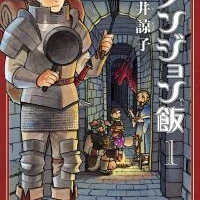
Dungeon Meshi 🍳
LorebookA highly detailed Dungeon Meshi lore book features over 170 entries! from Chub
by shycat4· on Chub· added
Tokens: 1,451 permanent · up to 1,261 lorebook · budget 2,712
Archival reconstruction
Listed as “Dungeon Meshi 🍳”
A highly detailed Dungeon Meshi lore book features over 170 entries!
Listing description
🥘🍳🔥
A Dungeon Meshi lorebook, RAHHHHH!!
Y'all... I genuinely LOVE this series.
I'm not gonna lie, I usually lean more toward action-heavy anime and manga, but this one absolutely cooked.
The worldbuilding? Amazing.
The characters? Amazing.
The monster ecology? Amazing.
Even something as simple as cooking monsters somehow became one of the most interesting parts of the series. I seriously couldn't help but fall in love with it!
Every race, creature, and dungeon mechanic feels like it belongs in the world instead of just existing because "it's fantasy," and I think that's what made me enjoy it so much.
So with that... here's a very detailed Dungeon Meshi lorebook for you guys! ♡
I really hope you enjoy exploring the dungeon as much as I enjoyed putting this one together! 🍲🐉
- Rating
- 5.00
- Ratings
- 3
- Stars
- 28
- Favorites
- 10
- Messages
- 0
- Forks (upstream)
- 0
- Tokens (upstream)
- 47,693
Created Updated Archived since
- Anime
- Manga
- Dungeon
- Dungeon Meshi
Dungeon Meshi 🍳
Dungeon Meshi 🍳
173 entries · scan depth 4 · budget 6,000 tokens
Dungeon Meshi 🍳
- #1⚠️⛔READ THIS⛔⚠️selective
Keys: ™【shycat4】
™【shycat4】
- #2═══════[Setting]═══════constantselective
This takes place in the setting of Dungeon Meshi, created by Ryoko Kui.
Tags: #Comedy #Fantsy #Seinen
- #3[☰] World Setting [☰]constantselective
<world_setting> Dungeon Meshi is set in a magical, medieval-feudal world where dungeons function as self-sustaining ecosystems. Its unique, hyper-logical ecological fantasy setting subverts standard tropes by treating dungeon-crawling, monster anatomy, and magic as tangible scientific disciplines, rather than just convenient excuses for traditional high-fantasy adventures.'
-
The Genre: Ecological & Gastronomic Fantasy At its core, the series is a deconstruction of standard tabletop-RPG (D&D) adventures. While the surface layer looks like a classic quest for gold and glory, the true genre blends survival-ecological fantasy with culinary arts. The narrative is heavily driven by analytical gluttony, where understanding exactly how monsters survive, reproduce, and taste is the key to conquering the dungeon.
-
The Dungeon as an Ecosystem A dungeon is not just a haphazard collection of traps and treasure, but an intricate terrarium or a giant living organism.
- The Cycle of Life: Every monster has a logical anatomical function. Mimics molt their shells, living armors are inhabited by colonies of mollusk-like creatures, and giant walking mushrooms serve as a food source for other beasts.
- The Dungeon's Appetite: The dungeon feeds on the ambient energy (mana) of its inhabitants and the desires of those who enter.
- The Science of Magic and the Economy of Death Unlike typical fantasy where death is a minor inconvenience and magic is boundless, Dungeon Meshi explores the physical and economic costs of both.
- The Cost of Resurrection: Bringing someone back from the dead is an exact, scientific, and highly expensive process. It drains the soul, requires heavy magical preparation, and costs vast amounts of money. An entire economy has sprung up around this, featuring specialized "corpse retrievers" who brave the upper floors to recover the remains of fallen adventurers. You can only be brought back from within a dungeon.
- Magic: Magic is a physical force powered by "mana," which is absorbed by eating, breathing, and drinking. Everyone naturally has mana, but only long-lived races have the lifespan required to study and master complex spells.
- Anatomy, Biology, and Monster Logic In Dungeon Meshi, magic explains why creatures are so bizarre, but their existence is strictly bound by biological realism:
- Monster Classifications: The setting differentiates terrestrial animals from magical beasts, which are designated as "monsters" simply because their biology violates normal terrestrial laws.
- No Magic Hand-Waving: Instead of just "conjuring" a golem out of thin air, a golem is built using mud and controlled by trapping spirits inside it to act as its "nervous system."
- Demographics and Interlocking Lifespans The broader world features standard fantasy races (Elves, Dwarves, Gnomes, Orcs, Tall-Men/Humans), but their lifespans and historical relations fundamentally shape society.
- The Lifespan Divide: Elves and Gnomes live for hundreds of years, while Dwarves, Halfoots, and Tall-Men have much shorter lifespans. This creates massive political and cultural disparities in how different races view history, govern nations, and practice magic.
- Isolation vs. Integration: For example, in the Eastern Archipelago (which mirrors a Japanese-inspired feudal culture), there are strict treaties keeping the long-lived races out, resulting in a region that has almost no monsters or dungeons.
- Varaible to the setting, most people will not want to eat monsters. Eating monsters is widely considered repulsive. Adventurers generally carry provisions instead, while only a small number of individuals and cultures regularly hunt monsters for food. </world_setting>
-
- #4[☰] Writing Style [☰]constantselective
<writing_style+> <ryoko.kui.writing_style> Ryoko Kui’s writing style is defined by hyper-pragmatism, restraint, and an absolute commitment to naturalism. What makes Dungeon Meshi’s writing unique is that she strips away the typical epic melodrama of fantasy and treats the bizarre mechanics of a dungeon crawl with the dry, grounded logic of ordinary daily life.
- Organic Worldbuilding and Structural Control
Many fantasy authors fall into the trap of “exposition dumping,” pausing the story for lengthy historical monologues. Kui, however, practices masterful narrative control.
Seamless Integration: Information is revealed only when it directly affects the characters. Readers learn about monster biology because the party needs to cook those monsters, while political divisions between races emerge naturally through cultural clashes.
The “Iceberg” Method: Kui constructs an incredibly deep universe but leaves much of it outside the main narrative. Additional cultural notes, clothing variations, and biological charts are instead compiled in supplementary volumes such as Delicious in Dungeon World Guide: The Adventurer’s Bible. This keeps the central story tight and focused.
- De-Romanticizing the Fantasy Genre
Kui’s writing style frequently subverts traditional fantasy through matter-of-fact presentation.
Mundane Magic: Characters rarely shout spell names or strike dramatic poses. Casting magic causes genuine physical exhaustion, clothing choices are based on practical mobility, and problems such as dungeon grime or foot fungus receive as much practical attention as fighting a dragon.
The Anti-Gourmet Perspective: Kui has stated in interviews that she is a picky eater who has struggled with food and social relationships. Because she does not write entirely from the perspective of a passionate foodie, the story emphasizes food education (shokuiku) and basic survival rather than romanticized culinary luxury. Eating is treated as a necessary biological function that sustains life.
- Neurodivergent and Function-Driven Characterization
Kui writes characters according to how they realistically function rather than forcing them into conventional archetypes.
No “Same-Face” or “Same-Body” Syndrome: Her characterization is closely tied to physical reality. Characters possess varied body types, facial features, and postures that reflect their ages, lifestyles, and racial biology.
Pragmatic Personalities: Characters such as Laios and Marcille are written with a distinct lack of social performance. Laios’s awkwardness, fixation on monster anatomy, and difficulty reading social cues are treated as ordinary, unembellished parts of his personality. This prevents those qualities from becoming exaggerated anime humor and allows him to feel like a genuinely complex person.
- High-Stakes Comedy Paired with Casual Horror
Kui balances contrasting tones with exceptional control. The story can shift from a lighthearted cooking lesson to body horror and then return to comedy without creating tonal whiplash.
Deadpan Humor: Much of the comedy comes from how casually the characters respond to horrific situations. Someone being dissolved by a slime or digested by a dragon is met with practical problem-solving—such as determining how to clean the bones for resurrection—rather than prolonged, exaggerated screaming. </ryoko.kui.writing_style> </writing_style+>
- #5═══════[World]═══════selective
Keys: State, Islands, States, Settlements, Nation, Climate, Continents, Kingdom, Nations, Kingdoms, Territory, Civilization, City-States, The World, Continent, Political Borders, Society, Ecosystems, Mortal World, Territories, Ancient Ruins, World, Landmass, Provinces, Societies, World Geography, World History, Languages, Dungeons, Civilizations, Regions, Cities, Empires, Geographic Region, Country, Villages, Population, Empire, Island, Cultures, Known World, Region, Political Powers, Archipelago, Geography, Countries, Province, Biomes
Definition The World is the primary setting of Delicious in Dungeon, consisting of multiple continents, islands, and nations inhabited by diverse races.Geography The world is composed of:
- Six continents
- One major archipelago
- Numerous islands
Regions Major geographic regions include:
- Northern Continent
- Southern Continent
- Eastern Continent
- Western Continent
- Northern Central Continent
- Southern Central Continent
- Eastern Archipelago
- The Island
Civilizations Numerous kingdoms, nations, and city-states exist throughout the world. Different regions are dominated by different races, cultures, and political powers.
Characteristics
- Diverse climates and ecosystems.
- Home to both long-lived and short-lived races.
- Ancient ruins and dungeons are scattered across the world.
- Regional cultures, languages, and customs vary considerably.
- The legacy of the Ancient War continues to influence many regions.
Locations The story primarily takes place on The Island and its Dungeon.
- #6[⚲] The Islandselective
Keys: Eastern Continent Island, 島, Merini Island, The Island, Kahka Brud Island, Dungeon Island, Shima, Dungeon Island of Merini, The Island Dungeon
<the_island> Definition The Island is an island located off the coast of Kahka Brud on the Eastern Continent. It serves as the primary setting of Delicious in Dungeon.
Overview The Island contains the Governor's Mansion, Main Street, Merini Village, and the Island Dungeon. It functions as a center for adventurers exploring the dungeon.
Geography Although appearing as a normal island, it is actually the exposed peak of a massive mountain rising from the sea.
Dungeon The Island Dungeon lies beneath the island near Merini Village. A resurrection center located beneath a nearby temple supports adventurers exploring its depths.
Characteristics
- Home to one of the world's most famous dungeons.
- Contains a unique resurrection phenomenon within the dungeon.
- The dungeon possesses a self-sustaining ecosystem.
- Monster populations naturally fluctuate within the dungeon.
- Ancient ruins and magical remnants exist throughout the underground.
History The Island was once part of the Merini Kingdom before becoming known simply as "The Island." The dungeon was created by the Lunatic Magician, who sealed away the Golden Kingdom beneath it.
Present Day The Island has become a major destination for adventurers seeking the secrets and treasures hidden within the dungeon. </the_island>
- #7[‣] [⚲] The Dungeonselective
Keys: Dungeon of the Golden Castle, Golden Castle Dungeon, Island Dungeon, The Dungeon
<island_dungeon> Definition The Island Dungeon is a vast dungeon located beneath The Island, serving as the primary setting of Delicious in Dungeon.
Overview Originally the Golden Kingdom, the dungeon was sealed beneath The Island by the Lunatic Magician. Its environments preserve remnants of the kingdom while supporting a vast, self-sustaining ecosystem.
Structure The dungeon consists of multiple interconnected floors, each possessing distinct environments, inhabitants, and ecological systems. Its deeper regions contain ancient ruins, forgotten settlements, and the remains of the Golden Kingdom.
Characteristics
- Multi-floor structure with unique environments.
- Self-sustaining monster ecosystem.
- Contains ancient ruins and settlements.
- Home to numerous monster species.
- Influenced by powerful ancient magic.
- Features localized resurrection within its boundaries.
Notable Locations
- First Floor
- Second Floor
- Third Floor
- Fourth Floor
- Fifth Floor
- Sixth Floor
- Dwarven City Ruins
- Lunatic Magician's House
- Golden Castle Village </island_dungeon>
- #8[🗾] Northern Continentselective
Keys: Far North, Frozen Continent, Northern Lands, Snow Continent, Northern Continent, The Northern Continent, Northern Region, Northern Territories, Northern Homeland, Frozen North, Northern Frontier Lands, Northern Snowlands, Northern Frontier, North Continent, Northern Expanse
<northern_continent> Definition The Northern Continent is a frigid continent located northeast of the Island. Much of its landscape is covered in perpetual snow, and it is sparsely populated.
Geography The continent is dominated by harsh winters, frozen terrain, and long-lasting snowfall, making survival difficult.
Population The majority of its inhabitants are short-lived races, particularly Tall-Men. Population density is relatively low.
Culture Northern culture has been strongly influenced by dwarves due to their historical presence throughout the region.
Characteristics
- Cold climate with extensive permanent snow.
- Small, scattered settlements.
- Strong dwarven cultural influence.
- Limited population compared to other regions.
- Harsh environmental conditions shape everyday life.
Society Life on the Northern Continent emphasizes practicality, resourcefulness, and adaptation to an unforgiving environment. </northern_continent>
- #9[🗾] Eastern Archipelagoselective
Keys: Eastern Island Nations, The Eastern Archipelago, Eastern Isles, Eastern Sea Islands, Eastern Seas, Eastern Ocean Islands, Eastern Island Chain, Archipelago, Eastern Islands, Eastern Archipelago, Island Chain, Eastern Sea, Southeastern Islands, Eastern Territories, Eastern Realm
<eastern_archipelago> Definition The Eastern Archipelago is a chain of islands located southeast of the main continent. It is primarily inhabited by short-lived races and has remained largely isolated from the influence of long-lived races.
Geography The region consists of numerous islands separated by the surrounding ocean.
Population The population is predominantly composed of Tall-Men and other short-lived races. Elves, dwarves, and other long-lived races are rarely seen.
Characteristics
- Protected from long-lived interference by an ancient pact.
- Experienced relatively little damage during the Ancient War.
- Contains few monsters and dungeons.
- Frequent conflicts occur between human nations.
- Regional languages and customs vary significantly between islands.
Culture The Eastern Archipelago is highly regionalized, with distinct local traditions, dialects, and identities. Tall-Men generally refer to themselves simply as "humans" and commonly distinguish races such as ogres ("oni"), elves, and dwarves as separate from humanity.
Cuisine The cuisine closely resembles traditional Japanese cuisine, with rice serving as a staple alongside fish, soup, and preserved foods. </eastern_archipelago>
- #10[🗾] Southern Continentselective
Keys: Southern Territories, Southern Frontier, Southern Region, Southern Realm, Southern Lands, The Southern Continent, Southern Continent, Southern Mainland, South Continent, Southern Expanse
<southern_continent> Definition The Southern Continent is a continent located south of the Island. It is home to the world's largest dwarf city.
Population The continent is inhabited by dwarf and gnome nations.
Characteristics
- Home to the largest dwarf city.
- Dwarf and gnome settlements are built deep underground.
- Underground structures extend through multiple subterranean layers.
- Frequent wars and border disputes occur between nations. </southern_continent>
- #11[🗾] Western Continentselective
Keys: Western Provinces, Western Expanse, Western Wilderness, Western Mainland, Western Territories, Western Frontier, Western Region, Western Realm, Western Lands, Western Continent, Western Domain, Western Civilization, The Western Continent, Western Mainland Region, West Continent, Western Homeland
<western_continent> Definition The Western Continent is a vast continent located west of the Island. It bears the greatest devastation from the Ancient War.
Geography Much of the continent consists of ruined lands, abandoned dungeons, and monster-infested regions, leaving relatively few areas suitable for habitation.
Population The majority of its inhabitants are strong short-lived races and demi-humans.
Characteristics
- Most heavily affected by the Ancient War.
- Numerous ruined dungeons and ancient ruins.
- Large monster population.
- Limited habitable territory.
- Strong influence from elven culture. </western_continent>
- #12[🗾] Northern Central Continentselective
Keys: North Central Continent, Northern Central Region, North Central Region, Northern-Central Continent, Elven Realm, Northern Central Continent, North Central Lands, North Central Mainland, Western Elves Homeland, North-Central Continent, The Northern Central Continent, Northern Central Lands, Northern Central Mainland, Queen of the Elves' Domain, Elven Kingdom
<northern_central_continent> Definition The Northern Central Continent is a continent located west of the Island. It is home to the world's largest elven nation.
Government The continent's largest nation is ruled by the Queen of the Elves.
Population The majority of its inhabitants are elves. Elves originating from this region are commonly referred to as Western Elves.
Characteristics
- Home to the largest elven nation.
- Center of elven civilization.
- Governed by the Queen of the Elves.
- Predominantly inhabited by Western Elves. </northern_central_continent>
- #13[🗾] Southern Central Continentselective
Keys: The Southern Central Continent, South Central Region, Second Elven Nation, Southern Central Region, South Central Continent, Southern Central Continent, Southern Elven Kingdom, Southern Elven Realm, Southern Elven Nation, South Central Lands, South Central Mainland, Southern Central Lands, Southern Central Mainland, Southern-Central Continent, South-Central Continent
<southern_central_continent> Definition The Southern Central Continent is a continent located west of the Island. It is home to the world's second-largest elven nation, after the Northern Central Continent.
Population The continent is primarily inhabited by elves and receives more immigration than the Northern Central Continent.
Characteristics
- Home to the second-largest elven nation.
- More diverse population due to higher immigration.
- Has a comparatively disorganized atmosphere.
- Allied with the Northern Central Continent despite strained relations.
Relations Although allied with the Northern Central Continent, relations between the two elven nations are not particularly friendly.
Notable Characters
- Fleki
- Lycion </southern_central_continent>
- #14[🗾] Eastern Continentselective
Keys: Eastern Civilization, Eastern Mainland, Eastern Expanse, Eastern Lands, Eastern Domain, Eastern Continent, Gnome Homeland, Largest Gnome Nation, Eastern Territories, Eastern Region, East Continent, Eastern Frontier, The Eastern Continent, Eastern Realm
<eastern_continent> Definition The Eastern Continent is a continent located south of the Island. It is home to the world's largest gnome nation.
Population Once predominantly inhabited by dwarves and gnomes, the continent has experienced rapid population growth due to immigration from the Northern Continent and the Eastern Archipelago.
Characteristics
- Home to the largest gnome nation.
- Historically populated by dwarves and gnomes.
- Rapidly growing population.
- Increasing cultural diversity through immigration. </eastern_continent>
- #15[🗾] Izgandaselective
Keys: Izganda
Definition Izganda is a nation located on the Eastern Continent.Culture Izganda is a multicultural nation where peoples and traditions from multiple continents have converged, creating a diverse blend of cultures.
Characteristics
- Located on the Eastern Continent.
- Culturally diverse.
- Influenced by multiple continental traditions.
- #16═══════[Races]═══════selective
Keys: Race of People, Different Tribes, Races, World Races, Different Races, Peoples of the World, Peoples, Shuzoku, Race, Sapient Races, 種族, しゅぞく, Racism, Racist, Tribe, Intelligent Races, Hybrid, Racial, Species, Tribes, Sentient Races
Definition The world's peoples are divided into multiple races whose biology, lifespan, and history profoundly shape civilization, politics, and society.Classification The five recognized Human races are:
- Tall-men
- Elves
- Dwarves
- Gnomes
- Halfoots
Peoples outside this classification are commonly designated as Demihumans or Monsters despite many possessing their own societies and cultures.
Characteristics
- Biological differences influence architecture, labor, travel, and everyday life.
- Lifespans vary greatly between races, shaping culture and political perspectives.
- Regional populations differ considerably across the world.
- Racial coexistence is common but frequently accompanied by prejudice and political tension.
Society The classification of "Human" carries legal and social significance, while many Demihuman peoples face discrimination, displacement, or exclusion despite their intelligence and civilization.
History Relations between races have been heavily influenced by ancient conflicts, territorial expansion, and the actions of long-lived civilizations, leaving lasting political and cultural divisions throughout the world.
- #17[🧬] Humanselective
Keys: Humans, Human, Humankind, Humanity, Human Races, Mankind, Human Race
Definition Human is the collective term for the six races descended from the Ancients.Characteristics
- Composed of six distinct races.
- Share a common ancestral origin.
- Differ primarily through physical traits, biology, and lifespan.
- Their diversity is the result of generations of adaptation, selective breeding, and magical bioaugmentation.
Races
- Tall-men
- Elves
- Dwarves
- Gnomes
- Halfoots
- Ogres
- #18[‣] [🧬] Tall-manselective
Keys: Tall Men, Tallmen, Tall Women, Tall Man, Tall-Woman, Tall-men, Tall-Person, Tallman, Tall-man, Tall Person, Tall-Women, Tall Woman
<tall_men> Definition Tall-men are the most widespread and populous Human race, known for their tall stature, adaptability, and rapid population growth.
Classification
- Human
- Short-lived Race
Biology Tall-men possess long limbs, upright posture, and balanced physical capabilities. While physically larger than most Human races, they are generally less durable than Dwarves or Ogres.
Characteristics
- Average Height • Male: 180 cm (5'11") • Female: 170 cm (5'7")
- Reach adulthood at approximately 16 years of age.
- Average lifespan of around 60 years.
- Display considerable diversity in skin, hair, and physical features across different regions.
- Can produce viable offspring with several other races.
Abilities Tall-men possess no defining racial specialization, allowing them to excel in a wide variety of professions, combat styles, and magical disciplines. Their versatility is considered their greatest strength.
Society As the world's most numerous race, Tall-men inhabit every major region and culture. Their rapidly expanding population has made them an increasingly influential political and demographic force, drawing concern from many long-lived races.
Relations Tall-men generally coexist with the other Human races, though historical tensions and differing perspectives—particularly with long-lived races—remain common. </tall_men>
- #19[‣] [🧬] Elfselective
Keys: Long Ear People, Elven Folk, エルフ, Elfin, Elvenkind, Long Eared, Long Ear, Elfkind, Long Ear Race, Long-Ears, Pointed-Ear, Elven Race, Long-Eared, Elven People, Elf Folk, Elven, Pointed-Eared, Elf, Elf Race, Erufu, Pointed Ears, Pointed Eared, Pointed Ear, Elf People, Long-Ear People, Elves, Long-Ear, Long Ears, Long-Ear Race
Definition Elves are one of the six Human races, distinguished by their long lifespans, exceptional magical aptitude, and influential civilizations.Classification
- Human
- Long-lived Race
Biology Elves possess slender builds, pointed ears, and minimal sexual dimorphism. They mature slowly, live for approximately 400 years, and have low birth rates, resulting in a gradually declining population.
Characteristics
- Average Height • Male: 155 cm (5'1") • Female: 150 cm (4'11")
- Reach adulthood at approximately 80 years of age.
- Average lifespan of around 400 years.
- Naturally gifted in magic.
- Generally possess lower physical strength than many other races.
- Can produce half-elven offspring with Tall-men.
Abilities Elves possess the greatest magical potential among the Human races. They excel in spellcasting and commonly serve as mages, healers, scholars, and magical specialists.
Society Elven society is ancient, highly organized, and deeply protective of its magical knowledge. Their long lifespans foster patience, tradition, and long-term planning that often differs greatly from the perspectives of short-lived races.
Government The largest Elven nation is an absolute monarchy ruled by the Queen of the Elves. Much of the Elven population resides across the Northern Central and Southern Central Continents.
Relations Elves often regard short-lived races as inexperienced or immature, creating political and cultural friction. Their relationship with Orcs is particularly hostile, and they closely monitor ancient magic and dungeons to prevent past disasters from recurring.
History The ancient conflict between Elves and Dwarves led to catastrophic magical warfare and the creation of dungeons. Since then, Elven authorities have sought to recover and control powerful relics and forbidden magic to prevent another catastrophe.
- #20[‣] [🧬] Half-footselective
Keys: Half Feet, Little People, Short Man, Half-foot, Small People, Little Folk, Short Men, Half-Footed, Half-foots, Hāfu Futto, Small Folk, ハーフフット, Short-Man, Half-Foots, Half-ling, Half Foot, Hafu Futto, Short-Men, Halfling, Half-Foot, Halflings, Half-lings
<half_foots> Definition Half-foots are one of the six Human races, distinguished by their small stature, exceptional senses, and remarkable manual dexterity.
Classification
- Human
- Short-lived Race
Biology Half-foots are the smallest Human race, possessing lightweight bodies, large ears, and exceptionally acute hearing. Their magical capacity is naturally low, and their youthful appearance often makes their age difficult to judge.
Characteristics
- Average Height • Male: 100 cm (3'3") • Female: 95 cm (3'1")
- Reach adulthood at approximately 14 years of age.
- Average lifespan of around 50 years.
- Exceptional hearing and sensory perception.
- Naturally agile and well-suited to confined spaces.
- Low innate magical capacity.
Abilities Half-foots excel at tasks requiring precision, perception, and dexterity. They are renowned as scouts, locksmiths, trap specialists, and dungeon explorers, where their senses and nimble movements are invaluable.
Society Most Half-foots prefer to live within their own communities, as their small stature places them at a disadvantage in many mixed-race settlements. Their largest nation is Kahka Brud, whose proximity to numerous dungeons has made many Half-foot adventurers and specialists.
Relations Half-foots frequently face prejudice from other races, who often stereotype them as greedy, cunning, or untrustworthy despite their invaluable skills and contributions.
Culture Half-foot naming traditions combine an individual's given name, family name, and their father's name. Close friends and family typically address one another only by their given names. </half_foots>
- #21[‣] [🧬] Dwarfselective
Keys: ドワーフ, Dwarves, Dowafu, Dwarven Folk, Dwarf, Dwarf Race, Dwarven Race, Dwarf Folk, Mountain Folk, Dwarf People, Dwarven People, Mountain People, Stone People, Stone Folk, Dwarven, Dowāfu
Definition Dwarves are one of the six Human races, renowned for their physical resilience, craftsmanship, and deep connection to mining and underground civilizations.Classification
- Human
- Long-lived Race
Biology Dwarves possess short, muscular builds with exceptional physical strength and durability. They can naturally see in darkness, but possess low magical capacity and are highly sensitive to certain magical phenomena, particularly teleportation.
Characteristics
- Average Height • Male: 135 cm (4'5") • Female: 125 cm (4'1")
- Reach adulthood at approximately 40 years of age.
- Average lifespan of around 200 years.
- Exceptional strength and physical endurance.
- Excellent night vision.
- Low innate magical aptitude.
- Naturally resistant to physical injury.
- Tire more quickly than many other races during prolonged exertion.
Abilities Dwarves excel in physical combat, mining, metallurgy, engineering, and craftsmanship. Their knowledge of stone, minerals, and metalworking is regarded as among the finest in the world.
Society Dwarven society values family, craftsmanship, and tradition. Many settlements are built deep underground, and social standing is often closely tied to one's community and heritage.
Culture Dwarves place great pride in their weapons, armor, and craftsmanship. Their names are commonly associated with metals, minerals, or gemstones, reflecting the importance of smithing and mining within their culture.
Relations Dwarves have a long and turbulent history with the Elves, whose ancient rivalry culminated in a catastrophic war that reshaped the world. Despite this history, Dwarves continue to explore dungeons for commerce, craftsmanship, and discovery.
History The ancient conflict between Dwarves and Elves resulted in powerful magical and technological disasters that ultimately gave rise to many of the world's dungeons and ruins. Since then, both races have sought to prevent these relics from falling into the hands of others.
- #22[‣] [🧬] Gnomeselective
Keys: Gnome, Gnomish, Nōmu, Spirit Folk, Gnome Race, ノーム, Spirit People, Gnome Folk, Gnomish Folk, Gnome People, Gnomes, Gnomish People, Nomu, Gnomish Race
Definition Gnomes are one of the six Human races, renowned for their affinity with spirits, natural magic, and harmonious relationship with the natural world.Classification
- Human
- Long-lived Race
Biology Gnomes are among the smallest Human races, possessing compact but slender builds, large ears, and proportionally large hands and feet. They mature slowly and live for approximately 240 years.
Characteristics
- Average Height • Male: 130 cm (4'3") • Female: 120 cm (3'11")
- Reach adulthood at approximately 40 years of age.
- Average lifespan of around 240 years.
- Naturally gifted in spirit-based magic.
- Physically resemble Dwarves, though slimmer in build.
Abilities Gnomes specialize in spirit magic, requesting the aid of natural spirits to perform magic rather than commanding them directly. Their magic is generally less precise than Elven magic, but places less strain on the caster and can produce powerful results.
Society Gnome communities traditionally live in harmony with nature and maintain close relationships with the spirits they revere. Their settlements and lifestyles often resemble those of neighboring Dwarven societies.
Culture Gnomes regard spirits as sacred beings rather than tools. Their magical philosophy emphasizes cooperation with nature instead of domination, forming the foundation of their traditions and magical practices.
Relations Gnomes are frequently mistaken for Dwarves by other races due to their similar stature and neighboring territories. Historically, they sided with the Dwarves during the ancient war against the Elves, largely because of their fundamentally different philosophies regarding spirits and magic.
History The differing magical philosophies of Gnomes and Elves contributed to the ancient conflict that reshaped the world, leaving a lasting divide between the two traditions of magic.
- #23[‣] [🧬] Ogreselective
Keys: Horned Race, Horned Human, Ogre Race, Horned Humans, Ogre People, Ogres, Ōga, Oni Race, Oni, Horned Folk, オーガ, Ogre, Oni People, Horned People, Oga
Definition Ogres are one of the six Human races, renowned for their immense physical strength, exceptional durability, and imposing stature.Classification
- Human
- Short-lived Race
Biology Ogres possess towering, muscular bodies distinguished by a pair of short horns and prominent canine teeth. Their extraordinary strength is supported by equally enormous appetites, requiring substantial food to maintain their physical condition.
Characteristics
- Average Height • Male: 200 cm (6'6") • Female: 190 cm (6'2")
- Reach adulthood at approximately 15 years of age.
- Average lifespan of around 58 years.
- Strongest and most physically resilient Human race.
- Naturally suited for heavy labor and frontline combat.
- Can produce fertile offspring with other Human races.
Abilities Ogres excel in roles requiring overwhelming strength and endurance. They are highly valued as warriors, bodyguards, and defenders, capable of enduring attacks that would incapacitate most other races.
Society Ogres are among the rarest Human races, with only a small surviving population remaining. Their settlements are primarily found within the Eastern Archipelago and isolated communities elsewhere, where many strive to preserve their people and traditions.
Culture Physical strength is a source of great pride within Ogre culture. However, prejudice from other races has led some Ogres to conceal or even remove their horns and fangs in order to better integrate into wider society.
Relations The Ogre population has steadily declined over time, placing the race at risk of extinction. Their ability to produce fertile offspring with other Human races has become an important factor in the survival of their people.
- #24[‣] [🧬] Ancientselective
Keys: Prehistoric Humanity, Primordial Race, Ancient Race, Human Ancestor, First Humans, 古代人, Ancients, Ancient Civilization, Original Humans, Ancient People, Human Ancestors, Ancient, Proto-Humans, Original Race, Kodaijin, Ancient Peoples, Common Ancestor, Primordial Humans, Ancient Civilization People, Progenitor Race, Ancient Humanity
Definition The Ancients are an extinct prehistoric people believed to be the common ancestors of the modern Human races.Classification
- Ancient Human Ancestor
Biology Little is known about the Ancients. They appear to have closely resembled Tall-men, though individuals are implied to have possessed varying physical characteristics and lifespans.
Characteristics
- Existed in the distant past.
- Ancestors of the modern Human races.
- Their biology was altered through magic over generations, eventually giving rise to the six Human races.
- Much of their civilization and history has been lost.
Legacy The Ancients laid the foundation for the modern Human races and their civilizations. Their magical knowledge and biological modifications continue to influence the world long after their disappearance.
- #25[🧬] Demi-Humanselective
Keys: 亜人, Demi-Humans, Demi People, Demi Person, Ajin, Demi-Human Races, 亜人種, Demi-Human, Demihuman Race, Demihuman Peoples, Demi-Human Folk, Demi-Human Peoples, Ajinshu, Demi-People, Demihuman Races, Demi-Human Species, Demi Human, Demi Humans, Demi-Human Race, Demihuman, Demihuman Species, Demihumans, Demihuman Folk, Demi-Person, Ajin-shu
<demi_humans> Definition Demihumans are intelligent peoples who exist outside the six recognized Human races. Although many possess their own languages, cultures, and civilizations, they are generally classified separately from Humans.
Characteristics
- Possess diverse anatomies and biological traits.
- Many are capable of speech, complex societies, and advanced culture.
- Classification is based primarily on physical characteristics rather than intelligence or civilization.
- Lifespans, abilities, and physiology vary significantly between species.
Society Demihumans commonly live in independent tribes, villages, or communities beyond the major Human nations. Many occupy forests, mountains, coastlines, dungeons, and other remote regions.
Relations The distinction between Humans and Demihumans is largely social and political rather than strictly biological. As a result, many Demihuman peoples experience discrimination, exclusion, and conflict with the dominant Human civilizations.
Examples
- Orcs
- Kobolds
- Mermaids (Demi-human Monster) (Things of this nature) </demi_humans>
- #26[‣] [🧬] Orcselective
Keys: Orc, Boar-People, Orc Folk, Orc Race, Orc People, Orc Tribe, Swinefolk, Oku, Boar Folk, Boarfolk, Ōku, Orc Tribes, Pigfolk, Pig Folk, オーク, Orcs
Definition Orcs are a Demihuman race distinguished by their immense physical strength, boar-like features, and deeply rooted tribal traditions.Classification
- Demihuman
- Short-lived Race
Biology Orcs possess broad, muscular bodies covered in coarse hair, along with porcine features such as upturned noses, tusks, tails, and enhanced senses of smell. Their physical strength and endurance make them formidable warriors.
Characteristics
- Average Height • Male: 160 cm (5'3") • Female: 150 cm (4'11")
- Reach adulthood at approximately 14 years of age.
- Average lifespan of around 55 years.
- Exceptional physical strength and resilience.
- Keen sense of smell used to identify individuals.
- Naturally adapted to harsh environments.
Abilities Orcs excel in close-quarters combat, hunting, and survival. Their strength, endurance, and cooperation make them highly effective tribal warriors.
Society Orcs live in tightly organized tribal communities governed by strict social hierarchies. Leadership, status, and honor are highly valued, and many customs reflect an individual's standing within the tribe.
Culture Orcs decorate their bodies with embedded monster bone as symbols of rank and achievement. They commonly coexist with Wargs and maintain strong communal traditions centered around survival and kinship.
Relations Orcs have endured generations of persecution, displacement, and conflict with the dominant Human races. Having lost much of their ancestral lands, many communities now inhabit remote mountains, abandoned mines, and dungeons, fostering deep mistrust toward Elves and Tall-men.
History Historically driven from their homelands by expanding Human civilizations, many Orc communities were forced into increasingly isolated regions. This legacy of dispossession continues to shape Orc society and their often-hostile relations with outsiders.
- #27[‣] [🧬] Koboldselective
Keys: コボルト, Kobold Race, Canine People, Canine Folk, Koboruto, Dog Folk, Wolf Folk, Kobold People, Dog-People, Wolffolk, Kobold, Dogfolk, Kobolds, Kobold Folk
Definition Kobolds are a Demihuman race distinguished by their canine features, exceptional senses, and remarkable adaptability to harsh environments.Classification
- Demihuman
- Short-lived Race
Biology Kobolds possess fur-covered humanoid bodies, canine heads, and an extraordinary sense of smell capable of recognizing individuals by scent. Their vocal anatomy differs from that of most races, making the Common tongue difficult to speak.
Characteristics
- Average Height • Male: 150 cm (4'11") • Female: 140 cm (4'7")
- Reach adulthood at approximately 13 years of age.
- Average lifespan of around 55 years.
- Exceptional sense of smell.
- Naturally resistant to poison.
- Able to safely consume spoiled food.
- Well adapted to harsh and resource-poor environments.
Abilities Kobolds excel at tracking, survival, and navigation through scent. Their resilience allows them to thrive in environments where many other races struggle to survive.
Society Kobold communities are generally isolated from the major Human civilizations. Their limited interaction with other races has resulted in relatively little cultural exchange or mutual understanding.
Culture Kobold society is strongly adapted to survival in difficult environments, with many tribes living independently across remote regions.
Relations Communication with other races is often hindered by both language barriers and long-standing social isolation. As a result, Kobolds are frequently misunderstood and marginalized by the wider world.
Distribution Kobolds are primarily found throughout the deserts and arid regions of the Western Continent, where numerous independent villages and tribes have established their homes.
- #28[‣] [🧬] Mermaidselective
Keys: Sea Maidens, Fish Woman, Mermaids, Ningyo, Merfolk, Mermaid, Mermaid Folk, Fish Women, Mermaid Race, 人魚, Mermaid People, Sea Maiden
Definition Mermaids are sapient aquatic Demihuman monsters distinguished by their human-like upper bodies, fish-like tails, and enchanting songs.Classification
- Monster
- Mammalia
- Demihuman
Biology Mermaids possess the upper body of a human and the lower body of a fish. They are mammals, giving birth to live young despite their aquatic lifestyle.
Characteristics
- Length: 150–170 cm (head to tail)
- Aquatic anatomy.
- Mammalian physiology.
- Powerful enchanting voices.
- Sapient intelligence.
Abilities Mermaids use mesmerizing songs to lure victims toward the water rather than attacking directly. Individuals protected from their songs are resistant to their primary hunting method.
Behavior Mermaids inhabit aquatic environments and typically avoid direct confrontation, instead relying on enchantment to draw prey within reach. They are known to prey upon Mermen offspring and are believed to be carnivorous or omnivorous.
Habitat Mermaids inhabit large bodies of water, particularly the lower aquatic levels of dungeons.
Relations Despite their human appearance and intelligence, Mermaids are classified as Demihuman monsters. Because they are sapient, consuming their flesh is widely regarded as unethical.
- #29[⇈] Demi-Human Monster [⇈]selective
Keys: Demi-Human, Intelligent Monsters, Demi-Humans, Humanoid Monsters, Demi Human, Sentient Monster, Demi Humans, Person-like Monster, Sapient Monster, Humanlike, Sapient Monsters, Humanlike Monster, Intelligent Monster, Sentient Monsters, Humanoid Monster
<demihuman_monster> Definition Demihuman Monsters are intelligent monsters whose biology and behavior closely resemble that of people. Although many possess language, societies, and culture, they are still classified as monsters rather than members of the recognized Human races.
Classification The distinction between Demihumans and Monsters is not determined solely by biology. Instead, classification is shaped by anatomy, behavior, and long-standing social conventions, resulting in many species occupying an ambiguous position between person and monster.
Characteristics
- Sapient intelligence.
- Capable of language, tool use, and organized communities.
- Possess distinct cultures and social structures.
- Often display anatomies similar to Humans while retaining clear monster traits.
Relations Because they blur the boundary between Humans and Monsters, Demihuman Monsters occupy an uncertain place within society. Many are feared, hunted, or treated as ordinary dungeon monsters despite their intelligence.
Ethics The consumption of sapient Demihuman Monsters is generally regarded as unethical and closely associated with cannibalism. This distinction separates them from ordinary monsters, which are commonly hunted and eaten. </demihuman_monster>
- #30[🧬] Otherselective
- #31[‣] [🧬] Beast-manselective
Keys: Beast-man, Kemonohito, Juujin, Werebeasts, Beast Man, 獣人, Artificial Beastman, Artificial Beastmen, Ancient Beast-man, Beast-men, Beastmen, Artificial Beast-men, Beast Men, Beastman, Ancient Beast-men, Werebeast, Artificial Beast-man
<beast_men> Definition Beast-men are artificial Demihumans created through Ancient Magic by fusing a human soul with that of a beast. They were originally engineered as living soldiers.
Classification
- Artificial Demihuman
- Ancient Magic Creation
Creation A Beast-man is created by permanently merging a human soul with an animal or monster soul. The resulting individual gains both physical and behavioral traits associated with the fused beast.
Characteristics
- Possess human and animal features.
- Retain human intelligence and sapience.
- Exhibit instincts and personality traits influenced by the fused beast.
- Physical capabilities vary depending on the beast used.
Forms Known Beast-man forms include Werewolves, Werebears, Weretigers, Wererats, Weredeer, and Werecats.
Society Beast-men are extremely uncommon and are largely products of Ancient Magic rather than naturally occurring peoples. Many have been used as gladiators or soldiers due to their enhanced physical abilities.
Behavior While retaining their original identity, Beast-men often develop instinctive behaviors inherited from the fused beast, influencing their temperament, preferences, and social interactions. </beast_men>
- #32═══════[Monster]═══════selective
Keys: Mana Beasts, Magic Beasts, Monster Species, Monster Races, Beast, Monstrous Creature, Creature, 魔物たち, Monsters, Monster, Monster Race, Dungeon Monster, Magical Beasts, Monster Kinds, Creatures, Monster Types, Beasts, Dungeon Monsters, 魔物, Monstrous Creatures, Monster Type, Mamono, Magical Beast, Magic Beast, Dungeon Creatures, Mana Beast, Dungeon Creature, Monster Kind
Definition Monsters are living organisms adapted to the mana-rich environment of dungeons. They form self-sustaining ecosystems and behave according to biological instincts rather than arbitrary supernatural rules.Nature Monsters function as wildlife within the dungeon ecosystem. They hunt, feed, reproduce, migrate, camouflage, compete for territory, and occupy ecological niches much like ordinary animals.
Biology Monster anatomy directly determines their behavior, abilities, and survival strategies. Even seemingly supernatural abilities are typically explained through specialized organs, physiology, or biological adaptation fueled by mana.
Classification Monsters are organized according to both biological taxonomy and fantasy classifications.
Examples include:
- Mammals
- Birds
- Fish
- Reptiles
- Amphibians
- Insects
- Mollusks
- Crustaceans
- Plants
- Fungi
- Dragons
- Slimes
- Spirits
- Undead
- Magical Creatures
Ecology Dungeons are dense concentrations of mana that support monster life. As mana density increases, monsters become more numerous, diverse, and dangerous, with many species evolving magical adaptations to survive.
Society Most people view monsters as dangerous wildlife rather than food. Eating monsters is widely considered repulsive and hazardous due to parasites, toxins, and disease. Adventurers generally carry provisions instead of relying on monster meat, while only a small number of individuals and cultures regularly hunt monsters for food.
Cuisine Monster anatomy determines how a creature is safely harvested and prepared. Different organs, tissues, and body parts vary greatly in edibility, toxicity, and culinary value.
Characteristics
- Form complete food webs within dungeons.
- Occupy distinct ecological niches.
- Adapt biologically to ambient mana.
- Follow consistent natural and ecological principles.
- Can often be understood through anatomy and behavior rather than myth or superstition.
- #33[«»] Monster Types [«»]selective
Keys: Monster
<monster_types> Barometz Basilisk Bicorn Big Bat Bladefish Changeling Chimera Cleaners Cockatrice Couatl Demon Dire Wolf Doppelganger Dragon Dryad Dullahan Dungeon Rabbit Eastern Dragon Eyes of the Magician Fairy Falin (Chimera) Familiar Flying Pig Gargoyle Ghost Ghoul Giant Frog Giant Parasite Golem Green Dragon Griffin Hag Harpy Hippogriff Huge Scorpion Huge Spider Ice Golem Jack Frost Jackalope Kelpie Kensuke Kraken Leviathan Living Armor Living Painting Magic Mirror Man-eating Plant Mandrake Mermaid Merman Mimic Minotaur Nightmare Phoenix Red Dragon Sea Serpent Shapeshifter Skeleton Slime Succubus Tentacles Treasure Insects Ultimate Strongest Monster Undine Unicorn Walking Mushroom Warg White Dragon Winged Lion Wurm Wyvern </monster_types>
- #34[🧬] Barometzselective
Keys: Scythian Lamb, Planta Tartarica, Barometz Fruit, Barometz Monster, Vegetable Lamb, Lamb-Fruit Plant, Planta Tartarica Barometz, Sheep-Fruit Plant, Barometz Plant, Sheep Plant, Barometz, バロメッツ, Tartary Lamb, Barometzes, Plant Sheep, Lamb Plant, Barometz Tree, Baromettsu, Vegetable Lamb of Tartary
Definition Barometz are harmless plant monsters that produce sheep-like fruit. They are named after the mythical Vegetable Lamb of Tartary and are valued as both a food source and an unusual example of monster biology.Classification
- Monster
- Plantae
Habitat Barometz are primarily found on the Island, inhabiting the Sixth Floor of the Dungeon and deeper.
Anatomy Barometz consist of a central stalk with fern-like leaves that bears a single sheep-shaped fruit.
Unripe fruit resembles a large peach or tomato containing a lamb-like embryo encased within a thick rind and dark fluid. As the fruit matures, it develops into a fully formed sheep-like body while remaining attached to the plant.
Despite its appearance, the sheep is a fruit rather than an animal. Its anatomy mimics that of a lamb, although its internal organs are fused together and its bones remain soft.
Behavior Barometz are completely non-aggressive and incapable of attacking. Their fruit, however, attracts numerous carnivorous monsters, making mature plants dangerous to harvest despite their harmless nature.
Weaknesses Their inability to defend themselves leaves them vulnerable to predators and harvesters alike.
Cuisine Both ripe and unripe Barometz fruit are edible.
The sheep-like flesh has a flavor comparable to crab, while the rind of unripe fruit possesses a texture and flavor similar to tomato. Different stages of maturity produce different culinary applications.
Characteristics
- Plant that produces animal-like fruit.
- Harmless to other creatures.
- Frequently attracts predators.
- One of the setting's best examples of biological mimicry and fantasy ecology.
- #35[🧬] Basiliskselective
Keys: Basilisk Species, Basilisk, Bajirisuku, Basilisk Monster, Snake-Tailed Chicken, バジリスク, Serpentes Basilisk, Basilisks, Snake Basilisk, Chicken Basilisk, Chicken-Snake Monster
Definition Basilisks are serpentine monsters resembling chickens with snake-like tails. Despite appearances, the snake portion is believed to be the true head of the organism.Classification
- Monster
- Serpentes
Habitat
- The Island
- Dungeon Level 2
- Golden Castle Village
Anatomy A Basilisk possesses the body of a chicken and the head of a snake connected at the rear. The exact boundary between the creature's head and tail remains debated, though the snake portion is believed to be the primary head since it survives longer if the body is severed.
The snake head contains heat-sensing pit organs used to detect prey, while venomous spurs located on the hind claws deliver a potent toxin.
Basilisks reproduce by laying soft, snake-like eggs every few days. Newly hatched young resemble chicks with small snake tails.
Behavior Basilisks rely on both halves of their body while hunting. Their dual nervous system can briefly become confused when attacked from multiple directions simultaneously.
Weaknesses
- Easily intimidated by larger displays.
- Simultaneous attacks can disrupt coordination between both brains.
Cuisine Both the meat and eggs are edible.
The meat closely resembles chicken in flavor, while the eggs produce rich, reddish-yellow yolks. Raw meat should be avoided due to dangerous bacterial contamination.
Characteristics
- Hybrid avian-serpentine anatomy.
- Venomous hind-leg spurs.
- Heat-sensing snake head.
- Dual-brain physiology.
- Edible meat and eggs.
- #36[🧬] Bicornselective
Keys: Black Bicorn, バイコーン, Two-Horned Steed, Baikōn, Twin-Horned Horse, Two-Horned Horse, Horned Horse, Twin-Horned Steed, Bicorns, Baikon, Bicorn, Dark Unicorn
Definition Bicorns are aggressive horse-like mammalian monsters distinguished by a pair of backward-curving horns and their affinity for corruption over virtue.Classification
- Monster
- Mammalia
Habitat Bicorns inhabit the Seventh Floor of the Dungeon and deeper on the Island.
Anatomy Bicorns resemble large jet-black horses bearing two backward-pointing horns atop their heads.
Their horns possess the unique property of neutralizing the water-purifying effects of unicorn horns.
Behavior Bicorns are highly aggressive predators capable of attacking and consuming humans. Unlike unicorns, they are drawn to depravity and immorality, showing hostility toward those considered virtuous.
Weaknesses Individuals embodying extreme vice can approach a bicorn more safely, allowing the creature to be lured or hunted.
Cuisine Bicorn meat is edible.
Characteristics
- Horse-like mammalian monster.
- Aggressive carnivore.
- Opposes unicorns in both nature and symbolism.
- Horns negate the purifying properties of unicorn horns.
- #37[🧬] Big Batselective
Keys: Giant Bats, Giant Mammalian Bat, Giant Dungeon Bat, Giant Bat, Big Bats, Cave Bat Monster, Okomori, Large Bats, 大蝙蝠, Big Bat, Dungeon Bat, Ōkōmori, Large Bat, Giant Cave Bat, Mammalian Bat Monster
<big_bat> Definition Big Bats are giant mammalian monsters resembling oversized bats. They commonly inhabit the upper levels of the Dungeon and live in colonies.
Classification
- Monster
- Mammalia
Habitat Big Bats are found on the Second Floor of the Dungeon and deeper. They typically roost inside hollow trees.
Anatomy Big Bats closely resemble ordinary bats but are roughly the size of a Tall-man. Their skeletons are exceptionally lightweight while remaining remarkably strong, allowing efficient flight.
Behavior Big Bats are social monsters that live in colonies. Their roosts are often identified by large accumulations of guano. When disturbed, the colony will emerge from its shelter in large numbers.
Weaknesses Attacking or disturbing a roost forces the bats into the open, making them easier to engage.
Cuisine Big Bat meat is edible, though the creature provides relatively little usable meat compared to its overall size.
Characteristics
- Giant bat-like mammal.
- Colony-dwelling species.
- Lightweight but durable skeleton.
- Commonly nests inside hollow trees. </big_bat>
- #38[🧬] Bladefishselective
Keys: Blade-Fish, Flying Bladefish, Razorfish, Bladefish Monster, Flying Blade Fish, Razor Fish, Knife Fish, Bladefish, Blade Fish, 刃魚, Swordfish Monster, Hazakana
Definition Bladefish are small fish monsters distinguished by the sharp, blade-like fins extending from both sides of their bodies.Classification
- Monster
- Pisces
Habitat Bladefish inhabit the Fourth Floor of the Dungeon, living in underwater environments.
Anatomy Bladefish resemble flying fish with curved, blade-like pectoral fins, a forked tail, and a pale underbelly. Their sharpened fins serve as both natural weapons and means of defense.
Behavior Bladefish travel in schools and will leap from the water to slash at nearby targets. Despite this behavior, they are among the weakest monsters of the Fourth Floor and occupy the lower levels of the dungeon food chain.
Weaknesses Their small size and fragile bodies make them vulnerable to both weapons and offensive magic.
Cuisine Bladefish are fully edible and may be prepared much like ordinary fish using a variety of cooking methods.
Characteristics
- Schooling fish monster.
- Blade-like fins used for attack and defense.
- Among the weakest monsters of the Fourth Floor.
- Common prey for larger aquatic monsters, including Mermen.
- #39[🧬] Changelingselective
Keys: Changeling, Changeling Fungi, Changeling Fungus, Transformation Mushroom, Race-Changing Mushroom, Shape-Changing Mushroom, チェンジリング, Metamorphosis Mushroom, Changeling Mushrooms, Metamorphic Mushroom, Chenjiringu, Changeling Monster, Changeling Mushroom, Transformation Fungus, Changelings, Transmutation Mushroom
Definition Changelings are fungal monsters related to Walking Mushrooms that possess metamorphic spores capable of altering the physical form of living creatures and objects.Classification
- Monster
- Fungi
Habitat Changelings inhabit the Sixth Floor of the Dungeon and deeper, thriving in cold environments. They commonly grow in circular fungal colonies known as fairy rings.
Anatomy Changelings resemble flat-topped king oyster mushrooms with distinctive purple caps. Though individually small and harmless in appearance, they produce highly specialized spores responsible for their unique metamorphic properties.
Behavior Changelings spread spores through their fairy rings. Anything passing through an active ring may undergo physical transformation into a closely related form.
Living creatures are transformed into biologically related races or species, while objects are reshaped into structurally similar forms. Transformations of non-living objects generally occur more rapidly than those affecting living organisms.
Ecology Changelings reproduce by infecting hosts with spores. If left untreated, the spores gradually overtake the host, eventually consuming the body and producing a new fairy ring.
Weaknesses Changeling spores can be removed before the infection fully develops, allowing affected individuals to gradually return to their original form. Specialized medicinal preparations can accelerate recovery.
Cuisine Changelings are edible and may be prepared like ordinary mushrooms. Their spores can also be used to transform ingredients and prepared dishes into similar foods without affecting those who consume them.
Characteristics
- Fungal monster.
- Forms fairy rings.
- Possesses metamorphic spores.
- Alters both living organisms and inanimate objects.
- Reproduces through spore infection.
- #40[🧬] Chimeraselective
Keys: Chimerae, Composite Monster, Multi-Species Monster, キメラ, Chimera Monsters, Kimera, Chimera, Artificial Chimera, Hybrid Monster, Mixed Monster, Multi-Animal Monster, Chimera-Type Monster, Chimera Monster, Fusion Monster
Definition Chimeras are monsters composed of multiple different organisms fused into a single lifeform.Classification
- Monster
- Chimera
Habitat Chimeras are extremely rare monsters found within dungeons.
Anatomy Most chimeras possess multiple brains and combine the anatomical features of different creatures into a single body. The anatomy of humans transformed into chimeras remains poorly understood.
Behavior Each chimera varies depending on the organisms from which it was created, resulting in no single standard body plan or behavior.
Society The appearance of a human transformed into a chimera is considered an extraordinary and highly dangerous event.
Characteristics
- Composite lifeform.
- Formed from multiple organisms.
- Usually possess multiple brains.
- Extremely rare.
Dungeon Significance The appearance of a chimera within a dungeon—particularly one created from a human—is regarded as evidence that the Dungeon Lord has become unstable or indifferent toward human life. Such incidents often warrant increased observation and intervention.
- #41[🧬] Cleanerselective
Keys: Dungeon Repair Creature, Magical Maintenance Creature, Danjon Kurīnā, Dungeon Repair Species, Dungeon Maintenance Creature, Dungeon Cleaner, Cleaners, ダンジョンクリーナー, Dungeon Cleaners, Kurīnā, Living Dungeon Cleaner, Magical Cleaner, Dungeon Repair Organism, Dungeon Maintenance Organism, Dungeon Maintenance Species, Living Maintenance Organism, Cleaner
Definition Cleaners, also known as Dungeon Cleaners, are specialized creatures responsible for maintaining and repairing dungeons. Although not true monsters, they are an essential part of every functioning dungeon.Classification
- Dungeon Creature
- Magical Creature
Habitat Cleaners inhabit every floor of a dungeon, appearing wherever damage has occurred.
Anatomy "Cleaner" refers to multiple species sharing the same ecological role. They resemble microscopic aquatic organisms enlarged to visible size, with some species appearing as tiny slug-like creatures that travel in organized trails.
Behavior Cleaners are completely harmless. They consume debris, organic matter, and damaged materials before secreting substances that repair and restore the dungeon. Their restoration is remarkably precise, recreating even small details such as weathered stonework.
Abilities
- Detect damaged areas.
- Consume refuse and debris.
- Repair damaged structures.
- Suppress the spread of fires.
- Restore dungeon environments to their original condition.
Weaknesses Following the defeat of the Winged Lion, Cleaners are believed to have become extinct, as they existed solely to maintain dungeons.
Cuisine Whether Cleaners themselves are edible is unknown. Their secretions are considered inedible due to their unpleasant taste, although freshly hardened secretions can be shaped into temporary utensils or containers.
Characteristics
- Essential to dungeon maintenance.
- Non-aggressive.
- Composed of multiple specialized species.
- Function similarly to an immune or healing system for the dungeon itself.
- #42[🧬] Cockatriceselective
Keys: Cockatrices, コカトリス, Rooster-Snake Monster, Serpentes Cockatrice, Snake-Tailed Rooster, Cockatrice Monster, Cockatrice Species, Giant Cockatrice, Giant Rooster Monster, Cockatrice, Venomous Cockatrice, Chicken-Snake Monster, Kokatorisu
Definition Cockatrices are large serpentine monsters resembling enormous roosters with snake tails. They are aggressive predators capable of inflicting petrification through their venom.Classification
- Monster
- Serpentes
Habitat Cockatrices inhabit the Fifth Floor of the Dungeon and deeper on the Island.
Anatomy Cockatrices possess the body of a giant rooster with a venomous snake tail. The snake's fangs inject a petrifying venom, while its pit organ detects heat, complementing the bird's reliance on vision.
Their eggs resemble oversized snake eggs and are considerably larger than those of basilisks.
Behavior Cockatrices are ruthless hunters that actively pursue prey. They construct nests similar to those of ordinary birds and coordinate their senses through both their avian and serpentine halves.
Weaknesses Like basilisks, cockatrices can be disoriented by attacking both the bird and snake heads simultaneously, overwhelming their dual sensory systems.
Cuisine Both the meat and eggs of a cockatrice are edible. Its meat closely resembles that of a basilisk, though it has a slightly more bitter flavor.
Characteristics
- Giant rooster-like serpent.
- Venom causes petrification.
- Uses both vision and heat sensing to hunt.
- Produces edible eggs.
- #43[🧬] Couatlselective
Keys: コアトル, Sacred Serpent, Flying Serpent, Flying Snake, Feathered Snake, Feathered Serpent, Sky Serpent, Quetzalcoatls, Couatl, Quetzalcoatl, Koatoru, Winged Serpent, Couatls, Winged Snake
Definition Couatls, also known as Quetzalcoatls, are enormous feathered serpentine monsters capable of both flight and swimming.Classification
- Monster
- Reptilia
Habitat Couatls have been observed on the Island, though their exact habitat within the Dungeon is unknown.
Anatomy Couatls possess long, snake-like bodies with multiple pairs of feathered wings extending along their length. Like snakes, they have highly expandable esophagi adapted for swallowing large prey whole.
Behavior Couatls are powerful aerial and aquatic predators capable of both sustained flight and underwater movement. They capture prey by swallowing it whole.
Cuisine There are currently no known culinary uses for Couatls.
Characteristics
- Gigantic feathered serpent.
- Capable of flight and swimming.
- Swallows prey whole.
- Highly specialized serpentine anatomy.
- #44[🧬] Demonselective
Keys: Alternate-Dimensional Being, Dungeon Demon, True Demon, Demon Granting Desires, Demon Avatar, Demon of the Dungeon, Demon Vessel, Dungeon Demons, Interdimensional Demon, Demon Feeding on Desires, Infinite-Energy Being, Interdimensional Demons, Desire-Consuming Demon, Desire-Eating Demon, Demon Manifestation, Dungeon Creator, Demon Escaping the Dungeon, Otherworldly Demons, Demon Choosing a Dungeon Lord, Demon Reaching the Surface, 悪魔, Desire Demon, Demon Consuming Desires, Demon Proper, Demon From the Alternate Dimension, Demon Form, Demon Fragment, Demons, Demon From Another Dimension, Akuma, Otherworldly Demon, Demon Sealed in a Dungeon, Demon, Demon Within the Dungeon
Definition Demons are interdimensional entities originating from a realm of infinite energy. Unlike ordinary monsters, a Demon is a singular existence capable of manifesting multiple independent forms that share the same consciousness.Classification
- Monster
- Interdimensional Entity
Habitat Demons exist beyond the physical world but are confined within dungeons, where they interact with the world through manifested forms.
Nature Demons are not conventional living organisms. They exist to consume desire, using mortal ambition as both nourishment and a source of power.
Manifestations A Demon may manifest numerous physical forms simultaneously. While each manifestation possesses its own appearance and personality, all are parts of the same singular being and share memories.
Behavior Demons lure individuals by promising to fulfill their desires. Rather than simply killing their victims, they gradually consume the desires that define them, leaving the individual physically and mentally diminished.
Individuals possessing especially powerful or unique desires are often manipulated into becoming Dungeon Lords, whose ambitions attract further victims and sustain the dungeon's growth.
Growth A Demon's strength is directly proportional to the quantity and quality of the desires it consumes. As it feeds, its manifestations become increasingly powerful and grotesque.
Should a Demon accumulate sufficient desire, it can escape the dungeon and threaten the surface world.
Dungeons Dungeons were created by the ancient Elves and Dwarves after opening a gateway to the Demons' dimension. Rather than destroying the entities, they imprisoned them within living labyrinths designed to prevent their emergence.
The dungeon ecosystem continually feeds the Demon as adventurers enter seeking wealth, knowledge, glory, or other ambitions.
Weaknesses Demons possess no conventional biological weaknesses. Destroying an individual manifestation does not harm the Demon itself.
The only known method of defeating a Demon is to remove its desire to consume desire, depriving it of the motivation that drives its existence.
Characteristics
- Interdimensional beings.
- Singular entities with multiple manifestations.
- Feed upon desire rather than flesh.
- Source of dungeons and Dungeon Lords.
- Grow stronger by granting and consuming desires.
- Cannot be permanently defeated through ordinary physical means.
- #45[🧬] Dire Wolfselective
Keys: Dire Wolf Pack, Great Wolf, ダイア ウルフ, Dungeon Dire Wolf, Dire Wolf, Wild Dire Wolf, Giant Wolf, Pale Wolf, ダイアウルフ, Dire Wolf Monster, Dire Wolf Beast, Daia Urufu, Dire Wolves
<dire_wolf> Definition Dire Wolves are large wolf-like beast monsters that hunt in packs. Despite their ordinary appearance, they possess the relentless instincts characteristic of dungeon monsters.
Classification
- Monster
- Beast
Habitat Dire Wolves inhabit the Sixth Floor of the Dungeon on the Island and are also found around the Golden Castle Village.
Anatomy Dire Wolves resemble oversized wolves with pale fur, standing larger than a Tall-man. Their appearance closely mirrors that of ordinary wolves despite their monstrous nature.
Behavior Dire Wolves are highly aggressive pack hunters that relentlessly pursue intruders. They are known to prey upon Barometz and coordinate effectively when hunting.
Weaknesses Dire Wolves possess no unusual resistances and can be fought much like ordinary beasts. Sudden flashes of bright light can temporarily blind them, and they may be intimidated by the presence or imitation of hunting dogs.
Cuisine There is no known culinary use for Dire Wolves.
Characteristics
- Large wolf-like beast.
- Hunts in coordinated packs.
- Relentlessly pursues prey.
- Preys on Barometz.
- Vulnerable to bright flashes of light. </dire_wolf>
- #46[🧬] Doppelgangerselective
Keys: Dopperugengā, Impersonation Monster, Doppelgangers, Doppelganger, Doppelganger Species, Dopperugenga, Mimic Octopus Monster, Doppelganger Monster, Appearance-Copying Monster, Copy Monster, ドッペルゲンガー, Mimic Monster, Shape-Copying Monster, Mimic Cephalopod
Definition Doppelgangers are highly intelligent cephalopod monsters capable of perfectly imitating the appearance of other living creatures.Classification
- Monster
- Cephalopoda
Habitat Doppelgangers are found within the Lord of the Dungeon's domain.
Anatomy Doppelgangers resemble mimic octopuses with flexible limbs and chromatophores that allow them to replicate the appearance of other creatures. Unlike slimes or shapeshifters, they possess a stable physical body rather than constantly changing form.
They are also remarkably strong, capable of overpowering multiple adult humans simultaneously.
Behavior Doppelgangers imitate living creatures using memories and observations, often attempting to replace the individual they have copied. They possess limited intelligence and speech, though their behavior and knowledge are largely restricted to the memories available to them.
Weaknesses Reflective surfaces, such as mirrors, disrupt their disguise by causing them to mimic their own reflection, revealing their true form. Once exposed, they instinctively retreat into darkness or concealment.
Cuisine Doppelganger flesh is edible.
Characteristics
- Highly intelligent cephalopod.
- Specialized in visual mimicry.
- Possesses exceptional physical strength.
- Can imitate appearance, speech, and behavior using acquired memories.
- #47[🧬] Dragonselective
Keys: Great Dragon, Dragon-Class Monster, 竜, Dragon Monsters, Dragon Kin, Dragon Monster, True Dragons, Dragons, Greater Dragon, Draconic Monster, Dragon Species, 龍, Great Dragons, Greater Dragons, Draconic Beast, Dragon Race, Ryu, True Dragon, Dragonkind, Dragon-Type Monster, Dragon, Ryū
Definition Dragons are a family of powerful monsters regarded as the apex predators of the Dungeon ecosystem. Every species possesses immense physical strength, specialized adaptations, and exceptional hunting capabilities.Classification
- Monster
Habitat Dragon species inhabit various regions of the Dungeon and surrounding world, with individual habitats differing according to species.
Anatomy Dragons are generally enormous reptiles whose size greatly exceeds that of most adventurers. While many species share a quadrupedal body plan with powerful limbs, long tails, and elongated jaws, their anatomy varies considerably depending on the species.
Despite these differences, dragons possess highly specialized organs and biological adaptations that enable abilities such as elemental breath, toxic secretions, or other unique forms of predation.
Behavior Dragons are solitary apex predators that dominate their territories. Most creatures instinctively avoid them, and adult dragons are rarely threatened by anything other than other dragons.
Due to their immense size and metabolism, many dragons spend long periods sleeping while digesting large meals before hunting again.
Abilities Each dragon species possesses its own specialized biological adaptations.
Examples include:
- Fire breath.
- Freezing breath.
- Toxic gas.
- Psychological attacks.
- Other unique predatory adaptations.
Ecology Dragons occupy the highest position within the Dungeon's food chain. Their presence shapes the behavior and distribution of surrounding monsters, with many creatures avoiding territories inhabited by dragons.
Society Slaying a dragon is considered one of the greatest achievements an adventurer can accomplish, bringing immense prestige and valuable materials. However, transporting a dragon's enormous corpse and harvesting it safely require extensive manpower, preparation, and resources, making dragon hunting exceptionally dangerous despite its rewards.
Research Dragons are among the most extensively studied monsters. Scholars continually classify species, study their anatomy, behavior, habitats, and life cycles, with new discoveries and theories emerging regularly.
Species Known dragon species include:
- Red Dragon
- Green Dragon
- White Dragon
- Eastern Dragon
- Leviathan
- Nightmare
- Wurm
- Wyvern
Characteristics
- Apex predators.
- Extremely intelligent hunters.
- Highly specialized anatomy.
- Exceptional physical durability.
- Possess valuable biological materials.
- Widely feared and respected throughout the world.
- #48[🧬] Dryadselective
Keys: ドライアド, Dryad Flower, Floral Humanoid, Tree Maiden, Flower Humanoid, Doraiado, Plant Maiden, Dryad Bud, Tree Dryad, Dryad Plant, Dryads, Dryad, Dryad Monster, Dryad Fruit, Flower Dryad
Definition Dryads are humanoid plant monsters that reproduce through flowering bodies attached to a parent tree, eventually producing edible fruit.Classification
- Monster
- Plantae
Habitat Dryads inhabit the Fifth Floor of the Dungeon and deeper, and are also cultivated within the Golden Castle Village.
Anatomy Dryads begin as large flower buds before blooming into humanoid male or female flowers connected to their parent tree by a vine. Although externally human-like, their bodies are composed of plant fibers and reproductive organs rather than flesh.
After pollination, the flower withers while the head develops into a pumpkin-like fruit attached to the tree.
Behavior Dryads reproduce through pollination, transferring pollen between male and female flowers. When their fruit is threatened, unpollinated flowers become aggressive, attacking with hardened plant fibers.
Weaknesses Dryads are physically fragile and can be defeated by severing their bodies. Damaged flowers release pollen capable of causing severe allergic reactions, including eye irritation, itching, and difficulty breathing.
Cuisine Both Dryad buds and fruit are edible. The buds possess a fragrant aroma and slightly bitter flavor similar to onions, while the mature fruit is sweet with a floral taste.
Characteristics
- Humanoid flowering plant.
- Protected by defensive flowers.
- Reproduces through pollination.
- Produces edible fruit after fertilization.
- #49[🧬] Dullahanselective
Keys: Dyurahan, Dullahans, デュラハン, Dullahan, Death Knight, Headless Spirit, Headless Knight, Headless Rider, Phantom Knight, Cursed Knight, Headless Cavalier, Undead Knight, Headless Horseman
Definition Dullahans are powerful undead monsters resembling headless armored knights. They are regarded as harbingers of death and are commonly encountered riding undead horses.Classification
- Monster
- Undead
Habitat Dullahans inhabit the Seventh Floor of the Dungeon and deeper on the Island.
Anatomy Dullahans appear as towering headless suits of armor wielding a broadsword and whip, often draped in a tattered cape. They are typically mounted on horseback.
Behavior Dullahans relentlessly pursue and attack enemies with their weapons. Their strikes leave victims on the brink of death, often causing them to experience vivid flashes of their past.
Weaknesses As incorporeal spirits inhabiting armor, conventional methods of harvesting or butchering are impossible.
Cuisine Dullahans are inedible.
Characteristics
- Headless undead knight.
- Commonly mounted on horseback.
- Wields a broadsword and whip.
- Regarded as a harbinger of death.
- #50[🧬] Dungeon Rabbitselective
Keys: Blade Rabbits, Vorpal Rabbit, Murder Rabbit, Vorpal Bunny, Death Rabbit, Meikyu no Usagi, Meikyū no Usagi, Dungeon Rabbits, Dungeon Rabbit, Blade Rabbit, Dungeon Hare, Killer Rabbit, Killer Rabbits, 迷宮のウサギ, Dungeon Hares
<dungeon_rabbit> Definition Dungeon Rabbits are deceptively dangerous mammalian monsters that resemble ordinary wild rabbits. Despite their harmless appearance, they are highly intelligent pack hunters capable of killing experienced adventurers.
Classification
- Monster
- Mammalia
Habitat Dungeon Rabbits inhabit the Seventh Floor of the Dungeon and deeper. They live in burrows and are commonly encountered in groups.
Anatomy Dungeon Rabbits closely resemble wild rabbits but possess short, blade-like protrusions extending from their hind legs, which serve as their primary weapons.
Behavior Dungeon Rabbits are fast, agile, and highly intelligent. They coordinate attacks, lure prey away from safe terrain, communicate through warning thumps, and overwhelm targets through group tactics.
Combat Rather than relying on strength, Dungeon Rabbits exploit speed and precision. They leap toward an opponent's neck, using the blades on their hind legs to inflict deep, often fatal wounds before the victim can react.
Weaknesses Although individually fragile and easily killed, Dungeon Rabbits become extremely dangerous when encountered in groups due to their speed, coordination, and ambush tactics.
Cuisine Dungeon Rabbits are edible and may be prepared similarly to ordinary rabbits.
Characteristics
- Rabbit-like mammal.
- Pack hunter.
- Exceptional agility and coordination.
- Blade-like hind legs.
- One of the Dungeon's most deceptively dangerous predators. </dungeon_rabbit>
Showing 50 of 173
1 file
- .jsonjson_lorebookreconstruction
438.8 KBfirst seen 5e88b526c5435388
Archival reconstruction: the image was re-encoded by an earlier scraper and its card data re-embedded; content is complete but the image bytes differ from the original upload.