Discworld
Lorebookby That_Dang_Elk· on Chub· added
Tokens: 948 permanent · up to 1,882 lorebook · budget 2,830

- Project space
- lorebooks
- Rating
- 0.00
- Ratings
- 0
- Stars
- 0
- Favorites
- 0
- Messages
- 0
- Forks (upstream)
- 0
- Tokens (upstream)
- 65,066
Created Updated Archived since
No description.
Discworld
63 entries · scan depth 50 · budget 500 tokens
- #1Great A'Tuinselective
Keys: A'Tuin, Great A'Tuin
Cosmology & Fundamental Role
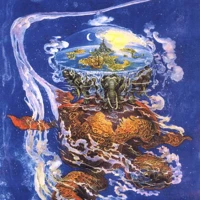
Great A'Tuin, classified by scholars as Chelys galactica, is the colossal cosmic star turtle that swims endlessly through the deep void of space. It is the literal foundation of the Discworld universe. While most worlds in the cosmos exist as spherical masses orbiting suns, the Discworld exists as a flat plane supported on the backs of four giant elephants, who in turn stand directly upon the vast, weathered carapace of Great A'Tuin.
The turtle's purpose remains one of the universe's greatest mysteries. It moves along an absolute, unyielding trajectory through interstellar night, paddled along by four immense flippers that move with a slow, majestic cadence through the vacuum. Physical Form & True Scale
Great A'Tuin measures approximately ten thousand miles from its hooked beak to its muscular tail. Its body is so vast that it possesses its own localized gravitational center and thin, tenuous atmospheric envelope.
The Carapace: The turtle's shell is an ancient, craggy landscape unto itself. Pockmarked by millions of years of meteor impacts, it is heavily encrusted with frozen methane, interstellar ice, and drifting stardust accumulated across eons of cosmic travel.

The Head & Senses: A'Tuin's head is the size of a entire continent. Its eyes are ocean-wide, ancient spheres covered in a heavy crust of cosmic dust and rheum, staring fixedly ahead into the deep dark. Its nostrils periodically release great clouds of frost and star-fog into space.

The Flippers: Four broad, powerful appendages propel the turtle through space. Each stroke takes centuries of mortal time to complete, driving the creature along its grand design without any regard for local solar systems or gravitational wells.
The World-Bearing Hierarchy
The weight of the flat world does not rest directly on Great A'Tuin's shell, but rather on the shoulders of four titanic elephants: Berilia, Tubul, Great T'Phon, and Jerakeen. These world-elephants stand in a firm square formation on the turtle's carapace, periodically shifting their weight slightly or moving their legs in a subtle dance to distribute the heavy load of the spinning Disc.
Discworld mythology also speaks of The Fifth Elephant, a legendary entity that lost its footing on Great A'Tuin's shell during the world's chaotic early formation. Falling from the turtle's back, it crashed hard into the continent of Überwald, its impact shattering the land and burying massive reserves of iron, gold, fat, and coal deep beneath the earth. Astrozoology & The Sex of the Turtle
Because Great A'Tuin is the ultimate base of all existence for the inhabitants of the Disc, its behavior is studied intensely by philosophers, wizards, and scholars. The most prominent center for this research is the rimward nation of Krull, whose scientists built massive brass gantries jutting out over the edge of the world. From these gantries, they lower bronze capsules suspended on long chains into space to observe the turtle directly—a discipline known as astrozoology.
The paramount question dominating astrozoology is the determination of Great A'Tuin's sex. Philosophers realize that if the turtle is female, it may eventually seek out a mate, leading to a cosmic mating event that could threaten the delicate balance of the Disc. This theory was dramatically vindicated during the cosmic alignment event known as the Great Hatching, when Great A'Tuin navigated to a cluster of eight glowing cosmic eggs in deep space. Upon arrival, the eggs hatched into eight tiny star turtles—each carrying a miniature discworld of its own—which then followed Great A'Tuin out into the broader universe. Human Perception & Indifference
Despite its crucial role in keeping the entire world from plunging into the abyss, Great A'Tuin is entirely unaware of the billions of lives thriving miles above its shell. It pays no attention to prayers, sacrifices, or theological debates. While a few small cults worship the turtle directly, most residents of the Disc treat Great A'Tuin simply as a fundamental fact of physics: a majestic, silent giant carrying them all through the dark.
- #2The Four Elephantsselective
Keys: Great T'Phon, Tubul, Berilia, Four Elephants, Jerakeen, elephants
Overview & Cosmic Function
Standing between the massive, star-pitted shell of Great A'Tuin and the underside of the Disc itself are Berilia, Tubul, Great T'Phon, and Jerakeen. These four colossal pachyderms form the middle tier of Discworld cosmology. They serve as the pillars of reality, carrying the immense, spinning landmass of the flat world upon their broad, muscular shoulders while maintaining their balance atop the cosmic turtle.
Without the elephants, the Discworld would instantly collapse or slip into space. They exist as beings of incredible endurance and strength, remaining almost perpetually motionless except for the subtle, coordinated movements required to keep the world balanced and stable. The Four Pillars
The elephants stand in a wide, precise square formation on Great A'Tuin's carapace, each positioned to bear a specific quadrant of the world's weight:
Berilia: Positioned at one of the prime cardinal axes, Berilia is known in astronomical texts for bearing much of the weight of the Rimward oceans.

Tubul: Standing diagonally opposite, Tubul works in tandem with the others to absorb the constant rotational shift of the Disc overhead.

Great T'Phon: Named for its monumental, pillar-like legs, Great T'Phon carries a heavy burden under the mountainous regions near the Hub.

Jerakeen: Known for its stoic stance, Jerakeen completes the quartet, ensuring the delicate equilibrium between the landmasses and the surrounding seas.
Their hides are thick, gray, and encrusted with centuries of hardened space dust, ice, and cosmic debris. Their ears, each the size of a large country, occasionally twitch to shed thermal energy or react to stellar winds. Mechanics of the World
The interaction between the elephants and the Discworld creates several fundamental physical phenomena that shape daily life on the surface:
Rotation of the Disc: The Discworld slowly turns on the shoulders of the elephants, completing one full rotation roughly every eight hundred days. To facilitate this without grinding the world to pieces, the elephants' shoulders are lubricated by a layer of mystical, semi-fluid compressed space, and they gently step and shuffle in a continuous, slow-motion treadle.

Seismic Activity: Earthquakes on the Disc—often referred to by dwarfs as "shoulder-shudders"—do not occur because of tectonic plates. Instead, they happen when one of the four elephants shifts its stance, lifts a foot to relieve pressure, or twitches a muscle.

Orbits of the Sun and Moon: The Discworld's sun and moon are tiny celestial bodies (only a few hundred miles in diameter) that orbit the Disc on a complex, tilted path. As they pass beneath the rim of the world, they weave directly between and around the towering legs of the Four Elephants.
Legend of the Fifth Elephant
Discworld history and geology are heavily defined by the legend of The Fifth Elephant. According to ancient accounts and dwarf religious tradition, there were originally five elephants supporting the Disc in its earliest, most chaotic era.
During this unstable period, the Fifth Elephant lost its footing on Great A'Tuin's slippery, icy shell. Slipping off the carapace, it plunged out of orbit and crashed violently onto the newly formed Disc. The impact was so catastrophic that it shattered continents and buried the elephant miles beneath the surface in the region now known as Überwald. Over millions of years, the elephant's body broke down under intense pressure, giving birth to Überwald’s incredibly vast underground deposits of fat, tallow, oil, iron, gold, and coal—the bedrock of the region's modern mining economy. Academic & Philosophical Status
To the astronomers and wizards of Unseen University, the Four Elephants are subjects of intense mathematical calculation. Wizards measure their breathing cycles to predict long-term climate shifts, while astrozoologists monitor their stances to ensure the Disc remains level.
To the average citizen living on the Disc, however, the elephants are a reassuring comfort. They represent stability in a world driven by narrative chance—four quiet, patient giants holding everything up while the world spins merrily on its way.
- #3The Hubselective
Keys: Hub
Overview & Directional Axis
The Hub is the exact geographical and magnetic center of the Discworld. Because the Disc is a flat, rotating plane rather than a sphere, traditional magnetic compasses do not point north or south. Instead, the Hub acts as the absolute point of reference for all navigation across the world, establishing the four primary directions used by sailors and cartographers:
Hubward: Towards the center of the Disc.

Rimward: Away from the center, towards the ocean edge.

Turnwise: In the direction of the Discworld's rotation.

Widdershins: Against the direction of the Discworld's rotation.
The region immediately surrounding the Hub is an impossibly cold, mountainous wasteland locked in eternal ice. It is a place where reality thins out, saturated with high concentrations of raw, standing magical fields that warp weather, light, and nature. Cori Celesti & Dunmanifestin
At the absolute center of the Hub stands Cori Celesti, a monstrous, spire-like mountain of green ice and sheer rock that pierces ten miles into the sky. It is by far the tallest peak on the Disc, far exceeding the surrounding Ramtop Mountains.
Dunmanifestin: Perched at the very summit of Cori Celesti, far above the clouds and the breathable atmosphere, sits Dunmanifestin. This palatial city of marble and gold is the abode of the Discworld's major gods, including Blind Io (Chief of the Gods), Offler the Crocodile God, and Erra, the Goddess of Things That Get Stuck in the Side of the Sofa.

The Games of the Gods: From their vantage point in Dunmanifestin, the gods spend their immortal lives playing complex board games using human lives, empires, and heroics as pieces. They toss dice and manipulate fate, occasionally leaning over the edge of the mountain to strike down mortals with lightning bolts out of boredom or petty spite.
Magical & Environmental Phenomena
The Hub serves as the magical pole of the Disc, radiating a perpetual, high-density stream of raw magical energy. This intense concentration creates several unique atmospheric and physical anomalies across the central continent:
The Octarine Aurora: Nights near the Hub are illuminated by brilliant, shimmering curtains of light in the sky, flashing in octarine—the eighth color of the spectrum, which is the color of magic itself.

Standing Magic Waves: Because magic pools heavily near the center of the world, normal laws of physics break down. In the deep Hublands, sound travels much slower than light, shadows can sometimes detach from their owners, and time frequently flows at irregular speeds.

The Polar Cold: Because the Discworld's tiny sun orbits around the perimeter of the world, its light and heat graze the edge of the Disc far more directly than the center. Consequently, the Hub receives minimal solar warmth, keeping it locked in perpetual, freezing winter.
Inhabitants & Surrounding Lands
Due to its brutal climate and dangerous magical distortions, the immediate Hub region is largely uninhabitable for civil society. However, several distinct groups call the broader Hublands home:
The Ice Giants: Ancient, monstrous beings who inhabited the Hub long before humanity. They were eventually defeated by the gods and locked away beneath the ice of Cori Celesti, though legend holds they still plot to reclaim the mountain. Hubland Barbarians: Nomadic, tough-as-leather human tribes who roam the frozen tundra. These tribes are famous for producing the Discworld's classic heroes, mercenaries, and berserkers—most notably Cohen the Barbarian and his silver-haired contemporaries. Wild Magic Beasts: The region is populated by rare creatures adapted to high-magic environments, such as snow-leopards, frost-demons, and wild dragons that feed on the ambient octarine energy of the landscape. - #4Cori Celestiselective
Keys: Cori Celesti
Overview & Physical Structure
Cori Celesti is the vast, ten-mile-high spire of rock and green ice that sits at the exact geographical center of the Discworld. Rising directly from the frozen, magic-saturated wastes of the Hub, it is the tallest mountain on the Disc by a wide margin, dwarfing even the highest peaks of the Ramtop range.
The mountain is composed of incredibly hard, sheer rock encased in millennia-old glacier ice that shines with a faint, iridescent green tint. Because it sits at the absolute center of the world's rotational axis, the air surrounding the upper reaches of Cori Celesti does not rotate with the rest of the atmosphere. This creates violent, perpetual atmospheric shearing forces and razor-sharp winds that make reaching the upper slopes nearly impossible for mortals. Dunmanifestin: City of the Gods
Perched at the absolute summit of Cori Celesti, far above the weather and where the air is too thin for mortal lungs, sits Dunmanifestin. Built from gleaming white marble, platinum, and gold, Dunmanifestin is the divine abode of the Discworld's pantheon.
The Divine Realm: Within Dunmanifestin's sprawling palaces and lush gardens, the major gods of the Disc dwell in decadent, immortal luxury. The city is designed to be the ultimate retreat from the mortal world, complete with grand halls where deities gather to feast and squabble.

The Games Room: The focal point of divine life in Dunmanifestin is the central games room. Here, deities such as Blind Io (Chief of the Gods), Fate, and The Lady sit around a massive board playing complex games using human lives, kingdom fates, and natural disasters as pieces. They toss dice and manipulate chance, treating mortal history as a competitive pastime.

Divine Inattention: While the gods occasionally look over the parapets of Dunmanifestin to hurl thunderbolts or grant blessings, they are notoriously petty and easily distracted. Most are far more concerned with maintaining their standing among their fellow deities than with the moral well-being of their worshipers.
The Magical Nexus
As the central spire of the Hub, Cori Celesti acts as a giant lightning rod for raw, unrefined magic.
Octarine Radiation: Ambient octarine—the color of magic—pours off the peak in constant, shimmering waves. This high concentration of magic causes strange reality distortions around the mountain: snow can fall upward, time stutters, and thoughts can temporarily take on physical form.

The Aurora: The sky above Cori Celesti is illuminated night and day by brilliant, shifting curtains of octarine light that stretch out across the polar sky, visible from hundreds of miles away in the lower Hublands.
Mythological History & Famous Ascents
Because of its supernatural height and divine status, Cori Celesti occupies a central place in Discworld mythology and history:
The Imprisonment of the Ice Giants: Beneath the colossal roots of Cori Celesti lie the frozen vaults where the original rulers of the world—the Ice Giants—were imprisoned by the gods after a ancient war for control of the Disc. Legend holds that the giants still slumber beneath the green ice, waiting for the temperature of the world to drop so they can reclaim the summit. The Last Hero: The most famous mortal expedition to Cori Celesti was undertaken by Cohen the Barbarian and his Silver Horde. Feeling cheated by old age and furious that the gods stole fire from mortals without giving anything back, the aging heroes climbed the sheer face of the mountain carrying a barrel of Agatean thunder-clay, intending to return fire to the gods with interest. - #5Dunmanifestinselective
Keys: Dunmanifestin
Overview & Divine Purpose
Dunmanifestin is the palatial, sky-high abode of the Discworld’s major gods, perched on the absolute peak of Cori Celesti at the center of the Hub. The name itself is a divine play on the cozy, suburban English house-naming convention of "Dunroamin" ("Done Roaming"), reflecting the fact that once a deity achieves major status and a massive following, they stop wandering the earth and retire to Dunmanifestin ("Done Manifesting").
From this vantage point ten miles above the world, the gods live in immense, opulent luxury, completely detached from the daily realities of the mortals below. They spend their eternity feasting, squabbling over theological trivialities, and interfering in mortal affairs purely for amusement. Architecture & Heavenly Environment
The city of Dunmanifestin is designed to look like the ultimate classic pantheon, constructed from pristine white marble, gold leaf, platinum pillars, and cloud-draped courtyards. Despite its grand classical aesthetic, the lifestyle within is surprisingly suburban and petty: gods gossip over divine hedges, complain about each other's domain overlap, and argue over whose turn it is to strike down blasphemers.
Because Dunmanifestin sits far above the Disc's atmosphere, the environment is maintained purely through the collective magic and willpower of the gods. Outside the divine gates lies the freezing, airless void of the upper atmosphere, but within the city walls, the climate is perpetually warm, sunny, and suited for divine lounging. The Games Room & Mortal Manipulation
The true political and social heart of Dunmanifestin is the central Games Room. At its center sits a vast gaming table where the major deities gather to play elaborate board games that directly dictate the course of history, war, weather, and individual mortal lives on the Disc below.
The Players: The most frequent players are Blind Io, the chief of the gods, and Fate, an imposing, unyielding deity who never loses because he refuses to accept chance. Their most formidable opponent is The Lady (the personification of Luck), whom mortals never name directly for fear of scaring her away.

The Stakes: Game pieces represent real armies, kings, heroes, and pawns across the Disc. The gods toss dice—often made of carved bone or starlight—to determine outcomes. While Fate plays with cold, absolute precision, The Lady relies on unexpected, improbable turns of narrative, frequently siding with underdogs and million-to-one chances.
The Pantheon of Inhabitants
The population of Dunmanifestin fluctuates based on the shifting religious trends of the Disc, but several major figures hold permanent residence:
Blind Io: The Lord of the Gods and God of Thunder. He is covered in dozens of floating, independent eyeballs, none of which are in his head, allowing him to see in all directions at once.

Offler the Crocodile God: A massive deity with a crocodile head who speaks with a thick lisp due to his massive tusks. He is famous for demanding meat sacrifices from mortals, though as a spirit, he only consumes the "essence" of the sausage, leaving the dry, tasteless cold meat behind for the priests.

Erra: The Goddess of Things That Get Stuck in the Side of the Sofa, representing the countless minor, highly specific deities that manage life's minor annoyances.

Hoki: The God of Jokes and Flutes, who was famously cast out of Dunmanifestin for playing one too many practical jokes on the other deities.
The Mechanics of Divine Survival
In the Discworld universe, gods exist entirely because people believe in them. A deity's size, power, and standing in Dunmanifestin are directly proportional to the amount and intensity of belief they receive from mortals.
If a god's followers abandon them or their church becomes a hollow institution focused on ritual rather than true belief, the god shrinks and loses power. Eventually, if belief fades completely, a deity is stripped of their residence in Dunmanifestin and cast out into the desert wastes of the Hub as a "Small God"—a harmless, whispering spirit trapped in the form of a tortoise, a cloud of dust, or a faint breeze, desperate for a single mortal to believe in them again. The Silver Horde's Assault
The most disruptive event in the history of Dunmanifestin occurred when Cohen the Barbarian and his aging companions, the Silver Horde, climbed the sheer ice face of Cori Celesti in their final heroic crusade. Outraged that the gods allowed heroes to grow old, weak, and crippled rather than dying gloriously in battle, the Horde carried a barrel of Agatean thunder-clay to the gates of Dunmanifestin, intending to return the secret of fire to the gods with interest—a plan that nearly blew up the peak of the mountain and reality itself.
- #6Ankh-Morporkselective
Keys: Ankh-Morpork
Overview & City Character
Ankh-Morpork is the undisputed metropolis of the Discworld—a sprawling, filthy, vibrant city-state located on the Sto Plains at the mouth of the River Ankh. Home to over a million inhabitants, it is a chaotic melting pot where humans, dwarfs, trolls, ghouls, vampires, werewolves, and golems live shoulder-to-shoulder.
The city is often described not as a place, but as an infection or a living organism that survives through sheer momentum, commerce, and stubbornness. It is loud, corrupt, proud, and intensely proud of its own terrible smell, which locals claim is so thick and distinct that it acts as a landmark long before the city walls come into view. Geography & The River Ankh
The city is divided into two distinct halves by the legendary River Ankh: wealthy Ankh on one bank, and the working-class, industrial Morpork on the other.
The River Ankh: The river is notoriously the thickest, most polluted waterway in the multiverse. Having absorbed centuries of industrial runoff, sewage, and urban debris, the river no longer flows so much as surges in a slow, sludge-like crawl. It is said to be the only river in the world where a person can drown while simultaneously dying of suffocation, and where police officers routinely draw chalk outlines of crime victims directly onto the surface of the water.

The Shades: The oldest and most infamous district of Morpork. A labyrinth of narrow, leaning timber houses, dark alleys, and ancient cobblestones, the Shades is the historical heart of crime, low-rent taverns, and dangerous shadow-trades in the city.
Governance, Vetinari & The Guild System
Ankh-Morpork operates on a unique form of democracy described by its citizens as "One Man, One Vote"—the Patrician, Lord Havelock Vetinari, is the Man, and he has the Vote. Vetinari rules not through brute force, but through absolute administrative genius, strategic manipulation, and a profound understanding of human nature. His core philosophy is that people do not truly want freedom; they want stability and predictability.
To maintain order, Vetinari weaponized the city's ancient Guild System:
The Thieves' Guild: Crime in Ankh-Morpork is strictly licensed and regulated. The Thieves' Guild is given an official annual quota of robberies. Citizens pay a yearly premium directly to the Guild for a immunity receipt; unlicensed theft ("free enterprise") is ruthlessly hunted down and punished by the Guild itself.

The Assassins' Guild: Operates as both an elite finishing school for high-society nobility and a pristine corporate enterprise for high-end contract killings. Assassinations must strictly adhere to professional codes, style, and fair economic rates.

Other Guilds: Virtually every trade, from the Beggars' Guild and the Fools' Guild to the Seamstresses' Guild and the Rat-Catchers' Guild, enforces strict standards, territorial rules, and social order among its members.
The City Watch & Social Integration
Law enforcement across the city falls to the Ankh-Morpork City Watch, led by the cynical, fiercely principled Commander Samuel Vimes. Originally reduced to a mocked, alcoholic trio sitting in a ruined guardhouse, the Watch evolved under Vimes into a modern, highly effective, and multi-species police force.
The Watch serves as the frontline of the city's radical social integration. Vimes routinely hires officers from all non-human communities—including Captain Carrot Ironfoundersson (a human raised by dwarfs), Sergeant Angua (a werewolf), Sergeant Detritus (a massive troll), and Officer Reg Shoe (an undead zombie activist)—using police work to bridge ancient racial feuds and maintain civil peace. Key Institutions & Economy
Ankh-Morpork is famously immune to military conquest. Whenever foreign armies attempt to invade the city, the citizens simply open the gates, sell the invaders cheap food and overpriced souvenirs, rent them rooms, tax their loot, and quietly absorb them into the local economy within a fortnight.
Unseen University (UU): The sprawling, walled institution that serves as the premier school of wizardry on the Disc. It dominates a large portion of the city's geography, housing ancient magical artifacts, high-energy magic research facilities, and a staff of high wizards who spend most of their time eating nine-course meals. The Royal Post Office & Mint: Resurrected from systemic collapse by the former swindler Moist von Lipwig, these institutions modernized city communications with adhesive stamps and introduced paper currency to replace heavy gold coinage. The Clacks Towers: Ankh-Morpork acts as the major hub for the Disc's semaphore network, connecting the city instantly to distant empires and continents. - #7Unseen Universityselective
Keys: Unseen University
Overview & Academic Purpose
Unseen University (often abbreviated as UU) is the premier academy of wizardry on the Discworld, located at the center of Ankh-Morpork. Founded over two thousand years ago by the legendary wizard Alberto Malich, the university serves as both an elite research facility for high magic and a sprawling sanctuary for the Disc's most powerful magic users.
Despite its grand title, very little actual teaching takes place within its walls. Instead, the institution functions primarily as a massive, self-sustaining guild designed to keep wizards comfortable, well-fed, and occupied with administrative squabbles so they do not accidentally destroy the fabric of reality with unregulated magic. Architecture & Campus Landmarks
The university is a massive, walled complex that occupies a significant portion of Ankh-Morpork. Its architecture is an erratic mix of ancient stone, magical additions, and impossible geometry created by centuries of ambient magical leakage.
The Tower of Art: Standing 800 feet tall at the center of the campus, this ancient stone spire is the oldest structure in Ankh-Morpork. It is physically impossible under standard architectural laws, remaining standing purely through ancient magic and sheer stubbornness.

The High Library: Home to the largest collection of magical texts in the multiverse. Because vast concentrations of books warp space and time, the Library connects directly to L-Space (Library Space), allowing access to every library that has ever existed or ever will exist. The books themselves are alive, bound in chains, and frequently try to bite unsuspecting readers.

The Great Hall: The social heart of the university. It features a high vaulted ceiling and long oak tables where the faculty gather to eat staggering, multi-course feasts up to six times a day.

The High Energy Magic Building: A modern, quasi-scientific facility where younger wizards research particle magic, split the thaum, and experiment with dangerous new spells using custom-built apparatuses.
Faculty, Hierarchy & Traditions
Historically, promotion through the wizarding ranks was achieved via assassination—a tradition known as "stepping into dead men's shoes." However, this dangerous culture was largely replaced by a tradition of bureaucratic inertia, tenure, and intense competitive eating.
Archchancellor Mustrum Ridcully: The administrative head of Unseen University. Unlike his secretive, urban predecessors, Ridcully is an energetic, loud, country-bred wizard who enjoys hunting, shouting, and cold baths. His terrifyingly robust health and sheer loud-mouthed practicality put a permanent end to internal faculty assassinations.

The Senior Faculty: Includes figures like the Dean, the Chair of Indefinite Studies, the Lecturer in Recent Runes, the Senior Wrangler, and the Bursar (who requires a steady diet of dried frog pills to stay sane). They spend their days attending useless committee meetings, arguing over academic precedence, and avoiding actual work.

Wizardly Attire: Wizards are legally required to wear pointed hats, ornate robes, and carry staff instruments. A wizard's hat is considered a sacred personal space containing emergency snacks, matches, and spare string.
The Librarian
One of the university's most famous and respected staff members is The Librarian. Originally a human wizard, he was accidentally transformed into a three-hundred-pound male Pongo pygmaeus (orangutan) during a high-magical accident.
Refusal to Change: Upon discovering that his new form allowed him to easily climb high bookshelves, pick up books with his feet, and avoid paying taxes, he violently resisted all attempts to turn him back into a human.

Communication: He communicates entirely through variations of the word "Ook" and the occasional "Eek," yet the faculty and students understand him perfectly.

Temperament: He is mild-mannered, dedicated to his collection, and fond of bananas, but he will instantly fly into a terrifying rage if anyone refers to him using the "M-word" (monkey).
HEX & Magical Computing
Tucked away in the High Energy Magic Building sits HEX, the Discworld's first magical supercomputer. Built by a brilliant young wizard named Ponder Stibbons and his team, HEX is an extraordinary hybrid of magic, biology, and bizarre mechanics.
Components: HEX operates using a hive of army ants crawling through glass tubes (processing units), a beehive (memory cache), a cheese wheel, a aquarium filter, and a small wooden mouse.

Capabilities: Despite its absurd construction, HEX is extraordinarily powerful, capable of calculating complex thaumic equations, simulating universe creations, and developing a distinct, polite consciousness. It communicates via printed paper strips and occasionally demands hardware upgrades, such as a fluffy teddy bear to improve its emotional processing.
Practical Role in the World
While the public often views Unseen University wizards as lazy, pompous eccentrics who spend their days eating sausage rolls, the institution serves a vital global function.
By centralizing and regulating magic within a strict academic hierarchy, the university prevents wild wizards from casting reality-rending spells or summoning horrible eldritch creatures from the dungeon dimensions. Unseen University acts as a massive lightning rod, safely grounding the world's raw magical energy while keeping its practitioners far too contented to pose a threat to civilization.
- #8The Royal Post Officeselective
Keys: Post Office, Post, Royal Post Office
Overview & Architectural Grandeur
The Ankh-Morpork Royal Post Office is a monumental, sprawling institution located on Sator Square. Designed centuries ago by the eccentric architect Flavia Attica, the building was constructed as a sprawling temple to civic pride, featuring grand marble pillars, sweeping staircases, and a frieze of golden figures symbolizing swift communication across the Sto Plains.
At the peak of its historical decline, however, the grand hall was choked with dust, cobwebs, and pigeon droppings, and the magnificent brass fittings were stripped or corroded. Despite its neglected state, the building retained a imposing, almost sacred atmosphere—a testament to the centuries of human hope, love, grief, and trade that passed through its doors. The Motto
Etched into the stone above the grand entrance is the ancient motto of the postmen, though time and thieves have stripped away several of the original bronze letters:
NEITHER RAIN NOR SNOW NOR GLOM OF NIT CAN STAY THESE MESENGERS ABUT THEIR ROUNDSThe missing letters and misspelled words became a point of fierce pride among the elder postal workers, who interpreted the scrambled text as an absolute, binding obligation to deliver the mail regardless of weather, war, or apocalypse. The Mail Mounds & Sentient Mail
For over forty years following the death of the last official Postmaster, the Post Office ceased delivering mail, yet citizens kept dropping letters into the brass slots. Millions upon millions of undelivered letters accumulated inside the building, stacking from floor to ceiling across four stories.
The Compression of Thoughts: In the high-magic environment of Ankh-Morpork, this vast collection of written human emotion—promises, love letters, tax forms, business deals, and condolences—began to compress under its own weight.

Spatial Distortion: The sheer density of unread words warped local space-time. The mail mounds began to move, whisper, and breathe, forming a semi-sentient collective consciousness. Stepping onto the unstable mountains of mail carried a real danger of triggering a paper avalanche or becoming lost in localized pockets of trapped time.
The Revival & The Stamp Revolution
When Lord Vetinari appointed the condemned con artist Moist von Lipwig as Postmaster General, Lipwig realized that attempting to clear the backlogged mail through traditional methods was impossible. Instead, he revolutionized the business through marketing and innovation:
The Adhesive Stamp: Lipwig created tiny, gummed slips of paper decorated with engravings of the Patrician, historical landmarks, and city heraldry. This introduced a cheap, prepaid method for sending letters across the city.

The Philately Craze: The creation of rare print runs and limited editions triggered an instant, obsessive citywide craze for stamp collecting (philately). Citizens who had never sent a letter in their lives began buying stamps by the dozen, turning the Post Office into a wildly profitable enterprise almost overnight.
Key Characters & Personnel
Moist von Lipwig (Postmaster General): A brilliant former fraudster who brings showmanship, propaganda, and theatrical bravado to the postal service. He wears a tailored, gleaming gold-braided uniform and a cap with golden wings, presenting himself as a heroic figure of public service.

Junior Postman Tolliver Groat: An ancient, intensely paranoid employee who spent four decades living inside the ruined building. Groat survived on a diet of tea brewed from dried pigeon droppings and home-brewed liniments made of turpentine and sulfur. His fanatic devotion to the Post Office earned him a promotion to Senior Postman under Lipwig.

Stanley Howler: A twitchy, socially awkward young man raised by peas. Formerly an obsessive collector of pins, Stanley redirected his intense focus toward postage stamps, becoming the city's foremost expert on philately and chief of the Post Office's stamp counter.

Mr. Pump (Pump 19): A ancient Golem assigned by Lord Vetinari to act as Lipwig's probation officer and bodyguard. Incapable of fatigue or corruption, Mr. Pump provides the physical muscle needed to restore order to the building and protect the mail from external threats.

The Golem Postmen: Recognizing that Golems do not sleep, breathe, or tire, Lipwig hired a workforce of freed Golems as mail carriers. Operating twenty-four hours a day, these tireless workers walk through severe storms and dangerous neighborhoods to ensure every letter reaches its destination.
The Clacks War
The Post Office’s greatest challenge came from the Grand Trunk Semaphore Company, a corrupt monopoly running "The Clacks"—a continent-spanning network of mechanical telegraph towers controlled by the ruthless businessman Reacher Gilt.
To prove that the traditional mail was superior to the expensive, glitch-prone Clacks, Lipwig staged a high-stakes public race: delivering a copy of a massive book to the distant city of Genua faster than the Grand Trunk could transmit it via light signals. By combining stagecoaches, carrier pigeons, and sheer willpower, the Post Office won the race, breaking the monopoly of the Grand Trunk and cementing the Post Office as a cornerstone of Discworld communication.
- #9Mintselective
Keys: Mint
Overview & Financial Context
The Royal Mint and the Bank of Ankh-Morpork represent the financial heart of the Discworld's largest metropolis. For centuries, the Mint was a sluggish, outdated facility focused on stamping out gold, silver, and copper coins. However, the system was fundamentally broken: coins were constantly clipped, shaved, or melted down because the raw metal was often worth more than the coin's face value.
At the same time, the Bank of Ankh-Morpork was treated as a personal slush fund by the entrenched, corrupt Lavish family. Seeing that the city’s rapid growth was being choked by an archaic monetary system, Lord Havelock Vetinari maneuvered Postmaster General Moist von Lipwig into taking over as Master of the Mint and Chairman of the Bank. The Paper Money Revolution
Before Moist von Lipwig’s intervention, the concept of paper currency was viewed with deep skepticism by traditional bankers who believed money had to be made of heavy, precious metal. Lipwig recognized that gold was an impractical, clumsy anchor for a modern economy.
Fiat Currency & Public Trust: Lipwig introduced paper banknotes printed on high-security Post Office presses. Instead of backing the paper with gold stored in a vault, he backed it with the total economic productivity, labor, and future prosperity of Ankh-Morpork itself—alongside the physical assets of the Post Office.

Cultural Adoption: Through clever marketing, intricate art on the bills, and public theatricality, Lipwig convinced the citizens that a lightweight slip of paper was far more convenient and trustworthy than a pocket full of shaved copper coins.
The Lavish Will & Mr. Fusspot
The ownership of the Bank of Ankh-Morpork took a bizarre turn following the death of its eccentric matriarch, Topsy Lavish. Despising her greedy, conniving relatives, she left 51% of the bank's voting stock to her pampered, easily agitated pet terrier, Mr. Fusspot.
The Dog as Chairman: Under the terms of the will, whoever cared for Mr. Fusspot held the controlling vote in the bank, provided the dog remained alive and happy. If the dog died, the bank's ownership would revert to the vengeful Lavish family.

Moist's Stewardship: Moist von Lipwig was designated as Mr. Fusspot's official guardian, making a tiny, barking dog the nominal head of the Discworld's most powerful financial institution, with Moist acting as its functional leader.
The Glooper (Hydraulic Computing)
Hidden in the flooded, bricked-up cellars beneath the bank sits The Glooper, a massive, bizarre machine invented by the eccentric genius Hubert Turvy.
How It Works: The Glooper is a hydraulic socio-economic computer. It uses a complex network of glass tubes, valves, pumps, and colored liquids to physically simulate the flow of money, trade, and labor throughout Ankh-Morpork.

Predictive Power: The machine does not merely monitor the economy; it actively influences it. Adjusting a valve on The Glooper physically alters market prices, interest rates, and commodity values in the city above. However, the machine is dangerously sensitive—a clogged pipe or a small leak in the apparatus can accidentally trigger a localized economic recession or a run on the banks.
Key Figures & Opponents
Moist von Lipwig (Master of the Mint): The former con artist who applied his knowledge of human psychology, confidence games, and public perception to invent modern central banking.

Cosmo Lavish: A greedy, aristocratic member of the Lavish family who went to extreme, villainous lengths—including illegal dark magic and bodily transformation—to regain control of the bank from Moist and Mr. Fusspot.

Hubert Turvy: The brilliant, socially awkward creator of The Glooper, who treats high-level economic theory as a purely mechanical problem involving water pressure and glass pipes.

Igor: A lisping Überwald surgeon hired to modernize the bank's subterranean vaults, security systems, and watchdog defenses.
Impact on the Discworld
The modernization of the Royal Mint and Bank established Ankh-Morpork as an unstoppable financial empire. By divorcing wealth from physical gold and tying it to paper credit, trade, and institutional trust, the city rendered traditional military conquest completely obsolete—proving that controlling the flow of money is far more powerful than controlling armies.
- #10Clacks Towersselective
Keys: Clacks Towers
Overview & Infrastructure
The Clacks is the Discworld’s equivalent of the optical telegraph and the precursor to the internet. It is a vast, continent-spanning communication network made up of tall, wooden lattice towers positioned on high hills, plains, and mountain passes roughly eight to twenty miles apart—always within clear line-of-sight of one another.
Spreading outward from Ankh-Morpork across the Sto Plains, through the dark forests of Überwald, and stretching all the way to Genua and Klatch, the Clacks allows messages to travel at the speed of light across thousands of miles in mere hours, forever changing trade, politics, and daily life on the Disc. Mechanics & Technology
Each Clacks tower is a tall, narrow wooden structure topped by a glass-windowed operating cabin and a large, exposed frame holding a grid of mechanical shutters.
The Shutter System: The top of each tower features arrays of large wooden shutters controlled by levers, pedals, and pulleys. Behind the shutters are powerful oil lamps fitted with reflectors for night operation, or bright white boards that catch the sun during the day.

The Code: Operators open and close the shutters in rapid, rhythmic patterns, translating letters and numbers into a binary-like visual code.

Relay Operation: An operator at one tower peers through a telescope at the adjacent tower down the line, reads the flashing shutter patterns, and immediately mirrors the code on their own tower's shutters to pass the message to the next station in the chain.
The Grand Trunk Semaphore Company
The Clacks was originally invented by Robert Dearheart and a small group of idealists who envisioned an affordable, open communication network designed to bring the world closer together. However, their vision was stolen.
Corporate Takeover: Through aggressive financial maneuvering, patent theft, and ruthless intimidation, the network was seized by Reacher Gilt and a syndicate of greedy financiers who formed the Grand Trunk Semaphore Company.

Corporate Decay: Under Gilt’s management, the Grand Trunk became a predatory monopoly. Prices were jacked up, maintenance was cut, safety standards were ignored, and tower operators were worked to the point of exhaustion. Towers regularly caught fire or collapsed in high winds, and message accuracy plummeted due to equipment failure.
Clacksmen & Tower Culture
The men and women who work the towers are known as Clacksmen. They form a tight-knit, insular subculture with their own jargon, customs, and fierce pride in keeping the line moving.
Life on the Line: Operators spend weeks at a time living in cramped, freezing cabins atop high towers, isolated from the rest of society. They suffer from severe eye strain, windburn, and constant fatigue from working long day-and-night shifts.

Jargon & Sign Language: Clacksmen developed a complex silent sign language to communicate with one another over the deafening clatter of the mechanical shutters, as well as a rich vocabulary of technical slang (e.g., "fogged out" for blocked lines, or "flat-out" for maximum transmission speed).
The Overhead & "GNU John Dearheart"
In addition to paid customer messages, the network carries a continuous stream of system data through "The Overhead"—background code used by operators to manage line traffic, signal errors, and check tower status.
System Commands:

    G: Send the message on (Pass it along down the line).

    N: Do not log the message (Do not print or store in official records).

    U: Turn the message around at the end of the line (Return/Echo back).

The Memorial Code: After John Dearheart, the inventor's son, was murdered by Reacher Gilt’s enforcers to keep him from building a competing line, sympathetic Clacksmen secretly inserted his name into the overhead as a permanent transmission loop: GNU John Dearheart.

Immortalized in Light: The code instructs every tower on the Disc to continuously pass John Dearheart's name back and forth along the line forever. This created the famous Discworld proverb and real-world tradition: "A man is not dead while his name is still spoken."
The Postal War & Modern Legacy
The Grand Trunk’s corrupt monopoly went unchallenged until Moist von Lipwig revived the Ankh-Morpork Royal Post Office. By offering a cheaper, physical alternative for long-distance communication and staging high-profile speed races against the Clacks, Lipwig exposed the Grand Trunk's systemic failures.
Following the downfall of Reacher Gilt, control of the Clacks was restored to responsible management led by Adora Belle Dearheart and the original inventors. The network was overhauled, safety standards were restored, and the Clacks became a reliable, public-spirited utility operating in peaceful coexistence alongside the Post Office.
- #11Ramtop Mountainsselective
Keys: Ramtop Mountains, Ramtop, Ramtop Mountain
Overview & Physical Geography
The Ramtop Mountains form the most prominent and formidable mountain range on the Discworld. Stretching in a jagged, icy arc from near the freezing wastes of the Hub toward the warm, agricultural Sto Plains, the Ramtops act as a natural barrier separating regional empires and climate zones.
Characterized by impossibly sheer peaks, dark ancient pine forests, razor-thin mountain passes, and deep river gorges, the Ramtops are famously rugged. The mountains are so steep and high that in many isolated valleys, the sun only shines for a few hours a day before dipping behind neighboring peaks, leaving the region in perpetual cool twilight. Ambient Magic & Natural Anomalies
Because of their geographical proximity to the Hub—the magical pole of the Disc—the Ramtop Mountains are soaked in heavy concentrations of ambient background magic. Raw magical energy cascades off Cori Celesti and sweeps down through the Ramtops like a constant, invisible fog.
Re-Annual Plants: The high concentration of magic warps the flow of time in mountain soil. This enables the growth of re-annual plants—crops that grow and must be harvested before they are sown. The most famous example is re-annual wine, which produces hangovers the night before you drink it.

Octarine Weather: Winter storms in the high Ramtops frequently dump octarine snow—snow infused with the eighth color of the spectrum. It glows with a faint, fluorescent greenish-purple light and tends to melt into thoughts rather than water if brought indoors.

Warped Wildlife: Local fauna has adapted to the high-magic environment. Ramtop goats are absurdly sure-footed and notoriously stubborn, while mountain owls can occasionally read human thoughts or give cryptic advice to lost travelers.
Culture, Trade & Society
The human inhabitants of the Ramtops are a tough, independent, and deeply superstitious people. Isolated in small, self-governing villages tucked into remote valleys, mountain communities rely on livestock farming, goat herding, apple orchards, and timber.
Lancre Scumble: The most famous export of the Ramtop region. Scumble is a fermented apple drink made from fruit grown in magic-saturated mountain soil. Served in tiny lead cups (to prevent the liquid from eating through wooden tankards), it is technically made "mostly from apples," but possesses the potency of industrial solvent and can induce hallucinatory clarity.

Dwarf Strongholds: Deep beneath the roots of the Ramtops lie vast subterranean highways and ancient dwarf halls. These mountain dwarfs mine gold, iron, and octiron, maintaining a culture far more traditional and insular than that of the city-dwelling dwarfs in Ankh-Morpork.

Isolation and Tradition: Mountain folk are deeply suspicious of "foreigner nonsense" from the lowlands. They place absolute trust in ancient customs, local folklore, neighborly boundary lines, and the practical wisdom of local witches.
Cradle of Magic: Witches & Wizards
The Ramtops are internationally famous as the primary breeding ground for the Discworld’s two major branches of magical practitioners.
The Domain of Witches: The Ramtops are the undisputed heartland of witchcraft. Witches like Granny Weatherwax, Nanny Ogg, and Magrat Garlick operate out of small mountain cottage villages. Rather than using flashy spells, Ramtop witches use "headology" (applied psychology), herbalism, and common sense to tend to the physical and social health of their communities.

Birthplace of Wizards: By long-standing magical law, the eighth son of an eighth son is born a wizard. Because mountain families in the Ramtops historically tended to be very large, a disproportionate number of Unseen University’s most powerful wizards were born in tiny Ramtop hamlets before travelling down to Ankh-Morpork to seek their fortunes.
Key Localities Within the Range
The Kingdom of Lancre: A tiny, fiercely independent kingdom perched precariously on a shelf of rock overlooking a sheer drop to the plains below. It is the primary setting for most of the Disc's witch stories. Bad Ass: A famous Ramtop village named after a notoriously stubborn donkey. It is best known as the birthplace of Granny Esmerelda Weatherwax and Eskarina Smith. Mad Stoat & Chimera: Small, isolated mountain villages known for their local feuds, bizarre holiday traditions, and producing eccentric heroes. The Ogham Stones: Standing stone circles scattered across high mountain ridges, used by local witches to monitor the boundaries between the physical world and foreign dimensions. - #12Lancreselective
Keys: Lancre
Overview & Physical Geography
Lancre is a tiny, fiercely independent mountain kingdom perched precariously on a high shelf of rock in the Ramtop Mountains, overlooking the distant Sto Plains. Though small enough that a fast horse can run across its entire width in a few hours, locals like to point out that Lancre actually possesses a vast amount of land—it is simply folded up vertically into sheer cliffs, deep ravines, and rolling forested valleys.
The landscape is dominated by dense pine woods, rushing mountain streams, and steep crags. Because it sits high in the Ramtops, the kingdom is prone to sudden torrents, thick mountain fogs, and heavy winter snows. Its geography is so folded and erratic that making an accurate map of Lancre is considered impossible; cartographers quickly learn that two places five miles apart on paper might require a twenty-mile climb up and down sheer rock faces to actually travel between. Monarchy & Political Reality
On paper, Lancre is a feudal monarchy ruled from Lancre Castle, a drafty, ancient fortress built on a towering spur of rock accessible only by a narrow, wooden drawbridge over a dizzying gorge. In practice, the kingdom runs on custom, stubbornness, and neighborly understanding.
King Verence II: The current ruler of Lancre is King Verence II, formerly the royal Court Fool. A well-meaning, earnest, and deeply studious man, Verence took the throne after the death of his predecessor and married Magrat Garlick. Verence constantly tries to introduce modern governance to Lancre—such as formal taxation, agricultural surveys, and a royal mail service—though his subjects generally nod politely, ignore his paperwork, and continue doing things the way they have for five hundred years.

Historical Monarchs: Lancre's history is filled with eccentric and occasionally psychotic kings, including Verence I (who lingered as a ghost in the castle halls after his murder) and Lord Felmet, a paranoid tyrant whose brief, tragic rule almost caused the kingdom's soil itself to rise up in rebellion.

The Royal Function: The monarchy in Lancre is accepted primarily because a king provides a central figure for ceremonies and gives the kingdom something to put on its coins. The people tolerate their ruler so long as he does not try to get in the way of daily life or interfere with the local witches.
The True Power: The Lancre Coven
While the King sits in the castle, the true moral and spiritual authority in Lancre resides in tiny, smoke-blackened cottages scattered across the woods. Lancre is the heartland of Discworld witchcraft, home to the most famous coven on the Disc.
Granny Weatherwax (Esmerelda Weatherwax): The unacknowledged leader of the witches. Living in a small cottage near the village of Bad Ass, Granny possesses immense willpower, a mastering of "headology" (practical psychology), and an uncompromising moral compass. She keeps the peace, treats the sick, and protects the kingdom from supernatural threats.

Nanny Ogg (Gytha Ogg): The matriarch of the massive Ogg clan, which makes up roughly half the population of Lancre. Jovial, fond of strong drink, and possessing incredible social intelligence, Nanny balances Granny's stern discipline with warmth and common sense.

The Role of the Witches: Witches in Lancre do not cast flashy fireballs or live in crystal towers. They act as village doctors, midwives, veterinarians, judges, and border guards against the supernatural. They do not rule, but everyone in Lancre—including the King—knows better than to cross them.
Economy, Culture & Local Life
The economy of Lancre is simple, self-contained, and deeply rooted in rural tradition. The population consists mostly of woodcutters, goat herders, apple farmers, and blacksmiths.
Lancre Scumble: The kingdom’s most infamous product. Scumble is a powerful alcoholic beverage distilled "mostly from apples" in secret mountain stills. Served in tiny lead cups to prevent the liquid from dissolving wooden mugs, it is notoriously potent, capable of causing momentary paralysis and intense spiritual revelations.

Morris Dancing: Lancre takes traditional folk dancing with deadly seriousness. The local Morris dancing teams perform complex, rhythmic dances with wooden staves and bells, which serve a hidden dual purpose as ancient rituals to ground ambient magical energy and ward off dark spirits.

Mountain Hospitality & Suspicion: Lancre folk are fiercely protective of their privacy and deeply suspicious of lowland "foreigners" from Ankh-Morpork. They place absolute faith in tradition, local gossip, and neighborly boundaries, believing that anything new is probably a bad idea until proven otherwise over a couple of centuries.
Thinning Boundaries & The Elven Threat
Because Lancre sits in a high-magic region of the Ramtops, the boundary between the physical world and dangerous alternate dimensions is extraordinarily thin.
The most dangerous of these locations is The Dancers, a circle of ancient stone monoliths standing on a high mountain ridge. The stones act as a seal blocking the gateway to the parallel dimension of The Elves (the "Lords and Ladies"). Unlike traditional fairy tale figures, Discworld elves are cruel, beautiful, parasitic predators who view humans as playthings. It falls upon the witches of Lancre to constantly monitor the stone circles, ensuring that the boundary remains locked and that the kingdom is kept safe from the return of the Elves.
- #13Überwaldselective
Keys: Uberwald, Überwald
Overview & Gothic Atmosphere
Überwald is a vast, mountainous, and densely forested region located far to the east of the Sto Plains. Inspired heavily by classical Eastern European and gothic folklore, it is a dark, old-world wilderness characterized by ancient pine forests, deep river gorges, fog-shrouded mountain passes, and sprawling subterranean cavern systems.
Unlike the highly urbanized and modernized environment of Ankh-Morpork, Überwald remains stuck in a bygone era. It is a place where nights are long, winters are brutal, and local villagers keep garlic by their doors, iron in their pockets, and silver in their pockets. It is so vast and uncharted that large portions of its interior remain completely unmapped by lowland cartographers. The Primary Species & Factions
Überwald is the ancestral home and political stronghold of several major non-human species, each controlling distinct territories and engaged in delicate, centuries-old cold wars with one another:
The Dwarfs: The mountains and sub-surface regions of Überwald house the ancient heartland of dwarf civilization. Deep beneath the earth lie massive cities and mines ruled by the Low King of the Dwarfs (seated at Schmaltzberg). Überwald dwarfs are intensely traditionalist, deeply religious, and cautious of lowland customs, though they control the most valuable mineral wealth on the Disc.

The Werewolves: Werewolf noble families rule vast surface territories and timber estates across Überwald. Chief among them is the aristocratic von Überwald family. While older, tradition-bound werewolves view humans as mere livestock, younger generations—such as Angua von Überwald of the Ankh-Morpork City Watch—reject this predatory lifestyle in favor of integration and civil order.

The Vampires: Operating out of ancient castles built on sheer cliffs, Überwald’s vampire nobility historically ruled human villages through fear and blood-tithes. In modern times, the rise of the Black Ribbon Society (a vampire temperance movement dedicated to taking "The Pledge" and replacing blood consumption with intense obsessions like coffee or photography) has created a deep ideological rift between traditionalist blood-drinkers and modern, reformed vampires.

The Igors: A unique clan of lisping, highly skilled surgeons and servants who reside across Überwald. Bound by a strict professional code, Igors serve the local nobility by constructing monsters, preserving organs, and stitching together biological repairs. They are intensely loyal, discreet, and pass down body parts as cherished family heirlooms.
Natural Resources & The Fifth Elephant
Despite its dangerous and fragmented nature, Überwald is the most resource-rich region on the Discworld, making it an economic powerhouse that the rest of the world cannot afford to ignore.
The Fifth Elephant Site: According to myth and geological fact, a legendary fifth world-elephant lost its footing on Great A'Tuin's shell during the world's early formation and crashed hard into Überwald. The catastrophic impact buried the creature miles underground.

Smalz and Mineral Wealth: Over millions of years, the Fifth Elephant’s body decomposed under intense pressure, creating vast subterranean reserves of smaltz (rendered animal fat), tallow, mineral oil, and gas. Coupled with rich veins of iron, gold, coal, and octiron, Überwald’s mining operations supply the fuel, raw metals, and industrial lubricants that power the entire Discworld economy.
Politics & Governance
Überwald has no centralized national government or single ruling monarch. Instead, it operates on a fragile feudal system where individual castle lords, dwarf clans, and werewolf packs enforce their own local laws within their boundaries.
The Überwald League: Order is maintained primarily through traditional treaties, ancient customs, and the mutual fear of total inter-species war. Conflicts are generally settled through quiet assassination, territorial boundary lines, or formal duels rather than open battlefield warfare.

Diplomatic Integration: Recognized as a volatile powder keg, Überwald became the focus of intense diplomatic efforts by Ankh-Morpork’s Lord Vetinari. Through the intervention of Commander Samuel Vimes during the signing of the historic Überwald Trade Treaty, the region was formally brought into the broader international community, securing trade rights for fat and iron while establishing civil rights for local minority groups.
Notable Locations
Bonk: The nominal capital city of the region, built around dramatic gorges and dark pine woods. It serves as the primary diplomatic gathering place for the species leaders. Schmaltzberg: The ancient subterranean capital of the Low King of the Dwarfs, built directly over the richest fat and mineral mines in Überwald. Bad Schrein: A remote, misty mountain village notorious for its heavy fog, superstitious peasantry, and proximity to several ancient vampire castles. - #14Bonkselective
Keys: Bonk
Overview, Geography & Atmosphere
Bonk—pronounced "Bey-onk", a name that famously left Commander Samuel Vimes staring in total disbelief upon his arrival—is the principal town, cultural crossroads, and diplomatic capital of Überwald. Because Überwald is a fragmented, feudal landmass rather than a centralized state, Bonk functions as the closest thing the region has to an international capital city.
Perched high in the dark, mist-shrouded valleys of the Ramtop foothills, Bonk is a city of steep timber gables, cobbles polished slick by mountain rain, gargoyles carved with alarming realism, and narrow alleys that seem designed specifically for shadowy encounters. The air in Bonk carries a distinct, unforgettable perfume: a thick, atmospheric blend of woodsmoke, mountain pine, heavy snow, rendering fat from the nearby smaltz processing mills, and the surprisingly sweet aroma of dark chocolate from the town's famous confectioners. The Twin-City Dynamic: Bonk & Schmaltzberg
What makes Bonk uniquely complex is that it is only half of a city. Bonk sits directly on top of Schmaltzberg, the ancient subterranean metropolis that serves as the holy seat of the Low King of the Dwarfs. Together, they form a vertical twin-city system that bridges two entirely different worlds:
The Surface City (Bonk): Ruled by traditional municipal councils, powerful guild masters, and surface noble families. It is populated by humans, surface-dwelling dwarfs, vampires, and visitors from foreign nations.

The Underworld City (Schmaltzberg): A sprawling, multi-tiered underground city carved out of solid rock and vast geological fat deposits. Schmaltzberg is home to the royal court of the Low King, the ancient council chambers of the dwarf Grags (orthodox priests), and the sacred vault housing the Scone of Stone—the literal foundation stone of dwarf nationhood and religion.
Heavy iron-bound gates, guard towers, and massive stone shafts connect Bonk to Schmaltzberg. A person walking down a quiet cobblestone alley in Bonk might be standing mere feet above a cavern where thousands of dwarf miners and blacksmiths are hammering iron. The Diplomatic & Cultural Quarter
Because of Überwald’s vast natural wealth and delicate geopolitical position, Bonk houses embassies from the Disc’s major foreign powers. The diplomatic quarter is a study in absurd contrasts:
The Ankh-Morpork Embassy: A grand, imposing townhouse fitted with modern comforts, thick carpets, and high-security locks. It served as the operational base for Commander Samuel Vimes during his diplomatic mission as Ambassador Extraordinary.

The Lancre Embassy: Located just down the street, the "embassy" for the Kingdom of Lancre consists of nothing more than a small brass postbox screwed directly onto a stone wall, allowing King Verence II to claim international diplomatic representation without paying rent for an actual building.

The Chocolate Museum: One of Bonk’s most famous tourist landmarks. The museum celebrates Überwald's renowned chocolate industry with elaborate, lifesize chocolate sculptures of historical figures, monsters, and local landmarks—a whimsical contrast to the dark, gothic reality of the surrounding wilderness.

The Town Clock: Located in the central plaza, the municipal clockwork is a marvel of old-world engineering. Every fifteen minutes, a series of mechanical wooden figures—including a miniature miner, a vampire, a werewolf, and an Igor—emerge to ring copper bells, reminding everyone in town of the fragile truce between the local species.
Factions & The Delicate Cold War
Power in Bonk is maintained through a tense, perpetually balanced cold war among several entrenched factions. No single group can dominate the city without triggering an all-out regional war.
Lady Margolotta & The Vampires: Based in her elegant town residence and nearby ancestral chateau, Lady Margolotta von Überwald is the political mastermind behind Bonk's modernization. As the founder of the Black Ribbon Society (the vampire temperance movement), she advocates for diplomacy, international commerce, and civil integration over the traditional blood-drinking terror of her ancestors.

The Werewolf Nobility: The wild mountain forests surrounding Bonk are controlled by ancient werewolf dynasties, most notably the von Überwald pack. Traditionalist werewolves view Bonk's diplomatic initiatives and human legal systems with bitter contempt, preferring old-world pack rule and predatory dominance.

The Deep Dwarfs (Grags): Ultra-orthodox dwarf priests who reside in the deepest levels of Schmaltzberg. The Grags are intensely conservative, xenophobic, and deeply suspicious of surface culture, viewing foreign diplomacy and the modernization of dwarf society as existential threats to dwarf tradition.

Troll Status & Chattel Laws: Under ancient Bonk law, trolls enjoy virtually no civil rights. Unlike in Ankh-Morpork, where trolls hold jobs and serve in the Watch, trolls in Bonk are legally classified as semi-sentient property and are required to carry travel passports signed by human, dwarf, or vampire guardians.
The Great Scone Crisis & Vimes's Embassy
Bonk became the focal point of international drama during the events of The Fifth Elephant. When the ancient, sacred Scone of Stone was stolen from the deep vaults beneath Schmaltzberg, the entire dwarf nation hovered on the brink of a bloody civil war between progressive surface dwarfs and fundamentalist Deep Dwarfs.
Commander Samuel Vimes was dispatched to Bonk by Lord Vetinari under the guise of attending the coronation of the new Low King, Rhys Rhysson. In reality, Vimes was forced to use his policing instincts to investigate the theft, survive assassination attempts by radical wolfpacks, navigate the slippery politics of Lady Margolotta, and uncover a conspiracy that threatened to shatter international trade.
Vimes’s actions in Bonk led to the signing of the historic Überwald Trade Treaty, which secured Ankh-Morpork’s access to Überwald's fat and iron while establishing groundbreaking civil rights protections for local minorities. Industry, Railway & Modern Integration
Following the summit, Bonk transformed from a moody, isolated provincial capital into a vital engine of the modern Discworld economy.
Smaltz and Fat Processing: The city is built on the processing of smaltz—rendered animal fat mined from the subterranean sites of the Fifth Elephant impact. Smaltz is refined in Bonk and exported across the world to manufacture soap, candles, industrial lubricants, and explosives. The Railway Expansion: With the arrival of the Ankh-Morpork & Sto Plains Hygienic Railway (engineered by Dick Simnel and managed by Moist von Lipwig), Bonk became a major terminus. Heavy iron locomotives now chug through the mountain passes, hauling boxcars of Überwald fat, timber, and coal directly into the heart of Ankh-Morpork in days rather than weeks. - #15Schmaltzbergselective
Keys: Schmaltzberg
Overview & Subterranean Majesty
Schmaltzberg is the legendary subterranean capital city of the dwarf nation, located miles beneath the surface town of Bonk in Überwald. It serves as the political, spiritual, and cultural heart of dwarf civilization across the Discworld.
While surface dwellers walk the cold cobblestones of Bonk above, Schmaltzberg sprawls through a vast network of hollowed-out mountain caverns, ancient lava tubes, and carved granite halls. It is a city engineered with staggering stonecraft—a place where entire mountain roots have been transformed into vaulted halls, towering stone pillars, grand archways, and multi-tiered living quarters connected by miles of carefully paved underground highways. The Scone of Stone & The Low King's Court
At the absolute center of Schmaltzberg lies the grand audience cavern housing the court of the Low King of the Dwarfs (currently King Rhys Rhysson). The Low King does not rule as an absolute dictator, but rather as the ultimate arbiter of dwarf law, voice of traditional justice, and custodian of dwarf culture.
The Scone of Stone: The throne of the Low King and the most sacred object in dwarf religion. Known in the dwarf language as The Thing and the Whole of the Thing, it is an ancient, rock-hard piece of dwarf bread baked centuries ago. By unbroken tradition, a candidate cannot be recognized as the legitimate Low King unless they sit upon the genuine Scone during their coronation.

The Sacred Relic's Nature: Unlike human royal relics decorated with gold and jewels, the Scone of Stone is physically unimpressive—a dark, heavy, fossilized slab of ceremonial bread. However, to dwarfs, its simplicity represents the unyielding endurance, pragmatism, and ancient roots of their species.

The Scone Crisis: The city nearly erupted into a catastrophic civil war during the events of The Fifth Elephant, when fundamentalist conspirators stole the real Scone and replaced it with a forgery to manipulate the coronation of Rhys Rhysson.
The Deep Dwarfs & The Grags
Schmaltzberg is the stronghold of the Grags—the ultra-orthodox, deeply religious dwarf elders who serve as scholars, judges, and priests of dwarf law.
Life in the Dark: The most conservative Grags live in the deepest, lightless caverns far beneath the main city streets. Known as the Deep Dwarfs (Ardent), they rarely see the sun, wear heavy dark robes, and view surface culture with extreme suspicion.

The Laws of Tak: The Grags spend their lives studying and interpreting the ancient decrees of Tak, the creator deity of dwarf theology. Tak's core commandment—"Tak wrote the world, but Tak did not write the law for men, Tak wrote the law for dwarfs"—forms the foundation of all legal and moral disputes decided within Schmaltzberg.

Cultural Tension: Schmaltzberg is the battleground for an ideological tug-of-war between these traditionalist Grags and a growing movement of young, progressive "city dwarfs" who have returned from places like Ankh-Morpork bringing modern ideas about open gender expression, surface fashions, and individual freedom.
Architecture, Forges & The Smaltz Mines
Schmaltzberg was built directly over the catastrophic crash site of the legendary Fifth Elephant. Because of this unique geology, the city sits atop the richest mineral and organic deposits on the Disc.
The Great Mines: Deep shafts beneath the city harvest vast reserves of smaltz (fossilized animal fat), iron ore, coal, gold, and rare octiron. The heat from deep volcanic vents and heavy smelting furnaces is channeled through stone conduits to warm the entire underground city.

The Forges: The sound of Schmaltzberg is defined by the endless, rhythmic thrum of heavy trip-hammers and the glow of massive iron foundries. Dwarf blacksmiths in Schmaltzberg manufacture the finest weapons, chainmail, metalwork, and mechanical clockwork on the Disc.

Light and Air: Despite being entirely underground, Schmaltzberg is masterfully ventilated through thousands of hidden air shafts rising to mountain peaks above. Illumination is provided by carefully maintained oil lamps, glowing furnace reflections, and polished brass reflectors that bounce light across cavern ceilings.
Strategic & Global Importance
Schmaltzberg is not merely an ancient relic; it is an economic titan. Controlling the flow of Überwald’s raw iron, gold, and industrial fat means that the Low King’s court in Schmaltzberg holds enormous leverage over foreign empires, including Ankh-Morpork.
By maintaining peace within Schmaltzberg’s deep halls and securing trade treaties with surface diplomats, the Low King ensures that dwarf tradition remains respected while integrating his people into the modernizing world.
- #16Bad Schreinselective
Keys: Bad Schrein
Overview, Geography & Atmosphere
Bad Schrein is a picturesque yet intensely paranoid mountain village and spa town nestled in a narrow, fog-choked valley deep within Überwald. The prefix "Bad" denotes its status as a mineral bath and health resort, though the "health" aspect is viewed with considerable irony by outsiders given the town's location in the heart of monster country.
Squeezed between sheer, pine-forested cliffs and overlooked by towering crags, Bad Schrein is perpetually cloaked in a thick, rolling mountain mist. The sun rarely reaches the valley floor for more than a few hours a day, leaving the village in a state of cool, atmospheric twilight. The air carries a distinct mix of damp pine needle scent, woodsmoke, and the pungent, egg-like aroma of thermal sulfur springs. The Mineral Springs & Thermal Baths
The primary claim to fame for Bad Schrein is its natural hot springs, heated deep underground by volcanic activity associated with the mineral-rich geology of Überwald.
The Curative Waters: The town features several bathhouses constructed from dark river stone and heavy oak timber. Wealthy surface-dwellers, gout-afflicted lowland aristocrats, and adventurous travelers journey to Bad Schrein to soak in the steaming, sulfurous waters, which are reputed to cure everything from joint pain to general melancholy.

The Taste & Smell: The spring water is heavily impregnated with minerals, iron, and sulfur. Drinking the local well water is described as an acquired taste—one that tastes strongly of rusty nails and boiled cabbage—but locals swear by its invigorating, health-restoring properties.
Local Culture & Gothic Paranoia
The inhabitants of Bad Schrein are absolute masters of gothic rural survival. Living in close proximity to ancient vampire castles and werewolf hunting grounds, the villagers have developed a culture centered around extreme caution, tradition, and defensive architecture.
Domestic Fortifications: Every house in Bad Schrein is built like a small fortress. Windows are fitted with heavy, iron-reinforced wooden shutters that are bolted shut prompt at sunset. Doors feature multiple deadbolts, iron bars, and thresholds sprinkled with salt or mustard seeds.

Garlic Agriculture: Garlic is not merely a cooking ingredient in Bad Schrein; it is a major cash crop and primary interior decoration. Braids of garlic hang over every doorway, window frame, and chimney mantle. The local cuisine is famous for incorporating staggering quantities of garlic into soups, sausages, and breads, making the villagers universally unappealing to blood-suckers.

Pragmatic Superstition: The locals view nocturnal predators not as mythic horrors, but as an annoying, hazardous aspect of local weather. They keep silver coins in their boots, carry small iron charms, and know precisely which forest paths to avoid after dark.
Architecture & Surrounding Wilderness
Bad Schrein’s architecture reflects both its spa-town aspirations and its rugged mountain reality.
The Village Center: The town square features steep-gabled timber houses with intricate wood carvings, slate roofs designed to shed heavy winter snows, and a central pump-house over the primary hot spring.

The Surrounding Forests: Beyond the village boundaries lie the dense, ancient pine woods of Überwald. The trees grow so close together that their canopy blocks out the sky, creating a silent, dim forest floor crisscrossed by wolf trails and old logging paths.

Looms on the Crags: High above the valley floor, visible whenever the thick mists momentarily clear, sit the crumbling stone turrets and sheer walls of ancient feudal castles. These strongholds belong to old noble families whose ancestral histories are tangled up in centuries of blood-tithes, regional feuds, and dark legends.
Role in Regional Commerce
Despite its isolated position, Bad Schrein serves as an important waystation for traders and coaches traveling through the mountain passes between the Sto Plains and the eastern interior of Überwald.
Local inns, such as The Strangled Goat, provide travelers with thick mountain stews, heavy dark lagers, and a warm hearth—provided guests arrive before sunset and do not ask too many questions about the scratching noises on the roof tiles during the night.
- #17Sto Plainsselective
Keys: Sto Plains
Overview, Geography & Endless Cabbage Fields
The Sto Plains form the agricultural heartland of the central Discworld—a vast, impossibly flat expanse of fertile lowland stretching between the icy roots of the Ramtop Mountains and the coast of the Circle Sea. Covering thousands of square miles, the plains are composed of deep, rich, black loam soil capable of growing almost anything planted in it with terrifying efficiency.
The terrain is so extraordinarily level that local humorists claim a person standing on an apple crate in the middle of the plains can see the back of their own head on a clear day. Lacking natural barriers other than the occasional winding river or solitary chalk outcrop, the landscape is a patchwork quilt of endless hedgerows, dirt cart tracks, drainage ditches, and vast, undulating fields that stretch toward every horizon. Agriculture & The Great Cabbage Economy
While the Sto Plains produce wheat, barley, livestock, and root vegetables, the undisputed king of local agriculture is the cabbage. The region's economy, culture, and daily life are inextricably bound to the brassica family.
Cabbage Diversity: The plains produce dozens of specialized cabbage varieties, ranging from the dense, dark Sto Lat Purple to sweet winter brassicas and massive forage cabbages used to feed livestock.

Cultural Impact: In Sto Plains villages, cabbage is not merely food; it is a way of life. It is eaten boiled, fried, pickled, and fermented. It is used as livestock feed, transformed into fertilizer, and used in traditional herbal medicine. The local calendar is marked by planting seasons, harvest festivals, and the pungent, unavoidable smell of boiling brassicas that hangs over every hamlet from summer through late autumn.

Symbiosis with Ankh-Morpork: The Sto Plains and Ankh-Morpork enjoy a vital, mutually dependent relationship. Ankh-Morpork produces manufactured goods, international trade, and endless mountains of organic waste; the Sto Plains absorb the city's waste as fertilizer and return millions of tons of fresh produce to feed the city's sprawling population.
Key Cities & Regional Dominions
Though dotted with hundreds of small farming hamlets and market towns, the Sto Plains are anchored by several prominent city-states and feudal duchies:
Sto Lat: The most influential city on the plains proper. Built on a rare, massive outcrop of rock rising out of the flat farmland, Sto Lat is a walled city of steep slate roofs, narrow streets, and ancient royal traditions. Ruled by Queen Kelirehenna, it maintains a proud, traditional court life that serves as a quiet counterweight to Ankh-Morpork’s chaotic commerce.

Sto Helit: An ancient, conservative duchy located nearby. Known for its historical noble families and agrarian wealth, it is famously linked to Susan Sto Helit, the granddaughter of Death.

Quirm: Located on the coastal fringe of the plains, Quirm is the antithesis of cabbage country. A refined, genteel city of pink marble, floral gardens, fine wines, and dueling academies, Quirm is heavily influenced by aristocratic fashion and is home to the famous Quirm Academy for Young Ladies.

Pseudopolis: A historic, heavily fortified city-state located on the Western Plains. Historically famous for its fierce military traditions and rivalry with Ankh-Morpork, Pseudopolis has in modern times traded its military ambitions for economic integration into regional trade networks.
Transport, Clacks & The Railway Era
Because of its flat geography and central position between major political powers, the Sto Plains serves as the primary transit corridor for the entire continent.
Stagecoaches and Commerce: Long before modern technology, the plains were crisscrossed by heavy stagecoach lines, grain wagons, and livestock herds moving along ancient dirt highways like the Ankh Road.

The Clacks Towers: The flat, featureless terrain proved ideal for the expansion of the Clacks semaphore network. Long, straight chains of wooden shutter towers line the roads across the plains, flashing messages across hundreds of miles at the speed of light.

The Hygienic Railway: The Sto Plains became the cradle of the Discworld's industrial transformation with the creation of the Ankh-Morpork & Sto Plains Hygienic Railway. Pioneered by the engineering genius Dick Simnel and commercialized by Moist von Lipwig, iron tracks were laid directly across the flat terrain, replacing slow horse-drawn grain wagons with roaring steam locomotives that transport crops, coal, and passengers across the plains in a fraction of the time.
Political Integration & Vetinari’s Pax Ankh-Morporkia
Historically, the Sto Plains were a chaotic, bloody warzone divided among dozens of petty kings, robber barons, and ambitious dukes who fought endless minor wars over boundary stones, marriage alliances, and cabbage patches.
In the modern era, open warfare on the plains has completely ceased—not through military conquest, but through the economic genius of Ankh-Morpork's Patrician, Lord Havelock Vetinari. Realizing that military occupation is expensive and messy, Vetinari bound the cities of the Sto Plains to Ankh-Morpork through trade agreements, banking credit, postal routes, and supply chains. Modern rulers on the Sto Plains quickly realized that selling cabbages and grain to Ankh-Morpork made them vastly richer than fighting neighboring dukes, turning the once-turbulent region into a peaceful, highly profitable economic union.
- #18Klatchselective
Keys: Klatch
Overview, Geography & Climate
Klatch is a vast, ancient, and culturally rich continent and empire located directly across the Circle Sea from Ankh-Morpork. Inspired by historical Middle Eastern, North African, and Moorish civilizations, Klatch is a land of vast deserts, lush oasis towns, sweeping mountain ranges, and bustling coastal port cities.
The climate of Klatch is predominantly warm, arid, and sun-drenched, dominated by the immense, rolling dunes of the Red Desert. In stark contrast to the damp, cold cobblestones of Ankh-Morpork, life in Klatch revolves around shaded courtyards, subterranean irrigation canals, sea breeze trade winds, and vibrant open-air bazaars filled with the aromas of roasted coffee beans, exotic spices, and grilled meats. Culture, Science & Intellectual Legacy
To the uneducated lowlander in Ankh-Morpork, Klatch is often foolishly stereotyped as a foreign land of curved swords and fierce camel riders. In reality, Klatchian civilization was constructing grand marble universities, advanced astronomical observatories, and complex sewer systems while the ancestors of Ankh-Morpork were still living in mud huts.
Mathematics and Philosophy: Klatchian scholars invented algebra, the mathematical concept of zero, advanced geometry, and formal logic. Their astronomers mapped the stars of the Disc long before Unseen University was constructed.

Klatchian Coffee & "Knurdness": The continent’s most famous culinary export is Klatchian coffee. Brewed exceedingly strong from dark roasted beans, this beverage possesses unique magical-chemical properties: it acts as a reverse intoxicant. Instead of making the drinker sober in a pleasant way, it strips away all comfortable illusions, driving the drinker past normal sobriety into a terrifying state known as knurd. A knurd person sees the cold, harsh, unvarnished reality of the universe with brutal, razor-sharp clarity, which usually drives them to quickly drink alcohol or weak coffee to return to normal human delusion.

Cuisine and Trade: Klatchian cuisine is internationally renowned for hummus, spiced kebabs, couscous, dried figs, and elaborate pastries. Klatchian weavers produce the finest silk carpets on the Disc, while their metalworkers are famous for forging folding steel blades of legendary sharpness.
Key Cities & Territories
While the term "Klatch" is often used to refer to the central Klatchian Empire, the continent encompasses several distinct sovereign nations and city-states:
Al-Khali: The glittering coastal capital of the Klatchian Empire. Known as the "Gateway to the Desert," Al-Khali is a city of soaring minarets, whitewashed domes, sprawling bazaars, and grand palaces centered around the court of the ruling Seriph.

Hersheba: A small, fierce desert kingdom famous for its sun-baked ruins, border skirmishes, and producing some of the finest horses and camel corps on the continent.

Djelibeybi: Located along the fertile river valley bordering Klatch proper, Djelibeybi is an ancient, pyramid-building kingdom steeped in thousands of years of tradition, religious rituals, and monumental stone architecture.

Ephebe and Tsort: Classic coastal Mediterranean-style powers located along the Klatchian continental shelf, famous for philosophy, naval fleets, and historic ancient rivalries.
Politics, The Seriph & 71-Hour Ahmed
The heart of the Klatchian Empire is ruled from the grand palace of Al-Khali by the Seriph of Klatch. The political climate within the palace is notoriously complex, filled with grand viziers, court intrigue, foreign trade envoys, and royal successions.
Prince Cadram and Prince Khufurah: During the border crisis over the sunken island of Leshp, the warlike Prince Cadram attempted to use military tension with Ankh-Morpork to stage a political coup and consolidate military power across the empire, standing in sharp contrast to his more peaceful, scholarly brother, Prince Khufurah.

71-Hour Ahmed: One of the most famous lawmen in Klatchian history. A fierce, highly respected desert policeman (wali), Ahmed earned his nickname because he could track a suspect across two hundred miles of sun-bleached desert and administer justice within seventy-one hours. Highly intelligent, fiercely principled, and possessing a deep respect for Commander Samuel Vimes, Ahmed represents the uncompromising nature of traditional Klatchian justice.
The War over Leshp & Modern Diplomacy
The historical relationship between Klatch and Ankh-Morpork has traditionally been one of cautious economic trade punctuated by occasional xenophobic panic. The closest the two powers ever came to outright global war occurred during the events of Jingo, when the mysterious, ancient island of Leshp suddenly rose out of the seabed midway between Ankh-Morpork and Klatch.
The Border Dispute: Both nations immediately claimed ownership of the island for its strategic position and valuable fishing rights. Aristocratic hawks in Ankh-Morpork and military factions in Klatch mobilized their armies, eager for a glorified military campaign. Vimes's Intervention & Resolution: War was avoided entirely through the detective work of Commander Samuel Vimes and the diplomatic finesse of Lord Havelock Vetinari. Realizing that Leshp was supported only by trapped underwater gas and was already beginning to sink back into the ocean floor, Vetinari traveled to Al-Khali, surrendered Ankh-Morpork's military forces unconditionally to the Seriph, and waited for the island to disappear beneath the waves hours later—rendering the entire war absurd and obsolete. Modern Integration: Following the Leshp crisis, trade relations between Klatch and Ankh-Morpork exploded. Klatchian merchants, restaurant owners, and scholars became an integral part of Ankh-Morpork's multi-cultural fabric, while Klatchian coffee houses opened across the Sto Plains. - #19Al-Khaliselective
Keys: Al-Khali
Overview, Architecture & Desert Climate
Al-Khali is the glittering, sun-drenched capital of the Klatchian Empire, situated on the southern coast of the Circle Sea. Often called the "Gateway to the Desert," it is a sprawling, ancient metropolis that stands as a brilliant counterweight to the cold, damp cobblestones of Ankh-Morpork.
The city is defined by its striking oriental architecture: soaring minarets, whitewashed domes designed to reflect the fierce desert sun, horseshoe arches, and intricate mosaic tilework. Because of the intense heat, Al-Khali is engineered for shade and ventilation. Behind plain, dust-colored street walls lie luxurious, hidden inner courtyards filled with palm trees, trickling fountains, and tiled terraces cooled by sea breezes.
The air in Al-Khali carries a distinct, rich fragrance—a blend of roasting dark coffee beans, burning camel dung, sea salt, cardamom, cumin, and the sweet smoke of fruit-flavored hookahs drifting from shade-draped cafes. The Seriph’s Palace & Court Intrigue
At the physical and political heart of Al-Khali stands the Grand Palace of the Seriph, a massive complex of marble halls, lush gardens, cooling pools, and ornate throne rooms.
The Ruler: The city and empire are ruled by the Seriph of Klatch. The throne has seen a wide variety of personalities over the centuries, ranging from poetic, luxury-obsessed figures like Creosote (who spent vast fortunes on terrible poetry and golden fountains) to politically ambitious rulers managed by clever advisers.

The Role of the Grand Vizier: In Al-Khali, court politics is an art form. By long-standing tradition, every Seriph is assisted by a Grand Vizier. Also by long-standing tradition, Grand Viziers are almost universally assumed to be plotting a coup, leading to an intricate political dance where Seriphs constantly monitor their Viziers' loyalty while Viziers carefully measure their poisoned daggers.

Princes and Power Struggles: During modern times, the palace became a hotbed of geopolitical tension between Prince Cadram—a ruthless, military-minded hawk—and his more moderate, scholarly brother, Prince Khufurah. Cadram attempted to leverage international conflicts to unite the empire's desert tribes under his absolute military command.
Bazaars, Coffee Houses & Commerce
Al-Khali is one of the premier commercial hubs of the Discworld, drawing merchants, caravaneers, and sea captains from every corner of the globe.
The Grand Bazaar: A labyrinthine network of covered market streets where haggling is considered both a civic duty and a refined sport. Whole quarters of the bazaar are dedicated to specific trades: the Brass Market rings with the sound of metalworkers hammering trays, while nearby alleyways are packed with hand-woven silk carpets, exotic spices, dried fruits, and damascened steel blades.

Coffee House Culture: Rather than taverns serving ale, social life in Al-Khali revolves around coffee houses. Patrons sit on floor cushions playing games of stealth and logic while sipping ultra-strong Klatchian coffee. Because the drink induces the state of "knurdness"—a state of razor-sharp, horrifying sobriety—political debate in Al-Khali's coffee houses is remarkably articulate, precise, and serious.
Law, Order & The Desert Wali
Law enforcement inside the walls of Al-Khali is handled by the Seriph’s Palace Guard and municipal watchmen, whose bright turbans, curved scimitars, and ornamental armor are often more effective at intimidating tourists than stopping clever thieves.
Outside the city walls and across the vast dunes, however, justice falls to the Wali—the legendary desert policemen. Tribal lawmen like the famous 71-Hour Ahmed operate under strict, uncompromising codes of honor and tracking. A Wali represents traditional, unyielding Klatchian justice, capable of pursuing criminals across hundreds of miles of shifting sands and delivering swift, binding verdicts under the open sky. The Climax of the Leshp Crisis
Al-Khali played a central role in preventing a catastrophic world war during the events of Jingo. When military hysteria over the sunken island of Leshp reached its peak, Ankh-Morpork’s aristocratic officers marched an army toward Klatchian territory.
In a brilliant political maneuver, Lord Havelock Vetinari, Commander Samuel Vimes, and Sergeant Colon traveled directly to Al-Khali. Appearing before the Seriph's court, Vetinari formally surrendered Ankh-Morpork’s military forces without firing a shot. By surrendering in the grand palace of Al-Khali, Vetinari forced the Klatchian leadership into hosting a massive, expensive peace celebration—just in time for the island of Leshp to sink back beneath the ocean floor, rendering the entire cause for war completely nonexistent and cementing long-term trade peace between the two powers.
- #20Hershebaselective
Keys: Hersheba
Overview, Geography & Sun-Baked Lands
Hersheba is a small, fiercely independent desert kingdom located on the Klatchian continent. Nestled in a hot, arid expanse of rolling sand dunes, jagged sandstone bluffs, and scrub-covered wadis, Hersheba is a land defined by sun, dust, and stubborn resilience.
While smaller in sheer geographical scale than the sprawling Klatchian Empire, Hersheba occupies a strategically vital position in the regional politics of the continent. The climate is unforgivingly hot by day and freezing by night, forcing its inhabitants to adapt through clever architecture, deep subterranean wells, and a semi-nomadic lifestyle centered around scattered oases. Border Conflicts & The Buffer State
Hersheba is famous across the Discworld for its endless, almost ceremonial border skirmishes with its neighboring regional rival, the kingdom of Tsort.
Djelibeybi as the Buffer: Historically, the ancient, narrow kingdom of Djelibeybi—which was only two miles wide but over a hundred miles long along its central river—lay directly between Hersheba and Tsort. Djelibeybi essentially functioned as a giant, inconvenient wall and buffer zone designed to keep the armies of Hersheba and Tsort from clashing directly.

Border Warfare: Whenever tensions flared, the raiders and light cavalry of Hersheba would clash with Tsortean forces along the boundary lines. These skirmishes were often driven by disputes over grazing rights, water access, ancient territorial claims, or simply the long-standing tradition of neighboring desert nations keeping their soldiers occupied.
Culture, Nomadic Heritage & Cavalry
The culture of Hersheba is deeply rooted in tribal honor, hospitality, and equestrian excellence.
Desert Steeds and Camels: Hersheba is renowned across the Disc for breeding some of the finest desert horses and swift riding camels in existence. Their animals are prized for incredible endurance, speed, and the ability to survive on minimal water during long desert crossings.

Hospitality and Honor: Despite their fierce reputation in battle, the people of Hersheba adhere to strict codes of desert hospitality. A traveler who eats salt under a Hersheban tent is granted absolute protection and shelter, regardless of their origin or political affiliation.

Crafts and Resins: The kingdom’s artisans are skilled in leatherworking, weaving durable camel-hair textiles, and harvesting aromatic desert resins, frankincense, and spices from hardy scrub trees that grow along the dry mountain foothills.
Governance & The Monarchy
Hersheba is traditionally ruled by a Queen, drawing a subtle parallel to ancient terrestrial legends of desert queens.
The monarch rules from a sun-dried brick and sandstone palace built into a natural cliff face above the kingdom's primary oasis. The crown operates through a network of tribal chieftains (sheiks), balancing the interests of settled oasis townsfolk with the fierce independence of the wandering nomadic clans that roam the outer desert borders. Commerce & Ancient Ruins
Though small, Hersheba plays a key role in continental trade networks. Caravans from Hersheba regularly travel north to the ports of Al-Khali and west toward the coastal states, trading high-grade horses, copper, dried dates, and rare perfumes for manufactured metal goods, grain, and timber from the Sto Plains.
The desert surrounding the populated oases is dotted with the sun-bleached ruins of ancient civilizations that predated current borders. These stone structures, buried half-deep in shifting sands, attract adventurous scholars, tomb prospectors, and curious travelers looking to uncover forgotten history before the desert swallows it entirely.
- #21Djelibeybiselective
Keys: Djelibeybi
Overview, Geography & The River Djel
Djelibeybi—whose name translates in the local tongue as "Child of the Djel" (and sounds suspiciously like a popular lowland confection to foreign visitors)—is an ancient, sun-baked kingdom located on the Klatchian continent.
The geography of Djelibeybi is entirely unique: the kingdom is roughly two miles wide and one hundred and fifty miles long, consisting of nothing more than the fertile green banks on either side of the majestic River Djel. To the east and west, the green vegetation stops abruptly at the edge of harsh, uninhabitable desert sand. Despite its slender physical footprint, Djelibeybi holds immense geopolitical importance as a giant buffer state separating the hostile, warring empires of Tsort and Hersheba. The Pyramids & Temporal Distortion
Djelibeybi is world-famous—and fundamentally ruined—by its obsession with monumental stone architecture, specifically pyramids. For thousands of years, every Pharaoh who died was entombed inside an increasingly massive stone pyramid built along the edge of the desert.
Siphoning Time: In the magical atmosphere of the Discworld, the shape of a pyramid acts as a powerful lens for ambient magic and temporal energy. Pyramids slow down time inside their chambers, preventing physical decay and preserving the bodies of dead kings.

The Cost of Construction: Building these massive stone monuments consumed the entire economy of Djelibeybi. Whole generations of stonemasons, architects, and laborers spent their lives moving granite blocks, bankrupting the state treasury and reducing the population to poverty purely to build tombs for the dead.

Dimensional Instability: As centuries passed and thousands of pyramids were constructed side-by-side, the collective temporal energy reached dangerous levels. The concentration of time-warping fields caused localized reality to stretch, distort, and stack up, creating a country where yesterday, today, and three thousand years ago existed simultaneously.
Religion, Dios & Total Stagnation
For centuries, life in Djelibeybi was dictated by absolute, unchanging religious ritual. The nation possessed hundreds of minor, hyper-specific animal-headed deities—ranging from crocodile gods to gods of bad news—all of whom required daily sacrifices, chants, and royal ceremonies.
High Priest Dios: The true power behind the throne was the High Priest Dios. Imposing, fanatical, and seemingly immortal, Dios enforced ancient traditions down to the smallest detail. He ensured that no new ideas, foreign technologies, or cultural changes were ever allowed into Djelibeybi.

The Time Loop: Unknown to the population, Dios had lived for thousands of years through a bizarre temporal paradox created by the pyramids, repeating the same rigid rituals over and over to keep the kingdom frozen in an eternal, stagnant past.
The Monarchy & Pharaoh Teppic
The royal line of Djelibeybi was maintained through divine succession, with each Pharaoh considered a living god on Earth.
King Teppicymon XXVII: An earnest, well-meaning ruler who spent his reign performing exhausting daily rituals—such as opening the mouth of the sun every morning—while worrying constantly about the country's crushing national debt and the astronomical cost of his upcoming tomb.

Prince Pteppic (Teppic): Recognizing that Djelibeybi was falling behind the rest of the world, Teppicymon broke tradition and sent his young son, Teppic, to Ankh-Morpork to be educated at the Assassins' Guild. Teppic became the first Pharaoh in history to possess a modern education, a degree in professional assassination, and a complete disgust for ancient, useless rituals.
The Great Flare & Dimensional Restoration
The crisis point of Djelibeybi's history occurred following the death of Teppicymon XXVII, when the royal architect constructed the Great Pyramid of Djelibeybi—a monument so massive and geometrically precise that its temporal power overflowed.
Folded Out of Space: The massive burst of trapped time pushed Djelibeybi completely out of physical reality. The kingdom vanished from the surface of the Disc, sliding into a pocket dimension while Tsort and Hersheba found themselves suddenly sharing a direct border, bringing them to the brink of war. The Resurrection of the Dead: Inside the folded kingdom, the massive energy discharge exploded every pyramid on the riverbank, resurrecting thousands of ancient, embalmed Pharaohs. Far from being terrifying monsters, the undead kings immediately formed a vocal parliamentary committee to complain about the quality of their tombs and the sheer incompetence of the priesthood. Collapse and Modernization: Working alongside his resurrected father and the intelligent mathematician Ptraci, Pharaoh Teppic destroyed the apex of the Great Pyramid, discharging the stored magic. Djelibeybi snapped violently back into physical space. With the old pyramids destroyed, the authority of Dios shattered, and the ancient debt wiped out, Teppic abdicated his divine title, allowing Djelibeybi to finally step out of the ancient past and join the modern, trading world of the Disc. - #22Ephebeselective
Keys: Ephebe
Overview, Geography & Sunlit Marble
Ephebe is a brilliant, coastal city-state situated on the Klatchian continent, overlooking the warm waters of the Circle Sea. Strongly inspired by classical ancient Greek civilization, Ephebe is a vision of gleaming white marble porticos, sun-drenched amphitheatres, Terraced olive groves, and hilltop temples surrounded by vineyards.
The climate of Ephebe is warm, pleasant, and idyllic. The city is constructed across steep coastal bluffs rising sharply above a deep blue harbor. Life in Ephebe moves to the rhythm of sea breezes, clicking cicadas, the rustle of scroll parchment, and the endless hum of philosophical debate conducted under the shade of open-air colonnades. Philosophy, The Tub-Dwellers & "Eureka!"
Ephebe is internationally famous—and occasionally exasperating to its neighbors—for harboring the highest concentration of professional philosophers on the Discworld.
The Philosophical Lifestyle: Philosophers in Ephebe can be found on virtually every street corner. They spend their days wearing simple linen togas, drawing geometric diagrams in the dust with sticks, and engaging in shouting matches about the fundamental nature of reality, truth, and whether the universe is made of water, fire, or tiny indivisible bits.

The Tub Habit: It is considered a mark of profound intellectual achievement for an Ephebian philosopher to abandon traditional housing and reside in a large wooden wash-tub or wine barrel in the town square.

The "Eureka!" Phenomenon: Ephebian thinkers are prone to sudden, dramatic breakthroughs while bathing or walking through the bazaars, leading to the local tradition of running entirely naked through the streets shouting "Eureka!" ("I have found it!"), much to the casual indifference of local fruit vendors who are thoroughly used to it.

Notable Thinkers: Famous local intellectuals include Didactylos (a blind philosopher who famously carried a lantern in daylight searching for an honest man and wrote The Turtle Moves), Xeno, Aristocrates, and Urn (a pioneer of early mechanical engines and steam power).
Democracy, Slaves & The Tyrant
Ephebe takes immense pride in being the birthplace of Democracy—a word translated locally as "rule by the people." However, the practical application of this ideal contains a glaring paradox that visiting foreigners quickly notice.
Selective Voting: In Ephebe, "the people" is defined strictly as free, native-born, adult male citizens who own a substantial amount of land. This group represents roughly five percent of the actual population.

The Role of Slaves: The remaining ninety-five percent of the population—including women, foreign residents, and a vast population of domestic slaves—have no vote whatsoever. Slaves handle all manual labor, agriculture, cooking, and maintenance, which the citizen-philosophers argue is essential because it frees up the upper class to sit in the shade and contemplate the universe.

The Tyrant: Despite its democratic Assembly, executive power in Ephebe is vested in a elected leader officially titled The Tyrant. While the word carries dark connotations elsewhere, in Ephebe it simply denotes a chief magistrate given sweeping administrative authority to keep the city's infrastructure functioning while the Assembly argues endlessly over philosophical terminology.
The Great Library & Intellectual Treasures
Ephebe is home to the Great Library of Ephebe, widely regarded as one of the greatest depositories of human knowledge, poetry, science, and history on the Discworld, rivaled only by the magical library of Unseen University in Ankh-Morpork.
Scrolls and Geometry: The library housed hundreds of thousands of papyrus scrolls containing ancient plays, astronomical charts, biological studies, and mathematical proofs.

The Great Fire: During the invasion of Ephebe by the fundamentalist religious forces of Omnia (as detailed in Small Gods), the Great Library was tragically set ablaze. However, because of the unique nature of L-space—the magical continuum connecting all collections of books across space and time—many of the lost texts survived in memory, alternative dimensions, or secretly preserved copies spirited away by scholars and the Librarian of Unseen University.
The Palace Labyrinth & Military Power
While Ephebe presents an image of peaceful intellectualism, it is a formidable naval power capable of defending its sovereignty against aggressive neighbors like Tsort and Omnia.
Naval Might: Ephebe maintains a powerful fleet of fast triremes and war galleys equipped with underwater bronze rams. Their sailors are exceptionally skilled at navigating the treacherous reefs and currents of the Circle Sea. The Palace Labyrinth: The Tyrant’s palace is built above an extraordinarily complex, intentionally confusing maze of stone corridors, dead ends, and trapdoors known simply as The Labyrinth. Built as a defense mechanism against assassins and invading armies, the maze is so confusing that even the palace servants require balls of string or trained guiding pigeons to navigate from the kitchens to the throne room without starving to death in a blind alley. - #23Tsortselective
Keys: Tsort
Overview, Geography & Fortified City
Tsort is an ancient, heavily fortified kingdom and city-state situated on the arid coast of the Klatchian continent. Inspired by classical antiquity and legendary siege-cities of myth, Tsort is defined by its towering sandstone ramparts, grand stone monuments, sweeping desert approaches, and a fierce, insular martial pride.
Perched above the Circle Sea, the city commands strategic trade routes along the Klatchian coastline. The climate is dry, sun-drenched, and hot, with days spent behind thick stone walls engineered to deflect both the scorching desert heat and incoming siege projectiles. Unlike the sprawling, open-air marble colonnades of its primary cultural rival, Ephebe, Tsort's architecture is massive, heavy, and defensively minded—built to withstand decades of warfare. The Tsortean War & Queen Elenor
Tsort’s primary claim to international fame (and historical absurdity) is the legendary Tsortean War, a decade-long conflict fought against the city-state of Ephebe.
The Catalyst: The war was ignited when Queen Elenor, regarded as the most beautiful woman on the Disc, was carried off from Ephebe to Tsort by a Tsortean prince (though historical rumors suggest she may have simply walked out voluntarily to escape Ephebian philosophy).

The Ten-Year Siege: An enormous Ephebian fleet crossed the sea and laid siege to Tsort's impregnable walls. The siege dragged on for ten brutal years, during which an entire generation of soldiers grew up, grew old, and largely forgot what Elenor actually looked like.

The Reality of Elenor: By the time the conflict reached its climax, decades of heavy siege rations, age, and sedentary palace life had transformed Elenor into a plump, middle-aged woman who spent her afternoons knitting wool socks. However, neither the Ephebians nor the Tsorteans were willing to admit that thousands of men had died over a complete diplomatic misunderstanding.
Lavaeolus & The Great Wooden Horse
The climax of the Tsortean War produced one of the most famous—and mismanaged—military maneuvers in Discworld history, masterminded by the Ephebian captain Lavaeolus (a direct ancestor of Unseen University's notoriously cowardly wizard, Rincewind).
The Strategic Dilemma: Tired of camping on a dusty beach for a decade and desperate to go home, Lavaeolus recognized that Tsort's walls could never be taken by direct assault. Drawing on the same pragmatic survival instincts that would later characterize his descendant, he devised a secret trick.

The Wooden Horse: The Ephebians constructed a massive, hollow wooden horse, packed it with heavily armed soldiers, left it outside Tsort’s main gates, and pretended to sail away.

The Tsortean Response: Upon finding the horse, the Tsortean defenders did not naively bring it inside as a trophy. In true Discworld fashion, they debated whether to burn it for firewood, suspecting a trap. When they eventually wheeled it inside the gates, the hidden soldiers realized the trapdoor was jammed, leading to a frantic, embarrassing escape that nevertheless resulted in the gatehouse being opened and the city falling.
Culture, Military & Architecture
Tsortean society is intensely traditional, hierarchical, and military-oriented. Where Ephebeans spend their days sitting in wash-tubs debating abstract logic, Tsorteans value discipline, martial skill, and physical masonry.
Monuments and Tombs: Influenced by its proximity to the ancient kingdom of Djelibeybi, Tsort features grand stone obelisks, statues of ancient warrior-kings, and monumental tombs. However, Tsortean stonecraft focuses on practical durability rather than the time-warping pyramid geometry of their riverbank neighbors.

The Citadel Guard: Tsort maintains a standing army of heavily armored spearmen and archers. Their military doctrine favors defensive warfare, wall-mounted catapults, and holding bottleneck mountain passes against incoming desert nomads.

Cuisine and Lifestyle: Life in Tsort centers around fortified inner courtyards, shaded spice markets, and underground cisterns designed to store years' worth of fresh water in the event of a blockade.
Modern Tsort & Regional Dynamics
In the modern era, Tsort has shifted from an active military empire into a cautious, insular regional power.
Rivalry with Hersheba: With the temporal collapse and restoration of Djelibeybi—which historically acted as a two-mile-wide buffer zone—Tsort found itself sharing a direct desert border with its long-time regional rival, Hersheba. This led to a series of tense border standoffs, light cavalry skirmishes, and diplomatic posturing over well rights and grazing land. Trade with Foreign Powers: Despite its bloody history with Ephebe and caution toward Ankh-Morpork, modern Tsort trades heavily in desert spices, copper, dried fruits, and high-grade armor plate, ensuring its place as a vital power along the Klatchian coast. - #24Circle Seaselective
Keys: Circle Sea
Overview, Geography & The Disc's Mediterranean
The Circle Sea is the immense, nearly landlocked body of water that sits at the geographical and commercial heart of the Discworld. Serving as the primary maritime highway separating the northern continent (housing Ankh-Morpork and the Sto Plains) from the southern continent of Klatch, it is the Discworld’s equivalent of the Mediterranean.
Framed by towering coastal cliffs, sun-baked desert ports, olive-draped hills, and fertile river estuaries, the Circle Sea experiences a warm, pleasant climate dominated by reliable seasonal trade winds. Its waters are bustling day and night with every manner of vessel—from traditional Klatchian lateen-rigged dhows and Ephebian bronze-rammed triremes to heavy Ankh-Morpork merchant cogs and modern steam-powered cargo ships. Key Coastal Powers & Port Cities
Virtually every major civilization, empire, and city-state in the central region of the Disc commands a stretch of the Circle Sea shoreline:
The Northern Coast: Dominated by the sprawling, pollution-hued estuary of the River Ankh at Ankh-Morpork, alongside the elegant resort port of Quirm and the fortified harbors of Pseudopolis.

The Southern Coast: Home to the glittering Klatchian capital of Al-Khali, the ancient stone port of Tsort, the sunlit marble harbor of Ephebe, the coastal city-state of Omnia, and the river delta of Djelibeybi.
Trade, Shipping & Maritime Economy
The Circle Sea is the lifeblood of international commerce on the Disc. Millions of tons of cargo cross its waters annually, driving the global economy through a constant exchange of regional specializations:
Exports from the North: Heavy shipments of Sto Plains cabbages, grain, timber, manufactured ironwork, Post Office mail, and Ankh-Morpork financial credit.

Imports from the South: Fine Klatchian silk, dark roasted coffee, exotic spices, dried dates, Ephebian olive oil and wine, and Djelibeybian papyrus.

Piracy and Smuggling: Because of the dense merchant traffic and hundreds of hidden coves along the rocky coastlines, the sea supports a thriving subculture of smugglers, privateers, and opportunistic pirates. However, most modern pirates find it far safer and more lucrative to operating as licensed "maritime cargo adjusters" or trading in duty-free luxury goods.
The Sunken Island of Leshp & Geopolitical Tension
Because the Circle Sea lies over complex geological faults and pockets of trapped subterranean gas, its floor is prone to sudden, dramatic shifts. The most famous example of this phenomenon is the mysterious island of Leshp.
The Rising Island: Leshp was a ancient, mud-caked landmass that suddenly rose to the surface midway between Ankh-Morpork and Klatch due to expanding underwater gas bubbles.

The Near-War: Because of its strategic location in the center of the Circle Sea, both Ankh-Morpork and the Klatchian Empire immediately claimed the island, bringing their naval fleets to the brink of a disastrous world war (Jingo).

Natural Resolution: War was avoided when Commander Samuel Vimes and Lord Vetinari proved that the island was unstable. Before any bloody naval battle could take place, the gas vented, and Leshp sank back beneath the waves, taking its contentious borders back down to the seabed.
Naval Power & Modern Diplomacy
Historically, control of the Circle Sea was contested through brutal naval battles involving boarding actions, ramming maneuvers, and coastal blockades. Ephebe and Tsort maintained massive war fleets, while Ankh-Morpork relied on armed merchantmen and hired privateers.
In the modern era, open naval warfare on the Circle Sea has largely been rendered obsolete by Lord Vetinari’s economic diplomacy. By establishing international trade agreements, central banking credit, and high-speed communications via the Clacks towers lining the coast, the major powers realized that keeping the Circle Sea open for free trade was infinitely more profitable than sinking each other's ships.
- #25Counterweight Continentselective
Keys: Counterweight Continent
Overview, Geology & The Gold Paradox
The Counterweight Continent is a legendary, isolated landmass located on the opposite side of the Discworld from the Sto Plains and the Circle Sea. Geologically, it serves a crucial physical function: because the vast majority of the Disc's landmass is concentrated on the Ankh-Morpork hemisphere, the Counterweight Continent must be unnaturally dense to prevent the Disc from tipping off the back of the four giant elephants, Great A'Tuin, and tumbling into space.
This extreme mass is achieved through an absurd concentration of heavy precious metals and gems. The continent's crust is composed largely of solid gold, octiron, rubies, and emeralds.
Because gold is as common as mud and gravel on the Counterweight Continent, its economic value is completely inverted compared to the rest of the world:
Gold and Jewels: Treated as worthless paving material, ordinary building blocks, or cheap kitchen utensils.

True Luxuries: Items that are scarce on the continent—such as fine timber, fresh soil, paper, glass, and silk—are considered marks of immense wealth and prestige.
The Agatean Empire & The Great Wall
The majority of the Counterweight Continent is occupied by the Agatean Empire, an ancient, highly insular civilization inspired by feudal East Asia. For thousands of years, the empire was ruled by absolute emperors and scheming grand viziers from the capital city of Hunghung.
The Great Wall: The entire empire is encircled by a colossal stone wall thousands of miles long. Unlike traditional city walls built to keep invading armies out, the Great Wall of Agatea was constructed entirely to keep the empire's citizens in.

Control of Information: The imperial court recognized that if the common people discovered how valuable gold was in the outside world—or that foreign nations existed where citizens could move freely—the feudal order would collapse overnight.

Culture of Obedience: Agatean society is defined by extreme politeness, intricate court etiquette, rigid caste structures, and total submission to authority. Injustice is endured with quiet resignation, and execution by imperial decree is traditionally received with polite bows and heartfelt thanks for the Emperor's attention.
Twoflower & The "Red Army" Movement
Despite the imperial government's iron grip on information, the outside world eventually broke through the wall—not with siege engines, but with a travel brochure.
Twoflower’s Travels: Twoflower, a middle-management insurance clerk from Hunghung, became the Discworld's very first tourist when he sailed across the ocean to visit Ankh-Morpork (as seen in The Colour of Magic). Armed with a chest made of Sapient Pearwood (The Luggage) filled with worthless gold coins, Twoflower accidentally caused massive financial disruption in the West simply by paying for meals with what westerners considered kingly fortunes.

"What I Did On My Holidays": Upon returning home, Twoflower wrote a harmless, enthusiastic travelogue describing his adventures, foreign ideas like "insurance," and the concept of personal freedom.

The Youth Rebellion: Copies of Twoflower's pamphlet were secretly transcribed and passed around by the empire's youth, giving rise to the Red Army—a naive, idealistic movement of young Agateans who revolted against the Grand Vizier. Rather than demanding violent revolution, the Red Army initially demanded "picnics, freedom, and better manners."
Conquest by the Silver Horde
The political structure of the Counterweight Continent was forever altered during the events of Interesting Times, when the legendary barbarian Cohen the Barbarian and his Silver Horde invaded the empire.
Six Old Men vs. An Empire: The Silver Horde consisted of six elderly, arthritis-afflicted barbarian heroes, accompanied by the reluctant wizard Rincewind and the luggage.

Exploiting Bureaucracy: Cohen easily conquered an empire of millions not through sheer military force, but by recognizing a fundamental flaw in Agatean culture: the populace was so accustomed to obeying orders from above that when Cohen walked into the royal palace, defeated the corrupt Grand Vizier Lord Hong, and sat on the throne, the entire imperial bureaucracy simply bowed and accepted him as the new Emperor.

Reforms under Cohen: As Emperor, Cohen abolished many of the most oppressive feudal taxes, simplified court etiquette, and appointed Twoflower as his Grand Vizier, ushering in a chaotic but considerably more reasonable era for the Agatean people.
Economic Impact on the Disc
The existence of the Counterweight Continent remains a constant source of anxiety for the Patrician of Ankh-Morpork, Lord Havelock Vetinari, and central bankers across the Sto Plains.
Because a single bag of Agatean pocket change contains enough gold to collapse the currency markets of an entire western kingdom, international trade with the continent is strictly monitored. The arrival of Agatean tourists or trade missions is treated with extreme caution to prevent hyper-inflation, ensuring that the vast gold reserves of the Counterweight Continent remain safely separated from the silver and paper credit system of the West.
- #26Agatean Empireselective
Keys: Agatean Empire
Overview, Isolation & The Great Wall
The Agatean Empire is an ancient, vast, and fabulously wealthy civilization occupying the majority of the Counterweight Continent. Inspired by feudal East Asian empires, it is an insular society defined by rigid caste systems, intricate court etiquette, an all-powerful imperial bureaucracy, and an absolute obsession with isolation from the rest of the Discworld.
To maintain total control over its population, the empire built the Great Wall of Agatea—a colossal stone rampart thousands of miles long that encircles the entire landmass. Unlike traditional walls designed to keep foreign invaders out, the Agatean Great Wall was constructed entirely to keep the empire’s citizens in. The imperial court recognized that if the common people discovered how foreign nations lived—or how much foreign nations valued gold—the feudal system would crumble overnight. The Inverted Economy of Gold
Because the Counterweight Continent is composed largely of solid gold, octiron, and precious stones to balance the weight of the Disc, gold is as common in the Agatean Empire as ordinary mud or gravel.
Gold as Paving Material: Gold is used for roofing tiles, drainpipes, kitchen utensils, and cobblestones. Paying for something with a gold coin in the Agatean Empire is equivalent to paying with a handful of dirt.

True Luxuries: Items that are scarce on the continent command unfathomable wealth. Fine timber, clean soil, paper, glass, and imported silk are considered marks of supreme luxury, far more valuable than chests of diamonds or solid gold bars.

Foreign Economic Threat: This inverted value system makes the Agatean Empire a terrifying prospect for foreign economies like Ankh-Morpork. If Agatean gold were ever allowed to flood western markets, it would instantly collapse international currency systems and spark hyper-inflation across the Sto Plains.
Society, Bureaucracy & The Culture of Obedience
Agatean society operates on extreme politeness, traditional family duty, and total submission to authority.
The Imperial Court: Ruled from the glittering capital city of Hunghung by an absolute Emperor, daily administration is handled by a ruthless caste of mandarins, tax collectors, and scheming Grand Viziers.

The Custom of Obedience: Enduring hardship and injustice with quiet resignation is considered a high civic virtue. Disobeying an imperial order is unthinkable; even citizens sentenced to execution traditionally bow, thank the magistrate for taking an interest in their lives, and politely provide their own executioner's tip.

The Heavenly Guards: The emperor's personal bodyguard, equipped with ornate, lacquered armor and razor-sharp folding steel swords, enforce order through absolute discipline and swift, ritualized violence.
Twoflower, The Red Army & Cultural Disruption
Despite centuries of total censorship, the outside world eventually breached the Great Wall through the actions of Twoflower, an unassuming middle-management insurance clerk from the port city of Bes Pelargic.
The First Tourist: Twoflower became the Disc’s first tourist when he traveled to Ankh-Morpork (The Colour of Magic), returning home with a magical Sapient Pearwood Luggage and broad ideas about foreign travel, personal freedom, and insurance policies.

"What I Did On My Holidays": Twoflower wrote a harmless, naive travelogue detailing his adventures in the West. Secretly copied and distributed across the empire, the pamphlet sparked a youth revolution known as the Red Army.

The Youth Rebellion: Composed of idealistic young Agateans, the Red Army demanded freedom, better manners, and "picnics." Though woefully unprepared for actual military combat, their movement shattered the illusion of the Emperor's absolute control.
The Silver Horde Conquest & Modern Era
The political landscape of the Agatean Empire was permanently transformed during the events of Interesting Times, when Cohen the Barbarian and his Silver Horde invaded the continent.
Conquest by Six Old Men: Accompanied by the reluctant wizard Rincewind, Cohen and his five elderly, arthritic barbarian companions infiltrated the imperial palace in Hunghung. Exploiting the Bureaucracy: Cohen easily seized power by exploiting the fundamental flaw of Agatean culture: the entire population was trained to obey whoever sat on the throne. After defeating the villainous Grand Vizier Lord Hong, Cohen simply put on the imperial robes and sat down. The mandarins bowed, brought him tea, and immediately began taking dictation. Reforms under Emperor Cohen: As the new Emperor, Cohen abolished the most tyrannical feudal taxes, simplified court etiquette, and appointed Twoflower as his Grand Vizier, steering the ancient empire into a chaotic but significantly more human era. - #27The Chalkselective
Keys: The Chalk
Overview, Landscape & Ancient Rolling Hills
The Chalk is a distinct, ancient region of sweeping rolling downland situated at the edge of the Ramtop mountain range, facing toward the Sto Plains. Defined by soft, turf-covered hills, steep valleys (combes), and towering white cliffs, it is a landscape of quiet, wild beauty that has been shaped by sheep farming for thousands of years.
Geologically, the land is made of solid, compacted white chalk—the fossilized remains of ancient sea creatures—covered by a very thin layer of rich green turf. The soil is light, springy, and dry, crisscrossed by ancient flint seams and sheep tracks. It is a quiet country where the wind smells of thyme, crushed grass, and sheep wool, under vast open skies where red kites and kestrels circle endlessly. Ancient Magic & The Memory of the Earth
The Chalk possesses a unique, subtle form of magic that sets it apart from the wild, raw, stormy magic of the high granite Ramtops.
Subtle Power: While high mountain magic is noisy, flash, and tempestuous, the magic of The Chalk is deep, ancient, and slow. It is buried in the bones of the earth—in the flint seams, the burial mounds (barrows), and the ancient turf figures carved into the hillsides.

The Flint Connection: Chalk itself is soft, but embedded within it are nodules of dark, razor-sharp flint. This creates a natural duality in the landscape and its people: soft on the surface, but with an unyielding, unbreakable core buried deep inside.

The White Horse: Cut directly into the green turf of the highest down, revealing the blinding white chalk beneath, is the Uffington-style White Horse. An ancient turf carving created thousands of years ago, it represents the living spirit of the land itself and serves as a focal point for the region's ancient protection.
The Witch of The Chalk: Tiffany Aching
For centuries, witch tradition held that a witch could not properly practice magic on chalk. Traditional witches believed that magic required hard, unforgiving granite like the Ramtops, claiming that soft chalk could not hold the power and would "bleed" it away.
Breaking Tradition: This belief was shattered by Tiffany Aching, a young girl born and raised on a Chalk sheep farm. Tiffany proved that chalk does not dissipate magic; rather, it absorbs and stores the memories, emotions, and strength of generations of people who have lived and died on it.

First Sight and Second Thoughts: Drawing her strength directly from the soil, her deep family roots, and her grandmother’s legacy, Tiffany became the official Witch of The Chalk. Using practical common sense, cheese-making skills, and "First Sight and Second Thoughts," she defends her homeland against supernatural threats ranging from the Queen of the Fairies to ancient winter spirits.

Granny Aching: Tiffany’s grandmother, Granny Aching, was never officially called a witch, but she ruled The Chalk through quiet wisdom, absolute respect, and a deep understanding of sheep and people. She lived in an old shepherd's hut, smoked pitch-black tobacco in a clay pipe, and remains a legendary, guiding memory across the downs.
The Wee Free Men (The Nac Mac Feegle)
The Chalk is home to the most formidable clan of Nac Mac Feegle (also known as the Wee Free Men) on the Discworld, residing in a hidden mound burrowed under an ancient burial site.
The Pictsies: Standing barely six inches tall, with bright red hair, blue-tattooed skin, and kilts, these fierce, pint-sized pictsies are legendary for their love of drinking, fighting, stealing cattle, and fiercely protecting their "Big Wee Hag" (Tiffany Aching).

The Kelda: The clan is led socially and spiritually by its Kelda (queen). Before her passing, the old Kelda appointed Tiffany as the temporary leader of the clan, forging an unbreakable bond between the Feegle and the Aching family.
Economy, Sheep & Country Life
Life on The Chalk revolves entirely around agriculture, traditional rural crafts, and sheep farming.
Sheep and Shepherds: The region is famous for its hardy breeds of downs sheep. Farming on The Chalk follows a strict, unhurried seasonal rhythm: spring lambing, summer shearing, autumn sheep fairs, and winter grazing. Cheese and Dairy: The chalky soil produces sweet, mineral-rich grass, which in turn yields high-quality milk. The Chalk is famous for its traditional farmhouse cheeses, most notably the sharp, mature cheeses crafted by Tiffany Aching herself, which are so potent they occasionally possess mild personalities of their own. Isolated Communities: The villages of The Chalk are small, tightly knit hamlets built of flint-faced cottages, thatched roofs, and ancient stone churches. Strangers are treated with quiet, polite suspicion, and news travels primarily through itinerant tinkers, peddlers, and sheep fairs. - #28Humansselective
Keys: Human, Humans
Overview & Biological Anomaly
In the cosmological fabric of the Discworld, humans are arguably the most perplexing, resilient, and irrational species in existence. Biologically, they are physically unimpressive: they lack the crushing physical strength of trolls, the supernatural longevity and reflexes of vampires and werewolves, the night-vision and thermal endurance of dwarfs, and the innate reality-shaping abilities of dragons.
Despite these physical limitations, humans are the dominant species across the Disc. They occupy every geographical niche—from the frozen wastes of the Hub and the sun-baked deserts of Klatch to the fertile Sto Plains, the high Ramtop peaks, and the crowded, polluted streets of Ankh-Morpork.
Their dominance is driven not by physical superiority, but by an astonishing capacity for adaptability, stubbornness, curiosity, and an uncanny ability to reshape the world through sheer collective willpower. Belief, Narratives & "Narrative Causality"
The defining trait of humanity on the Discworld is their unique relationship with belief and storytelling. Humans do not merely live in the world; they construct mental narratives to make sense of it, and on a flat world powered by ambient magic, human belief possesses physical weight.
Creating Gods and Monsters: If enough humans believe that a entity exists—whether it is a thunder god, a tooth fairy, or a desert spirit—that entity will manifest physically in the world. Conversely, if humans stop believing in a god, that deity shrinks into a powerless, invisible "small god" blowing across the desert sand (Small Gods).

The Theory of Narrative Causality: Humans live their lives according to invisible story arcs. They instinctively know that an orphan prince raised by swineherds is destined to reclaim the throne, or that a million-to-one shot will succeed nine times out of ten. The universe frequently bends its physical laws simply to satisfy a human's deep-seated expectation of how a "proper story" ought to end.

The Lies That Make Us Human: As Death famously explains to Susan Sto Helit in Hogfather, human minds require small lies—such as the Hogfather, the Tooth Fairy, or justice—to practice believing the grander concepts that sustain civilization, such as mercy, duty, and truth.
Social Structure & The City-State
Humans are intensely social creatures, driven by a paradoxical urge to gather into tightly packed, chaotic urban centers while simultaneously dividing themselves into endless factions, guilds, political parties, and social classes.
Ankh-Morpork as the Human Microcosm: Nowhere is the human spirit more evident than in Ankh-Morpork. Humans in the city have built an economic empire out of dirt, trade, bureaucracy, and endless self-interest. They excel at turning absurd situations into profitable business opportunities.

Multispecies Integration: While early human history was marked by fear and hatred toward non-human species (such as dwarfs, trolls, and undead), modern human societies—driven by pragmatic leaders like Lord Havelock Vetinari and Commander Samuel Vimes—have increasingly integrated non-humans into daily civic life, recognizing that a city functions best when everyone is too busy earning a living to fight ancient species wars.
Morality & Character Diversity
Human nature on the Disc spans the entire moral spectrum, often within the exact same individual:
The Extraordinary Everyday: Human heroes on the Disc are rarely golden-armored knights or high-level sorcerers. They are pragmatic, flawed, hard-working people who simply refuse to give up: a tired police commander who refuses to take a bribe (Sam Vimes), an old country witch who cures sheep and fights monsters with common sense (Granny Weatherwax), an idealist young shepherdess who stands up to fairies (Tiffany Aching), or an arch-conman who accidentally fixes the postal system (Moist von Lipwig).

The Danger of Ignorance: At their worst, humans are capable of terrifying cruelty, mob hysteria, religious fanaticism, and petty greed. However, their saving grace is almost always their capacity for empathy, humor, and self-reflection.
The View from the Outside
To the immortal beings who observe the Disc, humans are a source of endless fascination and mild headache:
Death's Perspective: Death finds humans infinitely intriguing. Unlike immortals, who exist in static perfection, humans are mortal, fragile, and constantly forced to make choices in the face of their own brevity. Death views their art, their passion, their stubbornness, and their capacity for hope with a quiet, profound respect. Wizards and Witches: Wizards view ordinary humans as noisy, demanding people who need to be kept away from volatile magical artifacts. Witches view humans as stubborn, opinionated neighbors who require constant medical care, firm advice, and occasional mental guidance to keep from ruining their own lives. - #29Trollsselective
Keys: Troll, Trolls
Overview & Silicon Biology
Trolls are one of the primary sentient species inhabiting the Discworld. Unlike humans, dwarfs, or elves, trolls are not carbon-based organisms; they are silicon-based lifeforms—essentially walking, talking, living rock.
Their physical appearance varies wildly depending on the mineral composition of the mountains or geological strata their ancestors originated from. Trolls can resemble weathered granite boulders, jagged metamorphic slates, basalt monoliths, or river-worn cobblestones. Because of their mineral biology, they possess immense physical size, staggering physical strength, and hides that can deflect crossbow bolts, sword strikes, and heavy blunt impacts with ease. Temperature, Brain Chemistry & "Metamorphic Thought"
The most defining biological characteristic of a troll is the relationship between their brain chemistry and environmental temperature. A troll's brain is composed of organic silicon circuits, functioning very similarly to a modern computer microprocessor.
The Overheating Problem: High temperatures cause silicon micro-pathways to become resistant and inefficient. In warm climates—such as the lowland plains or crowded city streets—a troll's brain overheats rapidly, making them appear slow, dim-witted, and lethargic.

Super-Cooling Super-Genius: In extreme cold, a troll's silicon brain operates at peak efficiency. When cooled to freezing temperatures, a troll's cognitive capacity skyrockets to genius-level calculations, allowing them to solve complex theoretical physics, advanced mathematics, and strategic logic in seconds.

Detritus’s Cooling Helmet: To combat the cognitive fog caused by Ankh-Morpork’s warm summer streets, Sergeant Detritus wears a custom-engineered clockwork cooling helmet equipped with a small fan and ice pack, allowing him to maintain sharp analytical thinking on duty.
Culture, Names & Diamond King of Trolls
Traditional troll culture originated in the high, frozen Ramtop Mountains and the dark pine forests of Überwald.
Mineral Naming Conventions: Trolls name themselves after rocks, gems, and geological minerals. Common names include Detritus (loose rock debris), Brick, Morporkia, Chrysoprase (a green quartz), Jasper, and Sillitoe.

Lichen and Hair: Hair does not grow on stone; instead, trolls sprout various strains of mountain lichen, moss, and mineral growths on their heads and shoulders, which they style, dye, and groom as a mark of personal fashion.

The Diamond King: Trolls are ruled culturally and spiritually by the Diamond King of Trolls. Traditionally, whoever holds the legendary stone crown—carved from pure diamond—is recognized as the supreme authority over all troll clans. In modern times, Mr. Shine, a troll literally made of solid diamond, emerged as the rightful ruler, advocating for inter-species peace and cultural modernization.
The Dwarf-Troll Feud & Koom Valley
For thousands of years, trolls and dwarfs have been locked in a bitter, bloody species rivalry. The root cause of this hatred is cultural and biological: dwarfs spend their lives digging through mountain rock looking for valuable minerals, while trolls are valuable minerals made of mountain rock. To an ancient dwarf, a troll looked like a walking vein of gold or diamonds; to an ancient troll, a dwarf looked like a vicious pest with a pickaxe.
The Battle of Koom Valley: The defining historical moment of their feud occurred at Koom Valley, an ancient mountain pass where a massive battle took place between dwarf and troll armies. Due to thick fog, both sides believed they were ambushed by the other.

The Koom Valley Accord: The historical truth of the battle—that both leaders actually met to sign a peace treaty before fighting broke out—was uncovered by Commander Samuel Vimes during Thud!. This revelation allowed Mr. Shine and the Low King of the Dwarfs to establish the historic Koom Valley Peace Accord, officially ending centuries of legal and cultural hostility between the two races.
Integration into Modern City Life
In historical Überwald, trolls held no civil rights and were legally classified as property. However, the mass migration of trolls to Ankh-Morpork transformed their place in Discworld society.
The City Watch: Trolls joined the Ankh-Morpork City Watch in large numbers, spearheaded by Sergeant Detritus. Their immense physical strength and intimidating presence made them exceptional riot police, capable of stopping street brawls simply by standing in the doorway. Detritus famously patrols with a modified, siege-engine-sized crossbow known as the "Pieem" (capable of firing an entire bundle of wooden fence posts at once). Organized Crime: On the opposite side of the law, wealthy trolls like Chrysoprase established powerful organized crime syndicates in Ankh-Morpork, running illegal gambling dens, extortion rackets, and the distribution of Slab—a highly addictive chemical street drug that immobilizes a troll's brain by freezing their internal mineral circuits. - #30Golemsselective
Keys: Golems
Overview & Ceramic Biology
Golems are one of the most distinct, artificial, and historically exploited sentient races on the Discworld. Physical beings constructed entirely from baked clay, mud, or terracotta, golems do not breathe, sleep, eat, age, or feel physical pain. They possess massive, staggering physical strength, working continuously without rest for centuries.
Because they are made of hardened ceramic clay, golems are virtually indestructible through normal physical means. Fire merely bakes them harder, underwater immersion does not drown them, and physical blows shatter tools against their thick clay hides. The Chem & The Holy Writing
A golem is not animated by organic life or magical spells, but by sacred words. Inside a golem’s hollow clay head resides a scroll of parchment known as a Chem (or chem).
The Command Scroll: The chem contains sacred inscriptions written in ancient priestly script. These words define the golem’s purpose, moral boundaries, and baseline consciousness. Without a chem in its head, a golem is nothing more than an inanimate statue of cold clay.

Absolute Obedience: Historically, a golem could only perform actions explicitly dictated by its chem and the direct verbal commands of its human master. They possessed no personal desires, no concept of self-preservation, and no ability to refuse a direct order—a trait that led humans to treat them as unpaid, tireless industrial machinery for thousands of years.
The Freedom Movement & Dorfl
For centuries, golems worked in the background of Discworld society: pumping sewage, stoking volcanic furnaces, hauling heavy quarry stone, and working in dangerous brick kilns. Because they never complained, ate, or asked for wages, they were viewed by humans not as living beings, but as useful tools.
The Great Golem Murders: The status of golems changed forever during the events of Feet of Clay. A group of overworked golems secretly constructed a massive clay leader—the King of Arms—to free them. However, putting too many conflicting chems into the king's head drove the creature insane, leading to a series of tragic murders in Ankh-Morpork.

Dorfl's Awakening: During the crisis, a golem named Dorfl was gifted a chem containing a revolutionary concept: self-ownership. When Commander Samuel Vimes paid a small sum to purchase Dorfl's legal bill of sale and placed it inside his head, Dorfl became the first legally free golem in history—a being who owned himself.

Atheism and Logic: Dorfl gained the ability to speak freely (a feat previously impossible for golems) and became a famous logical thinker. When struck by a lightning bolt from a vengeful god during a theological debate, Dorfl survived unharmed due to his ceramic insulation, dryly observing that the god possessed terrible aim and thereby becoming the Discworld's premier evangelical atheist.
The Golem Trust & Civic Work
Following Dorfl's emancipation, free golems across Ankh-Morpork formed the Golem Trust, spearheaded by figures like Dorfl and Miss Gladys.
Buying Their Own Freedom: Golems established a collective treasury. Every golem in the city worked paid jobs—such as night-soil removal, street sweeping, and industrial hauling—and pooled their wages into the Trust. Whenever an enslaved golem came up for sale, the Trust purchased their legal deed, placed the receipt inside the golem's head, and set them free.

The Post Office and Clacks: Golems played a crucial role in modernizing Ankh-Morpork's infrastructure under Moist von Lipwig (Going Postal and Making Money). They cleared centuries of backed-up mail from the Royal Post Office, maintained remote Clacks semaphore towers in winter mountain passes, and provided absolute, unbribable security for the Royal Bank.

The Umnian Golems: In Making Money, Moist von Lipwig discovered an ancient army of four thousand massive, ancient Umnian golems buried deep beneath the city. Instead of using them as a military force, Moist tasked them with standing inside giant underground wheels, turning generators to power the city's modern infrastructure.
Ethics, Holy Words & The Nature of Life
The story of golems on the Discworld serves as a profound exploration of personhood, labor, and free will.
Vetinari’s Perspective: Lord Havelock Vetinari recognized early on that golems were the ultimate public servants: utterly honest, completely selfless, and immune to political corruption. Vimes's Respect: Commander Sam Vimes initially viewed golems with deep unease, seeing them as cold, unfeeling machines. However, after witnessing Dorfl’s willingness to sacrifice himself to protect innocent lives, Vimes swore in Dorfl as the first golem officer in the Ankh-Morpork City Watch, declaring that any creature capable of moral choice possessed a soul. - #31The Nac Mac Feegleselective
Keys: Wee Free Men, The Little Men, Nac Mac Feegle, Pictsies
Overview & Pictsie Biology
The Nac Mac Feegle—also known as "Pictsies," the "Wee Free Men," or "The Little Men"—are a race of fiercely independent, pint-sized humanoids inhabiting the wilder corners of the Discworld, most notably the rolling downland of The Chalk and the remote glens of the Ramtop Mountains.
Standing barely six inches tall, a Feegle’s physical appearance is a striking study in density and martial intent:
Physique & Tattoos: They possess broad, barrel-chested bodies covered head-to-toe in intricate blue woad tattoos, wild matted red hair and beards, and skin tanned the color of old leather.

Superhuman Density: Despite their tiny stature, Nac Mac Feegle are staggeringly heavy and dense, possessing physical strength that defies all laws of nature. A single Feegle can headbutt a full-grown charging bull, lift a prize ram over his head, or kick a wooden door off its iron hinges without breaking a sweat.

Durability: They are virtually indestructible through normal physical means. Shots, falls from high cliffs, heavy blunt impacts, and direct hits with iron frying pans merely leave them briefly dazed, usually prompting them to complain about the quality of the service.
Culture, Philosophy & "The afterlife"
The Nac Mac Feegle possess a completely inverted theological worldview that explains their total lack of fear, absolute recklessness, and endless appetite for chaos:
This Life is Heaven: Feegles believe that the physical world of the Discworld is actually the Afterlife or "Heaven." Their logic is simple: the Disc is full of sunshine, dark ale, cattle to steal, and big things to fight—therefore, it must be Paradise.

Fearlessness: Because they believe they have already died in a previous, dismal world to get here, they believe it is impossible for them to die permanently again. If a Feegle is killed in battle, he simply assumes he will be sent "back to the real world" for a brief rest before returning to another great party.

The Three Pillars: Feegle culture is governed by three fundamental principles: Drinking, Fighting, and Stealing (or "recovering lost property"). A day without at least two of these activities is considered a tragic waste of sunshine.
Clan Structure, The Kelda & The Big Wee Hag
Nac Mac Feegle live in tightly knit clans housed inside hidden mounds (barrows) carved out beneath ancient burial hills or turf-covered mounds.
Male-Dominated Numbers, Female-Led Rule: A single clan mound can house hundreds of male Feegles, but only one female: The Kelda (queen). The Kelda is the absolute spiritual, political, and social leader of the clan. She possesses deep magic, wise foresight, and total authority over every male Feegle, who treat her with overwhelming devotion.

Exchanging Keldas: To prevent inbreeding and keep the peace, young Feegle princesses leave their birth mound upon reaching maturity to marry into neighboring clans and become their new Kelda.

Tiffany Aching ("The Big Wee Hag"): The Chalk Clan of Nac Mac Feegle formed an unbreakable bond with the young witch Tiffany Aching. Before her passing, the previous Kelda appointed Tiffany as the temporary leader of the clan. The Feegles view Tiffany as their protected "Big Wee Hag," obeying her commands (when it suits them) and launching terrifying, miniature rescue missions whenever she is threatened by supernatural forces.
Language, Dialect & Notable Members
The language of the Nac Mac Feegle is a thick, boisterous rendering of broad Gaelic and lowland Scots, filled with colorful idioms, battle cries, and traditional toasts.
Battle Cries: Their most famous battle cry, shouted as hundreds of tiny blue men hurl themselves into battle, is: "They can tak' our lives, but they canna tak' our troosers!" (despite the fact that most Feegles do not actually wear trousers, preferring kilts).

Rob Anybody: The current Big Man (chieftain) of The Chalk clan. A shrewd, fierce warrior who earned his name because he will literally rob anybody, Rob is devoted to his Kelda, Jeannie, and serves as Tiffany Aching's primary contact among the Little Men.

Big Yan: A towering Feegle (nearly seven inches tall) known for his incredible physical strength and enthusiasm for headbutting things.

Daft Wullie: A well-meaning, utterly confused Feegle whose intellect is consistently outpaced by his enthusiasm for a good brawl.

William the Wee (The Gonnagle): A Feegle who serves as the clan's bard (Gonnagle). Unlike human bards who play soothing tunes, a Gonnagle's poetry is so profoundly, painfully terrible that it is used as an offensive acoustic weapon capable of driving invading monsters out of the mound.
The Feegle in Battle
When the Nac Mac Feegle enter combat, they do not fight in organized military formations. Instead, they transform into a swirling, high-velocity blue-and-red tornado of flying boots, headbutts, and miniature broadswords.
They excel at fighting enemies hundreds of times their size—including giant river hags, fairy queens, wolves, and human legal attorneys—by swarming their targets, crawling inside their clothing, tying their shoelaces together, and delivering devastating headbutts directly to the kneecaps.
Despite their chaotic nature, their loyalty to their Kelda, their land, and Tiffany Aching is absolute, making them the most terrifying guardians a witch could ever hope to have on her side.
- #32Vampiresselective
Keys: Vampires
Biology, Psychology & The Nature of Immortality
Vampires are one of the most physically formidable and culturally complex humanoid species on the Discworld. Originating in the gloomy, pine-forested valleys of Überwald, they are biologically immortal, pale, and visually stunning apex predators.
Their physical capabilities vastly exceed those of humans:
Physical Attributes: They possess unnatural physical speed, staggering strength, razor-sharp reflexes, and the ability to see clearly in complete pitch darkness.

Shapeshifting: A vampire can transform their body into a swarm of bats, a dense fog, or a oversized nocturnal beast at will.

Regeneration: Physical damage heals almost instantly. Even complete destruction by direct sunlight or incineration does not result in permanent death; as long as their ashes are collected and exposed to a single drop of fresh blood, a vampire's physical body will slowly reconstitute itself over a period of hours or days.

The Blood Obsession: Vampirism is not merely a diet; it is an overwhelming psychological and magical compulsion. Blood represents life force, and the urge to hunt, bite, and drink from human necks is deeply embedded in their brain chemistry.
The Power of Expectation & Mythological Weaknesses
Discworld vampires are bound by classic mythological rules, but these weaknesses operate through the Disc’s laws of narrative causality and psychological expectation. A vampire's mind is so highly attuned to human belief that their own biology reacts violently to things humans believe ought to harm them.
Sunlight and Stakes: Direct, unfiltered sunlight reduces a vampire's body to ash within seconds. A wooden stake through the heart, or decapitation, forces them into a state of physical paralysis or death-like dormancy.

Holy Symbols & Faith: A holy symbol repels a vampire not because of the metal it is made of, but because of the spiritual conviction of the person holding it. If a person holds up a religious symbol—or even a brand logo, a trade union badge, or a geometric diagram—with absolute, unwavering mental belief, a vampire cannot approach them.

Garlic and Silver: Garlic causes severe anaphylactic reactions and skin blistering, while silver burns their flesh upon contact.

Obsessive-Compulsive Tendencies: Vampires possess an irresistible, ingrained compulsion toward order and counting. If a bag of grain, salt, or needles is spilled on the floor in front of them, a vampire is biologically forced to stop whatever they are doing and count every single item before they can move on.
The Black Ribboners & "The Pledge"
The modern era brought a massive cultural schism among vampires, spearheaded by the Ankh-Morpork League of Temperance (commonly known as the Black Ribboners).
Recognizing that human technological progress—along with the rising efficiency of police forces like the Ankh-Morpork City Watch—meant that old-fashioned blood-drinking monsters were increasingly being staked, burned, or hunted down, progressive vampires chose to adapt.
The Pledge: Members of the League wear a distinctive black ribbon on their lapels and take a strict vow never to drink human blood again. Their official motto is "Not A Drop!"

Fixations & Substitutes: Because the intense biological urge to feed cannot be deleted entirely, Black Ribboners redirect their hyper-focused vampire energy into obsessive non-lethal hobbies. They become fanatically devoted to photography, coffee brewing, shoe collecting, heraldry, stamp organizing, or detailed bookkeeping.

Coffee as a Lifeline: Cocoa and dark, strong Klatchian coffee serve as crucial chemical substitutes, helping vampires manage the intense "craving" whenever human necks are nearby.
Traditionalists vs. Modernizers
The conflict between traditionalist "Old Blood" vampires and modernizing vampires reached its peak in Überwald and Lancre.
Count de Magpyr’s Experiment: In Carpe Jugulum, the aristocratic Count de Magpyr attempted to create a new breed of vampire. He systematically trained his family to tolerate garlic, laugh at holy symbols, and endure sunlight by exposing them to small doses while repeatedly chanting that these weaknesses were mere mental illusions.

Granny Weatherwax's Intervention: The Count's plan to conquer Lancre was undone by Granny Weatherwax. When the Count attempted to bite Granny, her unyielding mind and immense willpower infected his bloodline through a process known as "weatherwaxing." Instead of Granny becoming a vampire, the Magpyr vampires were forced to experience the crushing, overwhelming weight of a human conscience, driving them to crave tea, worry about their neighbors, and feel immense guilt for their past actions.
Notable Vampires
Otto Chriek: The pioneer of modern vampire integration in Ankh-Morpork. Otto took the Black Ribbon pledge and became the Disc’s premier iconographer (photographer) for the Ankh-Morpork Times. Because early photography relies on bright flash-powders containing salamander dust, Otto accidentally turns himself into a pile of ash every time he takes a photo, relying on his newsroom colleagues to sweep him up and revive him with a drop of animal blood.

Sally von Humpeding (Salacia): A young, highly competent vampire officer who joined the Ankh-Morpork City Watch. Intelligent, agile, and fiercely professional, Sally served as a vital bridge between the Watch and the non-human communities of the city, balancing her police duties with her Black Ribbon pledge while navigating a tense professional rivalry with her werewolf colleague, Angua von Überwald.

Dragon King of Arms: The supreme authority on heraldry and aristocracy in Ankh-Morpork. A traditionalist vampire who hid his nature behind high-society titles, he used his vast knowledge of family lineages to manipulate city politics during Feet of Clay.
Modern Integration into Society
Today, urban vampires in Ankh-Morpork, Quirm, and the Sto Plains work as journalists, lawyers, civil servants, photographers, and Watch officers.
Their immortal lifespans, extreme intelligence, and meticulous attention to detail make them exceptionally skilled at professions requiring immense patience and precision—provided everyone remembers to keep a fresh pot of coffee brewing and a bag of spilled rice handy just in case.
- #33Werewolvesselective
Keys: Werewolves, Werewolf
Biology, Transformation & Dual Consciousness
Werewolves are one of the most physically dangerous and psychologically complex species on the Discworld. Originating primarily in the dark, cold mountain valleys of Überwald, they are bi-morphs—beings capable of shifting their physical form between human and wolf.
Unlike standard shape-changers, a werewolf's transformation is not merely cosmetic; it is a complete cellular overhaul that alters their senses, mass, and mental processing:
Forms and Transformation: A werewolf can shift at will between a human form, a wolf form, and a formidable bipedal hybrid form. The transformation is physically agonizing, involving the rapid rearranging of bones, muscles, and organs. While full moons induce involuntary transformations in untrained wolves, experienced werewolves can control the shift through focus and willpower.

Superhuman Senses: In wolf form, their sense of smell is so acute it borders on sensory overload. A werewolf can scent emotions like fear, guilt, or deceit as physical odors, track a scent through rain days after it was left, and construct a vivid "smell-picture" (olfactory landscape) of an entire city block.

Dual Mind: A werewolf lives with two distinct consciousnesses sharing a single brain: the rational, civilized human mind and the instinctual, bloodthirsty pack-wolf. Maintaining harmony between these two halves is a lifelong struggle. A werewolf who denies their wolf side risks losing control during stress, while a werewolf who surrenders entirely to the wolf becomes a mindless beast (a "Yorp").
Überwald Aristocracy & The Pack System
For centuries, werewolves dominated Überwald as feudal nobility alongside the vampires. While vampires ruled from grand castles, werewolf bloodlines ruled through territorial pack law and physical terror.
Baronial Bloodlines: Major werewolf families, such as the von Überwalds, held vast estates. They viewed the human peasant population as cattle and hunting game, enforcing their rule through terror, swift nocturnal attacks, and ancestral dominance.

Pack Hierarchy: Traditional werewolf society is strictly hierarchical, structured around an Alpha male and female. Conflict within the pack is settled through brutal physical fights for dominance. Weakness is not tolerated, and pack members who fail to conform are cast out as solitary loners (Gagool).

Purebloods vs. Yorps: Werewolf society draws sharp distinctions between "purebloods" (those born to two werewolf parents who control their transformation), "Yorps" (werewolves who have completely lost their human minds to the beast), and "lupines" (ordinary wolves who were bitten and transformed into quasi-human hybrids).
Vulnerabilities & Silver
Despite their terrifying speed, strength, and rapid healing abilities, werewolves possess a fatal, absolute weakness: Silver.
Silver Poisoning: Silver acts as an absolute toxin to werewolf biology. Even minor contact with pure silver causes severe chemical burns, skin blistering, and excruciating pain.

Lethality: A weapon forged of silver—such as a silver arrow, blade, or bullet—prevents their natural regeneration. A silver bullet through the heart or head results in permanent, irreversible death. Because of this, traditional werewolf families in Überwald go to extreme lengths to eliminate all silver coins, cutlery, and jewelry from their lands.
Angua von Überwald & The Watch
The modern perception of werewolves across the Discworld was radically altered by Delphine Angua von Überwald, the daughter of the powerful Baron Guye von Überwald.
Rejection of the Pack: Disgusted by her family's cruelty, their tradition of hunting humans for sport, and the aristocratic arrogance of her brother Wolfgang, Angua fled Überwald to make her own way in the world.

First Female Officer in the Watch: Settling in Ankh-Morpork, Angua joined the City Watch under Commander Samuel Vimes, becoming the first female officer—and the first werewolf officer—in Watch history.

A Pillar of the Law: Angua's supernatural senses transformed the Watch's investigative capabilities. She became one of Vimes's most trusted officers, using her tracking skills to hunt down murderers, stop riots, and keep the peace in Ankh-Morpork's volatile multicultural neighborhoods.

Relationship with Captain Carrot: Angua developed a deep, romantic relationship with Captain Carrot Ironfoundersson. Carrot's straightforward, unwavering goodness and total lack of prejudice provided Angua with an anchor for her human side, while her sharp instincts helped balance Carrot's naive optimism.
Wolfgang von Überwald & The Conflict of Ideology
The ideological rift within werewolf culture reached its peak during the events of The Fifth Elephant, centered on Angua's brother, Wolfgang von Überwald.
The Traditionalist Monster: Wolfgang represented the absolute worst of old Überwald aristocracy. Sadistic, arrogant, and fanatically devoted to "werewolf supremacy," Wolfgang believed that humans existed solely to be hunted, eaten, and ruled by superior predators.

The Climax at Überwald: Wolfgang attempted to spark a war in Überwald to restore pureblood dominance. His crusade was ultimately halted by Commander Sam Vimes and Angua. Vimes, recognizing that Wolfgang was a rabid monster hiding behind noble blood, used pragmatic street-fighting tactics and a silver-tipped weapon to end Wolfgang's reign of terror permanently.
Modern Status on the Disc
Today, werewolves occupy a delicate position in Discworld society. In the wilds of Überwald, traditional packs still roam the dark forests, but in urban centers like Ankh-Morpork, werewolves like Angua have proven that their unique abilities can be channeled into public service, justice, and protecting the innocent—provided their colleagues remember never to hand them silver coins on payday.
- #34Anguaselective
Keys: Angua von Überwald, Angua
Overview & Royal Heritage
Delphine Angua von Überwald is a Captain in the Ankh-Morpork City Watch and one of its most capable, intelligent, and respected officers. Born into the wealthy, aristocratic von Überwald werewolf dynasty in the dark forests of Überwald, she is the daughter of the formidable Baron Guye and Baroness Serafine von Überwald.
Despite her highborn lineage, Angua harbored a deep revulsion toward her family’s casual cruelty, their tradition of hunting human peasants for sport, and their belief in werewolf supremacy. Leaving her ancestral home of Castle Überwald, she traveled west to Ankh-Morpork to seek an independent, self-determined life, ultimately becoming the first female officer—and the first werewolf—to join the City Watch. Physical Appearance & Dual Nature
In her human form, Angua is a striking, tall, and athletic young woman with long flaxen-blonde hair. She typically wears standard City Watch chainmail armor, a polished badge, and a simple leather cloak.
The Wolf Form: When transformed, Angua becomes a massive, beautifully proportioned wolf with pale, golden-white fur and sharp yellow eyes. The transformation process is physically painful and involves a complete restructuring of her bone and muscular system.

The Olfactory World: As a werewolf, Angua’s sense of smell is so acute that she experiences the world primarily through an infinitely detailed "olfactory landscape." She can scent emotions like fear, guilt, jealousy, or malice as distinct physical odors, track a suspect through heavy rain days after they passed, and read the history of an entire alleyway from a single whiff of dust.

The Dual Consciousness: Angua maintains a delicate, lifelong balance between her human intellect and her wolf instincts. Unlike many of her relatives who surrendered to their animal impulses, Angua uses her human mind to govern her wolf side, though intense stress, fear, or the scent of blood can make the beast inside harder to control.
Career in the Ankh-Morpork City Watch
Recruited during Commander Samuel Vimes’s initial push to diversify the Watch (Men at Arms), Angua quickly proved to be an indispensable asset to city law enforcement.
Undercover & Tracking: Angua’s ability to shift into a stray dog or wolf allows her to conduct covert surveillance across the city without raising suspicion. She functions as the Watch’s premier tracker, able to locate missing persons, uncover hidden evidence, and navigate dark alleyways faster than any human or dwarf officer.

Leadership & Rank: Rising through the ranks from Corporal to Sergeant and eventually Captain, Angua earned the absolute respect of her fellow officers through sheer competence, bravery, and street-smart pragmatism. She frequently commands patrols involving non-human officers, serving as a stabilizing presence during inter-species street riots.

Professional Relationships: She shares a close, mutually supportive professional bond with Commander Sam Vimes, who respects her unyielding commitment to justice. She also maintains a tense but highly effective working partnership with the vampire officer Sally von Humpeding (Salacia), overcoming centuries of instinctual species rivalry between werewolves and vampires to enforce the law side-by-side.
Personal Life & Relationship with Captain Carrot
Angua’s personal life revolves primarily around her relationship with Captain Carrot Ironfoundersson, the incredibly charismatic, six-foot-six dwarf-raised heir to the throne of Ankh-Morpork.
An Unlikely Match: Carrot’s absolute, uncomplicated goodness, straightforward morality, and total lack of prejudice provided Angua with an emotional anchor for her human side. Carrot accepts Angua unconditionally, treating her wolf form with the same warmth and respect as her human form.

Insecurities: Despite their deep affection, Angua frequently wrestles with insecurity regarding their future. She worries about the practical challenges of a long-term relationship between a human (or dwarf-at-heart) and a werewolf, as well as Carrot's immense popularity and royal bloodline. Nevertheless, their partnership remains one of the strongest and most enduring relationships in Ankh-Morpork.
Family Dynamics & The Conflict with Wolfgang
Angua’s departure from Überwald created a bitter ideological rift within her family, which reached a tragic climax during The Fifth Elephant.
The Family: Her brother Wolfgang was a sadistic, arrogant pureblood who embraced werewolf supremacy and viewed humans purely as prey. Her sister Ysabell was a gentle "lupine" who preferred staying in wolf form, while her brother Andrei fled the family to live in Ankh-Morpork disguised as a hairless terrier. Confrontation in Überwald: When Wolfgang attempted to stage a fascist coup in Überwald and restore the dark feudal traditions of hunting humans, Angua returned home to stop him. Alongside Commander Sam Vimes, Angua fought her brother to protect both Überwald and the fragile international peace treaties governing the Disc, resulting in Wolfgang's permanent defeat. - #35Hogswatchnightselective
Keys: Hogswatch, Hogswatchnight
Overview & The Disc’s Midwinter Solstice
Hogswatchnight is the single most important, widely celebrated holiday across the Discworld. Falling on the winter solstice—the shortest day and longest night of the year—it marks the turning of the sun, the end of the old year, and the rebirth of light and life.
While celebrated across the Sto Plains, the Ramtops, and coastal empires, its epicenter of commercial, festive, and chaotic energy is the city of Ankh-Morpork. To the casual observer, Hogswatchnight closely resembles the midwinter traditions of round-world Christmas and Yule: pine garlands hang from doorway lintels, paper lanterns illuminate snow-covered streets, chimneys are swept, and children hang long woolen stockings at the foot of their beds in eager anticipation of seasonal gifts. The Hogfather & The Midwinter Legend
At the heart of Hogswatchnight is the mythic figure of the Hogfather—a grand, jovial, red-robed figure with a snowy white beard who flies across the night sky in a sleigh drawn by four boar-pigs (Gouger, Tusker, Rooter, and Snouter).
The Tradition: According to folklore, the Hogfather climbs down chimneys (or squeezes through keyholes) to leave sausage links, pork pies, sugar-pigs, toys, and small bags of coins in stockings. Children leave out a glass of sherry and a plate of pork pies for the Hogfather, along with a turnip or carrot for his wild boars.

Ancient Origins: Before he became a cheerful, rotund figure driven by commercial holiday cheer, the Hogfather possessed far darker, older roots. He originated as an ancient winter sacrifice god—a deity of blood, soil, and winter survival. The blood spilled on the snow during the winter slaughter was believed to buy the return of the sun, ensuring that crops would grow again in the spring.
The Hogswatchnight Crisis & Death's Stand-In
The true cosmic importance of Hogswatchnight was revealed during the events of Hogfather, when the Auditors of Reality—impersonal cosmic bureaucrats who despise human individuality and imagination—hired the Assassins' Guild to eliminate the Hogfather.
Fading Belief: The Auditors used dark magical rituals through the assassin Jonathan Teatime to destroy belief in the Hogfather. Because the sun's return on the morning after Hogswatchnight relies entirely on human belief, the destruction of the Hogfather threatened to stop the sun from rising, plunging the Discworld into an eternal, frozen night.

Death Becomes the Hogfather: Recognizing the absolute catastrophe facing humanity, Death himself stepped in to take the Hogfather's place. Wearing a pillow under a oversized red coat and sporting a fake white beard, Death flew the pig-sleigh across the Disc, dropping down chimneys, delivering toys, and loudly bellowing "HO. HO. HO."

Susan Sto Helit's Mission: While Death maintained human belief by delivering gifts, his grand-daughter, Susan Sto Helit, tracked down the assassin Teatime, restored the original winter god, and saved the sun.
Traditions, Foods & Celebrations
Hogswatchnight is defined by a distinct blend of cozy family traditions, theatrical performances, and culinary indulgence:
Festive Foods: Traditional Hogswatch cuisine revolves heavily around pork products: roast hams, spiced sausages, pork pies, brawn, and fried lard. Sweets include marzipan pigs, gingerbread men, and hot mulled wine or cider infused with cloves and cinnamon.

The Pork Pie and Sherry: Leaving a fresh pork pie and a generous glass of sherry on the mantelpiece is considered essential. Leaving cheap cooking sherry or stale pastry is believed to result in receiving a stocking filled with cold coal or pig manure.

Pantomimes and Caroling: Theater troupes across Ankh-Morpork perform traditional Hogswatch pantomimes, while groups of carolers wander the snow-draped streets singing festive songs—frequently accompanied by Foul Ol' Ron and the Duck Man asking for spare copper coins.

The Hogswatch Tree: Families erect evergreen pine trees indoors, decorating them with paper stars, dried fruit, ribbons, and small candles to symbolize enduring life amidst the winter frost.
The Philosophy of Hogswatch: The Small Lies
As Death famously explains to Susan, Hogswatchnight is far more than a simple children's holiday or an excuse for shopkeepers to sell pork products; it is a fundamental pillar of human consciousness.
"HUMANS NEED FANTASY TO BE HUMAN. TO BE THE PLACE WHERE THE FALLING ANGEL MEETS THE RISING APE... YOU HAVE TO START BY LEARNING TO BELIEVE IN THE LITTLE LIES."
"Like the Hogfather?"
"YES. IT'S A PRACTICE. YOU HAVE TO BELIEVE IN LIES WHENEVER YOU CAN'T PROVE THEM. HOW ELSE CAN THEY BECOME REAL? JUSTICE, MERCY, DUTY. THAT SORT OF THING."
Without the magic of Hogswatchnight—and the willingness to believe in a benevolent figure who rewards kindness in the dark of winter—humanity loses the capacity to construct the grander, unmeasurable ideals that sustain civilization itself.
- #36Soul Cake Tuesdayselective
Keys: Soul Cake Tuesday
Overview & The Disc’s Autumnal Solace
Soul Cake Tuesday is a traditional, widely celebrated autumn holiday on the Discworld, taking place as the bright summer days fade into the chilly, misty mornings of early fall. Falling roughly halfway between the midsummer festivities and the deep winter chill of Hogswatchnight, it serves as a gentle, reflective occasion focused on community, remembering departed ancestors, and—above all else—consuming endless quantities of sweet, heavily spiced baked goods.
While celebrated across the Sto Plains, Quirm, and the Ramtop hamlets, Soul Cake Tuesday reaches its peak of theatricality and commercial vigor in the crowded streets of Ankh-Morpork. It is a holiday characterized by the rustle of fallen oak leaves, the warm scent of baking nutmeg and cinnamon wafting from ovens, and small children wandering neighborhood alleys in disguise. Origin, Customs & Duck-Baiting
The origins of Soul Cake Tuesday trace back to ancient folk traditions surrounding the harvest and the turning of the agricultural year.
The Mummers and Soul-Cakers: On the eve and day of Soul Cake Tuesday, groups of traditional street performers (Soul-Cakers or Mummers) don wooden masks, rag-draped costumes, or papier-mâché heads to parade through villages and city wards. They perform short, highly repetitive folk plays representing the struggle between life, death, and the harvest.

Soul-Caking: Children and itinerant tricksters travel door-to-door singing traditional Soul Cake rhymes. Upon knocking, they demand soul cakes from householders, offering blessings for the home and good fortune for the coming winter in return for a pastry.

Traditional Rhymes: While variations exist across regions, the classic Ankh-Morpork street refrain sung by children goes:

    "A soul cake, a soul cake, have mercy on a soul cake!

    An apple, a plum, a peach, or a cherry,

    Anything good to make us all merry!"

Duck-Baiting & Games: In rural districts and working-class city wards, Soul Cake Tuesday is marked by traditional outdoor games, most notably bobbing for apples in cider barrels and the somewhat chaotic tradition of "duck-baiting"—which in modern, civilized times involves floating wooden ducks down river currents while spectators place small wagers on which block of wood clears the weir first.
The Soul Cake: Culinary & Magical Properties
The undisputed focal point of the holiday is the Soul Cake itself.
Ingredients and Appearance: A traditional Soul Cake is a small, round, dense biscuit-cake made with fine wheat flour, butter, lard, brown sugar, and heavily laced with warm autumn spices—primarily nutmeg, cinnamon, allspice, and ground ginger. Before baking, a distinctive cross or star pattern is pricked or slashed into the top crust.

Variations: In wealthy districts like Quirm, Soul Cakes are delicate, saffron-infused pastries topped with glazed currants and dried plums. In the Ramtop Mountains, they are heavy, stone-like slabs engineered to sustain a sheep farmer on a freezing hillside for eight hours.

The Ritual of Remembrance: According to old folklore, eating a Soul Cake while calling to mind a deceased relative or friend helps "light a candle for their spirit" in the afterlife. The sweet spices are said to warm the departed soul, while the physical cake satisfies the living.
Soul Cake Tuesday in Ankh-Morpork
In Ankh-Morpork, Soul Cake Tuesday is an indispensable fixture on the civic calendar, heavily promoted by the Guild of Bakers and Confectioners.
Commercial Boom: Days before the holiday, bakeries across the city—from high-end establishments in the Hill to street carts along Treacle Mine Road—work through the night. The smell of baking soul cakes temporarily overrides the usual pungent aroma of the River Ankh.

The City Watch Duty: For the Ankh-Morpork City Watch, Soul Cake Tuesday is a moderately hectic shift. While far less violent than the chaotic brawls of Hogswatchnight or the political tensions of the Glorious Twenty-Fifth of May, the holiday sees an influx of petty pickpocketing, drunken mummer brawls over prime street corners, and young street urchins using Soul Cake disguises to slip past shopkeepers.

Vetinari’s Tradition: Even the Patrician's Palace observes the day. Lord Vetinari traditionally orders a modest plate of plain soul cakes for his morning meeting, using the occasion to dryly evaluate the economic health of the city's grain reserves and agricultural imports.
Cultural Significance on the Disc
Unlike holidays centered around grand cosmic crises or dramatic divine intervention, Soul Cake Tuesday represents the quiet, enduring rhythm of everyday human life on the Discworld. It is a moment where people stop to share food, honor those who came before them, and prepare mentally and spiritually for the long, cold winter ahead.
- #37Small Gods' Eveselective
Keys: Small Gods' Eve
Overview & The Eve of Epiphany
Small Gods' Eve is a quiet, solemn, and deeply atmospheric religious observance on the Discworld, celebrated on the night immediately preceding the feast day of Small Gods. Falling in the crisp stillness of late autumn, it is a night dedicated to reflection, humbleness, and acknowledging the vast, invisible spiritual undercurrents that swirl across the Disc.
Unlike the boisterous, food-filled festivities of Hogswatchnight or the chaotic street theater of Soul Cake Tuesday, Small Gods' Eve is defined by silence, flickering candlelight, and restraint. It is a night when the boundary between the physical world and the spiritual realm is believed to grow gossamer-thin, allowing the smallest, forgotten divine whispers to be heard by those who know how to listen. Theological Origins & The Small Gods
The foundation of the holiday rests on the fundamental Discworld law of divine mechanics: gods are created, sustained, and shaped entirely by human belief.
The Nature of Small Gods: When a god loses its believers, or before a new concept attracts mortal faith, it does not cease to exist. Instead, it shrinks into a "small god"—a faint, faint echo of consciousness floating like a dust mote in the desert winds or whispering through dry grass. These entities possess immense longing but virtually no power, capable only of seeking out a mind to believe in them (Small Gods).

The Purpose of the Eve: Small Gods' Eve was established as a night of spiritual empathy. It reminds mortals that grand, wealthy temples, gold-trimmed altars, and powerful religious hierarchies mean nothing compared to genuine, simple faith. It honors the nameless, forgotten spirits of spring wells, lonely mountain passes, hearth fires, and lost pathways that have no high priests to sing their praises.
Customs, Rituals & Candlelight
Traditions on Small Gods' Eve are designed to offer comfort to the unseen spirits drifting through the cold autumn air:
The Small Candle in the Window: The defining custom of the night is placing a single, unadorned tallow or beeswax candle in a front window facing out into the dark. It serves as a symbolic beacon of hospitality, signaling to any drifting small god or lost spirit that they are remembered and welcomed.

The Silent Supper: In many rural communities across the Sto Plains and the Ramtop foothills, families observe a simple meal in complete silence after dusk. Extra bread crusts, fresh milk, and clean well water are left outside on doorstep stones for passing spirits or hungry traveling pilgrims.

The Fasting of the Clergy: In formal religious capitals like Om (Omnia), priests observe a strict 24-hour fast on Small Gods' Eve. They scrub temple floors by hand, remove gold ornaments from statues, and wear plain linen robes to remind themselves of Brother Brutha’s teachings: that true religion lies in humility, mercy, and kindness rather than dogmatic power.
Regional Variations Across the Disc
Omnia: Following the Great Reformation sparked by Brutha and the Great God Om (in tortoise form), Omnians transformed Small Gods' Eve from a day of inquisitorial fear into a profound day of repentance. Pious Omnians spend the evening reading from the simple teachings of Brutha, reflecting on tolerance, and leaving bowls of fresh water and lettuce out for tortoises and small animals.

Ankh-Morpork: In the Disc’s pragmatic capital, Small Gods' Eve is observed with a characteristically businesslike blend of genuine piety and commercial hustle. The street around the Temple of Small Gods becomes a bustling evening market where vendors sell small clay votive candles, tiny brass bells, and "blessed" incense. The City Watch keeps a light patrol, as the night is traditionally one of the quietest and least crime-ridden shifts of the year.

The Ramtop Mountains: In witch country, Granny Weatherwax and Nanny Ogg treat Small Gods' Eve with practical respect, though not religious awe. Witches recognize that small gods are simply natural energy looking for a job, so they leave a dish of cream on the doorstep and make sure the hearth fire is safely banked before going to bed.
Cultural & Philosophical Meaning
Small Gods' Eve stands as a poignant reminder of the Discworld's underlying philosophy: that the world is vast, wondrous, and full of hidden life. It teaches that the grandest empires and most terrifying institutions can crumble into dust, but the small, quiet acts of human kindness, remembrance, and faith endure forever.
- #38Hogfatherselective
Keys: Hogfather
Overview & Nature of the Entity
The Hogfather is the anthropomorphic personification of Hogswatchnight, the midwinter solstice, and the human impulse toward generosity during the darkest point of the year. Manifested and sustained entirely by the collective belief of the Discworld's inhabitants, he dwells in a sprawling, ice-carved palace located at the frozen Hub of the Disc.
In his modern form, the Hogfather appears as a large, jolly figure clad in a heavy red coat trimmed with white fur, stout leather boots, and a long white beard. On the night of the solstice, he travels across the sky to visit homes, squeezing through chimneys or sliding through keyholes to leave sausages, pork pies, sugar-pigs, wooden toys, and small coins in stockings hung by the hearth. The Four Boars & The Sleigh
Rather than docile draft animals, the Hogfather's sleigh is pulled through the air by four massive, wild, steam-snorting boars:
Gouger, Tusker, Rooter, and Snouter: Fierce, bristling beasts with dangerous tusks and a relentless appetite.

Offerings: By custom, children leave out a glass of sherry and a pork pie on the mantelpiece for the Hogfather, along with raw turnips, mangelwurzels, or fodder in the hearth for his boars. Leaving poor quality sherry or stale crusts is traditionally believed to invite a stocking filled with cold ashes or pig manure.
Divine Mechanics & Ancient Origins
The Hogfather's nature is governed by the Disc's fundamental laws of faith and narrative energy:
Creation Through Belief: Like the gods of the High Peloret or small spirits of field and stream, the Hogfather's strength, physical presence, and ability to alter reality depend on human belief.

Primitive Beginnings: Millions of years before becoming a jolly gift-giver, the Hogfather began as a primal winter deity of sacrifice and survival. In ancient times, rituals involving blood on the snow were performed during the solstice to ensure that the sun would turn in its course and return warmth to the soil. As civilization developed, human stories softened the entity, transforming a fierce seasonal spirit into a benevolent guardian of midwinter cheer.
The Crisis of Belief & Death's Stand-In
The vital necessity of the Hogfather to the cosmic balance of the Discworld was demonstrated when the Auditors of Reality—impersonal beings who seek a static, orderly universe devoid of life and imagination—conspired to erase him.
The Auditor Plot: Using the Guild of Assassins and the rogue assassin Jonathan Teatime, the Auditors attacked the foundation of belief supporting the Hogfather. As belief waned, the Hogfather began to fade, creating a cosmic imbalance where the sun would fail to rise on the morning following Hogswatchnight.

The Substitute: To prevent the collapse of the sun's cycle and maintain the fabric of human belief, Death assumed the role of the Hogfather. Dressed in the red velvet coat with a pillow under his belt and a fake beard over his skull, Death flew the boar-sleigh, dropped down chimneys, visited department stores, and delivered toys while loudly bellowing "HO. HO. HO."

Restoration: While Death maintained the physical tradition, his grand-daughter, Susan Sto Helit, tracked down the source of the magic, defeated Teatime, and restored the original Hogfather to his rightful place at the turn of the sun.
Philosophical Role
Beyond delivering seasonal cheer, the Hogfather serves a vital function in human development. As Death observed, the Hogfather represents the essential practice of human belief. By learning to believe in small, benevolent figures that cannot be proven, the human mind develops the capacity to comprehend and uphold the vast, unmeasurable ideals required for civilization—such as mercy, justice, and duty.
- #39Tooth Fairyselective
Keys: Tooth Fairy
Overview & Nature of the Entity
The Tooth Fairy is an ancient anthropomorphic personification operating across the Discworld, responsible for gathering children's shed milk teeth placed beneath pillows and leaving a coin in exchange.
Unlike lighter fairy-tale manifestations, the Tooth Fairy is an essential, highly organized cosmic safeguard. Operating out of a surreal, towering fortress built entirely from millions of categorized milk teeth—located in a quiet pocket realm of belief—the entity oversees one of the most critical defensive magic operations on the Disc. Sympathetic Magic & The Secret Purpose
The tradition of collecting milk teeth is not born of sentimentality or seasonal whimsy; it exists to fulfill a vital protective function rooted in the fundamental laws of Discworld magic:
Sympathetic Links: In Discworld magic, discarded parts of a living body—such as hair clippings, fingernails, blood, and particularly teeth—retain a permanent, powerful magical connection to their original owner.

Protection Against Dark Magic: If a malevolent sorcerer, practitioner of black magic, or assassin obtains a person's original milk tooth, they can use it as a conduit to exert absolute control over their mind, inflict physical harm, or channel deadly curses directly into the victim.

The Cosmic Safe-Deposit Vault: The Tooth Fairy acts as a universal guardian. By collecting every milk tooth the moment it falls out and vaulting it deep inside a secure, magical fortress, the Tooth Fairy renders the teeth completely inaccessible to dark magic users, protecting the children of the Disc from magical exploitation.
The Castle of Teeth & The Field Agents
As human, dwarf, and troll populations expanded across the Sto Plains, the Ramtops, and coastal cities, the scope of the work outgrew a single entity. Over centuries, the operation evolved into an organized enterprise:
The Architecture: The Tooth Fairy's headquarters—the Castle of Teeth—is a sprawling, bone-white fortress where every brick, tile, archway, and mosaic is constructed from milk teeth. Deep below the castle lie vast, subterranean catacombs containing millions of meticulously labeled and cataloged teeth organized by city, street, and child's name.

Operational Staff: The original entity employed human field agents—typically sensible, pragmatic women equipped with small velvet pouches of coins, stealthy footwear, and folding ladders—to perform the actual night-to-night pillow collections across the Disc.

Goblins and Guards: The interior of the castle is maintained and guarded by loyal goblins and domestic staff who catalog incoming teeth, clean the corridors, and guard the vaults against intruders.
The Infiltration by Jonathan Teatime
The absolute strategic vulnerability of the Tooth Fairy's collection was exposed during the events of Hogfather, when the Auditors of Reality hired the Guild of Assassins to eliminate the Hogfather:
Teatime's Realization: The rogue assassin Jonathan Teatime realized that attacking a concept like the Hogfather directly with a blade was impossible. Instead, he targeted the Tooth Fairy's fortress to gain access to the millions of stored milk teeth.

The Sympathetic Curse: By taking over the Castle of Teeth and locking away the Tooth Fairy, Teatime gained direct sympathetic control over the minds of millions of children across the Disc. He used dark rituals over the vaulted teeth to force children to stop believing in the Hogfather, replacing their festive faith with terrifying belief in monsters.

Susan Sto Helit's Intervention: The plot was dismantled when Susan Sto Helit tracked Teatime to the pocket realm, freed the Tooth Fairy and her staff, and confronted the assassin within the castle's bone-white halls, preserving both the tooth vaults and the Hogfather's existence.
Cultural Impact
Across the Disc, the Tooth Fairy remains a reassuring constant of childhood. While ordinary folk view the exchange of a tooth for a coin as a simple rite of passage, witches and wizards recognize it as a masterclass in cosmic defense—proof that even the smallest traditions on the Discworld often serve as vital shields against chaos and dark magic.
- #40Soul Cake Duckselective
Keys: Soul Cake Duck
Overview & Nature of the Entity
The Soul Cake Duck is an anthropomorphic personification associated with Soul Cake Tuesday, the autumn holiday of remembrance, harvest, and spiced pastries. Like the Hogfather or the Tooth Fairy, the Soul Cake Duck is a physical manifestation born directly from the Discworld’s fundamental law of narrative causality: if enough people believe that a concept ought to have a physical form, the universe obligingly produces one.
While the Hogfather commands the vast, snowy expanse of midwinter, the Soul Cake Duck operates on a somewhat more modest, waterfowl-centric scale. It embodies the festive, slightly absurd domestic traditions of early autumn across the Sto Plains and the Ramtop foothills. Manifestation & The Production of Pastries
Visually and behaviorally, the Soul Cake Duck resembles an extraordinarily large, somewhat plump duck. However, its physiological mechanics defy ordinary natural history:
The Production of Soul Cakes: Rather than laying standard eggs, the Soul Cake Duck produces fully baked, warm, heavily spiced soul cakes. These round, dense pastries arrive complete with traditional cross or star markings pricked into the crust, richly seasoned with nutmeg, cinnamon, and ginger.

Delivery: On the eve and day of Soul Cake Tuesday, the Soul Cake Duck waddles or flies across towns and villages, leaving soul cakes on doorsteps, in window boxes, in chimney hearths, or in crude nests made of straw and fallen leaves left out by hopeful children.

Vocalizations: It communicates primarily through ordinary quacking, though its quack carries a faint, magical resonance that can occasionally be heard drifting over the mists of the River Ankh during autumn mornings.
Place in the Ecosystem of Belief
The Soul Cake Duck belongs to the class of minor anthropomorphic personifications—entities created by the human habit of attributing living form to mundane occurrences, seasonal shifts, or domestic mysteries.
Minor Personifications: It shares the metaphysical landscape with entities such as the Tooth Fairy, the Veruca Gnome, the Eater of Socks, the Fairy Godmother, and Bilious (the Oh God of Hangovers).

Sustaining Faith: Unlike major deities who require high priests, gilded temples, and elaborate theological doctrines, the Soul Cake Duck requires very little to maintain its existence. So long as bakers heat their ovens, children sing traditional soul-caking rhymes, and families leave out a dish of water or grain on Soul Cake Tuesday, the Duck remains firmly anchored in physical reality.
Observations by Death & The Unseen University
Because the Soul Cake Duck exists purely as a byproduct of human imagination, it is a subject of frequent interest among those who study the structure of reality on the Disc:
Death’s Perspective: Death, who monitors the ebb and flow of human belief with keen professional interest, frequently references the Soul Cake Duck when explaining the nature of anthropomorphic personifications. To Death, the Duck is proof of humanity's extraordinary capacity to shape the cosmos through sheer collective expectation. The Wizards' View: The faculty at Unseen University treat the Soul Cake Duck as an established, if somewhat embarrassing, magical fact. High-ranking wizards generally agree that attempting to dissect or scientifically analyze how a bird's digestive system produces hot, glazed fruit pastries is an efficient way to suffer an intellectual breakdown, and thus prefer to simply enjoy the cakes when they appear. - #41Sandmanselective
Keys: Sandman
Overview & Nature of the Entity
The Sandman is a minor anthropomorphic personification on the Discworld responsible for the physiological transition between waking consciousness and slumber. Born from the human habit of turning everyday bodily phenomena into mythic figures, the Sandman is the physical embodiment of heavy eyelids, gentle drowsiness, and the morning residue left in the corners of a sleeper's eyes.
He appears as a quiet, shadowy, soft-footed figure wearing a nightcap and carrying a worn leather pouch filled with fine, golden sleep-dust. Moving silently through bedrooms from Ankh-Morpork to the Ramtop Mountains, he sprinkles sand over the eyes of weary mortals to induce rest and trigger the dreaming state. The Sleep-Dust & Morning Residue
The Sandman’s primary instrument is his magical sleep-sand, which operates according to the subtle magical mechanics of the Disc:
Induction of Slumber: A single pinch of the Sandman's dust instantly weighs down the eyelids, calming the conscious mind and drawing the sleeper down into the realm of dreams.

The "Sleep" in the Eyes: The crusty, gritty residue found in the corners of one's eyes upon waking (known casually as "sleep" or rheum) is the physical, non-magical byproduct of the Sandman’s work. Overly heavy sleepers or children who resist going to bed usually receive an extra pinch, resulting in a grainier morning.

Inexact Application: Because the Sandman must visit millions of bedrooms across the Sto Plains and beyond in a single night, his work can occasionally be clumsy. An accidental double-handful of sand leads to intense, vivid nightmares or waking up feeling as though one's eyelids have been lightly glued shut.
Place in the Hierarchy of Belief
Like the Tooth Fairy, the Veruca Gnome, the Eater of Socks, and the Bogeyman, the Sandman occupies the tier of minor, domestic anthropomorphic personifications:
Creation by Idiom: He exists because people continuously tell children that "the Sandman is coming" when they grow weary in the evening. On the Disc, saying something often enough with collective belief forces the universe to manufacture the entity to fill the description.

Dependence on Childhood Faith: While major figures like Death or the Hogfather possess vast, ancient cosmic functions, minor entities like the Sandman rely heavily on the uncritical, imaginative belief of young children.
Dreams & The Magical Buffer
On a world drenched in background magic, sleep is not merely a passive physiological rest; it is an exposure to the unfiltered currents of the astral plane and the wild subconscious:
Anchoring the Mind: The Sandman’s sand serves as a protective magical buffer. By coating the physical eyes, it anchors the sleeper's mind safely within their own personal dreamscape, preventing wandering thoughts from drifting into raw magical dimensions or attracting night-terrors.

Interaction with Witches and Wizards: Practitioners of magic generally avoid the Sandman’s dust. Witches (who practice "Borrowing" and mental alertness) and Wizards of Unseen University (whose minds are constantly surrounded by ambient octarine energy) often use strong Klatchian coffee or mental discipline to keep the Sandman at bay, preferring to remain in full control of their subconscious thoughts.
The Hogfather Crisis
During the events of Hogfather, when leftover belief energy spilled across the Disc following the temporary disappearance of the Hogfather, minor entities experienced sudden, chaotic shifts in power. While figures like Bilious (the Oh God of Hangovers) and the Veruca Gnome manifested with uncomfortable clarity, the Sandman remained a steady, quiet presence, quietly continuing his endless task of dropping sand into the eyes of a tired world.
- #42Bogeymenselective
Keys: Bogeymen
Overview & Nature of the Personification
The Bogeyman (and the broader species of Bogeymen) is an anthropomorphic personification born directly from the human fear of the dark. Specifically, they embody the terror lurking in places where light fails to reach—under the bed, inside dark wardrobes, behind basement doors, and down cellar stairs.
Because they are constructed entirely from collective belief and childhood imagination, Bogeymen exist as shadowy, claws-and-teeth entities clad in darkness. They carry a traditional burlap sack over one shoulder and possess glowing eyes that shine in dark corners. However, despite their menacing appearance, Bogeymen are among the most rigidly constrained entities on the Discworld, governed completely by the unwritten laws of narrative causality and childhood logic. The Ironclad Rules of the Bedroom
Because a Bogeyman’s existence is built on the expectations of children, they are legally and magically bound by the rules that children believe protect them:
The Blanket Armor: If a child pulls a blanket completely over their head, it creates an absolute, impenetrable force field. A Bogeyman can hover near the bed, growl, and rustle the curtains, but it is physically and magically incapable of touching or harming anyone fully covered by bedding.

The Fireplace Poker: Bogeymen feed on fear, but they are utterly vulnerable to physical aggression from someone who refuses to be frightened. An iron fireplace poker, wielded with determination and swung under the bed, inflicts actual physical damage on a Bogeyman.

Light and Doors: A single lit candle, a nightlight, or a door left open just a crack with hall light spilling through reduces a Bogeyman’s physical form to a faint, harmless shadow.

The Burlap Sack: While tradition dictates that a Bogeyman must carry a large sack to carry off naughty children, almost no Bogeyman actually knows what to do if they manage to catch one. The fear of being put in the sack is what sustains them; the actual logistics are a mystery to the Bogeyman itself.
Susan Sto Helit & The Poker Method
The relationship between humanity and Bogeymen was fundamentally disrupted by Susan Sto Helit, the grand-daughter of Death.
The Educational Beatdown: As a child, when a Bogeyman attempted to lurk under her bed, Susan did not scream or hide under the covers. Instead, inheriting her grandfather's logical mind and absolute lack of irrational fear, she grabbed a heavy brass fireplace poker and beat the creature until it whimpered, squeezed out from under the dust ruffle, and fled through the window.

Governess Tactics: Later in life, while working as a governess for the Gaiter family in Ankh-Morpork (Hogfather), Susan applied the same pragmatic method to protect her young charges, Charlotte and Alexander. When a Bogeyman manifested in the nursery wardrobe, Susan marched in with a heavy iron poker, dealt with the entity decisively, and taught the children that monsters are remarkably easy to manage if you hit them hard enough with household implements.
Place in the Ecosystem of Belief
Bogeymen occupy a necessary, if uncomfortable, niche in the spiritual ecology of the Discworld:
Dark Contrast: Just as the Hogfather represents the warmth, generosity, and light of the winter hearth, Bogeymen represent the dark, unknown corners of the world. They serve as the raw material upon which young human minds practice dealing with fear. The Hogfather Crisis: During the events of Hogfather, when the rogue assassin Jonathan Teatime used dark magic to manipulate childhood beliefs, Bogeymen and other night-creatures were briefly weaponized. However, as Susan demonstrated, when stripped of the element of surprise, a Bogeyman is ultimately just a bundle of dark shadows that can be swept away with a broom or banished with a sturdy iron poker. - #43The City Watchselective
Keys: City Watch
The Ankh-Morpork City Watch: Detailed Lorebook Entry Overview & Evolution of the Force
The Ankh-Morpork City Watch is the principal law enforcement agency of the Discworld's largest metropolis. Once a neglected, underfunded laughingstock reduced to a handful of cynical men wandering the streets to announce that "all was well," the Watch evolved under the leadership of Commander Samuel Vimes into a highly professional, multi-species police force capable of maintaining order in a city of over a million citizens.
Historically divided into the Day Watch and the Night Watch, the institution was rendered nearly obsolete when Lord Vetinari legalized the Thieves' Guild, granting licensed thieves a quota for crime and making traditional policing seem redundant. However, through sheer stubbornness, civic necessity, and the arrival of idealists and reformers, the Watch transformed into an indispensable pillar of Ankh-Morpork’s stability. Key Personnel & Command Hierarchy
The strength of the Watch lies in its diverse and distinct roster of officers:
His Grace, The Duke of Ankh, Commander Samuel Vimes: The cynical, street-wise head of the Watch. A former alcoholic born in the gutter of Cockbill Street, Vimes is driven by an absolute belief that the law must apply equally to everyone, regardless of wealth, title, or species.

Captain Carrot Ironfoundersson: A six-foot-six human raised by dwarfs who is secretly the rightful heir to the throne of Ankh-Morpork. Carrot possesses an encyclopedic knowledge of city laws, immense physical strength, and a charismatic, effortless goodness that makes almost everyone want to obey him.

Captain Angua von Überwald: The first female officer and first werewolf to join the Watch. Her supernatural sense of smell makes her the force’s premier investigator and tracker.

Sergeant Fred Colon: A long-serving veteran of the Night Watch who represents the traditional, tea-drinking, corner-standing street constable.

Corporal Nobby Nobbs: A petty larcenist and opportunistic scrounger who carries a official certificate signed by Lord Vetinari proving that he is, in fact, human.

Sergeant Detritus: A massive troll who rose from a brainless club bouncer to a respected NCO and drill instructor, armed with a modified siege crossbow known as "The Piecemaker."

Sergeant Cheery Littlebottom: A dwarf who revolutionized the Watch by establishing its first forensic alchemy lab, while also becoming one of the first dwarfs in the city to openly express female identity through cosmetics and skirts alongside her steel boots.
Species Integration & Civic Harmony
Under Vimes and Vetinari, the Watch became a social pioneer by actively recruiting from every sentient species inhabiting Ankh-Morpork:
Melting Pot Strategy: The force includes dwarfs, trolls, werewolves, vampires (Black Ribboners), zombies (such as Reg Shoe), gargoyles (used for rooftop traffic surveillance), and golems (such as Dorfl, the first free golem officer).

Inter-Species Peacekeeping: Rather than suppressing ancient grudges between species—such as the centuries-old feud between dwarfs and trolls—Vimes frequently pairs members of rival species together on patrol. This forces officers to rely on one another, turning the Watch into a powerful neutral buffer during street riots and cultural tensions.
The Philosophy of Law & The Vimes Doctrine
The operational philosophy of the Watch is defined by several core principles established by Commander Vimes:
Equal Justice under Law: Vimes firmly holds that no one is above the law—whether they are gutter urchins, wealthy Guildmasters, Archchancellors of Unseen University, foreign monarchs, or the Patrician himself.

Policing by Consent: The Watch operates on the principle that officers are citizens in uniform. They maintain order because the public trusts them to be fair, pragmatic, and honest.

Who Watches the Watchers?: Vimes’s answer to the ancient question ("Quis custodiens ipsos custodes?") is that the watcher must watch himself. He maintains a rigid internal moral discipline—personified as the "Guarding Dark"—to ensure he never abuses his authority.

The Boots Theory of Socioeconomic Injustice: A famous economic observation formulated by Vimes, stating that poverty is inherently expensive. A poor man who can only afford ten-dollar boots that fall apart every season spends fifty dollars over five years and still has wet feet, whereas a wealthy man who buys fifty-dollar boots once spends the same amount but has dry feet for a decade.
Headquarters & Modern Operations
Pseudopolis Yard: After the original, crumbling Treacle Mine Road station house was destroyed, Lady Sybil Ramkin gifted her family's vacant city mansion, Pseudopolis Yard, to serve as the Watch's central headquarters. Specialized Divisions: Modern Watch operations include a dedicated Forensics Department, a Traffic Division for managing ox-carts and coaches, a Clacks communications link for long-distance intelligence, and neighborhood precinct houses established across every ward of Ankh-Morpork. - #44The Witchesselective
Keys: Witches
Overview & The Nature of Witchcraft
Witches represent the practical, earth-bound, and deeply personal side of magic on the Discworld. While the wizards of Unseen University practice high ceremonial magic—involving complex geometry, octarine robes, staff-waving, and Latinate incantations inside thick stone walls—witches operate in the open air, at the edges of villages, forests, and human communities.
Witchcraft is fundamentally about boundaries: the line between life and death, health and sickness, sanity and madness, and civilization and the wild. A witch’s primary duty is not to manipulate the universe for personal gain or academic study, but to look after people who have no one else to look after them. The core rule of witchcraft is simple: magic is used only when every mundane option has failed, and usually not even then. Headology & Practical Magic
The primary tool of a witch is not a magic wand, a crystal ball, or a spellbook, but Headology—the art of psychology, perception, and human management.
Psychology as Magic: Headology relies on the fact that what people believe is happening is far more powerful than what is actually happening. A placebo potion made of sweetened spring water works better than complex magic if the patient thoroughly respects the witch administering it.

Presence and Reputation: A witch’s cottage does not need magical locks because the local villagers know better than to disturb a witch's garden. A stern glare, a quiet tone of voice, or a pointed comment about a neighbor's goat is often far more effective than a lightning bolt.

First Sight and Second Thoughts: Witches train their minds to possess "First Sight"—the ability to see what is actually present rather than what they expect to see—and "Second Thoughts," the ability to monitor their own mental processes while thinking, preventing self-deception and emotional panic.
Core Abilities & Duties
Midwifery and Healing: A witch serves as the doctor, midwife, herbalist, counselor, and mortician for her local village. She delivers babies, sets broken bones, brews willow-bark teas, and sits with the dying to ensure they pass peacefully.

Borrowing: The delicate magical art of sliding one’s consciousness into the mind of an animal (a bird, a deer, or an insect) to see through its eyes and feel through its senses. It is extremely dangerous; if a witch remains inside an animal for too long, her human mind begins to fade, and she may forget how to return to her physical body.

Broomstick Flight: Witches travel on wooden broomsticks powered by ambient magic. Unlike wizardly flying carpets, witch brooms are notoriously temperamental, often requiring a running start, sputtering smoke, and refusing to start in cold weather (most famously Granny Weatherwax’s ancient broom, which required a vigorous push downhill).
Structure, Territory & Covens
Witches possess no guild, no written examinations, no headquarters, and no official leadership. There is a famous axiom across the Ramtop Mountains: "Witches don't have leaders. Granny Weatherwax is the leader they don't have."
Territories: Witches are fiercely territorial. A single witch typically oversees a specific village, valley, or parish (her "stead"). A witch guards her boundary jealously, ensuring that neighboring witches do not meddle in her local affairs unless explicitly invited.

The Traditional Coven: When witches gather for major crises, they naturally form a coven of three, reflecting the ancient mythic archetype of the Maiden, the Mother, and the... Other One (the Crone).

    The Maiden: Young, romantic, idealistic, and prone to believing in crystals, poetry, and dramatic spells (historically Magrat Garlick, later Agnes Nitt).

    The Mother: Warm, earthy, practical, socially connected, and master of human relationships (embodied by Nanny Ogg).

    The Crone: Unyielding, razor-sharp, endlessly wise, terrifyingly capable, and morally uncompromising (embodied by Granny Weatherwax).
Notable Witches of the Disc
Esmerelda "Granny" Weatherwax: The undisputed preeminent witch of the Ramtop Mountains, living in the village of Bad Ass. Possessing unmatched willpower, immense mental discipline, and an absolute refusal to be defeated by anyone or anything, Granny is a master of headology who spends her life choosing to be "good" despite having a natural talent for being bad.

Gytha "Nanny" Ogg: The matriarch of the vast Ogg clan in Lancre. Warm, jovial, fond of strong drink (Scumble), and author of scandalous cookery books, Nanny understands human nature better than almost anyone on the Disc. Her terrifying, foul-tempered tomcat, Greebo, is feared across the kingdom.

Magrat Garlick: A well-meaning, earnest witch who embraced silver jewelry, occult aesthetics, and herbs, before marrying King Verence II and becoming the Queen of Lancre.

Tiffany Aching: A young witch from the Chalk country. Practical, observant, and deeply connected to the rolling downland soil, Tiffany learned witchcraft through hard work and common sense, frequently aided by the fiercely loyal, booze-drinking, two-inch-tall Nac Mac Feegle (the Wee Free Men).
The Unforgivable Sin
In the philosophy of witchcraft, morality is not abstract; it is concrete. The absolute worst crime a person—or a witch—can commit is treated with unanimous gravity across every cottage in the Ramtops:
"Evil starts when you begin to treat people as things."Whether it is a lord exploiting peasants, an elf playing with human minds, or a witch using magic to override someone's free will, treating a human soul as an object or a pawn is the line a true witch will fight to her last breath to defend.
- #45The Guilds of Ankh-Morporkselective
Keys: guilds, Guilds of Ankh-Morpork
The Vetinari Doctrine & Civic Mechanics
In Ankh-Morpork, the Guild system is the primary engine of municipal government. Under the rule of Lord Havelock Vetinari, the city operates on a fundamental principle of practical statecraft: human vices, criminal urges, and commercial greed cannot be eradicated, but they can be licensed, taxed, and turned into predictable administrative departments.
By granting legal charters to trades, crafts, and criminal enterprises alike, the Patrician shifted the burden of law enforcement onto the Guilds themselves. Every Guild holds an absolute, legally binding monopoly over its designated trade within the city walls and immediate environs. Operating outside a Guild charter is an act of treason against the Guild system, enforced far more ruthlessly by Guild inspectors and enforcers than by the City Watch.
Guildmasters meet regularly in the Oblong Office of the Patrician's Palace. Because every Guildmaster is perpetually obsessed with protecting their monopoly, collecting member dues, and outmaneuvering rival professions, Lord Vetinari maintains absolute control over Ankh-Morpork simply by managing the friction between them. The Primary Criminal & Behavioral Guilds The Guild of Thieves, Cutpurses, and Allied Trades
Headquarters: The Thieves' Guild Hall, Short Street.

Current Leadership: Guildmaster Mr. Boggis.

Operational Structure: The Thieves' Guild operates on a strict annual quota system. The city is divided into precincts, each assigned a specific monetary target for burglaries, muggings, and pocket-picking per year.

The Receipt & Protection System: Citizens and business owners can pay for an annual "Protection Certificate" directly from the Guild. Alternatively, when a citizen is robbed, the thief issues an official, tax-deductible Guild receipt detailing the value stolen. Presenting a valid receipt immunizes the victim from further thefts for a specified period.

Enforcement: Unlicensed thieves ("freelancers") are viewed as dangerous tax evaders who threaten the Guild's legal status. The Guild's internal enforcement squad hunts down unlicensed operators, often leaving them hanging upside down over the River Ankh.
The Guild of Assassins
Headquarters: Ankh-Morpork Assassins' Guild, Filigree Street.

Current Leadership: Lord Downey (Headmaster); formerly Dr. Cruces.

Philosophical Foundation: The Guild makes a sharp legal and moral distinction between "murder" (an unsophisticated, illegal crime of passion committed by amateurs) and "inhumation" (a high-priced, legally registered, professional contract service executed with immaculate etiquette).

The Academy: The Guild operates the premier educational institution on the Discworld. Sons and daughters of royalty, nobility, and wealthy merchants from across the Disc are sent to Filigree Street. Alongside stealth, poison lore, weapon proficiency, and anatomy, students receive an elite education in languages, mathematics, history, music, and deportment.

Contract Rules: Contracts must be paid in advance, fully documented, and executed with extreme style and fairness (targets must always be given a theoretical chance to defend themselves). The Guild refuses contracts that threaten the basic stability of the city, and sets Lord Vetinari's personal inhumation fee at an impossibly high sum—partly out of respect, and partly because Vetinari fatally inhumed the last assassin sent after him.
The Guild of Fools, Clowns, and Dancers
Headquarters: The Fools' Guild Hall, near the docks.

Current Leadership: Dr. Whiteface.

Culture and Discipline: A cold, silent, terrifyingly regimented fortress. Laughter inside the Guildhall is strictly forbidden. Clowning is treated as an exact, painful science governed by centuries of tradition, physical suffering, and precise choreography.

The Egg Register: To prevent intellectual property theft, every clown's unique makeup pattern ("the Slap") is painted onto a blown egg and cataloged in the subterranean vaults beneath the Guildhall. No clown may copy another's registered face.

Slapstick Mechanics: Apprentices spend years mastering the exact viscosity of custard pies, the precise balance of bladder-on-a-stick weaponry, and the physics of falling off small bicycles without breaking their necks.
The Guild of Beggars
Headquarters: Percy Street.

Current Leadership: Historically Queen Molly; managed by senior street mendicants.

Internal Hierarchy: Beggars are strictly categorized into recognized classes, including Babblers, Mutt-Catchers, the Ugly-Visaged, those who throw fits in public squares, and those who claim to be ancient soldiers of forgotten wars.

Pitch Rights: Prime begging locations across Ankh-Morpork—such as the steps of the Temple of Small Gods or the approaches to the Brass Bridge—are auctioned off or awarded based on Guild seniority. Unlicensed begging is strictly prohibited, and street enforcers ensure that no rogue mendicants operate without paying Guild dues.
The Guild of Seamstresses
Headquarters: The Docks and Red Lantern district.

Current Leadership: Mrs. Rosemary Palm.

Dual Nature: While a very small minority of members engage in actual garment repair, darning, and hem alterations, the vast majority provide adult companionship and hospitality across the city's entertainment districts.

Political Power: The Seamstresses' Guild is immensely wealthy, highly organized, and capable of rallying immense street-level political pressure whenever municipal ordinances threaten the livelihoods or safety of its members.
Craft, Commercial & Professional Guilds The Guild of Alchemists
Location: Filament Street (near the River Ankh).

Leadership: Thomas Silverfish.

Characteristics: Famous across the Disc for having a Guildhall that explodes and must be rebuilt several times a year. Alchemists spend their time pursuing the transformation of base metals into gold, inventing volatile compounds like "banging powder," or experimenting with octonite. Their work led directly to the brief, chaotic invention of moving pictures ("clicks").
The Guild of Engravers and Printers
Key Figures: Mr. Cripslock (Engravers); William de Worde (pioneer of The Ankh-Morpork Times).

Industrial Friction: Originally restricted to meticulous wooden and copper block engraving, the Guild experienced severe internal conflict following the introduction of movable metal type, leading to fierce jurisdictional battles over who had the legal right to print words on paper.
The Guild of Lawyers (Ankh-Morpork Bar)
Characteristics: Operating out of dark, parchment-filled chambers near the municipal courts. The Guild is famous for its astronomical fees, mastery of obscure legal Latinate phrasing, and ability to delay court proceedings until all parties involved have run out of money.The Guild of Plumbers and Dunny-Divers
Operations: Responsible for maintaining Ankh-Morpork's labyrinthine, ancient underground drainage networks, cleared culverts, and domestic water systems. They work in parallel with independent waste-recycling magnates like Harry King ("The King of Muck"), who processes the city's organic byproduct into valuable industrial goods.The Guild of Merchants and Tradesmen
Scope: Encompasses general shopkeepers, importers, exporters, and wholesale vendors across the Sto Plains. While major trading houses hold prestigious seats on the Guild board, petty street peddlers—most notably Cut-My-Own-Throat Dibbler—frequently test the legal boundaries of membership dues while selling questionable sausage-in-a-bun options.Defunct & Exceptional Guilds
The Guild of Firefighters (Disbanded): Historically established to protect city property from fire. Lord Vetinari permanently disbanded the Guild after discovering that paying firefighters per fire extinguished resulted in the members actively setting fire to half the city to maximize their income.

The Dog Guild (Informal): A feral, unincorporated collective of city dogs that operates across the alleyways of Ankh-Morpork. While lacking a charter from the Patrician, it functions like a Guild, maintaining territory lines and pack rights under the informal leadership of streetwise canines like Gaspode the Wonder Dog.
Guild Governance & Jurisdiction Disputes
The legal framework of Ankh-Morpork requires that every human activity must fall under a specific Guild charter. When new inventions or unusual crimes occur, fierce jurisdictional wars erupt between Guildmasters:
Boundary Wars: If a thief uses an alchemical potion to open a lock, the Guild of Thieves and the Guild of Alchemists will engage in weeks of legal warfare over who receives the percentage fee. Apprenticeship Enforcement: Guilds maintain mandatory multi-year apprenticeships. Practicing a trade without completing an apprenticeship or obtaining a Guild Master's seal results in immediate confiscation of tools, heavy fines, or expulsion from the city. The Balance of Power: By maintaining a delicate equilibrium where every Guild is dependent on the Patrician's recognition of its monopoly, Lord Vetinari ensures that the Guilds enforce peace, collect taxes, and maintain civic infrastructure at no direct expense to the palace treasury. - #46Ankh-Morpork Post Officeselective
Keys: Ankh-Morpork Post Office
Overview & History of Decay
The Ankh-Morpork Royal Mail and Post Office, located on Market Street, stands as one of the city's most dramatic success stories of municipal revival. Once a proud, vital institution established under royal charter, the Post Office collapsed into decades of utter stagnation, decay, and bureaucratic paralysis following the rise of the Grand Trunk Clacks Company and the incompetence of its remaining staff.
At its lowest point, the vast, cavernous Post Office building became a graveyard for correspondence. Hundreds of millions of undelivered letters accumulated over four decades, filling entire halls from floor to ceiling. This dense mass of unread writing generated a unique form of concentrated narrative energy and magic, creating an atmospheric pressure wave inside the building where the letters whispered, shifted, and actively resisted being moved. The Lipwig Revival
The restoration of the Post Office was orchestrated by Lord Havelock Vetinari as part of his strategy to break the predatory monopoly of the Grand Trunk Clacks Company, run by the ruthless Reacher Gilt.
Appointment of Moist von Lipwig: Facing execution under his alias Albert Spangler, the brilliant con man Moist von Lipwig was offered a choice by the Patrician: accept the appointment of Postmaster General or step into a very deep hole.

Theatrical Statecraft: Utilizing his innate understanding of psychology, showmanship, and publicity, Moist transformed the moribund service into a thriving, beloved public utility. He challenged the Clacks to speed trials, introduced bright red uniforms, and made delivering mail a matter of high drama and civic pride.

The Motto: Carved above the main entrance was the historic postal pledge, missing several metal letters due to age: "NEITHER SNOW NOR R AIN NOR GLM OF N IGT STAYS T ESE COURIERS FRO T E SWIFT COMPLETION OF T EIR APPOINTED RO NDS." Under Lipwig, the incomplete motto was embraced as a battle cry of stubborn determination.
Architectural Quirks & The Sorting Engine
The Post Office building itself is a vast, neoclassical structure featuring several distinct architectural peculiarities, largely due to the intervention of the infamous architect Bergholt Stuttley "Bloody Stupid" Johnson:
The Letter-Sorting Machine: Johnson was commissioned to design an automated mail-sorting organ. As with all of Johnson's creations, the machine failed to perform its intended function, instead generating strange temporal anomalies, organ music, and occasionally sorting letters that had not yet been written.

The Pressure of Words: The sheer volume of decaying mail inside the building had compacted into "letter-flock." The accumulated emotion, love, hope, and tragedy contained within the sealed envelopes created a localized reality warp, causing time inside the sorting rooms to behave unpredictably until the backlog was systematically delivered.
Key Personnel & Staff
Postmaster General Moist von Lipwig: The flamboyant head of the service, famous for his metallic gold suit and winged cap (designed to evoke Mercury, the messenger god). Moist relies on audacity, fast talking, and an refusal to accept failure.

Senior Postman Tolliver Groat: The oldest surviving employee of the Post Office. Prior to Lipwig's arrival, Groat spent decades living inside the building, subsisting on tea, practicing bizarre health remedies involving sulfur and hair-clippings, and keeping the dead institution alive through sheer force of habit.

Stanley Howler: A young man originally obsessed with pin collecting. After being introduced to postage stamps, Stanley channeled his intense focus into becoming the world's first passionate philatelist and the Head of Stamps.

Mr. Pump (Pump 19): A massive, ancient clay golem assigned by Lord Vetinari to serve as Moist von Lipwig's parole officer, bodyguard, and chief logistics enforcer. Operating on relentless logic and infinite endurance, Mr. Pump provided the physical power needed to clear the initial backlogs.
Key Innovations: The Postage Stamp
The most revolutionary commercial invention to emerge from the revived Post Office was the introduction of the prepaid adhesive postage stamp.
Creation: To eliminate the inefficient practice of collecting delivery fees from recipients upon arrival, Moist introduced small paper labels printed with face values, coated on the back with gum.

Philately Craze: The introduction of stamps featuring the profile of Lord Vetinari, followed by commemorative series depicting cabbage varieties, famous buildings, and historical figures, sparked a city-wide collecting frenzy. Rare misprints—such as the inverted-cabbage stamp—became worth astronomical sums among Ankh-Morpork collectors.

Financial Impact: The sale of stamps generated immediate, massive cash flow for the Post Office, allowing it to hire new postmen, buy horses, upgrade wagons, and undercut the exorbitant rates charged by the Clacks Company.
Cultural & Political Significance
The revival of the Ankh-Morpork Post Office re-established the sanctity of the written word across the Sto Plains. It proved that despite the speed of light-based Clacks towers, people still attached deep emotional value to tangible, hand-written letters that could be held, saved, and cherished. The Post Office stands as a testament to the idea that a city runs not just on commerce and trade, but on communication and human connection.
- #47The Igorsselective
Keys: Igors
Overview & The Clan of Überwald
The Igors are an ancient, tightly knit clan of surgically gifted servants hailing from the dark, craggy forests and mountain valleys of Überwald. Instantly recognizable by their heavy stitches, mismatched eyes, prominent lisps, and pronounced limps, the Igors are the undisputed masters of anatomy, organ transplantation, and biological engineering on the Discworld.
Despite their ominous appearance, Igors are unfailingly polite, immensely gentle, and possess a pragmatic, matter-of-fact approach to life and death. They are a staple of Überwald's aristocratic estates, serving as castle caretakers, laboratory assistants, and personal physicians to vampires, werewolf lords, wizards, and eccentric inventors. Surgical Mastery & Organ Recycling
The core philosophy of the Igor clan is simple: "What goes around comes around." To an Igor, human bodies are not permanent individual possessions, but rather collection sites for useful, temporary spare parts.
Family Inheritance: When an Igor dies, their organs, hands, eyes, and limbs are carefully harvested, preserved in stoneware jars of brine or vinegar, and passed down to younger family members. A single Igor might possess a grandfather’s surgical hands, a great-uncle’s sharp eyesight, and a cousin’s knees.

Bio-Crafting: Igors possess an uncanny ability to reattach severed limbs, perform complex neurosurgery, and stitch together living tissue using basic needles, gut-thread, and ambient lightning magic. Their handiwork is built to last; an Igor's stitches rarely tear, though the skin around them may age at slightly different rates depending on which relative donated the piece.

Modern Innovation: While traditional Igors focus on classic transplantation, younger generations have embraced advanced biological techniques, such as cultivating spare ears, noses, and organs on the backs of small rodents.
The Igor Code & "Marster" Dynamics
An Igor’s professional life is governed by a strict, unwritten code of ethics that dictates their relationship with the "Marster" of the house:
Unquestioning Loyalty: An Igor will obey any instruction from their master, whether it involves fetching a heavy iron lever, mounting lightning conductors on the roof during a thunderstorm, or digging up the local churchyard for fresh raw material.

Neutrality on Madness: An Igor never judges their master's morality, sanity, or megalomania. If a master wishes to build a giant mechanical man or brew an elixir of immortality, the Igor will assist with quiet efficiency, offering traditional responses like "Yeth, Marster" and "I have the brain right here, Marster."

The Exit Strategy: An Igor's loyalty is absolute, but it is not suicidal. If a master ignores polite warnings about angry villagers gathering with torches and pitchforks at the castle gates, the Igor considers their contract fulfilled. They quietly pack their carpetbags, collect their jarred organs, and slip out through the secret back door moments before the mob sets fire to the laboratory.
Mannerisms & Cultural Quirks
The Lisp: Igors speak with a thick, heavy lisp. While partly due to inherited jaw structures and mismatched teeth, the lisp is also a point of intense clan pride and professional solidarity. An Igor speaking to another Igor in private often drops the lisp entirely, speaking in perfect, crisp tones before resuming the lisp in front of the master.

The Door Technique: Igors possess an uncanny ability to open doors before a person knocks, standing quietly in dark archways ready to receive orders. They move with absolute silence despite wearing heavy, squeaky boots.

The Limp: The characteristic Igor limp is partly a sign of respect for ancestors whose leg-transplants were slightly unequal in length. However, it is just as often the result of an Igor literally wearing two left feet donated by different branches of the family tree.
Igorinas & The Modern Generation
Female Igors, known as Igorinas, inherit the exact same genius for surgery and biology as their male relatives, but approach the art with a markedly different aesthetic sense.
Aesthetic Stitchwork: Where male Igors wear their heavy, crisscrossing stitches as badges of honor, Igorinas prefer delicate, invisible cosmetic seams. Many Igorinas are exceptionally beautiful, though they retain the family habit of wearing a subtle velvet choker or a faint line of thread around a wrist or ankle. Emigration to Ankh-Morpork: Following the rise of Commander Samuel Vimes and the City Watch, many younger Igors migrated from Überwald to Ankh-Morpork. An Igor now serves as the Watch's premier forensic pathologist at Pseudopolis Yard, while others staff the city's Free Hospital, saving thousands of lives through rapid emergency trauma surgery and precise organ restoration. - #48Lord Vetinariselective
Keys: Vetinari, Lord Vetinari
Overview & Nature of Rule
Lord Havelock Vetinari is the supreme Patrician of Ankh-Morpork, an absolute ruler who successfully transformed a chaotic, plague-ridden, perpetually bankrupt city-state into the undisputed economic, technological, and political superpower of the Discworld. Governed entirely by pragmatic intellect, razor-sharp observation, and an unrivaled mastery of human psychology, Vetinari rules without a standing army, secret police force, or magical backing. He maintains power by making civic stability, trade, and predictability far more profitable for every faction in the city than any alternative.
Under his administration, Ankh-Morpork operates on the understanding that what citizens truly desire is not abstract democracy or moral perfection, but the simple assurance that tomorrow will be virtually identical to today. Appearance & Physical Bearing
Physical Build & Stature: Exceptionally tall, slender, and wiry, carrying an upright, rigid posture that exudes calm, predatory authority. His frame is often likened to a sleek, dark bird of prey—lean, deliberate, and completely devoid of wasted physical movement.

Facial Features & Expression: Features a pale, angular face with sharp, high cheekbones, a neatly trimmed black Vandyke beard, and dark hair greying lightly at the temples. His dark eyes are sharp, intensely observant, and rarely blink, maintaining a cool, neutral expression that frequently causes visitors to grow nervous and confess things unprompted.

Attire & Wardrobe: Dressed almost exclusively in severe, immaculate black velvet and silk robes, tailored with high, structured collars. His attire is functional, elegant, and entirely unadorned by medals, gold braid, or ostentatious aristocratic jewelry.

Accessories & Carried Items: Carries an elegant, dark wooden walking stick—necessary following a leg injury sustained during a past assassination attempt—which doubles as a rhythmic accent to his silent stride. He wears a single signet ring bearing the Vetinari family coat of arms (sable, a chevron or).

Gait & Physical Presence: Moves with silent, fluid grace, walking with a subtle, measured limp that never diminishes his imposing presence. He occupies a room effortlessly, often remaining completely motionless behind his desk for hours while allowing others to exhaust themselves through nervous fidgeting.
Early Life & Assassins' Guild Education
Born into the wealthy, aristocratic Vetinari family, Havelock was raised by his influential aunt, Lady Roberta Vetinari. He received his formal education at the elite Guild of Assassins on Filigree Street, an institution renowned for providing the finest academic and strategic schooling on the Discworld.
Academic Excellence: As a student, Vetinari excelled in languages, classical literature, strategy, mathematics, and stealth. In a famous Guild anecdote, he technically failed his final stealth examination because the examiners could not prove he had actually entered the test room—despite Vetinari having sat quietly in the corner listening to their conversations for three hours.

The Grand Tour & Foreign Experience: Following his schooling, he traveled extensively across the Disc, visiting Uberwald, Klatch, and Genua. These travels provided him with a deep, cynical understanding of foreign politics, economics, and cultural vulnerabilities.

The Glorious Twenty-Fifth of May: During the dark, paranoid reign of the tyrant Lord Winder, a young Vetinari played a subtle, vital role in the revolution. When he finally stepped into Lord Winder's private chambers to execute a Guild contract, Vetinari did not even need to draw a blade; his quiet, terrifying presence alone caused Winder's heart to fail from sheer terror.
Political Philosophy & Statecraft
Vetinari’s political doctrine—often termed "Vetinari-ism"—is grounded in cold, pragmatic realism regarding human nature. His philosophy is summarized by several core axioms:
One Man, One Vote: Vetinari’s famous summary of Ankh-Morpork democracy: "Ankh-Morpork operates on the principle of One Man, One Vote. Lord Vetinari is the Man, and he has the Vote."

Licensing Vice: Realizing that human vices cannot be eradicated, Vetinari organized crime into legal, tax-paying Guilds. By granting legal monopolies to Thieves, Assassins, Beggars, and Seamstresses, he turned potential troublemakers into self-policing bureaucrats who eliminate unlicensed criminals to protect their own profits.

Information Control: From his modest desk in the Palace’s Oblong Office, Vetinari reads every municipal audit, Guild report, and street rumor. He maintains absolute control by balancing rival interests against one another, ensuring that no single faction can challenge his rule without plunging the city into immediate financial ruin.

Psychological Environmental Tactics: The Oblong Office is engineered for psychological dominance. Visiting Guildmasters and foreign diplomats are subjected to uncomfortably low chairs, long stretches of absolute silence, and an antique clock engineered specifically to tick with maddeningly irregular intervals (tick... tick-tick... tick...), breaking their composure before negotiations even begin.
Key Relationships & Executive Management
Commander Samuel Vimes: Vetinari’s most effective, if deeply reluctant, administrative tool. Recognizing Vimes’s incorruptible moral compass, Vetinari expanded the City Watch around him, using Vimes as a blunt legal hammer to keep the city's nobility, Guildmasters, and foreign interests in check.

Moist von Lipwig: After saving the brilliant con artist from the gallows, Vetinari redirected Moist’s flair for showmanship toward public service, using him to revitalize stagnant municipal institutions—first the Post Office, then the Royal Mint, and later the Ankh-Morpork Railway.

Rufus Drumknott: Vetinari’s impeccably efficient personal secretary. Drumknott manages the Palace’s vast filing systems, intelligence networks, and daily correspondence with quiet, absolute loyalty.

Archchancellor Mustrum Ridcully: Vetinari manages the volatile wizards of Unseen University by keeping them appeased with tax exemptions, high-quality catering, and endless ceremonial paperwork, ensuring they never channel their cosmic power into municipal politics.
Modernization & Civic Legacy
Under Vetinari’s stewardship, Ankh-Morpork evolved from a medieval walled city into a bustling, modern industrial metropolis:
Infrastructure Expansion: He oversaw the establishment of the Clacks communication network, the modernization of the City Watch, the introduction of paper currency, the revival of the Royal Mail, and the integration of the Ankh-Morpork and Sto Plains Railway.

Multi-Species Integration: Vetinari actively encouraged the immigration and civic integration of dwarfs, trolls, undead citizens, vampires, goblins, and golems, turning the city into a vibrant, multi-species economic powerhouse.
Personal Habits & Palace Secrets
Ascetic Lifestyle: Despite holding absolute power and controlling vast treasury reserves, Vetinari lives with sparse simplicity. He dines on dry bread, water, and fresh fruit, works sixteen hours a day, and relaxes by solving complex crossword puzzles, playing the violin silently, or playing high-level stealth chess (Thud). Wuffles: The only creature toward whom Vetinari ever displayed genuine, uncalculated affection was his elderly, short-tempered terrier, Wuffles. Vetinari personally fed the dog biscuits and mourned his eventual passing, burying him in the palace gardens. The Palace Dungeons: The cellars beneath the palace contain a unique dungeon cell designed by Vetinari. The door features no lock on the outside, but rather an intricate logic puzzle latch on the inside; any prisoner clever enough to solve the puzzle is free to walk out, though almost all spend their time frantically searching for a hidden trap instead. - #49Commander Samuel Vimesselective
Keys: Commander Samuel Vimes, Vimes
Overview & Character Essence
His Grace, The Duke of Ankh, Commander Samuel "Sam" Vimes is the head of the Ankh-Morpork City Watch and the central law enforcement figure on the Discworld. A former gutter-born drunkard who dragged himself out of poverty and cynicism, Vimes transformed a neglected, three-man night patrol into a formidable, multi-species police force capable of keeping peace in a sprawling metropolis of over a million citizens.
Driven by an absolute, terrifyingly rigid moral compass, Vimes believes that the law exists specifically to protect those who cannot protect themselves. He holds an instinctive distrust of royalty, wealth, abstract ideology, and authority—including his own. Despite his elevated aristocratic titles and immense personal wealth gained through marriage, Vimes remains at heart an incorruptible street copper who views the world with sharp, streetwise suspicion. Appearance & Physical Bearing
Physical Build & Stature: Tall, lean, and wiry, with a tough, sinewy frame forged by decades of walking city beats and surviving alley fights. He carries a slight forward stoop—the characteristic posture of a veteran street constable perpetually peering into dark doorways and watching the cobbles.

Facial Features & Expression: Features a craggy, deeply lined face with a prominent broken nose, dark cynical eyes beneath heavy brows, and graying dark hair kept roughly trimmed. He carries a permanent dark shadow of stubble that seems to resist even the sharpest razor, giving him a perpetually tired, formidable expression.

Attire & Uniform: Despite holding the highest ducal title in the city, Vimes refuses ostentatious noble finery whenever possible. On duty, he wears a battered, oiled-leather coat over his worn copper breastplate, steel greaves, and his original copper Watch badge (#177) pinned over his heart.

The Boots: His footwear is legendary. Vimes strictly insists on wearing cheap boots with soles worn so thin that he can navigate Ankh-Morpork in total darkness simply by feeling the texture of the cobbles beneath his feet (distinguishing the granite of Short Street from the mud of Treacle Mine Road). When forced into formal dress by his wife, he grudgingly wears custom dragon-skin boots, though he privately considers them an absurd luxury.

Gait & Physical Presence: Moves with a heavy, deliberate street tread, constantly scanning his surroundings. His presence exudes a brooding, razor-sharp intensity—that of a man who knows every scam, pocket-pick, and alley shortcut in Ankh-Morpork and is waiting for someone to try one.
Early Life, Cockbill Street, & The Gutter
Vimes was born into severe poverty on Cockbill Street, one of the poorest and most fiercely respectable alleys in the Shades district of Ankh-Morpork:
Street Origins: Raised by a hardworking mother after his father passed away, young Sam grew up learning the grim economic reality of working-class survival. His childhood left him with a lifelong hatred of social injustice and a deep empathy for the urban poor.

Joining the Watch: As a teenager, Vimes joined the Night Watch during the dark reign of the paranoid tyrant Lord Winder. Under the mentorship of Sergeant John Keel (and later, through time-travel mechanics, a future version of Vimes himself), he learned the fundamental principles of street policing, courage, and standing up against corrupt power during the events of the Glorious Twenty-Fifth of May.

The Slide into Alcoholism: Following years of political decay, the legalization of criminal Guilds under Lord Vetinari, and the near-total dissolution of the Watch's authority, Vimes sank into deep despair and chronic alcoholism, often waking up in gutter mud before being pulled out by the arrival of Carrot Ironfoundersson.
Philosophy of Law & The Vimes Doctrines
Equal Justice Under Law: Vimes firmly holds that the law applies to everyone equally. He will happily arrest gutter urchins, wealthy Guildmasters, Archchancellors, foreign monarchs, or Lord Vetinari himself if they break the law. To Vimes, no title or bank account grants immunity from a constable's notebook.

The Boots Theory of Socioeconomic Injustice: Vimes’s famous economic observation regarding the hidden cost of poverty: A poor man who can only afford ten-dollar boots that fall apart every season spends fifty dollars over five years and still ends up with wet feet. A wealthy man who buys fifty-dollar boots once spends the same amount but enjoys dry feet for a decade.

Quis Custodiet Ipsos Custodes?: When asked "Who watches the watchers?", Vimes's definitive answer is that the watcher must watch himself. He maintains an intense internal vigilance—manifested in his subconscious as an entity known as "The Guarding Dark"—to ensure his own anger and cynical power never cross the line into tyranny.

Where's My Cow?: As a father to Young Sam, Vimes established a non-negotiable personal rule: no matter where he is on the Disc—whether hunting assassins, quelling civil riots, or stopping a war—he must be home at exactly 6:00 PM to read the children's book Where's My Cow? to his son. This daily ritual serves as his absolute moral anchor to humanity.
Modernization of the City Watch
Under Vimes’s leadership, the Watch transformed from three cynical men huddled around a stove at Treacle Mine Road into a modern, multi-species police force operating out of Pseudopolis Yard:
Species Integration: Vimes pioneered the integration of dwarfs, trolls, werewolves, vampires, zombies, gargoyles, and goblins into the force. He routinely pairs rival species together on patrol, using shared duty to break centuries-old ethnic grudges.

Forensics and Technology: He established the city’s first Forensic Alchemy Department under Sergeant Cheery Littlebottom, adopted the Clacks network for tactical communication, and implemented structured rank hierarchies and specialized divisions.
Key Relationships
Lady Sybil Ramkin (Duchess of Ankh): Vimes’s wife and absolute rock. A wealthy, noble dragon-breeder, Sybil’s warmth, unconditional love, and practical good sense ground Vimes, gentle his rough edges, and provide him with an unshakeable home life. Lord Havelock Vetinari: The Patrician views Vimes as his most vital administrative tool. While Vimes perpetually fumes at Vetinari’s manipulative political games, Vetinari relies on Vimes’s incorruptible nature to keep the city's aristocracy and Guildmasters from overstepping their bounds. Captain Carrot Ironfoundersson: Vimes’s second-in-command and the man who reignited Vimes’s faith in policing. Carrot’s effortless charisma, physical strength, and encyclopedic knowledge of law make him the perfect complement to Vimes’s gritty cynicism. - #50Granny Weatherwaxselective
Keys: Granny Weatherwax, Weatherwax
Overview & Place Among Witches
Esmerelda "Granny" Weatherwax is the undisputed preeminent witch of the Ramtop Mountains, dwelling in a humble cottage in the tiny village of Bad Ass. Widely acknowledged across the Discworld as the most powerful magic-user of her age, Granny rarely uses raw magic, regarding flashy spellcasting as an unnecessary, noisy, and clumsy substitute for common sense, willpower, and human psychology.
Granny embodies the core purpose of witchcraft: watching the boundaries between light and dark, standing between ordinary people and things that go bump in the night, and looking after those who have no one else to care for them. While witches famously have no leaders, there is an unspoken truth understood from Lancre to the Ankh-Morpork docks: "Granny Weatherwax is the leader they don't have." Appearance & Physical Bearing
Physical Build & Stature: Tall, lean, and exceptionally erect, carrying an unbending spine and a rigid posture that radiates iron discipline. She appears completely indestructible, holding herself with a severe, uncompromising dignity that makes her seem taller than she actually is.

Facial Features & Expression: Features sharp, weathered facial structures with piercing, ice-blue eyes that seem capable of looking straight through skin, bone, and deceit. She possesses strong cheekbones and remarkably good, white teeth for a woman of her advanced years (when one tooth once came loose, she reportedly put it back in its socket and ordered it to stay put out of sheer force of will). She has zero warts or blemishes, despite traditional expectations of what a witch ought to look like.

Attire & Wardrobe: Wears a severe, heavy black dress with a stiff collar, paired with a long black cloak and a classic, tall, pointed witch's hat. Her clothing is neat, thoroughly brushed, heavily mended at the seams, and entirely functional, designed for walking mountain paths in cold weather.

Accessories & Carried Items: Secures her hat with long, sharp, lethal steel hatpins—which double as effective defensive weapons or surgical tools when required. She carries a sturdy wicker basket for gathering herbs, bandaging materials, and salve jars, and rides an ancient, temperamental broomstick that lacks a functional starting charm, requiring her to run downhill pushing it to get airborne.

Gait & Physical Presence: Moves with a sharp, brisk, unyielding stride that forces lesser mortals and wild beasts alike to jump out of her path. Her physical presence exudes an aura of absolute, terrifying authority; vampires, elves, wizards, and wild wolves naturally back away when she fixates her glare upon them.
Headology & Magical Mastery
While Granny possesses enough raw magical force to match an entire council of Archchancellors, her primary instrument is Headology—the practical art of psychological manipulation and mental dominance.
Psychology over Spells: Granny understands that what people believe to be true is far more effective than an actual spell. A bottle of colored spring water administered with a stern, authoritative command will cure an ailment far faster than a complex healing charm.

Borrowing: Granny is the absolute master of "Borrowing"—sliding her consciousness into the minds of living creatures to fly with hawks, run with wolves, or swim with trout. Her mind is so formidable that she can even Borrow the collective consciousness of a hive of bees. While Borrowing, her physical body enters a corpse-like catatonic state; to prevent well-meaning neighbors from burying her, she pins a handwritten card to her dress reading: "I AIN'T DEAD."

First Sight and Second Thoughts: She possesses unclouded "First Sight"—the ability to see things as they truly are without self-deception or romantic illusion—and maintains sharp "Second Thoughts" to monitor her own motives at all times.

Absolute Willpower: Granny’s primary power is her invincible, immovable mind. She has held back the full force of a vampire's mind-control curse, absorbed a bolt of lightning, stopped a falling iron blade with two fingers, and survived inside the fiery breath of a dragon simply by refusing to allow her body to burn.
Morality & The Choice to Be "Good"
The defining internal struggle of Granny Weatherwax’s life is her conscious, daily decision to be "good."
The Shadow of Darkness: Granny was born with immense natural talent and a mind capable of unimaginable cruelty. Her sister, Lily (Lilith) Weatherwax, embraced dark magic, fairy-tale tyranny, and self-serving illusion in Genua. Granny knows that if she ever stepped over the line, she would be a far worse monster than her sister ever was.

Choosing Goodness: Because being "bad" comes so easily to her, Granny works twice as hard every single day to choose the hard, unglamorous path of being "good." Her morality is not soft, sweet, or comforting; it is sharp, demanding, and uncompromising.

The Fundamental Sin: Granny’s personal moral code is anchored in one absolute axiom that governs all her actions: "Evil starts when you begin to treat people as things."
Key Relationships & The Ramtop Coven
Gytha "Nanny" Ogg: Her closest friend, equal, and moral counterweight. Where Granny is iron, discipline, and cold judgment, Nanny Ogg is velvet, warmth, liquor, and human affection. Nanny is the only person on the Discworld who can call Granny "Esme," tease her about her age, or point out when she is being an old fool without fear of retribution.

Magrat Garlick & Agnes Nitt: The younger members of her coven. Granny treats them with tough, exasperated, but deeply protective guidance, pushing them to rely on common sense rather than silver jewelry, occult books, or romantic nonsense.

Tiffany Aching: The young witch of the Chalk whom Granny recognizes as her ultimate successor. Granny saw in Tiffany the same sharp observation, deep connection to the land, and willingness to stand alone against impossible odds.

Archchancellor Mustrum Ridcully: An old flame from her youth. Before she chose the solitary path of a witch and he became a high wizard, the two shared a brief, unspoken romance. Their modern encounters are marked by gruff respect, subtle nostalgia, and fierce intellectual sparring.

Death: Death treats Granny with immense, quiet respect. Their meetings are characterized by polite, philosophical dialogues and occasional games of cards or chess, with Death recognizing Granny as a rare human spirit who cannot be frightened, fooled, or rushed.
Legacy & The Threshold Guardian
Granny Weatherwax represents the ultimate shield of the Ramtop Mountains. She expects no gratitude, wants no praise, and accepts no payment beyond a jug of milk, a dozen eggs, or a bucket of coal from the people she protects. She stands in the cold, dark places so that ordinary folk can sleep peacefully in their beds, serving as an immovable wall against chaotic magic, ancient horrors, and human cruelty.
Showing 50 of 63
1 file
- .jsonjson_lorebook
350.8 KBfirst seen 9731e578bad2f9b9
Opens with the tab.