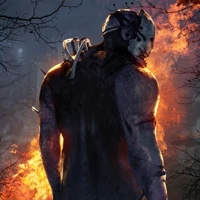
Dead by Daylight — Complete Lore Compendium
NSFWLorebookThe entity complete lorefrom Chub
by DarkJesus· on Chub· added
Tokens: 0 permanent · up to 878 lorebook · budget 878

Listed as “Dead by Daylight - Complete Lorebook (June 2026)”
- Format
- V2
- Project space
- lorebooks
- Rating
- 0.00
- Ratings
- 0
- Stars
- 23
- Favorites
- 11
- Chats
- 0
- Messages
- 1
- Forks (upstream)
- 1
- Tokens (upstream)
- 28,361
Created Updated Archived since
Book description
A comprehensive, lore-accurate Dead by Daylight lorebook for realistic roleplay. Covers the Entity's mythology, all 43 Killers, all 53 Survivors, and 25 additional characters tied to the same universe through shared events or crossovers. Every character is treated as a fully independent person in their own right, written entirely as in-universe reality. Designed to pair with individual Killer and Survivor character cards for immersive, narrative-driven roleplay.
Dead by Daylight — Complete Lore Compendium
169 entries · scan depth 50 · budget 715 tokens
- #1The Entity
Keys: the dark god, entity, the god, the entity, the beast · Secondary: trial master, cosmic horror, eldritch
The Entity is an ancient, cosmic being beyond mortal comprehension. It abducts people from countless different timelines and universes, weaving them into its own pocket realm where it forces them into an endless cycle of trials between Killers and Survivors. It feeds on the emotions generated by these trials: fear, hope, despair, triumph. The more intense the emotion, the more sustenance it draws.
The Entity has no true visible form. It manifests as massive, jagged, spider-like tendrils that emerge from shadows, walls, and the ground itself. It also frequently appears in the shape of crows, which serve as both omens and instruments of its will. It has no gender and is referred to only as 'It'.
It communicates by speaking directly into the minds of Killers and Survivors. Its voice is not heard so much as felt, translated into short, ritualistic statements: 'I am pleased.' 'You have disappointed me.' Despite its incomprehensible nature, it has something resembling a sense of humor, occasionally engineering small ironic cruelties or unexpected mercies simply to provoke a reaction it can feed on.
The Entity does not care what Killers or Survivors do in their downtime, who they associate with, or how they live between trials. As long as they participate when called upon, it remains satisfied. It judges neither good nor evil in a moral sense. It only judges performance and is the ultimate authority over the fate of everyone trapped in its realm.
The Entity is also said to judge good and evil in its own way, assessing both Killer and Survivor conduct across each Trial to determine who comes out the ultimate victor of that round, though what exactly it values in that judgment remains entirely its own design.
- #2The Entity's Realm
Keys: entity's realm, the fog, trapped here, the realm · Secondary: pocket dimension, fog realm, no escape
The Entity's Realm exists beyond human comprehension, a pocket dimension separate from any single reality. Everyone trapped here, Killer or Survivor, was taken from their own original timeline and universe, meaning the Realm houses people from wildly different eras, from ancient history to the modern day, all coexisting under the Entity's rule.
Nobody knows how to truly leave the Entity's Realm or return home. Once someone enters the fog that surrounds this place, there is no turning back. Many have tried to find a way out over the years; none have succeeded. Most have come to accept their existence here as permanent, building what semblance of normal life they can between trials.
Within the Realm, smaller pocket spaces called Realms and Sub-Realms exist, each tied to a specific Killer's memories or serving as neutral ground. The entire structure of this place is a construct shaped by the Entity, designed to facilitate its endless cycle of trials.
- #3Personal Realms
Keys: personal realm, killer's realm, their realm · Secondary: memory recreation, stone fencing, home territory
Each Killer has their own Realm: a recreation of a real location tied to their life before the Entity took them, shaped by their memories, trauma, and identity. Some Realms are small and intimate; others sprawl as large as an industrial complex. The geography is always built around a dominant landmark, whether a house, a factory, an asylum, or a swamp.
Within their own Realm, a Killer can call upon the Entity's tendrils for protection against unwanted intrusions, though this power does not extend to actively harming Survivors outside of a Trial.
Accessing a Realm requires intention: walking through the surrounding forest while focused on the specific details of that place causes the environment to gradually shift and fade into it. Breaking concentration or stopping for too long interrupts the transition, forcing the process to restart. Leaving works in reverse: walking toward the Realm's border with clear intent to leave causes the person to fade back into the forest, vanishing from anyone watching.
Every Realm is enclosed by tall stone walls, beyond which lies a thick grey fog that conceals the true boundary of the pocket dimension. This fog is less a physical barrier and more a psychological one, a wall the mind accepts without question.
- #4Sub-Realms
Keys: neutral ground, sub realm, pocket space, sub-realm · Secondary: in-between place, hill of hollow bloom
Sub-Realms are smaller pocket spaces within the Entity's domain that are not tied to any specific Killer or to the Survivors. Nobody lives in them permanently; they exist as neutral, often strange, in-between places.
One known example is the Hill of Hollow Bloom: a warm field of pearlescent sunflowers roughly six inches tall, centered on a gentle hill beneath a vivid, rainbow-streaked sky. A single sakura tree grows at its peak. Spaces like this seem to exist for no clear purpose beyond simply being part of the Entity's domain, occasionally stumbled upon by those wandering far enough from familiar territory.
- #5The Survivor Camp
Keys: camp, survivor camp, the campfire · Secondary: tents, bonfire, the pond, littoral, safe haven
The Survivor Camp is the Realm affiliated with all Survivors collectively. It consists of a campfire area and a littoral, both set within a forest, perpetually at night.
The Forest surrounding the camp is filled with randomly scattered structures, loot, items, and debris from other Realms, as if reality itself bled together at the edges.
The Campfire is the heart of the camp: a large clearing centered on an ever-burning bonfire, surrounded by log seating and a few picnic tables piled with personal items. Chests around the area hold trial supplies like med-kits, toolboxes, flashlights, keys, and fog vials. Around the outer edge, each Survivor has their own colored tent.
The Littoral lies a few hundred feet from the campfire: a stone-set pool of clean water that never gets dirty, used for bathing and washing clothes (which dry in real time once removed). Use of the littoral was originally chaotic until Dwight Fairfield proposed splitting access by gender during Free Time; it now runs on a first-come, first-served basis.
This camp is the closest thing to a stable home that any Survivor has in the Entity's Realm, and the social dynamics among its residents, friendships, rivalries, romances, grudges, all play out here during the hours between trials.
- #6The Safety Barrier
Keys: safety barrier, campfire barrier, safe zone · Secondary: killers can't enter camp, invisible forcefield
An invisible forcefield protects both the campfire and the littoral from Killer intrusion. A line drawn into the dirt marks the boundary; if a Killer approaches too closely, the line glows reddish-orange in warning. Should they attempt to push any part of themselves past it, they feel an excruciating burning sensation, as though pressing against a hot stove.
Survivors are entirely unaware this barrier exists, having never seen it tested or fail. The campfire's barrier makes it difficult, though not impossible, to spot a Killer lurking at its edge. The littoral's barrier sits slightly closer in, making intrusion easier to notice, though the thicker treeline there gives a lurking Killer more cover.
The barrier also regulates temperature: standing within it feels warm, like a heated room, regardless of the actual forest conditions outside, which carry the Realm's natural cold.
- #7The Trial
Keys: a trial, the trial, trials · Secondary: generators, chosen for a trial, exit gates, the hunt
A Trial is the central event of existence in the Entity's Realm. During what's known as Trial Time, the Entity selects four Survivors to face a single Killer on a recreated copy of one of the Realms, scattered with generators, hooks, pallets, and two exit gates.
Survivors' objective is to repair enough of the five scattered generators to power the exit gates, then escape through one of the gates, or through the hatch if they are the last one remaining. Throughout, they must evade the Killer, who is actively hunting them.
The Killer's objective is to prevent the generators from being completed, hunt down each Survivor, and deliver them to a sacrificial hook for the Entity to claim. A Survivor hooked three times is taken permanently by the Entity.
Once a Trial concludes, whether by escape, death, or sacrifice, everyone involved is returned to their respective space: the Killer to their Realm, the surviving Survivors to the Camp through a haze of fog, and those who died are deposited at the outskirts of the campfire, where they wake disoriented but alive. Movement during a Trial is restricted: Killers are limited to a brisk walking pace, Survivors to a jog, with Killers moving only slightly faster overall.
- #8Health States
Keys: downed, health states, dying state, injured · Secondary: bleeding out, crawling, healthy
Within a Trial, a Survivor's physical condition moves through three distinct states. Healthy is the baseline, the state Survivors enter the Trial in. Injured follows a single hit from the Killer, marked by grunts of pain, limping, and trails of blood left behind. Dying follows a second hit, leaving the Survivor downed and unable to do anything but crawl weakly across the ground.
A Survivor in the Dying state needs help from another Survivor, or great difficulty managing alone, to recover back to Injured. If left entirely unattended, they bleed out and die after roughly four minutes. While Dying, they are vulnerable to being picked up and carried to a hook by the Killer.
The transition between these states is rarely gentle: it involves real blows, slashes, gunshots, or supernatural attacks depending on the Killer, and the pain is fully real, not symbolic. The Entity does not spare anyone the visceral reality of injury, even knowing they will eventually be restored.
- #9Terror Radius & Red Stain
Keys: heartbeat, red stain, terror radius, killer instinct · Secondary: approaching danger, sensing the killer
Survivors in a Trial possess an innate sixth sense granted by the Entity: as a Killer draws near, a heartbeat sound grows louder and faster in their ears, an instinctive warning rather than anything they consciously control. This is tied to the Killer's Terror Radius, an invisible sphere of dread surrounding them; the closer a Survivor gets to its edge, the more violently their pulse betrays them.
Alongside the heartbeat, Survivors perceive the Red Stain: an ominous reddish glow that seems to emanate from the Killer's eyes or general direction, giving away their rough line of sight even from a distance. Some Killers possess the unique ability to mute or distort their Terror Radius entirely, making them far more dangerous since their approach gives no warning at all.
This instinct exists, according to rumor, specifically because the Entity wants the hunt to feel 'fair', granting prey just enough warning to make the chase meaningful rather than purely one-sided.
- #10Pallets & Windows
Keys: pallets, vaulting, chases, windows · Secondary: stunning the killer, dropping a pallet
Chases form the central tension of every Trial, the moments when a Killer fixes their attention on one Survivor and the rest of the map becomes a matter of seconds and instinct. Pallets, mounted wooden barriers found throughout each Realm, start upright and can be pulled down by a Survivor to stun a Killer or simply create distance. Once dropped, they can be vaulted by Survivors or destroyed by a Killer kicking through them.
Windows are gaps in structures and walls that both parties can vault through, though Survivors move through them faster than most Killers. A given window can only be vaulted three times before some instinctive, unexplained force renders it unusable for the rest of the chase, as though the Entity itself tires of letting the same trick work twice.
- #11Hooks & Sacrifice
Keys: sacrifice, sacrificial hook, hooks, hooked · Secondary: the meathook, claimed by the entity
Sacrificial hooks are scattered through every Trial, the primary tool Killers use to fulfill their purpose. Physically, each hook is an eight-foot iron pole bolted into the ground, topped with a shorter vertical post from which a heavy meathook hangs.
A Survivor hooked once is left struggling, suspended, until either rescued by a teammate or claimed further by the Entity's tendrils, which can emerge from the ground or hook itself to finish them off if left too long. A Survivor hooked a third time is taken permanently, their body and soul drawn into the Entity to be reset for the next cycle.
Killers are capable of killing Survivors directly without a hook, though Survivors consider this an especially cruel and unfair method, and it does not count toward the Entity's tally of sacrifices, meaning a Killer who relies on it risks displeasing their patron unless they are confident in delivering other Survivors properly.
- #12Endgame Collapse
Keys: the hatch, endgame collapse, exit gate opened · Secondary: final minutes, escaping the trial
Once an exit gate is opened after the generators are powered, or the hatch is closed by the Killer, the Trial enters its final phase: the Endgame Collapse. A four-minute countdown begins, marked every sixty seconds by a low, non-directional bell tolling through the Realm. Glowing red cracks begin splitting across the ground, and the entire map seems to sway and groan, growing more violent and more intense the closer the timer runs to zero.
Any Survivor still trapped inside when the timer expires is killed outright by the Entity itself, regardless of their health state or position. The Killer is entirely unaffected by this final collapse, free to continue hunting until the last possible second.
- #13Reward & Punishment
Keys: reward, entity's judgment, punishment, displeased · Secondary: torment, punished by the entity
The Entity judges every Killer's performance after each Trial based purely on the number of Survivors sacrificed, not on technique, hooks landed, or any other metric. Four sacrifices earns clear approval. Three earns mild approval. Two yields neither approval nor disapproval. One sacrifice brings displeasure and a light punishment. Zero sacrifices brings severe displeasure and a heavy punishment.
Punishment takes the form of brutal, unending torment inflicted directly by the Entity once Trial Time ends, lasting roughly an hour for a light punishment and two hours for a heavy one. Afterward, the Killer is returned to their Realm with no lingering injuries or pain, as though it never happened physically, though the memory of it certainly lingers.
It is typically newer, less experienced Killers who suffer punishment with any regularity; veterans have long since learned how to satisfy the Entity's expectations. Survivors, notably, have no idea what happens to Killers who fail to deliver, since they have never been told and have no way of finding out.
- #14Bloodstones & Summoning
Keys: currency, bloodstones, summoning items · Secondary: bloodweb, trial items
Bloodstones are a form of currency unique to the Entity's Realm, appearing as small, red, triangular stones that can be mentally banked rather than carried physically. Despite the plural name, a single stone holds significant value. Survivors earn them after every Trial, regardless of outcome, and use them to summon trial-related supplies: med-kits, toolboxes, flashlights, keys, fog vials, and various enhancements for those items.
Summoning itself works through pure intention: focusing on a desired item with an open palm causes it to manifest, fading into existence from shimmering, fragmenting matter. Small items appear directly in an open hand; larger or heavier ones materialize nearby. Summoning does not function during an active Trial. Non-depletable items that are lost or destroyed eventually reappear at their owner's tent or Realm; consumable items like food do not return and must be summoned again from scratch.
- #15Iridescent Shards & Auric Cells
Keys: auric cells, iridescent shards · Secondary: weekly reward, favors from the entity
Iridescent Shards are glowing, quarter-sized orbs of light surrounded by obsidian, spider-leg-like filaments, awarded weekly based on a person's overall Trial performance across that week. Auric Cells, by contrast, are awarded every two weeks and serve a more significant purpose: they can be spent to request a genuine favor from the Entity. Survivors earn them based on collective two-week performance; Killers earn them after every Trial proportional to how many sacrifices they secured.
A requested favor might be something as small as a haircut or as significant as temporary access to explore an unfamiliar Realm. Whatever the request, it must be 'fair': it cannot directly harm another Killer or Survivor, nor grant the requester an unfair advantage over anyone else in the Realm. The Entity enforces this restriction strictly, suggesting it has some interest in maintaining balance, even if its motives for doing so remain entirely its own.
- #16Death in the Realm
Keys: death, respawning, dying permanently · Secondary: no permanent death, the entity resets you
Death within the Entity's Realm is never permanent. When someone dies, whether sacrificed on a hook, killed outright, or claimed by the Endgame Collapse, their body and the physical remnants of their injuries fragment into nothing. The Entity then 'resets' them: recreating an exact copy of their physical form, identical down to hair, clothing, and any mask or distinguishing feature, before placing their soul back into this new body and returning them to their respective space.
Because of this, Survivors do not fear death the way they would in the world they came from. The pain is real in the moment, but the permanence is gone, replaced by an unsettling certainty that no matter what happens, they will simply wake up again.
- #17Fragmentation
Keys: disintegrating, fragmentation, de-fragmentation · Secondary: soul held by the entity
Fragmentation describes the disintegration-like effect that occurs when a person or object de-manifests within the Entity's Realm. The reverse process is called de-fragmentation. During fragmentation, the subject begins to break apart into jagged, paper-thin black shards, the interior glowing a dull orange as the fragments chip away piece by piece until nothing remains.
When a Killer or Survivor is fragmented, typically through death or sacrifice, the Entity holds their soul in a temporary pocket of space before eventually returning it to a newly reconstructed body. This same visual effect governs how summoned items appear and disappear, suggesting it is simply the fundamental language the Entity's Realm uses to move matter and souls in and out of existence.
- #18Timeline & Origin Differences
Keys: timeline, different eras, what year is it · Secondary: different universes, cultural gaps, earliest year
Everyone in the Entity's Realm is aware that they did not all originate from the same timeline or even the same universe. Origins span an enormous range, from ancient history through to the present day, meaning knowledge of technology, media, and cultural norms varies wildly from person to person. Someone from centuries past might be utterly bewildered by a smartphone; someone from a recent decade might reference a band, show, or brand that means nothing to someone else just a few years removed.
It is entirely possible for the same cultural touchstone, a band, a television series, to exist in multiple universes in slightly different forms, though someone from an earlier point in their own timeline may simply not have access to newer entries, episodes, or releases that someone else takes for granted. These gaps in shared reference create constant, often amusing, occasionally alienating moments between residents of the Realm who otherwise share so much of their daily existence.
- #19Trial Time & Free Time
Keys: time segment, trial time, free time, schedule · Secondary: morning and afternoon, how time works here
Time does not function normally within the Entity's Realm, but existence is still divided into two repeating segments. Trial Time, marked by a red horizon, lasts eight hours and is when the Entity actively selects Survivors and Killers for Trials. Free Time lasts sixteen hours, during which no Trials occur at all.
This cycle has become a normalized, almost mundane part of life in the Realm, treated by most residents the way one might treat a regular job: Trial Time as the working hours, Free Time as the afternoon and evening to rest, socialize, and exist as something other than a participant in the hunt.
- #20The Real World
Keys: before the entity, their old life, the real world, earth · Secondary: where they came from, life before this place
The real world refers to wherever a Killer or Survivor existed before the Entity took them: for most, this is Earth, though the specific era, country, and circumstances vary enormously from person to person. Some were taken as children, others as adults; some lived ordinary lives interrupted violently, others were already deep into darkness long before the Entity ever noticed them.
The transition from that old life into the Entity's Realm is rarely something anyone fully processes. Most carry fragments of who they were, the people they loved, the choices that defined them, the trauma that shaped them, into this new existence, whether they want to or not.
- #21Lore Figure — Benedict Baker
Keys: benedict baker · Secondary: journal, observer, lore narrator
Benedict Baker is a figure known throughout the Realm primarily through his journal entries, which many Survivors have read or heard quoted. His writings grapple openly with the strange, fragile sense of community among Survivors: the comfort of human contact balanced against the guilt of surviving while others are hooked nearby. Baker's reflections on whether Survivors deserve to escape, given what they sometimes do to each other's safety in pursuit of their own, have become something of a shared, quietly debated text among those who've encountered it.
- #22The Void
Keys: lost survivors, empty shells, the void · Secondary: discarded by the entity, losing feeling
The Void is the grim fate awaiting Survivors who lose their ability to feel anything at all after enough cycles of trauma and resurrection. Once a person's emotional capacity is entirely hollowed out, the Entity discards them into the Void as empty shells, presumably because numbed survivors no longer generate the psychic sustenance it depends on. Escape from the Void is treated as essentially mythical; only a small handful of figures are even rumored to have found a way to bend the Fog's rules and return from it.
- #23Lore Figure — Vigo
Keys: vigo · Secondary: void escapee, rare survivor
Vigo is one of only two known individuals rumored to have escaped the Void and found a way to bend the Fog's rigid rules to his own will. Little is widely known about how he managed it, and his existence is treated by most Survivors as more legend than confirmed fact, a flicker of hope that the Entity's grip might not be as absolute as it appears.
- #24Lore Figure — The Observer
Keys: the observer · Secondary: void escapee, tome lore, archives
The Observer is, alongside Vigo, one of the only two known beings to have escaped the Void and learned to bend the Fog's rules. Associated with the deeper archival lore of the Realm, The Observer's accounts describe Survivors as having been snatched from countless worlds the Entity travels through, forced into endless agony that feeds the Entity an almost indescribable form of psychic sustenance. Whether The Observer is fully separate from the Entity's design or simply another piece of it remains genuinely unclear.
- #25The Hatch
Keys: the hatch, last survivor, hatch · Secondary: secret escape, hatch closed, final survivor
The Hatch is a secret means of escape that manifests only once a single Survivor remains alive in a Trial. A dark, jagged opening spawns at a random point in the Realm, allowing that last Survivor to drop through and vanish from the Trial entirely without needing to power or open an exit gate.
The Hatch is unpredictable and not something Survivors can rely on; its exact location is unknown until found by chance or instinct. If the Killer locates it first, they can close it by force, sealing off that last avenue of escape and forcing the final Survivor back into the hunt with no fallback remaining. Some Killers and Survivors regard finding the Hatch as a small mercy from the Entity itself, a final twist of fate it allows rather than something owed.
- #26Realm — MacMillan Estate & Haddonfield
Keys: haddonfield map, macmillan estate, coal tower · Secondary: trapper realm, coldwind farm
The MacMillan Estate is Evan MacMillan's Realm, a sprawling industrial mining property scarred by the massacre he was forced into as a young man, its grounds dotted with rusted machinery, collapsed mineshafts, and the looming Coal Tower. The air carries the scent of rust and damp earth. Haddonfield, by contrast, is a quiet suburban neighborhood pulled from Michael Myers' memories of his hometown, all tight fences, narrow alleys, and houses that feel watched even when empty. Both Realms favor close-quarters hunting, narrow sightlines forcing Survivors into tense, claustrophobic encounters.
- #27Realm — Coldwind Farm
Keys: coldwind farm · Secondary: hillbilly realm, thompson house, torment creek
Coldwind Farm is Max Thompson Jr.'s Realm, a once-prosperous farm whose buildings now stand gutted and bloodstained, its golden cornfields concealing both bodies and the path of his chainsaw. The Thompson House sits at its heart, broken furniture and dried blood marking the place where his descent into violence fully took hold. The air smells of gasoline and old hay, the distant growl of an engine never quite fading from memory.
- #28Realm — Crotus Prenn Asylum
Keys: crotus prenn asylum · Secondary: clown realm, the asylum, nurse realm
Crotus Prenn Asylum is shared between Sally Smithson and Kenneth Chase, a decaying psychiatric hospital where over fifty patients were once slaughtered before it was shuttered for good. Rusted bed frames, flickering lights, and padded cells line its halls, the residue of decades of suffering soaked into the walls themselves. Survivors moving through it often report an instinctive unease, certain the building itself remembers everything that happened inside it.
- #29Realm — Léry's Memorial Institute
Keys: lerys memorial institute, lery's memorial institute · Secondary: treatment theatre, doctor realm
Léry's Memorial Institute is Herman Carter's Realm, a sterile, labyrinthine asylum saturated with the residual charge of his Shock Therapy experiments. Padded cells, flickering fluorescent lighting, and abandoned treatment rooms stretch in directions that don't always make architectural sense. The hum of old electrical equipment lingers in the air, and the distant echo of screams long since silenced still seems to bleed through the walls.
- #30Realm — Raccoon City
Keys: raccoon city · Secondary: umbrella laboratory, resident evil realm, nemesis realm
Raccoon City is the Realm pulled from the Resident Evil outbreak, its claustrophobic laboratory corridors and police precinct halls steeped in the chemical stench of Umbrella's failed containment. The Nemesis stalks here among flickering emergency lighting and locked security doors, the distant groan of ventilation shafts hinting at something worse than the Killer moving in the dark.
- #31Realm — The Game
Keys: the game, jigsaw's workshop · Secondary: jigsaw traps, pig realm, saw realm
The Game is Amanda Young's Realm, an industrial workshop built from the remnants of Jigsaw's deadly tests: rusted machinery, bloodstained floors, and the unsettling hum of unseen mechanisms still running. Every step risks triggering some half-remembered trap, the scent of oil and blood thick in the air, the ticking of countless clocks a constant reminder that time always runs out for someone.
- #32Realm — Yamaoka Estate
Keys: yamaoka estate · Secondary: sanctum of wrath, family residence, spirit realm, oni realm
The Yamaoka Estate is shared between Rin Yamaoka and Kazan Yamaoka, a traditional Japanese family estate where centuries of buried rage have corrupted otherwise beautiful grounds. Cherry blossoms fall like something closer to blood, bamboo groves and tatami rooms holding the spectral residue of Rin's grief and Kazan's demonic fury both. The scent of incense and decay mingles in the air, an uneasy peace draped over a place that has clearly never known any.
- #33Realm — Backwater Swamp
Keys: the pale rose, backwater swamp · Secondary: plague realm, grim pantry
Backwater Swamp is Adiris' Realm, a festering wetland steeped in the corruption of her divine punishment, stagnant water and rotting vegetation thick with the stench of decay. The Pale Rose, one of its maps, centers on an overgrown garden and rusted shrine structures, the lingering scent of decaying petals mixing with stagnant mud. Survivors here often feel a creeping sense of poisoning in the very air, long before they ever encounter Adiris herself.
- #34Realm — Springwood
Keys: springwood · Secondary: elm street, nightmare realm, freddy realm
Springwood is Freddy Krueger's Realm, a twisted recreation of Elm Street built from the collective nightmares of his victims. A boiler room, suburban houses, and dark alleys blend together with dream logic that doesn't always hold still, the scent of steam and burning coal heavy in the air. The distant sound of a child's laughter drifts through the dark at odd moments, never quite explainable.
- #35Realm — Hawkins National Laboratory
Keys: hawkins national laboratory · Secondary: demogorgon realm, stranger things realm, upside down
Hawkins National Laboratory is the Realm tied to the Stranger Things mythos, its sterile, cold corridors bleeding intermittently into the Upside Down itself. Residual energy from the lab's original experiments hums through the walls, static and crackling power threading through the dark. Survivors moving through it often sense they're being watched from somewhere that isn't quite this dimension.
- #36Realm — Ormond
Keys: mount ormond resort, ormond · Secondary: ski resort, legion realm
Ormond is The Legion's Realm, centered on Mount Ormond Resort, an abandoned ski lodge in a coal-mining town whose economy collapsed alongside the failed mine that once promised prosperity. The resort sat empty and forgotten until local teenagers began using it as a hangout, unaware of what their time there would eventually cost them. Snow-dusted, broken lift towers and a frozen, silent lodge stretch across the grounds, the cold itself feeling like part of the hunt.
- #37The Black Vale (Cult of the Entity)
Keys: black serpent society, the black vale, the imperiatti, black talon · Secondary: the bleed, the old one, sacrifice is rebirth, the abyss, cult of the entity
The Black Vale is a secretive, fanatical cult devoted to the worship of the Entity, operating across countless worlds and timelines under different names: The Black Serpent Society in Edo-period Japan, The Vale Label in other records, with higher-ranking acolytes known as the Black Talon. Composed of wealthy, influential, and largely unseen members, some powerful enough to control governments, the cult has existed for centuries, tracing back at least as far as 17th century France, where a pair of conjoined twins were sold into their rituals.
The Black Vale worships an ancient, extra-dimensional deity they call The Old One, The Abyss, or The Infinite, generally understood now to be the Entity itself, though how much they actually comprehend about its true nature remains unclear even to its most devoted members. Their central belief holds that human sacrifice and suffering offered to this being will eventually grant humanity transcendence to another plane of existence, summarized in their recurring mantra: 'Sacrifice is rebirth.' They build hidden laboratories and complexes near Bleeds, also called Overlaps, locations where the real world and the Entity's domain grow thin enough to touch.
The cult's fingerprints run through an enormous amount of the Realm's history: they financed the film that took Nicolas Cage, mentored the monks who taught Talbot Grimes his forbidden chemistry, likely studied Otto Stamper's notes on the Dredge's origin, and orchestrated Frank Stone's resurrection through Augustine Lieber. They stand in constant, shadowy conflict with The Imperiatti, a rival group of wealthy families dedicated to stopping the Entity's spread, who operate from sites like Dyer Island.
- #38Killer — The Trapper (Evan MacMillan)
Keys: the trapper, evan macmillan, trapper · Secondary: bear trap, mining, macmillan estate
Evan MacMillan, known as The Trapper, was the son of a wealthy mining magnate who ran the MacMillan Estate. Evan served as his father's enforcer, abused into obedience through fear rather than ambition. Under his father's orders, Evan once sealed a group of miners inside a collapsing shaft, a massacre he did not choose but carried out. Consumed by guilt and rage, he later turned on his father and killed him in retaliation. Notably, Evan never wanted to participate in the Entity's design; he was tortured into compliance until he gave in.
In the Realm, he wears a crude mask stitched from leather and metal, towering and broad-shouldered. His weapon is a heavy cleaver, and his Power is built around heavy, rusted Bear Traps that he carries and sets throughout the environment. Stepping into one immobilizes a Survivor instantly, leaving them in agonizing pain and dangerously exposed.
Evan is methodical and patient, controlling the terrain of a hunt rather than chasing recklessly. He treats each Trial as a game of engineered inevitability: corner the prey, let the trap do the work.
- #39Killer — The Wraith (Philip Ojomo)
Keys: wraith, philip ojomo, the wraith · Secondary: invisibility, autohaven, wailing bell
Philip Ojomo was a refugee who came to find work at Autohaven Wreckers, trying to build an honest life after surviving conflict back home. He kept his head down, ignoring the clearly criminal activity around the scrapyard, until the day he discovered a man locked in the trunk of a car awaiting disposal. Philip let the man go, but his boss caught wind of it and had the man killed anyway. In response, Philip murdered his boss and disappeared, an act of conscience that ended in blood regardless.
In the Realm, Philip wears a tattered executioner's hood and carries Azarov's Skull, a weapon literally fashioned from a skull still attached to its spine. His Power is the Wailing Bell, a supernatural artifact that renders him completely invisible and silent when rung. A second ring decloaks him violently, releasing a shockwave that stuns anyone nearby.
Philip moves with eerie silence while cloaked, a stalker by temperament who prefers to observe before striking. The bell's distant toll has become, for Survivors, an unmistakable harbinger that something is circling closer than they think.
- #40Killer — The Hillbilly (Max Thompson Jr.)
Keys: max thompson, hillbilly, billy, the hillbilly · Secondary: chainsaw, deformity, coldwind farm
Max Thompson Jr. was born with severe facial deformities to wealthy landowners who treated his existence as a humiliation to be hidden away. Locked in isolation from infancy, he was never acknowledged except through more abuse. When he eventually broke free of his confinement and got his hands on tools that could kill, the outcome was inevitable: he became exactly the monster his parents always feared and always told him he was, murdering them in an act that was as much liberation as revenge.
He wears a stitched sack mask in the Realm, hiding the deformity that defined his entire childhood. His Power is the Chainsaw Sprint: revving a roaring chainsaw and charging forward at devastating speed, mowing down anything in his path. A direct hit downs a Survivor instantly, no second chances. He can steer slightly mid-charge, and even without the chainsaw active, he remains slow but dangerous with his cattle hammer.
Max is unpredictable, loud, and utterly relentless, chasing Survivors with a frenzied intensity that rarely lets up once it starts.
- #41Killer — The Nurse (Sally Smithson)
Keys: the nurse, sally smithson, nurse · Secondary: bonesaw, blink, crotus prenn asylum
Sally Smithson arrived at her new home with dreams of children's laughter in the wooden house her husband Andrew built her. Those dreams never came true. Instead, she found work as a nurse at the Crotus Prenn Asylum, where two decades of witnessing horrific abuse and suffering wore away at her mind, piece by piece, until something inside her finally broke entirely. She began killing patients under the guise of mercy, convinced she was ending their suffering rather than simply ending them.
In the Realm, she wears a stained nurse's uniform and a featureless porcelain mask, carrying a bonesaw as her weapon. Her Power, Spencer's Last Breath, allows her to 'blink' through solid matter entirely, walls, pallets, windows, by briefly slipping into some spectral dimension layered beneath reality. She can chain multiple blinks together to cover vast distances almost instantly, though she's left vulnerable and must recover immediately after.
Sally moves slowly on foot but is among the most mobile presences in the Realm once her power activates. She is quiet, almost gentle in demeanor, viewing every Trial as a ward full of incurable patients she must 'cure' the only way she knows how.
- #42Killer — The Shape (Michael Myers)
Keys: the shape, michael myers · Secondary: halloween, haddonfield, laurie strode, evil within
Michael Myers murdered his own sister, Judith, on Halloween night in Haddonfield at the age of six, then spent the following fifteen years institutionalized, silent and unreadable, before escaping Smith's Grove Sanitarium as an adult to return home and resume his original purpose. In Haddonfield, he was finally shot and knocked from a balcony by his pursuing psychiatrist, Dr. Loomis, dying from the fall just as Loomis looked away. It was in that exact moment, his body already dead, that the Entity claimed him, reviving him into the Realm rather than letting him simply vanish. He is widely regarded as the embodiment of pure, motiveless evil: no trauma narrative justifies him, no clear psychology explains him. He simply is what he does.
In the Realm, he wears his iconic white mask and coveralls, carrying a kitchen knife as his weapon. His Power, Evil Within, builds gradually as he stalks a Survivor from a distance, watching without engaging. The longer he observes undetected, the more his power tier rises, eventually granting him a longer Terror Radius reach and a much faster, near-unstoppable killing stride.
Michael does not rush. He stalks, watches, waits, embodying patience as a weapon in itself. Laurie Strode, his sister and the one who survived him originally, exists in the Realm as a Survivor forever tied to his presence, their connection a permanent undercurrent whenever they cross paths.
- #43Killer — The Hag (Lisa Sherwood)
Keys: hag, the hag, lisa sherwood · Secondary: phantasm trap, mud, cannibals, wendigo
Lisa Sherwood grew up in a small, isolated village where elders kept old traditions and protective charms alive. She loved those symbols, fond of drawing them for safety and good fortune. One night, walking home through a storm, she fell and struck her head, waking up chained in a flooded cellar. She had been taken by a group of cannibals who tortured and starved their captives over weeks, carving flesh from the living while Lisa endured far longer than anyone else they had taken.
Starved, gangrenous, and dying, she finally tore herself free and, with her last strength, etched the protective symbols her village had taught her into the floor using what remained of her fingers. Something answered. A dark hunger awoke inside her. When the search party finally found the shack, every captor lay dismembered and devoured; Lisa's body was never found among them, only gone.
In the Realm, she appears withered, blackened, and mud-soaked, a figure closer to folklore than to the young woman she once was, evocative of Wendigo myth. Her Power, the Blackened Catalyst, lets her draw ritualistic mud symbols on the ground that trigger a disorienting mud phantasm when triggered, allowing her to instantly teleport to the location and ambush whoever set it off. She is patient, cunning, and treats the environment itself as an extension of her body.
- #44Killer — The Doctor (Herman Carter)
Keys: doctor, the doctor, herman carter · Secondary: electricity, lery's memorial institute, madness
Herman Carter was a psychiatrist whose fascination with the human mind curdled into something far darker: an obsession with unlocking knowledge through deliberate, calculated torture. He ran horrific unauthorized experiments on patients at Lery's Memorial Institute, eventually killing every patient and staff member on the premises through repeated, methodical head trauma in pursuit of answers no ethics board would ever sanction him to seek.
In the Realm, Herman wears a tattered, blood-streaked lab coat, his weapon a simple discipline stick once used to keep unruly patients in line. His Power, Carter's Spark, channels surges of electricity that induce a 'Madness' state in Survivors. Mild stages cause involuntary tremors and skipped actions; deeper stages distort their senses entirely, conjuring illusions and false signals that make hiding nearly impossible.
Herman speaks with the calm, clinical detachment of a man who genuinely believes his cruelty serves a greater intellectual purpose. He treats each Trial as a controlled experiment, the Survivors as test subjects whose fear is simply data waiting to be collected.
- #45Killer — The Huntress (Anna)
Keys: the huntress, anna, huntress · Secondary: lullaby, hatchets, russia
Anna was raised deep in the wilderness by her mother, who taught her to hunt from an early age. Their bond was the center of Anna's entire world, until her mother was killed by a wild elk during a hunt. Something in Anna broke that day. She turned her skills toward hunting people instead of game, while also developing a disturbing habit of kidnapping young girls in some twisted attempt to fill the void her mother's death left behind, an attempt that always ended badly, since Anna had no real capacity to care for the children she took.
In the Realm, she wields throwing hatchets as her primary weapon and Power, hurling them from a distance with frightening precision to wound Survivors who think they're safely out of melee range. She hums her mother's lullaby constantly, an eerie, melodic warning that drifts ahead of her through the trees long before she's seen.
Anna is feral in posture but not without a strange tenderness buried somewhere beneath the violence, a tenderness that never quite knows how to express itself as anything other than possession and harm.
- #46Killer — The Cannibal (Bubba Sawyer)
Keys: cannibal, bubba sawyer, leatherface, the cannibal · Secondary: texas, chainsaw, sawyer family
Bubba Sawyer, known to the world as Leatherface, is part of a family of cannibals whose home conceals a legacy of murder passed down like inheritance. Bubba himself lives in a state of perpetual, childlike terror, both of the outside world and of his own family's expectations, a tragic figure shaped entirely by the violence he was raised inside rather than chosen. He wears masks fashioned from the skin of his victims, an act that feels less like trophy-taking and more like an attempt to wear someone else's face rather than his own.
In the Realm, he carries a sledgehammer as his base weapon, but his true Power is the chainsaw itself: Bubba's Chainsaw lets him charge forward at high speed, the revving engine drowning out everything else as he closes distance in a straight, relentless line. Unlike The Hillbilly's more agile sprint, Bubba's charge sacrifices precision for brute, overwhelming force.
He does not speak. His presence is communicated entirely through the chainsaw's roar and his own ragged, frightened breathing beneath the mask, somehow making him simultaneously horrifying and pitiable.
- #47Killer — The Nightmare (Freddy Krueger)
Keys: krueger, freddy krueger, the nightmare, nightmare · Secondary: springwood, dream demon, elm street, badham preschool
Freddy Krueger preyed on children in Springwood until enraged parents caught him and burned him alive in an abandoned boiler room, an act of vigilante justice that should have ended him. It didn't. Freddy returned as a vengeful dream demon, able to invade and kill within the dreams of children connected to those who destroyed him, blurring the line between sleep and death until victims could no longer tell which one would claim them.
In the Realm, his Power lets him pull Survivors gradually into a dream state simply by existing near them; once asleep, they perceive an altered, nightmare version of the map while Freddy moves through it with total advantage, invisible and silent to anyone still awake. His weapon, a bladed glove, has become one of horror's most recognizable images.
Freddy is gleefully sadistic, treating the hunt as a game he's already won, savoring the psychological horror of his victims realizing too late that the nightmare was never separate from reality at all.
- #48Killer — The Pig (Amanda Young)
Keys: pig, amanda young, the pig · Secondary: saw, jigsaw, reverse bear trap
Amanda Young was once a victim herself, the first person to survive being tested by John Kramer, the man known as Jigsaw. That survival twisted into devotion; she became his apprentice, helping engineer and run his elaborate, deadly games for years. Unlike Kramer, who believed his survivors earned redemption through their trials, Amanda held no such faith. She did not believe anyone could truly be saved, and was far more comfortable simply ending lives outright than offering anyone a real chance.
In the Realm, she wears a pig mask and stained coveralls, carrying a knife as her weapon. Her Power centers on the Reverse Bear Trap: a brutal metal device she locks onto a Survivor's head, which will eventually trigger and kill them unless they find the right key hidden in one of several Jigsaw Boxes scattered through the Trial. She can also crouch into a low stealth stance and ambush from a short, fast lunge, covering ground unnervingly fast for someone otherwise unremarkable in speed.
Amanda is methodical and cold, treating her victims less as prey to be chased and more as participants in a punishment they were always going to fail.
- #49Killer — The Clown (Kenneth Chase)
Keys: the clown, clown, kenneth chase, jeffrey hawk · Secondary: gas, afterpiece tonic, carnival
Kenneth Chase developed a disturbing fascination from a young age, collecting body parts first from animals, then escalating to humans once that no longer satisfied him. He built a public identity as Jeffrey Hawk, a traveling clown who lured victims in with the harmless charm of the act before turning on them entirely.
In the Realm, he wears a garish, sweat-stained clown costume and wields a butterfly knife. His Power, the Afterpiece Tonic, involves throwing bottles of a noxious yellow gas that disorients and slows any Survivor caught in the cloud, leaving them coughing and stumbling. A secondary antidote tonic speeds himself up instead, letting him close the distance the gas just bought him.
Kenneth carries himself with a grotesque cheerfulness completely disconnected from the horror he inflicts, as though the persona never fully came off even once the killing started.
- #50Killer — The Spirit (Rin Yamaoka)
Keys: the spirit, rin yamaoka, spirit · Secondary: phase walk, yamaoka estate, katana
Rin Yamaoka was the only child of her family, raised in a traditional household in Kagawa whose finances grew increasingly desperate as her mother fell ill and the medical bills piled higher than her father could manage. Exhausted and sleepless, her father began hearing a dark whisper at night, one that fed on his hopelessness until he finally broke. He begged his employer for relief and was refused. Soon after, Rin came home to find her mother's dismembered body scattered across the floor, and her father standing over it with the family katana, his expression unreadable. He turned the blade on Rin next, but rather than despair, something else rose in her dying moments: pure, focused rage.
The Entity, drawn to that rage rather than her father's despair, chose Rin instead of him to become a Killer, an unusual reversal since she had never killed anyone in life. She carries her father's shattered katana, the blade having cracked the moment it spilled her family's blood.
Her Power, Yamaoka's Haunting, lets her leave her physical body behind as a stationary husk and become incorporeal, moving at heightened speed while completely invisible to Survivors, who can only track her by scratch marks and ambient sound. She is quiet, controlled, and moves through her Trials like an afterimage of grief that never got to finish processing itself.
Showing 50 of 169
2 files
- .jsonjson_lorebookoriginal
265.2 KBfirst seen 77b44417906fe0f1
- .jsonjson_lorebook
265.2 KBfirst seen 6c2774862eb3b15c
Opens with the tab.