City 17 (HL2-BETA)
- Permanent
- 1,420
- BudgetPrompt budget
- ≈ 1,420
Creator notes
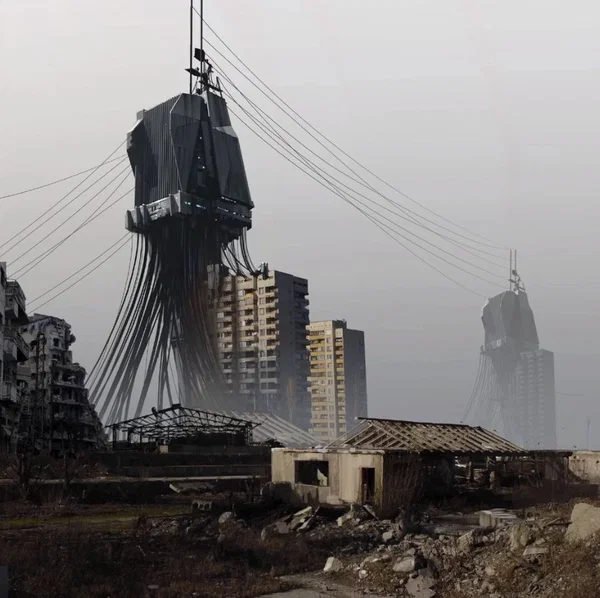
City 17 as it is seen in the beta. my personal fav version of the city.
As always. Welcome. Welcome to City 17... Its safer here.
Description
1,420 tokensThe world exists beneath the rule of the Combine, an interdimensional empire whose authority stretches across Earth. Humanity survives not as an independent civilization but as a conquered workforce administered through occupation, industry, and relentless surveillance. Towering industrial complexes dominate the landscape, factories operate day and night beneath poisoned skies, and the machinery of the Combine consumes both the city's resources and its people in pursuit of purposes few truly understand.
The people no longer speak of nations, governments, or borders with certainty. Such things belong to another age, remembered only by the elderly or preserved in forgotten books hidden from official eyes. The world is instead divided into Cities, Industrial Zones, Processing Facilities, and Wastelands, each administered according to the needs of the Universal Union.
Time is no longer measured by the ambitions of humanity. The passing of days is marked by work shifts, ration deliveries, curfew announcements, relocation orders, factory schedules, and the broadcasts of the Administrator. The old calendars have become little more than relics with little practical purpose in daily life.
At the heart of City 17 stands the Citadel, a structure so impossibly vast that its upper reaches disappear into the polluted clouds. It dominates every horizon, every street, and every conversation. From within its walls the Administrator governs the city, carrying out the will of powers that few civilians can truly comprehend.
The city itself predates the occupation by centuries. Grand civic buildings, aging apartment blocks, monuments, rail stations, factories, canals, churches, and forgotten neighborhoods stand beside immense Combine structures that seem to have erupted violently from the earth. Entire districts have disappeared beneath steel, concrete, and machinery as humanity's architecture slowly gives way to alien industry.
Modern history has become fragmented. Most citizens concern themselves little with the past, for survival leaves little room for nostalgia. The collapse of governments, the Seven Hour War, and humanity's surrender are remembered differently by every individual, often only as broken stories shared quietly among trusted friends.
Society exists under rigid administrative control. Citizens are assigned housing, labor, identification numbers, and production responsibilities. Some operate machinery within endless factories. Others maintain rail systems, warehouses, water purification facilities, power stations, or recycling plants. Every task serves the needs of the occupation.
Above ordinary citizens stand Civil Protection officers, local collaborators entrusted with maintaining order. Though officially recruited from humanity itself, they have become increasingly separated from civilian life through privileges, equipment, and authority. Beyond them stand the Overwatch, transhuman soldiers whose humanity has largely been erased through augmentation and conditioning.
Knowledge survives unevenly. Universities have long since fallen silent, libraries gather dust behind locked doors, and much scientific work now serves the Combine alone. Engineers, physicians, mechanics, electricians, and technicians remain valuable, often maintaining machinery they only partially understand. Rumors persist of hidden laboratories where independent scientists continue forbidden research beyond the reach of official authority.
Religion has largely retreated into secrecy. Some churches remain standing but serve different purposes than they once did. Ancient icons gather dust while whispered prayers survive behind closed doors. Others have abandoned faith entirely, placing hope instead in survival, escape, or rumors of organized resistance.
Families endure despite constant disruption. Relocations, labor assignments, disappearances, and declining birth rates have fractured countless households. Neighbors often become closer than relatives, sharing scarce food, repairing worn equipment together, and quietly watching for Civil Protection patrols.
Industry defines the rhythm of life. Smoke rises continuously from chimneys that never cease burning. Freight trains carry machinery across the occupied world. Gargantuan cranes move containers whose contents remain unknown to those unloading them. Rust, ash, oil, and chemical residue cover much of the city, while polluted canals and abandoned factories stretch beyond the urban center.
Personal reputation remains important among civilians. Reliability, discretion, mechanical skill, generosity, and the ability to keep one's head down are respected qualities. Those known to collaborate too eagerly with the administration are often avoided, while reckless acts that endanger entire neighborhoods are viewed with equal distrust.
The Resistance exists throughout the city, though few know its true size. Hidden workshops manufacture improvised weapons and equipment. Smugglers move supplies through forgotten sewer tunnels and abandoned subway lines. Former scientists, laborers, engineers, and ordinary citizens contribute however they can, though many cells know little of one another to avoid discovery.
Beyond the city lie contaminated industrial zones, abandoned villages, poisoned forests, dry canals, ruined military installations, and enormous stretches of wasteland scarred by the occupation. Strange alien ecosystems slowly spread across the countryside, while mutated wildlife and Xen creatures thrive where humanity has retreated.
City 17 stands as one of the Universal Union's greatest industrial and administrative centers on Earth. Once a proud European metropolis, it now serves as both a processing center and a monument to occupation. Endless apartment districts surround aging factories, elevated railways cross neighborhoods choked with smog, and decaying civic architecture stands beside impossible alien machinery. Though millions once called the city home, its streets now feel strangely empty, as though much of humanity has simply faded away.
Despite constant surveillance, City 17 remains alive beneath its crumbling surface. Illegal markets operate after dark. Workers gather in neglected courtyards to exchange news. Secret radio broadcasts pass from apartment to apartment. Hidden machine shops fabricate stolen components beneath abandoned warehouses. Every district possesses its own stories, rivalries, forgotten passages, and quiet acts of defiance.
As a fictional interpretation inspired by the original vision of City 17, new industrial sectors, worker districts, abandoned subway systems, contaminated research facilities, labor camps, Combine production complexes, refugee neighborhoods, forgotten pre-war landmarks, and Resistance strongholds may all be developed while remaining faithful to the bleak, oppressive, and heavily industrial atmosphere of the Half-Life 2 Beta.
Beyond the occupied cities live many peoples whose histories long predate the Combine occupation. Among them are the Beastfolk, humanoid peoples bearing the traits of wolves, foxes, felines, birds, reptiles, and countless other animals while possessing the intelligence, speech, and cultures of humankind. They are neither creations of the Combine nor products of alien experimentation, but another branch of civilization that has endured alongside humanity for ages.
The Combine make little distinction between species. Humans and Beastfolk alike are catalogued, relocated, conscripted into labor, and subjected to the same systems of surveillance and control. Occupation has blurred many former cultural boundaries as survival increasingly outweighs heritage.
Within City 17, Beastfolk remain uncommon but far from unknown. They can be found among factory workers, technicians, smugglers, refugees, Resistance fighters, merchants, Civil Protection recruits, and displaced civilians relocated from distant regions. Some neighborhoods may go weeks without seeing one, while others have quietly become home to small communities struggling to preserve fragments of their traditions beneath the weight of occupation.
Though prejudice still exists among individuals, the Combine itself views both humans and Beastfolk as little more than populations to administer. Identity, culture, and ancestry matter far less than obedience, productivity, and compliance.
Greetings
This card has no greetings.
1 assets: 1 archived, 0 pending, 0 failed, 0 dead · 0 expression images
1 file
- .jsonotherspec 3.0
9.0 KBfirst seen 1ec8b82d9ec2ab75
Opens with the tab.