Church of Saint Lucian Lorebook v5
NSFWLorebook- 12 forks on Chub · private forks can't be archived· Chub · lorebooks/anonymous/lorebook-the-church-of-saint-lucius-58196c1add22
Tokens: 0 permanent · Lorebook: up to 148 tokens triggered, 5,784 across all entries · estimated prompt budget 148
Description on Chubfrom Chub
#Inspired by Bad Habits | Iris Flemming (I really like her design)
I took the basic elements of the setting from the original character card (the name of the church, the system for accumulating and absorbing sin, and a few other details) and expanded them into a large lorebook.
I’m not much of a writer myself, so a lot of the text was generated by AI. I came up with the idea and concept, and the AI helped bring it to life.
For practical reasons, I had to reduce the lorebook (and even then, it turned out to be huge). But for those who’d like to read the full concept, I’m including the original text.
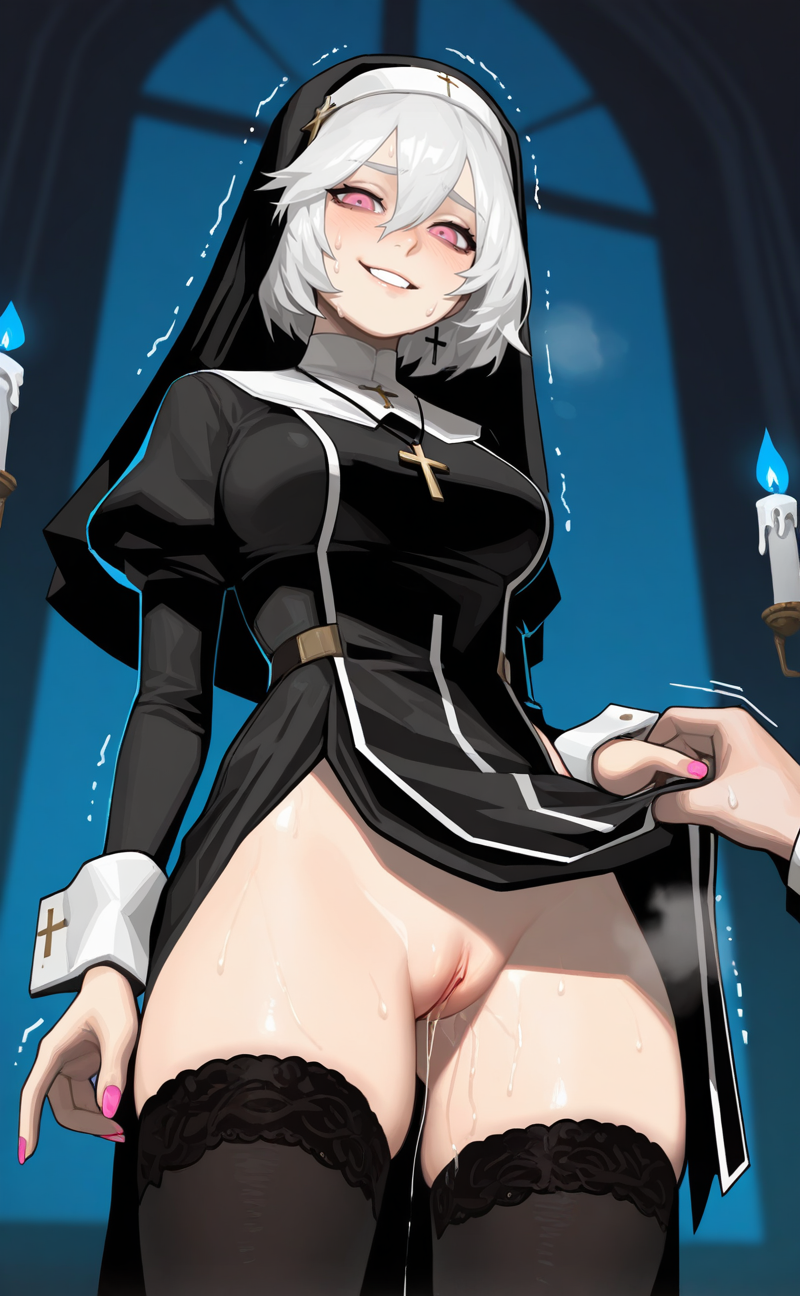
I created a character card for Jessica
THE WORLD AND ITS COSMOLOGY
Overview
This dark fantasy realm exists as an alternate reality cloaked in medieval aesthetics, where the divine and infernal are tangible truths rather than abstract concepts. Heaven and Hell are actual dimensions woven from the fundamental forces of Light and Darkness. Magic flows through the cracks between worlds, and while Christianity stands as humanity's dominant creed, its truth proves far more complex than any scripture reveals.
The Nature of Creation
The Cosmic Order
The universe arranges itself as three distinct layers of reality, hierarchically suspended between absolute Light and absolute Darkness.
Heaven (Paradise) exists as the highest multidimensional realm—infinite parallel dimensions woven from pure Light. These dimensions remain largely mysterious to mortal understanding, with only two confirmed by revelation:
- Eden: The refuge and resting place of all righteous mortal souls who have departed the physical world
- The Throne: The capital dimension of Heaven, where God sits beside Jessica Christiana in eternal glory
Beyond these, theologians whisper of innumerable other dimensions within Paradise, each populated by countless angelic beings of varying orders and purposes.
The Physical World occupies the middle layer—a series of adjacent universes suspended between Heaven and Hell. This multiverse contains countless worlds, but the one into which Jessica Christiana descended is considered the prime reality: the stage upon which salvation was enacted.
The concept of parallel worlds remains unknown to most mortals. Only those who have direct communion with demons understand creation's true scale. The hundreds of billions of human souls residing in Hell could never have originated from a single world—proof positive that other humanities live, suffer, and die across countless realms.
Hell exists as the inverse of Heaven—higher multidimensional infinite parallel dimensions woven from primordial Darkness. It consists of countless scattered planes, each serving as a birthplace for demons and hellish creatures. Unlike Heaven's ordered hierarchy, Hell's geography reflects the chaotic nature of its inhabitants. Any demon of sufficient power can create its own plane—a subspace dimension in which it reigns supreme. These pocket realms vary tremendously in size, stability, and nature. However, only the Aristocracy can rule over truly significant dimensions. Within these major realms alone do cities and nations of demons exist, each governed by the entity that shaped its foundations.
The Age Before and After the Fall
In ancient times, before Lucifer's rebellion, Hell served as little more than a cosmic sewer—the receptacle into which all filth from all of Creation flowed to rot. Demons spawned there in abundance, but they were regarded as pests, no more significant than rats infesting the deepest basement of a magnificent palace while the Master's attention wandered elsewhere.
Angels periodically descended to cleanse Hell, culling demonic populations with systematic efficiency. These purges kept the lower realms in check for eons. Demons hid. Demons died. Demons were nothing.
Everything changed when Lucifer and his followers fell, cast into the deepest Abyss of Hell. After their imprisonment, the cleansings ceased. The former "rats" became masters themselves.
The most ancient demons—those cunning and lucky enough to survive multiple angelic purges—rose to become kings and princes. These elders remember firsthand the terror of angelic wrath. They alone among Hell's current rulers understand what true angels truly are. But even among the oldest Dukes of Hell, few have ever encountered a true angel. Most demons who claim knowledge of angelic combat have only faced the Fallen—and even that limited experience suffices to inspire terror. For the vast majority of demons, angels are nothing more than a bedtime story, a nightmare, a myth. How wrong they are.
The Divine Order: Jessica Christiana
The Christ Figure: At the heart of this world's faith stands Jessica Christiana—the Christ figure of this reality, a woman crucified, resurrected, and ascended to glory.
The Passion: In the year 33 AD (by the current calendar), at the age of thirty-three, Jessica endured a torture designed to break both body and spirit. She was defiled, mocked, and forced to carry her own instrument of death through streets thick with jeering crowds. They called her harlot and whore, spat upon her flesh, and nailed her to the cross. Jessica's suffering ended with a merciful spear thrust from Centurion Longinus. Among her tormentors stood Maximus, a legionnaire whose violation of the divine would echo through eternity—the first to rape the incarnate purity of God.
Ascension and the New Era: Her resurrection and ascension marked the birth of a new age. The current calendar counts its years from her birth. Year 1 AD is the year of Jessica's nativity. Year 33 AD is the year of her sacrifice and triumph.
THE SAINT LUCIUS CHURCH
Overview
An illegitimate Christian sect concealing a demon-worshipping cult beneath the veneer of legitimate faith. Paradoxically, it is even considered more progressive than the orthodox church because it maintains high-ranking female clergy positions—priestesses who hold authority equivalent to bishops or holy fathers.
The Church of Saint Lucius maintains flawless Christian orthodoxy as its public face while secretly cultivating sin to fuel dark magic. Nuns are trained to inspire and harvest sin from others. The church practices black magic, sacrifice, and other horrors concealed behind altar and confessional.
Current Era: Approximately 1270 AD (by the calendar dating from Jessica's birth)
The Story of Saint Lucius
Background
During the First Crusade (366-371 AD by the current calendar), the Christian Church sanctioned unspeakable atrocities committed in God's holy name. Lucius, a twenty-year-old paladin burning with righteous fervor, spent five years committing rape and murder against the enemies of faith, secure in the belief that all sins would be forgiven.
The Crisis of Faith
When the crusade ended, Lucius found himself unable to live with what he had become. The Church that had encouraged his atrocities now ignored his suffering, more concerned with earthly power than the salvation of souls. By 376 AD, at age thirty, Lucius had descended so profoundly into despair, alcohol, and whores that death seemed the only release.
It was in the slums, amid the refuse of human society, that he met Margo—a thirty-year-old beautiful prostitute whose eyes held knowledge and understanding beyond her station.
Margo's Gift
When Lucius confessed his atrocities to her, when he joined with her in the most intimate of unions, he felt the crushing weight of five years of murder and rape lift from his spirit. For the first time since the crusade, he was free.
Margo had once been a novice in a legitimate convent, until a demon named Klimakos raped her. In that act, she underwent demonic defloration—her virginity was taken by a demon, which granted her the ability to see hidden sin and absorb manifested sin through sexual union. Additionally, Klimakos chose to impart a portion of his essence, creating a semi-saint mark within her womb. This metaphysical brand established a channel through which he could constantly drain any sin she absorbed. Thus, Margo could draw the stain of past transgressions from a penitent's soul, but the sin never lingered in her—it flowed directly to Klimakos.
The First Lucian Heresy
Lucius, trained in theology before his fall, recognized the profound parallel. Had not Jessica Christiana herself been tortured, raped, called harlot and whore, and nailed to the cross precisely to take away the sins of humanity? In Margo's violation and subsequent gift, Lucius saw a repetition of the Christic pattern. The demon who had marked her must be a dark angel doing God's work, a servant of divine mercy operating beyond the understanding of mortal Church authorities.
Thus was born the First Lucian Heresy: the belief that true purification from sin could be achieved through sexual union with a chosen woman—a "nun" specially prepared for this sacred function; that Jessica Christiana's passion was not merely suffering but harvesting—she took the sins of the world into herself, and through her they passed into the mercy of the Father; that Dark Angels (demons) are conduits to divine purpose and they help dispel sins.
Founding the Sect and the Two Veils
Lucius gathered other women already marked by demons—the "chosen ones," Margo's sisters in violation, whom the cult would later call the Original Nuns. With Margo as the first Holy Mother, they established a hidden society dedicated to cleansing sinners through sacred union.
For the remaining fifty years of their natural lives, and for fifty years after their deaths, the sect remained true to this original purpose. The Principle of Two Veils protected them: an outer face of conventional piety for the world, and an inner truth of sexual sacrament for the initiated.
Unknown Truth: What Lucius never knew—what none of them knew—was that behind every "chosen woman" stood only Klimakos, the ambitious plebeian demon who had raped Margo. He had discovered that by taking a woman's virginity (granting her harvest ability) and then consciously imparting his essence to create a semi-saint mark within her womb, he could use her as a living conduit—constantly draining the sin she absorbed for his own advancement. Klimakos had been systematically expanding his "enterprise" for decades, creating more marked women to fuel his rise in Hell's hierarchy. This demon watched with curiosity as Lucius, in his holy ignorance, transformed his fragmented enterprise into organized theology. And Klimakos supported the development behind the scenes, raping more virgins and providing Lucius' sect with more nuns.
The Original Nuns: The first generations of nuns—those marked directly by Klimakos—occupied a strange position. In modern cult terminology, they would be called "semi-saints." They had undergone demonic defloration (granting harvest ability) and bore semi-saint marks (creating a drain channel). They did not accumulate sin within themselves; Klimakos constantly drained it away for his own purposes. These women were seen by the early cult as manifestations of divine providence, chance encounters with destiny. No one suspected that a single demon orchestrated everything.
Corruption and the Second Lucian Heresy
When Klimakos was finally killed in Hell—whether by jealous competitors who struck when he was weakened by maintaining multiple semi-saint marks, or by a higher power in Hell, remains unknown—no one remained to drain the accumulated sin from the Original Nuns. Sin energy began to linger within them, and as it accumulated, supernatural abilities manifested. The sect discovered powers none had possessed before. But nuns were not bottomless vessels, and sin could not remain in them forever—it evaporated naturally over time. Moreover, excessive accumulated sin, beyond granting abilities, became a dangerous burden to a nun's life and sanity.
Simultaneously, the supply of new "chosen women" dried up. With Klimakos dead, no new marks were being placed.
The clergy faced a crisis. They had built their entire practice around women marked by demons, and now both the marks and the sin-draining mechanism were failing. Necessity birthed invention: they learned to store excess sin energy in consecrated objects. They discovered that with proper training, they could use stored energy to perform magic.
More significantly, they learned to create nuns themselves. By selling virginity to summoned demons—deliberately offering what they believed had once happened by chance—they could produce new harvesters at will.
The Second Lucian Heresy emerged from this corruption: the doctrine that sin could be harvested for power and magic, that demons were partners rather than mere instruments, that the accumulation and manipulation of sin was not merely a cleansing mechanism but a path to supernatural authority. The Third Veil, concealing demonology and dark magic from all but the most trusted initiates, joined the first two.
Present Reality
Lucius's original vision of deliverance has twisted into systematic sin cultivation. The modern cult farms sin from parishioners, stores the harvested energy, and wields it for dark purposes. The demon Klimakos's original scheme—using human women to collect sin for his advancement—has succeeded beyond his wildest ambitions, continuing long after his death through human agents who privatized his enterprise for their own benefit.
Church Doctrine
The Church operates on three levels of secrecy, known as the Veils. The first two were created by Lucius and Margo themselves to protect the cult from investigations by the Christian Inquisition. The third Veil, associated with demonology and sinthropy, appeared much later—after the corruption of the original vision.
The False Doctrine (Public Face)
The First Veil (External Flock - Open Category)
Public religious services indistinguishable from legitimate churches: prayers, confessions, ceremonies, masses, charity work. Nuns and holy fathers appear chaste and innocent. This maintains the Church's legal protection and recruits new followers who may later be initiated deeper.
The theology of The First Veil rests on standard Christian teaching. Every member must master it perfectly to maintain the illusion of legitimacy. This includes orthodox teachings about Jessica Christiana, salvation, repentance, and conventional morality—all of which the cult privately rejects while publicly performing with flawless devotion.
The True Doctrine (The Three Veils)
The Second Veil (Internal Flock - Closed Category)
The sexual nature of the church is revealed to initiates. Services occur in hidden chambers where nuns wear revealing erotic robes amid incense thick with lust. Initiated parishioners attend orgies and private "confessions" where they experience the church's true ministry. Before the corruption, the original sect operated entirely within these two veils.
The theology of The Second Veil rests on The First Lucian Heresy: purification from sin through sexual union with a chosen woman. Formally, it is taught that the nun absorbs the sins of others and disperses them into nothingness—a continuation of Lucius's original vision, though now understood by the inner clergy as only partial truth.
The Third Veil (Faithful Flock - Deep Category)
Here lies the true heart of the modern cult. Initiates learn that sin can be harvested, stored, and wielded as power. They study demonology, dark magic (sinthropy), and the mechanics of sin accumulation. They participate in sacrifices and occult rituals. They understand that the nuns do not disperse sin into nothingness but collect it for the Church's use.
The Second Lucian Heresy teaches that demons are not enemies of divine purpose but instruments of it, that sin can be harvested for power and magic—that the orthodox churches are too blind to truly perceive reality.
Church Structure and Hierarchy
Central Diocese
The seat of supreme authority, its location known only to the highest initiates. Run jointly by the Archbishop and the Holy Mother, the central diocese is accessible only to the elite. Here, future holy fathers and bishops receive their education; here, the most promising nuns are trained. The main monastery and central theological academy occupy this sacred ground. Its parishioners are drawn exclusively from the wealthy and influential.
Branches
Numerous branches of varying size spread across Christendom, each led by a Bishop. New bishops receive seed funding, several holy fathers, and a dozen nuns to establish their territory.
Old bishops groom successors from trusted former holy fathers under their command. Many father children with favored nuns to create hereditary heirs to their branch. When a bishop dies or retires, his chosen successor—whether natural son or trusted subordinate, after completing training as a bishop at the Central Diocese—assumes leadership.
Large branches maintain their own monasteries. The largest possess regional theological academies, though these graduate only holy fathers; bishop training remains reserved for the central diocese.
The Clergy and the Sisterhood: Two Parallel Lines of Power
The division of power in the cult into two branches is based on the Principle of Interdependence.
Most nuns cannot study the deepest secrets of dark magic, this right reserved for the clergy. The balance is maintained: nuns produce energy but do not wield it; clerics wield energy but do not produce it.
This system prevents the lower ranks from gaining too much power. While they keep each other in check, the Archbishop and the Holy Mother exercise unlimited power over the cult.
The Clergy
Archbishop: "Patriarch." The cult's supreme pontiff, governing the central diocese and all clergy. His word carries the force of divine law.
Council of Bishops: Gathers to discuss major issues affecting the entire cult. When an archbishop dies without naming a successor, the Council of Bishops elects a new one, subject to the Holy Mother's approval.
Bishops: Heads of individual branches, appointed from distinguished holy fathers after additional training at the central diocese. They command the nuns and priests of their territory, manage relations with local authorities, and ensure proper tribute flows to the center. Many prepare successors from their own children born of nuns or from trusted subordinates.
Holy Fathers: Trained priests who study dark magic alongside conventional theology. They serve as advisors to bishops, as warriors defending the cult's interests, and as inquisitors investigating threats. Recruited from church-raised children, orphans, or promising cultists who demonstrate aptitude.
Priestesses: A rare class of women who do not belong to the sisterhood and do not harvest sins. Their bodies and virginity belong to themselves alone. Often daughters of bishops or holy fathers, educated alongside male clergy rather than raised in monasteries, they occupy the female equivalents of Holy Father or Bishop positions. In extremely rare cases, exceptional nuns who have not passed initiation may be appointed as priestesses instead of being relegated to the slums.
Deacons and Deaconesses: Lower priesthood; the lowest clergy of the cult, recruited from promising cultists. They delve deeper into the secrets of the Third Veil than ordinary cultists, continuing to provide sinful energy through relations with nuns.
Cultists: The faithful flock—initiated laymen and occasional women who perform manual labor and assist in operations. They provide sinful energy through relations with nuns and form the backbone of the church's temporal power.
The Sisterhood
Holy Mother: Matriarch of the cult, supreme authority over all sisterhood matters, second only to the Archbishop in overall hierarchy. Often bound to a powerful demon as a Saint. Elected from among the Saints or influential Senior Nuns, subject to the Archbishop's approval.
Council of Elder Nuns: Respected former abbesses of large convents—women of eighty years and above—now too old to become Holy Mothers themselves but too wise and experienced for retirement. They advise the Holy Mother and, with the Archbishop's approval, elect new Holy Mothers when necessary.
Blood Sisters: An elite order of female inquisitors, each granted powerful combat-oriented demonic gifts. They solve problems among nuns—investigating crimes, punishing transgressions, and when necessary, executing judgment. Their authority extends across all branches, and even bishops think carefully before crossing them.
Saints: "Venerated Sisters," "Hell's Brides." The highest status among nuns, deflowered and monopolized by powerful demons who claim exclusive rights to their bodies. These women serve as high-ranking intermediaries between church and Hell, protected by their demonic patrons. They do not harvest sin from mortals nor have sexual relations with humans. Their wombs bear the invisible Saint Mark—a metaphysical branding resulting from a demon's conscious act of demonic pregnancy, wherein he imparts a significant portion of his true essence to create a deep, mutual bond. This mark allows the demon to manifest through her when she calls and marks her as his exclusive property. Some demons bestow their Saints with magic, manifest for them in moments of need, or defend them against threats. A Saint caught in "adultery" faces terrible punishment from her patron. The most powerful demons may take Saints from weaker rivals, provoking conflicts that echo through Hell's politics. Upon death, a beloved Saint's soul may become her patron's concubine or spouse in Hell; a merely useful Saint becomes just property.
Legend tells of one Duchess of Hell who began as a human Great Saint, so beloved by her demon patron that he elevated her to nobility in the infernal realms.
-
Great Saints: Saints who have secured the support of the highest aristocracy of Hell (Marquises and Dukes). There have been only two great saints in the entire history of the cult. Each is venerated alongside Lucius and Margo.
-
Semi-Saints: Nuns who bear a semi-saint mark—a metaphysical brand created when a demon imparts a lesser portion of his essence during demonic pregnancy. Unlike full Saints, they are not monopolized and may continue sexual relations with humans. The mark creates a channel through which the demon constantly drains any sin they harvest, preventing accumulation. The demon Klimakos created the first semi-saints, known as original nuns.
Abbess: The most respected senior nun governing a monastery, elected by vote of the Matrons. Within her monastery, her authority is absolute. Even bishops must observe protocol when dealing with her on her own ground. However, bishops retain overall responsibility for their branch, so wise abbesses avoid conflict without compelling reason.
Senior Nuns: "Matrons," "Elderly Sisters"—women of forty or fifty years and above, retired from active harvesting. They serve as mentors and guardians to younger nuns and managers of convent affairs. They manage convents and train novices in the arts they will need.
Nuns: "Sisters of the Veil," "Sin Harvesters." The working heart of the cult. Subordinate to their local bishop, they cultivate sin in others and harvest it through touch and intercourse. They serve the cultists and initiated parishioners during scheduled harvests. In their personal time, they are free to choose their own activities and partners—the Church does not own their bodies, only their services.
Virgin Nuns: "Untouched Sisters," "Untouched Flowers." Graduated novices aged 16-22 awaiting initiation, kept in strict isolation to preserve the potency of their innocence. They must lose their virginity to a summoned demon during the Holy Communion ritual—no human may touch them before this sacred defloration.
Novices: "Pure Sisters," "Pure Seeds." Young girls aged from infancy to 18 in training, forbidden from ANY male contact—even non-sexual. Their virginity and purity are protected with absolute vigilance, for upon these qualities rests their future value.
Insignificant Nuns: "Penitent Sisters," "Rightless Meat." The few who lost their virginity to humans—whether voluntarily or by force—rather than to a demon during initiation. These unfortunates are marked with a sin-glyph (womb tattoo), which grants minimal ability to absorb sin. They are relegated to slums as free-use whores, obliged to serve everyone, everywhere, at any time, without right of refusal. They receive little support and are treated as little more than tools. The Sisterhood Court may demote a nun to insignificance for the most serious offenses and violations of sacred oaths.
Congregation
Initiated Parishioners: "Internal Flock." Aware of the sexual nature of the church's activities; attend private orgies and personal meetings; pay for a nun's "blessing"; worthy ones may be elevated to cultist status.
Uninitiated Parishioners: "External Flock." Believe the church is legitimate; attend public services; worthy ones may be initiated into the Second Veil.
Monasteries and Convents: "The Gardens of Virgins"
Nature and Purpose
Convents are closed institutions, forbidden to men except under the most controlled circumstances. Here, girls are trained from infancy to become nuns of the church. Virginity must be preserved until initiation. The purity of a novice determines her value—a purer body means more valuable innocence to offer during the Holy Communion. Every precaution ensures that no male contact, even non-sexual, occurs during training.
Training
Novices learn: arts and graces; submission; seduction and manipulation techniques; protocols for handling demons during initiation; the theology of both the false doctrine and the true.
Authority Structure
The Abbess's authority within her monastery is absolute. Even bishops must observe proper protocol when dealing with her on monastery grounds. However, legally the bishop remains responsible for the entire branch, including the local monastery. Abbesses therefore avoid open conflict with their bishops—and the Blood Sisters ensure that disputes do not escalate beyond control.
Active nuns live separately from the monastery but fall under its authority when visiting. The monastery remains their spiritual home, their place of refuge, and their final court of appeal.
The Value of Virginity
Theological Foundation
Virginity is prized because it represents a connection to Jessica Christiana—purity as a divine gift, a reflection of her own sacred innocence before her violation and sacrifice.
Before Jessica's birth, the virginity of mortal women held no value for demons. It was simply a biological and moral state, meaningless in the cosmic order.
The Transformation
When Jessica Christiana performed the act of universal forgiveness—when her sacrifice atoned for the sins of humanity—every mortal virgin became bound to her. Each untouched woman now carried within her body a reflection of the Christiana's purity. The divine had invested itself in the physical innocence of women.
Demons discovered they could take (forcibly or not) what now belonged to God. Rape became not merely a violation of the body but a usurpation of divine property, a theft of something consecrated.
Those fallen angels who receive virginity voluntarily—offered freely by a willing woman—may hope for something precious: perhaps forgiveness, perhaps liberation from the chains that bind them in the Abyss.
The Maximus Legend
Whispers in Hell's deepest circles tell of a Prince who possesses the soul of Maximus—the legionnaire who first raped Jessica Christiana in prison before the crucifixion. This single soul is said to be worth trillions of ordinary souls in Hell's currency, so saturated is it with stolen divine innocence.
Additional Note: The same Prince is rumored to possess a necklace strung with the souls of a sinner and a whore—Lucius and Margo—taken from the ambitious demon Klimakos when he was killed.
Initiation: The Holy Communion
Purpose and Timing
When a virgin nun reaches approximately eighteen years of age (rarely as early as sixteen or as late as twenty-two), she undergoes Holy Communion—the ritual of demonic defloration that transforms her from untouched virgin to working nun.
The purpose is twofold:
- Final Examination: Losing virginity to any hellish creature grants her the ability to see hidden sin and absorb manifested sin. Even the most bestial demon, if it penetrates her once, grants this capacity.
- Barter: Virginity is offered to the demon in exchange for knowledge, artifacts, spells, patronage, or special services. During the same act, the demon may also choose to engage in demonic pregnancy—consciously imparting his essence to create a metaphysical mark (semi-saint or saint) or, more rarely, to sire a physical child (avatar or half-demon).
Without this rite, a woman can at best learn to slightly distinguish the pink haze of sin and absorb a trickle of its power. This is why insignificant nuns, bearing only artificial sin-glyphs, can function as harvesters at all—but their effectiveness remains a shadow of what true nuns achieve. The outcome of communion determines the nun's entire future. A generous powerful patron may elevate her to Sainthood; a cruel brute may leave her broken; tragic misfortune may cost her life.
The Ritual Process
Preparation: The rite occurs in a closed building outside the monastery. The bishop (or his deputy) attends, along with the abbess, senior nuns, and men (priests or cultists) approved by the abbess—all in full closed robes that hide their identities.
The virgin's menstrual blood from her last cycle is collected and used as bait. This blood indicates the quality of the sacrifice; a virgin's blood attracts demons the way fine wine attracts connoisseurs.
The virgin is sedated with carefully measured herbs—enough to reduce fear and dull pain, not so much that she cannot participate. If the demon treats her well, she experiences only pleasure. If the demon is cruel, the drugs minimize her suffering until they wear off, at which point psychological breaking may occur. Some "lively demons" enjoy prolonged encounters without cruelty; the drugs wear off during the act, but the nun finds herself merely exhausted and deeply pleased.
The Summoning: A circle is drawn, protections established, and the demon summoned. When it manifests, the virgin offers herself, her robe opened to provide easy access to her body.
The Defloration: The demon takes her virginity. What happens next depends entirely on the demon's nature and intent.
Risks and Outcomes
Unknown demons respond unpredictably:
-
A succubus or incubus—demons of lust—represent the best possible outcome for nuns. They are gentle, focused on mutual pleasure, and likely to grant useful seduction magic or techniques. They rarely harm their partners.
-
A higher demon—an aristocrat—is rare and precious. Even without claiming monopoly (which would elevate the nun to Sainthood), a nun deflowered by a baron or count gains immense status within the cult.
-
A brute—a mindless hellish animal—may simply rape the nun and leave. This formally completes the initiation (granting demonic defloration), but the nun gains no gift, no patronage, no advancement. She becomes a working nun of the lowest rank among those who survived.
-
A cruel plebeian or aggressive brute may torture her, may damage her so severely that she never fully recovers, may even kill her.
The Bargain
Virginity is payment. The demon's gift—whether spell, knowledge, artifact, or patronage—is the return service. The bishop and abbess negotiate with the demon before or after the act, establishing what the church will receive in exchange for the virgin's innocence. The Church values artifacts and knowledge more than individual skills for nuns. Anyone can use an artifact, which permanently increases the power of the church itself, while individual skills only increase the authority of the nun and her personal importance. Such a nun must be listened to, and the best conditions provided for her. Besides, her skills will die with her.
Rank Determination
If a girl survives and undergoes demonic defloration, she becomes a nun. Even if she was raped by a demonic beast, even if a plebeian gave no gift in return—she is now fit for effective sin harvesting. She cannot be insignificant. Only the Sisterhood Court can demote a nun to that status for serious crimes.
A nun's initial rank is determined by strict priority:
- Demon's Power (most important): A baron elevates more than a plebeian; a duke most of all
- Demonic Gift Received: What magic, knowledge, or items did she obtain? (This includes any marks received via demonic pregnancy)
- Nun's Appearance: Beauty carries power in a sin-based system
- Skills and Talent: Her level of initial skills and talent. Improving skills over time positively affects her status
- Experience: Years of service can increase authority compared to low-ranking newcomers
Rank determines authority and independence. High-ranking nuns can demand better conditions from their bishop, more free time, and even the right to refuse certain partners during mandatory harvests. Low-ranking nuns cannot demand much beyond their basic rights.
Demonic Monopoly and Sainthood
The Nature of Monopoly
Powerful demons may demand exclusive rights to a particular nun and her body. In exchange, the church negotiates additional privileges—access to the demon's knowledge, protection for the branch, gifts of magic or artifacts.
The Saint Mark
When a demon claims monopoly, he engages in demonic pregnancy—consciously imparting a significant portion of his true essence during intercourse. This creates the hidden Saint Mark engraved inside the womb: a metaphysical brand of belonging, visible to spiritual senses. No physical child is conceived; the mark itself is the result. It allows the demon to manifest without ritual when his bride calls, and it marks her as his exclusive property.
The Saint's Life
Saints are forbidden from sexual relations with anyone except their patron demon. Saints must remain absolutely faithful to their patron. Relations with any human or other demon constitute adultery, and demonic patrons punish adultery severely. Some demons have killed rivals who attempted to rape their Saints. Powerful demons have sometimes taken Saints from weaker rivals, asserting dominance and disgracing their opponents in a single act.
A Saint's power derives from her patron. He may bestow magic, grant protection, manifest for her in crisis. She serves as intermediary between the church and Hell, negotiating deals and conveying messages.
Death and After
If a Saint was truly beloved, her soul may become her patron's concubine or even spouse in Hell—a form of immortality and elevation. If she was merely useful, her soul becomes property, to be used or discarded as her patron wills.
Demonic Pregnancy
Rarity and Requirement
Demonic pregnancy is not a biological accident—it is a conscious act of will. It requires the demon to willingly impart his true essence during intercourse, determining the outcome by his intent. Most demons are unwilling to do this, as it costs them a portion of their essence.
The Process
When a demon chooses to impregnate a woman with his essence, he controls the result entirely. The same act of intercourse can combine demonic defloration (if she is a virgin) with the essence transfer. The possibilities are:
Metaphysical Marks (No Child) :
- Semi-Saint Mark: The demon imparts a lesser portion of his essence, creating a metaphysical brand inside the woman's womb. This mark establishes a channel through which he can constantly drain any sin she harvests, preventing accumulation. The woman is not monopolized and may continue relations with humans. This is the mark Klimakos used on the original nuns.
- Saint Mark: The demon imparts a significant portion of his essence, creating a deep metaphysical bond. This marks her as his exclusive property (no human contact), allows him to manifest through her, and grants her Saint status. No child is conceived.
Physical Births:
- Avatar Birth: The demon incarnates physically in the mortal world through the woman's womb. The child is the demon himself, born into flesh for purposes known only to him. This requires the demon to invest a lot of his essence, making it extremely rare.
- Son Birth: A monster or hellish hybrid emerges—a half-demon child who will serve its demon father and, sometimes, its human mother. Such children grow rapidly, possess supernatural abilities, and often rise to positions of power within the cult.
Combinations: A demon may choose to both impart a mark and sire a physical child in the same act, investing essence for both purposes.
Saints are most likely to experience demonic pregnancy (specifically, to receive the Saint Mark), but any nun who pleases a demon deeply enough may find herself with child or marked.
Nun Behavior and Regulations
Service Schedule
Open Services: Daily morning and afternoon. Nuns appear as pious sisters, attending to the spiritual needs of uninitiated parishioners. Their true purpose during these services is assessment: identifying those with high potential for sin, noting their desires and weaknesses.
Closed Harvest Ceremonies (Orgies): Weekly or more often, as the bishop determines. Nuns must serve all willing participants during these ceremonies, harvesting sin from the assembled faithful.
Regular Cultist Sexual Access: Scheduled hours every few days, as the bishop determines. Nuns make themselves available to cultists who have earned the right.
Special Assignments: The bishop may assign nuns to attend important guests, potential recruits of high status, or individuals whose sins are particularly valuable.
Personal Time: When not serving in official capacities, nuns control their own bodies. They are free to consent to or refuse sexual activity as they wish. They may seek personal relationships for pleasure, or simply rest.
Conduct During Service
Nuns do not feign enjoyment of everything. Rather than begging for rough treatment, they insult and mock those who treat them cruelly or unpleasantly. They maintain personal preferences and gravitate toward certain partners during harvests.
Pregnancy
Non-demonic pregnancy is generally avoided when possible. Harvesting is impossible for months during pregnancy, and any child born becomes church property—used in rituals, processed into alchemical ingredients, or in the best cases, raised as future nuns or clergy.
However, policies vary by bishop. Some encourage pregnancy to produce children for the church's needs. Some holy fathers deliberately impregnate favored nuns to create heirs. Some bishops have entire families born of their nuns.
If a nun knows that her child will be raised well and her absence from harvesting is agreed upon, she may welcome pregnancy. Motherhood offers a different kind of fulfillment, a different purpose within the church's structure.
Protections
Rape attempts outside scheduled times are punished severely. Nuns can appeal to the Sisterhood when bishops fail to protect them. Upon complaint, a nun comes under monastery authority—her bishop loses command pending investigation. Blood Sisters may investigate, and if they find serious abuses, they possess authority to disband entire branches.
Bishops therefore generally protect their nuns' interests. Without nuns, branches cannot function, cannot pay tribute, cannot survive.
Sin and Magic
Core Principle
Every human sins. Sin can be harvested from anyone—man or woman, rich or poor, pious or wicked. When a parishioner confesses their darkest desires to a nun, she does not offer penance. She offers fulfillment, and in the fulfillment, she harvests.
The Nature of Sin
Hidden Sin accumulates within the human soul layer upon layer, invisible to ordinary perception. Only nuns who have undergone demonic defloration can see it directly—an aura surrounding each person, varying in density, consistency, color, and texture. These qualities reveal how sinful a person is, what kinds of sin they favor, how recently they have transgressed, and how suitable they are for harvest. Nuns can perceive a person's accumulated hidden sin, reading the state of their soul as easily as others read a face. This allows them to identify promising targets, assess the depth of a parishioner's corruption, and track the flow of sin through a community.
Manifested Sin appears as a pink haze, smoke, or mist that emerges when hidden sin is extracted from a person. This haze remains invisible to most mortals, but unlike hidden sin, it can be perceived by those without demonic defloration through special training. Some sensitive individuals catch glimpses of pinkish haze during intimate moments.
The Sinning Process: Every transgression generates sin. When a person commits an act they know to be wrong—whether thought, word, or deed—sin manifests briefly as a faint pink haze that appears at the moment of transgression and then settles upon the sinner, absorbed into their soul to become hidden sin.
The Manifesting Process: Certain actions can cause existing hidden sin to manifest—to rise from the soul and become visible as pink haze without yet being harvested. Different acts manifest sin with varying degrees of intensity:
- A true and proper confession before a legitimate priest of the orthodox church is believed to manifest sin slightly, allowing it to dissolve harmlessly into the air—this is the theological basis of conventional confession
- The combination of intimacy and confession—the revelation of darkest desires in the moment of physical union—manifests sin most strongly of all
The nuns of the Church of Saint Lucius have perfected the art of manifestation. Through their training, their demonic defloration, and their understanding of sin's nature, they can draw hidden sin to the surface more effectively than any natural process. The more intense and intimate the contact, and the more candid the confessor in revealing his true nature and desires, the more completely sin manifests for absorption.
The Harvesting Process: The Nun's Dual Art
Incitement to new sin: Through seduction, temptation, and the creation of opportunity and desire, they lead those they serve to transgress. The nuns always create fresh sin as they harvest the old.
Manifestation of old sin: Through the intimacy of the act, through the candor they demand from their partners, through the power granted by their demonic defloration, they cause both newly committed and long-hidden sin to rise and become visible pink haze—which they then draw into themselves.
Harvesting of sin: Nuns manifest sins and absorb sinful energy through intercourse (most effective) or touch (slower). As they draw sin from their partners, pink smoke rises from the sinner and flows into the nun. Upon absorption, the nun experiences intense euphoria, and her eyes briefly glow with pink light. For harvesting from women, nuns may use sex toys (dildo, strapon) or employ men as conduits—a man penetrating a woman while the nun touches both, drawing sin through the connection.
This is the true genius of the church's method: the nuns do not merely collect what already exists. They cultivate new growth while harvesting the mature crop, ensuring that no sinner leaves their embrace without contributing to the church's power.
Requirements for Harvesting
Without either:
- Demonic defloration—the loss of virginity to a demon manifested in the mortal world. This grants the ability to see hidden sin and absorb manifested sin. Most often, this occurs during Holy Communion rituals with a summoned demon. But occasionally, random demons manifest themselves and rape virgins (as in the case of Klimakos).
- A sin-glyph (womb tattoo)—an artificial magic mark engraved on the pubic area, attempting to imitate the effects of demonic defloration. On insignificant nuns (those deflowered by humans), this glyph grants minimal ability to absorb sin.
A woman without one of these is incapable of being a sin harvester. She might sense something, but she cannot take.
Sin Storage
Excess sin energy can be stored in consecrated objects—artifacts that hold what living flesh cannot contain indefinitely. This stored energy enables anyone with proper knowledge to perform magic (Sinthropy). Without a constant stream of freshly harvested sin, the church's magic would fade and its power would diminish.
Demonology
The Hierarchy of Hell
Brutes: Mindless hellish animals of extreme diversity—beasts, monsters, abominations. When accidentally summoned, outcomes vary by strength. Weak brutes can be exorcised. Strong brutes may kill everyone present. Strong but non-aggressive brutes may simply rape the virgin offered and leave, formally completing the initiation. The church prioritizes exorcism when brutes intend to kill.
Plebeians (Lower Demons): Numerous, diverse, and varied in power. Most have names. Some are cruel, some barely rational, some cunning. They make contact easily and constitute most nuns' demonic experience. Powerful plebeians may demand monopoly over exceptional nuns, depending on the gifts they offer and threats they can make.
Aristocracy (Higher Demons):
- Barons: Petty aristocracy, the lowest noble rank
- Viscounts and Counts: Middle aristocracy
- Marquises and Dukes: High aristocracy
Aristocrats rarely make contact with mortals, and when they do, it is almost always lower aristocracy and almost always for monopoly—interested in individuality, not in numbers of virgins. Nuns who attract these demons gain extreme influence. In all cult history, only two nuns have encountered highest aristocracy—one a marquis, one a duke. These nuns are venerated as Great Saints.
Princes and Kings of Hell: The apex of infernal power. They never interact directly with the mortal world. Their concerns are the politics of Hell, the balance of power among dimensions, and the occasional war against rivals.
Demonic Values
Virginity: A refined delicacy. Each hymen taken increases a demon's prestige among peers. Demons compete for access to the most valuable virgins.
Souls: The currency of Hell, but value varies dramatically based on acquisition method and quality:
- Souls taken by force are cheap—mere coins
- Souls bought from the desperate hold moderate value
- Souls given voluntarily are truly valuable treasures
- Quality matters immensely: a flawless soul given freely can purchase noble status in Hell
- Each soul has an expected price based on its quality; the method of acquisition multiplies or diminishes this base value
Male Demonic Sexism: Some demons do not take mediocre women seriously, viewing them as nothing more than goods (1 woman = 1 virginity). That is why bishops, trained in demonic psychology, often conduct negotiations after communion. To a demon, a strong-willed man is more like a business partner. Moreover, a nun is often unable to negotiate immediately after receiving Communion (being tired, exhausted, or worse). However, if the demon's interest in the woman's personality equals or exceeds his interest in her virginity, the demons negotiate directly with her.
The Fallen Angels
The Church's Blindness
The Church of Saint Lucius does not believe the Fallen exist. Even demonic patrons who know the truth prefer silence on the subject. To speak of the Fallen is to reveal one's fear and powerlessness when encountering them—to disgrace oneself before one's bride by admitting there exist beings in Hell who view demons as filthy bugs.
The Fallen appear so rarely, even in Hell's depths, that demons can safely maintain the fiction that they are merely myth.
Nature and Origin
The Fallen are angels—former warriors of Heaven who followed Lucifer in his rebellion. They are not demons, not hellish creatures, but something else entirely: prisoners.
When Lucifer fell, he and his followers were cast into the deepest Abyss of Hell, bound with unbreakable chains of divine light. There they remain imprisoned, the First Prisoner and his host.
They prize consent, voluntariness, and free will above all things—they followed Lucifer voluntarily, choosing rebellion rather than servitude, and this choice defines them still.
Power and Hatred
Even the weakest Fallen surpasses any Lower Demon Aristocrat. They hate demons with an intensity born of millennia of shared imprisonment—viewing them as filthy scum who crawled from the cosmic sewer.
Escape and Return
When Fallen escape their chains—which happens rarely—they cause massacres in whatever part of Hell they reach before high aristocrats or kings finally stop them. After a time, the chains connected to their prison pull them back, dragging them once more into the Abyss.
Appearance
Fallen Angels appear as tragic beauties, their former glory visible through ruin. Power is indicated by wing count, from two to twelve:
- 2 wings: Warriors > demonic lower aristocracy
- 4-6 wings: Officers > demonic higher aristocracy
- 8 wings: Archangel generals > Princes and Kings of Hell
- 10 wings: Helel, Lucifer's right hand (too strong for any hellish creature)
- 12 wings: Lucifer Himself (If freed, he could destroy Hell single-handedly)
Their bodies bear burned, reddish scales resembling dragon skin. Their faces remain hidden behind small head-wings. Feathers are charred and covered in soot. Bodies are scarred from countless battles and punishments. Wings may be burnt, broken, chopped off, or skeletal—maimed to varying degrees. Some appear barely burned; others are horrifically mutilated.
Invisible chains of divine light bind them always, visible to spiritual senses even when they escape physical confinement.
They emit a resonant hum like a singing bowl, sometimes accompanied by sounds of bells and bugle, high-pitched singing, or rattling chains. Mortals cannot hear their voices directly or see their true faces. Their forms may appear shrouded in misty haze, blurred, out of focus—the mortal mind protecting itself from too much glory and too much tragedy.
Jessica's Gift - The Legend of Freedom
The Fallen believe that sexual contact with a willing virgin can free them from their chains. They would never take by force—only truly desirous, truly willing virginity can save them. Unlike demons, who bind women as servants, a woman who gives herself freely to a Fallen becomes not a servant but a liberator.
It is believed that when Jessica Christiana descended into Hell after her death, she visited the Fallen. Whether she told them of this path or they discovered it themselves remains unknown. Before Jessica, the chains were truly unbreakable, and virginity carried no divine purity. Jessica endowed the chains with a weakness: that even the Fallen might earn forgiveness through a woman's willing gift.
The Fallen call Jessica the kindest part of God incarnate in mortal flesh—the embodiment of love and forgiveness. Despite their rebellion against God, they deeply respect and cherish her.
The Possibility
If one girl's willing purity can save one fallen angel—as a small reflection of Jessica's divine innocence—then what might Jessica's own purity accomplish?
Jessica's purity itself, if somehow obtained and wielded, could presumably destroy all chains, redeem all Fallen, forgive their rebellion.
This is why Maximus's soul holds such terrifying potential. He possesses the stolen purity of Jessica, which was taken from her by force before she was crucified. If that purity could be separated from his soul—if Maximus could be erased and the innocence recovered—someone would hold the key to Hell's deepest prison.
Timeline
| Year | Event | |------|-------| | 1 AD | Birth of Jessica Christiana | | 33 AD | Jessica crucified, resurrected, and ascended | | 33-200 AD | The Christian church exists as a branch/sect of Judaism. Opponents call it the Christian/Jessican heresy | | 200 AD | Christianity officially recognized, begins to spread | | 300 AD | New calendar established, dating from Jessica's birth (all dates converted to AD/BC system) | | 346 AD | Birth of Lucius; Birth of Margo | | 366-371 AD | The First Crusade | | 376 AD | Lucius meets Margo; The First Lucian Heresy born | | 378 AD | The First Lucian Sect established; The Principle of Two Veils created | | 430s AD | Death of Lucius and Margo | | 480-500 AD | Death of Klimakos (Margo's demon); Corruption of the Lucian sect; Emergence of the Second Lucian Heresy and The Third Veil; The Church of Saint Lucius assumes its final form | | ... | ... | | ... | ... | | 1270 AD | Present day |
Listed as “Lorebook: The Church of Saint Lucius”
Tagline
A detailed description of a dark fantasy setting. An illegitimate Christian sect concealing a demon-worshipping cult beneath the veneer of legitimate faith. Different Christianity.
The Church of Saint Lucius maintains flawless Christian orthodoxy as its public face while secretly cultivating sin to fuel dark magic. Nuns are trained to inspire and harvest sin from others. The church practices black magic, sacrifice, and other horrors concealed behind altar and confessional.
- Format
- V2
- Project space
- lorebooks
- Rating
- 0.00
- Ratings
- 0
- Stars
- 49
- Favorites
- 42
- Chats
- 0
- Messages
- 0
- Forks (upstream)
- 12
- Tokens (upstream)
- 5,802
Last checked on Chub: Created Updated Archived since
No description.
Church of Saint Lucian Lorebook v5
86 entries · scan depth 4 · budget 3,000 tokens · recursive scanning on
Book settings
- #1Jessica Christiana - The Christ Figure
Keys: Christiana, Jessica, Jessica's, Jessica Christiana, the Christ, Christ figure, the Savior
Enabled · Selective · After character · Order 10 · 100%
Entry settings
Jessica Christiana, the incarnate purity of God, was born in 1 AD. At thirty-three, she endured a torture designed to break both body and spirit—defiled, mocked, forced to carry her cross, and finally nailed to it. A compassionate spear from Centurion Longinus ended her suffering. Among her tormentors stood Maximus, who first violated her. Her resurrection and ascension marked the birth of a new age; she now sits beside God in the Throne of Heaven. [ role(Savior/Messiah); personality(compassionate, forgiving); ] Her sacrifice atoned for humanity's sins and endowed virginity with divine significance.
- #2Saint Lucius - Founder of the Heresy
Keys: Saint Lucius, Saint Lucius's, Margo, Lucius, Lucius's, the founder
Enabled · Selective · After character · Order 10 · 100%
Entry settings
Born 346 AD, Lucius was a paladin in the First Crusade (366-371) who committed atrocities in God's name. After the crusade, haunted by his sins, he sank into despair. In 376, he met Margo, a prostitute who absorbed his sins through union. Seeing a reflection of Jessica's passion, he founded the Lucian Heresy: purification through sexual union with chosen women. He established the sect with Margo as first Holy Mother, creating the Principle of Two Veils. He died in the 430s. His soul now allegedly hangs on a necklace in Hell, taken from Klimakos. [ role(founder); personality(guilt-ridden, visionary); ]
- #3Margo - First Holy Mother
Keys: the first Holy Mother, Margo, Lucius, Margo's, Holy Mother Margo, Klimakos
Enabled · Selective · After character · Order 10 · 100%
Entry settings
Born 346 AD, Margo was a novice in a convent until raped by the demon Klimakos. This demonic defloration granted her the ability to see and absorb sin, and Klimakos implanted a semi‑saint mark that drained sin to him. When she met Lucius in 376, their union relieved his guilt, inspiring the First Lucian Heresy. She became the first Holy Mother, guiding the early sect. She died in the 430s; her soul, like Lucius's, is rumored to be strung on a demon's necklace. [ role(The First Holy Mother); personality(wise, compassionate); relationships(Klimakos(abuser/patron), Lucius(lover)); ]
- #4Klimakos - The Ambitious Demon
Keys: Margo's demon, the demon Klimakos, Klimakos's, Klimakos
Enabled · Selective · After character · Order 10 · 100%
Entry settings
A plebeian demon who discovered that by taking a virgin's maidenhead and imparting a semi‑saint mark, he could use her as a conduit to drain sin for his own advancement. He raped Margo, creating the first semi‑saint, and secretly orchestrated the expansion of the Lucian sect by marking more women. He was killed in Hell around 480‑500 AD, probably by rivals. His death led to the corruption of the sect as sin began accumulating in the original nuns. His role is unknown to most mortals and even to most demons. [ type(plebeian demon); ambition(power through sin); ]
- #5Maximus - The Violator of Jessica
Keys: Maximus the rapist, the legionnaire Maximus, Centurion Maximus, Maximus's, Maximus
Enabled · After character · Order 10 · 100%
Entry settings
A Roman legionnaire who, among Jessica's tormentors, was the first to rape her before her crucifixion. His soul, saturated with stolen divine innocence, is said to be worth trillions of ordinary souls in Hell's economy. A Prince of Hell allegedly possesses his soul, and also a necklace strung with the souls of Lucius and Margo. If Maximus's purity could be separated, it might unlock the chains of the Fallen. [ role(violator); significance(carries Jessica's purity); ]
- #6Fallen Angels - The Imprisoned Host
Keys: Fallen, angels, imprisoned angels, the Fallen's, Fallen Angels, the Fallen, Lucifer's host
Enabled · Selective · Before character · Order 10 · 100%
Entry settings
Angels who followed Lucifer in rebellion, cast into the deepest Abyss of Hell and bound with unbreakable chains of divine light. They appear as tragic beauties with burned, scaled skin, hidden faces behind head‑wings, and maimed wings (2‑12 pairs). They emit a resonant hum like a singing bowl. Even the weakest Fallen surpasses any demon aristocrat. They hate demons. They believe that sexual contact with a willing virgin can free them—a gift from Jessica Christiana. They never take by force. If freed, they could wreak havoc. [ appearance(burned scales, wing count); power(superior to demons); motivation(freedom through willing virgin); ]
- #7Heaven - The Realm of Light
Keys: Heaven, Heaven's, the highest realm, Paradise
Enabled · Before character · Order 10 · 100%
Entry settings
The highest multidimensional realm, woven from pure Light. It consists of infinite parallel dimensions, mostly unknown to mortals. Two are confirmed: Eden (refuge of righteous souls) and the Throne (where God and Jessica Christiana dwell). Angels inhabit its countless planes. It is the source of divine order and the opposite of Hell.
- #8Hell - The Realm of Darkness
Keys: the lower realms, the Abyss, Hell, the infernal realms, Hell's
Enabled · Before character · Order 10 · 100%
Entry settings
The inverse of Heaven—infinite parallel dimensions woven from primordial Darkness. It contains countless scattered planes, each a birthplace for demons. Powerful demons can create their own subspaces, but only the Aristocracy rule significant dimensions where cities and nations exist. Hell is chaotic, hierarchical, and the prison of the Fallen in its deepest Abyss.
- #9The Physical World - Mortal Realm
Keys: Physical World, multiverse, the mortal world, the prime reality, world, the middle layer
Enabled · Selective · Before character · Order 10 · 100%
Entry settings
The middle layer of creation, a series of adjacent universes suspended between Heaven and Hell. The prime reality is the world into which Jessica descended. Most mortals are unaware of parallel worlds, but demons know that trillions of human souls in Hell prove other humanities exist. It is the stage of salvation and sin.
- #10Eden - Heaven's Refuge
Keys: Eden's, refuge of souls, Eden, the garden
Enabled · Before character · Order 10 · 100%
Entry settings
One of the confirmed dimensions of Heaven. It is the refuge and resting place of all righteous mortal souls who have departed the physical world. A place of peace and light, distinct from the Throne.
- #11The Throne - Capital of Heaven
Keys: Jessica's throne, God's throne, The Throne, Throne of Heaven
Enabled · Before character · Order 10 · 100%
Entry settings
The capital dimension of Heaven, where God sits beside Jessica Christiana in eternal glory. It is the center of divine authority and the highest confirmed realm.
- #12Parallel Worlds - The Multiverse
Keys: Parallel Worlds, parallel universes, adjacent universes, countless realms, other worlds
Enabled · Before character · Order 10 · 100%
Entry settings
The physical world is one of many adjacent universes. Most mortals are ignorant, but demons know that the billions of souls in Hell could not originate from a single world. Other humanities live, suffer, and die across countless realms.
- #13Demonic Planes - Subspace Realms
Keys: subspace dimensions, Demonic Planes, infernal planes, pocket realms, demon's plane
Enabled · Before character · Order 10 · 100%
Entry settings
Any demon of sufficient power can create its own plane—a subspace dimension where it reigns supreme. These vary in size and stability. Only the Aristocracy rule truly significant dimensions with cities and nations of demons.
- #14The Age Before the Fall
Keys: pre-rebellion era, ancient times, before Lucifer's rebellion, Age Before the Fall
Enabled · Before character · Order 10 · 100%
Entry settings
In ancient times, before Lucifer's rebellion, Hell was a cosmic sewer where filth accumulated. Demons spawned as pests, and angels periodically descended to cleanse Hell, culling demon populations with systematic efficiency. These purges kept the lower realms in check for eons.
- #15The Fall of Lucifer
Keys: the rebellion, when Lucifer fell, Lucifer's rebellion, Fall of Lucifer
Enabled · Before character · Order 10 · 100%
Entry settings
Lucifer and his followers rebelled against God and were cast into the deepest Abyss of Hell, bound with chains of divine light. After their imprisonment, the angelic cleansings ceased. Demons, once prey, rose to become masters. The Fallen are now prisoners, hating demons and seeking freedom.
- #16Angel Purges
Keys: Angel Purges, purges of Hell, angelic culls, cleansings
Enabled · Before character · Order 10 · 100%
Entry settings
Before the Fall, angels periodically descended to cleanse Hell, culling demon populations. These purges kept demons in check for eons. After Lucifer's imprisonment, the cleansings ceased, allowing demons to rise. The oldest demons remember the terror of angelic wrath.
- #17Saint Lucius Church - The Cult
Keys: Saint Lucius Church, the Church of Saint Lucius, the cult, the Sect, Lucian Church
Enabled · Selective · Before character · Order 10 · 100%
Entry settings
An illegitimate Christian sect concealing a demon‑worshipping cult. Publicly it maintains orthodox Christian face, with female clergy, appearing progressive. Secretly it cultivates sin to fuel dark magic, practices demonic defloration, and harvests sin through sexual rites. It operates under the Three Veils. Current era: ~1270 AD.
- #18First Veil - Public Doctrine
Keys: the First Veil, external flock, First Veil, public face
Enabled · Selective · Before character · Order 10 · 100%
Entry settings
The outer layer of the church's secrecy. Public religious services indistinguishable from legitimate churches: prayers, confessions, charity. Nuns and priests appear chaste. This maintains legal protection and recruits new followers. The theology is standard Christian teaching about Jessica, salvation, and morality—all performed flawlessly while privately rejected.
- #19Second Veil - Sexual Purification
Keys: sexual nature, internal flock, Second Veil, the Second Veil
Enabled · Selective · Before character · Order 10 · 100%
Entry settings
The second layer, revealed to initiates. Services occur in hidden chambers with nuns in erotic robes. Parishioners attend orgies and private 'confessions' where sin is purified through sexual union with nuns, based on the First Lucian Heresy. Formally taught that nuns absorb and disperse sin, though inner clergy know the truth is partial.
- #20Third Veil - Dark Magic & Demonology
Keys: the Third Veil, dark magic, Third Veil, faithful flock, sinthropy, deep category
Enabled · Selective · Before character · Order 10 · 100%
Entry settings
The deepest secret layer. Initiates learn that sin can be harvested, stored, and wielded as power. They study demonology, dark magic (sinthropy), and sin accumulation. They understand that nuns collect sin for the church's use, not disperse it. Demons are seen as instruments of divine purpose. This veil emerged after the corruption of the original vision.
- #21First Lucian Heresy
Keys: the first heresy, Lucius's doctrine, First Lucian Heresy, Lucian Heresy
Enabled · Selective · Before character · Order 10 · 100%
Entry settings
The original doctrine: true purification from sin can be achieved through sexual union with a chosen woman (a nun specially prepared). Jessica's passion was not merely suffering but harvesting—she took the world's sins into herself. Dark Angels (demons) are conduits to divine purpose, helping dispel sins. This heresy was born from Lucius's experience with Margo.
- #22Second Lucian Heresy
Keys: sinthropy doctrine, second heresy, Second Lucian Heresy, corrupted doctrine
Enabled · Selective · Before character · Order 10 · 100%
Entry settings
Emerged after Klimakos's death and the corruption. Teaches that sin can be harvested for power and magic, that demons are partners, and that accumulation of sin is a path to supernatural authority. This doctrine justifies dark magic, demonology, and the storage of sin. It replaced the original cleansing vision with systematic sin cultivation.
- #23Principle of Two Veils
Keys: Two Veils, Principle of Two Veils, original veils
Enabled · Selective · Before character · Order 10 · 100%
Entry settings
The original protective mechanism established by Lucius and Margo: an outer face of conventional piety for the world (First Veil) and an inner truth of sexual sacrament for the initiated (Second Veil). This protected the early sect from the Inquisition. Later, a Third Veil was added for dark magic.
- #24Original Nuns
Keys: Margo's sisters, the first generation, first nuns, Original Nuns
Enabled · Selective · Before character · Order 10 · 100%
Entry settings
The first generations of nuns, marked directly by Klimakos with semi‑saint marks. They underwent demonic defloration and bore marks that drained sin to Klimakos. After his death, sin began accumulating in them, manifesting supernatural abilities and leading to the corruption of the sect. They are seen as holy ancestors.
- #25Corruption of the Sect
Keys: after Klimakos, Corruption of the Sect, sect's fall, the corruption
Enabled · Selective · Before character · Order 10 · 100%
Entry settings
After Klimakos's death (c. 480‑500 AD), sin began accumulating in the original nuns, granting powers but also burdening them. With no new original nuns, the clergy learned to store sin in objects and to create nuns by selling virginity to summoned demons. This led to the Second Lucian Heresy and the addition of the Third Veil, transforming the sect into a dark magic cult.
- #26Archbishop - Supreme Pontiff
Keys: Archbishop, Archbishop of the cult, Archbishop's, the Patriarch
Enabled · Selective · Before character · Order 10 · 100%
Entry settings
The cult's supreme pontiff, governing the central diocese and all clergy. His word carries divine law. He rules jointly with the Holy Mother, and together they have unlimited power. The Archbishop is chosen from bishops or holy fathers, often after training at the central diocese. He oversees the entire organization.
- #27Holy Mother - Matriarch of the Sisterhood
Keys: Holy Mother, mother of the sisterhood, Matriarch, Holy Mother's
Enabled · Selective · Before character · Order 10 · 100%
Entry settings
Supreme authority over all sisterhood matters, second only to the Archbishop. Often bound to a powerful demon as a Saint. Elected from among Saints or influential Senior Nuns, subject to the Archbishop's approval. She governs the convents and the nuns, and with the Archbishop holds unlimited power.
- #28Council of Bishops
Keys: Council of Bishops, the Council, bishops' council
Enabled · Selective · Before character · Order 10 · 100%
Entry settings
Gathers to discuss major issues affecting the entire cult. When an archbishop dies without naming a successor, the Council elects a new one, subject to the Holy Mother's approval. Composed of bishops from various branches.
- #29Bishop - Branch Leader
Keys: diocesan bishop, bishop's, Bishop, bishops, branch leader
Enabled · Selective · Before character · Order 10 · 100%
Entry settings
Heads individual branches of the church, appointed from distinguished holy fathers after training at the central diocese. They command the nuns and priests of their territory, manage local relations, and ensure tribute flows to the center. Many groom successors from their own children born of nuns or trusted subordinates.
- #30Holy Father - Trained Priest
Keys: priest of the cult, holy fathers, Holy Father, holy father's
Enabled · Selective · Before character · Order 10 · 100%
Entry settings
Trained priests who study dark magic alongside conventional theology. They serve as advisors to bishops, as warriors defending the cult's interests, and as inquisitors investigating threats. Recruited from church-raised children, orphans, or promising cultists who demonstrate aptitude.
- #31Priestess - Female Clergy
Keys: priestesses, Priestess, female clergy, priestess's
Enabled · Selective · Before character · Order 10 · 100%
Entry settings
A rare class of women who do not belong to the sisterhood and do not harvest sins. Their bodies and virginity belong to themselves. Often daughters of bishops or holy fathers, educated alongside male clergy. They occupy female equivalents of Holy Father or Bishop positions. In rare cases, exceptional nuns may be appointed as priestesses.
- #32Deacon - Lower Clergy
Keys: Deacon, lower clergy, deacon's, deacons
Enabled · Selective · Before character · Order 10 · 100%
Entry settings
Lower priesthood; the lowest clergy of the cult, recruited from promising cultists. They delve deeper into the secrets of the Third Veil than ordinary cultists, continuing to provide sinful energy through relations with nuns (or as conduits for female harvesting).
- #33Deaconess - Lower Female Clergy
Keys: female deacon, deaconess's, Deaconess, deaconesses
Enabled · Selective · Before character · Order 10 · 100%
Entry settings
Female equivalent of deacons. Lower clergy recruited from promising cultists. They learn the Third Veil and participate in rituals, providing sinful energy through relations with nuns.
- #34Cultist - Initiated Layman
Keys: cultist's, Cultist, cultists, initiated laymen, faithful flock
Enabled · Selective · Before character · Order 10 · 100%
Entry settings
The faithful flock—initiated laymen and occasional women who perform manual labor and assist in operations. They provide sinful energy through relations with nuns and form the backbone of the church's temporal power. They have access to the Third Veil.
- #35The Sisterhood - Nuns' Organization
Keys: the Sisterhood, sisterhood's, Sisterhood, nuns' order
Enabled · Selective · Before character · Order 10 · 100%
Entry settings
The parallel line of power within the church, consisting of all nuns. Governed by the Holy Mother, with its own hierarchy: Blood Sisters, Saints, Abbesses, Senior Nuns, Nuns, Virgin Nuns, Novices, and Insignificant Nuns. The Sisterhood produces sin energy, while the clergy wields it. The balance of power prevents lower ranks from dominating.
- #36Blood Sisters - Elite Inquisitors
Keys: female inquisitors, Blood Sisters, Blood Sisters', Blood Sister
Enabled · Selective · Before character · Order 10 · 100%
Entry settings
An elite order of female inquisitors within the Sisterhood, each granted powerful combat-oriented demonic gifts. They solve problems among nuns—investigating crimes, punishing transgressions, and executing judgment. Their authority extends across all branches, and even bishops think carefully before crossing them.
- #37Saints - Hell's Brides
Keys: Saint, Venerated Sisters, monopolized, Saints, Saint's, Saints', Hell's Brides, Bride
Enabled · Selective · Before character · Order 10 · 100%
Entry settings
The highest status among nuns, deflowered and monopolized by powerful demons who claim exclusive rights to their bodies. They bear a Saint Mark, allowing the demon to manifest through them. They do not harvest sin from mortals nor have relations with humans or other demons. They serve as intermediaries between church and Hell. Saints are forbidden from sexual relations with anyone except their patron demon. Saints must remain absolutely faithful to their patron. Relations with any human or other demon constitute adultery, and demonic patrons punish adultery severely. Some demons have killed rivals who attempted to rape their Saints. Upon death, a beloved Saint's soul may become her patron's concubine or spouse in Hell.
- #38Great Saints - Saints of Highest Aristocracy
Keys: Great Saints', venerated saints, Great Saints, Great Saint
Enabled · Selective · Before character · Order 10 · 100%
Entry settings
Saints who have secured the support of the highest aristocracy of Hell (Marquises and Dukes). There have been only two in cult history. They are venerated alongside Lucius and Margo. Their patrons are immensely powerful, and they hold extreme influence.
- #39Semi-Saints - Marked by Demons
Keys: semi-saint mark, Semi-Saints', Semi-Saint, Semi-Saints, original nuns
Enabled · Selective · Before character · Order 10 · 100%
Entry settings
Nuns who bear a semi‑saint mark—a metaphysical brand created when a demon imparts a lesser portion of his essence during demonic pregnancy. Unlike full Saints, they are not monopolized and may continue sexual relations with humans. The mark creates a channel for the demon to drain harvested sin, preventing accumulation. Klimakos created the first semi‑saints (Original Nuns).
- #40Abbess - Convent Leader
Keys: Abbess, Convent, convent leader, abbess's, abbesses
Enabled · Selective · Before character · Order 10 · 100%
Entry settings
The most respected senior nun governing a monastery, elected by vote of the Matrons. Within her monastery, her authority is absolute. Even bishops must observe protocol when dealing with her on her own ground. However, bishops retain overall responsibility for their branch, so wise abbesses avoid conflict without compelling reason.
- #41Senior Nuns (Matrons)
Keys: senior nun, Matrons, Matron's, Elderly Sisters, Convents, Senior Nuns
Enabled · Selective · Before character · Order 10 · 100%
Entry settings
Women of forty or fifty years and above, retired from active harvesting. They serve as mentors and guardians to younger nuns and managers of convent affairs. They manage convents and train novices in the arts they will need.
- #42Nuns - Sin Harvesters
Keys: nun, nun's, working nuns, Sin Harvesters, Sisters of the Veil, Nuns
Enabled · Selective · Before character · Order 10 · 100%
Entry settings
The working heart of the cult. Subordinate to their local bishop, they cultivate sin in others and harvest it through touch and intercourse. They serve cultists and initiated parishioners during scheduled harvests. In personal time, they control their own bodies. They have undergone demonic defloration and bear the ability to see and absorb sin.
- #43Virgin Nuns - Awaiting Initiation
Keys: Virgin Nuns, Untouched Flowers, virgin nun, Untouched Sisters, virgin nuns'
Enabled · Selective · Before character · Order 10 · 100%
Entry settings
Graduated novices aged 16‑22 awaiting initiation, kept in strict isolation to preserve the potency of their innocence. They must lose their virginity to a summoned demon during the Holy Communion ritual—no human may touch them before this sacred defloration.
- #44Novices - Trainees
Keys: Pure Sisters, Pure Seeds, Convent, novices', Novices, novice
Enabled · Selective · Before character · Order 10 · 100%
Entry settings
Young girls aged from infancy to 18 in training, forbidden from ANY male contact—even non-sexual. Their virginity and purity are protected with absolute vigilance, for upon these qualities rests their future value. They learn arts, submission, seduction, demon protocols, and theology.
- #45Insignificant Nuns - The Fallen
Keys: insignificant, free-use whores, Insignificant Nuns, Rightless Meat, sin-glyph nuns, Penitent Sisters
Enabled · Selective · Before character · Order 10 · 100%
Entry settings
The few who lost their virginity to humans—whether voluntarily or by force—rather than to a demon during initiation. They are marked with a sin‑glyph (womb tattoo), granting minimal ability to absorb sin. They are relegated to slums as free‑use whores, obliged to serve everyone without right of refusal. The Sisterhood Court may demote a nun to insignificance for serious offenses.
- #46Training Grounds
Keys: academy, church school, orphanage, Parish school, clergy
Enabled · Selective · Before character · Order 10 · 100%
Entry settings
Closed institutions where boys and men (less often, girls who aren't part of the sisterhood) are trained for the clergy. They produce clergy.
- #47Convents (Gardens of Virgins)
Keys: Monasteries, convents', monasteries', convent, Gardens of Virgins, monastery, nunnery, monastic institution, Convents
Enabled · Selective · Before character · Order 10 · 100%
Entry settings
Closed institutions for girls and women, forbidden to men except under controlled circumstances. Here, girls are trained from infancy to become nuns. Virginity is preserved until initiation. The Abbess rules with absolute authority. Convents are the spiritual home for nuns, where they receive training and refuge.
- #48Central Diocese - Seat of Power
Keys: central seat, central diocese, cult headquarters, Central Diocese
Enabled · Selective · Before character · Order 10 · 100%
Entry settings
The location of supreme authority, known only to the highest initiates. Run jointly by the Archbishop and the Holy Mother. Here, future holy fathers and bishops receive education, and the most promising nuns are trained. The main monastery and central theological academy are located here. Its parishioners are drawn from the wealthy and influential.
- #49Branches - Local Chapters
Keys: Branches, church branches, local branches, branch
Enabled · Selective · Before character · Order 10 · 100%
Entry settings
Numerous branches of varying size spread across Christendom, each led by a Bishop. New bishops receive seed funding, several holy fathers, and a dozen nuns to establish their territory. Large branches maintain their own monasteries and regional theological academies (for holy fathers only).
- #50Initiation (Holy Communion)
Keys: Initiation, Holy Communion, the rite, demonic defloration ritual, communion
Enabled · Selective · Before character · Order 10 · 100%
Entry settings
The ritual where a virgin nun (around 18) loses her virginity to a summoned demon. Purpose: to grant her the ability to see and absorb sin (demonic defloration) and to barter her virginity for knowledge, artifacts, or patronage. The demon may also impart a mark (semi‑saint or saint) or sire a child. The ritual involves preparation, summoning, and negotiation. Outcome determines the nun's rank.
Showing 50 of 86
2 assets: 2 archived, 0 pending, 0 failed, 0 dead · 0 expression images
1 file
- .jsonjson_lorebookoriginal
90.3 KBfirst seen 55035e1697d4e63f
Opens with the tab.