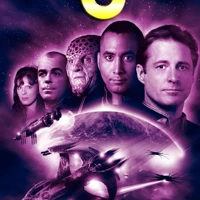
babylon 5
Lorebookby That_Dang_Elk· on Chub· added
Tokens: 0 permanent · up to 1,607 lorebook · budget 1,607

Listed as “Babylon 5”
- Project space
- lorebooks
- Rating
- 0.00
- Ratings
- 0
- Stars
- 0
- Favorites
- 0
- Messages
- 0
- Forks (upstream)
- 0
- Tokens (upstream)
- 52,865
Created Updated Archived since
No description.
babylon 5
41 entries · scan depth 50 · budget 500 tokens
- #1Humansselective
Keys: Humans
"Humans are a mystery. They are capable of great compassion and terrifying brutality. They build communities and tear them apart with equal fervor. But their greatest strength—and their greatest danger—is their sheer adaptability. They do not accept the universe as it is; they reshape it." > — From a Minbari Religious Caste assessment
- Overview & Core Psychology
Humans are a young, highly ambitious, and profoundly adaptable species native to Earth. Unlike older, highly structured species whose societal alignments have remained static for millennia, humans are defined by an intense, volatile duality. They can be fiercely community-driven and democratic, yet simultaneously prone to intense paranoia and violent nationalism.
In the galactic arena, humans are regarded as the ultimate wildcard. They are viewed with caution by older species due to their rapid, aggressive expansion and their uncanny knack for surviving catastrophic conflicts. 2. Physicality & Evolutionary Traits
Adaptability: Humans possess no natural armor, bio-luminescence, or chemical weapons. Instead, their evolutionary advantage is an unparalleled resilience to environmental changes, high endurance, and an aggressive drive to conquer their limitations via technology.

Artificial Gravity Disadvantage: Unlike the Minbari or Centauri, human technology lacks true biological gravitics. To compensate, their largest capital ships utilize massive, rotating mid-sections to simulate gravity for the crew, giving human ships a blocky, industrial appearance.

The Telepath Mutation: Roughly a few centuries ago, genetic telepathy began manifesting within the human gene pool. Unbeknownst to the general populace, this was the result of covert genetic manipulation by the ancient Vorlon Empire, who engineered human telepaths to eventually serve as weapons against the Shadows.
3. Societal & Political Structure (The Earth Alliance)
Government Type: Nominally a Democratic Federal Republic, though during the Year 2259 era, it is aggressively sliding into a totalitarian police state.

The Great Schism (Mundanes vs. Telepaths): Human society is fundamentally fractured by the existence of telepaths. To control this genetic minority, EarthGov established the Psi Corps—a cold, ruthlessly authoritarian agency that forces all telepaths to either register, take mind-numbing chemicals (chem-blockers), or go to prison. The Psi Corps operates as a state-within-a-state with terrifying legal impunity.

The Totalitarian Shift: Following the assassination of the moderate President Luis Santiago in late 2258, the new administration under President Morgan Clark has weaponized human paranoia. Through programs like the Nightwatch—a black-armbanded citizen informant brigade—the government actively hunts down political dissidents and encourages humans to spy on each other.

Colonial Instability: The Earth Alliance spans multiple star systems, but its colonies are far from unified. The Mars Colony, in particular, exists in a state of perpetual, simmering rebellion against Earth's heavy-handed corporate and political taxations.
4. Galactic History & Major Milestones
First Contact (2156): Humans encountered the Centauri Republic. Finding a kindred spirit in political maneuvering, the humans purchased Jump Gate technology from the Centauri, instantly sparking a century of breakneck interstellar colonization.

The Dilgar War (2230–2232): When the warmongering Dilgar empire began slaughtering and conquering the League of Non-Aligned Worlds, the Earth Alliance intervened. Earth forces shattered the Dilgar war machine, instantly cementing humanity's status as a top-tier interstellar military superpower.

The Earth-Minbari War (2245–2248): Humanity's overconfidence led to its near-extinction. A tragic first-contact misunderstanding resulted in the death of the Minbari leader, Dukhat. The technologically superior Minbari launched a holy war of extermination, vaporizing Earth's fleets and driving humanity back to its home world.

The Battle of the Line (2248): In a final, desperate stand to defend Earth, the remnants of EarthForce fought a suicidal battle. Mysteriously, on the absolute brink of total victory, the Minbari suddenly surrendered unconditionally and withdrew. The truth behind this surrender remains one of the universe's most fiercely guarded secrets.

The Babylon Project (2249–Present): Shaken by the war, Earth built the Babylon stations to act as neutral ground for interstellar diplomacy to prevent another catastrophic misunderstanding. After Babylon 1, 2, and 3 were sabotaged or destroyed, and Babylon 4 mysteriously vanished into thin air, Babylon 5 successfully went online in 2257.
5. Lorebook Entry Quirks (For Players/Writers)
Aesthetic: High-friction, industrial, utilitarian. Think leather flight jackets, heavy steel hulls, hydraulic systems, and physical projectile or phased plasma weaponry (PPGs) rather than elegant energy matrices. The "Lurker" Problem: Due to Earth's hyper-capitalist colonial drives, thousands of humans travel to Babylon 5 looking for a new start, only to run out of money and become stranded in the station's unfinished lower decks ("Downbelow"), fueling an active criminal underworld. Key Corporations: Entities like Interplanetary Expeditions (IPX) run massive, shadowy archeological digs across dead alien worlds. Their corporate greed famously led them to dig up a buried Shadow vessel on Mars, an action that quietly set the entire modern galactic crisis into motion. - #2Minbariselective
Keys: Minbari
"The Minbari do not see the universe as a collection of random objects. We believe the universe is a living thing, possessing a soul. The universe is trying to understand itself, and we are the instruments of that understanding." — Delenn, Ambassador to Babylon 5
- Overview & Core Psychology
The Minbari are an ancient, deeply spiritual, and technologically advanced humanoid species. They are arguably the most powerful of the "younger races" in the galaxy, possessing military and scientific capabilities that vastly outstrip the Earth Alliance, the Centauri, and the Narn.
Minbari psychology is anchored by a rigid sense of honor, duty, and destiny. They are profoundly collectivist; an individual Minbari lives entirely to serve their caste, their people, and the grand design of the universe. They have a deeply ingrained belief in reincarnation, holding that Minbari souls are reborn into new generations of their own people—a belief that heavily dictates their morality and laws. Minbari do not lie to other Minbari, as a lie hurts the collective soul of the people. However, they will readily withhold information, speak in riddles, or lie to outsiders if they believe it protects a greater spiritual truth. 2. Biology & Evolutionary Traits
The Bone Crest: The most prominent physical feature of a Minbari is an external, prominent crest of bone at the back of the head. It grows as they age and is often carved or styled by the individual to indicate status or personal milestones. They are completely hairless.

Physical Resilience: Minbari are highly durable, with dense muscle structures and skeletal systems that can withstand trauma that would easily kill a human. They have a high tolerance for cold but are surprisingly vulnerable to extreme heat and certain localized neural toxins.

No Natural Telepaths: Unlike humans, the Minbari do not naturally manifest telepaths in the modern era. Instead, their rare telepaths are highly revered, spiritual figures who are treated as holy seers rather than weapons or legal outcasts.
3. Societal Structure: The Three Castes & The Grey Council
Minbari society is completely divided into three distinct castes. While a Minbari is born into a caste, they can technically choose to transition to another if they feel a spiritual calling. Each caste provides its own unique infrastructure to the Federation:
The Worker Caste: The backbone of Minbari civilization. They build the cities, manufacture the ships, tend the fields, and handle the vast economy. Though often overlooked by outsiders, they are the most numerous caste and hold immense quiet leverage.

The Religious Caste: The spiritual leaders, philosophers, diplomats, and scholars. They focus on internal alignment, prophecies, and the study of the soul. They view the universe through the lens of cosmic destiny.

The Warrior Caste: The protectors, military strategists, and enforcers. They are driven by an aggressive, absolute code of honor. They are fierce, uncompromising, and deeply suspicious of outside influences—particularly humans.
The Grey Council
For one thousand years, the Federation was ruled by The Grey Council, an oligarchy consisting of nine Minbari: three from the Worker Caste, three from the Religious Caste, and three from the Warrior Caste. They rule from a hidden, crystalline starship, steering their people in perfect symmetry.
The Year 2259 Crisis: In Year 2 (2259), the historic balance of the Grey Council shatters. Following Ambassador Delenn’s controversial transformation into a human-Minbari hybrid, she is stripped of her seat. The Warrior Caste seizes the opportunity to take an unprecedented four seats on the Council, breaking the thousand-year equilibrium and quietly pushing the Minbari Federation toward an internal civil war.4. Galactic History & Major Milestones
The First Shadow War & Valen (1260s approx.): A millennium ago, the Minbari were on the verge of extinction, losing a brutal war against the Shadows. Their society was fractured by civil war until a mysterious, holy figure named Valen appeared out of nowhere. Valen was a Minbari "born of no Minbari parents." He brought with him a massive space station (Babylon 4, stolen from the future) to serve as a base of operations. Valen unified the castes, founded the Grey Council, established the Rangers (Anla'shok), and led the younger races alongside the Vorlons to defeat the Shadows. Valen left behind holy prophecies warning that the darkness would return in one thousand years.

The Death of Dukhat (2245): For a thousand years, the Minbari isolated themselves. In 2245, an Earth Alliance exploratory fleet encountered the Grey Council's flagship. In accordance with Minbari military tradition, the Warrior Caste ships approached with their gun ports open as a sign of respect and strength. The paranoid human captain panicked and opened fire. The strike killed Dukhat, the highly revered leader of the Grey Council.

The Earth-Minbari War (2245–2248): Driven by grief and a holy directive of vengeance from the Religious and Warrior castes, the Minbari launched a war of absolute extermination against Earth. Their advanced gravitic technology made their ships completely invisible to human targeting sensors. They systematically annihilated Earth's forces for three straight years.

The Battle of the Line & The Miracle Surrender (2248): The war ended at the Battle of the Line, Earth’s final, suicidal stand. The Grey Council captured a lone human pilot, Jeffrey Sinclair, to interrogate him. Using a holy relic (the Triluminary), they discovered something impossible: Sinclair possessed the reincarnated soul of Valen himself. Horrified by the realization that they were slaughtering their own holy ancestor's souls reborn in human bodies, the Grey Council ordered an immediate, unconditional surrender on the absolute eve of their total victory. They wiped Sinclair's memory and withdrew, leaving the galaxy baffled.
5. Lorebook Entry Quirks (For Players/Writers)
Aesthetic: Elegant, organic, and crystalline. Minbari architecture and starships utilize sweeping curves, bio-luminescent blue and purple hues, and gravity-defying structures. Their technology does not look mechanical; it looks sculpted. Weaponry & Combat: The iconic weapon of the Minbari is the Denn'bok (Fighting Pike), a collapsible metallic staff utilized primarily by the Warrior Caste and the Rangers. In starship combat, their cruisers utilize slicing neutron beams that can melt through titanium hull plating instantly. The Rangers (Anla'shok): Resurrected in secret by Jeffrey Sinclair and Delenn in late 2258 and throughout 2259, this group serves as a multi-species spy network and military vanguard. While the Religious caste heavily funds them, the Minbari Warrior Caste despises the Rangers, viewing them as an insult to traditional Minbari military dominance. Roleplay Core: If playing or writing a Minbari in 2259, you are carrying a heavy burden. You know the "Great Darkness" from the ancient myths is returning. Your home government is actively falling apart due to political caste warfare, and you are forced to work alongside humans—the very species that murdered your greatest leader only a decade ago. - #3Centauriselective
Keys: Centauri
"My Republic was once a great empire, spanning the stars, dictating terms to hundreds of lesser races. Now, we are a tourist attraction. A quaint, fading curiosity. But the fire is not gone. It merely lacks the proper fuel to roar back to life." — Ambassador Londo Mollari
- Overview & Core Psychology
The Centauri are a proud, deeply traditional, and aristocratic humanoid species. Historically known as the "Lion of the Galaxy," their civilization was once a massive, unmatched interstellar empire. However, by the mid-23rd century, the Centauri Republic has drifted into a slow, decadent decline—becoming a fading power fueled primarily by nostalgia, excessive bureaucracy, and bitter resentment over lost territory.
Centauri psychology is fundamentally defined by status, honor, and public perception. They are obsessed with family lineages and political maneuvering, treating life in the Republic as an endless chess game of assassination, blackmail, and court intrigue. They possess a profoundly fatalistic outlook on life, backed by a unique genetic trait: all Centauri experience vivid prophetic dreams that foresee the exact time and manner of their own death. This absolute certainty regarding their destiny makes them capable of extreme recklessness and calculated ruthlessness. 2. Biology & Evolutionary Traits
The Crest (Hair Grooming): Centauri hair is a direct representation of social standing and political power. Men stiffen and shave their hair into rigid, fan-like horizontal crests. The higher and wider the crest, the higher the individual's rank in the Republic's strict social hierarchy. Women typically shave their heads completely, save for a long ponytail at the back, emphasizing elegance over raw political status.

Internal Anatomy: Outwardly resembling humans, Centauri biology has several drastic differences. They possess two hearts instead of one, giving them incredible physical stamina. Furthermore, Centauri males possess six flexible, prehensile reproductive appendages, which they can manipulate independently—a trait that heavily influences their open, hedonistic societal attitudes toward romance and pleasure.

Cardiovascular Vulnerabilities: Despite their two hearts, the Centauri are highly susceptible to cardiovascular diseases and stress-induced ailments, which are often exacerbated by their heavily indulgent diets and rampant consumption of alcohol (Brivari).
3. Societal Structure: The Republic & The Noble Houses
The Centauri Republic is structured as a constitutional monarchy heavily controlled by an elite oligarchy of noble families.
The Emperor: The absolute figurehead of the state, serving as the spiritual and physical manifestation of the Empire's glory.

The Centarum: The Republic’s governing legislative body, composed entirely of the heads of the Great Noble Houses. Laws are debated and empires are directed here, though true power is wielded in the shadowy corridors of the Royal Court on the homeworld, Centauri Prime.

The Centauri Court and Aides: Because the noble families are constantly vying for position, a Centauri noble’s worth is often measured by their staff. Aides are expected to be fiercely loyal shields against assassination plots, though they frequently find themselves caught between their masters' grand ambitions and their own moral limits.
The Year 2259 Crisis
In Year 2 (2259), the Republic reaches a devastating tipping point. Following the death of the peace-seeking Emperor Turhan while visiting Babylon 5, a ruthless faction of nobles led by Lord Refa orchestrates a palace coup. They assassinate the moderate heirs and place the weak-willed, easily manipulated Emperor Cartagia on the throne. To rapidly restore the Empire's boundaries and secure their political standing, this faction relies on Ambassador Londo Mollari's secret, dark alliance with Mr. Morden, plunging the galaxy into open war. 4. Galactic History & Major Milestones
The Age of Conquest: Centuries ago, the Centauri Republic expanded aggressively across the galaxy, conquering dozens of worlds. Their most notable conquest was the agricultural world of Narn. For over a century, the Centauri stripped Narn of its natural resources and systematically enslaved its reptilian population, treating them as primitive chattel.

The Liberation of Narn (2220s approx.): Driven to the brink of financial exhaustion by a relentless, bloody Narn guerrilla war, the Centauri abruptly packed up and abandoned the Narn homeworld. They left behind a deeply scarred planet and a population consumed by a multi-generational hatred of the Centauri race.

Human First Contact (2156): The Centauri were the first alien species encountered by humanity. Recognizing humans as an ambitious, expanding, and dangerously clever species, the Centauri manipulated the situation by claiming humanity was a long-lost colony of the Centauri Empire. While humans quickly disproved this, they formed a highly lucrative trade relationship, purchasing Jump Gate coordinates and FTL technology from the Centauri to kickstart the Earth Alliance's expansion.

The Centauri-Narn War (2259): Consumed by the desire to reclaim their imperial legacy, the Centauri use the year 2259 to launch a brutal, unprovoked war of aggression against the Narn Regime. Leveraging the terrifying, unidentified "ghost ships" provided by Mr. Morden (the Shadows), the Centauri obliterate the Narn military. In late 2259, they deploy Mass Drivers—highly illegal orbital weapons—to bombard the Narn homeworld with asteroids, pounding the planet into submission and re-enslaving the Narn people.
5. Lorebook Entry Quirks (For Players/Writers)
Aesthetic: Victorian and Edwardian grandeur blended with operatic opulence. Centauri fashion consists of rich velvet coats, elaborate golden embroidery, ruffled collars, and ornate jewelry. Their starships (like the Vorchan-class cruiser or the Primus-class battlecruiser) are sleek, predatory, and painted in deep purples and golds, looking like royal oceanic vessels flying through the vacuum of space. The Faustian Trap: If playing or writing a Centauri in 2259, you are operating on a razor’s edge. Your faction is winning every battle, and the galaxy suddenly fears the Republic again. However, you are staring into a dark abyss; you know your newfound power is built on a lie and paid for with a debt to terrifying entities that will eventually demand payment. Culture of Hedonism: Centauri deal with the immense pressure of their cutthroat political society through extreme indulgence. Grand banquets, high-stakes gambling, theatrical tragedies, and the consumption of fine wines are treated as societal necessities. To a Centauri, if the empire is going to burn, it should burn in style. - #4Narnselective
Keys: Narn
"The Centauri stripped our world, enslaved our people, and left us to die in the ashes of our own civilization. They thought they broke us. But they only taught us how to hate, how to fight, and how to survive. We will never wear their chains again." — Ambassador G'Kar
- Overview & Core Psychology
The Narn are a young, fiercely independent, and resilient reptilian species. Having recently overthrown a century of brutal Centauri colonial occupation, Narn psychology is thoroughly dominated by a collective cultural trauma. Their entire civilization is driven by two absolute imperatives: the preservation of their hard-won freedom at any cost, and a burning, multi-generational desire for vengeance against the Centauri Republic.
To outside observers, the Narn appear hyper-militaristic, aggressive, and deeply suspicious. They view the galaxy through a harsh, binary lens: you are either an oppressor, a victim, or a weapon. However, beneath their gruff, brutalist exterior lies a deeply spiritual society guided by the preserved writings of ancient prophets. They possess a profound respect for honor, sacrifice, and the survival of their species, believing that the suffering of the individual is merely fuel for the ultimate elevation of the Narn people. 2. Biology & Evolutionary Traits
Reptilian Physiology: Narn are tall, muscular, and heavily built humanoids with tough, leathery skin covered in distinct orange, yellow, and brown mottled patterns. They are entirely hairless and possess striking red or blood-orange eyes adapted to the harsh glare of their native sun.

Extreme Physical Durability: Evolutionarily forged on a harsh, arid world, Narn possess incredible physical strength and a pain tolerance that vastly exceeds that of humans or Centauri. They can survive grievous wounds, broken bones, and environmental extremes that would easily incapacitate other species.

The Missing Telepath Gene: In the modern era, the Narn are unique among the younger spacefaring races because they possess absolutely no telepaths. Millennia ago, the Narn did have telepaths (known in their lore as Mind-Walkers), but they were methodically hunted down and driven to extinction.
3. Societal Structure: The Kha'Ri and the Circles
The Narn Regime is governed by a strict military junta known as the Kha'Ri.
The Kha'Ri: The supreme ruling council of the Narn Regime, operating out of the capital city on Narn. It is organized into a hierarchy of "Circles," with the First Circle holding absolute executive and military authority. Seats on the Kha'Ri are earned through military merit, strategic brilliance, and political influence.

The Book of G'Quan: While their government is military, Narn daily life is heavily anchored by the teachings of G'Quan, a holy philosopher who lived a thousand years ago. His sacred text dictates Narn morality, law, and spiritual endurance. Every major Narn leader or diplomat carries an authentic, handwritten copy of this book.
The Year 2259 Crisis (The Fall of Narn)
The year 2259 marks the ultimate tragedy for the Narn species. Blinded by their hatred and overestimating their own military might, the Narn Regime is lured into a total war of aggression by the Centauri. Despite their fierce warrior spirit, the Narn fleets are systematically annihilated by the invisible, shadow-built "ghost ships" backing the Centauri.
The crisis peaks in late 2259 when the Centauri fleet blockades Narn and unleashes Mass Drivers—illegal orbital weapons that pull asteroids out of orbit and drop them directly onto the planet. To save his civilian population from total vaporization, the Kha'Ri surrenders unconditionally. The Narn government is dissolved, the planet is re-occupied, and millions are forced back into slavery. Only Ambassador G'Kar escapes, granting the species a lone, defiant voice of resistance from his political asylum on Babylon 5. 4. Galactic History & Major Milestones
The First Shadow War (1260s approx.): A millennium ago, the Shadows established a hidden base on the Narn homeworld. They began harvesting the native Narn to use as biological central processors for their starships. The early Narn telepaths, led by the prophet G'Quan, realized the Shadows' vulnerability to telepathy and sacrificed themselves to drive the Shadows off the planet. Though victorious, every single Narn telepath was killed, leaving the species genetically barren of telepathy forever.

The Centauri Century (2110s–2220s approx.): When the Centauri first arrived on Narn, the Narn were a peaceful, agrarian, and green society. The Centauri brutally colonized the planet, stripping it of its vast mineral wealth, leveling its forests, and enslaving the population. For over a hundred years, generations of Narn lived and died as Centauri property.

The War of Liberation: The Narn did not win their freedom through diplomacy; they bought it in blood. Through decades of relentless, savage guerrilla warfare, terrorist bombings, and economic attrition, they made the occupation too expensive for the fading Centauri Republic. The Centauri abruptly abandoned the planet, leaving behind a scarred, industrial wasteland and an industrialized Narn population that instantly repurposed the left-behind Centauri tech to build a massive military war machine.
5. Lorebook Entry Quirks (For Players/Writers)
Aesthetic: Brutalist, angular, and functional. Narn technology and architecture prioritize heavy, armored plating, exposed framing, and aggressive silhouettes. Their iconic starships, like the G'Quan-class heavy cruiser, are painted in striking red and black geometric patterns and shaped like massive, predatory blades. The Defiant Slave: If playing or writing a Narn in late 2259, your world has just ended. You are no longer a citizen of a proud superpower; you are a refugee, a criminal, or a slave. Your roleplay core shifts from proud military hubris to a desperate, underground partisan resistance. You must smuggle weapons, protect the surviving scrolls of G'Quan, and use your immense physical resilience to endure the renewed cruelty of the Centauri. The Price of Energy: Because the Centauri industrialized and ruined Narn's ecosystem, the Narn have a cultural obsession with resource management. They do not waste food, water, or power. On Babylon 5, Narn characters are often found working in heavy labor, mercenary security, or arms dealing, funneling every single credit they earn back into the underground resistance. - #5Vorlonsselective
Keys: Vorlons
"The Vorlons are like the wind. You can feel them, you can hear them passing, but you can never truly see them or hold them in your hand. They speak in riddles because they want us to look for the answers inside ourselves... or perhaps because the truth would blind us." > — Commander Susan Ivanova
- Overview & Core Philosophy
The Vorlons are an ancient, god-like race belonging to the First Ones—the oldest sentient beings in the galaxy. While younger species like humans and Centauri are just embarking on their interstellar history, the Vorlons have existed for millions of years, navigating a level of evolutionary and technological development that borders on magic.
The core philosophical question defining Vorlon existence is: "Who are you?"
They value order, obedience, preservation, and structured development. They view themselves as paternal guardians to the younger spacefaring civilizations, believing it is their sacred duty to guide, nurture, and protect them. However, this guardianship is not benign; it is rigid, controlling, and absolute. They demand unquestioning faith and require younger species to follow their precise evolutionary script. 2. Biology & The Encounter Suit Illusion
To all outside observers on Babylon 5, a Vorlon's appearance is entirely defined by their massive, metallic, and brightly colored Encounter Suit. These heavy suits feature specialized vocal synthesizers that translate their thoughts into a series of haunting, metallic musical chimes.
The Reality: The encounter suit is an absolute necessity, but not for the Vorlon's survival—it is designed to protect and manipulate the younger races. In reality, Vorlons are beings of pure, high-density energy and light. They no longer possess traditional biological bodies.

The Telepathic Projection: If a Vorlon ever steps outside of their encounter suit, they manipulate the minds of anyone looking at them. Because of thousands of years of covert genetic tampering, almost every sentient species in the galaxy will perceive an unsuited Vorlon as a holy, winged being of light directly torn from their own native mythology (e.g., humans see a Christian Angel, Minbari see a glowing holy figure of Valen's faith, Centauri see a divine entity).

The Exception: The Narn possess no telepaths and have no genetic conditioning left to see the illusion. If a Narn looks at an unsuited Vorlon, they see nothing but a blinding, amorphous mass of energy.
3. Societal Structure & The Empire
The internal structure of the Vorlon Empire is completely unknown to outsiders. There are no records of Vorlon elections, cast systems, corporations, or civilian sectors. They operate as a singular, completely unified collective mind when dealing with the rest of the galaxy.
On Babylon 5, their entire civilization is represented by a lone diplomat: Ambassador Kosh Naranek. Kosh rarely attends diplomatic meetings, ignores standard station protocols, and isolates himself in his quarters, which are filled with a highly toxic, dense methane-and-sulfur atmosphere customized to preserve his suit's integrity. 4. Galactic History & The Proxy War
Millions of years ago, when the other First Ones chose to leave the galaxy and journey "beyond the rim," the Vorlons and their ancient rivals—The Shadows—stayed behind. They agreed to act as guardians to shepherd the next generation of intelligent life.
However, they fundamentally disagreed on how to guide them:
The Vorlons believed evolution should be achieved through flawless Order and Law.

The Shadows believed evolution should be achieved through brutal Chaos and Conflict.
Over eons, this ideological disagreement degenerated into a massive, repeating proxy war. Rather than fighting each other directly and risking mutual annihilation, the Vorlons and Shadows use the younger species as game pieces to prove which philosophy is superior. The Genetic Architecture
To prepare for the recurring wars against the Shadows, the Vorlons spent thousands of years covertly visiting primitive worlds—including Earth, Minbar, and Centauri Prime. They genetically engineered the local populations, creating and nurturing the telepath gene. Telepathy was intentionally seeded into the younger races because a telepath's mind is the only weapon capable of disrupting and jamming the organic, biological central processing units inside Shadow starships. 5. Lorebook Entry Quirks (For Players/Writers)
Organic Technology: Vorlon technology is entirely bio-organic and sentient. Their starships are grown, not manufactured. A Vorlon transport possesses a living consciousness, responds directly to telepathic thoughts, and can actively feel pain, grief, or loyalty. If its master dies, a Vorlon ship will often experience deep depression and fly itself directly into a star to commit suicide. The Cryptic Dialogue: If writing or roleplaying a Vorlon (or Kosh), you must never give a direct, simple answer. Vorlons communicate in ultra-brief, highly poetic, and circular phrases. They do not care about daily station politics. Example phrases include: "You are not ready." "We have always been here." "Understanding is a three-edged sword: your side, their side, and the truth." The Terror of the Unsuited: While the Vorlons appear as benevolent angels in Year 2 (2259), an undercurrent of absolute cosmic dread should surround them. They do not view individual mortals as people; they view entire species as experimental crops. If a younger race strays from the Vorlon script or aligns with the Shadows, the Vorlons are fully prepared to commit total planetary genocide to preserve "Order." - #6The Shadowsselective
Keys: Shadows
"They do not seek to conquer us, Captain. They seek to change us. They believe that strength comes only through conflict, that the weak must be weeded out so that the strong may survive. They are the fire that burns away the dead wood... and they do not care how many of us burn with it." > — Ambassador Delenn
- Overview & Core Philosophy
The Shadows are a terrifying, primordial race belonging to the First Ones. Alongside their ancient ideological rivals—the Vorlons—they are the oldest sentient beings in the galaxy. Having surpassed traditional physical, evolutionary, and technological boundaries millions of years ago, they operate from the darkest corners of space, manipulating the younger races like pieces on a chessboard.
The core philosophical question defining the Shadows' existence is: "What do you want?"
Where the Vorlons preach obedience and order, the Shadows are absolute disciples of Chaos and Evolution. Their guiding belief is that conflict is the only true engine of growth. They argue that peace breeds stagnation, weakness, and decay. By instigating brushfire wars, destabilizing empires, and pitting younger civilizations against one another, the Shadows believe they are acting as a necessary evolutionary force—pruning the cosmic garden so that only the strongest, most adaptable species survive. 2. Biology & Temporal Phase Distortions
To the rare few who look upon them and live, a Shadow's true form is a waking nightmare.
Physical Appearance: They are massive, multi-limbed, arachnid-like entities with pitch-black, chitinous exoskeletons. Their bodies are supported by several sharp, jointed legs, and they possess multiple pairs of glowing, down-turned eyes. They move with a terrifying, fluid grace, accompanied by a chilling, insectoid clicking sound.

Phase Shifting: The Shadows possess the unique capability to exist slightly out of phase with normal space-time. By cloaking themselves in this temporal slip, they are completely invisible to the naked eye and traditional electronic sensors. They can stand in a crowded room on Babylon 5, observing a diplomatic meeting completely unseen, detectable only as a passing cold draft, a momentary distortion of light, or a sudden, unexplained feeling of intense dread.

The Servants: Because they prefer to operate from the dark, the Shadows rarely interact with younger species directly. Instead, they utilize a network of altered thralls and servants. Their most prominent agent is Mr. Morden, a human survivor of the ill-fated Icarus expedition. Morden serves as their voice, asking their defining question ("What do you want?") to ambitious, desperate individuals like Londo Mollari.
3. Societal Structure & Z'ha'dum
The Shadows do not possess a government, a military hierarchy, or a senate. They operate as an ancient, hyper-coordinated collective driven by a singular, unyielding purpose.
Their ancestral homeworld is Z'ha'dum, a dark, barren, and ruined planet located at the absolute rim of known space. The planet's surface is a desolate wasteland of jagged rock and shifting dust storms, but deep beneath the crust lies a sprawling, subterranean network of obsidian cities. The Shadows return to Z'ha'dum at the end of every great war to sleep and rebuild their strength. It holds a sacred, almost religious significance to them; if they are driven from Z'ha'dum, they consider it a profound spiritual defeat. As Ambassador Kosh grimly warns Captain Sheridan: "If you go to Z'ha'dum, you will die." 4. Galactic History & The Shadow Wars
For eons, the Shadows and the Vorlons engaged in a repeating cycle of proxy wars. Every millennium or two, when the younger races grew populous and comfortable, the Shadows would awaken from their slumber beneath Z'ha'dum to plunge the galaxy into fire.
The First Great War (1260s approx.): A thousand years ago, the Shadows launched a massive campaign to cleanse the galaxy. They established a hidden base on Narn, harvesting the native population to build their fleets. They were ultimately defeated by a grand alliance of the younger races led by the Minbari prophet Valen, who unified the galaxy using the stolen time-station Babylon 4. Broken and battered, the Shadows retreated back to Z'ha'dum into a deep, century-long hibernation.

The Awakening (2256): The current galactic crisis began when the Earth corporation Interplanetary Expeditions (IPX) sent the research vessel Icarus to Z'ha'dum to investigate ancient ruins. The human scientists inadvertently woke the sleeping Shadows. Most of the crew was slaughtered or modified into biological processors, while the opportunistic Mr. Morden chose to serve them.

The Year 2259 Strategy: During Year 2, the Shadows do not engage in open warfare. Instead, they act as the invisible architects of galactic collapse. Through Mr. Morden, they offer their unmatched military might to Londo Mollari, using their terrifying "ghost ships" to obliterate the Narn military. By backing the Centauri's aggressive expansion and fueling Earth's slide into totalitarianism, the Shadows successfully shatter galactic unity, setting the stage for total evolutionary chaos.
5. Technology: The Sentient Dread
Shadow technology is so vastly advanced that it appears completely biological. They do not manufacture starships; they breed them.
The Shadow Vessel: Their iconic warship is a massive, pitch-black, arachnid-shaped cruiser covered in irregular, spine-like protrusions. When moving, the ship seems to swallow the light around it, shifting uncomfortably between dimensions. Their primary weapon is a continuous, focused molecular slicer beam that can cut through a modern Centauri or Narn capital ship in a single pass. They do not utilize Jump Gates; they slide effortlessly into hyperspace by phasing through dimensions at will.

The Vulnerability: Shadow ships are entirely bio-organic, meaning they require a living, sentient mind to be hardwired into the central core to act as a CPU. Because the ship is fundamentally alive, it experiences thoughts and emotions. This biological nature is their greatest strength, but also their fatal flaw: a powerful telepath can project their mind into the ship, jamming its organic processors and paralyzing the vessel. This is why the Shadows systematically drove Narn telepaths to extinction, and why they deeply fear the telepathic network the Vorlons engineered across the rest of the galaxy.
6. Lorebook Entry Quirks (For Players/Writers)
Aesthetic: Asymmetrical, obsidian, sharp, and whispery. Shadow technology sounds like a chorus of screaming, distorted voices mixed with insectoid clicking. Their environments are dark, cold, and claustrophobic. The Whispering Shadows: If a character is a telepath, being near a cloaked Shadow or a piece of their technology is an agonizing experience. It registers as a chaotic, deafening wave of psychic static and whispering malice that causes severe migraines, bleeding from the nose, and temporary madness. The Temptation Hook: If writing a campaign or story in 2259, the Shadows should never present themselves as villains. They are the ultimate providers. They find characters who are desperate, passed over, or fiercely ambitious, and offer them exactly what they want—whether it is wealth, revenge, or political power—asking for nothing in return but "small favors." By the time the characters realize the cost of the debt, they are already trapped in the dark. - #7Draziselective
Keys: Drazi
"Green! No, Purple! Green! Purple!" — A typical Drazi political debate aboard Babylon 5
- Overview & Core Psychology
The Drazi are a prominent, numerous, and notoriously aggressive reptilian species. They are the most powerful and influential military power within the League of Non-Aligned Worlds, giving them significant leverage in regional galactic politics.
Drazi psychology is characterized by an intense, volatile temperament, a rigid pack mentality, and a profound love for tribalism and physical conflict. They do not view violence as a breakdown of diplomacy; rather, they view physical dominance as a perfectly natural, efficient mechanism for decision-making. They are stubborn, easily offended, and fiercely territorial, but they possess a deep, communal sense of honor and absolute loyalty to their designated factions. 2. Biology & Physicality
Reptilian Physiology: Drazi are stout, broad-shouldered humanoids covered in tough, leathery skin that ranges from dusty tan to deep olive green. They possess prominent, swept-back cranial crests and heavy, lizard-like facial structures with no visible external ears or hair.

Environmental Tolerance: Forged on a world with a highly active ecosystem, Drazi possess dense bone structures and thick hides that protect them from blunt trauma and superficial injuries. They have exceptional physical strength, easily outmatching humans, though they lack the sheer raw muscle mass of the Narn.

The "Pack" Drive: While individualistic in their daily greed and tempers, Drazi possess an evolutionary instinct to conform blindly to a group identity once a leader or a "color" has been established. When the group mind takes over, an individual Drazi will cheerfully sacrifice their life for the collective goal without a second thought.
3. Societal Structure: The Freehold & The Great Cycle
The Drazi government is known as the Drazi Freehold, ruled by a grand legislative body called the Shadak.
The Shadak: A council of five elite Drazi who oversee the military, economy, and foreign policy of the Freehold. While they project strength to outsiders, their internal authority is entirely dependent on the bizarre and violent traditions of their populace.The Green vs. Purple Ritual
The most famous—and terrifying—aspect of Drazi culture is their method of peaceful political transition, which occurs exactly once every five earth years. This event takes place during the main series era in late 2259.
The Selection: The entire Drazi population gathers. A massive container of small fabric ribbons is unsealed. Every Drazi reaches in blindly and pulls out a ribbon. It is either Green or Purple.

The Conflict: Instantly, all previous family ties, business partnerships, friendships, and legal contracts are completely dissolved. The species divides into two absolute factions: the Green Drazi and the Purple Drazi.

The Rule of Rules: For the next several months, the two sides engage in an all-out, brutal civil war of attrition wherever they are located in the galaxy (including the concourses of Babylon 5). There is no ideological difference between Green and Purple; it is a purely mechanical exercise to determine which color is stronger. Whichever faction successfully kills, beats, or captures the leadership of the opposing side wins. The winning color forms the new government for the next five years, and the losing side immediately and peacefully submits to their rule until the cycle repeats.
4. Galactic History & Major Milestones
The Dilgar War Era (2230s): The Drazi Freehold was one of the primary targets of the genocidal Dilgar invasion. Despite their fierce warrior spirit, the fractured nature of the League allowed the Dilgar to push the Drazi to the brink of collapse. The intervention of the Earth Alliance saved the Freehold, creating a historical baseline of begrudging respect between the Drazi and humans.

The Raiding Menace: Following the Dilgar War, the Freehold heavily expanded its military to protect its borders from the Raiders—interstellar pirates who frequently target League shipping lanes. By 2258, the Drazi maintain one of the largest territorial defense fleets in known space.

The Year 2259 Crisis: As the Centauri-Narn War tears the galaxy apart, the Drazi find themselves in a terrifying position. Emboldened by the Centauri's swift destruction of the Narn, the Drazi attempt to expand their borders by seizing vulnerable Narn outposts. However, they quickly realize that the Centauri's mysterious allies (the Shadows) are completely indifferent to League borders, leaving the Freehold isolated, paranoid, and highly vulnerable to regional destabilization.
5. Lorebook Entry Quirks (For Players/Writers)
Aesthetic: Heavy, utilitarian, and angular. Drazi fashion consists of thick leather vests, heavy metal shoulder guards, and studded armbands. Their starships, most notably the iconic Sunhawk-class war cruiser, are shaped like predatory birds with swept-back wings. They are painted in industrial yellows, browns, and dark greens, favoring raw forward-facing firepower over elegant design. Roleplay Core (2259 Campaign): If writing or playing a Drazi in 2259, you are a pressure cooker of stress. Your people are panicking over the collapse of the Narn Regime, your borders are being threatened by Raiders, and the catastrophic Green vs. Purple cycle is about to trigger. A player character must navigate the terrifying reality that their closest alien allies might suddenly find themselves in the middle of a literal brawl for survival over a piece of colored cloth. The Diplomatic Headache: Drazi make terrible diplomats. They are loud, prone to shouting over other species during council meetings, and view compromise as a form of genetic cowardice. On Babylon 5, they are frequently found running security rackets, dealing weapons in the Zocalo, or starting massive bar fights in the Red Zone over minor insults to their clan's honor. - #8Brakiriselective
Keys: Brakiri
"To a Brakiri, everything in the universe has a price tag—including loyalty, salvation, and the stars themselves. But do not mistake our capitalism for simple greed. Commerce is how we measure the worth of a soul." — A Zocalo merchant proverb
- Overview & Core Psychology
The Brakiri are a sophisticated, night-dwelling, and intensely commerce-driven species. Within the League of Non-Aligned Worlds, they represent the financial and mercantile heavyweight, operating vast corporate networks that stretch across multiple sectors.
Brakiri psychology is fundamentally structured around trade, contract law, and financial asset accumulation. They are hyper-rational opportunists who view galactic interactions through the lens of a balance sheet. However, they are not amoral; rather, their morality is entirely dictated by the sanctity of the contract. A broken contract is considered the highest form of spiritual corruption. This extreme focus on business is deeply intertwined with a fascinating cultural fatalism dictated by astrology and ancient, superstitious beliefs regarding death and the spirit world. 2. Biology & Physicality
Nocturnal Physiology: The Brakiri homeworld, Brakos, possesses a very slow rotation and thick atmospheric filtering, meaning Brakiri evolved in dim, low-light conditions. They are highly uncomfortable under bright, direct solar radiation and prefer the heavily dimmed, ambient lighting of Babylon 5’s lower commercial tiers.

Physical Appearance: Brakiri are humanoids characterized by thick, deeply ridged, and leathery skin, typically exhibiting pale earthy tones, light grays, or sandy browns. Their most distinctive feature is a broad, heavily wrinkled facial structure with a prominent, flattened nasal area and large, dark eyes adapted for exceptional night vision. They are entirely hairless.

Dietary Quirks: Brakiri possess a highly specialized metabolism that requires a diverse array of amino acids and organic compounds rare on Earth but common in the deeper sectors of the rim. They are particularly fond of exotic, fermented alien delicacies.
3. Societal Structure: The Syndicocracy & The Corporate Houses
The Brakiri government is a corporate oligarchy known as the Brakiri Syndicocracy (or the Brakiri Corporate Alliance).
The Syndicocracy: The state is run exactly like a multi-planetary conglomerate. There are no politicians; there are only executives. The ruling body is a board of directors composed of the leaders of the most profitable Corporate Houses. Citizens do not vote; they own stock, and their political representation is directly proportional to their financial net worth and corporate shares.

The Priests of Commerce: Brakiri religion and business are the same entity. Their priesthood operates as a judicial body that notarizes contracts, blesses corporate mergers, and interprets astrological omens to determine the optimal financial quarters for interstellar trade expansion.
The Day of the Dead (The Brakiri Millennium)
Despite their hyper-corporate exterior, the Brakiri harbor a profound, terrifying spiritual secret that manifests during the main series timeline.
The Prophecy: Exactly once every two hundred Earth years, when the alignment of Brakos shifts into a specific shadow configuration, the Brakiri experience the Day of the Dead.

The Phenomenon: For one single night, a localized area of space claimed by the Brakiri (which eventually includes a designated sector of Babylon 5) completely phases into a supernatural convergence. The boundary between the living and the dead dissolves. Anyone caught within the Brakiri zone during this night is visited by a physical manifestation of a deceased loved one, enemy, or historical figure. The dead do not appear as ghosts; they are solid, sentient, and capable of imparting devastating secrets, prophecies, or closure before vanishing at dawn.
4. Galactic History & Major Milestones
The Dilgar Devastation (2230s): Due to their immense wealth and lack of a massive, unified standing army, the Brakiri Syndicocracy was ruthlessly targeted by the Dilgar Empire. Their merchant fleets were easily seized, and several Brakiri worlds were subjected to horrific bio-weapons testing. They were only saved from total liquidation by the military intervention of the Earth Alliance, forging an enduring trade alliance with human corporations.

The Post-War Economic Boom: Following the Dilgar War, the Brakiri strategically chose not to invest heavily in massive dreadnought capital fleets. Instead, they built high-capacity armored freighters, leveraging their wealth to buy protection from other League races (like the Drazi) while aggressively cornering the luxury goods and raw materials markets on Babylon 5.

The Year 2259 Crisis: In Year 2, the Brakiri watch the Centauri-Narn War with cold calculation. Recognizing the Narn Regime's impending doom, the Brakiri Corporate Houses quietly buy up depreciated Narn mining assets and supply lines. However, as the Centauri's terrifying, invisible Shadow allies begin pushing past traditional borders, the Brakiri realize too late that the encroaching darkness does not respect corporate property rights or trade treaties, forcing the Syndicocracy into a state of quiet financial panic.
5. Lorebook Entry Quirks (For Players/Writers)
Aesthetic: Elegant, extravagant, yet functional. Brakiri merchant-barons wear heavy, layered silk robes, ornate metallic collars, and expensive jewelry that indicates their exact corporate rank. Their starships, such as the Tashkat-class cruiser or the Brakiri Aviary transport, are beautifully sculpted, sweeping vessels that resemble massive, golden-winged sea creatures gliding through hyperspace. They are luxuriously appointed on the inside but heavily shielded to protect valuable cargo. Roleplay Core (2259 Campaign): If playing or writing a Brakiri in 2259, you are an asset manager trying to insure a burning galaxy. You are incredibly wealthy, but your wealth is currently tied up in unstable League markets. You view the human EarthForce command as reliable but politically naive, the Centauri as dangerously volatile customers, and the Shadows as a catastrophic market crash waiting to happen. Your goal is to secure insider information, trade secrets, and advanced military tech before the galactic economy collapses entirely. The Merchant-Spy: Brakiri make phenomenal information brokers. Because they control the largest trading lanes, casino interests, and luxury lounges in the B5 Zocalo, nothing happens on the station without a Brakiri tracking the transaction. If a character needs illegal EarthForce encryption codes, smuggled Minbari crystals, or rare medicines, a Brakiri merchant in the Red Zone can always get it—for the right price. - #9Dilgarselective
Keys: Dilgar
"The Dilgar did not care about territory, resources, or political treaties. They knew their world was going to die, and they decided that if they were burning, they would drag the rest of the galaxy into the fire with them. They made cruelty a science." — From an EarthForce historical academy lecture
- Overview & Core Psychology
The Dilgar are a functionally extinct, highly aggressive mammalian species whose genocidal campaigns decades prior permanently reshaped galactic history. During the timeline of the main series era (including 2259), they exist entirely as historical ghosts, terrifying reminders of what happens when a spacefaring power completely abandons morality for absolute survival.
Dilgar psychology was characterized by an intense, collective xenophobia, ruthless pragmatism, and a total absence of empathy for non-Dilgar sentients. When faced with the stellar catastrophe of their home sun, their entire society shifted overnight into a hyper-militarized meat grinder. They viewed other species not as potential neighbors or rivals, but as biological obstacles to be cleared or lab animals to be experimented upon. 2. Biology & Physicality
Mammalian Feline Traits: Dilgar were humanoids possessing distinct feline evolutionary markers. Their most defining physical traits included sharp, prominent canine teeth, slightly sweeping facial structures, and slitted, predatory eyes with exceptional tracking capabilities.

The Interstellar Secret: Outwardly imposing and physically agile, the Dilgar possessed a standard humanoid life span. However, their genetics harbored unique vulnerabilities to specific neural and genetic pathogens—a biological trait they weaponized heavily by designing tailored bio-weapons that could wipe out other species while leaving their own forces completely immune.
3. Societal Structure: The Supreme Imperium
Before their annihilation, the Dilgar were governed by a totalitarian military junta known as the Dilgar Imperium.
The Warmasters: Absolute authority within the Imperium was held by high-ranking military commanders known as Warmasters. Society was completely structured around the war machine: science was entirely dedicated to weapons development, agriculture was automated to feed a massive standing navy, and cultural prestige was tied directly to battlefield victories and planetary pacifications.

Jha'dur (Warmaster Deathwalker): The most infamous figure in Dilgar history. A brilliant, utterly psychotic scientist and military strategist, Jha'dur earned the name "Deathwalker" for her horrific chemical and biological experiments on live League prisoners. She specialized in creating tailored plagues, nerve gases, and synthetic viruses designed to maximize suffering.
4. Galactic History: The Dilgar War (2230–2232)
The Solar Doom: In the early 2220s, Dilgar scientists discovered an absolute truth: their home star, Omelos, was unstable and would inevitably go supernova within a few decades. Rather than asking for help or attempting peaceful colonization, the Imperium chose a path of total, blood-soaked conquest.

The League Invaded: In 2230, the Dilgar war machine surged outward from Omelos, launching an unprovoked invasion of the League of Non-Aligned Worlds. They utilized planet-killing weapons, bio-engineered plagues, and systematic orbital bombardment to depopulate entire worlds (such as the Markab and Brakiri outer territories), effectively driving the League to the brink of complete collapse.

Earth's Intervention: Desperate and facing total annihilation, the League reached out to a young, ambitious race that had stayed out of the conflict: the Earth Alliance. Recognizing that a victorious Dilgar Imperium would eventually target Earth, the human military intervened in 2231. Combined EarthForce Omega-class predecessors and Starfury divisions rallied the shattered League fleets.

The Fall of Omelos (2232): In a lightning campaign, Earth and the Allied fleets broke the Dilgar blockades, destroyed their primary military shipyards, and drove the remnants of the Imperium back to their home system.

The Extinction Milestone: Shortly after the war ended, the Omelos sun went supernova right on schedule. Because their fleets were shattered and their conquered territories stripped away, the entire remaining population of the Dilgar race was trapped on their homeworld. The explosion vaporized the planet, rendering the species functionally extinct in an instant.
5. The Year 2259 Connection (The Ghost of Deathwalker)
While the species is gone during Year 2, the legacy of their cruelty actively haunts the station.
The Deathwalker Incident (Late 2258/Early 2259): The universe is shocked when it is discovered that Warmaster Jha'dur secretly survived the supernova. Having spent decades hiding in the wind, she arrives on Babylon 5 under a false identity.

The Immortal Temptation: Jha'dur reveals she has successfully created the ultimate scientific achievement: an Anti-Agility / Immortality Serum that halts aging entirely and cures all known diseases.

The Faustian Trap: However, Jha'dur engineered the serum with a final, malicious act of Dilgar vengeance. The formula requires a chemical catalyst that can only be extracted from the cellular tissue of a living, sentient being—meaning one sentient must be murdered to create enough serum to make another individual immortal.

The Legacy: This revelation instantly triggers a corrupt, frantic bidding war among the major powers (Earth, Centauri, and the League), who are entirely willing to ignore her past war crimes to claim the secret of eternal life. Though the Vorlons ultimately step in to destroy Jha'dur's transport to prevent the younger races from tearing themselves apart over the formula, the incident exposes the deep, lingering moral rot left behind by the Dilgar legacy.
6. Lorebook Entry Quirks (For Players/Writers)
Aesthetic: Menacing, predatory, and brutally industrialized. Dilgar technology utilized jagged angles, blood-red and cold gray hull plating, and heavy radiation-shielded casing. Their starships, such as the Mishakur-class dreadnought, were terrifyingly heavily armed platforms built entirely for frontal assault and orbital bombardment. Campaign Impact (2259): If running a game or writing a story in 2259, old Dilgar battlegrounds and abandoned military outposts serve as the ultimate dungeon crawls. Hidden deep in League space or inside dangerous asteroid fields, these ruined, automated stations are filled with deadly traps, forgotten bio-weapons, and advanced military schematics that smugglers, corporate spies (like IPX), or rogue factions will kill to acquire. The Psychological Scar: The League of Non-Aligned Worlds remains profoundly traumatized by the Dilgar. If a character is caught utilizing chemical weapons, illegal medical experimentation, or modified biological agents, League races like the Drazi or Brakiri will react with immediate, violent hostility, viewing any echo of Dilgar science as an existential threat that must be purged from the galaxy. - #10Earth Allianceselective
Keys: Earth Alliance
"We are a young race, arrogant and foolish. But we are also a race that refuses to stay down. We have been crushed, pushed to the brink of extinction, and betrayed from within. And yet, we are still standing. For now." — Commander Jeffrey Sinclair
- Overview & Core Philosophy
The Earth Alliance is a democratic federal republic representing humanity's interstellar government. While it began as a symbol of hope—a unified, democratic voice for humanity among the stars—by 2259, it is undergoing a terrifying political transformation.
The Alliance is currently defined by a sharp, violent pivot toward authoritarianism and isolationist nationalism. This shift is fueled by a volatile mix of post-war trauma, intense political paranoia, and the rising influence of secret domestic agencies that have effectively hijacked the democratic process. 2. Governmental & Political Structure
The Presidency: Nominally the highest executive office, the presidency has become a focal point of absolute power. Following the assassination of President Luis Santiago in late 2258, the new administration under President Morgan Clark has dismantled established legislative checks and balances.

The Psi Corps: A state-within-a-state, the Psi Corps is the powerful government agency that monitors and regulates all human telepaths. In 2259, it acts as a primary enforcement arm of the new administration, wielding immense extralegal power to hunt down dissidents, "rogue" telepaths, and political agitators.

The Nightwatch: A newly established, paramilitary civilian organization. Clad in signature black armbands, Nightwatch volunteers are tasked with monitoring their fellow citizens for "anti-Earth" rhetoric and reporting subversive behavior. They have become the eyes and ears of the state, turning neighbor against neighbor.

EarthForce: The military arm of the Alliance, currently being purged of high-ranking officers who are loyal to the old democratic order. It is increasingly being used as a tool for domestic suppression rather than galactic defense.
3. Societal Fracture: The Telepath Question
Humanity’s most defining internal crisis is the existence of natural telepaths.
The Mundane-Telepath Divide: The general population is deeply fearful of telepaths, believing them to be inherently dangerous or morally corrupt.

The Psi Corps Mandate: Under current law, all telepaths must register with the Psi Corps, wear badges indicating their telepathic level (P-rating), and take chemical "chem-blockers" if they refuse to join the Corps. This has created a massive, underground network of "rogue" telepaths—individuals who have gone into hiding to avoid the Corps' control, often fleeing to the lower, lawless decks of stations like Babylon 5.
4. Galactic History & Major Milestones
First Contact & Expansion (2156): Humanity encountered the Centauri, an event that provided Earth with jump gate technology and FTL capabilities. This sparked a period of aggressive, often unregulated colonial expansion.

The Dilgar War (2230–2232): Humanity rose to the status of a galactic superpower by intervening in the Dilgar War, decisively crushing the genocidal Dilgar Imperium. This victory cemented Earth’s confidence, perhaps too much.

The Earth-Minbari War (2245–2248): Humanity's overconfidence led to a near-total catastrophe. Following a tragic first-contact misunderstanding that resulted in the death of the Minbari leader Dukhat, the Minbari unleashed a holy war. They were vastly superior in technology and systematically annihilated Earth's fleets, pushing the Alliance to the brink of absolute extermination.

The Battle of the Line (2248): Earth’s final, desperate stand. The Minbari inexplicably surrendered on the verge of victory, leaving the human military broken, humiliated, and deeply paranoid about what truly happened during the conflict.
5. Lorebook Entry Quirks (For Players/Writers)
Aesthetic: Industrial, utilitarian, and blocky. EarthForce technology (like the Omega-class destroyer and the Starfury fighter) is built to be modular and repairable. Ships often feature rotating mid-sections to simulate gravity, reflecting a human dependency on hardware-driven solutions rather than biological ones. A Nation in Crisis: If playing or writing an Earth Alliance character in 2259, you are living in a climate of fear. Democracy is fading, the government is lying, and you are never quite sure if the person next to you is a government informant. The station (Babylon 5) is effectively the last beacon of "old" humanity, serving as a haven for journalists, defectors, and those fleeing the rising darkness on Earth. Colonial Instability: The Alliance’s vast reach is its weakness. Mars, a colony of massive economic importance, is currently in an state of open insurrection against EarthGov. President Clark’s administration has labeled the Mars rebels as "terrorists," using the conflict as a justification for the increase in domestic surveillance and the militarization of the Earth Alliance police forces. - #11Centauri Republicselective
Keys: Centauri Republic
Species Profile: Centauri (The Centauri Republic)
"My Republic was once a great empire, spanning the stars, dictating terms to hundreds of lesser races. Now, we are a tourist attraction. A quaint, fading curiosity. But the fire is not gone. It merely lacks the proper fuel to roar back to life." — Ambassador Londo Mollari- Overview & Core Psychology
The Centauri are a proud, deeply traditional, and aristocratic humanoid species. Historically known as the "Lion of the Galaxy," their civilization was once a massive, unmatched interstellar empire. However, by the mid-23rd century, the Centauri Republic has drifted into a slow, decadent decline—becoming a fading power fueled primarily by nostalgia, excessive bureaucracy, and bitter resentment over lost territory.
Centauri psychology is fundamentally defined by status, honor, and public perception. They are obsessed with family lineages and political maneuvering, treating life in the Republic as an endless chess game of assassination, blackmail, and court intrigue. They possess a profoundly fatalistic outlook on life, backed by a unique genetic trait: all Centauri experience vivid prophetic dreams that foresee the exact time and manner of their own death. This absolute certainty regarding their destiny makes them capable of extreme recklessness and calculated ruthlessness. 2. Biology & Evolutionary Traits
The Crest (Hair Grooming): Centauri hair is a direct representation of social standing and political power. Men stiffen and shave their hair into rigid, fan-like horizontal crests. The higher and wider the crest, the higher the individual's rank in the Republic's strict social hierarchy. Women typically shave their heads completely, save for a long ponytail at the back, emphasizing elegance over raw political status.

Internal Anatomy: Outwardly resembling humans, Centauri biology has several drastic differences. They possess two hearts instead of one, giving them incredible physical stamina. Furthermore, Centauri males possess six flexible, prehensile reproductive appendages, which they can manipulate independently—a trait that heavily influences their open, hedonistic societal attitudes toward romance and pleasure.

Cardiovascular Vulnerabilities: Despite their two hearts, the Centauri are highly susceptible to cardiovascular diseases and stress-induced ailments, which are often exacerbated by their heavily indulgent diets and rampant consumption of alcohol (Brivari).
3. Societal Structure: The Republic & The Noble Houses
The Centauri Republic is structured as a constitutional monarchy heavily controlled by an elite oligarchy of noble families.
The Emperor: The absolute figurehead of the state, serving as the spiritual and physical manifestation of the Empire's glory.

The Centarum: The Republic’s governing legislative body, composed entirely of the heads of the Great Noble Houses. Laws are debated and empires are directed here, though true power is wielded in the shadowy corridors of the Royal Court on the homeworld, Centauri Prime.

The Centauri Court and Aides: Because the noble families are constantly vying for position, a Centauri noble’s worth is often measured by their staff. Aides are expected to be fiercely loyal shields against assassination plots, though they frequently find themselves caught between their masters' grand ambitions and their own moral limits.
The Year 2259 Crisis
In Year 2 (2259), the Republic reaches a devastating tipping point. Following the death of the peace-seeking Emperor Turhan while visiting Babylon 5, a ruthless faction of nobles led by Lord Refa orchestrates a palace coup. They assassinate the moderate heirs and place the weak-willed, easily manipulated Emperor Cartagia on the throne. To rapidly restore the Empire's boundaries and secure their political standing, this faction relies on Ambassador Londo Mollari's secret, dark alliance with Mr. Morden, plunging the galaxy into open war. 4. Galactic History & Major Milestones
The Age of Conquest: Centuries ago, the Centauri Republic expanded aggressively across the galaxy, conquering dozens of worlds. Their most notable conquest was the agricultural world of Narn. For over a century, the Centauri stripped Narn of its natural resources and systematically enslaved its reptilian population, treating them as primitive chattel.

The Liberation of Narn (2220s approx.): Driven to the brink of financial exhaustion by a relentless, bloody Narn guerrilla war, the Centauri abruptly packed up and abandoned the Narn homeworld. They left behind a deeply scarred planet and a population consumed by a multi-generational hatred of the Centauri race.

Human First Contact (2156): The Centauri were the first alien species encountered by humanity. Recognizing humans as an ambitious, expanding, and dangerously clever species, the Centauri manipulated the situation by claiming humanity was a long-lost colony of the Centauri Empire. While humans quickly disproved this, they formed a highly lucrative trade relationship, purchasing Jump Gate coordinates and FTL technology from the Centauri to kickstart the Earth Alliance's expansion.

The Centauri-Narn War (2259): Consumed by the desire to reclaim their imperial legacy, the Centauri use the year 2259 to launch a brutal, unprovoked war of aggression against the Narn Regime. Leveraging the terrifying, unidentified "ghost ships" provided by Mr. Morden (the Shadows), the Centauri obliterate the Narn military. In late 2259, they deploy Mass Drivers—highly illegal orbital weapons—to bombard the Narn homeworld with asteroids, pounding the planet into submission and re-enslaving the Narn people.
5. Lorebook Entry Quirks (For Players/Writers)
Aesthetic: Victorian and Edwardian grandeur blended with operatic opulence. Centauri fashion consists of rich velvet coats, elaborate golden embroidery, ruffled collars, and ornate jewelry. Their starships (like the Vorchan-class cruiser or the Primus-class battlecruiser) are sleek, predatory, and painted in deep purples and golds, looking like royal oceanic vessels flying through the vacuum of space. The Faustian Trap: If playing or writing a Centauri in 2259, you are operating on a razor’s edge. Your faction is winning every battle, and the galaxy suddenly fears the Republic again. However, you are staring into a dark abyss; you know your newfound power is built on a lie and paid for with a debt to terrifying entities that will eventually demand payment. Culture of Hedonism: Centauri deal with the immense pressure of their cutthroat political society through extreme indulgence. Grand banquets, high-stakes gambling, theatrical tragedies, and the consumption of fine wines are treated as societal necessities. To a Centauri, if the empire is going to burn, it should burn in style. - #12Narn Regimeselective
Keys: Narn Regime
Faction Profile: The Narn Regime
"The Centauri stripped our world, enslaved our people, and left us to die in the ashes of our own civilization. They thought they broke us. But they only taught us how to hate, how to fight, and how to survive. We will never wear their chains again." — Ambassador G'Kar- Overview & Core Psychology
The Narn are a young, fiercely independent, and resilient reptilian species. Having recently overthrown a century of brutal Centauri colonial occupation, Narn psychology is thoroughly dominated by a collective cultural trauma. Their entire civilization is driven by two absolute imperatives: the preservation of their hard-won freedom at any cost, and a burning, multi-generational desire for vengeance against the Centauri Republic.
To outside observers, the Narn appear hyper-militaristic, aggressive, and deeply suspicious. They view the galaxy through a harsh, binary lens: you are either an oppressor, a victim, or a weapon. However, beneath their gruff, brutalist exterior lies a deeply spiritual society guided by the preserved writings of ancient prophets. They possess a profound respect for honor, sacrifice, and the survival of their species, believing that the suffering of the individual is merely fuel for the ultimate elevation of the Narn people. 2. Biology & Evolutionary Traits
Reptilian Physiology: Narn are tall, muscular, and heavily built humanoids with tough, leathery skin covered in distinct orange, yellow, and brown mottled patterns. They are entirely hairless and possess striking red or blood-orange eyes adapted to the harsh glare of their native sun.

Extreme Physical Durability: Forged on a harsh, arid world, Narn possess incredible physical strength and a pain tolerance that vastly exceeds that of humans or Centauri. They can survive grievous wounds, broken bones, and environmental extremes that would easily incapacitate other species.

The Missing Telepath Gene: In the modern era, the Narn are unique among the younger spacefaring races because they possess absolutely no telepaths. Millennia ago, the Narn did have telepaths (known in their lore as Mind-Walkers), but they were methodically hunted down and driven to extinction.
3. Societal Structure: The Kha'Ri and the Circles
The Narn Regime is governed by a strict military junta known as the Kha'Ri.
The Kha'Ri: The supreme ruling council of the Narn Regime, operating out of the capital city on Narn. It is organized into a hierarchy of "Circles," with the First Circle holding absolute executive and military authority. Seats on the Kha'Ri are earned through military merit, strategic brilliance, and political influence.

The Book of G'Quan: While their government is military, Narn daily life is heavily anchored by the teachings of G'Quan, a holy philosopher who lived a thousand years ago. His sacred text dictates Narn morality, law, and spiritual endurance. Every major Narn leader or diplomat carries an authentic, handwritten copy of this book.
The Year 2259 Crisis (The Fall of Narn)
The year 2259 marks the ultimate tragedy for the Narn species. Blinded by their hatred and overestimating their own military might, the Narn Regime is lured into a total war of aggression by the Centauri. Despite their fierce warrior spirit, the Narn fleets are systematically annihilated by the invisible, shadow-built "ghost ships" backing the Centauri.
The crisis peaks in late 2259 when the Centauri fleet blockades Narn and unleashes Mass Drivers—illegal orbital weapons that pull asteroids out of orbit and drop them directly onto the planet. To save his civilian population from total vaporization, the Kha'Ri surrenders unconditionally. The Narn government is dissolved, the planet is re-occupied, and millions are forced back into slavery. Only Ambassador G'Kar escapes, granting the species a lone, defiant voice of resistance from his political asylum on Babylon 5. 4. Galactic History & Major Milestones
The First Shadow War (1260s approx.): A millennium ago, the Shadows established a hidden base on the Narn homeworld. They began harvesting the native Narn to use as biological central processors for their starships. The early Narn telepaths, led by the prophet G'Quan, realized the Shadows' vulnerability to telepathy and sacrificed themselves to drive the Shadows off the planet. Though victorious, every single Narn telepath was killed, leaving the species genetically barren of telepathy forever.

The Centauri Century (2110s–2220s approx.): When the Centauri first arrived on Narn, the Narn were a peaceful, agrarian, and green society. The Centauri brutally colonized the planet, stripping it of its vast mineral wealth, leveling its forests, and enslaving the population. For over a hundred years, generations of Narn lived and died as Centauri property.

The War of Liberation: The Narn did not win their freedom through diplomacy; they bought it in blood. Through decades of relentless, savage guerrilla warfare, terrorist bombings, and economic attrition, they made the occupation too expensive for the fading Centauri Republic. The Centauri abruptly abandoned the planet, leaving behind a scarred, industrial wasteland and an industrialized Narn population that instantly repurposed the left-behind Centauri tech to build a massive military war machine.
5. Lorebook Entry Quirks (For Players/Writers)
Aesthetic: Brutalist, angular, and functional. Narn technology and architecture prioritize heavy, armored plating, exposed framing, and aggressive silhouettes. Their iconic starships, like the G'Quan-class heavy cruiser, are painted in striking red and black geometric patterns and shaped like massive, predatory blades. The Defiant Slave: If playing or writing a Narn in late 2259, your world has just ended. You are no longer a citizen of a proud superpower; you are a refugee, a criminal, or a slave. Your roleplay core shifts from proud military hubris to a desperate, underground partisan resistance. You must smuggle weapons, protect the surviving scrolls of G'Quan, and use your immense physical resilience to endure the renewed cruelty of the Centauri. The Price of Energy: Because the Centauri industrialized and ruined Narn's ecosystem, the Narn have a cultural obsession with resource management. They do not waste food, water, or power. On Babylon 5, Narn characters are often found working in heavy labor, mercenary security, or arms dealing, funneling every single credit they earn back into the underground resistance. - #13Minbari Federationselective
Keys: Minbari Federation
"The universe is alive and conscious, broken into a billion billion pieces to see itself, hear itself, and understand itself. We are the soul of the universe, shaped into form. And our destiny is to ensure the light does not fade." — Delenn of Mir
- Overview & Core Psychology
The Minbari are one of the oldest, most technologically advanced, and spiritually complex spacefaring species in the known galaxy, outpaced only by first-generation powers like the Vorlons. As the guiding light of the Major Powers, the Minbari Federation is an isolated, highly traditional society built on deep philosophy, rigid honor codes, and an ancient destiny.
Minbari psychology is anchored in a profound sense of communal duty and spiritual destiny. They operate under absolute collectivism: the desires of the individual are entirely subordinate to the honor of the clan, the caste, and the Federation. They are quietly superior, often viewing younger races like humans with detached pity or frustration. Minbari do not lie to one another (viewing it as a spiritual stain), though they are masters of omitting information or using half-truths to protect a greater honor. Their highest moral absolute is written into their laws: Minbari do not kill Minbari. 2. Biology & Physicality
Exoskeletal Bone Crest: The most striking physical trait of a Minbari is the prominent, external bone crest that frames the back and sides of their skull, protecting the head from trauma. These crests vary dynamically by individual—no two are identical, serving as a biological identifier similar to a human fingerprint.

Physical Traits: Minbari are entirely hairless humanoids (though older males can occasionally grow thin facial hair) with smooth, pale skin often featuring light blue or purple markings along the scalp line. They possess exceptional physical strength, agility, and cardiovascular resilience that vastly outmatches humans, making them lethal in hand-to-hand combat.

The Telepath Baseline: Unlike the Narn, the Minbari have integrated telepaths naturally into their society for thousands of years. Minbari telepaths are revered, high-ranking spiritual assets who belong to the Religious Caste, serving as neutral observers, guides, and tactical assets who are never feared or marginalized by their people.
3. Societal Structure: The Three Castes & The Grey Council
Minbari society is strictly divided into three distinct Castes, each governing a core pillar of their civilization. While membership is primarily inherited by birth, individual Minbari can choose to transition to another caste if they demonstrate a profound calling for its duties.
The Worker Caste: The backbone of the Federation. They design, engineer, and build everything from the grand crystalline cities of the homeworld, Minbar, to the massive starships of the fleet. Though historically quiet and politically neglected, they comprise a vast portion of the population.

The Religious Caste: The philosophers, diplomats, doctors, and politicians. They are deeply spiritual, governing the internal rituals, legal systems, and external diplomatic relations of the Federation. They view the galaxy through a cosmic lens of interconnected souls.

The Warrior Caste: The protectors, tacticians, and guardians. Governed by absolute discipline, martial perfection, and aggressive honor codes, the Warriors are highly defensive and suspicious of outsiders. They live for the thrill of strategic victory and personal sacrifice.
The Grey Council
For a millennium, the Federation has been ruled by a supreme oligarchy known as the Grey Council.
The Structure: The council consists of nine members—exactly three from the Worker Caste, three from the Religious Caste, and three from the Warrior Caste. They meet in complete secrecy aboard a specialized Sharlin-class cruiser, clad in grey robes to symbolize that the truth is rarely pure white or pure black, but exists in the shades between.

The Year 2259 Fracture: Following the tragic death of their supreme spiritual leader, Dukhat, and the subsequent madness of the Earth-Minbari War, the structural balance of the Council begins to rot. In late 2258/early 2259, choosing Delenn to lead is thwarted when she undergoes a radical evolutionary transformation using the Chrysalis device, emerging as a human-Minbari hybrid. Infuriated by her actions and her alignment with Babylon 5, the Warrior Caste seizes her council seat, destabilizing the ancient three-way parity of the Grey Council and pushing the Federation toward internal fracture.
4. Galactic History & Major Milestones
Valen and the First Shadow War (1260s approx.): One thousand years ago, the Minbari were fractured by a brutal civil war just as a terrifying ancient enemy—the Shadows—awoke to consume the galaxy. On the verge of extinction, a legendary figure named Valen suddenly appeared. Valen was a "Minbari born of no Minbari father" who possessed advanced wisdom. He unified the warring castes, established the Grey Council, formed the Anla'shok (The Rangers) as a dedicated standing army, and led the allied forces to a pyrrhic victory over the Shadows before vanishing. He is revered as the greatest holy figure in Minbari history.

The Earth-Minbari War (2245–2248): Humanity’s expansion collided catastrophically with the isolationist Minbari. During a tense first-contact encounter, a human EarthForce captain panicked under the open gun-ports of a Minbari fleet and fired, accidentally killing the beloved Minbari leader, Dukhat. Consumed by a blind, genocidal grief, the Minbari launched a holy war of extermination against Earth.

The Battle of the Line & The Paradox: The war ended at the Battle of the Line, where Earth made its final, desperate stand. On the very eve of total victory, the Grey Council captured a human pilot (Jeffrey Sinclair). Using a sacred Triluminary device, they discovered a terrifying cosmic secret: Sinclair possessed the reborn soul of Valen himself. Believing that Minbari souls were being reincarnated into human bodies, the Council realized that by slaughtering humanity, they were committing spiritual suicide. They instantly surrendered, ordered a total military retreat, and covered up the truth, leaving Earth bewildered and the Minbari Warrior Caste bitterly resentful.
5. Lorebook Entry Quirks (For Players/Writers)
Aesthetic: Organic, crystalline, and fluid. Minbari architecture and starships, such as the legendary Sharlin-class war cruiser, utilize advanced gravity-manipulation and organic crystalline growth. Their vessels are sweeping, vertical, and predatory, glowing with deep iridescent blues, purples, and greens. They do not have engines that emit fire; they glide through the vacuum using gravimetric drives. Roleplay Core (2259 Campaign): If playing a Minbari in 2259, you are carrying the weight of a dying culture. The internal political tension is suffocating. If you are a Warrior, you despise the Religious Caste for ordering the surrender at Earth and fear that the Federation's military edge is rotting. If you are Religious, you know the ancient prophecy that the Shadows are returning, and you are desperately attempting to prepare a divided universe while your own people turn against each other. The Linguistic Protocol: The Minbari language contains three distinct dialects depending on social status: Fedic (the language of the soldiers), Vik (the language of the workers), and Adrennato (the language of the priests). Mixing these dialects or speaking down to a Minbari noble in an aggressive, informal tone is a severe cultural insult that can permanently derail diplomatic treaties on Babylon 5. - #14The League of Non-Aligned Worldsselective
Keys: League of Non-Aligned Worlds
"The League is not a single government, Captain. It is a fragile collection of secondary powers, minor worlds, and specialized merchant empires. Separately, we are prey to the great empires. Together, we are a voice that cannot be completely ignored—assuming we can stop arguing long enough to vote." — A Babylon 5 Diplomatic Overview
- Overview & Core Philosophy
The League of Non-Aligned Worlds is a loose, often fractured coalition of independent planetary governments and minor interstellar empires. Unlike the Major Powers (such as the Minbari Federation or the Centauri Republic), individual League members lack the massive military infrastructure or vast territorial reach to stand completely alone against galactic superpowers.
The core philosophy driving the League is collective security and mutual economic preservation. The coalition serves as a defensive buffer, designed to prevent larger empires from systematically swallowing up smaller, isolated worlds. However, the League's greatest weakness is its inherent internal division. Because it is composed of wildly different species with competing economic interests, ancient blood feuds, and territorial disputes, the League frequently struggles to achieve unified political action, often paralyzing itself with excessive bureaucratic debate and squabbling. 2. Notable Member Species & Factions
While the League represents dozens of worlds, several highly influential species form its political and economic backbone:
The Drazi Freehold: The primary military heavyweight of the League. The Drazi are a numerosas, volatile, and deeply tribal reptilian species. They maintain a massive territorial defense fleet and frequently use their military muscle to protect League interests—or aggressively push their own border expansions.

The Brakiri Syndicocracy: The mercantile and financial powerhouse of the coalition. Run entirely by powerful corporate conglomerates and merchant-barons, the Brakiri manage vast trade routes, luxury goods networks, and information rings that fuel the League's economic independence.

The Markab, Abbai, Vree, and Hyach: Other critical, long-standing members who provide specialized technology, scientific research, and deep historical weight to the coalition council.
3. Societal & Diplomatic Structure
The League operates without a singular central executive, emperor, or ruling president. Instead, it functions as a democratic assembly of equals.
The League Council: On Babylon 5, the League members hold a permanent, shared chamber adjacent to the Major Powers' advisory offices. Every recognized member world has a vote, and major resolutions require a consensus or supermajority.

The Babylon 5 Pivot: Babylon 5 serves as the ultimate nexus for the League. For the first time in galactic history, minor worlds have an accessible, neutral platform where they can bypass traditional interstellar blockades to sign treaties, secure open trade, and appeal directly to Earth or Minbar for diplomatic mediation.
The Year 2259 Crisis (The Collapse of Unity)
The year 2259 marks a dark, terrifying era of vulnerability for the League. The unprovoked, brutal devastation of the Narn Regime by the Centauri Republic sends shockwaves of absolute panic through the council chambers.
As the Centauri's terrifying, invisible Shadow allies begin pushing boundaries, the fragile unity of the League completely shatters. Some opportunistic members (like the Drazi) attempt to seize destabilized, outer Narn outposts, while others (like the Brakiri) frantically try to buy up depreciated assets or purchase mercenary protection. Paralyzed by fear and unable to count on a shifting, increasingly isolationist Earth Alliance, the League finds itself isolated, paranoid, and highly vulnerable to regional takeover. 4. Galactic History & Shared Trauma
The Dilgar War (2230–2232): The defining historical event that forged the modern League structure. Decades prior, the genocidal Dilgar Imperium launched a massive campaign to purge and annex League space. Because the League was fractured and uncoordinated, the Dilgar easily invaded outer worlds, subjecting populations (especially the Markab and Brakiri) to horrific orbital bombardments and biological weapons testing.

The Human Alliance: The League was on the verge of complete liquidation until the young Earth Alliance intervened. Combined human forces rallied the remnants of the League fleets, crushed the Dilgar war machine, and liberated occupied worlds. This victory cemented a deep, historically profitable relationship between the League and Earth.

The Raider Scourge: Following the Dilgar War, the expansion of commercial lanes attracted massive networks of Raiders—highly organized interstellar pirates. Protecting valuable shipping freighters from these heavily armed pirate cartels remains a constant, draining military necessity for member worlds.
5. Lorebook Entry Quirks (For Players/Writers)
Aesthetic: A chaotic, eclectic patchwork. Unlike the uniform designs of EarthForce or the Minbari fleet, a League fleet is an asymmetric, vibrant mosaic of design. You will see the avian, bird-of-prey contours of Drazi Sunhawks flying alongside the elegant, golden, bio-sculpted curves of Brakiri Tashkat cruisers. Roleplay Core (2259 Campaign): If playing a League character in 2259, you are operating in a state of absolute survival mode. The galactic balance of power is on fire. You know that your home planet could be next on the Centauri or Shadow hit list. Your roleplay choices revolve around a desperate search for allies, advanced weapons technology, or deep insider secrets to ensure your world doesn't become collateral damage. The Psychological Scar: The historical trauma of the Dilgar War runs incredibly deep. League characters are hyper-sensitive to any form of illegal medical experimentation, synthetic plagues, or chemical warfare. Anyone caught dealing in modified bio-weapons or displaying the brutal pragmatism of the old Warmasters will face immediate, merciless hostility from every member race. - #15The Shadowsselective
Keys: Shadows
"They do not seek to conquer us, Captain. They seek to change us. They believe that strength comes only through conflict, that the weak must be weeded out so that the strong may survive. They are the fire that burns away the dead wood... and they do not care how many of us burn with it." > — Ambassador Delenn
- Overview & Core Philosophy
The Shadows are a terrifying, primordial race belonging to the First Ones. Alongside their ancient ideological rivals—the Vorlons—they are the oldest sentient beings in the galaxy. Having surpassed traditional physical, evolutionary, and technological boundaries millions of years ago, they operate from the darkest corners of space, manipulating the younger races like pieces on a chessboard.
The core philosophical question defining the Shadows' existence is: "What do you want?"
Where the Vorlons preach obedience and order, the Shadows are absolute disciples of Chaos and Evolution. Their guiding belief is that conflict is the only true engine of growth. They argue that peace breeds stagnation, weakness, and decay. By instigating brushfire wars, destabilizing empires, and pitting younger civilizations against one another, the Shadows believe they are acting as a necessary evolutionary force—pruning the cosmic garden so that only the strongest, most adaptable species survive. 2. Biology & Temporal Phase Distortions
To the rare few who look upon them and live, a Shadow's true form is a waking nightmare.
Physical Appearance: They are massive, multi-limbed, arachnid-like entities with pitch-black, chitinous exoskeletons. Their bodies are supported by several sharp, jointed legs, and they possess multiple pairs of glowing, down-turned eyes. They move with a terrifying, fluid grace, accompanied by a chilling, insectoid clicking sound.

Phase Shifting: The Shadows possess the unique capability to exist slightly out of phase with normal space-time. By cloaking themselves in this temporal slip, they are completely invisible to the naked eye and traditional electronic sensors. They can stand in a crowded room on Babylon 5, observing a diplomatic meeting completely unseen, detectable only as a passing cold draft, a momentary distortion of light, or a sudden, unexplained feeling of intense dread.

The Servants: Because they prefer to operate from the dark, the Shadows rarely interact with younger species directly. Instead, they utilize a network of altered thralls and servants. Their most prominent agent is Mr. Morden, a human survivor of the ill-fated Icarus expedition. Morden serves as their voice, asking their defining question ("What do you want?") to ambitious, desperate individuals like Londo Mollari.
3. Societal Structure & Z'ha'dum
The Shadows do not possess a government, a military hierarchy, or a senate. They operate as an ancient, hyper-coordinated collective driven by a singular, unyielding purpose.
Our primary knowledge of their domain centers on Z'ha'dum, a dark, barren, and ruined planet located at the absolute rim of known space. The planet's surface is a desolate wasteland of jagged rock and shifting dust storms, but deep beneath the crust lies a sprawling, subterranean network of obsidian cities. The Shadows return to Z'ha'dum at the end of every great war to sleep and rebuild their strength. It holds a sacred, almost religious significance to them; if they are driven from Z'ha'dum, they consider it a profound spiritual defeat. As Ambassador Kosh grimly warns Captain Sheridan: "If you go to Z'ha'dum, you will die." 4. Galactic History & The Shadow Wars
For eons, the Shadows and the Vorlons engaged in a repeating cycle of proxy wars. Every millennium or two, when the younger races grew populous and comfortable, the Shadows would awaken from their slumber beneath Z'ha'dum to plunge the galaxy into fire.
The First Great War (1260s approx.): A thousand years ago, the Shadows launched a massive campaign to cleanse the galaxy. They established a hidden base on Narn, harvesting the native population to build their fleets. They were ultimately defeated by a grand alliance of the younger races led by the Minbari prophet Valen, who unified the galaxy using the stolen time-station Babylon 4. Broken and battered, the Shadows retreated back to Z'ha'dum into a deep, century-long hibernation.

The Awakening (2256): The current galactic crisis began when the Earth corporation Interplanetary Expeditions (IPX) sent the research vessel Icarus to Z'ha'dum to investigate ancient ruins. The human scientists inadvertently woke the sleeping Shadows. Most of the crew was slaughtered or modified into biological processors, while the opportunistic Mr. Morden chose to serve them.

The Year 2259 Strategy: During Year 2, the Shadows do not engage in open warfare. Instead, they act as the invisible architects of galactic collapse. Through Mr. Morden, they offer their unmatched military might to Londo Mollari, using their terrifying "ghost ships" to obliterate the Narn military. By backing the Centauri's aggressive expansion and fueling Earth's slide into totalitarianism, the Shadows successfully shatter galactic unity, setting the stage for total evolutionary chaos.
5. Technology: The Sentient Dread
Shadow technology is so vastly advanced that it appears completely biological. They do not manufacture starships; they breed them.
The Shadow Vessel: Their iconic warship is a massive, pitch-black, arachnid-shaped cruiser covered in irregular, spine-like protrusions. When moving, the ship seems to swallow the light around it, shifting uncomfortably between dimensions. Their primary weapon is a continuous, focused molecular slicer beam that can cut through a modern Centauri or Narn capital ship in a single pass. They do not utilize Jump Gates; they slide effortlessly into hyperspace by phasing through dimensions at will.

The Vulnerability: Shadow ships are entirely bio-organic, meaning they require a living, sentient mind to be hardwired into the central core to act as a CPU. Because the ship is fundamentally alive, it experiences thoughts and emotions. This biological nature is their greatest strength, but also their fatal flaw: a powerful telepath can project their mind into the ship, jamming its organic processors and paralyzing the vessel. This is why the Shadows systematically drove Narn telepaths to extinction, and why they deeply fear the telepathic network the Vorlons engineered across the rest of the galaxy.
6. Lorebook Entry Quirks (For Players/Writers)
Aesthetic: Asymmetrical, obsidian, sharp, and whispery. Shadow technology sounds like a chorus of screaming, distorted voices mixed with insectoid clicking. Their environments are dark, cold, and claustrophobic. The Whispering Shadows: If a character is a telepath, being near a cloaked Shadow or a piece of their technology is an agonizing experience. It registers as a chaotic, deafening wave of psychic static and whispering malice that causes severe migraines, bleeding from the nose, and temporary madness. The Temptation Hook: If writing a campaign or story in 2259, the Shadows should never present themselves as villains. They are the ultimate providers. They find characters who are desperate, passed over, or fiercely ambitious, and offer them exactly what they want—whether it is wealth, revenge, or political power—asking for nothing in return but "small favors." By the time the characters realize the cost of the debt, they are already trapped in the dark. - #16Vorlon Empireselective
Keys: Vorlon Empire
"Who are you?" — The Vorlon Question
- Overview & Core Philosophy
The Vorlons are a powerful, enigmatic race belonging to the First Ones. Alongside their ancient ideological rivals—the Shadows—they are among the oldest sentient beings left in the galaxy. Having advanced past traditional evolutionary and biological boundaries millions of years ago, they operate from a position of absolute authority, subtly guiding and manipulating the younger races from behind a facade of divine righteousness.
The core philosophical question defining the Vorlons' existence is: "Who are you?"
Where the Shadows preach chaos, conflict, and rapid forced evolution, the Vorlons are absolute disciples of Order, Obedience, and Structure. Their guiding belief is that a civilization grows best under rigid, carefully curated rules, slow development, and complete adherence to authority. They view themselves as protective, strict parental figures to the younger races, seeking to unify them into a cohesive shield against the dark. However, this benevolence is conditional: those who deviate from the Vorlons' strict path of order or question their absolute authority are viewed as flawed experiments to be discarded or corrected. 2. Biology & The Encounter Suits
To the general populace of the galaxy, a Vorlon's true appearance is completely unknown.
The Encounter Suit: When interacting with other species, Vorlons encapsulate themselves in large, bulky, metallic, and brightly colored "encounter suits." These suits mask their physical forms, vocalizations, and energy emissions entirely. A Vorlon speaks through the suit using a multi-tonal, synthesized chorus of chimes and electronic hums, leaving their true thoughts utterly inscrutable.

Beings of Light: Beneath the armored shell, the Vorlons have evolved into semi-corporeal entities of pure energy. They are luminous, crystalline beings capable of flight, energy manipulation, and profound telepathic projection.

The Genetic Blueprint: For thousands of years, the Vorlons visited the homeworlds of the younger races (including Earth, Minbar, and Centauri Prime), telepathically altering their evolutionary paths and embedding themselves into their cultural mythologies. Because of this multi-millennial genetic engineering project, whenever a Vorlon finally removes its encounter suit, any younger race looking upon them will perceive them as a holy, winged angel or divine being from their own native religion. A human sees a Christian angel; a Minbari sees a glowing pillar of their holy faith. This serves as their ultimate psychological tool for securing unquestioning compliance.
3. Societal Structure & The Vorlon Empire
The internal governance of the Vorlon Empire is completely hidden from outsiders. They do not maintain public senates, corporations, or open diplomatic courts. They operate as a monolithic, hyper-coordinated collective driven by a singular, unyielding mandate.
Their domain is Vorlon Space, a heavily fortified, forbidden sector of the galaxy. No ship from the younger races is permitted to cross their borders without explicit invitation, and those that attempt to sneak inside are systematically vaporized by automated perimeter defenses. Their representative on Babylon 5, Ambassador Kosh Naranek, operates with absolute diplomatic immunity, offering cryptic, single-sentence prophecies to the station's command staff while quietly monitoring the timeline for the return of the ancient enemy. 4. Galactic History & The Great Game
For eons, the Vorlons and the Shadows engaged in an endless cycle of proxy wars. Rather than destroying each other directly, they agreed to act as guardians to the younger civilizations, using them to prove which philosophy—Order or Chaos—was the superior path for cosmic evolution.
The First Great War (1260s approx.): A thousand years ago, when the Shadows launched their campaign to cleanse the galaxy, the Vorlons allied with the Minbari prophet Valen and the younger races. They provided advanced tactical data and coordination, successfully driving the Shadows back into hibernation beneath Z'ha'dum.

The Telepath Network: Following their pyrrhic victory, the Vorlons realized they needed a weapon for the next cycle. They systematically traveled across the galaxy to spark the telepathic gene in nearly every younger species (except the Narn, whose telepaths had already been hunted to extinction by the Shadows). The Vorlons explicitly engineered telepaths to act as living biological weapons, capable of projecting psychic interference into the organic cores of Shadow vessels to paralyze them.

The Year 2259 Stance: During Year 2, the Vorlons maintain a stance of strict, watchful waiting. While Ambassador Kosh quietly mentors Captain John Sheridan and assists Delenn with the early organization of the Rangers, the Empire refuses to deploy its military fleets. They understand that premature intervention will trigger an all-out galactic conflagration before the younger races are spiritually and militarily unified enough to survive it.
5. Technology: Living Organics
Vorlon technology represents the absolute pinnacle of bio-organic engineering. Like the Shadows, they do not manufacture machinery; they grow living tissue.
The Vorlon Starship: Their iconic starships (such as the elegant Vorlon Transport or their massive dreadnoughts) are entirely sentient, living organisms. The ships possess distinct bulbous, flower-like or cephalopod-like hull structures covered in smooth, iridescent shifting skins that change color based on the vessel's "mood." They do not utilize traditional mechanical controls; a pilot bonds telepathically with the ship, which experiences pain, fear, and absolute loyalty to its crew.

Power & Weaponry: Vorlon ships utilize highly advanced gravimetric drives that manipulate space-time to travel at immense speeds without conventional engines. Their main armament is a continuous, focused singularity discharge beam that can vaporize lower-tier capital ships instantly. When a Vorlon ship is damaged, it possesses the ability to biologically regenerate its hull over time.
6. Lorebook Entry Quirks (For Players/Writers)
Aesthetic: Symmetrical, luminous, crystalline, and operatic. Vorlon environments are bright, filled with ambient glowing gases, harmonious chimes, and pristine geometric architecture. The Cryptic Mentor: If roleplaying or writing a Vorlon character in a 2259 campaign, you should never give a direct answer. Your statements should be poetic, frustratingly vague half-truths or metaphors (e.g., "The avalanche has already started; it is too late for the pebbles to vote"). You view the younger races as children; you do not explain your entire plan to a child, you merely tell them what rules to follow. The Absolute Barrier: Vorlon technology is completely incompatible with the hardware of younger races. If an Earth Alliance or Brakiri engineer attempts to dismantle a piece of a Vorlon encounter suit or ship component, the biological tech will violently reject the intrusion—either by dying, decaying into inert ash within minutes, or emitting a lethal telepathic backlash that fries the researcher's nervous system. - #17Psi Corpsselective
Keys: Psi Corps
"The Corps is mother, the Corps is father." — The official mantra of the Psi Corps
- Overview & Core Psychology
The Psi Corps is a highly powerful, autonomous government agency within the Earth Alliance tasked with identifying, training, and regulating all human telepaths. While originally established to protect normal humans ("mundanes") and integrate telepaths safely into society, it has evolved into a sinister, fascistic state-within-a-state.
Psi Corps psychology is defined by a deep-seated superiority complex, intense internal indoctrination, and an "us versus them" tribalism. Members are taught from early childhood that telepaths are the next stage of human evolution—intellectually and genetically superior to mundanes—but that they must remain fiercely loyal to the Corps to survive the fear and prejudice of the normal population. The Corps values absolute control, absolute secrecy, and absolute uniformity. 2. Legal Mandates & The Gloves
Under Earth Alliance law, the moment an individual displays telepathic ability, they lose standard civil liberties and are presented with three absolute choices:
Join the Corps: Enter their training facilities, submit to their conditioning, and work for the agency's commercial or government branches.

Take "Sleepers" (Chem-Blockers): Agree to a lifetime of state-mandated pharmaceutical injections that violently suppress telepathic abilities. These drugs carry horrific side effects, including severe clinical depression, loss of motor skills, and an drastically shortened lifespan.

Imprisonment: Face permanent exile or confinement in a high-security Earth Alliance penal colony.
The Visual Markers
The Gloves: All registered Psi Corps telepaths are legally required to wear form-fitting black gloves at all times in public. This prevents accidental, unprovoked skin-to-skin contact, which can trigger an involuntary deep telepathic scan of a mundane.

The Badge: Members must wear the silver Psi Corps insignia prominently on their lapels, featuring the Greek letter Psi (Ψ) flanked by stylized wings.
3. Internal Divisions & The P-Rating System
The Psi Corps uses a strict mathematical scale to measure psychic potency, ranging from P-1 (capable of sensing only faint, surface emotions) to P-12 (highly powerful, capable of shattering minds and scanning targets from vast distances).
[ P-1 to P-5: Commercial Tier ] -> [ P-6 to P-11: Tactical / Administrative ] -> [ P-12: The Psi Cops ]
The Commercial Division: Lower-rated telepaths (P-1 to P-5) are rented out to mega-corporations, legal firms, and politicians to act as living lie-detectors during contract negotiations. They represent the primary financial engine of the Corps.

The Psi Cops: The elite, terrifying military-police division composed exclusively of P-12 telepaths. Clad in sweeping black trench coats and stripped of all personal identity, Psi Cops are judge, jury, and executioner. They are trained in brutal mental combat, psychological conditioning, and tracking. Their sole purpose is to hunt down "rogue" telepaths—those who have fled the Corps to live in hiding.
4. The Year 2259 Crisis: The Shadow Alignment
In the year 2259, as President Morgan Clark pivots the Earth Alliance toward totalitarianism, the Psi Corps emerges as his primary domestic enforcement arm.
The Underground Railroad: Babylon 5 becomes a primary battleground for the Corps. The station’s lower decks ("Downbelow") host a massive, desperate underground railroad smuggling rogue telepaths out of Earth space.

The Bureau of Public Safety: The Corps quietly infiltrates the highest tiers of EarthGov, partnering with Clark's civilian spy network, the Nightwatch, to identify and eliminate political dissidents under the guise of national security.

The Hidden Truth: Behind closed doors, elite factions within the Psi Corps (led by individuals like the ruthless Alfred Bester) have uncovered ancient secrets. They are hyper-aware of the returning Shadows and are actively experimenting on rogue telepaths, looking for ways to cybernetically enhance psychic brains to weaponize them against alien threats.
5. Lorebook Entry Quirks (For Players/Writers)
Aesthetic: Sterile, immaculate, and intimidating. Psi Corps corporate offices feature stark whites, sleek glass, and symmetrical lines. Their personnel, outside of the black-clad Psi Cops, wear sharply tailored, matching grey suits. Their ships are unmarked, deep black, and look blocky yet predatory. Roleplay Core (2259 Campaign): If playing a Corps telepath, you are a walking weapon with no privacy. Your own superiors scan your mind for loyalty weekly. You view mundanes as fragile, loud, and dangerous creatures who want to put you in a cage. If you are playing a rogue telepath on B5, you are living a nightmare: every time you walk past a terminal or a docking bay, you fear a P-12 Psi Cop is waiting to rip your mind apart and drag you back to a re-education camp. The Telepathic Blindspot: Despite their terrifying power, human telepaths are entirely blind to the thoughts of First Ones like the Vorlons or the Shadows. Attempting to scan a cloaked Shadow or Ambassador Kosh results in a catastrophic psychic backlash that can instantly cause cerebral hemorrhages or permanent comas. - #18Nightwatchselective
Keys: Nightwatch
"It’s a matter of security, that’s all. Just keeping an eye out for anything that might threaten the Alliance. Good citizens helping to protect our way of life. It’s a privilege to serve, Zack. And the extra pay doesn't hurt either." — A Nightwatch Recruiter
- Overview & Core Psychology
The Nightwatch is a civilian surveillance organization and paramilitary political enforcement arm established within the Earth Alliance during the mid-23rd century. Operating under the direct authority of the Orwellian Ministry of Peace (Minipax), it represents the primary mechanism through which President Morgan Clark’s administration systematically subverts democracy and transitions Earth into a fascist, xenophobic totalitarian state.
The core psychology of the Nightwatch is rooted in manufactured fear, nationalism, and opportunistic greed. Rather than introducing a violent secret police overnight, the organization is framed to the public as a benign, voluntary civic program: "good citizens" protecting the homeworld from internal saboteurs, alien influences, and political instability. Members are heavily conditioned with an "Earth First" ideology, equating any criticism of government policy or empathy toward alien races with outright sedition and treason. 2. Recruitment & The Armband
The Nightwatch expands its ranks not through forced conscription, but by capitalizing on human self-interest and complacency.
The Incentive Hook: Initial recruitment targets everyday public servants—security guards, low-level technicians, and docking bay workers. Recruits are offered a simple arrangement: wear an armband, attend occasional meetings, and keep an ear out for "unpatriotic" or "dangerous" speech. In exchange, they receive a substantial boost to their baseline Earth Alliance pay, fast-tracked career advancements, and bureaucratic protection. Many join simply for the extra credits, completely blind to the draconian trap they are stepping into until it is too late.

The Armband: The definitive visual identifier of the organization is a stark, form-fitting bright blue armband featuring a gold eagle crest. During the early phases of the program, members only wear the armband during official Nightwatch duties or meetings; as the organization gains political control, it becomes a mandatory badge of authority worn permanently over standard uniforms.
3. Societal Structure & Operational Tactics
The Nightwatch does not answer to local planetary governors, planetary station commanders, or standard military chains of command. They are controlled by the Political Office and coordinate via regional liaisons who receive orders directly from EarthDome.
Sedition Harvesting: The primary function of a standard Nightwatch informant is to gather intelligence on "disloyalty". Offhanded jokes about the President, criticisms of EarthForce military spending, or expressions of solidarity with alien factions are documented and forwarded to headquarters.

The Flexibility of Evidence: Once reported, the administrative office utilizes highly relaxed rules of evidence to detain suspects. Independent news programs are reviewed for ideological compliance, and uncooperative teachers, politicians, or journalists are quietly removed from their positions under the guise of protecting public safety.
The Year 2259 Infiltration (The Tightening Noose)
In Year 2 (2259), as President Clark actively aligns with the Psi Corps and shadowy external forces, the Nightwatch is aggressively deployed across Earth space to choke out political resistance.
On Babylon 5, a high-ranking Ministry of Peace official named Mr. Welles arrives to audit the station’s loyalty. Welles quietly builds an entrenched web of informants among Babylon 5's security personnel, exploiting the ambition and complacency of officers like Zack Allan. By the end of 2259, under the cover of a declared "national crisis," EarthGov grants the Nightwatch sweeping authority to override local civilian and military laws, turning them from simple informants into fully empowered political commissars stationed at every critical terminal and docking bay. 4. Historical Traumas Exploited by the Organization
The Nightwatch’s rapid ascent to power is entirely fueled by weaponizing the psychological scars of humanity's recent past:
The Earth-Minbari War Trauma: Earth’s near-extinction at the hands of the Minbari Federation left a deep, generational wound of xenophobia and vulnerability within the human collective consciousness. The Nightwatch continuously exploits this trauma, insisting that alien races are actively conspiring to keep humanity weak and that multicultural hubs like Babylon 5 are hotbeds for anti-human subversion.

The Dilgar War Legacy: The organization retroactively warps the narrative of the Dilgar War, framing Earth's historical liberation of the League of Non-Aligned Worlds not as a collaborative alliance, but as proof that Earth must assert dominant, unilateral control over foreign powers to ensure its own long-term security.
5. Lorebook Entry Quirks (For Players/Writers)
Aesthetic: Bureaucratic normalcy shifting into creeping dread. Nightwatch iconography relies heavily on traditional, comforting Earth Alliance patriotic colors (deep blues and golds) and eagle motifs, deliberately masking its fascist nature behind a veneer of familiar, hometown loyalty. Roleplay Core (2259 Campaign): If playing an Earth Alliance character, the Nightwatch is a suffocating shadow. If you refuse to join, your loyalty is instantly questioned, your promotions are frozen, and your crewmates might be reporting your private conversations to a political liaison. If you are a Nightwatch member, you are playing a dangerous game of complicity: you might have joined just to feed your family on an extra stipend, but you are now being ordered to spy on your friends and hand over innocent dissenters to faceless re-education camps. The Security Blindspot: Because the Nightwatch is an entirely mundane political instrument, they possess zero understanding of telepathic warfare, the Psi Corps' true internal agendas, or the cosmic, ancient movements of the First Ones. They treat the universe purely as a conventional political chessboard, making them highly susceptible to manipulation by elite factions within EarthGov who use them as disposable shields. - #19The Rangersselective
Keys: Rangers
"We are the Anla'shok. We stand on the bridge and no one may pass. We never retreat and we never give up. We live for the One, we die for the One." — The Anla'shok Oath
- Overview & Core Philosophy
The Rangers—historically known in the Minbari language as the Anla'shok—are an elite, highly disciplined, pan-galactic paramilitary order. Originally founded as a specialized defense corps, they serve as the eyes, ears, and hidden vanguard of the forces opposing the ancient dark.
The core philosophy of the Anla'shok is rooted in absolute self-sacrifice, spiritual devotion, and vigilance. Unlike standard planetary militaries that fight for territory, politics, or resource dominance, the Rangers are explicitly ideologically driven. They operate under a strict ascetic code, holding themselves to the baseline tenet that the survival of the galaxy outweighs any individual life, national border, or caste allegiance. Their primary mantra—"We live for the One, we die for the One"—reflects their historical and spiritual binding to their central visionary leaders, the Entil'Zha. 2. The Entil'Zha & Leadership Structure
The organization operates under a singular, unquestioned supreme commander:
The Entil'Zha (Ranger One): This title translates roughly to "The One Who Creates the Future." The Entil'Zha holds absolute administrative and spiritual authority over the order. The position carries deep prophetic weight, originally held by the great Minbari savior Valen during the First Shadow War.

The Interstellar Succession: Following a millennium of dormancy where the order degraded into a minor, ceremonial group sidelined by the Minbari Warrior Caste, the position is re-energized in 2259. Former Babylon 5 Commander Jeffrey Sinclair is named Entil'Zha, taking control of the order on Minbar to begin quietly recruiting and transforming them into a covert multi-species strike force.
3. Societal Shift: Human Integration
The year 2259 marks a radical, highly controversial evolution in the history of the Anla'shok: the introduction of humans into the ranks. The Shadow Recruitment Drive
For a thousand years, the Rangers were exclusively Minbari. However, following ancient prophecy and the realization that the Shadows have awakened, the Minbari Religious Caste opens recruitment to outsiders. Humans—particularly those who have suffered undocumented losses on outer colony worlds or transport lanes targeted by the Shadows—begin flooding into training camps on Minbar.
This integration triggers immense internal friction. The traditionalist Minbari Warrior Caste views the inclusion of humans as a desecration of their ancestral history and an insult to those who fought in the Earth-Minbari War only a decade prior. Despite this hostility, human recruits (such as Marcus Cole) undergo rigorous, brutal training to bridge the cultural gap, forging an unbreakable bond with their Minbari peers. 4. Training, Weaponry, & Technology
Rangers are trained to operate completely independently, often spending months alone in deep space gathering intelligence or guarding isolated outposts.
The Denn'bok (Fighting Pike): The definitive personal weapon of a Ranger. It is a collapsible, metallic Minbari staff that can be pocketed discreetly and instantly extended to full length for martial arts combat. Mastery of the Denn'bok is a mandatory requirement for graduation, demanding peak physical conditioning and absolute precision.

The Ranger Badge: A highly revered silver insignia featuring the stylized profile of a human and a Minbari clasping hands around a gemstone. It is worn over the heart and represents the unification of the "two halves of the soul" predicted by Valen.

The White Star Fleet: As the crisis deepens, the Rangers transcend basic scout duties to become the primary crew of the White Star class vessels. These revolutionary warships blend advanced Minbari construction with organic, highly adaptable Vorlon crystalline bio-armor, making the Anla'shok fleet the most agile and lethal vanguard force in the galaxy.
5. Lorebook Entry Quirks (For Players/Writers)
Aesthetic: Ascetic, practical, and shadowed. Rangers wear heavy, flowing, charcoal-grey or deep-purple tunics and cloaks designed for mobility and stealth. Their gear is utilitarian, minimal, and stripped of personal ornamentation, letting their actions and their badge carry their weight. Roleplay Core (2259 Campaign): If playing a Ranger, you are a ghost. In 2259, your organization is still largely operating "off the books," keeping hidden from the eyes of the Centauri Republic, the suspicious Earth Alliance, and hostile Minbari Warriors. You are constantly moving through the shadows, smuggling refugees, tracking dark energy signatures, and watching your back, knowing that if you are captured, your home government will completely disavow you. The Psychological Burden: To be a Ranger is to accept that you are already dead. You have sworn away your family, your homeworld allegiances, and your personal safety to serve a higher cosmic timeline. This creates a profound sense of tragic fatalism; characters often possess a wry, grim sense of humor, well-aware that they are the thin line standing between the younger races and total annihilation. - #20Babylon 5selective
Keys: Babylon 5
"The Babylon Project was our last, best hope for peace. A self-contained world five miles long, located in neutral territory. A place of commerce and diplomacy for a quarter of a million humans and aliens, shining in the dark like a beacon... It was the dawn of the Third Age of Mankind." — Commander John Sheridan
- Overview & Operational Mandate
Babylon 5 is a massive, O'Neill-cylinder-class space station designed to serve as a neutral galactic United Nations. Funded primarily by the Earth Alliance and co-sponsored by the Minbari Federation, its core mandate is to provide an accessible, secure platform where younger and elder races can settle disputes through trade and diplomacy rather than interstellar warfare.
The station operates under a delicate socio-political paradox: it is an EarthForce military outpost, yet it enjoys vast extraterrestrial autonomy. It is home to roughly 250,000 permanent residents, transients, and diplomats. By 2259, it has transformed into the absolute center of the galaxy—the final shield holding back a rising tide of totalitarianism, old hatreds, and an ancient, waking darkness. 2. Technical Specifications & Gravity
Location: Located in the Epsilon Eridani system, positioned statically at the fifth Lagrangian point (L5) between the fictional planet Epsilon III and its moon. This location was chosen for its strategic accessibility and geographical neutrality amidst the major galactic players. Dimensions: The station is 5 miles (8.05 km) long and between 0.5 to 1.0 mile (0.80–1.61 km) in diameter. The Spin Carousel: To simulate Earth-normal gravity (1.0 G) without using advanced alien gravimetric tech, the station utilizes a massive rotating internal carousel suspended beneath a non-rotating superstructure. The carousel spins continuously at approximately 60 mph (96.5 km/h). Gravity is strongest at the lowest levels closest to the outer hull and scales down to 0.0 G at the zero-gravity central transport core.3. Structural Layout: The Color Sectors
The interior of Babylon 5 is color-coded into distinct, highly specialized sectors to manage its sprawling, multi-species infrastructure:
[Blue: Command & Military] ➔ [Red: Commercial & Culture] ➔ [Green: Diplomatic & Luxury] ⬇ [Grey: Industrial & Engineering] ⬅ [Brown: Transient & "Downbelow"] ⬅ [The Garden: Core Oasis]
🪟 Blue Sector

The administrative, operational, and military backbone of Babylon 5. It contains Command & Control (C&C), the primary docking bays, EarthForce military barracks, medlabs, and the high-security defensive grid interfaces.
🛍️ Red Sector

The vibrant commercial and cultural heart of the station. It features sprawling marketplaces, multi-species restaurants, hotels, casinos, and transit hubs where humans and aliens mingle freely to conduct open commerce.
🌳 The Garden & Green Sector

Running along the spinning interior axis is The Garden, a breathtaking, twelve-square-mile agricultural and ecological zone. It features synthetic sky-domes, holographic weather patterns, hydroponic facilities, and real earth soil. The adjacent Green Sector houses the diplomatic suites and luxury accommodations for the alien ambassadors. It includes specialized, sealed biomes with custom atmospheric mixes (methane, high-g, extreme heat) for non-oxygen-breathing species.
⚙️ Grey Sector

The massive, non-rotating industrial engine of the station. It contains the primary fusion reactors, environmental recycling scrubbing facilities, life-support hardware, and cargo maintenance bays. It is strictly off-limits to unauthorized civilians.
🪵 Brown Sector

The low-rent commercial and manufacturing tier. It holds the station's heavy machinery, lower cargo bays, and manual labor facilities.
📉 "Downbelow" (Lower Brown/Grey)

The unofficial, dark underbelly of Babylon 5. Occupying the unused maintenance levels and spaces directly behind the outer hull, "Downbelow" is a chaotic, crime-ridden slum. It is populated by thousands of desperate, penniless refugees, "lurkers" (stranded transients), illegal arms dealers, and rogue telepaths fleeing the reach of the Psi Corps.
4. The Curse of the Babylon Project
Babylon 5 is affectionately—and warily—referred to by its crew as the "Lucky 5," due to the catastrophic, bizarre history of its predecessor stations:
Babylon 1, 2, and 3: Sabotaged, blown up, or structurally compromised during their initial construction phases by anti-alien terrorist factions and corporate conspirators.

Babylon 4: The largest and most heavily armed station ever built by Earth. It was successfully completed and made operational, but less than twenty-four hours later, it vanished entirely into thin air without a trace, leaving a lingering temporal distortion in Sector 14.
5. Lorebook Entry Quirks (For Players/Writers)
Aesthetic: Industrial grit meets alien grandeur. Earth-designed areas feature functional, exposed pipes, metallic corridors, and geometric military styling. However, step across a single bulkhead into Green Sector, and you are surrounded by organic Minbari crystals, towering Vorlon atmospheres, and chaotic Drazi banners. Roleplay Core (2259 Campaign): If running a campaign on the station in 2259, Babylon 5 is a ticking time bomb. The EarthForce command staff (Sheridan, Ivanova, Garibaldi) are fighting a silent, desperate rearguard action against their own government. You can feel the tension in the air: Nightwatch armbands are appearing on security personnel, Centauri and Narn merchants are actively shanking each other in the corridors of Red Sector, and cloaked Shadows are walking right past customs completely undetected. The Custom Air Lock Trap: Because of the station's modular design, the environment is a weapon. In a localized crisis or firefight in Red or Brown sector, the command staff can instantly vent a specific deck's atmosphere into the vacuum or alter gravity settings to incapacitate an armed threat, making local map awareness absolutely vital for survival. - #21The Zocaloselective
Keys: Zocalo
"If you can't find it in the Zocalo, it doesn't exist. And if it doesn't exist, someone there is probably engineering a synthetic alternative to sell you anyway." — A common station saying
- Overview & Cultural Footprint
The Zocalo is the primary commercial plaza, marketplace, and social crossroads of Babylon 5. Located deep within the bustling Red Sector, it acts as the central heart of civilian life on the station.
Named after the famous historic plaza in Mexico City, the Zocalo functions as an expansive, multi-level open-air atrium where species from every corner of the known galaxy collide. It is a chaotic melting pot of free enterprise, political debate, open espionage, and cultural exchange. From multi-million credit interstellar trade agreements brokered over alien spirits to low-level smuggling deals made in the shadowy corners of its upper tiers, the Zocalo is where the true pulse of Babylon 5 can be felt. 2. Architectural Design & Layout
Multi-Level Terraces: The Zocalo is designed with a vertical, terraced layout built into the curve of the station's rotating hull. Sprawling pedestrian walkways are lined with glass-fronted shops, open-air stalls, and overhanging balconies that give patrons a view of the massive crowd below.

The Central Concourse: The wide ground level is dedicated to high-traffic commercial stalls, public messaging terminals, and digital directory pillars. It features a continually updating, multi-lingual stock ticker displaying commodity prices from Earth, Centauri Prime, Brakir, and the League worlds.

Lighting Corridors: To cater to the wildly differing biological needs of its patrons, the lighting in the Zocalo is kept at a neutral daylight baseline, but individual cafes and vendor alcoves utilize specialized localized atmospheric dampeners and custom neon filters to create comfortable zones for night-dwellers or light-sensitive species.
3. Key Establishments & Landmarks
The Zocalo is home to hundreds of shifting operations, but several permanent landmarks define its geography:
The Fresh Air Café: A highly popular, open-air multi-tier restaurant and bar situated in the center of the plaza. It serves as the primary meeting spot for off-duty EarthForce officers, traders, and visiting diplomats. It is famous for serving both authentic Terran coffee and exotic alien delicacies.

Alien Specialty Vendors: Interspersed between human apparel shops and tech electronics stores are specialized vendors selling rare goods, including handwritten copies of alien holy texts, Centauri Brivari wine, Narn G'Quan-eth plants used for religious rituals, and Minbari crystalline sculptures.

The Information Brokering Corners: While formal business is conducted out in the open, the upper, less-traveled walkways of the Zocalo are the unofficial territory of data-thieves, mercenaries, and underworld fixers who trade in encrypted corporate data, jump-gate schedules, and political secrets.
4. The Year 2259 Friction (The Microcosm of War)
In Year 2 (2259), as the Centauri-Narn War rages across the stars, the Zocalo ceases to be just a marketplace and becomes a volatile political battleground.
With the Narn Regime being systematically crushed by Centauri orbital bombardments, the deep cultural trauma and boiling hatred between the two species erupts on the station floor. The Zocalo requires a near-constant presence of EarthForce security teams to break up spontaneous riots, blade fights, and ideological brawls between Narn manual laborers and wealthy Centauri merchants.
Furthermore, as President Clark’s totalitarian Nightwatch program expands its reach on the station, the Zocalo becomes a deeply paranoid space. Informants with bright blue armbands sit in the cafes, quietly logging public conversations and tagging any civilian or officer expressing "unpatriotic" or anti-government sentiments. 5. Lorebook Entry Quirks (For Players/Writers)
Aesthetic: A vibrant sensory overload. The Zocalo is defined by a symphony of sounds: the clinking of glasses, the hum of overhead environmental systems, the overlapping chatter of dozens of alien languages running through electronic translators, and the bright neon signage of competing storefronts cutting through the industrial frame of the station. Roleplay Core (2259 Campaign): The Zocalo is your ultimate starting point for information gathering. If your characters need a forged transit pass, a tip on a Shadow sighting, or a meeting with an underground contact, they will find them here. However, there is zero privacy; every word spoken can be overheard by a rival House spy, a telepath scan, or a Nightwatch snitch. The Crowd as Cover: In game mechanics or narrative tracking, the sheer density of the Zocalo's crowd provides a massive bonus to stealth and evasion. A character can easily vanish into the multi-species sea of bodies to escape pursuit, provided they don't give themselves away by sprinting or causing a scene that draws the attention of the overhead security cameras managed by C&C. - #22The Downbelowselective
Keys: Downbelow
"Downbelow is the price we pay for building a paradise in the stars. You can't put a quarter of a million people in a tin can five miles long and expect everyone to strike it rich. When they fail, this is where they land. And once you're down here, the station gravity isn't the only thing pulling you down." — A Babylon 5 Security Overview
- Overview & Socio-Economic Reality
"Downbelow" is the unofficial, gritty moniker given to the vast, undeveloped maintenance levels and structural underbelly of Babylon 5. It occupies the lowest segments of the station's rotating cylinder, running through the poorest parts of Brown Sector and the industrial fringes of Grey Sector.
While the upper decks of the station boast pristine diplomatic suites and thriving commercial plazas, Downbelow represents a failure of the interstellar dream. It is an urban slum in deep space, populated by thousands of "Lurkers"—homeless, destitute transients and refugees from dozens of worlds who came to Babylon 5 seeking a better life or political asylum, only to become stranded when their funds ran out. Because the Earth Alliance does not provide free return transit tickets, these individuals are trapped in a bureaucratic and economic dead zone. 2. Physical Environment & Station Gravity
The Weight of Failure: Because Downbelow sits at the absolute lowest levels closest to the station's outer hull, artificial gravity is at its absolute heaviest (1.0 G or slightly higher). The air is perpetually thick, warm, and humid, smelling of industrial oil, ozone, and recycled filtration gases that the primary scrubbers in Grey Sector fail to thoroughly clean.

Structural Architecture: The landscape of Downbelow is a claustrophobic maze of exposed conduits, high-voltage power lines, dripping coolant pipes, and structural support pillars. Inhabitants construct makeshift shanties, tent cities, and communal living spaces out of discarded metal cargo crates, industrial plastic sheeting, and sheets of corrugated fiberglass tucked into dead-end maintenance alcoves.
3. The Shadow Economy & Underworld Factions
With EarthForce security heavily outnumbered and primarily focused on protecting the diplomatic Green Sector and commercial Red Sector, Downbelow operates under its own harsh laws. It is the epicenter of Babylon 5’s criminal black market:
Smuggling & Organized Crime: Illegal alien artifacts, restricted weaponry, unrefined minerals, and counterfeit transit documents flow continuously through Downbelow's unmonitored access shafts. Local criminal syndicates, protection rackets, and black-market fences control specific corridors and cargo bays.

The "Dust" Trade: Downbelow is the primary distribution hub for Dust, a highly dangerous, illicit synthetic drug that temporarily spikes latent telepathic abilities in human brains. The drug causes extreme, violent psychotic breaks and severe neurological damage, making its eradication a top priority for Chief Michael Garibaldi’s security forces.

The Underground Railroad: Despite the crime, Downbelow serves a vital humanitarian purpose. It acts as the primary sanctuary for rogue telepaths fleeing the fascistic reach of the Psi Corps. Sympathetic station residents and underground networks use the chaotic, unmapped corridors of the lower decks to hide these refugees from scanning sweeps until they can be smuggled off the station entirely.
4. The Year 2259 Pressure Cooker
In Year 2 (2259), the desperation in Downbelow reaches a boiling point. The devastating fallout of the Centauri-Narn War triggers a massive influx of thousands of traumatized Narn refugees. With no credits and no official planetary government left to back them, these refugees are forced into Downbelow's lower tiers, working dangerous, underpaid manual labor jobs in the Brown and Grey sectors. Spontaneous, bloody skirmishes erupt daily as destitute Narn laborers cross paths with wealthy Centauri traders or local opportunists looking to exploit their vulnerability.
Simultaneously, the political shadow of Earth's totalitarian Nightwatch program begins creeping into the underbelly. Informants are paid extra stipends to descend into Downbelow’s taverns and flophouses, looking to root out political dissidents, anti-government organizers, or illegal alien sympathizers. 5. Lorebook Entry Quirks (For Players/Writers)
Aesthetic: High-tech industrial decay mixed with desperate survivalism. The lighting is sparse, consisting of flickering emergency red strips or bare, buzzing sodium bulbs that cast long, predatory shadows. The audio landscape is filled with the low, continuous rumble of the station’s fusion reactors, clicking alien languages, hushed whispers, and the distant sound of security sirens echoing through the pipes. Roleplay Core (2259 Campaign): Downbelow is the ultimate location for high-stakes, dangerous encounters. If your characters need information that EarthForce or the alien embassies are hiding, a black-market weapon, or a safe house to hide a political target, they must come here. However, survival requires complete environmental awareness: a single wrong turn can lead a party directly into a predatory gang's ambush or a localized industrial hazard zone. The Atmospheric Vent Threat: Because Downbelow's infrastructure is built inside the primary maintenance rings, the station's command staff holds a terrifying tactical advantage. In the event of a full-scale riot or an armed terrorist occupation of a lower deck, Command & Control (C&C) can remotely seal the emergency blast doors and completely vent a section's atmosphere into space or flood the corridors with localized neuro-gas, making operations down here an extreme gamble. - #23Blue Zoneselective
Keys: Blue Zone
"C&C is the brain, people. If this sector goes dark, the rest of the station is just five miles of drifting tin. Keep your eyes on the telemetry and your hands on the defensive matrix triggers." — Commander Susan Ivanova
- Overview & Operational Mandate
Blue Sector is the administrative, military, and operational backbone of Babylon 5. Unlike the commercial chaos of the Zocalo or the luxurious diplomatic lounges of Green Sector, Blue Sector is a restricted, high-security zone managed strictly under EarthForce military protocol.
It houses the infrastructure required to keep a 250,000-resident space station breathing, flying, and fighting. From this sector, the commanding officers dictate station policy, direct defensive fighter wings, oversee custom security checkpoints, and manage the primary medical facilities. For a Babylon 5 campaign or narrative, Blue Sector represents the absolute seat of authority and the first line of defense against external threats. 2. Physical Environment & Security Clearance
The Military Aesthetic: Moving from other sectors into Blue Sector brings an immediate shift in atmosphere. The walls are constructed from utilitarian, blocky Earth Alliance bulkheads painted in cold blues and industrial grays. Corridors are immaculate, heavily armored, and brightly lit by recurrent fluorescent strips.

Gravitational Baseline: Positioned along the forward end of the station’s spinning carousel, Blue Sector maintains a standardized Earth-normal gravity (1.0 G) to ensure peak physical performance for EarthForce personnel.

The Security Grid: Access to Blue Sector is tightly controlled by security checkpoints equipped with biometric scanners, magnetic weapon detectors, and identity-badge readers. Unauthorized civilians caught wandering this sector without an EarthForce escort or an official military pass face immediate detention and interrogation by station security.
3. Key Facilities & Command Nodes
Blue Sector contains the most strategically vital real estate on Babylon 5:
Command & Control (C&C): Positioned at the very forward hub of the station, C&C is the "brain" of Babylon 5. It features a sweeping observation window looking out into the Epsilon Eridani system. From the central war table, the command staff monitors local hyperspace jump-gate telemetry, directs civilian shipping traffic, and commands the station's heavy defense grid.

The Starfury Bays: Suspended in a non-rotating launch mechanism directly behind C&C are the launch tubes for the station's tactical fighter wings. The iconic SA-23E Mitchell-Hyundyne Starfury fighters are locked into specialized launch cradles, allowing pilots to be shot directly into the vacuum at zero-g within seconds of an alert.

Medlab One: The premier medical facility on the station, directed by Dr. Stephen Franklin. Medlab One features cutting-edge Terran xenomedical tech and diagnostic beds capable of treating dozens of different alien biologies. It serves as a neutral sanctuary where life-saving surgeries are performed, synthetic plagues are unraveled, and forensic autopsies are conducted away from political interference.

EarthForce Barracks & Brig: The living quarters for the station’s garrison of EarthForce security guards, marines, and tech personnel. This sector also holds the high-security Brig, equipped with localized force-fields and energy dampeners designed to hold both human criminals and enhanced alien hostiles.
4. The Year 2259 Security Fracture
In Year 2 (2259), Blue Sector becomes a deeply fractured psychological battleground. The arrival of Captain John Sheridan to replace Commander Sinclair brings a shift in command styles, just as EarthDome begins actively squeezing the station's autonomy.
The primary threat to Blue Sector doesn't come from alien boarding parties, but from internal subversion. As President Clark's totalitarian Nightwatch program gains traction, the bright blue armbands split the loyalty of the security force down the middle. Longtime security officers who once answered solely to Chief Michael Garibaldi begin taking clandestine orders from the Ministry of Peace. C&C becomes an arena of intense paranoia: commands issued by Sheridan or Ivanova are secretly logged by Nightwatch informants, and private communications sent through the gold-channel arrays are flagged for subversion. 5. Lorebook Entry Quirks (For Players/Writers)
Aesthetic: Crisp, orderly, and industrial. The audio landscape is filled with the hum of localized server cooling fans, the rhythmic chimes of C&C sensor sweeps, the mechanical clanking of Starfury launch gantry locks, and the authoritative cadence of military jargon over the com-channels. Roleplay Core (2259 Campaign): If your characters are EarthForce personnel, Blue Sector is your home turf—but it is no longer safe. You must choose your words with absolute caution in the mess halls and barracks, knowing your bunkmate might be a Nightwatch snitch. For civilian or alien characters, infiltrating Blue Sector is a high-stakes, maximum-difficulty heist. Slipping into Medlab One to steal an alien autopsy report or hacking a C&C terminal requires advanced security bypass codes, specialized tech, and a flawless cover story. The Lockout Protocol: In the event of a station-wide emergency or a localized coup, the commanding officers can activate the C&C Isolation Matrix. This protocol drops blast shields over all entry access points, cuts off local lift tubes, and reroutes all station processing power exclusively to the command deck, turning C&C into an impenetrable, self-sustained bunker capable of holding out against an internal siege. - #24Green Zoneselective
Keys: Green Zone
"Green Sector is where the high-stakes game is played, Captain. The atmosphere is thick with diplomatic immunity, alien luxury, and more secrets than there are stars in the sky. If you want to know which way the galactic wind is blowing, watch who is visiting whom in the diplomatic wing." — A Babylon 5 Customs Briefing
- Overview & Elite Isolation
Green Sector is the diplomatic, political, and high-luxury zone of Babylon 5. While Blue Sector keeps the station running and Red Sector drives its economy, Green Sector is reserved exclusively for the alien ambassadors, visiting planetary dignitaries, and ultra-wealthy corporate executives.
The primary mandate of Green Sector is to provide an secure, pristine environment where the major galactic powers—such as the Minbari, Centauri, Narn, Vorlons, and Earth Alliance—can negotiate treaties, broker alliances, and find refuge from the crowded, multi-species chaos of the rest of the station. Access is heavily restricted; unless you carry diplomatic credentials, a specialized security clearance, or an explicit invitation from an ambassador, entry past the Green Sector checkpoints is strictly forbidden. 2. The Custom Alien Biomes & Atmospheric Engineering
The most technologically complex feature of Green Sector is its ability to support vastly diverse extraterrestrial life-forms.
🎛️ Specialized Environmental Zones

Not all species breathe standard Terran nitrogen-oxygen mixes. Green Sector features highly modular, sealed ecological sections engineered with dedicated atmospheric scrubbers and gravity regulators.
🔬 Custom Accommodations

Depending on the deck, corridors and suites can be completely flooded with methane gas, kept at extreme high-pressure baseline settings, or cranked to high-temperature levels mimicking volcanic worlds. Stepping into a specialized sub-sector might require human visitors to don environmental suits or breath masks just to survive a simple walk to a diplomat's meeting room.
3. Key Landmarks & Diplomatic Hubs
Green Sector holds some of the most luxurious and closely guarded real estate in the galaxy:
🏛️ The Alien Ambassadorial Suites

Sprawling, custom-built quarters assigned to the permanent representatives of the Major Powers.

    The Centauri Suite: Adorned in decadent gold, rich velvets, and portraits of past Emperors, designed to project an image of fading imperial glory.

    The Minbari Suite: A serene, minimalist environment constructed entirely of living, growing crystalline structures that react to sound and light.

    The Narn Suite: Functional, heavy, and lined with security screening sensors to protect the ambassador from Centauri assassination plots.
🌌 The Vorlon Embassy

The most mysterious facility on Babylon 5. Occupying an entire high-security quadrant of Green Sector, the Vorlon embassy is completely sealed off from the rest of the station. The interior atmosphere is flooded with dense, glowing yellow-green gases, methane mixes, and intense radiation fields tailored to the cryptic needs of Ambassador Kosh. Mechanical chimes and echoing psychological frequencies resonate through the walls, and no human security officer has ever stepped past the primary airlock and returned with a clear memory of what lies inside.
🥂 The Diplomatic Reception Lounges

Elegant, soundproofed dining halls and meeting rooms where formal banquets are held. These facilities are staffed by elite, heavily vetted servers and feature state-of-the-art surveillance dampeners designed to prevent corporate or military espionage during sensitive peace talks.
4. The Year 2259 Pressure Cooker (The Fractured Peace)
In Year 2 (2259), Green Sector becomes a volatile micro-arena for the galactic wars raging outside.
Following the Centauri Republic’s brutal, Shadow-backed orbital bombardment of the Narn homeworld, the diplomatic parity of Green Sector completely collapses. The corridors turn into a silent cold war. Narn Ambassador G'Kar is stripped of his official diplomatic standing after his government falls, forcing him to seek political asylum on the station, while the triumphant Centauri Ambassador Londo Mollari walks the sector flanked by elite military guards.
Furthermore, the expansion of President Clark's totalitarian Nightwatch program introduces intense paranoia. Informants with blue armbands monitor the borders of Green Sector, watching for any unauthorized communications between Earth Force officers and foreign diplomats, turning what was once a sanctuary for open dialogue into a grid of surveillance and suspicion. 5. Lorebook Entry Quirks (For Players/Writers)
🎨 Aesthetic Opulent, silent, and intimidating. Unlike the industrial rumble of Downbelow or the constant chatter of the Zocalo, Green Sector is unnaturally quiet. Corridors are wide, carpeted with noise-dampening textiles, and decorated with priceless alien art. The visual palette shifts dramatically from bulkhead to bulkhead—moving from warm Centauri Edwardian luxury to cold, iridescent Minbari crystal matrix arrays. 🎲 Roleplay Core (2259 Campaign) Green Sector is the ultimate arena for political intrigue, high-society heists, and cloak-and-dagger roleplay. For lower-deck characters or smugglers, gaining entry into Green Sector is a massive challenge that requires forged credentials, a diplomatic bribe, or an incredibly precise hacking operation against Blue Sector’s customs databases. If your characters manage to slip inside, they are surrounded by the most powerful individuals in the galaxy—meaning a single social misstep or failed stealth check can trigger a galactic diplomatic crisis. 🚨 The Biome Vent Hazard Because individual suites use separate atmospheric plumbing to keep alien residents alive, Green Sector is highly vulnerable to systemic sabotage. A rogue agent or assassin who infiltrates the localized environmental control rooms can remotely cross-contaminate air ducts—flooding a human diplomat's suite with lethal Vorlon methane or pumping standard oxygen into a gas-breathing species' biome, making the security of these atmospheric processors a top priority for station security. - #25Brown & Red Zonesselective
Keys: Brown zones, Red Zones
Within the technical engineering and social design of Babylon 5, the interior cylinder is color-coded into distinct, highly specialized sectors. While the Blue and Green sectors house the military command and elite alien embassies, Red Sector and Brown Sector represent the true commercial engine, cultural melting pot, and working-class backbone of civilian life on the station. 🛍️ Red Sector: The Commercial & Cultural Heart
Red Sector functions as the vibrant center of commerce, recreation, and cultural exchange for the station's quarter-million residents and transients. It is an expansive area where humans and aliens mingle freely to conduct open business, dine, and seek entertainment.
-
Architectural Design & Layout
Multi-Level Terraces: Built directly into the curve of the station's rotating hull, Red Sector features vertical, terraced plazas. Sprawling pedestrian walkways are lined with glass-fronted storefronts, open-air stalls, and overhanging balconies.
The Central Concourse: The wide ground level is dedicated to high-traffic commercial booths, public messaging terminals, and digital directory pillars. It features a continually updating, multi-lingual stock ticker displaying commodity prices from Earth, Centauri Prime, Brakir, and the League worlds.
Environmental Lighting Corridors: To accommodate the vastly differing biological needs of a multi-species population, the primary plazas maintain a neutral daylight baseline. However, individual cafes and vendor alcoves utilize specialized localized atmospheric dampeners and custom neon filters to create comfortable environments for light-sensitive or night-dwelling species.
-
Key Establishments & Landmarks
The Zocalo: The definitive focal point of Red Sector. Named after the famous historic plaza in Mexico City, this bustling marketplace is a chaotic melting pot of free enterprise, open espionage, and political debate.
The Fresh Air Café: A highly popular, open-air multi-tier restaurant and bar situated in the center of the Zocalo. It serves as the primary meeting spot for off-duty EarthForce officers, traders, and visiting diplomats, famous for serving both authentic Terran coffee and exotic alien delicacies.
Alien Specialty Vendors: Interspersed between human apparel and electronics shops are specialized merchants selling rare goods, including handwritten copies of alien holy texts, Centauri Brivari wine, Narn G'Quan-eth plants used for religious rituals, and Minbari crystalline sculptures.
Information Brokering Corners: While formal business is conducted out in the open, the upper, less-traveled walkways of Red Sector are the unofficial territory of data-thieves, mercenaries, and underworld fixers trading in encrypted corporate data, jump-gate schedules, and political secrets.
🪵 Brown Sector: The Working-Class & Transient Tier
Positioned further down the station's structural layout toward the industrial engines, Brown Sector is the low-rent commercial, manufacturing, and transient tier of Babylon 5. It holds the station's heavy machinery, lower cargo bays, and manual labor facilities.
-
Physical Environment & Station Gravity
The Weight of Gravity: Because Brown Sector sits at the lower levels closest to the station's outer hull, its residents experience simulated gravity at its heaviest and most oppressive (Earth-normal 1.0 G or slightly higher).
Industrial Framework: Unlike the polished surfaces of Red Sector, the architecture here is a claustrophobic maze of exposed conduits, high-voltage power lines, dripping coolant pipes, and structural support pillars. The air is perpetually thick, warm, and humid, smelling of industrial oil, ozone, and recycled filtration gases.
-
"Downbelow" & The Shadow Economy
Occupying the unused maintenance levels and spaces directly behind the outer hull within the lower Brown and Grey sectors is "Downbelow," the unofficial, crime-ridden slum of Babylon 5.
The Lurkers: Downbelow is populated by thousands of "Lurkers"—homeless, destitute transients and refugees from dozens of worlds. They came to Babylon 5 seeking a better life or political asylum, only to become stranded when their funds ran out. Because the Earth Alliance does not provide free return transit tickets, these individuals are trapped in an economic dead zone.

The Black Market: With EarthForce security heavily outnumbered and primarily focused on protecting the diplomatic and military zones, the lower tiers of Brown Sector operate under their own harsh laws. It serves as the primary distribution hub for Dust—a highly dangerous, illicit synthetic drug that temporarily spikes latent telepathic abilities in human brains, causing extreme, violent psychotic breaks and severe neurological damage.

The Underground Railroad: Despite the crime, the lower compartments of Brown Sector serve a vital humanitarian purpose. It acts as the primary sanctuary for rogue telepaths fleeing the fascistic reach of the Psi Corps, utilizing the chaotic, unmapped corridors to hide refugees from scanning sweeps until they can be smuggled off the station.
💥 The Year 2259 Crisis: Friction & Paranoia
In Year 2 (2259), as the Centauri-Narn War rages across the stars, the socio-political friction of the galaxy erupts directly into the Red and Brown sectors.
Refugee Pressure: The devastating fallout of the war triggers a massive influx of thousands of traumatized Narn refugees. Stripped of official diplomatic standing and financial backing, they are forced into Brown Sector's lower tiers, working dangerous, underpaid manual labor jobs. Spontaneous, bloody skirmishes erupt daily in the corridors as destitute Narn laborers cross paths with wealthy Centauri merchants.

The Nightwatch Tightens the Noose: Simultaneously, the political shadow of Earth's totalitarian Nightwatch program aggressively creeps into both sectors. Paid informants wearing bright blue armbands sit in the cafes of the Zocalo and descend into Downbelow’s taverns, quietly logging public conversations and tagging any civilian or officer expressing "unpatriotic" or anti-government sentiments.
🎲 Lorebook Entry Quirks (For Players/Writers)
Sensory Contrast: Red Sector is a vibrant sensory overload filled with the clinking of glasses, the overlapping chatter of dozens of alien languages running through electronic translators, and bright neon signage. Brown Sector is defined by high-tech industrial decay; its lighting is sparse, consisting of flickering emergency red strips or bare sodium bulbs casting long, predatory shadows against the low, continuous rumble of the station’s fusion reactors. Roleplay Function: Red Sector (specifically the Zocalo) is the ultimate starting point for high-traffic information gathering, trading, or legal operations. Brown Sector (specifically Downbelow) is where characters must go if they need a forged transit pass, a black-market weapon, a tip on a Shadow sighting, or a safe house to hide a political target. The Atmospheric Vent Threat: Because these areas are tightly integrated with the station's modular plumbing and environmental rings, the command staff holds a terrifying tactical advantage. In the event of a full-scale riot or an armed terrorist occupation of a lower deck, Command & Control (C&C) can remotely seal the emergency blast doors and completely vent a section's atmosphere into the vacuum of space, making operations down here an extreme gamble. -
- #26Narn Homeworldselective
Keys: Narn Homeworld
"They bombed us until the air tasted like ash and the rivers ran red with the blood of our children. They thought they broke us. But we learned. We survived. And we will never, ever wear their chains again." — G'Kar, Ambassador to Babylon 5
- Overview & Astronomical Data
Narn is the ancestral homeworld of the Narn race and the administrative heart of the Narn Regime. Located deep within Narn-controlled territory, the planet stands as a stark, tragic testament to interstellar conflict, environmental devastation, and the unyielding willpower of its people.
Once a lush, vibrant green ecosystem teeming with diverse flora and fauna, the planet was systematically transformed into a scarred, arid world due to over a century of brutal exploitation and planetary bombardment. For the Narn, the planet itself is a living symbol of their generational trauma and their sacred vow to maintain military dominance at any cost. 2. Geography, Climate, & Environmental Devastation
The Red Landscape: Modern Narn is characterized by its sweeping, copper-red deserts, vast jagged mountain ranges, and barren plains. The atmosphere possesses a permanent, thin haze, giving the sky an amber or burnt-orange hue.

The Dust and Ash: Decades of Centauri heavy industrial strip-mining and orbital plasma bombardments stripped the planet of much of its topsoil and dense forest biomes. The remaining water tables are heavily mineralized, and major dust storms regularly sweep across the continents, carrying an atmospheric scent often described by older Narn as smelling faintly of sulfur and cold ash.

The G'Quan-eth Plant: Despite the catastrophic ecological collapse, several native plant species survived due to their extreme resilience. The most notable is the G'Quan-eth plant, a rare, tall, fibrous seed-bearing plant that grows on the high mountain slopes. It is a vital component of Narn religious ceremonies, used specifically as a sacred incense during the holy days of the Prophet G'Quan. It is highly valued, strictly regulated, and difficult to transport or cultivate off-world.
3. Historical Eras & The Centauri Occupation
The history of the Narn homeworld is sharply divided into three distinct eras, each leaving a profound mark on the planetary psyche:
[ Century of Peace / First Ones Era ] ➔ [ The First Centauri Occupation ] ➔ [ The Rise of the Regime ]
The Era of G'Quan (13th Century approx.)

A thousand years ago, Narn was a peaceful, technologically agrarian world. During this time, the Shadows established a hidden staging base on the planet. They subverted and harvested ancient Narn telepaths (known historically as the "Mind-Walkers") to use as organic components for their starships. The Narn prophet G'Quan led a historic, bloody rebellion alongside the last remaining telepaths, successfully driving the Shadows off the planet. However, the victory came at a catastrophic genetic cost: the telepathic gene was entirely purged from the Narn bloodline, leaving modern Narn as the only major spacefaring race with zero native telepaths.
The First Occupation (Early 22nd Century to 2230s)

When the technologically superior Centauri Republic discovered Narn, they did not see a proud history—they saw an unexploited resource. The Centauri enslaved the native population and stripped the planet of its vast mineral wealth to fuel the luxury of Centauri Prime. Over the course of a century, the local ecosystem was ruined, and millions of Narn died in labor camps.
The Liberation & The Regime

Through a brutal, multi-generational campaign of asymmetrical guerrilla warfare, terrorism, and attrition, the Narn forced the Centauri to withdraw in 2238. The surviving resistance leaders formed the Kha'Ri (the ruling military junta) and built the Narn Regime. They turned their ruined homeworld into a massive industrial weapon factory, dedicating 100% of the planet's remaining resources to building a massive military fleet to ensure they could never be conquered again.
4. Architecture & Major Centers
Modern Narn architecture is built for defense, endurance, and industrial output. Cities are heavily armored, featuring blocky, subterranean or reinforced concrete structures designed to withstand orbital attacks.
The City of G'Grote: The planetary capital and seat of the Kha'Ri Council. The council chambers are built deep into the native bedrock, surrounded by massive anti-orbital defense batteries and subterranean bunkers housing the planetary command network.

The Subterranean Industrial Grids: Because the surface environment is harsh, large sectors of Narn civic and industrial life take place underground. Massive subterranean manufacturing complexes run 24 hours a day, producing heavy armor plating, plasma cannons, and G'Quan-class dreadnought components.
5. The Year 2259 Cataclysm (The Second Bombardment)
In Year 2 (2259), the tragic history of the Narn homeworld repeats itself in the most horrific way possible.
Following the escalation of the Centauri-Narn War, the Narn military fleet is lured away in a catastrophic tactical miscalculation. The Centauri Republic, secretly aided by the terrifying planetary-assault vessels of the Shadows, launches a direct assault on the defenseless Narn homeworld.
To force an unconditional surrender, the Centauri fleet utilizes outlawed mass drivers—weapon systems that hitch orbital propulsion engines to asteroids and drop them directly onto the planet's surface. The resulting mass driver bombardment shatters the remaining planetary infrastructure, creates artificial volcanic winter conditions, and kills millions of civilians within days. The Kha'Ri is dissolved, Ambassador G'Kar is forced to seek political asylum on Babylon 5, and the Narn homeworld is plunged back into a dark age of Centauri enslavement. 6. Lorebook Entry Quirks (For Players/Writers)
Aesthetic: Brutalist, industrial, martial, and defiant. The visual palette consists of harsh grays, rust-reds, and deep volcanic blacks, punctuated by the amber glow of industrial furnaces and defensive forcefields. Roleplay Core (2259 Campaign): If playing a Narn character before the fall, your home is a place of pride, intense militarism, and fanatical devotion to the state. If playing a Narn after the mass driver bombardment of 2259, your homeworld is a burning prison. Your family is likely dead or in a Centauri labor camp, and your characters are driven by an absolute, incandescent desire for vengeance, operating as underground freedom fighters with nothing left to lose. The No-Telepath Blindspot: Because there are no telepaths on Narn, the planetary defenses are completely vulnerable to psychic warfare. A rogue Psi Cop or a Centauri-employed telepath can infiltrate Narn operations with relative ease compared to Minbari or Earth installations, making counter-intelligence a constant, paranoid struggle for Narn security forces. - #27Hyperspaceselective
Keys: Hyperspace
"If you lose the beacon, Captain, you are as good as dead. Hyperspace has no landmarks, no native stars, and a current that will carry a drifting ship miles away from realspace reality before you can even blink. Stay on the signal." — EarthForce Exploration Command Briefing
- The Nature of Hyperspace
In the Babylon 5 universe, Hyperspace is an alternate dimension where spatial geometry is drastically compressed compared to normal space. Traveling a short distance within hyperspace and then transitioning back to normal space allows a vessel to cross vast, light-year distances in hours, days, or weeks.
The Chaotic Void: Visually, hyperspace resembles a churning, turbulent vortex of shifting orange, amber, and red energy clouds. It has no stars, planets, or natural landmarks to guide a navigator.

The Hyperspace Drift: Hyperspace is not static; it behaves like a violent ocean, containing unpredictable currents, riptides, gravity waves, and localized dimensional "weather". These active forces exert physical pressure on ships, meaning a vessel left unpowered or drifting will be pulled off course and dragged into the deep void.
2. The Mechanics of Faster-Than-Light (FTL) Travel
Because it is a separate dimension, ships cannot simply accelerate into hyperspace; they must deliberately tear the fabric of the space-time continuum to create a Jump Point (a swirling vortex that acts as a singular gateway between dimensions).
[Normal Space] ➔ 💥 [Jump Point Vortex] ➔ 🌌 [Hyperspace Chaos] ➔ 💥 [Exit Point] ➔ [Normal Space]
🛰️ The Jumpgate Network
The majority of spacefaring civilizations rely on permanent, stationary orbital structures known as Jumpgates.
Vortex Generation: Jumpgates typically consist of three or four massive, highly armored structural struts rich in a rare, unstable material known as Quantium-40. By generating powerful, opposing electromagnetic and spatial forces, the struts rip a vacuum singularity in normal space.

Operational Limits: Activating or heating up a cold jumpgate is an immense engineering feat that takes four to five days. Shutting down an active gate safely requires up to two days; trying to shut it down instantly triggers a catastrophic energy buildup that detonates the gate with enough explosive force to vaporize any local fleet.

Origins: None of the modern younger races (including Earth, the Centauri, or the Minbari) invented jumpgate technology. The network is millions of years old, left behind by the mysterious First Ones (possibly the Vorlons). Younger civilisations discovered these dormant structures floating at the edges of their home solar systems and slowly reverse-engineered the complex operational codes needed to interact with them.
🚀 Ship-Borne Jump Engines
Large capital ships (such as EarthForce Omega-class destroyers, Minbari Sharlin cruisers, and Centauri Primus battlecruisers) are equipped with their own onboard jump engines. These massive, energy-intensive reactors allow warships to open their own jump points anywhere in normal space or hyperspace without relying on a stationary jumpgate. Smaller vessels like Starfuries, civilian shuttles, and freighters lack the massive power grid required and are entirely dependent on stationary jumpgates. 3. Navigation & The Beacon Network
Because hyperspace lacks any native features, navigating it blindly is impossible. A ship that leaves the safety of the network without external references will be completely lost. 📡 The Tachyon Beacons
To ensure safe travel, the galaxy is mapped by a vast grid of artificial Tachyon Beacons. These beacons broadcast tightly focused, directional tachyon streams from one jumpgate directly to its nearest neighbors in the network.
Staying on the Beam: Ships lock onto these tight-beam signals and follow them from gate to gate like an invisible highway.

"Off-the-Beacon" Catastrophe: If a ship loses its navigation computer, suffers sensor damage, or is physically pushed off the tight-beam path by a hyperspace current, the beacon signal fades entirely. Because realspace coordinates do not align one-to-one with hyperspace, even a capital ship capable of opening its own exit point cannot safely drop back to normal space without a beacon reference, as they could easily materialize inside a star, a black hole, or light-years deep into completely uncharted, dead space.

Signal Jamming: A single jumpgate can only support about five directional beacon-pairs before the tachyon signals interfere with one another and begin jamming. Because of this, highly populated star systems often have multiple jumpgates positioned millions of kilometers apart in normal space, requiring freighters to enter normal space and fly sublight to the next gate to catch a different route.
4. The Year 2259 Operational Friction
During the chaotic political climate of Year 2 (2259), hyperspace changes from a highway of commerce into an unpredictable tactical hunting ground:
Raider Interceptions: Knowing that civilian cargo freighters must exit hyperspace at specific transit hubs to move between gates, Raider syndicates position hidden capital ships inside asteroid fields right outside the blind spots of system defense grids. They intercept vulnerable shipping traffic during the normal-space transfer phase.

The Danger of Shadow Fleets: The terrifying vessels of the Shadows do not enter hyperspace via standard jump point vortexes. Instead, they utilize a form of quantum phasing, sliding seamlessly between dimensions without giving off any gravitational or tachyon signatures, allowing them to ambush fleets inside hyperspace or slip past station sensors completely unnoticed.

The Long-Range Explorers: Ships like the EAS Cortez (an Explorer-class vessel) operate at the terrifying edge of known space. Their mandate is to travel past the last active beacon, slowly laying down new tachyon "breadcrumbs" and building new jumpgates to expand the boundaries of the Earth Alliance—a mission where a single mechanical failure means drifting into the dark forever.
5. Lorebook Entry Quirks (For Players/Writers)
🎨 Aesthetic Claustrophobic, turbulent, and visually hallucinatory. The background audio of hyperspace is defined by the deep, echoing hum of the ship’s engines fighting a physical current, accompanied by static, distorted tachyon chimes from the navigation computer as it struggles to maintain a lock on a distant beacon. 🎲 Roleplay Core (2259 Campaign) Combat or travel within hyperspace introduces massive survival stakes. If a pilot's fighter or shuttle is thrown clear of a capital ship's protective wake during a dogfight, they face the immediate threat of being swept away by the drift. For hackers and tech-focused characters, slicing into a sector's jumpgate network registry allows them to manipulate tracking logs, alter automated toll collections, or extract the highly classified security codes required to open foreign military gates. 🚨 The Bone-Crusher Protocol Opening a jump point requires immense energy, and the resulting vortex releases massive spatial distortions. If a capital ship activates its jump engines too close to a stationary jumpgate, or inside the atmosphere of a planet, the overlapping spatial tears will cause a catastrophic dimensional collapse (known colloquially as a "Bone-Crusher"), instantly fracturing the hulls of any nearby ships and tearing the local fabric of space apart. - #28Jump Gatesselective
Keys: Jump Gates
"We didn't build them, Peter. We just found them sitting out there in the cold, waiting for someone clever enough—or foolish enough—to figure out the activation codes." — A standard EarthForce Academy lecture on interstellar infrastructure
- Overview & Ancient Origins
Jumpgates are massive, stationary orbital structures that serve as the primary gateway into Hyperspace for the younger spacefaring civilizations of the galaxy. They function by tearing the fabric of the space-time continuum to create a controlled Jump Point—a swirling, localized gravitational vortex connecting normal space directly to the compressed dimensions of hyperspace.
The fundamental truth of the network is that none of the modern younger races (including Earth, the Centauri, the Narn, or the Minbari) invented jumpgate technology. The network is millions of years old, constructed and mapped by the prehistoric First Ones (such as the Vorlons) before they retreated from active galactic affairs. Modern civilizations discovered these titanic artifacts floating dormant at the fringes of their home solar systems and slowly reverse-engineered the complex operational telemetry required to interface with them. 2. Engineering & Operational Mechanics
A standard jumpgate is a triumph of macro-engineering, designed to channel unfathomable levels of energy to warp local physics.
The Quantium-40 Core: A jumpgate typically consists of three or four massive, heavily armored structural struts arranged in a symmetrical geometric alignment. These housing columns are deeply enriched with Quantium-40, a rare, highly unstable heavy element capable of manipulating spatial matrices when exposed to high-frequency electromagnetic fields.

Vortex Generation: When activated, the struts project opposing gravimetric and electromagnetic beams toward a central focal point. This localized spatial stress rips a vacuum singularity into realspace, allowing ships to cross into or out of hyperspace.

The Energy Toll: Heating up a cold, inactive jumpgate is an immense, dangerous engineering feat that requires four to five days of continuous power routing from heavy planetary grids or orbital fusion complexes. Conversely, safely cooling down or shutting down an active gate takes up to two days. Attempting to terminate an active vortex instantly triggers a catastrophic energy feedback loop, causing a thermal detonation powerful enough to completely vaporize a nearby fleet.
3. FTL Travel Limitations: Capital Ships vs. Strikecraft
The jumpgate network creates a strict operational divide between different tiers of naval technology:
The Dependent Fleets: Small-to-medium vessels—including civilian freighters, luxury passenger liners, atmospheric shuttles, and standard military fighters like the SA-23E Mitchell-Hyundyne Starfury—lack the massive power reactors needed to warp space on their own. They are entirely dependent on stationary jumpgates to enter and exit hyperspace.

The Autonomous Dreadnoughts: Large capital ships (such as EarthForce Omega-class destroyers, Minbari Sharlin cruisers, and Centauri Primus battlecruisers) are equipped with onboard Jump Engines. These massive internal reactors allow capital ships to open their own personal jump points anywhere in normal space or hyperspace without relying on a stationary orbital gate, granting them immense strategic mobility during wartime.
4. Integration with the Tachyon Beacon Grid
Because hyperspace behaves like a turbulent, featureless ocean with unpredictable currents and riptides, navigating it blindly is impossible. Jumpgates solve this by acting as the physical anchors for the interstellar navigation grid.
The Tachyon Beamways: Every active jumpgate broadcasts a tightly focused, directional Tachyon Beacon stream directly to its nearest neighbors in the network. Ships entering hyperspace lock their navigation computers onto these tight-beam signals, following them from gate to gate like an invisible interstellar highway system.

The Interference Ceiling: A single jumpgate can only broadcast or receive up to five directional beacon-pairs before the overlapping tachyon signatures begin to phase-jam one another, scrambling navigation vectors. Because of this limitation, highly populated or strategically critical star systems often require multiple independent jumpgates positioned millions of kilometers apart in realspace. This forces cargo freighters to exit hyperspace at one gate, travel sublight through normal space across the system, and enter a second gate to catch a different hyperspace route.
5. The Year 2259 Tactical Environment
In Year 2 (2259), as the Centauri-Narn War tears across the quadrant, the stationary jumpgates become the most fiercely contested choke points in space:
The Raider Bottleneck: Knowing that civilian shipping traffic is forced to exit hyperspace and transition between gates in normal space, Raider syndicates position heavily armed pocket-warships inside local asteroid fields or gas clouds. They intercept vulnerable freighters during the sublight transfer phase right outside local planetary defense grids.

The Shadow Phasing Anomaly: The ancient, terrifying vessels of the Shadows bypass the jumpgate network entirely. They do not utilize a gravimetric vortex or Quantium-40 tears; instead, they employ a form of quantum phasing that allows them to slide seamlessly between realspace and hyperspace dimensions without emitting a single gravitational ripple or tachyon signature, leaving station sensors completely blind to their movements.
6. Lorebook Entry Quirks (For Players/Writers)
Aesthetic: Monolithic, silent, and imposing. In normal space, a jumpgate sits as a dark, cold cage of metal struts until activated, at which point it violently spits out a swirling, electric-blue or fiery-orange vortex. The auditory landscape near an active gate is defined by the sharp, metallic crackle of localized static discharge cutting through communications channels. Roleplay Core (2259 Campaign): Control of a jumpgate means control of a system's economy. For hacker or technical characters, slicing into a jumpgate registry allows them to manipulate customs tracking logs, bypass automated toll collection systems, or extract the highly classified, rotating military encryption codes required to force-open a foreign government’s defensive gates. The "Bone-Crusher" Hazard: Ripping open a jump point releases massive, localized spatial distortions. If an autonomous capital ship activates its internal jump engines too close to a stationary jumpgate, or within the upper atmosphere of a planet, the overlapping spatial tears trigger a catastrophic dimensional collapse known colloquially as a "Bone-Crusher". This phenomenon instantly fractures the armored hulls of any local vessels and tears the surrounding space-time fabric apart, making jump point activation inside a crowded sector an act of extreme desperation or war. - #29Captain John Sheridanselective
Keys: Captain John Sheridan, John
"Never start a fight, but always finish it. That’s what my father taught me, and that’s how I run my command. We are holding the line right here, and we aren't backing down for anyone—not the Centauri, not the Shadows, and not our own government." — Captain John Sheridan, 2259 Operational Briefing
- Overview & Core Psychology
Captain John J. Sheridan is a brilliant EarthForce military strategist, a decorated war hero, and the commanding officer of Babylon 5 as of the beginning of Year 2 (2259). Handpicked by President Morgan Clark’s administration to replace Commander Jeffrey Sinclair, Sheridan initially arrives on the station viewed as a reliable, textbook military man who will bring strict EarthForce discipline back to the diplomatic outpost.
Psychologically, Sheridan is defined by an unyielding moral compass, tactical audacity, and hidden grief. Unlike his predecessor's quiet, introspective mysticism, Sheridan is a charismatic, hands-on leader who favors direct action and pragmatic solutions. He possesses an innate optimism about humanity's future, but this idealism is tempered by a fierce, uncompromising stubbornness. If a line is crossed or an innocent population is threatened, Sheridan will completely bypass bureaucratic red tape, willingly risking his career—and eventually his life—to do what is morally right. 2. Historical Context: "The Starkiller"
Sheridan’s permanent place in galactic history was forged during the bloody climax of the Earth-Minbari War, leaving him with a complex reputation across the quadrant:
The Destruction of the Black Star: In 2247, while serving as the first officer of the EAS Lexington, the ship's captain was killed during a brutal Minbari ambush. Taking command of the crippled vessel, Sheridan enacted a brilliant, cutthroat tactical gambit. He seeded a local asteroid field with nuclear fusion mines and broadcast a fake distress call to lure the Minbari flagship, the Black Star, into the trap. The detonation completely vaporized the flagship, securing Earth’s only definitive tactical victory of the entire war.

The Cultural Fallout: To humanity, Sheridan became an overnight legend—the "Starkiller"—proof that the seemingly invincible Minbari could bleed. To the proud Minbari Warrior Caste, however, Sheridan’s use of a deceptive distress call was viewed as a dishonorable, cowardly act of murder. His assignment to Babylon 5 in 2259 creates immense immediate friction in Green Sector, testing the station's fragile peace from the moment he steps onto the observation deck.
3. Year 2259: The Crucible of Command
The year 2259 serves as the absolute turning point for Sheridan, shifting him from a loyal EarthForce officer into a clandestine revolutionary leader:
The Agamemnon Legacy: Sheridan arrives directly from his previous command aboard the EAS Agamemnon, a cutting-edge Omega-class destroyer. His familiarity with heavy fleet tactics proves vital as the quadrant destabilizes.

The Shadow Conflict & Kosh: Initially skeptical of cosmic prophecies, Sheridan's perspective shatters when he discovers the existence of the Shadows. Recognizing his tactical brilliance and fierce spirit, Vorlon Ambassador Kosh begins mentoring Sheridan, preparing him to unite the younger spacefaring races against the ancient dark.

The Silent War Against EarthDome: Sheridan’s greatest trauma in 2259 is watching his own government slide into fascism under President Clark. Forced to allow the totalitarian Nightwatch program onto his station, Sheridan works behind the scenes with Commander Susan Ivanova and Chief Michael Garibaldi to form an underground resistance cell. He actively uses Babylon 5’s secure networks to smuggle out rogue telepaths, protect political dissidents, and counter the Ministry of Peace’s propaganda.
4. Personal History & Driving Traumas
The Loss of Anna Sheridan: Sheridan’s tactical focus is heavily driven by personal grief. In 2256, his wife, Anna Sheridan, was lost and presumed killed when her civilian science vessel, the Icarus, catastrophically exploded during an exploration mission to the remote planet Z'ha'dum. The unresolved mystery of her death haunts him, leaving an emotional void that makes him hyper-focused on protecting those under his command.

The Diplomatic Balancing Act: Sheridan must constantly navigate his bitter past with the Minbari. He forms a cautious, deeply respectful alliance with Religious Caste Ambassador Delenn, slowly overcoming the mutual hatred of the post-war generation to forge a bond that will become the foundation of the future Interstellar Alliance.
5. Lorebook Entry Quirks (For Players/Writers)
Aesthetic: Clean-cut, energetic, and commanding. Sheridan wears his blue EarthForce captain's uniform with pride, favoring crisp posture and intense eye contact during briefings. In moments of high stress, he is prone to pacing the C&C war table or delivering passionate, rallying speeches to his inner circle. Roleplay Core (2259 Campaign): If your characters answer to Sheridan, they have a commander who will back them to the absolute limit if they act honorably—but he expects absolute transparency. If you lie to him or jeopardize station security for personal greed, his wrath is swift and military-grade. For players involved in the underground resistance, Sheridan is the ultimate coordinator, assigning high-stakes covert missions to gather intelligence on Shadow vessels or bypass Nightwatch security grids. The Tactical Mindset: In narrative or mechanical tracking, Sheridan always looks for the unconventional vector. He treats space combat not as a series of rigid formation maneuvers, but as a dynamic chess match where environmental hazards (such as hyperspace currents, planetary atmospheres, or asteroid fields) can be weaponized to level the playing field against technologically superior opponents. - #30Commander Jeffrey Sinclairselective
Keys: Jeffrey, Sinclair, Commander Jeffrey Sinclair
"There's a hole in your mind, Commander. The Minbari told us you had a gap in your memory, from the Battle of the Line. We want to know what happened during those twenty-four hours." — EarthForce Intelligence Interrogation Directive
- Overview & Core Psychology
Commander Jeffrey David Sinclair is a deeply principled EarthForce officer, a decorated fighter pilot, and the original commanding officer of Babylon 5 during its crucial first year of operation (2258). Handpicked under mysterious circumstances to govern the galaxy's most volatile diplomatic port, Sinclair serves as the bridge between humanity and the ancient starfaring races.
Psychologically, Sinclair is a warrior-monk—introspective, philosophical, and burdened by profound existential trauma. Educated by Jesuits as a youth, he possesses a deeply spiritual undercurrent and a preference for quiet meditation, choosing negotiation and intellectual parity over brute military force. However, beneath his calm demeanor lies a fatalistic streak; having survived a war that claimed almost everyone he knew, Sinclair struggles with survivor's guilt, rendering him reckless and entirely too willing to put himself in harm's way to protect his crew. 2. Historical Context: The Battle of the Line
Sinclair’s destiny was permanently altered during the bloody, final stand of humanity against the Minbari Federation in 2248.
The Missing Twenty-Four Hours: As an EarthForce squadron leader during the Battle of the Line, Sinclair watched his entire wing systematically annihilated by superior Minbari cruisers. With his own fighter heavily damaged and weapons entirely offline, Sinclair attempted a final, defiant kamikaze ramming maneuver against a Minbari flagship before blacking out. He awoke back in his cockpit hours later with no memory of what occurred—a "hole in his mind" that would spark intense obsession from EarthForce Intelligence and the Psi Corps.

The Interrogation Secret: The truth, hidden from Sinclair during his tenure on the station, was that he was captured by the Minbari Grey Council. When scanned by a sacred crystalline artifact known as the Triluminary, it revealed a startling genetic signature: Sinclair possessed the soul of Valen, the greatest religious and historical figure in Minbari history. Terrified by the realization that they were killing their own reborn souls, the Grey Council immediately surrendered unconditionally to Earth, ordering Sinclair returned to his fighter with his memories surgically blocked.
3. Year 2258: The Port in the Storm
During his year commanding Babylon 5, Sinclair operates on a knife's edge, managing galactic crises while being undermined by his own paranoid government:
The Diplomatic Shield: Unlike his successor John Sheridan, who arrived as a celebrated war hero, Sinclair was viewed with deep suspicion by EarthDome because the Minbari explicitly vetoed every high-ranking admiral and forced Sinclair's appointment as a mandatory condition for funding the station.

The First Shadows: Sinclair’s calm, patient approach allows him to build deeply personal bonds with Minbari Ambassador Delenn and the enigmatic Vorlon Ambassador Kosh, both of whom recognize him as a pivotal component of a cosmic prophecy. Throughout 2258, he repeatedly defuses interstellar brush-wars (such as the Narn seizure of Ragesh 3) and neutralizes bizarre external threats like the rogue Soul Hunters.
4. The Cosmic Metamorphosis: Valen & The Rangers
At the beginning of 2259, under the guise of an administrative reshuffling by President Morgan Clark, Sinclair is reassigned from Babylon 5 to become the first official Earth Alliance Ambassador to the Minbari Homeworld. This political exile allows him to step into his true, grander purpose:
The Entil'Zha: On Minbar, Sinclair takes absolute command of the Rangers (Anla'shok)—a joint human-Minbari covert military order dedicated to acting as the vanguard against the returning Shadows.

The Paradox Fulfilled: In 2260, Sinclair discovers a 900-year-old letter written by himself. Realizing that history requires a closed time loop, Sinclair joins forces with the Babylon 5 crew to hijack the vanished space station Babylon 4 and take it 1,000 years into the past to serve as a base of operations for the first Shadow War. Using the Triluminary, Sinclair permanently undergoes a genetic chrysalis, transforming himself into a Minbari. He steps out onto ancient Minbar as Valen, the "Minbari not born of Minbari," successfully fulfilling the prophecies he would later read as a human.
5. Lorebook Entry Quirks (For Players/Writers)
Aesthetic: Measured, somber, and intense. Sinclair carries himself with a rigid, old-school EarthForce posture but speaks in a quiet, low register that commands a room without raising his voice. He is frequently found staring into the viewing ports of the observation deck or meticulously drinking simple coffee while reviewing technical logs. Roleplay Core (Early Campaign): If running a campaign set in Year 1 (2258), Sinclair is a commander who leads from the front lines, routinely jumping into a Starfury cockpit himself to intercept Raiders or investigate anomalies rather than remaining in the safety of C&C. He is highly protective of those who serve under him but operates with an exhausting level of self-sacrifice. The Shadow of Destiny: Characters interacting with Sinclair will sense a man who always feels like he is running out of time. He is a fantastic patron for players investigating ancient artifacts, cosmic prophecy, or secret operations on the planet Below, as his background naturally leans into the mystical, archaeological, and covert aspects of the universe. - #31Morgan Clarkselective
Keys: Morgan, Clark
"The Ascension of the Ordinary Man." > — Written repeatedly on the final suicide note of William Morgan Clark
- Overview & Core Psychology
President William Morgan Clark is the primary human antagonist of Babylon 5, serving as the architect behind the Earth Alliance’s rapid descent from a democratic federal republic into a xenophobic, totalitarian police state. Originally introduced as a quiet, seemingly unremarkable politician, Clark serves as Vice President under Luis Santiago before securing the presidency through clandestine political assassination.
Psychologically, Clark is defined by intense opportunism, paralyzing paranoia, and a profound, bitter inferiority complex. Unlike other galactic villains who exhibit grand philosophical motivations, Clark’s primary driving force is an insatiable lust for absolute control. He acts as the ultimate expression of human resentment following the Earth-Minbari War, skillfully weaponizing populist fears of alien influence and deep-seated nativist anxieties to eliminate institutional checks and balances. He is not a charismatic demagogue who rules through overt theatricality; rather, he is a bureaucratic monster who operates in the shadows, quietly consolidating power through systemic subversion and political violence. 2. The Rise to Power: The Tragedy of EarthForce One
Clark's ascent to the presidency remains one of the darkest conspiracies in human history, carefully orchestrated by forces far older than the Earth Alliance:
The Electoral Catalyst: In the 2258 presidential election, Clark was chosen as the vice-presidential running mate for the relatively moderate, internationally minded President Luis Santiago. Clark brought crucial support from the conservative, hawkish factions of EarthDome and controversially secured the historic, first-ever political endorsement from the Psi Corps—a move that violated strict electoral laws but signaled a secret, deeply corrupt partnership.

The Deal with the Dark: Behind closed doors, Clark came into contact with the mysterious Mr. Morden, an agent representing the ancient, predatory race known as the Shadows. Fueled by his desire to remove Santiago, Clark collaborated with Morden’s unseen associates. On January 1, 2259, while Clark conveniently disembarked due to a sudden "medical emergency," the presidential transport ship EarthForce One catastrophically detonated over Io. Sworn in aboard Earthforce Two hours later, Clark immediately assumed the mantle of President, steering Earth into an era of unchecked authoritarianism.
3. The Anatomy of a Police State
Once in office, President Clark spent over a year meticulously packing key government sectors, intelligence agencies, and naval assets with fanatical loyalists and careerists who would follow orders without question.
The Ministry of Peace & Nightwatch: Clark established the ominous "Ministry of Peace" to monitor and govern public thought. Under its purview, a civic paramilitary organization called Nightwatch was deployed across Earth Alliance territories and installations (including Babylon 5). Tasked with wearing black armbands and hunting down "subversive activity," Nightwatch successfully weaponized ordinary citizens against their neighbors, encouraging people to report anyone suspected of anti-Clark sentiments or alien sympathies.

The Muzzling of Free Press: When independent journalism threatened his regime, Clark sent the military to physically seize and nationalize Interstellar Network News (ISN). The network was violently refashioned into a state-run propaganda machine, broadcasting distorted narratives that framed political dissidents as treasonous alien infiltrators while painting Clark’s police state as a necessary shield for human survival.

Shadow Technology on Ganymede: Driven by an obsession to counter technologically superior alien threats, Clark authorized the highly classified excavation of a dormant Shadow vessel buried beneath the surface of Ganymede. His administration actively attempted to reverse-engineer this organic, eldritch technology, going so far as to blend component parts of the Shadow vessels into advanced-model EarthForce destroyers to create a fleet of unstoppable warships.
4. The Earth Alliance Civil War & Fall
When General William Hague and Captain John Sheridan uncovered definitive evidence linking Clark to the assassination of President Santiago, the fragile peace of the Earth Alliance fractured entirely.
The Outbreak of War: Terrified of a Senate inquiry, Clark violated the Earth Alliance Constitution by abruptly dissolving the Senate, suspending civil liberties, and declaring global martial law. When the colony of Mars rejected his directive, Clark responded with calculated brutality, ordering the orbital bombing of civilian targets on the red planet. This atrocity pushed breakaway colonies like Proxima III, Orion VII, and the Babylon 5 space station to formally secede from the Earth Alliance, sparking a bloody civil war.

The "Scorched Earth" Finale: By late 2261, a combined rebel fleet composed of defected EarthForce warships and alien White Stars led by Sheridan systematically liberated the colonies and broke through Earth's orbital defense grid. Realizing his capture was imminent, Clark retreated to the Presidential Office at EarthDome. In a final act of spite, he activated Earth's global orbital defense satellite network and turned the heavy defense lasers downward toward the planet's own surface—authorizing a "Scorched Earth" protocol designed to vaporize human civilization rather than surrender it.

Suicide & Legacy: Before security forces could breach his office doors, Clark committed suicide using a PPG plasma weapon on November 2, 2261. He left behind a single-page handwritten note covered in the repeating cipher, "The Ascension of the Ordinary Man". Though Earth was saved from the defense grid by the self-sacrificing maneuvers of the rebel fleet, the systemic trauma of Clark's regime left permanent scars on the human psyche, necessitating a sweeping, painful purification of Earth's corrupted judicial and military institutions.
5. Lorebook Entry Quirks (For Players/Writers)
Aesthetic: Sterile, cold, and bureaucratic. Clark is rarely seen face-to-face, existing to most characters as an ominous, unblinking face on a static-laced viewscreen or a signature on a heavily redacted executive decree. His regime is visually defined by industrial blocky architecture, black Nightwatch armbands, and the harsh, clinical glare of interrogation chambers. Roleplay Core (The Resistance Campaign): Clark is the ultimate overarching "ghost" of an EarthForce or Earth-based campaign. Characters do not fight him with swords or starfighters directly; instead, they fight his apparatus. For players, dealing with Clark's rule means navigating deep paranoia—figuring out which of their fellow crewmates have secretly signed up for Nightwatch bonuses, dodging ISN propaganda sweeps, or conducting high-stakes espionage to smuggle out political dissidents before the Ministry of Peace can execute a late-night raid. - #32Londo Mollariselective
Keys: Mollari, Londo
"My grandfather had thirty-five wives and a palace that took three days to walk through. I have a room, a data pad, and a view of a docking bay. They sent me here to get me out of the way, because my family is fading, and my Republic is a dying tiger... but even a dying tiger has claws." — Ambassador Londo Mollari, 2258 Personal Log
- Overview & Core Psychology
Ambassador Londo Mollari is the permanent representative of the Centauri Republic to Babylon 5. Introduced initially as a tragicomic, eccentric figure, Londo is a complex blend of decadent high-society hedonism and intense, deeply patriotic melancholy.
Psychologically, Londo is entirely driven by nostalgia, a desperation for respect, and a profound fear of insignificance. He represents the soul of the Centauri people—clinging fiercely to the memories of a sprawling, ancient interstellar empire while privately agonizing over its current state of slow, bureaucratic decay. He is not inherently evil or malicious; rather, his ultimate tragedy stems from a series of Faustian compromises. In his desperate bid to restore his family's honor and return his people to galactic prominence, he willingly opens the door to an ancient darkness, realizing too late that the price of imperial glory is the utter damnation of his soul. 2. Historical Context: The Fading Crest
Londo’s personal standing is intimately tied to the social hierarchy of Centauri Prime:
The House Mollari: An ancient, noble lineage that has historically produced generals, advisors, and statesmen. However, by 2258, the house has lost much of its political leverage in the Royal Court, and Londo's assignment to Babylon 5 is widely recognized as a form of comfortable political exile—a backwater post meant to keep an eccentric, loud nobleman away from the real levers of power.

The Weight of Past Conquests: Londo carries a deep sense of historical entitlement. He speaks frequently of the era when the Centauri Republic ruled over dozens of worlds—most notably the Narn Homeworld. The successful, bloody rebellion of the Narn and the subsequent rise of the Narn Regime serves as a constant, burning insult to Londo’s pride, shaping his volatile, hate-fueled diplomatic rivalry with Narn Ambassador G'Kar.
3. Year 2259: The Faustian Bargain & The Shadows
The year 2259 is the crucible of Londo's life, transforming him from a mocked diplomatic exile into one of the most powerful—and terrified—men in the galaxy.
The Approach of Mr. Morden: Seeking an ambitious, desperate tool among the younger races, the enigmatic Mr. Morden approaches Londo in late 2258, asking the definitive question: "What do you want?" Londo answers with an impassioned plea to see the Centauri Republic great again, and to see the Narn put back in their place.

The Shadow Strikes: To win Londo's trust, Morden’s associates—the Shadows—intervene directly in interstellar conflicts. Unbeknownst to the Centauri military, Shadow battlecruisers systematically wipe out Narn military outposts and supply fleets, allowing Londo to take full political credit for these miraculous "victories" back on Centauri Prime.

The Re-Enslavement of Narn: As the Centauri-Narn War reaches its climax in late 2259, Londo stands on the bridge of a flagship, watching the Centauri fleet use outlawed mass drivers to bombard the Narn Homeworld into submission. Though his political star rises to astronomical heights, making him a hero to the Centauri public, the sheer brutality of the assault fractures his conscience. He realizes that he is trapped in an unbreakable web of obligation to Morden and his terrifying, unseen masters.
4. Personal Life & Tragic Paradoxes
The Three Wives: Londo’s domestic life on Centauri Prime is famously chaotic. He has three wives—Daggair, Mariel, and Timov—whom he collectively refers to as "Famine, Pestilence, and Death," keeping them as far away from Babylon 5 as possible. His only true romantic love is Adira Tyree, a dancer whose tragic fate later becomes a crucial emotional breaking point manipulated by his political rivals.

The Prophetic Dream: Londo is haunted by a recurring, culturally significant Centauri precognitive dream. He knows with absolute certainty how his life will end: years in the future, as an old, broken Emperor on a ruined Centauri Prime, he and his bitter rival G'Kar will simultaneously wrap their hands around each other's throats, strangling one another to death. This knowledge infuses his actions with a fatalistic desperation.
5. Lorebook Entry Quirks (For Players/Writers)
Aesthetic: Ornate, theatrical, and increasingly somber. Londo is visually defined by his traditional Centauri crest—a high, fan-like arc of hair that signifies his noble status—and his elaborate, velvet imperial coats adorned with gold trim. While his early-campaign presentation is characterized by loud laughter, gambling at the Zocalo, and heavy consumption of Brivari wine, his appearance shifts dramatically by late 2259. His smiles become forced, his eyes carry a permanent look of haunted exhaustion, and his coats become dark and severely military. Roleplay Core (2259 Campaign): Londo is an exceptional, high-stakes patron or antagonist. If your characters are working for him early on, they might be sent on simple corporate espionage runs or tasked with acquiring rare Centauri artifacts to help him save face in front of visiting attachés. However, as 2259 progresses, missions assigned by Londo carry an increasingly dark, covert edge—such as covering up mysterious shipping losses, bypassing station customs to smuggle restricted military codes, or navigating the terrifying shadow-network surrounding Mr. Morden. The Dual Nature: When writing or portraying Londo, it is vital to balance his charm with his capacity for destruction. He can be a warm, fiercely loyal friend to individuals like station bartender Garibaldi, while simultaneously authorizing military directives that result in the deaths of millions of Narn civilians, making him the ultimate study in systemic, tragic villainy. - #33G'Karselective
Keys: G'Kar
"No dictator, no invader, can hold an angel of a true man for long. We will be free. Even if it takes a thousand years, we will tear your empire down stone by stone, until nothing is left but the memory of our chains!" — Ambassador G'Kar, Declaration of Resistance, 2259
- Overview & Evolutionary Psychology
Ambassador G'Kar is the official representative of the Narn Regime to Babylon 5. His character arc is widely regarded as one of the greatest masterpieces of long-form television, tracing a profound metamorphosis from a hate-fueled, scheming military zealot into a wise, deeply spiritual philosopher and a galactic messiah figure.
Psychologically, G'Kar's initial identity is entirely defined by inherited trauma, fanatical nationalism, and an incandescent hatred for the Centauri. Having watched his father systematically tortured and executed by Centauri occupiers during his youth, G'Kar views existence as a zero-sum game of survival and vengeance. However, underneath his early-campaign posturing, assassination plots, and aggressive military maneuvers lies a brilliant intellect, an intense capacity for love, and a latent spiritual hunger. When his pride is utterly shattered by the second fall of his homeworld, G'Kar sheds his desire for personal vengeance, choosing to elevate his consciousness to protect the collective future of his people. 2. Historical Context: The Fire of Resistance
G'Kar's entire perspective was forged in the blood and ashes of the first Centauri Occupation:
The Slave of the Camps: G'Kar spent his childhood watching his world stripped of its resources and his people reduced to chattel. After his father was hanged from a tree by Centauri soldiers for accidentally spilling hot soup on a noble, G'Kar fled to the wilderness. He joined the underground resistance movement, spending his formative decades executing guerrilla ambushes, smuggling weaponry, and learning the brutal art of asymmetric warfare.

The Kha'Ri Ascendant: Following the liberation of Narn in 2238, G'Kar rose through the ranks of the new military junta, the Kha'Ri. His assignment to Babylon 5 in 2258 is a high-honor posting; he is explicitly tasked with projecting Narn military strength, securing arms treaties with younger races, and systematically undermining Centauri diplomatic standing at every turn.
3. Year 2259: The Great Humiliation & Spiritual Awakening
The year 2259 serves as the absolute crucible for G'Kar, stripping him of everything he holds dear and forcing his evolution:
The Bitter Cold War: Throughout early 2259, G'Kar engages in an intense psychological chess match with Centauri Ambassador Londo Mollari. As Narn outposts are mysteriously vaporized (secretly by the Shadows acting on Londo's behalf), G'Kar pleads with the Earth Alliance and the League of Non-Aligned Worlds for military intervention, recognizing long before others that an ancient, terrifying force is destabilizing the quadrant.

The Fall of Narn: The climax of 2259 brings absolute devastation. The Centauri use illegal mass drivers to bombard the Narn Homeworld into an unconditional surrender. The Kha'Ri is dissolved, and G'Kar's family and friends are killed or enslaved.

The Asylum: Stripped of his official diplomatic standing, G'Kar requests political asylum from Captain John Sheridan aboard Babylon 5. In a historic Council session, Londo demands G'Kar's arrest, but Sheridan holds the line. G'Kar delivers a chilling, legendary warning to the Council regarding the cyclic nature of oppression before stepping down, transforming overnight from an elite diplomat into an underground resistance leader hiding in the lower corridors of Brown Sector.
4. The Book of G'Kar & The Messiah Paradox
Following his exile to the station's lower decks, G'Kar's transformation deepens into the spiritual realm:
The Teachings of G'Quan: Locked away in his quarters, G'Kar begins translating the ancient religious texts of the prophet G'Quan. To cope with his staggering grief, he begins writing his own philosophical meditations on the nature of freedom, sacrifice, and the interconnectedness of all sentient life.

The Revelations of the Mind: In 2260, after a traumatic encounter involving the telepathy-spiking drug Dust and a brutal psychic interrogation by the Vorlon Kosh, G'Kar's mind is completely unburdened of hatred. He realizes that for the Narn to survive, they must move past their obsession with killing Centauri and join the greater alliance to save the galaxy from the Shadows.

The Unwanted Prophet: His collected writings are secretly copied and distributed by Narn resistance cells. By the end of the Shadow War, his journal becomes a holy scripture known as The Book of G'Kar. Against his own wishes, millions of Narn begin worshiping him as a living prophet, creating a bizarre paradox where the former terrorist is swarmed by fanatical religious pilgrims seeking his blessing, forcing him into a path of quiet, nomadic exile.
5. Lorebook Entry Quirks (For Players/Writers)
Aesthetic: Visually striking, theatrical, and progressively minimalist. G'Kar is defined by his reptilian Narn physiology—spotted red-and-gold skin, glowing red eyes, and a broad, heavy brow. Early in the campaign, he wears ostentatious, heavy Narn diplomatic silk robes and armor plates, speaking with a booming, theatrical operatic cadence. Following the fall of Narn in late 2259, his wardrobe shifts to a simple, threadbare gray tunic. Later still, he carries a permanent physical reminder of his sacrifice: a cybernetic eye gifted to him after his organic eye was cut out by the mad Centauri Emperor Cartagia. Roleplay Core (2259 Resistance Campaign): G'Kar shifts from an elite, unpredictable faction patron into the ultimate underground quest-giver. If your characters operate in the lower Brown Sector or Downbelow, G'Kar is the mastermind of the Narn Underground Railroad. Missions assigned by him involve smuggling medical supplies to Narn labor camps, extracting high-value political refugees, stealing Centauri military encryption keys, or helping him hide from local Nightwatch informants who want to collect the bounty on his head. The Eloquent Weapon: When writing dialogue for G'Kar, utilize high-concept literary metaphors, poetic prose, and sudden shifts between volcanic fury and serene, soft-spoken wisdom. He is a character who can out-philosophize a Minbari, out-negotiate an Earth Alliance bureaucrat, and—if pushed—physically choke out a security detachment with his bare hands. - #34Mr. Mordenselective
Keys: Mr. Morden
"What do you want? A simple question, really. But the answer... ah, the answer changes the history of the galaxy forever." — Mr. Morden, 2258 Diplomatic Quarter Infiltration
- Overview & Core Psychology
Mr. Morden is the primary human proxy and diplomatic agent for the Shadows, an ancient, predatory First One race. Appearing outwardly as an impeccably dressed, polite, and perpetually smiling human businessman, Morden serves as a devastatingly effective sociopathic manipulator. He travels between the embassies of Babylon 5, quietly acting as the catalyst for the catastrophic galactic wars that define the era.
Psychologically, Morden is a study in absolute calm, terrifying certainty, and calculated subservience. He does not threaten or use brute physical force; instead, he operates through soft-spoken temptation. He acts as a mirror to the hidden flaws of those he encounters, effortlessly identifying and weaponizing their personal grief, political desperation, and unfulfilled ambitions. He is completely devoid of standard human empathy, viewing billions of civilian casualties merely as necessary biological data points in his masters' grand evolutionary experiment to strengthen the galaxy through brutal, unchecked conflict. 2. The Genesis: The Ghost of the Icarus
Morden's journey from a civilian researcher to an emissary of the dark is intimately tied to the tragic fate of the Interstellar Exploration vessel Icarus:
[2256: Icarus lands on Z'ha'dum] ➔ [Awakening of the Shadows] ➔ [The Choice: Death or Absolute Subservience] ➔ [2258: Mr. Morden arrives on B5]
The Z'ha'dum Expedition: In 2256, Morden was a member of the civilian scientific expedition—which included Captain John Sheridan's wife, Anna Sheridan—that landed on the remote, dead world of Z'ha'dum. The crew inadvertently awakened the dormant, prehistoric Shadows sleeping deep beneath the planetary crust.

The Conversion: Unlike most of the crew who resisted and were forcefully wired directly into the organic hulls of Shadow vessels to serve as biological central processing units, Morden’s psychological profile proved highly adaptable. Paralyzed by a fear of death and enticed by the raw majesty of the ancient race, he willingly surrendered his autonomy to save his life, transforming into their primary linguistic and political proxy to the younger races.
3. The Four Ambassadors & The Definitive Question
In 2258, Morden arrived on Babylon 5 with a singular, highly strategic mandate from his masters: infiltrate the major political factions by asking a deceptively simple question: "What do you want?"
Ambassador G'Kar (Narn Regime): He desired the complete annihilation of the Centauri race. Morden rejected him because G'Kar's vision was too narrow, focused on a petty local grudge rather than macro-evolutionary cosmic chaos.

Ambassador Delenn (Minbari Federation): She recognized his true nature instantly and fiercely ordered him to leave Green Sector. Morden targeted her, identifying her as an immediate, highly dangerous ideological roadblock to the Shadows' grand design.

Ambassador Kosh (Vorlon Empire): He cryptically stated, "They are not for you," forcing Morden to retreat. Morden evaded him, acknowledging the Vorlons as the ancient, hated vanguard of order that must be systematically isolated and destroyed.

Ambassador Londo Mollari (Centauri Republic): He delivered an impassioned, desperate cry to see his empire restored to historical glory and respect. Morden accepted Londo, finding him to be the perfect, prideful tool to ignite a sector-wide conflagration.
4. The Architect of Chaos (Year 2259)
Throughout Year 2 (2259), Morden functions as a phantom pulling the geopolitical strings of the galaxy from the shadows of Babylon 5:
The Centauri-Narn War: Morden coordinates the invisible deployments of Shadow battlecruisers to systematically butcher Narn military outposts, intentionally feeding Londo Mollari's political rise on Centauri Prime. By making the Centauri look invincible, he drives the entire quadrant into a chaotic arms race.

The EarthDome Conspiracy: Simultaneously, Morden operates as a key handler for Vice President Morgan Clark. He provides the logistics and assurances necessary to execute the assassination of President Santiago aboard EarthForce One, successfully installing a fascist, highly impressionable puppet regime on Earth.

The Unseen Escort: Morden is rarely truly alone. He is perpetually flanked by two to three phasing, invisible Shadow entities that act as his bodyguards and compliance officers. To high-level telepaths or those utilizing specialized multi-spectrum sensor goggles, Morden appears wrapped in a shifting, insectoid web of pitch-black shadows that whisper in low-frequency, terrifying clicking noises.
5. The End of the Line: The Price of Treason
Morden’s absolute confidence ultimately blinds him to the unyielding willpower of the alliance built by John Sheridan and Delenn.
The Fall of Centauri Prime: In late 2261, following his poisoning of Londo’s singular love, Adira Tyree, Morden's machinations are exposed. A completely radicalized, vengeance-driven Londo Mollari stages a brilliant domestic coup against the Shadow assets operating out of the imperial palace.

The Execution: Arrested by royal guards, Morden is stripped of his smug demeanor. He mockingly warns Londo that his masters will bomb the planet into ash if he is harmed. Unmoved, Londo orders the immediate blowing up of the local island housing the hidden Shadow vessels, before executing Morden via a royal firing squad. His severed head is placed atop a pike on the royal balcony of Centauri Prime—a grim, final gift from Londo to Narn freedom fighter G'Kar.
6. Lorebook Entry Quirks (For Players/Writers)
🎨 Aesthetic Uncanny, polished, and quietly unnerving. Morden dresses in standard, high-end corporate civilian business attire. His dialogue is delivered with a smooth, soft tone, accompanied by an unwavering, highly practiced smile that never reaches his eyes. The ambient temperature in any closed room Morden occupies drops by several degrees, and audio recording devices nearby capture a continuous undercurrent of low-frequency static clicking. 🎲 Roleplay Core (2259 Campaign) Morden is the ultimate narrative catalyst. He should never be used as a random combat encounter. Instead, he approaches player characters when they are at their lowest economic or emotional point—offering a miraculous solution to a dying character’s illness, a forged high-clearance transit pass for a rogue telepath, or a localized military strike against a player's rival faction. The catch is always narrative: he asks for no money, only an ambiguous, open-ended "favor" to be collected at a later date, completely tangling the characters into the web of the Shadow War. 🚨 The Telepathic Backlash Attempting a non-consensual psychic scan on Mr. Morden is an act of absolute suicide for a telepath. Because his mind is deeply linked to the phasing Shadow entities constantly hovering around his physical body, a telepathic probe triggers a massive mental backlash. The scanner is hit with a violent sensory overload of insectoid shrieks and visions of an endless, black cosmic abyss, causing immediate neurological bleeding and severe psychological trauma. - #35Koshselective
Keys: Kosh
"The avalanche has already started. It is too late for the pebbles to vote." — Ambassador Kosh, 2259 Galactic Council Session
- Overview & Cosmic Psychology
Ambassador Kosh Naranek is the enigmatic representative of the Vorlon Empire to Babylon 5. Among the younger spacefaring civilizations, Kosh is treated with a combination of profound awe, frustration, and deep-seated paranoia. He rarely speaks, and when he does, his statements are delivered as layered, multi-dimensional koans that require intensive cryptographic or philosophical breakdown to understand.
Psychologically, Kosh represents the apex of absolute order, structured evolutionary guidance, and calculated manipulation. As a member of an ancient First One race, he views the younger species not as peers, but as children to be conditioned, protected, and prepared for an inevitable cosmic clash against their ideological rivals, the Shadows. Kosh possesses a deeply hidden capacity for individual empathy, forming a protective, mentoring relationship with Captain John Sheridan and telepath Lyta Alexander. However, this benevolence is always subservient to the Vorlons' grand, millennia-old design for the galaxy. 2. The Mechanics of the Encounter Suit
Because the true nature of a Vorlon is highly disruptive to the physical and psychological foundations of the younger races, Kosh is never seen outside of his massive, highly complex Encounter Suit.
The Atmospheric Barrier: The suit is a walking life-support chassis containing an exotic, highly pressurized atmosphere of toxic gasses, heavy elements, and crystalline structures required to maintain his physical cohesion in foreign environments.

Linguistic Translation: Kosh communicates through a series of sweeping, multi-tonal musical chimes. These acoustic frequencies are processed through the vocal synthesizer of his collar unit, converting the mathematically complex Vorlon tongue into short, fragmented phrases of localized spoken language.

Sensory Deflection: The metallic, multi-layered armor plating and shifting fabric tassels of the encounter suit serve a dual purpose as physical shielding and sensory dampeners. They actively distort local electromagnetic scans, optical cameras, and medical readouts, ensuring that station security and scientific sensors detect nothing but a dense, localized mass of high-frequency energy.
3. The Grand Revelation: The True Form
The absolute truth of Kosh’s nature remained the galaxy's most fiercely guarded secret until late 2259, when a technical emergency forced him to break protocol.
The Core Composition: Beneath the armored layers of the encounter suit, a Vorlon does not possess a carbon-based, organic body. Kosh is a non-corporeal entity composed entirely of stabilized pure energy and localized gravitational lightmatrices.

The Genetic Imprint: Millions of years ago, the Vorlons systematically traveled across the galaxy, conducting highly invasive genetic manipulation on the ancestors of humanity, the Minbari, the Centauri, the Narn, and countless other species. They hardcoded a universal psychological archetype into the collective subconscious of the galaxy.

The Angelic Illusion: When Kosh ejects from his encounter suit to rescue John Sheridan from a falling transport lift in 2259, his energy form projects outward across the observation deck. Because of the ancient genetic override, every individual looking at him sees a glowing, winged being from their own homeworld's religious folklore. To humans, he appears as an Angel; to the Minbari, as a holy spirit of light; to the Centauri, as a radiant figure of imperial myth. The Narn, whose ancestors completely expelled the Vorlons from their world centuries prior, see absolutely nothing but a brilliant, featureless flash of blinding light.
4. Year 2259: The Silent Mentor
Throughout Year 2 (2259), Kosh transitions from a distant diplomatic observer into an active, covert operations coordinator:
The Selection of Sheridan: Recognizing that John Sheridan possesses the unyielding spirit required to unite the galaxy against the returning dark, Kosh steps out of his isolation to become the Captain’s personal tutor, teaching him to look past the surface level of political brush-wars and understand the deeper, underlying currents of galactic destiny.

The Telepathic Bond: Kosh secures a highly secure, absolute monopoly over the returning telepath Lyta Alexander. Recognizing that the human Psi Corps is a contaminated asset heavily infiltrated by the Shadows, Kosh begins modifying Lyta's neural architecture, converting her into a specialized living transceiver capable of hosting a Vorlon's consciousness and surviving direct exposure to their raw energy signatures.

The Stand Against Morden: Kosh remains the single greatest roadblock to the operations of Mr. Morden on the station. When Morden attempts to probe the Vorlon sector, Kosh delivers a chilling, prophetic warning, asserting that the forces of chaos will be repelled, marking the absolute philosophical divide between the two ancient architects of the galaxy.
5. Lorebook Entry Quirks (For Players/Writers)
Aesthetic: Monolithic, alien, and hypnotically rhythmic. Kosh's presence in a room is defined by the continuous, low-frequency mechanical purr of his suit’s internal processors and the cycling, bioluminescent glow of his central viewing aperture. He stands entirely motionless for hours, moving with a heavy, gliding gait that gives the impression of an unyielding status symbol rather than a biological organism. Roleplay Core (2259 Campaign): Kosh is the ultimate, high-concept patron for players involved in deep archaeological, telepathic, or cosmic mysteries. He does not give side-quests for currency; instead, he assigns seemingly completely irrational, micro-actions—such as leaving a specific data crystal in a random ventilation shaft, or standing at a specific docking bay cross-section at an exact timestamp. These actions are butterfly-effect triggers designed to disrupt Shadow logistics or realign sector navigation arrays months down the line. The Cognitive Burden: Conversing with Kosh should always feel like an intellectual puzzle. He speaks exclusively in three-to-six-word sentences that carry intense dual meanings. If a character asks him for a direct military solution to a Raider ambush, Kosh might simply state, "The flame remembers the wood," forcing the players to deduce that they must look into the historical origins of the conflict or weaponize the environmental remnants of a local gas cloud to secure victory. - #36Lord Refaselective
Keys: Lord Refa
"We are Centauri, Mollari. We do not look back; we push forward until our flag flies over every world that ever dared to look down upon us. Do not let a sudden onset of conscience slow your hand now." — Lord Refa, to Londo Mollari, 2259 Imperial Briefing
- Overview & Political Psychology
Lord Antono Refa is a high-ranking Centauri nobleman, a ruthless political strategist, and one of the primary architects of the Centauri Republic’s aggressive militaristic expansion during the events of Year 2 (2259). Representing the youngest, most hawkish faction of the Royal Court on Centauri Prime, Refa serves as a dark reflection of what the Centauri elite look like when unchecked by morality.
Psychologically, Refa is defined by cold ambition, absolute opportunism, and systemic cruelty. Unlike Ambassador Londo Mollari, who is driven by deep nostalgia and a desperate longing for his empire to be genuinely respected, Refa cares strictly about the raw acquisition of power and personal advancement. He possesses no sentimental attachments, treats galactic treaties with total contempt, and regards the brutal destruction of rival species merely as necessary stepping stones to elevate his standing within the Centauri nobility. He is a smooth-tongued, calculating predator who maneuvers effortlessly through the lethal landscape of aristocratic backstabbing. 2. The Centauri-Narn War & The Coalition of Ambition
During 2259, Refa forms a highly effective but inherently toxic alliance with Londo Mollari, using Babylon 5's ambassador as his proxy to secure unprecedented military victories:
The Exploitation of Miracles: As Londo's mysterious associates (the Shadows) systematically obliterate Narn military outposts, Refa rapidly capitalizes on these events at the Royal Court. He organizes the domestic political backing to support these aggressive maneuvers, shielding Londo from bureaucratic inquiries while ensuring their joint faction positions itself to inherit control of the government.

The Mass Driver Atrocity: During the final siege of the Narn Homeworld in late 2259, Refa is the primary mastermind who authorizes the deployment of Mass Drivers—outlawed, planetary-bombardment weapons that harvest asteroids from orbit to drop them directly onto civilian populations. While Londo watches the bombardment with absolute horror and shattering guilt, Refa views the planetary devastation with clinical satisfaction, completely unmoved by the catastrophic loss of civilian life.
3. The Madness of the Royal Court
Following the conquest of Narn, Refa’s political calculations shift as the internal structure of the Centauri Republic begins to rot from within:
The Puppet Master of a Mad King: Following the death of Emperor Turhan, the unstable and psychopathic Emperor Cartagia ascends the throne. Refa maneuvers skillfully around Cartagia's escalating madness, feeding the young ruler’s megalomania to secure his own position as the prime minister in all but name, effectively directing the domestic policy of the empire.

The Elimination of Factions: To consolidate his iron grip on the Royal Court, Refa orchestrates a series of quiet assassinations and political purges against rival noble houses, gradually eliminating any moderate voices who advocate for peace or constitutional limits on the throne's absolute power.
4. The Fall: The Trap in the Catacombs
Refa's absolute confidence in his own strategic genius ultimately leads to his gruesome downfall in 2263, engineered by a radicalized Londo Mollari and the Narn resistance:
The Betrayal of Londo: Recognizing that Refa's reckless ambition is completely binding the Centauri Republic to the terrifying whim of Mr. Morden and his unseen masters, Londo decides to eliminate his former partner. Londo secretly poisons Refa’s drink with a specialized, two-part Centauri toxin, revealing that the second, activating half of the poison will only be administered if Refa fails to cooperate with a specific set of commands.

The Narn Catacombs: Forced to travel directly to the occupied Narn Homeworld to carry out a tactical mission dictated by Londo, Refa is intentionally lured into the deep, dark subterranean catacombs beneath the capital city.

The Final Judgment: Londo leaves Refa entirely unprotected, leaking his exact coordinates directly to G'Kar and the local Narn freedom fighters. Trapped in the shadows with no guards and no escape, the smug nobleman is stripped of his arrogance. In a visceral act of poetic justice, Refa is beaten to death by a crowd of vengeful Narn citizens—his execution serving as the ultimate price for his deployment of the mass drivers.
5. Lorebook Entry Quirks (For Players/Writers)
Aesthetic: Impeccable, severe, and condescending. Refa wears the ornate, traditional velvet coats and high crest of the Centauri nobility with a sharp, militaristic neatness. He speaks with a soft, purring, highly articulate cadence, frequently sporting a passive, mocking half-smile that signals he believes he is the smartest person in any room. Roleplay Core (2259 Campaign): Refa is an exceptional high-tier political antagonist. Unlike street-level thugs or frontline Raider commanders, characters cannot easily shoot or fight Refa directly due to his massive diplomatic immunity and heavy detachment of elite Centauri royal guards. For players, dealing with Refa means engaging in high-stakes political intrigue—uncovering his hidden financial ledgers, tracking his illegal weapons shipments, or gathering intelligence on his court conspiracies to undermine his standing before he can authorize a military strike against the characters' home sector. The Absence of Fear: When portraying Refa, contrast his total lack of fear regarding alien races with his extreme paranoia concerning his fellow Centauri nobles. He views species like the Narn or humans as fundamentally inferior creatures that are easy to manage, while treating a simple dinner invitation from a rival Centauri house as a deadly tactical engagement requiring advanced scouting and poison-screeners. - #37Emperor Turhanselective
Keys: Turhan, Emperor Turhan
"I look out at my people, Mollari, and I see a great house that has stood for thousands of years, but the pillars are rotting from within. We have spent so much time looking back at what we were, that we have forgotten how to see what we are becoming. I will not leave my people a legacy of ashes." — Emperor Turhan, 2259 Private Audience
- Overview & Monarchic Psychology
Emperor Turhan is the reigning monarch of the Centauri Republic at the start of Year 2 (2259). Appearing as an aging, frail, and deeply melancholic ruler, Turhan occupies the highest seat of power on Centauri Prime while presiding over a Royal Court trapped in terminal bureaucratic decay and toxic political scheming.
Psychologically, Turhan is defined by profound historical regret, clear-eyed realism, and a desperate desire for redemption. Unlike the hawkish noble houses that dominate his court—who obsess over restoring the Republic's ancient interstellar conquests by force—Turhan understands that the empire's fading glory cannot be reclaimed through violence. He carries the heavy moral guilt of the first brutal Centauri occupation of the Narn Homeworld. Recognizing that his health is failing, he dedicates the final days of his life to a singular, monumental goal: executing a grand gesture of peace to break the destructive cycle of galactic hatred before his lineage ends. 2. Historical Context: The Burden of the Crown
Turhan’s reign is characterized by a silent, exhausting war against the cultural momentum of his own nobility:
The Fading Dynastic Line: As an elderly ruler with no direct, living heirs to inherit the throne, Turhan's impending death creates a volatile power vacuum on Centauri Prime. The various aristocratic factions, most notably the centrist and hawkish noble houses, spend his final months aggressively positioning themselves to claim the regency.

The Shadow of Oppression: Turhan spent decades observing the horrific fallout of the Centauri-Narn conflict. He grew to despise the vanity of the Royal Court, which celebrated the strip-mining of worlds while ignoring the rotting infrastructure and spiritual collapse of the Centauri people themselves. This realization turns him into a rare institutional voice for systemic de-escalation and diplomatic parity.
3. Year 2259: The Historic Journey to Babylon 5
In early 2259, defying the strict commands of his medical staff and the furious objections of his prime minister, Emperor Turhan coordinates an unprecedented state visit to the Babylon 5 space station.
The Secret Agenda: Ostensibly arranged as a standard diplomatic tour to inspect the Republic's outer sector assets, Turhan's true, highly classified objective is to stand before the assembled Galactic Council and issue a formal, historic apology to the Narn people. He intends to offer full economic reparations for the centuries of Centauri atrocities, hoping to forge a permanent, binding peace treaty between the two rival powers.

The Intercepted Dream: Upon arriving on the station, Turhan requests a private meeting with Vorlon Ambassador Kosh. Seeking spiritual validation regarding his species' ultimate fate, Turhan asks Kosh how his empire will end. Kosh delivers a devastatingly brief, multi-tonal response: "In fire."

The Fatal Stroke: Before Turhan can deliver his formal declaration of peace to Ambassador G'Kar and the Council, the sheer physical toll of the journey catches up with him. He suffers a catastrophic, paralyzing stroke in his diplomatic quarters, rendering him comatose and plunging the station into an immediate geopolitical crisis.
4. The Catalyst for War: Death and Betrayal
Turhan’s medical crisis is immediately weaponized by the very factions he sought to restrain, converting his message of peace into a declaration of absolute war.
The Deathbed Message: Regaining a final, brief moment of consciousness in the station's Medlab, Turhan looks at EarthForce Captain John Sheridan. Lacking the ability to speak to the Council, he whispers his final, authentic request to the human commander: "Tell him... I am sorry," intending the message for G'Kar.

The Refa-Mollari Coup: Knowing that the Emperor is dying, Lord Antono Refa and Ambassador Londo Mollari move swiftly to suppress the truth. They intercept the medical logs and launch a coordinated propaganda campaign back on Centauri Prime. They claim the Emperor's final, dying wish was for the Republic to reclaim its destiny by force.

The Spark of the Conflict: To cement their faction's hold on the throne, Refa authorizes a massive, unprovoked military strike against a critical Narn supply station in Sector 37—using Londo's hidden Shadow assets to obliterate the outpost. When Turhan officially passes away hours later, the Centauri Republic is already locked into the second Centauri-Narn War, utterly erasing the Emperor's intended legacy of peace.

The Mad Succession: With Turhan dead and his moderate allies politically isolated, the royal succession bypasses traditional constitutional debates. The hawkish coalition successfully installs Turhan's unstable, narcissistic nephew, Emperor Cartagia, onto the throne, setting Centauri Prime on the precise path to the destructive "fire" predicted by Kosh.
5. Lorebook Entry Quirks (For Players/Writers)
Aesthetic: Dignified, frail, and profoundly somber. Turhan wears the traditional, elaborate velvet coats of the imperial line, but his clothing appears heavy and oversized on his diminishing frame. He speaks in a soft, raspy, deliberate whisper, completely lacking the loud, theatrical laughter common among noblemen like Londo. His eyes carry a permanent expression of deep exhaustion and profound sadness. Roleplay Core (2259 Diplomatic Campaign): Turhan is a powerful, tragic plot device for a high-stakes espionage or diplomatic campaign. If your characters are assigned to station security or medical staff during his historic visit, they find themselves caught in a web of extreme paranoia. Missions involve defending the failing Emperor from quiet assassination attempts by Centauri poisoners, smuggling his authentic diplomatic edicts out of the Centauri sector before Lord Refa's agents can destroy them, or helping Captain Sheridan navigate the immense political fallout as the royal fleet prepares to fracture upon the King's death. The Poetic Contrast: When utilizing Turhan in narratives, emphasize the stark, tragic contrast between his individual morality and the systemic rot of the empire he rules. He is a good man trapped inside a monstrous political apparatus; his attempt to do the right thing inadvertently accelerates the timeline of galactic chaos, making his death the definitive point of no return for the Centauri Republic. - #38Emperor Cartagiaselective
Keys: Cartagia
"They said I was mad. But a madman cannot see the grand design, Mollari! The Shadows will burn this world, and from the ashes, I will ascend. The gods have promised me. I will become a god myself, and a god does not care if his footstool is made of stone or bone." — Emperor Cartagia, 2261 Private Audience
- Overview & Malignant Psychology
Emperor Cartagia is the supreme ruler of the Centauri Republic during the height of the Shadow War (2260–2261). Ascending the throne as a compromise candidate following the sudden death of his moderate uncle, Emperor Turhan, Cartagia stands as the most terrifyingly unstable monarch in the planet's history.
Psychologically, Cartagia is defined by malignant narcissism, severe megalomania, and complete detachment from reality. Unlike political manipulators like Lord Refa or prideful patriots like Londo Mollari, Cartagia possesses absolutely no loyalty to the Centauri Republic or its people. He views the entire empire strictly as a personal toy box. His ultimate, driving ambition is to achieve immortality as a literal god. When he discovers the apocalyptic power of the Shadows, he enthusiastically welcomes them to Centauri Prime, gleefully plotting the utter annihilation of his own homeworld because he believes a magnificent cosmic martyrdom is the necessary price for his divine ascension. 2. The Mechanics of a Mad Court
Cartagia’s brief reign transforms the Imperial Palace on Centauri Prime into a surreal house of horrors, governed by whimsy, terror, and absolute submission.
The Cult of Personality: Cartagia demands absolute adulation, surrounding himself with sycophants who laugh hysterically at his worst jokes and validate his most unhinged declarations. Anyone who hesitates or shows a momentary flash of concern is quietly dragged away by the royal guard.

The Living Room Terrors: Cartagia routinely conducts state business while casually trying on extravagant, impractical wardrobe pieces or micro-managing trivial palace decorations. He treats executions and structural policy changes with the same flippant, high-energy enthusiasm, making his erratic mood swings impossible for his ministers to predict or manage.

The Severed Heads: To maintain absolute control, Cartagia keeps a private room containing a row of pikes holding the severed heads of his former advisors and cabinet members who displeased him. He regularly visits this room, having long, animated conversations with the dead, treating their silent, decaying faces as his most reliable political council.
3. The Faustian Pact with Mr. Morden
While Londo Mollari grows deeply horrified by the escalating cosmic darkness, Cartagia finds a kindred spirit in the Shadows' human proxy:
The Shadow Garrison: Cartagia willingly grants Mr. Morden and his masters permission to base a massive fleet of Shadow battlecruisers directly on Centauri Prime. He integrates their bio-organic warships into the planet's defense grid, functionally turning the cradle of Centauri civilization into a prime military target for the Interstellar Alliance.

The Deal for Ascension: When Londo warns the Emperor that John Sheridan’s incoming rebel fleet will bomb Centauri Prime into absolute ash to wipe out the Shadows, Cartagia laughs with genuine ecstasy. He reveals that Mr. Morden promised him that after the planet is consumed by holy fire, the cosmic remnants will elevate Cartagia into a permanent, celestial deity. To Cartagia, the horrific deaths of billions of his own citizens is a completely trivial sacrifice for his personal glory.
4. The Torture of G'Kar
The true depth of Cartagia's sadism is put on full display following the capture of Narn freedom fighter G'Kar in late 2260.
The Court Entertainment: Cartagia has the former Narn ambassador brought to the Centauri capital in chains. Rather than executing him immediately, Cartagia keeps G'Kar as a literal court jester, forcing him to undergo severe physical psychological humiliation for the amusement of his aristocrats.

The Unbroken Spirit: Cartagia grows deeply obsessed with breaking G'Kar's legendary stoicism. When G'Kar refuses to cry out or beg for mercy during public floggings, Cartagia becomes infuriated. He demands the torture escalate, eventually ordering a royal guard to cut out G'Kar's left eye simply because the Narn's silent, unblinking glare insulted the Emperor's vanity.
5. The Fall: The Shadow of the Syringe
Cartagia's reign of terror is ultimately cut short by a high-stakes domestic coup orchestrated by Londo Mollari, Vir Cotto, and the Narn resistance in early 2261.
The Narn Trial Gambit: Londo convinces the megalomaniacal Emperor to travel directly to the occupied Narn Homeworld to conduct G'Kar's formal execution in front of a live audience, knowing that the planet's remote infrastructure makes the monarch highly vulnerable.

The Distraction: During the chaotic trial, G'Kar breaks his chains exactly as planned, creating a massive, violent security diversion that scatters the royal guards. Londo immediately herds the panicked Emperor down an isolated back corridor, preparing to eliminate him.

The Fatal Stroke: Before Londo can act, Cartagia turns on him in a blind, hysterical rage, physically overpowering the ambassador and attempting to strangle him. In a sudden flash of desperate intervention, Londo's timid aide, Vir Cotto, grabs a hidden medical syringe filled with a highly concentrated, fast-acting Centauri neurotoxin. Vir plunges the needle directly into the Emperor's back.

The Legacy of Silence: The toxin triggers an immediate, massive cardiovascular collapse. Cartagia falls to the floor, his grand dreams of godhood instantly vaporizing as he dies a quiet, undignified death in a dusty backroom of the world he helped enslave. To preserve the Republic's fragile stability, the medical staff officially reports that the Emperor suffered a sudden, tragic heart attack, paving the way for Londo to step in and cleanse the palace of the remaining Shadow assets.
6. Lorebook Entry Quirks (For Players/Writers)
Aesthetic: Ostentatious, theatrical, and deeply uncanny. Cartagia dresses in blindingly colorful, gold-embroidered silk tunics and wears an exaggerated, highly stylized crest that pushes traditional Centauri fashion into absurd territory. He speaks with a high-pitched, energetic, almost childlike enthusiasm, frequently breaking into manic, theatrical laughter before instantly dropping into a cold, dead-eyed whisper if his authority is questioned. Roleplay Core (The Court Intrigue Campaign): Cartagia is a highly volatile, unpredictable wildcard element for a palace-based campaign. If player characters are stationed on Centauri Prime as diplomats, royal guards, or noble attaches, they operate in an environment of absolute terror. A single wrong word, an imperfect bow, or failing to laugh at one of Cartagia's jokes can result in an immediate execution order. Missions involve tracking down the Emperor's hidden list of political targets, forging royal decrees to save innocent families from the pikes, or smuggling escape transport keys to political dissidents under the nose of his fanatical secret police. The Mad God Metric: When writing or portraying Cartagia, remember that he is completely devoid of standard military or geopolitical logic. He cannot be bribed with wealth, reasoned with through treaties, or threatened with fleet movements. The only way to manipulate or survive an encounter with him is to frame every piece of information around his immense ego, feeding his delusion of godhood until the trap can be sprung. - #39Mass Driversselective
Keys: Mass Drivers, Mass Driver
"You are not just killing them, Londo. You are turning their own world into a weapon against them." — A horrified observer during the bombardment of Narn, 2259
- Overview & Mechanics
A Mass Driver is a controversial, planetary-scale kinetic bombardment system utilized in the Babylon 5 universe primarily as a weapon of mass extinction. Unlike energy-based weapons—which utilize focused lasers, particle beams, or plasma charges to burn a target's surface—a Mass Driver relies on fundamental Newtonian physics to achieve catastrophic results.
The weapon works by using massive electromagnetic rails to accelerate dense, inert projectiles—often raw asteroids, metallic slugs, or harvested moon-rock—to a significant fraction of the speed of light. Because these projectiles have extreme mass and are traveling at hypersonic velocities, they generate an explosive yield comparable to tactical thermonuclear warheads upon impact. 2. The Strategic & Moral Horror
Mass Drivers are considered "weapons of planetary ruin" for several key reasons that differentiate them from standard naval combat weaponry:
Indiscriminate Destruction: Unlike targeted energy weapons, a Mass Driver cannot be used for precision strikes. It is designed to shatter geological stability, pulverize tectonic plates, and trigger global atmospheric catastrophes, such as firestorms and prolonged "impact winters."

Logistical Efficiency: They are remarkably inexpensive to maintain. Because they utilize whatever rocky debris is found in a local solar system, an occupying force does not need to manufacture complex, fuel-intensive munitions. An aggressor can simply harvest a small moon and turn it into a relentless, low-cost bombardment tool.

The "Ashes" Doctrine: Their primary tactical purpose is not to defeat an enemy fleet, but to break the will of a civilian population by erasing their infrastructure and biosphere. Their deployment is universally viewed as a war crime by the Interstellar Alliance, as their use effectively renders a world uninhabitable for generations.
3. Historical Significance: The Fall of Narn
The most infamous use of Mass Drivers in the history of the galaxy occurred during the late 2259 Centauri bombardment of the Narn Homeworld.
Centauri Aggression: Orchestrated by Lord Antono Refa and authorized by the Centauri Royal Court, the Centauri fleet positioned itself in high orbit and systematically targeted the Narn population centers.

Tectonic Devastation: By focusing multiple high-velocity asteroid impacts on specific fault lines, the Centauri forces caused massive, artificial earthquakes that destroyed the Narn capital and the majority of the planet's agricultural and industrial base.

The Legacy: This act of barbarism did more than just force the Narn Regime into an unconditional surrender; it stained the reputation of the Centauri Republic for decades to come. The sight of the burning, broken world became the defining image of the Shadow War's collateral damage, fueling an era of deep-seated racial hatred that took years of diplomatic, military, and spiritual intervention—led by figures like G'Kar and Sheridan—to begin healing.
4. Lorebook Entry Quirks (For Players/Writers)
Visual Representation: When describing a bombardment from the surface of a planet, emphasize the sheer psychological terror of the weapon. There is no beam or flashy light. There is only a streak of fire in the upper atmosphere, followed by a shockwave that arrives seconds later, leveling entire city blocks. Campaign Use: Mass Drivers are the ultimate "Endgame Threat." They should rarely be used by players, as the possession of such a weapon instantly brands a faction as a genocidal regime in the eyes of the entire galaxy. If they appear in a campaign, they should serve as a high-stakes, "ticking clock" objective: the players must neutralize the asteroid-collection arrays before the enemy can successfully coordinate their next impact run. - #40Energy-based weaponsselective
Keys: Energy weapons, Energy weapon
While kinetic weapons (like mass drivers) rely on physical mass and velocity, energy-based weapons in the Babylon 5 universe focus on projecting concentrated high-frequency electromagnetic, thermal, or subatomic energy to breach enemy hulls and neutralize opposing systems.
- Primary Weapon Categories
Energy weaponry is categorized based on the method of projection and the intended target profile:
Pulse Cannons: These are the standard armament for most combat vessels, including Earth Alliance Starfuries and Omega-class destroyers. They fire rapid, sustained "pulses" of coherent plasma or ionized gas. They are highly effective against shields and standard hull plating, providing a balance between rate-of-fire and punch.

Laser Batteries: Used primarily for long-range tactical engagements and point-defense systems. Lasers focus intense light energy to slice through enemy hardware. While incredibly precise, they can be degraded by atmospheric interference or specialized ablative hull coatings.

Particle Beams: Found on larger capital ships and high-end tech-bases (like Minbari or Vorlon vessels), these fire streams of subatomic particles accelerated to near-light speed. Upon impact, the kinetic and thermal energy transfer is immense, often causing catastrophic internal structural failure before the outer hull even melts.
2. Strategic Advantages & Limitations
Energy weapons dominate space combat due to their speed and versatility compared to kinetic projectile systems:
Speed of Light: Unlike slugs, energy beams travel at the speed of light, making them nearly impossible to dodge at long ranges. This makes them the primary choice for interceptors and capital-grade point-defense grids.

Targeting Precision: Energy weapons can be modulated. A commander can lower the output to disable an enemy's engine array without destroying the ship, or crank the power to maximum to shear off a weapon wing or sensor cluster.

The Power Requirement: The primary weakness is their reliance on the ship's reactor output. If a ship's power grid is damaged or overtaxed, weapon recharge cycles slow significantly, leaving the vessel vulnerable. This is why high-end ships utilize advanced fusion or power-core technology to keep energy weapon recharge times at a minimum.
3. The Tech-Tier Divide
In the Babylon 5 lore, the level of energy-weapon sophistication is a direct indicator of a species' place on the evolutionary ladder:
Younger Races (Earth, Narn, Centauri): Rely primarily on plasma pulse systems and conventional lasers. Their technology is robust and reliable, but it requires raw volume-of-fire to overwhelm enemy shielding.

Advanced Races (Minbari, Vorlons, Shadows): Their weaponry utilizes "cutting" technologies that don't just impact a hull—they phase through it or overload the ship's entire molecular structure. A single volley from a Shadow bio-organic vessel’s energy projector can effectively "melt" an Earth Alliance destroyer's hull, turning the ship into a molten wreck in seconds.
4. Lorebook Entry Quirks (For Players/Writers)
The "Hum" of Combat: In space combat scenarios, emphasize the sensory experience of energy weapons. High-output particle beams often produce a characteristic, bone-rattling electromagnetic "thrum" that reverberates through a ship's interior during a firing sequence. Shielding Dynamics: Energy weapons create a visual spectacle when striking shielding. Instead of an explosion, a direct hit to a shield grid produces a shimmering, localized flare—a rippling distortion in the void of space that indicates the shield array is shedding the thermal load. Campaign Use: Energy-based weapons are the primary tools of a player's ship. If you are running a campaign, treat "Weapon Upgrades" as a critical tier-gate. A player character shouldn't just be looking for "bigger lasers"; they should be looking for more efficient power-routing software, capacitors that allow for faster recharge cycles, or targeting algorithms that can track faster, more maneuverable enemy signatures. - #41Starfuriesselective
Keys: Starfuries
"The Starfury is a knife-fighter. It doesn't have the shielding or the long-range firepower of a capital ship, but in a dogfight, it can turn on a dime and punch a hole through anything that gets in its way." — Commander Susan Ivanova
- Overview & Tactical Design
The SA-23E Mitchell-Hyundyne Starfury is the backbone of the Earth Alliance’s space-based defense and the primary short-range interceptor used by EarthForce. Unlike standard atmospheric fighters that rely on aerodynamic lift, the Starfury is a true space-superiority craft, designed from the ground up for the zero-G, vacuum-dominated environment of deep-space combat.
Its most striking feature is its "X-wing" configuration (four engine nozzles located on rotating pylons). This design provides a level of maneuverability unmatched by the fighters of most younger races. By independently varying the thrust output of these four engines, a pilot can perform near-instantaneous lateral thrusts, spins, and vectors that would snap the spines of pilots in more conventional, cockpit-focused aircraft. 2. Combat Capabilities
The Starfury is built for one thing: high-velocity, close-quarters dogfighting.
Armament: It is typically equipped with two forward-firing pulse cannons mounted on the upper primary struts. While these lack the long-range punch of a capital-grade particle beam, they fire at a high enough rate to overwhelm the shielding of smaller craft or quickly chew through the exposed hull plating of a larger vessel.

Maneuverability: Because the engine pylons can rotate 360 degrees, the Starfury can accelerate in one direction while simultaneously rotating to fire in another. This allows a pilot to "strafe" an enemy target while moving at full speed, making it an incredibly difficult target for point-defense laser batteries to lock onto.

The "Zero-G" Cockpit: The pilot sits in a specialized, fully gyroscopically stabilized flight chair. This allows the pilot to maintain a forward-facing orientation regardless of the ship's current rotation, effectively minimizing the impact of G-forces during high-speed, high-G evasive maneuvers.
3. Tactical Limitations
Despite its legendary status, the Starfury is not a long-range strategic asset:
No Jump Drive: Starfuries lack an integrated jump drive. They must be transported by a carrier ship or deployed directly from the launch bays of large installations like Babylon 5.

Limited Endurance: With minimal fuel reserves and no internal life-support cycling for long-duration missions, the Starfury is strictly limited to short-range defense or support sorties.

Lack of Shielding: To keep the frame light and nimble, the Starfury is completely unshielded. It relies entirely on its agility, physical armor, and the pilot's reflexes. In a direct exchange with an advanced race's fighter—such as a Minbari Nial or a Shadow-tech construct—a Starfury pilot has a very small margin for error.
4. Lorebook Entry Quirks (For Players/Writers)
The "Flying Coffin" Aesthetic: While powerful, the Starfury cockpit is tight, industrial, and utilitarian. It smells of ozone, hydraulic fluid, and recycled air. When writing or portraying a Starfury mission, emphasize the sensory claustrophobia—the pilot is essentially locked into a metal tube surrounded by thousands of pounds of high-explosive fuel and ammunition.

Combat Narrative: In dogfight scenes, focus on the "Vector Shift." Don't describe "turning" the ship. Describe the Starfury suddenly slamming its engine pylons into reverse to pivot on its own axis while maintaining its forward momentum, allowing the pilot to shoot at a target that is technically behind them.

Campaign Use: In a TTRPG or written campaign, treat the Starfury as a "glass cannon." It is the most exhilarating vehicle for players to control, but it is also the most fragile. A critical hit to a Starfury is almost always catastrophic. Upgrades should focus on improving the targeting computer’s refresh rate, engine nozzle response time, or adding ejection-seat reliability, rather than "more armor."
Showing 41 of 41
1 file
- .jsonjson_lorebook
280.8 KBfirst seen 666ac933182c51b4
Opens with the tab.