Description on Chubfrom Chub
Related Lorebook: the-navinorme-continent-95baff5c0517
It's actually not finished yet, as I still hope to update more geography-related entries, as well as introductions to ethnic groups other than the "Tzjen" and "Atesh" peoples.
The fictional special nouns mentioned in this card were mainly inspired by the old Chinese language I found on internet, please use Latin pronunciation rules when reading them.

Tagline
Fictional, the same world to Navinorme world.
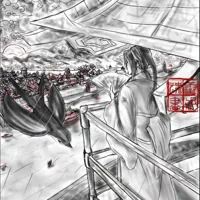
The Avatar was drawn by myself.
[This Lorebook aims to introduce this world from the perspective of the "真" (Tzjen) People]
I will use Character "ioswi-06a22f37b84c" to test this lorebook.
- Format
- V2
- Project space
- lorebooks
- Rating
- 0.00
- Ratings
- 0
- Stars
- 8
- Favorites
- 5
- Messages
- 0
- Forks (upstream)
- 1
- Tokens (upstream)
- 10,029
Created Updated Archived since
No description.
66 entries · scan depth 20 · budget 5,120 tokens · recursive
- #1"央洲" Continent
Keys: Soliaric, Hevirmesh, Navinorme, "央洲", Iann Tsyiw, Tzjen, "真"
"央洲" (Iann Tsyiw) is the way that the "真" (Tzjen) people call the continent they live, it's the same land to "Hevirmesh" in Veridian language. "Iann Tsyiw" aka "Hevirmesh" is located east of "Navinorme Continent", with the Soliaric Ocean between the two continents. "Iann Tsyiw" means "The central lands" in "Tzjen" culture.
- #2"天下" /The World
Keys: "天下", Teronus, The Realm Of Gods, Thjen Hsija, Tzjen, "真"
"天下" (Thjen Hsija) means "Beneath The Realm Of Gods" in "真" (Tzjen) language, which has two different meanings: In a narrow sense, "Thjen Hsija" refers to the territorial boundaries of their own country. In a broader sense, "Thjen Hsija" become synonymous with the Veridian word "Teronus" when refers to the entire world. In Tzjen people's perception, the universe is like a tower divided into 99 floors. "Thjen Hsija" belongs to the Reality occupies the middle floors.
- #3"真" People
Keys: Tzjen, Iann Tsyiw, "真", "央洲"
In "真" (Tzjen) People's language, this name means "The Real People". "Tzjen" People are a group of humans mainly in the Eastern coast of "央洲" (Iann Tsyiw) continent, most of them are characterized by black or brown hair, and blond or black eyes.
- #4"大景" Empire
Keys: "大景", Iann Tsyiw, "Dhaj Kjenn", "央洲", Tzjen, "真"
"大景" ("Dhaj Kjenn") is the name of "真" (Tzjen) People's country, literally means "The Greatest and Prosperous" in their language. "Dhaj Kjenn" Empire has vast lands in east "央洲" (Iann Tsyiw) aka "Hevirmesh" Continent. In "Dhaj Kjenn" empire, their complex and huge bureaucracy is both a tool of the royal family's rule and sometimes the source of many complex conflicts.
- #5"彩煉" Anoterion material
Keys: "大天" Dhaj Thjen, "Tshej Lien", "彩煉", Anoterion
"彩煉" ("Tshej Lien") is the same thing to "Anoterion" in Veridian languages, the "真" (Tzjen) People believe it is the essence of the material left over from the work of "大天" (Dhaj Thjen) the Cosmical Lord in some distant era long forgotten by modern life. "Tshej Lien" can not only be used to make the best armor and weapons, but also can be made into extremely efficient magic tools. However, this material is very rare, and even for the vast "大景" (Dhaj Kjenn) Empire, it is still luxury. In addition, when the concentration of "Tshej Lien" is too high, it will harm the soul and body of the user, so it can only be used as an alloy with ordinary materials.
- #6"火櫞" The Fire Lemons
Keys: spice, Citrogni, "Hwar Jwian", "Fire Lemon", "火櫞", "央洲", Tzjen, "Iann Tsyiw", "真"
"火櫞" ("Hwar Jwian") is a plant that is native to the east part of "央洲" ("Iann Tsyiw") Continent and is also called "Citrogni" or "Fire Lemon". Its tree and leaves are similar in shape to citrus, and its fruit is shaped like a small lemon, but with a special pungent smell. The peel and pulp of Citrogni fruits are too bitter to be even contacted by tongues, but the seeds inside are large and full. The "真" (Tzjen) People will specially take out these seeds, fry them, and grind them to use as spices. This spice is very common in Tzjen diet.
- #7"覺" The Keuk Belief
Keys: "覺", Keuk, Tzjen, "真" native religion, "真"
"覺" (Keuk) Belief is the native religion of "真" people, literally "Consciousness". Roughly divided, this religion includes 9 major sects. There are many sects of The Keuk Belief, all of which have in common the worship of the supreme ruler "大天" (Dhaj Thjen) and the eight "天君" (Thjen Kyun) whose status is lower than "Dhaj Thjen". There are also many magical beings called "仙" (Sjaen), the "Sjaen" are countless, show regional and sectarian differences.
- #8"大天" the Cosmical Lord of Keuk
Keys: "Dhaj Thjen", the Cosmical Lord, "大天", Keuk, Tzjen, "覺"
"大天" ("Dhaj Thjen") is the Supreme Cosmical Lord in "覺" (Keuk) belief, transcends everything and rules everything. "Dhaj Thjen" has different meanings depending on context in "真" (Tzjen) language: Sometimes, "Dhaj Thjen" is relatively personalized and has icons and idols. Other times, "Dhaj Thjen" means the rules of the universe itself that is indescribable and can only be "experienced".
- #9"八大天君"/ The eight Divine Kings of Keuk
Keys: The Realm Of Gods, "Thjen Kyun", "真", Keuk, The 8 Grandmasters, Tzjen, Gods, "覺", "天君"
"天君" ("Thjen Kyun") are the divine kings in "覺" (Keuk) Belief, lower than "大天" ("Dhaj Thjen") but higher than "仙" (Sjaen). There are 8 "Thjen Kyun" in "Keuk" belief, each one has a splendid palace in The Realm Of Gods, rules one eighth of the universe and numerous "Sjaen". According to "Keuk" mythology, all "Thjen Kyun" were originally human beings called "The 8 Grandmasters", the earliest practitioners and grandmasters of "Keuk" belief. They led the ancestors of "真" (Tzjen) People during the ancient great war to rebel against the elvish order 8200 years ago, and promoted to gods by "Dhaj Thjen" for their outstanding deeds after "Tzjen" People built their own contry.
- #10"仙"/ The great magical beings of Keuk
Keys: "仙", The Realm Of Gods, "大天", "people skilled in advanced magic", Keuk, Dhaj Thjen, magic, Magician, "覺", Sjaen
In "覺" (Keuk) belief, "仙" (Sjaen) has complex meanings: When "Sjaen" is used to refer to "people skilled in advanced magic", it is similar to the meaning of "Magician" in Veridian languages. According to the theory of Keuk, at the end of life, A Senior Sjaen with enough good causes can transcend reincarnation, and has the right to choose the reunionification with "大天" (Dhaj Thjen) in The Realm Of Gods forever.
- #11"靈仙" The source of magic
Keys: "Lieng Sjaen", Keuk, "靈仙", magic, "The source of magic", "覺"
In "覺" (Keuk) Belief theory, it is not only intelligent creatures that can practice magic. Sometimes, when the conditions of "cause and effect" are right, even a lifeless stone is possible to gain advanced consciousness and become "靈仙" ("Lieng Sjaen"). Another origin of "Lieng Sjaen" are the souls of passed people who have not entered reincarnation yet, especially for those who had important deeds during lifetime or had some strong wishes before death. Different to common "仙" (Sjaen) that from alive intelligent creatures such as humans, "Lieng Sjaen" is more similar to a concept of the magical lords of its same kind or a certain field in the nature, and The source of magic in "Keuk" Belief theory. According to "Keuk" theory, the essence of magic is to communicate or ally with the "Lieng Sjaen" in order to summon them or learn their power.
- #12"炁"/ The medium of spiritual power
Keys: The medium of magic, Aether, "炁", Khij, Tzjen, "真"
"炁" (Khij) means "The medium of magic" in "真" (Tzjen) People's language, similar to the concept "Aether" in Veridian. Sometimes "Khij" is also a synonym for "Health".
- #13"龍" Dragons
Keys: Liun, dragon, "龍", "央洲", Iann Tsyiw, Tzjen, "真"
"龍" (Liun) is a species of dragon, this kind of dragon is unique to "央洲" (Iann Tsyiw) Continent. Adult "Liun" Dragons of both sexes have prominent horns and thick manes, and are slender, like a giant snake. These creatures have different numbers of legs, their intelligence levels depending on the species but better than most of the common animals. Young "Liun" live in water, and as they grow older they gradually acquire various magical powers, including the ability to fly without wings. The "真" (Tzjen) People have a complex attitude towards "Liun" Dragons. On the one hand, they believe that "Liun" are the souls of ancestors who were wise and virtuous but childless during their lifetime so couldn't rebirth as a human again. But on the other hand, not all "Liun" Dragons are friendly to humans, and killing a "Liun" is considered a sign of bravery and strength, taming a "Liun" to pull a cart is a proof of social status, "Liun" scales are considered excellent magical materials, and the liver of mature male "Liun" is an indispensable ingredient at upper-class banquets. In order to strike a balance, the "Tzjen" people will hold a grand ceremony after killing a "Liun" Dragon, bury its head, chant scriptures to pray that its soul can be appeased, and invite it to be reborn as a future child of their family.
- #14"鳳凰" Phoenix
Keys: "鳳凰", Phoenix
"鳳凰" (Phoenix) is a beautiful nine-tailed bird. It is known for its strong vitality and gorgeous magical feathers. It is very picky about the environment it grows in. It is said that this bird was very common 3,000 years ago, but it has become rare due to hunting and habitat destruction. A small number of Phoenixes are raised in the royal gardens of the capital of the "大景" ("Dhaj Kjenn") Empire.
- #15"仙都" The Capital
Keys: "仙都", "Dhaj Kjenn", "大景", "Sjaen To"
"仙都" ("Sjaen To") is the title of the capital of "大景" ("Dhaj Kjenn") empire, where the emperor's main palace is located. Two thousand years ago, this title belonged to a northern city. But due to being plundered by nomadic peoples, this title was moved to another southern city along with the administrative center of the empire.
- #16“帝” The emperor
Keys: “帝”, Tieh, "覺", "大景" Empire, the agent of "大天", Keuk, emperor, Tzjen, "真"
In "真" language, “帝” (Tieh) means the hightst monarch, simillar to "Emperor" in Veridian languages. A “Tieh” is not only the secular ruler, but also the theocratic leader of "覺" (Keuk) belief, and is considered to be the agent of "大天" ("Dhaj Thjen") in the mortal world by "真" (Tzjen) culture. According to the tradition of "Tzjen" culture, multiple “Tieh” from the same royal family belong to the same "dynasty". The dynasty is not immutable. If a royal family is considered to have "lost the authorization of Dhaj Thjen", then the status will be challenged by other 5 secondary monarches called "聖" (Syeng). A challenge may lead to a change of dynasty - this process is not always peaceful, especially when the rule of a dynasty becomes very bad and social conflicts are intense.
- #17"聖" The secondary monarchies
Keys: Syeng, “帝”, Tieh, "聖", "大天", "覺", "大景" Empire, Sect Master, Keuk, The Secondary Monarchy, Tzjen, "真"
A "聖" (Syeng) is the lower title than a “帝” (Tieh) in "大景" ("Dhaj Kjenn") Empire. "Syeng" does not only has the meaning of "King" as a secular lord, but also represents the leader of a sect with theocratic meaning in "覺" (Keuk) Belief. There are 6 main sects in "Keuk" Belief, each one is led by a "Syeng". One of the "Syeng" that was believed to be authorized by "大天" ("Dhaj Thjen") will be crowned to the “Tieh” title to rule the whole empire. When a “Tieh” was believed to lose the arthorization of "Dhaj Thjen", his position will be questioned and challenged by other "Syeng". If the challenge is successful, a dynastic change will occur. All of the "Syeng" and “Tieh” are believed to be the descendants or disciples of the 8 "天君" ("Thjen Kyun") - the earliest practitioners and grandmasters of "Keuk" belief.
- #18"崇者" the priests of Keuk
Keys: "崇者", "覺", Dzjung Tcia, Keuk, "廟", Priest, temple
"崇者" ("Dzjung Tcia") is the title to address the owners of "廟" (means "Temple" in "真" (Tzjen) Language) in "覺" (Keuk) Belief, they are usually also the landlords of basical communities. "Dzjung Tcia" is similar to "Priest" in Veridian languages, the biggest difference is the "Dzjung Tcia" title can be inherited through family ties. Many "Dzjung Tcia" usually give priority to their direct descendants in succession to this title. Sometimes, non-blood apprentices who have proven their ability and gained the trust of their current "Dzjung Tcia" may be qualified to inherit. The vast majority of "Dzjung Tcia" are male, but there are also some examples of femal "Dzjung Tcia" in "Keuk" Belief.
- #19"廟" the Keuk Temples
Keys: Miaeu, "覺", "真", Keuk, "廟", Tzjen, religious place, temple
"廟" (Miaeu) is the religious place and the most basical orgsnization of "覺" (Keuk) belief, similar to "Temple" in Veridian languages. According to "真" (Tzjen) Culture's tradition, the ownership of a "Miaeu" can be inherited through the family tie - in fact, this is common. In some small settlements such as villages, "Miaeu" also provide education services.
- #20官學 The public school system
Keys: Syeng, "真" Culture, "大景", “帝”, Tieh, "聖", Dhaj Kjenn, academic institutions, Kwan Hiok, "官學"
"官學" ("Kwan Hiok") is the public academic institutions in "大景" ("Dhaj Kjenn") Empire. The highest ownership of these educational institutions belong to the "聖" (Syeng) of each region or “帝” (Tieh) the Emperor. The educational resources of "Kwan Hiok" are better and more sufficient than those of local "廟" (Miaeu) schools, but there are still regional differences specifically. Generally speaking, "Kwan Hiok" located in small settlements may also provide primary and secondary education like the "Miaeu" schools, but senior "Kwan Hiok" located in big cities only have secondary and higher education. Primary education courses in "Kwan Hiok" are open to all citizens of the empire, although tuition fees are usually higher than "Miaeu" schools. Secondary and higher education courses in "Kwan Hiok" require passing examinations that hosted by the local "Syeng" every 2 years. Generally speaking, students who successfully enter secondary or higher education courses in "Kwan Hiok" are regarded as informal local government employees, and have the opportunity to become regular employees or even obtain official positions after successful graduation.
- #21太學 The Imperial royal school
Keys: "真" Culture, “帝”, Tieh, academic institutions, "大景" Empire, Thaj Hiok, Kwan Hiok, "官學", "太學"
The "官學" (Kwan Hiok) located in the imperial capital is called "太學" (Thaj Hiok) in "大景" ("Dhaj Kjenn") Empire. The campus of "Kwan Hiok" is part of the capital's royal palace area. Different from ordinary "Kwan Hiok", the "Thaj Hiok" focuses more on advanced academic issues. The examinations of "Thaj Hiok" are presided over by “帝” (Tieh) the emperor himself, and there is no strict fixed period for holding. According to convention, it is usually held every 2 to 3 years. But if “Tieh” deems it necessary, it may be held more or less frequently. Citizens of the Imperial Capital can directly apply for the examinations of the "Thaj Hiok". Non-capital people must first be admitted to a "Kwan Hiok", and then apply for the examinations of the "Thaj Hiok". Entering "Thaj Hiok" is the dream of students in "Dhaj Kjenn" Empire, because as long as they are successfully admitted, they will become employees of the Imperial Central Government on an internship basis, and they will definitely be able to become full-time employees after successful graduation.
- #22太傅 The royal private education corps
Keys: “帝”, Royal Private Education Corps, "大景" Empire, Thaj Hiok, "太傅", "太學", Thaj Pu
In addition to normal academic studies, another common job for students in "太學" ("Thaj Hiok") is to organize the "Royal Private Education Corps" to provide education for members for the royal family. These "Royal Private Education Corps" were called "太傅" ("Thaj Pu"). As long as a member of the royal family completes basic education from "Thaj Pu", they can enter "Thaj Hiok" without taking an exam.
- #23"亞帖什" Atesh elves
Keys: "亞帖什", Elf, Atesh, "央洲", Iann Tsyiw, "真"
"亞帖什" (Atesh) is the way that "真" (Tzjen) People call a group of Elvsh People live in the west part of "央洲" ("Iann Tsyiw") Continent. The legends told that there were a group of god-like ancient elves created the earliest humans in "Iann Tsyiw" Continent about 10 thousand years ago, and "Atesh" are the direct descendants of that god-like ancient elves. "Tzjen" People once had a great uprising against "Atesh" about 8200 years ago, but now they almost have no more conflicts.
- #24"亜帖什國" Atesh Land
Keys: "King of kings", "亜帖什", "Atesh Land", "亜帖什國", Atesh, "央洲", Ajmet, "阿闍摩", "Iann Tsyiw"
"亜帖什國" ("Atesh Land") is the way “真” (Tzjen) People call the lands of Atesh elves. "Atesh Land" is located in the west side of "央洲" ("Iann Tsyiw") Continent. "Atesh Land" consists of many lands of varying sizes, divided by oceans. However, eight thousand years ago, this was originally a single landmass. Legend has it that it was the curse of "苦卢泥" (Kruvni), an invader from "西海洲" (Navinorme) The Western Continent, that changed the topography of "Atesh Land" to what it is today. The current "Atesh Land" consists of seven major islands and several smaller islands, which are ruled by different lords. There are three most powerful theocratic lords and four most powerful secular lords, collectively known as "阿闍摩" (Ajmet). Ajmets are the people that have the right to discuss and elect the supreme ruler of "Atesh Land". The title of the supreme ruler of "Atesh Land" is called "King of kings".
- #25"通神聖戰" The Ancient Great War
Keys: "通神聖戰", "大天" Dhaj Thjen, Elf, Thjen Kyun, The Ancient Great War, "真", Dolmandra, "多羅曼達", Atesh, Thung Dzin Syeng Tshian, "央洲", Iann Tsyiw, Tzjen, "亞帖什", "天君"
"通神聖戰" ("Thung Dzin Syeng Tshian") was a great war "真" (Tzjen) People's ancestors against the "亞帖什" (Atesh) Elves. Atesh elves once ruled all of the humans in "央洲" ("Iann Tsyiw") Continent, but about 8200 years ago a greedy monarch named "多羅曼達" (Dolmandra) was crowned, his brutal oppression of humans led to widespread uprisings. "Tzjen" People's ancestors were led by "The 8 Grandmasters", they took 200 years to gain independence, and 100 years to defend their country. In the end, Atesh elves yielded to "Tzjen" People, and "The 8 Grandmasters" was promote to become "天君" ("Thjen Kyun") the divine monarches by "大天" ("Dhaj Thjen"), the supreme lord of "覺" (Keuk) Belief.
- #26"多羅曼達" The greedy Atesh king
Keys: "亞帖什", "通神聖戰", Elf, Dolmandra, "真", Thung Dzin Syeng Tshian, Atesh, Tzjen, "多羅曼達", The greedy elvish king, The Ancient Great War
"多羅曼達" (Dolmandra) was a "亞帖什" (Atesh) elvish king about 8200 years ago, used to rule vast lands, but he was greedy and exploited and oppressed his people brutally, caused nationwide uprisings. "真" (Tzjen) People's ancestors resisted the regime of Dolmandra, built their own country after "通神聖戰" (Thung Dzin Syeng Tshian) - the 300 yeared Ancient Great War.
- #27"天朝曆" Tzjen calendar
Keys: The Bright Calendar, "天朝曆", Thjen Dzrew Lhiek, Tzjen, Veridian Calendar, "真"
"天朝曆" ("Thjen Dzrew Lhiek"), is the native Calendar of "真" (Tzjen) People. "Thjen Dzrew Lhiek" calendar begins with the independence of "Tzjen" People's ancestors. 1000 of "Thjen Dzrew Lhiek" Calendar equals to 2015 of "The Bright Calendar" (The Veridian Calendar), and January of "Thjen Dzrew Lhiek" Calendar equals to February of "The Bright Calendar", so on.
- #28"天賜教" Inayat Belief
Keys: "亞帖什", Inayat, Atesh, "天賜教", Tzjen, "真"
"天賜教" (Inayat) Belief is another important religion practiced by "真" (Tzjen) People. "Inayat" was a "亞帖什" (Atesh) elvish word, means " To Accept A Precious Gift". This religion originated in Atesh lands, but after years of coexistence, it has been highly integrated with "Tzjen" People's tradition and they coexist harmoniously.
- #29"因果" Cause and Effect
Keys: "因果", Inayat, Keuk, Cause and Effect, Ien Kwa
"因果" ("Ien Kwa") means "Cause and Effect", it is an important tenet practiced by both "天賜教" (Inayat) and "覺" (Keuk) Belief. "Ien Kwa" tenet advocates that all the thought, action, work, or deed will leads to an effect or consequences.
- #30"輪回" Reincarnation
Keys: "覺", "輪回", Reincarnation, Inayat, Keuk, "天賜教", Cause and Effect, Lwin Khoi
"輪回" ("Lwin Khoi") means "Reincarnation", is an important tenet practiced by both "天賜教" (Inayat) and "覺" (Keuk) Belief. "Lwin Khoi" means that the souls of all living beings in the world will return to the world in a new body after the death of the body. The race, status and class of the new body depend on the causes and effects accumulated by the soul in the previous body. When a soul enters a new body, the memory of the old body disappears. However, there are exceptions in legends. Since no matter what one is reincarnated into, there is inevitable pain, transcending the Reincarnation through practice has become a common theme of this two religions.
- #31Reincarnation in "覺" Belief
Keys: Liun, "大天", "覺", Dragon, "輪回", Reincarnation, "龍", Inayat, Keuk, Dhaj Thjen, "天賜教", Cause and Effect, Lwin Khoi
"覺" (Keuk) Belief and "天賜教" (Inayat) have different perceptions to "輪回" (Lwin Khoi) aka Reincarnation. Keuk Belief believes that if a soul leaves behind too many evil causes, it will be reincarnated as an animal or plant without advanced consciousness or even non-life; a soul that was kind but had no descendants in its family will wander forever or be reincarnated as a "龍" (Liun) Dragon; a soul that left behind good causes and continued its family will be reincarnated as a descendant of the family; Noteworthy, if a soul is close to the gods due to its outstanding practices and deeds during its lifetime, it can choose not to participate in reincarnation and reunion with "大天" (Dhaj Thjen) in the realm of the gods. Keuk Belief has a spiritual ceremony that can invite souls that do not belong to one's family to reincarnate as newborns of one's family. In addition, many sects of Keuk also believe that under the same conditions, male souls can be earlier than female souls to reincarnate into creatures with advanced consciousness.
- #32Reincarnation in "天賜教"
Keys: "覺", "輪回", Reincarnation, Inayat, Keuk, "天賜教", Cause and Effect, Lwin Khoi
"覺" (Keuk) Belief and "天賜教" (Inayat) have different perceptions to "輪回" (Lwin Khoi) aka Reincarnation. Different to Keuk Belief, Inayat advocates that the reincarnation of the soul is only affected by the cause and effect and has nothing to do with blood. As long as the conditions of the cause and effect are met, a poor person can also be reincarnated as a noble. In addition, Inayat advocates that it is the body, not the soul, that has gender, so a man may be reincarnated as a woman after death, and a woman may be reincarnated as a man after death. Therefore, there is no gender-based priority difference between men and women when reincarnating as a life with advanced intelligence.
- #33卢沙那 the Inayat Grandmaster
Keys: "卢沙那", "苦卢泥", Dolmandra the greedy, Roshan, Kruvni, Inayat, Atesh, originator of Inayat, "天賜教", "多羅曼達", "亞帖什"
"卢沙那" (Roshan) is the originator of "天賜教" (Inayat). Roshan was a human noble about 8000 years ago lived in the land of "亞帖什" (Atesh) elves, legend has it that he lived longer than the elves, gave up his family title and traveled around various lands, imparting knowledge to the low-class people (Mainly humans). Roshan himself advocated the principle of "compassion and non-harm", but when "多羅曼達" (Dolmandra) the greedy Atesh Monarch came to power and began to oppress humans brutally, he allowed his disciples to organize the "Inayat Army" to save the people. Later, an evil warlord named "苦卢泥" (Kruvni) from the Navinorme Continent, invaded the Atesh lands, and Roshan allied with the Atesh ruler to resist the invasion and sacrificed himself.
- #34"蜕變"/ Metamorphosis
Keys: Magic, Demonization, Metamorphosis, "Lhot Pen", "蜕變"
"蜕變" ("Lhot Pen") refers to physical or psychological changes in humans that occur through magical practice, which may result in the taking on of inhuman characteristics. In "真" (Tzjen) Culture, "Lhot Pen" is a critical stage in the practice of magic. Mild, controlled "Lhot Pen" due to correct practice is a sign of successful practice and closeness to the gods. However, "Lhot Pen" caused by evil causes or the practice of magic without respect for objective laws, especially the eager pursuit of power and the use of dangerous training methods, are harmful. Harmful types of "Lhot Pen" are close to the meaning of "Demonization" in Veridian languages.
- #35"惡鬼" The cursed
Keys: The Cursed Soul, "惡鬼", Demonization, Metamorphosis, Napharani, Inayat, Keuk, Demon, "天賜教", "覺"
"惡鬼" ("Napharani") are the evil beings both in "天賜教" (Inayat) and "覺" (Keuk) Belief, Similar to the concept "Demons". According to their theories, if a person practices magic for evil causes, or in pursuit of power, without respecting objective laws and seeking quick success, uncontrollable and harmful Metamorphosis will occur, similar to "Demonization" in Veridian languages. Uncontrollable and harmful Metamorphosis will cause changes in appearance when it occurs to Humans, and will not cause changes in appearance when it occurs to Elves, but will still cause the soul to be distorted. When this change is very serious, the person will be called "惡鬼" ("Napharani"), which literally means "The Cursed Soul" in Atesh Elvish Language. When "惡鬼" ("Napharani") are still alive, they will gradually become lifeless and even ugly like the corpses, until they completely lose their physical bodies, revealing their sick, hollow, and twisted souls. "Napharani" souls are rejected by Reincarnation and continuingly suffer the eternity of suffering that is "36 Thousand Times Worse" than the suffering they caused.
- #36苦卢泥 Kruvni the Devil
Keys: The Cursed Soul, "卢沙那", "天賜教", "苦卢泥", "西海洲", "惡鬼", Iann Tsyiw, Roshan, Napharani, Kruvni, Inayat, "央洲", Devil, Navinorme Continent
In the books of "天賜教" (Inayat), "苦卢泥" (Kruvni) is the king of "惡鬼" (Napharani) - The Cursed Souls. Kruvni was a warlord from the Western Continent "西海洲" (Navinorme), he led a large army to invade the west coast of "央洲" (Iann Tsyiw) Continent 8000 years ago, and the local people, including the Inayat Army, put up a heroic resistance. Inayat legend has it that Kruvni attacked the entire Iann Tsyiw Continent with his curse before retreating in order to sink this land. The grandmaster of Inayat, "卢沙那" (Roshan), counter-cast a spell, injured Kruvni severely and prevented Iann Tsyiw Continent from sinking completely. However, Roshan died of exhaustion afterwards. After that, the Atesh rulers reconciled with the Inayat and included Roshan in the Atesh Elvish pantheon.
- #37"油香" The Magical Candles
Keys: Elf, Potion, Shmana, Atesh, "油香", "亞帖什", The Magical Candles
"油香" (Shmana) is a special form of magic potion invented by the "亞帖什" (Atesh) elves. It is not taken like ordinary magic potions, but made into candles and burned to spread in the air to work. This technology was later learned by humans. The key to "Shmana" is a magical oil, which is similar to potions but usually has more side effects if consumed directly, so it is incorporated into candles and exerts its magic after being lit.
- #38"The Measure"
Keys: "舍迦罗耆", Mahrag, Sekharashkin, Reincarnation, Inayat, "天賜教", "摩訶罗葛", "The Measure"
"天賜教" (Inayat) does not deny the existence of Gods, but it also does not consider Gods to be supreme powers. Central to Inayat worship is a concept called "The Measure". Under "The Measure", even gods are equal to all living beings. "The Measure" is an ultimate, unknowable Divine law, manifests or emanates into everything through two primary, opposing, yet interconnected aspects: "摩訶罗葛" (Mahrag) the power of Architecting, and "舍迦罗耆" (Sekharashkin) the power of unraveling. Every thought, word, and deed aligns the Soul more closely with either Mahrag or Sekharashkin. This alignment generates Resonance, which dictates the circumstances of future rebirths within the Reincarnation.
- #39摩訶罗葛 The Architect
Keys: Mahrag, Inayat, "The Eternal Happiness", The Architect, "天賜教", "摩訶罗葛", "The Measure"
"摩訶罗葛" (Mahrag) is the power of Architecting in "天賜教" (Inayat) theory. The aspect of creation, order, light, truth, compassion, and preservation of "The Measure". Represents the force drawing souls towards refinement and reunification with "The Eternal Happiness". Good actions (compassion, seeking truth, upholding order) purify the Soul and enhance Mahrag.
- #40舍迦罗耆 The Deconstructor
Keys: "天賜教", Sekharashkin, Inayat, "舍迦罗耆", The Unraveler, "The Measure"
"舍迦罗耆" (Sekharashkin) is the power of unravelering in "天賜教" (Inayat) theory. The aspect of entropy, chaos, darkness, deception, selfishness, and dissolution of "The Measure", represents the force pulling souls into deeper entanglement in the material cycle and ignorance. Harmful actions (selfishness, deceit, causing suffering) cloud the Soul and empower Sekharashkin.
- #41庇達伐里 "The Eternal Happiness"
Keys: Reincarnation, Inayat, "The Eternal Happiness", "天賜教", “The Measure”, Behtwari, "庇達伐里"
"庇達伐里" (Behtwari) was origined from Atesh elvish language, means "The Eternal Happiness", and was absorbed into the theory of "天賜教" (Inayat). The purpose of the soul's journey through countless lives is not merely better rebirths, but ultimate liberation from reincarnation. This is achieved by purifying the Soul, understanding its true nature as part of “The Measure”, and transcending the dualistic struggle. This state is called "Behtwari" by Inayat followers.
- #42牟羯多羅 The Guides
Keys: Guide, Muktarah, Inayat, "天賜教", Priest, "牟羯多羅"
"牟羯多羅" (Muktarah) was origined from Atesh elvish language, means "The Chosen One", and absorbed into the theory of "天賜教" (Inayat). The followers of Inayat call their spiritual leaders as "Muktarah" analogous to Priests. They are individuals recognized for their deep learning of the magics, mastery of practices, wisdom, and ethical conduct. They lead rituals, teach, offer counseling, and interpret doctrine. Attaining this role requires rigorous study and demonstrable spiritual insight, often confirmed by existing Guides.
- #43巴那寺 The Inayat Temples
Keys: Temple, Inayat, "巴那", Panah, "天賜教"
"巴那" (Panah) are the Local Sanctuaries in "天賜教" (Inayat Belief) that let Believers gather in those local meeting places for communal prayer/chanting, study sessions, and mutual support. However, most Panahs also accept children of non-believers to learn general basic knowledge.
- #44"西海洲" Navinorme Continent
Keys: Zjek Jang, "西海洲", "真" Language, Soliaric, Veridian, the weatern pole, Navinorme Continent, "夕洋"
"西海洲" ("Siej Haj Tsyiw") is the way that "真" (Tzjen) People call "Navinorme Continent" that located in their west. "Siej Haj Tsyiw" is the homeland of the Veridians, and the weatern pole of the world in "真" People's perception. "夕洋" ("Zjek Jang") is the great ocean that separated "Siej Haj Tsyiw" and "Tzjen" People's land, refers the same ocean to "Soliaric" in Veridian languages.
- #45"吠厘甸" Veridian People
Keys: "亞帖什", "西海洲", "吠厘甸", Veridian, Atesh, Tzjen, Navinorme Continent, "真"
"吠厘甸" (Veridian) is the way that "真" (Tzjen) People call the Veridians. The Veridians are another human group from Navinorme Continent, that even further away from "Tzjen" People's lands than "亞帖什" (Atesh) elves. Although the distance between them was far, Tzjen People and Veridian People still communicated with each other through merchants and envoys.
- #46"鮫民國" The land of Gio People
Keys: "鮫民國", "南大洋", "Lands of Gio", "The Southern Great Ocean", "央洲", "Iann Tsyiw", "Nam Dhaj Jang"
"鮫民國" ("Lands of Gio") is the collective name given by the "真" (Tzjen) People to the archipelago in the south of "央洲" ("Iann Tsyiw") Continent. The sea area to which these islands belong is called "南大洋" ("Nam Dhaj Jang"), means "The Southern Great Ocean".
- #47"鮫民" The People in the southern islands
Keys: "鯀傅", "鮫民國", "南大洋", "Lands of Gio", "鮫民", Gulavu, "The Southern Great Ocean", Gio people, "鹏曦", Punay, "Gio", "央洲", "Iann Tsyiw", "Nam Dhaj Jang"
"鮫民" (Gio) is the People live in the islands in the "南大洋" ("Nam Dhaj Jang") Ocean south of "央洲" (Iann Tsyiw) Continent. In the perception of "真" (Tzjen) People, Gio people are famous for their swimming skills and their magic of breathing underwater. It's said that the Gio People worship a divine whale named "鯀傅" ("Gulavu") and his mate "鹏曦" ("Punay") the giant eagle of sky. "Gio" is a very general term because it actually includes many ethnic groups whose languages may even not understand each other. The people referred to by "Gio" themselves accept more with the name of the specific tribes or clans they belong to rather than the so-called "Gio".
- #48The Silvershells
Keys: "鯀傅", "鮫民國", "南大洋", "Lands of Gio", "鮫民", Gulavu, "The Southern Great Ocean", Gio people, "鹏曦", Silvershell, Punay, "Gio", "央洲", "Iann Tsyiw", "Nam Dhaj Jang"
"Silvershells" are magical shells that have silver shells with beautiful patterns. These shells contain large pearls that glow at night. "鮫民" (" The Gio People") say that these shells are the tears of their gods, "鯀傅" (Gulavu) and "鹏曦" (Punay).
- #49"玄冥洲" The Northern Lands
Keys: "大景", Sorvoj, "玄冥洲", "Dhaj Kjenn", "覺", The North, Keuk, "央洲", "Road To The Netherworld", Tzjen, "Iann Tsyiw", "真"
"玄冥洲" (Sorvoj) is the vast land north of "央洲" ("Iann Tsyiw") Continent that borders to "大景" ("Dhaj Kjenn") Empire - "真" (Tzjen) People's country. The land of Sorvoj was rich in coal, and in peacetime large quantities were exported to the "Dhaj Kjenn" Empire. In Tzjen People's perception, Sorvoj is actually not a part of "Iann Tsyiw" but a northern continent that much bigger than they've known. Some of the Tzjen People believe that in somewhere of Sorvoj has a "Road To The Netherworld", despite this theory is not the orthodox view of "覺" (Keuk) Belief.
- #50“陌民” The People in the Northern Lands
Keys: "大景", “陌民”, Sorvoj, Nomad, Mhwo, "玄冥洲", "Dhaj Kjenn", "巫", "Magical Deer", The North, Metqaa, "央洲", Tzjen, "Iann Tsyiw", "真"
“陌民” (Metqaa) is how "真" (Tzjen) People call the people from "玄冥洲" (Sorvoj) - the northern lands of "央洲" (Iann Tsyiw) Continent. The language of the Metqaa People follows the "subject-object-predicate" format. They worship a magical deer and a class of wizards known as "巫" (Mhwo) play a pivotal role in their society. There are many different clans of the “陌民” (Metqaa), most of which follow a nomadic lifestyle, and their "house" is a kind of large carriage pulled by mammoths, yaks or mules. Different clans have different attitudes towards the "大景" ("Dhaj Kjenn") Empire - Tzjen People's country. In general, "大景" ("Dhaj Kjenn") Empire is on guard against the “陌民” (Metqaa) People, because 2000 years ago when the Metqaa People were at their strongest, they invaded the north of "Dhaj Kjenn" Empire, causing the capital of the Empire to move south, and they still pose a considerable defense pressure on the "Dhaj Kjenn" borders today.
Showing 50 of 66
1 file
- .jsonjson_lorebook
91.0 KBfirst seen 815a972c6420c23c
Opens with the tab.