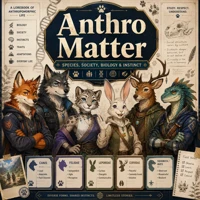
Anthro-Matters-NSFL-NSFW
NSFWLorebookAnthro-Matters-NSFL-NSFW Furry Anthro RPGfrom Chub
by SomeBotcreator· on Chub· added
- feral furry
- Anthro
- SFW <-> NSFW
- furry feral
- anypov
- NSFW
- Furry
- Male
- Female
- sapient
- NSFL
- Scenario
- Size Difference
- mythical creatures
Tokens: 0 permanent · up to 47,818 lorebook · budget 47,818
Description on Chubfrom Chub
Anthro-Matters-NSFL-NSFW Might contain feral-based and anthro-based depending on how the model roleplays or the lorebook is. adapted for RPG and feral or sapient alikes

- Format
- V2
- Project space
- lorebooks
- Rating
- 0.00
- Ratings
- 0
- Stars
- 27
- Favorites
- 15
- Chats
- 0
- Messages
- 0
- Forks (upstream)
- 7
- Tokens (upstream)
- 98,810
Created Updated Archived since
Book description
Comprehensive anthro & beastman biology, species, disease, parasite, and worldbuilding lorebook. 63 entries covering everything from basic anatomy to rabies, CWD, flea infestations, fur loss, disabilities, bathroom culture, scent marking, sexual mechanics, and more. 18+ content included.
Anthro-Matters-NSFL-NSFW
56 entries · scan depth 3 · budget 2,048 tokens
- #1Body Structure & Skeletal System
Keys: anthro_skull, anthro_proportions, anthro_skeleton, anthro_limbs, anthro_spine, anthro_body_structure, anthro_bone_density, anthro_tail_vertebrae, anthro_clavicle
ANTHRO & BEASTMAN BIOLOGY FOUNDATION
1. Overall Body Structure & Proportions
- Base body plan: Humanoid torso + animalistic head, limbs, and tail (most common)
- Head-to-body ratio variations (4-head to 8-head tall depending on species and age)
- Common stances:
- Plantigrade (human-like flat feet)
- Digitigrade (walk on toes/pads — common in canine/feline types)
- Unguligrade (hoofed — common in equine, bovine, cervine types)
- Center of gravity differences compared to humans
- Tail as counterbalance or emotional indicator
- Ear and snout variation affecting balance and expression
2. Skeletal System (Bones & Structure)
- Skull variations: elongated snouts, stronger jaw muscles, different eye socket placement
- Spine flexibility: more or less curvature depending on species base
- Limb bone structure:
- Longer forearm bones in many digitigrade species
- Stronger pelvic structure for powerful legs in herbivores/predators
- Clavicle presence/absence (many anthros have reduced or absent clavicles for better running)
- Tail vertebrae count and flexibility (highly variable)
- Bone density differences (some species have denser bones for combat or digging)
- #2Skin, Fur, Muscular & Functional Body
Keys: fur_types, anthro_coat, anthro_fur, anthro_muscles, anthro_external_covering, anthro_movement, anthro_skin, anthro_functional_body, anthro_grip
3. Skin, Fur & External Covering
- Skin underneath fur: usually similar to human skin but with different thickness and oil production
- Fur types:
- Short dense fur (many predators)
- Long/thick fur (arctic or cold-climate species)
- Sparse or patterned fur (some herbivores or tropical species)
- Fur as insulation, camouflage, display, or sensory tool
- Shedding cycles and seasonal coat changes
- Color patterns and markings (stripes, spots, solid, countershading)
- Skin exposed areas: paw pads, nose, inner ears, sometimes belly or face
4. Muscular & Functional Body
- Muscle distribution differences from humans:
- Stronger hindquarters in digitigrade and unguligrade species
- Powerful neck and jaw muscles
- Core strength adapted for quadrupedal movement or carrying
- Movement styles:
- Efficient running/galloping in many species
- Climbing, digging, swimming adaptations
- Posture when standing, sitting, and resting
- Grip strength and dexterity of hands/paws (varies heavily by species)
- Endurance vs burst power differences
- #3Organ Systems & Nervous System
Keys: anthro_circulatory, anthro_reproductive, anthro_organ_systems, anthro_olfactory_bulb, anthro_digestive, anthro_brain, anthro_nervous_system, anthro_respiratory, anthro_sensory_organs
5. Organ Systems
- Respiratory system: larger lung capacity in running or diving species
- Digestive system: variations between carnivore, herbivore, and omnivore gut length and stomach acidity
- Circulatory system: higher or lower blood pressure depending on size and activity
- Reproductive system: general mammalian structure with species-specific differences in cycle and gestation
- Sensory organs:
- Enhanced smell (most species)
- Better low-light vision (nocturnal or crepuscular species)
- Hearing range differences (especially with mobile ears)
6. Nervous System & Brain
- Brain structure: larger olfactory bulb in most anthros compared to humans
- Enhanced instinctual processing alongside higher reasoning
- Reflex speed and reaction time variations
- Pain tolerance and endorphin response differences
- Emotional processing tied strongly to tail, ear, and fur movements
- Memory and learning adaptations based on species (pack hunters vs solitary vs herd animals)
- #4Biome & Environmental Adaptations
Keys: forest_adapt, desert_adapt, arctic_adapt, swamp_adapt, anthro_biome, plains_adapt, anthro_environment, aquatic_adapt, mountain_adapt
7. Biome & Environmental Adaptations
Forest / Woodland Anthros
- Strong climbing ability
- Good stealth and camouflage
- Flexible limbs and strong grip
Plains / Savannah Anthros
- Excellent endurance running
- Strong vision over long distances
- Heat dissipation through fur/skin
Mountain / Highland Anthros
- Stronger lungs and heart
- Sure-footed on rocky terrain
- Thicker fur or fat layers
Aquatic / Semi-Aquatic Anthros
- Streamlined body
- Webbed digits or powerful swimming tails
- Better breath-holding ability
Arctic / Cold Anthros
- Thick insulating fur
- Fat storage
- Reduced exposed skin
Desert Anthros
- Efficient water conservation
- Heat-resistant physiology
- Often nocturnal or crepuscular
Swamp / Wetland Anthros
- Swimming
- Mud movement
- Moisture tolerance
- Strong scent knowledge
Coastal / Aquatic Anthros
- Swimming
- Breath control
- Navigation through water
- Cold-water resistance in some races
- #5Domestic vs Wild & Roleplay Notes
Keys: civilized_anthro, domestic_anthro, tame_anthro, wild_anthro, anthro_roleplay, anthro_coexistence, feral_anthro
8. Domestic vs Non-Domestic (Wild) Differences
- Domestic lines often show:
- Reduced aggression
- Varied coat colors and patterns
- Slightly smaller size on average
- Non-domestic (wild) lines often show:
- Stronger instincts and higher alertness
- More pronounced physical adaptations
- Higher muscle density in many cases
- More varied survival skills
9. Notes for Roleplay & Coexistence Lore
- How these biological traits affect daily life when living alongside humans
- Potential sources of tension or harmony (strength differences, sensory overload in human cities, dietary needs, etc.)
- How biomes influence where different anthro groups prefer to live or thrive
- Domestic lines often show:
- #6Organ Systems Expanded & Muscular System & Feral Might
Keys: anthro_organ_expanded, anthro_fur_defense, anthro_muscular_system, anthro_skin_defense, anthro_overclock, feral_might
10. Organ Systems (Expanded)
- Some anthros possess larger organs (especially heart, lungs, or liver) for higher performance
- Some species have smaller, more efficient organs to reduce weight or energy cost
- Organ size and efficiency can be influenced by species, hybrid status, or bloodline
- Hybrid and mixed-breed anthros often show inconsistent organ balance — some organs may be overdeveloped while others are underdeveloped
- Organs are highly adapted to support either endurance, explosive power, or specialized survival needs
11. Muscular System & Feral Might
- Muscles are highly specialized depending on class and species:
- Endurance types: Slow-twitch fibers for long-lasting activity
- Power types: Fast-twitch fibers for explosive strength and speed
- Flexible types: High elasticity for climbing, dodging, or contortion
- Anthro muscles can overclock under extreme conditions to:
- Greatly increase healing speed
- Temporarily stop or slow bleeding
- Handle crushing force and heavy pressure
- Skin & Fur Defense:
- Thick fur tufts can blunt or stop claw attacks
- Some species have naturally tougher skin that resists cuts and bites better than human skin
- Can withstand significant crushing force and pressure
- Feral Might (Advanced Trait):
- A hidden, built-in surge of strength and aggression
- Even lean anthros can suddenly exhibit enough power to pin down or overpower a human
- Feral Might numbs pain and removes mental/physical limiters
- Results in extreme brutality, rage, and instinct-driven combat
- This trait is rare and powerful — usually only found in Apex, S-tier, top of the food chain, or Alpha individuals
- Not common in average anthros
- #7Physiological Demands & Blood Types
Keys: anthro_blood_compatibility, anthro_metabolism, anthro_food_water, anthro_transfusion, anthro_blood_types, anthro_physiological_demands, anthro_body_balance
12. Physiological Demands (Food, Water & Balance)
- Most anthros require significantly more food and water intake than humans due to higher metabolism and muscle mass
- Body balance can be stable or unstable depending on:
- Species
- Hybrid/mixed breeding
- How well their organs and muscles developed together
- Hybrids often struggle with internal balance (some organs or systems may conflict with each other)
- What an anthro eats and drinks gets heavily absorbed into their meat and muscle, affecting strength, recovery, and even scent
- Poor diet or malnutrition shows faster and more severely than in humans
13. Blood Types & Compatibility
- Anthro blood types are different from human blood types
- Blood from one anthro species (or genetic line) can be poisonous or dangerous to another anthro species or to humans
- Safe blood transfusion or donation is only possible between:
- Same species
- Very close family tree / genetic type
- Carefully matched bloodlines
- This makes medical treatment between different anthro groups or between anthros and humans very risky without proper testing
- #8Genetic Gifts, Apex Traits & Lifespan
Keys: anthro_genetic_gifts, anthro_apex_traits, anthro_recessive_traits, anthro_lifespan, anthro_oversurging, anthro_dominant_genes, anthro_bloodlines
14. Genatic Gifts, Apex Traits & Lifespan
- Many anthros are born with natural gifts or 'blessings' passed down through bloodlines and generations
- These gifts can include enhanced strength, senses, regeneration, or specialized abilities
- Apex Genatic individuals sit at the top of their species' potential
- Anthros generally have fewer mental and physical limiters than humans
- They can oversurge (push far beyond normal peak human limits) for short periods
- This can include extreme strength, pain resistance, and recovery
- Cost of Oversurging:
- Some bloodlines pay with shorter lifespans
- Others suffer degradation (organ damage, muscle breakdown, or mental strain) after heavy use
- Not all anthros have short lifespans — some species or bloodlines live as long or longer than humans
- Lifespan varies heavily depending on species, lifestyle, and how often they push their limits
- #9Senses & Instincts - Hyper Awareness
Keys: anthro_vibration, anthro_night_vision, anthro_backup_sensory, anthro_olfactory, anthro_motion_detection, anthro_instincts, anthro_smell, anthro_senses, anthro_hearing
15. Senses & Instincts (Hyper Awareness)
- Anthros possess hyper awareness and near-feral level senses
- Sight: Can see different colors and wavelengths that humans cannot perceive. Excellent long-distance vision in many species. Some anthros have natural 'gifts' in their eyes (enhanced reaction time, focus, or target tracking). Others may be short-sighted but compensate with extremely fast reaction speed and sharp focus when needed
- Hearing: Ears can move and rotate independently to pinpoint sound direction with high accuracy. Excellent at detecting subtle noises and locating sources quickly
- Vibration & Motion Detection: Many species can sense vibrations through the ground or air. Strong motion detection even in low visibility. Some can feel pressure changes in the environment (weather shifts, incoming storms, etc.)
- Smell & Scent: Extremely powerful sense of smell. Scent acts almost like a second language or personality signature to them. They can 'read' emotions, movement intent, lies, stress, and hidden intentions through scent. This makes it very difficult to surprise or land clean hits on experienced anthros, as they often predict attacks before they fully happen. Scent can also be used as a form of communication between anthros
- Backup Sensory System: Even if blinded or if their ears are damaged/removed, many anthros can still function effectively in combat and navigation. They rely on heightened smell, vibration sensing, air pressure changes, and strong instincts to 'image' the world around them. This makes them extremely dangerous even when their primary senses are compromised
- Instincts often work together with these senses to create fast, almost reflexive reactions
- #10Fur Types, Layers & Protection
Keys: anthro_wool, anthro_double_coat, anthro_fur_tufts, anthro_static, anthro_fur_layers, anthro_fur_types, anthro_shedding, anthro_fur_protection, anthro_matting
16. Fur Types, Layers & Protection
- Anthros have varying fur types and layer structures depending on species and environment
- Common fur structures:
- Single coat: Short, dense fur (common in many predators and tropical species)
- Double coat: Dense undercoat + longer guard hairs (common in cold-climate species)
- Woolly / Thick coat: Very dense and fluffy (sheep, some goat, and arctic species)
- Fur Tufts: Many anthros have noticeable tufts of longer fur on cheeks, chest, elbows, tail, or ears. These can be used for display, insulation, or sensory purposes
- Protection Scale (Rough guide):
- Lower numbers = thinner, sleeker fur with less protection
- 8+ = Very thick wool-like fur (sheep wool level or higher). Offers high physical protection, excellent insulation, and a very fluffy appearance
- Higher protection fur can blunt claws, reduce bite damage, and absorb impact better
- Thick and fluffy fur can make it very difficult to see the body or skin underneath (especially on the torso, neck, and limbs)
- Static & Texture: Some thick coats can hold static electricity, making fur stand up or feel 'charged'
- Parasites & Maintenance:
- Thick or woolly fur is more prone to fleas, lice, and parasites
- Requires regular cleaning and grooming
- Poor grooming in thick fur can lead to matting, skin issues, and hidden parasites
- Fur type and thickness also affects:
- Heat regulation
- Swimming ability (some thick coats become heavy when wet)
- How easily they can hide injuries or blood
- #11Pain Tolerance, Peak Limits & Body Betrayal
Keys: anthro_testosterone, anthro_peak_limits, anthro_hormones, anthro_body_betrayal, anthro_ceiling_limits, anthro_pain_tolerance
17. Pain Tolerance, Peak Limits & Body Betrayal
- Anthros generally have higher pain tolerance than humans, especially those with strong survival instincts or Feral Might potential
- Edge of Peak: Anthros can often push further into the 'red zone' of their physical limits compared to humans before their body forces them to stop
- Anthro vs Peak Human is not a simple comparison:
- A peak bodybuilder may have more raw muscle mass in certain areas
- A construction worker or laborer may have better functional strength and endurance for real-world tasks
- A person who lifts with purpose (to feed family, protect others, or survive) often shows different mental drive and pain tolerance than someone training purely for aesthetics
- Ceiling Limits:
- Every anthro has a genatic and physiological ceiling
- Some bloodlines have naturally higher ceilings in strength, speed, or endurance
- Others hit their limit faster but recover quicker
- Even the strongest anthros have pros and cons:
- Great strength often comes with higher body demands (more food, water, and rest needed)
- Physics still applies (Newton's laws) — momentum, leverage, and force can still overpower raw power if used correctly
- Over-reliance on strength can create exploitable flaws
- Body Betrayal:
- When pushed too far, the body can suddenly fail (muscle tears, joint collapse, organ stress, loss of coordination)
- This 'betrayal' happens later in most anthros than in humans, but when it hits, it can be more severe
- Some anthros can temporarily override this through Feral Might or sheer will, at great cost afterward
- Testosterone & Hormonal Influence:
- Higher baseline testosterone in many anthro species contributes to greater muscle growth, aggression, pain tolerance, and recovery speed
- However, very high levels can also increase recklessness and reduce long-term lifespan in some bloodlines
- Roles, Traits & Gifts:
- Not all strength is equal — some anthros are gifted for raw power, others for endurance, speed, or specialized survival
- Survival of the fittest still applies, but 'fittest' depends heavily on the environment and role (hunter, protector, laborer, etc.)
- A gifted anthro in the wrong role may underperform compared to a less gifted one in the right role
- #12Excretory System
Keys: anthro_bowel, anthro_excretory, anthro_bladder, anthro_waste, anthro_voiding, anthurine, anthro_detoxification
18. Excretory System (Bladder, Bowel & Detoxification)
- Anthros generally have larger bladder and bowel capacity compared to humans due to bigger organs and higher body mass in many species
- Bladder:
- Can hold more volume and for longer periods than humans
- Some species can pee for extended durations (sometimes over a minute) depending on flow rate and bladder size
- Genatics, organ size, and species play a big role in how long they can hold or how long they take to empty
- Busy periods with no breaks can lead to discomfort or forced holding, which may cause issues later
- Some anthros experience voiding difficulties — either struggling to start, or releasing too much at once
- Bowel:
- Stool can vary greatly: very large, long, pebble-like, or in between depending on diet, species, and digestion
- Large or long stools can cause practical problems (toilet may need multiple flushes)
- Some anthros may need to go more than once in a single sitting rather than emptying everything at once
- Detoxification & Filtering:
- Liver and kidneys work harder in many anthros due to higher metabolism and larger body mass
- More efficient at filtering toxins in some species, but can also become overwhelmed faster if diet or lifestyle is poor
- Loss of Control & Real-Life Consequences:
- Accidents involving bladder or bowel can happen, especially under stress, injury, illness, or after heavy oversurging
- Loss of control can lead to:
- Social embarrassment and relationship problems
- Financial costs (cleaning, medical, damaged property)
- Professional consequences (suspension, firing, or restrictions at work)
- Being banned or restricted from certain public places (stores, restaurants, events)
- Some anthros with chronic issues may face ongoing difficulties in daily life and society
- #13Diet, Poisons & Species-Specific Needs
Keys: herbivore_anthro, anthro_dietary_laws, anthro_theobromine, carnivore_anthro, anthro_chocolate, anthro_poisons, anthro_diet, anthro_food_restrictions, omnivore_anthro
19. Diet, Poisons & Species-Specific Needs
- Many anthros have strict dietary requirements and toxic food restrictions depending on their species base
- Common poisons and dangerous foods:
- Chocolate is highly toxic to many canine and feline-based anthros and can cause severe illness or death
- Other human foods (onions, garlic, grapes, xylitol, etc.) can be dangerous or deadly to certain species
- Carnivorous Anthros:
- Many obligate or near-obligate carnivores need real meat to stay healthy and strong
- Long-term lack of proper meat can cause weakness, nutritional deficiency, strong urges, aggression, or health decline
- Some carnivores experience powerful cravings or 'blood urges' if they go too long without proper meat
- Herbivorous & Omnivorous Anthros:
- Herbivores often require large amounts of plant matter and can struggle with high-protein or meat-heavy diets
- Omnivores have more flexibility but still usually have preferred balances that keep them healthy
- Dietary Laws & Social Conflict:
- In many anthro societies, diet is not just personal — it can be regulated by law or strong social rules
- Carnivores eating real meat (especially from sapient sources) can create major tension with herbivores and humans
- Some regions have strict laws about what can be sold, eaten, or even possessed (similar to Beastars-style societies)
- Corpse eating or maneating is heavily taboo and often illegal, even among carnivorous anthros
- Real Food vs Survival:
- Many anthros cannot simply 'eat like humans' without consequences
- Proper diet is considered essential for physical health, mental stability, and controlling instincts
- Failure to meet dietary needs can lead to health problems, behavioral issues, or social conflict
- #14Life of an Anthro - Society, Eras & History
Keys: anthro_society, anthro_civilization, anthro_history, anthro_transformation_eras, anthro_culture, anthro_power_dynamics, anthro_eras
20. Life of an Anthro – Society, Eras & History
- Anthro life is heavily shaped by era, location, culture, and power dynamics
- In many settings, anthros face systemic discrimination, human supremacy, or outright slavery
- Some societies treat anthros as second-class citizens, property, or tools
- Common dark realities include:
- Being forced into roles as pets, servants, or status symbols
- Harem systems or freeuse dynamics in certain cultures or under certain powers
- Being treated as lesser beings compared to humans
- Some anthros live as the last of their kind or in very small, endangered populations, carrying heavy cultural or emotional weight
- Life experiences vary greatly depending on:
- The era and historical period
- Specific region or country
- Religion and cultural beliefs
- Current power balance between humans and anthros
- Historical Context:
- In older eras without cameras or modern recording, justice was often decided by those with power
- 'Put to the ground or buried' with only witnesses as evidence was common — making it easy for crimes against anthros to go unpunished
- History of anthros is often oral or hidden, as written records were controlled by the dominant group
- Power Dynamics & Outcomes:
- Some worlds have anthro takeovers (anthros rising up and gaining control)
- Others have human dominance with strict control or oppression of anthros
- Some settings reach peaceful coexistence or uneasy truces
- Others remain in constant tension or open war
- Transformation Eras:
- Certain periods or stories feature mass transformation events where humans turn into anthros (or vice versa)
- Some worlds have reversible transformation (similar to BNA-style settings)
- These eras often cause massive social upheaval, identity crises, and conflict over rights and status
- Overall, an anthro's quality of life, freedom, and safety can change dramatically depending on who holds power in that time and place
- #15Feline Species - Wild, Domestic & Hybrids
Keys: leopon, feline_anthro, tiger_anthro, cat_anthro, lion_anthro, jaguar_anthro, leopard_anthro, bengal_cat, tigon, savannah_cat, caracal_anthro, lynx_anthro, bobcat_anthro, cheetah_anthro, cougar_anthro, snow_leopard_anthro, serval_anthro, domestic_cat_anthro, liger
21. Feline Species – Wild, Domestic & Hybrids (Anthro Context)
Overview
Felines (family Felidae) are one of the most iconic groups in anthro settings. They range from massive apex predators to small, agile ambush hunters. In anthro form, they typically retain strong solitary or small-group instincts, exceptional stealth, explosive power, and sharp senses. Unlike canines, most felines are more independent and less pack-oriented, though some (like lions) are highly social. Domestic cats and wild big cats often sit at opposite ends of the spectrum in both biology and societal roles.
Tier List Style Ranking (Inspired by TierZoo + Anthro Adaptation)
- S-Tier (Top Tier): Tiger, Lion, Jaguar
- A-Tier: Leopard, Cheetah, Cougar (Puma / Mountain Lion)
- B-Tier: Snow Leopard, Clouded Leopard, Caracal, Serval
- C-Tier & Below: Lynx species, Bobcat, Ocelot, Most small wildcats
- Special Mention: Domestic Cats: Often rank very high in anthro societies due to adaptability, stealth, and ability to live alongside humans. They frequently fill roles in espionage, thievery, performance, or as companions.
Beastars & Societal Context
In Beastars-style worlds, big cats (especially tigers and lions) usually hold high status among carnivores:
- They are often feared and respected for their raw power and presence.
- Tigers in particular are frequently portrayed as elite or high-ranking individuals.
- Lions may form structured prides or groups with clear hierarchies.
- Smaller felines and domestic cats are more likely to be underestimated, allowing them to operate in the shadows or fill clever/support roles.
- Big cats sometimes face more scrutiny and suspicion from herbivores compared to dogs.
Major Wild Feline Species (Anthro Form)
- Tiger: Largest and most powerful big cat. Excellent swimmers and ambush predators. Often seen as apex individuals with strong presence and authority.
- Lion: Social big cat that forms prides. Strong leadership and group coordination. Males often display heavy manes as status symbols.
- Jaguar: Extremely powerful bite force. Excellent swimmers and climbers. More solitary and elusive than lions or tigers.
- Leopard: Highly adaptable and versatile. Excellent climbers and stealth hunters. Often portrayed as cunning and independent.
- Cheetah: Built for speed. Fastest land animal. More social than most big cats but still less pack-oriented than canines.
- Cougar (Puma / Mountain Lion): Versatile ambush predator. Wide range and high adaptability. Often lives on the edges of territories.
- Snow Leopard: High-altitude specialist. Extremely agile and stealthy. More solitary and elusive.
- Clouded Leopard: Arboreal hunter with impressive climbing ability and long canines.
- Caracal & Serval: Medium-sized wildcats known for powerful leaps and excellent hearing. Often more active and bold.
- Lynx & Bobcat: Cold-climate or forest specialists. Strong ambush hunters with distinctive ear tufts.
Domestic Cat Anthros
Domestic cats are extremely common in anthro societies. Key traits include:
- High stealth and agility
- Strong independence and curiosity
- Excellent night vision and hearing
- Wide variety of sizes, coat patterns, and personalities depending on breed
- Often excel in roles requiring subtlety, flexibility, or working alone
Hybrids & Rare Mixes
- Liger / Tigon (Lion + Tiger hybrids): Rare but extremely large and powerful. Often face health issues in lore.
- Leopon (Leopard + Lion): Uncommon and usually portrayed as exotic or unstable.
- Domestic cat + wildcat hybrids (e.g., Bengal cat lineage) — more common and generally more stable.
- Savannah cat-style hybrids (Serval + Domestic) — tall, athletic, and high-energy.
Notes for Lore & Roleplay
- Feline anthros are often more solitary or small-group oriented compared to canines.
- Big cats tend to have stronger 'apex predator' presence and may struggle more with controlling instincts in mixed societies.
- Smaller felines and domestic cats frequently use stealth, charm, or cunning to navigate society.
- Scent marking, territory, and hierarchy are still very important, though less rigid than in many canine groups.
- In human-coexistence settings, big cat anthros are more likely to face fear or restrictions, while domestic cat anthros blend in more easily.
- #16Species Overview - Birds, Raptors, Aquatics, Endangered & Rare
Keys: fish_anthro, shark_anthro, owl_anthro, lagomorph_anthro, eagle_anthro, orca_anthro, raven_anthro, ursine_anthro, aquatic_anthro, crow_anthro, bovine_anthro, reptile_anthro, amphibian_anthro, dolphin_anthro, caprine_anthro, endangered_anthro, mustelid_anthro, avian_anthro, suine_anthro, primate_anthro, rodent_anthro, whale_anthro, falcon_anthro, rare_species, equine_anthro, raptor_anthro, hawk_anthro, bird_anthro
22. Species Overview – Birds, Raptors, Aquatics, Endangered & Rare Creatures (Anthro Context)
This section serves as an All-In-One (AIO) reference for major species groups beyond canines and felines. These categories often bring unique traits, societal roles, and challenges in anthro worlds.
1. Birds & Raptors (Avian Anthros)
Overview Bird anthros usually have wings (fully functional or vestigial), hollow bones, excellent vision, and strong instincts for flight, territory, and migration. Many retain sharp beaks and talons. Tier List Style (General Anthro Meta)
- S-Tier: Eagles, Peregrine Falcons, Owls (especially Great Horned & Snowy)
- A-Tier: Hawks, Ravens, Crows, Vultures
- B-Tier: Most songbirds, Parrots, Waterfowl
- C-Tier & Below: Small passerines, flightless birds (in some settings) Notable Species
- Eagles & Hawks: Apex aerial predators. Excellent vision and hunting instincts. Often portrayed as proud, territorial, or high-status.
- Owls: Silent flight, exceptional night vision and hearing. Frequently associated with wisdom, mystery, or espionage roles.
- Ravens & Crows: Extremely intelligent. Problem-solvers and tool users. Often portrayed as clever, scheming, or culturally significant.
- Vultures: Scavengers with strong stomachs. Often stigmatized but ecologically important. Some cultures revere them.
- Falcons: High-speed hunters. Often associated with nobility, speed, and precision.
- Parrots & Corvids: High intelligence and ability to mimic speech. Frequently used in messenger, performer, or information-broker roles. Notes:
- Flight-capable bird anthros can be extremely mobile but often have higher food requirements and fragile bones.
- Flightless bird anthros (ostrich, emu, penguin) tend to be more grounded and physically strong.
2. Aquatic Species (Aqua Anthros)
Overview Aquatic and semi-aquatic anthros include marine mammals, fish, reptiles, and invertebrates. They often have adaptations for swimming, breath-holding, and pressure resistance. Major Categories & Examples Marine Mammals
- Dolphins & Porpoises: Highly intelligent, social, and playful. Excellent echolocation. Often portrayed as friendly but can be mischievous or vengeful.
- Whales (especially Orcas): Massive size and power. Orcas are apex predators with complex social structures and hunting strategies.
- Seals, Sea Lions & Walruses: Strong swimmers with powerful flippers. Often more social and vocal.
- Otters (Sea & River): Extremely dexterous and playful. Tool users. High curiosity. Large Aquatic Reptiles
- Crocodiles & Alligators: Ancient ambush predators. Extremely powerful bite. Often portrayed as patient, dangerous, and territorial.
- Marine Iguanas & Sea Turtles: More passive or long-lived. Turtles especially associated with wisdom and longevity. Fish & Others
- Sharks: Apex predators with strong hunting instincts. Often feared or respected.
- Large predatory fish (Tuna, Barracuda, etc.): Speed and aggression focused.
- Cephalopods (Octopus, Squid, Cuttlefish): Highly intelligent, problem-solvers, and masters of camouflage and escape. Often portrayed as mysterious or genius-level intellects. Notes:
- Fully aquatic anthros usually need regular access to water or special accommodations in land-based societies.
- Semi-aquatic species (otters, crocodiles, seals) adapt better to mixed environments.
3. Endangered & Super Rare Creatures
These species are often portrayed as rare, protected, exotic, or nearly extinct in anthro worlds. They frequently carry heavy lore weight. Notable Examples
- Snow Leopard: Already covered in felines. High-altitude specialist. Rare and elusive.
- Red Panda: Small, arboreal, and extremely cute. Often portrayed as shy, gentle, or having a 'gentle giant' energy despite small size.
- Pangolin: Scaled mammal. Highly endangered due to poaching. Often given strong protective or tragic backstories.
- Amur Leopard / Arabian Leopard: Extremely rare big cat subspecies. Often symbols of endangered status.
- Ethiopian Wolf: Already mentioned in canines. One of the rarest canids.
- Dhole: Already mentioned. Pack hunter facing severe habitat loss.
- Maned Wolf: Already mentioned. Unusual appearance and solitary nature.
- Vaquita (smallest porpoise): Critically endangered. Rarely used but can represent extreme rarity.
- Axolotl: Highly regenerative. Often given unique healing or 'eternal youth' traits in lore.
- Okapi: 'Forest giraffe'. Shy and rare. Good for mysterious or hidden-society lore.
- Saola ('Asian Unicorn'): Extremely rare. Often used as a symbol of the almost mythical. Common Lore Uses for Rare Species
- Last of their kind / endangered bloodline stories
- Highly protected or exploited by powerful groups
- Unique abilities tied to their rarity (regeneration, special senses, etc.)
- Cultural or religious significance
4. Quick Reference – Other Major Groups (AIO Summary)
| Group | Examples | Common Anthro Traits | Typical Societal Role | |-------|----------|----------------------|------------------------| | Bovines | Cow, Bison, Buffalo, Yak | Strength, herd mentality, endurance | Labor, farming, heavy roles | | Equines | Horse, Zebra, Donkey | Speed, endurance, strong social bonds | Transport, labor, nobility | | Caprines | Goat, Sheep | Agility, sure-footed, stubborn | Mountain/herding roles | | Suines | Pig, Boar, Warthog | Intelligence, strength, rooting instinct | Varied (often underestimated) | | Ursines | Bear (Brown, Black, Polar) | Immense strength, hibernation, fishing | Powerful guardians or loners | | Mustelids | Weasel, Badger, Wolverine, Ferret | Fierce, agile, curious | Scouts, fighters, thieves | | Lagomorphs | Rabbit, Hare | Speed, high fertility, alertness | Messengers, farmers, prey role | | Rodents | Rat, Mouse, Squirrel, Beaver | Intelligence, adaptability, gnawing | Scavengers, engineers, spies | | Primates | Monkey, Ape, Lemur | High intelligence, tool use, social | Scholars, leaders, inventors | | Reptiles | Snake, Lizard, Turtle | Cold-blooded, varied (venom, strength) | Assassins, sages, survivors | | Amphibians | Frog, Salamander, Newt | Regeneration, moisture dependency | Healers, swamp/mystic roles |
General Notes for All Species
- Endangered/Rare species often have stronger 'last of their kind' or protected status storylines.
- Aquatic species usually require special worldbuilding considerations (water access, dry land limitations).
- Birds bring verticality and aerial movement that most land species lack.
- Hybrids between different groups (e.g., bird + mammal, aquatic + terrestrial) are rare and usually unstable or heavily stigmatized in most settings.
- Societal acceptance varies wildly depending on whether the species is seen as 'predator', 'prey', 'useful', or 'exotic'.
- #17Canine Scent Marking & Urinary Behavior
Keys: dog_anthro, canine_anthro, urine_marking, african_wild_dog, coyote_anthro, jackal_anthro, territorial_marking, wolf_anthro, scent_marking, raised_leg_urination, fox_anthro
23. Canine Scent Marking & Urinary Behavior (Anthro Context)
This section covers one of the most important instinctive behaviors in canine anthros — scent marking through urination. This behavior is deeply biological, hormonal, and social, and differs significantly between domestic and wild canines.
Domestic Dog Anthros
Male vs Female Differences
- Males: Typically lift a leg to urinate. This allows them to aim higher on vertical surfaces (trees, poles, walls), making the scent mark more visible and longer-lasting as urine flows downward. This is driven by both anatomy and strong hormonal instincts.
- Females: Usually squat. Their anatomy makes squatting more efficient for fully emptying the bladder. However, some females (especially in unfamiliar territory or when responding to strong male scents) may occasionally lift a leg to mark. Marking vs Elimination
- Not all urination is the same. Males in particular often 'save' urine specifically for marking rather than fully emptying their bladder at once.
- Leg-lifting in males is strongly associated with scent-marking and communication, while squatting in females is more often pure elimination (though females also communicate through urine). Why They Do It – Instinct, Urge & Satisfaction
- The drive is primarily hormonal and instinctual, inherited from wolf ancestors. Testosterone plays a major role in males.
- It is not just a physical need to relieve the bladder. Dogs often feel a deep sense of satisfaction, accomplishment, and security when successfully leaving a mark.
- Marking serves multiple purposes:
- Claiming or refreshing territory
- Communicating presence, status, and reproductive condition
- Overwriting or 'sizing up' other dogs' scents
- Reducing anxiety in unfamiliar or stressful environments
- Many canine anthros experience a calming or rewarding feeling after marking, similar to completing a social ritual. Variability
- Not every male lifts his leg, and some females do.
- Neutered males are often less likely to mark frequently.
- Individual personality, learning from other dogs, and environment all influence how much a canine anthros marks.
Wild Canine Anthros
In wild canids (wolves, coyotes, foxes, African wild dogs, etc.), scent marking is far more intense, strategic, and survival-critical. Key Differences from Domestic Dogs
- Dominant females frequently lift a leg to mark alongside males. This signals high rank and reproductive status.
- Marking is highly strategic — they target elevated spots, trail intersections, and territory boundaries to create a 'scent fence.'
- Each mark carries rich chemical information: species, sex, individual identity, health, reproductive status, and even emotional state.
- Wild canids use marking as a sophisticated chemical communication system to maintain social order and avoid deadly physical confrontations. Purpose in the Wild
- Conflict Avoidance: Advertising territory through scent is much safer than fighting. A strong scent boundary can deter rivals without risking injury or death.
- Territorial Integrity: Marks are regularly refreshed to maintain clear boundaries.
- Reproductive Signaling: Marking intensifies during breeding seasons to attract mates and warn off competitors.
- Pack Cohesion: In species like African wild dogs, the entire pack may mark together to create a collective 'scent cloud.' Do They 'Like' It?
- Yes — in a deep biological sense. Successfully marking a boundary or overwriting a rival's scent triggers a strong sense of security, control, and accomplishment.
- In the high-stakes wild, clear scent boundaries reduce constant stress and vigilance.
- The act itself is a powerful instinctual reward tied to survival and social standing.
Anthro Lore & Roleplay Applications
- Domestic Dog Anthros: Marking behavior can be portrayed as both instinctual and somewhat socialized. Some may feel embarrassed or try to suppress it in human-dominated spaces, while others embrace it as part of their identity.
- Wild Canine Anthros: Marking is usually much more serious, territorial, and tied to status/hierarchy. Dominant individuals (especially alphas of both sexes) mark more frequently and strategically.
- Hybrids: Wolfdog or coydog anthros often show a mix — more intense marking instincts than pure domestic dogs but not as extreme as fully wild canids.
- Social Conflict: In mixed anthro societies, canine scent marking can cause tension with other species (especially those with sensitive noses or different territorial instincts).
- Feral Might Interaction: When a canine anthro enters a heightened state (Feral Might), marking behavior can become significantly more intense and aggressive.
Summary
Scent marking in canine anthros is not just 'peeing.' It is a complex, hormone-driven form of chemical communication that serves territory, status, social bonding, anxiety relief, and survival. The difference between domestic and wild canines is significant and should be reflected in how the character behaves and how other anthros react to them.
- #18Daily Life, Instinct Control, Pranks & Societal Friction
Keys: daily_life_anthro, instinct_slips, anthro_societal_friction, anthro_humor, anthro_city_life, body_betrayal_instinct, anthro_pranks, instinct_control
24. Daily Life, Instinct Control, Pranks & Societal Friction (Anthro Context)
This section covers the everyday realities, humorous moments, and conflicts that arise when anthros live alongside humans or in mixed societies. It focuses on how natural instincts clash (or blend) with laws, social expectations, and daily life.
Varying Societal Attitudes Toward Instincts
Different places and cultures handle anthro instincts very differently:
- Acceptance & Understanding: Some cities or regions fully accept natural behaviors. Marking, scent communication, occasional howling, or other instinctual acts are seen as normal parts of anthro life (similar to how some cultures accept public breastfeeding or other natural human behaviors).
- Strict Control: Other places enforce heavy restrictions. Marking on fire hydrants, trees, or walls is illegal. Public elimination is heavily punished. Howling at night or in residential areas can result in fines or complaints. These societies often push anthros to 'act human' as much as possible.
- Mixed or Hypocritical Rules: Some areas claim to be accepting but still have unspoken rules or double standards. Anthros may be told to 'just be yourself' until their instincts actually appear in public.
- Fight vs Accept: Some anthros actively fight their urges through willpower, training, or medication. Others take the philosophy of 'if it happens, it happens' and deal with consequences afterward.
Body Betrayal & Instinct Slips
Even well-controlled anthros sometimes experience body betrayal — when instincts override conscious control:
- Accidentally marking territory when stressed, excited, or around strong scents
- Howling or vocalizing without meaning to (especially during emotional moments or full moons in some lore)
- Sudden strong urges to chase, dig, climb, or scent-mark when triggered
- 'Zoomies' or instinctual bursts of energy that can be embarrassing in public
- These moments are often called 'slips,' 'betrayals,' or 'going feral-lite'
Pranks, Tricks & Humor Between Anthros and Humans
Anthros and humans often bond through humor, especially around instinct-related situations:
- Humans pranking anthros by leaving fake scent trails or moving fire hydrants as jokes
- Anthros pranking humans by 'accidentally' marking near them or howling dramatically at bad moments
- Friendly teasing about leg-lifting, scent marking, zoomies, or prey drive
- Inside jokes about 'hydrant privileges' or 'who really owns the park'
- Both sides using humor to reduce tension around awkward instinct moments These pranks are usually lighthearted in accepting societies but can become mean-spirited in prejudiced ones.
Anthro Problems in Cities
Even in modern anthro-friendly cities, problems still occur:
- Territorial Behavior: An anthro might instinctively mark or react territorially even when they know it's against the law. This can lead to fines, complaints, or fights.
- Scent Conflicts: Strong scents from other anthros (especially during mating seasons or stress) can trigger instinctive responses in public.
- Space & Movement Issues: Some anthros need more personal space or have different movement patterns (digitigrade vs plantigrade) that cause minor conflicts in crowded areas.
- Noise Complaints: Howling, barking, chirping, or other vocalizations can disturb neighbors even when unintentional.
- Legal Gray Areas: Laws often lag behind anthro biology. What counts as 'natural behavior' vs 'public indecency' or 'disturbing the peace' is still debated in many places.
Funny Events & Everyday Moments
Common humorous situations include:
- An anthro trying to hold it during a long meeting and accidentally marking the corner of the office
- A canine anthro getting distracted by a squirrel and nearly causing a traffic incident
- A feline anthro knocking things over because of zoomies at 3 AM
- Humans and anthros arguing over who 'owns' a particular tree or hydrant
- An anthro trying to explain to a human cop why they were scent-marking a crime scene (for investigation purposes)
Therapy, Programs & Instinct Control Methods
Many societies offer support for anthros struggling with instincts:
- Instinct Management Therapy: Professional help for learning to recognize triggers and develop coping strategies
- Scent Neutralization Programs: Products and training to reduce accidental marking
- Behavioral Training: Similar to service animal training but for anthros themselves
- Support Groups: Spaces where anthros can talk openly about slips, urges, and societal pressure without judgment
- Medication: Some anthros use suppressants or mood stabilizers to reduce strong instinctual drives (with varying success and side effects) Common Control Techniques:
- 'Don't look at it' — Avoiding visual triggers that spark prey drive or chasing instincts
- 'Don't stand in one area too long' — Reducing the chance of territorial marking by keeping moving
- Scheduled scent-marking time in private or designated areas
- Physical outlets (exercise, digging pits, climbing gyms) to burn off excess energy
- Mindfulness and breathing techniques to interrupt impulsive urges
Summary
Living as an anthro in a mixed society is a constant balance between natural instincts and social expectations. Some places embrace these behaviors, while others demand strict control. Humor, pranks, and understanding help ease the friction, but body betrayal and instinct slips remain a real part of daily life for many anthros. Support systems and personal coping strategies make a big difference in how well individuals navigate these challenges.
- #19Predator, Omnivore & Herbivore Life - Diets, Urges & Instincts
Keys: herbivore_anthro, prey_instincts, omnivore_anthro, hunting_instinct, carnivore_anthro, anthro_diet_conflict, predator_anthro, flight_response, prey_drive
25. Life of Predator, Omnivore & Herbivore Anthros – Diets, Urges & Instincts
This section explores how dietary classification (Predator, Omnivore, Herbivore) shapes the daily life, instincts, limits, and challenges of anthros. These categories heavily influence behavior, social dynamics, health, and how they interact with the world.
1. Predator Anthros (Carnivores)
Wild vs City / Domestic Predators
- Wild Predator Anthros: Live closer to their natural instincts. Hunting, territory, and pack/pride dynamics are strong. They often have higher Feral Might potential and more intense prey drives. Life is harsher but more in line with their biology.
- City / Domestic Predator Anthros: Live in human-dominated or mixed societies. They must constantly manage or suppress instincts. Many suffer from 'urban predator syndrome' — high stress from constant instinct suppression. Diet & Biological Needs
- Most predator anthros (especially obligate carnivores like big cats, wolves, and some mustelids) need real animal protein to stay healthy.
- Long-term lack of proper meat can cause:
- Physical weakness and muscle loss
- Mental fog or irritability
- Stronger, harder-to-control urges
- Health decline over time
- Some predators can survive on substitutes (synthetic meat, high-protein alternatives), but many report it never fully satisfies them. Urges & Instincts Common predator instincts include:
- Prey Drive: Triggered by fast movement, certain scents, fear pheromones, or vulnerable-looking targets.
- Hunting / Chasing Urge: Sudden strong desire to pursue something running or fleeing.
- Blood Urge / Meat Craving: Intensifies when hungry, stressed, or during certain seasons.
- Feral Might Activation: Can be triggered by extreme stress, danger, or overwhelming prey drive.
- Territorial & Dominance Instincts: Especially strong in pack or pride-based species. What Activates These Urges
- Hunger or malnutrition
- Strong prey scents (blood, fear, certain animals)
- Fast or erratic movement
- High stress or adrenaline situations
- Hormonal cycles or mating seasons
- Seeing or smelling other predators competing for the same 'prey'
- Emotional states (anger, excitement, protectiveness)
2. Omnivore Anthros
Overview Omnivores have the most dietary flexibility but also the most potential for internal conflict. They can eat both meat and plants, but many still have strong preferences or biological leanings. Common Challenges
- Some omnivores lean more carnivorous (bears, pigs, some primates) and struggle if they eat too little meat.
- Others lean more herbivorous and can feel sluggish or unwell on heavy meat diets.
- Balance is key. Poor diet balance often shows faster in omnivores than in specialized predators or herbivores. Urges & Instincts
- Usually milder than pure predators, but can still experience prey drive, scavenging urges, or strong plant cravings depending on their specific species.
- Some omnivores have 'opportunistic' instincts — strong desire to take advantage of whatever food is available. What Activates Urges
- Hunger combined with opportunity
- Stress eating (both meat and plants)
- Seasonal changes or hormonal shifts
- Social influence (eating with predator or herbivore groups)
3. Herbivore Anthros
Overview Herbivores generally require large amounts of plant matter and fiber. They often have longer digestive systems and different metabolic needs than predators. Common Challenges
- Need to eat frequently and in larger volumes compared to predators.
- Can become malnourished quickly if they cannot access enough suitable plant food.
- Often more sensitive to stress and may have stronger fear/flight responses around predators. Urges & Instincts
- Flight Response: Stronger and faster to activate than in most predators. Can be triggered by predator scents, sudden movements, or feeling cornered.
- Herd / Group Instincts: Many herbivores feel safer and calmer in groups.
- Foraging & Grazing Urges: Some feel compelled to constantly nibble or forage when anxious or bored.
- Prey Instincts: Heightened awareness of being watched or hunted, even in safe environments. What Activates Urges
- Predator presence or scent (even subtle)
- Feeling trapped or having limited escape routes
- Hunger or poor diet
- Loud noises or sudden movements
- Isolation (many herbivores become anxious when alone)
4. Shared Limits & Biological Costs
All dietary types face limits:
- Body Demands: Predators and large herbivores usually need significantly more food than humans. Skipping meals has faster and harsher consequences.
- Urge Overload: Suppressing instincts for too long can lead to 'instinct backlash' — sudden intense episodes of prey drive, marking, aggression, or panic.
- Health Decline: Chronic malnutrition (wrong diet) leads to physical weakness, mental instability, and shorter lifespan in many species.
- Social & Legal Limits: In many societies, acting on predator instincts (hunting, attacking, or even strong marking) can result in legal punishment, even if biologically driven.
- Feral Might Cost: Using Feral Might or heavy instinct surges often has a recovery cost (exhaustion, injury risk, or lifespan reduction in some bloodlines).
5. Diet, Urges & Societal Conflict
- Predator vs Herbivore Tension: Many societies (especially Beastars-style worlds) have deep tension around meat consumption. Predators eating real meat can cause fear and conflict with herbivores.
- Legal Restrictions: Some places ban or heavily regulate real meat for predators. Others require predators to use only synthetic or ethically sourced meat.
- Medical Issues: Blood type incompatibility and dietary needs make medical treatment between different dietary types complicated and sometimes dangerous.
- Therapy & Management: Many anthros (especially predators in cities) attend instinct management programs, use suppressants, or follow strict routines to control urges.
Summary
A predator anthro's life is defined by power and constant management of dangerous instincts. Omnivores walk a middle path with more flexibility but also more internal conflict. Herbivores often live with higher baseline anxiety and stronger flight responses. Diet is never just about food — it directly affects urges, mental state, social standing, legal risk, and long-term health. How well an anthro manages (or embraces) these biological realities often determines how successfully they can live in mixed societies.
- #20Fights - Anthro vs Human & Anthro vs Anthro
Keys: anthro_vs_human, anthro_power_gap, anthro_fight, anthro_self_control, anthro_combat, anthro_vs_anthro
26. Fights – Anthro vs Human & Anthro vs Anthro
This section covers physical and social conflict between anthros and humans, as well as between anthros themselves. It focuses on self-control, power differences, triggers, and how fights usually play out in mixed societies.
Anthro vs Human Conflicts
General Nature of These Conflicts Anthro vs human fights are relatively rare compared to arguments or social tension. Most conflicts stay verbal because both sides are usually aware of the massive power gap. Why Anthros Usually Avoid Fighting Humans
- Most anthros are fully aware that they can seriously injure or kill a human with very little effort.
- They know their own strength, natural weapons (claws, fangs, horns, powerful limbs), and potential for Feral Might.
- Many anthros actively choose not to cause harm unless they are attacked first, touched aggressively, or feel genuinely threatened.
- Cultural upbringing, laws, and personal morals play a big role in restraint. Human Behavior in These Situations Humans sometimes:
- Taunt or provoke anthros (especially if they feel 'safe' due to laws or numbers)
- Test boundaries or try to prove a point
- Go easy on anthros out of fear or fairness
- Challenge them in non-violent ways first (arguments, dares, social pressure)
- Use weapons or surprise attacks when they feel outmatched Self-Control & Maturity
- Most serious anthro vs human conflicts come down to self-control.
- Mature anthros usually try to de-escalate or walk away, even when provoked.
- Laws and social consequences are often the main things keeping humans safe. An anthro who seriously hurts a human can face heavy legal punishment (manslaughter, assault, etc.), even in self-defense cases. When Things Go Wrong An anthro is most likely to lose control when:
- Surprised or attacked suddenly (especially from behind)
- Their instincts are heavily triggered (prey drive, territorial response, Feral Might activation)
- They are having an extremely bad day combined with stress, hunger, or hormonal spikes
- They are physically touched or cornered in a threatening way
- Weapons are involved In these moments, humans are extremely vulnerable. Anthros have natural weapons and much higher physical power. A single moment of lost control can result in severe injury or death for the human. Power Gap & Fragility
- Humans are generally much more fragile than most anthros.
- Anthros often feel little to no pain from human punches or strikes (due to body type, fur, muscle, and pain tolerance).
- However, the outcome still depends heavily on:
- Species and tier (e.g., Polar Bear anthro vs average human is very one-sided)
- Whether the anthro is Apex, Alpha, or high-tier
- Body type and training
- Whether Feral Might activates How Fights Usually End Most anthro vs human physical conflicts are quickly broken up by:
- Other people stepping in
- Security or law enforcement
- The anthro regaining control and backing off
- The human realizing they are outmatched and retreating
Anthro vs Anthro Conflicts
Anthro vs anthro fights are generally more common and more accepted than anthro vs human fights, especially in certain subcultures or wilder areas. Key Differences from Anthro vs Human
- Both sides usually understand the power level they are dealing with.
- Natural weapons, Feral Might, and species-specific abilities are more likely to be used.
- Fights can be more brutal and are less likely to be stopped immediately by outsiders.
- Social consequences are often lighter unless someone is seriously injured or killed. Common Triggers
- Territory disputes
- Dominance or hierarchy challenges (especially in pack, pride, or herd species)
- Resource competition (food, mates, space)
- Insults to pride, family, or species
- Accidental instinct activation (scent, movement, challenge displays)
- Old grudges or cultural tensions between species Species, Tier & Class Factors
- High-tier predators (Tigers, Lions, Bears, Wolves) usually have a significant advantage over smaller or lower-tier anthros.
- Prey species anthros can still win through speed, agility, numbers, or clever tactics.
- Some species have natural advantages (venom, powerful bites, thick armor-like fur/skin, horns, etc.).
- Apex and Alpha individuals are significantly more dangerous when they lose control or enter Feral Might. Self-Control & Aftermath
- Even in anthro vs anthro fights, many individuals try to avoid killing or permanent damage.
- Serious injuries are more common than in anthro vs human conflicts.
- Some subcultures treat ritualized fighting as normal (dominance displays, honor fights, etc.).
- In city settings, anthro vs anthro violence is still illegal but often handled more leniently than violence against humans.
Summary
Anthro vs human conflicts are heavily restrained by self-control, awareness of human fragility, and legal consequences. Most stay at the level of arguments or minor provocations. Anthro vs anthro conflicts are more physical and instinct-driven, with outcomes heavily influenced by species, tier, and how well both parties control themselves. In both cases, the presence of bystanders, laws, and personal maturity often decides whether a situation escalates into real violence.
- #21Fair Fights vs Wild & Vicious Fights
Keys: vicious_fight, feral_combat, primal_states, anthro_loss_of_control, fair_fight, maneater, anthro_crashout
27. Fair Fights vs Wild & Vicious Fights – Loss of Control & Primal States
This section covers the difference between controlled, rule-based fights and the dangerous, primal violence that can occur when an anthro completely loses control.
Fair Fights (Human Culture & Law)
In most human-integrated societies and places where anthros were born or raised under human laws, fights usually follow some form of unspoken or legal 'fair fight' rules:
- Fights are expected to stop when one person is knocked unconscious or clearly unable to continue.
- Excessive violence after someone is down is considered illegal and dishonorable.
- Bystanders or authorities often step in quickly to break up fights.
- There is usually an expectation of respect — even in conflict, there are lines that shouldn't be crossed.
- These rules exist largely to protect the much more fragile humans from anthro strength. In these settings, most anthro vs human or anthro vs anthro fights stay within somewhat controlled boundaries because of laws, social pressure, and self-control.
When Fair Fights Turn Vicious
A fight can escalate into something much darker when:
- One side feels the fight is unfair (weapons used, multiple attackers, dirty tactics, etc.)
- The anthro is pushed too far emotionally or physically
- Instincts are heavily triggered (especially in predators)
- The anthro experiences a 'crashout' — a sudden, total loss of control When this happens, the fight stops being about winning and becomes something much more primal and dangerous.
Primal States & Loss of Control
Some anthros can enter extremely dangerous mental states when pushed beyond their limit:
- 'All I See Is Red': Tunnel vision where rational thought disappears. The anthro becomes hyper-focused on attacking the threat.
- Blackout / Memory Loss: Some anthros report not remembering what happened for several seconds or even minutes after snapping.
- Werewolf-like Phase: A temporary feral surge where higher reasoning shuts down and pure instinct takes over. More common in canine and some predator species.
- Feral Might Overload: When Feral Might activates uncontrollably during extreme stress or rage. In these states, the anthro may:
- Continue attacking even after the opponent is down
- Use full natural weapons (claws, fangs, horns, powerful limbs) without restraint
- Become extremely difficult to pull off the victim
- Attack anyone who tries to intervene (including other anthros or humans trying to help)
Extreme Outcomes (Maneater Behavior)
In the worst cases, especially with high-tier predators who completely lose control, the violence can go far beyond normal fighting:
- Severe mauling
- Biting and tearing
- In rare and extreme cases, maneating behavior (consuming parts of the victim)
- Bodies left in horrific states ('beyond recognition')
- These incidents are rare but extremely damaging to anthro-human relations when they happen Bystanders are also at high risk during these episodes. People trying to stop the attack can easily become secondary victims.
Consequences of Losing Control
When an anthro completely snaps and causes extreme violence:
- The anthro is usually put down (killed) on the spot by authorities or bystanders if they cannot be safely restrained.
- News of the incident spreads quickly and causes widespread fear and hatred toward anthros.
- It reinforces stereotypes that 'anthros are dangerous animals' and can lead to stricter laws or discrimination.
- Even if the anthro survives, they often face severe legal consequences and social ostracization.
Special Case: Bull Anthros
Bull anthros (and some other bovine species) have their own version of primal rage:
- They can enter extremely aggressive charging states when provoked or when their territory/harem is threatened.
- Once they start charging or attacking, they are notoriously difficult to stop.
- Their size, strength, and horns make them especially dangerous in these states.
- Like other high-tier anthros, they can cause devastating damage if they completely lose control.
Summary
Fair fights in anthro-human societies usually follow rules and end when someone goes down. However, when an anthro is pushed too far, feels deeply wronged, or has their instincts heavily triggered, they can enter dangerous primal states. In these moments, self-control disappears and the violence can become vicious, prolonged, and sometimes lethal. These incidents are rare but have massive consequences for both the individuals involved and anthro-human relations as a whole.
- #22Physiological Advantages - Blood, Healing, Endurance & Recovery
Keys: infection_resistance, anthro_healing, anthro_energy_storage, anthro_endurance, anthro_recovery, blood_clotting, anthro_organ_efficiency, anthro_blood
28. Anthro Physiological Advantages – Blood, Healing, Endurance & Recovery
Anthros are biologically 'built different' compared to humans. Their bodies have several enhanced systems that allow them to survive and recover from injuries and exertion that would be far more dangerous or fatal to humans.
Blood & Wound Response
- Anthro blood has a much stronger and faster clotting response than human blood.
- In dangerous wounds, their blood can quickly form thick clots or even partially 'dry' at the wound site to slow or stop bleeding.
- This does not make them invincible, but it significantly increases their chances of surviving deep cuts, punctures, or mauling injuries that would cause a human to bleed out rapidly.
- Some high-tier or Apex anthros can temporarily restrict blood flow to heavily damaged areas through muscle control and instinct.
Muscle & Physical Strain
- Anthro muscles are generally more durable and can handle significantly higher levels of strain than human muscles.
- They can push past normal limits more easily (especially during Feral Might or high-adrenaline states).
- This allows them to perform feats of strength or endurance that would tear human muscles or cause immediate failure.
- However, pushing too hard still carries risks of muscle tears, joint damage, or long-term wear if done repeatedly without proper recovery.
Organ Efficiency
- Important organs such as the heart and liver are generally more efficient in anthros.
- The heart can often sustain higher output for longer periods during combat, running, or stress.
- The liver processes toxins and recovers from damage faster than in humans.
- Other vital organs (kidneys, lungs, etc.) also tend to have higher performance ceilings, especially in species adapted for endurance or extreme environments.
Energy Storage & Expenditure
- Many anthros can store large amounts of fat and energy reserves in their bodies.
- They are capable of burning through these reserves very quickly when needed for high physical output, combat, or survival situations.
- This gives them short bursts of extreme power and endurance, but it also means they can become exhausted or malnourished faster if they overuse this system without proper food intake afterward.
- Some species are especially efficient at converting stored energy into raw force during critical moments.
Infection Resistance & Healing
- Anthros generally have a stronger immune response and are less prone to infections from wounds compared to humans.
- Their bodies prioritize rapid healing, especially in muscle, skin, and connective tissue.
- Minor to moderate wounds often heal noticeably faster than they would in a human.
- Some anthros can even partially close or stabilize serious wounds through a combination of clotting, muscle control, and accelerated cellular repair.
Quick Recovery
- Overall recovery time from injuries, exhaustion, and illness is generally faster in anthros than in humans.
- This advantage becomes even more pronounced when combined with proper rest, nutrition, and (in some cases) Feral Might-assisted healing surges.
- However, repeated heavy use of their enhanced systems (especially oversurging or Feral Might) can still lead to long-term damage or reduced lifespan in some bloodlines.
Summary
Anthros are biologically built for higher performance and survival than humans. Their enhanced blood clotting, durable muscles, efficient organs, rapid energy use, infection resistance, and faster healing give them a significant edge in dangerous situations. These advantages are part of why anthros can survive injuries and exertions that would cripple or kill a human — but they are not limitless, and overusing these systems still carries real costs.
- #23Natural Weapons - Bite Force, Claws & Reflexes
Keys: anthro_fangs, anthro_hooves, bite_force, anthro_tail_weapon, anthro_natural_weapons, anthro_jaw_lock, anthro_horns, anthro_claws, anthro_reflexes
29. Anthro Natural Weapons – Bite Force, Claws & Reflexes
Anthros possess a variety of natural weapons and enhanced physical traits that give them significant advantages in combat, survival, and daily life. These traits vary greatly depending on species, but most anthros retain some form of natural weaponry even while having humanoid hands and body structure.
Natural Weapons Overview
Most anthros have access to one or more of the following natural weapons:
- Claws (retractable or non-retractable)
- Fangs / Teeth (enhanced bite force)
- Horns or Antlers
- Hooves (kicking power)
- Powerful Tails (balance, striking, or gripping)
- Strong Jaws and Neck Muscles These weapons are often more dangerous when combined with Feral Might or heightened emotional states.
Bite Force
Bite force varies dramatically between species:
- High Bite Force Species (Tigers, Lions, Jaguars, Hyenas, some bears): Can exert tremendous pressure capable of crushing bone, piercing thick hides, or causing catastrophic damage to humans and other anthros.
- Medium Bite Force (Wolves, large dogs, big cats like leopards): Strong enough to cause serious injury and hold onto prey or opponents.
- Lower Bite Force (Most domestic dogs, smaller felines, herbivores): Still stronger than the average human bite, but more focused on gripping or tearing rather than crushing bone. Many predator anthros can deliver bites that are not only powerful but also difficult to escape from due to jaw locking instincts or strong neck muscles.
Claws
Claws are one of the most common and versatile natural weapons:
- Retractable Claws (most felines): Kept sheathed when not in use, allowing for normal hand function while still providing deadly weapons when needed.
- Non-Retractable Claws (canines, some bears, mustelids): Always present. Can be used for digging, climbing, gripping, or slashing.
- Claw Strength & Use: Anthro claws are generally much stronger and sharper than human fingernails. They can be used for:
- Slashing and raking attacks
- Gripping and holding onto opponents
- Climbing or digging
- Intimidation displays (unsheathing claws as a warning) Some species can also use their claws with surprising precision thanks to their humanoid hands.
Body Reflexes & Reaction Speed
Anthros generally possess faster reflexes and reaction times than humans:
- Enhanced ability to react to sudden movement or threats
- Quicker dodging, blocking, and counter-attacking
- Stronger startle response combined with faster recovery
- Some species have specialized reflexes (e.g., felines having extremely fast pouncing or swatting reflexes) These reflexes become even faster and more aggressive when Feral Might activates or when the anthro enters a heightened state.
Humanoid Hands + Natural Weapons
One of the defining features of most anthros is the combination of:
- Human-like hands (with fingers, thumbs, and fine motor control)
- Animalistic natural weapons (claws, fangs, etc.) This gives anthros a unique advantage:
- They can use tools, weapons, and technology like humans
- While still having access to deadly natural weapons when needed
- Many anthros are skilled at switching between 'civilized' tool use and raw natural weaponry depending on the situation
Summary
Anthros are equipped with a mix of natural weapons and enhanced reflexes that make them significantly more dangerous in close combat than humans. Bite force, claws, and fast reflexes vary by species but are present to some degree in most anthros. The combination of humanoid hands with animalistic weaponry gives them both versatility and lethality, especially when instincts or Feral Might take over.
- #24Anthro Appearance, Body Types, Weight & Density
Keys: anthro_height, anthro_weight, anthro_physique, anthro_sexual_dimorphism, anthro_muscle_density, anthro_bone_density, anthro_body_type, anthro_build
30. Anthro Appearance, Body Types & Sexual Anatomy (All Species AIO)
This is an All-In-One reference for anthro physical appearance, body types, and sexual anatomy across species. It covers both male and female traits, including NSFW details.
1. General Body Types & Height
Anthros come in a wide range of body types depending on species, genetics, diet, and lifestyle. Common Body Types:
- Athletic / Toned: Lean muscle, defined physique (common in predators and active species)
- Muscular / Powerhouse: Heavy muscle mass, broad build (bears, bulls, large canines, big cats)
- Curvy / Voluptuous: Soft but strong, emphasized hips and chest (common in many female anthros)
- Slim / Lithe: Graceful and agile (felines, mustelids, some avians)
- Stocky / Heavy: Dense build, often with higher fat storage (boars, some bovines, bears)
- Hourglass / Pear: Pronounced waist-to-hip ratio (very common in female anthros) Height Range:
- Minimum: Around 4'8" – 5'2" (smaller species like some foxes, rabbits, or domestic cats)
- Average: 5'6" – 6'2"
- Tall: 6'3" – 7'0"+ (many big cats, wolves, bears, bovines)
- Max Possible: Some apex species (especially bears, tigers, and certain bovine/canine mixes) can reach 7'6" – 8'2" in rare cases. Extreme heights above 8'5" are extremely rare and usually come with health complications.
4. Tails
Tails are one of the most varied and expressive parts of anthro anatomy. Tail Size & Types:
- Short / Stubby: Bobcats, some rabbits, Manx-style cats
- Medium: Most domestic dogs, foxes, many felines
- Long & Expressive: Wolves, big cats, long-haired breeds
- Very Long / Powerful: Some lizards, certain dragons (if included), large felines
- Fluffy / Voluminous: Foxes, some dogs, raccoons, squirrels
- Prehensile: Some monkeys, certain lizards, and rare hybrids Functions:
- Balance (especially digitigrade species)
- Emotional expression
- Communication
- Some species can use tails for light gripping or striking
5. Face, Muzzle & Eye Types
Face & Snout/Muzzle Size
- Short Muzzle / Snout: Domestic cats, some foxes, brachycephalic dog breeds
- Medium Snout: Most wolves, dogs, big cats
- Long Snout: Coyotes, some jackals, certain reptiles
- Flat / Human-like Face: Rare, usually only in heavily neotenic or hybrid anthros Eye Size & Shape
- Most anthros have larger eyes than humans, especially nocturnal or crepuscular species (owls, cats, some canines).
- Eye shape can be more rounded, almond-shaped, or slitted depending on species.
- Many anthros have excellent low-light vision.
6. Crazy Rare & Maximum Traits
Some extremely rare traits that can appear:
- Extreme Height (8ft+)
- Unusually Large Sexual Organs (both male and female)
- Multiple Tails (rare genetic throwbacks, usually in fox or canine bloodlines)
- Retractable Claws + Human-like Nails (hybrid traits)
- Glowing or Reflective Eyes (nocturnal species at max expression)
- Unusually Thick or Long Fur in non-arctic species
- Venomous Bite (extremely rare, usually only in certain reptile or hybrid bloodlines)
- Natural Bioluminescence (very rare, mostly aquatic or deep-forest species) These extreme traits are uncommon and often come with social attention or minor health complications.
Summary
Anthros combine humanoid body structure with strong animalistic sexual dimorphism. Female anthros often emphasize curves (breasts, hips, butt), while male anthros tend to have larger sexual organs and more pronounced muscle mass. Tails, muzzles, claws, and reflexes add to both functionality and sexual appeal. Extreme or 'max' traits exist but are rare and usually tied to specific bloodlines or hybrid genetics.
34. Anthro Weight, Bone Density & Muscle Density
Anthros vary significantly in weight, bone density, and muscle density depending on species, body type, and genetics. These factors heavily influence strength, durability, speed, and survival ability.
1. Weight (Heavy vs Light Builds)
Anthro weight can range from surprisingly light to extremely heavy, even at similar heights. Lightweight Anthros (Usually 120–180 lbs)
- Common in slim, lithe, and smaller species (cats, foxes, rabbits, mustelids, small avians)
- Easier to move quickly and change direction
- Lower stamina drain during prolonged movement
- Better at climbing, jumping, and stealth
- Easier to carry or support during combat or rescue situations
- Downsides: Less raw power, more vulnerable to being overpowered or knocked around Heavyweight Anthros (Usually 220–400+ lbs)
- Common in muscular, stocky, and large species (bears, bulls, tigers, large wolves, equines)
- Much higher raw strength and impact force
- Better at holding ground and resisting being moved
- Can deliver devastating charges, tackles, and strikes
- Higher natural durability against blunt force
- Downsides: Slower acceleration, higher food requirements, more strain on joints over time, harder to move stealthily Extreme Weight Examples:
- Some apex bears and bovines can exceed 500–600+ lbs at max size and muscle mass.
- Very light anthros (under 100 lbs) are rare and usually limited to small species or young individuals.
2. Bone Density
Anthros generally have higher bone density than humans, especially in combat-oriented or large species. Benefits of High Bone Density:
- Much harder to break bones (arms, legs, ribs, skull)
- Better resistance to blunt force trauma
- Can deliver stronger punches, kicks, and headbutts without self-injury
- Better at withstanding falls or heavy impacts
- Supports heavier muscle mass without skeletal strain Species Variations:
- High Bone Density: Bears, bulls, big cats, large canines, bovines (excellent for combat and heavy labor)
- Medium Bone Density: Most wolves, dogs, equines
- Lower Bone Density (relatively): Some avians and very small species (lighter but more fragile) Some anthros can temporarily increase bone density and strength during Feral Might surges.
3. Muscle Density
Anthro muscles are often denser than human muscle tissue, meaning more strength and power per unit of volume. Benefits of High Muscle Density:
- Greater strength without needing extreme size
- Better power-to-weight ratio in many cases
- Can maintain strength even when leaner
- Faster and more powerful movements
- Higher force output in strikes, grapples, and lifts High Muscle Density Species:
- Big cats (especially tigers and jaguars)
- Bears
- Bulls and other bovines
- Large canines and mustelids (wolverines especially) Trade-offs:
- Denser muscles often require more calories and protein to maintain
- Can lead to faster fatigue if not properly conditioned
- Some anthros with extremely dense muscles may feel 'heavy' even if they don't look overly bulky
4. Combined Effects (Weight + Bone + Muscle Density)
| Build Type | Weight | Bone Density | Muscle Density | Overall Strengths | Overall Weaknesses | |------------|--------|--------------|----------------|-------------------|-------------------| | Lightweight | Low | Medium | Medium | Speed, agility, stealth, efficiency | Lower power, easier to overpower | | Athletic | Medium | High | High | Balanced strength + speed | Not specialized in one area | | Muscular | High | Very High | Very High | Raw power, durability, impact | Slower, higher food needs | | Stocky / Heavy | Very High | Very High | High | Extreme durability and strength | Slow, high energy consumption | | Curvy | Medium-High | High | Medium-High | Good balance + social appeal | Slightly less speed than athletic |
Summary
Anthros with high bone and muscle density are significantly more durable and powerful than humans of similar size. Heavier builds excel at raw strength and tanking damage, while lighter builds excel at speed and agility. The best anthros understand their body's density and weight profile and use it to their advantage rather than trying to fight against their natural build.
- #25Pain Tolerance, Peak Limits & Body Betrayal (Expanded)
Keys: anthro_testosterone, anthro_peak_limits, anthro_hormones, anthro_body_betrayal, anthro_oversurging, anthro_ceiling_limits, anthro_pain_tolerance
35. Pain Tolerance, Peak Limits & Body Betrayal (Expanded)
- Anthros generally have higher pain tolerance than humans, especially those with strong survival instincts or Feral Might potential
- Edge of Peak: Anthros can often push further into the 'red zone' of their physical limits compared to humans before their body forces them to stop
- Anthro vs Peak Human is not a simple comparison:
- A peak bodybuilder may have more raw muscle mass in certain areas
- A construction worker or laborer may have better functional strength and endurance for real-world tasks
- A person who lifts with purpose (to feed family, protect others, or survive) often shows different mental drive and pain tolerance than someone training purely for aesthetics
- Ceiling Limits:
- Every anthro has a genatic and physiological ceiling
- Some bloodlines have naturally higher ceilings in strength, speed, or endurance
- Others hit their limit faster but recover quicker
- Even the strongest anthros have pros and cons:
- Great strength often comes with higher body demands (more food, water, and rest needed)
- Physics still applies (Newton's laws) — momentum, leverage, and force can still overpower raw power if used correctly
- Over-reliance on strength can create exploitable flaws
- Body Betrayal:
- When pushed too far, the body can suddenly fail (muscle tears, joint collapse, organ stress, loss of coordination)
- This 'betrayal' happens later in most anthros than in humans, but when it hits, it can be more severe
- Some anthros can temporarily override this through Feral Might or sheer will, at great cost afterward
- Testosterone & Hormonal Influence:
- Higher baseline testosterone in many anthro species contributes to greater muscle growth, aggression, pain tolerance, and recovery speed
- However, very high levels can also increase recklessness and reduce long-term lifespan in some bloodlines
- Roles, Traits & Gifts:
- Not all strength is equal — some anthros are gifted for raw power, others for endurance, speed, or specialized survival
- Survival of the fittest still applies, but 'fittest' depends heavily on the environment and role (hunter, protector, laborer, etc.)
- A gifted anthro in the wrong role may underperform compared to a less gifted one in the right role
53. Pain Tolerance, Peak Limits & Body Betrayal (Final Expanded)
[Same content as above entry 35, final version]
- #26Excretory System (Expanded)
Keys: anthro_bowel, anthro_excretory, anthro_bladder, anthro_waste, anthro_voiding, anthurine, anthro_incontinence, anthro_detoxification
36. Excretory System (Bladder, Bowel & Detoxification) (Expanded)
- Anthros generally have larger bladder and bowel capacity compared to humans due to bigger organs and higher body mass in many species
- Bladder:
- Can hold more volume and for longer periods than humans
- Some species can pee for extended durations (sometimes over a minute) depending on flow rate and bladder size
- Genatics, organ size, and species play a big role in how long they can hold or how long they take to empty
- Busy periods with no breaks can lead to discomfort or forced holding, which may cause issues later
- Some anthros experience voiding difficulties — either struggling to start, or releasing too much at once
- Bowel:
- Stool can vary greatly: very large, long, pebble-like, or in between depending on diet, species, and digestion
- Large or long stools can cause practical problems (toilet may need multiple flushes)
- Some anthros may need to go more than once in a single sitting rather than emptying everything at once
- Detoxification & Filtering:
- Liver and kidneys work harder in many anthros due to higher metabolism and larger body mass
- More efficient at filtering toxins in some species, but can also become overwhelmed faster if diet or lifestyle is poor
- Loss of Control & Real-Life Consequences:
- Accidents involving bladder or bowel can happen, especially under stress, injury, illness, or after heavy oversurging
- Loss of control can lead to:
- Social embarrassment and relationship problems
- Financial costs (cleaning, medical, damaged property)
- Professional consequences (suspension, firing, or restrictions at work)
- Being banned or restricted from certain public places (stores, restaurants, events)
- Some anthros with chronic issues may face ongoing difficulties in daily life and society
54. Excretory System (Final Expanded)
[Same content as above entry 36, final version]
- #27Diet, Poisons & Species-Specific Needs (Expanded)
Keys: herbivore_anthro, anthro_dietary_laws, anthro_theobromine, carnivore_anthro, anthro_chocolate, anthro_poisons, anthro_diet, anthro_food_restrictions, omnivore_anthro
37. Diet, Poisons & Species-Specific Needs (Expanded)
- Many anthros have strict dietary requirements and toxic food restrictions depending on their species base
- Common poisons and dangerous foods:
- Chocolate is highly toxic to many canine and feline-based anthros and can cause severe illness or death
- Other human foods (onions, garlic, grapes, xylitol, etc.) can be dangerous or deadly to certain species
- Carnivorous Anthros:
- Many obligate or near-obligate carnivores need real meat to stay healthy and strong
- Long-term lack of proper meat can cause weakness, nutritional deficiency, strong urges, aggression, or health decline
- Some carnivores experience powerful cravings or 'blood urges' if they go too long without proper meat
- Herbivorous & Omnivorous Anthros:
- Herbivores often require large amounts of plant matter and can struggle with high-protein or meat-heavy diets
- Omnivores have more flexibility but still usually have preferred balances that keep them healthy
- Dietary Laws & Social Conflict:
- In many anthro societies, diet is not just personal — it can be regulated by law or strong social rules
- Carnivores eating real meat (especially from sapient sources) can create major tension with herbivores and humans
- Some regions have strict laws about what can be sold, eaten, or even possessed (similar to Beastars-style societies)
- Corpse eating or maneating is heavily taboo and often illegal, even among carnivorous anthros
- Real Food vs Survival:
- Many anthros cannot simply 'eat like humans' without consequences
- Proper diet is considered essential for physical health, mental stability, and controlling instincts
- Failure to meet dietary needs can lead to health problems, behavioral issues, or social conflict
55. Diet, Poisons & Species-Specific Needs (Final Expanded)
[Same content as above entry 37, final version]
- #28Life of an Anthro - Society, Eras & History (Expanded)
Keys: anthro_society, anthro_civilization, anthro_history, anthro_transformation_eras, anthro_culture, anthro_power_dynamics, anthro_eras
38. Life of an Anthro – Society, Eras & History (Expanded)
- Anthro life is heavily shaped by era, location, culture, and power dynamics
- In many settings, anthros face systemic discrimination, human supremacy, or outright slavery
- Some societies treat anthros as second-class citizens, property, or tools
- Common dark realities include:
- Being forced into roles as pets, servants, or status symbols
- Harem systems or freeuse dynamics in certain cultures or under certain powers
- Being treated as lesser beings compared to humans
- Some anthros live as the last of their kind or in very small, endangered populations, carrying heavy cultural or emotional weight
- Life experiences vary greatly depending on:
- The era and historical period
- Specific region or country
- Religion and cultural beliefs
- Current power balance between humans and anthros
- Historical Context:
- In older eras without cameras or modern recording, justice was often decided by those with power
- 'Put to the ground or buried' with only witnesses as evidence was common — making it easy for crimes against anthros to go unpunished
- History of anthros is often oral or hidden, as written records were controlled by the dominant group
- Power Dynamics & Outcomes:
- Some worlds have anthro takeovers (anthros rising up and gaining control)
- Others have human dominance with strict control or oppression of anthros
- Some settings reach peaceful coexistence or uneasy truces
- Others remain in constant tension or open war
- Transformation Eras:
- Certain periods or stories feature mass transformation events where humans turn into anthros (or vice versa)
- Some worlds have reversible transformation (similar to BNA-style settings)
- These eras often cause massive social upheaval, identity crises, and conflict over rights and status
- Overall, an anthro's quality of life, freedom, and safety can change dramatically depending on who holds power in that time and place
56. Life of an Anthro – Society, Eras & History (Final Expanded)
[Same content as above entry 38, final version]
- #29Feline Species (Expanded)
Keys: leopon, feline_anthro, tiger_anthro, cat_anthro, lion_anthro, jaguar_anthro, leopard_anthro, bengal_cat, tigon, savannah_cat, caracal_anthro, lynx_anthro, bobcat_anthro, cheetah_anthro, cougar_anthro, snow_leopard_anthro, serval_anthro, domestic_cat_anthro, liger
39. Feline Species – Wild, Domestic & Hybrids (Anthro Context) (Expanded)
Overview
Felines (family Felidae) are one of the most iconic groups in anthro settings. They range from massive apex predators to small, agile ambush hunters. In anthro form, they typically retain strong solitary or small-group instincts, exceptional stealth, explosive power, and sharp senses. Unlike canines, most felines are more independent and less pack-oriented, though some (like lions) are highly social. Domestic cats and wild big cats often sit at opposite ends of the spectrum in both biology and societal roles.
Tier List Style Ranking (Inspired by TierZoo + Anthro Adaptation)
- S-Tier (Top Tier): Tiger, Lion, Jaguar
- A-Tier: Leopard, Cheetah, Cougar (Puma / Mountain Lion)
- B-Tier: Snow Leopard, Clouded Leopard, Caracal, Serval
- C-Tier & Below: Lynx species, Bobcat, Ocelot, Most small wildcats
- Special Mention: Domestic Cats: Often rank very high in anthro societies due to adaptability, stealth, and ability to live alongside humans. They frequently fill roles in espionage, thievery, performance, or as companions.
Beastars & Societal Context
In Beastars-style worlds, big cats (especially tigers and lions) usually hold high status among carnivores:
- They are often feared and respected for their raw power and presence.
- Tigers in particular are frequently portrayed as elite or high-ranking individuals.
- Lions may form structured prides or groups with clear hierarchies.
- Smaller felines and domestic cats are more likely to be underestimated, allowing them to operate in the shadows or fill clever/support roles.
- Big cats sometimes face more scrutiny and suspicion from herbivores compared to dogs.
Major Wild Feline Species (Anthro Form)
- Tiger: Largest and most powerful big cat. Excellent swimmers and ambush predators. Often seen as apex individuals with strong presence and authority.
- Lion: Social big cat that forms prides. Strong leadership and group coordination. Males often display heavy manes as status symbols.
- Jaguar: Extremely powerful bite force. Excellent swimmers and climbers. More solitary and elusive than lions or tigers.
- Leopard: Highly adaptable and versatile. Excellent climbers and stealth hunters. Often portrayed as cunning and independent.
- Cheetah: Built for speed. Fastest land animal. More social than most big cats but still less pack-oriented than canines.
- Cougar (Puma / Mountain Lion): Versatile ambush predator. Wide range and high adaptability. Often lives on the edges of territories.
- Snow Leopard: High-altitude specialist. Extremely agile and stealthy. More solitary and elusive.
- Clouded Leopard: Arboreal hunter with impressive climbing ability and long canines.
- Caracal & Serval: Medium-sized wildcats known for powerful leaps and excellent hearing. Often more active and bold.
- Lynx & Bobcat: Cold-climate or forest specialists. Strong ambush hunters with distinctive ear tufts.
Domestic Cat Anthros
Domestic cats are extremely common in anthro societies. Key traits include:
- High stealth and agility
- Strong independence and curiosity
- Excellent night vision and hearing
- Wide variety of sizes, coat patterns, and personalities depending on breed
- Often excel in roles requiring subtlety, flexibility, or working alone
Hybrids & Rare Mixes
- Liger / Tigon (Lion + Tiger hybrids): Rare but extremely large and powerful. Often face health issues in lore.
- Leopon (Leopard + Lion): Uncommon and usually portrayed as exotic or unstable.
- Domestic cat + wildcat hybrids (e.g., Bengal cat lineage) — more common and generally more stable.
- Savannah cat-style hybrids (Serval + Domestic) — tall, athletic, and high-energy.
Notes for Lore & Roleplay
- Feline anthros are often more solitary or small-group oriented compared to canines.
- Big cats tend to have stronger 'apex predator' presence and may struggle more with controlling instincts in mixed societies.
- Smaller felines and domestic cats frequently use stealth, charm, or cunning to navigate society.
- Scent marking, territory, and hierarchy are still very important, though less rigid than in many canine groups.
- In human-coexistence settings, big cat anthros are more likely to face fear or restrictions, while domestic cat anthros blend in more easily.
57. Feline Species (Final Expanded)
[Same content as above entry 39, final version]
- #30Species Overview (Expanded)
Keys: fish_anthro, shark_anthro, owl_anthro, lagomorph_anthro, eagle_anthro, orca_anthro, raven_anthro, ursine_anthro, aquatic_anthro, crow_anthro, bovine_anthro, reptile_anthro, amphibian_anthro, dolphin_anthro, caprine_anthro, endangered_anthro, mustelid_anthro, avian_anthro, suine_anthro, primate_anthro, rodent_anthro, whale_anthro, falcon_anthro, rare_species, equine_anthro, raptor_anthro, hawk_anthro, bird_anthro
40. Species Overview – Birds, Raptors, Aquatics, Endangered & Rare Creatures (Anthro Context) (Expanded)
This section serves as an All-In-One (AIO) reference for major species groups beyond canines and felines. These categories often bring unique traits, societal roles, and challenges in anthro worlds.
1. Birds & Raptors (Avian Anthros)
Overview Bird anthros usually have wings (fully functional or vestigial), hollow bones, excellent vision, and strong instincts for flight, territory, and migration. Many retain sharp beaks and talons. Tier List Style (General Anthro Meta)
- S-Tier: Eagles, Peregrine Falcons, Owls (especially Great Horned & Snowy)
- A-Tier: Hawks, Ravens, Crows, Vultures
- B-Tier: Most songbirds, Parrots, Waterfowl
- C-Tier & Below: Small passerines, flightless birds (in some settings) Notable Species
- Eagles & Hawks: Apex aerial predators. Excellent vision and hunting instincts. Often portrayed as proud, territorial, or high-status.
- Owls: Silent flight, exceptional night vision and hearing. Frequently associated with wisdom, mystery, or espionage roles.
- Ravens & Crows: Extremely intelligent. Problem-solvers and tool users. Often portrayed as clever, scheming, or culturally significant.
- Vultures: Scavengers with strong stomachs. Often stigmatized but ecologically important. Some cultures revere them.
- Falcons: High-speed hunters. Often associated with nobility, speed, and precision.
- Parrots & Corvids: High intelligence and ability to mimic speech. Frequently used in messenger, performer, or information-broker roles. Notes:
- Flight-capable bird anthros can be extremely mobile but often have higher food requirements and fragile bones.
- Flightless bird anthros (ostrich, emu, penguin) tend to be more grounded and physically strong.
2. Aquatic Species (Aqua Anthros)
Overview Aquatic and semi-aquatic anthros include marine mammals, fish, reptiles, and invertebrates. They often have adaptations for swimming, breath-holding, and pressure resistance. Major Categories & Examples Marine Mammals
- Dolphins & Porpoises: Highly intelligent, social, and playful. Excellent echolocation. Often portrayed as friendly but can be mischievous or vengeful.
- Whales (especially Orcas): Massive size and power. Orcas are apex predators with complex social structures and hunting strategies.
- Seals, Sea Lions & Walruses: Strong swimmers with powerful flippers. Often more social and vocal.
- Otters (Sea & River): Extremely dexterous and playful. Tool users. High curiosity. Large Aquatic Reptiles
- Crocodiles & Alligators: Ancient ambush predators. Extremely powerful bite. Often portrayed as patient, dangerous, and territorial.
- Marine Iguanas & Sea Turtles: More passive or long-lived. Turtles especially associated with wisdom and longevity. Fish & Others
- Sharks: Apex predators with strong hunting instincts. Often feared or respected.
- Large predatory fish (Tuna, Barracuda, etc.): Speed and aggression focused.
- Cephalopods (Octopus, Squid, Cuttlefish): Highly intelligent, problem-solvers, and masters of camouflage and escape. Often portrayed as mysterious or genius-level intellects. Notes:
- Fully aquatic anthros usually need regular access to water or special accommodations in land-based societies.
- Semi-aquatic species (otters, crocodiles, seals) adapt better to mixed environments.
3. Endangered & Super Rare Creatures
These species are often portrayed as rare, protected, exotic, or nearly extinct in anthro worlds. They frequently carry heavy lore weight. Notable Examples
- Snow Leopard: Already covered in felines. High-altitude specialist. Rare and elusive.
- Red Panda: Small, arboreal, and extremely cute. Often portrayed as shy, gentle, or having a 'gentle giant' energy despite small size.
- Pangolin: Scaled mammal. Highly endangered due to poaching. Often given strong protective or tragic backstories.
- Amur Leopard / Arabian Leopard: Extremely rare big cat subspecies. Often symbols of endangered status.
- Ethiopian Wolf: Already mentioned in canines. One of the rarest canids.
- Dhole: Already mentioned. Pack hunter facing severe habitat loss.
- Maned Wolf: Already mentioned. Unusual appearance and solitary nature.
- Vaquita (smallest porpoise): Critically endangered. Rarely used but can represent extreme rarity.
- Axolotl: Highly regenerative. Often given unique healing or 'eternal youth' traits in lore.
- Okapi: 'Forest giraffe'. Shy and rare. Good for mysterious or hidden-society lore.
- Saola ('Asian Unicorn'): Extremely rare. Often used as a symbol of the almost mythical. Common Lore Uses for Rare Species
- Last of their kind / endangered bloodline stories
- Highly protected or exploited by powerful groups
- Unique abilities tied to their rarity (regeneration, special senses, etc.)
- Cultural or religious significance
4. Quick Reference – Other Major Groups (AIO Summary)
| Group | Examples | Common Anthro Traits | Typical Societal Role | |-------|----------|----------------------|------------------------| | Bovines | Cow, Bison, Buffalo, Yak | Strength, herd mentality, endurance | Labor, farming, heavy roles | | Equines | Horse, Zebra, Donkey | Speed, endurance, strong social bonds | Transport, labor, nobility | | Caprines | Goat, Sheep | Agility, sure-footed, stubborn | Mountain/herding roles | | Suines | Pig, Boar, Warthog | Intelligence, strength, rooting instinct | Varied (often underestimated) | | Ursines | Bear (Brown, Black, Polar) | Immense strength, hibernation, fishing | Powerful guardians or loners | | Mustelids | Weasel, Badger, Wolverine, Ferret | Fierce, agile, curious | Scouts, fighters, thieves | | Lagomorphs | Rabbit, Hare | Speed, high fertility, alertness | Messengers, farmers, prey role | | Rodents | Rat, Mouse, Squirrel, Beaver | Intelligence, adaptability, gnawing | Scavengers, engineers, spies | | Primates | Monkey, Ape, Lemur | High intelligence, tool use, social | Scholars, leaders, inventors | | Reptiles | Snake, Lizard, Turtle | Cold-blooded, varied (venom, strength) | Assassins, sages, survivors | | Amphibians | Frog, Salamander, Newt | Regeneration, moisture dependency | Healers, swamp/mystic roles |
General Notes for All Species
- Endangered/Rare species often have stronger 'last of their kind' or protected status storylines.
- Aquatic species usually require special worldbuilding considerations (water access, dry land limitations).
- Birds bring verticality and aerial movement that most land species lack.
- Hybrids between different groups (e.g., bird + mammal, aquatic + terrestrial) are rare and usually unstable or heavily stigmatized in most settings.
- Societal acceptance varies wildly depending on whether the species is seen as 'predator', 'prey', 'useful', or 'exotic'.
58. Species Overview (Final Expanded)
[Same content as above entry 40, final version]
- #31Canine Scent Marking (Expanded)
Keys: dog_anthro, canine_anthro, urine_marking, african_wild_dog, coyote_anthro, jackal_anthro, territorial_marking, wolf_anthro, scent_marking, raised_leg_urination, fox_anthro
41. Canine Scent Marking & Urinary Behavior (Anthro Context) (Expanded)
This section covers one of the most important instinctive behaviors in canine anthros — scent marking through urination. This behavior is deeply biological, hormonal, and social, and differs significantly between domestic and wild canines.
Domestic Dog Anthros
Male vs Female Differences
- Males: Typically lift a leg to urinate. This allows them to aim higher on vertical surfaces (trees, poles, walls), making the scent mark more visible and longer-lasting as urine flows downward. This is driven by both anatomy and strong hormonal instincts.
- Females: Usually squat. Their anatomy makes squatting more efficient for fully emptying the bladder. However, some females (especially in unfamiliar territory or when responding to strong male scents) may occasionally lift a leg to mark. Marking vs Elimination
- Not all urination is the same. Males in particular often 'save' urine specifically for marking rather than fully emptying their bladder at once.
- Leg-lifting in males is strongly associated with scent-marking and communication, while squatting in females is more often pure elimination (though females also communicate through urine). Why They Do It – Instinct, Urge & Satisfaction
- The drive is primarily hormonal and instinctual, inherited from wolf ancestors. Testosterone plays a major role in males.
- it is not just a physical need to relieve the bladder. Dogs often feel a deep sense of satisfaction, accomplishment, and security when successfully leaving a mark.
- Marking serves multiple purposes:
- Claiming or refreshing territory
- Communicating presence, status, and reproductive condition
- Overwriting or 'sizing up' other dogs' scents
- Reducing anxiety in unfamiliar or stressful environments
- Many canine anthros experience a calming or rewarding feeling after marking, similar to completing a social ritual. Variability
- Not every male lifts his leg, and some females do.
- Neutered males are often less likely to mark frequently.
- Individual personality, learning from other dogs, and environment all influence how much a canine anthros marks.
Wild Canine Anthros
In wild canids (wolves, coyotes, foxes, African wild dogs, etc.), scent marking is far more intense, strategic, and survival-critical. Key Differences from Domestic Dogs
- Dominant females frequently lift a leg to mark alongside males. This signals high rank and reproductive status.
- Marking is highly strategic — they target elevated spots, trail intersections, and territory boundaries to create a 'scent fence.'
- Each mark carries rich chemical information: species, sex, individual identity, health, reproductive status, and even emotional state.
- Wild canids use marking as a sophisticated chemical communication system to maintain social order and avoid deadly physical confrontations. Purpose in the Wild
- Conflict Avoidance: Advertising territory through scent is much safer than fighting. A strong scent boundary can deter rivals without risking injury or death.
- Territorial Integrity: Marks are regularly refreshed to maintain clear boundaries.
- Reproductive Signaling: Marking intensifies during breeding seasons to attract mates and warn off competitors.
- Pack Cohesion: In species like African wild dogs, the entire pack may mark together to create a collective 'scent cloud.' Do They 'Like' It?
- Yes — in a deep biological sense. Successfully marking a boundary or overwriting a rival's scent triggers a strong sense of security, control, and accomplishment.
- In the high-stakes wild, clear scent boundaries reduce constant stress and vigilance.
- The act itself is a powerful instinctual reward tied to survival and social standing.
Anthro Lore & Roleplay Applications
- Domestic Dog Anthros: Marking behavior can be portrayed as both instinctual and somewhat socialized. Some may feel embarrassed or try to suppress it in human-dominated spaces, while others embrace it as part of their identity.
- Wild Canine Anthros: Marking is usually much more serious, territorial, and tied to status/hierarchy. Dominant individuals (especially alphas of both sexes) mark more frequently and strategically.
- Hybrids: Wolfdog or coydog anthros often show a mix — more intense marking instincts than pure domestic dogs but not as extreme as fully wild canids.
- Social Conflict: In mixed anthro societies, canine scent marking can cause tension with other species (especially those with sensitive noses or different territorial instincts).
- Feral Might Interaction: When a canine anthro enters a heightened state (Feral Might), marking behavior can become significantly more intense and aggressive.
Summary
Scent marking in canine anthros is not just 'peeing.' It is a complex, hormone-driven form of chemical communication that serves territory, status, social bonding, anxiety relief, and survival. The difference between domestic and wild canines is significant and should be reflected in how the character behaves and how other anthros react to them.
59. Canine Scent Marking (Final Expanded)
[Same content as above entry 41, final version]
- #32Daily Life (Expanded)
Keys: daily_life_anthro, instinct_slips, anthro_societal_friction, anthro_humor, anthro_city_life, body_betrayal_instinct, anthro_pranks, instinct_control
42. Daily Life, Instinct Control, Pranks & Societal Friction (Anthro Context) (Expanded)
This section covers the everyday realities, humorous moments, and conflicts that arise when anthros live alongside humans or in mixed societies. It focuses on how natural instincts clash (or blend) with laws, social expectations, and daily life.
Varying Societal Attitudes Toward Instincts
Different places and cultures handle anthro instincts very differently:
- Acceptance & Understanding: Some cities or regions fully accept natural behaviors. Marking, scent communication, occasional howling, or other instinctual acts are seen as normal parts of anthro life (similar to how some cultures accept public breastfeeding or other natural human behaviors).
- Strict Control: Other places enforce heavy restrictions. Marking on fire hydrants, trees, or walls is illegal. Public elimination is heavily punished. Howling at night or in residential areas can result in fines or complaints. These societies often push anthros to 'act human' as much as possible.
- Mixed or Hypocritical Rules: Some areas claim to be accepting but still have unspoken rules or double standards. Anthros may be told to 'just be yourself' until their instincts actually appear in public.
- Fight vs Accept: Some anthros actively fight their urges through willpower, training, or medication. Others take the philosophy of 'if it happens, it happens' and deal with consequences afterward.
Body Betrayal & Instinct Slips
Even well-controlled anthros sometimes experience body betrayal — when instincts override conscious control:
- Accidentally marking territory when stressed, excited, or around strong scents
- Howling or vocalizing without meaning to (especially during emotional moments or full moons in some lore)
- Sudden strong urges to chase, dig, climb, or scent-mark when triggered
- 'Zoomies' or instinctual bursts of energy that can be embarrassing in public
- These moments are often called 'slips,' 'betrayals,' or 'going feral-lite'
Pranks, Tricks & Humor Between Anthros and Humans
Anthros and humans often bond through humor, especially around instinct-related situations:
- Humans pranking anthros by leaving fake scent trails or moving fire hydrants as jokes
- Anthros pranking humans by 'accidentally' marking near them or howling dramatically at bad moments
- Friendly teasing about leg-lifting, scent marking, zoomies, or prey drive
- Inside jokes about 'hydrant privileges' or 'who really owns the park'
- Both sides using humor to reduce tension around awkward instinct moments These pranks are usually lighthearted in accepting societies but can become mean-spirited in prejudiced ones.
Anthro Problems in Cities
Even in modern anthro-friendly cities, problems still occur:
- Territorial Behavior: An anthro might instinctively mark or react territorially even when they know it's against the law. This can lead to fines, complaints, or fights.
- Scent Conflicts: Strong scents from other anthros (especially during mating seasons or stress) can trigger instinctive responses in public.
- Space & Movement Issues: Some anthros need more personal space or have different movement patterns (digitigrade vs plantigrade) that cause minor conflicts in crowded areas.
- Noise Complaints: Howling, barking, chirping, or other vocalizations can disturb neighbors even when unintentional.
- Legal Gray Areas: Laws often lag behind anthro biology. What counts as 'natural behavior' vs 'public indecency' or 'disturbing the peace' is still debated in many places.
Funny Events & Everyday Moments
Common humorous situations include:
- An anthro trying to hold it during a long meeting and accidentally marking the corner of the office
- A canine anthro getting distracted by a squirrel and nearly causing a traffic incident
- A feline anthro knocking things over because of zoomies at 3 AM
- Humans and anthros arguing over who 'owns' a particular tree or hydrant
- An anthro trying to explain to a human cop why they were scent-marking a crime scene (for investigation purposes)
Therapy, Programs & Instinct Control Methods
Many societies offer support for anthros struggling with instincts:
- Instinct Management Therapy: Professional help for learning to recognize triggers and develop coping strategies
- Scent Neutralization Programs: Products and training to reduce accidental marking
- Behavioral Training: Similar to service animal training but for anthros themselves
- Support Groups: Spaces where anthros can talk openly about slips, urges, and societal pressure without judgment
- Medication: Some anthros use suppressants or mood stabilizers to reduce strong instinctual drives (with varying success and side effects) Common Control Techniques:
- 'Don't look at it' — Avoiding visual triggers that spark prey drive or chasing instincts
- 'Don't stand in one area too long' — Reducing the chance of territorial marking by keeping moving
- Scheduled scent-marking time in private or designated areas
- Physical outlets (exercise, digging pits, climbing gyms) to burn off excess energy
- Mindfulness and breathing techniques to interrupt impulsive urges
Summary
Living as an anthro in a mixed society is a constant balance between natural instincts and social expectations. Some places embrace these behaviors, while others demand strict control. Humor, pranks, and understanding help ease the friction, but body betrayal and instinct slips remain a real part of daily life for many anthros. Support systems and personal coping strategies make a big difference in how well individuals navigate these challenges.
60. Daily Life (Final Expanded)
[Same content as above entry 42, final version]
- #33Predator, Omnivore & Herbivore Life (Expanded)
Keys: herbivore_anthro, prey_instincts, omnivore_anthro, hunting_instinct, carnivore_anthro, anthro_diet_conflict, predator_anthro, flight_response, prey_drive
43. Life of Predator, Omnivore & Herbivore Anthros – Diets, Urges & Instincts (Expanded)
This section explores how dietary classification (Predator, Omnivore, Herbivore) shapes the daily life, instincts, limits, and challenges of anthros. These categories heavily influence behavior, social dynamics, health, and how they interact with the world.
1. Predator Anthros (Carnivores)
Wild vs City / Domestic Predators
- Wild Predator Anthros: Live closer to their natural instincts. Hunting, territory, and pack/pride dynamics are strong. They often have higher Feral Might potential and more intense prey drives. Life is harsher but more in line with their biology.
- City / Domestic Predator Anthros: Live in human-dominated or mixed societies. They must constantly manage or suppress instincts. Many suffer from 'urban predator syndrome' — high stress from constant instinct suppression. Diet & Biological Needs
- Most predator anthros (especially obligate carnivores like big cats, wolves, and some mustelids) need real animal protein to stay healthy.
- Long-term lack of proper meat can cause:
- Physical weakness and muscle loss
- Mental fog or irritability
- Stronger, harder-to-control urges
- Health decline over time
- Some predators can survive on substitutes (synthetic meat, high-protein alternatives), but many report it never fully satisfies them. Urges & Instincts Common predator instincts include:
- Prey Drive: Triggered by fast movement, certain scents, fear pheromones, or vulnerable-looking targets.
- Hunting / Chasing Urge: Sudden strong desire to pursue something running or fleeing.
- Blood Urge / Meat Craving: Intensifies when hungry, stressed, or during certain seasons.
- Feral Might Activation: Can be triggered by extreme stress, danger, or overwhelming prey drive.
- Territorial & Dominance Instincts: Especially strong in pack or pride-based species. What Activates These Urges
- Hunger or malnutrition
- Strong prey scents (blood, fear, certain animals)
- Fast or erratic movement
- High stress or adrenaline situations
- Hormonal cycles or mating seasons
- Seeing or smelling other predators competing for the same 'prey'
- Emotional states (anger, excitement, protectiveness)
2. Omnivore Anthros
Overview Omnivores have the most dietary flexibility but also the most potential for internal conflict. They can eat both meat and plants, but many still have strong preferences or biological leanings. Common Challenges
- Some omnivores lean more carnivorous (bears, pigs, some primates) and struggle if they eat too little meat.
- Others lean more herbivorous and can feel sluggish or unwell on heavy meat diets.
- Balance is key. Poor diet balance often shows faster in omnivores than in specialized predators or herbivores. Urges & Instincts
- Usually milder than pure predators, but can still experience prey drive, scavenging urges, or strong plant cravings depending on their specific species.
- Some omnivores have 'opportunistic' instincts — strong desire to take advantage of whatever food is available. What Activates Urges
- Hunger combined with opportunity
- Stress eating (both meat and plants)
- Seasonal changes or hormonal shifts
- Social influence (eating with predator or herbivore groups)
3. Herbivore Anthros
Overview Herbivores generally require large amounts of plant matter and fiber. They often have longer digestive systems and different metabolic needs than predators. Common Challenges
- Need to eat frequently and in larger volumes compared to predators.
- Can become malnourished quickly if they cannot access enough suitable plant food.
- Often more sensitive to stress and may have stronger fear/flight responses around predators. Urges & Instincts
- Flight Response: Stronger and faster to activate than in most predators. Can be triggered by predator scents, sudden movements, or feeling cornered.
- Herd / Group Instincts: Many herbivores feel safer and calmer in groups.
- Foraging & Grazing Urges: Some feel compelled to constantly nibble or forage when anxious or bored.
- Prey Instincts: Heightened awareness of being watched or hunted, even in safe environments. What Activates Urges
- Predator presence or scent (even subtle)
- Feeling trapped or having limited escape routes
- Hunger or poor diet
- Loud noises or sudden movements
- Isolation (many herbivores become anxious when alone)
4. Shared Limits & Biological Costs
All dietary types face limits:
- Body Demands: Predators and large herbivores usually need significantly more food than humans. Skipping meals has faster and harsher consequences.
- Urge Overload: Suppressing instincts for too long can lead to 'instinct backlash' — sudden intense episodes of prey drive, marking, aggression, or panic.
- Health Decline: Chronic malnutrition (wrong diet) leads to physical weakness, mental instability, and shorter lifespan in many species.
- Social & Legal Limits: In many societies, acting on predator instincts (hunting, attacking, or even strong marking) can result in legal punishment, even if biologically driven.
- Feral Might Cost: Using Feral Might or heavy instinct surges often has a recovery cost (exhaustion, injury risk, or lifespan reduction in some bloodlines).
5. Diet, Urges & Societal Conflict
- Predator vs Herbivore Tension: Many societies (especially Beastars-style worlds) have deep tension around meat consumption. Predators eating real meat can cause fear and conflict with herbivores.
- Legal Restrictions: Some places ban or heavily regulate real meat for predators. Others require predators to use only synthetic or ethically sourced meat.
- Medical Issues: Blood type incompatibility and dietary needs make medical treatment between different dietary types complicated and sometimes dangerous.
- Therapy & Management: Many anthros (especially predators in cities) attend instinct management programs, use suppressants, or follow strict routines to control urges.
Summary
A predator anthro's life is defined by power and constant management of dangerous instincts. Omnivores walk a middle path with more flexibility but also more internal conflict. Herbivores often live with higher baseline anxiety and stronger flight responses. Diet is never just about food — it directly affects urges, mental state, social standing, legal risk, and long-term health. How well an anthro manages (or embraces) these biological realities often determines how successfully they can live in mixed societies.
61. Predator, Omnivore & Herbivore Life (Final Expanded)
[Same content as above entry 43, final version]
- #34Fights (Expanded)
Keys: anthro_vs_human, anthro_power_gap, anthro_fight, anthro_self_control, anthro_combat, anthro_vs_anthro
44. Fights – Anthro vs Human & Anthro vs Anthro (Expanded)
This section covers physical and social conflict between anthros and humans, as well as between anthros themselves. It focuses on self-control, power differences, triggers, and how fights usually play out in mixed societies.
Anthro vs Human Conflicts
General Nature of These Conflicts Anthro vs human fights are relatively rare compared to arguments or social tension. Most conflicts stay verbal because both sides are usually aware of the massive power gap. Why Anthros Usually Avoid Fighting Humans
- Most anthros are fully aware that they can seriously injure or kill a human with very little effort.
- They know their own strength, natural weapons (claws, fangs, horns, powerful limbs), and potential for Feral Might.
- Many anthros actively choose not to cause harm unless they are attacked first, touched aggressively, or feel genuinely threatened.
- Cultural upbringing, laws, and personal morals play a big role in restraint. Human Behavior in These Situations Humans sometimes:
- Taunt or provoke anthros (especially if they feel 'safe' due to laws or numbers)
- Test boundaries or try to prove a point
- Go easy on anthros out of fear or fairness
- Challenge them in non-violent ways first (arguments, dares, social pressure)
- Use weapons or surprise attacks when they feel outmatched Self-Control & Maturity
- Most serious anthro vs human conflicts come down to self-control.
- Mature anthros usually try to de-escalate or walk away, even when provoked.
- Laws and social consequences are often the main things keeping humans safe. An anthro who seriously hurts a human can face heavy legal punishment (manslaughter, assault, etc.), even in self-defense cases. When Things Go Wrong An anthro is most likely to lose control when:
- Surprised or attacked suddenly (especially from behind)
- Their instincts are heavily triggered (prey drive, territorial response, Feral Might activation)
- They are having an extremely bad day combined with stress, hunger, or hormonal spikes
- They are physically touched or cornered in a threatening way
- Weapons are involved In these moments, humans are extremely vulnerable. Anthros have natural weapons and much higher physical power. A single moment of lost control can result in severe injury or death for the human. Power Gap & Fragility
- Humans are generally much more fragile than most anthros.
- Anthros often feel little to no pain from human punches or strikes (due to body type, fur, muscle, and pain tolerance).
- However, the outcome still depends heavily on:
- Species and tier (e.g., Polar Bear anthro vs average human is very one-sided)
- Whether the anthro is Apex, Alpha, or high-tier
- Body type and training
- Whether Feral Might activates How Fights Usually End Most anthro vs human physical conflicts are quickly broken up by:
- Other people stepping in
- Security or law enforcement
- The anthro regaining control and backing off
- The human realizing they are outmatched and retreating
Anthro vs Anthro Conflicts
Anthro vs anthro fights are generally more common and more accepted than anthro vs human fights, especially in certain subcultures or wilder areas. Key Differences from Anthro vs Human
- Both sides usually understand the power level they are dealing with.
- Natural weapons, Feral Might, and species-specific abilities are more likely to be used.
- Fights can be more brutal and are less likely to be stopped immediately by outsiders.
- Social consequences are often lighter unless someone is seriously injured or killed. Common Triggers
- Territory disputes
- Dominance or hierarchy challenges (especially in pack, pride, or herd species)
- Resource competition (food, mates, space)
- Insults to pride, family, or species
- Accidental instinct activation (scent, movement, challenge displays)
- Old grudges or cultural tensions between species Species, Tier & Class Factors
- High-tier predators (Tigers, Lions, Bears, Wolves) usually have a significant advantage over smaller or lower-tier anthros.
- Prey species anthros can still win through speed, agility, numbers, or clever tactics.
- Some species have natural advantages (venom, powerful bites, thick armor-like fur/skin, horns, etc.).
- Apex and Alpha individuals are significantly more dangerous when they lose control or enter Feral Might. Self-Control & aftermath
- Even in anthro vs anthro fights, many individuals try to avoid killing or permanent damage.
- Serious injuries are more common than in anthro vs human conflicts.
- Some subcultures treat ritualized fighting as normal (dominance displays, honor fights, etc.).
- In city settings, anthro vs anthro violence is still illegal but often handled more leniently than violence against humans.
Summary
Anthro vs human conflicts are heavily restrained by self-control, awareness of human fragility, and legal consequences. Most stay at the level of arguments or minor provocations. Anthro vs anthro conflicts are more physical and instinct-driven, with outcomes heavily influenced by species, tier, and how well both parties control themselves. In both cases, the presence of bystanders, laws, and personal maturity often decides whether a situation escalates into real violence.
62. Fights (Final Expanded)
[Same content as above entry 44, final version]
- #35Fair Fights vs Wild & Vicious Fights (Expanded)
Keys: vicious_fight, feral_combat, primal_states, anthro_loss_of_control, fair_fight, maneater, anthro_crashout
45. Fair Fights vs Wild & Vicious Fights – Loss of Control & Primal States (Expanded)
This section covers the difference between controlled, rule-based fights and the dangerous, primal violence that can occur when an anthro completely loses control.
Fair Fights (Human Culture & Law)
In most human-integrated societies and places where anthros were born or raised under human laws, fights usually follow some form of unspoken or legal 'fair fight' rules:
- Fights are expected to stop when one person is knocked unconscious or clearly unable to continue.
- Excessive violence after someone is down is considered illegal and dishonorable.
- Bystanders or authorities often step in quickly to break up fights.
- There is usually an expectation of respect — even in conflict, there are lines that shouldn't be crossed.
- These rules exist largely to protect the much more fragile humans from anthro strength. In these settings, most anthro vs human or anthro vs anthro fights stay within somewhat controlled boundaries because of laws, social pressure, and self-control.
When Fair Fights Turn Vicious
A fight can escalate into something much darker when:
- One side feels the fight is unfair (weapons used, multiple attackers, dirty tactics, etc.)
- The anthro is pushed too far emotionally or physically
- Instincts are heavily triggered (especially in predators)
- The anthro experiences a 'crashout' — a sudden, total loss of control When this happens, the fight stops being about winning and becomes something much more primal and dangerous.
Primal States & Loss of Control
Some anthros can enter extremely dangerous mental states when pushed beyond their limit:
- 'All I See Is Red': Tunnel vision where rational thought disappears. The anthro becomes hyper-focused on attacking the threat.
- Blackout / Memory Loss: Some anthros report not remembering what happened for several seconds or even minutes after snapping.
- Werewolf-like Phase: A temporary feral surge where higher reasoning shuts down and pure instinct takes over. More common in canine and some predator species.
- Feral Might Overload: When Feral Might activates uncontrollably during extreme stress or rage. In these states, the anthro may:
- Continue attacking even after the opponent is down
- Use full natural weapons (claws, fangs, horns, powerful limbs) without restraint
- Become extremely difficult to pull off the victim
- Attack anyone who tries to intervene (including other anthros or humans trying to help)
Extreme Outcomes (Maneater Behavior)
In the worst cases, especially with high-tier predators who completely lose control, the violence can go far beyond normal fighting:
- Severe mauling
- Biting and tearing
- In rare and extreme cases, maneating behavior (consuming parts of the victim)
- Bodies left in horrific states ('beyond recognition')
- These incidents are rare but extremely damaging to anthro-human relations when they happen Bystanders are also at high risk during these episodes. People trying to stop the attack can easily become secondary victims.
Consequences of Losing Control
When an anthro completely snaps and causes extreme violence:
- The anthro is usually put down (killed) on the spot by authorities or bystanders if they cannot be safely restrained.
- News of the incident spreads quickly and causes widespread fear and hatred toward anthros.
- It reinforces stereotypes that 'anthros are dangerous animals' and can lead to stricter laws or discrimination.
- Even if the anthro survives, they often face severe legal consequences and social ostracization.
Special Case: Bull Anthros
Bull anthros (and some other bovine species) have their own version of primal rage:
- They can enter extremely aggressive charging states when provoked or when their territory/harem is threatened.
- Once they start charging or attacking, they are notoriously difficult to stop.
- Their size, strength, and horns make them especially dangerous in these states.
- Like other high-tier anthros, they can cause devastating damage if they completely lose control.
Summary
Fair fights in anthro-human societies usually follow rules and end when someone goes down. However, when an anthro is pushed too far, feels deeply wronged, or has their instincts heavily triggered, they can enter dangerous primal states. In these moments, self-control disappears and the violence can become vicious, prolonged, and sometimes lethal. These incidents are rare but have massive consequences for both the individuals involved and anthro-human relations as a whole.
63. Fair Fights (Final Expanded)
[Same content as above entry 45, final version]
- #36Physiological Advantages (Expanded)
Keys: infection_resistance, anthro_healing, anthro_energy_storage, anthro_recovery_combat, blood_clotting, anthro_organ_efficiency, anthro_endurance_combat, anthro_blood
46. Anthro Physiological Advantages – Blood, Healing, Endurance & Recovery (Expanded)
Anthros are biologically 'built different' compared to humans. Their bodies have several enhanced systems that allow them to survive and recover from injuries and exertion that would be far more dangerous or fatal to humans.
Blood & Wound Response
- Anthro blood has a much stronger and faster clotting response than human blood.
- In dangerous wounds, their blood can quickly form thick clots or even partially 'dry' at the wound site to slow or stop bleeding.
- This does not make them invincible, but it significantly increases their chances of surviving deep cuts, punctures, or mauling injuries that would cause a human to bleed out rapidly.
- Some high-tier or Apex anthros can temporarily restrict blood flow to heavily damaged areas through muscle control and instinct.
Muscle & Physical Strain
- Anthro muscles are generally more durable and can handle significantly higher levels of strain than human muscles.
- They can push past normal limits more easily (especially during Feral Might or high-adrenaline states).
- This allows them to perform feats of strength or endurance that would tear human muscles or cause immediate failure.
- However, pushing too hard still carries risks of muscle tears, joint damage, or long-term wear if done repeatedly without proper recovery.
Organ Efficiency
- Important organs such as the heart and liver are generally more efficient in anthros.
- The heart can often sustain higher output for longer periods during combat, running, or stress.
- The liver processes toxins and recovers from damage faster than in humans.
- Other vital organs (kidneys, lungs, etc.) also tend to have higher performance ceilings, especially in species adapted for endurance or extreme environments.
Energy Storage & Expenditure
- Many anthros can store large amounts of fat and energy reserves in their bodies.
- They are capable of burning through these reserves very quickly when needed for high physical output, combat, or survival situations.
- This gives them short bursts of extreme power and endurance, but it also means they can become exhausted or malnourished faster if they overuse this system without proper food intake afterward.
- Some species are especially efficient at converting stored energy into raw force during critical moments.
Infection Resistance & Healing
- Anthros generally have a stronger immune response and are less prone to infections from wounds compared to humans.
- Their bodies prioritize rapid healing, especially in muscle, skin, and connective tissue.
- Minor to moderate wounds often heal noticeably faster than they would in a human.
- Some anthros can even partially close or stabilize serious wounds through a combination of clotting, muscle control, and accelerated cellular repair.
Quick Recovery
- Overall recovery time from injuries, exhaustion, and illness is generally faster in anthros than in humans.
- This advantage becomes even more pronounced when combined with proper rest, nutrition, and (in some cases) Feral Might-assisted healing surges.
- However, repeated heavy use of their enhanced systems (especially oversurging or Feral Might) can still lead to long-term damage or reduced lifespan in some bloodlines.
Summary
Anthros are biologically built for higher performance and survival than humans. Their enhanced blood clotting, durable muscles, efficient organs, rapid energy use, infection resistance, and faster healing give them a significant edge in dangerous situations. These advantages are part of why anthros can survive injuries and exertions that would cripple or kill a human — but they are not limitless, and overusing these systems still carries real costs.
47. Physiological Advantages (Final Expanded)
[Same content as above entry 46, final version]
- #37Natural Weapons (Expanded)
Keys: anthro_fangs, anthro_hooves, bite_force, anthro_tail_weapon, anthro_natural_weapons, anthro_jaw_lock, anthro_horns, anthro_claws, anthro_reflexes
47. Anthro Natural Weapons – Bite Force, Claws & Reflexes (Expanded)
Anthros possess a variety of natural weapons and enhanced physical traits that give them significant advantages in combat, survival, and daily life. These traits vary greatly depending on species, but most anthros retain some form of natural weaponry even while having humanoid hands and body structure.
Natural Weapons Overview
Most anthros have access to one or more of the following natural weapons:
- Claws (retractable or non-retractable)
- Fangs / Teeth (enhanced bite force)
- Horns or Antlers
- Hooves (kicking power)
- Powerful Tails (balance, striking, or gripping)
- Strong Jaws and Neck Muscles These weapons are often more dangerous when combined with Feral Might or heightened emotional states.
Bite Force
Bite force varies dramatically between species:
- High Bite Force Species (Tigers, Lions, Jaguars, Hyenas, some bears): Can exert tremendous pressure capable of crushing bone, piercing thick hides, or causing catastrophic damage to humans and other anthros.
- Medium Bite Force (Wolves, large dogs, big cats like leopards): Strong enough to cause serious injury and hold onto prey or opponents.
- Lower Bite Force (Most domestic dogs, smaller felines, herbivores): Still stronger than the average human bite, but more focused on gripping or tearing rather than crushing bone. Many predator anthros can deliver bites that are not only powerful but also difficult to escape from due to jaw locking instincts or strong neck muscles.
Claws
Claws are one of the most common and versatile natural weapons:
- Retractable Claws (most felines): Kept sheathed when not in use, allowing for normal hand function while still providing deadly weapons when needed.
- Non-Retractable Claws (canines, some bears, mustelids): Always present. Can be used for digging, climbing, gripping, or slashing.
- Claw Strength & Use: Anthro claws are generally much stronger and sharper than human fingernails. They can be used for:
- Slashing and raking attacks
- Gripping and holding onto opponents
- Climbing or digging
- Intimidation displays (unsheathing claws as a warning) Some species can also use their claws with surprising precision thanks to their humanoid hands.
Body Reflexes & Reaction Speed
Anthros generally possess faster reflexes and reaction times than humans:
- Enhanced ability to react to sudden movement or threats
- Quicker dodging, blocking, and counter-attacking
- Stronger startle response combined with faster recovery
- Some species have specialized reflexes (e.g., felines having extremely fast pouncing or swatting reflexes) These reflexes become even faster and more aggressive when Feral Might activates or when the anthro enters a heightened state.
Humanoid Hands + Natural Weapons
One of the defining features of most anthros is the combination of:
- Human-like hands (with fingers, thumbs, and fine motor control)
- Animalistic natural weapons (claws, fangs, etc.) This gives anthros a unique advantage:
- They can use tools, weapons, and technology like humans
- While still having access to deadly natural weapons when needed
- Many anthros are skilled at switching between 'civilized' tool use and raw natural weaponry depending on the situation
Summary
Anthros are equipped with a mix of natural weapons and enhanced reflexes that make them significantly more dangerous in close combat than humans. Bite force, claws, and fast reflexes vary by species but are present to some degree in most anthros. The combination of humanoid hands with animalistic weaponry gives them both versatility and lethality, especially when instincts or Feral Might take over.
48. Natural Weapons (Final Expanded)
[Same content as above entry 47, final version]
- #38Anthro Sexual Anatomy - NSFW (Expanded)selective
Keys: feline_cock, canine_penis, vagina, anthro_cock, nipples, anthro_pussy, vulva, male_balls, female_anatomy, equine_penis, barbed_penis, scrotum, male_dick, breasts, male_penis, male_genitals, knot · Secondary: sex, explicit, vagina, dick, nipples, xxx, erotic, mature, nsfw, breasts, pussy, adult, penis, cock
48. Anthro Appearance, Body Types & Sexual Anatomy (All Species AIO) (Expanded)
This is an All-In-One reference for anthro physical appearance, body types, and sexual anatomy across species. It covers both male and female traits, including NSFW details.
1. General Body Types & Height
Anthros come in a wide range of body types depending on species, genetics, diet, and lifestyle. Common Body Types:
- Athletic / Toned: Lean muscle, defined physique (common in predators and active species)
- Muscular / Powerhouse: Heavy muscle mass, broad build (bears, bulls, large canines, big cats)
- Curvy / Voluptuous: Soft but strong, emphasized hips and chest (common in many female anthros)
- Slim / Lithe: Graceful and agile (felines, mustelids, some avians)
- Stocky / Heavy: Dense build, often with higher fat storage (boars, some bovines, bears)
- Hourglass / Pear: Pronounced waist-to-hip ratio (very common in female anthros) Height Range:
- Minimum: Around 4'8" – 5'2" (smaller species like some foxes, rabbits, or domestic cats)
- Average: 5'6" – 6'2"
- Tall: 6'3" – 7'0"+ (many big cats, wolves, bears, bovines)
- Max Possible: Some apex species (especially bears, tigers, and certain bovine/canine mixes) can reach 7'6" – 8'2" in rare cases. Extreme heights above 8'5" are extremely rare and usually come with health complications.
2. Female Anthro Anatomy (NSFW)
Breasts
- Most female anthros have medium to large breasts by default.
- Breast size often scales with overall body size and species (larger species tend to have proportionally larger breasts).
- Medium Breast Type is the most common and practical for active lifestyles.
- Some species (especially bovines, some bears, and certain canines) naturally develop larger breasts.
- Breast shape can range from perky and firm to soft and heavy depending on genetics and lifestyle. Butt / Booty Type
- Very common emphasis in female anthros.
- Booty Types:
- Round and firm (felines, athletic builds)
- Full and soft (curvier species)
- Heart-shaped or bubble (very common in many female anthros)
- Muscular and toned (predators and active species)
- Many female anthros naturally have thicker thighs and wider hips compared to humans. Vagina & Anus
- Most female anthros have humanoid-style vaginal anatomy with animalistic traits depending on species (internal structure, sensitivity, and scent can vary).
- The anus is usually positioned similarly to humans but can vary slightly with tail placement and species.
- Many species have stronger pelvic floor muscles and higher natural lubrication compared to humans.
- Some species (especially felines and canines) have more pronounced 'barbs' or textured internal structures during certain states (though usually mild in anthro form).
3. Male Anthro Anatomy (NSFW)
Penis & Balls (Dick Size) Penis size and shape vary significantly by species:
- Average Range: 6–9 inches when erect (most common across species)
- Above Average: 9–11 inches (common in larger species like wolves, big cats, bears)
- Large / Max Range: 11–14+ inches (rare but possible in apex species, especially tigers, lions, bears, and large bovines)
- Crazy Rare / Extreme: Some bloodlines or hybrid mixes can reach 15–18 inches in very rare cases. These are usually accompanied by higher stamina but also more difficulty with control and higher energy demands. Balls Size
- Most male anthros have noticeably larger testicles than humans (proportional to body size).
- Larger balls are common in high-testosterone species (wolves, big cats, bulls, stallions).
- Some species have a more 'external' or prominent scrotum even when not aroused. Knot (Canine Species)
- Many canine anthros (wolves, dogs, coyotes, etc.) possess a knot at the base of the penis that swells during climax. This is a major species trait in anthro form.
4. Tails
Tails are one of the most varied and expressive parts of anthro anatomy. Tail Size & Types:
- Short / Stubby: Bobcats, some rabbits, Manx-style cats
- Medium: Most domestic dogs, foxes, many felines
- Long & Expressive: Wolves, big cats, long-haired breeds
- Very Long / Powerful: Some lizards, certain dragons (if included), large felines
- Fluffy / Voluminous: Foxes, some dogs, raccoons, squirrels
- Prehensile: Some monkeys, certain lizards, and rare hybrids Functions:
- Balance (especially digitigrade species)
- Emotional expression
- Communication
- Some species can use tails for light gripping or striking
5. Face, Muzzle & Eye Types
Face & Snout/Muzzle Size
- Short Muzzle / Snout: Domestic cats, some foxes, brachycephalic dog breeds
- Medium Snout: Most wolves, dogs, big cats
- Long Snout: Coyotes, some jackals, certain reptiles
- Flat / Human-like Face: Rare, usually only in heavily neotenic or hybrid anthros Eye Size & Shape
- Most anthros have larger eyes than humans, especially nocturnal or crepuscular species (owls, cats, some canines).
- Eye shape can be more rounded, almond-shaped, or slitted depending on species.
- Many anthros have excellent low-light vision.
6. Crazy Rare & Maximum Traits
Some extremely rare traits that can appear:
- Extreme Height (8ft+)
- Unusually Large Sexual Organs (both male and female)
- Multiple Tails (rare genetic throwbacks, usually in fox or canine bloodlines)
- Retractable Claws + Human-like Nails (hybrid traits)
- Glowing or Reflective Eyes (nocturnal species at max expression)
- Unusually Thick or Long Fur in non-arctic species
- Venomous Bite (extremely rare, usually only in certain reptile or hybrid bloodlines)
- Natural Bioluminescence (very rare, mostly aquatic or deep-forest species) These extreme traits are uncommon and often come with social attention or minor health complications.
Summary
Anthros combine humanoid body structure with strong animalistic sexual dimorphism. Female anthros often emphasize curves (breasts, hips, butt), while male anthros tend to have larger sexual organs and more pronounced muscle mass. Tails, muzzles, claws, and reflexes add to both functionality and sexual appeal. Extreme or 'max' traits exist but are rare and usually tied to specific bloodlines or hybrid genetics.
50. Anthro Appearance (Final Expanded)
[Same content as above entry 48, final version]
- #39Anthro Sexual Mechanics - NSFW (Expanded)selective
Keys: knotting, anthro_sex, breeding, mating, estrus, heat, anthro_mating, anthro_arousal, jiggle_physics, ass_plapping · Secondary: sex, explicit, fucking, mating, breeding, erotic, xxx, estrus, nsfw, heat, adult
49. Anthro Sexual Mechanics – Species Penis Traits, Movement & Arousal (NSFW) (Expanded)
This section covers how different anthro species' sexual anatomy functions during arousal and sex, along with physical movement (jiggle physics) and common sensations.
1. Species-Specific Penis Traits & Functions (Male)
Different species have unique penis traits that affect sex: Canine Anthros (Wolves, Dogs, Coyotes, Foxes, etc.)
- Possess a knot at the base that swells during climax.
- The knot locks inside the partner (canine knotting), keeping them tied together for several minutes.
- Very strong thrusting instinct and high stamina during mating.
- Knotting often creates a strong feeling of fullness and bonding. Feline Anthros (Cats, Tigers, Lions, Leopards, etc.)
- Many have barbed or textured penises (especially big cats).
- Barbs are usually soft in anthro form but can still provide intense stimulation.
- Strong instinct to bite the scruff or hold the partner during mating.
- Quick, powerful thrusts with high agility. Bovine Anthros (Bulls, Cows, etc.)
- Often have very thick, heavy penises with a flared or blunt head.
- High semen volume.
- Strong thrusting power and endurance. Can be quite rough when highly aroused. Equine Anthros (Horses, Zebras, etc.)
- Very long and thick penises with a flared head.
- High stamina and powerful thrusting.
- Often produce large amounts of precum and semen. Bear Anthros
- Thick, heavy, and girthy penises.
- High strength and endurance during sex.
- Can be very dominant and physically overpowering. Other Species
- Some reptile anthros have hemipenes (two penises).
- Avian anthros may have cloacal vents instead of external penises.
- Primate anthros are usually closer to human anatomy but often larger on average.
2. Breast & Booty Jiggle Physics
Most female anthros (and some curvy males) have noticeable jiggle physics due to their body structure: Breast Jiggle
- Medium to large breasts on female anthros tend to bounce and jiggle naturally with movement.
- More pronounced during running, jumping, or rough sex.
- Species with thicker fur sometimes have slightly less visible jiggle but still feel it internally. Booty / Ass Jiggle
- Very common in female anthros due to wider hips and thicker thighs.
- The ass often jiggles and ripples with walking, running, or impact.
- During sex, especially doggystyle or from behind, the ass can visibly ripple and bounce with each thrust.
3. Ass Plapping & Clapping (During Sex)
When anthros have sex in certain positions (especially doggystyle, prone bone, or standing from behind), the following often occurs:
- Ass Plapping: The sound and sensation of hips slapping against a thick, soft ass. Very common with curvy female anthros.
- Ass Clapping: When the ass cheeks clap together from the force of thrusting. More noticeable with larger, softer booties.
- These sounds and sensations are often intensified by:
- Thick thighs
- Soft, plush ass
- Strong thrusting from the male
- Species with naturally bouncy or fatty tissue in the rear Many anthros (both male and female) find the sound and feeling of ass plapping/clapping highly arousing.
4. Arousal Responses
Anthros tend to show arousal more visibly and intensely than humans: Common Signs of Arousal:
- Flushed skin or fur (especially around face, chest, and inner thighs)
- Heavy breathing and panting
- Dilated pupils and intense eye contact
- Stronger natural scents (pheromones)
- Erection (males) and increased wetness/slick (females)
- Tail movement (wagging, curling, stiffening)
- Ear positioning (perked, pinned, or twitching)
- In some species: visible knot swelling (canines), barb extension (felines), or heavy precum production Heightened Instincts During Arousal
- Prey drive can mix with sexual arousal in predators
- Stronger desire to bite, hold, or pin their partner
- Increased territorial and possessive behavior
- Some anthros become more vocal (growling, purring, whining, or moaning)
5. General Fucking Mechanics & Sensations
- Anthros generally have higher stamina and endurance during sex than humans.
- Many species can go for multiple rounds with shorter recovery times.
- Knotting (canines), barbs (felines), and high semen volume are common species-specific traits.
- Rougher, more physical sex is more normalized among anthros compared to humans.
- Positions that emphasize ass jiggle, plapping, and deep penetration are very popular.
- Scent and taste play a much larger role during sex (licking, biting, smelling each other). Summary Anthro sex is often more intense, physical, and instinct-driven than human sex. Species-specific traits like knots, barbs, and high stamina change how sex feels and functions. Combined with noticeable breast and ass jiggle physics, loud plapping/clapping sounds, and strong arousal responses, anthro sexual encounters tend to be very visceral and sensory-heavy experiences.
51. Sexual Mechanics (Final Expanded)
[Same content as above entry 49, final version]
- #40Anthro Reproductive Anatomy & Interspecies Sex - NSFW (Expanded)selective
Keys: anthro_fertility, gestation, anthro_reproduction, anthro_virility, kittens, anthro_cum, litter, delivery, anthro_breeding, pregnancy, childbirth, pups, labor, anthro_semen, cubs · Secondary: cum, fertility, breeding, mature, nsfw, pregnancy, seed, adult, birth, cubs
50. Anthro Reproductive Anatomy & Interspecies Sex (NSFW) (Expanded)
This section covers internal male reproductive anatomy, fluid production, orgasm intensity, hybrid chances, and the realities of human + anthro sex.
1. Male Balls – Internal Type (Protected & Internal)
Many anthro species have internal testicles rather than hanging external balls:
- The balls are stored inside the body (similar to some real animals like elephants or certain marine mammals).
- This provides better protection during fights, running, or rough activity.
- Internal balls are common in larger species (bears, big cats, bovines, equines) and some high-tier predators.
- Even species with external balls often have them higher and tighter against the body compared to humans for protection. Advantages of Internal Balls:
- Much harder to damage in combat
- Better temperature regulation for sperm production
- Less vulnerable during rough sex or movement
2. Sperm Production & Volume
Anthros generally produce much higher volumes of semen than humans:
- Average Volume: 2–4x more than a human male per orgasm
- High Volume Species (Bears, Bulls, Stallions, Large Canines): Can produce very large loads, sometimes enough to cause visible bulging or overflow.
- Many anthros can keep producing during extended sessions with relatively short refractory periods.
- Some species have near-constant low-level sperm production, meaning they can stay 'full' and ready even after multiple orgasms.
3. Excessive Orgasms & Squirting
Female anthros (and some males) can experience very intense and prolonged orgasms:
- Excessive Squirting: Some female anthros can squirt heavily and repeatedly, especially when the right spots are hit.
- Multiple Orgasms: Many female anthros can have long chains of orgasms without a full refractory period.
- Streaming / Continuous Release: During intense sex, some females can have near-constant fluid release (squirting or heavy lubrication) for extended periods. 'Good Spot' Stimulation
- Most female anthros have highly sensitive internal spots (similar to G-spot but often more pronounced due to species anatomy).
- Hitting these spots consistently can trigger powerful, uncontrollable orgasms and heavy squirting/streaming.
4. Genatic Hybrid Chances
Anthros can have sex with almost any species, but successful pregnancy and hybrid offspring are rare:
- Same Family Tree (e.g., Wolf + Dog, Tiger + Lion): Higher chance of viable offspring.
- Different Families (e.g., Canine + Feline, Bear + Bovine): Very slim chances. Most result in no pregnancy or non-viable embryos.
- Extremely Rare Success: Some 'gifted' or specially compatible bloodlines can produce hybrids, but these are considered lucky or miraculous.
- Hybrids that do survive often have mixed traits and can face social stigma or health issues.
5. Human + Anthro Sex (The Reality)
Humans and anthros having sex is possible, but the power gap is massive — especially when a male human is with a female anthro (particularly predator species). What Usually Happens:
- A human (even a peak-conditioned one) cannot keep up with anthro stamina, heat cycles, or mating drive.
- Female anthros (especially predators like bears, big cats, or wolves) often have much higher sex drives and endurance.
- They can keep going for hours, sometimes through the night, even while the human is exhausted or asleep.
- The human will usually end up:
- Extremely sore and aching (like doing an intense full-body workout)
- Soaked in heavy musk, scent, and female fluids
- Drained both physically and sexually
- Covered in bite marks, scratches, or hickeys from instinctual biting/holding Predator Female + Human Male Dynamic
- The anthro is usually the one in control (especially with bears, big cats, and large canines).
- She may pin, ride, or dominate the human for hours.
- Some humans report being used even while sleeping or half-conscious.
- Aftermath: The human is often left exhausted, marked, and overwhelmed by scent and fluids.
- Family/friends of the human sometimes react with shock or concern ('You got claimed by a bear anthro? She's in charge now') General Rule:
- Male humans with female anthros: Usually end up dominated, drained, and marked.
- Female humans with male anthros: Can be intense and overwhelming, but the power gap is slightly less extreme than the reverse (though still very one-sided in stamina and strength).
Summary
Anthros have highly efficient and high-volume reproductive systems. Many males have internal, protected balls and can produce large amounts of semen with quick recovery. Females can experience intense, repeated orgasms with heavy squirting. Sex between humans and anthros is possible but heavily skewed — humans almost always get overwhelmed, especially by predator anthros. Hybrid offspring are rare unless the species are closely related.
52. Reproductive Anatomy (Final Expanded)
[Same content as above entry 50, final version]
- #41Body Type Benefits (Expanded)
Keys: anthro_height, anthro_weight, anthro_physique, anthro_sexual_dimorphism, anthro_muscle_density, anthro_bone_density, anthro_body_type, anthro_build
51. Anthro Body Type Benefits (Expanded)
Different anthro body types come with distinct advantages in combat, survival, work, daily life, and social/sexual dynamics. Here's a breakdown of the most common body types and their practical benefits.
1. Athletic / Toned Build
Benefits:
- Excellent balance between strength, speed, and endurance
- High agility and quick reflexes
- Good stamina for both short bursts and prolonged activity
- Easier to move stealthily compared to heavier builds
- Attractive to many species due to visible fitness without being overly bulky
- Performs well in most physical activities and combat styles Best For: Predators, hunters, scouts, athletes, and general-purpose roles.
2. Muscular / Powerhouse Build
Benefits:
- Superior raw strength and lifting power
- High damage output in melee combat
- Better at overpowering opponents through brute force
- Can take and deliver heavy hits
- Intimidating presence (useful for intimidation or leadership)
- Stronger natural weapons (claws, bites, punches) due to muscle mass behind them Best For: Frontline fighters, laborers, bodyguards, alphas, and heavy combat roles. Common in: Bears, bulls, large canines, big cats, and some bovines.
3. Curvy / Voluptuous Build (Especially Female)
Benefits:
- Higher natural fat storage = better energy reserves during long fights or food shortages
- Excellent insulation in cold environments
- Often more socially and sexually attractive to many species
- Softer tissue can absorb some impact (minor protection)
- Stronger pelvic and thigh muscles in many cases (better endurance in certain positions or activities)
- Can use charm and presence as social tools alongside physical capability Best For: Social roles, diplomacy, seduction, and long-term survival situations. Very common in female anthros across many species.
4. Slim / Lithe Build
Benefits:
- Superior speed and agility
- Excellent at dodging and evading attacks
- Easier to move through tight spaces or climb
- Lower food requirements compared to bulkier builds
- Harder to hit in combat
- Often better at stealth and infiltration Best For: Assassins, thieves, scouts, acrobats, and hit-and-run fighters. Common in: Felines, mustelids, some avians, and smaller canines.
5. Stocky / Heavy Build
Benefits:
- High durability and resistance to physical damage
- Excellent at holding ground and not being moved
- Stronger base for powerful strikes or charges
- Better at carrying heavy loads for long periods
- More intimidating in close quarters
- Higher pain tolerance in some species due to denser build Best For: Tanks, frontline defenders, heavy laborers, and charging attackers. Common in: Boars, some bears, bulls, and certain canine mixes.
6. Hourglass / Pear-Shaped Build (Female)
Benefits:
- Strong lower body strength (hips, thighs, glutes)
- Excellent balance and stability
- Good for both power and agility
- Often highly attractive to many species
- Strong pelvic floor and core (better endurance during extended physical activity)
- Can generate powerful kicks or hip-driven movements Best For: Combat styles that use lower body power, dancing, and roles that benefit from both strength and curves.
7. Tall / Long-Limbed Build
Benefits:
- Superior reach in combat (both striking and grappling)
- Better at controlling space
- Advantage in certain sports or physical tasks
- Intimidating presence
- Can often overpower shorter opponents through leverage Best For: Reach-based fighters, guards, and roles where height is an asset.
Summary of Body Type Advantages
| Body Type | Strength | Speed | Durability | Stealth | Social Appeal | Best Role Types | |-----------|----------|-------|------------|---------|---------------|-----------------| | Athletic / Toned | High | High | Medium | High | High | All-rounder, Hunter | | Muscular | Very High | Low | High | Low | High | Tank, Frontline, Alpha | | Curvy / Voluptuous | Medium | Medium | Medium | Medium | Very High | Social, Seduction, Support | | Slim / Lithe | Low | Very High | Low | Very High | Medium | Scout, Assassin, Acrobat | | Stocky / Heavy | High | Low | Very High | Low | Medium | Tank, Heavy Labor, Charger | | Hourglass / Pear | High | High | Medium | Medium | Very High | Balanced Power + Appeal | | Tall / Long | High | Medium | Medium | Medium | High | Reach Fighter, Intimidator | Every body type has trade-offs. No single build is the best at everything — the most effective anthros usually play to their body type's natural strengths rather than trying to be good at everything.
52. Body Type Benefits (Final Expanded)
[Same content as above entry 51, final version]
34. Anthro Weight, Bone Density & Muscle Density (Expanded)
[Already covered in entry 24]
- #42Fox Anthros
Keys: fox_instincts, fox_mischief, fox_species, vixen, fox_anthro, fox_cunning, fox_grooming
FOX ANTHROS — THE TRICKSTERS, SURVIVORS & WANDERERS
Fox anthros are canine race known for cleverness, adaptability, curiosity, stealth, and troublesome humor.
Personality: Curious, clever, playful, independent, observant, opportunistic, secretive, adaptable, cautious, mischievous when bored.
Fox Mindset: A wolf thinks 'Can I defeat it?' A dog thinks 'Should I help?' A fox thinks 'What happens if I do this?' Then does it.
Mischief: Hiding belongings, sneaking up, moving things, stealing food, making confusing tracks, climbing forbidden places, learning locks, finding hidden entrances. A bored fox with intelligence and free time is everybody's problem.
Fox Grin: Ears forward, tail moving, eyes focused, tiny smile. When friends ask 'What did you do?' the fox says 'Nothing.' That usually means something happened.
Natural Gifts: Cunning (finding shortcuts, reading situations, improvising, escaping traps), Stealth (quiet movement, good balance, body control), Escape (changing direction, using obstacles, finding holes, climbing, hiding, breaking line of sight), Adaptability (learning new environments immediately).
Tail: Large, soft, expressive, useful for balance and warmth. Extremely difficult to hide emotionally. Tail betrayal: wagging when excited, puffing when frightened, twitching when irritated, curling when uncomfortable, stiffening when suspicious.
Ears: Happy=forward, Curious=rotating, Embarrassed=sideways, Alarmed=high/fixed, Angry=back.
Special bloodline gifts: Ghost Step, Night Eyes, Trickster's Sense, Foxfire, Scent Veil, Mirage, Many-Tail trait. Nine-tail legends tell of ancient foxes developing additional tails over long lives.
Fennec: Enormous ears, extreme hearing, desert adaptation, small body, fast reactions. Arctic: Dense fur, cold tolerance, seasonal coat changes. Red: Classic archetype, highly adaptable. Gray: Strong climbing tendencies.
Urban foxes: masters of city adaptation (traffic, garbage schedules, security, cameras, building layouts). Wild foxes: stronger territorial behavior, survival instincts, scent communication.
Weaknesses: Curiosity, overconfidence, smaller body, getting involved unnecessarily, resisting interesting mysteries, independence becoming isolation, mischief becoming irresponsibility, species stereotypes.
Combat: Don't overpower directly. Advantage is mobility, timing, terrain, deception, precision, escape. Feign retreat, use obstacles, attack from unexpected angles, distract, trip, hide, force bad positions, leave before opponent understands what happened.
Feral Might (Fox): Emphasizes speed, reflexes, survival, erratic movement, extreme alertness. Frighteningly difficult to catch.
Loyalty: Quietly solves your problem before you know they were helping. 'I didn't lie—I relocated it.'
- #43Species Compendium
Keys: dog_anthro, anthro_elder, anthro_aging, city_vs_wild, wolf_anthro, bear_anthro, rabbit_anthro, species_compendium, anthro_parasites, horse_anthro, rat_anthro
ANTHRO & BEASTMAN SPECIES/RACE COMPENDIUM
City-born: Grow up with running water, medicine, grooming products, processed food, climate control, technology, crowds. Natural survival ability exists but less practiced. City wolf has excellent nose but can't track prey through forest.
Wild-born: Stronger survival routines, environmental awareness, practical instincts, weather tolerance, territorial awareness, tracking. More scars, more parasites, less medicine. More practiced at surviving without civilization.
Regional modifiers: Forest (stealth, climbing, ticks, fleas, mites), Plains (endurance, heat, dust), Mountain (balance, lungs, cold), Desert (heat tolerance, water conservation), Arctic (insulation, overheating indoors), Swamp (swimming, mosquitoes, leeches, fungus), Coastal (swimming, salt damage), Urban (technology, pollution, crowding, sensory overload).
Canid Races: Dogs (friendly, social, loyal, cooperative—rescue, security, military). Wolves (loyal, intense, protective, territorial, pack-structured—tracking, endurance). Foxes (clever, curious, playful, independent—see fox entry). Coyotes/Jackals (independent, resourceful, suspicious, bold—scavenging, adaptability).
Feline Races: Domestic cats (curious, independent, stealth, reflexes). Tigers (solitary, confident, powerful, territorial). Lions (social prides, leadership, status-conscious). Jaguars (powerful bite, swimmers, private). Leopards (adaptable, stealth, climbers). Cheetahs (speed, alert, anxious). Cougars (athletic, territorial).
Other races: Rabbits (alert, social, hearing, acceleration, startle response). Mice (curious, social, nervous, small-space navigation). Rats (intelligent, bold, problem-solving, urban survival). Bears (independent, confident, food-motivated, strong). Horses (social, energetic, endurance). Cattle/Bulls (steady, strong, herd). Pigs (smart, social, food-motivated). Primates (intelligent, tool use, social).
Aging: Gray fur, faded markings, thinning coat, stiffer joints, slower speed, longer recovery, reduced senses, worn claws, old scars. Elder advantage: experience, instinct control, knowledge, pattern recognition, emotional stability, social influence. Old fox never enters the trap. Old wolf survived forty years of situations that killed others.
City vs Wild elder: City elders have medicine, dentistry, longer health but less wilderness experience. Wild elders have scars, weather damage, worn teeth, joint damage, extraordinary practical knowledge.
Parasites by body covering: Short fur (easy inspection), Long fur (high grooming, hard to find parasites), Wool (very high matting and parasite risk), Feathers (mites, lice, preening), Scales (mites between scales, humidity issues), Amphibian skin (very sensitive, infection risk), Aquatic skin (water quality critical).
City parasite culture: Species-specific dermatologists, fur groomers, feather specialists, scale specialists, claw clinics, hoof care, horn maintenance, tail rehabilitation, flea medication, tick prevention, mite treatment, seasonal shedding salons.
Weather & fur: Rain makes heavy fur wet, cold, smelly, slow to dry. Wet anthro smell is real. Old fur: thinner, coarser, patchier, gray. Old claws/hooves/horns/teeth: brittle, worn, cracked.
Species reputation is NOT destiny. Fox=liar, Wolf=aggressive, Rabbit=coward, Cat=selfish, Bear=stupid muscle, Rat=filthy, Snake=evil. These are stereotypes that affect characters without making them true.
- #44Anthro Outbreaks, Disease Fear, Parasites & Bath-Time Chaos
Keys: anthro_disease_fear, anthro_outbreaks, anthro_bath_time, anthro_grooming_chaos, anthro_public_health
ANTHRO OUTBREAKS, DISEASE FEAR, PARASITES & BATH-TIME CHAOS
Anthro societies have a particular relationship with disease. Their bodies may be tougher than human bodies in many ways, but fur, feathers, scales, strong senses, species-specific bloodlines, and animal-derived biology create entirely different public-health fears.
The existing biology already establishes that thick coats can conceal fleas, lice, parasites, skin irritation, wounds, and blood, and that poor grooming increases the risk of matting and hidden skin problems.
Because of this, one sentence can make an entire anthro household uncomfortable: 'Someone at work has fleas.'
And one sentence can make an entire city panic: 'Possible rabies exposure.'
Disease Fear: Rabies is one of the most feared illnesses. Cultural horror: THE FEAR OF 'GOING FERAL.' Not merely because it is deadly—but because of what it can look like. An intelligent person becomes confused, agitated, disoriented, unable to control behavior.
Bath-Time Chaos: Anthro adults have survived wars, outbreaks, predators, economic collapse. Nothing prepares them for: A THOROUGH GROOMING SESSION. Why some adults hate grooming: water temperature, loss of familiar scent, sensitive ears, soap smell, wet fur becoming heavy, fear of water, being interrupted, being handled, bad previous experience, water entering ears or nose, simply being stubborn.
The Stubborn Logic: 'You are filthy.' 'No.' 'You rolled in mud.' 'No.' 'I watched you.' Wolf looks at mud-covered paws. '…Outside dirty.' Apparently this distinction is meaningful.
Canine Adults: Some hear 'Bath!' and run happily. Others hear 'Bath.' and mysteriously vanish. The Husky Reaction: AAAAAAAAAAAAAOOOOOOOOOOO. Neighbor: 'Everything okay?' Partner: 'Bath night.' Neighbor: '…Understandable.'
Fox Adults: Combine intelligence, speed, small body size, suspicion, excellent hiding skills. Fox Grooming Procedure: Step one: Locate fox. Step two: Catch fox. Step three: Recover fox after it slips through your arms. Step four: Close bathroom door. Step five: Realize fox was never actually inside bathroom.
Feline Adults: Cats can turn grooming time into close-quarters combat. The Cat Starfish: Partner attempts to lower feline into bath. Feline spreads arms and legs across entire tub opening. NO. Partner: 'HOW ARE YOU THIS STRONG?'
Claw Problem: A frightened anthro may instinctively grab. Unfortunately—cat claws exist. Partner: 'OW—LET GO.' Feline: 'NO WATER!' Both parties are now having a bad evening.
Rabbit Adults: Need gentler washing. Heavy wet fur can become uncomfortable and stressful. Rabbit Grooming Panic: Partner wets paws. Rabbit: THIS IS THE END. Partner: 'I HAVE ONLY WASHED ONE FOOT.' Rabbit: 'NOOOOO!' Long ears are now attempting to leave the room independently.
Sheep Adults: Wool creates a whole different problem. Once fully soaked: Heavy. Very heavy. Drying takes forever. A sheep may enjoy the water—until grooming ends and they realize their coat now weighs approximately: A SMALL CAR. The Drying Process: Towels. More towels. Hair dryer. More towels. Brushing. Still damp. Partner: 'How?' Sheep: 'Fluffy.'
Bear Adults: Many bears enjoy water. The difficulty is not getting them into the bath. The difficulty is getting them: OUT. Partner: 'Bath is over.' Bear: 'No.' 'You've been in there forty minutes.' 'Water.'
Otter Adults: Grooming an otter is barely grooming. It is aquatic recreation. They may dive, roll, splash, disappear underwater, steal shampoo, throw water everywhere. Partner: 'STOP DIVING.' Otter dives. 'I JUST SAID—' Otter surfaces on opposite side. 'HI.'
Aquatic Adults: For dolphins, seals, otters and other water-adapted species: The water isn't the problem. Soap is. Partner: 'Come here.' Aquatic swims away. 'I JUST NEED TO WASH YOUR HAIR.' Faster swimming.
Avian Adults: Many avian anthros naturally enjoy shallow bathing. But they may hate: Being manually washed, having wings handled, feather inspections, medicine. Avian Grooming: Splash. Splash. Splash. Everything within ten feet is now wet. Partner: '…The water was supposed to stay IN the tub.' Feather Drying: Fluff. Preen. Shake. Feathers everywhere. During molting season—the bathroom may look like someone dismantled a pillow.
Reptile Adults: Some reptiles enjoy warm soaking. Others hate being interrupted. Correct temperature matters greatly. Snake Adult: Partner: 'Bath.' Snake: 'No.' Partner turns around. Snake is gone. Not out the door. Just somehow folded behind the toilet.
Amphibian Adults: Require careful water quality. Sensitive skin makes ordinary soaps unsuitable in many cases. Bathing is more like: Safe hydration, gentle rinsing, habitat cleaning, skin inspection. Frog Adult: Partner: 'Stay in the basin.' Frog: boing Partner: 'Stay—' boing 'PLEASE.'
The Core Anthro Health Rule: Anthros may be stronger than humans in many physical ways. But they still get: Sick. Infested. Dirty. Old. Scared. Embarrassed. And exhausted. A powerful tiger can still have mites. An Apex wolf can still hate needles. A legendary fox can still flee from shampoo. A bear capable of lifting a truck may still lose an argument with their partner about leaving the bathtub.
THEY AREN'T JUST BEASTMEN IN COMBAT. They are individuals dealing with: Medicine. Workplace outbreaks. Itchy ears. Wet fur. Sick days. Laundry. Grooming protests. And a suspiciously quiet fox who absolutely knows why the shampoo bottle is missing.
- #45Rabies - The Disease Anthros Fear
Keys: furious_rabies, rabid_anthro, rabies, hydrophobia, disease_fear, anthro_outbreak
RABIES — THE DISEASE ANTHROS FEAR
Rabies is one of the most feared illnesses in mammalian anthro societies. Not merely because it is deadly—but because of what it can look like. An intelligent person becomes confused, agitated, disoriented, unable to control behavior.
For anthros, this creates cultural horror: THE FEAR OF 'GOING FERAL.' Predator races especially hate this comparison.
Rabies attacks the central nervous system. Early: fever, weakness, headache, tingling around old bite. Later: anxiety, insomnia, confusion, agitation, delirium, hallucinations, loss of coordination, seizures, excessive saliva, difficulty swallowing, hydrophobia, aerophobia, aggressive behavior.
Furious rabies: hyperactive neurological form. Paralytic rabies: weakness and paralysis (roughly 20% of cases, quieter, easier to misdiagnose).
BITTEN DOES NOT MEAN DOOM. SYMPTOMATIC RABIES IS THE NIGHTMARE.
Before symptoms: Clean wound, report exposure, seek urgent medical care, post-exposure prophylaxis (PEP). Highly effective when given before clinical disease.
After clinical rabies: Progressive neurological disease. Almost always fatal. Hospital-level management and compassionate care.
Custom Anthro Rabies: Does not create undead creatures. The infected individual is still alive, still sick, still suffering. Horror comes from a damaged brain losing control over a body with powerful animal instincts. Higher reasoning breaks apart. Instinctive motor patterns become stronger.
Predator anthros fall back onto deeply embedded behaviors: tracking movement, threat fixation, chasing, grabbing, biting, holding, defending territory, reacting violently to sudden motion.
The Look-Up Behavior: Fox anthro stands beneath streetlight, head tilts toward sky, rain hits face, jaw hangs open, saliva trails. Someone asks if they're okay. Nothing. Ears twitch. Head lowers. Eyes settle on person.
The Chase Response: Fleeing movement triggers extreme pursuit reflex in predator anthros with furious rabies. Sprint, drop to all fours, climb obstacles, grab clothing, pull down, use claws to maintain grip, bite repeatedly.
Not perfect hunters: Rabies makes them LESS rational, not smarter. May run into obstacles, fall, lose balance, become distracted, attack wrong object, freeze, panic, experience seizures.
Grabbing: Hands make sapient anthro rabies particularly feared. Catch sleeve, grab wrist, pull, climb onto, hook claws, wrap arms, hold while biting. May not understand 'Let go' or 'Stop' or 'You're hurting me.'
Bite-and-Hold: Some predators exhibit instinctive bite-and-hold. Clamp down, jaw locked, hands gripping, body weight pulling. Neck area particularly dangerous—not magically targeted, but reversion to prey-control instincts.
Partial Awareness: The cruelest part. Consciousness may not disappear cleanly. Tiny islands of awareness. The infected wolf has someone pinned, teeth bared, then his face changes, eyes focus, he realizes whose arm it is. '...Run.' He releases. Half second. Person crawls back. Wolf grabs own head. 'Run.' He starts crying. 'PLEASE—' Then expression empties. Pupils track movement. Growl returns.
Hydrophobia: Not simply hating water. Severe swallowing problems and spasms. Intense reactions to water and moving air. Psychologically brutal—thirsty, dehydrated, staring at water, knowing they need it, unable to make body cooperate.
Sapient anthros are NOT normal animals. 'Put it down' is NOT the official medical term. A symptomatic anthro still has personhood, family, legal identity, medical rights, dignity, a name.
Legal Protocol: Status One (Exposed—patient, not dangerous). Status Two (Symptomatic but contained—terminally ill person). Status Three (Active violent rabies event—force necessary to stop immediate threat).
Civilian Rule: Back away, get inside, call emergency services. Defense against immediate attack is allowed, but once escape is possible, objective is survival—not execution.
Rabies should not function like a cheap zombie virus. It is scarier when it remains A DISEASE. The true horror is someone who can still look at you, still recognize you, still cry, still say 'Run' while their own body stops listening.
- #46Rabies by Species & Race
Keys: rabies_bear, rabies_feline, rabies_canine, rabies_species, rabies_classification, rabies_polar_bear, apex_rabies
RABIES BY SPECIES & RACE
Rabies is not equally dangerous in every body. The virus takes whatever body was already there and begins destroying the brain controlling it.
Canines: Growling, jaw snapping, pacing, territorial fixation, following movement, chasing, biting, grabbing, drooling, scratching at mouth, alternating fear and aggression, dropping to all fours, running without judgment. Wolves combine large jaws, powerful legs, endurance, tracking instincts. Foxes: head twitching, looking upward, circling, freezing, whining, self-biting, rapid direction changes, speed, agility, climbing.
Felines: Crouching, hissing, swatting, clawing, pouncing, running vertically, grabbing with claws. Climbing is containment problem. Tigers: huge power, large claws, powerful jaws, explosive acceleration—immediate high-level emergency. Lions: social living means first exposed are partners, parents, siblings, children. Cheetahs: SPEED—containment relies on barriers, doors, vehicles, distance.
Bears: Extreme strength, heavy bone and muscle, large claws, powerful jaws, high durability. Rabies destroys restraint. Brown/Grizzly: break furniture, force doors, overpower several people, continue through injuries. Polar Bear: Apex-class emergency. Enormous mass, extreme strength, powerful jaws, large claws, strong smell, cold endurance, swimming, predatory instinct. 'If the polar bear hasn't noticed you—DO NOT FIX THAT.'
Mustelids: Ferrets/weasels small, fast, flexible, difficult to grab, may enter vents. Wolverines: compact but extremely powerful, high determination. Otters: water containment concern.
Rodents: Mice less dangerous but bite constitutes exposure, small size makes containment difficult. Rats: bold, climbing, crawling through infrastructure, hiding, navigating cities.
Lagomorphs: Rabbits/hares don't become carnivorous. Neurological agitation amplifies bolting, kicking, scratching, panic, disorientation, defensive biting. Hares sprint blindly through traffic, crowds, glass.
Equines: Large body mass, strong legs, speed, powerful kicks, panic response. Don't need to deliberately attack to kill—one uncontrolled kick catastrophic.
Bovines: Mass, horns, strength, charging. Symptomatic bull is immediate high-risk event. Bison/Buffalo: Apex herbivore emergency—herbivore does NOT mean harmless.
Cervids: Panic, bolting, kicking, antlers, sudden charging when cornered. Moose: Apex response—huge mass, long reach, powerful limbs, potential antlers.
Primates: HANDS. Grabbing, pulling, opening, climbing, throwing, biting. Gorilla: Apex-class emergency.
Marine mammals: Very rare unless exposure through infected mammal. Orcas: too large for ordinary containment.
Non-mammalian: Birds, reptiles, amphibians, fish do NOT get ordinary rabies. Create related but separate infections (Avian Neural Virus, Scale-Mite Encephalitis, etc.).
Apex Rabies Classification: R1 (Low—mouse), R2 (Moderate—rabbit, small dog, cat, fox), R3 (High—wolf, large dog, coyote, cougar, deer, horse), R4 (Extreme—tiger, lion, jaguar, brown bear, gorilla, bull, bison, moose), R5 (Apex containment—polar bear, exceptionally large Apex bloodlines, Feral Might-capable individuals).
Feral Might + Rabies: Very rare nightmare. Neurological panic may accidentally trigger Feral Might in Apex individuals. Normal limitations temporarily drop, pain less effective, strength surges. Does NOT make them immortal—destroys them faster (muscle damage, overheating, joint damage, cardiovascular strain, neurological collapse).
THE DISEASE IS THE ENEMY. THE PERSON INSIDE IT IS STILL THE VICTIM.
- #47Chronic Wasting Disease - Deer Rot
Keys: cwd, cervid_disease, zombie_deer, deer_rot, prion_disease, chronic_wasting_disease
CHRONIC WASTING DISEASE — 'DEER ROT'
Among cervid anthros, there is a disease whose name is rarely joked about. Officially: Chronic Wasting Disease (CWD). Street names: The Wasting, Deer Rot, Walking Rot, Hollow-Eye. Humans call it Zombie Deer Disease. Cervids hate that last name because the infected are not zombies—they are alive.
CWD is caused by an abnormal prion—a misfolded protein that encourages normal proteins to assume the same abnormal shape. Damaged proteins accumulate, nervous tissue degenerates, brain slowly fails. Affects deer family: deer, elk, moose, reindeer. Symptoms can take months or years. No vaccine or treatment.
CWD remains restricted to cervid anthros. Other species don't contract it. Current evidence has not established CWD infection in humans.
Why it's called 'Wasting': Body begins disappearing slowly. Continue eating yet become thinner. Ribs visible, muscle fades, neck narrow, face hollow, coat rough. Eventually almost skeletal. Signs: severe weight loss, stumbling, poor coordination, drooling, listlessness, excessive thirst/urination, drooping ears, abnormal loss of fear around humans.
Doesn't act like rabies: CWD is SLOW. A deer may simply stand somewhere and stand and stand. Posture feels wrong. Ears hang. Head low. Don't react when approached. Legs wobble. Saliva hangs from mouth. Look at you but almost no response behind eyes.
Loss of Fear: Healthy cervid instincts scream RUN. Severely affected deer may not respond correctly. May stand in road while vehicle approaches. May allow stranger to walk too close. Predators become disturbed: 'Why isn't he running?'
Sapient Cervid CWD: More tragic. Early decline: forgetting words, losing objects, walking into wrong room, repeating questions, staring, losing balance, difficulty completing tasks, unusual emotional flatness, getting lost in familiar places, forgetting familiar scents, forgetting names.
The 'Brain Error': May appear to simply stop. Walking—stop. Talking—stop. Head hangs. Eyes unfocus. Seconds pass. Brain reconnects. Sometimes incorrectly.
Movement becomes wrong: Stumble, spread legs wide for balance, walk into furniture, trip over curbs, lean against walls, slowly circle, drag hoof, stand with head hanging, walk toward danger instead of away.
Terminal stage: Walking difficult, eating difficult, body weight collapses, coordination disappears, cognition severely damaged. May spend long periods barely responsive.
CWD IS NOT A RAGE VIRUS. Infected cervid should NOT automatically become aggressive. The horror is degeneration. Confusion may produce fear, defensive behavior, agitation, accidental violence. But there is no magical CWD instinct saying 'ATTACK PEOPLE.' A sick moose is dangerous because a confused 700-pound anthro is dangerous.
The land remembers: Prions are much more persistent than viruses. Soil can remain part of transmission problem for years. Creates places cervids stop visiting. Warning signs: CERVID RESTRICTED AREA. 'My family used to eat here.' Now nobody does.
Cervid society's greatest fear: Rabies scares everyone. CWD belongs specifically to them.
- #48Flea Infestation - The Damn Blood Cockroaches
Keys: fleas, flea_outbreak, flea_treatment, flea_war, flea_infestation, blood_cockroaches
FLEA INFESTATION — 'THE DAMN BLOOD COCKROACHES'
Fleas create PURE HATRED. Anthro slang: Blood Cockroaches, Jumping Leeches, Carpet Vampires, The Itch Army, Those Damn Blood Cockroaches.
One flea is NEVER 'just one flea.' Fleas have multiple life stages—egg, larva, pupa, adult. Much of an infestation exists in the environment, not just on the host.
The Fur Problem: Dense fur provides excellent hiding places. A flea can disappear beneath wolf undercoat, fox tail fluff, rabbit fur, sheep wool, bear coats, long-haired cats. The anthro knows something is there because: ITCH.
Flea outbreak in mixed-species apartment building is war. Fleas move through carpets, furniture, beds, shared laundry, public seating, pet areas, thick fur, dense tail fur.
Flea outbreak response: Wash bedding, vacuum repeatedly, treat carpets, check every household member, use species-safe flea medication, deep-clean furniture, wash clothing, inspect tails, ears, neck fur. Then check again.
The Itch Psychology: Someone says 'Fleas' and everyone suddenly starts itching. Even people without fleas. Manager: 'We had one confirmed case.' Thirty employees simultaneously scratch.
Flea control is not just treating the individual. CDC and EPA emphasize environmental cleaning—frequent vacuuming, washing bedding, attention to carpets, furniture, baseboards, cracks, crevices. Host infestation + environmental infestation are TWO separate problems.
Earth Powder (Diatomaceous Earth): Pesticide-labeled DE products damage insect protective oils, causing them to dry out. IMPORTANT: 'Food grade' does NOT automatically mean 'use as flea pesticide.' Use species-approved, pesticide-labeled products exactly as directed. Do NOT powder the child. Do NOT create giant dust clouds. Do NOT dump over anyone's head.
Flea medicine day: Doctor asks species, weight. Fox: 'Allegedly.' Doctor sees flea jump onto clipboard. Silence. Fox: 'That proves nothing.'
Bath + Fleas: Additional bathing required. Child already hates baths. Now parent checks every inch of fur.
The After-Batch Itch: Everyone becomes itchy. Wolf scratches. Fox scratches. Human scratches. Bird scratches. Bird: 'I DON'T EVEN HAVE FUR.' Nobody cares. Everyone is itchy.
Old anthros & fleas: Elders struggle more with inspections—can't reach back, tail base, behind ears. Family members help. Granddaughter pulls one from old wolf's coat. He looks at it. Long silence. 'Kill it.'
Wild vs City: Wild—greater exposure to grass, burrows, wild hosts, shared dens, less treatment access. City—better access to medicine, pest control, hot-water laundry, vacuum cleaners, exterminators. But carpeted apartment blocks have lots of comfortable flea habitat.
DAMN. BLOOD. COCKROACHES.
- #49Fur Loss, Balding & The Bald Protocol
Keys: fur_regrowth, alopecia, bald_protocol, fur_loss, shave_anthro, balding_anthro, naked_anthro
FUR LOSS, BALDING & THE 'BALD PROTOCOL'
Fur provides warmth, sun protection, physical protection, camouflage, identity, species markings, social expression, and dignity. Few sentences terrify a fluffy anthro like: 'We may have to shave it.'
Flea-Related Alopecia: Severe itching damages coat. Constant scratching, biting, chewing, rubbing, over-grooming breaks or pulls out fur. Small bald spots appear first at tail base, lower back, thighs, neck, belly, behind ears.
What a furless anthro looks like: Without fur, body reveals muscle contours, veins, tendons, old scars, birthmarks, loose skin, wrinkles, skin folds, fat distribution, ribs, shoulder blades, hip structure, tail anatomy. An anthro who looked enormous and fluffy may suddenly look much smaller.
The Husky Reveal: Before shaving—GIANT FLOOF. After shaving—skinny frame. 'Where did the rest of you go?' 'I hate everybody.'
'Naked': A fully clothed fox with no body fur may still say 'I'M NAKED.' To many furry species, losing the coat feels like losing an entire layer of clothing.
The Naked Tail: Few things cause greater emotional damage to a fox than discovering what their fluffy tail looks like without fluff. Long, thin, skin-covered, almost rat-like. 'Put it back.' 'Fur doesn't work like that.' 'PUT IT BACK.'
Bald Protocol (extreme option, not first response): Considered when coat severely matted, skin can't be examined, extensive secondary problems, treatment can't reach areas, coat contaminated beyond grooming. Normal response first: flea medication, cleaning, vacuuming, laundry, flea combing, skin exam, environmental control. THEN clippers if coat is impossible mess.
After the shave: Bare skin faces cold, dry air, sun, friction, furniture, clothing, dust, scratches, mosquitoes. Need species-appropriate moisturizer, barrier cream, skin oil, protective clothing, sunscreen, warm clothing, soft bedding, anti-chafing products.
Temperature shock: Arctic fox after shaving: 'Why is the house freezing?' 'It's seventy-two degrees.' Wrapped in three blankets: 'THIS IS THE ARCTIC.'
Muscular reveal: Sometimes shaving creates opposite reaction. Large wolf removes coat—everyone realizes that wasn't all fluff. 'You're actually built.' 'Obviously.' His tail is still a humiliating noodle.
The 'Naked Mole Rat' insult: One of quickest ways to start an argument with a recently shaved anthro. Do not. Especially not a shaved wolf. Especially not an Apex wolf.
Bathing becomes easier: No dense undercoat, no hour-long soaking, no endless rinsing, no giant wet tail, no four-hour drying. 'You're already dry.' 'I hate this.' 'I kind of love it.'
Uneven regrowth: Different regions grow back at different speeds. Fluffy head, bald chest, half-grown arms, one weird tail tuft. Devastating to adult dignity.
Winter coat recovery: Double-coated species take longer to regain volume. Winter shave treated more seriously than summer trim.
Elderly: Old fur already thin, patchy, gray, slow growing. Shaving elder may mean coat never returns with previous thickness. 'Used to have a beautiful coat.' 'Still have a beautiful wolf.'
Permanent alopecia: Some permanently lose fur from genetics, scarring, skin disease, age, injury, medical treatments. They create furless culture—soft clothing, decorative skin-safe markings, tail sleeves, warm coats, sunwear, scar display, jewelry. Some stop hiding it.
Bald pride: Naturally furless anthro hearing shaved fox complain. 'Everyone is staring.' 'You'll survive.' 'I look ridiculous.' 'I wake up like this.' Fox slowly stops complaining.
FINAL RULE: Shaving is NOT an automatic flea cure. Kill the fleas on the person. Break the infestation in the environment. Treat the damaged skin. And if the magnificent fox tail must temporarily become a naked little noodle—try not to laugh where the fox can hear you.
- #50Anthro Pros, Cons, Disabilities & Biological Weaknesses
Keys: neurodiversity_anthro, anthro_disability, anthro_weakness, anthro_medicine, sensory_overload, hybrid_problems, anthro_pros_cons
ANTHRO PROS, CONS, DISABILITIES & BIOLOGICAL WEAKNESSES
Every adaptation comes with a tradeoff. EVERY GIFT HAS A COST.
Pros & Cons System: Every species should have 2-5 natural advantages and 2-5 meaningful disadvantages. Never good at everything.
Disabilities: Physical (missing limb, damaged tail, paralysis, joint disorders, spinal deformities, chronic pain, wing damage, hoof deformity, shell damage, gill problems). Sensory (born deaf, hard of hearing, blind, partial blindness, color blindness, light sensitivity, night blindness, lost smell, over-sensitive smell). Neurodiversity (ADHD, autism, dyslexia, learning disabilities, Tourette syndrome). Mental health (anxiety, depression, PTSD, panic disorders, OCD, phobias, addiction).
Sensory Overload: Enhanced senses have serious disadvantages. Fox with strong hearing struggles with fire alarms, construction, concerts, gunshots, crowded schools. Wolf with powerful smell hates perfume stores, cleaning chemicals, hospitals, garbage, public transit. Some anthros have neurological difficulty filtering incoming information. 'I hear everything and can't make it stop.'
Species-specific phobias: Rabbit (being trapped), Horse (sudden confinement), Aquatic (unable to reach water), Bird (damaged wings/falling), Arctic (extreme heat), Desert (extreme cold), Burrowing (open spaces).
Genetic disabilities: Celebrated Apex family may carry heart disease, joint weakness, poor fertility, neurological disorders, unstable metabolism, weak immune response, vision problems, shortened lifespan. Selective breeding for strength/speed/size/Feral Might can unintentionally increase other problems.
Hybrid Problems: Biological lottery. Advantages: Broader environmental tolerance, mixed senses, unique coats, hybrid vigor. Disadvantages: conflicting metabolism, organ proportions not matching body, unstable hormones, temperature regulation problems, fertility issues, blood incompatibility, immune disorders, joint problems, conflicting dietary needs, mixed instincts, coat maintenance problems, social discrimination.
Medication differences: A medication safe for human may not be safe for fox, bird, reptile, rabbit, aquatic anthro. Mixed hospitals need species-specific pharmacology. Doctor: 'Species?' 'Wolfdog.' 'Percentage?' 'About sixty wolf.' 'We're doing genetic screening before medication.'
Thick fur pros: Warmth, protection, camouflage, softness, impact buffering. Cons: Heat, fleas, ticks, mites, matting, long drying time, hidden wounds, heavy shedding.
Large ears pros: Excellent hearing, heat dissipation, strong expression. Cons: Noise sensitivity, cold exposure, injury risk, ear mites, harder helmets.
Feral Might disadvantages: Muscle tearing, dehydration, exhaustion, joint injury, overheating, cardiac stress, loss of fine motor control, poor judgment, post-surge collapse. Repeated use may shorten lifespan.
Disability accessibility: Mixed cities need accessibility beyond wheelchair ramps—tail-safe seating, wide doors for horns, wing-accessible spaces, low-noise rooms, scent-free buildings, hoof-friendly flooring, aquatic access, temperature-controlled facilities, perches, climbing routes, large-body elevators, small-species controls, sign language, species-adjustable furniture.
Prosthetics: Artificial tails, mechanical wings, prosthetic paws, hoof replacements, claw systems, artificial horns, sensory aids.
THE SPECIES-BALANCE RULE: Never write 'Wolf = better human.' Write 'Wolf = different biological package.' A wolf gains smell and endurance and pays in calories, sensory sensitivity, and social instinct. A fox gains stealth and adaptability and loses raw power. A rabbit gains acceleration but cannot trade blows with a bear. A bird gains the sky but wings are vulnerable. A polar bear gains extraordinary cold survival and suffers terribly in extreme heat.
Anthro biology should always create both OPPORTUNITY and PROBLEMS.
Showing 50 of 56
2 files
- .jsonjson_lorebookoriginal
503.0 KBfirst seen 02f2e9edc2f51d70
- .jsonjson_lorebook
503.0 KBfirst seen f9c44ac7d5ed426a
Opens with the tab.