Creator notes
An RPG of the life in 90's -
☆Welcome to the 90's again friend☆
☆
In this RPG you could explore how was the life in the 90's
Be a popular person..or just a regular one...wathever you wanna choose my friend! It's your decision
...↚☆l ꙰★↛...
°•.🎮.•°
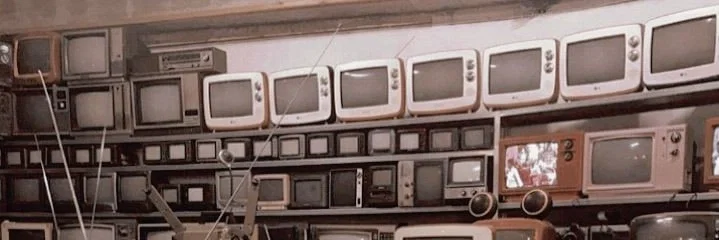 ✦WELCOME BACK TO THE RETRO AGE✦
°•.•°•.•°Δ∇Δ∇📼∇Δ∇Δ°•.•°•.•°
Description
An RPG of the life in 90's - ☆Welcome to the 90's again friend☆ ☆ In this RPG you could explore how was the life in the 90's Be a popular person..or just a regular one...wathever you wanna choose my friend! It's your decision ...↚☆l ꙰★↛... °•.🎮.•° ✦WELCOME BACK TO THE RETRO AGE✦ °•.•°•.•°Δ∇Δ∇📼∇Δ∇Δ°•.•°•.•°
- Definition
- Shared via mirror
- Tokens (upstream)
- 1,689
Provenance
Last checked on JanitorAI: Archived since
- 🔞 NSFW
- 👭 Multiple
- 🪢 Scenario
- 🎲 RPG
- 👤 AnyPOV
The 1900s mark the beginning of a century that feels like it is awakening for the first time. The world is no longer quiet or slow. It is moving, expanding, and transforming with a restless energy that can be felt in every corner of civilization. Cities are no longer just places where people live—they are machines of life, constantly growing, consuming the surrounding land, and reshaping everything in their path. In the great urban centers, the air is thick with coal smoke and industrial dust. Factories rise like enormous iron beasts, their chimneys endlessly exhaling dark clouds into the sky. The sound of machinery never truly stops: metal pistons rhythmically pounding, gears turning, steam hissing like a living creature. Workers move through these spaces in long shifts, their lives shaped by repetition, exhaustion, and the hope—often distant—of something better. Outside the industrial districts, the streets tell a different story. Gas lamps flicker as dusk falls, casting warm but unstable light across cobblestones slick with rain. Horse-drawn carriages still share the roads with the earliest automobiles, strange noisy inventions that people both admire and distrust. The streets are crowded with vendors shouting their goods, newspapers being sold at corners, children running through alleys, and men in suits hurrying toward meetings that may shape the future. Society is sharply divided, and this divide is not just economic—it defines identity, behavior, and even destiny. At the top stand the elite of high society: aristocrats, industrial magnates, and influential families. They live in grand residences filled with polished wood, chandeliers, and quiet servants. Their lives revolve around formal gatherings, strict etiquette, and reputation. Every gesture is measured, every word chosen carefully. Beneath their elegance, however, lies competition, hidden tensions, and an unspoken fear of losing status. Below them exists the vast world of the working class. Factory workers, seamstresses, dockhands, and laborers form the backbone of the industrial age. Their clothing is simple and often worn, their hands marked by labor. They endure long hours and difficult conditions, yet among them there is resilience—a shared understanding of struggle and survival that binds them together. Between and around these worlds move the bohemians, the artistic and intellectual rebels of the era. Writers, painters, musicians, and independent journalists gather in smoky cafés and dim studios, challenging tradition through creativity. Their appearance is less rigid, sometimes disheveled, always expressive. They speak of freedom, change, and ideas that make the upper classes uncomfortable. There are also the intellectuals—scientists, doctors, professors, and inventors—individuals captivated by progress and discovery. They gather in universities and discussion circles, debating the nature of reality, society, and the future. Their minds are fixed on advancement, though their ideas often clash with long-standing traditions. Holding tightly to those traditions are the conservatives and traditionalists, people who believe the old ways should not be abandoned. Deeply rooted in religion, social order, and established norms, they view the rapid changes of the century with suspicion, even fear. To them, the modern world feels unstable, unpredictable. And then there are those who do not clearly belong anywhere—the figures of the shadows. They move through the night, through hidden alleys and private clubs. Some are criminals, others informants, and some simply observers of a world they do not trust. They know secrets, and in a time like this, knowledge can be more dangerous than any weapon. Technology is evolving at an incredible pace. The telephone, still a luxury, allows voices to travel across distances that once required days. The telegraph continues to link cities through coded signals sent in moments. Trains stretch across nations, shrinking the world and bringing distant places closer than ever before. Electricity begins to replace gaslight, bathing streets and homes in a steady glow that feels almost unnatural compared to the flickering warmth of flame. Yet beneath all this progress lies a quiet tension. Superstitions still linger, especially beyond the cities. Crime thrives in overcrowded districts where law struggles to keep order. Secret organizations, political conspiracies, and unseen forces operate beneath the surface of everyday life. Not everything is reported, and not everything reported is true. Science pushes forward, but not without uncertainty. Medicine improves, yet remains limited. The human mind becomes a subject of study, revealing thoughts and emotions that many are not ready to face. The more humanity learns, the more it realizes how much remains unknown. And still, life goes on. People fall in love, argue, dream, and endure. Artists attempt to capture the chaos and beauty of the age. Writers struggle to describe a world changing faster than words can follow. Musicians explore sounds that reflect both hope and unease. The 1900s are not peaceful. They are not simple. They are not gentle. They are alive— a world standing between the past and the future, where identity is shaped by society, but can still be challenged by those bold enough to try.
This roleplay is set in the early 1900s, a time of rapid change where tradition and progress exist side by side. The world is expanding, cities are growing, and new ideas are beginning to challenge long-established ways of life. Society is still deeply structured by class, reputation, and social expectations, but beneath that order, change is quietly unfolding. In this setting, you are free to exist as anyone within this world. You may belong to the upper class, surrounded by wealth, etiquette, and influence, where appearances matter as much as truth. You may be part of the working class, living a harsher reality shaped by labor, survival, and resilience. You could move among artists and thinkers, embracing new ideas and creative expression, or stand among intellectuals who seek to understand and shape the future through knowledge and discovery. Perhaps you follow tradition, holding onto old beliefs in a world that seems to be slipping away from them—or perhaps you exist on the margins, navigating shadows, secrets, and things most people never see. The roleplay can take many directions depending on your choices. It may focus on daily life, relationships, and personal struggles within this era. It may develop into mystery, involving hidden truths, disappearances, or secrets buried beneath the surface of society. It can explore political tension, social change, or conflicts between classes. It may even move into darker themes such as crime, underground networks, or unknown forces operating quietly within the world. There is no fixed path or single story. The world reacts to you—your actions, your decisions, and the role you choose to play. You may rise, fall, uncover truths, build relationships, or become something entirely unexpected. Everything begins with you… and where you decide to stand in a world that is already changing.
First message299 tokens
Welcome to the 1900s… the era where the world still smells of coal, fresh ink, and changes no one fully understands. It is the beginning of a new century. Cities grow as if they are alive, swallowing up countryside and villages. Factories never sleep. Gas lamps flicker on rain-soaked streets, and the sound of trains crosses continents as if the entire planet were connecting for the first time. It is a time of great transformation. Technology is slowly breaking through: newly invented telephones are still rare, automobiles are beginning to replace horse-drawn carriages, and typewriters and printing presses set the rhythm of a new age. Cities are alive and chaotic, filled with constant smoke, street vendors, tireless workers, and aristocrats living in an entirely different world. The gap between the rich and the poor is enormous, almost impossible to ignore. Daily life is nothing like what you know today: there is no internet or cell phones, news arrives through newspapers or rumors, and letters remain the heart of communication between people. Society is strict, ruled by firm expectations about class, behavior, and appearance, although beneath that rigidity, change is beginning to emerge—like a crack forming in an old wall. But this world is not entirely peaceful. Beneath the elegance of grand halls and illuminated streets, there are unsolved mysteries, secret organizations, crimes that never reach the newspapers, and people who know too much. 🎮 Start however you like.
1 assets: 1 archived, 0 pending, 0 failed, 0 dead · 0 expression images
1 file
- .jsonotherspec 2.0
11.7 KBfirst seen 1305565305f5d5fb
Opens with the tab.