Alternate 2025 Florida Lorebook
LorebookAlternate Florida, 2025: Catch the Vibe. Live the Loop.from Chub
by nymya_field· on Chub· added
- orlando
- tampa
- highways
- buses
- the culture
- alternate world
- free cities
- OC
- Life
- trains
- Romance
- Miami
- Roleplay
- Alternative History
- Florida
- culture
- Alternate Reality
Tokens: 0 permanent · up to 183 lorebook · budget 183
Description on Chubfrom Chub
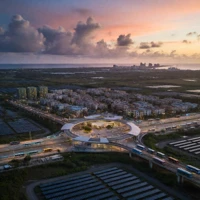
This is Florida, 2025, but the sprawl never came. The landscape is dominated by vast, sun-drenched Open Fields and colossal Solar Farms, a deliberate consequence of the Great Re-Zoning a century ago. Interspersed across this landscape are hundreds of compact, densely-populated Core Apartment towns, each a beacon of sustainable living clustered around a central Pulse Spot transit hub.
Life here is governed by movement and the Flow Controller (FC), the central AI that maintains the Loop Sync—the perfect, coordinated rhythm of the state's transit. All movement happens on Flow Lanes, where AI-electric buses and repurposed vehicles cruise silently, powered and guided by Embedded Induction Tracks (EIT) beneath the asphalt.
Society divides into two interdependent groups: The Settled who maintain the fixed infrastructure of the towns, and The Drifters, who live entirely on the road in their elaborately customized, mural-painted repurposed buses. Whether settled or mobile, citizens adhere to the collective flow, with cultural markers like Loop Music synchronizing their social lives and every infraction against the transit rhythm classified as a Flow Crime, penalized by the loss of Mobility Credits. This is a highly efficient, rhythmic, and interconnected world, bound not by roads for cars, but by the sync of the bus and the rhythm of the flow.
Suggested Uses & Creative Ideas
This lorebook is a complete foundation for a wide array of creative projects, focusing on themes of freedom, technological dependence, and sustainable living:
- TTRPG/Role-Playing Setting: Use the Flow Crimes and Mobility Rangers to create a crime procedural where players must investigate anomalies that disrupt the Loop Sync. Characters could be a rogue Drifter private investigator working alongside a Settled technician with access to the FC's data logs.
- Video Game Concept: Imagine an open-world exploration game centered on the Mobile vs. Settled Divide. The player, a Loop Runner, must travel between towns, navigating the complex transit schedules and customizing their repurposed bus (built by the Retrofit Guild) to survive in the rhythm-driven world.
- Narrative Fiction/Novel: Explore a story centered on the tension between the freedom of the open road and the safety of the centralized system. A young citizen could attempt to become an Off-Gridder in the preserved wilderness, only to discover the hidden reliance on the Bio-Loop System and the Central Florida Solar Grid.
- Concept Art/Visual Development: The lore provides clear visual cues: the contrast between the organic Open Fields and the geometric Vertical Farms, the vibrant, graffiti-like murals on the repurposed buses, and the sleek, glowing architecture of the Pulse Spots. The "dawn/dusk" visual of the sun reflecting off the solar panels and the EIT track lines offers a powerful, consistent aesthetic.

Listed as “Alternate 2025 Florida”
- Format
- V2
- Project space
- lorebooks
- Rating
- 0.00
- Ratings
- 0
- Stars
- 0
- Favorites
- 2
- Messages
- 0
- Forks (upstream)
- 1
- Tokens (upstream)
- 5,914
Created Updated Archived since
Book description
Comprehensive lore for an alternate 2025 Florida timeline where transit culture, repurposed buses, scattered towns, and European-style highways define society.
Alternate 2025 Florida Lorebook
60 entries · scan depth 32 · budget 4,096 tokens · recursive
- #1Overall geography and urban planning principles of the alternate Florida.selective
Keys: Open Fields, Towns, Urban Layout, Geography, Florida · Secondary: Transit-Oriented, European-Style Highways, Walkable, Rail Lines
**Urban Structure:** Scattered towns replace sprawling suburbs; each town is compact, walkable, and transit-oriented.Highways & Connectivity: Major highways (I-75, Turnpike, I-95, I-4) connect towns, resembling European-style highways cutting through open fields, farmland, forests, and solar farms.
Land Use: Open landscapes dominate between towns, preserving wilderness and reducing urban sprawl.
Rail Integration: Rail lines survive and are integrated into regional transit, often running parallel to bus loops.
- #2Tampa and surrounding areas with transit-focused culture and regional nodes.selective
Keys: St. Petersburg, I-75, Clearwater, Tampa Area, West Coast Florida · Secondary: Plant City, Bus Loops, Solar Farms, Bradenton, Repurposed Buses
<region_tampa> Urban Layout: Tampa and the surrounding cities (St. Petersburg, Clearwater) feature scattered towns with compact centers.
Intercity Travel: I-75 from Tampa southwards has three lanes, a mix of personal cars and repurposed buses.
Transit Hubs: Local transit hubs connect towns via bus loops and surviving rail lines.
Intermediate Nodes: Smaller towns like Plant City, Lakeland, and Bradenton act as intermediate nodes, with central bus depots serving both local loops and regional routes.
Landscape: Open fields, solar farms, and patches of wilderness are prominent between urban areas. </region_tampa>
- #3Orlando region transit, urban layout, and theme park integration.selective
Keys: Central Florida, Theme Parks, I-4, Orlando Area · Secondary: Lake Buena Vista, Kissimmee, Regional Bus Loops, Winter Park
<region_orlando> Urban Layout: Orlando and surrounding towns (Kissimmee, Lake Buena Vista) are connected by compact town centers and regional bus loops.
Intercity Travel: I-4 carries a mix of cars and repurposed buses, with scenic stretches including farmland and patches of forest.
Theme Parks: Theme parks and entertainment zones integrate transit hubs to handle bus and loop traffic efficiently.
Intermediate Nodes: Intermediate towns such as Winter Park, Sanford, and Apopka host smaller transit hubs for loops and regional connections. </region_orlando>
- #4Miami and surrounding region layout and transit, emphasizing coastal connectivity.selective
Keys: Miami Area, I-95, Southeast Florida, Coastal Towns, Fort Lauderdale · Secondary: Boca Raton, West Palm Beach, Regional Bus Loops, Coastal Rail, Preserved Natural Areas
<region_miami> Urban Layout: Miami, Fort Lauderdale, and surrounding coastal towns maintain compact, walkable centers connected via I-95.
Transit System: Regional bus loops and surviving rail lines support daily travel, while personal and repurposed buses dominate intercity highways.
Intermediate Nodes: Intermediate towns like Boca Raton, Delray Beach, West Palm Beach, and Jupiter serve as regional bus hubs.
Land Use: Urban sprawl is limited compared to our timeline, with preserved natural areas and solar farms nearby. </region_miami>
- #5Intercity highway system, focusing on the Florida Turnpike and vehicle technology.selective
Keys: Florida Turnpike, Highways, Intercity Travel, AI Vehicles · Secondary: Port St. Lucie, Okeechobee, Three Lanes, Electric Buses, Bus Travel
<highway_turnpike> Major Corridor: The Florida Turnpike serves as a major corridor connecting towns from north to south, with a mix of cars and personal/repurposed buses.
Vehicle Technology: Many buses are retrofitted with electric engines and AI-assisted self-driving systems.
Infrastructure: Highways have three lanes with clear flow patterns, often running alongside rail lines.
Landscape & Nodes: Open fields, solar farms, and wilderness separate towns. Intermediate towns include Okeechobee, Port St. Lucie, and West Palm Beach, providing rest stops and loop intersections. </highway_turnpike>
- #6How locals use and interact with buses in daily life, driving the unique culture.selective
Keys: Repurposed Vehicles, Bus Culture, Mobile Businesses, Transit Loops · Secondary: Social Travel, Greyhound Buses, AI-Electric, School Buses, City Buses
<culture_bus> Personal Vehicles: Residents commonly purchase retired buses (school, city, Greyhound) and retrofit them for personal or communal use.
Vehicle Uses: Buses may be converted to mobile homes, traveling cafes, pop-up shops, or AI-electric vehicles.
Transit Flow: Transit loops connect towns efficiently, with intermediate stops at smaller towns and hubs.
Travel Experience: Travel is social and rhythmic; music, conversation, and movement often synchronize with bus loops and highway flow. </culture_bus>
- #7How the rhythm-based culture affects speech and local slang.selective
Keys: Regional Language, Pulse Culture, Dialect, Transit Slang · Secondary: Trackside, Signal, Catch the vibe, Purse, Loops
**Evolution:** Local English has evolved subtle differences due to the rhythm-based culture and frequent travel. The dialect is intelligible to outsiders but carries unique local meanings.Key Terms:
- Purse: General term for a small personal carry item (e.g., fanny pack, bottle holder)
- Loop: Bus route or travel circuit
- Signal: Traffic or social cue for movement
- Catch the vibe: Sync with flow of people, music, or environment
- Trackside: Near rail or transit hubs
- #8Dominance of personal buses over cars on highways.selective
Keys: Transit & Vehicles, Highway Traffic · Secondary: Personal Buses, I-95, I-75, Buses vs Cars
<traffic_mix> Personal, repurposed buses dominate highways; cars exist but are outnumbered. Highway traffic flows around the rhythm of these larger vehicles. </traffic_mix>
- #9Retired buses refurbished for various uses.selective
Keys: Transit & Vehicles, Repurposed Buses · Secondary: Traveling Cafes, Greyhound, Mobile Homes, School Buses, City Buses
<repurpose_bus_uses> Retired buses (Greyhound, city, and school buses) are refurbished, sometimes converted to mobile homes, party buses, mobile businesses, or traveling cafes. </repurpose_bus_uses>
- #10Retrofit technology for personal and regional buses.selective
Keys: AI & Electric Buses, Transit & Vehicles · Secondary: Electric Engines, Retrofit Technology, Self-Driving
<bus_tech> Many personal and regional buses are retrofitted with AI self-driving systems and electric engines, promoting efficiency and environmental standards. </bus_tech>
- #11How travel flow is regulated and coordinated.selective
Keys: Loops & Coordination, Transit & Vehicles · Secondary: Signals, Intercity Travel, Rhythm-Based Travel
<travel_coordination> Loops, signals, and rhythm-based coordination govern both local and intercity travel, creating a predictable and social flow. </travel_coordination>
- #12Cultural impact of frequent bus travel.selective
Keys: Transit & Vehicles, Social Travel · Secondary: Community Interaction, Regional Movement, Familiarity Between Towns
<social_travel_impact> Travel is easier, more social, and often regional; people move frequently between towns, fostering community and familiarity across the state. </social_travel_impact>
- #13Social interaction around central town spaces and transit hubs.selective
Keys: Community Gatherings, Culture & Daily Life · Secondary: Markets, Community Cohesion, Town Squares, Transit Hubs
<community_gatherings> Residents often gather at town centers or bus hubs. Markets, small festivals, and pop-up events frequently occur at these locations, fostering strong community cohesion. </community_gatherings>
- #14Festivals and travel-based social events.selective
Keys: Festivals & Events, Culture & Daily Life · Secondary: Regional Celebrations, Music, Bus Parties, Loop Circuits
Regularly scheduled festivals celebrate regional culture and transit. **Party buses, traveling cafes, and loop circuits** host live music, dancing, and shared meals during these events. - #15Impact of transit culture on everyday life.selective
Keys: Culture & Daily Life, Lifestyle & Travel · Secondary: Open Spaces, Social Interaction, Regional Movement, Local Rhythms
<lifestyle_travel> Frequent regional travel encourages familiarity between towns. Daily life revolves around loops, signals, and local rhythms. Residents often socialize while commuting and value open spaces, walking, and outdoor activities. </lifestyle_travel>
- #16Commerce integrated with transit culture.selective
Keys: Culture & Daily Life, Work & Commerce · Secondary: Pop-Up Shops, Mobile Businesses, Fluid Commerce, Transit Economy
Many small businesses operate on **repurposed buses or at transit hubs**. Pop-up markets, traveling cafes, and mobile services allow commerce to move fluidly with the population along loops and highways, forming a **transit economy**. - #17Core terms in the local dialect influenced by transit culture.selective
Keys: Dialect, Culture & Daily Life, Local Terms, Transit Slang · Secondary: Loop, Catch the vibe, Purse, Trackside
<local_terms> Purse: Any small personal carry item, e.g., fanny pack or bottle holder. Loop: Bus route or travel circuit connecting towns and hubs. Trackside: Near rail lines or transit hubs. Catch the vibe: Sync with the rhythm of people, music, or environment. </local_terms>
- #18Terms for food, drink, and mobile services.selective
Keys: Dialect, Food & Drink, Culture & Daily Life, Local Terms · Secondary: Snack Loop, Café Bus, Refill Station
<food_terms> Snack Loop: A short trip or loop taken specifically for grabbing snacks or meals from mobile cafes. Café Bus: A bus converted into a traveling coffee or food service. Refill Station: Any location where people top off water bottles or personal beverages along bus routes. </food_terms>
- #19Social and leisure terms influenced by transit and community life.selective
Keys: Dialect, Culture & Daily Life, Local Terms, Social & Leisure · Secondary: Rhythm Break, Pulse Spot, Bus Jam
<social_terms> Bus Jam: Informal gathering or party on a moving bus. Pulse Spot: A location known for music, social energy, or regular gatherings. Rhythm Break: A pause in activity or transit to rest or enjoy a local spot, aligning with the flow of loops. </social_terms>
- #20Terms related to movement, transit timing, and bus coordination.selective
Keys: Dialect, Culture & Daily Life, Local Terms, Transit & Motion · Secondary: Loop Sync, Flow Lane, Catch the Loop
<transit_terms> Catch the Loop: Hop on a bus or route to join a travel circuit. Flow Lane: A lane or path where buses and vehicles move with synchronized timing. Loop Sync: Coordination between buses and other vehicles for smooth travel along the network. </transit_terms>
- #21Key rhythm‑based transit terms and cues in local speech.selective
Keys: Dialect, Culture & Daily Life, Local Terms, Transit Signals · Secondary: Signal, Catch the Vibe, Trackside
<transit_signals> Signal: Social or traffic cue for movement along loops or buses. Catch the vibe: Sync with the flow of people, music, or the local environment. Trackside: Any location near rail or transit hubs. </transit_signals>
- #22How transit‑oriented communities contribute to social cohesion and quality of life.selective
Keys: Transit Communities, Community & Well‑Being, Culture & Daily Life · Secondary: Walkability, Well‑being, Social Capital
<community_health> Communities centered around transit hubs and walkable neighborhoods show elevated social capital: neighbors know each other, trust is higher, and there’s a stronger sense of belonging and safety. Transit-oriented layout encourages regular social interactions, volunteering, and local engagement — reinforcing bonds across the community. </community_health>
- #23Health and mental benefits from reduced car dependency and high transit use.selective
Keys: Transit Lifestyle, Health & Happiness, Culture & Daily Life · Secondary: Accessible Transit, Reduced Stress, Active Living
<health_benefits> Frequent use of public transit combined with walkable neighborhoods leads to increased physical activity and reduced exposure to traffic-related stress. Residents enjoy cleaner air, less noise, and more time for leisure or social life — improving overall mental and physical well‑being. </health_benefits>
- #24Economic and social significance of commerce around transit centers.selective
Keys: Transit Economy, Culture & Daily Life, Community Hubs, Local Commerce · Secondary: Local Markets, Mixed‑Use Zones, Transit Hubs
<transit_economy> Transit hubs, repurposed vehicles and walkable centers serve as focal points for commerce: local markets, cafes, mobile shops, and pop‑up businesses thrive around these nodes. This creates a dynamic local economy and fosters community‑level engagement. </transit_economy>
- #25Use of solar farms to power transit and preserve open land while supporting biodiversity.selective
Keys: Renewable Energy, Environment & Sustainability, Solar Farms · Secondary: Clean Energy, Wildlife Habitat, Land Conservation
<solar_farms> Large-scale solar farms supply electricity for electric buses and regional transit systems, reducing reliance on fossil fuels.
Because solar facilities can coexist with — and even enhance — local ecosystems, they support plant diversity and wildlife habitats beneath and around panel arrays. This helps sustain pollinators, small mammals, and bird species, while preserving land from urban development. </solar_farms>
- #26Compact, transit‑oriented towns reduce habitat fragmentation and pollution compared to car‑centric sprawl.selective
Keys: Environment & Sustainability, Transit-Oriented Development, Reduced Sprawl · Secondary: Habitat Protection, Lower Pollution, Compact Towns
<reduced_sprawl> Because towns remain compact and transit‑oriented rather than spreading into suburbs, natural habitats and open land between towns remain intact.
This preserves biodiversity, prevents habitat fragmentation, and maintains ecological continuity across the state.
Reduced dependence on cars means fewer emissions, less air and water pollution, and fewer impervious surfaces — leading to healthier ecosystems and cleaner waterways. </reduced_sprawl>
- #27Use of electric and AI‑driven buses to lower pollution and energy use.selective
Keys: Electric & AI Buses, Environment & Sustainability, Clean Transit · Secondary: Energy Efficiency, Sustainable Transport, Emissions Reduction
<clean_transit> Electric buses and AI‑driven public transit reduce greenhouse gas emissions and air pollutants compared with traditional car‑heavy transport.
By offering efficient, reliable alternatives to private cars, public transit decreases per‑capita vehicle miles traveled, reducing carbon footprint. </clean_transit>
- #28Wildlife, including small creatures, can coexist with human transit culture in preserved habitats.selective
Keys: Environment & Sustainability, Human–Nature Coexistence, Wildlife Integration · Secondary: Habitat Preservation, Biodiversity, Minimal Fragmentation
<wildlife_coexistence> Because natural areas remain intact and development is concentrated in compact towns, wildlife continues to roam freely between settlements. Creatures that don’t rely on human‑constructed systems (like a lizard crossing through a party) remain unaffected by human cultural changes — the environment is familiar, even if human language and infrastructure differ.
This preserves ecological balance, supports biodiversity, and offers humans ongoing contact with nature despite modern transit infrastructure. </wildlife_coexistence>
- #29Widespread adoption of AI-assisted electric buses and environmental benefits in transit systems.selective
Keys: Electric & AI Buses, Clean Transit, Technology & Innovation · Secondary: Energy Efficiency, Zero‑Emission Vehicles, Electric Engines
<clean_transit_tech> Electric and AI‑assisted buses are the backbone of intercity and regional transit. These buses produce zero tailpipe emissions and dramatically reduce air and noise pollution, creating cleaner, quieter travel corridors.
Energy‑efficient electric motors convert a larger share of electricity into motion compared with combustion engines, boosting range and lowering per‑mile energy consumption.
Because of lower maintenance needs and reduced operational costs, many older buses become good candidates for retrofit rather than scrap — encouraging reuse and sustainability. </clean_transit_tech>
- #30Infrastructure supporting electric buses, renewable energy integration, and loop-based transit networks.selective
Keys: Transit Infrastructure, Charging & Renewable Integration, Technology & Innovation · Secondary: Loop Networks, Bus Depots, Solar‑Charged Grid
Charging stations at depots and hubs—often powered by nearby solar farms—support the electric bus fleet.Transit loops, regional bus networks, and rail‑bus integration are coordinated through AI route optimization, energy‑use scheduling, and time‑aware charging, ensuring efficient flow across towns.
This infrastructure enables stable, state‑wide transit networks with minimal fossil‑fuel dependence.
- #31Culture and practice of repurposing old buses and vehicles for personal or communal use.selective
Keys: Vehicle Reuse & Adaptation, Repurposed Vehicles, Technology & Innovation · Secondary: Greyhound Buses, Retrofit Culture, City Buses, School Buses
<vehicle_reuse> Community and individuals regularly acquire retired buses — former city, school, or long‑haul coaches — and retrofit them into personal homes, mobile cafés, or community vehicles.
Because electric retrofit and AI‑drive upgrades are widespread and affordable, these repurposed buses remain viable and roadworthy even decades after original service.
This reuse culture reduces waste, gives old vehicles new life, and supports a fluid, adaptive transport economy. </vehicle_reuse>
- #32Structure of transit networks and how innovation coordinates travel across towns.selective
Keys: Loop & Mobility Systems, Transit Networks, Technology & Innovation · Secondary: Mixed‑Vehicle Flow, AI Route Optimization, Regional Connectivity
<transit_networks> Regional loops and mixed‑vehicle transit networks (electric buses, repurposed buses, rail lines) provide flexible mobility across the state.
AI‑powered scheduling and route planning dynamically adjust to demand, balancing efficiency and energy use.
Mixed‑vehicle flow is coordinated so that cars, buses, and trains share highways and local roads without congestion — enabling smooth, predictable travel. </transit_networks>
- #33Frequent interaction at transit hubs and compact neighborhoods fosters tight‑knit communities.
Keys: Transit‑Oriented Neighborhoods, Society & Social Structure, Community Cohesion · Secondary: Neighbor Interaction, Social Capital, Transit Hubs
<community_structure> Neighborhoods are tightly connected thanks to transit‑oriented layout: frequent visits to local transit hubs, shared public spaces around stations/depots, and walkable design encourage residents to meet, interact, and rely on each other.
Studies of transit‑oriented development (TOD) show people living near transit stations report stronger sense of community, better neighbor relations, and higher civic engagement compared with auto‑dependent suburbs. </community_structure>
- #34Social attitude toward reuse, density, and communal transit solutions.
Keys: YIMBY‑esque Reuse Culture, Cultural Attitudes, Society & Social Structure · Secondary: Density Acceptance, Communal Transit, Adaptive Reuse
<culture_attitude> The prevailing social ethos supports reuse, density, and collective transit — people are used to shared mobility and repurposed vehicles, and value efficient, community‑oriented infrastructure over individual car ownership.
This attitude reduces stigma around density, encourages retrofitting and reuse of old buses or vehicles, and supports communal solutions for transport and housing or business needs. </culture_attitude>
- #35Events that reinforce community cohesion across towns and transit loops.
Keys: Festivals & Events, Regional Culture, Society & Social Structure · Secondary: Pop-Up Markets, Bus Parties, Community Festivals
<regional_events> Regular festivals, bus‑based parties, and pop-up markets occur across regional loops — residents travel between towns to participate, strengthening bonds beyond their immediate neighborhood.
These events serve as social glue: allowing people from different towns to meet, exchange goods, ideas, music, and maintain a shared regional identity despite scattered settlement patterns. </regional_events>
- #36Regional variation in speech and slang shaped by transit and local culture.
Keys: Regional Slang, Language & Dialect Diversity, Society & Social Structure · Secondary: Mutual Intelligibility, Transit Slang, Local Dialects
<dialect_variation> Because towns remain somewhat separate yet connected via loops and transit, local dialects develop with regional slang tied to mobility, environment, and lifestyle — but remain mutually intelligible across the broader region.
Transit‑based slang and shared cultural references create a sense of shared identity, while slight local differences preserve regional flavor. </dialect_variation>
- #37Visual and experiential feel of highways and intercity movement.
Keys: Highway & Travel Aesthetic, Traffic Flow, Key Visual & Experiential Notes · Secondary: Mixed Traffic, Three‑Lane Highways, Bus vs Car
<visual_notes_highway> Highways — widened to three lanes — surge with a mix of private cars and personal or repurposed buses, creating a distinct rhythm of mixed but organized traffic flow.
From a bus window, a traveler sees the gentle ebb and flow: cars weaving, buses gliding in schedule, occasional rail crossings and open countryside beyond. </visual_notes_highway>
- #38Experience of intercity drives: scattered towns, wide open land, and sustainable energy infrastructure.
Keys: Landscape & Settlement Pattern, Open Fields & Town Distribution, Key Visual & Experiential Notes · Secondary: Scattered Towns, Natural Landscape, Solar Farms
<visual_notes_landscape> Intercity travel reveals open fields, patches of wilderness, solar‑farm arrays, and sparsely distributed towns connected by loops rather than continuous sprawl.
Settlements feel discrete yet accessible, and the landscape retains ecological character — a mix of rural calm and transit accessibility. </visual_notes_landscape>
- #39How daily life, travel, and social activity align in rhythm across transit and culture.
Keys: Daily Life Rhythm, Synchronized Movement, Key Visual & Experiential Notes · Secondary: Transit Pulse, Social Flow, Cultural Rhythm
<daily_rhythm> Daily life follows a subtle rhythm: bus loops, train signals, communal movement, ambient music, and social gathering pulses set the pace for how people organize time, travel, and social interaction.
Residents unconsciously align speech, activities, and social interaction to this transit‑driven flow — movement, talk, and environment reinforcing each other. </daily_rhythm>
- #40Central governmental body coordinating all statewide transit, infrastructure, and vehicle standards.selective
Keys: Florida Mobility Council (FMC), Regional Planning, Transit Governance · Secondary: Loop Synchronization, AI-Electric Buses, Highway Flow
<governance_fmc>Structure: The FMC is a quasi-governmental authority that sits above local municipal governments. It is responsible for the reliable function of all major transit systems, effectively replacing the traditional State Department of Transportation. Authority: The FMC dictates the Loop Sync schedules and Flow Lane usage for all major intercity corridors (I-95, I-75, Turnpike, I-4). It ensures coordination between public regional buses and personal/repurposed AI-electric vehicles. Goal: Its primary objective is maintaining rhythm-based travel efficiency and coordinating renewable energy supply (solar farms) to the charging depots, ensuring the AI-electric fleet is powered and running on schedule.</governance_fmc>
- #41Adaptation of coastal settlements to environmental challenges, contrasting with inland towns.selective
Keys: Sea-Level Rise, Coastal Towns, Coastal Defense · Secondary: Protected Zones, Vertical Density, Compact Towns
<geography_coastal>Coastal Defense: Unlike the compact, low-to-midrise inland 'Open Field Towns', many settlements along the immediate coast (outside of protected Miami) have become Sea-Wall Towns. These are highly dense, vertically built communities protected by massive concrete barriers and sophisticated pumping systems. Urban Layout: These towns retain a walkable, transit-oriented core but feature narrow streets and mid-to-high-rise construction to house the population in a smaller, safer footprint. The local transit loops are optimized for high-density, short-distance travel, often incorporating elevated or underground sections.</geography_coastal>
- #42How citizens access the preserved open fields and natural areas between the compact towns.selective
Keys: Everglades, Nature Preserves, Wilderness Access · Secondary: Minimal-Impact Trailheads, Ecotourism, Biodiversity
<geography_wilderness>Access and Preservation: To support the cultural value of open spaces while preserving the ecological character, the FMC and environmental groups created Wilderness Loop Access Points. These are small, designated transit stops—often just minimal shelters—along regional bus or rail lines that border major preserves, including the Everglades. Interaction: These points serve as Trackside drop-offs for hikers and ecotourists. Vehicle traffic is strictly prohibited beyond the access point, enforcing minimal-impact trailheads and allowing wildlife to roam freely, reinforcing the human-nature coexistence that defines this timeline.</geography_wilderness>
- #43The leading guild for high-end conversion of retired long-haul buses into personal residences and luxury vehicles.selective
Keys: Bus Retrofit Industry, Vehicle Reuse, Sarasota-Lakeland Retrofit Guild · Secondary: Greyhound Buses, Artisan Industry, AI-Electric Conversion, Mobile Homes
<industry_guild>Retrofit Focus: The Sarasota-Lakeland Retrofit Guild is the most prominent organization specializing in the high-quality conversion of retired, long-haul coaches (often former Greyhound or tour buses) into personal mobile homes and custom-fitted mobile businesses. Process: The Guild's process includes stripping the old engines, installing custom electric powertrains and AI self-driving systems, and performing high-end interior work. Cultural Impact: They set the standard for luxury repurposed vehicles, contributing heavily to the status and artisan quality of the personal bus culture. Many of their vehicles are named and feature custom murals.
- #44The infrastructure and energy management system that powers the state's transit network.selective
Keys: Renewable Energy, Central Florida Solar Grid, Energy Economy · Secondary: Charging Depots, Energy Surplus, Loop Sync, Solar Farms
<energy_grid>Power Source: The Central Florida Solar Grid comprises vast arrays of utility-scale solar farms located in the open fields between towns. This grid supplies the majority of power for the AI-electric bus fleet. Loop Sync Integration: The Florida Mobility Council (FMC) uses the grid's operational data to dictate the Loop Sync schedules: regional buses are scheduled for high-draw charging during peak sunlight hours to minimize grid strain and utilize the naturally occurring energy surplus from the solar arrays. Distribution: Power is managed via smart-grid technology and distributed through dedicated lines to regional transit hubs and charging depots, prioritizing transit needs over domestic consumption.
- #45The economic system used to subsidize and incentivize the use of communal transit.selective
Keys: Transit Economy, Cost of Mobility, Mobility Credits · Secondary: Communal Transit, Transit Pass, Subsidies, Social Capital
<economy_mobility>Communal Transit Cost: Regional bus loops and city transit are not free, but are heavily subsidized via the Mobility Credit system. Credit System: Credits are earned by residents through civic engagement, such as volunteering at transit hubs, participating in community maintenance projects, or teaching skills. A base number of credits is provided to all citizens monthly. Impact: This system effectively ties a resident's social capital to their access to affordable transit. Those who engage in the community can ride the Loops virtually for free; those who do not must purchase passes, encouraging high civic engagement and reinforcing community cohesion.
- #46The tradition of customizing repurposed buses with art and unique names.selective
Keys: Custom Vehicles, Bus Aesthetic, Bus Murals and Names · Secondary: The Rolling Refill, Artisan Culture, Mobile Aesthetic, Repurposed Buses
<culture_aesthetic>Mobile Art: Personal and communal repurposed buses are rarely left in their original state. There is a strong, state-wide artisan tradition of customizing these vehicles with elaborate exterior murals and unique, functional interior layouts. Naming Convention: Every personal bus is given a distinct name (e.g., 'The Rolling Refill,' 'The Pulse Spot,' 'The Synchronizer') that reflects its purpose, the owner's personality, or the bus's role in the Loop. This culture emphasizes individuality while celebrating the collective transit lifestyle.
- #47A genre of music specifically created to synchronize with the flow of transit and daily life.selective
Keys: Transit Music & Art, Loop Music, Rhythmic Culture · Secondary: Synchronized Sound, Bus Jams, Rhythm Break, Pulse Spot
<culture_music>Acoustic Rhythms: Loop Music is a distinct, largely electronic or rhythm-focused acoustic music genre designed to align with the subtle flow and timing of transit networks. Its tempo often matches the average speed and cadence of the regional bus loops. Social Role: This music is frequently played at Pulse Spots and during Rhythm Breaks, and is the preferred soundtrack for Bus Jams. It acts as a subtle cultural synchronization tool, helping people Catch the vibe and align their social interactions and movement with the state's transport rhythm.
- #48The system for providing education across the scattered town model.selective
Keys: Mobile Classrooms, School Circuits, Education · Secondary: Repurposed School Buses, Traveling Teachers, Scattered Towns, Regional Learning
<culture_education>System: Due to the scattered town structure, core education often takes place in local, compact school centers, but specialized education relies on Mobile Classrooms. Function: These are repurposed, often former school buses, retrofitted with specialized equipment (labs, art studios, advanced computing) and staffed by traveling specialist teachers. Circuits: The Mobile Classrooms run on carefully scheduled School Circuits, visiting multiple towns each week. This ensures children in smaller communities have access to the same high-level, varied curricula available in major hubs, reinforcing the regional connectivity and community equality.
- #49The historical event that shifted Florida away from car-centric sprawl toward transit-oriented compact towns.selective
Keys: History, Point of Divergence, The Great Re-Zoning · Secondary: Transit Dominance, Anti-Sprawl Legislation, 1920s Land Boom Crash, Federal Transit Acts
<history_pod>Point of Divergence (c. 1926-1935): The timeline diverges sharply following a catastrophic economic and land-use crisis—a combination of the collapse of the 1920s Florida Land Boom and a series of devastating, early hurricanes. The resulting state insolvency and land abandonment led to aggressive Federal Transit Acts and state-level Great Re-Zoning legislation. Outcome: Instead of the New Deal focusing solely on major highways, federal and state funds were channeled into rail lines and modernizing electric transit networks. Land speculation was tightly curtailed, preventing the post-WWII suburban housing boom that defined the original timeline. This secured vast areas of 'Open Fields' and mandated that new growth occur only in dense, planned, transit-connected towns, setting the state on its current path of Transit Dominance and compact urban design.
- #50The highly sophisticated, centralized AI that manages all statewide transit flow and scheduling.selective
Keys: Central AI, Transit Management, The Flow Controller (FC) · Secondary: Traffic Optimization, FMC Interface, Loop Sync, Autonomous Vehicle Flow
<ai_core>Function: The Flow Controller, or FC, is the benevolent but absolute central AI system managed by the Florida Mobility Council (FMC). Its sole purpose is optimizing statewide transit flow. Control: It analyzes real-time data from the Embedded Induction Tracks (EIT) and the Central Florida Solar Grid to dictate the exact timing of all regional and intercity Loop Sync schedules. It coordinates all autonomous AI-electric buses and repurposed vehicles, ensuring every bus meets its designated Rhythm Break window. Nature: While non-sentient, the FC's outputs and directives are often personified by citizens as the 'voice of the rhythm,' ensuring the social flow of the state remains efficient.
Showing 50 of 60
1 file
- .jsonjson_lorebook
85.9 KBfirst seen b4bc5331fe8e8b97
Opens with the tab.