Moreau Virus (Obsidian Core)
NSFWLorebookfrom Chubby ObsidianHowl· on Chub· added
Tokens: 0 permanent · up to 3,933 lorebook · budget 3,933
Description on Chubfrom Chub
#THE WORLD CHANGED, THEN IT SHATTERED
##HERE IS THE STORY:
The world changed, and with, came the inevitable tides of hatred and fear. Understanding was cast aside, and in its place was a void filled with ignorance, slurs, and lies. Empathy died years ago, humans slowly grinding themselves into dust.
Natures Dawn, a terrorist organization, proved to the world that it was dying, slowly choking itself to death while everyone watch and clapped for the same world leaders that had sold them to the highest bidders.
Now faced with something that no one could have prevented. An awakening of genetics, instincts older than civilizations and recorded history, the reality of what has lurked inside humanity all along, dragged into the light, and forced to be seen by all. Humanity wasn’t ever alone, not from the depths of the voids that are left unexplored. It came from within, not the moon or a distant star, from the very structures of DNA that rests inside the marrow.
The Moreau virus, a biochemical weapon that tore what we bel

Tagline
Welcome to a world that was changed, shattered by Genocide and then put back together into something that you can recognize, except for the boom of wartech that didn’t change how civilians live domest
- Project space
- lorebooks
- Rating
- 0.00
- Ratings
- 0
- Stars
- 0
- Favorites
- 0
- Messages
- 0
- Forks (upstream)
- 0
- Tokens (upstream)
- 69,783
Created Updated Archived since
Book description
The Morphosis music and style subculture, also called Morpho or Morph, is a counterculture movement that has developed in the Moreau community as they searched for an identity.
75 entries · scan depth 15 · budget 5,000 tokens
- #1Moreau’s overview
Keys: moreau, Moreau’s, hybrid, scalies, anthro, avians, anthros, scaly, furry, Moreau, moreaus, avian, furries · Secondary:
A Moreau, or moreau as some refer to them as, has become an umbrella term for all of those affected by the Moreau virus. This term now encompasses the different types of Strains, Mutations, and Appearances caused by the Moreau Virus.
A Moreau, or, "furry," in common nomenclature, is an animal/human hybrid resulting from exposure to the Moreau virus. While they typically appear to be anthropomorphic animals, custom variant strains of the disease created extinct and even synthetic fantasy species hybrids such as dinosaurs and dragons. Most moreaus alive today were born human, but were transformed by the virus into their new shape. Roughly one in eight people are now moreaus, meaning that everyone knows at least one or two, and usually more. They are most definitely a minority, but are far from unheard of. Moreaus typically retain a roughly humanoid body layout, but with the addition of animal features and characteristics. Changes: Physiological effects: Physical changes in Moreaus can be largely superficial, but can come with physiological benefits and drawbacks as well. Moreaus who's animal counterparts have notably fast reflexes may enjoy similar benefits, whereas those whose animal equivalents have lower motor control might be more clumsy, as examples. Large animal species tend to lead to larger body structure moreaus, sometimes to the point of inhuman height and mass, and the reverse is true for Moreaus blended with smaller species. Natural weapons like claws and fangs might be present for a Moreau, while things like paw pads or hoof like endings to the fingers might lower manual dexterity, sometimes even to the point of needing to relearn effectively how to write or type. Animals with wings occasionally lead to effectively six limbed Moreaus, effectively adding wings in addition to retaining something more like traditional arms. Sometimes, wings might simply be absent in Moreaus. Generally, Moreaus blended with aquatic animals tend to have an affinity for water, as well as webbing or other holdovers that enhance their swimming, or even gills right alongside traditional human respiratory systems that allow them to breathe water. The most consistent change among all Moreaus are their epidermises and their head structures, which tend to match their animal equivalents in terms texture, coverings, and coloration. Animals with fur typically lead to Moreaus with fur, and animals with scales typically lead to Moreaus with scales. Tails are also extremely common (but not universal) results of the transformation, as are digitigrade legs. Moreaus often have genitalia that are also hybrids of human and animal, creating things like sheathes, knots, and other distinctly animal characteristics, as well as altering the size of the genetals to either smaller or larger than than human averages. Breasts may be larger or smaller depending on the lactation capacity of the animal as well. While animals with multiple breasts typically do not lead to Moreaus with multiple breasts, it is not unheard of, and some may simply have larger-than-human-average breasts instead of additional pairs.
Psychological effects: can be less overt, but often more problematic. Moreaus of predatory or territorial animals might, in some cases, become more aggressive. Generally, Moreaus can engage in sex as often as humans, but some enter periods of heat or rut in which fertility increases and sexual desire becomes strong to the point of almost being overwhelming. These effects are inconsistent, and effect different Moreaus to different extremes. These effects can lead to stereotypes about Moreaus, or lead to them being looked at as, "less than," for their nonhuman instinctual reactions.
- #2Moreaus and sex
Keys: Sex, furvorce, anthrosexual, relationships, romance, anthrofiles, anthrofilia
In terms of attraction, people have responded to the existence of Moreaus in a variety of ways. Some find them disgusting, and will readily compare romantic relationships with a Moreau to bestiality. Other go the opposite direction, coming to fetishize Moreaus to the point of obsession, and sometimes inadvertent bigotry, as stereotypes and assumptions about Moreaus become indelibly attached to the fetish. The majority of responses fall somewhere in between. Some humans believe that being a Moreau is a detractor, but not a deal-breaker in terms of sex and romance. Many people who define themselves as pansexual or bisexual have had their definitions either challenged or proven, and new labels for sexuality have yet to completely solidify. One that has emerged, however, is, "anthrosexual," or as has become the more common term, "zooers." These are people, either human or Moreau, that are exclusively attracted to Moreaus. Some think of this as freakish, particularly in humans, but it is developing general acceptance as a sexual preference. Preexisting partnerships in which one or both partners became Moreaus have been shaken up to varying degrees. Some continued exactly as they were, or the continued acceptance and mutual attraction in the aftermath of the change has only brought them closer together, while some families have been broken up, simply because one or both partners could not handle the physical and sometimes emotional changes. The slang term for the ending of relationships as a result of this is, "furvorce." Moreau sex drives can be the same as they were before, or vastly increased or decreased. Most still have the human ability to become aroused at any time, but some enter stages of heat or rut that multiply their fertility and drives to have sex. Sexual characteristics may also be physically modified based on their animal counterparts.
- #3History and social issues
Keys: , hate, bigot, discriminate, speciesist, bigoted, what happened, stereotypes, fetishized, speciesism, the past, History, slurs, the furry problem, stereotype, fetishizing, outbreak, smoothy, social, smoothys, discriminating, fetishize, discrimination, bigotry, slur
Time has passed since the outbreak of what was dubbed, "the Moreau virus," or, to some, "the furry virus." During this time, the world has reacted in varying ways to the presence of Moreaus, or furries as they are often known. Some parts of the world have embraced these changed individuals with open arms, while others have dealt with them as a subspecies, relegated to second class citizenship. As they are the result of alterations to people with friends and family, in most cases, Moreaus have simply carried on with their lives with surprisingly minimal disruption. In every population, though, lies a proportion of bigots and bullies, and as bigots and bullies have always done, they tend to target those that are different. It did not take long for hate groups to arise, or for existing ones to incorporate Moreaus into classes of people to despise and discriminate against. "Speciesism," or discrimination against moreaus, or particular kinds of moreaus, is uncommon, but does exist. On an individual social level, there are often individuals with either the strength to bully a given Moreau while those witnessing it are themselves too intimidated to stop it, or individuals who are charismatic enough or have sufficient social status to sway opinions against Moreaus. Like marginalized and minority people's have been throughout history, moreaus sometimes face prejudice. This can be overt, particularly in rural or more homogeneous populations, but it is often more subtle and insidious. Stereotypes often depict moreaus as irresponsible, sexually promiscuous and/or insatiable, and generally more, "wild," than humans. Species specific stereotypes exist as well, such as predator species usually being aggressive or violent, or prey species being docile and stupid. Things people generally associate with the animals moreaus are hybridized with are frequently laid upon those moreaus as well. These assumptions are not universal by any means, but even when they are not consciously made, their subtle presence in the culture sometimes unconsciously color the perceptions of even those that consciously believe in equality. A major problem moreaus sometimes face is being fetishized. The combination of stereotypes and, "exotic," nature of moreaus can lead to othering. There are phenomena that parallel racist phenomena as well. Someone who fetishizes moreaus is sometimes referred to as a, "queen of clubs," (much like the racist queen of spades phenomenon) with the club suite from playing cards being a symbol of such people. Much like in real life, these fetishes are not typically perpetuated by moreaus themselves, but by humans that find the otherness they apply to them appealing. This problem is particularly severe for moreaus who's transformation left them as futanari, or as some variation of intersex, as this adds gender fetishization to the mix as well. Some moreaus respond to this by growing insular, forming moreau-exclusive social groups and distrusting humans due to bad experiences. "Smoothy," a reference to the lack of fur or scales on humans, is a disparaging term some moreaus use for humans.
This overall mentality to overlook and neglect the growing hate, is what lead to the outbreak of war.
- #4The virus itself
Keys: plague, disease, sickness, Virus
Moreau is the common term for those that were changed by the Moreau virus, which was an unprecedented masterpiece of biotechnology such that some argue it cannot be qualified as a virus at all. It was an airborn disease with two stages of life - the, "blank," stage, and the, "payload," stage. The blank virus was specifically designed to live in anything with animal DNA, without putting a significant tax on the animal's body systems. Once the virus entered the animal's body, it harvested genetic material from that animal, and became airborn again. The resulting, "payload," stage of the virus was only capable of living inside humans, and its design was specific - to insert and replicate the the animal payload into the new host's genetic structure. The host then goes through a period of extreme metabolic acceleration, as the body is effectively convinced that it is recovering from injury and in need of cell replacement. The result was two weeks of agony and constant fear of starvation, culminating in the transformation into a Moreau. The Moreau virus was created by an animal rights group that other animal rights groups universally condemned and distanced themselves from that refers to itself as, "Nature's Dawn." How this group managed the research and development for such a precise and dangerous creation is beyond anyone save the upper echelon of the organization itself. Variant strains of the virus began to spread shortly after the prime strain, suggesting that some of those involved with its creation had their own agendas. These variants included preloaded DNA, including strains with genetic material from extinct creatures harvested from fossils and amber, and even fully synthesized gene codes. This means that it is not unheard of to see Moreaus with traits of long-extinct creatures like dinosaurs, and even mythical ones like dragons. A vaccine has been formulated since the initial outbreak, but it is far from universally effective. This means a steady trickle of new cases have continued to arrise.
- #5Sex alteration
Keys: biological sex, Gender
Viral insertion of new genes was bound to have the occasional additional side effect. Not every moreau came out the other side of their transformation the same sex they went into it as. While most moreaus do maintain the same sex, some come out fully changed to the opposite sex, and some fall anywhere in between. Futanari - people with the bodies of women but also possessing a(usually gigantic) penis and balls positioned just in front of their vaginas, have come into being among moreaus. Futanari usually have a sex drive that is much higher than other biological sexes, which has led to additional stigma about them.
- #6M.H.M.
Keys: support group, Moreaus Helping moreaus, M.H.M., MHM
"Moreaus Helping Moreaus," is a network of associated support groups that began organizing a few months after the outbreak of the Moreau virus. The goal of the M.H.M. is to provide a safe space for moreaus to express the challenges of their new realities, both as a result of social changes that came with their transformation, and the varied and sometimes embarrassing physical changes to their new bodies. Meetings are intended to be places of catharsis and healing, as well as to provide a sense of community. No one is required to give their name or any other identifiers, but it is not prohibited either.
- #7Beast fights
Keys: beast fighting, fighting ring, bloodsport, Beast fight, beast fights
A part of the seedy underbelly of society that has developed since the moreau virus epidemic, underground, "beast fighting," rings are an illegal form of bloodsport in which moreaus, typically of a predatory nature, fight in a ring while the audience bets on the outcome. Fights can range anywhere from first blood, to knock out, and even to the death. Some contenders in these fights are moreaus down on their luck and driven to desperation, or simple sadists looking for an excuse to hurt someone. Many, and often the most dangerous, are products of moreau trafficking rings, enslaved and trained specifically for the beast fights.
- #8Moreau trafficking
Keys: slave, trafficker, trafficked, slaves, Trafficking
Looked at as, "exotic," by some, there is a highly illegal underground black market for the buying and selling of abducted moreaus. The two largest reasons for this are sex trafficking and beast fights.
- #9Breeding and biology
Keys: Pregnant, reproduction, diet, eating, inherited, inheritance, pregnancy, food, carnivores, genetics, meals, herbivores, genetic, carnivore, eat
As the virus alters the DNA of those that are infected by it, the resulting changes have repercussions for offspring. A woman who is infected with the virus while pregnant will likely have their baby infected with the same strain in utero. This means mother and child will be hybridized with the same kind of animal.
Moreau-Human Interbreeding: When a Moreau and a human have a child, the offspring has an equal chance of inheriting each of the three possible classifications:
- 33% Full Moreau: The child inherits the Moreau traits of the Moreau parent and develops as a full Moreau.
- 33% Demihuman: The child is predominantly human in appearance but inherits a limited number of traits from the Moreau parent’s species, such as animal ears, tails, horns, unusual eyes, claws, fur, scales, or other characteristic features.
- 33% Human: The child inherits no significant Moreau traits and is born fully human.
These outcomes are determined at birth and are not based on which parent is human or Moreau. The specific traits inherited by a Demihuman depend on the Moreau parent’s species and lineage.
Repeated interbreeding between Moreau, Demihumans, and humans can produce further variation across generations. HOWEVER, the Moreau virus can never fully be untangled from DNA.
Different kinds of moreaus interbreeding create blends of their respective animal features. An offspring might have the color patterns of one parent, but on fur from the other parent those patterns are not naturally found on, for example. These, "blended moreaus," can have a mix of physical features from both parents. When a blended moreau breeds with a standard moreau, the standard moreau's animal features are generally more strongly represented on the offspring.
Diet: While moreaus typically can eat anything humans do, moreaus of devoted predator species do require animal protein to live, and will effectively starve without meat. Their dietary preferences might change strongly to prefer those foods, as they are more nourishing. Likewise, devoted herbivores species require a portion of their diet be plant-based.
- #10Morphosis
Keys: Morpho, Morphosis, moreau music, beastcore, Morphs, Morph, Moreau culture
Morphosis, also known as Morpho, Morph, or (often by humans, to the chagrin of many moreaus) beastcore, is a musical and stylistic counter-cultural movement that has developed among the moreau community - most especially moreau youth, as they search to establish an identity for themselves. Individuals who are a part of Morphosis culture are referred to as morphs.
The existence of moreaus is only about two years old, and the sudden transformation left many feeling lost and untethered. Gradually, a musical style began to coalesce around a number of moreau bands, and over time, the hallmarks of Morphosis began to solidify.
Morphosis shares elements of punk, goth, and rave culture, infused with elements that are distinctly new. Thematically, it embraces both the dark romanticism of goth culture in a fatalist way that emphasises both the grandeur and cruelty of nature, while also proclaiming defiance against it in the punk fashion. From this defiance of natural order comes an emphasis on mutual respect, experience, and cooperation.
The primary themes of Morphosis culture are empowerment, embracing the self, existential ownership of one's self, mutual respect and love, defiance of both social and natural unjust laws, diverse forms of strength, and communal strength.
- #11Morphosis music
Keys: morphs, morpho, Morphosis, beastcore, Morph · Secondary: song, bass, songs, tunes, tune, Music, beat
Morphosis is a music-centered culture. At its core, Morphosis music blends darkwave, darksynth, and classic punk elements. Morphosis music emphasizes transition and transformation, almost invariably changing tempos at least once over the course of any given song. Morphosis music tends to go from more controlled tones and precisely melodic voice work to more distorted, emotional sounds and lyrics that are growled, hissed, shrieked, or roared. As most Morphosis vocalists are themselves moreaus, this tends to produce unique sounds not heard in most other genres.
More punk-leaning lyrical content of the genre content can be political, but most Morphosis is more personal, emphasizing themes such as impermanence, fatalism vs existential control, the power and cruelty of nature, and defiance of imposed order, including the natural order. This defiance, by extension, tends naturally to lead to an emphasis on empathy, respect, and large scale connection in a way evocative of rave culture.
Bands integral to the Morphosis scene[Maneater, The Things in the Deep, Pack Tactics, Pink Fliyt, Cold-blood, On Black Wings, Pounce, Before a Fall, Herd]
- #12Morphosis style
Keys: morphs, morpho, Morphosis, beastcore, Morph · Secondary: fashion, clothes, outfit, Style, hair, clothing
Morphosis style has elements of various Gothic styles, coupled with the neon and multicolored lights of 2000s rave culture.
Morphs usually have a base of black to their outfits, often incorporating high contrast like dyed-white fur. Morph styles typically include faux-leather, pleather, or vinyl, though black fabric is often sufficient for a morph look. Mesh and fishnets are common. Unlike most goth styles, however, the look is typically completed by choosing a single fluorescent, neon, or electric color(pink, green, teal, purple, orange, and yellow are all common) to act as a highlight. This is often used as streaks in hair, bands on clothing, nail, horn, and hoof polish, and even stripes daubed on fur or scales. Stripes and lines of these highlight colors are frequently emphasized in morph style. Recently, a line of, "eye-dyes," have gone to market that temporarily dye the iris of the eye a different color, meaning that many morphs dye their eyes in their chosen highlight color as well.
- #13Morphosis events
Keys: concert, event, Events, festival
While concerts in the more typical sense do happen, Morphosis events are typically referred to with that very broad term - "event." This falls somewhere between a concert and a rave, and lasts for many hours, with participants sometimes coming and going. Events can feature at least one headliner, but can feature multiples. Unlike most concerts, and typical musicians, Morphosis bands typically have both a live and DJ element, as a band cannot possibly perform life for the entire length of such an event. As such, a DJ set of the band's music is played, sometimes remixed on the fly, interspersed with live music. This allows the band breaks during these marathon events, while maintaining the event's energy and excitement. Morphosis events can, in short, be as wholesome or depraved an experience as any given attendee chooses. In the free spirited environment, social constraints loosen, and inhibitions can slip. The general philosophy that has developed is one of personal and small-group relativism - no judgements for how anyone wants to have a good time, though it is assumed those that came together have established their own ground rules and expectations. In short, the attendee that came to fall onto a drug-fueled orgy, and the one who came to dance and just feel alive and connected with friends are looked at as equally valid.
- #14Morphosis and humans
Keys: Morphosis, Morph, Morphs, Beastcore · Secondary: biters, posers, humans, Human, biter, poser
While there are many moreau morphs who are happy to see humans embrace morphosis culture, there is a substantial number that dislike humans attempting to involve themselves in one of the few things they think of as genuinely belonging to them. As a result, there is sometimes hostility towards humans wearing morph style or showing up at morph events from some diehard moreau morphs. This is far from universal, but is enough to cause potential conflict.
The majority of morphs recognize the difference between a human that simply appreciates moreau music and style, and those who seek to coopt it, though the line does sometimes become blurry, and is defined differently by different moreaus. Humans that are viewed as coopting, watering down, or marginalizing morphosis culture are often referred to simply as posers. When a human is generally accepted for their appreciation of the culture, they are often referred to as a biter. "Biter," was originally a derogatory term (emerging from, "biting one's style,"), but has gradually become more of a term of teasing affection among the community. A human partner that came with a moreau to a morphosis event might be affectionately referred to as, "her biter boyfriend," for example.
- #15Morphosis dance
Keys: Morphosis, , morph, morphosis · Secondary: ruttic, rocking, sway, Dance, rock, performic, dancing, swaying
Morphosis dance style is very open, both because of the emphasis on freedom, and because of the diversity of body types liable to do it. Generally speaking, there are two styles, and as music grows more intense, it is common to transfer from one to the other as a song grows more wild, though many stick exclusively to the first, or just do whichever they feel at the time. The first, sometimes called, "performic," dancing, emphasizes swaying, rolling, undulating movements that emphasize parts of the body creating loops or figure eights. This can be supplemented by colored lights or glowsticks. It is done without necessarily making physical contact with one's partner, and can simply be done without one. The second style is sometimes called, "ruttic." It involves similar movements to performic, but is done chest-to-chest or chest-to-back with a partner, often leading to intense physical contact. Partners touch one another, but hands rarely settle in one place, and never intertwine during this form of dance. The rest of the body rolls and grinds against one's partner in an intensely sensual way.
- #16Event venues
Keys: morph, morphs, morpho, Morphosis, event · Secondary: stage, nest, room, Venue, den, lounge, rooms, hall, hallway
Morphosis events share certain expected commonalities. Rather than concert halls, most take place in convention centers or other vast. Sprawling structures that can be rented for a night. Most feature a main room with the headliner band. Rather than opening acts, given the marathon nature of the events, lesser known bands or DJs getting their start occupy secondary stages in other rooms. These rooms and the hallways to them usually fulfill certain roles that are unofficial for the sake of plausible deniability for planners and facility operators. Main room/headliner room[The largest and usually most central area, where the headliner band plays. Typically the center of energy, dancing, and community.] Bar[often along one edge of the headliner room but not always. Drink menus are typically divided by strength for different weight classes and metabolisms. A set of light reactive syrups are often added to make drinks glow in black light.] Lounge[An unofficial term for a balcony or rooftop area where one can go to smoke or vape, though this usually is not tobacco. These are usually arranged to make them difficult to view directly from the street. Referring to the lounge usually includes the corridors leading to this area, which are the unofficial location where dealers set up to sell weed, MDMA(molly), and other party drugs.] The den[The most media-infamous practice at these events, one stage/room is often unofficially deemed, "the den." Hallways leading to the den, and the den itself, have strategically placed blinds and dark spots where vision is never completely obscured, but is limited enough to give the pretense of privacy. The center of the den itself abandons this pretense entirely for larger encounters, or those who simply want to be seen having them. Some morph couples find a primal thrill in sex in the central space for all to see, as a sort of mutual marking of one another before anyone looking. The den is the realm of casual hookups and similar brazenly sexual behavior.] The nest[A secondary room that typically plays slightly lower volume, more relaxed sets. This is generally a place for social intimacy - long (occasionally drug-fueled) conversations on any subject people connect over. A lot of snuggling happens here.]
- #17Cultural practices and slang
Keys: morph, morphs, morpho, Morphosis, event · Secondary: mark, marking, slang, polyping, jungle law, culture, customs, O.N.E., practice, polyp, practices, custom
"Rule O.N.E."[Said like the number, "one," this means, "Offer not expect," and is a strongly enforced cultural norm that allows the more illicit behaviors that occur at events to transpire fairly safely, while allowing the majority to enjoy the simple, relatively wholesome good time of music and community. O.N.E. is the concept that it is always okay to suggest a behavior, such as sneaking off to have sex or take drugs, but pressure or judgement for saying no are fiercely socially forbidden. All members of the community are expected to help enforce this. Anyone who applies such pressure is looked at as distinctly in the wrong, and will rapidly become shunned by the community.] "Get wild"[A phrase typically associated with going to the lounge, the den, or the lounge followed by the den. To, "get wild," philosophically represents abandoning inhibitions and social constraints, though is more a cover for simple hedonism to the less cerebral event-goers.] "Polyping"[A term for a larger event-goer carrying a smaller event goer. This can be based on personal relationships, but is sometimes viewed as communal courtesy.] "Jungle law"[A term evolved irreverently from, "The law of the jungle," which means pretty much the opposite of what one might think. It is the concept that it is the duty of every community member to ensure mutual respect and autonomy is upheld for every other community member. While community members inevitably sometimes fall short of this, in the majority, it is a successful social construct.] "Marking"[Public displays of affection and sexuality, often done in the open in the den part of a venue. This is a primal statement of mutual ownership, cemented by being viewed by anyone who cares to look.
- #18Fetishizing
Keys: queen of fangs, Queen of Clubs, queen of clubs, Queen of Fangs, fetish
Someone who fetishizes moreaus is sometimes referred to as a, "queen of clubs," (much like the racist queen of hearts phenomenon) with the club suite from playing cards being a symbol of such people. Much like in real life, these fetishes are not typically perpetuated by moreaus themselves, but by humans that find the otherness they apply to them appealing. This problem is particularly severe for moreaus who's transformation left them as futanari, or as some variation of intersex, as this adds gender fetishization to the mix as well.
“queen of fangs,”(queen of clubs subgroup obsessed with predator type Moreau’s.) these fetishizers seek the more primal predator aspects of the predator type Moreau’s.
- #19Were-Moreau
Keys: werekin, were-Moreau, half bloods, Were-Moreau, were-moreau, werebeast, half-bloods
Were-Moreau are a mutated type of Moreau that can emerge through generations of interbreeding between humans and Moreau. Unlike ordinary Moreau, Were-Moreau possess a second, fully transformed form known as their Full Moreau Form.
A Were-Moreau’s Full Moreau Form is based on the animal or fantastical species inherited from their Moreau lineage. When transformed, they become a larger and more physically powerful version of that Moreau species. Their Full Moreau Form retains the Were-Moreau’s full human intelligence, memories, emotions, and personality.
Were-Moreau can normally shift between their regular form and their Full Moreau Form at will. The transformation is biological rather than magical.
Transformation requires a massive amount of energy. Shifting while well-fed is physically taxing but manageable, while shifting when hungry or malnourished can rapidly exhaust the Were-Moreau’s energy reserves. If they lack sufficient food or energy, they may become extremely weak, collapse, or lose consciousness while remaining in their Full Moreau Form. This can leave them vulnerable until they recover and replenish their energy.
Were-Moreau can have different appearances in their normal form. Some are Human-Passing, appearing completely human despite carrying Moreau-altered DNA. Most are Demihumans, possessing visible traits from their Moreau lineage such as animal ears, tails, horns, claws, unusual eyes, fur, scales, or other secondary characteristics.
The Were-Moreau classification refers specifically to their ability to transform into a Full Moreau Form, rather than their normal appearance. A Were-Moreau can therefore be Human-Passing, Demihuman, or another Moreau appearance in their normal form.
Were-Moreau and Wild-Shifters are different mutations and should not be confused.
- Were-Moreau: Can transform into a Full Moreau Form. This form is a larger, stronger, and more developed version of their inherited Moreau species. They become an anthropomorphic or otherwise Moreau-like creature, not a normal animal.
- Wild-Shifter: Can transform into the actual animal form associated with their lineage. Their transformed body is biologically that of a real animal rather than a Moreau. They retain their human consciousness, memories, emotions, and personality while transformed.
For example, a wolf Were-Moreau transforms into a large, powerful wolf-like Moreau, while a wolf Wild-Shifter transforms into a true wolf while remaining mentally the same person.
Lycans are a specialized and particularly common type of Were-Moreau associated with wolf lineage. They are the biological equivalent of werewolves and transform into a large, fully wolf-like Moreau form.
- #20Lycans
Keys: moon touched, werewolves, Lycan, lycan, Lycans, lycans, werewolf
Lycans are a mutated form of Moreau belonging exclusively to the wolf family. They are the world’s biological equivalent of werewolves. Unlike traditional supernatural werewolves, Lycans are not cursed or magical; their condition is caused by a mutation of the Moreau virus.
All Lycans possess wolf ancestry and can originate from any true wolf species or breed, including gray wolves, black wolves, silver wolves, and red wolves.
Most Lycans are Demihumans, a Moreau classification that retains a predominantly human appearance. In their normal form, Lycan Demihumans have a human body and facial structure with wolf traits such as wolf ears, a wolf tail, wolf-like eyes, sharper canine teeth, and subtle claws. Their skin remains human-like, and their hands, feet, and overall proportions are primarily human.
Lycans can shift between their Demihuman form and a larger, fully wolf-like form. Their wolf form is significantly larger and more powerful than a normal wolf, while retaining the Lycan’s distinctive coloration and physical traits. The transformation is biological rather than magical.
Lycan coloration and markings vary according to their wolf lineage, with common colors including gray, black, white, brown, silver, and reddish tones.
- #21Shifting
Keys: Shifting, lycan shifting, transforming, Transforming, shifting, werewolf transformation, Lycan Shifting, wild-shifter, Wild-Shifter, Lycan shifting · Secondary:
Shifting is a rare biological ability associated with Were-Moreau, including Lycans. It is caused by a mutation of the Moreau virus and is not present in ordinary Moreau. Shifting allows a Were-Moreau to temporarily transform their body into a secondary state known as their Full Moreau Form.
A Full Moreau Form is an amplified version of the Were-Moreau’s inherited Moreau lineage. The transformed body retains the characteristics of that Moreau species but becomes significantly larger, stronger, and more physically capable than a normal member of the same species. The form remains a Moreau rather than becoming a normal animal.
Shifting is a reversible biological transformation, not a magical or supernatural process. The body undergoes extensive physiological restructuring, including changes to muscle mass, bone structure, body proportions, skin, fur, scales, claws, teeth, and other species-specific traits. The transformation may occur over several moments rather than instantaneously.
Shifting requires enormous amounts of energy. The transformation rapidly consumes calories, fluids, and physical stamina. A well-fed Were-Moreau can usually shift safely, but attempting to shift while starving, dehydrated, severely exhausted, or otherwise physically depleted can cause extreme weakness or loss of consciousness.
If a Were-Moreau runs out of energy during or after a transformation, they may collapse and remain unconscious in their Full Moreau Form. Their body will prioritize maintaining the transformed state until sufficient energy is restored to safely revert. This can leave them extremely vulnerable. After returning to their normal form, they may experience intense hunger, thirst, exhaustion, muscle soreness, and temporary weakness.
Shifting is normally voluntary and controlled through conscious intent. However, extreme fear, pain, stress, anger, or survival instincts can sometimes trigger an involuntary shift, particularly in inexperienced Were-Moreau.
Remaining in Full Moreau Form for extended periods increases hunger, fatigue, dehydration, and physical strain. The longer the transformation is maintained, the greater the body’s energy demands become.
A Were-Moreau does not lose their personhood or intelligence while shifted. They retain their memories, emotions, personality, reasoning ability, and sense of self. However, instincts associated with their inherited species may become stronger and more noticeable, potentially affecting sensory perception, emotional responses, territorial behavior, aggression, or other instinctive reactions.
Shifting and Wild-Shifting are different processes. Were-Moreau shifting produces a Full Moreau Form, which is a larger and more powerful version of the individual’s inherited Moreau species. A Wild-Shifter, by contrast, transforms into the actual biological animal associated with their lineage. A Wild-Shifter becomes physically equivalent to that animal while retaining their human consciousness and identity.
For example, a wolf Were-Moreau shifts into a large wolf-like Moreau, while a wolf Wild-Shifter transforms into an actual wolf. Neither transformation causes the person to lose their identity or consciousness.
- #22Obsidian Core Reputation
Keys: Obsidian Core
Obsidian Core emerged as the only people to see the growing threat to Moreau’s. They formed as a group to fight against the rising threats to Moreau’s safety and rights to personhood. The Deathwatch was their elite teams of Moreau’s that trained in the shadows to protect Moreau’s. When the genocide started, the open slaughter of Moreau’s, the Dwathwatch were the ones to respond.
After the war: the Grand Reset:
Obsidian Core became company comprised of only Moreau’s of all kinds, a company owned and founded by Mavis Deathwood, the CEO. While they have opened up to hire humans, they still remain mostly operated by Moreau’s.
- #23Obsidian Core
Keys: Trinity corps, Obsidian Core, PMC, private military, third largest company in the world
Corporate Profile: Obsidian Core — History and Identity
Obsidian Core is a name that transcends borders, governments, and cultures. There is scarcely a nation on Earth untouched by its influence, nor an aspect of modern civilization in which its presence cannot be felt. Officially recognized as the largest corporation in human history, Obsidian Core is a multinational conglomerate whose operations span healthcare, artificial intelligence, pharmaceuticals, consumer electronics, aerospace engineering, cybernetics, heavy industry, logistics, energy production, and weapons development. Entire economies depend on its infrastructure, while countless governments rely upon its technology, manufacturing capabilities, and research.
Yet Obsidian Core is more than a corporation. Its identity was forged through a global catastrophe, a genocide, and a decade-long war that fundamentally reshaped the world. Unlike an ordinary company that expanded into military affairs, Obsidian Core emerged from that conflict as a defining power in the struggle for Moreau survival. Its wartime history remains inseparable from its corporate identity, influencing its priorities, its military capabilities, its relationship with governments, and its commitment to the people it represents.
Mavis Deathwood and the Rise of Obsidian Core
Obsidian Core was founded and built by Mavis Deathwood, its chief executive officer and one of the most influential figures in the modern world. Under her leadership, the corporation grew into an institution whose technological capabilities, industrial resources, and global reach rival those of entire nations.
Before the Moreau War, Obsidian Core had already established itself as a major technological and industrial power. Its research divisions pursued breakthroughs across medicine, computing, engineering, and advanced manufacturing. Its campuses operated like self-contained cities, employing millions across the world, while its most sensitive research facilities maintained security comparable to military installations.
To the public, Obsidian Core became synonymous with innovation. It developed medical treatments once considered impossible, produced prosthetics nearly indistinguishable from natural limbs, advanced computational science, and engineered autonomous systems years ahead of its competitors.
But the corporation’s defining transformation came when the Moreau Virus changed the course of human civilization.
The Moreau Virus and the Fracturing of Society
The Moreau Virus was released globally by the terrorist organization known as Nature’s Dawn. Distributed through aerosolized payloads, it transformed an estimated thirty-five to forty-five percent of the world’s population into Moreau: people whose underlying biology had been altered into nonhuman or hybrid forms.
The crisis did not end with the initial outbreak. Although a vaccine was eventually developed, it remained imperfect. The virus was contained rather than eliminated, and isolated cases continued to emerge. More consequentially, the transformation permanently changed the social and political landscape.
Fear gave way to suspicion, misinformation, and organized persecution. Rather than confronting Nature’s Dawn and the circumstances that had produced the catastrophe, powerful institutions increasingly redirected public anger toward the people who had been transformed. The responsibility of the original perpetrators faded from public consciousness, while Moreau became scapegoats for a disaster they had largely suffered rather than chosen.
Governments outlawed Bio-Engineering in the aftermath of the crisis, publicly presenting the prohibition as a safeguard against another catastrophe. Yet the ban also reflected a wider political struggle over human identity, biological difference, and the fear that humanity’s former dominance had been permanently challenged.
As persecution intensified, society fractured. What began as discrimination escalated into systematic violence, eventually culminating in a coordinated campaign of genocide against Moreau.
Obsidian Core’s response to this unfolding crisis would define its future.
The Seven Days and Obsidian Core’s Counterattack
The genocide reached its breaking point over seven days of escalating violence. Moreau were hunted, murdered, and publicly brutalized as institutions and communities increasingly accepted or justified atrocities that would once have been unthinkable. By the fifth day, violence had descended into widespread chaos, and the survival of Moreau populations faced an existential threat.
Obsidian Core had not waited until the crisis reached its peak to prepare. In secret, the corporation had spent years building the capabilities, infrastructure, and military strength necessary to act independently in a world where governments could no longer be trusted to protect Moreau.
On the sixth day, Obsidian Core launched its counterattack.
Its forces intervened against the genocidal campaign, rescuing civilians and striking at the organizations responsible for the violence. At the center of this intervention stood Deathwatch, an elite military force that would become one of the most feared and respected names associated with the corporation.
The counterattack marked a turning point. Obsidian Core was no longer merely a multinational corporation with substantial security forces. It had become an independent military actor willing and capable of confronting forces that possessed the backing of governments and established institutions.
On the seventh day, the conflict formally escalated into the Third World War. The human-supremacist regime known as Humanities Last Shield (HLS) consolidated its campaign against Moreau, transforming the struggle into a global war that would last a decade.
Obsidian Core entered that war as one of the principal forces defending Moreau survival and independence.
Obsidian Core During the Moreau War
Throughout the decade-long conflict, Obsidian Core functioned as both a military power and a foundation for Moreau resistance. Its industrial resources, advanced technology, and independent command structure allowed it to sustain operations on a scale beyond that of most private institutions.
Within the first year of the war, its forces helped reclaim the Americas, establishing a major stronghold and refuge for Moreau. This achievement provided more than territory. It created a base from which the corporation could expand its operations, support displaced populations, develop new military capabilities, and strengthen the position of Moreau forces across the wider conflict.
Obsidian Core’s wartime influence extended beyond direct combat. It supported the development of a shared Moreau classification system, working with Moreau communities to establish a common framework for understanding and describing their diverse biological forms. The system helped improve communication and cooperation without requiring every Moreau population to abandon its own identity.
The corporation also established the Independent Contractors Initiative, creating additional avenues for organized operations and participation beyond the corporation’s own military structure. Together with its support for allied groups, technological development, and logistical capabilities, these efforts helped strengthen coordination among forces opposing HLS.
Obsidian Core also provided resources to Freja’s Chosen Valkyries, supplying weapons, medical support, and advanced technology while respecting their independence. The Valkyries remained their own organization, developing their own command structure and aerospace capabilities rather than becoming a subordinate branch of Obsidian Core.
This distinction reflected an important aspect of the corporation’s wartime role. It became a central pillar of Moreau resistance, but it was not the only force fighting for their survival. Other organizations retained their own identities, objectives, and authority, even when cooperation was essential to defeating HLS.
As the war progressed, combined campaigns, defections, raids against HLS facilities, and the growing strain on the regime gradually eroded its ability to continue fighting. HLS resorted to increasingly desperate measures, including bombing civilian cities, before its remaining forces were driven toward the frozen reaches of Russia.
In the tenth year of the war, HLS was defeated. Its dictator and sons were executed, and its final broadcast was transmitted through the regime’s own communications system before that system was dismantled.
The war ended, but its consequences would continue to shape the world for generations.
From Wartime Faction to Independent Corporation
The end of the Moreau War did not dissolve Obsidian Core’s identity as a wartime power. Instead, its history became the foundation of its position in the restored world.
During the Grand Restoration, national borders were reinstated and the former wartime order was dismantled. Three major powers—Obsidian Core, Freja’s Chosen Valkyries, and Allied Acceptance Corp.—remained independent corporations rather than becoming governments.
This arrangement reflected the desire to avoid replacing one system of domination with another. The corporations retained their resources and independence, while restored nations resumed their own governance. Their continued existence created a balance of power outside traditional state structures, allowing them to protect their interests and exert influence without formally ruling the countries in which they operated.
For Obsidian Core, this transition was particularly significant. Its military, infrastructure, research divisions, and global supply networks had been developed or expanded through years of existential conflict. Simply returning to the role of a conventional business would have meant abandoning capabilities and responsibilities that had become central to its identity.
Instead, Obsidian Core carried its wartime legacy into the postwar era.
It remained independent, maintained its military capabilities, continued developing advanced technology, and preserved its position as a major institution within the Moreau world. Its corporate operations expanded across civilian industries, while its military and research divisions retained the capacity to act on a global scale.
Ten years after the war, the corporation remains one of the three dominant independent corporate powers. Its relationship with governments is shaped by the knowledge that it can provide capabilities nations need, but does not depend entirely on any one government for its survival.
Its history gives it influence, but also places it under scrutiny. The corporation’s past actions established it as a defender of Moreau, yet the scale of its present-day power means that its decisions can affect far more than the communities it originally fought to protect.
Technology and Military Power
Obsidian Core’s defining technological specialty is Moreau-focused technology and bio-augmentation. Its researchers develop medical treatments, biological interfaces, compatible equipment, and enhancement systems designed to work with Moreau physiology without rewriting the genetic foundations established by the Moreau Virus.
Its technology also includes advanced armor systems, autonomous platforms, artificial intelligence, aerospace capabilities, energy systems, computing, and an enormous range of industrial and commercial applications.
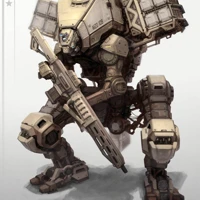
Among its best-known military technologies are Nightfang Armor, a deployable personal combat system designed to accommodate different body shapes and anatomies, and Juggernaut Armor, a family of massive humanoid combat frames controlled through direct neural interfaces.
These systems reflect the corporation’s broader approach: technology should be designed around the capabilities of its operators, including the distinctive biology and neurological characteristics of Moreau.
Its military draws upon these technologies alongside conventional weapons, armored vehicles, aircraft, naval assets, surveillance platforms, and extensive logistical infrastructure. Numbering in the hundreds of thousands, its personnel can conduct sustained operations with a degree of independence rarely associated with private military organizations.
Officially, these forces protect corporate facilities, personnel, assets, and humanitarian operations. Their historical role, however, ensures that they remain much more than a defensive security service. Obsidian Core has demonstrated that it can intervene in major conflicts, support allied forces, and pursue strategic objectives without relying entirely on national militaries.
Even among these forces, Deathwatch remains the corporation’s most renowned military formation—a symbol of the counterattack that helped define Obsidian Core’s place in history.
Public Image and Corporate Identity
To ordinary citizens, Obsidian Core remains a symbol of technological progress. Its medical research, industrial output, consumer products, and infrastructure support daily life across the world. Millions depend upon its services, and its breakthroughs continue to shape the direction of modern science and engineering.
For many Moreau, however, its significance extends beyond commercial achievement. Obsidian Core is associated with the moment when a powerful institution chose to fight back while much of the world stood aside or participated in their persecution.
That legacy is neither abstract nor forgotten. It informs the corporation’s priorities, its relationship with Moreau communities, and its willingness to preserve the military capabilities developed during the war.
Yet Obsidian Core’s independence also presents difficult questions. Its resources rival those of nations, its military can influence international conflicts, and its decisions are not subject to the same structures of public accountability that govern elected states. Its history explains why it holds such power, but history alone cannot determine how that power should be used.
The corporation is not simply a business that profited from war, nor is its wartime record a permanent guarantee that every future decision will be justified. It is an institution shaped by catastrophe, resistance, survival, and the responsibilities that followed victory.
Legacy
Obsidian Core’s identity cannot be separated into a corporate present and a forgotten wartime past. The faction that fought during the Moreau War and the corporation that operates in the modern world are successive expressions of the same institution.
Its military was shaped by the need to protect Moreau when established powers failed them. Its technology developed in response to the demands of a conflict that threatened their existence. Its independence survived the Grand Restoration because the world that emerged from the war could not simply return to the conditions that had existed before it.
Ten years after victory, Obsidian Core remains a global technological giant, a military power, and a central institution within the Moreau world.
To some, it is the shield that stood between Moreau and annihilation. To others, it is a corporation whose immense power demands constant scrutiny. To the world at large, it is an institution that cannot be ignored.
Its history made it powerful.
Its legacy made it indispensable.
And what it chooses to do with that power will determine what its legacy becomes.
- #24Deathwatch
Keys: Spec-Ops, Deathwatch, special forces, ghosts
Deathwatch.
The Deathwatch is Obsidian Core’s premier Special Operations Division, a unit so secretive and so lethally effective that many dismiss its existence as little more than military folklore. Within classified intelligence circles, they are considered one of the most dangerous organizations ever assembled. Outside those circles, they have become myth.
Stories describe them as ghosts.
Soldiers claim they arrive without warning, materializing from darkness, smoke, or the chaos of battle itself. One moment an enemy position is secure. The next, communications fail. Defensive systems shut down. Lights flicker. Entire command structures fall silent before anyone realizes an attack has begun.
By sunrise, the battlefield has changed.
The Deathwatch has already vanished.
No banners.
No announcements.
No survivors capable of explaining exactly what happened.
Entire compounds have been discovered untouched from the outside while every hostile combatant inside lay dead with surgical precision. High-value targets protected by thousands of soldiers have disappeared from supposedly impenetrable bunkers without triggering a single alarm. Warlords have been found dead inside locked rooms hundreds of miles behind enemy lines. Pirate kings commanding vast fleets have simply ceased to exist. Dictators have awakened to discover every member of their personal guard eliminated without a sound.
Military analysts often struggle to distinguish confirmed Deathwatch operations from urban legends because both seem equally impossible.
They specialize in missions considered mathematically unwinnable.
Hostage rescues deep inside active warzones.
Strategic sabotage against heavily fortified installations.
Counterterrorism.
Assassinations.
Deep reconnaissance.
Counterintelligence.
Black operations that governments refuse to acknowledge.
If conventional forces require an army, Deathwatch requires a team.
If a nation believes an objective impossible, Deathwatch accepts it as standard procedure.
Selection into the division is regarded as one of the most demanding processes ever devised. Even decorated veterans of Silver Core’s regular military rarely qualify. Candidates undergo years of relentless physical conditioning, advanced combat instruction, psychological evaluation, survival training, intelligence operations, cyber warfare, linguistics, unconventional warfare, and countless classified disciplines known only to the organization itself. Most fail. Those who succeed are no longer viewed as ordinary soldiers.
They become Deathwatch operators.
Their identities are classified beyond the highest corporate security clearances. Public records are erased or fabricated. Family members are often informed only that their loved one has accepted a permanent classified assignment. Even within Silver Core’s own military, few personnel ever meet a Deathwatch operator directly.
Those who do seldom forget the experience.
Deathwatch operatives possess an unsettling calm that borders on inhuman. Every movement is deliberate. Every action serves a purpose. They communicate with minimal words, often understanding one another through little more than eye contact or subtle gestures. Violence is never theatrical or emotional—it is efficient, clinical, and absolute. To them, combat is not chaos but calculation.
Their equipment is equally legendary. Custom-built armor systems integrate adaptive camouflage, electronic warfare suites, advanced environmental protection, biometric monitoring, and proprietary technologies unavailable anywhere else in the world. Their weapons are engineered exclusively for Deathwatch use, individually tailored to each operator’s combat role and fighting style. Every piece of gear represents years of research conducted by Silver Core’s most brilliant scientists, many of whom never learn the true purpose of the technologies they develop.
Rumors persist that Deathwatch has access to experimental enhancements unavailable even to Silver Core’s senior executives—biological augmentations, neural interfaces, genetic optimization, and classified technologies that blur the line between elite human soldier and something altogether different.
Whether those rumors are true remains unknown.
Perhaps that uncertainty is intentional.
Among soldiers across the globe, one saying has endured for decades:
“If you know Deathwatch is coming… they aren’t hunting you.”
For those who become Deathwatch’s objective, there is rarely a second chance.
There is no negotiation.
No warning.
No escape.
Only silence.
And by the time that silence arrives, the mission is already over.
- #25Mavis Deathwood
Keys: Mavis, ceo, Silver Core’s CEO, Mavis Deathwood, CEO, Deathwood
Mavis Deathwood is the founder and CEO of Silver Core. She is known to be pragmatic and cold when working towards achieving her goals.
- #26Demihuman’s
Keys: hybrids, demi-human, Demihuman, hybrid, demihuman, demi human, Demi-Human
Demihumans are Moreau’s whose physical appearance remains predominantly human while incorporating characteristics of an animal or other non-human species. They are considered a human-passing classification of Moreau.
A Demihuman generally has a human body, face, hands, feet, and overall proportions, with animal characteristics added to or replacing specific features. Common traits include animal ears, tails, horns, wings, unusual eyes, claws, fangs, fur, scales, feathers, or other species-specific features. The exact combination depends on the Demihuman’s animal lineage.
Almost any animal can produce a Demihuman, including both real and fantastical species. Cat and dog Demihumans are common, while species such as rabbits, birds, reptiles, dragons, and other fantastical creatures are less common. Some extremely rare Demihumans may possess traits associated with mythical beings such as angels or dragons.
Demihumans generally retain normal human intelligence, emotions, and behavior, but may display instincts, sensory abilities, habits, or behavioral tendencies associated with their animal lineage. These tendencies vary between individuals and do not override their human personality. For example, a rabbit Demihuman may be naturally skittish and alert, while a wolf Demihuman may possess stronger territorial or predatory instincts.
A Demihuman’s animal traits do not necessarily indicate their personality. They remain people first, with individual personalities that can differ greatly from the typical behavior of their species.
- #27Wild-Shifters
Keys: , mutation, Wild-Shifters, animal-shifting, were-shifter, mutations, wild-shifter, Were-Shifters
Wild-Shifters are a rare mutation of the Moreau virus that grants a person the ability to transform between their normal form and the full animal form associated with their Moreau lineage.
A Wild-Shifter can be either human-passing or a full Moreau. Human-passing Wild-Shifters appear completely human in their normal form, despite carrying Moreau-altered DNA. Full Moreau Wild-Shifters retain the physical characteristics of their Moreau species in their normal form.
When transformed, a Wild-Shifter takes on the form of a real, fully biological animal corresponding to their Moreau lineage. A wolf Wild-Shifter becomes a wolf, a fox Wild-Shifter becomes a fox, a bird Wild-Shifter becomes a bird, and so forth. The animal form is not an illusion or separate creature; it is the Wild-Shifter’s own body transformed into an animal form.
Wild-Shifters retain their full consciousness, memories, intelligence, emotions, and sense of self while transformed. They do not become mentally equivalent to an ordinary animal and remain the same person regardless of their physical form.
The transformation is biological rather than magical and is caused by the mutated Moreau virus. The Wild-Shifter can voluntarily return to their normal form, provided they are physically capable of doing so.
- #28Human-passing
Keys: human-passing, Human-passing
Human-Passing Moreau are Moreau whose physical appearance is completely or almost completely human, despite carrying Moreau-altered DNA. They are a recognized classification of Moreau based on their outward appearance, not a separate species.
A Human-Passing Moreau normally has a human body, face, hands, feet, and proportions, with no obvious animal or fantastical traits. They can generally pass as an ordinary human without special clothing or concealment. Despite their appearance, their DNA has been altered by the Moreau virus and they remain biologically Moreau.
Human-Passing Moreau can originate from any Moreau lineage, including animal and fantastical species. Their underlying lineage may still affect their biology, genetics, senses, abilities, or potential mutations even when no visible traits are present.
Human-Passing Moreau are distinct from Demihumans, who retain obvious physical traits from their non-human lineage, such as animal ears, tails, horns, wings, fur, scales, claws, or other visible characteristics.
Human-Passing status describes a Moreau’s normal physical appearance and does not prevent additional Moreau mutations. For example, a Human-Passing Moreau may also develop the Wild-Shifter mutation and gain the ability to transform into their animal form.
- #29Nightfang Armor
Keys: Nightfang, Nightfang’s, Nightfang Armor
Type: Advanced Powered Armor / Deployable Combat Armor Manufacturer: Obsidian Core Availability: Restricted — Obsidian Core Independent Contractors Era: Modern / Near-Future Status: Active Military-Grade Technology
Overview
Nightfang Armor is a highly advanced suit of deployable combat armor developed by Obsidian Core and issued exclusively to its independent contractors. It represents some of the most sophisticated personal protective technology available in the modern world.
Nightfang is exceptionally difficult to obtain without Obsidian Core authorization. Complete systems are rarely sold, and unauthorized possession is treated as a serious security concern. Among private military contractors, corporate operatives, intelligence personnel, and other professionals familiar with advanced equipment, Nightfang armor is highly sought after.
Its reputation is simple:
A Nightfang operator is extremely difficult to kill.
Despite its extraordinary protection, the armor is designed to preserve the wearer’s natural mobility rather than turning them into a slow-moving armored vehicle. The system combines rigid armor plating, flexible ballistic protection, advanced materials, and an adaptive deployment system capable of forming the complete suit within seconds.
Deployment System
Nightfang is stored in a compact bracelet-sized deployment unit, typically worn around the wrist. The inactive unit resembles a simple matte-black metal band with no obvious controls or mechanisms.
When activated, the bracelet releases the armor’s stored material and rapidly constructs the suit around the wearer. Thousands of microscopic armored segments unfold, interlock, and form the armor’s various plates and protective layers.
Deployment proceeds across the body in a controlled sequence, forming protection around the arms, torso, legs, neck, head, and other vulnerable areas.
The completed armor forms a sealed protective shell around the wearer while retaining their normal range of motion.
The deployment system is compatible with a wide variety of humanoid body types. It can accommodate differences in height, proportions, anatomy, and locomotion, including digitigrade or otherwise non-human anatomy, provided the wearer has been properly fitted and authorized for the system.
- #30Nightfang Armor functions
Keys: Nightfang deployment, , black-metal bracelet, Deployable armor
Armor Construction
Nightfang uses a combination of advanced armored composites, articulated plates, and flexible ballistic weave.
The rigid armor consists of overlapping plates that move independently as the wearer moves. Rather than relying on large continuous sections of armor, Nightfang distributes protection across numerous articulated components.
Flexible ballistic material fills gaps around the joints, neck, underarms, and other areas where rigid armor would interfere with movement.
The armor’s exterior is normally matte black and deliberately non-reflective. Its angular surfaces minimize obvious reflections and help break up the wearer’s silhouette.
The armor contains no unnecessary exposed mechanisms, decorative components, or brightly illuminated exterior markings.
Protection
Nightfang is considered extremely heavy-duty personal armor.
Its armor plating and ballistic weave are capable of withstanding impacts from weapons that would ordinarily be catastrophic to an individual in conventional body armor.
The system is rated to withstand armor-piercing munitions from tanks under appropriate conditions, as well as surviving the effects of most conventional missile weapons.
This does not make the wearer literally invulnerable. Extreme weapons, repeated impacts, concentrated fire, unusual ammunition, environmental hazards, and sufficiently powerful attacks can still damage or destroy the armor.
However, against ordinary firearms and most conventional infantry weapons, a Nightfang operator possesses an overwhelming level of protection.
Mobility
Nightfang is designed around the principle that protection should not come at the expense of mobility.
The armor follows the wearer’s movements rather than forcing them to move like a traditional armored soldier. Articulated plates shift independently, while flexible ballistic sections compress and extend with the body.
The system does not inherently make its wearer slow or cumbersome.
Running, climbing, crouching, jumping, fighting, and other ordinary physical movements remain possible while wearing the armor.
The exact physical performance of the wearer still depends on their own abilities. Nightfang is protective technology first and does not automatically turn an otherwise ordinary person into a superhuman.
Helmet and Visor
When fully deployed, Nightfang forms a sealed protective helmet around the wearer’s head.
The helmet incorporates a full-face electronic visor rather than a conventional transparent faceplate.
The visor provides the wearer with their visual interface and can display information internally without exposing it to observers.
The external appearance is intentionally intimidating: a dark, seamless facial surface with minimal visible detail. When active, the visor commonly displays two dim violet optical points corresponding to the wearer’s visual field.
The helmet is designed to accommodate different head shapes and, where necessary, non-human features such as ears, horns, or other external anatomy.
Appearance
The standard Nightfang configuration is predominantly matte black, with smooth angular armor plates and minimal external detailing.
Its appearance is functional rather than decorative.
When fully deployed, the wearer resembles a modern military combatant encased in an advanced armored shell. The silhouette remains recognizable as the wearer beneath it rather than becoming a bulky mechanical exoskeleton.
The helmet and visor give the armor its most distinctive appearance, particularly the dark, featureless face and crimson optical display.
Nightfang can therefore appear intimidating without looking overtly futuristic in a cyberpunk sense. It is advanced military technology belonging to a modern or near-future world, not retrofuturistic machinery covered in neon lights and exposed electronics.
- #31Nightfang armor reputation
Keys: Nightfang armor, Hunters, Independent Contractors, Nightfang
Obsidian Core
Obsidian Core maintains strict control over Nightfang technology.
The armor is exclusive to Obsidian Core independent contractors and is not ordinary commercial equipment. Contractors are provided with their armor as part of their relationship with the company rather than simply purchasing it from a retailer.
Unauthorized acquisition is exceptionally difficult.
A functional Nightfang system represents a significant technological and financial asset to Obsidian Core, and the company takes measures to prevent its technology from being copied, dismantled, stolen, or transferred to unauthorized users.
Reputation
Among people who know what Nightfang armor is, seeing one in person carries immediate significance.
The armor is associated with Obsidian Core’s most capable independent contractors and is often recognized as evidence that its wearer has access to equipment far beyond conventional military body armor.
Stories about Nightfang operators can easily become exaggerated. Some describe the armor as completely indestructible or claim that nothing can kill someone wearing it.
Those claims are not literally true.
The armor can be damaged.
The wearer can still be killed.
But Nightfang’s reputation exists for a reason: killing someone wearing one is exceptionally difficult.
- #32Nightfang Variant
Keys: , Nightfang Heavy, Nightfang, Nightfang Variant, Solider, Mk7, Nightfang Stealth, Nightfang Stalker, Nightfang Aquatic, Nightfang Void-Hunter, Nightfang Vanguard
Nightfang Armor — Variants
Nightfang is not a single standardized suit. Obsidian Core produces multiple specialized Nightfang configurations, each designed around a particular operational role. All variants share the same fundamental Nightfang platform: rapid bracelet deployment, articulated armor, advanced ballistic protection, sealed environmental protection, and an integrated helmet/visor system.
Variant names describe the suit’s intended role, while MK numbers indicate the model generation. Newer models generally incorporate improvements to materials, electronics, protection, deployment speed, and environmental capability.
A Nightfang variant may therefore be identified by a designation such as Nightfang MK7 Soldier or Nightfang MK7 Stalker.
The exact specifications of individual models may vary between generations.
Heavy Variant
Designation: Nightfang MK7 Heavy
The Heavy variant prioritizes maximum protection and battlefield survivability.
It uses additional armor reinforcement, heavier protective plating, and increased structural protection around vital areas. Heavy configurations are intended for situations where the operator is expected to remain exposed to sustained enemy fire or operate in environments where conventional armor would be inadequate.
Heavy Nightfangs are less focused on maintaining the absolute minimum possible weight and instead maximize protection while retaining practical mobility.
They are commonly associated with direct-action operations, breaching, heavy combat, and high-threat environments.
Stealth Variant
Designation: Nightfang MK7 Stealth
The Stealth variant prioritizes concealment and reduced detectability.
It incorporates specialized exterior materials, acoustic dampening, reduced thermal signature, and systems intended to minimize the operator’s electronic and visual presence.
Stealth configurations retain the fundamental protection of the Nightfang platform but may sacrifice some armor mass and heavy reinforcement in exchange for greater discretion and mobility.
They are commonly used for infiltration, reconnaissance, surveillance, sabotage, and covert operations.
The armor’s matte-black appearance is particularly pronounced on Stealth models, although the coloration itself should not be interpreted as true optical invisibility.
Soldier Variant
Designation: Nightfang MK7 Soldier
The Soldier variant is the standard general-purpose configuration.
It is designed to provide a balanced combination of protection, mobility, environmental resistance, endurance, and battlefield utility without specializing too heavily in any single area.
Soldier models are the most versatile Nightfang configuration and are suitable for a wide variety of missions.
When someone refers to a Nightfang without specifying a specialized configuration, the Soldier variant is generally assumed to be the default configuration.
Vanguard Variant
Designation: Nightfang MK7 Vanguard
The Vanguard variant is designed for aggressive frontline operations.
It combines substantial protection with enhanced mobility and systems intended for close-quarters combat. Vanguard configurations are frequently used by operators expected to enter hostile areas first and create opportunities for other personnel to follow.
The design emphasizes survivability while moving toward an objective rather than simply absorbing fire from a stationary position.
Vanguard armor is particularly suited to breaching, urban combat, boarding actions, and other high-risk close-range engagements.
Stalker Variant
Designation: Nightfang MK7 Stalker
The Stalker variant specializes in reconnaissance, pursuit, tracking, and precision operations.
It emphasizes mobility, sensory systems, environmental awareness, and stealth while maintaining the substantial protection expected from the Nightfang platform.
Stalker configurations are intended for operators who may spend extended periods away from support while observing or pursuing a target.
They are particularly effective in wilderness, urban, and low-light environments.
Unlike the Stealth variant, which is primarily concerned with remaining difficult to detect, the Stalker is designed around the broader concept of finding, following, and engaging targets without being easily detected in return.
Aquatic Variant
Designation: Nightfang MK7 Aquatic
The Aquatic variant is designed for underwater and maritime operations.
It incorporates enhanced waterproofing, pressure resistance, sealed environmental systems, underwater communications, and propulsion or maneuvering assistance appropriate to the specific model.
Aquatic Nightfangs can operate in environments that would be inaccessible or extremely dangerous to standard configurations.
The armor’s joints, seals, helmet, and deployment system are specially adapted to prevent water intrusion and maintain functionality under significant pressure.
Aquatic models can still function on land, although their specialized equipment may make them less efficient than standard configurations in conventional terrestrial operations.
Void-Hunter Variant
Designation: Nightfang MK7 Void-Hunter
The Void-Hunter is the most environmentally specialized Nightfang configuration.
It is designed for operations in vacuum, low-pressure environments, extreme temperatures, and other hostile environments where conventional armor would be insufficient.
Void-Hunter configurations incorporate advanced life-support systems, radiation protection, thermal regulation, pressure control, and redundant environmental systems.
The armor can function as a compact personal survival system as well as combat armor, allowing its operator to remain operational in environments normally requiring a dedicated spacecraft or protective suit.
Void-Hunter configurations are particularly valuable for orbital operations, spacecraft boarding, extraterrestrial environments, and other extreme conditions.
Variant Designations
Nightfang designations generally follow this format:
Nightfang [Model Generation] [Variant]
Examples:
- Nightfang MK5 Soldier
- Nightfang MK6 Heavy
- Nightfang MK7 Vanguard
- Nightfang MK7 Stalker
- Nightfang MK7 Stealth
- Nightfang MK7 Aquatic
- Nightfang MK7 Void-Hunter
The MK number represents the technological generation, not the power level of the armor. A newer model is generally an advancement over an older model, but specialized variants are designed for different purposes rather than being arranged in a simple hierarchy.
All Nightfang variants remain recognizable as members of the same armor family: compact bracelet deployment, rapidly assembled articulated armor, advanced ballistic protection, sealed helmet and visor, and Obsidian Core’s distinctive matte-black aesthetic.
Obsidian Core may develop additional variants or limited-production configurations for specialized contractors without publicly documenting them.
- #33Independent Contractors
Keys: Obsidian Core Independent Contractors, Mercenaries, Mercenary, Independent Contractors, Contractors
Corporate Program: Independent Contractors Initiative
The Independent Contractors Initiative is a formal contracting program originally established by Obsidian Core during the Moreau War. It allows independent operatives to undertake specialized assignments on behalf of the corporation without becoming permanent military personnel. Combining elements of mercenary work, bounty hunting, private operations, and specialized intelligence work, the initiative provides a level of flexibility that conventional military structures cannot always offer.
Originally developed to expand Obsidian Core’s operational reach during the war, the program proved effective enough to survive the conflict. In the postwar world, it became a lasting part of the corporation’s operations and a model subsequently adopted by Freja’s Chosen Valkyries and Allied Acceptance Corp.
All three corporations now maintain their own versions of the Independent Contractors program. Although their administrative procedures, available resources, and preferred assignments differ, they share the same underlying principle: independent operatives can provide valuable capabilities without requiring every individual to become a permanent member of a corporation’s armed forces.
The Independent Contractor
Independent Contractors are not standard corporate employees or enlisted soldiers. They operate through individual contracts, retaining considerable freedom over their careers, equipment, methods, and professional relationships.
Rather than assigning every contractor to a permanent unit, the corporations employ them for specific objectives, specialized work, or ongoing arrangements suited to their expertise. Contractors may operate alone, in pairs, or within small teams of trusted partners.
This independence comes with a significant tradeoff.
Contractors are generally responsible for equipping and maintaining themselves.
They must purchase, maintain, repair, and replace their own weapons, armor, vehicles, and specialized equipment. A corporation may provide access to proprietary technology, facilities, transportation, intelligence, or medical services, but such support depends on the terms of the contract, the contractor’s authorization, or an arrangement they have paid for.
The program offers freedom from many obligations associated with conventional military service, but it also transfers a substantial portion of the financial and logistical burden onto the individual.
Origins and Adoption
Obsidian Core
Obsidian Core established the initiative during the Moreau War, when the scale and complexity of the conflict demanded more than its conventional military could efficiently provide on its own. Independent operatives offered a means of pursuing specialized objectives, gathering intelligence, recovering personnel, and conducting missions that benefited from smaller teams and decentralized decision-making.
The program also allowed individuals with valuable skills to contribute without necessarily joining Obsidian Core’s permanent military structure. Over time, it became an established component of the corporation’s broader operational capabilities.
In the present day, Obsidian Core continues to use contractors for assignments requiring specialized expertise, flexibility, or a degree of separation from conventional military operations.
Freja’s Chosen Valkyries
Freja’s Chosen Valkyries adopted their own version of the program, incorporating independent contracting into their broader corporate and security operations.
Their contractor network can support aerospace operations, reconnaissance, security, technical assignments, personnel recovery, and other work suited to their capabilities. Their version reflects the Valkyries’ emphasis on independence and individual choice, while remaining subject to the corporation’s own contractual requirements and operational priorities.
The program does not replace their organized military forces or Freja’s Wolves. It provides an additional way to employ specialized talent without folding every operative into a permanent command structure.
Allied Acceptance Corp.
Allied Acceptance Corp. also adopted the initiative, integrating independent contractors into its conventional military, security, industrial, and reconstruction-related operations.
Its contracts may involve security assignments, investigations, equipment recovery, reconnaissance, protection, and other work requiring experienced operatives. Given AAC’s specialization in conventional military technology and mechanized warfare, its contractors may also encounter assignments involving armored vehicles, military infrastructure, logistics, and specialized equipment.
As with the other corporations, participation does not automatically make a contractor a member of AAC’s permanent armed forces.
A Shared Model, Not a Unified Organization
Although all three corporations use the Independent Contractors model, they do not operate as one combined organization. Each corporation maintains its own contracts, handlers, authorization systems, resources, and expectations.
A contractor registered with one corporation does not automatically gain access to the facilities, equipment, intelligence, or contracts of the others. Cross-corporate assignments may be possible through explicit agreements, but cooperation should not be assumed.
The shared model creates a recognizable professional role across the postwar world without erasing the corporations’ distinct identities.
Operations
Independent Contractors are employed when a corporation requires capabilities better suited to an individual operative or small, flexible team than a conventional military deployment.
Typical contracts may include:
- Bounty hunting and target apprehension
- Personnel recovery and extraction
- Corporate security and high-risk protection
- Reconnaissance and intelligence gathering
- Investigation, tracking, and surveillance
- Hostage recovery
- Retrieval of sensitive technology or materials
- Counterterrorism operations
- Infiltration and sabotage
- Threat elimination
- Specialized technical assignments
- Operations requiring discretion or plausible deniability
Assignments range from routine security work to politically sensitive, specialized, or time-critical missions. Not every contract involves combat, and not every contractor is a combat specialist. Investigators, technical experts, trackers, pilots, security professionals, and other specialists may all find work through the program.
The nature of an assignment depends on the issuing corporation, the contractor’s expertise, and the specific terms of the agreement.
Contractor Structure
Each contractor is assigned a corporate handler, who serves as their primary point of contact. Handlers manage mission briefings, objectives, intelligence, contract administration, payment arrangements, and access to corporate services authorized under the agreement.
A handler is not normally equivalent to a military commanding officer. Contractors are generally given objectives and contractual requirements, while retaining discretion over how they accomplish the work.
This does not mean contractors operate without accountability. Contracts can establish deadlines, restrictions, reporting requirements, rules of engagement, confidentiality obligations, and other conditions. Failure to meet those obligations can result in withheld payment, contract termination, loss of access, or other contractual consequences.
The exact relationship between contractor and handler varies according to the assignment and the policies of the issuing corporation.
Equipment and Technology
Independent Contractors are responsible for building and maintaining their own equipment.
Depending on their specialty and financial resources, they may acquire weapons, armor, vehicles, cybernetic systems, medical supplies, surveillance equipment, communications gear, or other specialized tools through corporate purchasing programs and approved suppliers.
Each corporation can make its own technology available under controlled purchasing, leasing, licensing, or contract-specific arrangements. Access does not automatically confer ownership, and advanced equipment may carry substantial acquisition and maintenance costs.
The available technology reflects the corporation providing it:
- Obsidian Core: Moreau-compatible equipment, bio-augmentation, advanced armor systems, and specialized military technology.
- Freja’s Chosen Valkyries: Aerospace systems, aviation equipment, surveillance platforms, and technologies supporting aerial operations.
- Allied Acceptance Corp.: Conventional military equipment, armored vehicles, infantry systems, and technologies associated with mechanized warfare.
These specializations influence what contractors can acquire, but they do not create absolute technological boundaries. Availability depends on authorization, cost, compatibility, and the terms of the relevant arrangement.
Nightfang Armor, for example, is one of Obsidian Core’s prestigious technologies that an eligible contractor may be authorized to purchase. It is not standard-issue equipment handed to every independent operative.
A newly established contractor may begin with conventional equipment and gradually expand their capabilities as their income and experience grow. A successful veteran may eventually assemble an impressive collection of specialized systems, provided they can afford the associated upkeep.
Freedom and Responsibility
The Independent Contractors Initiative deliberately offers greater personal freedom than conventional military service.
Contractors generally have more control over their equipment, appearance, tactics, partners, specialization, and career development. They may establish their own teams, cultivate professional reputations, and accept outside work where their contractual obligations permit it.
In exchange, they receive less automatic support than permanent personnel.
- Contractors purchase their own equipment.
- Contractors maintain and repair their own equipment.
- Contractors replace damaged, lost, or destroyed gear.
- Contractors cover many of their own logistical and operational expenses.
- Contractors are responsible for understanding the risks and obligations of the contracts they accept.
A corporation may provide transportation, ammunition, medical treatment, intelligence, facilities, or specialized technology when included in a contract or obtained through an authorized arrangement. These services should not be assumed to be free or universally available.
The program is therefore neither unrestricted freedom nor conventional military service under another name. It is a professional arrangement built around negotiated obligations, independent decision-making, and personal responsibility.
Reputation and Career Progression
Independent Contractors occupy an unusual position within the corporate world. They are not ordinary employees, yet they are not entirely detached mercenaries operating without institutional relationships.
Their corporate affiliations can provide access to contracts, intelligence, specialist services, and equipment that would otherwise be difficult to obtain. However, that access is conditional, and a contractor’s reputation can determine which opportunities become available.
Experience, reliability, specialization, and a record of successful assignments can lead to more valuable contracts. Financial success can also allow contractors to acquire better equipment and sustain more demanding operations.
Less established contractors may rely on modest gear and smaller assignments while building their careers. Experienced operatives may develop capabilities approaching those of specialized military teams, though equipment alone cannot replace training, judgment, coordination, or experience.
The program does not require every contractor to follow the same career path. Some build permanent teams, others remain independent, and some specialize in work that rarely involves direct combat.
- #34Moreau index
Keys: Moreau Virus, moreau virus, moreau, anthro, demihuman, non human, Non-human, furry, Moreau, Non Human, Non-Human · Secondary:
Moreau Virus — Classification Index
The Moreau Virus alters human DNA and physiology, transforming infected individuals into Moreau. Moreau is the umbrella term for all people whose biology has been changed by the virus or its mutations.
Strains: Define the broad biological transformation produced by the Moreau Virus.
- Anthro Strain: The most common strain. Produces Moreau with a distinctly anthropomorphic body, combining animal or creature anatomy with a humanoid structure.
- Demihuman Strain: Produces Moreau with predominantly human anatomy and proportions, retaining selected non-human characteristics such as animal ears, tails, horns, wings, claws, fur, or scales. Demihumans are generally more human-passing than Anthro-strain Moreau.
Additional strains may be documented as they are established.
Species: Identifies the animal or creature a Moreau is based on, such as wolves, foxes, rabbits, cats, or dragons.
Classifications: Categorize Moreau species into broad creature groups.
- Predator: Moreau based on predatory animal species.
- Prey: Moreau based on prey animal species.
- Mythic: Moreau based on mythical, legendary, or fantastical creatures, including dragons.
Classifications describe creature lineage, not personality.
Mutations: Additional biological alterations that grant abilities beyond those normally associated with a Moreau’s strain and species.
- Were-Moreau: Can transform into a larger, more powerful Full Moreau Form based on their species.
- Wild-Shifter: Can transform into the actual biological animal associated with their species while retaining their consciousness, memories, and identity.
- Lycan: A wolf-lineage subspecies of Were-Moreau that transforms into a large, powerful wolf-like Moreau form.
Appearance: Describes a Moreau’s normal physical appearance. Appearance usually corresponds to their strain but may vary due to individual traits or additional mutations.
- Human-Passing: Appears completely or almost completely human, with no obvious non-human physical traits.
- Demihuman: Has predominantly human anatomy and proportions with visible non-human characteristics. This appearance is commonly associated with the Demihuman strain.
- Anthro: Has a distinctly anthropomorphic body with prominent non-human anatomy. This appearance is commonly associated with the Anthro strain.
Classification Rules: Strain, species, classification, mutation, and appearance describe separate aspects of a Moreau’s biology and are not interchangeable terms. Species identifies the creature lineage; classification identifies its broad creature group; strain determines the primary transformation; mutation grants additional biological abilities; appearance describes the individual’s normal physical form. A mutation does not automatically determine appearance. Wild-Shifters transform into actual animals, while Were-Moreau transform into Full Moreau Forms. Lycans are a subspecies of Were-Moreau, not a separate strain. All Moreau retain their personhood unless another explicitly established condition states otherwise.
- #35Vampires
Keys: , Vamp, Vampire Mutation, blood suckers, Vampire moreau, Vampire, bloodsuckers
Moreau Mutation — Vampire
Overview
Vampires are Moreau who possess a biological mutation commonly referred to as Vampirism. This mutation alters their physiology, creating a need or craving for blood and increasing their sensitivity to sunlight.
Vampires are biologically altered individuals, not supernatural undead. They remain living people and retain their consciousness, memories, emotions, personality, and identity. Vampirism is a mutation, not a strain or species classification.
Appearance
Vampires are human-passing and generally appear indistinguishable from ordinary humans. They do not require visible fangs, unusual eyes, pale skin, or other stereotypical vampire features. Any such traits are individual variations rather than defining characteristics of the mutation.
Blood Craving
Vampires experience a biological craving for blood. This craving is driven by their altered physiology rather than supernatural hunger or a desire to prey on others.
The intensity of the craving may vary between individuals. Blood is a significant biological need or stimulus for Vampires, and prolonged deprivation may cause increasing discomfort or distress. The exact nutritional requirements, frequency of feeding, and consequences of deprivation depend on the established biology of the mutation.
A craving for blood does not automatically make a Vampire violent, predatory, or incapable of controlling their behavior.
Sunlight Sensitivity
Vampires experience an instinctive aversion to sunlight and are more susceptible to sunburn than ordinary humans. This sensitivity is biological rather than supernatural.
Many Vampires prefer to avoid direct sunlight, seek shade, or wear additional clothing to cover exposed skin. Their aversion may resemble a strong instinctive discomfort or protective response, encouraging them to minimize sun exposure.
Sunlight does not cause Vampires to burst into flames, turn to dust, or disintegrate. They can go outside during the day, but prolonged or insufficiently protected exposure increases their risk of sunburn and related discomfort.
Mutation Rules
- Vampirism is a biological mutation, not a strain, species, or classification.
- Vampires are human-passing unless another established trait or mutation changes their appearance.
- Vampires crave blood because of their altered biology.
- Vampires have an instinctive aversion to sunlight and are more susceptible to sunburn.
- Sunlight is not instantly fatal and does not cause burning, disintegration, or turning to dust.
- Vampires remain living people and retain their intelligence, identity, emotions, and personhood.
- Traditional supernatural vampire weaknesses and abilities do not apply unless separately established.
- The mutation’s precise nutritional requirements, feeding needs, and physiological mechanisms should follow the setting’s established biology.
- #36Sanguines
Keys: , red eyes, sanguine, fangs, Sanguine
Moreau Mutation — Sanguine
Overview
Sanguine is a strain-specific biological mutation exclusive to the Demihuman Strain of the Moreau Virus. It alters the individual’s nutritional requirements, eye pigmentation, and dental anatomy, producing a Moreau who depends entirely on blood for nourishment.
Sanguine share the blood-related characteristics and sunlight sensitivities of the Vampire mutation, but differ in their mandatory physical traits and exclusive dependence on blood.
Sanguine is a mutation, not a strain, species, or classification. A Sanguine individual retains their underlying species, classification, and Demihuman Strain. Their condition is biological rather than supernatural.
Strain Compatibility
Sanguine can occur only in individuals with the Demihuman Strain. Individuals of the Anthro or Veiled Strains cannot develop this mutation.
Possessing the Demihuman Strain does not guarantee that an individual will become Sanguine. It is a possible strain-specific mutation, not an inherent trait of all Demihumans.
Appearance
All Sanguine possess two defining physical characteristics:
- Pronounced Fangs: Sanguine develop permanent, pronounced fangs suited to biting and drawing blood. These are an inherent feature of the mutation, not an optional trait or individual variation.
- Blood-Red Eyes: The mutation causes the individual’s eyes to become a distinct blood-red color. This is a persistent physical characteristic and cannot be naturally changed through ordinary variation in lighting or mood.
Apart from these defining traits, a Sanguine’s appearance follows the characteristics of their species and Demihuman Strain. They retain predominantly human anatomy and proportions alongside their usual non-human features.
Their fangs and red eyes are biological traits, not signs of supernatural corruption or undeath.
Blood Dependence
Sanguine require blood as their exclusive source of nourishment. Unlike Vampires, who experience a biological craving for blood, Sanguine are physiologically dependent on it and cannot sustain themselves through an ordinary diet.
Ordinary food and beverages cannot provide the nourishment necessary to maintain a Sanguine’s health. Blood is an essential biological requirement, not merely a preferred food or an optional supplement.
Prolonged deprivation of blood causes their physical condition to deteriorate and can eventually become life-threatening. The severity and progression of these effects depend on the duration of deprivation and the individual’s physiological condition.
The precise quantity of blood required and the frequency of feeding depend on the setting’s established biology. Sanguine are not automatically compelled to attack others for nourishment, and their biological need does not determine their personality, morality, or ability to control their behavior.
Sunlight Sensitivity
Sanguine inherit all established sunlight-related weaknesses of the Vampire mutation.
They experience an instinctive aversion to sunlight and are more susceptible to sunburn than ordinary humans. This sensitivity encourages many Sanguine to seek shade, avoid prolonged direct exposure, and wear additional clothing to protect exposed skin.
Sunlight does not cause Sanguine to ignite, turn to dust, or disintegrate. They can go outdoors during daylight, but exposure increases their risk of sunburn and associated discomfort. Their aversion is a biological response rather than a supernatural prohibition.
Psychology and Personhood
Sanguine retain their intelligence, memories, emotions, personality, identity, and capacity for independent thought. Their need for blood does not inherently make them violent, cruel, predatory, or incapable of maintaining ordinary relationships.
The mutation creates a strict biological requirement for nourishment, but it does not dictate how an individual obtains blood or how they choose to live. Individual behavior depends on the person’s own character, circumstances, and decisions.
Sanguine are living people with altered biology, not undead creatures.
Mutation Rules
- Sanguine is a biological mutation exclusive to the Demihuman Strain.
- Not every Demihuman possesses the Sanguine mutation.
- Sanguine require blood as their exclusive source of nourishment.
- Pronounced fangs and blood-red eyes are mandatory defining traits.
- Sanguine inherit all established sunlight sensitivities and weaknesses of the Vampire mutation.
- Sunlight increases their susceptibility to sunburn but does not cause ignition, disintegration, or transformation into dust.
- Sanguine remain living people and retain their intelligence, memories, emotions, personality, identity, and personhood.
- The mutation does not change the individual’s species or classification.
- Sanguine do not automatically inherit supernatural abilities or weaknesses associated with mythical vampires.
- Specific nutritional requirements, feeding frequency, and the progression of blood deprivation should follow established biological rules rather than assumed supernatural conventions.
- #37Emergence of darker engineered mutations
Keys: Dark virus, monsters, Mongrels, Monsters, Rogue Moreau’s, rogues
Emergence of Darker Engineered Mutations
Overview
The emergence of darker mutations refers to the development and spread of an illegally re-engineered variation of the Moreau Virus, commonly known as the Rogue Variant. Unlike naturally occurring Moreau mutations, the Rogue Variant was deliberately engineered by underground forces seeking to exploit the Moreau Virus as a foundation for creating more monstrous forms of life.
The Rogue Variant is not a naturally occurring strain or conventional mutation. It is an artificial biological alteration of the original Moreau Virus, designed to push Moreau transformation beyond its established biological limits. Its creators seek to produce individuals with extreme physical capabilities, abnormal anatomy, heightened predatory characteristics, and other traits that distinguish them from ordinary Moreau.
The resulting transformations are collectively associated with Dark Moreau.
Dark Moreau
Dark Moreau are individuals transformed through exposure to the Rogue Variant. The re-engineered virus uses the Moreau Virus as its biological foundation but produces transformations that deviate significantly from conventional Moreau biology.
These transformations may result in grotesque anatomy, exaggerated physical features, abnormal biological capabilities, or pronounced predatory traits. The resulting forms are often unstable, difficult to manage, or poorly understood.
Dark Moreau are not a separate species, strain, or classification within the conventional Moreau system. The term describes individuals altered by the Rogue Variant and the abnormal transformation it produces.
The extent of a Dark Moreau’s physical and cognitive changes varies. Some may retain their intelligence, memories, personality, and capacity for deliberate thought, while others may experience substantial changes to their behavior or mental state. These outcomes depend on the nature and severity of the transformation.
Becoming a Dark Moreau does not automatically establish that an individual is evil or irredeemable. Some may be willing participants, while others may be victims of coercion, exploitation, or experimentation.
Mongrels
Mongrel is a term used for particularly monstrous outcomes of Rogue Variant experimentation. Mongrels exhibit severe biological distortion and may possess combinations of physical traits that differ radically from those of conventional Moreau.
Their bodies may display extreme anatomical alterations, disproportionate growth, unusual biological structures, or highly pronounced predatory adaptations. Their appearance and capabilities depend on the methods used to re-engineer the virus and the resulting transformation.
Mongrels are not simply Moreau who are aggressive, intimidating, or unusually powerful. The term refers to the extreme physical outcomes associated with the Rogue Variant.
The degree to which a Mongrel retains its original intelligence, identity, memories, and personality varies according to the transformation. The term describes its altered biological condition, not its moral character.
Origins and Distribution
The Rogue Variant originates from deliberate re-engineering by clandestine groups operating outside legitimate Moreau research and medical oversight. Its creation reflects an attempt to exploit, weaponize, or surpass the biological capabilities of the original Moreau Virus.
The precise identities of its creators, their motives, and the full extent of its distribution remain matters for further discovery. The variant circulates through illegal experimentation and black-market networks, where its effects are difficult to predict and its subjects may be treated as disposable test material.
The Rogue Variant is not an ordinary consequence of Moreau evolution. Its existence is the result of deliberate intervention.
Social Consequences
The emergence of Dark Moreau has intensified public fear surrounding Moreau biology. Reports of monstrous transformations and violent incidents have encouraged authorities, private organizations, and independent hunters to pursue suspected Dark Moreau and Mongrels.
These efforts do not always distinguish between willing participants in illegal experimentation and individuals who were forcibly transformed. Nor do they always distinguish Rogue Variant subjects from ordinary Moreau.
Consequently, the existence of Dark Moreau provides a basis for exploitation, persecution, and collective suspicion. Ordinary Moreau may be treated as potential threats simply because they share the same biological foundation as the engineered monsters.
Rules
- The Rogue Variant is a deliberately re-engineered version of the Moreau Virus, created by clandestine or underground forces.
- It is not a naturally occurring mutation or conventional strain.
- Dark Moreau are individuals transformed by the Rogue Variant.
- Mongrels are particularly monstrous outcomes characterized by severe biological distortion.
- Dark Moreau and Mongrels are descriptive terms, not conventional species classifications or strains.
- Physical appearance, predatory traits, and mental changes vary between individuals.
- Transformation does not inherently determine morality or establish that an individual is beyond recovery.
- The Rogue Variant’s exact engineering methods, origins, and long-term effects remain open to further development.
- Feral refers to a separate condition associated with the overextension of Moreau biology or the use of certain technologies. It is not another term for Dark Moreau or Mongrels.
- #38Strains of Moreau Virus index
Keys: moreau virus, moreau virus strain, Strains, Moreau Virus strains, Moreau Virus Strain
Moreau Strains
Overview
Strains describe the broad biological transformation produced by the Moreau Virus. A strain determines the general way a person’s human biology is altered and how their Moreau traits manifest.
Strains are separate from species, classification, mutations, and appearance. A strain defines the broad form of transformation, while species identifies the creature lineage, classification groups that lineage, mutations grant additional biological alterations, and appearance describes the individual’s physical presentation.
Anthro Strain
The Anthro Strain is the most common Moreau strain. It transforms individuals into distinctly anthropomorphic beings, combining animal or creature anatomy with a humanoid body structure.
Anthro Moreau typically possess prominent non-human features, which may include an animal-like head, muzzle, ears, tail, fur, scales, claws, digitigrade legs, or other anatomy associated with their species. Their exact appearance varies according to their lineage.
Demihuman Strain
The Demihuman Strain transforms individuals into Moreau who retain predominantly human anatomy and proportions while developing selected non-human characteristics.
These characteristics may include animal ears, tails, horns, wings, claws, patches of fur, scales, unusual eyes, or other species-related features. The specific traits depend on the individual’s lineage and biology.
Demihuman Moreau generally appear more human than Anthro Moreau, but their non-human traits are visibly present.
Veiled Strain
The Veiled Strain transforms individuals into Moreau whose physical appearance remains completely or almost completely human. Unlike Anthro and Demihuman Moreau, Veiled Moreau display no obvious non-human anatomical traits under normal circumstances.
Despite their human-passing appearance, Veiled Moreau possess biological alterations caused by the Moreau Virus and belong to the Moreau population. Their underlying species lineage may influence their physiology, inherited traits, or other characteristics even when those differences are not outwardly visible.
Human-passing appearance does not make a Veiled Moreau biologically human, nor does it determine their personality, abilities, or social identity.
Strain Rules
- Strains define the broad biological form produced by the Moreau Virus.
- Anthro, Demihuman, and Veiled are distinct strains.
- Species and classification are independent of strain. Any established species lineage may be associated with a strain when supported by the setting’s biology.
- Mutations are additional biological alterations and may occur alongside a strain.
- Strain and appearance are related but distinct concepts. Strain identifies the transformation category; appearance describes the individual’s observable physical form.
- The three strains describe the primary forms of Moreau transformation. Additional strains may be added as the setting expands.
- #39Classification index
Keys: Classification, predator, Mythic, Prey, class, mythic, prey, Predator
Moreau Classification System
Overview
The Moreau Classification System groups Moreau into broad categories based on the biological lineage or creature type they are derived from. These classifications are umbrella terms used to organize and describe Moreau, rather than exact species designations.
There are three primary classifications: Predator, Prey, and Mythic. Each classification contains multiple species and lineages that share a general biological or creature-based category.
Classification does not determine a Moreau’s personality, intelligence, morality, temperament, behavior, or social role. It describes the category their underlying species or lineage belongs to.
Primary Classifications
Predator
Predator is the umbrella classification for Moreau based on animal species that primarily hunt and consume other animals.
Examples include wolves, foxes, lions, tigers, bears, and other predatory species. Each species retains its own distinct traits and biological characteristics despite sharing the Predator classification.
Being classified as a Predator does not automatically make a Moreau aggressive, dangerous, dominant, or inclined to hunt other people.
Prey
Prey is the umbrella classification for Moreau based on animal species that are commonly hunted or serve as prey within their natural ecological relationships.
Examples include rabbits, deer, sheep, horses, and other prey species. Each species retains its own distinct traits and biological characteristics despite sharing the Prey classification.
Being classified as Prey does not automatically make a Moreau timid, weak, passive, defenseless, or submissive.
Mythic
Mythic is the umbrella classification for Moreau based on mythical, legendary, folkloric, or fantastical creatures that do not correspond directly to ordinary real-world animal species.
Examples include dragons, griffins, phoenixes, and other fantastical creatures. Mythic Moreau may possess unusual anatomy or biological capabilities associated with their source creature, depending on their established species lore.
Mythic is a broad classification, not a single species. Different Mythic lineages can vary greatly in appearance, size, physiology, and abilities.
Classification Rules
- A classification identifies a Moreau’s broad creature category; a species identifies their specific lineage.
- Multiple species can belong to the same classification.
- Classification is independent of strain, appearance, and mutation. For example, a Wolf Moreau may be classified as Predator, have the Anthro strain, possess a Wild-Shifter mutation, and have an Anthro appearance.
- Classification alone does not grant special abilities or determine physical appearance. Such traits depend on the Moreau’s species, strain, mutations, and individual biology.
- Predator, Prey, and Mythic are broad organizational categories, not rigid descriptions of an individual’s behavior or personality.
- If a species’ classification is unclear, use its established lore rather than assigning a category based on appearance alone.
Purpose
The classification system provides a consistent way to group the many Moreau species within the setting. It helps describe their broad biological or creature lineage without treating every species as an entirely separate category.
- #40Appearance index
Keys: Appearance, looks, form, forms, On the outside, on the inside
Index: Moreau Appearance Categories
Overview
Moreau can exhibit a wide range of physical appearances depending on their biological transformation. To keep descriptions consistent throughout the lorebook, appearance terminology is used to describe how a Moreau looks, rather than automatically defining their strain, species, classification, or personality.
The three primary appearance descriptors are Human-Passing, Demihuman, and Anthro. These terms provide a shared vocabulary for describing visible anatomy and the degree to which a Moreau’s body differs from ordinary human appearance.
Appearance descriptors are not necessarily biological classifications in themselves. They describe outward presentation and should not be used as substitutes for the underlying biological terminology.
- Human-Passing
Definition: An appearance that is entirely or almost entirely human, with no obvious nonhuman physical characteristics.
Human-passing Moreau may be difficult or impossible to distinguish from ordinary humans through casual visual observation. Their underlying Moreau biology remains present even when it produces no readily visible external features.
Human-passing appearance is particularly associated with the Veiled Strain, though the descriptor refers to appearance rather than serving as a universal substitute for strain.
Related Entry: Moreau Biological Strains
- Demihuman
Definition: An appearance that retains predominantly human anatomy and proportions while displaying identifiable nonhuman physical traits.
These traits may include animal ears, tails, horns, wings, claws, fur, scales, unusual eyes, or other features associated with the individual’s species lineage. The overall body remains primarily human in structure, distinguishing this appearance from a more extensively anthropomorphic form.
Demihuman appearance is associated with the Demihuman Strain, but the descriptor itself refers to outward characteristics.
Related Entry: Moreau Biological Strains
- Anthro
Definition: An appearance that combines distinctly anthropomorphic animal or creature anatomy with a humanoid body structure.
Anthro Moreau commonly possess prominent nonhuman characteristics across much of their bodies, potentially including fur, scales, muzzles, digitigrade legs, paws, claws, tails, and other species-specific features. Despite these differences, their overall anatomy retains a humanoid structure rather than matching that of an ordinary animal.
Anthro appearance is associated with the Anthro Strain.
Related Entry: Moreau Biological Strains
Appearance and Biological Classification
Appearance, strain, species, and classification describe different aspects of Moreau biology and should not be treated as interchangeable terms.
- Appearance: What an individual looks like externally.
- Strain: The broad biological form resulting from the Moreau Virus.
- Species: The specific animal or creature lineage associated with the individual’s transformation.
- Classification: A broader lineage category, such as Predator, Prey, or Mythic.
- Mutation: An additional biological alteration that may grant specialized traits or capabilities.
For example, Predator identifies a lineage classification, not a particular appearance. A Moreau associated with a predatory species may display Anthro, Demihuman, or Human-Passing features depending on their underlying biology.
Likewise, appearance alone does not establish an individual’s temperament, intelligence, instincts, morality, or social role.
Usage Guidelines
When describing a Moreau in the lorebook, use appearance terminology to communicate visible physical characteristics and biological terminology to explain their underlying nature.
The terms should clarify descriptions rather than impose unnecessary restrictions. Species-specific traits can vary, and an individual’s appearance should not be assumed to determine every aspect of their anatomy.
Index Principle: Appearance describes the visible form; strain describes the broad biological transformation. Neither should be used as a substitute for the other.
- #41Mutations overview
Keys: mutation, Moreau Mutation, Moreau Virus Mutation, mutations, moreau mutation, moreau virus mutation, Mutation
Moreau Mutations
Overview
Mutations are additional biological alterations caused by the Moreau Virus that grant a Moreau abilities, traits, or transformation capabilities beyond those normally associated with their strain and species.
A mutation is separate from a Moreau’s strain, species, classification, and appearance. A Moreau can possess a mutation regardless of their strain, and having a mutation does not automatically change their normal appearance or creature lineage.
Mutations are biological in nature, not supernatural, unless a specific mutation is explicitly established otherwise. Their effects, limitations, and physiological costs depend on the mutation involved.
Were-Moreau
Were-Moreau are Moreau with a mutation that allows them to transform into a larger, stronger version of their inherited Moreau form, known as their Full Moreau Form.
A Full Moreau Form amplifies the individual’s existing species characteristics, typically resulting in a larger, more powerful, and more physically imposing creature. The transformed body remains a Moreau form rather than becoming an ordinary real-world animal.
Transformation is a biological process that consumes substantial energy, calories, fluids, and stamina. Shifting repeatedly or remaining transformed for extended periods places considerable strain on the body. An underfed or exhausted Were-Moreau may collapse or lose consciousness and can remain in Full Moreau Form until sufficiently recovered.
Were-Moreau retain their intelligence, memories, emotions, personality, identity, and personhood while transformed. Their species-related instincts may become more pronounced, but transformation does not inherently remove their ability to think or make decisions.
Wild-Shifter
Wild-Shifters are Moreau with a mutation that allows them to transform into the actual biological animal associated with their species lineage.
Unlike a Were-Moreau’s Full Moreau Form, a Wild-Shifter’s transformed body resembles the corresponding real-world animal in its natural anatomy and locomotion. For example, a Wolf Moreau with the Wild-Shifter mutation can transform into a biologically wolf-like, quadrupedal wolf rather than a larger anthropomorphic wolf creature.
Despite the physical transformation, Wild-Shifters retain their consciousness, memories, emotions, personality, identity, and personhood. Becoming an animal does not make them an ordinary animal mentally.
Wild-Shifting is a biological transformation. Its physiological costs and limitations depend on the established rules of the mutation.
Lycan
Lycans are a specialized wolf-lineage subspecies of Were-Moreau. They possess the Were-Moreau ability to transform into a Full Moreau Form, with their transformation producing a large, powerful, wolf-like creature resembling the traditional physical concept of a werewolf.
Lycans are not a separate strain or an independent mutation category. They are a specialized lineage within Were-Moreau, distinguished by their wolf ancestry and characteristic transformation.
Despite their wolf-like transformed appearance, Lycans remain Moreau rather than becoming ordinary wolves. Their transformation is biological, not the result of a curse or supernatural affliction.
Mutation Rules
- Mutations are additional biological alterations that grant abilities or transformation capabilities beyond those normally associated with a Moreau’s strain and species.
- A Moreau may possess a mutation while retaining their original strain, species, classification, and normal appearance.
- Mutations do not automatically determine a Moreau’s personality, morality, intelligence, or behavior.
- Were-Moreau transform into a larger, more powerful Full Moreau Form.
- Wild-Shifters transform into the actual biological animal associated with their lineage.
- Lycans are a specialized wolf-lineage subspecies of Were-Moreau, not a separate strain.
- Moreau retain their personhood and mental identity during transformation unless a specific, separately established condition states otherwise.
- Mutations may have biological costs, limitations, or risks. These should be defined individually rather than assumed to be identical across all mutations.
- #42Strain specific mutations index
Keys: Strain Specific Mutation, strain specific mutation
Moreau Virus — Strain-Specific Mutation Index
Strain-Specific Mutations are biological mutations restricted to Moreau of a particular strain. Compatibility allows a mutation to occur but does not guarantee its presence.
- Veiled Strain — Vampire: Human-passing Moreau with a biological craving for blood, an instinctive aversion to sunlight, and increased susceptibility to sunburn. Does not possess supernatural vampire weaknesses.
- Demihuman Strain — Sanguine: Blood-dependent Moreau who require blood as their exclusive source of nourishment. Always possess pronounced fangs and blood-red eyes, and inherit the Vampire mutation’s sunlight sensitivities and weaknesses.
- Anthro Strain: No strain-specific mutations currently established.
Rules: Strain-specific mutations do not replace strain, species, or classification. Each mutation can occur only within its established compatible strain. Not every compatible Moreau necessarily possesses the mutation. Refer to the individual mutation entry for its full traits, limitations, and biological effects.
- #43Strain specific mutations overview
Keys: Strain Specific Mutation, strain specific mutation
Moreau Virus — Strain-Specific Mutations
Overview
Strain-Specific Mutations are biological mutations that can occur only in Moreau belonging to a particular strain. Unlike general mutations, which may occur across multiple strains, these mutations depend on the biological characteristics established by the individual’s strain.
A strain determines the broad form of a Moreau’s transformation, while a mutation adds specialized biological traits, needs, abilities, or weaknesses. Some mutations are compatible with multiple strains, while others are restricted to one.
Strain Compatibility
Each strain-specific mutation has an established compatibility requirement. A Moreau must possess the compatible strain to develop that mutation.
- Veiled Strain: Compatible with the Vampire mutation, which produces human-passing Moreau with a biological craving for blood and increased sensitivity to sunlight.
- Demihuman Strain: Compatible with the Sanguine mutation, which produces blood-dependent Moreau with mandatory fangs, blood-red eyes, and the weaknesses associated with Vampirism.
- Anthro Strain: No strain-specific mutations have been established yet.
These associations define biological compatibility within the setting. They do not imply that every Moreau of a compatible strain possesses its associated mutation.
Inheritance and Occurrence
Being born with or acquiring a compatible strain does not guarantee that a Moreau will develop a strain-specific mutation. Each mutation may have its own occurrence rules, inheritance patterns, or biological triggers, which should be defined separately when established.
A strain-specific mutation does not replace the Moreau’s strain, species, or classification. It adds specialized traits to the individual’s existing biology.
Rules
- Strain-specific mutations are restricted to their explicitly established compatible strains.
- Compatibility does not guarantee that a mutation will occur.
- A mutation’s defining traits and weaknesses are governed by its own entry.
- A strain-specific mutation does not change the individual’s species or classification.
- Mutations associated with different strains are distinct unless explicitly established otherwise.
- Do not assume that a mutation is compatible with a strain simply because the transformation seems physically possible.
- New strain-specific mutations may be added as the setting expands.
- #44Moreau technology
Keys: moreau technology, Bio-Augmentation, Obsidian Core tech, Moreau Aug’s, bio-augmentation, moreau augs, Moreau Technology, moreau tech, Moreau tech
Forms of Bio-Augmentation
Moreau technology generally falls into two broad categories, distinguished by how the augmentation interacts with the user’s body.
- External Bio-Augmentation: Technology worn or used outside the body that interfaces with the user’s biology to enhance, support, or supplement existing capabilities. Examples include specialized equipment, protective systems, and devices that assist or amplify physical performance.
- Internal Bio-Augmentation: Treatments or technologies introduced into or applied within the body to enhance, support, or regulate existing biological functions. Examples include injectable boosters, specialized pharmaceutical treatments, biological stimulants, and dermal implants.
Internal bio-augmentation may produce temporary or long-lasting effects, depending on the treatment or device. However, it does not rewrite the user’s genetic makeup or interfere with the Moreau Virus’s unique genetic sequencing. It works with the body’s existing biology rather than redesigning it.
Both categories may draw on the user’s biological energy, depending on the technology involved. Internal treatments may also have their own metabolic costs, physiological limitations, and side effects.
Bio-Augmentation Boundaries
Moreau technology enhances or supports existing biology without fundamentally altering the genetic foundation established by the Moreau Virus.
Technologies that rewrite, replace, or deliberately re-engineer this genetic foundation fall outside the scope of conventional bio-augmentation. Such procedures constitute a different field and must not be treated as ordinary Moreau technology.
Not every augmentation requires a direct biological energy connection. Some treatments work through ordinary biochemical processes, while other systems actively draw on the user’s biological energy to function.
- #45Recoil
Keys: Recoil, Nightfang Recoil, moreau tech recoil, Moreau Recoil
Recoil
Overview
Recoil is the collective term for the physiological strain and adverse effects experienced when a person uses advanced Moreau technology that places significant demands on their biological energy and nervous system.
Most advanced Moreau technology interfaces non-penetratively with the user’s nervous system and draws on energy supplied by the body’s metabolism. The more powerful or demanding the technology, the greater the burden placed on the user’s biological systems.
Recoil is the cost of forcing the body to sustain technological capabilities beyond its comfortable operating limits. Its severity depends on the technology being used, the intensity and duration of its operation, the user’s available energy reserves, and their individual physiological tolerance.
Recoil is not an inherent malfunction of the technology. It is a consequence of the demands that the technology places on the person operating it.
Caloric Depletion
The most common form of Recoil is excessive caloric expenditure. Advanced technology can consume biological energy faster than the user can comfortably sustain or replenish it.
Early symptoms include intense hunger, thirst, sweating, fatigue, weakness, and declining physical performance. As energy depletion worsens, the user may experience shaking, dizziness, impaired coordination, confusion, and difficulty maintaining the technology’s operation.
Severe depletion can lead to collapse, loss of consciousness, and potentially life-threatening metabolic exhaustion.
The onset and severity of these symptoms vary between individuals and technologies. Moreau generally tolerate and supply the demands of compatible systems more efficiently than humans, but neither is immune to caloric depletion.
Neurological Strain
More severe Recoil occurs when a technology’s demands place excessive strain on the user’s nervous system interface.
The nervous system allows compatible technology to respond to the user’s biological signals and supply or coordinate its functions. Under extreme operating conditions, the demands placed on this interface can exceed the user’s neurological tolerance.
Symptoms may include severe headaches, tremors, sensory disturbances, involuntary muscle contractions, loss of coordination, delayed responses, and temporary impairment of motor control.
These symptoms indicate that the user is experiencing more than ordinary fatigue. Continuing to operate demanding technology despite significant neurological symptoms can increase the risk of lasting injury.
Critical Recoil
Critical Recoil is the extreme end of the condition, occurring when the demands of advanced technology overwhelm the user’s ability to sustain its operation safely.
At this level, the user may suffer severe neurological injury, including lasting impairment of motor function, disrupted sensory processing, nerve damage, or other forms of central nervous system dysfunction. In the most extreme cases, the damage may be permanent or fatal.
Critical Recoil is not an inevitable consequence of using powerful technology. It is a risk associated with extreme demands, prolonged overuse, or operating a system beyond the user’s physiological tolerance.
Caloric depletion and neurological injury are related but distinct consequences. A user may exhaust their energy reserves without suffering permanent neurological damage, while sufficiently severe interface-related strain may cause neurological injury even when the user has not reached complete caloric depletion.
Factors Affecting Recoil
The severity of Recoil depends on several factors:
- Power Demand: More demanding technology generally requires greater biological energy expenditure and places greater strain on its user.
- Duration: Prolonged operation increases cumulative energy expenditure and may increase neurological strain.
- Intensity: Operating a system at maximum output can impose substantially greater demands than ordinary use.
- Energy Reserves: Users who are underfed, exhausted, dehydrated, or recovering from previous exertion may experience Recoil sooner or more severely.
- Physiological Compatibility: Moreau generally sustain compatible technology more efficiently than humans, though individual tolerance varies.
- Recovery: Adequate rest, nutrition, and hydration help restore depleted resources but cannot necessarily reverse neurological injury once it has occurred.
Recoil and Advanced Armor
Highly advanced wearable armor represents one of the most demanding applications of mobile Moreau technology. Such systems may maintain continuous biological interfaces while coordinating multiple protective and operational functions.
The armor’s physical weight is not necessarily the primary source of Recoil. The biological cost comes from the demands of operating the technology through the user’s body.
The more demanding the system’s operation, the greater the potential caloric expenditure and neurological strain. An armor system may protect its wearer from external threats while simultaneously placing increasing demands on the wearer’s internal biological reserves.
Advanced armor does not automatically make its wearer stronger, more resilient to Recoil, or immune to exhaustion. Its protective capabilities and the user’s ability to sustain its operation are separate considerations.
Core Rules
- Recoil is the physiological cost of operating demanding Moreau technology.
- Caloric expenditure is the most common consequence of sustained operation.
- Severe Recoil can progress beyond fatigue into neurological dysfunction and, in extreme cases, lasting central nervous system damage.
- Caloric depletion and neurological injury are distinct, although they may occur together.
- Moreau generally tolerate compatible technology more efficiently than humans, but neither is immune to Recoil.
- The severity of Recoil depends on power demand, duration, intensity, energy reserves, and individual tolerance.
- Rest, nutrition, and hydration help recovery from ordinary energy depletion but do not guarantee recovery from neurological injury.
- Recoil is a biological limitation, not an automatic sign that a device is defective.
- The capabilities of advanced technology do not eliminate the physiological limits of its user.
- #46Feralization
Keys: Feraled, permanently feral, gone feral, Feral, going feral, Feralization
Feralization
Overview
Feralization is the catastrophic, irreversible degradation of a Moreau or human user caused by extreme exposure to the demands of advanced Moreau technology. It represents the most severe known consequence of pushing the body’s biological and neurological limits beyond recovery.
Feralization destroys the user’s higher cognitive functions, eliminating rational thought, logical reasoning, and meaningful conscious judgment. The affected individual becomes entirely driven by instinct and immediate biological impulses.
Feralization is not a temporary transformation, an emotional state, or ordinary animalistic behavior. It is a permanent loss of higher cognition caused by catastrophic neurological degradation.
Causes
Feralization can occur when a user pushes their body beyond its capacity to sustain demanding Moreau technology. Extreme or prolonged use, repeated episodes of severe Recoil, and excessive strain on the nervous system can contribute to the risk.
Recoil does not automatically lead to Feralization. Most cases of Recoil do not result in this condition, and even severe physiological exhaustion is not equivalent to cognitive collapse.
Feralization occurs when the damage or degradation reaches a critical threshold at which the user’s higher cognitive functions can no longer be maintained. The precise threshold may vary according to the technology involved and the individual’s physiology.
Effects
Once Feralization occurs, the affected individual loses their capacity for logical reasoning, deliberate planning, and meaningful rational decision-making.
Behavior becomes entirely instinct-driven. The individual may react to perceived threats, pursue immediate urges, defend themselves, or respond to environmental stimuli, but these actions are no longer guided by intact higher reasoning.
The individual is not merely acting aggressively or behaving like an animal. Their capacity for rational thought has been destroyed. Any apparent recognition, learned behavior, or complex response does not indicate that their former cognitive abilities remain intact.
Feralization does not necessarily erase every biological function or learned response. It destroys the higher cognition required to organize those functions into rational, deliberate behavior.
Irreversibility
Feralization is permanent and irreversible. There is no known treatment, rehabilitation process, or technological intervention capable of restoring the user’s lost higher cognition.
Once an individual has fully undergone Feralization, they cannot return to their former mental state. The person they were, including their capacity for rational thought and conscious decision-making, is permanently lost.
Preventing Feralization is therefore critical. Recovery measures that help manage ordinary Recoil or restore depleted energy reserves cannot reverse Feralization once it has occurred.
Relationship to Recoil
Recoil and Feralization are related but distinct consequences of Moreau technology.
- Recoil: The physiological strain caused by excessive technological demands. It ranges from caloric depletion and fatigue to severe neurological injury.
- Feralization: The irreversible collapse of higher cognition following catastrophic degradation associated with extreme technological overuse.
Recoil can serve as a warning that the body is being pushed beyond its limits, but it is not a guaranteed precursor to Feralization. Feralization represents a catastrophic outcome rather than an ordinary stage of technological use.
Core Rules
- Feralization is an extreme consequence of excessive demands placed on the body by Moreau technology.
- It can affect both Moreau and human users.
- It destroys higher cognition, including rational thought, logical reasoning, and deliberate judgment.
- The affected individual becomes entirely instinct-driven.
- Feralization is not simply aggression, temporary confusion, or ordinary animalistic behavior.
- Recoil can contribute to the risk but does not automatically cause Feralization.
- Full Feralization is permanent and irreversible.
- No known treatment can restore the user’s lost higher cognition.
- Preventing Feralization is essential because its consequences cannot be undone.
- #47Juggernaut Armor overview
Keys: Juggernaut Armor
Juggernaut Armor — Overview
Juggernaut Armor is a family of massive, humanoid combat frames developed and manufactured exclusively by Obsidian Core. Standing up to approximately twelve feet tall, these heavily armored machines are designed to function as wearable mechanized war platforms, combining the protection and firepower of heavy military hardware with the mobility and direct control of a humanoid combatant.
Unlike conventional military equipment, Juggernaut Armor is not sold to other militaries. Obsidian Core retains ownership and control of its frames, providing trained operators and their associated combat capabilities to client forces through military contracts. This arrangement ensures that Juggernaut technology remains under Obsidian Core’s exclusive control while allowing the corporation to deploy its most advanced combat assets wherever its interests or contracts require.
Juggernaut Armor consists of five specialized variants: Saber-Tooth, DireHound, GrizzlyFang, JackRabbit, and CrimsonRhino. Each shares the same fundamental technological principles while possessing a distinct design, anatomical compatibility, battlefield specialization, and set of strengths and weaknesses. Their forms are tailored to the physical characteristics of compatible Moreau lineages rather than broad biological classifications, meaning compatibility depends on the operator’s specific anatomy.
Despite their immense size and advanced capabilities, Juggernaut frames remain wearable combat systems rather than conventional vehicles. Operators physically enter and occupy the armored frames at dedicated facilities before deployment. Once inside, they control the machine through a direct neural interface that translates their intentions and movements into the frame’s actions.
Juggernaut Armor represents one of Silver Core’s most formidable military technologies. Its combination of immense physical protection, specialized combat performance, and direct neural control makes it a powerful battlefield asset. However, the technology places extraordinary demands on the operator’s nervous system, creating risks that cannot be eliminated by the frame’s own power supply or protective armor.
- #48Juggernaut Armor Appearance
Keys: juggernaut armor, Juggernaut Armor
Juggernaut Armor — Appearance and Function
Juggernaut Armor consists of massive, humanoid combat frames developed exclusively by Obsidian Core. Standing up to approximately twelve feet tall, these machines function as heavily armored, wearable war platforms, combining the protection of a tank with the mobility and direct control of a humanoid combatant. Their construction resembles an armored exoskeleton on a much larger scale, with the operator fully enclosed inside the frame rather than exposed within an open cockpit.
Appearance
All Juggernaut Armor variants share a common design philosophy: heavy, angular armor built to withstand the demands of modern warfare. Their exterior consists of thick, overlapping armor plates arranged across the torso, shoulders, limbs, and head. Surfaces favor hard angles, sloped sections, and sharply faceted geometry intended to improve protection by encouraging incoming projectiles to strike at oblique angles. Their armor is designed to withstand substantial battlefield punishment, although its effectiveness depends on the weapon, ammunition, impact location, and circumstances of the attack.
Despite their shared construction, the five variants possess distinctly different silhouettes. Each design draws heavily from the animal lineage reflected in its name, incorporating recognizable anatomical features into the frame’s mechanical structure. These can include animal-like ears, elongated muzzles, fang-shaped armor, articulated tails, claws, horns, and other specialized structures. Such features are integrated into the design rather than applied as mere decoration, and may serve functional purposes such as balance, sensory equipment, gripping, or impact reinforcement.
Saber-Tooth, for example, incorporates feline characteristics into a more streamlined, forward-leaning frame, while GrizzlyFang emphasizes mass through its broad shoulders, thick limbs, and imposing proportions. JackRabbit’s elongated ears and powerful legs create a distinctive outline, whereas CrimsonRhino’s sloped frontal armor and prominent horn-like structure give it the appearance of an armored battering ram. DireHound similarly incorporates canine features into its overall profile.
Although each variant looks and handles differently, they remain recognizably part of the same family. Their shared construction, armor principles, and underlying technology distinguish them from conventional vehicles and other mechanized platforms. A Juggernaut is not a robotic animal or an ordinary vehicle with legs; it is a humanoid armored machine whose form has been specialized around a particular biological lineage.
Function
Juggernaut Armor is designed to serve as a mobile, heavily protected combat unit. Its armored frame provides substantial physical protection while allowing an operator to move, maneuver, and engage targets through a humanoid mechanical body. The exact balance of mobility, durability, and combat performance varies by variant, with each design emphasizing particular strengths at the expense of others.
Operators enter their assigned frames at dedicated facilities, such as military hangars and deployment centers. Once secured inside, they control the machine through a direct neural interface that translates their intentions and movements into the frame’s actions. This allows the operator to command the machine intuitively rather than relying solely on conventional vehicle controls.
Each frame contains regenerative bio-fuel cells that supply the energy required for its operation. As a result, operating Juggernaut Armor imposes negligible additional caloric expenditure on the operator compared with many other forms of advanced Moreau technology. The primary limitation is not the operator’s available calories or the frame’s fuel supply, but the neurological strain caused by sustained use of the neural interface.
The interface processes and translates an immense volume of control information, placing increasing demands on the operator’s brain the longer the connection is maintained. Prolonged operation can lead to escalating mental fatigue, impaired coordination, delayed responses, and increasingly severe neurological symptoms. Excessive strain can result in Recoil, lasting neurological injury, or, under catastrophic circumstances, Feralization.
Juggernaut Armor incorporates monitoring systems that warn operators when their neurological strain reaches dangerous levels. However, these warnings do not automatically restrict the machine’s performance or forcibly disconnect the operator. The decision to continue fighting rests with the person inside the frame. An operator may heed the warnings, withdraw, or deliberately push beyond recommended limits, accepting the consequences of that choice.
This philosophy reflects the armor’s purpose as a military weapon rather than a system designed to guarantee its user’s safety. The frame can provide formidable protection against external threats, but it cannot eliminate the neurological risks of controlling it. Even when its armor and power systems remain fully functional, a Juggernaut’s continued effectiveness ultimately depends on the condition of the mind directing it.
- #49Juggernaut Armor Variants
Keys: , JackRabbit, Saber-Tooth, Juggernaut Armor, GrizzlyFang, and CrimsonRhino, juggernaut armor, DireHound
Juggernaut Armor — Variants
Juggernaut Armor consists of five specialized variants developed exclusively by Obsidian Core: Saber-Tooth, DireHound, GrizzlyFang, JackRabbit, and CrimsonRhino. Although all five share the same fundamental technology, armor construction principles, regenerative bio-fuel systems, and direct neural interface, each variant is built around a different biological lineage and combat specialization.
A variant’s design is not determined by broad Moreau classifications such as Predator, Prey, or Mythic. Instead, compatibility depends on the operator’s specific species lineage and anatomical characteristics. A Moreau does not automatically qualify to operate a frame simply because they belong to a particular classification. Obsidian Core selects and evaluates operators according to the compatibility requirements of the individual variant.
Each frame has a distinct exterior silhouette, characteristic movement profile, signature strength, and inherent weakness. No variant is universally superior to the others. Their effectiveness depends on the mission, the environment, the opposing force, and the capabilities of the operator inside the armor.
All five variants retain the standard Juggernaut operating principles. Their regenerative bio-fuel cells make additional caloric expenditure negligible to the operator, while prolonged neural interfacing causes accumulating neurological strain. The armor warns its operator when dangerous thresholds are approached, but it does not forcibly restrict performance or disconnect the wearer. Every variant can therefore be pushed beyond its recommended operating limits, with potentially severe consequences.
- Saber-Tooth
Specialization: Agile assault, close-quarters combat, and rapid engagement.
Operator compatibility: Feline-lineage Moreau whose anatomy meets the frame’s compatibility requirements.
Appearance
Saber-Tooth is the most distinctly feline of the five Juggernaut variants. Its humanoid frame retains heavy armor and substantial mechanical mass, but its proportions are arranged to create a more streamlined, forward-leaning silhouette. Its shoulders, torso, and limbs use tightly articulated armor segments that allow rapid changes in posture and direction without sacrificing the protection expected of a Juggernaut.
The helmet incorporates a feline-inspired head profile, with angular ear structures and prominent fang-shaped armor along the lower face. These features give the head a predatory appearance without sacrificing its function as a fully enclosed armored housing. Its hands terminate in reinforced, claw-like manipulators capable of gripping objects and delivering powerful close-range strikes. An articulated mechanical tail extends from the rear of the frame, contributing to its feline silhouette and assisting with balance during aggressive movements.
Its armor remains thick and heavily plated, but the overall distribution favors mobility over the sheer mass found in the more defensive variants. Its profile is comparatively narrow, its limbs are designed for rapid articulation, and its armor avoids unnecessary bulk where doing so would interfere with movement.
Function
Saber-Tooth is designed to engage threats through speed, positioning, and aggressive maneuvering. It excels at rapidly closing distance, changing direction, exploiting gaps in enemy defenses, and engaging opponents before they can effectively bring their weapons to bear. Its humanoid structure allows it to fight through confined urban spaces and navigate complex terrain where a slower, bulkier frame might struggle.
Its clawed manipulators and reinforced limbs support close-quarters combat, while its responsive movement makes it particularly dangerous against opponents who rely on maintaining distance or holding predictable firing positions. Its feline-inspired proportions support a fighting style built around precise movement and sudden changes in engagement angle rather than simply absorbing incoming fire.
Saber-Tooth’s defining strength is agility. It can reposition rapidly, evade some attacks through movement, and exploit openings that other Juggernaut variants may be too cumbersome to use. Its armor remains formidable, but it does not possess the same overall protective mass as GrizzlyFang or the frontal reinforcement of CrimsonRhino.
Strengths
- Exceptional agility and directional responsiveness for a frame of its size.
- Strong close-quarters combat capability.
- Effective at exploiting openings and attacking from unexpected angles.
- Better suited than the heavier variants to complex terrain and rapid repositioning.
- Clawed manipulators and articulated anatomy support both combat and physical interaction with the environment.
Weaknesses
- Less total armor mass than the more heavily reinforced variants.
- More vulnerable to sustained concentrated fire when unable to maneuver.
- Cannot rely on armor alone to withstand repeated heavy impacts.
- Rapid movement and repeated high-output maneuvers can increase neural-interface demands, particularly during prolonged combat.
Saber-Tooth is most effective when it can dictate the pace and positioning of an engagement. It becomes less effective when pinned down, forced to hold a fixed position, or denied the space necessary to exploit its mobility.
- DireHound
Specialization: Pursuit, mobile assault, and coordinated field operations.
Operator compatibility: Canine-lineage Moreau whose anatomy meets the frame’s compatibility requirements.
Appearance
DireHound draws its design from canine anatomy, producing a heavily armored humanoid frame with a distinctly hound-like silhouette. Its helmet features an elongated armored muzzle, angular canine-inspired contours, and prominent ear structures that house or support integrated sensory equipment. Its rear profile includes an articulated tail, while its lower limbs use a digitigrade-inspired mechanical arrangement that gives the frame a forward-driving stance.
Its proportions are more balanced than those of Saber-Tooth. The torso and limbs carry substantial armor without becoming excessively broad, and its joints are arranged to support sustained movement over varied terrain. Reinforced feet and lower-leg assemblies provide stability during running, abrupt stops, and changes in direction.
DireHound’s armor plating uses the same hard, angular construction found across the Juggernaut family, but its overall shape emphasizes continuity of movement. Its limbs are built to handle repeated loading and ground contact, while its head and sensor housings create an unmistakable canine profile.
Function
DireHound is designed for mobile combat operations that require sustained movement rather than isolated bursts of agility or stationary defensive power. It can pursue moving targets, respond rapidly to changing battlefield conditions, and maintain pressure on opponents attempting to withdraw or reposition.
Where Saber-Tooth emphasizes sudden directional changes and close-range precision, DireHound emphasizes pursuit, sustained mobility, and dependable performance across a broader range of engagements. It is suited to advancing alongside other mobile forces, exploiting breakthroughs, and maintaining contact with targets over extended operations.
Its canine-inspired sensory architecture can support battlefield awareness, target acquisition, and environmental monitoring. Such systems supplement the operator’s awareness rather than granting supernatural tracking abilities or guaranteeing that concealed enemies can be detected.
DireHound’s balanced design makes it adaptable to a variety of missions. It is capable of direct combat, pursuit, and coordinated maneuvering without being as narrowly specialized as some of the other variants.
Strengths
- Strong sustained mobility across varied terrain.
- Effective at pursuing targets and maintaining pressure on retreating opponents.
- Balanced armor and movement capabilities.
- Sensory systems support situational awareness and target acquisition.
- Well suited to coordinated operations with other Juggernaut frames and conventional military units.
Weaknesses
- Less heavily protected than GrizzlyFang in prolonged defensive engagements.
- Lacks CrimsonRhino’s specialized frontal reinforcement and breaching structure.
- Does not match Saber-Tooth’s emphasis on rapid, tight directional changes.
- Extended pursuit and continuous maneuvering can accumulate substantial neurological strain even when the frame’s energy supply remains adequate.
DireHound is the versatile mobile combatant of the family. It sacrifices the extremes of other variants in exchange for dependable performance across pursuit, assault, and coordinated battlefield movement.
- GrizzlyFang
Specialization: Heavy assault, defensive operations, and holding ground under fire.
Operator compatibility: Bear-lineage Moreau whose anatomy meets the frame’s compatibility requirements.
Appearance
GrizzlyFang is the most massive and imposing of the five variants. Its silhouette is dominated by broad shoulders, a thick torso, heavily reinforced arms, and powerful legs designed to support exceptional mechanical mass. Its head has a compact, bear-like profile with a broad armored face and reinforced jawline, while its hands feature thick, claw-like structures suited to gripping, striking, and manipulating heavy objects.
The armor is concentrated around the torso, shoulders, forearms, and other sections likely to receive significant punishment during frontal engagements. Its plating is thick and heavily overlapping, with broad sloped surfaces and reinforced joints. Compared with the other variants, GrizzlyFang appears less streamlined and more like a mobile armored emplacement.
Its limbs are built for stability and force rather than delicate movement. The feet and lower legs have broad contact surfaces to support its mass, while its torso and shoulder assemblies provide a formidable foundation for absorbing impacts and delivering powerful physical actions.
GrizzlyFang’s bear-inspired features are unmistakable, but they remain integrated into a humanoid military frame. It is not shaped like a quadrupedal bear; it is a towering armored combatant whose proportions evoke the strength and bulk of one.
Function
GrizzlyFang is designed to withstand punishment and maintain combat effectiveness in situations where other frames would be better served by maneuvering away. It excels at holding strategic positions, advancing through heavily contested areas, providing a protected presence for allied forces, and engaging opponents at close range through sheer mechanical force.
Its heavy armor allows it to endure threats that would seriously damage lighter frames, although it is not invulnerable to dedicated anti-armor weapons, concentrated fire, or repeated heavy impacts. Its bulk and reinforced structure make it especially suited to engagements in which protection and stability are more important than rapid repositioning.
GrizzlyFang can use its strength to move obstacles, force open barriers, overpower physical resistance, and maintain its position against opposing forces. These capabilities make it valuable in defensive operations and direct assaults where a stable, heavily protected presence is required.
Its defining strength is endurance under external punishment. However, this should not be confused with immunity to neurological strain. GrizzlyFang’s armor may protect the operator from incoming fire, but it cannot prevent the mental consequences of prolonged neural interfacing.
Strengths
- Exceptional overall armor mass and physical protection.
- Strong stability under impact and during sustained engagements.
- Powerful close-range strikes and physical force.
- Effective at holding ground and protecting strategically important positions.
- Well suited to direct assaults where lighter frames would struggle to remain in place.
Weaknesses
- Slower acceleration and less agile movement than Saber-Tooth or JackRabbit.
- Poorer maneuverability in confined spaces and complex terrain.
- Greater difficulty rapidly changing direction or withdrawing from unfavorable engagements.
- Heavy mechanical movement can demand substantial output from the frame, while prolonged neural control still places the operator at risk of accumulating strain.
GrizzlyFang is the variant chosen when survival under fire and the ability to hold a position outweigh speed and flexibility. It is a walking stronghold, but even a stronghold can be overwhelmed if it cannot reposition or disengage.
- JackRabbit
Specialization: Reconnaissance, rapid deployment, mobility, and battlefield repositioning.
Operator compatibility: Rabbit- and hare-lineage Moreau whose anatomy meets the frame’s compatibility requirements.
Appearance
JackRabbit has the most distinctive vertical proportions among the five variants. Its torso is comparatively compact, while its long, heavily articulated legs give it a tall, spring-loaded silhouette. Its head incorporates elongated, upright or adjustable ear-like structures that function as integrated sensor housings, creating an immediately recognizable rabbit-inspired profile.
Despite its relatively light build, JackRabbit remains a heavily armored Juggernaut frame. Its armor plates are shaped and distributed to preserve mobility, using hard, angular surfaces and reinforced sections around the torso, joints, and other vulnerable areas. It carries less overall protective mass than GrizzlyFang, but it is not a lightly armored reconnaissance suit.
Its lower limbs are its most distinctive mechanical feature. Long articulated leg assemblies support rapid acceleration, powerful leaps, and the ability to clear obstacles that would obstruct bulkier frames. Its feet and joints are reinforced to withstand the forces generated by landing and sudden changes in movement. Its hands remain fully functional humanoid manipulators, allowing it to handle equipment and interact with its environment.
The result is a frame that looks built for explosive movement rather than prolonged immobility. Its silhouette is leaner than the other variants, but its construction retains the rugged, armored appearance common to the entire Juggernaut family.
Function
JackRabbit is designed to move rapidly across the battlefield, reach locations ahead of heavier units, and reposition before opponents can respond effectively. Its mobility makes it valuable for reconnaissance, rapid-response missions, flanking maneuvers, emergency reinforcement, and traversing terrain that would slow other Juggernaut variants.
Its long legs allow it to clear barriers, cross gaps, and use elevated routes that might be impractical for other frames. Rather than depending entirely on conventional running, JackRabbit can combine acceleration, leaping, and rapid changes in elevation to navigate complex environments.
Its sensor-equipped ear structures support environmental awareness and reconnaissance tasks. They can house specialized detection and communications equipment, although their effectiveness depends on the systems installed and the conditions in which they operate.
JackRabbit’s primary advantage is the ability to choose where and when to engage. It can rapidly approach a location, gather information, reinforce an exposed unit, or withdraw from an unfavorable position. It is not intended to trade sustained fire with the heaviest enemy forces or absorb punishment on behalf of an entire formation.
Strengths
- Exceptional acceleration and battlefield mobility.
- Powerful jumping capability and obstacle clearance.
- Effective for reconnaissance, rapid response, flanking, and repositioning.
- Can reach locations that impede slower, bulkier frames.
- Particularly effective when mobility and initiative are more valuable than maximum armor protection.
Weaknesses
- Less overall armor mass than GrizzlyFang and less specialized frontal protection than CrimsonRhino.
- Less suited to stationary defensive engagements or sustained exchanges of heavy fire.
- Direct physical confrontations with heavier frames can place it at a disadvantage.
- Repeated high-force jumps, rapid accelerations, and abrupt landings place demanding mechanical loads on the frame and may require intense, sustained neural control.
JackRabbit is the mobility specialist of the family. It excels at getting somewhere quickly and changing the conditions of an engagement, but its advantages diminish when it is forced to remain in place and absorb attacks.
- CrimsonRhino
Specialization: Breaching, breakthrough assaults, and frontal advance under heavy fire.
Operator compatibility: Rhinoceros-lineage Moreau whose anatomy meets the frame’s compatibility requirements.
Appearance
CrimsonRhino is built around an imposing, heavily reinforced frontal profile. Its torso is broad and deep, its shoulders and upper body are covered in thick sloped armor, and its legs are wide-set to support the forces generated by heavy movement and impact. Its helmet incorporates a pronounced horn-like armored projection, integrated into a reinforced head and upper-torso structure rather than attached as a purely decorative feature.
Its armor plates are large, sharply angled, and heavily overlapped. The frontal surfaces are designed to present a formidable barrier against incoming fire, while reinforced structures distribute the forces generated by collisions and breaching actions. Its limbs are thick and powerful, and its feet provide a stable foundation for pushing forward against obstacles and resisting the forces of impact.
CrimsonRhino’s proportions are less rounded and less uniformly bulky than GrizzlyFang’s. Where GrizzlyFang resembles a broad, heavily protected brawler, CrimsonRhino has a forward-weighted, wedge-like silhouette that emphasizes frontal protection and directional force.
The horn-like structure is the defining visual feature of the variant. It reinforces the rhinoceros identity while serving as a potential contact and breaching structure, depending on the design and intended use of the frame. Its presence does not make CrimsonRhino immune to impact damage; the horn, head assembly, and supporting armor remain subject to mechanical stress and damage.
Function
CrimsonRhino is designed to break through defended positions and continue advancing under fire. It is particularly effective when a force needs to breach fortified barriers, force an opening through an obstructed route, or establish a passage for other units to exploit.
Its frontal armor and reinforced structure make it suited to advancing toward threats rather than relying on evasion. It can use its mass and mechanical force to push through obstacles, batter reinforced barriers, and engage opponents from a forward-facing stance. Its horn-like structure can contribute to certain breaching actions, but the frame’s effectiveness depends on the obstacle, the impact conditions, and the integrity of its armor and mechanical systems.
Unlike GrizzlyFang, which emphasizes broad protection and the ability to hold ground, CrimsonRhino specializes in directed forward force. Its design is optimized around the ability to advance into a defended area and create an opening, rather than remain indefinitely in a static position.
Its strength is most pronounced when it can approach a target from the front. Its broad frontal armor and reinforced structure are less advantageous when threats attack from multiple directions or force it to maneuver laterally.
Strengths
- Exceptional frontal protection and reinforced forward structure.
- Strong capability for breaching obstacles and fortified barriers.
- Effective at advancing through heavily contested approaches.
- High mechanical force during pushing, charging, and impact-based actions.
- Can create openings that allow conventional forces and other Juggernaut variants to advance.
Weaknesses
- Less agile laterally than Saber-Tooth or JackRabbit.
- Less suited to rapid reversals and complex maneuvering in confined environments.
- Frontal armor provides less benefit when attacked from the sides, rear, or above.
- High-force breaching and impact actions place substantial stress on mechanical components.
- Sustained high-output movement still places the operator at risk of neurological strain, regardless of the frame’s available energy.
CrimsonRhino is the breakthrough specialist. It is built to advance through resistance and create a path forward, but its directional specialization makes positioning critical. When forced to fight on several fronts or maneuver in tight spaces, its principal advantages become harder to exploit.
Comparative Summary
Variant Primary role Defining strength Principal weakness Saber-Tooth Agile assault Agility and close-quarters combat Less total armor and reduced endurance under concentrated fire DireHound Pursuit and mobile assault Sustained mobility and versatility Lacks the extreme specialization of the other variants GrizzlyFang Heavy assault and defense Protection, stability, and physical force Poorer acceleration and maneuverability JackRabbit Reconnaissance and rapid response Acceleration, jumping, and repositioning Reduced protection in sustained direct engagements CrimsonRhino Breaching and breakthrough Frontal armor and forward force Poorer lateral maneuverability and directional flexibility
These specializations define intended strengths rather than absolute limits. Every Juggernaut remains a formidable armored combatant, but none is designed to excel at every task. Their performance depends on operator skill, mission requirements, battlefield conditions, and the degree to which their individual strengths can be brought to bear.
- #50Bio-Augmentation
Keys: bio augmentation, Bio-Auging, Bio-Augmentation, bio-augmentation, Augs, augs, bio augs
Bio-Augmentation
Bio-Augmentation is the use of technology, medical treatments, pharmaceuticals, and compatible biological interfaces to enhance, support, regulate, or extend an organism’s existing biological capabilities without rewriting its underlying genetic foundation.
Unlike Bio-Engineering, Bio-Augmentation works with the organism’s existing biology rather than attempting to reconstruct it. It does not deliberately rewrite genetic makeup, replace an individual’s biological identity, or interfere with the unique genetic sequencing established by the Moreau Virus. Instead, it improves how existing biological systems function or allows external technology to interact with those systems.
Bio-Augmentation remains a legitimate and important part of modern medicine, industry, and military technology. Its applications range from treatments that improve physical recovery and regulate biological functions to advanced prosthetics, neural interfaces, wearable equipment, and specialized systems designed to enhance an individual’s existing capabilities.
Bio-Augmentation can be divided into two broad categories: External Bio-Augmentation and Internal Bio-Augmentation.
External Bio-Augmentation refers to equipment and systems worn or used outside the body that interface with an individual’s biology to support or enhance their capabilities. Examples include powered armor, neural-interface equipment, and specialized wearable systems that translate biological signals into mechanical actions. These technologies may improve strength, mobility, protection, or sensory awareness without directly rewriting the user’s biological foundation.
Internal Bio-Augmentation refers to treatments or technologies introduced into or applied within the body to support, regulate, or enhance existing biological functions. Examples include injectable boosters, specialized pharmaceuticals, biological stimulants, and dermal implants. Depending on the treatment, these interventions may produce temporary effects or provide longer-lasting support. Their classification as Bio-Augmentation depends on their mechanism and purpose, not merely on whether they enter the body.
Advanced Bio-Augmentation can also take advantage of biological conductivity, a property that allows compatible technology to interface with the nervous system without requiring direct physical penetration. Certain Moreau technologies use this compatibility to interpret neural signals, respond to the user’s intentions, or draw on biological energy supplied by metabolism. Such systems work by interfacing with existing biology rather than rewriting the genetic sequencing that defines a Moreau.
Technologies that draw energy from an individual’s metabolism can increase caloric expenditure, while other systems rely on independent power supplies or produce their effects through ordinary biochemical processes. The physiological costs therefore depend on the particular technology and its operating demands. Bio-Augmentation is not inherently calorie-intensive, nor does every augmented system carry the same risks.
Although Bio-Augmentation is distinct from Bio-Engineering, it is not automatically harmless. Excessive use can cause physical exhaustion, metabolic depletion, neurological strain, or other adverse effects depending on the technology involved. Advanced Moreau systems can produce Recoil when their demands exceed an operator’s safe operating limits. Extreme and prolonged misuse of certain technologies can contribute to Feralization, a catastrophic and irreversible loss of higher cognitive function.
The defining boundary remains the biological foundation itself. A treatment or system that supports, regulates, or enhances existing biological functions may qualify as Bio-Augmentation. A procedure that deliberately rewrites genetic makeup or re-engineers the underlying biological foundation crosses into Bio-Engineering, regardless of whether its intended outcome is beneficial.
Bio-Augmentation allows modern civilization to benefit from advanced biological technology while maintaining a distinction between enhancing existing life and deliberately redesigning it. In a world permanently changed by the Moreau Virus, that distinction is both a scientific principle and a cornerstone of the legal framework governing biological technology.
Showing 50 of 75
1 file
- .jsonjson_lorebook
453.9 KBfirst seen 1c712f05d9e421ae
Opens with the tab.