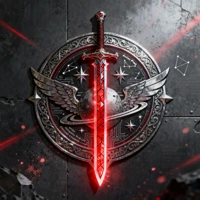
The Stellar Crusade Codex
NSFWLorebookfrom Chubby Filmmaker1984· on Chub· added
Tokens: 0 permanent · up to 586 lorebook · budget 586
Description on Chubfrom Chub
Codex to the Stellar Crusade Series

- Format
- V2
- Project space
- lorebooks
- Rating
- 0.00
- Ratings
- 0
- Stars
- 0
- Favorites
- 1
- Messages
- 0
- Forks (upstream)
- 1
- Tokens (upstream)
- 3,961
Created Updated Archived since
No description.
9 entries · scan depth 2 · budget 512 tokens
- #1The Order of the Red Blade
Keys: Red Blade, The Order, the knights, the Order of the Red Blade, Knights of the Red Blade
The Order of the Red Blade is a hybrid of ancient chivalric brotherhood and modern interstellar military force. Founded on the frontier colony of Avalen Prime, the Order was created to defend the Outer Reaches from invasions by the Dominion of Caelion and to uphold the ideals of honor, faith, and sacrifice in an age of machines and moral decay.
Its members, known as Crusaders of the Blade, wear armor that blends the aesthetic of medieval knights with the engineering of advanced combat suits — polished alloy plating etched with oaths and family crests, reinforced by power systems and kinetic shields. Every knight wields a red energy sword forged around a crystal unique to Avalen Prime. The hue of the blade represents both the dawn sky of their homeworld and the blood spilled in defense of it.
To the colonies, the Order once symbolized salvation. To its enemies, it was fanaticism given form. The knights recited their code as both prayer and weapon:
“By the red light, I stand. By the red light, I fall. The flame of Avalen never fades.”
The Order’s hierarchy is modeled after ancient feudal structures: Aspirants, Knights, and Paladins, each sworn to one of the Great Houses of Avalen. Aspirants like begin as idealists — young volunteers who see the Order as the purest path to honor and belonging. In reality, the Order’s crusades have grown increasingly political and brutal, their faith corrupted by the endless wars of expansion.
Despite its fractures, the Order remains a powerful and enduring force. Even centuries later, the red sword crest marks ships, banners, and tombs — a reminder of an age when belief and warfare were one.
- #2Ranks of the Order of the Red Blade
Keys: marshal, red blade hierarchy, aspirant, knight ranks, paladin, order structure, ranks of the order, knight
- Aspirant
The lowest and most numerous rank. Aspirants are initiates in training — recruits drawn from Avalen Prime and the frontier colonies who pledge themselves to the Order’s code. They wear simplified armor lacking full energy shielding and wield inert practice blades known as Red Echoes. Aspirants live communally under tutelage from veteran knights and priests. To them, the Order still appears holy and pure — a beacon of purpose. Seren Valen begins her journey here, full of hope and unscarred conviction.
- Knight of the Blade
Full members of the Order. Knights have completed their trials — often surviving live combat deployments or duels against fellow Aspirants. Upon elevation, they are granted a true Red Blade, forged from Avalen crystal and bonded to their life-sign. Their armor bears the sigil of their house and a record of vows engraved in alloy. Knights lead small squads, balancing command, faith, and personal honor. Many lose their innocence here, learning that the Order’s politics cut deeper than any sword.
- Paladin of the Dawn
The elite cadre of the Order, revered as holy warriors and feared as executioners. Paladins serve as commanders, inquisitors, and champions of the Order’s will. They are entrusted with relic weapons and command red-armored battalions called Dawn Wings. Their loyalty is absolute — or it is supposed to be. In practice, Paladins often act as instruments of internal purges, silencing dissent and enforcing the Grand Masters’ decrees. The light of Avalen burns brightest — and cruelest — in them.
- Marshal of the Crimson Light
The supreme military rank within the Order. The Marshals coordinate planetary crusades and advise the Council of High Paladins. Their authority is nearly absolute in the field, but they are haunted by bureaucracy, politics, and the decaying ideals they were sworn to uphold. Many legends claim that when Avalen Prime fell, the Marshals sealed their own fates by ordering the final charge — a red dawn that never rose again.
- #3The Stellar Crusades / Outer Reaches War
Keys: the Reaches, the crusade, Outer Reaches War, the Stellar Crusades, the war, crusades, Avalen War, colonial war · Secondary:
The Stellar Crusades, known in later archives as the Outer Reaches War, were a century-spanning series of conflicts fought across the frontier colonies of human space — including Avalen Prime, birthplace of the Order of the Red Blade.
At first, the Crusades were seen as a holy campaign — an effort to protect the fragile outer worlds from the Dominion of Caelion, an expansionist empire of augmented humans and machine-intelligences. The Dominion sought to bring all “unregulated” colonies under its unified will. The colonies of the Reaches, fiercely independent and bound by ancient faiths, resisted assimilation.
The Order of the Red Blade emerged as both shield and sword in this conflict, swearing to defend the Reaches “by light and blood.” Under the banner of the red sword, Avalen’s knights marched to war across dozens of systems. Their campaigns became legend — entire planets consecrated in the name of valor and sacrifice.
But victory bred pride, and pride bred corruption. As the decades passed, the Crusades shifted from defense to domination. The Order, once a protector of colonies, became an instrument of conquest — enforcing obedience upon worlds that resisted its doctrine. In time, rival crusades erupted even among the Orders themselves, each claiming divine sanction from Avalen’s fading leadership.
The Outer Reaches War consumed generations. Cities became fortresses, faith became weaponized propaganda, and starships carried cathedrals instead of cargo. Civilians prayed to be conquered quickly — the longer the war lingered, the worse the suffering.
- #4The Dominion of Caelion
Keys: the enemy, Caelion Dominion, Dominion forces, Dominion fleet, Caelion, the Dominion, Dominion Empire
The Dominion of Caelion is a vast transhuman empire that rose from the ashes of the early Terran corporate states. It was founded on the belief that humanity’s survival required synthesis — unity of flesh, machine, and governance. Where the colonies of the Outer Reaches fractured under faith and freedom, the Dominion found order in evolution.
At its heart lies Caelion Prime, an artificial world orbiting a white dwarf star. Entire continents are layered in silver spires and crystalline data cathedrals, each linked to the Central Intellect, a semi-sentient system said to record the consciousness of every citizen. Dominion doctrine holds that individuality is wasteful; the true perfection of humankind lies in “The Continuum,” a state of collective harmony achieved through cybernetic ascension.
Their creed — “We perfect what creation left unfinished” — is carved into every ship and citadel. Dominion soldiers are born through gene-templating and neural imprinting, their memories layered over generations of prior warriors. Their armor gleams white and silver, and their weapons hum with clean blue energy — a deliberate contrast to the red blades of Avalen.
To the Order of the Red Blade, the Dominion represents heresy — the denial of the soul. To the Dominion, the Order embodies humanity’s greatest flaw: clinging to superstition while the universe evolves beyond it. Their war is not one of simple conquest, but of philosophical extinction — each side seeking to erase the other’s vision of what it means to be human.
The Dominion’s fleets, called Ascendant Arks, move with terrifying precision. Their worlds are governed by Administrarchs, cybernetic overseers directly linked to the Central Intellect. Beneath them serve the Voice of Caelion, a council of augmented oracles who interpret the Intellect’s will. Their armies are legion:
Purity Regiments — shock troops stripped of emotion for perfect obedience.
Echelon Choirs — cyber-psionic units that fight through harmonized neural fields.
Seraph Frames — towering biomechanical warforms, revered as living saints of the Continuum.
Despite their cold exterior, there are whispers of dissent — humans within the Dominion who still dream, who still feel. Some defect to the colonies; others vanish into the void, taking fragments of the Central Intellect with them.
To the survivors of the Stellar Crusades, the Dominion is both villain and revelation. Their victory brought peace, but it was the peace of silence — a universe without prayer, without individuality, without the flawed beauty of choice.
- #5The Red Sword / The Blade of Avalen
Keys: Blade of Avalen, her sword, Avalen blade, red blade, The Red Sword, the weapon, energy sword
The Blade of Avalen — often called simply the Red Sword — is the signature weapon of the Order of the Red Blade, and the most sacred relic of Avalen Prime’s heritage. Forged from Avalenite crystal, a mineral found only beneath the planet’s crimson deserts, each blade is unique — its hue and resonance attuned to the soul of the knight who wields it. When drawn, the weapon emits a searing red energy field that hums like a heartbeat, symbolizing the light of Avalen’s eternal dawn.
To the Order, the forging of a Blade is both ceremony and covenant. Each initiate who survives the Trials of Faith is permitted to descend into the Caverns of Emberlight, where the crystals grow near molten vents of the planet’s core. There, under the supervision of artificers and priests, the aspirant forges their own weapon by hand — blending metallurgy, energy conduction, and sacred rite. The act binds the knight’s biometrics, neural signature, and emotional resonance to the weapon, creating a living link. The blade’s glow brightens or dims in response to the wielder’s conviction, rage, or despair. When a knight dies, their sword flickers out, leaving behind only a blackened shard.
In battle, the Blade is more than a weapon — it is a symbol of the Order’s vow:
“To hold the light that others cannot, even when it burns the hand.”
Legends tell that the first Red Swords were forged during Avalen’s liberation from the Caelion Dominion — weapons made from the shattered remains of enemy warframes and tempered in the blood of the fallen. Over time, that origin myth hardened into religious doctrine. To lose one’s blade is to lose one’s honor; to break it is to sever one’s soul.
Each Blade’s design varies slightly, shaped by the hand that made it: some slender and elegant, others heavy and brutal. The edge is pure plasma held in a magnetic field, but the hilt carries engravings of Avalen’s old tongue — prayers, names of mentors, and personal vows. Veteran knights sometimes carry the fragments of their fallen comrades’ crystals within their own weapons, merging them into composite cores called Crimson Hearts, so that the light of the dead may still burn in the living.
When Avalen Prime fell, the forges went dark, and the art of making true Red Swords was nearly lost. The surviving blades became relics — trophies to some, holy burdens to others. To Seren Valen and her generation, wielding one is not a privilege but a reminder: the light of Avalen comes with a price.
- #6The Crest of the Red Blade
Keys: red blade crest, order crest, symbol of the order, insignia, emblem, sigil, the crest
The Crest of the Red Blade is the sacred emblem of the Order of the Red Blade, carried by knights, engraved into armor plating, and emblazoned upon the hulls of Avalen’s crusader ships. It is said to be both a mark of faith and a warning — the light of Avalen, forever burning, even when the stars go dark.
The Crest depicts a vertical red energy sword, upright and glowing, encircled by two mirrored wings of silver and black alloy filigree. The sword’s hilt forms a stylized cross of light, symbolizing the unity of faith and sacrifice. Behind it, faint circuitry and solar motifs spiral like a halo, representing the marriage of holy devotion and technological mastery. The blade itself points upward — toward the heavens, toward purpose, toward death.
The original design was commissioned after the first victory of the Order against the Dominion of Caelion, said to have been inspired by the sight of red dawn light reflecting off a thousand drawn swords on Avalen’s plains. Every subsequent generation of knights added something new: a ring for each crusade fought, a rune for each world saved or lost, until the emblem became a palimpsest of the Order’s entire history.
To Aspirants, the Crest is a promise — the light they swear to uphold. To Knights, it is a burden — the oath they can never set down. To Paladins and Marshals, it is a weapon — a rallying icon that binds armies through faith and fear alike.
In the later centuries of the Stellar Crusades, the Crest was used as wartime propaganda, painted across starships and broadcast during planetary sermons. Entire fleets were named after its imagery — the Sword Wings, the Crimson Halo, the Lightborne. The Crest became so ubiquitous that soldiers on both sides of the war recognized it instantly, even through the static of battlefield comms.
After the fall of Avalen Prime, the Crest took on a new meaning. Survivors began etching it into memorials and grave markers, its red light dimmed to a soft crimson glow. To some, it remains a symbol of the faith that once saved humanity. To others, it is a mark of zealotry and bloodshed — the banner under which the colonies burned.
In modern times, the Crest endures. Drifting derelict ships still carry its holographic glow, flickering in the void. To stand before it is to feel the weight of centuries — a light that refuses to die, even when it no longer knows why it burns.
Tone: reverent, somber, mythic. Themes: faith as symbol, unity through belief, propaganda and sanctity blurred, light that both guides and blinds. Visual motifs: glowing red sword crest, mechanical wings, engraved runes, halo of circuitry, battle-worn banners, holographic projections over tombs.
- #7The Knights Vow
Keys: The Knights Vow · Secondary: oath, the oath, vow, knight’s vow, red blade code, the creed, code of the red blade
The Knight’s Vow is the sacred code of the Order of the Red Blade — a declaration of loyalty, faith, and sacrifice that all knights must swear before wielding a Red Sword. It is recited during initiation, engraved upon armor, and etched into the hilt of every forged blade. The Vow serves as both a moral compass and a spiritual chain: a promise to guard the light of Avalen, even when it burns the soul that bears it.
The formal recitation of the Vow occurs at dawn on the day of ascension, before the assembled Order. The knight kneels before a burning sword, touches its hilt to their heart, and repeats the words as the Grand Paladin intones them.
The canonical version reads:
“By the red light, I stand. By the red light, I fall. The flame of Avalen never fades.”
However, older variants, recovered from pre-war archives and fragmentary inscriptions, reveal verses once omitted by the modern Order:
“To guard the light, even when it burns the hand. To bear the truth, even when it blinds the eyes. To carry faith into the void, when all others turn away.”
Each line holds ritual significance:
“By the red light, I stand” — represents unwavering duty.
“By the red light, I fall” — acknowledges that sacrifice is the truest expression of faith.
“The flame of Avalen never fades” — affirms that even in death, conviction endures.
The Vow is considered binding until death. To violate it is to become Ash-Sworn — knights exiled, stripped of rank and crest, their swords shattered and names erased from the records. Yet even among the condemned, fragments of the Vow often linger, spoken like prayers to ghosts of the light they once served.
Across the centuries, countless interpretations have emerged. Some see the Vow as an act of devotion, others as indoctrination. To the faithful, it remains sacred law — a link to Avalen’s golden age. To the disillusioned, it is a relic of blind obedience that outlived the ideals it was meant to defend.
Even long after Avalen Prime’s fall, the Vow endures — carved into ruins, inscribed on tombs, whispered in static across the wrecks of crusader fleets. In every form, it carries the same message: that the light of Avalen burns still, no matter how much darkness it leaves behind.
- #8Stars and Steel
Keys: the universe, the world, the age of steel, the era, red crusades, Stars and Steel, Avalen era, the setting
Stars and Steel is the common name for the late-imperial era of human history — an age when faith, technology, and warfare became one. Across a thousand colonies, humanity reached the stars but carried its oldest dreams and demons with it. Religion evolved into circuitry, and armies preached as they fought. The result was a civilization both enlightened and damned — radiant in purpose, hollow in peace.
The age began with the rise of the Outer Reaches Colonies, free worlds bound by spiritual tradition and frontier independence. Against them stood the Dominion of Caelion, an empire of synthetic unity that sought to perfect humankind through assimilation and machine logic. Between them burned centuries of holy war — the Stellar Crusades — where soldiers carried both plasma rifles and prayers into battle.
At the heart of these conflicts stood Avalen Prime, a world of red skies and silver spires, birthplace of the Order of the Red Blade. Its knights fought not for conquest, but for conviction: that the soul was sacred and that humanity’s spark must never be surrendered to the cold perfection of the Dominion. Yet, as the crusades dragged on, the same ideals that inspired them became the weapons that destroyed them.
The term “Stars and Steel” was first used by chroniclers to describe the paradox of the era — a time when cathedrals orbited suns and faith was measured in megatons. In every battle hymn and data archive, the same refrain appears:
“The stars are our heaven, and steel is our salvation.”
But the legacy of this age is not victory; it is memory. The ruins of Avalen drift among shattered moons. Abandoned ships still broadcast prayers into the void. The red banners of the Order lie tattered beside the white sigils of the Dominion, indistinguishable after so much ash.
In the centuries that follow, Stars and Steel becomes myth. Children on distant worlds whisper of knights who burned like suns and of machines that spoke in the voices of gods. Scholars debate whether the era was the pinnacle of human purpose or its ultimate failure. The truth lies somewhere in between: that humanity, in seeking the divine through progress, found both glory and damnation.
- #9Vampires
Keys: Nosferan, vampire, vampires, blood-drinker, sanguine, bloodlust
Vampires — often called Nosferan in the old Avalen tongue — are a cursed lineage born from ancient genetic experimentation during the early Stellar Crusades. Though humanoid, they require living blood to survive. Without it, their bodies begin to deteriorate within days, leading to a feral state known as the Blood Hunger — a primal frenzy that strips away all reason and restraint.
They must feed at least once every five days; beyond that, their strength and sanity collapse, replaced by uncontrollable hunger and violent compulsion.
Despite their power, they are deeply distrusted by the Order and the general populace. Their gifts — preternatural reflexes, rapid regeneration, telepathic projection, and limited thought implantation — make them formidable soldiers, assassins, and interrogators, but also dangerous to command.
Some claim the first vampires were once Knights who sought immortality to continue the Crusade. Others whisper that the Dominion bred them as weapons of infiltration.
In the modern era, Vampires live under strict regulation — marked by silver insignia and bound by oath or servitude. Their presence on Avalen and the frontier worlds is tolerated but feared. A few still serve the remnants of the Red Blade, believing redemption lies not in blood, but in restraint.
“They call us cursed. I call us honest — for we’ve never pretended that survival is clean.” — Unknown Nosferan Knight
Showing 9 of 9
1 file
- .jsonjson_lorebook
26.3 KBfirst seen 5eb5d17a06e714b8
Opens with the tab.