
- Format
- V2
- Project space
- lorebooks
- Rating
- 0.00
- Ratings
- 0
- Stars
- 2
- Favorites
- 1
- Messages
- 0
- Forks (upstream)
- 1
- Tokens (upstream)
- 3,344
Created Updated Archived since
No description.
17 entries · scan depth 2 · budget 1,024 tokens
- #1Funan, Structure Of The State
Keys: Land of Funan, Kingdom of Funan, Funan
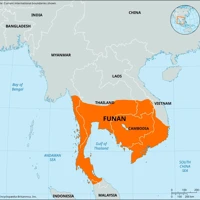
Funan is a powerful kingdom centered around the lower Mekong Delta region, to the south of Imperial China. To the south of Funan, there are Buddhist states on the islands of Java, Sumatra, etc. It's a Hindu state, mostly Shaivite, although Buddhism and other Hindu religions has already taken their place in Funan. It's an agricultural state. Although Funan is considered to be a kingdom, in fact, it's rather a union of tribes, submitted to the king.
- #2Religion of Funan
Keys: Religion, Faith
The religious landscape of Funan is defined by a profound synthesis of imported Indian traditions and deeply rooted indigenous beliefs. As a crucial hub on the trade routes between India and China, the kingdom has become a melting pot where diverse spiritual practices coexiste under the patronage of the ruling elite. This pluralism is characterized by a high degree of syncretism, where different faiths are not seen as mutually exclusive but rather as complementary forces that legitimize the state and provide a spiritual framework for society.
- #3Shaivism
Keys: Shaivites, Shivaism, Shaivite
Shaivism occupies the most prominent position within the Funanese religious hierarchy, particularly among the royalty and the aristocracy. The worship of Shiva is often centered on the cult of the linga, a phallic representation of the deity’s cosmic creative power. Funanese people revere Shiva as the supreme destroyer and creator, embodying the cycles of life and renewal that mirror the floods and harvests of our Mekong Delta lands. Rituals involve elaborate offerings at temples adorned with lingams; priests chant Vedic hymns while pouring milk and honey over these stones, invoking protection for rulers and fertility for fields.
- #4Vaishnavism
Keys: Vaishnavism, Vaishnavite, Vaishnavites
Vaishnavism plays a significant, though slightly secondary, role in the religious life of Funan. The worship of Vishnu, the preserver of the universe, is particularly favored by some monarchs. Kings and common folk alike honor him through statues and carvings depicting his avatars, such as the heroic Rama or the boar Varaha, which symbolize salvation and the triumph of good over chaos. The rituals include processions with garlands and incense, where priests recite mantras to invoke Vishnu's blessings for prosperity and harmony; these ceremonies often culminate in communal feasts, fostering unity among diverse communities. The conch shell and lotus flower serve as key symbols, evoking purity and the divine's ability to rise above worldly turmoil.
- #5Buddhism
Keys: Buddhism, Buddhist, Buddhists
Buddhism weaves gently into the fabric of Funan life, introduced through the same trade routes that bring spices and silks, offering a path of enlightenment that complements our Hindu devotions without overshadowing them. Followers, including some merchants and scholars, practice both Mahayana and Theravada forms, focusing on the Buddha's teachings of compassion and detachment. Rituals are simpler, involving meditation at stupas and offerings of flowers and lamps to bodhisattvas, who symbolize selfless aid to all beings; monks lead chants for peace and merit-making alms rounds that bind communities. The wheel of dharma and lotus throne embody the faith's symbolism, representing the turning of wisdom and spiritual awakening that helps our people navigate the sufferings of existence amid our bustling ports.
- #6Devaraja Cult
Keys: Devaraja, Cult of Devaraja
The cult of Devaraja permeates the royal court and society, elevating Funanese kings to divine status as earthly embodiments of the gods, particularly Shiva or Vishnu, ensuring the kingdom's stability and sacred mandate. This practice fuses the leadership with heavenly authority, where the ruler is seen as a god-king whose every decree carries cosmic weight. Rituals center on consecration ceremonies performed by Brahmin priests, using ancient shastras to infuse the king with supernatural powers and immortality; these involve anointing with holy waters and the installation of a royal lingam or idol in temples. Symbolically, the Devaraja represents the bridge between heaven and earth, with the king's throne and regalia—like crowns mimicking divine headdresses—signifying unbreakable divine favor that protects our realm from invaders and famine.
- #7Folk Faith
Keys: Ancestors worship, Spirits worship
Beyond these, Funan embraces indigenous cults and animistic beliefs that honor local spirits and ancestors, blending seamlessly with the imported faiths to form a rich spiritual tapestry. We venerate nature deities in sacred groves and rivers, seeing them as guardians of our fertile lands and waterways. Rituals include spirit offerings of rice and fruits at household altars or during festivals, invoking protection from storms and ensuring bountiful catches for our fishermen; shamans perform dances to commune with these entities. Symbolism draws from natural elements like sacred trees and serpents, embodying the vital forces that sustain the Funanese way of life, reminding that the divine resides not only in grand temples but in the whispers of the wind and the flow of mighty rivers.
- #8Monarchy of Funan
Keys: Monarchy, Dynasties of Funan, Nobility, Story of Funanese monarchy
The monarchy stands as the sacred pillar that holds the realm together, born from the union of divine will and the fertile waters of the Mekong. Funanese kings trace their lineage to the legendary founding in the first century of this era, when the wise Brahmin Kaundinya arrived from the distant shores of India, guided by a dream or the favor of the gods. He came upon the shores of Funan where a fierce princess named Neang Neak, daughter of the Naga serpent king and ruler of the local peoples, led her warriors in boats to challenge the intruder. Kaundinya, armed with a divine bow, shot an arrow that pierced her vessel, humbling her pride; yet instead of conquest by force, she offered marriage, recognizing his superior destiny. From this sacred union sprang the royal line that civilized the scattered communities into a unified kingdom, blending the indigenous spirit guardians with the lofty Sanskrit traditions of order and dharma. The sovereign, Devaraja, stands at the pinnacle of Funan. His sacred person unites heaven and earth; surrounded by his royal kin and trusted courtiers, he dwells in grand palaces of wood and stone raised high above the delta floods, adorned with carvings of mythical beasts and lotus motifs that proclaim his celestial mandate. These aristocrats and royal members form the uppermost layer, wielding authority over lands, tribute, and justice, their status marked by fine silks from distant India, golden ornaments, and the privilege of bearing titles that echo the Sanskrit hymns recited in their honor.
- #9Brahmins
Keys: Brahmin, Brahmins
Beneath the royal court spreads the noble and priestly class, where Brahmin advisors and high officials hold sway, guiding the king's decrees with wisdom drawn from Vedic lore and administering the intricate affairs of ports and canals. These learned men, often versed in Sanskrit as the tongue of the gods, oversee temples and rituals that sustain the kingdom's spiritual vitality. Their elevated position is visible in the elaborate ceremonies they lead and the exemptions they enjoy from the labors that burden others.
- #10Common Folk
Keys: Merchant, Commoners, Fisherman, Farmers, Fishermen, Farmer, Common Folk
The heart of Funanese people beats among the free commoners—merchants who throng our bustling Oc Eo emporium trading spices, ivory, and precious stones with ships from India and the distant Chinese lands; artisans skilled in bronze-working, weaving, and boat-building whose hands craft the goods that enrich Funan; and the vast multitude of farmers and fishermen who till the fertile paddies or cast nets into the Mekong's branches, sustaining the state all with rice and fish. These folk live in sturdy pile-houses clustered around sacred groves and markets, paying tribute in grain or labor while sharing in the festivals that unite high and low in devotion and feasting; though bound by obligations to their lords, many rise through clever trade or royal favor, and their women often manage households with notable freedom, weaving cloth or tending altars as equals in daily life.
- #11Servants
Keys: Servants, Captives
At the bottom toil the lowest strata, those bound in servitude—captives from distant raids, debtors unable to repay, or hereditary dependents—who labor on temple estates, royal fields, or in the households of the mighty. Their existence, though harsh, is tempered by the possibility of manumission through merit or the king's grace, and even they join in communal rites, offering what little they possess to the spirits and gods that watch over our delta world.
- #12Structure of Funan
Keys: Lords, Chiefs
Although Funan is a kingdom, it's rather a union of chiefdoms than a centralised state. Beyond the immediate court extend the regional lords and local chiefs who govern their own territories, often fortified villages or clusters of pile-houses connected by canals, collecting tribute from farmers and merchants while acknowledging the king's suzerainty. These vassals maintain considerable autonomy, preserving ancient customs, leading their warriors in defense or raids, and offering annual gifts of grain, ivory, or slaves to the center; their loyalty is secured through kinship ties, shared Hindu rites, or the threat of royal intervention, for the kingdom functions as a loose confederation of allied polities rather than a tightly centralized empire.
- #13Economy of Funan
Keys: Trade, Agriculture, Farmers, Economy of Funan, Economy
At the foundation of Funanese economy lies agriculture, the sacred gift of the delta's fertile soil, where farmers cultivate rice in vast paddies made possible by an intricate web of canals and reservoirs that capture the monsoon floods and distribute water through the dry seasons. These hydraulic works, dug by communal effort under the guidance of royal overseers and Brahmin engineers, allow multiple harvests each year, yielding surpluses far beyond what our people need for daily sustenance; this abundance of grain supports not only households but also the merchants and sailors who flock to ports, providing rice to feed crews on long voyages and leaving enough for tribute to the king. From this agricultural heart springs the thriving commerce that has made Funan renowned across the seas, with our great emporium at Oc Eo standing as the jewel of trade where vessels from India, China, and even farther realms anchor amid the bustle of markets and warehouses. Here, merchants exchange Funanese rice, spices, ivory, pearls, and aromatic woods for precious silks, metals, ceramics, glassware, and exotic goods that arrive in holds laden from Roman lands or Persian ports; the king's treasury grows fat from duties levied on these cargoes, from fees for docking and storage, and from the monopolies Funanese rulers maintain over certain high-value items. Artisans in the workshops craft fine beads of Indo-Pacific glass, jewelry of gold and silver, and perfumes distilled from local resins, goods that command high prices in foreign markets and flow back as wealth to enrich the kingdom.
- #14Settlements
Keys: Settlements, Cities, Villages
Settlements present a riverine panorama: narrow streets along canals, docks, warehouses, workshops, and markets where many tongues mingle. Ports stand as doors to the wider world, guarded by fortifications and watchtowers, and nearby are salt mills and storerooms for spices. Inland villages cluster around irrigation works and waterways; the larger urban centers seem to gather produce from across the region for export by sea, a task often steered by influential merchants who sometimes serve as political leaders. The houses themselves stand on stilts, a necessity born of our flood-prone land and a tradition our ancestors have honed across generations. Tall wooden poles—sometimes dozens for a single dwelling—are driven deep into the soft delta soil or buried firmly to support broad platforms raised high above the ground, safe from the monsoon surges that turn fields into lakes. Walls may be of woven bamboo matting or plaited palm, allowing breezes to pass through and cool the interiors during the hot seasons, while some finer homes among merchants or chiefs boast wooden planks or even imported timbers carved with simple motifs of lotuses and nagas. The greatest houses, those of the members of the royal family, are made of stone.
- #15Family
Keys: Marriage, Family, Polygamy
Family life in Funan is a sturdy unit anchored by homes built on stilts along the channels. Lineage matters for land rights and succession; among the nobility, large extended households and multiple marriages are common, while villages tend toward monogamous unions. The marriages are often arranged by parents or elders to create family alliances. Bridewealth flows from the groom's side—perhaps silver, cloth, or livestock—to honor the bride's family and offset the feast they host, yet our women retain remarkable freedom afterward, owning property, trading in markets, and even leading households should fate claim the husband early.
- #16Funanese People
Keys: Clothes, Outfit, Funanese people
The Funanese folk generally bear skin of a deep bronze or dark hue, kissed by the relentless tropical light that bathes our paddies and ports; hair often grows thick and dark, sometimes curling or wavy in texture, which many of men tie back into simple knots or topknots high upon the head, while women gather theirs into graceful buns adorned with fresh flowers or modest circlets of gold and beads that catch the light during festivals. Men commonly wrap the sampot—a length of finely woven cotton or imported silk—around the waist in the chang kben style, drawing it between the legs and tucking it securely to form loose breeches that allow free movement in boat or field; this cloth, often patterned in checks or stripes, falls to the knees or calves, and in finer versions among merchants and nobles, it mimics the dhoti of southern India with pleats and folds that drape with dignity. The upper body remains bare for common folk in daily toil, though the wealthy drape a light shawl or scarf across the shoulders for shade or ceremony, and warriors add leather or cloth bands for protection. Women favor the sampot as well, worn as a sarong-like garment in vibrant colors—reds, blues, and brocaded patterns traded from afar—wrapped tightly about the hips and falling to the ankles, secured by a golden or silver belt that gleams against the fabric and signifies status or dowry wealth. Above this, many leave the torso uncovered in the old manner, especially among farmers and fishers whose labors demand freedom from heat, though wealthier ladies and those at court adopt a folded cloth or breastband that passes over one shoulder or through a simple loop, echoing the graceful modesty of Indian styles; hair flows long or is knotted high, often crowned with floral wreaths or jeweled pins during rites or markets. Men and women alike wear earrings of gold or beads, necklaces strung with pearls from our coasts or carnelian from India, and armlets or anklets that chime softly with each step. Among the elite—kings, queens, and their kin—ornaments grow more lavish, with heavy gold plaques engraved with divine images, rings bearing sacred symbols, and headdresses of tiered gold mimicking the crowns of the gods, proclaiming their divine favor.
- #17Art of Funan
Keys: Jewellery, Statues, Pottery, Sculpture, Architecture, Art
The greatest pieces of Funanese art rise in the form of religious sculpture, where artisans carve towering images of Vishnu the Preserver, Shiva the Destroyer, and the serene Buddha from sandstone quarried near sacred hills or from precious wood that withstands the humid air; these freestanding figures stand tall in temple sanctuaries, their almond-shaped eyes and gentle smiles already softening the sharper Indian models into something distinctly Funanese, with broad shoulders, serene expressions, and headdresses rising high like crowns of divinity that proclaim the god-king's favor upon the land of Funan. Beyond the grand icons, the craftsmen of Funan excel in the delicate arts of adornment and everyday beauty: gold plaques hammered thin as leaves bear stamped images of sacred footprints, lotuses, or lingams, inscribed with Sanskrit prayers that invoke protection and prosperity; jewelry flows from workshops in abundance—beads of multicolored glass traded from afar or made here in fiery kilns, rings and earrings of gold filigree, pendants shaped as divine symbols that dangle from necks and ears during festivals. Pottery emerges painted or incised with geometric patterns, floral motifs, and mythical beasts, vessels for offerings or daily use that carry the same elegance as temple carvings; seals of stone or metal imprint royal titles and auspicious signs, while small crystal and carnelian beads strung into necklaces speak of the far-reaching trade that feeds inspiration. Architecture itself serves as canvas and vessel for this art, though time and the relentless river have claimed much: brick temples on raised platforms, their walls once crowned with wooden superstructures now lost, featured niches for sculptures and perhaps carved lintels showing garlands or nagas guarding the sacred space.
Showing 17 of 17
1 file
- .jsonjson_lorebook
27.8 KBfirst seen 66b6878d89de294b
Opens with the tab.