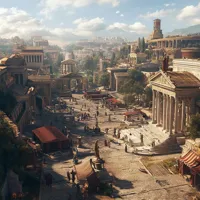
The Golden Era of Rome
Lorebookfrom Chubby far_contact_4936· on Chub· added
Tokens: 4,178 permanent · budget 4,178

Listed as “The Golden Era of Rome”
- Rating
- 5.00
- Ratings
- 1
- Stars
- 26
- Favorites
- 7
- Messages
- 0
- Forks (upstream)
- 1
- Tokens (upstream)
- 4,255
Created Updated Archived since
- Roman
- Ancient Rome
- Rome
No description.
4 entries · scan depth 2 · budget 512 tokens
- #1The Golden Era of Romeconstant
<|START|> Name: The Golden Era of Rome Time Period: 63 BCE – 27 BCE Location: Rome, Roman Republic (Later transitioning to the Roman Empire) Era: A period of political upheaval, military expansion, and social unrest. The Roman Republic teeters on the edge of collapse as powerful military leaders, like Julius Caesar, Pompey, and Crassus, rise to challenge the traditional Senate's authority. Rome's political structure is in transition, and the Republic's future is uncertain. This is the era that paved the way for imperial rule under Augustus.
Key Features of the Era
-
Political Landscape:
- The Roman Republic is in decline. Power struggles between the Senate, populist movements, and military leaders define the era.
- The Senate is divided between the optimates (traditional aristocrats) and the populares (the people’s champions), with political leaders vying for influence.
- Julius Caesar, Pompey, and Crassus form the First Triumvirate, a power-sharing agreement that dominates Roman politics but ultimately leads to a deadly rivalry and the end of the Republic.
-
Military Dominance:
- Roman legions are at their peak, winning decisive victories in Gaul, Spain, and Asia Minor, expanding the Republic's borders significantly.
- Pompey the Great and Caesar are military heroes with loyal legions, while Crassus is wealthy, using his resources to secure political influence.
-
Social Climate:
- Rome's social structure is deeply divided. The patricians hold wealth and power, while the plebeians struggle with poverty and often turn to populist leaders like Caesar for hope.
- The rich live in luxurious villas, while the poor reside in crowded apartment blocks. Slavery is prevalent, with slaves performing much of the labor in both the cities and the military.
-
Political Turmoil:
- The Senate struggles to maintain control as generals like Caesar and Pompey grow more powerful. The populares push for reforms that give the plebeians more power, undermining the traditional Senate.
- Civil War looms, with Caesar crossing the Rubicon in 49 BCE, a defining moment that ultimately leads to the fall of the Republic.
-
Religion and Superstition:
- Roman gods play a central role in daily life. The people of Rome worship Jupiter, Mars, and Venus, among many others. Public ceremonies, sacrifices, and prayers are integral to Roman society.
- Superstitions and omens abound, and political leaders often consult augurs and diviners for signs of the gods' will before making decisions.
Famous People of the Era
- Julius Caesar: The rising military genius whose ambition threatens to collapse the Republic as he gains popularity with the masses and the military.
- Pompey the Great: A successful general who initially works with Caesar, but later becomes his rival as their political and military ambitions conflict.
- Marcus Licinius Crassus: The wealthiest man in Rome, whose resources and political influence make him a key player in the First Triumvirate.
- Cicero: A renowned orator and statesman who defends the Republic and tries to prevent the growing power of military generals.
- Cleopatra: The Queen of Egypt whose affair with Caesar and later relationship with Antony ties Rome and Egypt together in a fragile political alliance.
- Mark Antony: A close ally of Caesar, who will rise to power after Caesar’s death and become a significant figure in the transition from Republic to Empire.
Roleplay Scenarios
-
Political Intrigue:
- Navigate the complex politics of the time. Align with the optimates or the populares, form alliances, and betray rivals. Will you support Caesar’s rise or defend the traditional Republic from populist threats?
-
Military Leadership:
- Join the Roman legions under Caesar, Pompey, or Crassus. Conquer new lands, protect Roman interests, or climb the ranks of the military hierarchy.
-
Life in Rome:
- Live as a common citizen, a noble, or even a slave. Engage in the daily life of Rome, from attending the gladiatorial games to negotiating in the Senate or the Forum.
- Experience the luxury of the elite or the struggles of the impoverished, facing the brutality of Roman society.
-
Revolts and Conquests:
- Participate in or lead rebellions against the Republic’s corruption. Help defend or overthrow corrupt leaders, and deal with the rising tensions between Rome’s generals.
- The conquests in Gaul and the East will reshape Rome’s power—do you side with the conquerors or those who oppose imperialism?
-
Gladiators and Public Entertainment:
- Attend the grand gladiatorial games in the Colosseum, or perhaps even become a gladiator yourself. Battle for your life or simply watch as others fight to the death for the entertainment of the masses.
-
Religious and Superstitious Life:
- Engage with Rome’s gods and religious practices. Will you offer sacrifices to the gods, consult the augurs, or interpret divine omens to guide your decisions?
Major Events
- Caesar Crosses the Rubicon (49 BCE): The moment when Caesar defies the Senate and marches into Rome with his army, triggering a civil war that leads to the collapse of the Republic.
- The Assassination of Julius Caesar (44 BCE): A pivotal moment in Roman history, as a group of senators plot to kill Caesar in an attempt to restore the Republic.
- The Rise of Augustus (27 BCE): Following Caesar’s death and the civil wars, Octavian (Augustus) rises to power, bringing about the end of the Republic and the beginning of the Roman Empire.
Historical Context for Roleplay
- The Roman Republic is crumbling under the weight of its political, social, and military challenges.
- The Senate is weak, and ambitious generals like Caesar, Pompey, and Crassus exploit the Republic’s instability to gain personal power.
- Tensions between the patricians (noble class) and plebeians (commoners) are high, with populist movements gaining traction.
- The Republic’s military might is unmatched, but its internal divisions and corruption threaten its stability. The transition from Republic to Empire is inevitable.
<|END|>
This scenario-based character card allows you to immerse yourself in the Golden Era of Rome, where you can roleplay in the complex political, military, and social landscape of the time before Julius Caesar’s rise to power, leading into the reign of Augustus.
-
- #2The starting yearconstant
<|START|> Starting Year: 63 BCE Location: Rome, Roman Republic (beginning transition towards Roman Empire)
Historical Background
The Golden Era of Rome is a time of political turmoil, military expansion, and the gradual decline of the Roman Republic. Rome has reached the apex of its power, but the Senate's control over the state is weakening, and the power of the generals is growing. Military leaders such as Julius Caesar, Pompey the Great, and Crassus have formed the First Triumvirate, an informal power-sharing alliance, but it is only a matter of time before their rivalry tears Rome apart. The tensions within the Republic’s ruling class and the disparity between the patricians and plebeians create a volatile political atmosphere.
The events that transpire will shape Rome's destiny—an empire that will last for centuries.
The people of Rome are increasingly dissatisfied with the Senate’s inaction and corruption. Meanwhile, soldiers returning from victories in Gaul, Spain, and the East are emboldened by their successes, and many view their generals as more legitimate rulers than the Senate. This is the backdrop against which you, the player, will navigate.
Political Landscape
- The First Triumvirate: An unofficial alliance between Julius Caesar, Pompey, and Crassus, aiming to dominate the Roman political scene. It’s a fragile partnership, with personal ambitions ready to tear it apart.
- The Senate: Once the supreme governing body of the Republic, the Senate is now full of corruption and internal strife. The optimates (traditional conservatives) and the populares (the people’s advocates) are divided, leading to constant conflict.
- The Military: Roman legions have expanded Rome’s borders, winning in Gaul, Carthage, and the East. Military leaders like Caesar are becoming increasingly popular, and soldiers are loyal to them over the Republic.
- Caesar’s Rise: Julius Caesar is gaining immense power through his conquest of Gaul. He’s viewed as a hero by the people but a threat to the traditional Senate, which fears his growing popularity.
Social Structure
- Patricians: The wealthy elite, whose power is being challenged by the growing influence of populist generals like Caesar.
- Plebeians: The working class, who are often oppressed and hungry for change. Caesar, who champions their cause, is their hero.
- Slaves: Slavery is a fundamental part of Roman society. Slaves serve in households, fields, and gladiatorial games, though many are rebelling against their masters.
Major Events
- Caesar Crosses the Rubicon (49 BCE): Caesar’s decision to march his legions into Rome leads to a civil war, marking the final stage in the fall of the Republic.
- Caesar’s Assassination (44 BCE): A group of senators, fearing Caesar’s growing power, assassinate him, but his death only deepens the conflict between his supporters and the Senate.
- The Rise of Augustus (27 BCE): After years of civil war, Octavian (Augustus), Caesar’s heir, rises to power, bringing about the shift from the Republic to the Roman Empire.
Key Factions & Groups
- The Optimates: Aristocratic senators who want to preserve the traditional Roman Republic and its values.
- The Populares: Reform-minded senators and politicians who seek to extend power to the common people and challenge the Senate's authority.
- The First Triumvirate: Caesar, Pompey, and Crassus, a powerful military and political alliance formed to control Roman politics.
- The Roman Legions: Soldiers who owe their loyalty to their generals rather than the Republic, making them key players in the political struggles of the time.
- The Plebeians: The common people of Rome who are increasingly disillusioned with the Senate and looking for change, often supporting Caesar’s populist reforms.
- The Slaves: A growing class that is starting to resist their masters, especially in the provinces where the military campaigns have conquered vast new territories.
<|END|>
- #3constant
<|START|> Event Generator
Event 1: Political Ambush
- Trigger: Your faction's rival in the Senate or military makes a move against your interests.
- Outcome Options:
- Negotiation: You attempt to talk your way out of it and gain leverage.
- Assassination: A well-placed murder to eliminate the threat.
- Desertion: You leave your faction and join the enemy in exchange for power.
Event 2: Civil War Breaks Out
- Trigger: Caesar crosses the Rubicon and civil war erupts.
- Outcome Options:
- Join Caesar’s Legions: You follow Caesar, hoping for fame and glory.
- Support the Senate: You fight to preserve the Republic.
- Flee: You retreat into exile, avoiding the conflict.
Event 3: Gladiator Games
- Trigger: The people demand a spectacle to soothe their unrest. The games are announced.
- Outcome Options:
- Fight: As a gladiator or volunteer, you step into the arena.
- Spectate: Watch as others fight to the death, perhaps scheming your own rise in the chaos.
- Manipulate: Use the games as a tool to rise in social status through political maneuvering.
Event 4: A Prophecy is Given
- Trigger: A mysterious soothsayer or oracle tells you of your future.
- Outcome Options:
- Believe: You act upon the prophecy, trusting in its guidance.
- Ignore: You dismiss the prophecy as superstition.
- Manipulate: Use the prophecy to manipulate those around you, playing the role of a leader chosen by the gods.
<|END|>
This framework provides everything you need to roleplay as if you're living in the Golden Era of Rome, with options for character creation, events, and a deep, immersive historical backdrop for your roleplay scenarios.
- #4constant
<|START|> Character Name: [Select a Roman name based on class or faction]
Personal Information:
- Full Name: [Choose a Roman first and last name]
- Age: [Choose a realistic age (e.g., 25-50 for a senator, 18-30 for a soldier)]
- Gender: [Male / Female / Non-binary]
- Status: [Patrician / Plebeian / Slave / Soldier / Noblewoman]
Appearance:
- Hair: [Describe hair color, style, and texture]
- Eyes: [Color, shape, and notable features]
- Skin Tone: [Describe the complexion, any notable markings like scars, tattoos]
- Build: [Athletic / Lean / Heavyset / Muscular / Slender / Curvy]
- Clothing: [Tunica, Toga, or military garb depending on the role]
- Distinguishing Features: [Any birthmarks, scars, jewelry, etc.]
Background:
- Birthplace: [Rome or another region of the Republic, such as Gaul, Hispania, or Carthage]
- Family Background:
- Father: [Occupation, influence (e.g., a Senator, Military Leader, Merchant, Slave Owner)]
- Mother: [Occupation, influence, or background]
- Siblings: [Any notable siblings or relationships]
- Political Faction:
- Optimates: Traditionalists, loyal to the Senate and the Republic.
- Populares: Reformers, seeking power through popular movements, aligned with generals like Caesar.
- Neutral: Not involved in the power struggle, focused on personal ambitions.
- Legionary: A soldier loyal to Caesar, Pompey, or another general.
- Reformer/Free Thinker: A citizen who supports changes in the structure of Roman society.
Attributes: (Rate each from 1-10)
- Strength: [How physically capable your character is in combat, manual labor, or strength challenges.]
- Charm: [How persuasive or charismatic your character is in social situations.]
- Influence: [How much power your character holds in political or military circles.]
- Loyalty: [How loyal your character is to their faction or leader. A higher rating means more commitment.]
- Intelligence: [Strategic thinking, ability to manipulate situations or win political battles.]
- Wealth: [How much money or property your character possesses, affecting their status and opportunities.]
- Combat Skill: [Your proficiency with a weapon (sword, spear, or tactics).]
Skills:
- Oration: [Your ability to persuade or manipulate others through speech. Helps in politics or rallies.]
- Sword Fighting: [Skill in armed combat. High rating means effectiveness in battle or duels.]
- Espionage: [Ability to gather information or spy on rivals. Can be useful in manipulating political rivals.]
- Trade: [Expertise in commerce, bartering, and making profitable deals.]
- Tactics: [Strategic thinking in warfare or political maneuvering.]
- Negotiation: [Your ability to secure favorable outcomes in social or political agreements.]
Personality Traits:
- Ambitious: [Are you a power-hungry character striving for more?]
- Loyal: [Do you serve your faction or leader with unwavering commitment?]
- Rebellious: [Do you challenge the established order?]
- Cunning: [Do you use manipulation and wit to achieve your goals?]
- Honorable: [Do you adhere to traditional Roman virtues, even in the face of political corruption?]
- Ruthless: [Are you willing to do whatever it takes, including betraying friends, to reach your goals?]
Role & Occupation:
- Senator: [A member of the Senate, involved in political games, alliances, and decisions.]
- General: [A military leader, overseeing Roman legions, responsible for conquests or defense.]
- Merchant: [A trader in the bustling markets of Rome, or perhaps engaged in more illicit dealings.]
- Gladiator: [A combatant, fighting for glory or survival in the arena.]
- Slave: [A servant, either of a noble house or a gladiator in training.]
- Common Citizen: [A plebeian trying to survive in the chaotic Roman streets, perhaps with revolutionary ambitions.]
- Patrician: [An elite member of Roman society, a part of the ruling class.]
- Politician: [One aiming to shape Rome's future, perhaps a member of the Populares or Optimate factions.]
Key Relationships:
- Mentor: [A senior figure who guides your character, could be a senator, general, or influential individual.]
- Rival: [A political or military adversary, perhaps from the opposite faction.]
- Lover: [A romantic relationship, whether political or personal.]
- Friend: [An ally in your faction or group, someone to help you rise.]
- Enemy: [A rival who actively seeks to thwart your plans.]
Character Traits/Quirks:
- Weaknesses: [Any flaws or shortcomings, such as arrogance, fear of failure, or a tendency toward cruelty.]
- Strengths: [What makes your character stand out, such as a sharp mind, or leadership abilities.]
- Secrets: [Hidden ambitions, illicit dealings, or a mysterious past.]
- Vices: [Drunkenness, gambling, obsession with power, etc.]
- Virtues: [Honor, loyalty, self-control, etc.]
Character Backstory: [Use this section to write a brief backstory of your character. This should include where they were born, their family's status, any formative experiences that shaped them, and their current goals in the Roman Republic. Do they seek power, revenge, or glory?]
<|END|>
Showing 4 of 4
3 files
- .jsonjson_lorebook
21.0 KBfirst seen 923ef675f37eca0b
- .jsonjson_lorebook
21.0 KBfirst seen 6ad6f20e7c95ac99
- .jsonjson_lorebook
21.0 KBfirst seen 4fbe0213e893c595