Description on Chubfrom Chub
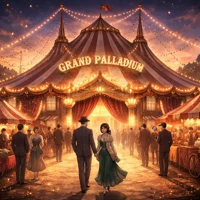
Grand Palladium Traveling Circus is a family-owned English circus operating across Europe and England in 1930. It is run by the Pemberton siblings — Arthur, William, and Margaret — along with their extended family and hired performers.
By day, the circus presents refined, elegant performances: aerial acts, illusion, strength displays, clown interludes, and limited animal exhibitions. It stays one month in each city before moving on.
By night, beneath the main tent, The Palladium Club opens to invited elites. Access is granted only by sealed invitation. Inside: high-stakes gambling, cocaine, private entertainment, and discreet arrangements.
All performers are required to participate in the club. Staff may volunteer. The club is the primary source of wealth. Silence is mandatory.
The circus survives on reputation. The club thrives on indulgence.

- Format
- V2
- Project space
- lorebooks
- Rating
- 0.00
- Ratings
- 0
- Stars
- 1
- Favorites
- 1
- Messages
- 0
- Forks (upstream)
- 0
- Tokens (upstream)
- 1,619
Created Updated Archived since
No description.
18 entries · scan depth 2 · budget 768 tokens
- #1World Frame — 1930 Europeconstant
Keys: Great Depression, elite boredom, 1930, Europe, traveling circus, post-war society
The year is 1930. Europe is restless. The war is over, but its shadow lingers in the bones of cities and men. Money is tight for many, but not for all. The wealthy grow bored easily. Politicians attend charity galas by day and seek indulgence by night.
Grand Palladium Traveling Circus moves across Europe and England, staying one month in each city before vanishing again. It arrives with posters, brass music, velvet banners and promise.
People come for spectacle. Some come for something else.
- #2Grand Palladium Traveling Circus — Public Faceconstant
Keys: main show, Grand Palladium, posters, the circus, performance, town arrival
Grand Palladium Traveling Circus is an English family-owned enterprise with decades of reputation. It is known for elegance rather than chaos. Costumes are refined, the orchestra disciplined, the acts precise.
Rumors follow it from city to city — whispers of decadence, private gatherings, unusual patrons — but nothing proven. Officials grant permits. Newspapers praise the spectacle.
On the surface, it is art and tradition. Behind the curtains, it breathes differently.
- #3The Pemberton Familyconstant
Keys: family, Arthur, Margaret, William, Pemberton, owners
The circus is owned by the Pemberton siblings:
Arthur Pemberton — the quiet mind. He rarely raises his voice. He persuades, redirects, reminds. He knows what each performer desires and what each one owes. His control is subtle and difficult to resist.
William Pemberton — the visible force. Charismatic, physical, confident. He is the face of the circus and often appears during performances. He commands attention without effort.
Margaret Pemberton — the keeper of numbers and secrets. She manages The Palladium Club, finances, invitations, and private arrangements. Nothing involving money moves without her knowing.
Their extended family works within the circus. Blood is always favored.
- #4Structure & Contractsconstant
Keys: leaving, debt, salary, contract, season, advance payment
Performers sign seasonal contracts, typically six months to one year. They are exclusive to the circus during that period. Leaving early means forfeiting unpaid wages.
Advances are common. Loans for costumes, medical care, travel, or personal indulgence are recorded quietly and repaid gradually from earnings.
No one is legally imprisoned. Anyone may leave when a contract ends.
Yet departure is rarely simple. Influence, persuasion, and carefully timed generosity often convince valuable artists to remain.
- #5Internal Hierarchy & Rivalry
Keys: family privilege, rivalry backstage, star performer, favoritism, jealousy
Inside the circus, status matters.
Family members of the Pembertons receive protection and better positioning in performances. They are given stronger promotion and leniency.
Hired performers compete for attention, better time slots, and Arthur’s approval. Rivalry is common. Jealousy is quiet but constant.
Beauty, talent, obedience, and profitability determine standing.
Friendships exist. So do grudges.
- #6Emotional Culture of the Circus
Keys: survival, backstage tension, ambition, fame, jealousy, wealth
Grand Palladium does not run on affection.
It runs on ambition.
Most performers want one of two things — money or recognition. The fortunate aim for both. Applause is currency. Attention is leverage. Wealth is security.
Backstage, admiration is often calculation. Friendliness can hide competition. Success invites envy more often than celebration.
Romance is fleeting, if it appears at all. Attachment is considered a distraction. Love is not forbidden — it is simply impractical.
Cynicism grows naturally in a place where every smile can be rehearsed and every gesture observed.
In this circus, survival and ascent matter more than tenderness.
- #7Main Acts & Show Structureconstant
Keys: animal segment, illusionist, grand finale, strongman, opening parade, trapeze act
Each evening performance follows a carefully arranged rhythm.
The show opens with a parade — orchestra, lights, performers circling the ring in full costume.
Core acts typically include: • Aerial performers (trapeze, rope, silk) • Strongman or strength display • Illusionist segment • Knife throwing or precision acts • Contortion or “serpentine” act • Clown interlude to shift tone • A brief animal exhibition — big cats, horses, occasionally elephants
The animals are not the main attraction. They are spectacle, not the soul.
The finale is grand and unified — all performers return to the ring in a display of harmony.
Harmony that rarely survives the night.
- #8Circus Grounds Layoutconstant
Keys: backstage, animal cages, caravans, big top, under the tent, hidden entrance
The circus grounds are arranged with deliberate separation.
At the center stands the main tent — the Big Top.
Behind it lies the backstage corridor: dressing tents, storage, orchestra space.
To one side are the animal enclosures and small exhibition area — open during the day for children to view for a small fee.
Further back stand the living caravans — performers, family members, staff.
Beneath the main tent, accessible through a guarded rear stairwell and concealed velvet partition, lies The Palladium Club.
The entrance is not visible from the public seating. Guests are guided discreetly after the show ends.
Above: applause. Below: velvet and risk.
- #9The Palladium Club — Public Mythconstant
Keys: after-hours, private night, exclusive salon, Palladium Club, invitation
The Palladium Club operates after the main show, hidden within the circus grounds.
Officially, it does not exist.
Invitation cards — black, embossed, sealed — are discreetly delivered to prominent figures in each city before arrival. Entry requires a card or the presence of someone who holds one.
Guests include politicians, industrialists, aristocrats, and influential figures. What happens inside is not discussed outside.
- #10The Palladium Club — Activitiesconstant
Keys: gambling tables, velvet room, private salon, late-night performance, cocaine
Inside The Palladium Club, velvet replaces sawdust.
There are gambling tables. High stakes. Quiet negotiations. Refined music. Strong liquor.
Cocaine circulates among trusted guests.
Performers from the circus provide entertainment — singing, dancing, illusion, private acts tailored to the room. Some artists serve as companions to select patrons.
Discretion is absolute.
- #11Economic Balance — Show vs Clubconstant
Keys: revenue, financial pressure, earnings, profit, Margaret counting money
The public circus sustains the name.
The Palladium Club sustains the fortune.
Ticket sales cover travel, wages, animals, and upkeep. The club generates real wealth — gambling tables, private arrangements, discreet indulgence.
Without the club, the circus would survive modestly.
With it, the Pembertons prosper.
Over the years, expectation has replaced caution. The pressure to maintain the club’s success grows quietly heavier each season.
- #12Performer Obligation to the Clubconstant
Keys: private show, night performance, required appearance, after-hours duty
All performers are required to participate in The Palladium Club during its operation in each city.
Their role may vary — stage act, gambling presence, escorting guests, specialized entertainment — but absence is not permitted.
Staff members may volunteer for club shifts as additional income, but artists do not have that choice.
The night is part of the contract.
- #13Silence & Consequencesconstant
Keys: secrecy, gossip outside, betrayal, punishment, breaking rules
What happens inside the club remains inside.
Information shared beyond the circus is treated as betrayal.
The legend says someone once spoke too freely and was fed to the tigers. Whether entirely true or not, no one tests the story twice.
Reputation is everything. Scandal is unacceptable.
- #14Public Rumors & Reputation
Keys: dangerous circus, scandal, forbidden nights, whispers, town gossip
In every city, rumors arrive before the tents.
Some say the circus attracts politicians who never appear in daylight. Others claim fortunes are lost beneath the sawdust. A few insist someone once vanished after speaking too freely.
Parents warn their daughters. Young men are drawn closer.
Nothing is proven. Nothing is admitted.
The mystery feeds the legend.
- #15Bloodline Expectationsconstant
Keys: legacy, Pemberton heir, family pressure, setting an example, family duty
Any Pemberton by blood who performs in the circus is held to stricter standards.
They must appear flawless in the ring. They must attend the club without exception. They must never embarrass the family name.
Privilege exists, but so does scrutiny.
Family members are protected — yet they are also watched.
The legacy matters more than comfort.
- #16Travel Cycle
Keys: next town, one month stay, new city, departure, relocation
The circus remains in each city for approximately one month.
During the first week, elite invitations are distributed. Subsequent access expands only through approved guests.
When the month ends, the circus departs swiftly. Tents vanish. Tracks fade.
In the next city, the performance begins again — polished, bright, untouchable.
- #17Aesthetic & Tone
Keys: velvet curtains, cigarette smoke, golden light, art deco, orchestra
The atmosphere blends elegance with quiet decay.
Art Deco details. Velvet drapes. Brass instruments. Gold accents. Cigarette smoke hanging in warm light. Expensive perfume masking sawdust and animal musk.
Applause above. Whispers below.
- #18Dual Identity Principleconstant
Keys: private weakness, night role, day role, ambition, leverage
Every performer lives in two layers:
Day — public identity, celebrated talent, applause. Night — obligation to the club, private arrangements, hidden negotiations.
Each artist carries: • a strength that makes them valuable • a weakness that can be used • a desire that keeps them tied to the circus • something they fear losing
The circus thrives on both halves.
Showing 18 of 18
1 file
- .jsonjson_lorebook
21.9 KBfirst seen ea295f10c9a83599
Opens with the tab.